
10 Best Window Ac
 Lauren Wilson
Please note that we participate in affiliate marketing programs. When you purchase through links on our site, we may earn a commission. As an Amazon Associate we earn from qualifying purchases. This comes at no additional cost to you and helps support the resources required to provide valuable content.Advertising Disclosure
Top-rated Window Ac Comparison
1

2
4
5
6
7
8
9
Window air conditioners: what to check before buying
A window air conditioner removes heat from one enclosed room and releases it outdoors. Whether it works well depends less on the headline room-size claim than on the unit’s tested cooling capacity, the room’s actual heat load, correct installation, moisture handling, and the fit between the appliance and the window. Sun exposure, insulation, ceiling height, open doors, occupancy, and heat-producing equipment can all make a stated square-foot limit unreliable.
Start with the tested cooling number. Look for the exact product model in the U.S. Department of Energy’s Compliance Certification Management System (CCMS), and compare the listing with the Federal Trade Commission EnergyGuide label. The label and DOE room-air-conditioner test procedure use the information needed to assess cooling capacity, efficiency, and annual energy use. A claim such as “8,000 BTU” or “up to 350 square feet” is weaker when it cannot be matched to an exact-model record. Portable units require extra care: an 8,000-BTU headline may use a different rating basis from the DOE capacity, and single-hose designs can draw conditioned room air into the exhaust stream.
For electricity use, look for CEER the combined energy-efficiency ratio rather than an unexplained SEER, wattage figure, or “energy saving” phrase. A credible comparison includes CEER, the EnergyGuide annual-use estimate, and a named test basis. ENERGY STAR certification is useful only when the exact model appears in the EPA’s certified room-air-conditioner dataset; a brand badge or a similar model number is not enough.
Safety evidence should also be model-specific. Check the applicable UL, ETL, or CSA directory for a current U.S. listing, and look for a cord with leakage-current protection, grounded-outlet instructions, and a prohibition on extension cords and adapters. Installation documentation should state window dimensions, weight, supplied locks or brackets, seals, screws, support requirements, and the required outward pitch for condensate drainage. A window unit should not be installed in a weak, damaged, or incompatible opening, and heavier units generally require two-person handling.
Noise figures deserve the same skepticism. A single “quiet” or decibel number is not very informative unless the manufacturer identifies the operating mode, fan speed, measurement distance, and test conditions. Several supplied products had conflicting sound figures or no exact-model acoustic report. Washable, accessible filters and clear cleaning instructions are valuable, but they do not replace drainage guidance: standing condensate can create odors and mold risk.
Finally, confirm the refrigerant on the rating plate or technical documentation. R-32 appears in many supplied reviews and has lower climate impact than older common refrigerants, but it is mildly flammable and requires qualified service. Refrigerant-containing air conditioners must be sent through a route that recovers refrigerant before final disposal.
Recurring cautions in this set
Many products had only one-year warranties, no public parts catalog or repair network, and no maker-operated recycling route. Multiple reviews found unsupported or conflicting capacity, coverage, efficiency, noise, warranty, dimensions, or model-identity claims. Some products lacked exact-model safety listings or installation manuals. One portable model’s retail capacity conflicted with its EnergyGuide capacity, and one window listing used a model number associated with a different portable product. Treat those mismatches as reasons to verify the delivered unit before installation. No category-wide contraindication beyond careful sizing, model verification, secure installation, drainage maintenance, qualified refrigerant service, and appropriate end-of-life recovery was identified in the supplied data.
Integrity
A window air conditioner affects comfort, indoor moisture, electrical safety, window stability, electricity demand, and refrigerant disposal. The strongest products in this set pair model-specific records with practical installation and maintenance instructions; weaker products rely mainly on seller claims or documentation that conflicts across sources.
HHealth & Safety
Cooling and humidity performance
This measures whether tested capacity and dehumidification suit the intended room without inflated BTU or square-foot claims. For window units, sizing affects comfort and moisture control: too little capacity may leave a room hot and humid, while unsupported coverage claims encourage oversizing. Higher-scoring products included traceable 5,000-, 8,000-, or 12,000-BTU records; low scores reflected conflicts such as advertised 10,000 BTU versus equivalent-model data showing 6,300 BTU.
Electrical and fire safety
This covers protection from shock, overheating, cord faults, controls, and wiring failures, including a current UL, ETL, or CSA listing and unresolved recalls. Window units draw substantial household power, so grounded-outlet instructions, LCDI or leakage protection, and no-extension-cord guidance matter. Higher scores came with exact or platform-specific UL, ETL, or CSA evidence; lower scores involved no confirmed NRTL listing or a model identity that pointed to a different appliance.
Drainage and mold-risk control
This measures how condensate is drained or managed and whether filters, cleaning access, and maintenance instructions reduce standing water and mold exposure. Window units should be tilted or drained as directed, and accessible washable filters need regular cleaning. Higher-scoring products documented drainage pitch, drain paths, filter access, or water alarms. Lower scores lacked model-specific drainage instructions or relied on documentation that did not clearly match the product.
Secure installation and window safety
This measures whether the hardware, dimensions, weight limits, locks, seals, and instructions support a stable installation without falling, leaking, or leaving a window easy to open. A higher score reflects documented brackets or sash locks, screws, seals, supported window dimensions, and handling guidance. Lower scores occurred when hardware lists or manuals were missing, dimensions conflicted, or a heavy unit’s actual mounting method could not be verified.
Noise and sleep impact
This measures whether sound claims are specific, testable, and suitable for the intended room. A useful result identifies dB(A), operating mode, fan speed, measurement distance, and test conditions. Higher scores belonged to products with more specific or partly traceable sound information, while lower scores reflected conflicting figures or no exact-model acoustic report. A marketplace number such as 45 or 55 dB should not be treated as a guaranteed bedroom level without its test basis.
EEcology
Energy use and climate impact
This measures tested efficiency and expected electricity demand for the stated capacity, especially CEER, EnergyGuide annual use, and exact-model ENERGY STAR status. Higher scores came from records such as 15.0 CEER and 600 kWh annual use for an exact ENERGY STAR product, or documented 10.9–12.1 CEER platform data. Lower scores reflected unsupported “energy saving” claims, missing EnergyGuide labels, or contradictory wattage and annual-use figures.
Refrigerant and end-of-life responsibility
This measures whether refrigerant identity, safe use conditions, recovery, repair, and disposal guidance are disclosed. R-32 was commonly identified in the supplied products; it has lower climate impact than many older refrigerants but is mildly flammable and needs qualified service. Higher scores paired disclosure with handling or recovery instructions. Lower scores left the refrigerant, charge, recovery route, or exact rating-plate match unclear. Refrigerant must be recovered before final disposal.
Durability, repair, and waste reduction
This measures whether the product can remain in service through warranty support, manuals, replacement parts, authorized repair, cleanable filters, and a defined recycling route. Higher scores generally combined washable filters, usable manuals, and at least some warranty documentation. Scores were limited when warranties were only one year, parts catalogs and repair networks were absent, or warranty terms conflicted. A washable filter helps reduce consumable waste but does not establish long-term repairability.
EEvidence
Honest capacity, coverage, and efficiency claims
This measures whether BTU, room-size, energy, noise, smart-control, and dehumidification claims match the exact listing and documentation. Higher scores came from clear EnergyGuide or other named records that supported the advertised capacity and efficiency. Lower scores followed contradictions such as 10,000 BTU marketing against 6,300 BTU equivalent-model data, unexplained SEER where CEER was appropriate, or impossible-looking wattage and annual-use entries.
Independently verified model
This measures whether the exact product—not merely its brand or a similar platform—can be matched to DOE, ENERGY STAR, UL, ETL, CSA, FTC, or CPSC records. Higher-scoring examples included an exact ENERGY STAR listing or UL certificate. Platform matches were useful but weaker than direct identity. Low scores reflected absent certification records or model numbers associated with another appliance, making safety and performance claims difficult to verify.
Traceable test data
This measures whether cooling capacity, CEER, annual energy use, sound, and room coverage can be followed to a named method and exact-model record. Higher scores came with EnergyGuide, DOE, ENERGY STAR, or independent laboratory documentation. Lower scores relied on seller figures without test conditions, used a different rating basis, or provided conflicting specifications. Traceability lets a buyer compare products without treating marketing language as measurement.
Full reviews

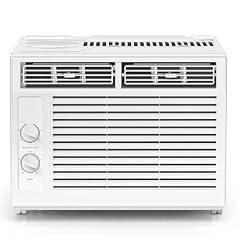
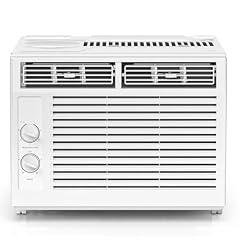
ZAFRO 5,000 BTU Window Air Conditioner
Overview
This is a compact, fixed-speed window air conditioner for a standard double-hung window. It is rated at 5,000 Btu, weighs about 36 pounds, and is intended for rooms up to 150 square feet. Controls are mechanical, with cooling and fan settings, a manual thermostat, directional louvers, and a removable washable mesh filter. The cooling capacity and efficiency are unusually well documented for this product. Its federal EnergyGuide identifies ZAFRO, lists 5,000 Btu capacity, a CEER of 11.0, and estimated yearly energy cost of $44 using the label's national assumptions. A UL certificate covers the matching product designation under UL 60335-2-40 and UL 60335-1. The supplied manual also gives specific installation, drainage, filter-cleaning, and LCDI cord instructions.
What works
- The federally formatted EnergyGuide documents 5,000 Btu capacity, CEER 11.0, and a $44 estimated annual energy cost under its stated assumptions.
- A UL certificate for the matching product designation covers room-air-conditioner safety testing to UL 60335-2-40 and UL 60335-1.
- The manual specifies an LCDI leakage-current protection cord, grounded outlet use, and no extension cord or plug adapter.
- Installation guidance is concrete, including a 23 to 34 inch window-width range, 14.5 inch minimum opening height, sash locks, frame locks, supplied screws, and outward tilt for drainage.
- The filter slides out from the front and is intended to be checked monthly, washed, dried fully, and reused.
What does not
- The published sound information is not supported by an acoustic test report stating measurement distance, operating mode, and test conditions. Retail specifications range from 43 to 56 dB, while the product listing states 45 dB.
- The manual describes condensate management and a base pan, but it does not provide a quantified dehumidification rate or a dedicated mold-cleaning procedure for internal coils and pan surfaces.
- The one-year warranty is limited, and no model-specific replacement-parts catalog, service manual, or authorized repair network was located.
- The product uses R-32 refrigerant, which is lower in climate impact than many older refrigerants but is mildly flammable. Servicing and disposal should therefore be left to qualified personnel.
- No independent room-size test report was located. The 150 square foot coverage claim is plausible for a 5,000 Btu unit but remains a manufacturer-stated application limit rather than a disclosed field test.
Who is it for
This product suits a person cooling one small, enclosed room, such as a bedroom, office, dorm room, or small studio area, where the usable area is no more than about 150 square feet and the window is a standard double-hung type. It is especially suited to someone comfortable with simple on-unit mechanical controls rather than app control. The buyer should have a grounded wall outlet within reach, a window opening at least 14.5 inches high and 23 to 34 inches wide, and help available for lifting and installation.
Who is it not for
It is not suited to large, open-plan, poorly insulated, sun-exposed, or high-heat-load rooms, because the documented capacity is only 5,000 Btu and the coverage claim is limited to 150 square feet. It is also unsuitable for casement or sliding windows without a safe, purpose-designed installation solution. People who need independently documented low-noise bedroom performance should look for a unit with a full acoustic test report. Do not choose it where the required outward tilt, sash lock, and secure mounting cannot be achieved, or where an extension cord would be necessary.
Integrity
The safety evidence is stronger than is typical for an entry-level window unit. A UL certificate for the matching product designation identifies testing to current household air-conditioner safety standards. The manual also specifies a grounded outlet, an LCDI cord that can interrupt power on leakage current, and no extension cord or adapter use. It requires a secure sash lock and a slight outward tilt, both important for preventing window movement and indoor water leakage. The product uses R-32 refrigerant. EPA lists HFC-32 as acceptable with use conditions for relevant air-conditioning uses, and the manual correctly treats it as combustible, requiring professional servicing and refrigerant recovery at end of life. Its washable filter can reduce disposable-filter waste, and the EnergyGuide documents CEER 11.0. However, the short warranty and lack of a located parts pathway limit confidence in long service life. No matching CPSC recall or public safety warning was located in the checked sources.

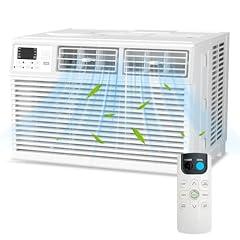
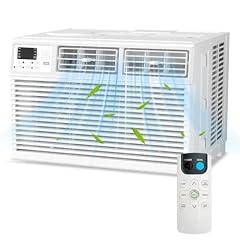
Electactic Window Air Conditioner 10000 BTU
Overview
This is a conventional 115-volt window air conditioner, listed at 10,000 BTU, with remote controls, cooling, fan, sleep, timer, and dehumidification functions. It is a roughly 49-pound unit intended for standard double-hung windows. Documentation covering this product configuration specifies a 23 to 36 inch window width, at least 14.5 inches of sash clearance, a grounded outlet, and a dedicated circuit. A matching retail record independently lists 10,000 BTU capacity, a CEER of 11, and a 42 to 56 dB sound range. Those are retail-published specifications rather than a located DOE certification or EnergyGuide record. The marketplace claim of up to 450 square feet is not fully consistent with the matching retail record, which lists 400 square feet maximum coverage. The instruction manual provides detailed drainage, filter-cleaning, electrical, and installation steps, but no exact-product acoustic report or performance test record was located.
What works
- The product-family manual specifies a grounded three-prong plug and LCDI cord that disconnects power when leakage is detected.
- Installation instructions specify window dimensions, rearward pitch, frame locks, sash lock, screws, sealing materials, and all four top-rail screws.
- The filter is removable from the front, can be washed, and has a 500-hour cleaning reminder in the manual.
- A matching retail listing identifies a 42 to 56 dB range by operating setting, rather than making only an undefined quiet claim.
What does not
- The 450-square-foot marketplace coverage claim conflicts with a matching retail listing that gives 400 square feet maximum coverage.
- No exact-product DOE certification record, EnergyGuide label, ENERGY STAR certification, or named cooling and sound test report was located.
- The manual covers R-32 safety and refrigerant removal when scrapping, but a consumer-facing manufacturer recycling or repair-parts pathway was not located.
- The stated warranty is one year, and no exact-product parts catalog or authorized service network was located.
Who is it for
This product fits a renter or homeowner with a compatible standard double-hung window, a grounded nearby outlet, and a room whose cooling load is conservatively within about 400 square feet. It is most appropriate for someone able to follow a screw-secured installation, maintain the rearward drainage pitch, clean the mesh filter routinely, and verify the LCDI plug before use. The remote, timer, sleep setting, and directional airflow can suit a bedroom or small living space, provided the published noise range is acceptable.
Who is it not for
It is not suited to casement, sliding, unusually narrow, structurally weak, or hard-to-secure windows. A household without a grounded three-prong outlet on an appropriate dedicated circuit should not use it without electrical work by a qualified electrician. It also deserves caution in a quiet sleeping environment, because the independently listed sound range reaches 56 dB and no exact-product acoustic test conditions were found. Buyers needing a fully verified 450-square-foot capacity, ENERGY STAR status, or readily documented replacement parts should seek documentation that supplies those records.
Integrity
The product-family manual contains meaningful safety controls. It requires a grounded outlet, prohibits extension cords and adapters, and describes an LCDI plug that is intended to interrupt power on leakage detection. Its installation instructions call for locking hardware, sash sealing, a secure sill attachment, and rearward pitch. The removable filter can be washed, and the manual says to check it at least monthly, measures that can reduce dust buildup and standing-water problems when followed. The refrigerant is disclosed as R-32. The manual identifies it as combustible and says refrigerant must be cleared from the system during servicing or scrapping. EPA rules require recovery before final disposal of window air conditioners. No product-specific active CPSC recall or exposure warning was located in the searches performed. However, the manufacturer materials located do not provide a clear consumer repair-parts catalog or recycling program, and no exact-product DOE or ENERGY STAR performance record was found.
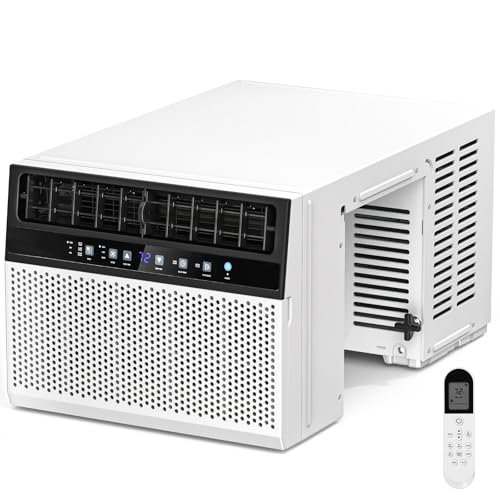
Antarctic Star Window Air Conditioner 12,000 BTU
Overview
This is a 115-volt, over-the-sill U-shaped window air conditioner with remote control, cooling, Dry, fan, auto, sleep, and energy-saver modes. The documented product family uses R-32 refrigerant and is intended for standard double-hung windows. Its installation manual calls for a 24-inch minimum opening width, a 16-inch minimum opening height, and two people for installation. The strongest independent finding is safety traceability. An Intertek constructional report names the Antarctic Star version within this product family and records conformance testing to applicable UL and CSA household air-conditioner safety standards. Cooling claims need more care. A closely matched retail record for the underlying 12,000 BTU family specifies 8,100 BTU under the DOE rating method and a claimed 550-square-foot coverage area. The product listing's 12,000 BTU headline does not clearly distinguish those ratings.
What works
- An Intertek report traces the Antarctic Star product family to UL and CSA air-conditioner safety testing.
- The manual specifies mounting blocks, an adjustable support knob, foam seals, a level check, and a 1 to 2 degree outward tilt.
- Dry mode is documented to reduce room humidity, and the filter mesh can be cleaned or replaced.
- R-32 is disclosed in the independently documented product family. EPA identifies it as a lower-GWP room-air-conditioner refrigerant option.
What does not
- The advertised 12,000 BTU figure is not clearly labeled against the 8,100 BTU DOE capacity documented for the closely matched underlying unit.
- Noise information is inconsistent across retail records, ranging from 45 to 56 dBA, without a matching test mode or measurement condition.
- A one-year warranty is documented, but no model-specific parts catalog, repair manual, or authorized service network was found.
- The installation is substantial. The manual calls for two people, a sound double-hung window, correct sill fit, and careful support adjustment.
Who is it for
This product suits someone with a compatible double-hung window who wants an over-the-sill format that leaves more of the window area usable than a conventional box unit. It is most appropriate for a closed medium room, rather than an open floor plan, where the independently documented 8,100 BTU DOE capacity is a realistic sizing reference. The buyer should be able to follow the installation instructions with a second person, use a grounded nearby outlet, and clean the filter and manage collected water when required.
Who is it not for
It is not suited to anyone needing a reliably verified ultra-quiet bedroom unit, because available sound figures conflict and do not identify comparable operating conditions. It is also unsuitable for narrow, damaged, nonstandard, or weak windows, or for people who cannot safely install a heavy window appliance with a second person. Avoid relying on the 12,000 BTU headline alone for large, sunny, open-plan, or high-heat rooms. Those spaces need sizing based on the lower DOE-rated capacity and actual heat load.
Integrity
The main health and safety positive is an independently available Intertek constructional report. It includes the Antarctic Star product-family model and records conformance testing to the relevant UL and CSA standards for household air conditioners. The associated manual also directs users to use a grounded three-prong outlet, avoid extension cords, inspect the window condition, use two people for installation, and set a slight outward tilt to limit rainwater entry. R-32 is disclosed for the product family. EPA lists HFC-32 as acceptable with use conditions and identifies it as a lower-GWP refrigerant option for room air conditioners, although it is mildly flammable and the appliance should not be pierced or improperly serviced. The manual provides drainage and filter-maintenance instructions, but the product has only a one-year warranty and no clear model-specific repair-parts or take-back pathway was found. At end of life, refrigerant should be recovered through an appropriate appliance disposal channel rather than released.

Antarctic Star U-Shaped Window Air Conditioner
Overview
This is a 115 V, corded U-shaped window air conditioner for double-hung or single-hung windows. The product listing describes 10,000 BTU cooling, a claimed 450 square foot coverage area, dehumidifying and fan modes, remote controls, and a 63.8 pound installed weight. It requires a 16 inch high window opening and a width from 24 to 48 inches. Independent retail documentation for the same product platform identifies 10,000 BTU under the ASHRAE rating and 6,000 BTU under the DOE rating, with 450 square feet stated as its coverage area. Its documented CEER is 10.9. An Intertek ETL listing construction report covers the Antarctic Star product family and this model format. The supplied product-family manual gives specific mounting-block, support-knob, leveling, outward-tilt, drainage, filter-cleaning, and seasonal drying directions.
What works
- An Intertek ETL listing construction report covers the Antarctic Star product family and this model format. Intertek is an OSHA-recognized U.S. testing laboratory.
- The manual provides concrete mounting and water-control steps, including support adjustment, leveling, a 1 to 2 degree outdoor tilt, drainage instructions, and a warning to hold the unit during removal.
- A washable filter and a 250-hour clean-filter reminder support routine airflow maintenance.
- The sealed refrigeration system uses R32, and the manual provides refrigerant handling and ignition-source warnings.
What does not
- The 10,000 BTU claim is not clearly qualified in the product listing. Independent retail documentation for the same platform reports 6,000 BTU using the DOE rating, which is the more decision-useful figure for U.S. room air conditioner labeling.
- The 45 dB claim is not accompanied by a named test method, operating mode, fan speed, or measurement conditions. Another retail record for the same model reports 54 dBA.
- There is no exact-product EnergyGuide record, DOE certification record, ENERGY STAR certification, or acoustic laboratory report available from the reviewed evidence.
- The warranty is limited to one year, and no manufacturer parts catalog or U.S. repair network was located.
Who is it for
This product suits someone with a compatible double-hung or single-hung window, a sound sill and wall support surface, and the ability to install or supervise installation of a 63.8 pound appliance. It is most appropriate for a small to medium enclosed room where the buyer treats the 6,000 BTU DOE figure as the capacity reference and can use the supplied support hardware exactly as instructed. It also fits users willing to wash the filter, keep the drain area clear, and dry the unit before seasonal storage.
Who is it not for
It is not appropriate for casement or sliding windows, windows outside the stated 16 inch by 24 to 48 inch opening range, damaged sills, or installations where the unit cannot be securely supported and slightly tilted outdoors. People unable to safely lift and stabilize a 63.8 pound unit should arrange qualified help. It is also a poor fit for buyers who need independently documented bedroom sound performance, an exact-product EnergyGuide label, ENERGY STAR certification, a longer warranty, or clearly available replacement parts and service.
Integrity
The strongest safety evidence is the Intertek ETL listing construction report, which includes Antarctic Star in the covered brand family and covers the relevant U-shaped product format. The installation manual is unusually specific about mounting blocks, a support knob, level placement, slight outdoor tilt, and safe removal. Those steps matter because incorrect support can create falling-unit, rain-intrusion, and indoor-drip hazards. The sealed system uses R32 refrigerant. R32 has lower climate impact than older R410A, but it is mildly flammable, so the manual's warnings against ignition sources, puncturing, and unqualified refrigerant work are important. The washable filter, clean-filter reminder, drain instructions, and four-hour fan-only drying step support maintenance that can reduce stagnant moisture and mold risk. No exact-product recycling program, repair network, parts catalog, or ENERGY STAR certification was identified in the reviewed evidence.

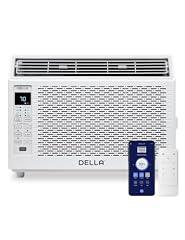
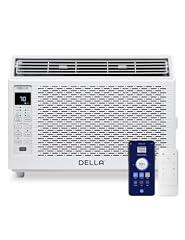
DELLA 6000 BTU Smart Window Air Conditioner
Overview
This is a 115-volt, 6,000 BTU conventional window air conditioner for a small room. DELLA lists a 150 to 250 square foot coverage range, Wi-Fi app and remote control, dry mode, Alexa support, a reusable filter, and a 38.6 pound cabinet measuring about 16 by 15 by 12.5 inches. It is intended for vertical single-hung or double-hung windows. The manufacturer states that the product is UL listed, uses R32 refrigerant, and produces 51 dBA indoors. A related manufacturer-supplied instruction manual instead presents indoor sound as a range by fan setting and gives specific drainage, outlet, cleaning, and installation instructions. Independent public verification for this exact product's safety listing, EnergyGuide data, cooling output, efficiency, and acoustic test conditions was not located.
What works
- The manufacturer provides a concrete 150 to 250 square foot application range and 6,000 BTU capacity for small-room cooling.
- The installation materials listed by DELLA include a top rail, filler panels, sash seal, foam gasket, sash lock, lock frame, and screws.
- The associated instruction manual directs a roughly 3 degree outward tilt to manage condensate and includes removable-filter cleaning guidance.
- R32 refrigerant is disclosed, rather than left unspecified, and the manual warns against puncturing, burning, or unqualified service.
- A one-year parts-only limited warranty is stated, with six additional months of parts coverage after timely product registration.
What does not
- No public independent record was located that confirms the exact product's UL listing, despite the manufacturer's UL-listed claim.
- No exact-product EnergyGuide label, DOE certification record, CEER value, or named cooling and sound test report was located.
- The published 51 dBA figure does not identify fan setting, distance, room conditions, or test method. A related manual gives a higher multi-speed sound range.
- The manufacturer gives no readily located parts catalog, repair manual, authorized-service directory, or consumer recycling program.
- The warranty covers parts replacement only, not full-product replacement.
Who is it for
This product fits a person cooling one appropriately sized, vertically sliding window room, such as a small bedroom, office, or enclosed living area, where a standard grounded 115-volt outlet is available near the window. It is also suited to someone who values remote or app scheduling and can follow the required installation steps, including securing the sash lock, fitting the side panels, maintaining the outward drainage tilt, and washing the filter regularly. Its stated coverage should be treated as a starting point, not a guarantee in sunny, poorly insulated, or high-occupancy rooms.
Who is it not for
It is not suited to rooms larger than the manufacturer's 250 square foot maximum, heavily sun-exposed rooms, open-plan areas, or spaces with unusually high humidity or heat loads. It also does not fit horizontal sliding or casement windows. People who need independently documented low-noise operation for sleep, verified efficiency data, a clearly traceable safety certification, or access to published replacement parts and repair support should use a product with those exact records available. Do not use an extension cord, adapter, damaged outlet, or ungrounded connection.
Integrity
The manufacturer identifies R32 as the refrigerant. EPA lists HFC-32 as an A2L, lower-flammability refrigerant with a global warming potential of 675, and permits it with use conditions. The related manual appropriately treats the refrigerant circuit as a service item, warning against puncture or burning and directing that refrigerant be cleared during service or scrapping. EPA disposal rules require recovery before a window air conditioner reaches final disposal. For indoor conditions, the documented design includes dry mode, filter cleaning instructions, and an outward installation tilt to move condensate and rainwater toward the rear. Those are useful mold-risk controls only when installation and cleaning are maintained. No exact-product CPSC recall or public safety incident was located in this review. However, the claimed UL listing and the key performance figures could not be independently matched to a public exact-product record, and no manufacturer recycling pathway or repair-parts catalog was found.

ZAFRO 12,000 BTU Window Air Conditioner
Overview
This is a fixed window air conditioner for a standard double-hung window. The seller describes 12,000 BTU cooling, dehumidification, remote control, sleep mode, timer, and coverage up to 550 square feet. The product documentation supports the window format, a 115 V grounded connection, washable filter care, and cooling, fan, auto, and sleep controls. Its strongest product-specific evidence is an independent CSA Group safety report naming this product under the ZAFRO brand and recording satisfactory testing to ANSI/UL 60335-2-40. The report also identifies factory-charged R32 refrigerant. Cooling capacity, room coverage, noise, and efficiency are less well documented. Retail records tied to this product family report inconsistent CEER, wattage, and sound figures, and no exact-product DOE capacity record or EnergyGuide label was located.
What works
- An exact-product CSA Group report records satisfactory testing to ANSI/UL 60335-2-40, a U.S. recognized electrical safety standard.
- The installation manual requires a grounded three-prong outlet, prohibits adapters and extension cords, and advises two or more people for installation.
- The manual gives concrete moisture-control steps, including a rearward tilt, unobstructed drain paths, and removal of retained condensate before taking the unit out.
- The slide-out washable filter has monthly cleaning instructions and a 500-hour cleaning reminder.
What does not
- No exact-product DOE cooling-capacity record or FTC EnergyGuide label was located, so the 12,000 BTU and 550-square-foot claims remain unverified by the requested performance records.
- Energy disclosures are inconsistent across product-family retail records, which variously report CEER values of 10.9, 11, and 12.1. This makes the energy-saving claim difficult to trace.
- The 55 dB seller claim lacks an acoustic test method, operating mode, fan setting, and measurement distance. Other retail data for the same family cite 54 dB or 56 dB.
- R32 has a lower climate burden than older refrigerants, but it is flammable. The manual restricts service and refrigerant handling to qualified personnel.
Who is it for
It fits a household that needs a conventional window unit in a compatible double-hung window and can provide a dedicated, properly grounded 115 V outlet. It is most suitable where two adults can safely install and secure a heavy appliance using the supplied locks, screws, sash lock, and foam seal. The documented washable filter and cleaning reminder also suit users willing to do monthly filter care and verify that exterior drainage remains unobstructed after installation.
Who is it not for
It is not suited to casement windows, incompatible window openings, damaged sills, or installations where the cabinet cannot be tilted slightly toward the outdoors and mechanically secured. It is also unsuitable for anyone who cannot use a grounded outlet without an extension cord or adapter. Bedroom users especially sensitive to sound should seek a product with independently reported dB(A) results by mode and fan speed. Households unable to follow flammable-refrigerant service restrictions should not attempt repairs or disposal themselves.
Integrity
The electrical-safety evidence is unusually concrete for this product. A CSA Group report identifies the product family and ZAFRO branding, and documents satisfactory results to ANSI/UL 60335-2-40. CSA Group is recognized by OSHA as a Nationally Recognized Testing Laboratory. The manual also specifies grounded outlet use, no adapters or extension cords, and a two-person installation precaution. The product uses R32 refrigerant, with the CSA report listing a 0.320 kg factory charge for the 12,000 BTU configuration. The manual identifies R32 as combustible and requires appropriate precautions, qualified servicing, refrigerant recovery during scrapping, and compliance with applicable disposal rules. Moisture management is addressed through rearward installation tilt, drain-path instructions, and washable-filter maintenance. No exact-product CPSC recall was located. Efficiency remains less transparent because no exact EnergyGuide disclosure or DOE performance filing was found, while retailer CEER figures conflict.

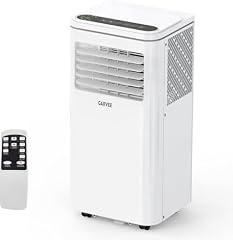
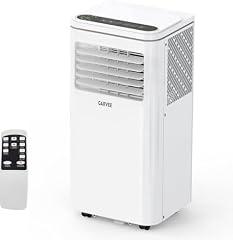
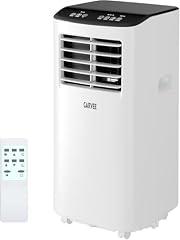
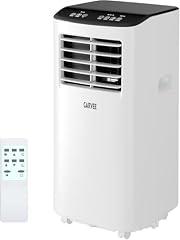
Garvee 8,000 BTU Portable Air Conditioner
Overview
This is a single-duct, floor-standing portable air conditioner for a vented window. It combines cooling, fan, and dehumidifying modes, uses a hose and sliding window kit, and is listed at 115 volts. Retail documentation identifies an 8,000 Btu/h ASHRAE rating, but also identifies the more useful seasonally adjusted cooling capacity as 5,000 Btu/h. The stated room coverage of up to 350 square feet should therefore be treated as a favorable-condition maximum, not a guaranteed result for a sunny, poorly insulated, or high-ceiling room. A manufacturer-family test report that includes this product's naming pattern recorded a mean 5,372 Btu/h seasonally adjusted cooling capacity, 6.93 CEER, and about 580 kWh annual cooling energy use. That is substantially more traceable than the listing's general specifications. The available product documentation states 50 dB noise, but does not provide an acoustic test method, fan setting, or measurement distance.
What works
- Cooling capacity is supported by a named test report covering the product's model family, with a mean 5,372 Btu/h seasonally adjusted result.
- The same test report provides traceable energy figures, including 6.93 CEER and approximately 580 kWh annual cooling energy use.
- The disclosed R-32 refrigerant has no ozone-depletion potential and is listed by EPA as acceptable subject to use conditions for this equipment category.
- The product documentation provides a hose and window kit, allowing temporary installation without a permanent wall opening.
What does not
- The prominent 8,000 Btu/h figure is an ASHRAE rating, while the retailer identifies a lower 5,000 Btu/h seasonally adjusted rating. Coverage claims should be interpreted using the latter.
- The 50 dB noise figure is not supported by an exact-product acoustic report that states operating mode, fan speed, distance, and test conditions.
- Drainage and cleaning instructions exist, but no independently verified evidence was found for long-term condensate control, mold resistance, or cleaning access.
- No public manufacturer parts catalog, repair network, or product-specific recycling program was located. The documented warranty is one year.
- A family test report and ETL-marked nameplate provide useful safety evidence, but an exact-product listing could not be independently confirmed in a public NRTL directory.
Who is it for
This product suits a renter or homeowner needing temporary cooling in a small enclosed bedroom, office, or similarly sized room with a compatible window near a grounded outlet. It is most appropriate where the room is well shaded, reasonably insulated, and the hose can be kept short and straight. The independently documented seasonally adjusted capacity is around 5,372 Btu/h, so buyers should size from that figure rather than assume that every 350-square-foot room will perform the same way. It also suits users willing to monitor drainage and clean the filter.
Who is it not for
It is not suited to large open-plan areas, rooms with high ceilings, strong sun exposure, leaky windows, or spaces that need dependable cooling at the full stated 350-square-foot maximum. It is also a poor fit for highly noise-sensitive sleepers because the stated 50 dB figure lacks test conditions and independent confirmation. Households unable to inspect, clean, and occasionally drain a portable appliance should avoid relying on its claimed low-drain operation. Do not use it where a secure window-panel installation cannot be achieved or where an exterior exhaust route is unavailable.
Integrity
The product uses R-32, a refrigerant with zero ozone-depletion potential and a global warming potential of 675. EPA lists it as acceptable with use conditions for residential and light-commercial air conditioning. R-32 is mildly flammable, so the product should remain intact, be used only as installed, and never be punctured or altered. At end of life, refrigerant must be recovered rather than vented, consistent with EPA appliance-disposal requirements. A manufacturer-family energy test report identifies a 5,372 Btu/h mean seasonally adjusted capacity, 6.93 CEER, and roughly 580 kWh yearly cooling energy use. The report also shows an ETL-marked nameplate, though a public directory match for this exact product was not found. No product-specific recall or regulatory warning was located in the sources reviewed. The main practical health issue is moisture management, since drainage and filter cleaning remain user responsibilities.

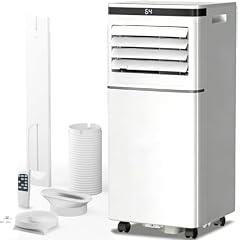
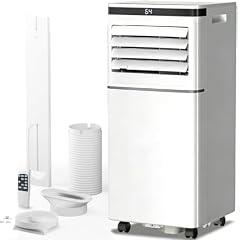
Antarctic Star Portable Air Conditioner 8000 BTU
Overview
This is a cord-connected, single-hose portable air conditioner intended for indoor use. It rolls on casters and sends condenser heat outside through a flexible exhaust hose and window-panel kit. The documented product family uses 115 V power, a grounded LCDI plug, a removable filter, and R-32 refrigerant. Its cooling description needs careful reading. The product page presents 8,000 BTU and up to 350 square feet, while an Antarctic Star retail listing for the same model identifies 8,000 BTU ASHRAE, 5,000 BTU DOE SACC, and up to 320 square feet. An Intertek authorization independently names this model under ETL safety certification to applicable UL and CSA air-conditioner standards. A test report for the certified family records cooling measurements, but the reviewed material does not supply a matching EnergyGuide label, public DOE efficiency record, or mode-specific sound test.
What works
- The exact model is covered by an Intertek authorization to apply the ETL mark under UL 60335-1 and UL 60335-2-40 safety standards.
- The documented design includes a grounded LCDI plug, and the manual directs users to test its Test and Reset functions before operation.
- A water-full alarm and automatic shutoff are documented, with instructions for manual draining and fully drying the unit before storage.
- The washable mesh filter is accessible, and the manual specifies cleaning it every two weeks.
- The refrigerant is identified as R-32, and the manual includes flammable-refrigerant handling warnings and recovery instructions for qualified service work.
What does not
- The 8,000 BTU and 350-square-foot headline lacks the DOE SACC qualifier. A second retail listing for the same model instead states 5,000 BTU DOE SACC and up to 320 square feet.
- No reviewed EnergyGuide label, public DOE certification entry, CEER value, or current ENERGY STAR record was traceable for this product.
- The stated 50 to 51 dB noise figure has no identified operating mode, distance, or acoustic test method, so bedroom quietness is unproven.
- The manual requires manual draining when the tank is full. The user must also dry the interior before storage to limit residual moisture and mold risk.
- Only a one-year manufacturer warranty was stated. No product-specific parts catalog, repair manual, or authorized service network was located.
Who is it for
This product suits someone needing movable supplemental cooling in a small room with a compatible window for the exhaust panel, a nearby dedicated grounded 115 V outlet, and willingness to manage seasonal maintenance. It is most appropriate when the buyer sizes from the more conservative 5,000 BTU DOE SACC figure rather than assuming that the headline 8,000 BTU figure alone defines real-room performance. It also fits users able to clean the mesh filter regularly, respond to the water-full alarm, and drain and dry the unit before storage.
Who is it not for
It is not well suited to people trying to cool a consistently hot, sunny, crowded, or roughly 350-square-foot room based only on the headline claim. Those conditions can exceed the conservative capacity information located for this model. It is also a poor fit for highly noise-sensitive sleepers because the sound claim has no disclosed test conditions. Households without a dedicated grounded outlet, a suitable exhaust-window arrangement, or an adult able to move, drain, and maintain a roughly 44-pound appliance should choose a format that better fits those constraints.
Integrity
The strongest health and safety finding is model-specific ETL authorization. The authorization covers Antarctic Star units with this model number under current UL and CSA household-appliance and air-conditioner safety standards. The documented product family also has a grounded LCDI cord, while its manual prohibits extension cords and adapters, specifies a dedicated 15-amp circuit, and directs users to test the cord protection before use. Moisture control requires active upkeep. The manual describes a full-tank alarm and shutdown, manual drainage, filter washing every two weeks, and fan-only drying before storage to help prevent retained water and mold. R-32 is disclosed, with flammability warnings and qualified-service recovery guidance. However, the reviewed evidence did not provide a product-specific EnergyGuide label, DOE efficiency filing, ENERGY STAR certification, repair-parts pathway, or consumer refrigerant-recovery program.
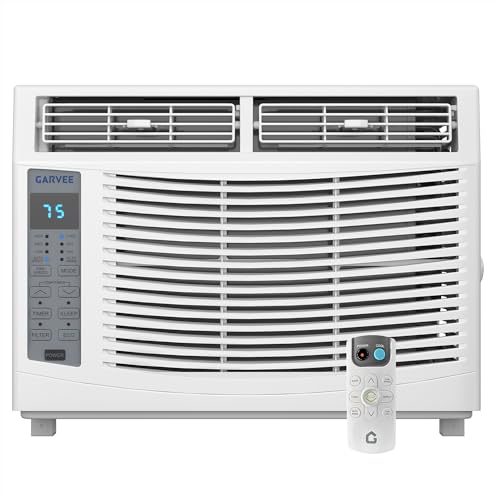
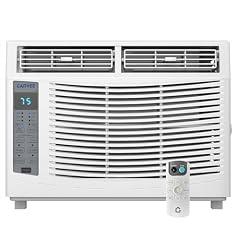
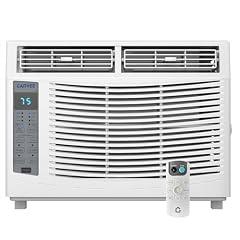
GarveeTech 6000 BTU Window Air Conditioner
Overview
This is a fixed, 115-volt window air conditioner marketed for small rooms, with remote control, three cooling speeds, a digital display, and a claimed 6,000 BTU cooling capacity. It is intended for a bedroom or office of up to 250 square feet. Garvee's own product page independently states the 6,000 BTU and 250-square-foot claims, plus a 50 dB noise claim, reusable filter, timer, sleep mode, and window fit range of 23 to 36 inches wide with at least 14.5 inches of height. Those are manufacturer statements, not independently verified test results. The catalog specifications conflict with that page on dimensions, weight, and power draw. No exact-product match was located in DOE efficiency, ENERGY STAR, EnergyGuide, or U.S. safety-listing records reviewed for this assessment.
What works
- Manufacturer states 6,000 BTU cooling for rooms up to 250 square feet.
- Manufacturer documents a reusable, accessible filter, which supports regular cleaning.
- Remote control, three cooling speeds, sleep mode, timer, and four-way louvers give useful day-to-day control.
- Garvee states a 12-month warranty and 30-day return policy on its product page.
What does not
- Cooling capacity, humidity removal, annual energy use, and CEER were not traceable to an exact-product DOE, EnergyGuide, ENERGY STAR, or independent test record.
- No exact-product UL, ETL, or CSA safety-listing record was located, so electrical and fire-safety certification could not be confirmed.
- The listed 50 dB sound figure does not identify fan speed, distance, operating mode, or test method.
- Catalog dimensions, weight, and 120-watt rating conflict with Garvee's independently located product-page specifications, weakening confidence in the listing details.
- The refrigerant type, charge, drainage procedure, service parts, and end-of-life instructions were not disclosed in the material located.
Who is it for
This product suits someone cooling one small, conventionally sized double-hung window room who can verify their window is 23 to 36 inches wide and at least 14.5 inches high. It is most appropriate where a remote, timer, sleep mode, and washable filter are practical conveniences, and where the buyer is prepared to follow the supplied installation instructions and inspect the unit after installation. The 250-square-foot coverage figure should be treated as a manufacturer estimate, especially in sunny rooms, poorly insulated spaces, or rooms with multiple heat-producing appliances.
Who is it not for
It is not well suited to buyers who need documented efficiency, independently verified capacity, a confirmed U.S. safety listing, or measured low-noise performance for a sleep-sensitive room. It is also unsuitable for windows outside the manufacturer's stated opening range, side-sliding windows unless the instructions expressly support that installation, or any installation where the sash cannot be securely locked. Households with respiratory vulnerability should not assume moisture control is adequate, because no exact-product drainage design, dehumidification rate, or mold-control documentation was located.
Integrity
The manufacturer states that this window unit has a reusable filter and dehumidifying function. A reusable filter can reduce disposable-filter waste if it is cleaned on schedule, but no exact-product manual was located to confirm cleaning intervals, condensate routing, or steps to prevent standing water. Pooled water in window air conditioners can create mold risk, so drainage and filter care are important even though no exact-product recall or warning was found. The product page gives no refrigerant identity, refrigerant charge, CEER, annual electricity use, or exact-product EnergyGuide documentation. That leaves its climate impact and running cost unverified. At end of life, a window air conditioner should go through an appliance recycler or other disposal channel that recovers refrigerant, rather than ordinary trash. The manufacturer page offers a 12-month warranty, but no parts catalog or repair pathway was located.

Garvee 8,000 BTU Portable Air Conditioner
Overview
This is a single-hose, portable indoor air conditioner on casters that vents through an included adjustable window panel and exhaust hose. It has cooling, fan, and dehumidifying modes, touch and remote controls, and a stated 115 V, 699 W electrical specification. The manual describes manual draining when the tank fills and optional continuous drainage in dehumidifying mode. Its most important verified performance figure is lower than the prominent retail headline suggests. An EnergyGuide label identifies 5,000 BTU capacity and a 6.2 combined energy-efficiency ratio. Separately, product documentation presents 8,000 BTU as an ASHRAE figure and says 250 to 350 square feet, but no exact-product laboratory report was located to validate the coverage claim, moisture-removal rate, or sound measurement conditions. The manual identifies R-32 refrigerant and depicts a CSA C/US mark.
What works
- An EnergyGuide label identifies 5,000 BTU capacity, 6.2 CEER, and an estimated yearly energy cost of $70 under the label assumptions.
- The manual provides two drainage routes, including continuous drainage in dehumidifying mode, plus end-of-season drying steps intended to limit internal mildew.
- The manual instructs owners to clean the removable filter every two weeks, which can help preserve airflow and reduce dust buildup.
- The supplied instructions specify a grounded three-prong outlet, prohibit extension cords and adapters, and give clearance and exhaust-hose routing guidance.
What does not
- The retail 8,000 BTU headline does not state that the EnergyGuide capacity is 5,000 BTU. The manufacturer documentation distinguishes the former as ASHRAE capacity, but the retail claim remains easy to misread.
- The stated 250 to 350 square foot coverage, 45-pint daily dehumidification claim, and 50 to 52 dB noise claims were not supported by an exact-product independent test report with conditions.
- Continuous drainage is optional and only applies in dehumidifying mode. Owners still need to empty the reservoir when the full-water indicator appears.
- The public manual depicts a CSA C/US mark, but an exact-model listing in a current public CSA certification directory was not located. Publicly available CSA report material found for the same contract covers a different A020 model family.
- Only a one-year manufacturer warranty is consistently documented, and no exact-product replacement-parts catalog or repair network was found.
Who is it for
This product suits a renter or homeowner who needs temporary spot cooling in a small enclosed room and can place a roughly 50-pound indoor unit beside a compatible sliding or hung window. It is most appropriate when the buyer will use the EnergyGuide capacity of 5,000 BTU as the planning figure, can keep doors and windows closed, and is prepared to maintain the filter and manage drainage. It also fits users who want fan and dehumidifying functions from the same movable appliance.
Who is it not for
It is not well suited to people who need confidently documented cooling for a full 350-square-foot room, a large sun-exposed room, an open-plan area, or a hot garage. Buyers who are highly sensitive to nighttime noise should seek a unit with independent sound data by mode and fan speed. It is also unsuitable where a window cannot safely accept the exhaust panel, where the unit cannot remain upright and level, or where drainage, regular filter cleaning, and access to a grounded wall outlet cannot be managed.
Integrity
The manual gives useful operational safeguards. It directs users to use a grounded three-prong outlet, avoid extension cords and adapters, maintain clearance around the unit, and keep the exhaust hose free of blockage. Its CSA C/US marking is meaningful because CSA is an OSHA-recognized testing laboratory, although the exact product could not be matched to a current public CSA directory entry. No product-specific CPSC recall was located during this research. R-32 is disclosed, rather than left unspecified. It is a flammable refrigerant, and the manual warns against ignition sources, puncturing, burning, and unqualified refrigeration-system repair. The manufacturer also gives storage drying instructions to reduce internal mildew. However, it does not provide a clear consumer end-of-life take-back or recycling route. Disposal should use an appliance recycler that recovers refrigerant, consistent with EPA disposal requirements.