
10 Best Wireless Access Point
 Daniel Kenitz
Please note that we participate in affiliate marketing programs. When you purchase through links on our site, we may earn a commission. As an Amazon Associate we earn from qualifying purchases. This comes at no additional cost to you and helps support the resources required to provide valuable content.Advertising Disclosure
Top-rated Wireless Access Point Comparison
1

2
4
5
6
7
8
9
Wireless access points: what matters
A wireless access point adds Wi‑Fi to an existing wired network. Unlike a typical router, it usually does not create the internet connection by itself: it needs an Ethernet uplink to a router, switch, or gateway. Some products also offer router, repeater, mesh, or point-to-point bridge modes, but those modes have different limitations. Before buying, confirm whether the product includes a power adapter, requires PoE, needs a separate controller, and is intended for indoor, outdoor, or building-to-building use.
The useful result is not the largest number on the box. Wireless rates are physical-layer link rates shared across bands and affected by client hardware, channel width, distance, walls, interference, congestion, and the wired uplink. A claimed 1.8, 3.6, 5.0, or 11 Gbps may therefore produce much less usable throughput. A 100 Mbps Ethernet port caps wired traffic even when the radio advertises several hundred megabits per second. Coverage figures and device-count claims also need stated test conditions; the supplied listings include conflicting coverage and capacity numbers for some products. Independent tests that identify the exact model, firmware, client, distance, channel width, obstructions, and interference provide more useful evidence than an aggregate rate label.
For U.S. operation, look for the exact product and radio configuration in the FCC Equipment Authorization System. The FCC grant, test reports, antenna details, transmit-power limits, permitted channels, DFS behavior, and RF-exposure exhibits should match the U.S. model. A separation instruction such as 20, 45, or 46 cm is meaningful only when it applies to the exact approved configuration. FCC compliance language without an identifiable grant, antenna information, or exposure exhibit is not equivalent evidence. Wi‑Fi Alliance certification can independently confirm that the exact model or certified variant supports the claimed Wi‑Fi features, while an NRTL record from UL Solutions Product iQ or Intertek's ETL directory can help verify electrical safety for the access point, adapter, or PoE injector.
For security, look beyond the word “secure.” Prefer documented WPA3, protected management frames, HTTPS administration, guest or client isolation, VLANs, and the ability to disable unsafe legacy modes. Check the maker's firmware page, vulnerability advisories, support-lifecycle statement, and update history. Local management can reduce cloud dependence, but it does not automatically mean minimal data collection: privacy policies may still cover account, device, network-use, location, or diagnostic information when optional services are used.
Power and installation deserve equal attention. Confirm that the supplied adapter or injector has compatible voltage, current, and PoE requirements; a separate injector must be assessed separately. Outdoor products need more than a “weatherproof” label: look for an enclosure rating, mounting and cable-sealing instructions, grounding, surge or lightning guidance, permitted antenna conditions, and clear limits for the power equipment. Across the supplied products, recurring concerns include indoor-only devices being unsuitable for damp or exposed locations, undocumented or conflicting power requirements, missing NRTL evidence for bundled adapters or injectors, outdated security modes, unclear support lifetimes, and headline range or capacity claims without repeatable testing. One product also had a reported critical firmware vulnerability without a verified fix, so firmware status should be checked before deployment.
Integrity
These topics separate a convenient wireless product from one that can be operated, secured, powered, and retired with fewer unknowns. Scores reflect the supplied reviews; a high score means the relevant documentation or testing was stronger, not that every installation risk disappears.
HHealth & Safety
RF exposure and U.S. radio compliance
This checks whether the exact U.S. model, antenna arrangement, power settings, and required separation or installation limits match an FCC authorization. It matters because access points are often ceiling-, wall-, pole-, or desk-mounted near people. Higher-scoring products had traceable FCC records and concrete separation instructions; lower-scoring products relied on broad FCC language or related-model evidence without an exact grant.
Electrical and PoE safety
This measures whether the access point and supplied adapter or injector have verifiable safety certification and compatible ratings. It matters because mismatched PoE or DC equipment can create shock, overheating, fire, or equipment-damage risks. Higher scores reflected clearer power specifications and documented standards-based PoE; lower scores commonly reflected missing UL or ETL records, unidentified adapters, or conflicting voltage and PoE instructions.
Outdoor installation safety
This covers weather protection, mounting, grounding, cable sealing, surge protection, and limits for outdoor use. It matters because an outdoor Ethernet run and exposed radio can bring moisture and lightning-related energy into connected equipment. Higher-scoring products had clearer installation limits and outdoor guidance; lower scores reflected unverified IP claims, missing surge instructions, or outdoor products whose power equipment had to remain dry indoors.
Wi-Fi security and guest isolation
This measures practical controls such as WPA3, protected management frames, secure administration, VLANs, guest networks, and client isolation. These features matter when visitors, cameras, smart devices, or staff should be separated. Higher scores reflected documented modern controls and configurable isolation; lower scores reflected WPA or WEP options, missing WPA3 evidence, WPS concerns, or no documented way to isolate clients.
Security-update support
This measures whether the maker publishes firmware, advisories, signed-update information, support duration, and responses to known flaws. Access points remain connected for long periods, so unsupported firmware can expose every connected device. Higher scores came from active update pages, published fixes, or stated support periods; lower scores reflected short or unclear support, no advisory archive, or a known vulnerability without a verified remediation.
Privacy and cloud dependence
This considers what account, device, network-use, diagnostic, or location data may be collected and whether local operation remains available. It matters because management software can reveal network structure and usage. Higher scores reflected local administration and optional cloud control; lower scores reflected broad data-collection policies, mandatory-looking services, or unclear disclosures, even when local setup was available.
Spectrum rules and interference control
This checks whether the product's bands, channels, transmit power, detachable antennas, DFS behavior, and indoor or outdoor limits are lawful for U.S. use. It matters because incorrect settings can cause harmful interference. Higher scores had detailed FCC conditions and installation guidance; lower scores lacked exact radio records, permitted-channel information, or clear limits for antenna and power changes.
EEvidence
Honest speed, range, and device-capacity claims
This measures whether link rates, coverage, bridge distance, and device counts are qualified by test conditions and bottlenecks. It matters because a radio headline cannot overcome a 100 Mbps port, weak client, walls, or congestion. Higher scores used meaningful caveats and realistic limits; lower scores repeated large range or capacity figures without methods or contradicted their own specifications.
Independently verified interoperability
This checks whether the exact model's Wi-Fi capabilities and safety or interoperability claims are confirmed by an independent issuer or reproducible third-party evidence. It matters because a seller's badge may describe a related variant. Higher scores had FCC, Wi-Fi Alliance, NRTL, or exact-model certification evidence; lower scores relied mainly on manufacturer assertions or related-model documentation.
Real-world performance evidence
This measures repeatable throughput, latency, roaming, stability, and bridge performance under stated conditions. It matters because actual service depends on distance, client, obstruction, channel width, and interference. Higher scores included independent tests naming the model and test setup; lower scores had only theoretical rates, generic claims, or no exact-model testing.
EEcology
Energy use and power management
This measures disclosed active and idle draw, PoE efficiency, scheduling, radio-power controls, and whether bundled power equipment is oversized. It matters because access points often run continuously. Higher scores included measured or specific low-power figures and scheduling controls; lower scores provided only an input rating or no consumption data, making operating impact harder to estimate.
Service life and responsible end-of-life
This considers warranty, firmware longevity, replacement power equipment or mounting parts, packaging information, and recycling or takeback options. A longer supported life can avoid premature e-waste. Higher scores reflected usable warranty or support evidence and clearer end-of-life guidance; lower scores had short or conflicting warranties, no spare-parts pathway, and no verified takeback or recycling program.
Full reviews

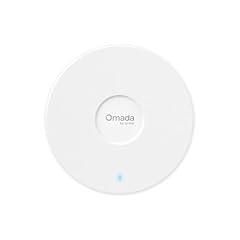
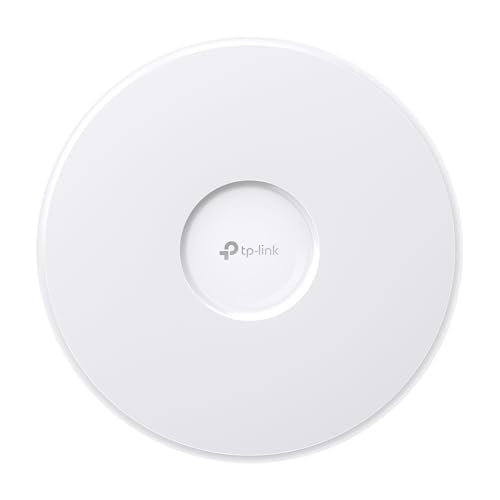
TP-Link Omada EAP720 WiFi 7 Access Point
Overview
This is a compact, ceiling, wall, or junction-box-mounted indoor access point for adding Wi-Fi to an existing wired network. It has one 2.5GbE uplink, internal 2.4 GHz and 5 GHz radios, and can run from 802.3at PoE or the included 12 V, 1.5 A adapter. It is an access point, not a complete router or internet gateway. The U.S. radio authorization is independently verifiable for this exact product and covers 2.4 GHz and 5 GHz operation, including DFS-controlled 5 GHz channels. The authorization requires at least 20 cm separation from people during operation. TP-Link states a 5.0 Gbps aggregate physical link rate, 1,500 square feet of coverage, and 250-plus clients, while also clearly qualifying that throughput, coverage, and capacity vary with clients, backhaul, building materials, and traffic.
What works
- The exact U.S. product is covered by an FCC equipment authorization for its 2.4 GHz and 5 GHz radios, with defined operating bands and RF-exposure conditions.
- Standalone setup is documented, so local operation does not require cloud management or an account.
- TP-Link documents WPA3 Personal and Enterprise, VLANs, client isolation, access control, captive portal options, rogue-AP detection, and up to 16 SSIDs.
- The official specifications disclose both PoE power figures, 17.8 W under the stated PoE condition and 6.7 W idle, rather than only listing a maximum rating.
What does not
- This is not an outdoor access point. The installation guidance says to keep it away from water, humidity, fire, and hot environments, and no weatherproof enclosure rating was verified.
- The included adapter is identified as model T120150-2B1 and the guide requires a Class 2 or LPS power source, but a current UL or ETL directory record for the supplied adapter was not verified.
- The 5.0 Gbps figure is an aggregate theoretical wireless rate, not a tested internet-speed promise. Wi-Fi 7 features and high channel widths also require compatible clients and suitable radio conditions.
- Publicly accessible independent throughput, latency, roaming, and long-term stability testing for this exact product is limited. The FCC authorization verifies radio compliance, not everyday network performance.
- Cloud use is optional, but the Omada app and TP-Link privacy policy describe collection of account, diagnostic, usage, and some location-related data depending on the services used.
Who is it for
This product suits a home office, small business, classroom, retail space, or technically managed home that already has Ethernet at a central ceiling or wall location. It is most appropriate where a 2.5GbE switch or PoE+ switch is available, or where the included adapter can be placed safely nearby. It also fits installations that need segmented staff, guest, and device networks, and buyers who are comfortable using a web interface or local Omada controller to configure Wi-Fi settings and updates.
Who is it not for
It is not suitable for patios, garages with condensation, exposed soffits, sheds, or any outdoor location because no weatherproof rating was verified and the guide says to keep it away from water and humidity. It is also a poor fit for anyone needing a complete router, modem, battery backup, or multiple wired device ports. Avoid mounting it where people can routinely remain closer than 20 cm to the antenna area. Buyers who require independently benchmarked roaming and throughput data should note the limited exact-model testing available publicly.
Integrity
The key health and compliance point is that the exact U.S. radio product has an FCC authorization covering its 2.4 GHz and 5 GHz transmitters. Its installation conditions include at least 20 cm of separation from people and prohibit unapproved co-location with other transmitters. Internal antennas avoid user-swappable antenna configurations. It is intended for dry indoor use, not weather exposure. TP-Link specifies 6.7 W PoE idle use and 17.8 W in the stated active PoE condition, and provides wireless and reboot scheduling controls that can reduce unnecessary operation. A power adapter and mounting hardware are included, which can reduce accessory purchases. The safety guide requires the adapter or PoE source to meet Class 2 or Limited Power Source requirements. However, an independent NRTL listing for the bundled adapter was not verified, and the official materials reviewed did not establish a model-specific support end date or recycling and takeback pathway.
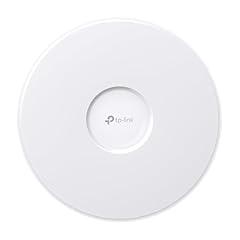
TP-Link Omada EAP770 WiFi 7 Access Point
Overview
This is a ceiling, wall, or junction-box mounted indoor Wi-Fi access point for an Omada-managed network. The current U.S. version uses three radio bands, including 6 GHz, has one 2.5 Gb Ethernet port, and can run from 802.3at PoE or a 12 V, 2.5 A DC supply. The mounting kit and power adapter are listed as included, although accessories can vary by region. Its radio authorization is independently traceable to an FCC grant issued April 24, 2025. That grant requires at least 44 cm separation from people and prohibits co-location with other transmitters except under FCC procedures. TP-Link states aggregate wireless link rates of 688, 4,324, and 5,765 Mbps across its three bands. Those are radio link-rate figures, not verified internet-speed or coverage results.
What works
- The U.S. radio configuration is traceable to an FCC equipment authorization, including specific RF-exposure installation conditions.
- Indoor-only 6 GHz limits are clearly stated, which helps prevent unlawful outdoor deployment and interference.
- TP-Link documents WPA3 Personal and Enterprise, OWE, guest networking, VLANs, and wireless client isolation.
- A current U.S. firmware release from April 2026 added brute-force protection for controller adoption and fixed a guest-network access-control defect.
- The manufacturer discloses power options and maximum draw, up to 25.4 W on PoE in the U.S. specification.
What does not
- The supplied adapter model is identified in regulatory material, but an exact U.S. UL or ETL listing for that adapter was not independently verified.
- This is not weather-rated outdoor equipment. It must be kept away from water and is restricted to indoor use for its 6 GHz operation.
- The advertised approximately 11 Gbps figure is an aggregate theoretical radio rate. The 2.5 Gb wired uplink, client capability, channel width, and congestion can all limit usable throughput.
- Independent, reproducible testing for this exact current version, with stated firmware, clients, distance, and congestion conditions, is limited.
- Cloud management is optional in the setup material, but TP-Link's broad privacy policy permits collection of account, device, configuration, and usage information when cloud services are used.
Who is it for
It suits an installer or technically capable home or small-business owner building an indoor Omada network with Ethernet at the mounting point. It is particularly relevant where separate staff, guest, and IoT networks need VLANs and client isolation, and where a local controller or an Omada controller is already planned. The buyer should be able to mount it securely, supply standards-compatible 802.3at PoE or use the included DC adapter, maintain firmware, and respect the 44 cm RF separation requirement.
Who is it not for
It is not for outdoor patios, detached structures, vehicles, boats, or other exposed locations. The 6 GHz radio is indoor-only in the United States, and the product has no verified weather-protection rating. It also does not suit buyers expecting one device to provide guaranteed whole-building coverage or 11 Gbps internet performance, because those depend on placement, walls, client radios, spectrum conditions, and the 2.5 Gb uplink. Households unwilling to administer network security settings or firmware updates should avoid treating it as an appliance-like router.
Integrity
The radio has an FCC equipment authorization for the current U.S. version. Its required installation condition is meaningful for health and compliance, the antennas must remain at least 44 cm from people and cannot be co-located with other transmitters outside FCC procedures. The documentation also restricts 6 GHz operation to indoors. Keep it away from water, humidity, fire, and hot environments. No product-specific U.S. recall or safety warning was identified in the checked CPSC sources. TP-Link specifies a polycarbonate top cover, aluminum-alloy lower shell, and stainless-steel mounting rack. It reports up to 25.4 W consumption on PoE and 21.8 W on DC power for the U.S. version, plus radio scheduling and power controls. TP-Link publishes firmware releases and security advisories, but no fixed support-end date was found. The company has an environmental policy, yet product-specific U.S. takeback and replacement-part commitments were not independently established.

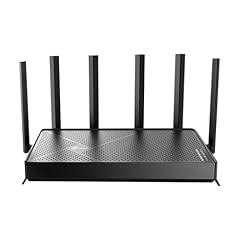
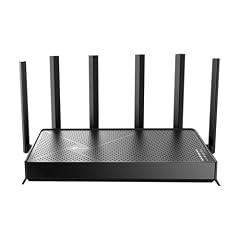
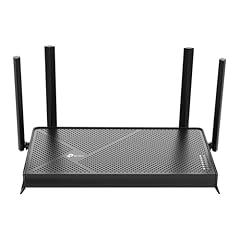
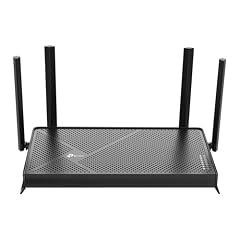
TP-Link Archer BE6500 Dual-Band Wi-Fi 7 Router
Overview
This product is a tabletop dual-band Wi-Fi 7 router for a home internet connection, with six fixed external antennas, one USB 3.0 port, five Ethernet ports, and a 12 V, 2.5 A external power supply. It operates on 2.4 GHz and 5 GHz, not 6 GHz. It can be configured in router or access-point mode through a local web interface or the Tether app. TP-Link states aggregate wireless link rates of 5,764 Mbps on 5 GHz and 688 Mbps on 2.4 GHz, plus one 2.5 Gbps WAN and one 2.5 Gbps LAN port. Those are link-rate and port specifications, not guaranteed household throughput. Independent testing of the exact router found strong short to medium distance speeds and good range, while also finding that its lack of 6 GHz limits the benefit for 6 GHz-capable devices. FCC records and an RF-exposure filing identify this exact fixed-antenna U.S. radio configuration.
What works
- Independent testing found high short to medium distance throughput, good range, and usable wireless latency for ordinary browsing, calls, and streaming.
- Two 2.5 Gbps Ethernet ports allow a multi-gig internet handoff and a multi-gig wired device connection when the rest of the network supports them.
- WPA3, separate guest networks, a separate IoT network, firewall controls, and web-based local administration are documented for normal setup.
- TP-Link has published a fix for the known nearby-attacker denial-of-service flaw affecting early firmware, and current firmware remains available.
- The exact radio model is documented in FCC equipment filings, including an RF-exposure evaluation for its fixed-antenna configuration.
What does not
- This is not a 6 GHz router. Wi-Fi 6E and Wi-Fi 7 clients cannot use the less congested 6 GHz band through it.
- The 6.5 Gbps wireless figure combines theoretical band link rates. TP-Link qualifies real throughput, coverage, and device capacity as dependent on clients, interference, building materials, and network conditions.
- A high-severity denial-of-service vulnerability affected firmware through version 1.1.0. Updating is important because an attacker within Wi-Fi range could otherwise trigger reboots.
- The supplied power adapter is specified only by output rating in the product materials reviewed. An exact adapter model and independent U.S. NRTL safety listing were not verified.
- It is an indoor home router, with no verified weatherproof enclosure rating, surge rating, or outdoor installation guidance.
Who is it for
This product suits a household that needs a single indoor router for an apartment, condo, or modest to larger home, has internet service around or below multi-gigabit speed, and can place the router centrally. It is especially relevant where a computer, switch, or NAS can use the second 2.5 Gbps Ethernet port. It also fits users willing to check for firmware updates, enable WPA3 where their devices support it, and put smart-home devices on the separate IoT network.
Who is it not for
It is not suited to buyers who specifically need 6 GHz Wi-Fi for Wi-Fi 6E or Wi-Fi 7 clients, or who expect a dual-band router to deliver its combined maximum link rate to one device. It is also unsuitable for outdoor, garage, shed, pole, or exposed installation because no weather, grounding, or surge-protection rating was verified. Households that cannot promptly update router firmware should avoid leaving early firmware installed because the documented nearby-attacker reboot flaw affected older releases.
Integrity
The radio configuration is traceable to an FCC authorization and RF-exposure evaluation for the exact fixed-antenna router. This is meaningful evidence that the U.S. radio model was evaluated under the FCC process, but it does not make ordinary placement advice irrelevant. Use it indoors as documented, avoid improvised antenna modifications, and do not treat it as an outdoor access point. TP-Link documents a 12 V, 2.5 A power requirement, but the exact bundled adapter model and an independent U.S. safety-listing record were not verified. No product-specific idle or active power measurements were found, so operating energy cannot be estimated reliably. The manufacturer provides a two-year U.S. warranty for home Wi-Fi routers and continues to publish firmware. Its current product-security statement lists support for this router through at least December 31, 2029, although that statement is not a U.S. warranty or repair-parts promise. No relevant U.S. product recall was identified in the reviewed recall search.

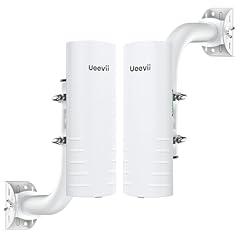
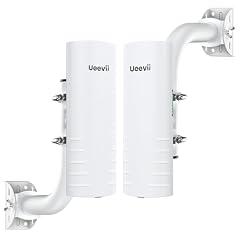
UeeVii CPE452 Long Range Outdoor WiFi Bridge
Overview
This is a two-unit, outdoor point-to-point wireless bridge kit for carrying an existing wired internet connection to a separate building or a remote camera network. Each unit uses a directional 5 GHz antenna and 24 V passive PoE, then connects to local equipment through 10/100 Mbps Ethernet ports. The manufacturer states that the pair is preconfigured and intended for clear-line links to a barn, garage, shop, or surveillance installation. The product family is supported by an FCC equipment authorization covering 5.18-5.24 GHz and 5.745-5.825 GHz operation, with a required minimum 20 cm separation from people. Manufacturer materials state a 14 dBi antenna, IP65 enclosure, up to 3 km barrier-free range, and a 100 Mbps wired ceiling. Those distance and enclosure claims were not backed by an independent field test or an accredited ingress-protection report found in this review.
What works
- The associated radio family has an FCC authorization for its stated 5 GHz operating ranges, with defined power limits and a 20 cm RF-separation condition.
- Two supplied bridge units can create a dedicated building-to-building link, avoiding a long cable trench where there is clear line of sight, manufacturer-stated.
- The manufacturer clearly discloses the practical 100 Mbps Ethernet-port ceiling, even though it advertises a higher wireless link figure.
- A manufacturer download page provides a manual and firmware file for this model, and the brand states a 12-month quality warranty.
What does not
- The setup instructions expose a known default administrator login, admin/admin, before configuration. It should be changed immediately and the management interface kept off untrusted networks.
- Documentation lists WPA and WPA2 plus legacy WEP support, but does not substantiate WPA3, protected management frames, guest isolation, or secure-management controls.
- The product listing claims IP65 weather protection, but no independent ingress test, grounding procedure, surge-protection specification, or NRTL safety certification for the supplied PoE injectors was located.
- The marketing is internally inconsistent. It promotes a 300 Mbps bridge rate and says trees will not block transmission speed, while the wired ports cap traffic at 100 Mbps and the manual identifies obstructions and excessive distance as causes of latency.
Who is it for
This product suits a technically capable owner who needs a basic wired network extension between two buildings that have a genuinely clear, stable line of sight. It fits modest-bandwidth needs such as a few IP cameras, a small office endpoint, or internet access in a garage or barn, where 100 Mbps Ethernet is sufficient. The installer should be comfortable changing default credentials, aligning directional radios, weatherproofing cable entries, and adding appropriate Ethernet surge protection and grounding outside the supplied kit.
Who is it not for
It is not suitable for a household or business that needs gigabit-class transfers, dense Wi-Fi coverage, roaming, or a modern security feature set. It is also a poor fit where trees, walls, terrain, seasonal foliage, or nearby 5 GHz congestion obstruct the path. Avoid relying on the included power equipment for an exposed installation without separately verifying its safety certification and adding outdoor-rated surge protection. Users unable to change the default administrator password should not place it on a trusted network.
Integrity
The strongest safety finding is a real FCC authorization for the related radio family, not merely a seller claim. The authorization covers the disclosed 5 GHz ranges and requires antennas to remain at least 20 cm from people and not be co-located with another transmitter unless the applicable FCC procedures are followed. Installation should preserve that clearance and follow the authorized radio configuration. The outdoor and electrical evidence is less complete. UeeVii claims an IP65 enclosure and supplies 24 V passive PoE injectors, but this review did not locate an accredited IP test report, a verified NRTL listing for the injectors, or documented surge and grounding instructions. The manufacturer publishes firmware downloads, sells mounting hardware, and states a 12-month quality warranty, which can help extend use. No U.S. recall or regulator warning specific to this product was identified in the sources checked.

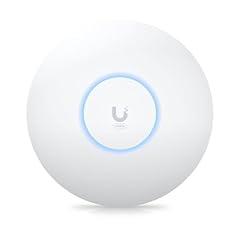
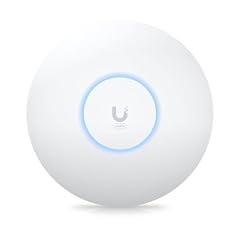
Ubiquiti U6+ Dual Band Wireless Access Point
Overview
This is a compact, ceiling or wall mounted dual-band Wi-Fi 6 access point for a wired Ethernet network. It is powered over Ethernet, has one Gigabit Ethernet uplink, and requires UniFi Network software for setup and administration. The box includes the access point and mounting hardware, but not a PoE power adapter. Ubiquiti states that it uses 2 x 2 radios on both bands, offers four spatial streams, reaches a 2.4 Gbps 5 GHz link rate at 160 MHz channel width, and consumes up to 9 W. Those are radio link and device-power specifications, not guaranteed internet speeds. Its U.S. radio identity and Part 15 testing are independently documented under FCC ID SWX-U6P. The published coverage figure of 1,500 square feet and 300-plus client figure are manufacturer estimates without a disclosed site test method.
What works
- The exact U.S. radio model is documented in FCC compliance material and Part 15 test reports.
- Local-only UniFi management remains available during an internet outage, so a cloud account is not required for core local administration.
- UniFi supports WPA3, protected management frames, client isolation, VLAN-based segmentation, and guest portal controls when configured.
- The manufacturer publishes a specific 9 W maximum power figure and a 44 to 57 V DC PoE input range.
- Ceiling and wall mounting hardware is included, with a compact 160 mm diameter enclosure.
What does not
- A PoE injector is sold separately, and no exact injector or external power supply is included for safety-certification verification.
- This is not presented as an outdoor access point. No ingress-protection rating, lightning protection, grounding procedure, or outdoor surge plan was verified.
- The 1,500 square foot coverage and 300-plus client claims are manufacturer estimates, not independently reproduced outcomes for a defined building or client mix.
- The single Gigabit Ethernet uplink limits aggregate wired throughput below the combined radio link-rate labels in many real deployments.
- No published end-of-life date or exact-model Wi-Fi Alliance certification record was found in the reviewed sources.
Who is it for
It suits a home office, small business, classroom, or managed residential network that already has a standards-compatible PoE switch or will add a suitable PoE adapter. It is most appropriate where a centrally ceiling or wall mounted access point can be wired back to the network, and where the administrator is willing to use UniFi Network to configure WPA3, guest access, VLAN assignment, and client isolation. Local management is useful for sites that do not want daily operation to depend on an internet connection.
Who is it not for
It is not suited to an outdoor patio, detached building exterior, pole mount, or other exposed location because no weatherproofing, grounding, surge, or lightning-installation evidence was verified. It also does not fit buyers wanting a complete retail kit with a supplied, independently verifiable power adapter. Large high-throughput installations, multi-gigabit wired networks, and users expecting a coverage figure to predict performance through dense walls should use a site survey and capacity plan rather than rely on the published area and client estimates.
Integrity
For U.S. use, the exact U6+ radio platform is listed by Ubiquiti with FCC ID SWX-U6P, and independent FCC Part 15 test-report material identifies the same model. Ubiquiti publishes the supported U.S. 2.4 GHz and 5 GHz bands, internal antenna gains, and maximum transmit-power settings. This supports lawful configuration when the U.S. product is installed as directed. No product-specific recall or U.S. exposure warning was found in the reviewed sources. The unit has no verified outdoor enclosure rating, so environmental and surge safety depend on keeping it indoors and powering it from compatible PoE equipment. Its maximum stated consumption is 9 W, which is modest for a permanently powered access point. Ubiquiti provides a one-year limited warranty for products purchased through an authorized distributor or reseller, while direct store purchases receive two years. Current firmware and management software remain published, but a formal end-of-life commitment was not found. Local management can reduce cloud dependence, though Ubiquiti's privacy policy permits collection of account, device, network, usage, and location-related data when its services are used.

TP-Link Archer BE230 Dual-Band Wi-Fi 7 Router
Overview
This product is a compact indoor dual-band Wi-Fi 7 router, not an outdoor access point. It uses the 2.4 GHz and 5 GHz bands, has four fixed antennas, five Ethernet ports, including one 2.5 GbE WAN and one 2.5 GbE LAN port, plus USB 3.0. It can run as a router or wired access point and includes guest networks, an IoT network, VPN functions, and EasyMesh support. TP-Link states a combined 3.6 Gbps wireless link rate, but also clearly says actual speed, coverage, and device capacity depend on clients, building materials, traffic, and placement. Independent reviewers tested the exact router and found strong near-router and multi-device performance. It remains a dual-band model with no 6 GHz radio, so its Wi-Fi 7 capability does not include the extra spectrum available to tri-band designs.
What works
- Independent testing found stable high throughput during a demanding multi-device home test.
- Two 2.5 GbE ports can avoid a 1 GbE wired bottleneck between an eligible internet connection, switch, or computer.
- WPA3, separate 2.4 GHz and 5 GHz guest networks, an IoT network, firewall controls, and access control are documented by the manufacturer.
- TP-Link publishes current firmware downloads and security advisories. Documented 2026 vulnerabilities affecting this router were patched in later firmware.
- Independent testing measured 7.7 watts in normal operation, a modest draw for a router with Wi-Fi 7 and 2.5 GbE ports.
What does not
- This is indoor equipment with no weatherproof enclosure rating, surge-installation guidance, grounding provision, or outdoor mounting instructions.
- The router retains WPA, WPA2, PPTP, and WPS support. These legacy options should remain disabled unless a specific compatibility need requires them.
- The supplied power adapter rating is documented, but an exact adapter listing in a public UL or Intertek certification directory was not verified.
- TP-Link's privacy policy permits collection of account, device, configuration, usage, and support data when its services are used. Tether's optional improvement program also collects device and feature-use telemetry.
- A public Wi-Fi Alliance certification record for this exact router was not located, despite the product's Wi-Fi 7 marketing.
Who is it for
It suits an apartment, condo, or modest single-router home that needs current Wi-Fi capability, wired 2.5 GbE connections, and manageable network separation without deploying ceiling-mounted access points. It is particularly relevant where the internet plan, a desktop computer, or a network-attached storage device can use faster-than-gigabit Ethernet. Buyers should be prepared to update firmware promptly, use WPA3, create separate guest or IoT networks, and administer the router from its local web interface or Tether app.
Who is it not for
It is not appropriate for outdoor placement, detached-building links, wet locations, or installations needing a weather rating, grounding plan, lightning protection, or PoE power. It also does not fit homes specifically needing 6 GHz Wi-Fi, 320 MHz channels, or the added congestion relief of a tri-band radio. Privacy-sensitive households that do not want account-linked services or app telemetry should avoid optional cloud functions and check whether local browser-based administration meets their needs. Avoid leaving WPS, WPA, or PPTP enabled.
Integrity
The product's public radio documentation identifies FCC-authorized hardware variants and fixed antennas. The available manual specifies separation from the body for RF compliance, while the router itself is intended for indoor use. TP-Link states operation from 32 to 104 degrees Fahrenheit and does not claim an ingress rating or outdoor surge protection. Keep it dry, indoors, and away from high-heat equipment. The supplied U.S. power rating is 12 V DC at up to 2 A, but public NRTL certification for the exact bundled adapter was not confirmed. TP-Link provides a two-year U.S. warranty for home Wi-Fi routers and has continued publishing firmware for this model. Its published security advisories show that flaws have affected the router, including authenticated command-injection and denial-of-service issues, with updates available for affected versions. Independent testing measured 7.7 watts in normal operation. TP-Link publishes corporate sustainability reporting, but a U.S. product-specific takeback program or replacement-parts catalog for this router was not verified.

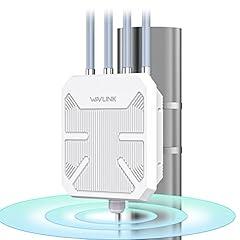
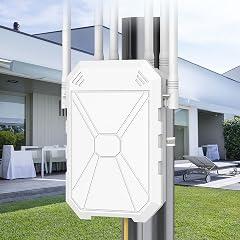
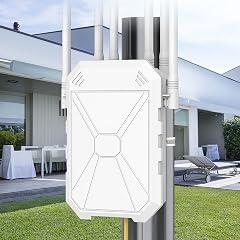
WAVLINK AX1800 Outdoor WiFi Extender
Overview
This is a weather-oriented, dual-band Wi-Fi 6 access point, router, repeater, and mesh agent intended to extend a wired or wireless network to a yard, outbuilding, farm, garage, or similar location. It uses four detachable omnidirectional antennas and receives power over its Ethernet connection. The setup guide describes pole or wall mounting, a grounding terminal, and Ethernet cable runs no longer than 100 m. Its U.S. radio documentation is a meaningful strength. An FCC equipment record for the related product family lists this access point variant, AERIAL HD6 branding, external 8.05 dBi antennas, and Part 15 radio testing. The maker claims an IP67 enclosure, active 802.3af or 802.3at PoE support, plus an included passive-PoE option. However, current maker materials conflict on the 5 GHz link rate, showing both an AX1800-class 1201 Mbps figure and a 2402 Mbps figure, so the advertised speed class needs clarification before installation planning.
What works
- FCC documentation covers the related product family, including this access point variant, its external antenna configuration, and U.S. Part 15 radio testing.
- The manufacturer documents flexible outdoor deployment, with pole or wall mounting, a grounding point, PoE power, and a 100 m maximum Ethernet run.
- The setup material supports WPA2/WPA3 mixed mode, allowing newer clients to use WPA3 while retaining compatibility with older WPA2 devices.
- A two-year manufacturer warranty is stated in the product record, and the maker provides web-based and local firmware-update instructions.
What does not
- The maker's current specifications conflict on 5 GHz capacity. One official page identifies an AX1800 product, while another lists a 2402 Mbps 5 GHz rate that would imply a higher aggregate class.
- No exact-product UL or ETL listing for the access point, bundled adapter, or passive PoE injector was located in public U.S. NRTL directories. The maker's European declaration is not a substitute for U.S. NRTL certification.
- The supplied documentation identifies an outdoor enclosure and grounding terminal, but it does not provide a public, independent IP67 test report or a clear lightning-protection and surge-grounding installation design.
- No transparent independent throughput, latency, range, roaming, or long-term reliability testing for this exact product was located.
- Firmware can be updated locally or online, but no published support end date, signed-update policy, or model-specific security advisory archive was found.
Who is it for
This product suits a technically capable home, farm, RV, or small-site owner who needs to place Wi-Fi outdoors or in a detached structure and can run Ethernet back to an existing router or switch. It is most appropriate where a mast or wall location, weather-sealed cabling, correct grounding, and a protected PoE power path can be installed. The owner should be prepared to change the administrator password during setup, select WPA3 transition mode where client compatibility permits, and keep firmware current.
Who is it not for
It is not well suited to buyers who need independently measured coverage or throughput before designing a large property network. It also does not fit installations that lack a safe mounting point, grounding provision, surge protection, or weather-rated Ethernet routing. Households that require confirmed U.S. NRTL certification for every supplied power component should seek documentation before use. It is also a poor fit for users who need a published security-support lifetime, a detailed vulnerability-response record, or clear proof that the claimed AX1800 speed matches the currently shipped hardware revision.
Integrity
For radio safety and lawful U.S. operation, the strongest evidence is the FCC equipment filing for the related family. It identifies the product family as a wireless access point or repeater, includes the access point variant and AERIAL HD6 name, documents external antennas near the stated 8 dBi class, and records Part 15 testing. Use the supplied antennas and follow the installation conditions rather than substituting higher-gain antennas. Outdoor safety evidence is less complete. The manufacturer claims IP67 weather protection, provides a grounding terminal, and directs users to use Cat5e or Cat6 cable with runs up to 100 m. A European declaration cites IEC 62368-1, but no public U.S. UL or ETL listing was found for the unit or bundled passive PoE equipment. The maker has a general privacy policy that permits collection of product identifiers, IP and MAC addresses, location-related data, and usage logs when its services are used. No product-specific recycling or takeback program was located, and no relevant U.S. recall was found in the reviewed public CPSC materials.

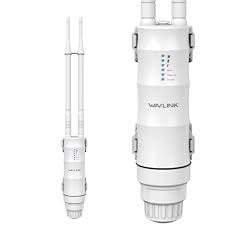
WAVLINK AC600 Outdoor WiFi Extender
Overview
This is an outdoor dual-band Wi-Fi 5 access point, repeater, or router that connects through one 10/100 Ethernet port and is powered over Ethernet. The manufacturer documents two detachable 7 dBi omnidirectional antennas, 2.4 GHz service up to 150 Mbps, 5 GHz service up to 433 Mbps, and a bundled power adapter and passive PoE converter. Its outdoor body is meant to be pole or wall mounted, while the power adapter and PoE converter must remain dry. An FCC authorization exists for the closely matching WN570 outdoor radio platform, covering 2.4 GHz and 5 GHz operation, but the available authorization record does not independently establish that every detail of this later product revision, including its supplied antennas and settings, is identical. The manufacturer also documents local browser-based administration and WPA or WPA2 personal security, rather than modern WPA3.
What works
- FCC authorization is documented for the closely matching WN570 outdoor radio platform, including 2.4 GHz and 5 GHz bands.
- The manufacturer supplies a passive PoE converter, mounting hardware, detachable antennas, and a weatherproof Ethernet connection design.
- The manufacturer explicitly says the outdoor unit needs a ground wire, and warns that the adapter and PoE converter are not waterproof.
- Local browser administration is documented, which can allow setup without an app account.
What does not
- The documented security options are WPA or WPA2 personal. WPA3, protected management frames, guest isolation, and secure HTTPS administration were not verified.
- No exact-product UL, ETL, or other U.S. NRTL listing was found for the access point, supplied adapter, or PoE injector.
- The available FCC authorization is for the WN570 platform, not a record that clearly names this later revision. Its precise RF exposure separation and allowed antenna conditions therefore remain unconfirmed.
- No independent, reproducible performance testing was found for this product. The 600 Mbps figure is an aggregate theoretical Wi-Fi link rate, while the wired port is only 100 Mbps.
- The manufacturer provides an exact-revision manual entry, but no published security-support lifetime, advisory archive, or confirmed firmware-signing process was found.
Who is it for
This product suits a technically confident user who needs basic Wi-Fi coverage at a detached structure, campsite, RV area, yard, or outbuilding and can route Ethernet to a protected indoor PoE injector. It is most appropriate where Wi-Fi 5 class performance and a 100 Mbps wired uplink are sufficient. Installation should include proper mounting, a ground wire, drip management for cables, and a sheltered location for all non-weatherproof power equipment. The user should also be comfortable configuring the device from its local web interface.
Who is it not for
It is not suited to households or small businesses that need current wireless protections such as WPA3, verified guest isolation, HTTPS-only management, documented long-term security updates, or a clear vulnerability-response process. It is also unsuitable where the PoE injector or power adapter would be exposed to rain, condensation, or standing water. Avoid using it for high-capacity internet service, demanding multi-user traffic, or safety-critical connectivity, because the single Ethernet port is 100 Mbps and no independent performance or reliability testing for this revision was located.
Integrity
For radio safety, an FCC authorization exists for the matching WN570 outdoor access point and repeater platform, with approved 2.4 GHz and 5 GHz operating ranges. That is meaningful independent regulatory evidence for the platform, but it does not fully verify the later revision's exact antenna, power, and separation conditions. Follow the product label and installation instructions, use only the supplied or expressly compatible antenna arrangement, and keep the equipment mounted away from routine close body contact. Outdoor electrical protection needs care. The manufacturer calls for a ground wire and says the adapter and PoE converter are not waterproof. No U.S. NRTL safety listing was verified for the supplied power equipment. The manufacturer publishes a broad privacy policy that allows collection of device identifiers, IP address, location-related data, firmware data, and usage data for applicable products and services. No product-specific recycling, takeback, spare-parts, or support-lifetime commitment was verified, although an exact-revision manual was posted in July 2026.
INEAUTO AX3000 Outdoor WiFi 6 Extender
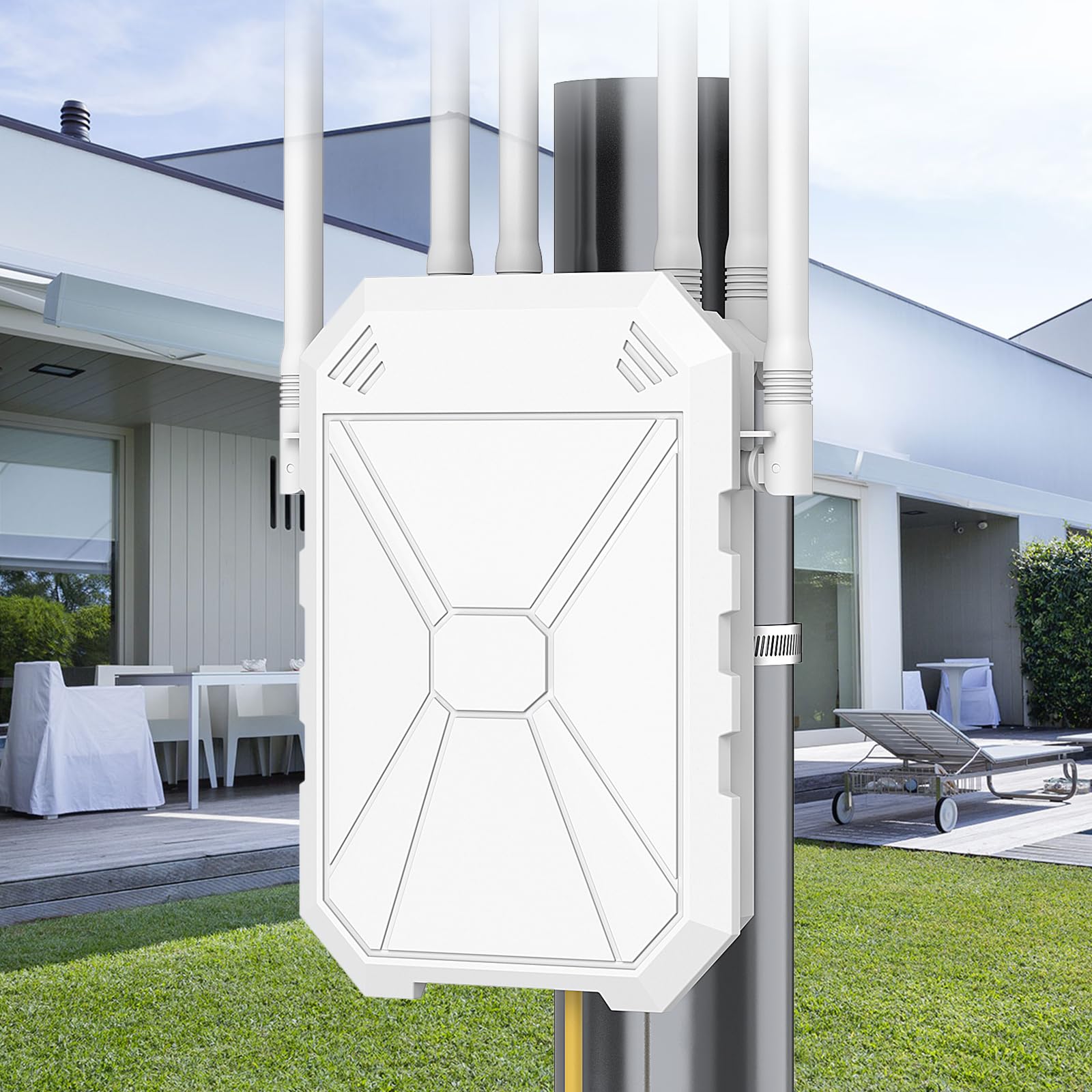
Overview
This is an outdoor dual-band Wi-Fi 6 extender, access point, and router intended to carry a home network to yards, outbuildings, cameras, RV sites, and similar locations. Setup uses a web page and a supplied PoE injector, so power and data can share an Ethernet run to the outdoor unit. The available guide instructs that the injector is not waterproof and must remain indoors or otherwise protected. INEAUTO states 2.4 GHz and 5 GHz link rates of 600 Mbps and 2400 Mbps, six 8 dBi antennas, WPA3 support, a 2.5 GbE port, AP, router, and repeater modes, IP67 weather protection, and lightning protection. Those are manufacturer claims, not independently confirmed results. The marketplace record instead describes IP65 protection and a gigabit access point, creating unresolved differences in the environmental and wired-port descriptions.
What works
- The setup guide gives a concrete outdoor safety instruction, keep the non-waterproof PoE injector indoors.
- INEAUTO publishes a firmware download for its OWE3000 and IOWE3000 product family, identified as AX3000 firmware version 2.1.
- AP, router, and repeater modes are manufacturer-documented, allowing either Ethernet-fed access point use or wireless extension.
- INEAUTO states WPA and WPA3 personal-security options, which is preferable to a product documented only with legacy Wi-Fi protection.
What does not
- No exact-model FCC authorization, antenna exhibit, or RF exposure installation limit could be matched in the public FCC materials reviewed.
- No exact-model UL, ETL, or other NRTL listing was located for the access point, supplied adapter, or PoE injector.
- The IP rating and Ethernet-port claims conflict across available product descriptions, IP65 and gigabit in the marketplace record, versus IP67 and 2.5 GbE on INEAUTO's site.
- No independent exact-model throughput, range, latency, interoperability, or long-term reliability test was located.
- The available support pages publish firmware but do not provide a support lifetime, security advisory archive, signed-update statement, privacy notice tied to this product, or recycling and spare-parts policy.
Who is it for
This product suits a technically capable owner extending an existing network to an outdoor area where an Ethernet cable can be run safely and the PoE injector can stay indoors. Its stated AP, router, and repeater modes make it relevant to a garage, detached structure, camera area, farm outbuilding, or campsite with modest configuration needs. It is most appropriate when the buyer can verify the label, included power equipment, actual port speed, and local installation requirements before permanent mounting.
Who is it not for
It is not suited to installations that require documented FCC radio authorization details, independently verified weather testing, or a listed power system for insurer, workplace, rental, or commercial compliance. Avoid treating the stated 300-meter range or AX3000 rate as guaranteed coverage or internet speed, especially through trees, walls, metal, or crowded wireless space. It is also unsuitable where the PoE injector must be outdoors, where surge protection and grounding cannot be added, or where documented security support and privacy terms are required.
Integrity
The main practical safety point is installation. The available guide says the PoE converter is not waterproof and should be indoors, and it calls for grounding and lightning protection when the radio is installed outside. The enclosure itself is marketed as IP67 by INEAUTO, but the marketplace record says IP65. Neither claim was supported by an accredited ingress-protection report in the materials reviewed. No matching NRTL safety certification for the unit or supplied PoE equipment was located. INEAUTO publishes an AX3000 firmware file, which gives owners a route to update the device. However, no public support lifetime, vulnerability advisory process, power-consumption specification, replacement-parts program, takeback policy, or exact-product recycling information was located. No relevant U.S. recall or safety warning was found in the reviewed public sources, but that is not a substitute for documented electrical, radio, and outdoor-installation certifications.

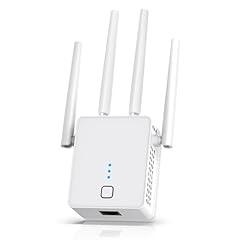
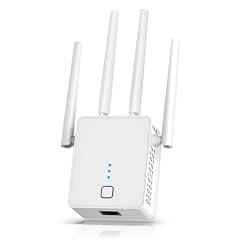
WiFi Extender 2024 Fastest Dual Band 1200Mbps
Overview
This plug-in dual-band Wi-Fi extender is an indoor outlet device with a single Ethernet port. Its supplied setup sheet documents repeater mode for relaying an existing Wi-Fi network and access-point mode when connected by Ethernet. Setup is performed from a phone or computer through a local browser address, rather than through an app in the supplied instructions. The 1200 Mbps label is a manufacturer-stated aggregate wireless link rate, not a verified internet-speed result. The supplied manual appropriately says the product extends range rather than increasing internet speed, and notes that walls and interference can reduce speed. Coverage and device-capacity marketing has changed across records for the same product, from 10,000 square feet and 55 devices to 15,999 square feet and 105-plus devices, without a disclosed test method. Its claimed weatherproof feature also conflicts with the supplied manual's instruction to keep it away from water and humidity.
What works
- Repeater mode and Ethernet-fed access-point mode are documented in the supplied setup manual.
- Local browser setup at 192.168.11.1 is documented, with no mandatory app described in the supplied instructions.
- The manual gives practical placement guidance, halfway between the router and the weak-coverage area.
- The manual clearly cautions that an extender does not raise the underlying internet speed.
What does not
- No exact-product FCC authorization, RF-exposure exhibit, or label was located in the FCC equipment-authorization record, so U.S. radio compliance could not be independently confirmed for this product.
- The weatherproof listing claim conflicts with the manual, which says to keep the product away from water and humidity.
- The supplied manual refers to WPA-PSK and WPA2-PSK, not WPA3, protected management frames, guest isolation, or controls for disabling WPS.
- No public firmware-download page, support-lifecycle policy, security-advisory archive, power-consumption figure, or independent performance test for this product was located.
- The large coverage and connected-device claims lack stated layout, obstruction, client, interference, or throughput test conditions.
Who is it for
This product suits a budget-conscious household with one localized indoor dead zone, an existing router, and modest security requirements. It is most appropriate where the extender can be placed in a dry, accessible wall outlet that still receives a solid router signal. It can also suit someone who has Ethernet available in a weak-signal room and wants to use the documented access-point mode. Users should treat the coverage number as a marketing maximum, not as a prediction for a whole large home or dense apartment building.
Who is it not for
It is not suited to outdoor, garage, damp-basement, porch, or weather-exposed installations, despite the weatherproof listing language, because the supplied manual says to avoid water and humidity. It is also a poor fit for security-sensitive households, remote workers handling confidential material, or homes needing WPA3, guest isolation, documented security updates, or a published vulnerability-response process. Do not rely on it for a large-home coverage guarantee, high device counts, low-latency gaming, or independently verified throughput.
Integrity
The principal health and safety concern is verification, not a demonstrated RF hazard. No exact-product FCC authorization or RF-exposure documentation was found that links this product's listed model to tested antennas, radio settings, and required separation conditions. A public FCC authorization exists for a similar generic dual-band repeater platform, but that does not establish that this specific product is the authorized version. The supplied manual also does not provide a clear RF-separation instruction. For electrical and environmental safety, the manual says to use an accessible outlet and keep the product away from water, fire, humidity, and hot environments. That is incompatible with treating it as an outdoor or weatherproof device. No verified NRTL safety certification for the product or its power equipment, no measured power draw, no recycling or takeback policy, and no replacement-parts program were located. A one-year warranty is manufacturer-stated, but ongoing firmware support is not documented.