
10 Best Webcam with Zoom in and Out
 Daniel Kenitz
Please note that we participate in affiliate marketing programs. When you purchase through links on our site, we may earn a commission. As an Amazon Associate we earn from qualifying purchases. This comes at no additional cost to you and helps support the resources required to provide valuable content.Advertising Disclosure
Top-rated Webcam with Zoom in and Out Comparison
1

2
4
5
6
7
8
9
Choosing a webcam with zoom in and out
A webcam with zoom lets you change how much of the scene appears in frame, but “zoom” can mean very different things. Some products use a manually adjusted varifocal lens, which changes optical framing and can preserve more detail. Others use digital zoom: software crops the image, narrowing the view but not adding optical detail. Motorized pan-and-tilt models can follow a presenter, while fixed cameras may only offer digital reframing. A buyer should first decide whether they need optical reach, a tighter desk crop, or automatic movement and tracking.
Resolution and frame rate must be considered together. A listing may say 4K, but the useful question is which USB mode delivers 3840 × 2160, at what frame rate, and with what compression. Several supplied reviews distinguish 4K at 30 frames per second from 1080p at 60 frames per second; some products offer faster modes only at lower resolutions. A high headline resolution can therefore be less useful than stable focus, exposure, field of view, and motion handling. Digital zoom also becomes less useful as the crop increases. Look for a manufacturer UVC mode table, host-device inspection, and claims that state their operating conditions rather than simply repeating “4K,” “10x,” or “AI.”
Image quality depends on more than the sensor specification. Indoor lighting, autofocus behavior, low-light noise, exposure, field of view, distortion, and tracking errors determine whether the picture remains useful during an ordinary call. The strongest evidence is an identifiable, model-specific independent test with a disclosed setup and unedited results covering resolution, frame rate, focus, exposure, noise, and field of view. Manufacturer specifications are useful for understanding intended modes, but they are not a substitute for reproducible testing. Audio claims deserve the same caution: “noise cancelling,” “AI microphone,” or a stated pickup distance does not establish intelligible speech in a noisy room without a disclosed speech, pickup, echo, or noise-reduction test.
Privacy should be treated as a hardware question. A real shutter or sliding lens cover is more dependable for blocking video than a software setting. An activity light can show that the camera is in use, but it does not physically prevent capture, and a lens cover does not necessarily mute the microphones. Some models use lens-down sleep modes or software camera-off controls; these are not equivalent to a shutter or a hardware microphone disconnect. Buyers handling sensitive calls should check exactly what is disabled and whether the camera can remain active after a software or firmware failure.
For compatibility, generic “works with Zoom” language is weaker than a current exact-model listing in the official Zoom Certified Hardware directory, Microsoft Teams certified-devices catalog, or Google Meet certified hardware directory. UVC support can provide ordinary plug-and-play compatibility, but it is not platform certification. For safety, look for an exact-product or included-power-supply listing in UL Product iQ or the Intertek ETL directory, and check CPSC Recalls and SaferProducts.gov. Wired USB models avoid a stated Wi-Fi or Bluetooth transmitter, but they still need appropriate electrical and interference-compliance evidence, including an FCC Supplier’s Declaration of Conformity where applicable.
Finally, consider whether the camera can remain useful. Firmware archives, security advisories, a clear privacy policy, warranty terms, detachable cables, replacement accessories, repair information, material and packaging disclosures, and credible recycling or take-back routes are stronger evidence than vague sustainability language. Across the supplied products, recurring cautions include digital zoom being mistaken for optical zoom, microphones performing poorly in noisy or echoing rooms, missing exact-model safety and platform certifications, and privacy controls that cover the lens without disabling audio. Several products also lack documented firmware, repair, parts, or recycling support. One supplied product had video remain available while its status light was inactive after a failed update; that is a serious reason not to rely on an indicator alone for sensitive use.
Integrity
These topics assess whether a zoom webcam is safe to control, support, and keep in use, and whether its performance claims are supported by evidence. Scores compare the supplied products against the defined standards; they do not replace checking the exact model and included accessories before purchase.
HHealth & Safety
Privacy and capture control
This measures whether the webcam gives clear, reliable control over video and audio capture. Among the supplied products, higher scores generally correspond to integrated or physical lens covers plus a visible activity indication; the strongest score was 92 for an integrated shutter and documented capture indicator. Lower-scoring designs rely on lens-down sleep, detachable covers, software controls, or provide no hardware disable control. A lens cover alone may not mute microphones.
Electrical and product safety
This measures evidence for the camera, cable, and any power adapter, including traceable third-party safety listing and absence of an unresolved recall. Scores were relatively narrow, from 68 to 74. The higher-scoring products had somewhat stronger documented safety evidence, but several reviews still found no exact-model UL or ETL listing or equivalent record. USB power does not by itself prove electrical safety compliance.
Firmware and data security
This measures update support, data handling, software permissions, and known vulnerabilities for the exact product or companion software. Scores ranged from 56 to 81. Higher-scoring products documented firmware support and had clearer security evidence; lower results reflected unstable update behavior, absent public release records, or privacy policies that allowed device, log, audio, image, or video collection without model-specific least-privilege detail. Keeping companion software current matters where vulnerabilities are documented.
EEcology
Lower-impact, longer-life design
This measures durability, materials and packaging evidence, firmware and replacement support, and credible recycling or take-back information. Scores ranged from 68 to 81. The strongest evidence included stated recycled plastic, low-carbon aluminum, FSC paper packaging, detachable cables, warranties, and firmware support. Most products lacked exact-model EPEAT or TCO registration, certified recycled-content records, repair instructions, spare parts, or product-specific take-back documentation, so a durable body alone does not establish a lower-impact lifecycle.
Support and repairability
This measures whether the product can remain functional after software, cable, mount, or motor problems. Scores ranged from 68 to 82. Higher-scoring products combined longer warranties, ongoing firmware or software support, detachable or replaceable cables, and accessible support. Fixed cables, short or inconsistent warranty statements, absent parts catalogs, and missing repair instructions lowered confidence. A warranty supports service life, but it is not the same as repairability or responsible end-of-life support.
EEvidence
Honest resolution and zoom claims
This measures whether resolution, frame rate, field of view, AI, and zoom claims state their conditions and distinguish optical movement from digital cropping. Scores ranged from 48 to 88. Higher-scoring products clearly identified modes such as 4K at 30 fps, 1080p at 60 fps, or 4x digital zoom. Lower scores reflected conflicting specifications, missing UVC mode tables, or marketing that implied hybrid or optical zoom when the documentation described digital cropping.
Independently verified camera performance
This measures model-specific, reproducible testing of delivered resolution, frame rate, focus, exposure, noise, and field of view. Scores ranged from 68 to 88, with this topic weighted more heavily than most others. Higher-scoring products had identifiable hands-on or independent reports confirming image or motion performance; lower-scoring products had only seller specifications or reviews without test setup, raw results, or measurements sufficient to verify the advertised claims.
Clear video, dependable focus, and useful tracking
This measures performance in ordinary indoor light and movement, including detail, exposure, focus stability, distortion, and tracking errors. Scores ranged from 68 to 87. Higher-scoring products had independent reports of smooth tracking, responsive autofocus, or stable video. Lower results reflected focus hunting, dark faces, missed subjects, abrupt camera movement, or no model-specific testing. Mechanical tracking can help a moving presenter, but it does not guarantee dependable autofocus or framing.
Useful microphone and noise-control performance
This measures voice intelligibility, pickup distance, echo, and noise reduction rather than the presence of multiple microphones or an AI label. Scores ranged from 54 to 82. Higher-scoring products had independent reports of clear voice and useful background-noise reduction. Lower scores reflected quiet, muffled, echo-prone, or poorly isolated audio. None of the supplied claims makes a built-in microphone a substitute for a headset or dedicated microphone in a noisy or reverberant room.
Verified meeting-platform compatibility
This measures whether Zoom, Microsoft Teams, or Google Meet certification applies to the exact model, while giving limited credit to documented UVC compatibility. Scores ranged from 45 to 89, and this topic was weighted heavily. The strongest evidence was an official Microsoft Teams listing for the relevant Logitech camera families. Generic “works with” language, a listing for a related model, or plug-and-play operation should not be treated as certification.
U.S. radio and interference compliance
This measures the correct U.S. FCC compliance route for the exact product, including an FCC ID for wireless transmitters or a Supplier’s Declaration of Conformity for a wired digital device where applicable. Scores ranged from 68 to 72. Wired products avoid a stated Wi-Fi or Bluetooth transmitter, but that does not establish Part 15 compliance. Most supplied reviews found no public exact-model FCC declaration, so the modestly higher scores reflect better available evidence rather than complete certification proof.
Full reviews
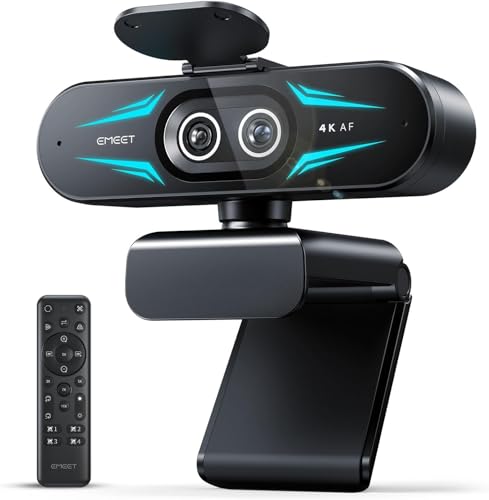
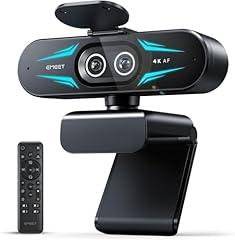
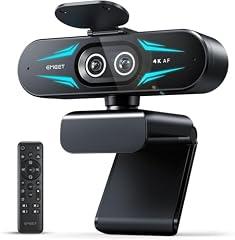
EMEET C60E 4K Streaming Webcam
Overview
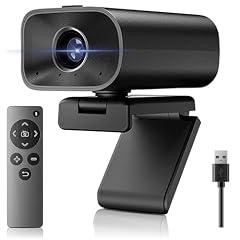
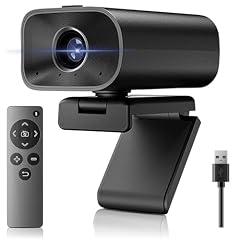
This is a wired USB webcam with separate wide-angle and telephoto cameras, a 2-meter fixed USB-A cable, a clamp mount, remote control, two built-in microphones, and RGB accent lighting. EMEET states that it uses a 1/2.8-inch CMOS sensor arrangement, outputs up to 3840 by 2160 at 30 fps, supports 1080p at 60 fps, and offers up to 11x digital zoom. It works as a UVC camera without a separate driver on supported Windows and macOS systems. Independent testing by PCWorld confirmed usable 4K output, sharp and natural-looking images in good indoor light, quick PDAF autofocus, and useful remote controls. The same testing found important limits. The zoom becomes more restricted at 4K, the built-in cable cannot be replaced, the mount lacks vertical tilt adjustment, and the microphones let background sound through. A separate stick-on privacy cover is included rather than an integrated shutter.
What works
- Independent testing found crisp, natural-looking 4K images and fast autofocus that stayed locked after finding the subject.
- The supplied remote gives direct access to zoom, focus, and color controls, verified in independent hands-on testing.
- The manufacturer documents UVC operation without a separate driver, plus explicit Windows 10 or later and macOS 10.14 or later support.
- A removable physical privacy cover is included, and independent testing observed RGB lighting when the camera was active.
- EMEET provides a product-specific support page, downloadable manual, software downloads, and a stated two-year warranty.
What does not
- The privacy cover is a separate stick-on accessory, not an integrated shutter, so capture blocking depends on the user fitting and retaining it.
- Independent testing found the built-in microphones and noise cancellation average to poor, with music and white noise still clearly audible.
- EMEET calls the zoom hybrid in marketing, but its own support specifications describe it as digital zoom. The usable zoom range also varies with output resolution.
- The integrated USB-A cable cannot be replaced, and independent testing found the monitor mount awkward because it does not tilt vertically.
- No exact-model UL or ETL listing, FCC Supplier's Declaration of Conformity, Zoom certification, Microsoft Teams certification, or public firmware release record was located during verification.
Who is it for
It suits a desktop presenter, online instructor, or streamer who wants a wired 4K camera with fast autofocus and quick framing changes from a handheld remote. It is particularly relevant where a wide view is useful for a person and desk setup, then a closer telephoto view is needed for a product demonstration. It also fits users on supported Intel or AMD Windows systems and compatible Macs who can use the UVC connection without depending on special software. A quiet room and a separate microphone make the strongest fit.
Who is it not for
It is not well suited to people who need a built-in sliding shutter or a hardwired microphone disable control for sensitive rooms, shared spaces, or unattended workstations. It also does not suit callers who need dependable voice isolation in a noisy home, classroom, or office, because independent testing found weak noise reduction. Buyers needing an adjustable laptop-mounted camera should avoid relying on its clamp alone, since it lacks vertical tilt. It is also unsuitable for Windows on ARM, systems without USB-A access, or users who require official Zoom or Teams certification.
Integrity
The product is wired and its documented connection is USB-A, so there is no stated Wi-Fi or Bluetooth radio to manage. It includes a removable physical privacy cover, and independent testing observed its RGB lights turning on during camera use. That is useful capture feedback, but the cover is not integrated into the housing and does not provide the assurance of a built-in shutter. The companion EMEET Studio privacy policy is current as of March 27, 2026, but public product-specific firmware release notes and security advisories were not located. EMEET provides a model-specific support page, software access, a downloadable manual, and states a two-year warranty with technical support. Those provisions can extend useful life. The fixed 2-meter USB cable is a repairability limitation because it cannot be replaced separately. No exact-model EPEAT or TCO registration, recycled-material claim, UL or ETL listing, or clearly documented U.S. take-back partner was located. No CPSC recall for this product was identified in the verification search.

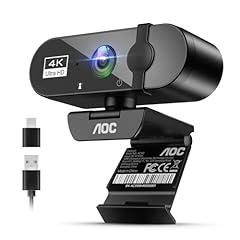
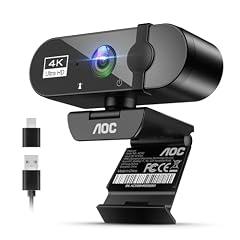
AOC 4K Webcam with Microphone and Privacy Cover
Overview
This is a compact, wired USB webcam with an integrated cable, a USB-A to USB-C adapter, a clip stand, and a standard tripod thread. The available product manual says it can sit on a monitor or desk, or mount to a tripod. It also describes a built-in sliding cover that physically blocks the lens when closed. The product is marketed as 4K, autofocus, wide-angle, plug-and-play camera with a built-in noise-reducing microphone and automatic light correction. Its published documentation says 2160p at 30 fps is the intended Windows setting, while macOS may default to 1080p. Resolution and field-of-view details are not consistently presented across available product materials, including 90 and 99 degree field-of-view claims. No credible model-specific independent laboratory test was found for delivered resolution, focus, exposure, microphone pickup, or noise reduction.
What works
- The documented sliding lens cover provides a direct physical barrier over the camera lens.
- The manual describes flexible mounting, including monitor, desk, and tripod use.
- The product is designed for driver-free connection on most operating systems, according to the manual.
- An official AOC storefront lists a 1+1 year warranty arrangement for this model in that market.
What does not
- There is no documented hardware microphone mute control or documented capture-status indicator behavior.
- No traceable UL, ETL, or equivalent third-party safety listing for this exact webcam and supplied adapter was found.
- Published product materials conflict on key specifications, including 90 versus 99 degree field of view and 4K versus Full HD wording.
- No credible independent model-specific testing was found for image quality, autofocus, low-light behavior, microphone clarity, or noise cancellation.
- Zoom is not clearly explained as optical or digital, and no documented zoom range or operating conditions were found.
Who is it for
It suits a home worker, student, or occasional caller who wants a small wired camera that can be placed on a display, desk, or tripod without installing dedicated software. The physical lens cover is especially relevant for people who want a simple, visible way to block video capture between calls. It is also practical for Windows users able to check camera settings and confirm the resolution selected by their particular meeting or recording app.
Who is it not for
It is not for buyers who need independently verified 4K output, tested low-light performance, reliable subject tracking, or proven microphone intelligibility in noisy rooms. It is also unsuitable where a documented electrical safety listing, U.S. FCC compliance paperwork, formal Teams or Zoom certification, or long-term replacement-parts support is required. Privacy-sensitive users who need to physically disable the microphone, rather than only cover the lens, should choose a product with a dedicated hardware audio control.
Integrity
The key privacy feature is a physical sliding cover over the lens. This is more dependable for blocking video than a software setting when it is visibly closed. It does not, however, establish that the microphone is disconnected, and the available documentation does not describe a hardware microphone mute switch or a capture-status indicator. No product-specific security advisory, firmware support history, or data-handling documentation was found. The webcam is USB powered and does not include a separate mains power adapter in the available manual. No exact-model UL or ETL safety listing, U.S. FCC supplier declaration, EPEAT or TCO registration, material disclosure, take-back program, or replacement-parts catalog was located. No matching U.S. recall or CPSC safety warning was found in the checked public recall resources. A 1+1 year warranty is listed by an official AOC storefront in Japan, but accessible repair instructions and spare accessory availability were not established.

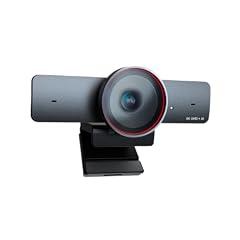
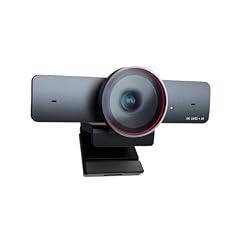
WyreStorm 4K AI Webcam 120° FOV
Overview
This is a USB conference webcam with a detachable USB-C to USB-A cable, monitor clip, tripod thread, dual integrated microphones, and a physical privacy cover. WyreStorm documents a 1/2.7-inch, 8-megapixel CMOS sensor, 120-degree diagonal field of view, and output up to 4K at 30fps. It uses electronic pan, tilt, and zoom rather than optical PTZ. The privacy cover and application-use LED are documented in the official guide. Firmware version 1.0.137 and desktop control apps remain available from WyreStorm. Independent reviewers found usable backlight handling, understandable noise reduction, and selectable tracking modes. One reviewer also experienced intermittent recognition and blank-video problems during early use. The product listing's autofocus and Zoom Certified wording need caution, because WyreStorm describes this model as fixed-focus and Zoom's current compatibility list names the Focus 200, not this product.
What works
- A physical lens cover and LED activity indicator provide visible video-capture control.
- Official specifications clearly identify 4K at 30fps, 1080p at 60fps, a 120-degree diagonal view, USB 5V power, and electronic zoom.
- WyreStorm still hosts desktop control software and firmware version 1.0.137 for this product.
- Independent hands-on reviews found tracking controls, backlight compensation, and noise reduction useful in ordinary calls.
What does not
- The advertised autofocus claim conflicts with WyreStorm's own documentation, which says the lens is fixed-focus.
- The Zoom Certified claim could not be confirmed for this exact product. Zoom's current compatible-device page lists the Focus 200, not the Focus 210.
- There is no model-specific third-party laboratory report measuring delivered resolution, noise, focus, field of view, tracking, or microphone intelligibility.
- A hands-on reviewer reported initial recognition failures and blank video, which is a real reliability concern for important calls.
- WyreStorm states FCC and other compliance marks, but no public model-specific FCC Supplier's Declaration of Conformity or NRTL electrical safety listing was located.
Who is it for
This product suits a small meeting area, classroom presenter, or home office user who needs a very wide USB view and values a physical lens cover. It is best suited to people who can use a USB 3.0 port, have reasonable indoor lighting, and are willing to install the optional desktop app to change framing, tracking, and image settings. The fixed-focus, wide-depth-of-field design also makes sense where several people or a presenter need to remain visible rather than one person needing a tight portrait shot.
Who is it not for
It is not suited to users who require independently measured image and audio performance for regulated, client-critical, or remote-care calls. The reported recognition and blank-video issues make a backup camera sensible for those settings. It is also a poor fit for buyers who specifically need verified Zoom certification, optical zoom, or autofocus. People who need a narrow, flattering solo desktop composition may find the 120-degree view overly wide, while large or echo-heavy rooms should not rely on the built-in microphones without separate audio testing.
Integrity
For capture privacy, the useful confirmed safeguards are physical rather than software-only. The package includes a privacy cover, and the official guide says the activity LED lights when an application is using the camera. The guide also describes USB 5V operation, while the specification sheet lists 2W maximum consumption. No product-specific U.S. recall or public safety warning was found in the checked sources. WyreStorm provides a downloadable control app and firmware file, which can help extend service life if compatibility problems arise. Its official materials identify a limited two-year warranty, although one guide contains an internally inconsistent warranty sentence. The company provides no clear model-specific recycled-material, packaging-material, take-back, repair-parts, or certified-recycling documentation. The supplied detachable cable is a practical serviceability advantage, but replacement parts and repair instructions were not located.

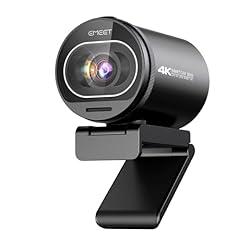
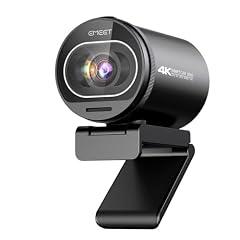
EMEET S600 4K Streaming Webcam
Overview
This product is a wired USB webcam for computer video calls, streaming, and face-camera use. It has a detachable USB-C to USB-A cable, a monitor clip, tripod thread, dual microphones, and a physical lens cover. The manufacturer states a maximum 4K output of 30 frames per second, 1080p at 60 frames per second, automatic exposure, autofocus, and a selectable 40 to 73 degree field of view. Independent hands-on review confirms the physical shutter and in-use indicator, and reports that firmware updates can be installed through EMEETLINK. Its testing also found visible autofocus breathing, difficult highlights with automatic exposure, and considerable noise even in well-lit footage. The listed zoom is digital crop rather than optical PTZ, so it narrows framing without bringing distant subjects closer optically.
What works
- A physical manual shutter and in-use light were independently confirmed, giving clear visual control over video capture.
- The supplied cable is detachable, rather than permanently attached, which can make cable replacement less wasteful.
- The manufacturer documents 4K at 30 frames per second and 1080p at 60 frames per second, plus adjustable image settings in its companion software.
- Firmware updating is documented in the companion software, and the manufacturer offers a two-year webcam warranty for normal-use manufacturing failures.
What does not
- Independent testing found slow focus breathing, problematic automatic exposure, and noticeable image noise. These are observed performance limitations, not merely missing evidence.
- The product uses automatic focus and exposure, which limits direct capture control in demanding lighting.
- No model-specific independent laboratory report using disclosed ISO resolution, noise, microphone, or field-of-view methods was located.
- No model-specific UL or ETL safety listing, official meeting-platform certification, or U.S. FCC Supplier's Declaration of Conformity was located in the reviewed records.
- The manufacturer gives general recycling guidance, but does not provide model-specific recycled-material, packaging-content, spare-parts, or certified U.S. take-back evidence.
Who is it for
This product suits a desktop caller or casual streamer who wants a compact wired camera with a physical shutter, an in-use light, and a detachable cable. It is most appropriate where 4K at 30 frames per second or 1080p at 60 frames per second is sufficient, framing is mostly stationary, and the user can provide consistent front lighting. It also fits users willing to install companion software for firmware updates and picture adjustments, rather than expecting fully manual camera controls.
Who is it not for
It is not suited to people who need dependable full-screen 4K image quality in mixed or dim room lighting. Independent review found noise, autofocus searching, and difficult automatic exposure, which can be disruptive in presentations or polished recordings. It is also a poor fit for users requiring optical zoom, subject tracking, official Zoom or Microsoft Teams certification, or documented enterprise security support. Privacy-sensitive workplaces that need a hardware microphone kill switch should note that the shutter blocks the lens, not the microphones.
Integrity
The strongest health-related feature is the physical gear-driven lens cover, backed by an independently observed manual shutter and indicator light. The product is USB powered, with the manufacturer stating 5 V, 500 mA input and 2.5 W average consumption. Its manual includes an FCC Part 15 compliance statement for interference, but the reviewed material did not provide a model-specific U.S. Supplier's Declaration of Conformity or third-party electrical safety listing. No product-specific U.S. recall or safety warning was identified in the reviewed CPSC records. For service life, the detachable cable, firmware-update path, and two-year webcam warranty are meaningful. Accessories, including cables and brackets, have a six-month warranty. The manufacturer advises separate recycling for electronics, paper packaging, and plastics. That is useful disposal guidance, but it is not evidence of model-specific recycled content, repair parts, certified U.S. recycling partners, or an independent environmental certification.

OBSBOT Tiny 2 Lite 4K Webcam
Overview
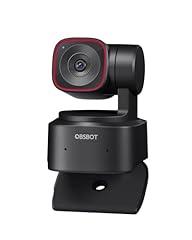
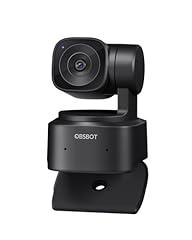
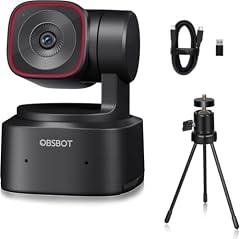
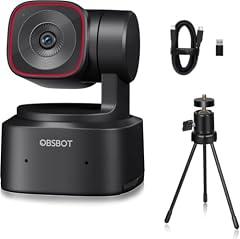
The OBSBOT Tiny 2 Lite is a wired USB-C webcam with a built-in monitor stand, a two-axis motorized gimbal, autofocus, dual microphones, and software controls through OBSBOT Center. It is intended for computer video calls, streaming, presentations, and desk recording. The manufacturer documents 4K video at up to 30 frames per second and 1080p at up to 60 frames per second, with a 1/2-inch CMOS sensor. Its zoom is clearly documented as 1x to 4x digital zoom, not optical zoom. The manual also documents a manual sleep position, where the lens points straight down and the status light is off. Independent hands-on tests found sharp video and generally responsive mechanical tracking, while also reporting occasional tracking misses, abrupt movement, and gesture-control misfires. Built-in audio is usable for calls, but independent testing described it as somewhat muffled.
What works
- The manual distinguishes the 1x to 4x control as digital zoom, reducing ambiguity about what zoom can preserve full image detail.
- A lens-down sleep position and indicator-light behavior give the user a visible capture-state check, although this is not a shutter.
- Independent hands-on testing found the mechanical pan and tilt tracking generally smooth and effective for standing presentations and streaming.
- The manual documents manual focus, autofocus, HDR settings, tracking controls, and firmware-update prompts through OBSBOT Center.
What does not
- No physical shutter or documented hardware microphone disconnect was found. Lens-down sleep is useful, but it depends on the camera's powered behavior.
- No traceable UL or ETL listing, exact-model electrical safety certificate, or product-specific FCC compliance document was located in the checked sources.
- No current official Zoom Certified, Microsoft Teams Certified, or Google Meet certified-device listing was found for this exact product. The manual only documents use with those platforms.
- Independent reviews reported occasional loss of the subject, fast camera moves that some viewers found uncomfortable, and gesture controls that can trigger unintended actions.
- The manufacturer privacy policy covers software and service data collection, including device information and potentially audio, image, and video information. It does not provide model-specific least-privilege details for the companion software.
Who is it for
This product suits a desktop presenter, instructor, streamer, or remote worker who changes position during calls and wants the camera to reframe them mechanically rather than relying only on a static wide shot. It is especially relevant for a single-person presentation area where 4K at 30 frames per second is sufficient and 1080p at 60 frames per second is preferred for smoother motion. It also fits users willing to install OBSBOT Center to adjust tracking, presets, zoom, focus, and sleep timing.
Who is it not for
It is not well suited to workplaces, clinicians, shared rooms, or households that require a physical lens shutter, a hard microphone disconnect, or documented enterprise security controls. It is also a weaker fit for buyers who need an officially verified meeting-platform certification for procurement. People who gesture frequently while speaking may find the gesture controls disruptive, based on independent testing. Users who need dependable built-in audio for recording, rather than ordinary calls, should account for reports of somewhat muffled microphone output.
Integrity
For capture privacy, the documented safeguard is a manual sleep position that points the lens straight down, with the indicator light off. That is more visible than a software-only toggle, but the checked documentation does not show a physical shutter or a separate hardware microphone kill control. Firmware updates are delivered through OBSBOT Center, and the manual says the camera prompts when an update is available. The broader OBSBOT privacy policy says its products and apps may collect device data and, when relevant services are used, audio, image, and video information. The camera is USB-powered and the manual advises using the supplied cable and a directly connected computer or independently powered dock. No product-specific recall was identified in the checked CPSC resources. However, no exact-model UL or ETL listing, EPEAT or TCO registration, recycled-material claim, take-back program, or detailed U.S. repair-parts catalog was located. Independent examination describes an all-plastic body, and the manufacturer documents firmware availability, but long-term repair and recycling support remain insufficiently evidenced.

OBSBOT Tiny SE 1080P Webcam
Overview
This is a compact USB webcam with a built-in two-axis motorized pan and tilt mount, designed for desktop calls, presentations, streaming, and basic subject tracking. It connects as a UVC camera to Windows 10 or later and macOS 11 or later. The manufacturer specifies a 1/2.8-inch, 2-megapixel CMOS sensor, f/1.8 lens, 78-degree diagonal view, and 1x to 4x digital zoom. Its defining hardware feature is mechanical tracking, with controllable pan of plus or minus 140 degrees and tilt from 30 to minus 70 degrees. The documented output table supports MJPEG 1080p up to 100 fps and 720p up to 120 fps, while HDR is limited to 1080p at 60 fps. Independent hands-on reviews confirmed strong general image quality and useful tracking, but also identified autofocus limitations. The product includes one integrated microphone, not a substitute for dedicated voice hardware in noisy rooms.
What works
- Mechanical two-axis tracking can reframe a moving presenter instead of relying only on digital cropping.
- Independent hands-on reviews confirmed usable 1080p image quality and capture up to 100 fps.
- The manual documents a lens-down sleep position and a status indicator that turns off in sleep mode.
- UVC connection and documented Windows and macOS requirements support straightforward plug-in use.
- Firmware updates are available through the companion software, according to the manufacturer manual.
What does not
- The 4x zoom is digital crop zoom, not optical zoom, so detail falls as zoom increases.
- Independent testing found autofocus less dependable than the camera's otherwise strong tracking and image performance.
- Built-in microphone quality is acceptable for webcam use, but reviewers heard room echo and reduced performance in a crowded office.
- No current official Zoom Certified or Microsoft Teams Certified listing was identified for this exact product.
- No traceable UL or ETL listing, FCC Supplier's Declaration of Conformity, repair guide, spare-parts catalog, or recycling program was located for the exact product.
Who is it for
This product suits a desktop presenter, teacher, fitness instructor, or small-team caller who moves during sessions and needs the camera to follow without manual reframing. It is also suited to users who want smooth full-HD motion rather than 4K capture, and who have a reasonably capable Windows or Mac computer for high frame rate output. The lens-down sleep position is useful for people who want an obvious visual way to block the camera between calls. A headset or separate microphone remains sensible for important voice work.
Who is it not for
It is not for buyers who require 4K detail, optical zoom, or certified deployment for Zoom Rooms or Microsoft Teams environments. It is also a weaker fit for noisy shared offices, large rooms, interviews, podcasts, or other situations where clear speech is essential, because its single built-in microphone has only moderate real-world performance. Privacy-sensitive users who need a dedicated mechanical shutter and a hardware microphone kill switch should choose a product with those separate controls. Repair-focused buyers may also need stronger parts and service documentation.
Integrity
For capture privacy, the manual documents a practical lens-down sleep mode. When the lens is pointed straight down, the camera enters sleep mode and its indicator turns off. This physically turns the lens away from the room, although the documentation does not establish a separate hardware microphone disable control. The camera also has visible indicator states for normal operation, tracking, updates, and faults. The product runs from USB at a manufacturer-stated 5V and 0.4A, and no external power adapter is included in the listed box contents. Firmware updating is supported through OBSBOT Center, which can help extend functional life. However, the companion software privacy policy says the company may collect device details and, when product functions are used, audio, image, and video information. No exact-model third-party electrical listing, formal U.S. compliance document, recycling program, material disclosure, replacement-parts catalog, or repair instructions were located. The documented warranty coverage is limited and varies by component.
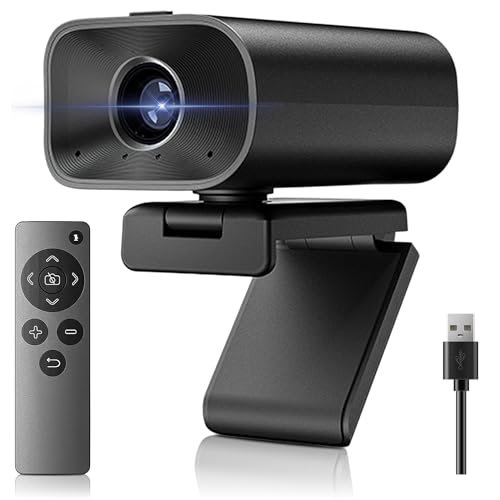
Ynoonvon 1080P Webcam with Speaker and Mic
Overview
This is a compact USB conference webcam intended for a laptop, desktop monitor, or tripod setup. It combines a 1080p camera, a single 5W speaker, two microphones, a remote, and a USB-C cable in one unit. The listed package also includes a privacy cover and an 18-month warranty. Those are manufacturer-stated details on the product page, rather than independently tested specifications. The product page specifically identifies the 5X function as digital zoom, not optical zoom, and describes a 90-degree wide view. Its separate specifications say 95 degrees, so the usable field of view is not clearly documented. The seller also states that it is plug and play on Windows and macOS and works with common meeting software, but no exact-model Teams, Zoom, USB-IF, or independent performance certification was located.
What works
- The built-in sliding lens cover is a concrete physical barrier to video capture when closed, according to the product instructions.
- The remote is stated to provide one-touch mute and camera-off controls, which can make capture controls easier to reach during calls.
- The camera, speaker, and dual microphones are integrated into one compact unit, reducing separate desk peripherals.
- An 18-month warranty is listed for the product, which is more useful than a listing with no stated coverage period.
What does not
- No model-specific independent testing was located for delivered resolution, low-light noise, focus stability, field of view, microphone pickup, or speaker performance.
- The listed field of view is inconsistent, with 90 degrees in the marketing copy and 95 degrees in the specifications.
- The 5X zoom is digital crop zoom, so it does not add optical detail when framing distant subjects.
- No public exact-model FCC compliance document, third-party electrical safety listing, firmware-update policy, or security advisory record was located.
- The slide cover blocks the lens, but the available documentation does not establish a hardware microphone disconnect or a separate, clearly documented capture-status indicator.
Who is it for
This product suits a solo remote worker, tutor, or small home-office user who wants one USB device for basic video calls, voice pickup, and speaker output. It is especially relevant where a physical lens cover matters and where a remote control is more convenient than reaching for on-screen settings. It also fits users who understand that the zoom is digital and mainly need reframing for presentations or a small group, rather than additional detail from distant subjects.
Who is it not for
It is not suited to buyers who need independently measured video or audio quality for client-facing production, teaching in difficult lighting, or important recorded meetings. It is also a poor fit where a documented hardware microphone kill switch, formal meeting-platform certification, verified electrical safety listing, or published firmware security support is required. Users who need true optical zoom, dependable autofocus behavior, or a confirmed field of view should choose a product with those details independently documented.
Integrity
The most meaningful privacy feature is the manufacturer-stated sliding lens cover. The product instructions say that closing it leaves the webcam detectable to the computer but results in a black image, which supports visual capture control. The remote is also stated to offer mute and camera-off functions. Documentation does not show that these controls physically disconnect the microphones, and no clear capture-light behavior was documented. The product is USB-powered and the listed box contents do not include a wall adapter. However, no exact-model UL or ETL listing, FCC compliance document, EPEAT or TCO registration, recycling program, repair guide, replacement-parts catalog, firmware archive, or published security policy was located. The stated 18-month warranty may help extend use, but it is not a substitute for documented repair and end-of-life support. No product-specific U.S. recall, exposure warning, or vulnerability record was located in the checked public sources.

OBSBOT Tiny 2 Lite 4K Webcam
Overview
This is a compact USB 4K webcam with a two-axis pan and tilt gimbal, integrated monitor stand, dual microphones, and a 1/4-inch mounting point. It is intended for video calls, streaming, teaching, and demonstrations where a fixed webcam would not keep a moving subject in frame. OBSBOT states that it delivers up to 4K at 30 frames per second or 1080p at 60 frames per second, uses a 1/2-inch CMOS sensor and phase-detection autofocus, and offers up to 4x digital zoom. The zoom is a crop and software framing function, not optical magnification. The manufacturer also provides software-controlled Sleep Mode, which turns the camera away and can show a static shield image, rather than a physical lens shutter. Independent hands-on reviewers found sharp video, fast autofocus, and generally effective tracking, although some AI features and built-in audio were less consistent.
What works
- Independent hands-on testing found solid 4K video, strong autofocus, and generally dependable subject tracking.
- The motorized pan and tilt mechanism can follow a presenter and reframe without manual repositioning.
- Resolution and frame-rate limits are clearly stated by the manufacturer, including 4K at 30 fps and 1080p at 60 fps.
- The manufacturer identifies the zoom as 4x digital, avoiding an optical-zoom implication.
- OBSBOT maintains a download center for the product family and lists compatibility with current OBSBOT Center software.
What does not
- Privacy control is software-based Sleep Mode, not a visible physical shutter or hardware microphone disconnect.
- The manufacturer privacy policy says its software and services can collect device identifiers, logs, and, when users use relevant functions, audio and image or video information.
- No exact-model listing was found in the official Zoom or Microsoft Teams certification directories, so platform certification should not be assumed.
- No traceable UL or ETL listing, or exact-model FCC Supplier's Declaration of Conformity, was located in the checked public sources.
- Independent reviewers noted that AI functions can be hit-or-miss, and one found the built-in microphone somewhat muffled.
Who is it for
It suits a solo presenter, instructor, demonstrator, or streamer who moves around a modest indoor workspace and wants the camera to pan, tilt, and reframe automatically. It is particularly relevant when 4K recording can be retained locally or used in a production workflow, rather than relying on a meeting platform that may limit transmitted resolution. It also fits users willing to install OBSBOT Center to access presets, tracking zones, image controls, and Sleep Mode, while using a separate microphone when voice quality is important.
Who is it not for
It is not well suited to households or workplaces that require an unmistakable physical privacy shutter, a hardware microphone kill switch, or a documented hardware certification for a particular meeting platform. Buyers who need optical zoom should also look elsewhere, because this product's 4x zoom is digital. For webinars, client recordings, or noisy rooms where speech intelligibility is critical, the mixed microphone findings make an external USB or XLR microphone the safer setup. It is also unsuitable for users unwilling to accept companion-software data collection described in the privacy policy.
Integrity
The main health-related issue is capture control. OBSBOT describes Sleep Mode as a software feature that points the device away and can display a static image. That can reduce accidental video exposure, but it is not equivalent to a physical shutter or an electrical microphone disconnect. Users who install OBSBOT Center should also read the company privacy policy, which describes collection of device, log, and potentially audio or visual information when relevant functions are used. No product-specific recall or U.S. regulatory warning was located in the checked public sources. However, public verification did not establish an exact-model UL or ETL safety listing, an exact-model FCC compliance document, EPEAT registration, TCO certification, recycled-material claim, repair manual, or take-back program. OBSBOT does provide ongoing software downloads and publishes warranty terms that cover key camera and gimbal components for one year, with shorter stated coverage for cables and microphones. This supports basic service continuity, but not a strong repairability or circularity case.

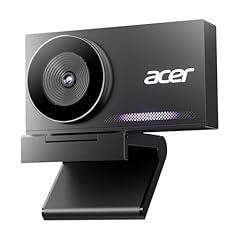
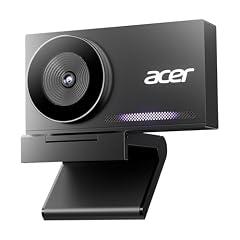
Acer 4K Streaming Webcam
Overview
This is a compact wired USB webcam intended for computer video calls, streaming, and basic product presentation. Published product materials describe a 4K camera with an 83-degree field of view, autofocus, two microphones, a monitor clip, and a USB-A to USB-C cable. The same materials characterize zoom as digital, not optical, so zooming crops the captured image rather than physically moving a lens. The defining hardware claims are a 1/2-inch Sony CMOS sensor, phase-detection autofocus, an all-metal body, and a magnetic lens cover. These are manufacturer-stated or seller-published claims, not independently lab verified. I found informal footage and reviews, but not a reproducible model-specific report measuring delivered resolution, frame rate, low-light noise, focus behavior, microphone pickup, or field of view.
What works
- A removable magnetic cover is a tangible way to block the lens when the camera is not in use, based on manufacturer-stated product materials.
- Wired USB operation and plug-and-play setup reduce dependence on a cloud account or wireless pairing, based on published setup instructions.
- The product is described as having a compact all-metal housing, which may be more durable than a thin plastic enclosure, though material details were not independently verified.
- Published materials clearly characterize the zoom as digital, rather than implying optical or motorized PTZ zoom.
- Acer publishes U.S. recycling options for Acer-branded electronics, including mail-back arrangements through its recycling partner.
What does not
- No public UL or ETL listing, exact-model safety declaration, or included-cable certification was located for this product.
- No exact-model FCC Supplier's Declaration of Conformity was located. A wired webcam may use the declaration route rather than an FCC ID, but the supporting document was not found.
- No official current Zoom, Microsoft Teams, or Google Meet certification listing was found for this exact product.
- No firmware support history, security advisory record, privacy documentation, or least-privilege software documentation was found for this product.
- The 4K, sensor, autofocus, low-light, and microphone claims lack a model-specific independent test using disclosed methods.
Who is it for
This product fits a person who wants a small, wired webcam for ordinary desktop calls or simple streaming, and who values a lens cover that can be put on before leaving the desk. It is most appropriate where the computer can select a standard USB camera without special software, and where digital zoom is acceptable. Buyers should treat the published 4K sensor, autofocus, noise-reduction, and metal-body specifications as manufacturer-stated until they can verify the retail unit and its actual video modes on their own computer.
Who is it not for
It is not suited to users who need documented meeting-platform certification for an employer, school, healthcare setting, or regulated workflow. It is also a poor fit for anyone needing optical zoom, pan and tilt movement, automated subject tracking, or verified 4K frame-rate performance. Privacy-sensitive users who require a built-in shutter with a documented capture indicator and microphone hardware-disable control should choose a product whose manual explicitly documents those controls. Safety-conscious institutional purchasers should require the exact electrical and FCC compliance paperwork before deployment.
Integrity
The useful privacy feature is a manufacturer-stated magnetic cover that physically obscures the lens. It does not establish control over the microphones, and the available materials do not document a hardware microphone disable switch, a capture-light behavior, firmware update policy, or data-handling practices. No model-specific U.S. recall, CPSC warning, or known vulnerability record was located in the checked public sources, but that is not the same as independent safety or security certification. The claimed metal unibody may help the housing withstand daily handling, but no product-specific recycled-content, packaging, repair-parts, or environmental certification evidence was found. Acer does publish U.S. recycling channels for Acer-branded electronics and says its recycling vendors meet R2 or e-Stewards-related requirements. Because the product's model-specific support and provenance documentation is limited, buyers should retain the cable, mounting hardware, and purchase documentation to make warranty service or responsible end-of-life handling more practical.
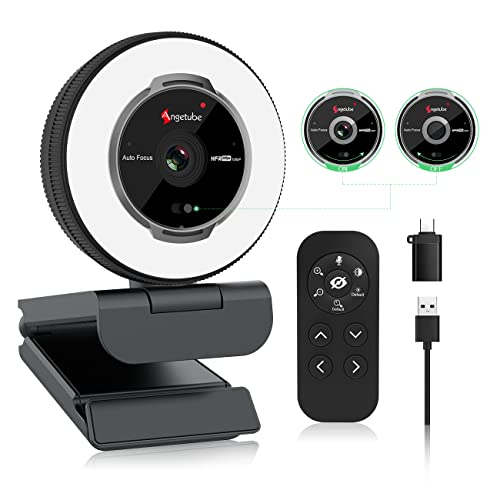
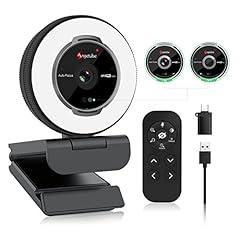
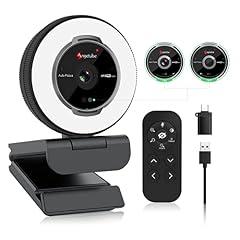
Angetube 1080P 60FPS Streaming Webcam with Microphone
Overview
This is a USB desktop or laptop webcam with a monitor clip, tripod thread, attached USB-A connection, USB-C adapter, remote control, and integrated ring light. It is intended for calls, streaming, and basic computer video capture. The maker lists 1080p at 60 frames per second, autofocus, three light colors, stepless light adjustment, dual microphones, and a built-in sliding lens cover. Independent hands-on testing confirmed the physical lens cover, adjustable ring light, remote functions, and usable sharp HD image in daylight. That test also found that image quality falls noticeably under artificial lighting, although the ring light can make illumination more even. The maker is unusually clear that its 5x zoom is digital and only works below 1080p, so it is a crop function rather than optical zoom.
What works
- A physical front switch slides the integrated cover over the lens, independently observed in hands-on testing.
- Independent testing found a sharp HD image in daylight and practical extra controls through the included remote.
- The integrated ring light has continuously adjustable brightness and three color temperatures, and independent testing found it can improve evenness in dimmer scenes.
- The product works without a required companion app for its remote zoom function, according to the maker.
What does not
- Independent testing found the built-in microphone quiet, a real limitation for callers who sit farther from the screen or speak softly.
- The 5x zoom is digital crop zoom and is unavailable at 1080p, not optical magnification.
- No current model-specific UL or ETL listing, FCC supplier declaration, or publicly traceable electrical-safety documentation was located.
- No documented firmware update program, security advisory history, repair manual, materials disclosure, or product take-back program was located.
- Compatibility is described as working with meeting apps, but no current Zoom or Microsoft Teams certification for this exact product was located.
Who is it for
This product suits a solo desktop caller, student, or casual streamer who needs an external USB camera with a physical lens cover and better face lighting than an unlit built-in laptop camera. It is especially relevant where daylight or a nearby room light is available, since independent testing found its daylight image sharp. The remote can be useful when the camera is mounted above a monitor or on a tripod and the user needs to alter framing, exposure, mute, or disable video without reaching the unit.
Who is it not for
It is not suited to people who rely on a built-in microphone for quiet rooms, group calls, soft voices, or recording at a distance, because independent testing found microphone output quiet. It is also unsuitable for buyers needing verified Teams or Zoom certification, a documented firmware security program, or traceable U.S. electrical and FCC compliance paperwork. Users needing true optical zoom, mechanical pan and tilt, or dependable image quality under artificial indoor light should not treat the remote's digital zoom and ring light as substitutes for those capabilities.
Integrity
The most meaningful privacy protection is physical rather than software-based. Independent testing observed a front-mounted control that closes the lens cover. The same test found remote buttons for microphone mute and camera disable, but the available evidence does not establish a hardware microphone disconnect or clear capture-status behavior. The maker states that zoom works only below 1080p, which appropriately avoids presenting the digital crop feature as optical zoom. The product is USB-powered and no separate mains adapter is listed. No product-specific UL or ETL listing, FCC supplier declaration, recall, or public safety warning was located in the checked U.S. sources. The maker offers a one-year warranty and says approved claims may be repaired or replaced. However, no material composition, recycled-content claim, recycling or take-back program, firmware archive, spare cable listing, or repair instructions were located. The separately listed replacement remote was shown as sold out when checked.