
10 Best Water Filter for Sink
 Daniel Kenitz
Please note that we participate in affiliate marketing programs. When you purchase through links on our site, we may earn a commission. As an Amazon Associate we earn from qualifying purchases. This comes at no additional cost to you and helps support the resources required to provide valuable content.Advertising Disclosure
Top-rated Water Filter for Sink Comparison
1

2
4
5
6
7
8
9
Choosing a water filter for a sink
A sink water filter can be a faucet-mounted cartridge, a countertop diverter system, a direct-connect filter under the sink, or a reverse-osmosis system with its own faucet and storage tank. The format determines installation, maintenance, wastewater, and the kinds of claims that may be plausible but the filter works only when its certified performance matches the problem in your water.
Start with the source. For municipal water, read the utility’s Consumer Confidence Report; for private wells, use a state-certified well-water test. Then match the result to an exact contaminant claim. “NSF certified,” “0.01 micron,” “eight-stage,” “99% reduction,” or a large gallon figure is not, by itself, proof of protection from lead, PFAS, nitrate, arsenic, fluoride, cysts, bacteria, or viruses. Look for the exact brand and model in an accredited register, such as NSF Certified Drinking Water Treatment Units, the IAPMO R&T Product Listing Directory, or WQA Gold Seal listings. The listing should identify the applicable standard such as NSF/ANSI 53, 58, 401, 244, or P231 and the specific contaminant, reduction level, flow, capacity, and test conditions.
The distinction between standards matters. NSF/ANSI 42 generally supports aesthetic claims such as chlorine taste, odor, and particulate reduction; it does not automatically establish lead or PFAS removal. NSF/ANSI/CAN 372 addresses lead content in water-contact components, not removal of lead from the incoming water. Reverse-osmosis systems are commonly evaluated under NSF/ANSI 58, but a listing for total dissolved-solids reduction does not automatically verify every contaminant advertised on a product page. A pore-size or micron statement likewise does not prove microbiological treatment without an applicable NSF/ANSI 244 or P231 claim, or another product-specific certified result.
Check the whole water path, not just the cartridge. Materials and fittings, the faucet, tubing, housing, pressure rating, temperature range, and faucet-thread compatibility affect safety and leak risk. Confirm that replacement cartridges are identifiable, available, and the same cartridges covered by the certified system. A compatible-looking substitute can change both performance and water-contact materials. Follow the manual’s source-water limits, flushing instructions, cleaning steps, idle-period guidance, and replacement schedule. Service-life claims can be misleading when products give different gallon and time figures, or when a nominal capacity is not supported by a contaminant-specific performance table.
Headline environmental figures also need context. Carbon and ultrafiltration systems generally do not create the reject-water stream associated with reverse osmosis. RO systems should be compared using treated-water efficiency or a stated reject-to-product-water ratio; one supplied RO system states roughly two gallons of drain water per gallon produced, while another states a 3:1 pure-to-drain ratio. Long cartridge life can reduce replacement frequency, but a large disposable cartridge or several short-life cartridges may still create substantial material waste. Recycling or take-back claims should be supported by clear product-specific instructions.
Across the supplied reviews, the recurring safety boundary is clear: these products are not substitutes for boil-water instructions, emergency disinfection, or treatment of untreated or microbiologically unsafe water. Several are limited to already-treated municipal water or tested, disinfected well water. A filter should not be relied on for a known contaminant unless its exact reduction is independently verified, and people with weakened immune systems should not assume a carbon or ultrafiltration product provides germ protection. Installation limits, faucet compatibility, source-water conditions, and timely cartridge replacement also need to be confirmed before use.
Integrity
These topics distinguish a filter that is merely convenient or improves taste from one whose construction, maintenance, and performance are supported by product-specific evidence. Scores reflect the supplied reviews: higher scores went to products with defined limits and verified claims, while lower scores commonly reflected broad marketing language, missing certification records, ambiguous cartridges, or incomplete maintenance information.
HHealth & Safety
Health-relevant contaminant protection
Measures whether the filter is independently certified to reduce the specific health-effect contaminants a buyer needs to address, with a high score requiring verified reductions rather than taste-only filtration.
Safe materials in contact with water
Measures whether the filter body, fittings, faucet, and cartridge are verified not to add unsafe contaminants to drinking water, with a high score requiring applicable lead-content and material-safety certification.
Germ and hygiene safety
Measures whether the product clearly limits use to safe source water or has verified microbiological treatment, and provides credible cleaning and replacement instructions that reduce germ growth in the filter.
Leak and installation safety
Measures whether the unit and its fittings are suitable for the stated faucet, plumbing, temperature, and pressure conditions, with a high score requiring verified structural integrity and clear installation limits.
Replacement cartridge safety
Measures whether replacement filters are identifiable, available, correctly matched to the certified system, and covered by the same verified performance scope, with a high score avoiding uncertified or ambiguous compatible-cartridge substitution.
Maintenance that keeps protection working
Measures whether service life, capacity, flow, source-water limits, pre-treatment needs, storage, and replacement timing are stated realistically and clearly enough for the filter to keep performing as intended.
EEcology
Filter waste and consumables
Measures the material burden of cartridges, housings, packaging, and replacement frequency, with a high score using durable systems, justified service life, lower disposable-material use, and credible recycling or disposal guidance.
Water use efficiency
Measures water wasted while making filtered water, with a high score requiring no reject-water stream or independently verified low reject-water use for reverse-osmosis systems.
EEvidence
Independently verified product
Measures whether the exact brand and model—not merely a component, generic standard, or seller statement—appears in a current accredited third-party certification register for the claims being made.
Certified performance matches the promise
Measures whether every important contaminant-reduction claim matches the exact contaminant, reduction level, test conditions, flow, capacity, and model scope in an independent certification listing, with a high score avoiding broad or unsupported extrapolation.
Honest, specific claims
Measures whether marketing accurately distinguishes aesthetic improvements from health protection, names the certifier and exact standard correctly, and avoids implying that a filter removes contaminants, germs, or all dissolved solids when its evidence does not show that.
Evidence for skin or wellness benefits
Measures whether claimed skin, acne, hydration, allergy, or other human benefits are supported by competent, independent evidence on the sold product under realistic use conditions, with a high score separating filtration performance from unproven health outcomes.
Full reviews

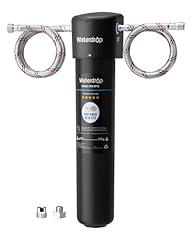
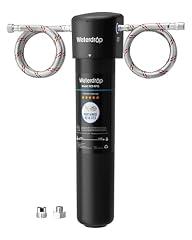
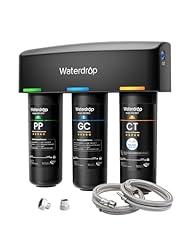
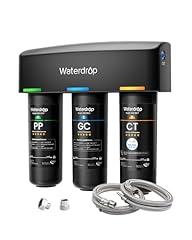
Waterdrop 15UA Under Sink Water Filter System
Overview
This is a compact, direct-connect under-sink carbon filter that treats the cold-water supply feeding the existing faucet. Waterdrop lists the WD-15UA at 3.9 by 3.6 by 16.7 inches, with a stated 0.75-gallon-per-minute flow rate. It does not use reverse osmosis, so it does not create a reject-water stream or meaningfully lower total dissolved solids. The strongest independent evidence is IAPMO listing for the exact product and its WD-RF15 replacement cartridge. That listing verifies 19,000-gallon capacity at 0.75 gpm for aesthetic chlorine, taste, and odor reduction. A separate current IAPMO listing covers lead-free plumbing-material requirements for this model. Waterdrop also markets reductions of lead, PFAS, heavy metals, and other chemicals, but the verified IAPMO performance scope located for this product does not establish those health-related reductions. Waterdrop describes lead reduction as third-party tested, not certified.
What works
- IAPMO lists the exact system with the WD-RF15 replacement cartridge, 19,000-gallon capacity, 0.75 gpm flow, and chlorine, taste, and odor reduction.
- The exact model appears in an IAPMO lead-free plumbing-material listing tied to U.S. Safe Drinking Water Act lead-content requirements.
- It is a non-RO, direct-connect system, so filtered water does not require a reject-water drain stream.
- The manufacturer provides an identifiable, purpose-matched WD-RF15 replacement filter, and that cartridge is included in the IAPMO system listing.
- Waterdrop specifies cold-water installation and a recommended 10 to 125 psi feed-water range.
What does not
- The independent performance listing found verifies aesthetic chlorine, taste, and odor reduction, not lead, PFAS, fluoride, or broad heavy-metal reduction.
- The product's health-related reduction claims rely on manufacturer statements or unspecified third-party testing, without a public product-specific certification record located for those claims.
- There is no verified bacteria, virus, or cyst-treatment claim. It should not be used to make unsafe water microbiologically safe.
- The stated two-year interval only applies within the rated conditions. Sediment-heavy water can reduce flow and may require earlier replacement.
- The cartridge is a disposable sealed component. No product-specific recycling program or end-of-life instructions were located.
Who is it for
This product suits a household on treated municipal water that primarily wants chlorine, taste, and odor improvement at the existing kitchen faucet, without adding a separate faucet or accepting reverse-osmosis wastewater. It is also suited to an installation with accessible cold-water plumbing, a compatible 3/8-inch supply connection or included 1/2-inch converter, and water pressure within Waterdrop's stated 10 to 125 psi range. The verified long capacity and matched replacement cartridge are practical for users who can track replacement timing and inspect fittings after installation.
Who is it not for
It is not appropriate as the sole response to a lead, PFAS, fluoride, arsenic, nitrate, microbial, or unknown private-well problem. The verified certification record found for this product is limited to aesthetic chlorine, taste, and odor reduction, while Waterdrop's broader contaminant claims are not matched by that record. It is also unsuitable for water under a boil-water advisory, untreated surface water, or a well without suitable upstream treatment. Households with very high sediment or variable pressure should address those plumbing conditions first.
Integrity
IAPMO independently lists this exact product and the WD-RF15 cartridge for 19,000 gallons at 0.75 gpm, with chlorine, taste, and odor reduction. IAPMO also lists the WD-15UA under a lead-free plumbing-material certification that references U.S. Safe Drinking Water Act lead-content requirements. Those are useful confirmations about the product's aesthetic filtration role and water-contact material lead content. The important limit is claim scope. The independent listing located does not certify this model for lead, PFAS, or germ reduction. EPA advises seeking NSF/ANSI 53 or 58 certification for PFAS reduction, and accredited third-party certification for lead reduction. This direct-connect carbon design avoids reverse-osmosis reject water, and its long certified capacity can reduce replacement frequency. However, the sealed cartridge remains disposable, and no verified recycling or special disposal guidance was found.

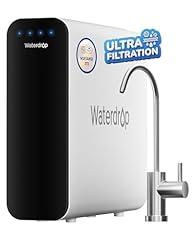
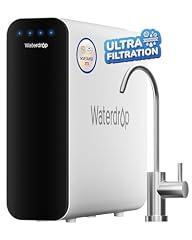
Waterdrop TSU Ultra-Filtration Under Sink Water Filter
Overview
This is a dedicated-faucet, under-sink ultrafiltration product for municipally supplied tap water. It uses three replaceable stages, a polypropylene sediment filter, a 0.01-micron ultrafiltration filter, and a carbon-block filter. The manufacturer specifies a 14.81 by 4.68 by 13.97 inch housing, 14.5 to 87 psi feed pressure, 41 to 100 F feed-water temperature, and a separate faucet that requires a drilled sink or counter opening. An IAPMO listing independently identifies the exact product under NSF/ANSI 372, a lead-content standard for water-contact plumbing products. That is meaningful material-safety evidence, but it is not certification that the assembled product reduces lead, PFAS, arsenic, dissolved salts, or other health-effect chemicals. Waterdrop states the ultrafiltration membrane is 0.01 micron and the system retains dissolved minerals. Its published replacement schedule is six months for sediment, 12 months for carbon block, and 24 months for ultrafiltration.
What works
- The exact product appears in an IAPMO listing for NSF/ANSI 372 lead-free plumbing compliance.
- It has explicit installation limits for municipal water, pressure, temperature, and well-water prefiltration needs.
- The manual gives separate replacement intervals, indicator alerts, flushing steps, and instructions for use after a week or more of nonuse.
- Ultrafiltration operates without a reverse-osmosis reject-water stream, according to the manufacturer.
- Dedicated replacement filters are named and sold for each of the three stages.
What does not
- No current NSF, IAPMO, WQA, UL, or CSA performance listing was found for this product showing certified reduction of lead, PFAS, arsenic, cysts, or other specific health-effect contaminants.
- The 0.01-micron membrane makes bacterial and parasite reduction plausible as a technology category, but this product does not have an identified NSF P231 or NSF/ANSI 244 microbiological certification.
- The NSF/ANSI 372 listing verifies lead-free material content, not contaminant-removal performance or full structural-integrity testing.
- It is intended for municipal tap water. The manual says well water needs prefiltration, and a water test is still needed to match treatment to a private-well contaminant.
- Three disposable cartridges are replaced on different schedules, with no identified recycling or end-of-life guidance.
Who is it for
This product suits a household on normal municipal tap water that wants a compact dedicated drinking-water faucet, sediment reduction, taste and odor treatment from carbon, and ultrafiltration without reverse-osmosis wastewater. It is most appropriate where a water report or test does not identify a contaminant requiring a certified lead, PFAS, arsenic, nitrate, or dissolved-solids claim. The user should have enough cabinet space, a compatible cold-water connection, and be comfortable drilling a faucet opening or using an existing one.
Who is it not for
It is not a safety-specific solution for a home with confirmed lead, PFAS, arsenic, nitrate, chromium, fluoride, high dissolved solids, or other chemical concerns, because no product-specific independent reduction certification was identified for those contaminants. It is also not the right stand-alone treatment for an unsafe private well, a boil-water advisory, or a household needing verified virus protection. People unable to drill for a separate faucet, monitor batteries and alerts, or replace three cartridges on schedule should avoid relying on it.
Integrity
The strongest independently verified health point is water-contact material safety. IAPMO lists the exact product as compliant with NSF/ANSI 372-2024, which addresses lead-content requirements for lead-free plumbing. The product uses sediment, ultrafiltration, and carbon-block stages, but that certification does not establish reduction of lead or other contaminants already present in source water. The manufacturer limits use to municipal tap water at 14.5 to 87 psi and 41 to 100 F. It advises prefiltration for well water and gives flushing, cleaning, replacement, and nonuse instructions. That maintenance matters because germs can grow in neglected filters. No relevant CPSC recall or regulator warning for this product was identified in the reviewed U.S. sources. Ultrafiltration avoids reverse-osmosis reject water, but the system still creates three streams of spent cartridge waste, and no recycling instructions were identified.

WINGSOL Stainless Steel Faucet Water Filter
Overview
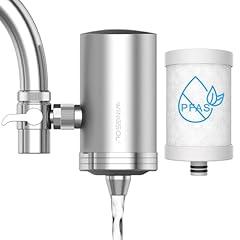
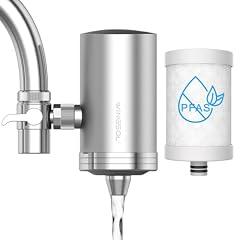
This is a faucet-mounted, carbon-block water filter in a stainless-steel housing. It attaches at the faucet outlet, uses a diverter to provide filtered water, and is marketed for drinking, cooking, and bathroom use. The manufacturer-stated specifications are a 350-gallon cartridge capacity, roughly three months of use, 0.5 gallons per minute flow, 360-degree outlet rotation, and supplied faucet adapters. Its defining limitation is evidence, not the faucet-mount format. The product is marketed with NSF/ANSI 42 and 53 language and claims for PFAS, lead, chlorine, microplastics, and heavy metals. However, no current listing for this exact product was located in the NSF, IAPMO, WQA, UL, or CSA certification registers checked. The stainless 304 body and stated service life are manufacturer claims, not independently verified material-safety or performance certifications.
What works
- Faucet-mounted carbon filtration has no reverse-osmosis reject-water stream.
- The stainless-steel housing is intended to be more durable than a disposable all-plastic system, although its lead-free status is manufacturer-stated.
- The maker gives concrete operating claims, including 350 gallons, about three months, 0.5 gallons per minute, and faucet compatibility limits.
- The package is stated to include eight adapters, which may support installation on a range of standard threaded faucets.
What does not
- The claimed PFAS, lead, heavy-metal, and microplastic reductions were not confirmed for this exact product in the third-party certification directories checked.
- NSF/ANSI 42 and 53 are cited in marketing, but available product materials use both “meets” and “certified” wording without an identifiable certifier listing or performance data sheet.
- No NSF/ANSI/CAN 372 or comparable listing was found to independently verify lead-content and extraction safety for the water-contact materials.
- No verified microbiological treatment claim was found. It should be used only with water already considered microbiologically safe, not as a response to a boil-water notice or untreated well-water risk.
- Replacement cartridge certification, disposal guidance, and a detailed cleaning protocol were not independently documented.
Who is it for
This product suits a household with municipally supplied water that is already safe from germs, a conventional threaded faucet, and a preference for on-demand filtered water without an under-sink installation or reverse-osmosis wastewater. It is most appropriate where the goal is improved chlorine taste and odor, and where the buyer is willing to treat the stated 350-gallon, three-month cartridge interval as a maintenance limit rather than a verified health-protection capacity. Faucet shape and thread compatibility should be checked before installation.
Who is it not for
It is not suited to households choosing a filter specifically to address confirmed lead, PFAS, or other health-effect contaminants in their utility report or well test. Those uses need an exact-product third-party listing that names the contaminant and certified capacity. It is also unsuitable for untreated or microbiologically questionable water, active boil-water advisories, pull-out or spray faucets, sensor faucets, and faucets outside the stated thread range. Buyers needing verified low-lead water-contact materials should seek documented NSF/ANSI/CAN 372 or equivalent certification.
Integrity
The product uses a faucet-mounted carbon-block format, so it does not create the reject-water stream associated with reverse-osmosis filtration. The maker also states that the body is 304 stainless steel and that each cartridge treats 350 gallons. A durable outer housing can reduce replacement of the full device, but the cartridge remains a recurring disposable item. No recycling or end-of-life program for cartridges was found. The important health caveat is that the broad reduction claims are not independently confirmed for this exact product in the certification directories checked. EPA advises buyers concerned about PFAS to look for an exact product certified to NSF/ANSI 53 or 58 for the relevant PFAS claim. For lead, EPA similarly recommends a third-party evaluated filter with specific NSF/ANSI 53 lead-reduction documentation. No relevant recall or CPSC warning for this product was located in the databases checked.
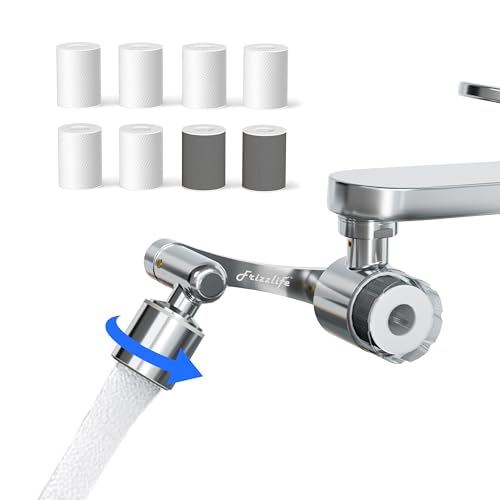
Frizzlife FF1080 Water Filter Faucet Aerator
Overview
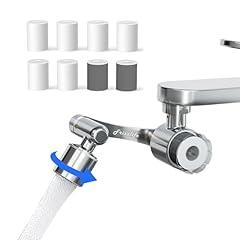
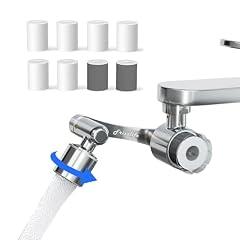
This is a faucet-mounted extender and aerator with a 1080° articulated arm, two water-output modes, and small replaceable PP-cotton or carbon-fiber filter inserts. Frizzlife states that the body uses brass, ABS, rubber seals, and multiple thread adapters for kitchen or bathroom faucets. Its product page lists a 1.5 gpm flow rate, while the catalog record says 2 gpm, so the operating-flow specification is inconsistent. The manufacturer states that the product reduces chlorine, odors, pollutants, and heavy metals, and supplies nine filters with a stated 30-day replacement cycle. Those reduction claims were not confirmed for this exact product in NSF's current drinking-water-treatment-unit register. The product page's certification section lists CEC and DOE, rather than an independently verifiable water-treatment performance certification.
What works
- The articulated arm can direct water into awkward sink areas, a concrete convenience benefit stated by the manufacturer.
- Direct faucet filtration has no reject-water line or reverse-osmosis wastewater stream.
- Frizzlife lists purpose-made FF1080 replacement cartridges, including PP-cotton and carbon-fiber options, with stated one-month service intervals.
- The manufacturer provides several included thread adapters and identifies the compatible thread sizes.
What does not
- The claimed 99% chlorine reduction and broad references to pollutants and heavy metals lack a model-specific independent certification listing or performance data sheet.
- A search of NSF's current drinking-water-treatment-unit register found no matching Frizzlife products, despite the product marketing describing the filtration as NSF certified.
- There is no verified claim of bacteria, virus, cyst, or other germ reduction. It should be used only with a safe water source, not as emergency or well-water disinfection.
- Monthly disposable inserts create a continuing consumables burden, and Frizzlife provides no cartridge recycling or disposal program on the product page.
- Published flow specifications conflict, with 1.5 gpm on Frizzlife's page and 2 gpm in the catalog record.
Who is it for
This product suits a household using already safe municipal tap water that wants a movable faucet aerator and manufacturer-stated chlorine and odor improvement for routine sink tasks. It is most relevant where directing water is the main need, such as rinsing a basin, washing hands, filling a shallow container, or reaching corners of a kitchen or bathroom sink. The buyer should be prepared to inspect the fit carefully, use the supplied adapter that matches the faucet, and replace the small insert every month.
Who is it not for
It is not appropriate for a household trying to address a known lead, PFAS, arsenic, nitrate, microbial, or other health-relevant drinking-water problem. Those needs require a filter independently certified for the specific contaminant found in the local utility report or a state-certified well-water test. It is also unsuitable during a boil-water advisory or for water that may be microbiologically unsafe, because no verified microbial-treatment capability was found. People seeking low-maintenance filtration may also find monthly disposable inserts impractical.
Integrity
Frizzlife identifies brass, ABS, and rubber as water-contact construction materials, and calls the brass lead-free and the ABS BPA-free. Those are manufacturer statements. The exact product was not found in NSF's current drinking-water-treatment-unit register, so its claimed NSF filtration status and any implied contaminant-reduction certification could not be confirmed. The available product page also does not provide a pressure range, temperature range, contaminant-specific test results, or a performance data sheet. A positive ecological feature is that this direct faucet attachment has no reverse-osmosis reject-water stream. Its tradeoff is frequent waste. The supplied PP-cotton and carbon-fiber inserts have a manufacturer-stated one-month replacement cycle, and the reviewed materials provide no recycling instructions. CDC notes that water filters need regular replacement because germs can grow in poorly maintained filters. No product-specific human study was located supporting skin or wellness benefits from using this attachment.

TSA Under Sink Water Filter System
Overview
This is a three-cartridge, under-sink, direct-connect filter that routes cold municipal tap water through sediment, granular-carbon, and carbon-block stages before it reaches the existing kitchen faucet. The installation instructions specify a 1 gpm flow rate, 10-125 psi working pressure, 35-100°F water, and 3/8-inch or 1/2-inch supply connections. It is not a reverse-osmosis system, so it does not lower total dissolved solids. Its strongest independently confirmed performance is narrow but useful. The replacement carbon-block cartridge is listed by IAPMO for chlorine, taste, and odor reduction at 0.75 gpm and 11,000 gallons. The product's broader PFAS, fluoride, heavy-metal, and cyst reduction claims were not matched to an exact-system NSF or IAPMO health-effects listing. Waterdrop's own instructions limit use to cold, municipally supplied water and say not to use unsafe or microbiologically unknown water without disinfection.
What works
- The designated carbon-block replacement cartridge has an IAPMO listing for chlorine, taste, and odor reduction.
- The cartridge schedule is specific, 6 months for sediment, 8-12 months for granular carbon, and 12-18 months for the carbon-block stage.
- Instructions state operating temperature, pressure, cold-water-only use, connector sizes, flushing, and leak checks.
- Direct-connect carbon filtration has no reject-water stream, unlike reverse-osmosis systems.
What does not
- Independent certification located for the replacement carbon-block cartridge covers chlorine, taste, and odor, not the full three-filter product.
- PFAS, fluoride, heavy-metal, and cyst reduction claims were not confirmed in an exact-product health-effects certification listing.
- It is not a microbiological treatment device and must not be used on unsafe or unknown-quality water without adequate disinfection.
- Three sealed disposable cartridges are replaced on staggered schedules, and no cartridge recycling or disposal program was identified.
Who is it for
It suits a household on tested municipal water that mainly wants filtered water at one existing kitchen faucet for drinking and cooking, especially where chlorine taste or odor is the practical concern. It also fits users who want a non-electric system without a separate drinking-water faucet or reverse-osmosis reject water. The buyer should have accessible cold-water plumbing, compatible 3/8-inch or 1/2-inch connections, adequate cabinet space, and a plan to replace three specific cartridges on schedule.
Who is it not for
It is not suited to homes trying to address a confirmed PFAS, lead, fluoride, arsenic, nitrate, or microbial result unless an exact certified reduction claim matches that contaminant and local concentration. It is also inappropriate for private wells, boil-water advisories, rainwater, or water of unknown microbiological quality without separate disinfection. People needing lower dissolved solids should not expect that result from this carbon-based system. Renters or households unable to inspect fittings, shut off water, or replace cartridges reliably should avoid a permanently plumbed setup.
Integrity
The water-contact evidence is partly reassuring but limited in scope. The IAPMO-listed carbon-block cartridge carries aesthetic chlorine, taste, and odor reduction claims, and Waterdrop states that this cartridge also meets a lead-content standard. That does not establish health-effects reduction for the complete three-filter product. EPA advises people seeking PFAS treatment to look for product-specific NSF/ANSI 53 or 58 PFAS certification, which was not located here. The manual gives sensible hygiene boundaries, including cold municipal water only, a warning against microbiologically unsafe water, five-minute flushing after installation or replacement, and scheduled cartridge changes. CDC notes that poorly maintained filters can support germ growth. Ecologically, the non-RO design avoids a reject-water stream, but the product uses three replaceable sealed cartridges. No credible recycling instructions or cartridge take-back program was found. No relevant U.S. product recall or regulator exposure warning was identified in the sources checked.
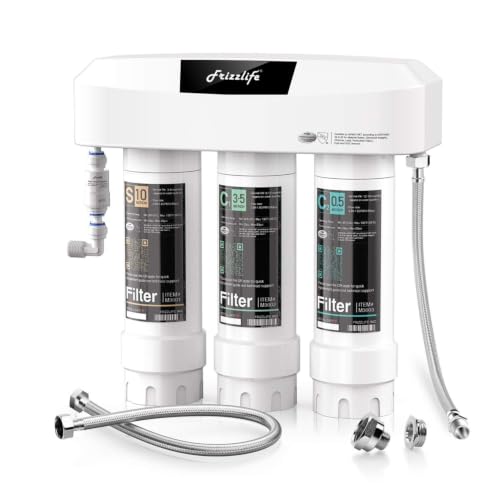
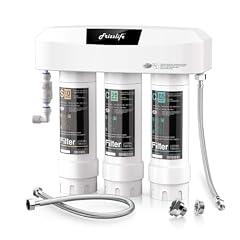
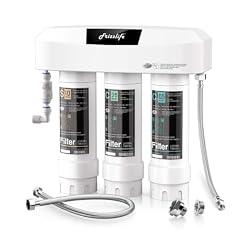
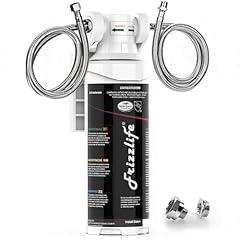
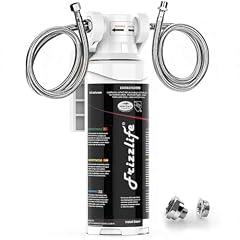
Frizzlife SK99-NEW Under Sink Water Filter System
Overview
This is a three-stage, direct-connect carbon-block filter installed below the sink and plumbed to the existing kitchen faucet. It treats cold municipal water at the main faucet, rather than using a separate dispenser or a reverse-osmosis tank. The owner’s manual lists a 1.5 gallon-per-minute flow rate, 1,000-gallon capacity, 20 to 80 psi operating range, and 39.2 to 100.4 F water range. The manual states that the SK99 was certified by IAPMO R&T to NSF/ANSI 42 and 53 for chlorine, particulate Class I, lead, cyst, and VOC reduction, plus material safety and structural integrity. Its performance sheet gives target limits for chlorine, particles, lead, cysts, and total trihalomethanes. However, the accessible product documentation does not substantiate the catalog’s PFOA, PFOS, chloramine, fluoride, or NSF/ANSI/CAN 372 claims for this exact product.
What works
- The manual identifies specific reduction targets for lead, cysts, chlorine, fine particles, and total trihalomethanes.
- Clear source-water limits warn against untreated or microbiologically unsafe water, excessive nitrate, and hard water without pretreatment.
- The system uses carbon filtration rather than reverse osmosis, so it has no reject-water stream.
- The manufacturer identifies the matching M3001, M3002, and M3003 replacement cartridges and gives separate replacement intervals.
What does not
- The claimed IAPMO certification could not be independently confirmed in an accessible current IAPMO product-register entry for this exact product.
- The catalog claims PFAS, chloramine, fluoride, and NSF/ANSI/CAN 372 coverage, but the product manual’s certified-claim list does not include them.
- It is not a microbiological purifier. The manual limits use to disinfected water and says not to use unknown or unsafe water without adequate disinfection.
- It uses three disposable cartridges with relatively frequent first-stage replacement, and no recycling or end-of-life program was identified.
- The manual notes that mostly plastic components can eventually crack from stress and assigns the user continuing leak inspection responsibility.
Who is it for
This product fits a household on treated municipal water that wants filtered water from its existing kitchen faucet without a separate drinking-water tap, electricity, a storage tank, or reverse-osmosis wastewater. It is most appropriate where the local water report or a home test identifies contaminants within its documented reduction scope, especially lead, cysts, chlorine-related taste concerns, particles, or certain VOC-related compounds. The buyer should have accessible cold-water plumbing, pressure within 20 to 80 psi, and a practical plan to replace three cartridges on schedule.
Who is it not for
It is not suited to private-well water, water under a boil-water advisory, microbiologically unsafe water, or water of unknown quality unless appropriate disinfection and pretreatment are already in place. The manual also calls for pretreatment where nitrate nitrogen exceeds 10 mg/L or hardness exceeds 50 mg/L. Buyers specifically addressing PFOA, PFOS, fluoride, chloramine, bacteria, viruses, dissolved solids, or broad contaminant removal need a product with current independent certification for those exact claims. It also requires ongoing leak checks and protected indoor installation.
Integrity
The useful health information is narrowly defined. The manual documents lead, cyst, chlorine, particulate, VOC, and total-trihalomethane performance targets, while also stating that the product is for disinfected water and is not for unsafe or unknown water without disinfection. These limits matter because carbon filtration is not a substitute for a microbiological purifier, and it does not remove nitrates, bacteria, or dissolved minerals as a general technology category. The accessible manual claims IAPMO R&T certification to NSF/ANSI 42 and 53, but a current public registry entry for this exact product was not located during this review. The wider catalog claim set goes beyond the manual, especially for PFAS and NSF/ANSI/CAN 372. Separately, NSF issued an August 25, 2023 public notice saying Frizzlife was not NSF-certified and could not use the NSF mark, concerning different advertising, not this product. Ecologically, carbon filtration avoids reverse-osmosis reject water, but it requires three disposable cartridges and no recycling guidance was identified.
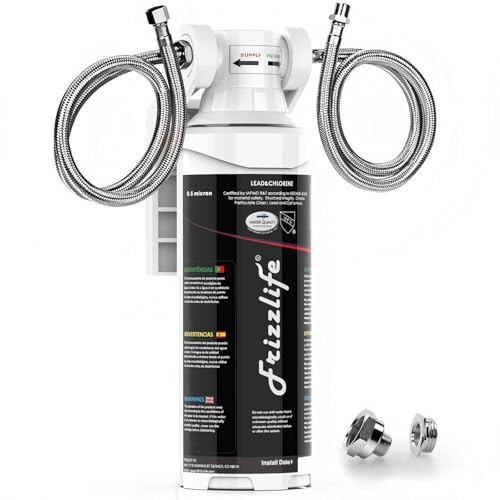
Frizzlife Under Sink Water Filter System
Overview
This is a compact, two-stage under-sink carbon-block filter that connects inline with a household cold-water line. It uses a replaceable FZ-2 inner cartridge, does not require electricity, and is intended for municipally treated water. The manufacturer lists 3/8-inch and 1/2-inch connection compatibility, a 20 to 80 psi operating range, and cold-water use only. The manufacturer’s installation documentation states that the product was certified by IAPMO R&T to NSF/ANSI 42 and 53 for structural integrity, material safety, chlorine, Class I particulates, lead, and cyst reduction. Its published performance data specifies at least 85 percent lead reduction to 0.010 mg/L or below and 99.95 percent cyst reduction under laboratory conditions. However, I could not independently confirm an active exact-product record in the certifier’s public directory during this review. The product is not a reverse-osmosis system and is not documented for dissolved-solids reduction.
What works
- Manufacturer documentation identifies specific performance targets for chlorine, Class I particulates, lead, and cysts, rather than relying only on a general filtration claim.
- The manual gives concrete safety limits, including 20 to 80 psi, 39 to 100 F, cold-water-only use, freeze protection, and a required leak check.
- It is designed for disinfected municipal water and clearly warns against microbiologically unsafe or unknown water without disinfection.
- The replaceable inner cartridge can reduce plastic disposal compared with discarding the full filter housing at every service.
What does not
- The manufacturer’s maintenance guidance conflicts. It variously cites 3 to 6 months, 6 to 8 months, and 8 to 12 months, while other materials advertise much longer capacity.
- The broad claim that it removes 99.99 percent of contaminants is not supported by the published performance table, which covers a limited set of contaminants.
- PFAS, PFOA, and PFOS reduction appears in marketplace claims, but the available product performance documentation does not substantiate a corresponding certified PFAS reduction claim.
- The manual says plastic housings should be replaced every 18 months, which reduces the waste advantage of replacing only the inner cartridge.
- It is unsuitable for untreated well water, unsafe water, high nitrate water without pretreatment, and hard water above the stated limit without pretreatment.
Who is it for
This product fits a household on disinfected municipal water that wants inline filtration at the existing kitchen faucet, has a compatible 3/8-inch or 1/2-inch cold-water connection, and can inspect for leaks during installation. It is most relevant where a local water report or properly collected test identifies lead concerns, chlorine taste, particulate matter, or cyst risk in otherwise treated water. The buyer should be prepared to use the stated pressure and temperature limits, flush the product before use, and replace cartridges conservatively because the manufacturer’s replacement intervals conflict.
Who is it not for
It is not appropriate as treatment for untreated well water, water of unknown microbiological quality, or water subject to a boil-water advisory. It should not be used above 10 mg/L nitrate nitrogen without pretreatment, or on water harder than 50 mg/L without pretreatment, according to the manual. Buyers whose main concern is PFAS, fluoride, arsenic, dissolved solids, bacteria, or viruses need product-specific third-party evidence for those contaminants. It also does not suit anyone unable to access the under-sink plumbing, monitor for leaks, or maintain the cartridge and plastic housing on schedule.
Integrity
The most useful health documentation is the manufacturer’s performance sheet, which specifies chlorine, particulate, lead, and cyst test claims and says the system is for disinfected water. The manual appropriately warns that it is not for microbiologically unsafe or unknown water unless adequate disinfection is used. It also instructs users to flush the filter and protect it from freezing, since freezing can crack the housing and create a leak risk. The product uses activated-carbon and carbon-block filtration, not reverse osmosis, so it produces no reject-water stream. Its inner-cartridge replacement design can reduce disposable housing waste. That benefit is limited by the manual’s instruction to replace plastic housings every 18 months. No product-specific recycling or disposal instructions for the spent cartridge were located. No relevant United States recall, regulatory warning, or warning letter was located in the sources reviewed.

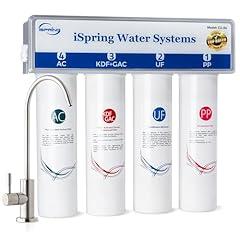
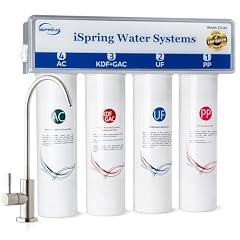
iSpring CU-A4 Ultra-Filtration Water Filter System
Overview
This is a four-cartridge, under-sink point-of-use system with a separate drinking-water faucet. Its stages are a 5-micron sediment filter, hollow-fiber ultrafiltration membrane, KDF plus granular activated carbon cartridge, and final activated-carbon cartridge. It is not reverse osmosis, and iSpring says it does not reduce total dissolved solids. The current manufacturer page describes a 0.01-micron membrane, no reject water, and a 6 to 12 month filter interval. Its older downloadable manual instead describes a 0.1-micron membrane, 1,100-gallon capacity, and 6 to 9 months at four gallons daily. Those unresolved documentation differences matter when planning replacement. iSpring claims reduction of PFAS, lead, arsenic, chlorine-related compounds, and other contaminants, but an exact-product certification for those health claims could not be verified in the NSF, IAPMO, or WQA product registers reviewed.
What works
- The system has named, currently listed replacement sets and individual cartridges, which makes matching the intended cartridge family more straightforward.
- The manual provides concrete operating limits, 20 to 80 psi feed pressure, 40 to 100 F water, 0.56 gpm at 45 psi, plus adapter guidance for 1/2-inch NPT and 3/8-inch compression connections.
- Its tankless filtration design has no reject-water stream, according to iSpring, avoiding the wastewater inherent to reverse-osmosis operation.
- The manufacturer clearly states that this product does not lower total dissolved solids, which sets an important limit on what its ultrafiltration format is meant to do.
What does not
- The important lead, arsenic, and PFAS reduction claims were not matched to an exact-product third-party certification listing. They should not be treated as verified health-protection claims.
- Product documentation conflicts on membrane rating and service capacity. The current sales page says 0.01 micron and 6 to 12 months, while the downloadable manual says 0.1 micron, 1,100 gallons, and 6 to 9 months.
- There is no verified NSF, IAPMO, or WQA listing for the finished product's contaminant reduction, material safety, or structural-integrity scope.
- The product is not a virus treatment device. iSpring states that it does not remove viruses, and a filter without verified microbiological certification should not be used to make unsafe water safe.
- Four disposable cartridges are replaced on a recurring schedule, and no cartridge recycling or end-of-life disposal program was identified.
Who is it for
This product fits a household on treated municipal water that wants filtered drinking and cooking water from one dedicated faucet, has room under the sink, and values avoiding reverse-osmosis reject water. It is most suitable where the practical goal is sediment reduction and improved taste or odor, rather than verified treatment of a known health contaminant. The buyer should be comfortable checking the local water-quality report, following the stated pressure and temperature limits, and replacing the complete matched cartridge set on schedule.
Who is it not for
It is not suited to a household trying to address confirmed lead, arsenic, PFAS, nitrate, fluoride, uranium, or other specific health-effect contaminants without first obtaining an exact independently certified reduction claim. It is also not appropriate as the sole treatment for private-well water, boil-water situations, suspected viral contamination, or water of unknown microbiological quality. Immunocompromised households should seek specialist advice and treatment with verified germ-reduction performance. It also will not suit buyers who need lower dissolved solids or hardness, because iSpring states that it does not reduce TDS.
Integrity
The most important health limitation is evidence scope. iSpring markets broad reduction claims for PFAS, lead, arsenic, and other contaminants, but no exact finished-product certification could be verified in the NSF, IAPMO, or WQA registers reviewed. EPA and CDC recommend choosing a filter certified for the specific contaminant found in the water. The manufacturer also says the product does not remove viruses. Its manual gives operating limits and replacement instructions, but the current sales page and manual conflict on membrane rating and capacity. The product uses no electricity or reverse-osmosis reject-water stream, according to iSpring, which is a meaningful water-use advantage. That benefit is offset by recurring disposal of four filter cartridges, with no identified recycling guidance. No relevant CPSC recall was located in the search performed. Separately, the FTC took action against iSpring in 2017 over misleading Made in USA claims, then obtained a 2019 civil penalty for violating that order. Those actions concerned origin advertising, not this product's water-treatment performance, but they reinforce the need to distinguish manufacturer statements from independent verification.

iSpring F9K Reverse Osmosis Filter Pack
Overview
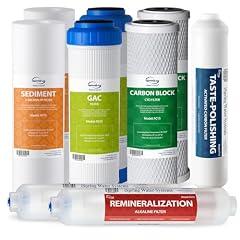
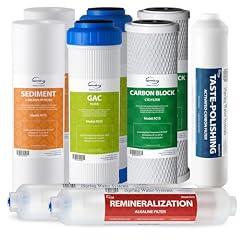
This is a nine-cartridge, one-year replacement pack for certain iSpring six-stage under-sink reverse-osmosis systems, including RCC7AK and RCC7P-AK configurations. It includes two sediment filters, two granular activated-carbon filters, two carbon-block filters, one post-carbon filter, and two alkaline remineralization filters. It does not include the reverse-osmosis membrane, so it is not a complete annual service package where that membrane also needs replacement. iSpring's manual identifies this pack for the RCC7AK family and specifies six to 12 month replacement intervals for the prefilters, post-carbon filter, and alkaline filter. NSF's current register independently lists RCC7AK system configurations, but it does not list this replacement pack itself as a certified product. The plain RCC7AK listing is certified for total dissolved solids reduction, while some separately listed black-finish configurations have broader contaminant claims and lead-free material conformance.
What works
- The manufacturer documents the exact filter sequence and identifies this pack for compatible six-stage RCC7AK-family systems.
- The pack supplies two rounds of sediment, granular-carbon, carbon-block, and alkaline cartridges, matching the stated six to 12 month service intervals.
- The owner manual gives practical safety directions, including flushing new prefilters, discarding the first tank of water, checking for leaks, and periodically checking total dissolved solids.
- NSF independently lists compatible RCC7AK system configurations under NSF/ANSI 58, with the listed system components and performance scope clearly separated from the replacement-pack claim.
What does not
- This pack omits the reverse-osmosis membrane, which is the component critical to dissolved-solids reduction and is normally replaced every two to three years according to iSpring.
- The exact replacement pack does not appear as its own product in NSF's current drinking-water-treatment listing. Calling the pack itself NSF certified is therefore not fully supported by that register.
- The plain RCC7AK configuration currently listed by NSF is shown for total dissolved solids reduction only. Broader reduction claims apply to separately listed system configurations, not automatically to every compatible setup.
- Nine disposable cartridges are consumed over the stated year, and no cartridge recycling or end-of-life recovery program was identified.
- This is a conventional reverse-osmosis service pack for a system with a wastewater drain line. No WaterSense listing or verified treated-water-efficiency figure was identified for the compatible system.
Who is it for
This pack fits a household that already owns a documented compatible iSpring six-stage reverse-osmosis system and wants the manufacturer-specified sediment, carbon, post-carbon, and alkaline cartridges for routine annual servicing. It is most appropriate for users on treated municipal water who can follow the manual's flushing, leak-checking, and replacement instructions. It also suits a household that understands the reverse-osmosis membrane is a separate component with a different, longer replacement interval.
Who is it not for
It is not suitable as a standalone sink filter because it contains no reverse-osmosis membrane, housing, tank, faucet, or plumbing hardware. It is also not the right choice for a household using microbiologically unsafe or unknown-quality water unless adequate disinfection is provided, which iSpring specifically requires. People seeking independently verified PFAS, chromium-6, cyst, bacteria, or virus reduction for their exact installed setup need a product whose current certification listing names those claims and configuration.
Integrity
The central health point is configuration control. iSpring's manual links this pack to specified six-stage systems and calls for regular filter changes, flushing after prefilter changes, discarding the first full tank after startup, and periodic total-dissolved-solids checks. The manual also says not to use the system with microbiologically unsafe or unknown-quality water without adequate disinfection. That limitation matters for private wells, flood-affected supplies, and boil-water situations. NSF's current register confirms NSF/ANSI 58 listings for compatible iSpring systems, but the exact replacement pack is not listed as a separately certified product. The record also distinguishes a plain RCC7AK listing with total-dissolved-solids reduction from certain other listed configurations with broader claims and lead-free conformance. Environmentally, the pack replaces nine cartridges over a year, and the compatible reverse-osmosis design routes wastewater to a drain. No verified efficiency rating, WaterSense listing, or cartridge recycling guidance was identified. No relevant CPSC recall was identified in the review.

Filterbaby Skincare Filter 2.0 Chrome
Overview
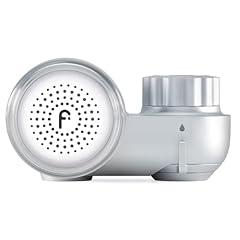
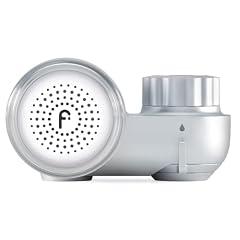
This is a faucet-mounted bathroom filter intended for face washing, rather than a whole-home or drinking-water treatment system. The company describes a three-stage cartridge with carbon fiber, a mineral-reduction layer, and a polyethylene hollow-fiber membrane stated as 0.2 microns. It includes multiple adapters for round removable-aerator faucets and has filtered and unfiltered flow settings. Filterbaby states that the cartridge should be changed every 90 days and sells a named replacement cartridge. Its own clinical page describes a two-week, 35-person hydration study using instrument measurements, but the full independent report and protocol were not located. More importantly, no current public certification listing was located for this exact faucet filter in the major U.S. product registries. The brand's certification page identifies NSF/ANSI 177 certification specifically for its Pro and Diamond shower filters, not this faucet product.
What works
- The faucet format filters only the water used at the sink, with no reverse-osmosis reject-water stream.
- Filterbaby identifies dedicated replacement cartridges for this product and gives a regular replacement schedule.
- The manufacturer provides adapters and aerator keys, which may simplify installation on compatible round-aerator bathroom faucets.
- The manufacturer describes a small instrument-based, two-week skin hydration study rather than relying only on customer testimonials.
What does not
- No current third-party certification listing was located for this exact faucet filter for lead, PFAS, cysts, microbes, or material safety.
- The brand's own pages create a certification-scope problem. NSF/ANSI 177 applies to shower filters and free available chlorine reduction, yet the faucet-filter marketing associates it with broader contaminant claims.
- The stated particle size is inconsistent across the brand's materials. One page says 0.000001 mm, while the clinical page specifies a 0.2-micron membrane.
- A 90-day disposable cartridge creates recurring waste, and no recycling or end-of-life guidance was located.
Who is it for
This product is most suited to a person on treated municipal water who wants a dedicated bathroom-sink attachment for facial cleansing, has a faucet with a removable round aerator, and is prepared to replace the cartridge at least every three months. Its practical fit is cosmetic and routine-focused, especially for someone who prefers filtered water for washing but does not need to treat every tap in the home. The manufacturer-reported hydration study may also be relevant to buyers who understand that it is limited evidence, not proof of treatment for acne, eczema, or other skin disease.
Who is it not for
It is not suitable as the primary safety measure for a household with known lead, PFAS, microbial, private-well, or boil-water concerns. Those uses require a treatment system independently certified for the specific contaminant in the local water report. It is also not appropriate for people with severely weakened immune systems who need verified microbiological protection, or for anyone unable to maintain frequent cartridge changes. Buyers whose faucet lacks a removable round aerator should confirm compatibility before installation, because the supplied adapters do not establish universal fit.
Integrity
The marketed filtration media are carbon fiber, a mineral-reduction layer, and a polyethylene hollow-fiber membrane. These are manufacturer-stated specifications. No public NSF, IAPMO, WQA, UL, or CSA listing was located for this exact faucet product that confirms reduction of health-effect contaminants or verifies the safety of its water-contact materials. The company reports IAPMO testing, but its own certification material says NSF/ANSI 177 certification applies to its Pro and Diamond shower filters. NSF describes that standard as limited to shower filters and free available chlorine reduction. Filterbaby says to replace the cartridge every 90 days. Frequent replacement is important because CDC notes that germs can grow in poorly maintained water filters, especially after disinfectant removal. The unit avoids the reject-water waste associated with reverse osmosis, but it uses a disposable cartridge on a recurring schedule. No recycling program, cartridge material breakdown, or disposal guidance was located. No relevant CPSC recall or regulator warning was identified in the searches performed.