
10 Best Water Purifier
 Daniel Kenitz
Please note that we participate in affiliate marketing programs. When you purchase through links on our site, we may earn a commission. As an Amazon Associate we earn from qualifying purchases. This comes at no additional cost to you and helps support the resources required to provide valuable content.Advertising Disclosure
Top-rated Water Purifier Comparison
1

2


4

5
6
7
8

9
10

Water purifiers: what to look for
Water treatment products do different jobs, and the word “purifier” does not make them interchangeable. Pitchers and under-sink filters are generally designed for treated tap water and may improve taste or reduce specific chemicals. Outdoor membrane filters can target bacteria and protozoa but usually do not remove viruses or dissolved chemicals. Disinfection tablets can address labeled microorganisms but do not remove sediment, metals, fuel, pesticides, salt, or other chemicals. Reverse-osmosis systems can address some dissolved substances, but only when the particular contaminant and performance are documented.
Start with the water source and the actual problem. For municipal water, check the utility’s annual Consumer Confidence Report; for a private well, use a state-certified drinking-water laboratory. Then match the treatment to that result. A filter’s pore size is not a universal safety rating: a small pore claim may support physical removal of some organisms, but it does not prove virus control, chemical reduction, or performance through the full service life. Likewise, “NSF” in a product title is incomplete unless the exact finished product, replacement media, standard, and claim scope appear in a current independent listing.
The strongest evidence is product-specific. Look for the exact model in the NSF Certified Products and Systems database, WQA Gold Seal listings, IAPMO R&T Listing Directory, or another applicable independent registry. NSF/ANSI 42 generally concerns aesthetic effects such as chlorine taste and odor; NSF/ANSI 53 covers specified health-related contaminant reductions; NSF/ANSI 58 applies to reverse-osmosis systems; NSF/ANSI 401 and P473 address particular emerging contaminants where listed. NSF/ANSI/CAN 372 concerns lead content in materials, not lead removal from water. Microbiological claims should be tied to NSF/ANSI 244, NSF P231, an EPA purifier protocol, or an applicable EPA pesticide label for chemical disinfectants. A laboratory report should identify the exact product, test method, influent conditions, flow or dose, reduction result, and rated capacity.
Headline figures commonly mislead. “0.01” or “0.1 micron” does not establish protection against every germ. A percentage such as “99.99%” may describe one organism, one test condition, or initial performance rather than the full rated life. A gallon figure may conflict with the manual, retailer listing, or replacement-filter instructions. A lead-content certification does not show that the product removes lead. A broad “removes contaminants” statement is not equivalent to separate, contaminant-specific certification. A stated pure-to-drain ratio for reverse osmosis is not independent efficiency verification, and a self-cleaning feature does not replace cleaning, flushing, storage, or cartridge-replacement instructions.
Across the supplied products, the recurring safety boundary is clear: untreated, unknown, emergency, floodwater, sewage-affected, or microbiologically unsafe water should not be treated with an ordinary tap-water filter. Many filters do not address viruses, and several do not address dissolved chemicals such as lead, PFAS, arsenic, nitrate, fuel, pesticides, or salt. Outdoor filters may need a separate disinfection step when viral risk is plausible. Cloudy water may need settling or straining before chemical treatment. Follow limits for temperature, turbidity, pressure, contact time, flow, storage, freezing, cleaning, and replacement, and do not use a wetted hollow-fiber filter after suspected freezing unless the instructions support its safety.
Integrity
A water treatment product should be judged by the risk it is designed to address, the conditions under which it was tested, and whether safe performance remains realistic during its service life. The supplied scores distinguish narrow, well-supported claims from broad claims without matching product evidence.
HHealth & Safety
Health protection for the water actually used
This measures whether the treatment matches the buyer’s source and concern rather than implying universal protection. Among the supplied products, the higher scores belong to products with clear tap-water or freshwater boundaries and a defined use case; lower scores reflect broad claims that do not match documented evidence. A buyer should begin with a water report or test, then select treatment for that specific risk.
Protection from germs
This measures verified reduction of cysts, bacteria, and viruses, while distinguishing a filter from a true purifier. The strongest supplied result is the tablet product, whose EPA label covers bacteria, viruses, and Giardia under labeled conditions. Outdoor membrane products have meaningful bacteria or protozoa evidence but no virus protection, while tap-water filters generally have no verified germ claim. No small-pore number alone proves complete protection.
Protection from harmful chemicals
This measures reduction of named contaminants at a rated capacity, not a general promise to remove “impurities.” The Brita dispenser scores notably higher because its supplied evidence covers cadmium, copper, mercury, zinc, and chlorine-related effects. Several products score much lower because lead, PFAS, arsenic, nitrate, or heavy-metal claims were not supported for the exact product. Match the certified contaminant to the water result.
Safe materials in contact with drinking water
This measures independent evaluation of housings, seals, media, and other water-contact parts for safe construction and contaminant leaching. The under-sink Waterdrop scores strongly because the exact product is listed for NSF/ANSI/CAN 372 lead-content compliance; the outdoor straw also has lead-content evidence. Lower-scoring products rely mainly on BPA-free or food-grade wording, which does not establish complete drinking-water materials certification.
Safe performance over time
This measures whether clogging, bypass, stale water, microbial growth, and replacement are addressed with practical instructions. The higher-scoring products specify cleaning, flushing, storage, backwashing, or replacement reminders; the lower-scoring products have unclear maintenance or conflicting capacity information. For this category, a good first-use result is not enough: the buyer must be able to maintain the unit and replace media on schedule.
Clear limits for real-world use
This measures whether instructions identify unsuitable water, temperature, turbidity, pressure, flow, contact time, storage, and emergency restrictions. The strongest scores belong to products that plainly limit use to cold treated tap water, measured tablet doses, or defined freshwater conditions. Lower scores reflect unclear limits despite “purifier” language. Clear boundaries prevent a taste filter or outdoor filter from being used for an untested hazard.
EEvidence
Independently verified, exact product
This measures whether the finished model and its replacement media appear in a current independent registry, rather than relying on a logo, component test, or generic standard. The strongest supplied score belongs to the exact Membrane Solutions straw listing. The under-sink Waterdrop and Brita also have product- or system-specific listings. Products with only compatible-filter listings or manufacturer claims score lower because the finished product’s scope is less certain.
Honest, specific claims
This measures whether marketing separates taste improvement, filtration, purification, disinfection, and contaminant reduction. The highest-scoring products state important exclusions, such as no virus or dissolved-chemical protection. Lower-scoring products use broad “purifier” or “99.99%” language without identifying organisms, chemicals, test conditions, or capacity. Buyers should treat a claim as narrow unless the exact reduction and limitation are stated.
Proven performance through the rated life
This measures whether testing covers the claimed contaminant or organism, operating conditions, and full service capacity. The strongest supplied evidence includes the tablet label, Brita’s 40-gallon performance documentation, and certified particulate or microplastics claims for the outdoor straw. Initial laboratory results, theoretical lifetimes, and conflicting gallon figures are weaker. A new-filter result should not be read as proof of end-of-life performance.
Regulatory status and recall record
This measures current registrations, labels, warnings, recalls, and corrective actions for the exact product. Aquatabs scores strongly because its EPA label and NSF/ANSI/CAN 60 listing support its chemical-disinfection status. Most other supplied products had no matching recall identified, but that is not the same as certification. Buyers should check current CPSC notices, public certification notices, and any applicable EPA label before relying on a product.
EEcology
Waste, water, and energy burden
This measures disposable cartridges, tablets, batteries, packaging, reject water, and electricity without treating lower impact as more important than verified safety. Pressure-powered filters and reusable outdoor membranes score well for avoiding electricity or reverse-osmosis wastewater. Gravity products also avoid operating energy. Disposable media remain a burden, while reverse osmosis creates reject water; recycling or take-back options were generally absent, except for the Brita mail-back program.
Full reviews

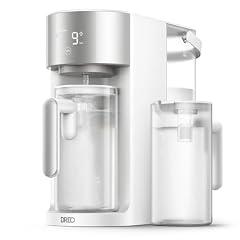
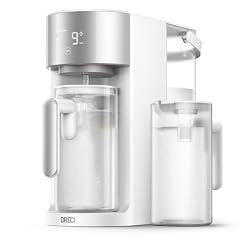
DREO Countertop Reverse Osmosis Water Filter
Overview
This is a plug-in countertop reverse-osmosis water treatment product with a 5 L raw-water tank, two 1.1 L autofill pitchers, a touch display, TDS readout, and one replaceable composite cartridge. DREO lists a 40°F to 100°F feed-water range and a slim 15.67 by 6.73 by 13.35 inch footprint. It does not require plumbing. DREO states that the cartridge combines sediment media, coconut-shell activated carbon, and an RO membrane across seven stages. Its manual rates the cartridge for 265 gallons and specifies a 200 to 260 mL per minute dispensing rate. DREO also says the product was tested by SGS to NSF/ANSI 58 criteria and can remove 99.99% of contaminants. Those are manufacturer claims, not an independently confirmed finished-product certification or publicly available exact-model test report.
What works
- The manual provides unusually practical care directions, including weekly tank and pitcher cleaning, descaling every three months, filter-life alerts, and flushing after storage or cartridge replacement.
- Its documented use limits are concrete. It is intended for fresh tap water only, at 40°F to 100°F, and not visibly dirty or sediment-containing water.
- The 265-gallon cartridge replacement interval gives users a measurable maintenance point, rather than relying only on elapsed time.
- The compact countertop format and two supplied pitchers can provide treated drinking and cooking water without altering rental or shared plumbing.
What does not
- No current NSF, WQA, IAPMO, or UL finished-product certification listing was located for this exact product. A claim of SGS testing to NSF/ANSI 58 is not the same as current third-party certification.
- The broad claim to remove 99.99% of contaminants does not publish contaminant-specific reductions, influent conditions, or end-of-life results for lead, PFAS, arsenic, nitrate, or volatile chemicals.
- No exact-product microbiological certification to NSF P231 or NSF/ANSI 244 was located. It should not be treated as a proven emergency, flood, or untreated-well germ purifier.
- ABS is identified as the product material, but no independent NSF/ANSI/CAN 61 or 372 listing was located for the finished product's drinking-water-contact materials.
- The product creates reject water. Its 3:1 pure-to-drain claim is manufacturer-stated, and no independent recovery or energy-efficiency certification was located.
Who is it for
This product suits a renter, apartment household, office user, or small household that has municipally supplied tap water and wants a countertop RO format for drinking and cooking water. It is particularly relevant where a local water report or water test identifies dissolved-mineral or chemical concerns that RO can plausibly address, provided the buyer checks that the particular contaminant is actually covered by suitable evidence. It also suits people willing to follow regular cleaning, flushing, descaling, and cartridge replacement instructions.
Who is it not for
It is not appropriate as the sole response to a boil-water notice, flooding, visibly dirty water, an untreated private well, or a known microbial contamination problem. The manual itself limits use to fresh, clear tap water. Households relying on it for infant formula, immune-compromised residents, lead, PFAS, arsenic, or nitrate reduction should first obtain source-water results and seek a product with independently certified, contaminant-specific reductions at rated capacity. It also does not suit users unable to clean the tank and pitchers weekly or discard reject water.
Integrity
DREO identifies a composite cartridge containing sediment media, coconut-shell activated carbon, and an RO membrane. The accessible instructions give meaningful controls against stale-water and surface contamination, including weekly cleaning, a reminder after the raw-water tank remains in place for over 48 hours, and a direction not to consume filtered water stored longer than 48 hours. They also require four full tank flushes at first use, after extended storage, and after cartridge replacement. The evidence gap is certification. DREO markets SGS testing to NSF/ANSI 58 criteria, but no current independent registry entry was located for this exact finished product, its claimed chemical reductions, or its water-contact materials. No matching CPSC recall or public safety warning was located in the search conducted. The cartridge is rated by the manufacturer for 265 gallons, then becomes disposable waste. RO also produces reject water, and the stated 3:1 pure-to-drain ratio has not been independently verified.

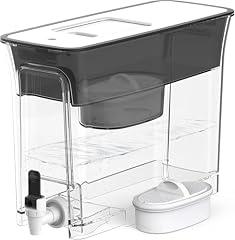
Waterdrop 35-Cup Slim Water Filter Dispenser
Overview
This is a gravity-fed, refrigerator-oriented water dispenser with a stated 35-cup total capacity, a tap spout, and a replaceable carbon-based filter. It is intended for cold municipal tap water. The supplied instructions say to soak a new filter for 10 minutes, discard the first two reservoirs, and hand-wash the tank, lid, and reservoir. Independent NSF records verify 200-gallon chlorine, taste, and odor reduction for listed Waterdrop pour-through configurations using the compatible WD-PF-01A or WD-PF-01A Plus filter. They also verify lead-content compliance for a listed WD-PF-01A-S pour-through filter. The finished dispenser itself is not named in those registry entries. Documentation is inconsistent on capacity, because the available owner manual says 100 gallons or two months while current retail material states 200 gallons or two months.
What works
- The compatible replacement-filter family has a current NSF/ANSI 42 listing for chlorine, taste, and odor reduction through 200 gallons.
- A Waterdrop pour-through replacement filter is independently listed to NSF/ANSI/CAN 372 for lead-content requirements.
- The instructions set practical operating limits, including cold water only, tap water only, no unknown or microbiologically unsafe water, and protection from freezing.
- Setup and maintenance directions include initial soaking, flushing the first two reservoirs, cleaning instructions, and a replacement indicator.
What does not
- This is a filter, not a microbiological purifier. The instructions expressly prohibit use with microbiologically unsafe or unknown-quality water.
- The independent certification found covers compatible replacement-filter configurations, not the finished dispenser model by name.
- Claims for PFOA/PFOS and broader chemical reduction were not supported by an exact-product NSF/ANSI 53, 401, or P473 listing in the verification reviewed.
- The available manual states 100 gallons, while current product material states 200 gallons. Follow the filter label and replace it at the earlier limit if the information supplied with the unit conflicts.
- Disposable filter cartridges and the indicator battery create recurring waste, and no practical cartridge recycling route was identified.
Who is it for
This product suits a household using treated municipal tap water where the main goal is reducing chlorine-related taste and odor while keeping a large chilled supply ready in the refrigerator. It is most appropriate for buyers who can reliably replace the filter on schedule, clean the tank by hand, and want a non-electric dispenser without reverse-osmosis reject water. The NSF-listed compatible cartridge provides independently verified aesthetic chlorine reduction at a 200-gallon rated service cycle.
Who is it not for
It is not appropriate for private wells, emergency water, camping sources, boil-water advisories, or any water that may contain germs. The instructions specifically exclude microbiologically unsafe or unknown-quality water, and no cyst, bacteria, or virus reduction certification was verified. It is also a poor fit where lead, PFAS, arsenic, nitrate, or other health-related chemicals are the known concern, because exact-product certification for those reductions was not confirmed. Buyers who cannot clean and replace a stored-water filter routinely should avoid this format.
Integrity
The strongest verified health evidence is narrow but useful. NSF lists compatible Waterdrop pour-through filter configurations using WD-PF-01A and WD-PF-01A Plus cartridges for chlorine, taste, and odor reduction at 200 gallons. An NSF/ANSI/CAN 372 listing also covers a Waterdrop WD-PF-01A-S pour-through filter for lead-content requirements. That standard addresses the lead content of water-contact materials, not lead removal from incoming water. The instructions responsibly limit the product to cold tap water and say not to use it with microbiologically unsafe or unknown-quality water. No recall or regulatory warning for this product was identified in the reviewed United States sources. Environmentally, the gravity-fed format uses no operating electricity and produces no reject water, but each replacement cartridge and the replaceable indicator battery become waste. The carton is described as eco-friendly by the manufacturer, but a cartridge take-back or recycling program was not verified.

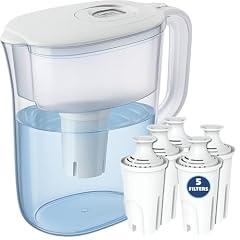
Water Filter Pitcher with Replacements & Reminder
Overview
This is a 10-cup, 2.5-quart refrigerator or countertop pitcher supplied with five replacement cartridges and an electronic change reminder. Seller documentation describes a four-stage cartridge using polypropylene mesh, activated carbon, ion-exchange resin, and a final mesh layer. It is intended for cold tap water, not saltwater or contaminated water. The manufacturer-stated cartridge life is 40 gallons, or about 60 days. Instructions call for a five-minute soak, a one-liter initial flush, regular cleaning, and replacement on schedule. Marketing claims NSF/ANSI 42, 53, and 372 status and reductions for chlorine-related taste and odor, selected metals, PFAS/PFOS, and other substances. However, this review did not locate a current public third-party registry entry or product-specific performance sheet confirming the exact pitcher and cartridge claims.
What works
- The package includes five cartridges and an electronic reminder, which can make scheduled filter changes easier, manufacturer-stated.
- The instructions set useful operating limits, including cold tap water only and no use with saltwater or contaminated water, manufacturer-stated.
- Setup and care directions address soaking, an initial flush, cartridge seating, weekly hand cleaning, and timely replacement, manufacturer-stated.
What does not
- The claimed NSF/ANSI 42, 53, and 372 status was not independently confirmed for this exact product and included cartridges in a public certification listing.
- Broad claims for PFAS/PFOS, lead, heavy metals, and other contaminants lack a product-specific public performance data sheet showing tested influent conditions, reduction levels, and results through 40 gallons.
- This is not demonstrated as a microbiological purifier. It should not be used for water affected by a boil-water advisory, private-well contamination, untreated surface water, or other microbiological hazards.
- Each 40-gallon cartridge is disposable, and no cartridge take-back or recycling route was identified.
Who is it for
This product suits a household using treated municipal tap water that wants a refrigerator-friendly pitcher, several included replacement cartridges, and a reminder to support regular changes. It is most appropriate where the goal is potentially better taste or odor and the user will follow the cold-water, flushing, cleaning, and replacement directions. Before relying on it for a specific concern such as lead or PFAS, the household should compare its local water report with independently certified contaminant-specific performance information.
Who is it not for
It is not for emergency water, boil-water advisories, untreated surface water, floodwater, or a private well with unknown microbiological quality. The available information does not demonstrate reduction of viruses, bacteria, or cysts. It is also not the right fit for a household responding to a confirmed lead, PFAS, arsenic, nitrate, or other chemical issue unless it can obtain independent certification and a performance sheet for that exact contaminant at the required capacity. Do not use it with hot water, saltwater, or visibly contaminated water.
Integrity
The stated treatment media, activated carbon and ion-exchange resin, are common pitcher-filter materials for taste, odor, and some chemical reduction applications. The manufacturer also states that the housing is BPA-free and that the product meets NSF/ANSI 42, 53, and 372 requirements. Those statements are not the same as an independently verified certification for the finished pitcher and its included cartridge set. The manufacturer gives practical hygiene directions, including weekly hand cleaning, a first-use flush, replacement about every 60 days or 40 gallons, and use of filtered water within 24 hours. These steps matter because germs can grow in poorly maintained filters. Five disposable cartridges create ongoing solid waste, and no recycling program was identified. No product-specific U.S. recall or regulator warning was located in the searches performed.

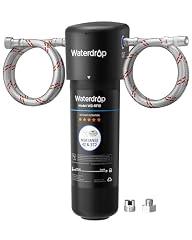
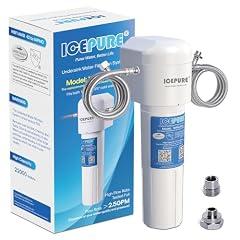
Waterdrop 10UA Under Sink Water Filter System
Overview
This is a compact, direct-connect under-sink carbon filter that treats water through the existing cold-water faucet. The current instructions specify a 0.75 gallon-per-minute flow rate, 35 to 100 F operation, 10 to 100 psi working pressure, and an up-to-11,000-gallon cartridge rating for the matching replacement filter. It is intended for municipal tap water, with prefiltration needed for well water. Its defining evidence is narrow but solid. IAPMO R&T independently lists the exact product for NSF/ANSI 42 chlorine taste and odor reduction and NSF/ANSI/CAN 372 lead-content compliance. The performance sheet reports 92.7% average chlorine taste and odor reduction under laboratory conditions. That certification does not verify lead, PFAS, germ, or broad heavy-metal reduction, despite broader language appearing in some product marketing. Capacity figures also conflict across retailer and manufacturer pages, so the instruction manual's one-year replacement guidance is the prudent limit.
What works
- The exact product and matching replacement cartridge appear in an IAPMO R&T certification listing for NSF/ANSI 42 and NSF/ANSI/CAN 372.
- Its certified performance sheet documents 92.7% average reduction of chlorine taste and odor under the NSF/ANSI 42 test conditions.
- The instructions set concrete operating limits for cold, municipal water, temperature, pressure, flushing, and cartridge replacement.
- It uses line pressure only, with no electricity demand or reverse-osmosis reject-water stream.
What does not
- The independent certification supports chlorine taste and odor reduction only. It does not substantiate the broader lead, PFAS, heavy-metal, or other chemical-reduction language used in some marketing.
- This is a filter, not a microbiological purifier. It has no verified cyst, bacteria, or virus reduction claim and must not be used on unsafe or unknown water without disinfection.
- Published capacity information is inconsistent, with 8,000- and 11,000-gallon figures appearing in manufacturer materials and a different figure in the catalog record.
- The annual cartridge is disposable, and the reviewed instructions do not provide a takeback or recycling route.
Who is it for
This product fits a household on monitored municipal water that mainly wants to reduce chlorine-related taste and odor at one kitchen, bathroom, RV, or small-office faucet. It suits an installation with a compatible 3/8-inch or 1/2-inch cold-water connection, adequate cabinet clearance, and water conditions within the stated 35 to 100 F and 10 to 100 psi limits. It is most appropriate when the local water report and, if needed, a household test do not identify a contaminant that requires a health-effects-certified treatment claim.
Who is it not for
It is not suitable for untreated, microbiologically unsafe, or unknown-quality water, including emergency water sources. It is also not the right standalone treatment for a private well without appropriate testing, prefiltration, and disinfection where indicated. Households addressing confirmed lead, PFAS, arsenic, nitrate, volatile organic chemicals, or pathogens need a product independently certified for the specific contaminant or organism at its rated capacity. Do not connect it to hot water, use it below freezing, or rely on it to materially lower total dissolved solids.
Integrity
The strongest health evidence is independent IAPMO R&T certification to NSF/ANSI 42 for chlorine taste and odor and NSF/ANSI/CAN 372 for low lead content in water-contact components. The latter confirms a lead-content requirement, not complete verification that all water-contact materials meet NSF/ANSI/CAN 61 extraction limits. The certified performance sheet identifies chlorine taste and odor as the tested reduction claim. It does not establish reduction of lead, PFAS, germs, or the wider heavy-metal categories used in some marketing. The instructions appropriately limit use to cold, treated water and call for a five-minute flush after installation and cartridge changes. Timely replacement matters because germs can grow in poorly maintained filters, especially after disinfectant chlorine is removed. Ecologically, the pressure-powered design avoids electricity use and reject water. Its tradeoff is a disposable cartridge, with no recycling or takeback instructions found in the reviewed product materials.

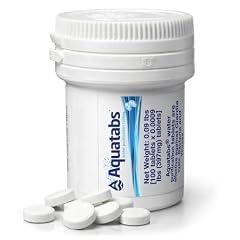
Aquatabs Water Purification Tablets 397mg
Overview
This product is a 100-count tub of 397 mg sodium dichloroisocyanurate, or NaDCC, water-disinfection tablets. The manufacturer states that one tablet treats up to 4 gallons of clear water, or 1.5 gallons of cloudy water, after a 30-minute contact time. The tablet is intended for stored emergency water, camping containers, boats, RV tanks, and other small-volume water treatment uses. The U.S. EPA master label for Aquatabs identifies 16.88% sodium dichloroisocyanurate and confirms claims against bacteria, viruses, and Giardia cysts when used under labeled conditions. It also says the product was not tested against Cryptosporidium. NSF's current listing names Aquatabs under NSF/ANSI/CAN 60 for drinking-water treatment chemical health effects, at a maximum use of 10 mg/L. This is chemical disinfection, not filtration, so it does not remove sediment, metals, PFAS, fuel, salt, pesticides, or other dissolved contaminants.
What works
- The EPA label supports treatment claims for bacteria, viruses, and Giardia cysts in labeled source water conditions.
- The 397 mg tablet format can disinfect a relatively large container volume with one tablet, according to manufacturer directions.
- The manufacturer gives a clear 30-minute treatment time and separate clear-water and cloudy-water dose volumes.
- Aquatabs is currently listed by NSF under NSF/ANSI/CAN 60 for drinking-water treatment chemical health effects.
What does not
- This product does not remove harmful dissolved chemicals, including lead, PFAS, arsenic, nitrate, fuel, pesticides, or salt.
- The EPA label states it was not tested against Cryptosporidium, an organism chlorine-based treatment may not reliably control at practical doses.
- Safe use depends on correct dose, water volume, temperature, mixing, and full contact time. It is not an instant treatment.
- Cloudy water needs pretreatment by settling or straining. The tablets disinfect water but do not clarify it.
Who is it for
This product suits an adult preparing a compact emergency kit, a boat or RV owner maintaining a small freshwater supply, or a camper treating measured volumes from rivers, lakes, wells, or cisterns. It is most suitable where the principal concern is microbiological contamination and the user can measure the water, remove suspended material first, mix thoroughly, and wait the full 30 minutes. The larger tablet size is practical for multi-gallon containers rather than an individual drinking bottle.
Who is it not for
It is not suitable for anyone who needs removal of lead, PFAS, arsenic, nitrate, petroleum chemicals, pesticides, salt, or radioactive contaminants. It is also unsuitable as the sole treatment where Cryptosporidium is a concern, or when water is very cold, heavily turbid, chemically contaminated, or difficult to measure accurately. Infants, immunocompromised people, and households under a public-health boil-water notice should follow the specific directions of local health authorities rather than assume tablets cover every hazard.
Integrity
The active disinfectant is sodium dichloroisocyanurate, a chlorine-releasing compound. The EPA label identifies it at 16.88% of the tablet formulation and carries a warning to keep tablets away from children. It also directs users to store the product cool and dry, away from sunlight and heat, and to avoid contamination with moisture, dirt, organic matter, or other chemicals because it is a strong oxidizer. Aquatabs appears in NSF's current NSF/ANSI/CAN 60 listing as a drinking-water treatment chemical for disinfection and oxidation, with a 10 mg/L maximum use. That certification addresses chemical health effects, not removal of contaminants or a complete finished-device certification. The small tablets avoid electricity and reject water, but each treatment relies on disposable tablets and plastic packaging. The label advises offering the nonrefillable container for recycling where available.

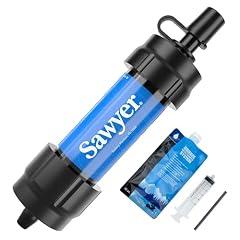
Sawyer Mini Water Filtration System Blue
Overview
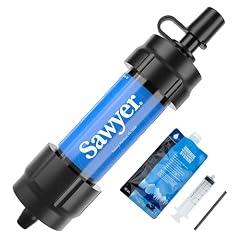
This is a compact, manual hollow-fiber water filter for individual outdoor use. The kit includes the filter, a 16-ounce squeeze pouch, drinking straw, and cleaning syringe. It can be used with the pouch, many standard 28 mm disposable bottles, compatible hydration tubing, or as a drink-through straw. Sawyer states that the filter uses a 0.1-micron absolute hollow-fiber membrane and weighs about 2 ounces in the field. Sawyer states reductions of bacteria, protozoa, and microplastics, and rates the filter for up to 100,000 gallons with cleaning. Its published Mini test summary reports three filters achieved a 6-log bacterial reduction under EPA-approved procedures. This is a filter, not a complete purifier. Sawyer explicitly says it does not remove viruses, dissolved chemicals, heavy metals, salt, or other dissolved contaminants. No current exact-product NSF P231 certification listing was identified.
What works
- The hollow-fiber mechanism and 0.1-micron absolute specification are suitable in principle for bacteria and protozoa larger than the membrane pores.
- Sawyer's published Mini test summary reports 99.9999 percent bacterial reduction in three test runs using EPA-approved procedures.
- The product clearly states major exclusions, including viruses, heavy metals, dissolved chemicals, and salt.
- Backwashing instructions are provided, including cleaning before storage and when flow declines.
- The filter can be reused and does not require electricity or routine replacement cartridges, according to Sawyer.
What does not
- It does not address viruses, so it is not sufficient by itself where sewage contamination or viral risk is plausible.
- It does not reduce dissolved chemicals, heavy metals, salt, or other dissolved contaminants, making it unsuitable for suspected chemical contamination.
- No current exact-product independent certification listing was identified for microbiological purification, contaminant reduction, or drinking-water contact materials.
- The 100,000-gallon service-life claim is manufacturer-stated, while the published Mini test summary describes three bacterial test runs rather than full rated-life verification.
- A wetted filter that may have frozen should be replaced, because Sawyer says damage cannot be reliably confirmed by a field integrity check.
Who is it for
This product fits a solo hiker, camper, scout, or emergency-kit user collecting relatively clear freshwater where bacteria and protozoan cysts are the main expected hazards. Its small size, manual operation, bottle and pouch compatibility, and backwashable design suit people carrying limited gear and willing to maintain the filter. It is most appropriate when the source has no known chemical contamination and the user can assess that viral contamination is unlikely, or can add a separate disinfection step when it is not.
Who is it not for
It is not appropriate as the sole treatment for floodwater, sewage-affected water, international travel or disaster settings with possible viral contamination, or water near industrial, mining, agricultural, saltwater, or chemical spill sources. It also does not solve household concerns involving lead, PFAS, nitrate, arsenic, or other dissolved contaminants. People with weakened immune systems, pregnant travelers, young children, and older adults should be especially cautious about relying on an untreated source when viral or chemical hazards cannot be ruled out.
Integrity
The important health advantage is a clearly defined physical-filtration mechanism. Sawyer identifies the membrane as 0.1-micron absolute hollow fiber, and its published Mini test summary reports 6-log bacterial reduction under EPA-approved procedures. The company also plainly states that the filter does not remove viruses, heavy metals, dissolved chemicals, or salt. CDC guidance supports the key boundary, filters at this pore size can remove bacteria and parasites but not viruses. The important evidence limitation is that no current exact-product NSF P231 listing was found, and no exact-product drinking-water material certification for leach safety was identified. Sawyer provides backwashing and freeze-damage instructions, which matter because a wetted filter that freezes may be compromised. No relevant CPSC recall was identified in the review. Ecologically, the reusable, manual filter can avoid batteries, electricity, and routine cartridge disposal. The included plastic pouch remains a consumable item, and no end-of-life recycling program was identified.

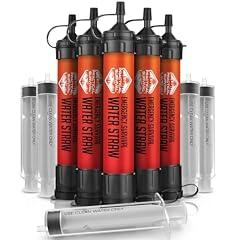
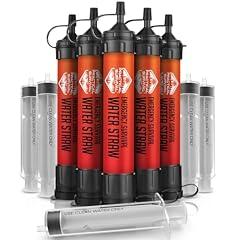
Purewell Outdoor Water Filter Straw
Overview
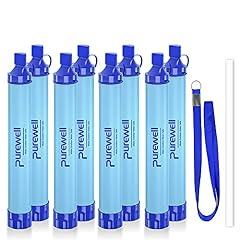
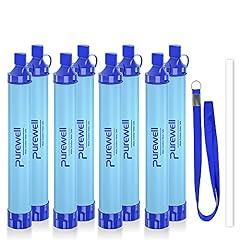
This is an eight-pack of compact, drink-through outdoor filter straws. Each unit is listed at about 8.7 inches long, with a manufacturer-stated 1,500-liter service capacity and 0.01-micron ultrafiltration claim. It is intended for drinking from a bottle or directly from a freshwater source during hiking, camping, or emergency preparation. The strongest product-specific evidence is not pathogen testing. A 2022 TÜV SÜD report identifies K8612 among the tested straw models and found the tested plastic parts passed food-contact migration testing, including a water simulant and heavy-metal migration screen. This is useful materials evidence, but it is not NSF drinking-water certification. No current independent listing was found for this exact straw under NSF, WQA, IAPMO, or UL, and no exact-product test report was found showing pathogen or chemical reduction through the stated 1,500-liter life.
What works
- A third-party TÜV SÜD report specifically includes this straw model in plastic migration testing.
- The report found no detected lead, arsenic, cadmium, mercury, or chromium migration under its stated test conditions.
- The compact drink-through format can be used without batteries, electricity, or wastewater discharge.
- The stated 0.01-micron ultrafiltration mechanism is technically suited to physical removal of many waterborne organisms, but the product-specific reduction claim remains unverified.
What does not
- No current NSF, WQA, IAPMO, or UL certification listing was found for this exact product.
- No exact-product challenge test was found for bacteria, cysts, viruses, or chemical contaminants at the stated service life.
- Calling it a purifier is broader than the available evidence. The product needs documented virus reduction to support that scope for high-risk source water.
- Published product-specific instructions for turbidity, storage, cleaning, freezing, and replacement were not located.
Who is it for
This product fits an individual who wants several compact, manual filter straws for low-volume outdoor preparedness, day hikes, or vehicle and evacuation kits. It is most appropriate where the source is relatively clear freshwater and the user understands that a stated pore size is not the same as finished-product certification. Its eight-unit format also suits distributing separate straws among household members, provided each user can follow the product-specific care directions and has another treatment option available when water quality is uncertain.
Who is it not for
It is not suited to people who need independently certified protection from a known contaminant, such as lead, PFAS, arsenic, nitrate, fuel, industrial chemicals, or saltwater. It is also not a stand-alone choice for sewage-affected water, floodwater, heavily turbid water, or sources with likely viral contamination, because exact-product virus and full-life pathogen testing were not found. Infants, pregnant people, older adults, and immunocompromised users should use a more clearly verified treatment approach, such as boiling or filtration followed by appropriate disinfection.
Integrity
The available materials evidence is better than the finished-product performance evidence. A third-party TÜV SÜD report naming K8612 tested plastic parts for food-contact migration and reported compliance with the report's stated limits, including no detected lead, arsenic, cadmium, mercury, or chromium in the migration screen. That does not establish NSF/ANSI 61 drinking-water-component certification, nor does it prove filtration effectiveness. No exact-product certification listing or full-life pathogen challenge report was located. CDC guidance notes that uncertain backcountry water is best boiled, or filtered and then disinfected. This matters because the product is marketed for emergency and outdoor water. The manual, battery-free format avoids electricity and reject water, and the stated 1,500-liter life could reduce disposable-bottle use. However, each straw is still a disposable plastic filter, and no take-back or end-of-life recycling program was identified. No CPSC recall or product safety warning was identified in the search performed.
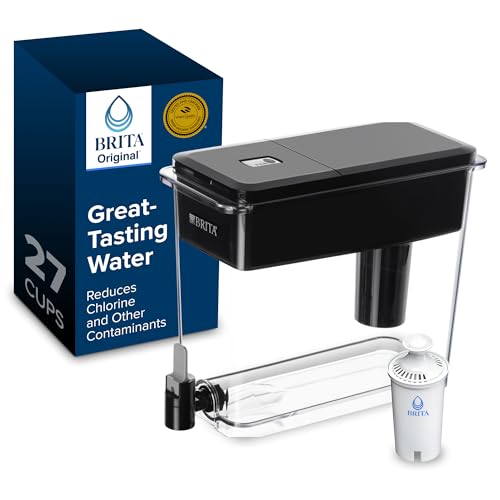
Brita UltraMax Large Water Dispenser
Overview
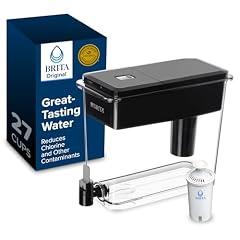
This is a 27-cup gravity-fed countertop or refrigerator dispenser supplied with Brita’s Original filter, formerly called Standard. The filter uses coconut-based activated carbon and ion-exchange resin. Brita states that the dispenser and cartridge housing are made without BPA. For this dispenser format, the important evidence is specific. The UltraMax system with the Original filter is covered by WQA certification to NSF/ANSI 42 and 53 for chlorine taste and odor, zinc, cadmium, copper, and mercury reduction. Its rated filter life is 40 gallons, about two months, with a stated maximum of 2 gallons processed daily. It is a tap-water filter, not a purifier. Brita explicitly says not to use it with microbiologically unsafe or unknown-quality water unless that water is adequately disinfected.
What works
- WQA-certified performance data covers the exact UltraMax system format with the Original filter, including reduction claims for cadmium, copper, mercury, chlorine taste and odor, and zinc.
- The 40-gallon rated life is supported by performance documentation rather than an unspecified cartridge-life claim.
- Brita gives practical care directions, including cold-water use, initial rinsing and flushing, periodic hand-washing, and filter replacement reminders.
- The manufacturer identifies the filter media as coconut-based activated carbon and ion-exchange resin, rather than relying only on vague filtration language.
What does not
- This filter is not a purifier and has no verified reduction claim for bacteria, viruses, or cysts. It is unsuitable for untreated, emergency, or unknown-quality water without separate disinfection.
- The included Original filter is not certified for lead, PFAS, nitrate, arsenic, or volatile organic compounds. It should be matched to local water results, not treated as broad chemical protection.
- BPA-free is a manufacturer statement, but no exact-product NSF/ANSI 61 or NSF/ANSI/CAN 372 materials certification was identified for the dispenser and cartridge water-contact materials.
- The 40-gallon disposable cartridge creates recurring material waste, and mail-back recycling requires enrollment and shipment rather than ordinary curbside recycling.
Who is it for
This product fits a household, shared kitchen, or small office that starts with municipally treated, potable cold tap water and mainly wants a refrigerator-friendly reservoir for improved chlorine taste and odor. It also fits users whose local water report or a water test identifies cadmium, copper, or mercury within the filter’s certified claim scope. The 27-cup capacity suits people who pour several glasses at once, provided they can replace the cartridge at 40 gallons or about every two months and hand-wash the unit periodically.
Who is it not for
It is not for private wells that have not been tested, boil-water advisories, camping, emergency water, or any source that may contain germs. It is also not an appropriate stand-alone response to known lead, PFAS, nitrate, arsenic, or VOC concerns because the included Original filter lacks certified claims for those contaminants. Households needing medically sensitive water quality should first consult their water utility, local health authority, or a qualified laboratory result, then select treatment that matches the identified contaminant.
Integrity
The health strength is narrow but well defined. WQA certification to NSF/ANSI 42 and 53 supports the Original filter’s stated reduction claims for chlorine taste and odor, zinc, cadmium, copper, and mercury in the compatible UltraMax system. The performance sheet also sets useful boundaries, including cold-water use, a 40-gallon replacement interval, and exclusion of microbiologically unsafe or unknown water. No matching germ-removal claim should be inferred. Brita states that the dispenser and filter housing are made without BPA, but that is not the same as an identified independent drinking-water material-safety certification for the finished product. The filter is disposable every 40 gallons, although Brita products and cartridges are accepted through a TerraCycle mail-back program. The system uses no electricity and produces no reject water, but recycling access depends on program enrollment and shipping availability. No current product-specific CPSC recall was identified in the checked recall database.