
10 Best Walking Pad Treadmill
 Brianna York
Please note that we participate in affiliate marketing programs. When you purchase through links on our site, we may earn a commission. As an Amazon Associate we earn from qualifying purchases. This comes at no additional cost to you and helps support the resources required to provide valuable content.Advertising Disclosure
Top-rated Walking Pad Treadmill Comparison
1

2
3
4
5
6
7
8
9
10
Walking-pad treadmills: what matters
A walking pad is a compact motorized belt designed mainly for low-speed indoor walking, often beside a standing desk. The useful category-level purpose is modest: treadmill-desk research supports more movement, higher energy expenditure, and less sitting than seated work. It does not establish guaranteed weight loss, disease treatment, stronger bones, or reliable cardiometabolic improvements for a particular product.
The first buying question is fit. Look for a clearly stated usable belt length and width, a speed range appropriate to the intended activity, and honest limits on handrails, incline, footwear, user age, duty cycle, and user weight. Across the supplied products, walking-oriented ranges commonly begin around 0.5–0.6 mph and top out around 3.8–4 mph, while some products advertise jogging or running despite compact decks around 15–16 inches wide and roughly 36–40 inches long. A short, narrow belt can leave less room to recover from a misstep. A handrail may provide a support point, but it does not make a product suitable for rehabilitation or unstable gait.
Headline specifications require caution. Horsepower may be peak rather than continuous output; listed capacity can conflict with the manual or manufacturer page; speed, deck dimensions, incline, warranty length, and even the same model’s configuration may differ across listings. Calorie displays are estimates, and claims about noise, cushioning, impact reduction, fat burning, joint protection, or weight loss need defined test conditions and exact-product evidence. A larger advertised capacity is not meaningful without credible loading and endurance testing.
For controls, look for predictable startup, gradual speed changes, accessible stop controls, and a documented fail-safe. A safety key, remote stop, delayed start, pause function, or automatic no-user shutdown should be confirmed in the exact manual rather than inferred from a product photograph. Protection around belt edges and rear rollers matters because the moving belt can create fall, pull-in, and child or pet entrapment hazards. Keep clearance around the machine and prevent access during operation.
Electrical claims should be checked against the exact model and electrical rating in an OSHA-recognized laboratory directory. Relevant records include an exact listing in UL Product iQ, Intertek’s ETL directory, CSA’s product database, or TÜV Certipedia, with the applicable motorized-exercise-machine standard such as UL 1647. FCC authorization, where present, addresses radio compliance only; it is not proof of treadmill electrical, fire, mechanical, or thermal safety. A generic certificate, logo, family listing, or report for another voltage or sample is not equivalent to an exact match.
Finally, ownership affects both safety and waste. Prefer a manual with belt inspection, lubrication, cleaning, alignment, grounding, cooling, and troubleshooting instructions; a reachable support contact; warranty terms; and identifiable replacement parts. Look for lubricant safety information, material or chemical disclosures, and practical recycling guidance for electronics, belts, packaging, and remote batteries.
Recurring safety cautions in the supplied reviews are substantial. No product had publicly verified exact-model electrical certification and independent performance testing together. Many lacked verified rear-roller guarding, and several used handrail-free or compact decks that are poor fits for balance limitations, recent falls, dizziness, or rehabilitation. Children and pets should be kept away from every operating belt. Buyers should also avoid relying on conflicting capacity claims, use products only within the most cautious documented limit, and not treat compact walking pads as running or clinical-support equipment without clear evidence.
Integrity
A walking pad can be useful when judged as a low-speed movement tool rather than as a treatment device. The topics below focus on controls, fit, evidence quality, maintenance, and end-of-life information that determine whether the product can be used safely and kept useful.
HHealth & Safety
Evidence-consistent health benefit
This measures whether the product suits the low-speed walking studied for active workstations and avoids unsupported promises. High-scoring products, such as those scoring 80–82, had clearly compatible slow-speed ranges; lower scores reflected weaker fit or broader marketing. The relevant benefits are more movement, higher energy use, and less sitting—not guaranteed weight loss or disease treatment.
Predictable speed and emergency stopping
This measures controlled starts, speed changes, stops, and fail-safe controls. Higher scores around 76 were supported by documented delayed starts, remote stops, safety keys, or gradual stopping; lower scores reflected remote-only controls or unclear emergency arrangements. For a compact belt used near a desk, predictable controls reduce the consequences of distraction, unintended starts, and loss of balance.
Fall and pull-in protection
This measures belt-edge, rear-roller, child, and pet protection, along with meaningful balance support. Scores clustered around 68–72 because manuals often warned users away from moving parts without verifying rear-roller guards. A higher score requires more than a handrail claim: the intended configuration should provide usable support and guarded hazardous gaps, especially when the deck is short or narrow.
Verified electrical and fire safety
This measures exact-model certification by an OSHA-recognized laboratory to the applicable exercise-machine safety standard. It carries extra weight because shock, overheating, and fire hazards are not visible during normal use. Supplied products scored 68–72, but none had publicly verified exact-model UL, ETL, CSA, or TÜV evidence. FCC records for remotes do not establish complete treadmill safety.
Stable frame, belt, and rated-user capacity
This measures stability, belt tracking, incline behavior, endurance, overheating, and whether the stated capacity is credibly tested. Higher supplied scores reached 72, while lower scores near 48–58 reflected conflicting ratings or no endurance evidence. A capacity printed on a listing is not enough, particularly when manuals and seller pages disagree by dozens of pounds.
Safe walking fit and intended-use limits
This measures deck dimensions, speed, incline, handrails, and use limits against the buyer’s actual walking needs. Higher scores around 75 came from clearer walking-oriented specifications; lower scores near 52–60 reflected compact or conflicting decks paired with jogging or running claims. A product should clearly state when its surface and support design stop being appropriate.
EEvidence
Honest specs and performance claims
This measures whether horsepower, capacity, speed, incline, noise, calories, cushioning, and app features are defined and testable. Scores ranged from 45 to 68. Higher-scoring products had more concrete manuals or fewer contradictions; lower scores commonly involved peak-versus-continuous power confusion, conflicting capacities, or unsupported calorie, noise, and weight-loss language. Buyers should compare like with like.
Independent proof for this exact model
This measures whether an identifiable laboratory report names the exact model, manufacturer, sample, ratings, test method, date, and results. Supplied scores were mostly 68–71, but the reviews repeatedly found no qualifying report. A generic certificate, FCC radio test, family document, supplier declaration, or report for another voltage does not independently verify the treadmill sold.
Recall and incident accountability
This measures unresolved recalls, warnings, incident patterns, and whether a reachable business can provide corrective support. Scores ranged from 70 to 75; several reviews found no exact-product recall but explicitly noted that absence is not proof of safety. A stronger result requires no unresolved action plus traceable manufacturer or importer support, warranty terms, and safety-notice access.
EEcology
Maintenance, parts, and safe long-term ownership
This measures whether the owner receives usable lubrication, inspection, cleaning, alignment, troubleshooting, warranty, service, and parts information. Higher scores reached 80 where product-specific manuals gave concrete belt-care procedures and support pathways; lower scores near 68–70 reflected missing manuals, parts catalogs, or repair details. Maintenance can prevent premature failure and reduce avoidable electronic waste.
Material and disposal transparency
This measures disclosure for plastics, metals, lubricants, electronics, remote batteries, packaging, and end-of-life handling. Scores were tightly grouped around 68–70 because most products offered little chemical or disposal detail. A higher result requires specific material or lubricant information and practical recycling instructions, not a vague environmental claim. Electronics and batteries should use appropriate local recycling channels.
Full reviews

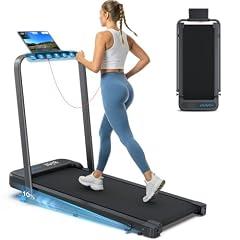
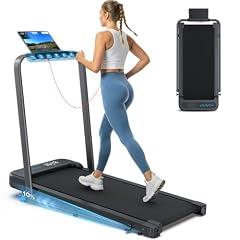
YPOO Foldable Incline Treadmill with Handle Bar
Overview
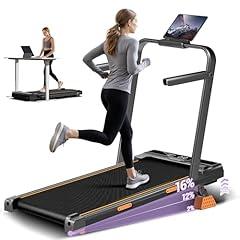
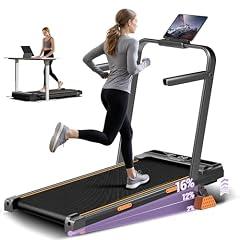
This compact, corded walking pad converts to a short-deck treadmill by raising its handlebar. It is intended for home or office walking and light jogging, with a manufacturer-stated 0.5 to 5 mph range, three manual incline levels, remote and app controls, safety key, and a one-year warranty. The supplied sales specifications describe a 43-pound folding unit with a stated 300-pound user limit. The manufacturer’s own product page confirms a substantially different technical set for this model family, a 0.75 CHP brushless motor, 900 by 380 mm belt, 19 kg net weight, and 100 kg maximum user. That direct conflict with the sold product’s 2.5 hp, 40 by 16 inch deck, 43-pound, and 300-pound claims is the defining evidence issue. A third-party video demonstration showed a safety-key lockout and a three-second countdown to a 0.5-speed start, but no accredited test report or current electrical listing for this exact product was found.
What works
- The low starting speed is suitable for the gentle walking use studied with active workstations, although a compatible standing desk is needed.
- A third-party demonstration showed the safety key prevents operation when removed, and the belt begins after a three-second countdown.
- The manufacturer states that the frame folds and has wheels, which can make storage between sessions more practical.
- Three manual incline settings are documented by the manufacturer, allowing walking intensity to be varied without an electrically driven incline system.
What does not
- The product’s listed motor output, belt size, weight, and 300-pound capacity conflict materially with the manufacturer’s own specifications for this model, which state 0.75 CHP, a 900 by 380 mm belt, 19 kg, and 100 kg maximum user.
- No exact-model UL, ETL, CSA, or other OSHA-recognized laboratory electrical safety listing was located.
- No independent exact-model laboratory report was found for speed accuracy, load endurance, deck stability, incline integrity, or user-capacity testing.
- The compact belt and 5 mph maximum make this a walking and light-jogging format, not a suitable platform for full-stride running.
- No exact-model manual, parts diagram, replacement-parts catalog, lubricant safety sheet, or end-of-life disposal guidance was located.
Who is it for
It suits an adult who wants short, low-speed walking sessions beside a properly sized standing desk, has limited storage space, and can comfortably remain within the more conservative 100 kg manufacturer-stated user limit until the discrepancy is resolved. It is most appropriate for controlled indoor use on a flat surface, with the handlebar raised when balance support is wanted. The available evidence supports movement and reduced sitting, not a promised amount of weight loss or disease prevention.
Who is it not for
It is not suited to dedicated runners, taller people needing a long stride, or users who need a clearly verified 300-pound capacity. People with impaired balance, those recovering from falls, and households where children or pets could reach an energized belt should choose a product with stronger documented guarding, accessible supervision controls, and independently verified safety information. It is also a poor fit for buyers who require confirmed electrical certification, repair parts, or a complete maintenance manual before ownership.
Integrity
Low-speed treadmill desks can increase energy expenditure and reduce sitting time in sedentary workers. The evidence does not establish that this particular product causes weight loss, prevents disease, or produces the advertised calorie-burn increase from incline. Walking while working can also reduce typing speed, so it is better matched to calls, reading, or low-precision tasks than intensive keyboard work. No exact-product recall, CPSC safety warning, or Proposition 65 warning was located in the searches performed. That is not a substitute for electrical or endurance certification. No UL, ETL, CSA, or comparable exact-model listing was found, and no independent test report was located. The manufacturer identifies a steel or alloy-steel frame, but there is no found disclosure for belt materials, supplied lubricant chemistry, remote battery disposal, electronics recycling, or replacement-part access. Those omissions make long-term maintenance and responsible disposal harder to assess.
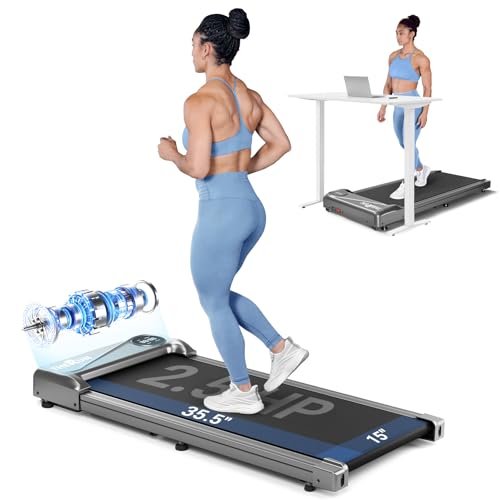
Under Desk Walking Pad Treadmill
Overview
This is a compact, corded under-desk walking pad for domestic use, not a running treadmill. The manual specifies a 39.4 by 15.4 inch usable belt, 0.6 to 3.8 mph speed range, 265 pound stated maximum user load, and a 110 to 120 V power supply. It is operated with a remote and a small LED display, and arrives assembled with silicone lubricant. The low starting speed fits the slow walking use studied with treadmill desks, which can raise energy expenditure and reduce sitting time. That evidence does not establish weight loss or treatment of cardiometabolic disease. The manual documents remote stop control and an eight-second unattended-stop function. It does not provide an independent test report for this product, an identified electrical safety listing, or documented rear-roller guarding performance.
What works
- Its 0.6 mph minimum speed is appropriate for cautious under-desk walking, based on the manufacturer's manual.
- The manual specifies a walking-only 3.8 mph maximum, which helps set a clear limit against running use.
- Remote stop control and an automatic stop after more than eight seconds without a user are documented in the product manual.
- The package includes silicone lubricant, adjustment tools, and a one-year manufacturer warranty for normal domestic use.
What does not
- No exact-product UL, ETL, CSA, or other OSHA-recognized laboratory listing was located, so electrical and fire-safety certification remains unverified.
- No independent report was located that verifies belt speed, load endurance, stability, motor heating, or claimed cushioning for this product.
- The 15.4 inch-wide, 39.4 inch-long walking surface is compact, and the open walking-pad layout provides no handrails for balance support.
- The manual relies on the remote stop button during an electronic fault and does not clearly document a wearable safety key for this configuration.
- No material, lubricant safety-data, chemical-warning, or product-specific disposal disclosure was located.
Who is it for
It suits an adult who wants brief, low-speed walking intervals at a standing desk or at home, has stable balance, and can keep the area clear of children and pets. The compact, walking-only format and 0.6 mph minimum are most compatible with typing, calls, light computer work, or a gentle movement break. The stated 265 pound capacity should be treated as a manufacturer limit, and users should stay within it, place the product on a level floor, and maintain the belt as instructed.
Who is it not for
It is not suited to running, hard interval exercise, or anyone needing handrails, rehabilitation support, or a wide and long treadmill deck. People with impaired balance, fall risk, dizziness, neuropathy, or mobility limitations should not assume that the remote stop button substitutes for physical support or supervised clinical equipment. It is also a poor fit for homes where children or pets can access an energized pad, because the product has an exposed moving belt and no independently verified rear-roller entrapment protection was found.
Integrity
Treadmill-desk research supports a limited health case for this format. Slow walking while working can increase energy expenditure and reduce sitting time compared with a conventional desk. The evidence does not show reliable improvements in blood pressure, glucose, body composition, or body mass index, so calorie and fitness-display readings should not be treated as medical outcomes. The product's 0.6 to 3.8 mph walking range is consistent with low-speed active-workstation use. The manual provides domestic-use instructions, belt-alignment guidance, annual lubrication advice, a supplied silicone-oil bottle, and one year of accessory support for normal use. However, no named electrical listing, independent endurance report, product-specific chemical disclosure, lubricant safety-data sheet, or end-of-life plan was located. At retirement, the corded electronics should go through an appropriate e-waste route where available. The remote battery should be handled under local battery-recycling guidance rather than casually discarded.

Vitalwalk TM06 Walking Pad Treadmill
Overview
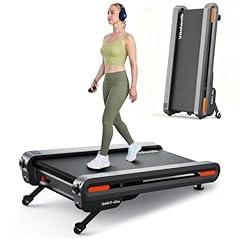
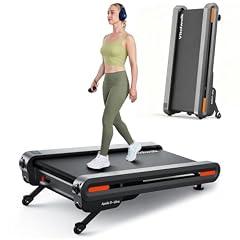
This is a compact, corded walking pad intended for indoor walking, including use beneath a standing desk. Vitalwalk states that it has a 40 by 16 inch full-deck belt, a 0.6 to 4 mph speed range, six automatic incline levels to 15 percent, and a 350 pound user limit. It has no handrails and is not a conventional running treadmill. The operating documentation describes remote start, pause, speed and incline controls, plus an optional absence auto-pause function that stops the belt after 15 seconds without a detected user. The manufacturer also states that the 50 pound unit can be stored vertically. No independent exact-product report was located to confirm belt tracking, speed accuracy, incline loading, noise, cushioning, capacity, or long-duration motor performance. No exact-product listing in the reviewed UL, ETL, CSA, or TÜV certification registers was found.
What works
- Its 0.6 to 4 mph stated range covers the low speeds commonly used for active workstation walking.
- The manufacturer documents an optional 15-second absence auto-pause feature, remote pause control, and warnings to keep children and pets away.
- A 40 by 16 inch manufacturer-stated belt is relatively purposeful for walking within a compact 43 by 20 inch footprint.
- Published instructions cover grounded-outlet use, clearance, belt adjustment, cleaning, and lubrication every three months or 100 hours.
- The stated frame, motor, and treadmill warranty periods provide a defined support claim, with lifetime technical assistance stated by the manufacturer.
What does not
- No exact-product electrical safety listing or certificate to UL 1647, or equivalent applicable standard, was found in the reviewed NRTL registers.
- No independent exact-product test report was located for stability, endurance, maximum user load, motor temperature, belt tracking, speed accuracy, or incline performance.
- There is no safety key, handrail, or documented rear-roller guard in the available product documentation. Remote-only primary controls are less accessible than a tethered emergency stop during a loss of balance.
- The 3.0 HP, 35 dB, 60 percent impact-reduction, 350 pound, and calorie-burn claims are manufacturer statements without disclosed test conditions or a reproducible report.
- A 40 inch deck and 4 mph maximum speed limit this product to controlled walking. The short deck, lack of rails, and incline make jogging and balance-challenged use unsuitable.
Who is it for
It suits an adult who wants short, low-speed walking breaks at a stable standing desk or in a small home, and who can walk independently without holding a rail. The stated 0.6 to 4 mph range aligns with gentle active-workstation use, where research supports more movement, higher energy expenditure, and less sitting. It also fits a buyer who can place the unit on a level hard floor, preserve open clearance around it, perform belt maintenance, and accept that the published performance and capacity figures are manufacturer-stated rather than independently verified.
Who is it not for
It is not for running, high-speed interval work, rehabilitation requiring hand support, or anyone with impaired balance, frequent dizziness, reduced foot sensation, or difficulty stepping onto a moving belt. Children and pets should not have access to the operating area. It is also poorly suited to homes that cannot keep clear space around the rear and sides, or to users who need a physical safety key and handrails. People near the 350 pound stated limit should seek a product with independently documented load and endurance testing rather than relying only on the stated rating.
Integrity
Low-speed treadmill-desk research supports a modest but useful role for this format. Studies and meta-analyses find that treadmill desks can increase energy expenditure and reduce sitting time. Those findings support using this product for additional movement during sedentary work, not its broader weight-loss, calorie-burn, joint-protection, or disease-related marketing claims. The maximum 4 mph speed is consistent with walking, while the automatic incline raises balance and loading demands. No exact-product recall, CPSC safety warning, or California Proposition 65 listing was found in the reviewed public databases. That absence does not establish electrical, fire, or mechanical safety. The product is described as alloy steel with electronics, a Bluetooth connection, a remote battery, and belt lubricant, but the available materials do not identify lubricant chemistry, material composition beyond alloy steel, replacement-belt availability, battery disposal steps, or electronics recycling guidance. Regular cleaning, lubrication, and belt adjustment are documented and can help extend usable life.

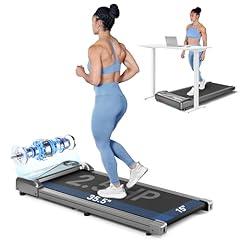
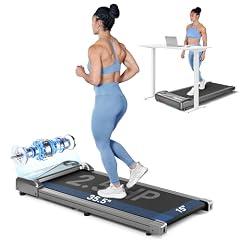
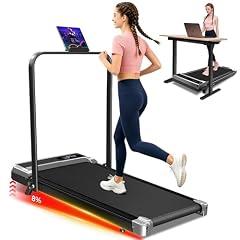
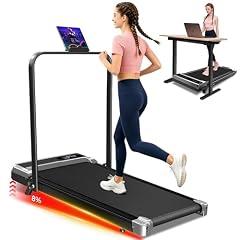
Treaflow Walking Pad Treadmill with Incline
Overview
This is a low-profile, corded walking pad intended for home or standing-desk use. It is operated with a handheld remote and uses manually raised supports for a claimed 0 to 8 percent incline. TREAFLOW states a 4 mph maximum speed, 265 lb user limit, 44.5 by 19.3 by 4.3 inch footprint, 37 lb product weight, alloy-steel frame, and 2.5 hp motor. An independent product examination reports a usable belt area of about 37.5 by 15 inches. The compact, rail-free format is best understood as a walking machine, not a conventional running treadmill. The published guide documents belt-centering adjustment, lubrication, troubleshooting, and a one-year warranty. It does not provide an independently issued exact-model endurance report or a verified electrical listing record. A published under-desk treadmill review also found roughly 60 dB at 2.2 mph, which conflicts with the advertised below-45-dB noise claim, although that measurement was not laboratory testing.
What works
- Low-speed desk walking is consistent with research showing treadmill desks can raise energy expenditure and reduce sitting time.
- The compact 4.3-inch manufacturer-stated height and 37 lb stated weight support under-furniture storage and relocation.
- The manual documents practical care steps, including lubrication, rear-belt adjustment, level-floor setup, and overheating troubleshooting.
- Manual 0 to 8 percent incline gives the user a non-electronic way to increase walking effort, according to the manufacturer.
What does not
- No exact-model UL, ETL, CSA, or other OSHA-recognized laboratory listing was documented in the certification sources reviewed.
- No independent exact-model report was located for electrical safety, endurance, load testing, speed accuracy, or stability.
- The rail-free, remote-operated format offers limited balance support and no documented tethered safety key, so it is not well suited to users needing handhold support.
- The below-45-dB noise claim is not well supported. A non-laboratory independent measurement reported about 60 dB at 2.2 mph.
- The short, narrow reported walking surface and 4 mph ceiling constrain it to deliberate walking or very light jogging, not normal running.
Who is it for
It suits an adult who has a stable standing desk, level hard flooring, adequate clear space around the machine, and wants short, controlled walking sessions while listening, reading, or doing low-precision computer work. The compact chassis, remote control, and manual incline fit a small home office where the user can store the product under furniture between sessions. It is most appropriate for someone within the manufacturer-stated 265 lb limit who can comfortably walk without rails and is willing to perform routine belt lubrication and alignment checks.
Who is it not for
It is not for runners, people with an unstable gait, or anyone who needs handrails, a chest-height console, or a readily documented tethered emergency-stop system. The approximately 37.5 by 15 inch usable belt reported independently and the 4 mph speed ceiling leave limited margin for a long stride, wide gait, or rapid pace. Keep children and pets away from the operating rear roller and moving belt. It also does not suit buyers who require independently verified electrical certification, formal load testing, or a clearly established repair-parts network before using a motorized exercise product at home.
Integrity
For health, treadmill-desk evidence supports a modest and realistic use case, more movement, higher energy use, and less sitting during sedentary work. It does not establish the product's advertised weight-loss or body-strength benefits as outcomes specific to this model. Treadmill-desk studies also indicate that work involving fast, accurate typing can be harder while walking, so lower-speed tasks are the more sensible use. No active CPSC recall or safety warning for this exact product was identified in the records reviewed. That is not equivalent to an independent safety clearance. The available documentation does not show an exact-model UL 1647 or comparable NRTL listing, and it provides no material chemical disclosure, lubricant safety sheet, or practical electronics and remote-battery disposal guidance. The included manual does at least describe lubrication and belt alignment, which can extend useful life when followed.

WELLFIT Foldable Incline Treadmill with Handlebar
Overview
This is a compact, corded folding treadmill intended for walking, desk walking, jogging, and light running at home or in an office. Its published running area is 16 by 36 inches, and its stated speed range is 0.6 to 6.2 mph. The folding handrail, remote, console controls, safety key, transport wheels, and manual incline are intended to let it work both as a walking pad and as a small upright treadmill. The manufacturer’s current United States TM037 page states a 320-pound limit, 0 to 5 percent manual incline, 3 HP motor claim, and 49.21 by 21.25 by 6.1 inch folded size. That conflicts with this product listing’s 350-pound and 10 percent claims. The available manual describes a magnetic safety key, low-speed start, maintenance guidance, and a 16 by 36 inch deck, but no independent exact-product test report or electrical listing was located.
What works
- The documented 0.6 mph minimum speed fits low-speed walking use, the setting examined in treadmill-desk research.
- The manual describes a wearable magnetic safety key that stops the belt if it detaches, plus console and remote stop controls.
- Manufacturer documentation provides a specific belt-cleaning, lubrication, inspection, and belt-alignment routine.
- The stated 16 by 36 inch deck and low folded height are practical for constrained indoor spaces, if the user stays within the product’s intended light-use limits.
What does not
- The seller’s 350-pound capacity and 10 percent incline claims conflict with the manufacturer’s United States TM037 page, which states 320 pounds and 0 to 5 percent manual incline.
- No exact-product UL, ETL, CSA, or other OSHA-recognized laboratory listing was located for the electrical system.
- No independent report was located verifying speed accuracy, motor output, noise, belt tracking, load capacity, cushioning, or endurance for this product.
- A 36-inch deck is compact for jogging and light running. It provides less stride margin than a full-size running treadmill.
- The documentation tells users to keep children and pets away, but does not provide independently verified evidence of rear-roller guarding or entrapment testing.
Who is it for
It genuinely suits an adult who wants a compact indoor machine primarily for slow walking, including occasional use beside a properly sized standing desk. The low stated minimum speed, folding handrail, transport wheels, and under-furniture storage format fit a small apartment or home office. It is also better suited to a user who is comfortable following setup, belt-centering, and silicone-lubrication instructions. Buyers should treat 320 pounds, not the conflicting 350-pound marketplace claim, as the more conservative published capacity until the seller supplies model-specific test evidence.
Who is it not for
It is not a strong fit for users who need independently certified electrical safety, laboratory-verified load capacity, or a documented endurance test. It is also unsuitable for unsupervised children or pets, and for households unable to maintain clear space around a moving belt. People with substantial balance limitations should not assume the folding handrail provides clinical fall protection. Taller runners, users with a long stride, and anyone planning sustained faster running should choose equipment with a longer deck and independently documented stability and performance limits.
Integrity
Low-speed treadmill-desk research supports the basic use case of replacing some sitting with walking and raising energy expenditure. It does not establish disease treatment, guaranteed weight loss, or a specific calorie-burn result for this product. The product’s stated 0.6 mph minimum can support gentle walking, while its compact deck and limited handrail mean that faster jogging deserves more caution. No exact-product electrical safety listing or independent test report was found. The available manual calls for periodic cleaning, belt checks, and methyl silicone oil lubrication, which can extend usable life when followed. It also indicates that the remote uses two AAA batteries. No safety data sheet for the included lubricant, material disclosure beyond general plastic and steel descriptions, Proposition 65 disclosure, replacement-parts catalog, or end-of-life disposal guidance was located. Batteries and electronic components should be handled through local household battery and e-waste programs rather than ordinary disposal.

HomePoweron Walking Pad Treadmill with Incline
Overview
This is a compact, corded home walking treadmill with a folding handlebar, remote control, LED metrics, and a manual 8% incline. Available product instructions describe a 0.6 to 3.8 mph speed range, a 39 by 16 inch deck, and a 350 pound user limit. Those are manufacturer-stated specifications, not independently tested results. It folds to a claimed 44 by 22 by 4 inches and includes lubricant, tools, and a phone holder. Its low-speed range overlaps with the slow walking used in treadmill-desk research, although this product is not itself a desk workstation. The same available instructions describe remote power and speed controls plus a side power switch, but identify a safety key only as applicable. No exact-model UL, ETL, CSA, or TÜV electrical listing, accredited endurance report, or independent verification of the capacity, motor output, speed accuracy, or noise claim was located.
What works
- Its stated 0.6 to 3.8 mph range includes slow walking speeds used in treadmill-desk studies of increased movement and energy expenditure.
- Manufacturer-stated folded dimensions of 44 by 22 by 4 inches suit storage under many beds or against a wall.
- Available instructions provide basic setup, belt lubrication, cleaning, tension adjustment, and troubleshooting guidance.
- A folding handlebar is provided for users who want a handhold during walking, according to the available instructions.
What does not
- The 39 by 16 inch stated deck and 3.8 mph stated maximum speed make jogging and running claims poorly matched to the documented format.
- Safety-stop documentation is incomplete. The instructions describe remote on and off control, but refer to a safety key only as applicable.
- No exact-model certification listing was located in the major U.S. electrical-safety registers checked, so independent protection against shock, overheating, and fire is unverified.
- No independent report was located to validate the 350 pound capacity, motor horsepower, incline stability, belt tracking, noise, or endurance.
- Product descriptions conflict across sources on deck dimensions, overall dimensions, and maximum speed, reducing confidence in the advertised specifications.
Who is it for
This product fits an adult seeking short, low-speed indoor walking sessions in a small home, especially someone who needs the unit to store flat after use. The documented 0.6 to 3.8 mph range is most aligned with gentle to brisk walking, including slow walking beside a separately purchased standing desk. The folding handlebar may help users who prefer a nearby handhold while stepping on and off. Use should be on a level surface, with the stated weight limit treated as an unverified manufacturer claim rather than a tested operating guarantee.
Who is it not for
It is not well suited to runners, interval users, or people seeking a full-size jogging treadmill. The stated 39 by 16 inch belt and 3.8 mph maximum leave limited stride room and speed reserve. People with impaired balance, a history of falls, neuropathy, or a need for dependable emergency-stop protection should seek a product with clearly documented fail-safe controls and independently verified safety performance. It is also unsuitable for unsupervised children, pets near the moving rear belt area, and households unwilling to perform periodic belt lubrication and tension checks.
Integrity
Slow treadmill-desk walking has credible evidence for increasing energy expenditure and reducing sitting time compared with seated work. That evidence supports moving more at low speeds, not promises of weight loss, stronger bones, stronger muscles, or treatment of disease. This product's stated speed range reaches the slow-walking range used in that research, but its calorie display should be treated as an estimate and its broader health claims remain unverified. The available instructions state a carbon-steel frame and include lubricating oil, but no safety data sheet for that lubricant, chemical disclosure, Proposition 65 notice, parts catalog, repair policy, or end-of-life disposal guidance was located. No exact-product recall or CPSC safety warning was located in the sources checked. However, no exact-model electrical certification or independent laboratory performance report was found, so fire, overheating, load, and endurance protection remain unverified rather than confirmed.

Rayspace Walking Pad Treadmill with Incline
Overview
This is a compact, flat-deck walking pad intended to sit under a standing desk or be used for home walking. Rayspace states that it has a 0.6 to 4 mph speed range, 12 automatic incline levels reaching 15 percent, remote and app control, Bluetooth audio, an alloy-steel frame, and an 8-inch stored height. It has no fixed handrails in its intended under-desk configuration. The stated speed range suits low-speed walking rather than running. Human evidence for treadmill desks supports more movement, higher energy expenditure, and less sitting, but it does not establish product-specific health results. Rayspace also states a 450-pound capacity and 3.5 horsepower, but no independent exact-product endurance, speed-accuracy, load, incline, or stability report was located. No exact-product electrical certification listing was located in the public UL or Intertek searches reviewed.
What works
- The manufacturer-stated 0.6 to 4 mph range is compatible with low-speed desk walking, the use studied in active-workstation research.
- Its stated 8-inch height, built-in wheels, and no-assembly format can make storage and relocation easier in a small home or office.
- Rayspace states that the product includes a two-year warranty, 24/7 service, and lifetime technical support.
- A 12-level, up-to-15-percent automatic incline is a concrete manufacturer-stated way to vary walking effort.
What does not
- No public exact-product listing from an OSHA-recognized electrical safety laboratory, such as UL or ETL, was located.
- The available product page documents remote and app control, but does not provide a manual showing a safety key, emergency-stop performance, controlled deceleration, or unintended-start safeguards.
- Rayspace does not publish the usable belt length and width, age limits, duty cycle, or independent testing for its 450-pound capacity and incline system.
- Claims of up to three times more calories burned and knee protection are not accompanied by an exact-product test method, comparison condition, or independent supporting report.
Who is it for
It suits an adult who already has a stable standing desk and wants a compact, low-speed walking surface for short movement breaks, calls, or light computer work. The manufacturer-stated 0.6 to 4 mph range is relevant to walking, and active-workstation research supports using treadmill desks to add movement and reduce sitting time. It is most appropriate for someone who can walk steadily without holding a rail, can keep the area behind the product clear, and accepts that the central capacity, motor, and safety claims are manufacturer-stated rather than independently verified.
Who is it not for
It is not suited to running, sprint training, or buyers who need handrails for balance, rehabilitation, dizziness, impaired gait, or a high fall risk. A 4 mph maximum and flat-deck, no-handrail layout make the stated running use difficult to reconcile with the product format. Households with young children or pets should be especially cautious because no exact-product rear-roller guard or entrapment test documentation was located. It also does not suit buyers who require publicly verified electrical listing, a published safety manual, or independently confirmed load and endurance testing before use.
Integrity
Walking while working can be a practical way to increase energy expenditure and reduce sitting time. The supporting research concerns treadmill-desk use generally, not this product, and does not confirm weight loss, disease treatment, or the seller's calorie and joint-protection claims. The stated 4 mph ceiling favors a walking use case, although the seller also markets jogging and running. Rayspace identifies alloy steel but does not publish an exact-product electrical listing, chemical warning, lubricant safety document, material breakdown, replacement-parts catalog, or disposal guidance. The stated two-year warranty and lifetime technical support may help extend use, but repairability cannot be assessed without parts and service documentation. At end of life, the motor, electronics, and any remote battery should be handled through appropriate electronics or battery collection rather than ordinary household recycling.

UREVO Portable Walking Treadmill
Overview
This is a low-profile, corded walking pad for home or standing-desk use, rather than a full treadmill. Its manual specifies a 15 by 40.2 inch walking area, 0.6 to 4.0 mph speed range, 550 W rated power, and a 242 lb maximum user load. It is operated from a handheld remote and has no fixed handrails. The low starting speed fits the slow walking used in treadmill-desk research, which supports more movement and less sitting, not disease treatment or assured weight loss. Documentation confirms a three-second countdown before the belt begins at 0.6 mph and remote stopping. However, no independent report was located that tests this product's belt speed, emergency-stop performance, structural endurance, or electrical safety listing.
What works
- The 0.6 mph minimum speed is appropriate for gentle walking while using a standing desk, based on the manufacturer specification.
- The documented three-second start countdown and 0.6 mph initial speed provide a more predictable entry than an immediate belt start.
- The manual includes specific belt tracking, tensioning, lubrication, cleaning, and fault-response instructions.
- A U.S. support phone number and replacement-part contact route are documented.
What does not
- The product has no handrails, and its compact 15 by 40.2 inch deck offers limited recovery space if balance is lost.
- No exact-product electrical safety certification from an OSHA-recognized laboratory was located. FCC radio compliance is not electrical or fire safety certification.
- No independent exact-product report was located for stability, endurance, speed accuracy, belt tracking, or emergency stopping.
- The documentation conflicts with the product record on important specifications, including maximum user capacity and peak motor power.
- The warranty is limited to one year for the structural frame and 90 days for other components, both for home use.
Who is it for
It suits an adult who already has a stable standing desk, wants light walking rather than running, and can use a clear, level indoor area away from children and pets. The documented 0.6 mph start and 4.0 mph ceiling make it most appropriate for controlled, low-speed movement during phone calls, reading, or simple computer work. It also fits an owner willing to check belt tracking and lubricate the deck as directed.
Who is it not for
It is not suitable for anyone who needs a handrail, a wide or long running deck, or immediate physical support after a stumble. People with impaired balance, reduced mobility, dizziness, poor sensation in their feet, or a clinician-directed rehabilitation plan should not treat a handrail-free walking pad as a substitute for supervised equipment. It is also unsuitable for running, for users above the manual's 242 lb limit, and for homes where children or pets can access the moving belt.
Integrity
Slow treadmill-desk walking has evidence for raising energy expenditure and reducing sitting time compared with seated work. The manual's 0.6 mph starting speed falls within the low-speed use associated with that evidence. It does not establish weight-loss, blood-pressure, or disease-treatment results for an individual user. The product documentation provides a remote stop function, delayed start, grounding instructions, overload error handling, and a warning to keep children under 13 away. The product has an identified FCC radio test report for its wireless control, but that report concerns radio emissions and does not verify shock, overheating, fire, treadmill endurance, or fall protection. No exact-product NRTL electrical safety listing or independent treadmill performance report was located. The manual supports longer use through belt adjustment and lubrication guidance, but it provides no material disclosure, lubricant safety data sheet, battery disposal details, or product end-of-life recycling instructions. No relevant U.S. recall or safety warning was located in the review checks.

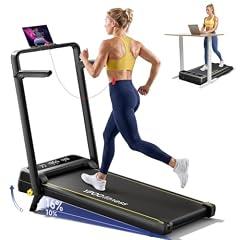
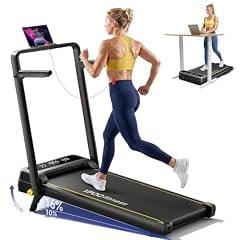
Cursor Fitness 4-in-1 Incline Treadmill
Overview
This compact, fold-flat walking pad is intended for use under a standing desk or as a small home treadmill. The manufacturer describes folding side armrests, a manually adjusted incline up to 16%, a 15.8 by 38 inch belt, remote and console controls, and a stated top speed of 6.5 mph. It is designed to store flat, with a manufacturer-stated folded height of 4.4 inches. Low-speed treadmill-desk walking has human evidence for increasing energy expenditure and reducing sitting time, but it has not reliably shown broad cardiometabolic or weight-loss effects. This product can reach the low walking speeds used in that research. Important details are not consistent across sources. The Amazon record states 2.5 horsepower, 6.3 mph, and 330 pounds, while the manufacturer page states 3.0 horsepower, 6.5 mph, and 350 pounds. No independent performance report for the U.S. product configuration was located.
What works
- Low-speed walking use aligns with evidence that treadmill desks can increase movement and reduce sitting time.
- The manufacturer states that the folding armrests can provide a handhold during non-desk walking.
- The manufacturer states a 15.8 by 38 inch belt and flat 4.4-inch storage height, a compact format for constrained home-office space.
- The brand provides a published support email, phone number, and stated one-year product warranty.
What does not
- Core specifications conflict between the marketplace record and the manufacturer page, including motor rating, maximum speed, and user-capacity claim.
- No matching U.S. NRTL listing or independent report was located for the exact sold electrical configuration. A third-party report naming X5F covers a broad model family at 220 to 240 volts, not this U.S. configuration.
- No independent exact-model testing was found for belt speed accuracy, endurance, load stability, incline performance, noise, or rear-roller protection.
- The short 38-inch manufacturer-stated deck and compact side armrests are better suited to careful walking than to long-stride running or unsupported high-speed use.
- No exact-model material disclosure, lubricant safety data sheet, replacement-parts catalog, or disposal guidance was located.
Who is it for
This format suits an adult working from home who already has a stable standing desk and wants to replace some seated time with slow, deliberate walking. Its stated 1 to 6.5 mph range, fold-flat form, remote control, and compact belt favor short walking sessions in a small room rather than a dedicated running space. It is most appropriate for users who can comfortably use the handrails when needed, will inspect belt alignment and the surrounding floor area, and do not need independently verified load or electrical certification documentation.
Who is it not for
It is not a suitable choice for households where children or pets can access an operating treadmill, because exact-model rear-roller guarding and entrapment performance were not independently documented. Avoid it for running-focused training, very long strides, or anyone who needs a long, wide deck and full-length support rails. People near the stated capacity limit should not treat the published 330-pound and 350-pound claims as interchangeable. Users with balance limitations, acute Achilles, calf, ankle, or knee symptoms should be particularly cautious with the steep manual incline and seek individualized clinical guidance if needed.
Integrity
The evidence-based health case is modest and specific. Slow walking while working can raise energy expenditure and reduce sitting time compared with sitting, but the available treadmill-desk evidence does not establish that this product causes weight loss or treats disease. The manufacturer also claims that its multi-layer belt reduces knee impact, but no independent test was found to quantify cushioning or joint effects. A 2025 third-party electrical report names X5F among many models, but it documents a 220 to 240 volt product family and is not a U.S. NRTL certification for this product. No relevant CPSC recall or safety warning was located in the review, and the brand publishes support contact details and a stated warranty. Material disclosure is limited to an iron frame claim. No exact-model chemical warning, lubricant safety sheet, parts catalog, or end-of-life electronics and remote-battery disposal guidance was located.

Vitalwalk Auto Incline Walking Pad Treadmill
Overview
This is a corded, no-handrail walking pad for household use, rather than a conventional running treadmill. The manufacturer specifies an 18 by 43 inch belt, 0.6 to 5 mph speed range, six-level automatic incline to 12 percent, and a 350 pound maximum user weight. It weighs 86 pounds and uses wheels for upright or low-profile storage. Its low 0.6 mph starting speed fits the light walking use studied with treadmill desks, which can increase energy expenditure and reduce sitting time. The manufacturer documents a three-second start countdown, 0.2 mph speed steps, remote pause, and a two-second press for a smooth stop. It also identifies rear roller guards and side foot rails. Those are useful documented protections, but this model has no handrail and its manual does not document a wearable safety key or independently tested stopping performance.
What works
- The 0.6 mph minimum speed is appropriate for cautious, light desk walking, a use supported by treadmill-desk research.
- The manufacturer states an 18 by 43 inch walking surface, 3.3 inch foot rails, and rear roller guards, giving a defined step-off area and moving-part guard.
- The manual specifies a start countdown, incremental speed adjustment, pause, smooth-stop control, circuit breaker, and main power switch.
- Published owner materials include belt alignment, tensioning, cleaning, and silicone-lubrication instructions, plus replacement-parts contact information.
- The manufacturer lists a one-year full-unit warranty, with longer stated coverage for the frame and motor.
What does not
- No exact-model UL, ETL, CSA, or other OSHA-recognized electrical safety listing was located, and the product materials do not claim one.
- No independent exact-model report was located for electrical safety, speed accuracy, incline accuracy, load endurance, belt tracking, or the 350 pound capacity.
- The stated 3.0 horsepower is peak power in the manual, while rated power is 735 watts. Buyers should not read the horsepower figure as verified continuous motor output.
- This no-handrail design is not suitable for people who need a support bar for balance, gait instability, rehabilitation, or first-time treadmill use.
- The supplied remote uses a CR2032 coin-cell battery, but the manual provides no battery-disposal guidance or lubricant safety data sheet.
Who is it for
It suits an adult who wants slow to moderate walking beside a properly adjusted standing desk, has a level indoor floor, and can walk independently without holding a rail. The 18 inch width, 43 inch deck, and 0.6 mph minimum give more defined walking space than a very short compact pad, while the 5 mph maximum keeps the intended use centered on walking and light jogging. It also fits someone willing to perform routine belt cleaning, lubrication, alignment checks, and careful upright storage.
Who is it not for
It is not for children under 13, households where children or pets can access an energized treadmill, or anyone with impaired balance, reduced sensation, fainting risk, or a need for a handrail. It is also unsuitable for running-focused training, since the manufacturer limits speed to 5 mph and describes this no-handrail format for walking and light jogging. Avoid placing it on thick carpet, near water, or where the recommended open area around the machine cannot be maintained. People near the 350 pound stated limit should recognize that no independent endurance validation was located.
Integrity
For active workstation use, evidence supports light treadmill walking as a way to add movement, raise energy expenditure, and reduce sitting time. It does not establish disease treatment or guaranteed weight loss. The product's 0.6 mph starting speed can support that low-speed use, but an upright desk setup, footwear, clear surrounding space, and independent balance remain essential. The manufacturer warns users to keep children and pets away, keep hands and feet out from under the belt, and stop use for smoke, overheating, or burning smell. The latest manufacturer manual is unusually useful for long-term care. It calls for cleaning, belt checks, and silicone lubrication every three months or 100 miles, and provides adjustment steps and a parts-support email. However, no exact-model independent performance report or recognized U.S. electrical safety listing was found. Material disclosure is limited, and there is no identified lubricant safety data sheet, electronics recycling direction, or coin-cell disposal guidance. The manual identifies the unit as made in China and the remote battery as a CR2032.