
10 Best Vitamin D Gummies
 Lauren Wilson
Please note that we participate in affiliate marketing programs. When you purchase through links on our site, we may earn a commission. As an Amazon Associate we earn from qualifying purchases. This comes at no additional cost to you and helps support the resources required to provide valuable content.Advertising Disclosure
Top-rated Vitamin D Gummies Comparison
1

+
2
4
5
6
7
8
9
Vitamin D gummies: what to look for
Vitamin D gummies are chewable supplements intended to provide vitamin D when dietary intake, sun exposure, or a clinician’s assessment indicates that supplementation may be useful. Vitamin D3 (cholecalciferol) is the form most often supplied in the reviewed products; one product uses vitamin D2 instead. The clearest supported role across the category is helping the body absorb calcium and supporting normal bone health. Claims about immunity, mood, energy, heart health, focus, arterial health, weight, or “high absorption” need more specific evidence than a vitamin D label alone provides.
The first question is the actual daily dose and who is meant to take it. A serving may be one, two, three, or four gummies, and the headline number may describe the whole serving rather than one gummy. In the supplied products, stated daily amounts range from 1,000 IU to 10,000 IU. The adult tolerable upper intake level repeatedly used in the reviews is 4,000 IU per day; pediatric upper limits are lower and vary by age. Count vitamin D from fortified foods, multivitamins, and other supplements, not just the bottle’s headline figure. A product combining vitamin D with calcium, vitamin A, magnesium, zinc, vitamin K, B12, or botanicals requires checking the total exposure to every added nutrient.
A complete label should identify the vitamin D form, amount per serving, serving directions by age, active and inactive ingredients, sweeteners, acids, colors, flavorings, allergens, and whether the gummy uses gelatin or pectin. “Sugar-free” can still mean sugar alcohols or other sweeteners, while conflicting product pages can list sugar, glucose syrup, or different sweetener systems. Added sugar amounts matter for repeated dental exposure. Calcium claims also need careful reading: a stated calcium-citrate weight may not equal elemental calcium, the amount that counts toward intake.
Testing claims are not the same as testing evidence. The strongest substantiation would be a current, lot-specific certificate of analysis from an ISO/IEC 17025-accredited laboratory, with the laboratory’s accredited scope, showing vitamin D and every declared co-ingredient at the stated amount through expiry. Finished-gummy testing should also address elemental contaminants and microbiological safety at meaningful limits. A generic “third-party tested” or “GMP facility” statement does not establish those facts. Independent certification is stronger when the exact finished product can be matched to an active public listing in USP Verified, NSF Certified Dietary Supplements, NSF Certified for Sport where relevant, or another recognized program. Clean Label Project and IGEN entries can provide useful evidence for the particular programs they cover, but they do not automatically verify potency through shelf life.
Finally, look for directions, storage information, tamper evidence, manufacturer contact details, lot code, and expiration date. Environmental claims should identify the bottle and shipping materials, recycled content, or realistic recycling instructions; “eco-friendly,” plant-based ingredients, donation programs, and offsets do not by themselves show lower-impact packaging.
Across the reviewed products, recurring reasons for caution are high-dose vitamin D above 4,000 IU, vitamin K in products used with warfarin or similar anticoagulants, and the need for clinician advice with kidney disease, hypercalcemia, kidney stones, sarcoidosis, pregnancy, breastfeeding, or medicines affecting vitamin D or calcium. Children’s directions were sometimes conflicting or incomplete. Several products lacked complete Supplement Facts panels or specific warnings. Gummies containing sugar, acids, sugar alcohols, or poorly disclosed sweeteners also deserve dental and gastrointestinal caution. These products are not substitutes for evaluation or treatment of confirmed deficiency, abnormal calcium, osteoporosis, or related conditions.
Integrity
These topics reflect the health, evidence, and environmental questions that matter most for vitamin D gummies. Scores are relative to the supplied products: higher scores indicate stronger documentation or a more suitable formula under that topic, while lower scores identify information or safety gaps.
HHealth & Safety
Evidence-based health benefit
This measures whether the product’s bone, calcium-absorption, or deficiency-support benefit fits its actual vitamin D form, dose, age group, and added ingredients. Vitamin D’s calcium-absorption role was generally the strongest supported claim. Scores were highest for clearly labeled, realistic formulas such as MaryRuth’s 1,000 IU products (84) and lowest where broader claims or incomplete dosing weakened confidence.
Dose and total nutrient safety
This considers the full daily serving, including calcium, vitamin A, magnesium, zinc, vitamin K, and other additions. A high score means a clearly targeted, conservative dose; a low score flags unnecessary exposure or amounts near upper limits. The supplied scores favored moderate products such as MaryRuth’s 1,000 IU gummy (83), while 5,000–10,000 IU products scored around 46–54 because the vitamin D dose exceeds the adult 4,000 IU upper limit.
Interaction and vulnerable-user protection
This measures whether warnings specifically address children, pregnancy, kidney disease, hypercalcemia, kidney stones, and medicines such as warfarin when vitamin K is included. General “ask a doctor” language is less useful than concrete cautions. Scores were relatively stronger where age directions and choking guidance were present, but many products remained in the high-60s or 70s because kidney, calcium, and medication warnings were incomplete.
Gummy sugar and sweetener burden
This evaluates added sugar, serving size, acids, sugar alcohols, and sweetener disclosure. A high score means less avoidable dental, metabolic, and gastrointestinal burden. The strongest supplied scores were for MaryRuth’s D3/K2 calcium gummy (84) and low-sugar or sugar-free formulas; lower scores included products with 8 g daily sugar or contradictory sugar-free claims. Sugar-free does not automatically mean free of dental or digestive tradeoffs.
Complete formula and allergen disclosure
This asks whether active and inactive ingredients, forms, amounts, flavors, colors, allergens, and gelatin or vegan status are plainly disclosed. It matters because gummies often combine several nutrients and sweeteners. MaryRuth’s D3+B12 scored 86 for its clearly published label, while iMATCHME scored 55 because the accessible listing lacked a complete Supplement Facts panel and full allergen and inactive-ingredient details.
EEvidence
Verified dose through shelf life
This is stronger than a label claim or generic testing statement: it requires lot-specific evidence that vitamin D and every declared co-ingredient are the stated form and amount through expiry. No supplied product had a public lot-specific potency certificate, so scores were generally around 68–72. A high score here would require an ISO/IEC 17025-accredited laboratory report tied to a purchasable lot and its expiration date.
Contaminant and microbial safety
This measures recent finished-product screening for elemental contaminants, microbial contamination, and undeclared drug ingredients. It is especially important for gummies because buyers cannot see these hazards. MaryRuth’s 1,000 IU gummy scored 86 and had exact-product Clean Label Project evidence, while many products scored about 70–72 on manufacturer-stated testing without public finished-product reports.
Recognized independent certification
This asks whether the exact finished product—not merely the factory, brand, or ingredient—appears in a credible public certification registry. The strongest supplied scores were MaryRuth’s organic D3 gummy (88) and its D3/K2 calcium gummy (85), supported by exact-product Clean Label Project listings. IGEN certification for Sports Research covered non-GMO testing, but not potency or all safety questions.
Honest, supportable claims
This measures whether marketing stays within human evidence for the finished formula and avoids implying treatment of disease. Vitamin D and calcium-absorption claims were generally supportable; “high absorption,” artery, energy, mood, GLP-1, and disease-prevention claims were less secure. Scores ranged from 45 for a product with contradictory and expansive claims to 81 for a more restrained, evidence-aligned formula.
Clear directions, warnings, and traceability
This evaluates the Supplement Facts panel, age directions, storage, tamper evidence, manufacturer contact, lot number, and expiration date. Clear one-gummy or age-split directions scored better, including MaryRuth’s D3+B12 product at 80. The lowest score, 48, went to a children’s product with a direct conflict between child targeting and an “adult use only” warning.
Regulatory and recall record
This considers whether the responsible brand and manufacturer have a transparent record without unresolved relevant recalls, warning letters, or other red flags. Scores were mostly 70–74, reflecting no product-specific FDA action found in the reviewed searches but limited public manufacturing detail. MaryRuth’s scores were moderated by an unrelated 2021 probiotic recall; Bulletproof’s by an FDA warning letter involving other products.
EEcology
Packaging and environmental claim integrity
This measures whether the bottle, cap, seal, and shipping presentation minimize materials and whether recycling or recycled-content claims are specific and realistic. Among the supplied products, most scores clustered near 70 because packaging details were absent. The higher 79 score for Llama Naturals reflected documented brand-level plastic-removal activity, but that is not proof that the bottle itself contains recycled material or is locally recyclable.
Full reviews

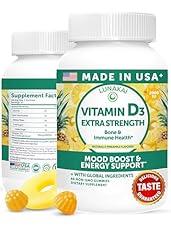
Lunakai Vitamin D3 Gummies 2000 IU
Overview
This is a pineapple-flavored, plant-based vitamin D3 gummy supplement in a 60-gummy bottle. The stated serving is two gummies, providing 50 mcg, or 2,000 IU, of vitamin D3, so the bottle is a 30-day supply when used daily. It is marketed for adults and teens who prefer a chewable alternative to capsules. The manufacturer states that the formula is vegan, gelatin-free, gluten-free, non-GMO, and free of refined sugar, soy, peanuts, tree nuts, and shellfish. Vitamin D has an established role in calcium absorption and bone health, and 2,000 IU is below the adult upper limit of 4,000 IU per day. The manufacturer also claims third-party purity testing, but it does not publish a current lot-specific certificate of analysis or a named laboratory report for this product.
What works
- The stated 2,000 IU vitamin D3 serving is below the 4,000 IU adult upper limit.
- Vitamin D has an established role in calcium absorption and maintaining bone health.
- The manufacturer states that the gummies are vegan and gelatin-free, which may suit people avoiding animal gelatin.
- The label presentation includes a two-gummy serving and general precaution language for medication use, pregnancy, nursing, and medical conditions.
What does not
- The manufacturer claims third-party testing, but no public, lot-specific potency, contaminant, or microbiological report was located.
- No active public listing was located for this exact finished product in the USP Verified or NSF dietary-supplement certification registries.
- The available product information does not provide specific cautions for kidney disease, hypercalcemia, kidney stone risk, or medicines such as thiazide diuretics, statins, steroids, and orlistat.
- The gummy label image states 25 calories per two-gummy serving, but a clear text nutrition panel with total and added sugar amounts was not available in the reviewed sources.
- The energy-support message is less directly supported than the calcium-absorption and bone-health claims.
Who is it for
This product fits an adult or teen who has been advised to supplement vitamin D, or who wants a modest daily vitamin D3 dose in a chewable form rather than a pill. Its stated 2,000 IU daily serving can be practical for people whose overall intake has been reviewed, particularly when they want support for normal calcium absorption and bone health. It may also suit people who avoid gelatin, gluten, soy, peanuts, tree nuts, or shellfish, based on the manufacturer’s stated exclusions.
Who is it not for
It is not a substitute for clinical evaluation or individualized treatment of confirmed vitamin D deficiency. People with kidney disease, high blood calcium, sarcoidosis, a history of calcium kidney stones, or other conditions that affect calcium handling should seek clinician guidance first. The same applies to people using thiazide diuretics, steroids, orlistat, or certain statins. It is also not ideal for households needing independently certified potency and contaminant testing, or for buyers who need clearly stated added-sugar information.
Integrity
The central health strength is straightforward vitamin D3 dosing. The manufacturer states that two gummies supply 50 mcg, or 2,000 IU, and vitamin D’s role in calcium absorption and bone health is supported by authoritative nutrition guidance. That amount is below the adult upper limit, but total intake from foods and other supplements still matters. The package warning advises people who are pregnant, nursing, taking medication, or managing a medical condition to consult a health professional, although more specific risk guidance would be more useful. Lunakai states that this product is made in the United States, vegan, non-GMO, gluten-free, and gelatin-free. It also states that products are third-party purity tested, but no public lot-specific certificate or recognized finished-product certification registry listing was found. Searches did not identify a relevant FDA recall or warning letter for this product or brand, which is not the same as independent quality verification. No substantiated recycled-content, recyclability, or reduced-packaging claim was located for the bottle or its shipping materials.

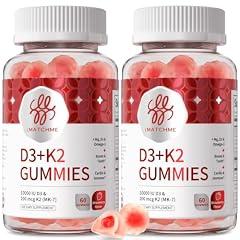
iMATCHME Vitamin D3 K2 Gummies, Sugar-Free Vegan
Overview
This is a strawberry, liquid-core gummy supplement sold as two 60-count bottles, for 120 gummies total. The public product listing states that each serving provides 10,000 IU, or 250 mcg, of vitamin D3 and 200 mcg of vitamin K2 as MK-7. It also states 9 mg magnesium citrate, 8 mg zinc citrate, and 140 mg microencapsulated flaxseed oil. The listing markets it as sugar-free, vegan, gluten-free, gelatin-free, and non-GMO. Vitamin D has an established role in calcium absorption and bone health. However, the listed vitamin D amount is high. At 10,000 IU per serving, it is 2.5 times the adult tolerable upper intake level of 4,000 IU per day. The listing claims third-party testing and GMP manufacturing, but no lot-specific certificate of analysis, named laboratory, public finished-product certification, or complete online Supplement Facts panel was found.
What works
- Vitamin D supports calcium absorption, a well-established nutrient function.
- The manufacturer states the formula uses vitamin K2 as MK-7, plus modest listed amounts of magnesium and zinc.
- The manufacturer states that the gummies are sugar-free, vegan, gelatin-free, gluten-free, and free of artificial colors.
- The two-bottle package contains 120 gummies, which may suit a planned, clinician-directed regimen.
What does not
- The stated 10,000 IU vitamin D3 serving exceeds the adult tolerable upper intake level of 4,000 IU per day.
- The public listing does not provide complete Supplement Facts, serving directions, inactive ingredients, sweetener identity, or clear allergen details.
- Vitamin K can interact seriously with warfarin and related anticoagulants, while the accessible product information does not provide a specific medication warning.
- Third-party testing and GMP facility claims are manufacturer-stated, with no public lot-specific certificate of analysis or independently verifiable finished-product certification found.
- Heart and arterial-support language goes beyond the clearest established benefit, which is vitamin D's role in calcium absorption and bone health.
Who is it for
This product is most relevant to an adult who has been specifically advised by a clinician to use a high-dose vitamin D regimen, has a documented plan for vitamin D blood monitoring, and wants a chewable rather than a capsule. The manufacturer-stated sugar-free and vegan format may also be useful for adults avoiding gelatin or added sugar. The purchaser should confirm the physical package's serving directions, expiration date, lot code, full Supplement Facts panel, and inactive ingredients before using it.
Who is it not for
It is not suitable for children or for routine unsupervised daily vitamin D use. People who take warfarin or similar vitamin K-antagonist anticoagulants should not start a 200 mcg vitamin K2 product without prescriber guidance. People who are pregnant or breastfeeding, have kidney disease, hypercalcemia, hyperparathyroidism, sarcoidosis, a history of kidney stones, or already use vitamin D-containing products need individualized medical review. Those with food allergies or sensitivity to sugar alcohols should choose a product with a fully disclosed ingredient list.
Integrity
The defining health issue is dose. The listed 10,000 IU vitamin D3 serving is above the adult upper intake level, even though vitamin D itself has an established role in calcium absorption and bone health. Vitamin K2 creates an additional medication concern for people using warfarin or related anticoagulants. Magnesium and zinc are listed in relatively small amounts, but the public product page does not provide a complete formal Supplement Facts panel or full inactive-ingredient disclosure. The manufacturer states that the product is sugar-free, vegan, gelatin-free, gluten-free, non-GMO, and made without artificial colors. It also states that batches are third-party tested and made in a GMP-certified facility. Those claims could not be independently matched to a lot-specific certificate, laboratory scope, or recognized finished-product certification registry. No product-specific FDA recall or warning letter was identified in the checked public sources. No packaging materials, recycled-content evidence, recycling instructions, or other substantiated environmental claims were found.

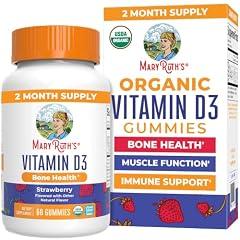
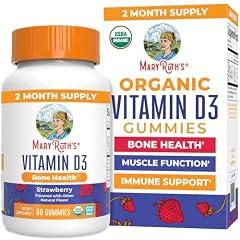
MaryRuth Organics Vitamin D3 Gummies
Overview
This is a 60-count strawberry gummy supplement for adults and children age 2 and older. The manufacturer directs users to take one gummy daily. Its Supplement Facts image lists 25 mcg, or 1,000 IU, of vitamin D as cholecalciferol per gummy, plus 2 g of added sugar. The formula is pectin-based and uses organic glucose syrup and organic cane sugar, according to the manufacturer label. The stated bone health, calcium and phosphorus absorption, muscle function, and normal immune-support uses fit established roles of vitamin D. The 1,000 IU dose is above the standard 600 IU recommended intake for most people age 1 through 70, while remaining below the age-specific upper limits for the labeled age range. Independently, Clean Label Project's current certificate lists this exact strawberry 60-count product.
What works
- One gummy supplies 1,000 IU of vitamin D3, a practical daily amount that exceeds standard age-based recommended intakes for most users age 2 and older.
- The stated bone health and calcium absorption uses align with vitamin D's established physiological role.
- Clean Label Project's public certificate lists this exact strawberry 60-count product, providing independent contaminant-focused certification evidence.
- The manufacturer fully identifies the vitamin D form and lists the principal gummy ingredients. It also states that the formula is vegan, pectin-based, and gelatin-free.
What does not
- Each gummy contains 2 g of added sugar and citric acid. This is a modest daily sugar load, but it is still an avoidable dental exposure in a vitamin supplement.
- No public, lot-specific certificate of analysis was found to confirm vitamin D potency through the expiry date for a currently purchasable bottle.
- The manufacturer's precaution advises people who are pregnant, lactating, taking medication, or managing a diagnosis to consult a clinician, but it does not specifically call out kidney disease, hypercalcemia, kidney stone risk, or relevant medication classes.
- The ingredient list uses the broad term natural flavor, and no package-specific recycling instructions or recycled-content details were found.
Who is it for
This product suits a household seeking a simple once-daily vitamin D option for a child age 2 or older or an adult who prefers a chewable format. Its 1,000 IU serving is conservative relative to upper limits and is useful when dietary vitamin D intake or sun exposure may be limited. It also fits people who avoid gelatin and animal-derived D3, because the manufacturer states that the gummy is vegan, pectin-based, and made with lichen-sourced D3. It is a 60-day supply when used as directed.
Who is it not for
It is not a substitute for clinician-directed treatment of a documented vitamin D deficiency, malabsorption condition, osteoporosis, or abnormal calcium result. People with kidney disease, hypercalcemia, a history of calcium-containing kidney stones, sarcoidosis or other granulomatous conditions should seek individualized medical advice before using vitamin D. Those taking thiazide diuretics, orlistat, corticosteroids, or other regular medicines should also check with a clinician. It is not intended for infants younger than age 2, and households avoiding added sugar may prefer a non-gummy format.
Integrity
The exact strawberry 60-count product is listed on Clean Label Project's public certificate, which is meaningful independent evidence focused on contaminant screening. The manufacturer also displays a USDA Organic claim, states that the gummy is vegan and pectin-based, and identifies lichen as its D3 source. MRO MaryRuth, LLC is independently listed by B Lab as a Certified B Corporation, though that is a company-level social and environmental certification, not a test of this supplement's potency or safety. A public lot-specific potency certificate was not found, so the stated 1,000 IU remains label-based rather than independently verified through expiry. MaryRuth's had an FDA-posted voluntary recall in 2021 involving two lots of a separate liquid infant probiotic because of possible Pseudomonas aeruginosa contamination. The FDA notice said no other MaryRuth's products were affected. No packaging recyclability instructions or recycled-content evidence were found for this bottle.

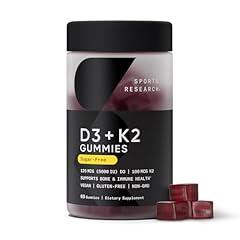
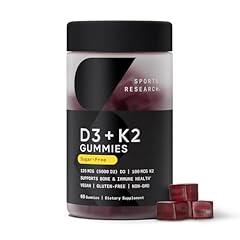
Sports Research Vegan Vitamin D3 + K2 Gummies
Overview
This is a 60-count, berry-flavored adult gummy supplement. The suggested use is two gummies daily, providing 125 mcg, or 5,000 IU, of vitamin D3 and 100 mcg of vitamin K2 as MK-7 per daily serving. It is intended for bone and immune support, not as treatment for a condition. The dose and the lichen-derived D3 and chickpea-derived K2 sources are manufacturer-stated and match an independently listed retail formula. That formula also lists inulin syrup, allulose, pectin, natural flavors, citric acid, and fruit juice for color. The exact gummy product is independently listed as IGEN certified for non-GMO testing. No public, lot-specific potency certificate or finished-gummy contaminant report was located.
What works
- The exact gummy product is listed in Nutrasource's IGEN registry as having passed its non-GMO testing panel.
- The formula is sugar-free and sugar-alcohol-free according to the manufacturer, avoiding the common polyol burden of many gummies.
- Active amounts are plainly specified, 125 mcg vitamin D3 and 100 mcg MK-7 per two-gummy adult serving.
- The ingredient list identifies a pectin gummy base and contains no gelatin, consistent with the manufacturer's vegan positioning.
What does not
- The labeled 125 mcg, or 5,000 IU, daily vitamin D dose exceeds the NIH adult tolerable upper intake level of 100 mcg, or 4,000 IU, before diet and other supplements are counted.
- Vitamin K can interfere with warfarin management, and the available product information does not give a product-specific warfarin warning or clear cautions for kidney disease, hypercalcemia, or stone risk.
- Allulose, inulin syrup, citric acid, and natural flavors are disclosed, but their amounts are not publicly stated. Acid exposure also remains relevant for gummy dental care.
- No lot-specific certificate showing vitamin potency through expiry, heavy-metal limits, or microbiological results was publicly available. A ConsumerLab overage finding involved a different Sports Research D3 and K2 softgel, not these gummies.
Who is it for
This product fits an adult who has been advised by a clinician to use a high vitamin D dose, such as 5,000 IU daily, and who wants a vegan, chewable format rather than a softgel. It may also suit someone avoiding gelatin, added sugar, and sugar alcohols. The 60-count bottle supplies 30 days at the stated two-gummy routine. Because the dose is high, this use case is most appropriate when total vitamin D intake and blood levels can be reviewed rather than assumed.
Who is it not for
It is not a routine choice for children, or for adults seeking a conservative maintenance dose, because one daily serving already exceeds the adult vitamin D upper intake level. People using warfarin or another vitamin K-sensitive anticoagulant should not start it without the clinician managing their anticoagulation. Those with kidney disease, a history of kidney stones, hypercalcemia, sarcoidosis, pregnancy, breastfeeding, or use of thiazide diuretics should seek individualized medical guidance before using this high-dose product.
Integrity
The most concrete independent quality finding is the exact product's active IGEN certification, which covers testing for the program's panel of genetically engineered GMO proteins and genes. Sports Research states that the gummies are vegan, gluten-free, sugar-free, sugar-alcohol-free, third-party tested, and made in a cGMP-compliant facility. The public formula lists pectin rather than gelatin, plus allulose and inulin syrup. Public certification and testing records located for this product did not provide a lot-specific potency, metals, or microbiology report. Searches of FDA recall and warning-letter resources did not identify a recall, safety alert, or warning letter specific to this product or Sports Research for these gummies. The product is sold in a plastic bottle, but no verified recycled-content, recyclability, refill, or reduced-packaging claim was located. Local recycling acceptance for the bottle and cap therefore cannot be inferred.

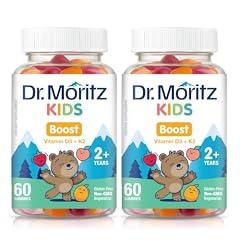
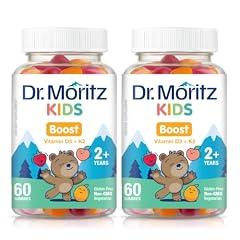
DR. MORITZ Vitamin D Gummies for Kids & Adults
Overview
This product is a two-bottle pack of fruit-flavored vitamin D3 gummies. A two-gummy serving is listed as supplying 2,000 IU, or 50 mcg, of cholecalciferol. The same marketplace listing presents it as a 60-serving, 120-gummy supply intended for children and adults. Vitamin D3 at this dose can realistically support vitamin D intake, calcium absorption, and bone health when dietary intake or sun exposure is inadequate. The manufacturer lists glucose syrup, sugar, pectin, citric acid, natural flavors, annatto, elderberry juice, coconut oil, and carnauba wax. It also states gelatin-free, dairy-free, and vegetarian-friendly status. However, its own page calls the formula sugar-free while listing both glucose syrup and sugar, and it makes broader immunity, mood, cardiovascular, and dental claims that are not adequately supported for this finished gummy.
What works
- The stated 2,000 IU vitamin D3 serving is below the age-specific upper limits for children age 3 and older and adults, though total intake from food and other supplements still matters.
- Cholecalciferol is a well-established vitamin D form for correcting or preventing inadequate vitamin D intake and supporting calcium absorption and bone health.
- The manufacturer discloses a pectin-based formula and states that it is gelatin-free and dairy-free, which may suit users avoiding gelatin.
- The online directions include adult-supervision and choking language for young children, plus a general consult-a-clinician caution for pregnancy, medications, and medical conditions.
What does not
- The manufacturer lists glucose syrup and sugar but also calls the product sugar-free. That is a direct claim contradiction, and no grams of total or added sugar were located.
- The claim that the gummies do not cause cavities is not credible as presented, given the listed sugar ingredients and lack of dental evidence for this exact product.
- Directions conflict across listings. One page says children age 2 and older may take two gummies, while another describes the product for ages 3 and older. The manufacturer page also directs adults to take three gummies, which equals 3,000 IU rather than the prominently stated 2,000 IU serving.
- No current lot-specific potency certificate, finished-product contaminant or microbiological results, or exact-product public certification listing was located.
- Marketing extends beyond established vitamin D deficiency and bone support into infection prevention, mood-disorder risk reduction, cardiovascular risk reduction, and skin benefits without finished-product human evidence.
Who is it for
This product fits a household seeking a chewable vitamin D3 option for a child age 3 or older who can safely chew gummies under supervision, or for an adult who prefers a gummy rather than a tablet. The 2,000 IU two-gummy amount can be relevant when a clinician has identified low vitamin D intake, limited sun exposure, or a need to supplement. It is most straightforward for users taking no other meaningful vitamin D sources and who can account for the sugar-containing gummy format.
Who is it not for
It is not well suited to children under age 2 because of the labeled choking warning, or to households needing unambiguous pediatric directions because the available age guidance conflicts. People with kidney disease, hypercalcemia, a history of kidney stones, sarcoidosis, or other conditions affecting calcium handling should use clinician-specific advice. Those taking thiazide diuretics, steroids, orlistat, or statins should discuss vitamin D intake with a clinician. It is also a poor fit for people avoiding sugar or seeking verified vegan vitamin D source documentation.
Integrity
The central health positive is the use of cholecalciferol, with a stated 2,000 IU per two-gummy serving. This is below the vitamin D upper limits for people age 3 and older, but vitamin D can raise calcium absorption and excessive total intake can contribute to hypercalcemia or kidney-related harm. The available caution is general rather than specific to kidney disease, stone risk, high calcium, or medication interactions. The ingredient list identifies pectin rather than gelatin and natural color sources, but it also names glucose syrup and sugar. That conflicts with the manufacturer’s sugar-free claim and makes its cavity-prevention language unreliable. No public lot-specific testing, contaminant testing, exact-product independent certification, recyclable-content documentation, or specific recycling guidance was located. No relevant FDA recall or warning-letter result was located in the searches performed, but the responsible manufacturer and testing trail remain limited.

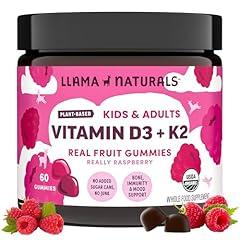
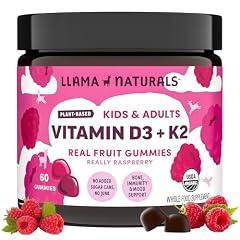
Llama Naturals Vitamin D3 Gummies
Overview
This is a 60-count raspberry real-fruit gummy supplement for children age 4 and older and adults. The independently listed product label gives children one gummy daily and adults two. That equals 40 mcg, or 1,600 IU, vitamin D per child serving and 80 mcg, or 3,200 IU, per adult serving. It also lists 100 mcg vitamin K2 as MK-7 in the adult serving. Vitamin D supports calcium absorption and normal bone mineralization, so the bone-support positioning is evidence-based. Immune and mood language is less specific than a disease claim, but it should not be read as treatment. The formula uses lichen-derived vitamin D3, organic fruit ingredients, pectin, and 2 g added sugars per adult serving. The brand states that each product is third-party tested, but no current lot-specific certificate of analysis or publicly matched supplement certification listing was located.
What works
- The adult serving provides 80 mcg, or 3,200 IU, vitamin D3, a form and dose consistent with vitamin D's established role in calcium absorption and bone health.
- Independent product listings identify vegan lichen vitamin D3, fruit pectin, and a formula free of soy, eggs, peanuts, tree nuts, dairy, shellfish, and gluten.
- The two-gummy adult serving lists 2 g added sugars, with no sugar alcohols disclosed.
- Directions, storage guidance, seal instruction, and a choking warning are provided.
What does not
- The adult vitamin D dose is below the 4,000 IU upper limit for people age 9 and older, but it is high enough that other vitamin D supplements and fortified foods should be counted.
- Vitamin K2 is included, yet the available warnings are general and do not specifically flag the important warfarin interaction or kidney and hypercalcemia risks.
- Third-party testing for potency, heavy metals, and microbes is manufacturer-stated, not supported by a public, lot-specific certificate with methods and limits.
- The current brand page describes the formula as D3 plus K2, while older retailer materials for the same 60-count product show vitamin D alone. Buyers should inspect the delivered Supplement Facts panel.
Who is it for
This product fits adults and children age 4 and older who need a labeled vitamin D supplement, prefer a chewable vegan format, and can follow the different child and adult serving directions. It is particularly relevant for households avoiding gelatin and the listed major allergens, or for people who want fruit-based gummies without cane sugar or sugar alcohols. The 60-count bottle supplies 30 adult servings or 60 child servings. A clinician can help determine whether this relatively high adult vitamin D dose fits an individual's blood level, diet, and other supplements.
Who is it not for
It is not appropriate for children under age 4 based on the independently listed directions, or for anyone unable to safely chew gummies. People using warfarin or another anticoagulant should not start or stop this product without prescriber guidance because it contains vitamin K2. Those with hypercalcemia, kidney disease, a history of kidney stones, sarcoidosis or other conditions that alter vitamin D handling need individualized medical advice. It is also a poor fit for people already using substantial vitamin D or calcium supplements unless their total intake has been reviewed.
Integrity
The product's concrete health positives are its disclosed lichen-derived vitamin D3, vitamin K2 as MK-7, vegan pectin gummy base, and a short food-style ingredient list centered on apple and raspberry. The label data available from independent retailers lists 2 g added sugars per adult serving, so it is not sugar-free despite the no added cane sugar message. Lemon juice is also an ingredient, so routine dental hygiene still matters with any chewable fruit gummy. The brand and retailers describe the product as USDA Organic and certified organic by QAI. QAI is a recognized organic certifier, but an exact current product entry was not publicly matched in its searchable directory. Llama Naturals has a verified rePurpose Global partnership that funds removal of twice as much nature-bound plastic as the brand reports using. That is an offset-style environmental claim, not evidence that the bottle itself uses recycled content or is locally recyclable. No relevant FDA recall or warning letter was located in the checked public searches.

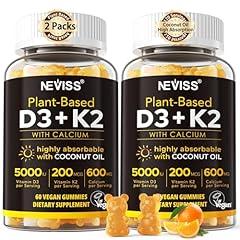
Vitamin D3 & K2 Gummies with Calcium
Overview
This is an orange-flavored adult gummy supplement sold as two 60-gummy bottles, providing 120 daily servings when used as one gummy per day. Independent retail and nutrition-database listings consistently report 125 mcg, or 5,000 IU, vitamin D3, 200 mcg vitamin K2 as MK-7, and 600 mg calcium per gummy. The calcium is listed as a blend of calcium citrate and calcium carbonate. The stated purpose is support for calcium intake, bones, teeth, muscle function, and vitamin D status. Vitamin D does help calcium absorption, and calcium and vitamin D have established roles in bone health. The defining limitation is dose: 5,000 IU vitamin D exceeds the U.S. adult tolerable upper intake level of 4,000 IU per day. The listing also reports 12 calories, 2 g total sugars, and 1 g added sugar per gummy. Vegan, gelatin-free, dairy-free, soy-free, and gluten-free status are manufacturer-stated.
What works
- One daily gummy supplies 600 mg calcium, a substantial contribution toward adult calcium intake.
- Vitamin D3 has an established role in calcium absorption and bone health.
- The formula uses MK-7 vitamin K2 and lists calcium citrate plus calcium carbonate.
- The documented daily gummy has 1 g added sugar, rather than a high-sugar gummy serving.
What does not
- The 5,000 IU daily vitamin D dose exceeds the U.S. adult tolerable upper intake level of 4,000 IU, before vitamin D from food or other supplements is counted.
- Vitamin K can interact with warfarin and similar vitamin K antagonists, while the available product information does not show detailed, product-specific medication and high-risk-user cautions.
- No lot-specific certificate of analysis, accredited laboratory scope, or public finished-product potency testing was located.
- No exact-product listing was located in public USP Verified or NSF dietary-supplement certification registries.
- Coconut oil makes a fat-soluble vitamin vehicle plausible, but it does not substantiate the product's high-absorption claim or GLP-1-friendly marketing.
Who is it for
This format fits an adult who has been advised to increase vitamin D or calcium intake and specifically wants a one-gummy daily product rather than tablets. It may suit a person seeking a manufacturer-stated vegan, gelatin-free formula, including someone avoiding dairy, soy, or gluten. Its 600 mg calcium dose can be useful for people whose dietary calcium intake is consistently low. Because the vitamin D dose is high, appropriate use is most concrete when it is tied to a clinician's recommendation or monitored vitamin D status.
Who is it not for
It is not suited to children, because its 5,000 IU vitamin D dose is above pediatric upper limits. People taking warfarin or another vitamin K antagonist should not treat the 200 mcg MK-7 content as routine without prescriber guidance. Those with hypercalcemia, kidney disease, recurrent calcium kidney stones, sarcoidosis, or other conditions affecting vitamin D or calcium handling need individualized medical advice. It is also a poor fit for anyone already using vitamin D or calcium supplements unless total daily intake has been reviewed.
Integrity
The most relevant health issue is concentration, not the gummy format. One gummy combines 125 mcg vitamin D3 with 600 mg calcium. Vitamin D supports calcium absorption, but the vitamin D amount is above the U.S. adult upper intake level, and the added calcium increases the importance of considering diet, other supplements, kidney history, and blood-calcium risk. Vitamin K2 also creates a clinically relevant concern for people using warfarin. The available sources document 1 g added sugar per gummy, plus manufacturer-stated vegan and common-allergen-free claims. No exact-product USP or NSF certification listing, lot-specific potency certificate, public contaminant report, or package-specific recycling or recycled-content evidence was located. Searches of FDA sources did not identify a product-specific recall or warning letter, but the responsible manufacturer and public batch-testing trail remain limited.

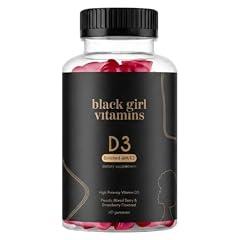
Black Girl Vitamins Vitamin D3 Gummies
Overview
This is a 60-gummy, 30-day adult supplement intended to be taken as two gummies daily. The manufacturer states that the daily serving provides 50 mcg, or 2,000 IU, of vitamin D3, with peach, mango, and strawberry flavors. Its current product page calls it a vitamin D3 and K2 product, but does not publish the amount or form of vitamin K2 in accessible text. The stated D3 dose is below the adult tolerable upper intake level of 4,000 IU daily and is relevant to calcium absorption and bone health. The manufacturer also states that the original formula has 3 g sugar per serving, is vegan-friendly and halal certified, and avoids artificial sweeteners and synthetic colors. Those formula and certification claims were not supported by a public lot certificate of analysis or a matched independent certification registry listing.
What works
- The stated 2,000 IU daily vitamin D3 dose is below the adult upper intake level of 4,000 IU.
- Vitamin D has an established role in calcium absorption and bone mineralization.
- Two gummies daily provide a clearly stated 30-day supply.
- The manufacturer states that the gummies are free of artificial sweeteners, synthetic colors, dairy, and high-fructose corn syrup.
What does not
- The accessible product page does not disclose the amount or form of vitamin K2, despite calling the product D3 and K2.
- No public, lot-specific certificate of analysis was found to confirm potency through expiry, contaminants, or microbiological results.
- The product page makes appetite, weight-loss, digestion, thyroid, energy, and mood claims that exceed the clearly established evidence for this simple D3-focused formula.
- The 3 g added sugar per daily serving is modest but still creates repeated sugar and acid exposure in a chewable gummy format.
- Warnings are general and do not specifically flag warfarin or other anticoagulants, kidney disease, hypercalcemia, stone risk, or vitamin D medicine interactions.
Who is it for
This product suits an adult who prefers a chewable supplement and wants a stated 2,000 IU daily vitamin D3 dose for routine bone and calcium-absorption support. It is most straightforward for someone not already taking another vitamin D product, who can account for its 3 g daily sugar intake, and who values a plant-gelled gummy format. People using it for a known deficiency should base the dose and follow-up blood testing on guidance from a clinician, rather than on the product’s energy or mood claims.
Who is it not for
It is not a simple choice for anyone taking warfarin or a similar anticoagulant, because the product is presented as containing vitamin K2 but its accessible page does not state the K2 amount or form. Children, pregnant or breastfeeding people, and people with kidney disease, high calcium levels, recurrent kidney stones, sarcoidosis, or other medical conditions should seek individualized advice first. It also does not suit households avoiding added sugar, people with significant food-allergy concerns, or buyers who require public batch-specific purity and potency results.
Integrity
The manufacturer identifies the gummies as vegan-friendly, halal certified, dairy-free, and free from artificial sweeteners and synthetic colors. It also states that the product is made in the United States. The accessible product page gives a facility cross-contact warning for milk, soy, wheat, egg, peanut, tree nuts, fish, and crustacean shellfish. It does not provide a complete accessible ingredient list, a named halal certifier, or a registry entry that independently confirms the certification claim. No public lot-specific potency, heavy-metal, or microbiological report was located for this gummy. This matters because a May 27, 2026 California judgment involving Black Girl Vitamins required lead controls or warnings for two different products, Meno-Chill and In The Mood. That action does not identify this D3 gummy. No product-specific packaging material, recycled-content, or recycling claim was found, so its environmental attributes cannot be substantiated beyond the basic bottle format.

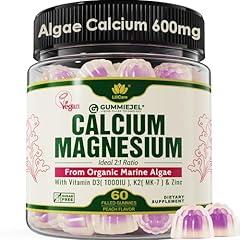
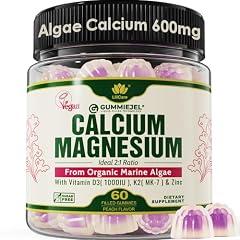
LILICARE Plant Based Calcium Gummies
Overview
This is a peach-flavored adult gummy calcium supplement. The recommended serving is two gummies daily, and a 60-gummy bottle therefore supplies about 30 days. An independent nutrition-label database records 600 mg calcium, 300 mg magnesium, 25 mcg vitamin D, 120 mcg vitamin K, and 15 mg zinc per serving. The manufacturer states that the calcium and magnesium come from red marine algae, that the gummies use pectin rather than gelatin, and that they are vegan, soy-free, gluten-free, and free of artificial colors and flavors. The core rationale is credible, since vitamin D supports intestinal calcium absorption and calcium is necessary for bone health. However, the product-specific claims of five-times better bioavailability, faster uptake, prevention of cramps, and doctor recommendation were not substantiated with finished-product human studies or a public lot-specific certificate of analysis.
What works
- The reported 600 mg calcium and 25 mcg vitamin D serving is a practical supplemental contribution to adult bone-health intake.
- Reported 300 mg supplemental magnesium remains below the adult 350 mg supplemental upper limit.
- The reported label has zero added sugar, which reduces avoidable sugar exposure from a twice-daily gummy routine.
- The manufacturer states that the formula is vegan, gelatin-free, soy-free, gluten-free, and free of artificial colors and flavors.
What does not
- No public lot-specific certificate of analysis was found to confirm nutrient identity, dose at expiry, heavy-metal limits, or microbiological testing for a purchasable batch.
- The published product information makes broad absorption and performance claims, including five-times bioavailability and faster uptake, without finished-product human evidence.
- The reported serving includes 1 g sugar alcohol, but the specific sugar alcohol was not clearly identified in the ingredient information located.
- Public product information did not provide specific, usable cautions for warfarin users, kidney disease, hypercalcemia, kidney-stone history, pregnancy, or children.
Who is it for
This product suits an adult who has identified a gap in calcium intake, prefers a chewable vegan format, and wants calcium, vitamin D, magnesium, vitamin K, and zinc in one two-gummy serving. The 600 mg calcium and 1,000 IU vitamin D serving can be a reasonable supplement to food intake rather than a replacement for a varied diet. It may also fit people avoiding gelatin, soy, gluten, added sugar, and artificial colors or flavors. The 60-count size is designed for a roughly 30-day routine.
Who is it not for
It is not well suited to children, or to pregnant or breastfeeding people, unless a clinician confirms that this formula fits their total nutrient plan. People taking warfarin or another vitamin K-sensitive anticoagulant should not start it without prescriber guidance because it contains vitamin K. People with kidney disease, hypercalcemia, a history of calcium kidney stones, or conditions affecting mineral handling need individualized advice. It is also a poor fit for anyone who needs verified lot-level contaminant and potency results before using a mineral supplement.
Integrity
The useful health feature is a moderate multi-nutrient serving. Independent label data records 600 mg calcium, 300 mg magnesium, 25 mcg vitamin D, 120 mcg vitamin K, and 15 mg zinc in two gummies. The calcium and vitamin D mechanism is supported by established nutrition evidence. Magnesium is close to, but remains below, the adult supplemental upper limit of 350 mg. The absence of added sugar is favorable, although the reported label includes 1 g sugar alcohol per serving. The brand states that its calcium comes from sustainably sourced North Atlantic red marine algae and that the product is Vegan Society Approved. Those are manufacturer claims, not independently confirmed sustainability documentation in the material reviewed. No public evidence was found for recyclable packaging design, recycled content, lot-specific purity testing, or an exact-product quality certification such as USP or NSF. Searches found no FDA recall or warning letter specifically identifying LILICARE, but that is not a substitute for product testing.