
10 Best Vitamin C Supplements
 Lauren Wilson
Please note that we participate in affiliate marketing programs. When you purchase through links on our site, we may earn a commission. As an Amazon Associate we earn from qualifying purchases. This comes at no additional cost to you and helps support the resources required to provide valuable content.Advertising Disclosure
Top-rated Vitamin C Supplements Comparison
1

2
4
5
6
7
8
9
10
Vitamin C supplements: what matters
Vitamin C supplements can help fill a dietary gap when intake is low. Vitamin C has established roles in collagen formation, normal immune function, antioxidant activity, and absorption of plant-source iron. That does not make a high-dose supplement a general illness preventive: the supplied reviews consistently note that routine vitamin C does not prevent colds in the general population, although regular use may modestly shorten them in some circumstances.
The first useful comparison is the labeled dose, not the largest number in the product title. Adult recommended intake is generally 75–90 mg daily, while the established adult upper limit is 2,000 mg from all sources. Several supplied products provide 1,000–1,500 mg per serving, and one provides 2,500 mg already above the adult upper limit. A serving can also contain other nutrients, such as zinc, iron, niacin, or vitamin D, that may be more important to safety than the vitamin C figure itself. Count food, multivitamins, fortified products, and other supplements before adding another dose.
Form affects use, but not automatically effectiveness. Capsules, tablets, gummies, liquids, and powders can all provide a stated amount, yet a fixed capsule or packet avoids scoop-measurement error. Powders should have a precise, usable measure; a scoop described only as approximate is less reassuring than a gram-based direction. “Liposomal,” “buffered,” “whole-food,” and “enhanced absorption” claims should not be treated as proven advantages unless human evidence applies to the marketed finished product at its labeled dose. Studies of a different formula, or theory about an ingredient, do not establish that this product performs better.
A transparent label should identify every active and inactive ingredient, amount and form, serving basis, directions, warnings, allergen information, responsible US business, lot number, expiry date, and a usable contact route. Proprietary blends and undisclosed amounts make it harder to assess botanical exposure, interactions, or nutrient stacking. A simple formula is not proof of purity, but it reduces avoidable complexity.
The strongest quality signal in the supplied data is current, product-specific independent evidence. USP Verified or active NSF certification for the finished product is more meaningful than a generic “third-party tested” statement or a facility-only GMP listing. A current lot-specific report from an ISO/IEC 17025-accredited laboratory should identify the exact product and cover relevant identity, potency, contaminants, and release testing. Historical ConsumerLab approval provides useful evidence, but it is not the same as current lot testing. Facility certification supports manufacturing accountability; it does not certify the contents of every bottle.
Environmental claims need the same discipline. “Natural,” “organic,” “non-GMO,” or “eco-friendly” language does not establish lower impact. Look for package-specific recycled-content or recycling information, recognized recycled-content certification, and a substantiated organic certificate where organic ingredients are central to the claim. Across the supplied products, such packaging evidence was generally absent.
Safety caveats recur. High doses can cause diarrhea, nausea, or abdominal cramps and deserve particular caution for people with kidney disease, recurrent kidney stones or hyperoxaluria, and hereditary hemochromatosis or other iron-overload conditions. People receiving chemotherapy or radiation, taking prescription medicines, pregnant or nursing, or managing kidney, calcium, or other relevant conditions should seek individualized clinical advice. Children should not be given adult-strength products; infants should not use supplemental vitamin C without clinical advice. Check for gelatin, honey, bee products, coconut, citrus, botanicals, and added minerals, and do not casually stack vitamin C, zinc, iron, niacin, or vitamin D. One supplied product permits vitamin D above the adult upper limit, and another permits vitamin C above its adult upper limit, so directions and maximum use matter as much as the front-label dose.
Integrity
These topics separate a product that merely lists vitamin C from one that is appropriately dosed, transparent, independently supported, and less wasteful. The distinctions below reflect the supplied products’ scored reviews and documented evidence.
HHealth & Safety
Evidence-backed health value
This measures whether the labeled dose has a realistic role in meeting vitamin C needs or correcting low intake without implying disease prevention. Higher-scoring products generally used qualified nutrition or structure-function language and sensible intake framing; lower-scoring products leaned on high-dose immune promises or illness-prevention suggestions. The key buyer question is whether the dose addresses a demonstrated gap, not whether it is large.
Safe daily dose
This measures the serving size, directions, maximum use, and warnings against evidence-based limits. Stronger products stayed below the adult 2,000 mg vitamin C upper limit and made the intended serving clear. Weaker examples allowed 3,000–4,000 mg vitamin C daily or exceeded the 4,000 IU adult vitamin D limit. Count all sources, especially when products include added vitamin D, zinc, iron, or niacin.
Added-ingredient and allergy safety
This measures whether additional nutrients, botanicals, sweeteners, and allergens are fully disclosed and appropriately cautioned. The strongest supplied formulas were simple and quantified, avoiding unnecessary stacking. Lower scores reflected iron or high-dose vitamin D, undisclosed botanical amounts, bee products, gelatin, coconut, or unclear allergen warnings. A vitamin C product is not automatically low-risk when its other ingredients carry separate interaction or allergy concerns.
Reliable dose and release
This measures whether the form can deliver its stated serving consistently. Fixed capsules, tablets, gummies, and single-use packets avoid some powder-measuring error; powders need a precise measure and usable directions. Higher-scoring products had clear serving bases, while lower-scoring products relied on approximate scoops or lacked public finished-product release or disintegration evidence. A stated dose is not the same as independently confirmed delivery.
EEvidence
Independently verified contents
This measures current independent verification of the exact finished product’s identity, labeled ingredients, potency, and release. The strongest supplied evidence was a documented historical ConsumerLab approval, while most products had only generic testing claims. Active USP Verified or NSF finished-product certification, or a transparent current lot report, would provide stronger assurance than facility certification or a brand statement.
Verified contaminant control
This measures product-specific independent testing for relevant heavy metals, microbes, pesticides, residual solvents, or adulterants. Higher scores belonged to products with stronger documented testing history or simpler formulas; most products still lacked a current public lot report. A claim that batches are tested is weaker than an auditable report naming the product, lot, methods, and results for the contaminants relevant to its ingredients.
Complete, traceable label
This measures whether a buyer can identify all ingredients and amounts, serving basis, warnings, allergens, responsible business, lot, expiry, and contact route. Higher-scoring products disclosed active forms, directions, and inactive ingredients. Lower scores reflected proprietary blends, unreadable or incomplete online panels, missing traceability details, or a marketplace title that conflicted with the current manufacturer label.
Honest health claims
This measures whether advertising stays within substantiated nutrition and structure-function claims instead of promising prevention, treatment, or cure. Better-scoring products used qualified immune, antioxidant, or collagen language. Lower-scoring examples claimed protection from illness, superior efficacy, or broad health outcomes without product-specific evidence. A disclaimer does not repair an otherwise misleading headline claim.
Proof for liposomal, buffered, or whole-food claims
This measures whether improved absorption, gentleness, or performance is demonstrated for the marketed finished formula at its labeled dose. The supplied reviews found human evidence for some other liposomal formulations, but not for most exact products. Scores were lower where brands relied on ingredient theory or unsupported superiority claims. “Liposomal” or “whole-food” describes a formulation; it does not prove a benefit.
Manufacturing accountability
This measures quality-system accountability and relevant regulatory history, distinguishing audited facility controls from self-issued “GMP” or “FDA registered” language. Higher-scoring products had facilities listed under NSF/ANSI 455-2 or comparable documented controls and no identified product-specific enforcement issue. Facility certification supports how products are made, but does not independently verify the potency or contaminant status of the finished bottle.
EEcology
Lower-impact ingredients and packaging
This measures specific, checkable environmental practices rather than broad natural or eco-friendly language. The supplied products generally lacked package-specific recycled-content claims, recycling instructions, or verified sourcing documentation, so their scores clustered closely. A stronger product would substantiate organic inputs where claimed and identify packaging materials and disposal routes. Company-level certifications or cruelty-free status may be meaningful, but they do not prove this bottle has a lower footprint.
Full reviews
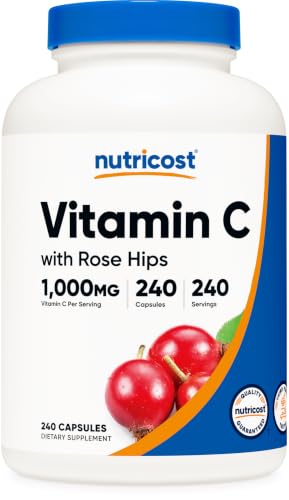
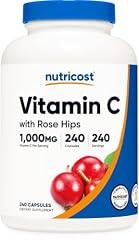
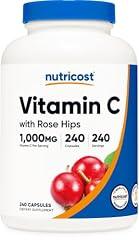
Nutricost Vitamin C with Rose Hips
Overview
This is a 240-capsule vitamin C supplement intended for adults, with directions to take one capsule daily with water. An independently listed label identifies 1,000 mg vitamin C as ascorbic acid and 25 mg Rosa canina rose hip powder per capsule. It also lists a gelatin capsule and vegetable-source magnesium stearate. The 1,000 mg dose is well above the adult vitamin C recommended intake of 75 to 90 mg, but below the 2,000 mg adult upper limit when total intake from food and supplements is considered. Vitamin C has a clear role in preventing or correcting low intake, but regular high-dose use does not prevent colds in the general population. Nutricost states that the product is third-party tested and made in a GMP-compliant, FDA-registered facility. Publicly auditable, product-specific test results or a current recognized product certification were not located.
What works
- A precise one-capsule serving and 240 labeled servings make daily use straightforward.
- The declared formula is simple, with vitamin C and a small amount of rose hip powder, not added zinc, iron, or vitamin D.
- Ascorbic acid is a well-established, bioavailable form of supplemental vitamin C.
- The labeled 1,000 mg daily amount remains below the adult 2,000 mg upper limit, before accounting for other sources.
What does not
- The dose is roughly 11 to 13 times the adult recommended intake, so it is more than most well-nourished adults need to meet requirements.
- No public, lot-specific independent certificate of analysis was located for this exact product, including potency, heavy-metal, microbial, or capsule-release results.
- The label warning is broad rather than specifically flagging kidney disorders, a history of kidney stones, hemochromatosis, or possible medication interactions.
- The gelatin capsule is not suitable for vegan or vegetarian users.
- The 25 mg rose hip addition is fully disclosed, but no human evidence was located showing that this finished formula performs better than ordinary ascorbic acid alone.
Who is it for
This product suits an adult who has a clinician-identified low vitamin C intake, a very limited produce intake, or a specific reason to use a straightforward ascorbic acid supplement. The once-daily capsule and 240-serving bottle are practical for someone who prefers a long supply without powders, flavored drinks, or multi-nutrient stacking. It is also relevant for people who want vitamin C without added zinc or iron. Total intake from multivitamins, fortified foods, and other supplements should still be counted.
Who is it not for
It is not a fit for children or teens, since the labeled serving alone approaches or exceeds lower age-based upper limits. People with kidney disease, recurrent kidney stones, hereditary hemochromatosis, iron overload, or cancer treatment plans should seek individualized clinical guidance before using a high-dose product. It is also unsuitable for vegan or vegetarian households because the capsule contains gelatin. Anyone seeking independently certified contents, lot-specific contaminant results, or a substantiated enhanced-absorption formula needs more documentation than is publicly available here.
Integrity
Vitamin C as ascorbic acid has established bioavailability and is useful for correcting inadequate intake. The finished product has a clearly stated one-capsule serving, 1,000 mg vitamin C, 25 mg rose hip powder, and a short inactive-ingredient list. The manufacturer states that it is non-GMO, gluten-free, third-party tested, and made in a GMP-compliant, FDA-registered facility. Those are manufacturer statements, not the same as a current recognized certification of the finished product. A review of the checked public certification directories did not locate active USP or NSF finished-product certification, and no public lot-specific independent report was found for potency, contaminants, or capsule disintegration. No product-specific FDA recall or warning letter was identified in the reviewed public FDA records. The bottle is plastic, and no package-specific recycled-content, recycling instruction, organic sourcing, or other independently checkable environmental documentation was located. The company states that ingredients are globally sourced, so ingredient-origin impacts remain unclear.
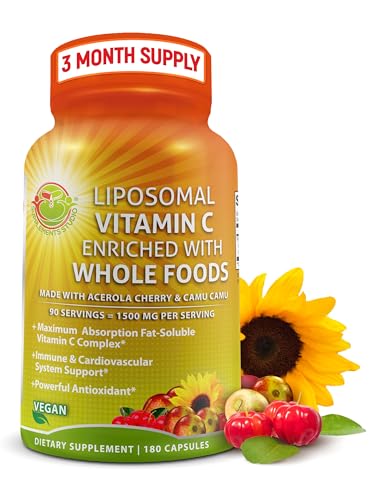
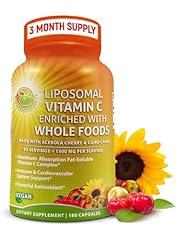
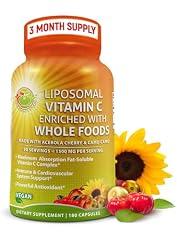
Liposomal Vitamin C 1500mg Immune Support
Overview
This is a 180-capsule vitamin C product intended for adults. The manufacturer directs users to take two capsules daily with food, providing a stated 1,500 mg of vitamin C per serving and about 90 days of use per bottle. The formula is presented as liposomal vitamin C with phosphatidylcholine from non-GMO sunflower lecithin, plus organic acerola cherry and camu camu. The 1,500 mg dose remains below the adult upper intake level of 2,000 mg per day, but it is far above the 75 to 90 mg daily requirement for most nonsmoking adults. The brand's absorption, energy, cardiovascular, and whole-food enhancement claims are manufacturer statements. No current product-specific independent certificate, recognized finished-product certification, or published human study of this exact formulation was located.
What works
- The stated two-capsule serving is below the 2,000 mg adult upper limit for vitamin C.
- A 180-capsule bottle supplies about 90 days when used according to the manufacturer's directions.
- The manufacturer discloses a short core ingredient list, vitamin C, acerola, camu camu, and sunflower-derived phosphatidylcholine.
- Capsules avoid the prolonged tooth exposure associated with acidic vitamin C drinks, chewables, and powders.
What does not
- At 1,500 mg per day, the dose is substantially higher than most adults need to meet vitamin C requirements, and other supplements or fortified foods can push total intake above the upper limit.
- The product page does not provide amounts for acerola, camu camu, or phosphatidylcholine, limiting assessment of their contribution and consistency.
- No current lot-specific independent laboratory report, USP verification, NSF certification, or ConsumerLab result for this exact product was located.
- The liposomal absorption advantage and broad energy, cardiovascular, and antioxidant claims are not supported by a published human study of this finished product.
- The available product information does not prominently identify precautions for kidney-stone risk, iron overload disorders, cancer treatment, or medication interactions.
Who is it for
This product fits an adult who has a documented low dietary vitamin C intake, wants a capsule rather than an acidic drink or chewable, and has reviewed total vitamin C exposure from multivitamins and fortified foods. The large bottle is practical for someone planning regular use over roughly three months. It is most appropriate when a clinician has identified a reason to supplement or when food intake is consistently limited, rather than as a routine substitute for fruit and vegetables.
Who is it not for
It is not a suitable default for children, because the 1,500 mg serving exceeds upper limits for younger age groups and is close to the 1,800 mg limit for teenagers. People with a history of kidney stones, hyperoxaluria, hereditary hemochromatosis, gastrointestinal sensitivity, or iron overload should seek clinical guidance first. People receiving chemotherapy or radiation therapy should also discuss antioxidant supplements with their oncology team. Anyone already using a multivitamin or high-dose vitamin C product should calculate total intake before adding it.
Integrity
Vitamin C has an established role in preventing deficiency and supporting normal collagen formation and immune function. However, most well-nourished adults can meet needs from food, and high supplemental intake can cause diarrhea, nausea, or abdominal cramps. High-dose use also deserves caution in people with iron-overload disorders, kidney-stone risk, and certain cancer treatments. The stated daily serving is below the adult upper limit, but leaves limited room for vitamin C from other supplements and fortified foods. The manufacturer identifies organic acerola and camu camu and non-GMO sunflower lecithin, but no USDA organic certificate for the finished product or ingredient sourcing documentation was located. No package-specific recycled-content, recyclability, or disposal guidance was found. No product-specific independent testing report was located for potency, heavy metals, microbes, pesticides, or residual solvents, so these quality controls cannot be independently assessed from public materials.

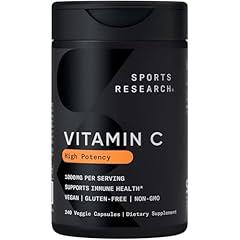
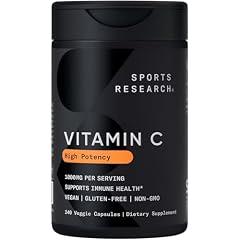
Sports Research High Potency Vitamin C 1000mg 240 Count
Overview
This is a 240-capsule adult vitamin C supplement. Each veggie capsule supplies 1,000 mg of vitamin C as ascorbic acid, with hypromellose capsule material and magnesium stearate as the listed other ingredients. The label directions say to take one capsule one to three times daily, with or without food. That range provides 1,000 to 3,000 mg daily from this product alone. Its core value is a simple, precisely portioned ascorbic acid formula rather than a blend, gummy, powder, or enhanced-delivery product. The 1,000 mg amount is far above the adult Recommended Dietary Allowance of 75 to 90 mg, although vitamin C has an established role in preventing or correcting low intake. NIH notes that most people can meet needs through a varied diet, and routine supplements of at least 200 mg do not prevent colds in the general population. The manufacturer states that the product is third-party tested, Non-GMO Project Verified, vegan, gluten free, and made in a cGMP-compliant facility, but a current public lot-specific report was not located in this review.
What works
- The formula has one active nutrient, 1,000 mg of ascorbic acid, so it avoids zinc, iron, botanicals, sweeteners, and other common stacking concerns.
- A one-capsule serving provides a fixed dose, avoiding the measuring variability of loose powders.
- The label identifies serving size, active form, other ingredients, storage directions, seal warning, and a general consultation warning.
- The immune-support and antioxidant positioning is a qualified structure-function use for an essential nutrient, rather than a claim to diagnose, treat, cure, or prevent disease.
What does not
- The labeled maximum of three capsules daily provides 3,000 mg, exceeding the adult vitamin C upper limit of 2,000 mg per day before food and other supplements are counted.
- The caution statement is broad. It does not specifically flag kidney-stone or renal-risk concerns, hereditary hemochromatosis, possible chemotherapy or radiation issues, or possible medication interactions.
- The manufacturer states third-party testing, but no current lot-specific independent certificate of analysis or recognized product certification was located for this exact product.
- There is no public finished-product disintegration, dissolution, or release report, although the immediate-release capsule format itself is straightforward.
- No package-specific recycled-content, recyclability, or other environmental documentation was located.
Who is it for
This product fits an adult who has a clearly limited fruit and vegetable intake, a clinician-identified reason to address low vitamin C intake, or a preference for a simple capsule rather than flavored gummies or powder. The fixed 1,000 mg capsule and 240-count bottle suit someone who wants a long supply and can keep total vitamin C intake in view. One capsule daily is below the adult upper limit from supplements alone, but it is still substantially above the daily requirement for most adults.
Who is it not for
It is not a routine fit for children, since one capsule exceeds the upper limit for children younger than 14. It also warrants professional guidance for people with kidney disease, a history of calcium oxalate stones, hereditary hemochromatosis, cancer treatment involving chemotherapy or radiation, or regular prescription medicines. People who already take a multivitamin or other vitamin C product should not follow the label's three-capsule maximum without totaling their intake. It is also unsuitable for anyone seeking a certified finished-product quality program or publicly available lot testing.
Integrity
Vitamin C is essential for collagen synthesis, antioxidant activity, and immune function. Ordinary ascorbic acid is a well-established supplemental form, and NIH reports that its bioavailability is equivalent to vitamin C naturally present in foods. However, the product's one to three capsule directions matter. Three capsules provide 3,000 mg daily, above the 2,000 mg adult upper limit. Higher intake can cause diarrhea, nausea, and abdominal cramps, and may be a concern for people with renal disorders or hereditary hemochromatosis. The manufacturer and retailers describe the capsule as vegan, gluten free, and Non-GMO Project Verified, and state that it is third-party tested and made in a cGMP-compliant facility. A current public certificate or recognized independent finished-product certification for this exact formula was not located, so those broader quality claims cannot substitute for lot-specific potency and contaminant results. The available product information identifies a bottle format but does not provide package-specific recycled-content, recycling instructions, or substantiated environmental claims.

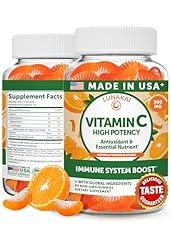
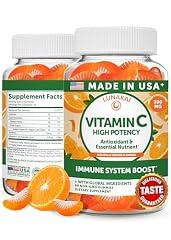
Lunakai Vitamin C Gummies - 300mg, 60 Count
Overview
Lunakai Vitamin C Gummies are orange-flavored, vegan chewable gummies in a 60-count bottle. The current manufacturer page directs adults and children to chew two gummies daily and represents that serving as 300 mg of vitamin C, giving 30 labeled daily servings. It is marketed for immune support and antioxidant support, rather than as a treatment for illness. The 300 mg serving is well above the usual recommended intake for most adults and children, but remains below the established upper limits for adults and older children. Vitamin C has established roles in immune function, collagen production, antioxidant activity, and nonheme iron absorption. It is most useful when food intake is low or a deficiency risk is present. The product page claims third-party testing, but public support for this exact current product is limited to an older batch document, not a current, independently auditable certification or lot report.
What works
- The labeled 300 mg serving can fill a vitamin C intake gap, and vitamin C has established physiological roles in immune function, collagen synthesis, antioxidant activity, and iron absorption.
- Two gummies daily is a clear, simple direction, and 60 gummies provide a labeled 30-day supply.
- The manufacturer represents the gummies as vegan, non-GMO, gluten-free, soy-free, corn-free, preservative-free, and free of gelatin.
- A public 2023 batch document for an earlier orange gummy lot reports HPLC vitamin C testing plus microbiological and heavy-metal screens.
What does not
- There is no current, product-specific USP, NSF, or ConsumerLab certification located for these vitamin C gummies.
- The available public batch document expired in June 2024 and reports 125 mg per gummy, so it cannot verify the current 300 mg per-serving product.
- The page markets the product for adults and children but does not provide age-specific dosing, despite children's vitamin C needs and upper limits varying substantially by age.
- Immune-system boost language is broad. Vitamin C supports normal immune function, but routine high-dose use is not evidence that a well-nourished person will avoid or treat illness.
- No package-specific recycled-content, recyclability, or other independently supported environmental documentation was identified.
Who is it for
This product suits a person who has difficulty meeting vitamin C needs from fruits and vegetables, wants a chewable rather than a tablet, and specifically wants a gelatin-free vegan format. The labeled two-gummy serving may be practical for an adult with a limited diet, a smoker who has higher vitamin C needs, or a household using it occasionally to address a known dietary shortfall. It is also a simple single-nutrient product, without added zinc, iron, vitamin D, herbs, or other actives that can complicate nutrient stacking.
Who is it not for
It is not well suited to families needing precise pediatric dosing, because the same two-gummy instruction is presented for adults and children without age bands. People with kidney disease, a history of kidney stones, hyperoxaluria, iron-overload disorders, or a clinician-directed supplement plan should consult a clinician before routine use. It also may not suit people who need current third-party certification, current lot-specific laboratory results, low-sugar supplementation, or clear packaging-recycling instructions. Anyone with a citrus or grapefruit sensitivity should note the brand says its pectin can be sourced from citrus and apple and cannot guarantee zero grapefruit.
Integrity
The formula is relatively simple. The current product page presents vitamin C as the only active nutrient, with a labeled 300 mg serving from two gummies. That avoids the added zinc, iron, vitamin D, botanical, and stimulant stacking issues common in broader immune blends. The brand also represents the product as vegan and free from gelatin, gluten, soy, corn, preservatives, artificial colors, and artificial flavors, but these are manufacturer statements rather than independently certified claims. A publicly available 2023 certificate for an earlier 60-count orange gummy lot reports vitamin C identity and potency testing by HPLC, along with passing microbiological and heavy-metal specifications. It names ISO 17025 accreditation for a subcontracted laboratory, but the document was for a lot that expired in June 2024 and does not establish current-batch quality. The manufacturer’s general third-party-testing claim therefore remains only partly documented for this product. No package-specific recycled-content, recycling, organic, or other environmental certification was located.

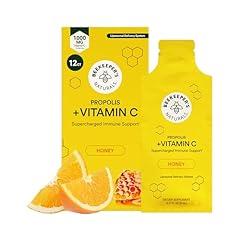
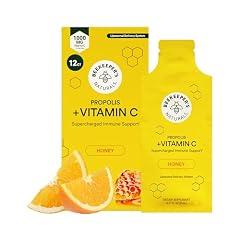
Propolis Liposomal Vitamin C by Beekeeper's Naturals
Overview
This is a 12-packet liquid supplement. Each 8 mL pouch is labeled with 1,000 mg vitamin C, supplied as ascorbic acid and sodium ascorbate, plus 100 mg bee propolis extract. It also contains glycerin, water, honey, and sunflower lecithin. The manufacturer directs users to squeeze one pouch into the mouth or mix it with a cold drink, and to avoid hot drinks or blending. A single pouch is below the adult vitamin C upper limit of 2,000 mg per day, but it is already far above the 75 to 120 mg daily requirement for most adults. The manufacturer also says up to four pouches daily may be used as tolerated, which would provide 4,000 mg vitamin C and exceed the adult upper limit. The brand states that the formula is third-party tested for pesticides and heavy metals, but no current product-specific independent report was publicly available for review.
What works
- The labeled 1,000 mg vitamin C and 100 mg propolis extract amounts are disclosed per premeasured pouch.
- Single-use 8 mL packets avoid scoop-measurement errors and are practical for travel or occasional use.
- Vitamin C has an established role in preventing and correcting inadequate intake, particularly for people with low dietary intake or low vitamin C status.
- The formula is relatively short, with no added zinc, iron, vitamin D, or stimulant ingredients that could add nutrient-stacking concerns.
What does not
- The manufacturer's allowance of up to four packets daily provides 4,000 mg vitamin C, twice the adult upper limit and more for adolescents.
- Bee propolis and honey make this unsuitable for people with bee-product allergy. Retail labeling also advises caution for allergies to poplar products or balsam of Peru.
- Claims that the product is highly bioavailable and supports muscle recovery or broad immune defense are not backed by human trials of this finished formula.
- The brand states it conducts third-party contaminant testing, but it does not publish a current lot-specific independent certificate of analysis or recognized finished-product certification.
- A June 2026 recall involving a different Beekeeper's Naturals saline nasal spray followed microbial contamination. This product was not included, but the event is relevant to manufacturing oversight.
Who is it for
This product fits an adult or older teen, age 12 and above according to the manufacturer, who wants a premeasured liquid vitamin C supplement for short-term travel or for a documented low vitamin C intake. A one-pouch serving can be used without measuring powder and avoids added minerals that may duplicate a multivitamin. It is most sensible for someone who can keep total vitamin C from food and supplements in view and who has no history of reactions to honey, propolis, or other bee products.
Who is it not for
It is not appropriate for children under 12, for anyone with an allergy to bee products, or for households that need a vegan product because the formula contains honey and bee propolis. People with hemochromatosis, kidney-stone concerns, significant gastrointestinal sensitivity, diabetes using blood glucose meters, or cancer treatment plans should discuss supplemental vitamin C with a clinician. It is also a poor fit for anyone likely to follow the four-packet maximum, because that amount exceeds the adult vitamin C upper limit.
Integrity
Vitamin C is essential, and supplementation can help correct low intake. This product supplies 1,000 mg in one pouch, though that amount greatly exceeds usual daily requirements for well-nourished adults. Higher vitamin C intakes can cause diarrhea, nausea, and abdominal cramps, and may worsen iron overload in people with hemochromatosis. The bee-derived ingredients also create a meaningful allergy consideration. The manufacturer says its products are not certified organic, despite an organic designation in the catalog record. The brand states that it third-party tests formulas for pesticides and heavy metals and describes apiary practices intended to reduce pesticide exposure and protect bee health. These are manufacturer statements, not publicly auditable product-specific test results or environmental certifications. The product uses individually wrapped liquid pouches, which are convenient but add packaging per serving. In June 2026, the brand recalled a separate saline nasal spray after microbial contamination. The vitamin C and propolis pouches were not part of that recall.

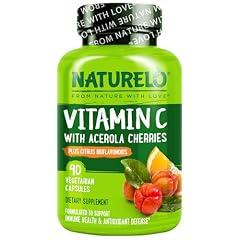
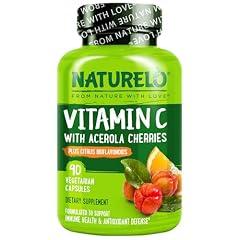
NATURELO Vitamin C with Organic Acerola Cherry
Overview
Naturelo Vitamin C is a 90-capsule adult supplement. The label directs one capsule daily with food and a full glass of water. Each capsule is manufacturer-stated to provide 500 mg vitamin C from L-ascorbate and organic acerola cherry extract, plus 45 mg citrus bioflavonoids from bitter orange. Listed inactive ingredients are organic acacia gum, hypromellose capsule, and organic rice flour. Vitamin C has a well-established role in preventing deficiency and supporting normal immune and collagen functions. The labeled 500 mg dose is well above adult requirements of 75 to 90 mg daily, but below the 2,000 mg adult upper limit. It can help cover low intake, but regular high-dose vitamin C does not prevent colds in the general population. The 90-capsule bottle is intended as roughly a three-month supply when used as directed.
What works
- A precise one-capsule serving avoids the measurement variability of a powder.
- The label identifies both active ingredients and their amounts, rather than using a proprietary blend.
- The stated 500 mg dose exceeds adult vitamin C requirements while remaining below the adult upper intake limit.
- The manufacturer states that the formula excludes soy, gluten, dairy, eggs, fish, shellfish, peanuts, tree nuts, preservatives, colors, and flavors.
What does not
- No current independent certification, lot-specific certificate of analysis, or public finished-product potency report was located for this product.
- No public, product-specific independent contaminant report covering heavy metals, microbes, pesticides, or residual solvents was located.
- The manufacturer claims that citrus bioflavonoids improve vitamin C absorption, but no human study of this finished product at its labeled dose was located. NIH notes that ascorbic acid already has bioavailability equivalent to vitamin C in foods, and studies of ascorbic acid with bioflavonoids have not consistently shown an advantage.
- The label gives general advice to consult a doctor when pregnant, nursing, or taking medication, but does not specifically flag gastrointestinal effects, iron-overload disorders, or kidney-stone risk considerations associated with higher vitamin C intake.
Who is it for
This product fits an adult who has limited fruit and vegetable intake, regularly smokes, or otherwise needs a straightforward way to increase vitamin C intake. The once-daily capsule is practical for someone who does not want flavored powders, gummies, or a multi-ingredient immune formula. It also suits people seeking a vegan capsule with a short disclosed ingredient list and avoidance of the major allergens identified on the manufacturer label. Its 90-capsule format matches a roughly three-month routine.
Who is it not for
It is not well suited to children, because the labeled 500 mg serving exceeds the upper limit for younger children. People with hereditary hemochromatosis or another iron-overload condition should seek clinical guidance because vitamin C can increase iron absorption. Those with a history of calcium oxalate kidney stones, hyperoxaluria, or significant gastrointestinal sensitivity should also discuss regular supplemental vitamin C with a clinician. Pregnant or nursing people and anyone taking prescription medication should follow the label's instruction to consult a healthcare professional first.
Integrity
The health profile is relatively simple. The disclosed actives are vitamin C and 45 mg of bitter-orange-derived citrus bioflavonoids, with a vegetarian hypromellose capsule and a short list of excipients. The 500 mg vitamin C dose is below the adult upper limit, although it is substantially above usual dietary requirements and should be counted alongside vitamin C from other supplements. The product's capsule form also avoids the repeated direct tooth exposure that can occur with acidic drink powders or chewables. Independent product verification remains the main evidence gap. The current NSF dietary-supplement directory lists several Naturelo products made at the identified facility, but not this vitamin C product. No public lot-specific independent test report was located. The label identifies organic acerola and organic acacia gum, but reviewed materials did not provide a package-specific USDA organic certificate. No package-specific recycled-content claim, material declaration, or recycling instruction was found, so the environmental benefits of the ingredients and bottle cannot be substantiated from the available documentation.

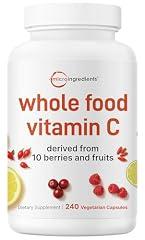
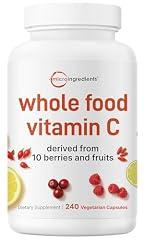
Micro Ingredients Whole Food Vitamin C Complex
Overview
This is a 240-capsule vitamin C supplement taken as three vegetarian capsules daily, yielding 80 servings. An independently listed retail label reports 240 mg of vitamin C per serving, or 267% of the Daily Value, from a 1,200 mg proprietary blend of camu camu, acerola, amla, goji, cranberry, rose hip, citrus, blueberry, and raspberry extracts. That 240 mg dose is below the adult 2,000 mg daily upper limit and can help close a low dietary intake. It is not evidence that routine use prevents or treats infections in otherwise well-nourished adults. The manufacturer states that the product is third-party tested and made in a cGMP facility, but no current product-specific independent certificate, recognized finished-product certification, or release test report was publicly located.
What works
- Provides 240 mg vitamin C per daily serving, an amount that exceeds the adult Recommended Dietary Allowance without approaching the adult upper limit.
- Uses capsules rather than a scoop-based powder, so the labeled three-capsule serving is straightforward to measure.
- The retail label identifies the full fruit and berry blend, other ingredients, directions, storage instructions, and precautionary language.
- The label states that it is vegetarian and free of gluten, soy, dairy, and tree nuts.
What does not
- The 1,200 mg fruit and berry blend is proprietary, so buyers cannot see the amount of each botanical or extract.
- Third-party testing is manufacturer-stated, not supported by a public lot-specific independent report for this finished product.
- No current USP Verified, NSF dietary supplement certification, or publicly auditable disintegration or dissolution result was located for this product.
- The whole-food positioning does not establish superior absorption or health outcomes over conventional vitamin C at the labeled dose.
Who is it for
This product suits an adult who wants a capsule-based vitamin C supplement with a moderate 240 mg daily dose rather than a gram-level product. It is most relevant for someone whose food intake is limited in vitamin C-rich produce, including people with a restricted food variety or smokers, who have higher vitamin C needs. The 80-serving bottle also suits someone comfortable taking three capsules with meals and who values a fruit-extract formula, while recognizing that the individual botanical amounts are not disclosed.
Who is it not for
It is not a good fit for children, because the label is for adults and pediatric upper limits are lower. Pregnant or nursing people, people taking medicines, and those with a medical condition should follow the label precaution and consult a clinician. People with hemochromatosis, a history of kidney stones, iron-overload concerns, or active cancer treatment should get individualized advice before adding supplemental vitamin C. It also does not suit buyers who require public independent certification, lot-specific contaminant results, or exact doses for every botanical.
Integrity
The confirmed label provides a moderate 240 mg vitamin C serving from a 10-extract fruit and berry blend. It also lists rice flour, magnesium stearate, silicon dioxide, and vegetable cellulose capsule material. The label states that the product is vegetarian and free of gluten, soy, dairy, and tree nuts. Its precaution advises adults who are pregnant, nursing, taking medication, or managing a medical condition to consult a health professional. The manufacturer states that the product is third-party lab tested and made in a cGMP facility, but public verification did not establish a current independent finished-product certificate, a recognized product certification, or a lot-specific report covering potency, heavy metals, microbes, pesticides, or residual solvents. No product-specific recycled-content, recycling instruction, organic certification, or substantiated environmental packaging claim was located. No relevant FDA recall or warning action was located in the checked public sources.

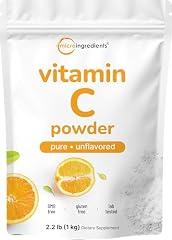
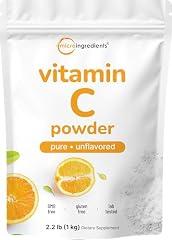
Pure Vitamin C Crystal Powder 1 KG
Overview
This is an unflavored, bulk ascorbic acid powder in a 1 kg pouch. The label reproduced by an independent retailer lists 1,000 mg vitamin C per daily serving of two scoops, about 1 g total, with 1,000 servings. It is intended to be mixed into a drink. The manufacturer describes it as water-soluble and says it contains no additives or artificial ingredients. The defining strength is its very simple formula. The independently reproduced label lists vitamin C as ascorbic acid and no other ingredients, so it avoids added minerals, sweeteners, botanicals, and nutrient-stacking concerns. The main evidence limitation is verification. The manufacturer says each batch is third-party tested, but no current lot-specific report, recognized finished-product certification, or public test result for this exact powder was located.
What works
- The independently reproduced label lists 1,000 mg vitamin C as ascorbic acid and no other ingredients.
- A labeled 1,000 mg adult serving is below the 2,000 mg adult tolerable upper intake level, before accounting for vitamin C from food or other supplements.
- The 1 kg pouch is labeled for 1,000 servings, which suits frequent users who can store powder dry.
- Current manufacturer claims are relatively restrained, focusing on daily vitamin C intake and mixing convenience rather than treating disease.
What does not
- One serving supplies more than ten times the adult daily requirement, which is usually unnecessary for people already meeting vitamin C needs through food.
- The label's broad consultation warning does not specifically flag kidney disorders, hyperoxaluria, kidney-stone susceptibility, or hereditary iron overload.
- Two scoops are described as approximately 1 g, but no public finished-product accuracy or lot-specific potency report was found.
- The manufacturer states that batches undergo third-party testing, but buyers cannot independently audit a current report for this product.
- No package-specific recycled-content, recycling instructions, or other substantiated environmental documentation was located.
Who is it for
This product fits an adult who specifically wants plain ascorbic acid, has a reason to raise vitamin C intake, and prefers a large powder format over tablets or flavored drink mixes. It is most practical for a household or regular user able to keep a 1 kg pouch cool and dry and willing to measure two scoops into a beverage. Its single-ingredient label also suits people trying to avoid added sweeteners, minerals, botanicals, or common formula extras.
Who is it not for
It is not a good fit for children, people who need a tightly controlled dose, or anyone who dislikes acidic powders. People with kidney disease, hyperoxaluria, a history of calcium oxalate stones, or hereditary hemochromatosis should seek clinician guidance before routine high-dose vitamin C. Pregnant or breastfeeding people, those taking medicines, and anyone already using a multivitamin or other vitamin C product should review total intake and the label warning with a clinician or pharmacist.
Integrity
Vitamin C is essential for collagen synthesis and antioxidant functions, and a supplement can help correct low intake. The 1,000 mg labeled serving is below the adult 2,000 mg upper limit, but it is far above the 75 mg to 90 mg adult daily requirement. High intakes can cause gastrointestinal symptoms and may be a concern for people predisposed to kidney stones or iron overload. The formula itself is straightforward, with no other ingredients listed. The manufacturer says it screens each batch through an independent laboratory and says the powder is made without GMOs, irradiation, additives, or artificial ingredients. Those are manufacturer statements, not publicly auditable finished-product results. No current recognized product certification or lot-specific certificate was located. I did not identify a public FDA recall or warning-letter record for this product in the sources reviewed. The large pouch may reduce the number of containers needed over time, but no package-specific recycling or recycled-content evidence was found.

Garden of Life Vitamin Code Vitamin C
Overview
This product is a 120-capsule vitamin C supplement. The labeled adult serving is two capsules daily, providing 500 mg vitamin C from a Saccharomyces cerevisiae culture. Each bottle contains 60 servings. The capsules can be taken with or without food or opened into water or juice. The formula also contains a 720 mg organic fruit and vegetable blend and a 60 mg probiotic and enzyme blend, including 500 million CFU total of two Lactobacillus strains. Those blend ingredients are manufacturer-labeled, but their individual quantities are not disclosed. The 500 mg vitamin C dose is below the adult tolerable upper intake level of 2,000 mg. ConsumerLab reported that this exact product was approved through its voluntary quality certification program in 2020, although a current lot-specific independent report was not publicly located.
What works
- The labeled 500 mg daily dose is below the adult vitamin C upper intake level of 2,000 mg.
- A two-capsule serving delivers a clearly stated 500 mg of vitamin C, with 60 labeled daily servings per bottle.
- ConsumerLab documented voluntary quality approval for this exact product in its 2020 vitamin C review.
- The label identifies the two probiotic strains and lists the total 500 million CFU per serving.
- The current product page states Non-GMO Project Verified and NSF Certified Gluten Free.
What does not
- The fruit, vegetable, probiotic, and enzyme blends do not disclose individual ingredient amounts, limiting assessment of enzyme and botanical exposure.
- No current lot-specific certificate of analysis, heavy-metal report, microbial report, or capsule disintegration report was publicly available.
- ConsumerLab's exact-product approval is useful but dates to 2020, so it does not verify a current production lot.
- The whole-food, raw, and cofactor framing does not come with human studies showing superior absorption or health outcomes for this finished formula.
- This product line had a 2011 voluntary recall for possible undeclared soy protein. Current labeling now says it is made without soy ingredients, while also disclosing manufacture in a facility that processes soy and other major allergens.
Who is it for
This product fits an adult who has low vitamin C intake from food, wants a fixed 500 mg capsule dose rather than a powder or gummy, and prefers capsules that can be opened into a drink. It can also suit people seeking a vegan and gluten-free labeled product who accept a multi-ingredient formula. The 120-capsule bottle supplies 60 daily servings, which is practical for a two-month routine. Its 500 mg dose may be more relevant to low intake than to people already meeting needs through produce.
Who is it not for
It is not designed for children. People with kidney disease, a history of kidney stones or hyperoxaluria, hereditary hemochromatosis, or medical treatment involving vitamin C should consult a clinician before adding it. Vitamin C can increase nonheme iron absorption and higher supplemental intakes can cause gastrointestinal upset. It is also a poor fit for someone who needs individually quantified botanicals, enzymes, or probiotic strains, or who requires current lot-specific contaminant and potency documentation. Those with serious soy or other food allergies should consider the shared-facility statement carefully.
Integrity
The current manufacturer label identifies 500 mg vitamin C per serving, a 720 mg organic fruit and vegetable blend, and a 60 mg probiotic and enzyme blend. It also states Non-GMO Project Verified, NSF Certified Gluten Free, Certified Vegan, and Star-K kosher status. ConsumerLab reported that the exact Vitamin Code Raw Vitamin C product received voluntary quality approval in 2020. That is independent evidence of past quality testing, not proof of current-lot potency, contaminants, or capsule release. A historical safety issue matters for traceability. Garden of Life voluntarily recalled Raw Vitamin C in 2011 because of possible undeclared soy protein. The present label no longer makes a no-soy-allergen claim and instead states that the product is made without soy ingredients but produced in a facility handling soy, dairy, peanuts, tree nuts, and shellfish. The fruit and vegetable blend uses organic inputs, but no package-specific recycled-content, recyclability instruction, or current public environmental certification was located.

ForestLeaf Liposomal Vitamin C Immune Booster
Overview
This is a 120-capsule adult vitamin C supplement. The labeled serving is two capsules daily with a meal, providing 1,000 mg of ascorbic acid and a 400 mg proprietary liposomal complex containing coconut oil powder and sunflower lecithin. That makes 60 labeled daily servings. The manufacturer lists cellulose capsule and common capsule-processing ingredients, and identifies coconut as an allergen. Vitamin C is an essential nutrient with established roles in collagen formation and antioxidant function. The 1,000 mg daily amount is below the 2,000 mg adult tolerable upper intake level, but it is far above usual daily requirements and does not establish that routine high-dose use prevents illness in otherwise well-nourished people. Human studies of some liposomal vitamin C formulations report higher short-term absorption than standard vitamin C, but no finished-product clinical or pharmacokinetic study was located for this product.
What works
- The label clearly states a two-capsule serving, 1,000 mg vitamin C, 60 servings, and the full inactive-ingredient list.
- The directed adult dose remains below the established 2,000 mg daily upper limit for vitamin C.
- Coconut is specifically disclosed, which is important because the formula contains coconut oil powder.
- The formula has no added zinc, iron, vitamin D, botanicals, sweeteners, or bee-derived ingredients that could create extra nutrient-stacking concerns.
What does not
- The 400 mg liposomal complex is proprietary, so the individual amounts of coconut oil powder and sunflower lecithin are not disclosed.
- No current lot-specific independent certificate of analysis, recognized finished-product certification, or public disintegration report was located.
- The manufacturer states that lots are tested for contaminants, but it does not publish product-specific laboratory results that a buyer can audit.
- Marketing says two capsules help protect against symptomatic and asymptomatic illness. That goes beyond the evidence for routine high-dose vitamin C supplementation and is not an appropriate supplement claim.
- The warning advises consultation during pregnancy, nursing, or prescription medicine use, but does not specifically flag kidney-stone susceptibility, iron-overload disorders, or gastrointestinal intolerance.
Who is it for
This product fits an adult who specifically wants a high-dose, capsule-based vitamin C supplement and can tolerate coconut. Its 60-day supply and two-capsule daily directions are straightforward for someone who prefers capsules over flavored powders, gummies, or liquids. It may be most relevant when dietary vitamin C intake is reliably low or a clinician has recommended supplementation. The ingredient list is relatively simple, with no added minerals or herbal actives, which can make it easier to avoid accidental stacking of zinc, iron, or vitamin D.
Who is it not for
It is not suited to children or teenagers, because the 1,000 mg daily serving approaches or exceeds upper limits for younger age groups. People with a coconut allergy should avoid it. Those with a history of kidney stones, hereditary hemochromatosis or other iron-overload conditions, persistent gastrointestinal sensitivity, cancer treatment, or prescription medicines should discuss high-dose vitamin C with a clinician or pharmacist before use. It is also not a good fit for buyers who require publicly accessible lot-specific potency, contaminant, and release testing before using a supplement.
Integrity
The manufacturer provides a reasonably complete ingredient and allergen disclosure. The active vitamin C amount is stated separately, while coconut oil powder and sunflower lecithin are grouped in a 400 mg proprietary complex. Coconut is declared, but the individual amounts of the two complex ingredients are not available. The manufacturer says the product is made in the United States with globally sourced ingredients and claims third-party testing, GMP-compliant manufacturing, and a UL-certified facility. Those quality statements were not matched to a public, product-specific certificate, a lot-level laboratory report, or a recognized finished-product certification listing. No product-specific FDA recall, warning letter, or safety alert was located in the checks performed. No package-specific recycled-content claim, recycling instruction, material declaration, or independently documented sustainability practice was located, so the bottle's environmental footprint cannot be meaningfully assessed from available evidence.