
10 Best Thermal Cameras of 2026
 Daniel Kenitz
Please note that we participate in affiliate marketing programs. When you purchase through links on our site, we may earn a commission. As an Amazon Associate we earn from qualifying purchases. This comes at no additional cost to you and helps support the resources required to provide valuable content.Advertising Disclosure
Top-rated Thermal Camera Comparison
1

2

4
5
6
7
8

9
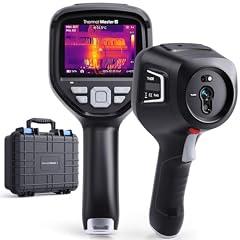
Thermal cameras: what to look for
A thermal camera shows patterns in infrared radiation and estimates the surface temperature of what it sees. In practice, it can help locate unusual hot or cold areas in insulation, HVAC systems, plumbing, vehicles, machinery, and accessible electrical equipment. It does not see through walls, glass, water, clothing, or skin, and a thermal pattern usually identifies an area for follow-up rather than proving the cause of a fault.
The most important specification is the **native infrared detector resolution**. Several products advertise 240 × 240, 320 × 240, 512 × 384, or 640 × 480 images while using smaller detectors and software enhancement. Interpolation, AI processing, TISR, super resolution, visible-light fusion, and a larger screen can make an image look smoother without adding equivalent thermal detail. Look for separate figures for native sensor pixels, display output, visible-camera resolution, field of view, minimum focus distance, thermal sensitivity, frame rate, and whether focus is fixed or manual. A broad field of view helps scan nearby areas; manual focus and a shorter minimum focus distance matter more for small or close targets.
Temperature accuracy also needs context. A claim such as ±2°C or ±2% is not, by itself, evidence that readings can be trusted. A stronger record would include test conditions, repeatability, emissivity settings, reflected-temperature compensation, distance, and humidity assumptions. The most useful independent evidence in this category is an ISO/IEC 17025-accredited laboratory report using IEC TS 63144-1:2020 methods, supported where relevant by ASTM E1862 for reflected-temperature compensation, ASTM E1213, E1311, or E1543 for thermal detail and sensitivity, and a NIST-traceable blackbody calibration certificate tied to the exact model or serial number. A calibration certificate mentioned in a manual is weaker when its issuer, scope, and serial-number linkage cannot be checked.
Safety documentation should match the way the camera is used. For products with lithium batteries, look for a manufacturer-supplied UN 38.3 transport-test summary, a credible charger or product listing in UL Product iQ or Intertek’s ETL directory, and no unresolved CPSC recall. Wi-Fi or Bluetooth claims should be traceable through the FCC Equipment Authorization System. Laser pointers need appropriate classification and eye-safety information. IP ratings, drop resistance, and hazardous-location claims should be supported by relevant test reports or an OSHA-recognized NRTL listing; an IP54 or IP65 claim does not make a product intrinsically safe or suitable near explosive atmospheres or exposed energized equipment.
For long-term value, check warranty coverage, firmware updates, repair and replacement parts, recalibration, battery replacement, and end-of-life instructions. Built-in batteries can limit repair. A product that avoids a separate lithium battery reduces one charging-related burden, but its electronics and cable still need responsible disposal.
Across the supplied reviews, recurring limits are clear: none was supported by model-specific accredited temperature testing, and many lacked independently verifiable battery, charger, electrical, laser, ingress, drop, or hazardous-location evidence. Enhanced resolution should not be treated as native detail. These cameras should not be used for fever screening, diagnosis, disease detection, or other medical decisions. They also should not be the sole basis for electrical clearance, energized work, fire-safety decisions, formal compliance measurements, or use in explosive atmospheres. Where a product’s specifications conflict, or software and file transfer have reported problems, verify the exact workflow before relying on it for inspection records.
Integrity
Thermal cameras combine optical measurement, electronics, software, and often a rechargeable lithium battery. The topics below distinguish a useful inspection aid from a product whose claims or limits could create false confidence.
HHealth & Safety
Safe use and no medical overreach
This measures whether the product clearly stays within non-medical inspection use and avoids unsupported fever, diagnostic, or disease claims. That matters because thermal cameras read surfaces and can mislead when aimed at people. Higher-scoring products in the supplied set clearly state inspection limits; lower-scoring examples include body-temperature or pandemic-related references without FDA authorization or clinical validation.
Battery and charging safety
This evaluates battery warnings, charging instructions, transport testing, charger certification, and recall status. A built-in lithium battery adds fire and disposal concerns even when the camera is used only for inspection. The supplied scores were strongest for a host-powered plug-in camera and a phone-powered dongle with no separate battery; lower results generally reflected missing UN 38.3 summaries, UL or ETL evidence, or charger certification.
Electrical, wireless, laser, and jobsite safety
This measures whether radio, electrical, laser, enclosure, and hazardous-location claims are properly supported or plainly limited. Thermal cameras are often used near equipment where a misleading safety implication matters. The strongest supplied result had model-linked FCC evidence for Wi-Fi; lower-scoring products lacked checkable radio, laser, NRTL, or hazardous-location records. No product should be treated as safe for explosive atmospheres or energized work without the applicable evidence.
Operational reliability and safe limits
This covers documented operating and storage temperatures, runtime, alarms, firmware, ingress and drop claims, image handling, and application limits. A camera that fails, loses files, or creates false confidence can undermine an inspection. Higher-scoring products documented features such as image capture, alarms, updates, storage, or field-use limits; lower-scoring products had software crashes, conflicting runtime or enclosure claims, or no independent test support.
EEvidence
Trustworthy temperature readings
This measures whether accuracy, repeatability, emissivity, reflected-temperature compensation, range, and calibration are demonstrated under defined conditions. It matters because a displayed temperature can change with surface material, reflections, distance, and humidity. Higher-scoring products documented useful adjustment controls and had comparatively stronger measurement evidence; lower-scoring products relied mainly on ±2°C or percentage claims without an accredited report or traceable certificate.
Ability to find real faults
This evaluates native detector size, optics, focus, field of view, sensitivity, frame rate, noise, and demonstrated target detail. A smoother enhanced image is not the same as more native spatial information. The stronger supplied products disclosed native resolution and, in one case, independently reported useful close-up manual focus. Lower results reflected small detectors, fixed focus, undisclosed native specifications, or no independent detail testing.
Honest specs, not inflated resolution
This measures whether native sensor capability is separated from display pixels, visible-light fusion, AI enhancement, interpolation, and super resolution. That distinction is central to comparing thermal cameras fairly. The highest supplied results went to products that plainly labeled enhanced output; lower results reflected marketplace headlines that presented processed figures as imaging resolution or conflicting lens and temperature claims.
Proof beyond the seller’s word
This measures model-specific, independently checkable certifications, accredited reports, calibration records, and responsible-party identity. For this product type, useful checks include FCC records, UL Product iQ, Intertek ETL, OSHA-recognized NRTL listings, ANAB or A2LA laboratory scopes, and CPSC recalls. The strongest supplied result had traceable FCC authorization; most products scored lower because temperature, battery, enclosure, laser, and electrical claims remained manufacturer-only.
EEcology
Built to stay useful
This measures whether firmware, warranty, repair, battery replacement, parts, storage, and recalibration can keep the product in service. Longer use reduces premature electronic waste. Products with published firmware, warranty, or support scored better in the supplied set, while lower results reflected sealed batteries, excluded marketplace warranties, and no public repair, replacement, or recalibration path.
Responsible battery and e-waste end of life
This evaluates battery-removal guidance, take-back, recycling instructions, and credible material claims. Thermal cameras with built-in lithium batteries should not be placed in household trash because damaged batteries can create waste-stream fires. The supplied products generally scored modestly because clear U.S. take-back routes and removable-battery procedures were uncommon; host-powered models avoided a separate battery but still lacked detailed electronics-recycling support.
Full reviews

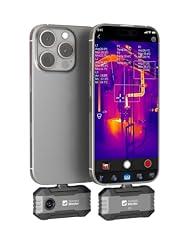
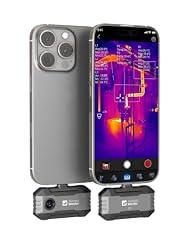
Thermal Master P1 Thermal Camera
Overview
The Thermal Master P1 is a compact USB-C thermal-camera attachment used with a compatible phone, tablet, or computer and the Thermal Master app. It is intended to make heat patterns visible for tasks such as home, HVAC, automotive, electrical, and equipment inspection. The manufacturer manual documents 25 Hz imaging, a claimed minus 4 F to 1112 F measurement range, 12 palettes, saved images or video, and point, line, and area analysis. The most important qualification is resolution. The current product listing presents 320 by 240, while the manufacturer-hosted P-Series manual identifies the P1 detector as 160 by 120 and labels 320 by 240 as X3IR enhanced output. The manual also states its measurement figures were obtained in laboratory conditions. It provides emissivity, distance, and environmental-temperature adjustments, but no model-specific accredited calibration report or serial-number calibration certificate was located.
What works
- Manufacturer documentation identifies a 25 Hz frame rate, which supports live scanning rather than slow still-image checks.
- The app provides point, line, and area analysis plus emissivity, distance, and environmental-temperature corrections, manufacturer-stated.
- The documented operating range is 5 F to 131 F, with storage down to minus 40 F, manufacturer-stated.
- It is a passive thermal imager, not a medical or fever-screening device, and the manual limits observations to surface temperatures.
What does not
- The advertised 320 by 240 figure is enhanced output, while the manufacturer manual identifies a 160 by 120 native detector. This is a material clarity problem for buyers assessing real spatial detail.
- No model-specific ISO 17025 test report, traceable calibration certificate, or validated repeatability data was located for the stated accuracy.
- No independently checkable UL, ETL, or other NRTL electrical-safety listing was located for this product.
- No IP rating, drop-test evidence, hazardous-location approval, battery-removal procedure, or U.S. take-back program was located.
Who is it for
This product suits a hands-on homeowner, technician, or DIY user who already has a compatible USB-C mobile device and needs a compact tool for finding broad heat anomalies. Examples include tracing a draft, checking a warm electrical connection from a safe working position, observing radiator or pipe patterns, or documenting an intermittent automotive hot spot. It is most appropriate when the thermal image is a screening aid, not the sole basis for a repair decision, and when the user can adjust emissivity and account for reflections and distance.
Who is it not for
It is not for fever checks, medical screening, skin-temperature diagnosis, or any disease-detection purpose. The manual says it detects surface infrared radiation and cannot see through skin, clothing, ordinary glass, or water. It is also not for work in explosive atmospheres, near energized conductors where electrical safe-work practices are required, or for safety-critical acceptance testing. Users who need documented calibration, native-resolution certainty, ingress protection, drop certification, or a traceable repair and recalibration path need those records before relying on a camera for professional decisions.
Integrity
The P1 is a passive imager, so it collects thermal radiation rather than emitting laser light or hazardous imaging radiation. The manufacturer manual explicitly says it measures surface temperatures and cannot observe beneath skin or clothing. That limitation is important because no FDA medical authorization or clinical-use labeling was found, and the product should not be treated as a thermometer for health screening. The product connects by USB-C and is described in available instructions as drawing power from its host device rather than containing a supplied battery. No product-specific CPSC recall or safety warning was located in the searched U.S. recall sources. However, independently checkable NRTL electrical certification, accredited performance testing, a battery-removal procedure, recycling instructions, and a U.S. take-back program were not located. The manufacturer manual identifies after-sales contact and says self-disassembly can void warranty coverage, but it does not document spare parts or recalibration service.

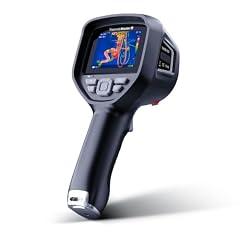
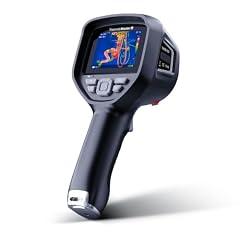
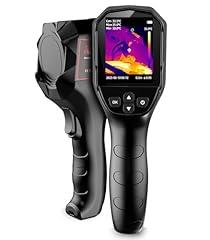
Thermal Master Thor 002 Thermal Camera
Overview
The Thermal Master Thor 002 is a handheld thermal inspection camera for finding heat patterns in buildings, HVAC equipment, vehicles, and electrical equipment. It combines a fixed-focus thermal camera with a 2 MP visible camera, a 3.5-inch screen, onboard storage, MicroSD expansion, image capture, video recording, and USB-C charging. The manual documents adjustable emissivity, ambient temperature, and distance settings, which are necessary controls for meaningful non-contact temperature work. The manufacturer clearly identifies the native thermal detector as 256 × 192 pixels. Its advertised 512 × 384 output is X³ super-resolution, not native detector resolution. Thermal Master states a 40° × 30° field of view, less than 40 mK sensitivity, 25 Hz thermal refresh, 30 cm minimum focus, and accuracy of ±2°C or ±2% of reading. A calibration certificate is listed among the package contents, but no model-specific accredited laboratory report or serial-number calibration record was independently available for review.
What works
- The native 256 × 192 detector and the enhanced 512 × 384 output are separated clearly in the manufacturer’s product information.
- The manual provides emissivity, ambient-temperature, and distance adjustments, plus spot, maximum, minimum, and temperature-difference tools.
- The documented 40° × 30° view and 30 cm minimum focus suit broad building and equipment surveys more than close electronic-component work.
- The product is documented with a 5,000 mAh rechargeable lithium battery, USB-C charging, MicroSD support up to 128 GB, and firmware upgrades through an SD card.
- A two-year limited warranty and 30-day return policy are stated by the manufacturer.
What does not
- The stated accuracy, sensitivity, IP54 rating, and 2 m drop resistance are manufacturer claims. No publicly available accredited test report was found to validate them for this product.
- A calibration certificate in the box is useful, but it is not the same as a publicly verifiable, serial-number NIST-traceable certificate or a published recalibration service.
- The built-in 21700 lithium battery is not described as user-replaceable. No product-specific UN 38.3 test summary, charger safety listing, or U.S. recycling route was located.
- The camera has wireless capability and a laser pointer, but accessible documentation does not provide an FCC ID, FCC compliance record, laser class, or hazardous-location approval.
- Fixed focus and a 30 cm minimum focus limit use on very small or tightly packed targets, including detailed circuit-board diagnosis.
Who is it for
This product suits a homeowner, maintenance technician, or HVAC and building inspector who needs to locate drafts, insulation gaps, moisture-related temperature patterns, heating imbalances, and broad equipment hot spots. Its wide field of view, visible-light context modes, measurement controls, removable storage, and image or video documentation fit routine walk-through inspections. It is most appropriate when thermal patterns are used to guide follow-up testing, rather than as the sole basis for declaring an electrical, moisture, or mechanical fault.
Who is it not for
It is not suitable for fever screening, medical diagnosis, or disease detection, because it is marketed as an industrial and home inspection camera without clinical validation or medical authorization. It is also not the right tool for explosive atmospheres, or for work where a hazardous-location approval is required. Buyers needing traceable temperature measurements for compliance, insurance, laboratory work, or critical electrical decisions should require a current serial-number calibration record and independent performance evidence. Close-up PCB work may require a camera with a shorter focusing distance.
Integrity
The product is not presented as a medical device, and the accessible materials focus on inspection uses rather than fever or diagnostic claims. Its manual identifies a laser pointer and warns that strong light or laser radiation can affect accuracy or damage the detector. However, the accessible documents do not state the laser class, show an FCC authorization for the wireless function, or provide a hazardous-location certification. Treat thermal findings near energized equipment as screening information, and follow electrical safety procedures. The camera uses a built-in rechargeable 21700 lithium battery rated at 5,000 mAh. The manual gives charging instructions and specifies a 5 V, 1 A or 2 A adapter, but publicly checkable UN 38.3 transport documentation and charger safety certification were not available. The manual includes EU battery and e-waste disposal language, plus directions to use designated collection points. It does not provide a U.S.-specific take-back program or battery-removal instructions. SD-card firmware updates and the stated two-year limited warranty may extend useful life, although repair parts and recalibration services are not clearly published.
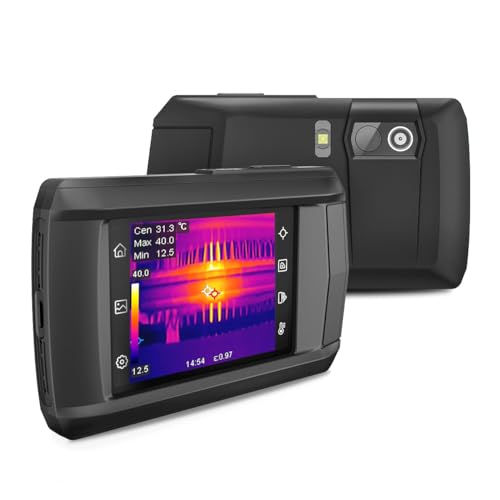
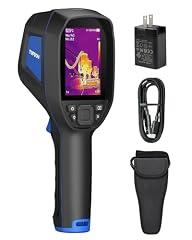
HP96 Thermal Imaging Camera
Overview
This handheld thermal inspection camera combines a 3.5-inch touchscreen, a 96 x 96 native infrared detector, and a 640 x 480 visible-light camera. It is intended for locating thermal patterns during building, HVAC, plumbing, and equipment checks. The manufacturer states a 50-degree field of view, 25 Hz refresh rate, less than 50 mK thermal sensitivity, and a -4°F to 662°F measurement range. Its most important specification is unusually clear for this class. The stated 240 x 240 output is live super-resolution processing, not native detector resolution. The manual also provides controls for emissivity, target distance, reflected temperature, and humidity, which are necessary to reduce avoidable measurement error. No model-specific accredited calibration certificate or independent accuracy report was located, so the stated ±2% accuracy remains manufacturer-stated. ([manuals.plus](https://manuals.plus/asin/B0CXNYMG1M))
What works
- The native 96 x 96 detector is plainly separated from the manufacturer-stated 240 x 240 super-resolution output.
- The manual supports adjustment of emissivity, distance, reflected temperature, and humidity, rather than presenting thermal readings as automatic truth.
- Manufacturer-stated IP54 protection, a 2-meter drop test, and a defined 14°F to 122°F operating range provide useful operating limits.
- The manual identifies a 3.85 V, 2100 mAh built-in lithium battery and gives specific charging, storage, overheating, and damage precautions.
What does not
- No model-specific ISO/IEC 17025 test report, NIST-traceable calibration certificate, or repeatability evidence was located for the temperature accuracy claim.
- The stated IP54 rating and 2-meter drop result are manufacturer claims, with no accredited test report located.
- The manual says the battery is UL 2054 certified, but a product-specific listing, charger certification, and UN 38.3 transport-test summary were not located in public registers.
- No public repair price list, spare-parts catalog, recalibration service, take-back program, or detailed end-of-life instructions were found. The built-in battery is not user-removable.
Who is it for
This product suits homeowners, maintenance staff, and tradespeople who need a compact tool for qualitative checks, such as tracing insulation gaps, looking for moisture-related temperature patterns, finding abnormal heat around accessible equipment, or documenting a repair. It is most appropriate when the user understands that surface condition, distance, reflections, and environmental conditions affect readings, and will use the available emissivity and reflected-temperature settings. The built-in storage, visible-light overlay, alarms, and stated four-hour runtime support routine walkthrough inspections and report capture.
Who is it not for
It is not for fever screening, disease detection, or any medical decision. The product is marketed for inspection rather than clinical use, and no FDA authorization or validated clinical-use labeling was located. FDA warns that improperly used thermal systems can yield inaccurate body-temperature readings and are not diagnostic tools. It is also unsuitable where a traceable calibration certificate, independently verified accuracy, intrinsic-safety approval, or hazardous-location certification is required. Do not rely on it alone to declare electrical equipment safe, diagnose a fault, or clear an area for energized or explosive-atmosphere work.
Integrity
The manual includes meaningful lithium-battery precautions. It specifies a built-in 3.85 V, 2100 mAh battery, warns against incorrect replacement, heat, crushing, fire, and child access, and directs users to seek manufacturer repair because the battery cannot be dismantled. It also states that the battery is UL 2054 certified. That statement could not be independently matched to a public product listing, and no public UN 38.3 summary or charger certification was found. The product makes no medical or fever-screening claim in the reviewed materials, but it also lacks explicit non-medical labeling. Thermal imagery should not be used to diagnose illness. For disposal, the manual only says to follow instructions and gives no take-back route. EPA says devices with non-removable lithium-ion batteries should go to a certified electronics recycler, retailer take-back program, or household hazardous-waste collection, not household trash or curbside recycling.

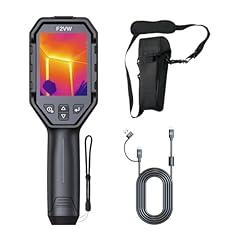
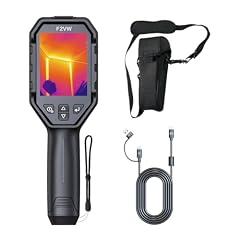
HSFTOOLS F2VW Thermal Imaging Camera
Overview
This is a handheld thermal inspection camera with a 3.2-inch screen, a fixed-focus infrared camera, a 2 MP visible-light camera, 16 GB of internal storage, USB-C charging, Wi-Fi image transfer, and a carrying case. It is intended for finding temperature patterns during building, HVAC, electrical, automotive, and similar equipment inspections, rather than for medical screening or diagnosis. The manufacturer specification sheet clearly identifies the native infrared detector as 256 x 192 pixels. Its 640 x 480 output is described separately as super-resolution processing for live view and saved images, rather than native sensor resolution. Manufacturer-stated measurement specifications are a -4 F to 1022 F range, accuracy of the greater of plus or minus 3.6 F or 2 percent under stated conditions, below 40 mK sensitivity, a 25 Hz frame rate, and 3.3 mrad spatial resolution. No model-specific accredited accuracy report or calibration certificate was located.
What works
- The manufacturer separates the 256 x 192 native infrared detector from 640 x 480 super-resolution output, reducing a common source of resolution confusion.
- A 2 MP visible camera and thermal, visual, fusion, and picture-in-picture modes can help document where a thermal finding sits in the scene, manufacturer-stated.
- The specification sheet supports practical inspection controls, including emissivity adjustment, distance entry, center, hot, cold, and three user-defined spots, plus radiometric JPEG capture.
- Published operating limits include IP54 protection, a 2 m drop-test claim, 14 F to 122 F operation, and up to six hours of runtime, all manufacturer-stated.
What does not
- The stated temperature accuracy and sensitivity have defined conditions, but no model-specific ISO/IEC 17025 laboratory report or serial-numbered calibration certificate was located.
- No UL, ETL, UN 38.3 battery-test summary, or charger safety certification was located for the rechargeable lithium-ion battery and USB-C charging system.
- The camera has 2.4 GHz Wi-Fi, but the available product materials do not provide an FCC ID or a U.S. FCC compliance declaration.
- IP54 and 2 m drop resistance are manufacturer claims, not independently documented test results located during verification.
- No published battery-removal instructions, recycling program, spare-parts catalog, or recalibration service was located.
Who is it for
This product fits a property-maintenance worker, HVAC technician, electrician, automotive technician, or experienced homeowner who needs a standalone camera to identify possible hot, cold, or moisture-related patterns and then investigate the cause with conventional tools. The visible-light camera and radiometric image files are useful where visual context matters in records. It is most suitable for preliminary troubleshooting within the published temperature range, with emissivity and distance settings adjusted for the target material. Users should treat indicated temperatures as inspection inputs, not final measurements without verification.
Who is it not for
It is not for fever checks, medical triage, diagnosis, or disease detection. It is also not appropriate as the sole instrument for safety-critical acceptance testing, certified electrical reporting, or calibration-controlled industrial quality work, because independent model-specific accuracy and calibration evidence was not located. Do not rely on it near explosive atmospheres or assume it is certified for hazardous locations. Buyers needing documented U.S. wireless, electrical, battery, ingress, or charging certification should select equipment with traceable model-specific records. Users who need replaceable batteries, published repair parts, or formal recalibration support also need more documentation.
Integrity
The available manufacturer materials position this as an inspection tool for buildings, HVAC, automotive work, and electrical maintenance. No medical, fever-screening, diagnostic, laser, or hazardous-location claim was found in the product material reviewed. The stated accuracy applies only within defined ambient and target-temperature conditions, so readings should not be used to make health decisions or to establish that electrical equipment is safe to touch. The product contains a rechargeable lithium-ion battery and charges at USB-C 5 V and 2 A, according to the manufacturer specification sheet. No model-specific UN 38.3 transport summary, UL or ETL listing, FCC record, battery-removal procedure, take-back program, or e-waste guidance was located. A search of the U.S. CPSC recall resources did not identify a recall for this product at the time checked. The manufacturer states that firmware updates and technical support are available, which may extend useful life, but published repair and recalibration pathways remain unclear.

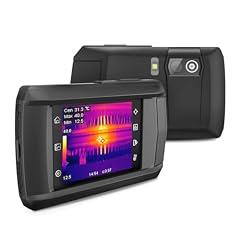
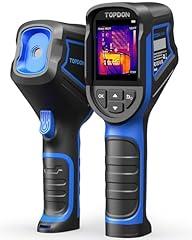
TOPDON TC004 Thermal Imaging Camera
Overview
This is a handheld long-wave infrared camera for finding surface-temperature patterns during building, HVAC, mechanical, electrical, and maintenance inspections. It is not a camera that sees through walls, glass, or water. The manufacturer’s older manual specifically limits it to surface-temperature measurement and explains that distance, emissivity, reflected energy, and atmospheric conditions affect readings. TOPDON currently identifies a 256 by 192 native infrared sensor, with TISR processing to 512 by 384, a 3.5-inch display, 64GB internal storage, Wi-Fi, USB transfer, and PC analysis. Those are manufacturer-stated specifications, not independently verified test results. The published documentation is not fully aligned across revisions. An official older manual lists a 2.8-inch display, 16GB storage, and a lower maximum measurement range, while the current product page lists newer specifications under the same product name.
What works
- The current manufacturer page clearly separates the 256 by 192 native infrared resolution from 512 by 384 TISR-enhanced output.
- Manufacturer-stated under 40 mK thermal sensitivity, 25 Hz refresh rate, 56 by 42 degree field of view, and center, hot, and cold spot modes are useful inspection-oriented specifications.
- The manufacturer documents 64GB internal storage, image and video capture, USB transfer, Wi-Fi connectivity, and PC analysis tools for inspection records.
- The current product page states IP54 protection, 2-meter drop resistance, a 5,000 mAh battery, and a one-year warranty.
What does not
- No model-specific ISO 17025 laboratory report, serial-number calibration certificate, or traceable accuracy test was found for the stated plus or minus 2 degrees C or 2 percent accuracy claim.
- Official TOPDON materials conflict on screen size, storage, maximum temperature range, charging time, and runtime. This may reflect a revision, but buyers need confirmation of the exact unit shipped.
- TOPDON lists UN38.3, FCC, CE, RoHS, and other conformity claims, but no model-specific UN38.3 test summary, NRTL listing, FCC filing, or independent certification record was located.
- A red laser pointer is advertised on the current product page, but no laser class, laser-output label, or FDA laser-product conformity evidence was found in the accessible documentation.
- The United States product page carries a California cancer and reproductive-harm warning, without naming the chemical or giving product-specific exposure information.
Who is it for
It suits building, HVAC, maintenance, automotive, and electrical inspection users who need a handheld tool to locate relative surface heat patterns, then save images or videos for follow-up. It is particularly appropriate for users who understand emissivity, reflected temperature, distance, and the need to confirm a thermal finding with contact measurement or other inspection methods. The broad stated field of view, native 256 by 192 sensor, onboard storage, and computer analysis support routine walk-through documentation rather than laboratory-grade temperature metrology.
Who is it not for
It is not for fever screening, diagnosis, or any medical decision. The product is marketed for industrial and property inspection, and no FDA medical authorization or clinical-use evidence was found. It is also unsuitable for hazardous locations, use as proof that an energized circuit is safe, or eye-directed laser use, because no hazardous-location certification or laser-class documentation was located. Users who require traceable calibration, independently verified accuracy, or a consistent documented specification set should use a product with model-specific accredited test and calibration records.
Integrity
The accessible materials frame this product as a non-medical inspection camera. Its older manual says it measures surface temperature only, cannot see through walls, water, or glass, and warns that distance, emissivity, reflected energy, and atmospheric conditions can materially affect readings. These are useful limits, but the product should not be used to screen people for illness or make health decisions. TOPDON lists UN38.3, FCC, CE, RoHS, and other conformity claims on its United States product page, but model-specific certificates or test summaries were not available to verify. The same page includes a California cancer and reproductive-harm warning without identifying the chemical or exposure route. The battery is built in, and no battery-removal, take-back, recycling, spare-parts, or recalibration program was located. End-of-life handling should therefore follow local lithium-battery and electronics-recycling rules rather than household trash.

Flagfront Thermal Imaging Camera 240x240
Overview
This is a pistol-grip handheld thermal imager for locating temperature patterns during building, electrical, mechanical, and general inspection work. The identified YXI96 platform uses a fixed-focus 96 by 96 VOx infrared detector, while its 240 by 240 figure is TISR image enhancement rather than native detector resolution. That distinction is documented in the product manual and is important when judging fine target detail. The manufacturer states a 50 by 50 degree field of view, 25 Hz refresh rate, -20 C to 550 C measurement range, and accuracy of plus or minus 2 C or 2 percent of reading, whichever is greater. It also provides adjustable emissivity, distance, and ambient-temperature inputs. These are useful inspection controls, but no model-specific accredited calibration report or serial-number calibration certificate was found.
What works
- The manual identifies native 96 by 96 detector resolution separately from 240 by 240 TISR enhancement.
- Manufacturer documentation provides emissivity, distance, and ambient-temperature settings, which are needed to improve temperature estimates on different surfaces.
- The stated 50 by 50 degree field of view is suited to scanning walls, panels, and machinery from short working distances.
- The manufacturer states IP54 protection, a 1.5 m drop rating, and about nine hours of operating time.
What does not
- No model-specific ISO/IEC 17025 test report, blackbody calibration certificate, or repeatability data was located for the stated accuracy.
- The 240 by 240 TISR headline can be mistaken for native sensor resolution unless the buyer checks the manual.
- CE, FCC, and RoHS are listed in manufacturer material, but no model-specific listing or test documentation was found in the relevant public certification registers.
- The built-in lithium battery is non-removable, and no public UN 38.3 test summary, charger safety listing, or take-back instruction was located.
Who is it for
This product suits a cost-conscious homeowner, maintenance worker, or technician who needs to scan relatively large nearby surfaces for unusual heat or cold patterns. Examples include finding insulation gaps, checking radiator coverage, looking for warm electrical connections from an appropriate safe distance, or comparing machine components. It is most appropriate when readings are treated as screening information, then confirmed with contact measurement or a higher-documentation instrument where an exact temperature matters. Users should be comfortable setting emissivity and recognizing reflective-surface errors.
Who is it not for
It is not intended for fever screening, diagnosis, disease detection, or any clinical decision. It also does not provide evidence for use in explosive atmospheres, around energized equipment at unsafe approach distances, or as a substitute for electrical safety procedures. Buyers who need traceable measurement results for compliance, insurance, predictive-maintenance reporting, or disputed inspections should use a product supported by a serial-number calibration certificate and accredited performance testing. It is also unsuitable for work requiring fine detail at longer distances, since the native detector is 96 by 96 pixels.
Integrity
The available documentation presents this as an industrial temperature-measurement tool, not a medical device, and no fever-screening or diagnostic claim was found. The manual warns users not to aim it at intense thermal sources including the sun, lasers, and spot welders. It also identifies a non-removable lithium battery, so damage, swelling, smoke, or burnt odor should be treated as a reason to stop use and seek manufacturer guidance. No product-specific recall, public battery transport-test summary, third-party charger listing, recycling program, or battery-removal procedure was found. The manufacturer documentation lists a one-year warranty, but no public recalibration or replacement-parts policy was identified. At end of life, the full product should go to an electronics recycler or household hazardous-waste program that accepts lithium-ion devices, not household trash or curbside recycling.

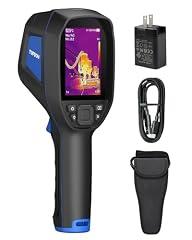
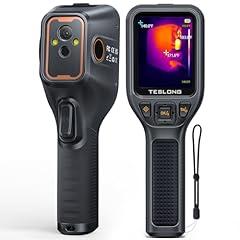
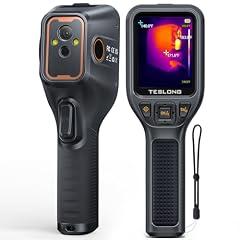
Teslong TTM120S Thermal Imaging Camera
Overview
The Teslong TTM120S is a handheld thermal inspection camera for finding surface temperature differences in home, vehicle, and equipment checks. It has a 3.2-inch display, 8 GB internal storage, USB-C charging and file transfer, two LED work lights, and a built-in rechargeable 2600 mAh lithium battery, all manufacturer-stated. Its native infrared detector is 120 by 90 pixels, not 240 by 180 pixels. The higher figure in the marketplace title is labeled super resolution, while Teslong's own specifications identify the native sensor separately. Teslong states a 25 Hz refresh rate, less than 60 mK thermal sensitivity, a -4 F to 752 F range, and accuracy of plus or minus 2 C or 2 percent of reading. No model-specific accredited accuracy or calibration report was located.
What works
- The manufacturer documents the native 120 by 90 thermal sensor rather than presenting the enhanced output as native resolution.
- Manufacturer documentation includes adjustable emissivity, temperature compensation, center, hot, and cold measurement markers.
- Photos and videos can be stored in 8 GB internal memory and transferred by USB-C, according to the manual.
- The safety documentation gives practical charging, battery, hot-environment, and laser-use warnings.
What does not
- No model-specific ISO 17025 test report, NIST-traceable calibration certificate, or repeatability data was located for the stated accuracy.
- The product page says IPX2 for this model, while the shared manual and safety manual describe IP54 protection. That conflict makes the water and dust limit unclear.
- No publicly verifiable UN 38.3 battery test summary, charger safety listing, or model-specific NRTL certification was located.
- The manufacturer markets thermal use for measuring people during a pandemic, but it does not provide medical-use labeling or an FDA authorization for fever screening or diagnosis.
Who is it for
This product suits a homeowner, vehicle hobbyist, or maintenance worker who needs a compact camera to find broad temperature contrasts, such as insulation gaps, wet-looking areas that differ from surrounding surfaces, radiator patterns, or unusually warm components. It is most appropriate when the image is used as an initial inspection clue and the suspected issue can be confirmed with a contact thermometer, meter, pressure test, or physical inspection. Built-in photo and video capture can help document a repeatable inspection route.
Who is it not for
It is not suited to fever screening, clinical assessment, breast screening, or any disease decision. FDA materials warn that thermal imaging is not a diagnostic tool, and this product has no identified medical authorization. It is also a poor fit for inspections that require calibrated, traceable temperature measurements, dependable small-target detail at distance, hazardous-location approval, or a clearly verified water and dust rating. Do not rely on it for personal navigation, emergency escape decisions, or work directly on energized equipment.
Integrity
The product uses a sealed rechargeable lithium battery. Teslong's safety material tells users to use the recommended charger, keep the device dry while charging, stop use for swelling, excessive heat, odor, or smoke, and avoid disassembly. The manual also warns that cold conditions can reduce the maximum detectable temperature and make readings or colorization inaccurate until the camera warms up. Teslong gives a 12-month limited warranty and says its service team should handle repairs, but the battery is not user-removable and no recalibration service or battery take-back program was located. Its safety manual tells users not to put the camera in ordinary trash or recycling bins and to use e-waste collection. That matches EPA guidance for devices with embedded lithium-ion batteries. The product page carries a California cancer and reproductive-harm warning, but does not identify the substance or exposure pathway on the page.

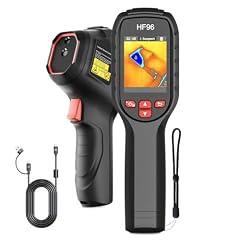
HSFTOOLS HF96 Thermal Imaging Camera
Overview
This handheld thermal camera is intended for non-medical maintenance, building, HVAC, and troubleshooting inspections. It shows a thermal image, reports center, hottest, and coldest points, and uses a USB-C connection for charging, image export, and screen casting. Its built-in rechargeable lithium-ion battery is not designed for user removal. The manufacturer’s datasheet clearly identifies a 96 by 96 pixel native infrared detector, while 240 by 240 is software-generated super resolution. It also states a 50 degree field of view, 25 Hz imaging, 0.1 m minimum focus distance, IP54 protection, and a maximum stated accuracy of ±2 C or ±2 percent under defined conditions. No model-specific accredited calibration report, NIST-traceable certificate, or independent performance test was located.
What works
- The native 96 by 96 detector and 240 by 240 enhanced output are separately disclosed in the manufacturer datasheet.
- Manufacturer-stated 50 degree field of view and 0.1 m minimum focus distance suit broad scans and close checks.
- The manual provides emissivity and distance adjustment, which are necessary controls for more credible surface-temperature estimates.
- Published firmware files for this product support ongoing software maintenance.
- The manual gives specific laser precautions and identifies a 650 nm, under 1 mW laser specification.
What does not
- The headline 240 by 240 figure is enhanced output, not the camera’s native detector resolution.
- No model-specific ISO/IEC 17025 test report or traceable calibration certificate was located for the stated temperature accuracy, IP54 rating, or drop claim.
- The catalog listing claims 11 hours of runtime, while the manufacturer datasheet and product page state approximately 8 hours.
- The AI insulation and water-leak function is described by the manufacturer as beta and subject to missed or false alarms.
- No independently checkable UL, ETL, UN 38.3 battery summary, or product-specific laser certification record was located.
Who is it for
This product fits a homeowner, maintenance worker, or HVAC technician who needs an entry-level handheld tool to screen broad surfaces for unusual hot or cold patterns. It is particularly suited to preliminary checks of insulation gaps, air leaks, heating components, and non-contact surface-temperature differences, where the user can verify any finding with follow-up inspection or a contact instrument. The 50 degree manufacturer-stated field of view favors room-scale scanning, while the close focus specification can help with nearby components.
Who is it not for
It is not for fever screening, medical diagnosis, or any disease-detection task. It is also not appropriate as the only basis for declaring an electrical installation safe, diagnosing a water leak, or accepting a critical repair. The manual and product materials do not establish hazardous-location approval, live electrical work protection, or independently verified metrology. Buyers needing traceable readings, documented calibration, certified battery charging equipment, or intrinsically safe use should select a product supported by those records.
Integrity
The product is marketed for maintenance and inspection rather than medical use, and no medical or fever-screening claim was identified in the manufacturer material reviewed. Its laser documentation is more specific than many basic tool listings, stating a 650 nm laser below 1 mW and warning against eye exposure, skin exposure, and aiming near flammable material. That is a manufacturer statement, not an independently verified product certification. The manual also includes a Part 15 FCC compliance statement, but no public model-specific conformity report was located. The battery is a built-in lithium-ion unit. The manual warns against replacement with an incorrect type, crushing, cutting, heating, or disposal in fire. It directs users to contact the manufacturer for battery repair, which limits user repairability. Firmware files remain available on the manufacturer site, but no take-back program, battery recycling instructions, spare-battery program, or documented recalibration service was located. Dispose of the product and its battery through appropriate electronics and battery-recycling channels, not household trash.

TOPDON TC004 Handheld Thermal Imaging Camera
Overview
This product is a compact, standalone handheld thermal camera for finding heat-pattern anomalies in building, HVAC, vehicle, mechanical, and electrical inspection work. TOPDON states that it weighs 350 g, uses a 2.4-inch display, stores still images in 512 MB of memory, and does not record video. It uses USB-C charging and a built-in 2,900 mAh lithium battery. The important specification distinction is clear in TOPDON's own sell sheet. The infrared detector is 128 x 128 pixels, while TISR processing upscales the displayed thermal image to 240 x 240. TOPDON also states a 25 Hz frame rate, under 40 mK thermal sensitivity, adjustable emissivity, a -20 to 450 C range, high and low alarms, and up to 15 hours of runtime. No model-specific accredited accuracy report, serial-number calibration certificate, or independent performance test was located.
What works
- TOPDON plainly separates the 128 x 128 native infrared sensor from its 240 x 240 TISR-enhanced output.
- Manufacturer-stated 25 Hz imaging, under 40 mK sensitivity, 40 x 30 degree field of view, and adjustable measurement settings provide a concrete inspection feature set.
- The manufacturer states that the unit has 512 MB internal storage for still images, high and low temperature alerts, and configurable auto shutoff.
- TOPDON documents IP54 protection, a 2 m drop claim, and cited IEC 60068 impact and vibration conditions, although no underlying test report was located.
What does not
- TOPDON's product page claims accuracy of plus or minus 2 C or 2 percent, while its support page describes the Mini as plus or minus 3 percent. This unresolved contradiction limits confidence in numeric readings.
- No model-specific ISO/IEC 17025 test report, NIST-traceable calibration certificate, or independent accuracy validation was found.
- TOPDON says the Mini does not support calibration or PC analysis software, which limits long-term measurement traceability and inspection reporting.
- The published certification list includes UN 38.3, FCC, CE, RoHS, and UKCA, but no model-specific UN 38.3 test summary, NRTL listing, or public FCC filing matching this non-wireless product was located.
Who is it for
This product suits homeowners, maintenance staff, and entry-level technicians who need a compact standalone camera to locate relative hot and cold patterns, such as insulation gaps, moisture-related cooling, HVAC airflow irregularities, warm connectors, or overheating mechanical parts. It is most appropriate where the image directs a follow-up check with a contact thermometer, moisture meter, electrical test equipment, or visual inspection. The disclosed native sensor resolution and wide 40 x 30 degree view favor broad scans at close working distances rather than precision documentation of small distant targets.
Who is it not for
It is not suited to fever screening, medical assessment, or any diagnostic decision. It is also a poor fit when a temperature result must be traceable, defensible, or routinely recalibrated, because no independent accuracy report was found and TOPDON states that this Mini does not support calibration. Avoid treating it as approval for work on energized equipment, explosive atmospheres, or other hazardous locations. No hazardous-location certification or NRTL electrical-safety listing was located, and a thermal image cannot establish that electrical equipment is safe to touch or service.
Integrity
The product is marketed as an industrial inspection tool, not a medical device, and no clinical or fever-screening claim was identified. That is the appropriate boundary for a general thermal imager. Use it to identify patterns and possible faults, not to diagnose people or establish exact process temperatures without confirmation. The available instructions also warn against aiming the detector at strong energy sources such as the sun or lasers. TOPDON lists a built-in 2,900 mAh lithium battery and claims UN 38.3 compliance, but a model-specific transport-test summary and charger safety certification were not located. The US product page carries a California Proposition 65 cancer and reproductive-harm warning without identifying the chemical or exposure route. No product-specific battery-removal procedure, take-back program, recycling instruction, spare-battery option, or recalibration service was located. The built-in battery and lack of calibration support can shorten useful life if either becomes limiting.

Thermal Master Thor002 Thermal Camera
Overview
The Thermal Master Thor002 is a pistol-grip, fixed-focus thermal camera for building, HVAC, vehicle, and general equipment inspections. It combines a thermal sensor, visible-light camera, 3.5-inch display, onboard image and video capture, Wi-Fi, USB-C, microSD storage, temperature alarms, and a built-in rechargeable battery. An independent hands-on review confirmed the standalone format, captured media workflow, 30 cm close-focus limitation, and that it is physically bulky for confined work. Its most important specification is manufacturer-stated rather than independently metrology-verified. Thermal Master identifies the native thermal sensor as 256×192 pixels and describes 512×384 as X³ super-resolution processing. It states a -20°C to 550°C measurement range, ±2°C or ±2% accuracy, less than 40 mK sensitivity, and 25 Hz imaging. The manual provides emissivity, ambient-temperature, and distance settings, which are useful controls, but no model-specific ISO/IEC 17025 test report or traceable calibration record was available for review.
What works
- The manufacturer clearly separates the 256×192 native thermal sensor from its 512×384 super-resolution output.
- A Thor-series FCC equipment authorization supports the product's advertised wireless capability in the US.
- The manual includes emissivity, ambient-temperature, and distance inputs, which are necessary for more considered temperature measurements.
- Independent hands-on testing confirmed a practical standalone workflow with thermal and visible capture, microSD storage, USB-C transfer, and Wi-Fi transfer.
- The manufacturer documents IP54 protection, 2 m drop resistance, a 30 cm minimum focus distance, and operating limits of -20°C to 55°C.
What does not
- The stated temperature accuracy, sensitivity, ingress rating, and drop rating were not backed here by a model-specific accredited laboratory report or serial-numbered calibration certificate.
- The product has a laser pointer, but no model-specific FDA laser compliance documentation or US electrical-safety listing from an NRTL was located.
- It is not presented as intrinsically safe or suitable for explosive atmospheres, so it should not be assumed safe for hazardous-location work.
- The 30 cm fixed-focus limit and lack of a macro lens make it unsuitable for close PCB or component-level fault isolation.
- An independent reviewer found the saved image output scaled and the visible-light image quality weak, which can reduce documentation quality.
Who is it for
This product suits inspectors and experienced DIY users who need a dedicated, handheld thermal view for rooms, insulation gaps, HVAC equipment, engines, plumbing patterns, or accessible electrical connections. It fits work where the target is at least 30 cm away and the thermal image is used to identify an anomaly that will then be investigated by other means. Its onboard screen, media recording, microSD workflow, Wi-Fi, and PC analysis support are useful for users who need to document repeat inspections without relying on a phone-mounted camera.
Who is it not for
It is not for fever screening, medical assessment, or disease detection. Its manufacturer-stated ±2°C or ±2% measurement accuracy is far too broad for those uses, and no medical authorization or clinical validation was identified. It is also not for live electrical intervention, explosive atmospheres, or safety-critical decisions without site procedures and properly rated equipment. Buyers needing traceable quantitative thermography, accredited calibration evidence, close electronics work, or detailed small-target measurement should not rely on this fixed-focus model alone.
Integrity
The product is an inspection camera, not a medical device. Its reviewed manufacturer materials focus on building and equipment applications, rather than fever or diagnostic claims. The manual includes useful limits, including warnings not to point it at strong light or laser-radiating equipment, not to disassemble it, and to keep it within its stated environmental limits. Wireless operation has a Thor-series FCC authorization. That authorization does not establish electrical-safety listing, laser compliance, or hazardous-location approval, and no such model-specific evidence was located. The camera uses a built-in 21700, 5000 mAh rechargeable lithium battery and USB-C charging. The manual provides EU battery and e-waste disposal language, while US-specific battery removal instructions, take-back support, UN 38.3 documentation, and charger safety certification were not available in the reviewed materials. The storage card can be removed and firmware can be updated by SD card, while the brand states a two-year limited warranty with repair or replacement for covered manufacturing defects.