
10 Best Tens Units
 Lauren Wilson
Please note that we participate in affiliate marketing programs. When you purchase through links on our site, we may earn a commission. As an Amazon Associate we earn from qualifying purchases. This comes at no additional cost to you and helps support the resources required to provide valuable content.Advertising Disclosure
Top-rated Tens Units Comparison
1

2
4
5
6
7
8
9
+
10
+
Overview
A TENS unit sends small electrical pulses through skin electrodes. In this category, TENS is presented mainly as a way to manage symptoms temporarily; some products also include EMS, which stimulates healthy muscles. The supplied evidence supports possible short-term pain reduction for some users, but responses vary and the evidence is uncertain for many chronic-pain conditions. A device should not be treated as a diagnosis, cure, or replacement for prescribed care.
Whether a product is worth considering depends less on its number of programs than on traceability, usable safety controls, honest claims, and maintainable accessories. First, match the exact model, manufacturer, and intended use to an FDA-cleared or listed U.S. device. The relevant FDA classification is NUH, transcutaneous electrical nerve stimulator for pain relief; separate EMS claims need their own supporting clearance. A high-quality regulatory match identifies the actual product rather than relying on a similar-looking device, a private-label association, or a generic “510(k) cleared” statement.
Independent verification is a separate question. FDA clearance can include submitted standards testing, but it is not the same as a publicly inspectable report from an accredited laboratory. Look for finished-product, model-specific evidence covering IEC 60601-1 electrical safety, IEC 60601-1-2 electromagnetic compatibility, IEC 60601-1-11 home use, and IEC 60601-2-10 for nerve and muscle stimulators. UL, ETL, or CSA marks are meaningful only when the exact model can be found in the relevant certification directory. A seller’s logo, a declaration without the test report, or testing for a related model does not establish the same thing.
Headline specifications can mislead. “Modes” may include TENS, EMS, relaxation, or custom settings without showing that one is clinically better. More intensity levels do not mean more effective treatment, and a wide frequency range does not prove useful output or safe delivery. A timer is helpful, but continuous-operation settings can remove the protection of an automatic stop. Wireless designs reduce loose leads but still require correct pad placement, charging controls, and skin checks. Reusable pads can reduce waste, but their useful life depends on adhesion and care; a rechargeable battery may eventually make the whole unit difficult to repair.
Claims also need to stay within the cleared indication. In the supplied products, the most consistently supported use is temporary relief of sore or aching muscles after exercise or ordinary household activity, with limited healthy-muscle stimulation for products that have that clearance. Claims about sciatica, arthritis, chronic pain, circulation, menstrual pain, recovery, muscle growth, weight loss, body reshaping, or medication replacement are not automatically established by a TENS clearance.
Across the reviewed products, recurring safety warnings include implanted cardiac or electronic devices, pregnancy or uncertain pregnancy status, heart conditions, epilepsy, impaired sensation, damaged or irritated skin, recent surgery, unexplained or persistent pain, and use by people unable to follow placement instructions. Do not place electrodes on the head, face, front or side of the neck, across the chest or heart, or on broken or numb skin. Do not use while driving, sleeping, bathing, charging, or operating machinery. Reported burns, shocks, skin irritation, and poor electrode contact make low starting intensity, intact pads, and prompt stopping for discomfort important. Some supplied reviews also identify manufacturer quality-system warnings and adverse-event reports; these do not prove every unit is defective, but they are reasons to check the exact model and follow the manual closely.
Integrity
A responsible choice in this category balances likely short-term symptom benefit with electrical, skin, battery, and placement risks. The scores below reflect how well each supplied product documented that balance; they are not guarantees of performance or safety.
EEvidence
FDA legal-market match
This measures whether the exact branded model, manufacturer relationship, and home-use indication match an FDA-cleared or listed U.S. device. Higher scores belonged to products with exact model-level records and defined temporary pain indications; lower scores reflected different model numbers, unclear private-label links, or no verified U.S. identity. FDA listing supports legal traceability, not proof that every marketing claim is valid.
Independently verified electrical safety
This measures model-specific independent verification of electrical safety, electromagnetic compatibility, stimulation output, and foreseeable home use. Higher scores in the supplied set reflected stronger documented alignment with testing or cleared-design evidence, while lower scores reflected no public accredited-laboratory report. IEC standards, UL, ETL, or CSA references matter only when the finished product and exact model are covered.
Traceability and safety follow-through
This measures whether buyers can identify the responsible maker, model, lot or serial information, U.S. contact, warranty route, and relevant recall or adverse-event history. Higher scores reflected named manufacturers, support contacts, warranties, labeling, or lot tracking. Lower scores reflected uncertain branding, weak documentation, or manufacturer-level quality concerns. No recall signal does not equal proof that a product is risk-free.
HHealth & Safety
Likely benefit versus harm
This measures whether human evidence and the product’s cleared use support realistic short-term benefit while foreseeable harms remain manageable. Higher-scoring supplied products generally had a defined temporary sore-muscle indication and clearer risk framing; lower scores were associated with uncertain evidence, broad condition claims, or reported burn and skin-risk concerns. TENS may help some users, but it does not establish treatment of an underlying condition.
Honest, evidence-sized claims
This measures whether advertising stays within the cleared indication and human evidence. Higher scores went to products that limited claims to temporary sore-muscle relief or healthy-muscle stimulation; lower scores reflected promotion of sciatica, arthritis, chronic pain, circulation, menstrual pain, recovery, muscle growth, or other outcomes beyond the documented scope. A long list of conditions is not evidence that the device treats them.
Clear contraindications and placement safety
This measures whether instructions clearly identify who should avoid stimulation, where pads must not go, and when to seek advice. Higher-scoring products described implanted-device, pregnancy, skin, water, driving, and unsafe-site warnings more fully. Lower-scoring products omitted several FDA-recommended precautions or promoted questionable neck placement. This matters because incorrect placement or use can cause pain, burns, interference, or injury.
Safe intensity and session controls
This measures independent channel adjustment, gradual low-start guidance, visible settings, timers, automatic shutoff, battery information, and safeguards against pad or control misuse. Higher-scoring products combined low-start instructions with separate controls, locks, and timed sessions. Lower-scoring products had incomplete controls or allowed continuous operation without a hard stop. More intensity levels are not inherently safer or more effective.
Pad and skin-contact safety
This measures electrode suitability for repeated skin contact, pad maintenance, lead connections, and replacement guidance. Higher scores were associated with intact-pad instructions, reusable or replaceable electrodes, and clearer skin-care directions. Lower scores reflected missing biocompatibility evidence, incomplete material information, or burn and irritation signals. Pads that dry out, lift, or become damaged can create uncomfortable or unsafe contact.
Battery, charger, and cable safety
This measures whether charging equipment, battery restrictions, leads, and replacement paths are documented well enough to reduce shock, overheating, battery failure, and damaged-cable use. Higher-scoring products identified practical charging controls or used replaceable batteries. Lower scores often involved built-in rechargeable batteries, unclear charger specifications, or no replacement path. Do not use a stimulator while charging unless its instructions explicitly permit it.
EEcology
Lower-waste ownership
This measures whether the main unit can remain useful when pads, leads, or batteries wear out. Higher-scoring products offered replaceable pads and leads, standard-compatible accessories, storage, or a replaceable 9V battery. Lower scores reflected unclear spare parts or a sealed rechargeable design. Reusable pads reduce accessory waste only when they remain hygienic and adhesive enough for safe contact.
Responsible end-of-life plan
This measures whether the maker gives practical U.S. disposal or take-back guidance for the electronics, rechargeable battery, pads, and cables. Scores were generally limited because most supplied products lacked a product-specific program. A responsible route is battery or electronics collection rather than household trash or curbside recycling; rechargeable lithium batteries can create fire hazards when improperly discarded.
Full reviews

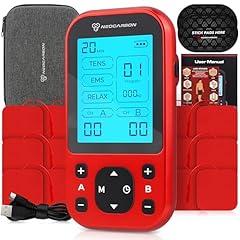
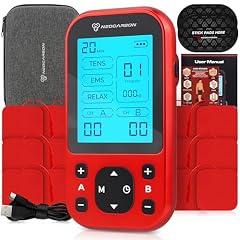
Neocarbon TENS Unit Pro Muscle Stimulator
Overview
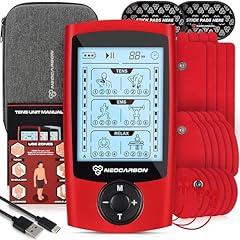
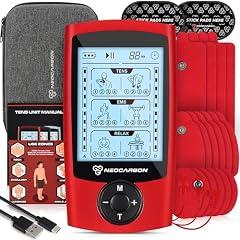
This is a portable, rechargeable skin-electrode stimulator for TENS pain relief and EMS muscle stimulation. Neocarbon states that the red Pro kit includes 12 reusable 2-inch square pads, two lead cables, two independently adjustable channels, 36 modes, 20 intensity levels per channel, a USB-C cable, and a carry case. Its stated 50-hour battery runtime and two-hour recharge time are manufacturer claims, not independently verified test results. An FDA device record confirms that a commercially distributed NEOCARBON TENS device is labeled by Hong Qiangxing and linked to cleared submission K121719. That clearance supports temporary relief of sore, aching muscles in specified body regions and stimulation of healthy muscles for performance. The FDA record does not explicitly name the Pro version. No model-specific UL, ETL, CSA, or accredited laboratory safety report was located for this product.
What works
- FDA records connect the NEOCARBON TENS product line, its manufacturer, and a cleared TENS and muscle-stimulation submission.
- The cleared indication supports temporary relief for sore, aching muscles related to exercise or normal household activity.
- The kit includes reusable pads, and the manufacturer offers separately sold replacement pads for this model family.
- Manufacturer documentation describes independent channel intensity controls, a timer, gradual low-start use, and a screen lock.
What does not
- No public model-specific electrical safety, electromagnetic compatibility, home-use, or output-verification report was located from UL, ETL, CSA, or an accredited laboratory.
- Marketing extends beyond the cleared temporary sore-muscle indication to chronic pain, arthritis, sciatica, post-surgery recovery, improved circulation, and professional-level therapy. Those broader claims are not established by the matched clearance.
- The same manufacturer received an FDA warning letter in October 2025 for serious quality-system failures involving TENS and muscle-stimulator devices, including inadequate software validation, design validation, complaint handling, and product identification. The cited models differ from this product, so this does not prove a defect in this unit.
- The replacement-pad page claims use without side effects, despite known risks of skin irritation, pain, burns, and interference with implanted devices.
Who is it for
This product suits an adult seeking a portable, non-drug option for temporary soreness in the shoulder, waist, back, neck, arms, or legs after exercise or ordinary household activity. It is most relevant to someone who can follow pad-placement instructions, start at a low intensity, inspect pads and leads before use, and treat the unit as a short-term symptom tool rather than a diagnosis or rehabilitation plan. The separately available pads may also suit owners who expect electrodes to wear before the main unit does.
Who is it not for
It is not appropriate for people with a pacemaker, implanted defibrillator, or another implanted electronic device. Pregnant users, people with epilepsy, heart disease, cancer, damaged, irritated, numb, or poorly sensationed skin, and anyone unsure about pain after surgery or injury should seek clinical guidance before considering electrical stimulation. It also does not fit buyers who need independently published electrical testing, documented exact-model output specifications, or evidence that it treats chronic pain conditions such as arthritis or sciatica.
Integrity
FDA records provide meaningful legal-market traceability for the NEOCARBON TENS label and its manufacturer, including lot identification in the device record. The linked FDA clearance supports limited TENS relief for sore, aching muscles and stimulation of healthy muscles. Evidence for chronic pain is much less certain. A Cochrane overview found that evidence was too low quality to confidently determine whether TENS benefits chronic pain. The manufacturer has replacement pads, which can extend use of the main unit. However, the public product information does not provide a battery take-back or U.S. e-waste disposal plan. EPA advises that rechargeable lithium-ion batteries and products containing them should not go in household trash or curbside recycling. The FDA's October 28, 2025 warning letter to the manufacturer documented unresolved quality-system concerns involving TENS and muscle-stimulator production, including design controls and complaint handling.

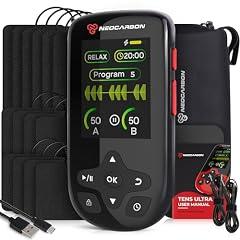
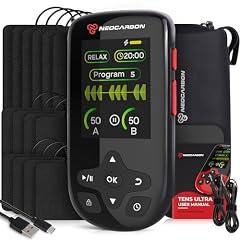
TENS Unit Muscle Stimulator Ultra
Overview
This is a rechargeable, wired TENS and EMS stimulator for placing adhesive electrode pads on the skin. The supplied product documentation describes 60 programs across TENS, EMS, and relaxation modes, two independently controlled channels, 20 intensity settings per channel, a 10 to 90 minute session timer, USB-C charging, and 14 reusable pads. Those are manufacturer-stated specifications, not independently measured output figures. The model number is traceable in FDA device records, and a clearance for the same model lists OTC temporary relief of sore and aching muscle pain plus healthy-muscle stimulation. However, that clearance is filed by a different company, while the Neocarbon brand record identifies a different manufacturer. The exact branded product-to-clearance relationship therefore could not be independently confirmed. Evidence for TENS supports possible short-term pain relief, including for period pain, but certainty varies by condition and should not be read as treatment for underlying disease.
What works
- The documented controls include independent two-channel intensity adjustment, a timer, a battery indicator, contact indicators, and a control lock.
- The published instructions specify gradual intensity adjustment, a default 20 minute session, and a 10 to 90 minute adjustable timer.
- A same-model manual identifies a rechargeable 3.7 V, 180 mAh battery, regulated-voltage output, ABS housing, and silica-gel electrode pads.
- The brand and manufacturer are present in FDA device-identification records, providing more traceability than an entirely anonymous listing.
What does not
- The exact Neocarbon branded product was not matched to a clearance held by the catalog-listed manufacturer. A clearance for the same model is held by another company, so the private-label relationship remains unproven.
- No model-specific UL, ETL, or CSA public certification record, or accredited laboratory report for the finished Neocarbon product, was located.
- The listing's broad pain relief and recovery language exceeds what the available evidence can reliably promise. TENS benefit is generally temporary and condition-specific.
- The accessible product instructions give basic precautions, but they do not provide a clearly complete, prominently structured contraindication section for all higher-risk users and pad placements.
- The stated recycling direction is to return used equipment to the manufacturer, but no practical U.S. take-back route or battery collection instruction was located.
Who is it for
This product is most suited to an adult who wants a portable, non-drug adjunct for occasional sore or aching muscles after ordinary activity, and who can follow pad-placement instructions carefully. Its documented dual channels, gradual intensity control, session timer, lock, storage case, and reusable pad supply suit a user who wants to manage two separate body areas during a timed home session. It is also relevant for someone who understands that the likely benefit is short-term symptom relief, not diagnosis or treatment of the cause of pain.
Who is it not for
It is not appropriate for people with a pacemaker, defibrillator, other implanted electronic device, unexplained pain, impaired skin sensation, open or damaged skin at the pad site, or those who cannot reliably follow instructions without clinician input. Pregnancy safety for powered muscle stimulation is not established. It should not be used while driving, operating machinery, bathing, or where involuntary contraction could cause injury. People seeking treatment for persistent, severe, post-surgical, neurological, or disease-related pain should seek clinical assessment rather than rely on home stimulation.
Integrity
The available record gives some useful traceability. FDA device-identification records associate the Neocarbon TENS and PMS brand with Hong Qiangxing, and a public same-model manual identifies an ABS main housing, silica-gel pads, regulated-voltage stimulation, a 3.7 V rechargeable battery, and electromagnetic-compatibility claims. The exact Neocarbon product was not independently tied to a public laboratory report or an issuing-body certification listing, so those safety claims should be treated as manufacturer documentation rather than third-party certification. TENS may provide short-term pain relief for some users, but evidence is uncertain for many chronic pain conditions. Skin irritation, burns, pain, and interference with implanted cardiac devices are recognized electrical-stimulation risks. Reusable pads and charging can reduce routine disposables, and instructions say to replace pads once adhesion fails. Disposal guidance asks users to recycle through the manufacturer, but it does not identify a U.S. battery or e-waste collection route.

Comfytemp Wireless TENS Unit for Pain Relief
Overview
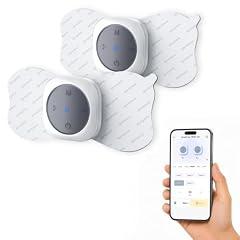
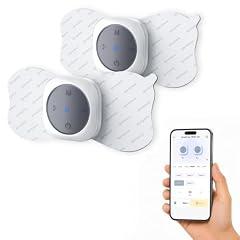
This is a compact, rechargeable, pad-mounted TENS product sold as two wireless stimulation sets with app control. The listing says it provides 30 modes and targets back, neck, shoulder, arm, leg, sciatica, soreness, and tension. Each small unit attaches directly to a pair of adhesive electrode pads, rather than using long lead wires. The exact JPD-ES100 model is FDA-cleared for over-the-counter, temporary relief of sore and aching muscles in the shoulder, waist, back, arm, and leg when related to exercise or ordinary household and work activities. The publicly available manufacturer manual instead describes five on-device modes, 15 intensity settings, a 230 mAh built-in lithium battery, 4 to 50 Hz output, timer, low-battery alert, and automatic treatment pause when a pad falls off. The Comfytemp private-label relationship is supported by reseller material, but the FDA record names Shenzhen Jumper Medical Equipment as the cleared model's manufacturer.
What works
- The exact model has an FDA clearance for temporary relief of sore and aching muscle pain from routine activity or exercise.
- The manufacturer manual describes a pad-detachment alarm that pauses stimulation automatically.
- The published manual provides concrete output and battery specifications, plus adjustable intensity, timer, low-battery alert, and USB charging.
- Pads are described as reusable for about 30 uses, with instructions to replace them when adhesion is poor.
What does not
- The listing's sciatica use and broad muscle-stimulator framing extend beyond the cleared indication for temporary sore-muscle pain related to normal activity or exercise.
- No model-specific UL, ETL, CSA, or publicly available independent laboratory report was found to verify electrical safety, electromagnetic compatibility, or stimulation output.
- The available manual warns against use with pacemakers, skin disease, malignancy, or pad allergy, but does not clearly cover pregnancy uncertainty, unsafe pad placement across the chest or head, driving, or water use.
- No public biocompatibility documentation was found for the adhesive pad materials or conductive gel.
Who is it for
This product is most suited to an adult seeking short-term, non-drug relief for sore or aching shoulder, waist, back, arm, or leg muscles after exercise or normal daily activity. It fits someone who prefers a compact pad-mounted format over a wired controller and is comfortable following stimulation instructions, checking pad adhesion, and starting at low intensity. The cleared use is limited to temporary muscular soreness, so expectations should remain focused on symptom management rather than diagnosis or treatment of an underlying condition.
Who is it not for
It is not appropriate for people with a pacemaker or another implanted electronic device, or for people with skin disease, a pad allergy, or malignant tumors, according to the available model manual. People who are pregnant, have reduced skin sensation, unexplained pain, significant heart disease, or pain following injury or surgery should seek clinician guidance rather than rely on this product. It is also a poor fit for buyers specifically seeking treatment for sciatica, chronic neck pain, neuropathic pain, or muscle rehabilitation, because those uses are not established by this product's cleared indication.
Integrity
The strongest health finding is that the underlying JPD-ES100 model has FDA clearance for temporary relief of sore and aching muscles caused by exercise or everyday activity. The available model manual also identifies meaningful basic safeguards, including adjustable strength, a timer, low-battery notification, and automatic pause if a pad loses contact. Its safety instructions do identify implanted cardiac devices and several skin or health conditions as exclusions. Important limits remain. Publicly available evidence did not establish that the Comfytemp-branded finished product has independent electrical safety testing or pad-material biocompatibility testing. Human evidence for TENS is mixed for chronic and nerve-related pain, so it should not be presented as a proven treatment for sciatica or chronic neck pain. Reusable pads may reduce accessory waste, but the built-in lithium battery is not user-replaceable and no product-specific U.S. battery recycling or electronic-waste plan was found.

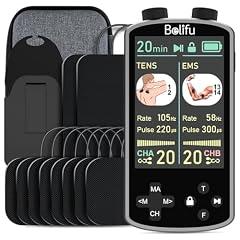
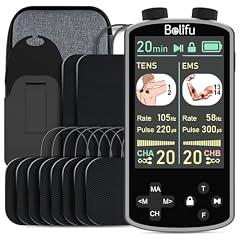
Belifu Dual Channel TENS EMS Unit
Overview
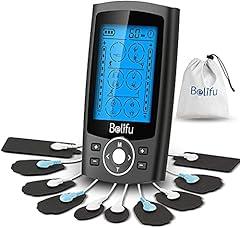
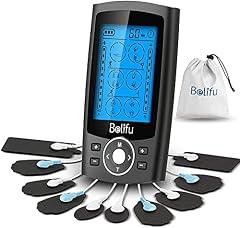
This is a rechargeable, handheld two-output TENS and powered muscle stimulation unit. It uses adhesive skin pads and lead wires, with 24 programmed modes, 20 stated intensity levels, and a stated 10 to 60 minute automatic timer. The package is intended for use on the shoulder, waist, back, neck, arms, and legs. The exact model has an FDA 510(k) clearance for over-the-counter, temporary relief of sore and aching muscle pain related to exercise or ordinary household activity. Its separate muscle-stimulation indication is limited to stimulating healthy muscles to improve and facilitate muscle performance. The manufacturer’s manual provides substantial placement and contraindication guidance. However, no public exact-model accredited-laboratory report was located for electrical safety, electromagnetic compatibility, or stimulation output. A 2025 FDA warning letter also identified serious quality-system violations at the manufacturer that makes this model.
What works
- The exact model is FDA-cleared for temporary relief of sore, aching muscle pain from exercise or normal household activity.
- Its cleared home-use labeling also limits muscle stimulation to healthy muscles and muscle performance, rather than disease treatment or body reshaping.
- The manufacturer-stated controls include separate A and B intensity adjustment, gradual intensity increases, a battery indicator, and timed automatic shutoff.
- The manufacturer manual gives prominent warnings about implanted devices, damaged skin, neck and chest placement, driving, water exposure, and pregnancy uncertainty.
- Pads and lead wires are separate consumables, so worn pads do not necessarily require disposal of the whole product.
What does not
- FDA issued a warning letter to the manufacturer in October 2025, finding quality-system violations and describing the firm’s devices, including this model, as adulterated under federal law.
- Two voluntary FDA adverse-event reports for this model described electrode-related burns, redness, itching, or pain. These reports do not prove causation, but they make careful pad and skin use important.
- No public, model-specific UL, ETL, CSA, or accredited-laboratory pass report was located for electrical safety, electromagnetic compatibility, or output verification.
- The rechargeable lithium battery is built in, and the manufacturer does not provide clear U.S. e-waste or battery-disposal instructions.
- The claimed pain benefit is appropriately temporary, but human evidence for TENS is mixed and varies by condition, treatment settings, and study quality.
Who is it for
This product fits an informed adult seeking a portable, non-drug option for temporary sore or aching muscle discomfort after exercise or ordinary household activity, which is the exact cleared use. It is most relevant for someone able to read the manual, place two pads from the same lead correctly on clean, intact skin, begin at a low sensation level, and stop if irritation occurs. It also suits users who value a rechargeable unit, adjustable session timing, and replaceable pads for occasional home use.
Who is it not for
It is not appropriate for people with a pacemaker, implanted defibrillator, or another implanted electronic or metallic device. Avoid it during pregnancy unless a clinician specifically advises otherwise, and seek clinical guidance for epilepsy, heart problems, cancerous lesions, recent surgery, reduced skin sensation, or undiagnosed pain. It should not be used on broken, inflamed, infected, numb, or irritated skin, across the chest, on the front of the neck, near the eyes, while driving, sleeping, bathing, or operating machinery. People needing treatment for neuropathic pain or a diagnosed medical condition should not treat this as a substitute for clinical assessment.
Integrity
The strongest safety-positive finding is legal traceability. FDA cleared this exact model for over-the-counter temporary muscle-pain relief and a narrow healthy-muscle stimulation use. The manufacturer manual also gives detailed warnings about implants, unsafe placement sites, skin condition, water, and activity hazards. Its stated 3.7 V rechargeable lithium battery, timer, and independent intensity controls are practical safeguards when the instructions are followed. Important accountability concerns remain. In October 2025, FDA cited the manufacturer for serious quality-system violations, including inadequate design-control, complaint-handling, and corrective-action processes. FDA records also contain two voluntary reports describing burns or skin reactions with this model, though those reports do not establish causation. Separate pads and leads can reduce whole-device replacement, but no clear U.S. battery or e-waste disposal plan was located. The built-in lithium battery and electronic unit should be directed to an appropriate battery or e-waste collection route, rather than household trash or curbside recycling.
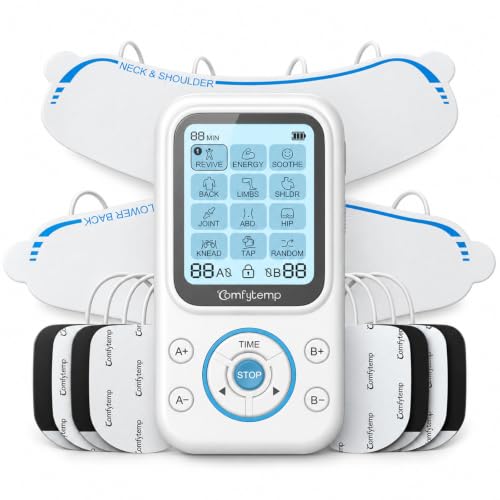
Comfytemp TENS Unit for Pain Relief
Overview
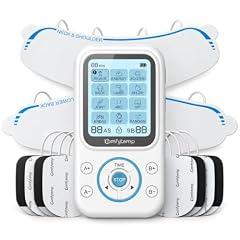
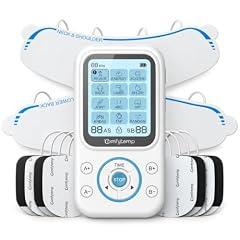
This is a rechargeable, wired dual-channel TENS and EMS unit supplied with body-shaped adhesive pads for the lower back and neck and shoulders, plus smaller universal pads and a carrying case. A matching product description states that its lower-back pad measures 10 by 2.9 inches and its neck-and-shoulder pad measures 9.3 by 4.7 inches. It also states 20 modes, 20 intensity levels, a timer, and separately adjustable A and B channels. The important verified fact is that the exact K6144 model appears in an FDA-cleared family of over-the-counter TENS and EMS devices made by Shenzhen Yicai Health Technology. Its cleared TENS purpose is temporary relief of sore, aching muscle pain after exercise or normal household work. The cleared EMS scope is stimulation of healthy muscles to support performance and temporary local circulation in healthy leg muscles. Public records did not provide model-specific electrical test reports or the full instructions for use.
What works
- The exact model is named in an FDA-cleared over-the-counter TENS and EMS device family.
- Its cleared TENS indication specifically includes temporary sore-muscle pain in the back, neck, shoulders, arms, legs, waist, abdomen, and buttocks after everyday strain or exercise.
- The cleared EMS scope is appropriately limited to healthy-muscle stimulation and temporary increased local circulation in healthy leg muscles.
- Manufacturer-stated controls include separate A and B channels, 20 intensity levels, a timer, and a large display.
- Manufacturer-stated shaped pads may make placement simpler for the lower back and neck and shoulder areas.
What does not
- No public model-specific UL, ETL, CSA, or accredited-laboratory report was located to independently verify electrical safety, electromagnetic compatibility, or output.
- The product-specific manual was not publicly available for review, so the prominence and completeness of contraindications, pad-placement warnings, charging instructions, and session limits remain unproven.
- Research supports at most variable short-term pain relief from TENS. High-quality evidence remains uncertain for chronic pain, so it should not be framed as treatment for an underlying condition.
- Public information does not identify electrode materials, biocompatibility testing, replacement-pad specifications, charger details, or replacement leads.
- No manufacturer take-back or practical U.S. battery and e-waste disposal instructions were located.
Who is it for
This product suits an adult seeking a portable, non-drug option for occasional sore or aching muscle discomfort after exercise, desk work, driving, or normal household activity, especially around the lower back, neck, or shoulders. It is most aligned with people who want the specific temporary symptom-relief scope in the FDA-cleared labeling, rather than treatment of an injury or disease. The manufacturer-stated large display, timer, separately adjustable channels, and shaped pads may also suit a first-time home user who prefers more guided pad placement.
Who is it not for
It is not for anyone with an implanted pacemaker, defibrillator, neurostimulator, or other electronic implant without explicit clinician approval, because electrical stimulation can interfere with implanted devices. Pregnant people should not use electrical stimulation over the abdomen or uterus without clinician guidance. It is also unsuitable for use on broken, irritated, numb, or poorly sensed skin, or for people seeking to treat chronic neuropathic pain, a serious injury, or unexplained symptoms. Choose clinician assessment instead if pain is severe, persistent, follows trauma, or comes with weakness, numbness, fever, or other new symptoms.
Integrity
The strongest health accountability finding is regulatory traceability. The exact K6144 model is included in an FDA-cleared over-the-counter TENS and EMS family, and the cleared indications are bounded to temporary sore-muscle pain relief, healthy-muscle stimulation, and temporary local circulation in healthy leg muscles. That is more credible than broad promises of cure, permanent relief, body reshaping, or weight loss. There is still an evidence gap around the finished product. No public model-specific independent electrical certification or laboratory report was located, and the full instructions were not available to check warnings, charging limits, pad replacement, or skin-contact materials. FDA notes that electrical stimulators can cause burns, skin irritation, pain, shocks, and interference with implanted devices when poorly designed or used. The rechargeable battery and disposable adhesive pads also create waste, while no product-specific U.S. recycling or take-back plan was found.

Neocarbon TENS Unit Muscle Stimulator EMS Massager
Overview
This is a rechargeable, wired two-channel TENS and muscle-stimulation unit used with adhesive skin pads. The product package is described as including 16 reusable pads in several sizes, two lead cables, a USB charging cable, pad holders, and a carry case. Manufacturer-stated controls include 24 programs, 20 intensity levels, two independent channels, and a session timer. The exact SM9126 model, made by Hong Qiangxing, received FDA clearance for over-the-counter temporary relief of sore, aching muscles linked to exercise or ordinary household activity in specified body areas. Its separate muscle-stimulation indication is for stimulating healthy muscles to improve and facilitate muscle performance. That clearance does not substantiate broader listing language around sciatica, arthritis, healing, improved blood flow, or replacing medication.
What works
- The exact model and manufacturer can be matched to an FDA-cleared over-the-counter TENS and muscle-stimulation device.
- The cleared pain indication is appropriately narrow, focused on temporary soreness from exercise or normal household activity.
- Manufacturer materials describe separate channels, adjustable intensity, a timer, and pad-contact gating before current starts.
- Replacement pads with 3.5 mm snap connectors are sold through Neocarbon, which can extend the useful life of the main unit.
- The product has identifiable manufacturer support, a stated one-year warranty, and a listed support contact.
What does not
- A serious 2019 FDA adverse-event report for an SM9126 sold under another brand by the same manufacturer describes a thermal skin burn. It predates this model's 2022 clearance, but it is a relevant skin-contact safety signal.
- No public model-specific UL, ETL, CSA, or accredited-laboratory report was located to independently verify electrical safety, electromagnetic compatibility, or delivered output.
- Marketing claims for sciatica, arthritis, healing, blood-flow improvement, muscle-spasm reduction, quick relief, and avoiding medication go beyond the cleared indications and available evidence.
- Publicly accessible instructions found for this product do not clearly provide a complete, prominent set of contraindications and prohibited pad-placement sites.
- The rechargeable battery is not user-replaceable, and the available disposal direction is limited to following local rules.
Who is it for
This product suits an adult seeking a portable, pad-based device for short-term sore or aching muscle discomfort after exercise or ordinary physical tasks, particularly in the shoulder, neck, back, waist, arms, or legs named in the cleared indication. It also fits a user who wants independent channel control and can carefully follow placement, skin-check, charging, and session instructions. It is most appropriate for healthy muscle stimulation or temporary symptom management, rather than diagnosis, rehabilitation after injury, or treatment of a chronic condition.
Who is it not for
It is not suitable for people with an implanted pacemaker or other implanted electronic life-support device, or for anyone unable to reliably feel and inspect the skin beneath the pads. Pregnant users, people with heart disease, epilepsy, recent surgery, internal bleeding risk, unexplained pain, damaged skin, infection, or reduced sensation should seek clinician advice before electrical stimulation. It is also a poor fit for someone expecting treatment for sciatica, arthritis, chronic neck pain, disease-related nerve pain, healing, or a replacement for prescribed care or medication.
Integrity
The clearest health positive is regulatory traceability of the exact model. FDA cleared the SM9126 for over-the-counter temporary relief of sore and aching muscles after exercise or household activity, plus stimulation of healthy muscles for performance. The product's FDA clearance is not a broad validation of all promotional claims. Evidence for TENS in chronic pain conditions remains uncertain, and an FDA adverse-event report records a thermal burn involving an SM9126 made by the same manufacturer and sold under another brand before this clearance. Neocarbon sells replacement pad sets and identifies a standard 3.5 mm snap connection, reducing the need to replace the whole unit when pads lose adhesion. The pads are manufacturer-described as reusable for up to 30 uses, but public biocompatibility evidence for their adhesive gel was not located. The internal lithium battery and electronic device require proper battery and e-waste collection. The available instructions only direct users to follow local disposal rules, without a specific take-back or U.S. recycling route.

Belifu TENS EMS Muscle Stimulator 4-in-1
Overview
This is a rechargeable, handheld electrical-stimulation product with adhesive skin pads and lead wires. The listing describes 36 modes, 20 intensity levels, a 3.8-inch color screen, memory and favorites controls. Those interface details are manufacturer-stated, rather than independently measured in this assessment. The important verified point is that model SM9055 appears in FDA clearance K220283. Its cleared TENS use is temporary relief of sore, aching muscle pain in the shoulder, waist, back, neck, arms and legs when related to exercise or normal household activity. Its powered-muscle-stimulation use is stimulation of healthy muscles to improve and facilitate muscle performance. The clearance applicant is Hong Qiangxing, while the retail product is branded Belifu, and the public records reviewed do not directly document that private-label relationship. No model-specific public laboratory report was located for electrical safety, electromagnetic compatibility, output accuracy, pads, or battery system.
What works
- The model number is included in an FDA-cleared TENS and powered muscle stimulator submission.
- Its verified pain indication is appropriately limited to temporary sore-muscle pain relief, not disease treatment.
- All 36 program numbers have defined TENS or powered-muscle-stimulation assignments in the FDA-cleared labeling.
- The listing's 20 intensity levels, memory and favorites controls may help users repeat a preferred setting, manufacturer-stated.
What does not
- The reviewed public FDA record does not directly connect the Belifu retail branding to the clearance holder, so the private-label relationship remains unverified.
- No public, model-specific IEC, UL, ETL or CSA test certificate was located for finished-product electrical safety, output, home-use electromagnetic compatibility, charger or battery safety.
- A complete, exact-model instruction manual was not publicly available in the sources reviewed, leaving contraindications, pad-placement diagrams, session limits and charger instructions unverified.
- No public evidence was located for pad material composition, biocompatibility testing, replacement-part compatibility, recycling instructions or a U.S. take-back program.
Who is it for
This product is suited to an adult seeking a portable, non-drug option for temporary soreness in the back, neck, shoulders, arms or legs after exercise or ordinary household activity. It also fits a healthy adult who wants electrical stimulation for muscle performance within the limited cleared use. The 36-program layout may appeal to someone who wants several preset TENS and muscle-stimulation options, provided they can follow the supplied instructions, start at a comfortable level, and inspect skin and pads before every session.
Who is it not for
It is not suited to anyone with a pacemaker, defibrillator or another implanted electronic device without clinician approval. It is also unsuitable for people who are pregnant or may be pregnant unless a clinician specifically advises use, or for anyone with broken, inflamed, infected, numb or poorly sensate skin at the intended pad site. Choose clinician-directed care instead for unexplained pain, serious illness, rehabilitation after injury or surgery, chronic disease management, or symptoms that worsen or persist.
Integrity
The verified health positive is narrow but meaningful. Model SM9055 is named in an FDA clearance for temporary muscle-pain relief and stimulation of healthy muscles. That does not establish benefit for chronic pain conditions, disease treatment, weight loss or body reshaping. A Cochrane overview found the chronic-pain evidence too uncertain to confidently determine whether TENS improves pain or other outcomes. Safety documentation remains incomplete at the retail-brand level. FDA notes that electrical stimulators can be associated with shocks, burns, bruising, skin irritation, pain and interference with implanted devices when products or use are unsafe. One older voluntary report involved a different Belifu model and described burns and itching, not this product. No recall for this exact model was located. The rechargeable lithium battery avoids disposable-cell waste, but no verified disposal, take-back, pad-replacement or spare-lead guidance was found.

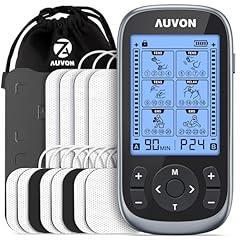
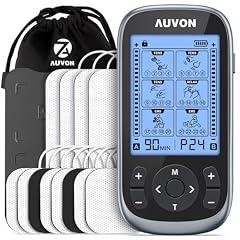
AUVON 3-in-1 TENS Muscle Stimulator
Overview
This compact rechargeable TENS and EMS product delivers electrical pulses through two lead wires and up to four adhesive pads. It includes 12 pads in two sizes, a Type-C cable, pad holders, and a pouch. The manual describes 40 intensity levels, 24 programs, separately adjustable A and B channels, a control lock, and sessions from 10 to 90 minutes or continuous operation. These are manufacturer-stated operating details. A public U.S. device record identifies the TA2224 as an over-the-counter TENS and EMS product for temporary relief of sore, aching muscles associated with exercise or normal household activity, and for stimulating healthy muscles to facilitate performance. That documented scope is narrower than the retail claims for sciatica, arthritis, and broad pain relief. I did not locate a model-specific UL, ETL, CSA, or accredited laboratory report verifying this finished product’s electrical output, home-use safety, or electromagnetic compatibility.
What works
- A public U.S. device record documents over-the-counter TENS use for temporary sore-muscle pain and EMS use on healthy muscles.
- Two channels, 40 intensity levels, a lock, and adjustable session timing provide practical controls for gradual self-treatment, according to the manual.
- The package includes 12 reusable pads in two sizes, plus replaceable pad options are sold by AUVON.
- The manual gives meaningful contraindications for implanted electronic devices, pregnancy, epilepsy, cancer, unexplained chronic pain, and use above the neck.
What does not
- Retail claims for sciatica, arthritis, and other conditions extend beyond the public device record’s temporary sore-muscle pain scope.
- No model-specific independent electrical safety, electromagnetic compatibility, or stimulation-output report was located.
- The manual permits continuous operation and does not clearly cover every common placement and activity warning, including across-chest placement, driving, and water use.
- Pad irritation, allergy, excess intensity, and prolonged placement at one site are acknowledged risks. The product-specific biocompatibility evidence for the gel pads was not located.
Who is it for
This product suits an adult who wants a portable, non-drug option for temporary soreness in the back, shoulder, waist, arms, or legs after exercise or routine household activity. It is most appropriate for someone comfortable following electrode placement instructions, beginning at low intensity, monitoring skin response, and limiting treatment to a short symptom-management session. The two independently adjustable channels may be useful when treating two separate muscle areas, provided the user keeps each pad pair in a safe location and follows the manual.
Who is it not for
It is not for people with a pacemaker, defibrillator, other implanted electronic device, heart-rhythm condition, epilepsy, certain neurological conditions, cancer, unexplained chronic pain, or pregnancy, because the manual advises against use in these situations. It is also unsuitable for children and for anyone needing treatment of sciatica, arthritis, persistent pelvic pain, or another diagnosed condition without clinician guidance. Avoid it if skin is damaged, sensation is reduced, or a user cannot reliably inspect pads, leads, and skin during treatment.
Integrity
The strongest accountability evidence is the public U.S. device record for this product, which documents an over-the-counter TENS and healthy-muscle EMS role. That record does not substitute for a published test report. I did not locate model-specific certification in the UL, ETL, or CSA public directories, nor an accredited report that confirms the finished product’s electrical safety, electromagnetic compatibility, or output. The manual does provide several important contraindications and says to stop and seek advice if persistent pad-site irritation occurs. The rechargeable battery avoids routine disposable-cell use. AUVON states that the included gel pads can be reused for about 45 applications when cleaned and stored correctly, and it sells replacement electrodes, which can keep the main unit in service longer. The available material does not provide a product-specific U.S. lithium-battery or e-waste take-back route. Treat the product and its battery as electronic waste at end of life, rather than putting them in household trash or curbside recycling.

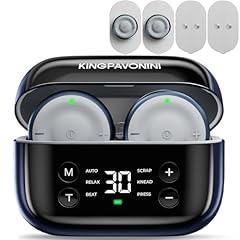
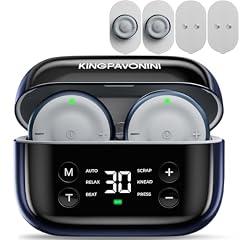
KingPavonini Wireless TENS Unit U13
Overview
This product is a pocket-sized, rechargeable wireless electrical stimulator with two pad-mounted control units, a charging and storage case, four adhesive pads, USB-C cable, and stated 5 V charging. An independent retailer listing identifies the model as U13 and reports six modes, 30 intensity levels per unit, and an adjustable 10 to 60 minute automatic timer. Those are seller-supplied product specifications, not laboratory-verified output measurements. It is marketed for TENS pain relief, EMS, and massage, including sciatica, soreness, circulation, and muscle recovery. I could not match this exact product to an FDA clearance or device listing, or locate model-specific IEC, UL, ETL, or CSA test evidence. The public brand store confirms a related wireless product format and replacement-pad availability, but its listed settings are for a different model and cannot verify U13 performance.
What works
- Two independently controlled wireless units can address separate body areas in one session, according to the exact-product retailer listing.
- The stated 10 to 60 minute auto-off timer and 30 intensity settings offer more session control than a single fixed setting, though output values are unverified.
- Four washable, reusable gel pads are stated to be latex-free and usable up to 50 times.
- The brand's public store sells replacement wireless TENS pads, supporting continued use without replacing the whole product.
What does not
- No exact-product FDA clearance, device listing, or legally marketed home-use indication was located in the FDA sources searched.
- No model-specific independent electrical safety, electromagnetic compatibility, stimulation-output, battery, or skin-contact test report was located.
- The listing says to ease sciatica, promote circulation, speed recovery, and say goodbye to chronic pain. These claims exceed the uncertain human evidence for TENS and can imply more than temporary symptom relief.
- An exact U13 instruction manual with complete contraindications, pad-placement limits, charging restrictions, and disposal instructions was not available for verification.
Who is it for
This product fits an adult who wants a compact, cord-free stimulator for occasional, short self-managed sessions for everyday muscle soreness, and who understands that any benefit may be temporary and individual. Its two stated independently adjustable units may suit someone who wants to place pads on two separate muscle areas while remaining mobile at home, work, or travel. It is most appropriate for a buyer willing to read the included instructions carefully, start at the lowest comfortable setting, inspect the pads, and accept that regulatory and laboratory verification was not found for this exact product.
Who is it not for
It is not appropriate for people with pacemakers, defibrillators, other implanted electronic devices, suspected heart conditions, epilepsy, impaired skin sensation, active skin damage, cancerous lesions near intended placement, or undiagnosed pain without clinician advice. Pregnancy safety is not established. Choose a different option if you need verified FDA market status, independently documented IEC electrical testing, defined stimulation output, or a fully accessible exact-model manual. It should not be used while driving, operating machinery, bathing, sleeping, or where involuntary muscle contraction could create risk.
Integrity
The most important health limitation is evidence traceability. FDA guidance warns that unregulated electrical muscle stimulators may pose risks including shocks, burns, bruising, skin irritation, pain, and interference with implanted devices. The FDA databases searched did not produce an exact U13 clearance, listing, recall, or adverse-event record. That does not establish that the product is unsafe, but it leaves its finished-device safety and legal-market status unconfirmed. The seller describes latex-free gel pads, rechargeable lithium-ion batteries, USB-C charging, and reusable pads. The brand also offers replacement pads, a practical lower-waste feature. However, no U13-specific biocompatibility report, battery safety certification, charger specification, take-back program, or U.S. battery and e-waste disposal guidance was located. Keep damaged pads and cables out of service, and use a suitable battery or e-waste collection route rather than household trash.

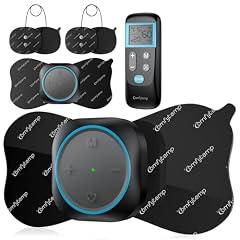
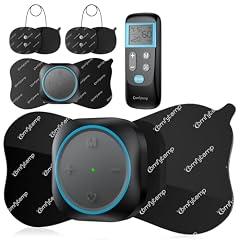
Comfytemp Wireless TENS Unit
Overview
This is an over-the-counter, rechargeable wireless TENS product with a handheld remote and four skin pads. It is intended to send electrical stimulation through adhesive electrodes for temporary pain relief from sore or aching muscles. The manufacturer lists 30 modes, 20 intensity settings, a timer, and separate wireless pads, but the public listing does not provide a numerical output specification. The important distinction is that this exact model is named in an FDA substantial-equivalence clearance for a transcutaneous electrical nerve stimulator, and its public device record identifies it as commercially distributed, over-the-counter, and not made with natural-rubber latex. Comfytemp also sells model-specific replacement pads and publishes a manual. Publicly accessible evidence did not include an exact-model UL, ETL, CSA, or accredited laboratory electrical-safety report.
What works
- The exact product model is included in an FDA clearance for transcutaneous electrical nerve stimulation for pain relief.
- The public device record identifies it as over-the-counter and not made with natural-rubber latex.
- Manufacturer-stated controls include 20 intensity levels, 30 modes, a timer, and remote operation.
- Replacement pad packs are sold for this model, rather than making the main unit disposable when adhesion declines.
- Comfytemp publishes a model-specific manual and lists a U.S. support address, phone number, 365-day warranty, and return path.
What does not
- No public exact-model independent electrical-safety, electromagnetic-compatibility, output, battery, or charger test report was located.
- The accessible sales page does not prominently present the full contraindication and pad-placement warnings expected for electrical stimulation devices.
- The manufacturer describes PET pads, gel adhesion, and latex-free construction, but no public model-specific biocompatibility report was located.
- Human evidence supports, at most, temporary pain reduction during or immediately after TENS use. It does not establish lasting relief or treatment of an underlying condition.
- The manufacturer provides no clearly located U.S. battery or e-waste take-back and disposal instructions.
Who is it for
This product suits an adult seeking an over-the-counter, cable-free TENS option for short-term sore or aching muscle pain, especially on areas such as the back, shoulders, arms, or legs. It is also suited to a user who values replacement pads and wants remote adjustment rather than a wired controller. The cleared TENS identity and published model-specific manual provide useful traceability. Use should still follow the manual, begin at a comfortable low sensation, and remain adjunctive to appropriate assessment of persistent pain.
Who is it not for
It is not appropriate for people with a pacemaker, implanted defibrillator, or another implanted electronic device unless their clinician specifically clears use. Avoid it during pregnancy unless a clinician advises otherwise, and do not place electrodes on the head, across the chest, over the front or sides of the neck, or on damaged, numb, infected, inflamed, or irritated skin. People with unexplained pain, heart problems, epilepsy, recent surgery, cancerous lesions, or reduced skin sensation need clinical advice before considering electrical stimulation.
Integrity
The strongest health finding is regulatory traceability. FDA records match this specific model to a 2025 substantial-equivalence clearance for TENS pain relief, and the public device record identifies it as an over-the-counter product without natural-rubber latex labeling. That does not turn it into a cure. Large evidence reviews suggest TENS can reduce pain while it is being used or immediately afterward, but durable benefit and condition-specific results remain less certain. Electrical stimulation can cause skin irritation, burns, pain, or interference with implanted medical devices when used improperly. The manufacturer offers reusable PET replacement pads and says they can be cleaned and reused, which can reduce accessory waste. It also provides replacement packs. However, no independently published pad biocompatibility report, battery safety certificate, or practical U.S. recycling or take-back program was located for this product. Rechargeable devices and their batteries should be taken to appropriate battery or electronics collection rather than household trash.