
10 Best Stepper
 Brianna York
Please note that we participate in affiliate marketing programs. When you purchase through links on our site, we may earn a commission. As an Amazon Associate we earn from qualifying purchases. This comes at no additional cost to you and helps support the resources required to provide valuable content.Advertising Disclosure
Top-rated Stepper Comparison
1

2
3
+
4
5
6
7
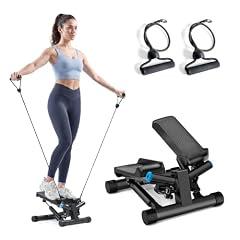
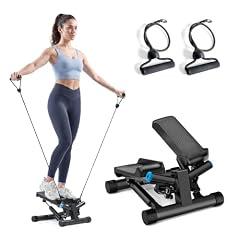
8
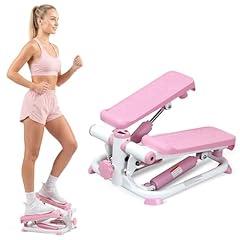
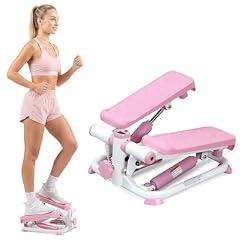
9
10
Overview
A stepper turns repeated stepping, climbing, or step-up movements into indoor exercise. The category includes compact hydraulic and rocking machines, upright climbers with handlebars, and fixed or adjustable aerobic platforms. These products can support physical-activity goals, but the useful question is not whether a listing says “full body,” “low impact,” or “high efficiency.” It is whether the design lets you exercise at a suitable effort, with controlled footing, a realistic range of motion, and instructions that match the mechanism’s limits.
For cardiovascular value, look for a usable progression rather than a headline calorie number. Adjustable step height, pedal travel, climbing angle, or resistance can help a generally healthy user start conservatively and increase effort. Human stair-climbing and step-exercise research supports the general activity type, but it does not prove that a particular machine delivers a promised calorie multiplier, weight-loss result, knee-protection benefit, or equivalence to running, swimming, yoga, cycling, or rowing. Federal guidance provides the broader benchmark: adults generally work toward 150–300 minutes of moderate aerobic activity weekly, or the vigorous equivalent, alongside muscle-strengthening activity.
Footing and stability are especially important because many compact machines have no fixed handrail. A high-quality design should provide a sufficiently broad, grippy stepping surface, stable feet or base, secure risers where applicable, and clear instructions for mounting, floor placement, inspection, and support. A resistance-band handle is not a substitute for a handhold. On platforms, check that risers are correctly nested and that the entire base contacts a level, dry floor. On hydraulic products, look for warnings about hot cylinders, cooldown, leaks, moving parts, and session limits.
Treat user-weight figures as specifications, not automatically as proven capacity. Several supplied products list capacities from 220 to 660 pounds, yet their reviews found no publicly checkable model-specific dynamic-load, fatigue, or durability report. A credible substantiation would be a report for the exact model and stated configuration from an ISO/IEC 17025-accredited laboratory, with the laboratory’s scope checkable through A2LA or ANAB. Relevant fitness-equipment evidence includes ISO 20957-1 and ISO 20957-8 testing; an unexplained “tested” or “commercial grade” phrase is not equivalent.
The same discipline applies to safety certification, monitors, and environmental claims. A genuine conformity certificate should identify the exact model and be publicly checkable through the issuing body. A calorie display should disclose how it is calculated and any accuracy tolerance; “estimate” is more honest than unexplained precision, but it is still not validated health data. Material claims should identify more than generic metal or plastic where possible, including grips, coatings, lubricants, bands, batteries, and contact surfaces. Recycled-content claims need appropriate certification evidence, while repairability is better supported by replacement parts, maintenance instructions, warranty terms, and battery or end-of-life guidance than by a foldable shape alone.
Across the supplied reviews, recurring safety limitations were the absence of a handrail on many compact steppers, unsupported balance during mounting and use, and unsuitable fit for people with recent falls, dizziness, impaired balance, neuropathy, or unstable joints. Knee, hip, ankle, and back symptoms also recur as reasons to seek individualized clinical guidance; higher step settings can increase lower-limb loading. Hydraulic models require attention to heat and cooldown, while platforms require secure riser placement and controlled stepping. These products are not automatically rehabilitation equipment, and no supplied product had publicly checkable independent safety certification or independently verified load capacity.
Integrity
The scores below describe what the supplied reviews found—not a guarantee that any product is safe for every user. Higher scores reflect stronger evidence or more useful design and support details within this set; they do not replace the exact manual, capacity limit, inspection instructions, or clinical advice where relevant.
HHealth & Safety
Evidence-based health value
This measures whether the stepping motion can realistically contribute to cardiovascular fitness and physical-activity goals at the product’s stated intensity, without therapeutic overclaims. Higher-scoring products were supported by the general evidence for stair-climbing or step exercise and gave a plausible way to progress; lower-scoring ones leaned more heavily on unsupported calorie, weight-loss, or joint-protection language.
Secure footing and stability
This measures resistance to slipping, rocking, tipping, unstable risers, pedal faults, and loss of support. Higher scores in the set went to products with broad or textured surfaces, nonskid feet, stable bases, handlebars, or clear setup checks. Lower scores reflected narrow or unsupported standing formats, no fixed handhold, uncertain riser security, or warnings that balance loss could cause a fall.
Proven user-weight capacity
This measures whether the stated weight limit is supported by model-specific dynamic-load and durability evidence, not merely a listing number. Across the supplied products, capacities from 220 to 660 pounds were generally manufacturer claims without a public accredited load or fatigue report. Higher relative scores therefore indicate clearer, more consistent documentation—not independently proven heavy-duty performance.
Safe moving parts and heat control
This measures protection from hot hydraulic cylinders, leaks, pinch points, broken bands or cables, sudden resistance changes, and loose mechanisms. Higher scores belonged to simple fixed platforms or products with concrete cooldown, inspection, lubrication, and replacement guidance. Lower scores reflected missing duty-cycle limits, unclear guarding, or mechanisms whose wear and heat risks were acknowledged but not fully documented.
Adjustability without unnecessary joint strain
This measures whether step height, pedal travel, climbing angle, resistance, platform size, and handhold position can be matched to the user and progressed gradually. Higher-scoring products offered multiple heights or angles and clearer adjustment instructions. Lower scores reflected undisclosed ranges, narrow surfaces, unsupported mounting, or marketing that called a movement joint-friendly without product-specific biomechanical evidence.
Material and exposure transparency
This measures disclosure of materials users touch or keep indoors, including plastics, grips, coatings, lubricants, bands, and batteries. Higher scores in this group identified at least some construction materials and warnings. Lower scores usually stopped at generic “metal,” “plastic,” or alloy steel, without chemical documentation, contact-material details, or product-specific exposure evidence.
Lower-waste construction
This measures whether the product is likely to stay useful through durable construction, replaceable wear parts, warranty support, battery guidance, and limited, verifiable environmental claims. Higher scores went to passive platforms or products with parts and maintenance information. Most products still lacked certified recycled content, full repair catalogs, or clear end-of-life instructions, so a foldable design alone was not enough.
EEvidence
Independently verified safety
This measures whether an independent competent body verified the exact model’s stability, mechanical safety, capacity, and electrical components where applicable. The supplied reviews did not locate a publicly checkable model-matched ISO 20957 certificate or accredited laboratory report for any product. A seller’s claim, generic standard reference, or broad “tested” wording should not be treated as equivalent evidence.
Honest fitness and calorie claims
This measures whether claims about calories, fat burning, full-body exercise, low impact, knee protection, weight loss, and exercise equivalence match the design and human evidence. Higher scores reflected narrower, more qualified claims or explicit limits. Lower scores reflected precise-sounding comparisons and therapeutic or joint-safety promises without a product-specific study, test protocol, or disclosed substantiation.
Trustworthy workout tracking
This measures whether time, steps, cadence, distance, resistance, and calories have defined methods and credible accuracy evidence. Higher relative scores came from displays that clearly labeled calories as estimates or documented their metrics. No supplied product had public independent monitor-validation evidence, so even the better-scoring displays should be used as rough session cues rather than precise calorie or physiological data.
Traceable maker and repair support
This measures whether the responsible maker, exact model, warranty, manual, replacement parts, and safety or recall communication path can be identified. Higher scores reflected named manufacturers, model-specific manuals, parts diagrams, support contacts, or longer stated warranties. Lower scores reflected conflicting specifications, missing manuals, no parts catalog, or vague warranty information that would make repair or hazard communication harder.
EEcology
Lower-waste construction
For steppers, lower waste depends less on compact storage than on service life. A fixed platform avoids batteries, electronics, hydraulics, and many wear mechanisms; a machine with documented replacement parts and maintenance can also remain useful longer. Among the supplied products, the strongest relative scores combined simpler construction or repair information with stated material details, while recycled-content and end-of-life claims were rarely independently documented.
Full reviews

MERACH Vertical Climber for Home Gym Exercise
Overview
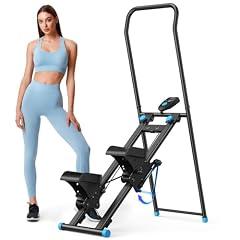
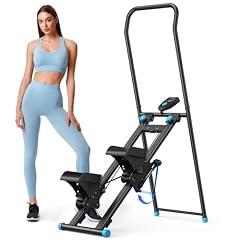
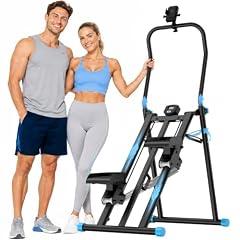
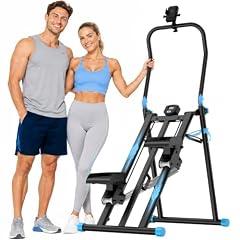
This is a foldable, manually operated vertical stair stepper for home cardio sessions. It uses linked pedals and a handlebar rather than a powered drive, and its LCD is described as showing time, step count, speed, and estimated calories. The published product manual lists a 300-pound maximum user weight, a 33.9 by 22.1 by 47.2 inch footprint, two AAA batteries for the display, and a one-year manufacturer warranty. The manual describes three selectable climbing angles, 37, 47, and 57 degrees, plus non-slip pedals and a folding frame. Those are manufacturer-stated specifications, not independently tested performance findings. Stair climbing itself can be meaningful aerobic exercise when performed at sufficient intensity and weekly volume, but no model-specific exercise-intensity, load-cycle, monitor-accuracy, or safety-certification report was publicly located.
What works
- The published manual gives concrete setup and use safeguards, including level-floor placement, a 2-foot clear area, athletic shoes, handhold use, and pre-use fastener checks.
- Three stated climbing angles allow some progression and variation rather than a single fixed movement path.
- The stated foldable frame can reduce storage space when the machine is not in use.
- Time and step count can support simple session tracking, even though accuracy specifications were not disclosed.
What does not
- The 300-pound capacity is manufacturer-stated, with no public model-specific dynamic-load or durability report located.
- No publicly checkable certification or independent test report was located for this exact product's stability, mechanical safety, or display accuracy.
- The display's calorie figure is only described as an estimate. No calculation method, user inputs, tolerance, or validation evidence was found.
- Marketing materials equate 20 minutes of use with substantially longer activities. No product-specific human evidence was found to support those equivalencies or the knee-protection language.
Who is it for
It suits an adult who wants a compact indoor climbing-style cardio option, has a level hard floor, can use a fixed handhold comfortably, and is willing to inspect bolts, moving joints, and pedal adjustment before use. It can fit someone building activity gradually, because the published instructions describe three angle settings and advise starting carefully. It is more appropriate for tracking workout duration and steps than for using calorie numbers as precise health data.
Who is it not for
It is not appropriate for anyone above the stated 300-pound limit, or for users who cannot reliably step on and off while holding the handlebar. People with recent falls, marked balance impairment, uncontrolled cardiovascular symptoms, dizziness, or painful knee, hip, ankle, back, shoulder, or elbow conditions should seek individualized clinical guidance before using it. It also does not suit households needing independently verified load, stability, and moving-mechanism test evidence, or users expecting medically meaningful calorie tracking.
Integrity
Stair climbing can contribute to aerobic activity goals when intensity and accumulated weekly time are sufficient. Human studies of stair climbing support cardiovascular-fitness benefits, but they do not validate this specific machine's advertised exercise equivalencies, calorie output, or joint-protection claims. The published instructions appropriately tell users to use a level surface, inspect loose or worn parts, stop for pain or dizziness, and seek medical advice when relevant. The material disclosure is limited to metal or alloy steel. No public material declaration was located for pedal plastics, grips, coatings, lubricant, or battery chemistry, and no product-specific Proposition 65 warning was located in the checks performed. A published manual, model reference, maintenance directions, and one-year manufacturer warranty improve traceability. It also advises silicone lubricant at pivot points and includes replaceable AAA display batteries, though no parts catalog, recycled-content evidence, or end-of-life recycling plan was found.

HXD-ERGO Vertical Climber Exercise Machine
Overview
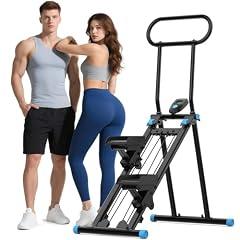
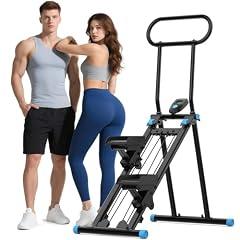
This is a folding, nonmotorized vertical climber for home cardio. It uses linked foot platforms and a handlebar to create repeated climbing motions. The product is listed at 28 pounds, with a 20 by 28 inch footprint and 72 inch height when open. It includes a battery-powered LCD display for time, steps, and calories. The seller states that the metal frame has a triangular layout, supports users up to 300 pounds, folds for storage, provides six resistance settings, and has three handlebar heights. Those are manufacturer-stated specifications, not independently verified load, stability, or durability results. No public model-specific safety certificate, accredited laboratory report, monitor-validation report, or detailed operating manual was located during this review. Stair-style activity can contribute to aerobic exercise goals when accumulated at an appropriate intensity, but the product does not establish the intensity a given user will reach.
What works
- Its compact folding format is a practical fit for a dedicated corner or limited home workout space, based on manufacturer-stated dimensions and folding design.
- Three stated handlebar heights and six stated resistance settings offer more progression options than a fixed-motion climber.
- The stated 300-pound user limit and triangular steel-frame description give users a defined setup limit, although neither was independently load tested.
- A stair-climbing motion can support aerobic activity when used consistently and at sufficient personal intensity.
What does not
- The 300-pound capacity has no located model-specific dynamic-load, fatigue, or stability test from an accredited laboratory.
- No public certification or conformity document was located for this exact product under stepper and climber safety standards.
- The calorie display has no disclosed calculation method, accuracy tolerance, or independent validation, so it should not be treated as precise energy-use data.
- The knee-friendly and exercise-equivalency marketing claims lack product-specific human testing. Stair ascent can impose substantial knee loads, especially for people with symptomatic knee conditions.
- Only generic metal construction is disclosed. There is no located material declaration for grips, coatings, plastics, lubricants, or display components.
Who is it for
This product fits an adult who wants a compact, nonmotorized indoor cardio option and has enough ceiling height for a 72 inch upright machine plus comfortable head clearance. It is most appropriate for someone who can use a hand-supported climbing motion, can begin at a manageable pace, and will treat the display as a simple session counter rather than a health measurement. The stated folding format may suit a small apartment or multipurpose room, provided it can be opened on a level, uncluttered surface.
Who is it not for
It is not suited to anyone near or above the stated 300-pound limit, or to a household needing independently documented load testing, safety certification, and readily available repair parts. People with unstable balance, recent falls, severe knee, hip, ankle, or back symptoms, joint replacement restrictions, or a clinician-directed rehabilitation plan should not rely on its knee-friendly marketing. It is also a poor fit where children may access an unfolded or moving machine, or where low ceilings prevent safe upright use.
Integrity
Stair-style exercise is a legitimate way to accumulate aerobic activity, and federal guidance recommends 150 to 300 minutes of moderate aerobic activity weekly for most adults. The useful health point is the activity itself, not a demonstrated special effect of this product. The product’s three stated handlebar heights and six stated resistance levels may help users start gradually, but neither the resistance range nor joint loads were independently tested. No product-specific public ISO conformity certificate, accredited load test, monitor accuracy report, material declaration, or chemical-exposure documentation was located. Searches also did not identify a product-specific CPSC recall or public incident record. The disclosed materials are only metal plus an AA-powered display, with no identified guidance for battery recycling, wear-part replacement, coating chemistry, or end-of-life handling. A stated two-year warranty is useful, but a public parts catalog and repair instructions were not located.

HXD-ERGO Home Stair Stepper with Adjustable Resistance
Overview
This is a folding, handlebar-equipped vertical stair climber for home cardio. The product record specifies three resistance settings, two incline modes, non-slip pedals, three handlebar heights, a 300-pound stated user limit, an LCD display, and a 1-year manufacturer warranty. It is intended for repeated alternating stepping while holding the upper bar. Stair climbing can support cardiorespiratory fitness when performed at a sufficient intensity and weekly volume. The product does offer manufacturer-stated progression through resistance and incline changes, but no model-matched independent test was located for its workload, stability, user-load capacity, monitor accuracy, or conformity with stepper safety standards. Published product information also conflicts on maximum capacity, so the 300-pound figure should be treated as a seller specification rather than independently established performance.
What works
- Stepping is a credible route to aerobic activity when sessions contribute to recommended weekly activity volume.
- Manufacturer-stated resistance, incline, and handlebar-height adjustments provide ways to progress gradually.
- A folding frame can reduce the space needed when the product is not in use.
- The manufacturer describes a steel triangular frame, handhold, and non-slip pedals, features intended to support controlled stepping.
What does not
- No public, model-matched accredited load, fatigue, stability, or safety test report was located.
- Maximum user capacity is not consistently reported across published listings, so it is not independently dependable.
- The display reports time, steps, and calories, but no calorie algorithm, accuracy tolerance, or validation was found.
- Marketing equates 20 minutes of climbing with much longer cycling and swimming sessions without a disclosed protocol or model-specific human evidence.
Who is it for
It suits an adult seeking a compact indoor way to add short bouts of stepping to a broader activity routine, particularly someone who values a handhold and can use the unit on a level, uncluttered floor. The adjustable resistance, incline settings, and handlebar positions may help a user begin at a manageable effort and progress gradually. It is most appropriate for people comfortably below the stated limit who do not need medically reliable calorie data or independently certified equipment performance.
Who is it not for
It is not appropriate for anyone who needs independently verified load capacity, safety certification, or validated workout measurements for clinical, rehabilitation, workplace, or high-volume training use. People with recent falls, substantial balance impairment, unstable knee, hip, ankle, back, or cardiovascular symptoms should seek clinician-specific guidance before using a standing climber. Households with children or pets around an unfolded machine should also avoid leaving it accessible because the moving linkage and folding structure require supervised, inspected use.
Integrity
The health case is strongest for the activity category, not for this individual product. Human research supports stair-climbing training as a way to improve cardiorespiratory fitness, and federal guidance recommends 150 to 300 minutes of moderate aerobic activity weekly for most adults. The manufacturer’s resistance and incline settings may help pace effort, but its claims about calorie burning, joint protection, and equivalence to jogging, swimming, or cycling were not accompanied by product-specific human testing. Material disclosure is limited. The product record identifies alloy steel, while the manufacturer describes a steel frame, but public information did not provide a component-level declaration for grips, pedal plastics, coatings, lubricants, or the display battery. No product-specific recall or public incident record was located in the searched US consumer-safety sources. Folding may reduce storage footprint, but no recycled-content evidence, parts catalog, repair program, or end-of-life guidance was found.

Sportsroyals Mini Stepper with Resistance Bands
Overview
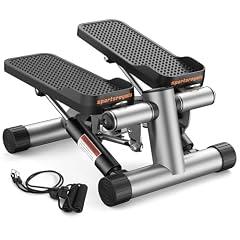
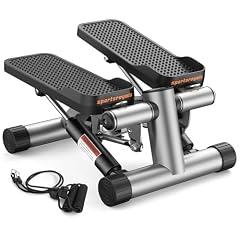
This is a compact, hydraulic twist mini-stepper for home use. It has two pedals, attached elastic resistance bands, and a small battery-powered display. The manufacturer manual lists a 330-pound maximum user weight, directs users to use a solid level surface with clear space around the product, inspect it before use, and begin stepping slowly. It also says the equipment is not for therapeutic use. Stepping can contribute to aerobic activity when performed at a sufficient intensity and weekly volume. Human research supports stair-climbing exercise, while federal guidance calls for 150 to 300 minutes of moderate aerobic activity per week. This product’s own manual advises beginning at five minutes and building toward 30 minutes, but it also requires the hydraulic tube to rest after 20 minutes of exercise. No model-specific independent load, stability, monitor-accuracy, or safety certification record was located.
What works
- The manual gives concrete basic-use safeguards, including a level surface, pre-use inspections, secure fasteners, suitable clothing, and keeping fingers away from moving parts.
- Its 330-pound user limit is consistently stated in the manual and in an independent retailer listing, although no independent dynamic-load test was located.
- The manual sets a 20-minute hydraulic-use limit, which is an important heat-management instruction for this mechanism.
- The resistance-band instructions specify a maximum stretch length of 185 cm and tell users to check the hook connections before each band workout.
- Short, progressive stepping sessions are compatible with evidence that stair-climbing can support aerobic fitness and physical-activity goals.
What does not
- The product title says 350 pounds or more, but the product specifications and manual state 330 pounds. That unresolved capacity contradiction weakens confidence in the advertising.
- No publicly checkable certificate or accredited test report was found for this exact product under the stationary-equipment safety standards for steppers.
- The display is advertised to show time, counts, calories, and distance, but no calculation method, tolerance, or independent accuracy validation was located. Calorie and distance readings should be treated as rough motivation data.
- It has no fixed handrail or other external handhold. Users with impaired balance, dizziness, significant weakness, or a fall history have less margin for recovery than on supported equipment.
- Material disclosure is limited to alloy steel. No accessible declarations were found for pedal grips, coatings, elastomer bands, lubricants, or battery chemistry.
Who is it for
This product fits an adult who wants a small indoor stepping option for brief, self-paced activity, has a clear level floor, can step on and off without assistance, and is comfortable following inspection and cooldown instructions. It is most appropriate for someone using it as one way to accumulate aerobic activity, rather than relying on its display for precise calorie tracking. The attached bands can add light upper-body movement, provided the user checks their connections and stays within the stated stretch limit.
Who is it not for
It is not a good fit for people who need a handrail, close supervision, rehabilitation equipment, or clinically guided exercise. The manual itself says it is not for therapeutic use. People near or above 330 pounds should not use it because the listing contains a conflicting higher capacity claim and no independent load-test evidence was found. It is also poorly suited to uninterrupted longer sessions because the manual calls for a hydraulic rest after 20 minutes. Avoid it if knee, hip, ankle, back, balance, or cardiovascular symptoms make unsupported stepping unsafe without clinician clearance.
Integrity
The meaningful health evidence concerns stepping activity generally, not this exact product. Stair-climbing research supports its potential as aerobic exercise, but benefits depend on intensity, progression, and enough weekly activity. The manual includes useful boundaries, such as gradual session progression, a 20-minute hydraulic cooldown, pre-use checks, and a statement that the product is not therapeutic equipment. Its unsupported joint-protection and full-body marketing should not be read as proof of treatment, injury prevention, or precise calorie burn. No product-specific independent safety certificate, accredited laboratory report, recall, or public federal incident record was located in the sources searched. The product is described as alloy steel, but disclosure does not identify its coatings, grips, bands, lubricants, or display materials. The display uses AAA batteries, yet no product-specific battery disposal guidance or parts catalog was found. A one-year limited warranty is stated in the accessible manual, while resistance bands are treated as consumable items, so long-term repairability remains unclear.

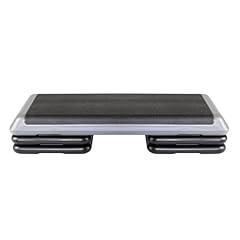
The Step Original Aerobic Platform
Overview
This is a full-size, static aerobic step platform for stepping workouts, step-ups, lunges, incline exercises, and similar bodyweight routines. It includes a 43 by 16 inch platform and four risers, with manufacturer-stated height settings of 4, 6, and 8 inches. The maker states that the platform is made in the United States from recyclable high-density polyethylene, has a nonslip cushion top and four nonskid feet on both the platform and each riser. The supplied safety instructions confirm a 350 pound maximum user capacity and require a stable, level floor, full-foot contact, pre-use stability checks, and replacement rather than repair if the platform or risers crack or the mat detaches. It is a passive platform, not a powered stepper, so it has no motor, hydraulics, cables, heat-producing drive system, or workout monitor. No publicly checkable model-specific ISO conformity certificate or independent load-test report was located.
What works
- Three height settings let a user begin at 4 inches and progress to 6 or 8 inches, manufacturer-stated.
- The 43 by 16 inch platform provides a comparatively long landing area for controlled foot placement.
- Published safety directions specifically require checks for cracked plastic, worn feet, loose matting, secure risers, and floor grip before use.
- The static design avoids hydraulic leaks, resistance failures, hot cylinders, cables, and unvalidated calorie readouts.
What does not
- The 350 pound capacity is manufacturer-stated. No publicly available model-specific dynamic-load or durability test report was located.
- There is no handhold or side support. Loss of balance remains a meaningful risk, especially during fast routines, lateral moves, or use at 8 inches.
- The manufacturer instructions warn that incorrect riser stacking can make the platform unstable and cause a fall.
- Warranty information is inconsistent across available product records, with a 90-day limited warranty shown by a major retailer and a one-year term in the marketplace record.
- Material disclosure identifies high-density polyethylene, but does not provide a full material declaration, chemical testing record, or coating and rubber composition.
Who is it for
This product fits an adult who wants a simple home platform for controlled step aerobics, step-ups, and bodyweight strength work, and who can exercise on a flat, nonslip floor. Its 4, 6, and 8 inch configurations are useful for gradual progression when the user is comfortable stepping without a handrail. It also suits people who prefer equipment without a motor, electronics, or hydraulic resistance system. Users should stay within the manufacturer-stated 350 pound limit and inspect the platform, risers, feet, and cushion surface before each session.
Who is it not for
It is not well suited to people who need a handrail, external balance support, or a clinician-directed rehabilitation setup. Those with recent falls, substantial balance impairment, painful knee, hip, ankle, or back symptoms, or conditions that affect foot sensation should not assume a nonslip surface makes unsupported stepping safe. It is also a poor fit for users who need calibrated training data, including time, cadence, steps, or calorie estimates, because there is no monitor. Do not use it if any riser, foot, platform section, or cushion surface is cracked, worn, loose, or damaged.
Integrity
Stepping can contribute to aerobic activity when performed at a sufficient intensity and accumulated consistently. Federal guidance calls for 150 to 300 minutes weekly of moderate aerobic activity, plus muscle-strengthening activity on two days weekly. This platform can support that kind of movement, but it does not prescribe a session dose or make a therapeutic claim. Technique and height still matter. Biomechanics research links stepping form and knee, ankle, and spine loading, so beginning at the lowest setting and using controlled full-foot contact is prudent. The maker identifies the main construction as recyclable high-density polyethylene and sells compatible riser packs, which may help keep a usable platform in service. The available safety directions call for replacement, not repair, after cracks, worn feet, or detached matting. No public model-specific third-party safety certificate, accredited load-test report, full chemical declaration, or end-of-life recycling instructions were located. No motor, battery, display, or hydraulic system adds electronic waste, battery disposal, or fluid-leak concerns.

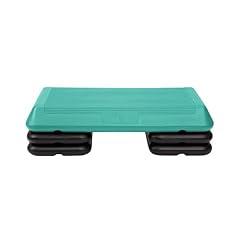
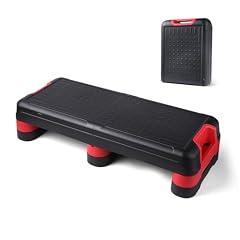
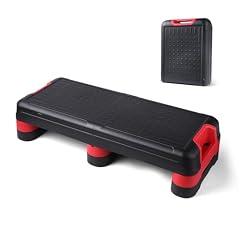
Freestyle STEP Exercise Platform with Stackable Risers
Overview
This product is a compact, static aerobic platform for step aerobics, step-ups, lunges, incline work, and similar bodyweight exercises. It includes a 28.5 by 14.5 inch platform and four risers. The maker states that the platform can be set at 4, 6, or 8 inches and is rated for users up to 275 pounds. It is not a motorized stair machine, and it has no pedals, resistance mechanism, handrail, electronic display, or calorie tracker. The manufacturer states that the platform is made from recyclable high-density polyethylene, with a grooved nonslip top and nonskid feet. Its safety sheet instructs users to check stability and rubber feet before each session, keep the entire foot on the platform, use controlled steps, and never jump on it. No public model-specific independent safety certificate or accredited dynamic-load report was located.
What works
- The fixed platform design eliminates hydraulic-cylinder heat, leaks, pedal failures, and electronic tracking claims.
- The maker provides concrete setup limits, including a 275-pound capacity and instructions to inspect footing and platform stability before use.
- Three stated height settings allow a lower starting height and gradual intensity progression.
- Human research supports stair-climbing and step-up style activity as a route to improved cardiorespiratory fitness when performed regularly at sufficient intensity and volume.
What does not
- The 275-pound capacity is manufacturer stated, not supported by a publicly located accredited test report for this exact product.
- No publicly checkable model-specific ISO conformity certificate or independent mechanical safety verification was located.
- The compact 14.5-inch platform has no handhold, which leaves balance control entirely to the user.
- The 90-day manufacturer warranty is short for a repeatedly loaded fitness product.
- Material disclosure identifies HDPE, but does not publicly detail the nonslip surface, feet, colorants, or other contact materials.
Who is it for
It suits an adult who wants a small, nonpowered platform for controlled step aerobics, step-ups, lower-body conditioning, or bodyweight circuit work in a home with level indoor flooring. The 4-inch setup is the sensible entry point for people building familiarity with stepping, while the 6- and 8-inch positions provide progression for users with stable balance and sound movement control. It also fits people who do not need workout metrics, resistance adjustment, or a handrail.
Who is it not for
It is not appropriate for anyone above the stated 275-pound limit, or for people who need a rail, wall support, or supervised balance assistance to step safely. People with current knee, hip, ankle, back, cardiac, or neurologic conditions should not assume that a low-impact marketing description makes stepping appropriate for them. It is also a poor fit for jumping, plyometric drills, unstable flooring, children using it unsupervised, or users seeking a full-size group-fitness platform.
Integrity
Stepping is a legitimate form of aerobic activity, and human stair-climbing research has found improvements in cardiorespiratory fitness with progressive training. That evidence supports the exercise format, not a unique health outcome from this particular product. Higher step heights can increase exercise demand and knee loading, so beginning at the lowest height, using controlled full-foot placement, and progressing gradually matters. The product's own safety instructions specifically say not to jump and to test its stability before use. The maker identifies the main construction material as recyclable high-density polyethylene and states that the product is made in the United States. That is useful baseline material information, but public documentation does not specify recycled content, a take-back program, detailed chemical declarations, replacement feet or risers, or end-of-life instructions. The product has no battery or display to manage as electronic waste, but its 90-day warranty offers limited evidence of long-term repair support.

JLL Smart Twist Stepper with Resistance Bands
Overview
This is a compact, battery-powered twist stepper for standing home workouts. It uses hydraulic cylinders, alternating pedals with a side-to-side motion, two detachable resistance bands, Bluetooth connectivity, and a simple display for time, count, cadence, and calories. Its stated footprint is 16.5 by 15.2 by 14.8 inches and its listed weight is about 16.9 pounds, according to a retailer reproducing the product specifications. The manufacturer manual documents adjustable step height and adjustable band length, plus weekly pedal and bolt checks, cable lubrication, and hot-cylinder warnings. It also says users struggling to balance should hold onto something for support. The stated maximum user weight is not reliable as presented. The US listing says 300 pounds, while the manufacturer’s UK page gives both 113 kg and 158 kg for what appears to be the same product. No model-specific independent load, stability, or monitor-accuracy test report was located.
What works
- Adjustable step height can allow a shorter or deeper stepping motion, according to the manufacturer manual.
- The bands have an adjustable rope length, which changes their tension and can help fit different arm reaches.
- The manual gives concrete use and maintenance instructions, including clear-floor space, weekly hardware checks, cable inspection, lubrication, and cylinder cooldown.
- The monitor defines its count metric as one completed left-and-right stepping cycle, rather than leaving the number unexplained.
What does not
- The product has conflicting maximum-user-weight claims, including 300 pounds, 113 kg, and 158 kg. This is a material load-safety inconsistency.
- No publicly checkable, model-specific independent test report or certification was found for stability, dynamic loading, or compliance with the stepper-specific ISO safety standard.
- There is no built-in handhold. The manual specifically tells users who have difficulty balancing to hold onto something else for support.
- The display reports calories, but the manual provides no calorie algorithm, user inputs, accuracy tolerance, or validation evidence.
Who is it for
It suits an adult who wants a very small indoor cardio device for short, self-paced sessions and has a clear, level area with at least 2 feet of surrounding space. It is most appropriate for a user with sound balance who is comfortable performing routine checks, allowing hydraulic cylinders to cool, and treating the calorie display as a rough activity prompt rather than health data. Adjustable step height and band length may help a user begin with a smaller movement range and modest upper-body resistance.
Who is it not for
It is not suited to people with impaired balance, a recent fall, significant dizziness, or a condition that makes unsupported stepping unsafe. The manual’s advice to hold another object when balance is difficult is not equivalent to a fixed handrail. It is also a poor fit for users near any advertised weight limit because the product pages conflict on capacity. Anyone needing validated calorie data, commercial-duty durability, a confirmed safety certification, or a carefully controlled resistance progression should use a product with model-specific independent evidence.
Integrity
Stepping can contribute to aerobic activity when sessions are sufficiently intense and accumulated toward public-health activity targets. Human research on stair climbing supports cardiometabolic benefits, but this product has no disclosed intensity range or model-specific outcome study. The manual appropriately includes medical cautions, level-floor setup, a 2-foot clearance area, moving-part warnings, weekly inspection, and a cooldown warning for hot hydraulic cylinders. Its claim of a low-impact, full-body workout is not supported by model-specific human testing. The frame is described only as alloy steel, with no public material declaration for pedal plastics, grips, coatings, hydraulic fluid, or band composition. The monitor uses a CR2032 button-cell battery. The manual gives strong battery-ingestion and disposal warnings, and identifies replacement parts by model and part number through the manufacturer contact channel. It makes a general recyclability statement, but provides no recycled-content evidence, repair-parts catalog, or detailed end-of-life instructions. No model-specific US recall or public incident record was identified during this review.

Sunny Health & Fitness Mini Stepper P2000
Overview
This compact, hydraulic up-and-down stepper is intended for indoor home use. It has two pedals, a small battery-powered display, adjustable pedal height, and a manufacturer-stated 220-pound user limit. The maker lists a 16.3 by 13 inch footprint and 15.8-pound product weight, so it is designed for short standing sessions in constrained spaces rather than for a supported stair-climber workout. The product manual independently available through the marketplace identifies two hydraulic cylinders, a cable and pulley arrangement, and 320 by 120 mm pedals. It also gives important use limits, including a level surface, 2 feet of surrounding clearance, regular fastener inspection, and stopping use for damage or unusual noise. Human research supports stair-climbing activity as a way to improve cardiorespiratory fitness, but no model-specific exercise or load testing was located.
What works
- Compact footprint can make brief indoor stepping sessions practical in small homes, manufacturer-stated.
- Pedal height can be adjusted up or down, which allows a more gradual starting range, manufacturer-stated.
- The manual includes concrete setup and inspection directions, including level-floor use, clearance, tightening checks, and stopping after unusual noise.
- The hydraulic cylinders have an explicit cool-down warning, rather than leaving hot-surface risk unaddressed.
- A named US business, telephone support, warranty terms, manual, and replacement-parts contact are available.
What does not
- There is no located public certificate or accredited, model-specific test report for stability, dynamic load capacity, pedal slip resistance, or mechanism durability.
- This is a no-handlebar design. The manual says users having balance difficulty should hold onto something for support, which limits its suitability for unsupported use.
- The hydraulic cylinders may become dangerously hot after prolonged use. The manual tells users to let them cool, but gives no duty-cycle duration.
- The display reports calories, steps, time, and total count, but no calorie equation, accuracy tolerance, or independent validation was located.
- Sunny Health and Fitness publishes a broad California Proposition 65 warning that says its products may contain chemicals associated with cancer or reproductive harm, without identifying the relevant component or chemical for this product.
Who is it for
It suits an adult within the manufacturer-stated 220-pound limit who wants a compact, indoor device for short bouts of self-paced stepping and can exercise safely without a built-in handhold. It is most appropriate for someone with clear floor space, stable footwear, and enough balance to use two moving pedals while keeping the unit on a level surface. Adjustable pedal height can help a generally healthy beginner start conservatively, provided intensity and duration are progressed gradually.
Who is it not for
It is not well suited to people with poor balance, recent falls, dizziness, significant mobility limitations, or anyone who needs a rail or fixed handhold during exercise. People with unstable knee, hip, ankle, back, or cardiovascular symptoms should seek individualized clinical guidance before using a standing stepper. It is also unsuitable for commercial use, children, households unable to maintain the required clear space, and users over the manufacturer-stated weight limit. Avoid touching the hydraulic cylinders after a prolonged session.
Integrity
Stepping can contribute to aerobic activity when performed at an appropriate intensity and accumulated regularly. Federal guidance recommends 150 to 300 minutes weekly of moderate aerobic activity for most adults, and human stair-climbing studies support potential cardiorespiratory benefits. Those findings support the activity category, not a measured health outcome from this exact product. The manual appropriately advises stopping for chest symptoms, dizziness, or unusual shortness of breath, and notes that excessive exercise can be harmful. The product has a steel frame, hydraulic cylinders, a cable and pulley, plastic components, and a replaceable display battery. The published parts list and US support contact improve repair traceability, but no recycled-content, material declaration, coating disclosure, or product-specific end-of-life plan was found. The manufacturer also gives a broad Proposition 65 warning without naming applicable chemicals or components. Used button batteries should be kept from children and routed to an appropriate battery-recycling option where available.
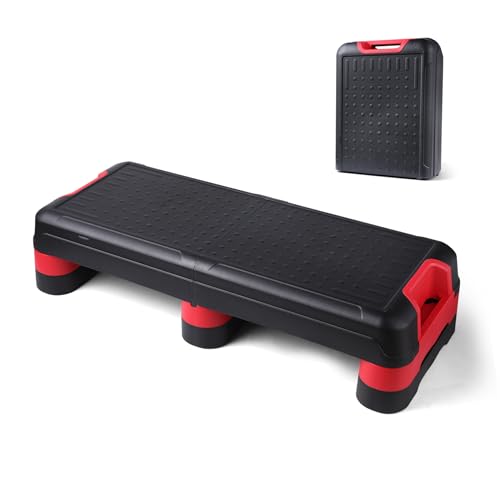
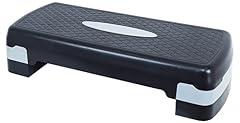
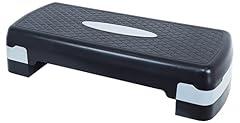
STOODER 33.5" Aerobic Exercise Step Platform
Overview
This is a nonpowered, foldable aerobic step platform, not a pedal stepper. The product is listed as 33.5 by 12.8 inches, weighs 7.2 pounds, and has three manufacturer-stated working heights of 4, 5.5, and 7.5 inches. It folds to store its four risers inside the base. The seller states that the plastic platform has a textured non-slip top, rubber feet, and a 300-pound capacity. Those are manufacturer claims, not independently verified load or stability results. No model-matched ISO conformity record, accredited laboratory report, public manual, or public certification was located. Retailer-reproduced customer feedback includes reports of risers or attachments coming loose, so careful inspection and low-speed use matter more than the capacity claim alone.
What works
- Three height settings can support gradual progression, according to the manufacturer.
- The long, foldable platform and built-in riser storage can reduce storage space between sessions, according to the listing.
- It is a static platform with no motor, hydraulic cylinder, cable, or workout display to overheat, leak, or misreport activity.
- Step-ups can contribute to aerobic activity when performed at an individually appropriate pace and volume.
What does not
- The stated 300-pound capacity has no located model-specific dynamic-load or durability test report.
- Retailer-reproduced customer feedback describes risers or attachments detaching too easily. These reports are not independent testing, but they are relevant to fall risk.
- No public safety certificate, accredited test report, assembly manual, inspection schedule, or replacement-parts catalog was located.
- The listing makes broad fat-reduction and body-toning claims without a product-specific exercise dose, outcome study, or qualification.
- The listing identifies only plastic and rubber-like foot pads, without a resin type, coating disclosure, material declaration, or chemical exposure documentation.
Who is it for
This product fits an adult who wants a compact, nonpowered platform for controlled step-ups, bodyweight movements, or low-complexity aerobic routines on a hard, level indoor floor. The 4-inch setting is the most sensible starting point for a beginner who has stable balance and no current lower-limb symptoms. It also suits someone with limited storage who values the manufacturer-stated folding format. Users should inspect each riser engagement before every session and increase height only after their technique remains controlled.
Who is it not for
It is not a good match for anyone with impaired balance, a recent fall, significant knee, hip, ankle, or back symptoms, or a clinician-imposed activity restriction without professional guidance. Stair ascent creates substantially greater knee loading than level walking, and the 7.5-inch setting may be unnecessarily demanding. It is also unsuitable for fast lateral drills, jumps, or intense intervals if any riser feels loose. Households needing verified load testing, documented replacement parts, or independently certified fitness-equipment safety should use a product with those records.
Integrity
Stepping can help build toward the federal physical-activity target when the user accumulates enough moderate or vigorous activity. The product itself does not set pace, session duration, resistance, or a safe progression plan, so it cannot establish whether a particular workout reaches that target. Its three listed heights offer a practical way to begin lower and progress, but greater stair-like knee flexion and loading can aggravate some knee conditions. The manufacturer identifies high-strength plastic and claims it is recyclable, but does not disclose the plastic resin, recycled content, coatings, rubber composition, or local recycling route. No public material declaration, safety data sheet, repair guide, or replacement-parts catalog was found. No STOODER-specific CPSC recall or California Proposition 65 warning was located in the searched public databases as of August 16, 2026. That is not the same as independent safety or chemical verification.