
10 Best Solar Generators
 Daniel Kenitz
Please note that we participate in affiliate marketing programs. When you purchase through links on our site, we may earn a commission. As an Amazon Associate we earn from qualifying purchases. This comes at no additional cost to you and helps support the resources required to provide valuable content.Advertising Disclosure
Top-rated Solar Generators Comparison
1

2
4
5
6
7
8
9
Solar generators: what matters before you buy
A solar generator is a rechargeable battery power station that stores electricity and delivers it through AC outlets, USB ports, 12V sockets, or other DC outputs. Solar panels may recharge it, but they are often optional, and a panel’s rated wattage is not the same as the energy the station will receive outdoors. These products are best understood as portable energy reserves not automatic replacements for a permanently installed generator, home battery, or professionally installed backup system.
The first question is usable energy, measured in watt-hours (Wh), not the headline battery capacity alone. In the supplied products, independent testing commonly found AC-delivered energy below the nominal rating because inverter and conversion losses reduce what reaches the outlets. A station advertised at roughly 1,024Wh, for example, may deliver substantially less through AC. Look for an independent test that identifies the exact product, load, conditions, and measured watt-hours. Also check whether the figure applies to AC outlets, USB output, or the battery before conversion.
Output power has two separate numbers: continuous watts and surge watts. Continuous output determines what a device can run normally. Surge output is a short-lived allowance for startup demand and should not be treated as ordinary capacity. Some products use a special mode for resistive heating loads or market an “X-Boost” or “Power Lifting” figure that does not increase general-purpose continuous output. Compare the station’s continuous rating with both the running and startup demand of every appliance. Heating and cooking devices, motors, compressors, and power tools can exceed a small station’s limits quickly.
Solar claims also need careful reading. Confirm the maximum photovoltaic input voltage, current, wattage, connector, and charge conditions in the manual. A panel rated at 200W or 400W will not produce that amount continuously: sunlight, angle, shade, temperature, and panel configuration all matter. A bundled panel is different from an optional panel, and a stated charge time may describe ideal conditions rather than ordinary outdoor use. The panel and station should be electrically compatible; exceeding the station’s solar open-circuit voltage can damage it.
For safety, look for an exact-product listing in a U.S. Nationally Recognized Testing Laboratory register, such as UL Product iQ, Intertek’s ETL directory, or CSA’s product database. A UL 2743 listing is relevant to portable power packs. A transport document such as UN 38.3, an FCC authorization for wireless functions, or a generic “UL standard” statement is not the same as complete product safety certification. Check the model and serial labeling, seller or importer accountability, recall notices, and CPSC incident and recall databases.
Backup claims need similar restraint. A stated 10- or 20-millisecond transfer is not zero-interruption power and is not automatically a certified UPS. UL 1778 evidence is relevant when a product makes UPS or EPS claims. None of these portable stations should be connected to household wiring or used to backfeed a home without appropriately designed transfer equipment and qualified installation.
Across the supplied reviews, the recurring safety limitations are clear: no exact-product U.S. NRTL listing was located for the reviewed products; many batteries are sealed or not user-replaceable; several backup modes are unsuitable for servers, workstations, or interruption-sensitive medical equipment; and the stations should be kept dry, ventilated, within their temperature limits, and away from damaged cords, moisture, heat, or unauthorized repairs. Large lithium batteries should not go in household trash or curbside recycling.
Integrity
The supplied reviews assess more than capacity and convenience. They distinguish built-in safeguards from independently verified safety, nominal battery size from measured output, and a long warranty claim from a real repair or end-of-life pathway. The topic scores below are relative to the supplied products; higher scores indicate stronger evidence or safeguards in that area, not a guarantee of safe use.
HHealth & Safety
User safety impact
This measures protection against battery fire, burns, shock, overheating, and unsafe charging or discharge. For a portable power station, clear temperature limits, overload shutdown, short-circuit protection, ventilation guidance, and safe-use warnings matter. Supplied scores ranged from 69 to 76: higher-scoring products documented more concrete safeguards, while lower-scoring ones had more ambiguity or weaker support.
Safe outlets, pass-through, and backup use
This covers outlet wiring, overload response, pass-through behavior, grounding, transfer claims, and warnings against backfeeding a home. It matters because a portable station can be mistaken for a home electrical system or a zero-interruption UPS. Scores ranged from 58 to 76. The stronger products clearly limited backup use; weaker ones made or carried UPS-related claims without adequate transfer or installation evidence.
Recall history and traceability
This measures whether buyers can identify the exact model, find safety notices, determine who is responsible, and obtain a remedy if a defect is reported. Traceable labels and accountable sellers matter for lithium battery products because recalls depend on model and serial identification. Supplied scores ranged from 70 to 76, with higher scores reflecting clearer support and fewer traceability concerns—not proof that no future recall can occur.
Battery life, repairability, and warranty
This measures cycle-life evidence, battery replacement or repair access, firmware support, spare parts, and warranty terms. A sealed battery may reduce unsafe do-it-yourself repair but can make the product early e-waste. Scores ranged from 60 to 79. Higher-scoring products paired longer stated coverage or support with better service information; lower scores relied on unsupported cycle claims, conflicting warranty details, or no replacement pathway.
EEvidence
Independently verified safety
This measures whether safety claims are backed by an accredited U.S. NRTL listing for the exact product, rather than a seller badge, transport document, or self-issued statement. It is especially important for indoor charging and AC outlets. Scores were tightly grouped from 68 to 73 because no exact-product U.S. NRTL listing was located for the supplied products; a higher score indicates relatively stronger supporting evidence, not confirmed certification.
Real usable power and battery capacity
This measures independently tested watt-hours, continuous output, surge behavior, voltage stability, and waveform against the listing. It matters because nominal capacity and peak wattage can overstate practical performance. Scores ranged from 68 to 88. Higher-scoring products had exact-product testing that measured delivered energy or sustained output; lower-scoring products relied mainly on manufacturer specifications.
Honest capacity, runtime, and backup claims
This measures whether capacity, runtime, fast charging, UPS, home-backup, and solar-generator claims state their conditions and included equipment. Scores ranged from 50 to 84. Higher-scoring listings separated continuous from peak output and disclosed limitations; lower-scoring products had conflicting chemistry, capacity, warranty, panel, or output information, or presented broad backup claims without reproducible conditions.
Solar charging performance and panel disclosure
This measures whether solar-input limits, panel inclusion, rated panel wattage, compatibility, and weather dependence are disclosed and supported. Scores ranged from 52 to 86. Higher-scoring products provided specific voltage, current, wattage, or independent solar-input results. Lower-scoring products had incomplete input specifications, confusing bundle information, or charge-time claims that depended on ideal conditions.
Meaningful certifications, not badge clutter
This measures whether a claimed certification matches the exact product, function, and U.S. use case. It separates product safety certification from FCC radio compliance, UN 38.3 transport testing, component marks, and vague “UL standard” language. Scores ranged from 68 to 78. Higher-scoring products had clearer scope or model documentation; none should be assumed certified when an exact listing was not found.
EEcology
Environmental impact and end-of-life responsibility
This measures durable design, clearly identified battery chemistry, take-back or recycling access, and accurate disposal instructions. It matters because lithium battery products should not enter household trash or curbside recycling. Scores ranged from 68 to 76. Higher-scoring products identified chemistry and offered a usable recycling route or clearer end-of-life guidance; lower scores lacked take-back, repair, or specific recycling information.
Battery life, repairability, and warranty
From an ecological perspective, this topic asks whether the station can remain useful rather than become waste when its battery ages. Look for cycle testing with stated depth of discharge, temperature, charge rate, and end-of-life capacity, plus repair or replacement support. The supplied scores show that long manufacturer cycle claims alone did not produce the strongest results when test conditions and service pathways were missing.
Full reviews

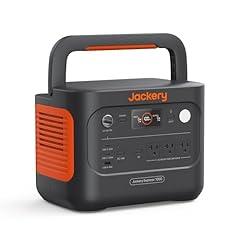
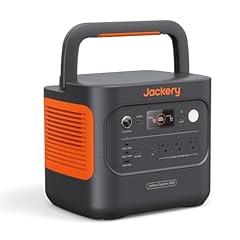
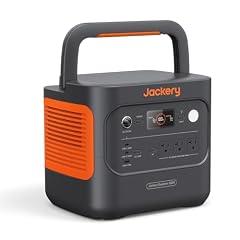
Jackery Explorer 1000 v2 Portable Power Station
Overview
This is a 23.8-pound portable battery power station with a 1,070Wh lithium iron phosphate battery, three 120V AC outlets sharing a manufacturer-stated 1,500W continuous output, USB ports, a 12V car outlet, and up to 400W solar input. It is intended for portable electronics, camping equipment, selected appliances, and limited outage backup, rather than whole-home power. The manufacturer documents a 3,000W surge rating, 4,000 cycles to at least 70 percent capacity, and an emergency AC charging mode. Independent product testing reported 910Wh of usable delivered energy, which is about 85 percent of the nameplate capacity after conversion losses. The manual also defines important limits, including indoor and dry-use requirements, a 20 millisecond backup transfer, and no suitability for servers, workstations, or other equipment requiring uninterrupted power.
What works
- Independent testing reported 910Wh of usable output, giving a concrete basis for planning runtimes rather than relying only on the 1,070Wh battery rating.
- The documented 1,500W continuous AC output and three AC receptacles can support several modest loads, provided their combined running and starting demand stays within limits.
- The lithium iron phosphate battery is manufacturer-rated for 4,000 cycles to at least 70 percent capacity, and a battery-saving setting is provided.
- The manual gives concrete operating temperature limits, ventilation requirements, fault guidance, and warnings to stop use after damage, overheating, unusual odor, or fluid exposure.
- The product has a documented three-year standard warranty, with a two-year extension available through registration.
What does not
- No exact-model UL, ETL, or CSA electrical safety listing was located in the relevant U.S. certification registers. The manual displays FCC, British Columbia, and disposal marks, which do not establish U.S. NRTL product safety certification.
- The 20 millisecond backup transfer is not zero-transfer UPS protection. The manual specifically warns against servers, workstations, and other equipment with high uninterrupted-power requirements.
- Solar panels are not included with the basic product. Solar performance depends on weather and panel setup, and the documented 400W maximum input limits larger arrays.
- The 4,000-cycle durability figure is manufacturer-stated. No exact-model independent long-term cycle-life report was located.
- The battery is not user-replaceable under the manual. The manufacturer instructs users not to remove it without authorization, which limits repairability and can complicate end-of-life handling.
Who is it for
This product suits a camper, road-trip user, apartment resident, or outage-prepared household that needs portable power for phones, laptops, lights, a CPAP after compatibility testing, a small cooler, or selected low to medium draw appliances. It is especially relevant when carrying weight matters, since the unit is under 24 pounds while providing roughly 910Wh of independently measured usable AC energy. The buyer should be willing to calculate appliance running and startup watts and follow dry, ventilated indoor-use limits.
Who is it not for
It is not for anyone needing a whole-home generator, extended refrigerator backup without recharging, or reliable operation of high-draw heating appliances, large air conditioners, or tools that exceed 1,500W continuous demand. It is also unsuitable as protection for data servers, workstations, medical equipment with strict uninterrupted-power requirements, or loads that cannot tolerate a 20 millisecond transfer. Do not use it outdoors in rain or snow, near water, in enclosed unventilated spaces, or as a substitute for a properly installed transfer-switch backup system.
Integrity
The unit uses lithium iron phosphate chemistry, and its manual includes practical safeguards for fire, shock, and burn risk. It directs users to keep ventilation clear, avoid moisture and heat, stop use after damage or abnormal odor, and keep the product away from children. It also gives a defined charging range of 32 to 113 degrees Fahrenheit and discharge range of 14 to 113 degrees Fahrenheit. Those are useful safety limits, but no exact-model UL, ETL, or CSA listing was found to independently confirm the full portable-power-station safety system. The manufacturer states 4,000 cycles to at least 70 percent capacity and provides a three-year warranty with a possible two-year extension, both of which can support a longer service life. However, the battery is not intended for owner removal or replacement. At end of life, do not place the product in household trash or curbside recycling. EPA guidance says lithium battery devices need specialized recycling or household hazardous-waste handling because damaged batteries can start fires during transport and processing.

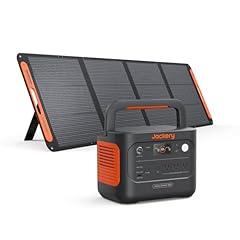
Jackery Solar Generator 1000 v2 with 200W Panel
Overview
This bundle combines a 23.8-pound portable power station with one folding 200W solar panel. The station uses a 1070Wh lithium iron phosphate battery, has three 120V AC outlets, USB outputs, and a 12V car-style output. It is intended for camping, road trips, temporary off-grid power, and limited appliance backup rather than permanent home power. Jackery states that the station supplies 1500W continuous AC power, accepts up to 400W of solar input through two DC ports, and has a 3000W surge rating. An independent published capacity test reported about 910Wh delivered, or roughly 85 percent of the stated battery capacity, which is a realistic result once inverter losses are included. The included panel is rated at 200W under standardized laboratory sunlight conditions, so outdoor charge time will vary substantially with sun angle, clouds, temperature, and shading.
What works
- An independent published test reported about 910Wh of usable energy through AC output.
- The manufacturer provides clear electrical limits, including 1500W continuous AC output, 3000W surge, and 400W maximum solar input.
- The bundle includes both the station and a 200W folding panel, rather than describing solar capability without supplying a panel.
- Lithium iron phosphate chemistry and a manufacturer-stated 4000-cycle rating to 70 percent capacity support longer-term use, though the cycle claim is not independently verified.
- The manufacturer lists a 3-year warranty plus 2 extra years for direct purchases.
What does not
- No exact-model listing was located in the public UL, ETL, CSA, or TÜV certification registers checked. Marketing language about UL drop testing is not the same as an exact-product NRTL safety listing.
- The approximately 910Wh independent AC result is useful, but it is lower than the 1070Wh battery rating because conversion losses reduce energy delivered from the AC outlets.
- The 200W panel rating is a standardized test figure, not an expected all-weather charging result. Jackery's roughly 7.5-hour one-panel charge estimate depends on favorable conditions.
- It has bypass operation, but the available manual material states that it does not support 0ms switching. It should not be treated as uninterrupted power protection for equipment that cannot tolerate a transfer interruption.
- No manufacturer battery replacement program, repair parts catalog, or product-specific take-back program was identified in the reviewed material.
Who is it for
This product fits campers, road trippers, and outage-prepared households that need portable power for phones, laptops, lights, a small refrigerator, medical devices with appropriate runtime planning, or moderate tools and appliances. Its 23.8-pound station is manageable for car-based use, while the included folding panel can replenish energy during multi-day trips when weather is favorable. It also suits users who can check appliance labels and keep normal running demand under 1500W, including startup surges.
Who is it not for
It is not designed for permanent household wiring, whole-home backup, or connection to a building circuit without properly installed transfer equipment. Do not use it to backfeed a wall outlet, panel, or generator inlet. It is also unsuitable for users needing zero-interruption UPS behavior, or for consistently running electric space heaters, large air conditioners, well pumps, induction ranges, or other loads that exceed its 1500W continuous limit or have demanding startup surges. Buyers needing guaranteed solar production in poor weather should not rely on the 200W nameplate alone.
Integrity
The station uses lithium iron phosphate cells, a chemistry generally selected for cycle life and thermal stability, but any large lithium battery can present fire, burn, and shock hazards if crushed, overheated, wet, modified, or charged with unsuitable equipment. Jackery specifies charging only from 32 to 113°F and discharging from 14 to 113°F. The available materials provide operating limits and output ratings, but an exact-model public NRTL listing was not located in the certification registers checked. Jackery states 4000 cycles to at least 70 percent capacity and a 3+2-year direct-purchase warranty. Those are manufacturer claims, not independently validated lifecycle results. The battery is not presented as user-replaceable, and no product-specific take-back program was found. At end of life, EPA guidance is to use a battery recycler or household hazardous-waste collection, not household trash, and to protect terminals against short circuit during transport. No matching CPSC recall was located in the records checked.

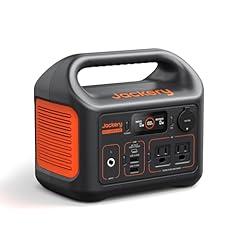
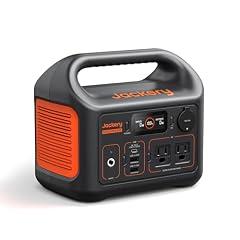
Jackery Explorer 300 Portable Power Station
Overview
This is a compact, 7.1-pound portable lithium-ion power station with a 293.8Wh battery, two 120V AC outlets, USB outputs, a 12V car socket, and solar, vehicle, wall, or USB-C charging. It is intended for modest off-grid loads such as phones, cameras, lights, laptops, small fans, and other equipment whose combined draw stays within its stated 300W continuous AC limit. Jackery documents a 500W surge allowance, regulated outputs, temperature, overcurrent, short-circuit, overvoltage, undervoltage, and overcharge protections. Independent testing measured 247Wh of usable energy, about 84 percent of rated battery capacity, which closely aligns with Jackery's stated runtime formula using 85 percent conversion efficiency. The manual also explicitly says it is not a UPS. Solar charging requires a separately purchased panel, and stated charge times depend on sun and weather.
What works
- Independent testing measured 247Wh usable energy, closely matching the manufacturer's 85 percent runtime allowance.
- The manufacturer specifies a 300W continuous AC limit and 500W surge limit, with overload shutdown instructions.
- The manual documents input limits, solar weather dependence, output ratings, operating temperatures, and a practical runtime formula.
- The manual displays SGS US and TÜV SÜD marks, and an SGS registry result identifies Jackery contract number 801937.
What does not
- Publicly accessible certification records did not establish the exact safety standard and model scope behind the marks shown in the manual.
- It is not a UPS, so it cannot automatically keep critical equipment powered through an outage.
- Pass-through charging is supported, but Jackery says it is not recommended because it can shorten battery life.
- The internal battery is not user-replaceable, and the stated 800-cycle retention figure is manufacturer-provided rather than independently verified.
- Solar hardware is not included, and real recharge time varies substantially with sunlight, panel orientation, shading, and weather.
Who is it for
This product suits a camper, road traveler, field photographer, or remote worker who needs a light, carryable source for low-draw electronics and has realistic expectations about energy limits. Its independently measured 247Wh usable capacity can support charging devices, lights, a laptop, or a small DC load. It also fits users who can plan loads below 300W, want USB-C charging flexibility, and can recharge from a vehicle, wall outlet, or a separately obtained compatible solar panel.
Who is it not for
It is not suited to households relying on uninterrupted power for medical equipment, networking hardware, security systems, sump pumps, or refrigeration. The manufacturer says it is not a UPS, and its 300W continuous output and roughly 247Wh measured usable energy are too limited for many motor-driven, heating, cooking, or long-duration outage loads. It is also unsuitable for buyers who require a replaceable battery, documented exact-model NRTL listing details, or frequent pass-through operation without potential battery-life tradeoffs.
Integrity
The manufacturer documents several useful protective functions, including charge and discharge overcurrent protection, short-circuit protection, temperature protection, voltage protections, and a 300W overload cutoff. Its manual shows SGS US and TÜV SÜD marks, while an SGS registry result identifies a Jackery contract matching the number shown in the manual. However, publicly available material reviewed here does not identify the exact product standard or exact model scope for those marks. No matching CPSC recall or public safety warning was identified in the reviewed federal recall and incident search resources. This product contains a non-replaceable lithium-ion battery. Jackery states 800 cycles to at least 80 percent capacity, but does not provide the test conditions in the manual. The manual directs users to designated recycling collection, and EPA advises against putting lithium-ion devices in household trash or curbside recycling because damaged batteries can start fires. Jackery offers warranty repair or replacement for covered defects and states that out-of-warranty service is available.

Jackery Portable Power Station 2200W Solar Generator
Overview
This is a 39.5-pound portable power station with a 2,042Wh lithium iron phosphate battery, three 120V AC outlets, USB-C outputs up to 100W, USB-A, and a 12V car outlet. It is intended to run plug-in devices during outages, camping, or travel. Solar panels are optional, not included with the standalone product. Jackery states 2,200W continuous AC output, 4,400W surge output, a maximum 400W solar input, and a 1.75-hour AC recharge time. An independent reviewer reported that the unit sustained its rated 2,200W load and measured about 90% efficiency. The manual also limits the backup switchover claim to within 20ms, warns that it is not 0ms protection, and advises against use with servers, workstations, or other equipment requiring uninterrupted power.
What works
- Independent load testing found the station sustained its rated 2,200W continuous output without reported overheating.
- The manufacturer provides detailed electrical limits, temperatures, port ratings, battery chemistry, solar input range, and backup-mode restrictions.
- The lithium iron phosphate battery is manufacturer-rated for 4,000 cycles to at least 70% capacity.
- The manual gives a 3-year standard warranty, with a 2-year extension available through registration.
- A real-world solar test documented weather-dependent charging rather than assuming panel nameplate output.
What does not
- No exact-product UL 2743, ETL, CSA, or TÜV Rheinland safety listing was located in the checked public certification registers. This is missing independent safety evidence, not proof of an unsafe product.
- The 4,400W surge figure has not been independently reproduced in the reviewed load test. That test observed brief peaks of about 3,100W.
- The manual limits bypass-mode output to 1,500W before an outage and warns that the under-20ms transfer is unsuitable for equipment with high uninterrupted-power requirements.
- The standalone product does not include solar panels, and its 400W maximum solar input is modest relative to the battery size. Outdoor charging time will vary substantially with weather and panel setup.
- The battery is not user-replaceable, the manual directs repairs to qualified service personnel, and no product-specific U.S. take-back program was identified.
Who is it for
This product suits someone who needs a movable indoor backup source for a refrigerator, router, lights, CPAP equipment with tested compatibility, device charging, or other plug-in loads that stay within 2,200W. It also fits campers and RV users who can keep the station dry, ventilated, and within its stated temperature range. It is particularly relevant where a roughly 40-pound unit can be carried to the load, and where a fixed 2,042Wh battery is sufficient for a short outage or intermittent use.
Who is it not for
It is not appropriate for anyone needing a whole-home connection, 240V loads, central HVAC, electric water heating, or a way to energize household circuits without a correctly installed transfer switch. Do not treat its backup mode as server-grade UPS protection, because the manual specifies a nonzero transfer time and a 1,500W bypass limit before an outage. It also does not suit exposed outdoor use, wet locations, or people who need user-replaceable batteries, expandable storage, or a publicly traceable U.S. NRTL listing for the exact product.
Integrity
The disclosed battery chemistry is lithium iron phosphate. The manual supplies concrete safety limits, including 32 to 113°F charging, 14 to 113°F discharging, dry and ventilated use, inspection for damage or overheating, and removal from service if abnormal odor, heat, or damage occurs. It also includes overload, high-temperature, and low-temperature indicators. These are manufacturer instructions, not independent certification evidence. The product manual shows FCC and disposal-related markings, but those do not establish a U.S. electrical or battery-safety listing for this power station. A UL record found for Jackery applied to specified photovoltaic panels, not this product. No exact-product recall was located in the checked CPSC sources. For end of life, the manual says not to place the unit in household trash, but it does not provide a product-specific U.S. collection or battery replacement pathway.

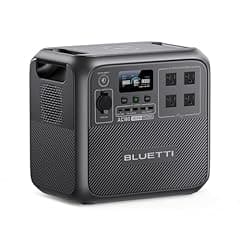
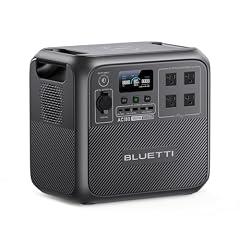
BLUETTI AC180 Portable Power Station
Overview
This is a 35.3-pound portable battery power station with a 1,152Wh lithium iron phosphate battery, four 120V AC outlets rated for 1,800W total, USB and 12V outputs, and a 500W maximum solar input. It is intended for temporary power during camping, outages, and off-grid work, rather than permanent household wiring. The maker documents the capacity, 1,800W continuous AC limit, 2,700W surge claim, 1,440W AC charging, and solar voltage limits. Independent discharge tests are unusually useful here. PCWorld measured 970Wh at an 800W AC load and 1,007Wh at 200W, while StorageReview measured 1,030Wh at 350W. Exact-model certification in a public U.S. NRTL directory was not confirmed in this review.
What works
- Independent tests measured roughly 970Wh to 1,030Wh of usable energy through the AC inverter, a credible result for a 1,152Wh rated pack.
- Independent testing found 84 percent AC efficiency at 800W and 87 percent at 200W, with an acceptable sine-wave output on oscilloscope inspection.
- The manufacturer provides concrete solar limits, 12V to 60V, 10A, and 500W maximum, plus a warning that panel open-circuit voltage above 60V can damage the product.
- The manual gives a 1,800W total continuous AC limit, a 2,700W surge claim, overload and temperature indicators, and a stated transfer time of 20ms or less.
- The U.S. manufacturer warranty page lists a five-year warranty for this product.
What does not
- A public exact-model UL, ETL, CSA, or TÜV NRTL listing was not confirmed, despite manufacturer material referring broadly to UL certification.
- The 20ms backup transfer claim is not a guarantee of uninterrupted operation for every electronic device. The manual specifically says to test it first to avoid data loss.
- Solar charge time depends on panel rating, orientation, temperature, and sun conditions. Panels are not inherent to the station itself, and no exact-model independent outdoor solar test was located.
- The 1,152Wh figure is battery capacity, not delivered AC energy. Low-power AC loads also lose more energy to the unit's stated approximately 15W self-consumption.
- The battery is not described as user-replaceable, and no model-specific repair parts or battery replacement program was located.
Who is it for
It suits a person who needs a movable source for intermittent, relatively high AC loads, such as a refrigerator, cooking appliance, power tool, laptop setup, or communications equipment during a short outage or at a campsite. The independently measured AC energy near 1,000Wh makes runtime estimates more defensible than rating alone. It also fits users who will connect correctly specified third-party solar panels and can manage a 35-pound unit. Use it as a portable appliance power source, with loads kept within the documented 1,800W combined limit.
Who is it not for
It is not for permanent connection to a house panel, grid backfeeding, or any installation that needs a listed transfer switch and electrical permitting. It is also not appropriate where zero-interruption power is essential, including equipment that cannot tolerate a transfer delay, because the stated 20ms switching function requires user testing and is not presented as a certified computer UPS. Choose another arrangement for all-day high-power heating, air conditioning, electric laundry appliances, or users unable to safely lift and ventilate a 35-pound lithium battery device.
Integrity
The lithium iron phosphate battery chemistry is generally associated with long cycle life, and the manufacturer states 3,500 or more cycles to 80 percent capacity plus a five-year U.S. warranty. The manual also documents temperature, overload, short-circuit, and abnormal-temperature indications. It gives a specific solar limit, and exceeding 60V open-circuit voltage can damage the product. Keep ventilation openings clear, avoid charging outside the stated 32F to 104F range, and do not treat it as weatherproof. No exact-product CPSC recall was located in this review. However, public exact-model verification in a U.S. NRTL certification directory was not established, so broad certification references should not substitute for a traceable product listing. The maker operates a trade-in program for old BLUETTI devices, but model eligibility and battery handling should be confirmed before relying on it. At end of life, do not place the product in trash or curbside recycling. Use an electronics or household hazardous-waste program equipped for lithium batteries.

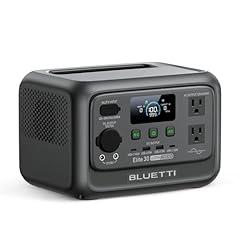
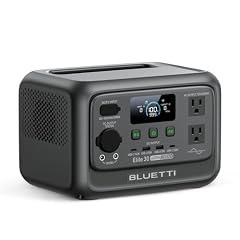
BLUETTI Elite 30 V2 Solar Generator
Overview
This is a compact 288Wh lithium iron phosphate portable power station with a 600W continuous AC inverter, USB-C charging up to 140W, DC outputs, car charging, and solar input. It weighs about 9.5 pounds and is intended for small electronics, lights, networking equipment, camping loads, and short outage backup rather than large appliances or whole-home power. Independent testing reported 255Wh delivered through AC at an approximately 210W load, with 120.6V observed output. A separate published test measured 263.5Wh from the 12V output at 10A. BLUETTI states a 200W maximum solar input, 80 percent AC charge in 45 minutes at 77°F, and a 10ms transfer feature. Its manual importantly clarifies that the 1,500W Power Lifting mode is only for pure resistive loads and does not raise actual output above 600W.
What works
- Independent published testing measured 255Wh of AC-delivered energy at an approximately 210W load.
- Independent testing measured 263.5Wh through the 12V output, about 91 percent of nominal capacity.
- The manual gives concrete solar limits, 12V to 28V, 10A maximum, and 200W maximum.
- The manual limits Power Lifting to resistive loads and states that actual output remains 600W.
- A five-year manufacturer warranty is listed in BLUETTI's US warranty policy.
What does not
- No exact-model UL, ETL, CSA, or TÜV Rheinland U.S. certification listing was located in the searched public registers.
- The nominal 288Wh is battery capacity, not guaranteed energy at the AC outlets. Real output varies with load and conversion losses.
- The 1,500W Power Lifting claim can be misunderstood. The manual says it is only for pure resistive loads and retains a 600W actual output limit.
- The 10ms backup claim is not a substitute for a high-performance UPS. The manual says not to use it for data servers or workstations.
- The 3,000-cycle and 10-year life claims are manufacturer-stated, without a published exact-model cycle-test protocol or battery replacement program.
Who is it for
It suits a person who needs a light, carryable battery for a laptop, phones, cameras, router, lights, small fans, or similar modest loads during day trips, camping, road travel, or brief outages. It also fits users who can match their solar panel to the published 12V to 28V, 10A, and 200W input limits. Its independently reported AC energy is useful for planning short-duration loads rather than assuming the nominal battery figure reaches the outlet unchanged.
Who is it not for
It is not appropriate for a household seeking whole-home backup, long refrigerator runtime, high-wattage cooking, space heating, or sustained appliance operation. Do not use its Power Lifting mode for computers, televisions, motor loads, or other complex electronics. It is also unsuitable as the sole protection for servers, workstations, or other equipment that requires a high-performance UPS. Never connect its AC output to household wiring or the utility grid without properly designed transfer equipment.
Integrity
The product uses lithium iron phosphate battery chemistry, which BLUETTI identifies as LiFePO4, plus a manufacturer-stated battery management system. Its manual includes meaningful handling limits, including ventilated charging, protection from flames and short circuits, stated charge and discharge temperatures, and a warning not to connect AC output to the grid. The manual also provides a serial-number display and identifies a U.S. BLUETTI contact address. No exact-model CPSC recall was located in the searched recall records. The manual instructs owners not to discard the battery with household waste and to use designated battery recycling routes. This is important because lithium batteries require specialized handling, especially if damaged. BLUETTI lists a five-year warranty, which can reduce premature replacement. However, no manufacturer take-back program, replaceable battery option, or published exact-model cycle-life test conditions were located. Public U.S. NRTL certification records for the exact product also were not located, so its safety design claims remain manufacturer-stated rather than independently listed.
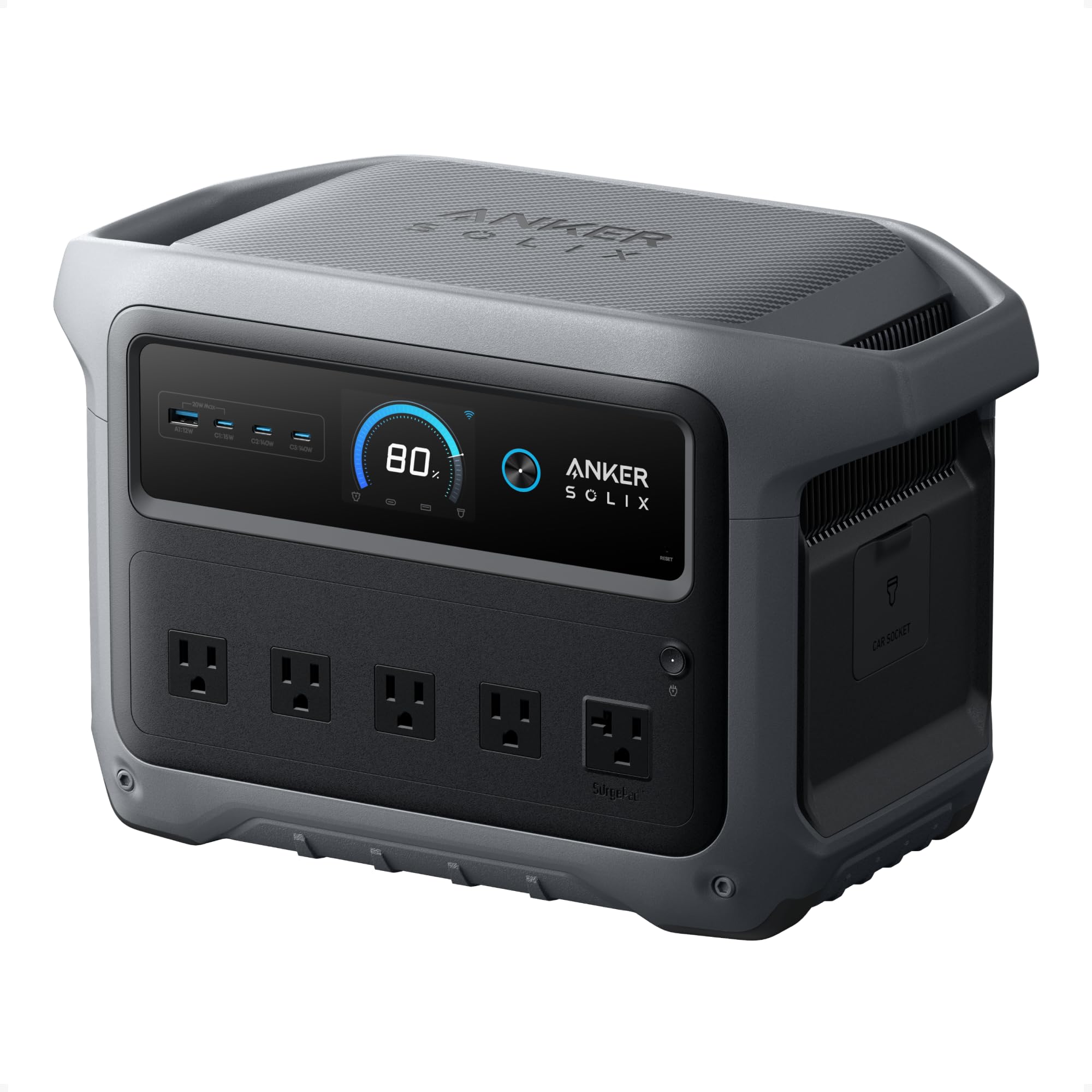
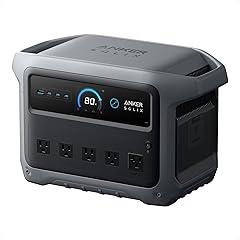
Anker SOLIX C1000 Gen 2 Power Station
Overview
This is a 24.9 pound portable lithium iron phosphate power station with 1,024Wh of stated battery capacity, four AC outlets, USB ports, a 12V car outlet, and a 2,000W continuous AC inverter. It is intended to run portable electronics, refrigeration, cooking appliances within its output limit, and selected essential loads during short outages. Solar panels are not included with the base product. Independent testing supports meaningful usable energy rather than the full nameplate figure. CHIP measured 839Wh from the AC outlet and confirmed 2,000W continuous AC output. A separate load-bank test measured 890Wh, or 87% of the stated capacity. Anker states that UltraFast mode can recharge it in 49 minutes at up to 1,600W, but that mode must be enabled in the app and performance depends on battery temperature. The stated 10 millisecond UPS transfer feature is not backed here by an exact-model UL 1778 listing.
What works
- Independent tests measured 839Wh through AC and 890Wh in a separate load-bank test, credible usable energy for a nominal 1,024Wh station.
- CHIP independently confirmed 2,000W continuous AC output, matching the stated inverter rating.
- The manufacturer clearly discloses the 600W solar-input ceiling, 60V maximum input, and detailed voltage and current ranges.
- The manufacturer gives important fast-charge conditions, including app activation, use of the supplied AC cable, and reduced speed below 68°F.
- Safety guidance warns against rain, damaged cables, overloads, disassembly, heat exposure, and unapproved charging equipment.
What does not
- No exact-model UL 2743, ETL, CSA, or UL 1778 listing was located in the searched U.S. certification registers, so third-party electrical safety certification remains unverified.
- The 10 millisecond backup claim should not be treated as proof that every medical, server, or other mission-critical device will ride through an outage without interruption.
- The 49-minute recharge claim is conditional on app-enabled UltraFast mode and sufficiently warm battery cells. Independent testing measured about one hour average AC charging instead.
- Solar panels are optional, and the 1.8-hour solar recharge claim is a rated-input scenario rather than a documented outdoor field result.
- The battery is not user-replaceable, the unit cannot be expanded with an extra battery, and no exact-model U.S. take-back program was located.
Who is it for
This product suits campers, road users, renters, and households seeking a movable short-duration backup source for lights, laptops, communications equipment, fans, a small refrigerator, or intermittent kitchen appliances. Its independently measured AC energy is roughly 839Wh, so planning around actual outlet losses is more realistic than planning around the 1,024Wh battery rating. It also fits people who value fast wall recharging and can carry a 24.9 pound unit safely. Solar users should already own, or separately budget for, compatible panels within the stated 600W and 60V input limits.
Who is it not for
It is not appropriate as a whole-home generator, a substitute for a permanently installed battery system, or a direct connection to household wiring. Do not backfeed a wall outlet or use it without a properly selected transfer arrangement. Buyers supporting life-critical medical equipment, data servers, or devices intolerant of even brief transfer interruptions should obtain device-specific compatibility confirmation, because the stated 10 millisecond UPS function lacks an exact-model UL 1778 verification found in this review. It also is not suited to people needing multi-day power without regular grid, vehicle, or solar recharging.
Integrity
The product uses lithium iron phosphate battery chemistry, which is generally associated with better thermal stability than many lithium-ion chemistries, but it remains a high-energy battery product. The safety information directs users to keep it dry, ventilated while charging, below its output limit, away from heat, and out of reach of children. It also warns against damaged cords, modification, and unapproved charging equipment. A report for this exact product model found tested lead, cadmium, and selected phthalates below referenced California settlement limits, though this is materials screening, not electrical safety certification. No recall for this exact product was located in the searched CPSC records. Anker has recalled other lithium battery products, so buyers should retain proof of purchase and periodically check safety notices. The safety information says not to place the unit in household trash and to use appropriate recycling or hazardous-waste channels. Anker states 80% remaining capacity after 4,000 cycles, but the test protocol and an exact-model replacement-battery route were not independently established.

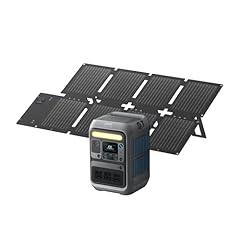
Anker SOLIX C300 Portable Power Station
Overview
This product is a compact portable power station paired with a 60W folding solar panel. The power station has a manufacturer-stated 288Wh lithium iron phosphate battery, 300W continuous AC output, 600W surge claim, 140W USB-C charging input, and a 100W maximum solar input. It is intended for small electronics, lighting, modest coolers, and short-duration emergency power, not for household circuits or high-wattage appliances. Its stated battery capacity is supported by independent testing more strongly than most of its other claims. One hands-on test measured 253.8Wh average usable capacity, with results from 214Wh to 271.7Wh depending on load. Another test measured roughly 67 minutes for a full AC recharge, consistent with the manufacturer’s fast-charge claim. The 60W panel is rated by Anker at 60W, but real outdoor solar yield depends heavily on sun, angle, temperature, and shade.
What works
- Independent testing measured 253.8Wh average usable capacity, about 88% of the stated battery capacity.
- An independent test completed a full AC recharge in about 67 minutes.
- The manufacturer documents specific input limits, including 11V to 28V solar input and a 100W solar maximum.
- The product uses lithium iron phosphate battery chemistry and has a 5-year manufacturer warranty.
- Its wireless function has an exact-product FCC authorization record for Bluetooth emissions compliance.
What does not
- No exact-product UL, ETL, CSA, or other U.S. NRTL electrical-safety listing could be verified in the public certification registers searched.
- The 600W surge and 10ms backup claims are manufacturer-stated, with no located UL 1778 certification or independent transfer-time validation.
- The 300W continuous limit and small battery make this unsuitable for heaters, cooking equipment, many power tools, or long outage coverage.
- The included panel’s 60W rating is a laboratory maximum. No independent outdoor test of this bundle’s solar recharge time was located.
- The manufacturer promotes long battery life, but no exact-product cycle-life protocol defining temperature, discharge depth, charge rate, and end-of-life capacity was located.
Who is it for
This product suits a person who needs compact, transportable power for phones, cameras, laptops, lights, a router, or a low-draw cooler during camping, car travel, or a brief outage. It is also appropriate for someone who can use the included panel as a slow daytime charging option and who understands that 288Wh is a modest energy reserve. It is best used with loads that remain comfortably below the 300W continuous AC limit, or with USB-C devices where inverter losses can be avoided.
Who is it not for
It is not for someone expecting a whole-home backup source, direct connection to household wiring, or dependable power for medical equipment without a separately validated backup plan. Do not use it as a substitute for a transfer-switch-equipped generator or a certified UPS where uninterrupted operation is critical. Buyers running kettles, space heaters, hair tools, microwaves, compressor-heavy appliances, or sustained loads near 300W need more continuous output and substantially more stored energy. Outdoor solar users who need predictable recharge times in poor weather also need a larger panel and battery system.
Integrity
The battery is manufacturer-described as lithium iron phosphate, and the manual gives defined charging and discharging temperature limits. The product also has an exact FCC filing for its Bluetooth function. That filing addresses radio compliance, not battery, fire, shock, or backup safety. A third-party report for this product tested lead, cadmium, and phthalates against the cited California settlement limits, but it is not a substitute for a U.S. NRTL electrical-safety certification. No CPSC recall or public CPSC incident report specific to this product was located. Anker has recalled other battery products, so retain the product label, serial information, and purchase record for any future safety notice or warranty claim. Anker lists a 60-month warranty for this power station and offers a U.S. recycling pathway that accepts damaged and broken products in eligible areas. The battery should go through a specialized battery or e-waste channel, not household trash or curbside recycling.

EF ECOFLOW DELTA 3 Max Portable Power Station
Overview
This is a 44.8-pound portable battery power station for plugging in appliances, electronics, USB devices, and 12V gear during travel or a local outage. Its manufacturer-specified battery is 2,048Wh, using lithium iron phosphate cells. The U.S. manual specifies four 120V AC outlets with 2,400W total output, plus a 100W USB-C port, two 30W USB-C ports, an 18W USB-A port, and a 126W 12V outlet. EcoFlow states a 10ms automatic switching function, a 68-minute 0 to 80% wall-charge figure, and support for appliances up to 3,400W through X-Boost. Those are manufacturer claims, not independently replicated results located for this exact product. The manual gives unusually concrete solar limits, including 500W maximum input and voltage and current boundaries. No exact-product UL, ETL, CSA, or TÜV North American safety listing was located in the public registries searched.
What works
- The manual gives concrete U.S. outlet ratings, 2,400W total across four 120V AC outlets.
- Solar use has defined electrical limits, including 500W maximum input, 60V maximum open-circuit panel voltage, and 18A maximum short-circuit current.
- The stated LFP battery chemistry, thermal protections, overload protection, short-circuit protection, and specified charging temperatures are relevant safety controls.
- The manufacturer provides a three-year standard warranty, with a two-year extension available after app registration.
- The manual clearly distinguishes the 2,400W rated AC output from the higher X-Boost appliance-support claim.
What does not
- No exact-product North American NRTL safety listing was located in the public UL, ETL, CSA, or TÜV sources searched. This is missing verification, not evidence of a defect.
- No accredited independent test report was located that measures this product's delivered watt-hours, full-load AC behavior, waveform, or X-Boost operation.
- The fast-charge, quiet-operation, lifespan, and automatic-switching figures are manufacturer or EcoFlow laboratory claims with stated optimal-condition qualifications.
- It is IP20, so it is not water resistant. The manual says to keep it dry, ventilated, and away from heat, smoke, dust, and flammable materials.
- Automatic AC timeout can interrupt intermittent loads unless settings are changed. The manual also says it is not intended for life-sustaining medical equipment.
Who is it for
This product fits a user who needs a movable, indoor or sheltered backup source for selected 120V appliances, communications gear, laptops, lighting, or camping equipment, and who can plan loads within a 2,400W total AC limit. It also suits a solar user who can verify panel electrical specifications before connecting them, because the manual supplies a 500W ceiling and explicit voltage and current limits. It is most appropriate where a plugged-in backup arrangement is acceptable, rather than permanent household wiring.
Who is it not for
It is not appropriate for anyone needing a listed whole-home generator or a permanently connected home backup system. Do not use it to energize house circuits without suitable, separately designed transfer equipment and qualified installation. It is also unsuitable for life-sustaining medical equipment, wet outdoor exposure, or unattended critical refrigeration unless the AC timeout setting and battery level are actively managed. Buyers who require independently measured usable capacity, certified UPS performance, or an exact-model NRTL safety listing need documentation not located for this product.
Integrity
The product uses LFP cells, and its manual describes overvoltage, overload, overtemperature, short-circuit, low-temperature, low-voltage, and overcurrent protections. It also provides grounding instructions, temperature limits, fire-response guidance, and instructions to stop using a wet, severely damaged, or persistently faulting unit. These are meaningful safe-use directions, but they do not substitute for a public exact-product UL, ETL, CSA, or TÜV safety listing, which was not located in the registries searched. For end of life, the manual directs users to recycle damaged, failed, or depleted products under local battery rules. That matters because EPA says lithium-ion batteries and products containing them should not enter household trash or curbside recycling. EcoFlow's documentation identifies the battery chemistry, but no U.S. product-specific take-back program, replacement battery program, or repair-parts program was located. The stated five-year coverage depends on app registration for the final two years.

BLUETTI Elite 100 V2 Solar Generator
Overview
This is a portable lithium iron phosphate power station with a stated 1,024Wh battery, 1,800W AC output, four AC outlets, USB and 12V outputs, and a listed weight of about 25.3 pounds. It is intended to run portable electronics and selected appliances during camping, travel, or short outages, rather than to power household circuits directly. BLUETTI's manual specifies a 12V to 60V, 20A, 1,000W maximum solar input, a 10 ms backup transfer claim, and a warning not to connect AC output to the grid. Independent testing reported roughly 890Wh delivered, or 87 percent of rated capacity, while another measured test reported 946Wh at a 500W load. The bundle description is materially unclear, because it refers both to one included 200W panel and to four 200W panels in its model description.
What works
- Independent testing supports substantial usable energy, with about 890Wh measured from the 1,024Wh rated pack.
- The manufacturer documents clear AC, DC, solar, temperature, grounding, overload, and short-circuit operating limits.
- The manual explicitly warns against connecting the AC output to the grid and says the backup feature is unsuitable for data servers or workstations.
- A five-year limited manufacturer warranty is listed for the power station.
- The LiFePO4 battery chemistry is disclosed, and the manual provides storage and recycling instructions.
What does not
- An exact-model UL, ETL, CSA, or TÜV electrical safety listing could not be verified in the relevant public certification registers.
- The package description conflicts on solar equipment, referring to both one 200W panel and four 200W panels. Confirm the delivered panel count before relying on its solar capability.
- The 10 ms backup claim is manufacturer-stated, not supported here by an exact-model UL 1778 record. It is not appropriate for equipment requiring high-performance UPS protection.
- The 4,000-plus cycle claim lacks a published test protocol stating depth of discharge, temperature, charge rate, and the capacity-retention endpoint.
- No user-replaceable battery, spare-parts pathway, or manufacturer take-back program for this exact product was identified.
Who is it for
This product suits a camper, road traveler, renter, or household that needs a carryable source for phones, laptops, lights, a router, or selected appliances during a short outage. Its independently measured usable capacity is meaningful for moderate loads, while the stated 1,800W AC limit allows many high-draw devices within that ceiling. It also suits a buyer who will use the supplied solar hardware only after confirming exactly which panel package is delivered and who can follow voltage, current, and dry-use limits.
Who is it not for
It is not for anyone planning to connect a portable station directly to household wiring, energize a breaker panel, or backfeed a utility connection. The manual expressly prohibits connecting its AC output to the grid. It is also not suitable as the sole UPS for servers, workstations, or similarly interruption-sensitive equipment, because the manufacturer specifically excludes those uses. Buyers needing multi-day whole-home backup, professionally installed transfer equipment, verified NRTL safety listing, or a confirmed multi-panel solar package need clearer documentation and appropriately designed equipment.
Integrity
The disclosed LiFePO4 battery chemistry is generally associated with a more thermally stable cathode chemistry than many other lithium-ion chemistries, but it remains a high-energy battery product that can present fire, shock, and burn risks if damaged, wet, overheated, improperly charged, or connected incorrectly. The manual includes overload, short-circuit, temperature, grounding, storage, and no-backfeed instructions. It also identifies a serial-number display and supports firmware updates. The manual directs owners to recycle electronic components and batteries rather than place them in household waste. That aligns with EPA guidance that lithium-ion batteries and battery-containing devices should go to dedicated recycling or household hazardous-waste programs. BLUETTI lists a five-year warranty, which may extend useful life, but no exact-product take-back program, repair parts plan, or independently documented cycle-life test protocol was found. No exact-product CPSC recall was identified in the searched U.S. recall resources.