
10 Best Smart Smoke Detectors
 Daniel Kenitz
Please note that we participate in affiliate marketing programs. When you purchase through links on our site, we may earn a commission. As an Amazon Associate we earn from qualifying purchases. This comes at no additional cost to you and helps support the resources required to provide valuable content.Advertising Disclosure
Top-rated Smart Smoke Detectors Comparison
1

2

3


4

5
6


7
8
9


Smart smoke detectors: what matters
Smart smoke detectors combine one or more life-safety sensors with features such as wireless interconnection, phone alerts, voice messages, displays, or home-automation links. The smart functions are secondary. A product still needs to give a clear local warning when a person is asleep, the internet is unavailable, or an app cannot be opened. For combination products, smoke and carbon monoxide are separate hazards and should each have supportable detection and alarm behavior.
The strongest starting point is verification of the exact product model, not just the manufacturer or product family. Look for a current third-party U.S. listing to UL 217 for residential smoke alarms and, when carbon monoxide is claimed, UL 2034 for residential CO alarms. A registry entry should match the model number and the physical product label. Relevant records include UL Solutions Product iQ and Intertek's ETL Listed Product Directory; an OSHA Nationally Recognized Testing Laboratory listing explains why the testing organization is recognized, but is not by itself proof that a particular alarm is listed. The installation manual and back label should agree with the online listing.
UL 217 edition and test scope also matter. Newer requirements include more demanding fire scenarios and cooking-nuisance testing. That does not mean an alarm will never sound during cooking, and certification is not the same as an independent, product-specific ranking of fire response or nuisance resistance. Buyers should still follow the placement instructions, especially around cooking appliances, bathrooms, garages, fuel-burning equipment, and high-airflow locations.
Separate the alarm's core function from its headline smart features. A claim such as “smart,” “app enabled,” “real-time alerts,” or “interconnected” may mean phone notifications, local radio linking, wired alarm-to-alarm signaling, or merely compatibility with a gateway. Check whether linked alarms still sound without Wi-Fi, internet, cloud service, a hub, or a phone. App notifications should be treated as supplemental. Also check whether a carbon monoxide-only product is being presented near smoke alarms in a way that could imply broader protection, and whether a smoke-only product is being mistaken for a combination alarm.
Numbers can mislead when their conditions are omitted. An 85 dB rating is normally tied to a stated distance, such as 10 feet or 3 meters, and does not guarantee that every occupant will hear it through walls or while asleep. “Ten-year battery” may refer to expected battery life, sensor life, or the complete alarm's service life; some supplied products use replaceable batteries while others require replacing the entire sealed alarm. A displayed CO reading, indoor-air-quality feature, or low-level alert is not automatically a certified life-safety function. A product's internal comparison or manufacturer claim is not an independent test result.
Recurring cautions in the supplied reviews are important. Several products are not hardwired and cannot activate every alarm in the home; others require compatible wiring or a particular interconnect family. Several have conflicting app, Wi-Fi, interconnection, battery-life, or UL-edition claims. Exact current listing confirmation was unavailable for multiple products, and physical labels or production dates may matter when older and newer standards coexist. Sealed lithium alarms become electronic and battery waste at end of life, while replaceable batteries require ongoing maintenance. No supplied product should be treated as a substitute for following local requirements, the installation manual, regular testing, timely battery replacement, or a separate alarm when its stated scope does not cover the hazard.
Integrity
These topics explain what the supplied scores are measuring. Higher scores indicate stronger performance against the stated criterion within this reviewed set; they do not turn an unverified claim into proof or replace installation instructions and local requirements.
HHealth & Safety
Verified U.S. life-safety listing
This measures whether the exact model—not merely its brand—has a current U.S. third-party listing to UL 217 for smoke and, when claimed, UL 2034 for carbon monoxide. That distinction matters because several supplied products had strong manufacturer claims but no independently located exact registry match. The highest scores went to products with exact Intertek documentation or authorization; lower scores reflected missing or conflicting registry evidence.
Modern fire detection and false-alarm resistance
This measures documented coverage of modern residential fire and cooking-nuisance tests. It matters because an alarm must respond to relevant fires without nuisance alarms encouraging people to silence or disable it. Higher-scoring products had stronger evidence tied to current UL 217 requirements, while lower-scoring products relied more on manufacturer claims or lacked product-specific performance evidence. Certification still does not guarantee nuisance-free cooking performance.
Protection for every claimed hazard
This measures whether each advertised smoke, carbon-monoxide, heat, or air-quality function has an appropriate detection standard and clearly described alarm behavior. It matters because a CO-only detector cannot replace a smoke alarm, and air-quality or app features do not automatically provide life-safety protection. Higher scores belonged to products whose smoke and CO scopes were clearly supported; lower scores reflected broader or less substantiated claims.
Hearable, understandable warning
This measures whether the local alarm is loud and its message is understandable without a phone, internet connection, or app. For this category, the stated distance matters: supplied products cited figures such as 85 dB at 3 meters or 10 feet. Higher scores combined local audibility with distinct smoke and CO patterns or voice messages. Lower scores reflected less detailed messaging or weaker documentation.
Whole-home alerting that still works offline
This measures whether compatible alarms trigger local and interconnected alarms without making Wi-Fi, cloud service, or a phone the primary warning path. It matters during outages and when occupants cannot access an app. Higher-scoring products documented hardwired or radio interconnection that operates locally. Lower scores reflected standalone operation, unclear outage behavior, compatibility limits, or smart claims that conflicted with the manual.
Power, battery, and replacement safety
This measures resilience to power loss and clarity about low battery, faults, sensor expiry, and replacement. Higher-scoring products documented hardwired power with backup or a stated long-life battery and clear end-of-life instructions. Lower scores reflected uncertain battery duration, nonreplaceable batteries without equivalent disposal guidance, or maintenance burdens such as recurring disposable-cell replacement. A ten-year claim must be understood in context.
Recall and defect accountability
This measures whether the manufacturer and model are traceable, support is accessible, serious safety actions are resolved, and buyers can obtain a remedy. For alarms, traceability matters because an affected unit may need replacement rather than repair. Higher-scoring products had clearer manufacturer support, warranties, and no identified product-specific safety action. A lack of a located recall is not proof that no issue can ever arise.
Secure smart features and limited data exposure
This measures whether connected alarms, accounts, and household-alert data have stated security, privacy, update, and end-of-support practices. It matters because smart features can introduce account takeover, surveillance, or service-abandonment risks. Higher scores reflected less connected exposure or stronger available support evidence. Lower scores reflected broad app data collection or limited public information about updates, vulnerability handling, or service longevity.
EEvidence
Honest safety and smart-home claims
This measures whether certification, sensor, response, battery, app, interoperability, and code-suitability claims are specific and matched by evidence. It matters because listings can place app, gateway, or family-level language beside a model that lacks that function. Higher scores reflected narrower, better-supported claims. Lower scores reflected conflicting app or Wi-Fi descriptions, inconsistent UL-edition or battery claims, or reliance on manufacturer statements without an exact registry match.
EEcology
Battery and electronics waste responsibility
This measures service life, avoidable disposable-battery use, replacement support, and recycling instructions for alarms and lithium batteries. Long-life sealed batteries can reduce routine changes, but the complete alarm becomes electronic and battery waste at end of life. Replaceable batteries avoid discarding the whole alarm for a depleted cell but create recurring waste. Higher scores reflected clearer lifecycle handling; lower scores reflected missing model-specific recycling guidance.
Full reviews

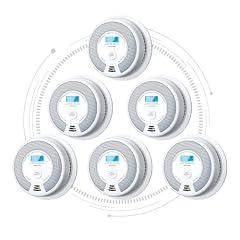
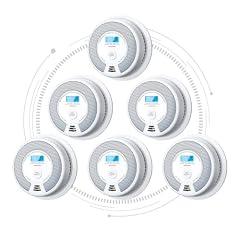
Wireless Smoke and CO Detector 6-Pack
Overview
This is a six-unit set of battery-powered, ceiling or wall-mounted combination smoke and carbon monoxide alarms. Each unit uses a photoelectric smoke sensor and electrochemical carbon monoxide sensor, plus an LCD, test and silence button, and radio link intended to make connected alarms sound together. It is designed for ordinary indoor family living spaces, not kitchens, garages, bathrooms, or commercial or industrial installations. The key evidence is strong for the claimed smoke and carbon monoxide functions. Intertek's current listed-product directory specifically names this product among battery-operated photoelectric smoke and carbon monoxide alarms evaluated to UL 2034. Independent product-label imagery also shows an ETL mark and claims certification to UL 217 ninth edition and UL 2034 fifth edition. The manufacturer states that two nonreplaceable CR123A lithium batteries provide a 10-year life, that up to 18 compatible units can link, and that the local alarm is at least 85 dB at 10 feet. Its product page confusingly advertises a smart app, while its own FAQ says this radio-only version is not Wi-Fi compatible and cannot use an app.
What works
- The exact product is named in Intertek's listed-product directory for residential carbon monoxide detection to UL 2034.
- Independent product-label imagery identifies ETL listing and certification claims to UL 217 ninth edition and UL 2034 fifth edition.
- Each unit has a local audible alarm, visual indicator, smoke and CO alarm patterns, and an LCD CO display, as documented in the manual.
- Radio interconnection does not depend on home Wi-Fi, cloud service, or phone access, according to the manufacturer.
What does not
- The manufacturer's own product page lists a smart app, but its FAQ says this version cannot use an app, Wi-Fi, Alexa, or other assistants. That is a direct claim-scope contradiction.
- No product-specific independent fire-response or cooking-nuisance performance report was located. The certification evidence is strong, but it is not the same as published testing of this exact unit in a kitchen.
- The sealed lithium batteries cannot be replaced. A low-battery, fault, or end-of-life signal requires replacing the complete alarm.
- The manual excludes kitchens, garages, bathrooms, furnace rooms, and commercial or industrial settings, so placement planning is essential.
Who is it for
This set suits an owner of a multi-room or multi-story home who needs several battery-operated combination alarms to sound together without running interconnect wiring. It fits retrofit situations where access to wiring is difficult and where a phone alert is not a required part of the warning plan. The six-unit format is practical for covering sleeping areas, hallways, and living spaces when locations are selected according to the manual and applicable local requirements. The 10-year sealed battery is useful where routine battery changes are likely to be missed.
Who is it not for
It is not suited to buyers who need phone notifications, Alexa control, professional monitoring, or cloud-connected status information. Despite a confusing app claim on the product page, the manufacturer says this version is not Wi-Fi compatible. It is also not for commercial or industrial installations, or for mounting in garages, kitchens, bathrooms, furnace rooms, or locations outside its temperature and humidity limits. Households that need hardwired alarms, specific voice and location messaging, or compatibility with a particular existing interconnect system should confirm those requirements separately.
Integrity
The central health finding is that the exact product appears in Intertek's directory as a battery-operated photoelectric smoke and carbon monoxide alarm evaluated to UL 2034. Product-label imagery separately shows an ETL mark and smoke certification claim to UL 217 ninth edition. That matters because the newer UL 217 requirements include tougher polyurethane fire scenarios and a cooking-nuisance test. Certification does not eliminate cooking alarms, and NIST research found current-generation alarms still varied in nuisance resistance across cooking scenarios. The unit uses photoelectric smoke sensing rather than an ionization source, and an electrochemical sensor for carbon monoxide. Its two sealed lithium metal batteries are manufacturer-stated to last 10 years, which can reduce routine battery replacement and premature disposal. The tradeoff is that the entire alarm must be replaced at battery end of life. The manual gives disposal instructions but does not provide detailed U.S. recycling guidance for the integrated batteries. EPA guidance says lithium primary batteries and electronics should be kept out of household recycling and managed through appropriate battery or electronics collection options.

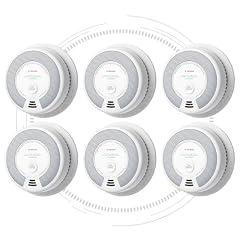
Wireless Smoke and CO Detector, SC06-W
Overview
This product is a six-unit, battery-powered residential smoke and carbon monoxide alarm set. Each round alarm combines a photoelectric smoke sensor, an electrochemical carbon monoxide sensor, a sealed lithium battery, a test and hush button, and local audible and visual alerts. Units are installed on a wall or ceiling and communicate directly by radio, rather than requiring household Wi-Fi or a hub for primary interconnection. Intertek’s public directory independently lists the exact product family for UL 2034 carbon monoxide detection. X-Sense states that the smoke function is ETL certified to UL 217 and that the device uses a 10-year sealed battery. Its current product page says a network supports up to 18 units, while the installation manual attached to the marketplace listing says 24. That discrepancy, plus an unclear “smart app” claim, makes it important to follow the included manual and the unit’s back label.
What works
- Intertek independently lists the exact product family for UL 2034 carbon monoxide protection.
- Direct radio interconnection keeps the primary whole-home alarm function independent of Wi-Fi, cloud service, and a phone.
- The manufacturer specifies a photoelectric smoke sensor and electrochemical CO sensor, with distinct smoke and CO alarm patterns.
- The stated 10-year sealed lithium power supply avoids annual battery replacement under its specified operating conditions.
What does not
- Public verification located for this exact product family confirms UL 2034 CO listing, but a current public Intertek smoke-listing record for the exact wireless version was not located in this review.
- The manufacturer’s current page says up to 18 interconnected units, while the marketplace manual says 24. Network planning should use the documentation supplied with the units.
- This is not a hardwired alarm, so it is not a direct replacement where local code, an inspector, or an existing system requires AC-powered interconnected alarms.
- The sealed battery cannot be replaced. The entire alarm must be replaced at its stated 10-year service end, creating electronic and lithium-battery waste.
Who is it for
This set suits a homeowner or landlord who needs several battery-operated combination alarms across a small or medium residence and cannot readily add interconnect wiring. It is particularly relevant where whole-home audible warning is wanted without depending on Wi-Fi, a subscription, or phone access. The radio network can extend an alarm signal from the initiating unit to compatible units elsewhere in the home. Installation still needs to follow the placement diagram and local requirements, especially around sleeping areas, fuel-burning equipment, and kitchens.
Who is it not for
It is not suited to homes that must retain or install hardwired alarms under local building rules, insurance requirements, or an electrician’s plan. It also is not ideal for buyers who require verified voice evacuation instructions, room-specific spoken messages, or independently documented app-security support. Households with frequent cooking-smoke alarms should be especially careful about placement. Modern UL 217 tests address a cooking nuisance scenario, but NIST research shows that even newer alarms can still sound during real cooking activities.
Integrity
The most important health finding is the independently confirmed UL 2034 carbon monoxide listing for the exact product family. The manufacturer also documents photoelectric smoke sensing, electrochemical CO sensing, at least 85 dB local sound at 10 feet, separate alarm patterns, fault indication, and a 10-year replacement point. The primary radio interconnection is a practical resilience feature because local and linked alarms do not depend on household internet service. No CPSC recall or safety warning specific to this product was located in the review. However, the documentation is not fully consistent about its interconnection limit and smart-app scope. Environmentally, the sealed lithium battery can reduce routine disposable battery use over the stated service life, but it also means each unit becomes electronics waste at replacement. The reviewed materials did not provide product-specific U.S. recycling instructions for the alarm and embedded batteries.

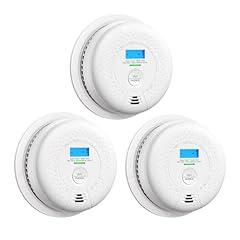
Heiman Smoke and Carbon Monoxide Detector 3-Pack
Overview
This product is a three-pack of standalone, battery-powered combination smoke and carbon-monoxide alarms. Each round unit is about 4.91 inches wide and uses manufacturer-stated photoelectric smoke sensing and electrochemical carbon-monoxide sensing. It mounts on a wall or ceiling with the included hardware, with no stated hardwiring requirement. The product listing states that each alarm has a sealed lithium battery intended to last 10 years, an 85 dB local audible alarm, LED indication, low-battery and fault reminders, and an end-of-life warning. It also claims conformance with UL 217 10th Edition and UL 2034, but an exact-model result in the issuing laboratory's public listing registry was not confirmed in this review. The listing itself inconsistently describes the carbon-monoxide standard as both the fourth and fifth editions.
What works
- Combines smoke and carbon-monoxide detection in each unit, using manufacturer-stated photoelectric and electrochemical sensors.
- Manufacturer states a sealed 10-year battery, reducing routine battery replacement during the product's intended service life.
- Manufacturer states an 85 dB local siren, flashing LED, test or silence control, fault reminder, and end-of-life alert.
- The manufacturer is identified as Shenzhen Heiman Technology Co., Ltd., and the company maintains a public website and privacy policy.
What does not
- The exact product could not be matched to a public UL Solutions or Intertek certification record during this review, so the life-safety listing claim remains unverified.
- The listing gives conflicting carbon-monoxide certification details, referring to both UL 2034 fourth edition and fifth edition. That inconsistency weakens confidence in the certification claim.
- No evidence was found that these units interconnect with one another or provide verified phone, Wi-Fi, or gateway alerts. Each unit should be treated as a local standalone alarm unless the supplied label and manual prove otherwise.
- No product-specific public evidence of independent fire-response or cooking-nuisance testing was located beyond the claimed standard conformance.
- No product-specific recycling or manufacturer takeback instructions were found for the sealed battery and electronics.
Who is it for
This product fits a household, rental unit, guest room, or older residence that needs three locally alarming smoke and carbon-monoxide units without adding wiring, provided the buyer can inspect the delivered back label and manual for an authentic NRTL mark and matching model before installation. Its stated sealed 10-year battery is particularly relevant where routine battery changes are often missed. It is also suited to locations where local alarms, rather than app notifications, are the intended primary warning method.
Who is it not for
It is not suited to households that need verified interconnected whole-home alarming, hardwired replacement compatibility, room-specific spoken alerts, or confirmed remote notifications. It also is not appropriate where a local authority, insurer, landlord, or building code requires documentation of the exact listed model and installation configuration before purchase. Buyers should not rely on the product's certification language alone because the public registry match was not confirmed and the listing gives inconsistent information about the carbon-monoxide standard edition.
Integrity
For health protection, this is presented as a standalone combination alarm with photoelectric smoke sensing, an electrochemical carbon-monoxide sensor, a local 85 dB alarm, LED indication, and a sealed 10-year battery. Those are manufacturer-stated product properties. The listing also claims UL 217 10th Edition and UL 2034 conformance, but this review did not confirm the exact model in a public issuing-body directory. The listing's fourth-edition versus fifth-edition carbon-monoxide standard conflict is a material documentation concern. No product-specific CPSC recall or safety warning was found. The sealed battery may avoid repeated disposable battery changes, but it also means the entire alarm becomes electronic waste at end of life. No manufacturer takeback or recycling instructions specific to this product were located. EPA guidance says lithium batteries and devices containing them should not go in household trash or curbside recycling. Use a qualified battery, electronics, household-hazardous-waste, or local collection program when replacing the product.
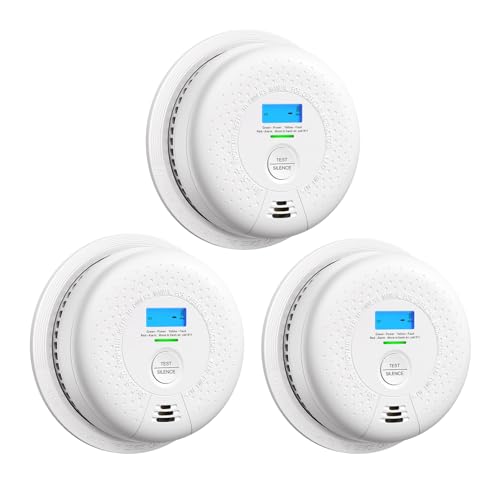
X-Sense Smoke and Carbon Monoxide Detector Combo
Overview
This three-unit set is a ceiling or wall mounted, battery-only combination alarm for residential smoke and carbon monoxide detection. Each round unit measures about 5.7 inches across and uses a photoelectric smoke sensor, an electrochemical CO sensor, a test and silence button, status LEDs, and an LCD that displays CO readings and battery status. It is designed to operate as a standalone local alarm, not as a hardwired household system. The most important verification is that Intertek's current ETL directory names SC01 among battery-operated photoelectric smoke and CO alarms listed to UL 2034. X-Sense also states that the current SC01 meets UL 217 9th Edition, has a sealed lithium battery for about 10 years, and sounds at least 85 dB at 3 m. However, the product record does not provide a back-label or manufacture date, which matters because X-Sense says earlier U.S. units were made to the older UL 217 6th Edition standard.
What works
- Intertek's ETL directory specifically names SC01 in its listing for residential carbon monoxide alarms to UL 2034.
- The product combines photoelectric smoke sensing and electrochemical CO sensing in each unit, rather than treating CO as an app-only feature.
- A local audible alarm rated at least 85 dB at 3 m and visible indicators work without a phone, Wi-Fi, cloud service, or hub.
- X-Sense states that the sealed lithium battery, automatic self-checking, low-battery warning, fault indication, and end-of-life warning are built in.
What does not
- This standalone model does not provide automatic whole-home alarm activation, hardwired backup, room-specific voice messages, or confirmed app alerts.
- The current product page groups Smart App and Interconnected Alarm language beside this standalone model, creating avoidable ambiguity about functions this unit itself does not appear to provide.
- The current model is listed, but the supplied product record lacks a photo of the ETL back-label or production date. That prevents confirmation that a delivered unit is from the current UL 217 9th Edition production.
- A sealed 10-year battery prevents routine replacement, but it also means the complete alarm becomes electronic and lithium-battery waste at end of life. Clear U.S. recycling instructions were not located.
Who is it for
This set suits a homeowner or renter who needs three independent combination smoke and CO alarms in locations where hardwiring is impractical, such as bedrooms, hallways, or a finished basement. It is most appropriate for buyers who value a sealed long-life battery, a local LCD CO indication, and straightforward screw mounting, and who can place each alarm according to the installation instructions. It also fits households that do not need every alarm to activate together or send remote notifications.
Who is it not for
It is not suited to homes that require a code-specified hardwired and interconnected alarm system, or where occupants need one activated alarm to notify the entire house. It is also a poor fit for buyers seeking verified phone alerts, professional monitoring, voice evacuation instructions, or an app-managed safety system. Buyers receiving older stock should not rely on a web listing alone, because the model's current standard status should be confirmed from the physical ETL label and manufacture information.
Integrity
The core health evidence is stronger than a self-declared standards claim. Intertek's ETL directory identifies SC01 as a listed battery-operated photoelectric smoke and carbon monoxide alarm evaluated to UL 2034. X-Sense identifies current SC01 production as meeting UL 217 9th Edition. That newer smoke-alarm standard addresses more demanding fire scenarios and includes a cooking-nuisance test, though NIST research shows compliant modern alarms can still nuisance-alarm during some cooking activities. Correct placement remains important. X-Sense publicly acknowledges that certain earlier U.S. units were produced to UL 217 6th Edition and offers an upgrade or refund program for qualifying purchases from June 30, 2024 through December 31, 2025. No product-specific CPSC recall was located in the searched public recall sources. The sealed battery can reduce disposable battery use over its stated life, but the whole alarm needs responsible electronics and lithium-battery recycling when its end-of-life signal occurs.

X-Sense Dual Sensor Fire & CO Alarm SC06
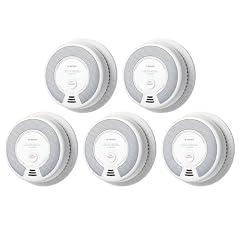
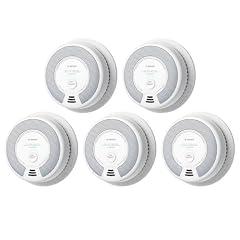
Overview
This is a five-unit, battery-only combination smoke and carbon monoxide alarm set for ceiling or wall mounting. Each round unit uses a photoelectric smoke sensor and an electrochemical carbon monoxide sensor, with a sealed lithium battery that X-Sense states is designed for about 10 years of service. It is a standalone product, so its primary warning is local rather than dependent on Wi-Fi, a phone, or a hub. The manufacturer manual for this exact model family displays an ETL mark and states conformance with UL 217 and UL 2034. The current product page specifically describes ETL certification to UL 217, but does not equally spell out the carbon monoxide listing scope. The manual specifies separate smoke and CO alarm patterns, a stated local sound level of at least 85 dB at 3 m, and replacement when the 10-year end-of-life signal occurs.
What works
- Standalone local warning remains available during internet or phone outages.
- The supplied manual identifies both photoelectric smoke sensing and electrochemical carbon monoxide sensing.
- The manual provides distinct smoke and carbon monoxide alarm patterns, plus low-battery and end-of-life signals.
- A sealed 10-year battery, as stated by X-Sense, avoids routine battery replacement during the stated service life.
What does not
- The current manufacturer page explicitly names ETL certification to UL 217, while the manual also claims UL 2034 conformance. The public evidence reviewed did not provide a direct registry match for this exact combination model.
- This is a standalone alarm, not a whole-home interconnected system. An alarm in one location does not automatically trigger alarms elsewhere.
- The 85 dB sound level, sensor life, false-alarm resistance, and CO response timings are manufacturer-stated specifications, not product-specific independent performance test results reviewed here.
- The sealed lithium battery and electronics make the whole unit disposable at end of life. The manual does not give detailed U.S. recycling instructions.
Who is it for
It suits households replacing several independent alarms where a battery-only installation is needed and occupants can hear a local alarm. The five-unit format fits a home needing coverage on multiple levels and near sleeping areas, provided each location is selected and installed according to the manual and applicable local code. It is also appropriate for buyers who want combined smoke and carbon monoxide detection without relying on Wi-Fi, an app, a hub, or hardwired electrical connections.
Who is it not for
It is not suited to households that need every alarm in the home to sound together when one unit detects danger. It is also a poor fit where a hardwired system is required by local code, where voice or room-location instructions are needed, or where occupants may not reliably hear an 85 dB local sounder during sleep. Buyers needing unambiguous public documentation of the exact smoke and carbon monoxide listing should verify the physical back label and listing record before installation.
Integrity
The key health feature is combined smoke and carbon monoxide detection in one local alarm. X-Sense specifies photoelectric smoke sensing and electrochemical carbon monoxide sensing. Its manual shows an ETL mark and states UL 217 and UL 2034 conformance, while the current product page expressly describes ETL certification to UL 217. Because the public documentation reviewed is less clear about the exact carbon monoxide listing scope, the physical product label is important to check. The sealed lithium battery is intended to last about 10 years and avoids repeated disposable-battery changes. The manual instructs replacement at end of life and describes a persistent end-of-life warning. That benefit is balanced by disposal of the complete electronic unit and battery at replacement. Follow local electronics and lithium-battery recycling instructions rather than putting the unit in household trash. No matching CPSC recall record was located in the recall database checked.

Heiman Smart Wireless Smoke Detector Set
Overview
This package is sold as six compact, battery-powered S1-R photoelectric smoke alarms plus a Wi-Fi gateway for phone alerts and smart-home connections. The alarms are intended for ceiling or wall installation, with the RF link designed to make multiple alarms sound together when one detects smoke. It is a smoke-only system, not a carbon-monoxide alarm. The most important independent finding is that Intertek's current public ETL directory lists the exact S1-R model as a battery-operated photoelectric smoke alarm evaluated to UL 217 Edition 9. Heiman states that the S1-R uses 915 MHz local wireless linking, sounds at least 85 dB at 10 feet, and has an 8.3-year battery life with a 10-year sensor lifespan. Those manufacturer specifications conflict with this product page's claims of UL 217 10th Edition and a 10-year battery.
What works
- The exact S1-R model is independently listed by Intertek to UL 217 Edition 9.
- Each alarm has a local audible warning rated by Heiman at at least 85 dB at 10 feet.
- Heiman states that the proprietary 915 MHz alarm link operates locally, so primary interconnection does not depend on home Wi-Fi.
- The system is smoke-only, with no unsupported carbon-monoxide or air-quality protection implied.
What does not
- The product page's UL 217 10th Edition claim conflicts with Intertek's exact-model listing, which specifies UL 217 Edition 9.
- The advertised 10-year battery claim conflicts with Heiman's current S1-R specification of 8.3 years.
- Remote phone alerts require the gateway, home internet, and app access, so they are supplemental rather than primary warning.
- The smart app has a published privacy policy and offers remote updates, but no model-specific security-update duration or end-of-support commitment was found.
Who is it for
This product fits a household that needs several smoke alarms to sound together in an existing home where adding interconnect wiring would be disruptive. Its compact battery format and manufacturer-stated local RF linking are practical for bedrooms, hallways, finished basements, rentals where installation permission is available, and multilevel layouts. It also suits users who want gateway-based phone notifications as a secondary alert layer, while understanding that the local sirens and regular button testing remain the primary safety functions.
Who is it not for
It is not suited to homes needing carbon-monoxide protection from the same devices, including homes with fuel-burning appliances, fireplaces, attached garages, or generators. Those conditions call for appropriately listed carbon-monoxide alarms in addition to smoke detection. It is also a poor fit for people who need confirmed spoken hazard or room-location messages, visual alerting for hearing-impaired occupants, or a documented long-term cybersecurity support commitment. Verify the physical product label before installation because the listing's certification and battery claims conflict with current manufacturer and Intertek records.
Integrity
The key health positive is an independently traceable U.S. life-safety listing. Intertek identifies the exact S1-R as a battery-operated photoelectric smoke alarm evaluated to UL 217 Edition 9. Heiman specifies a local 85 dB alarm and RF interconnection, meaning core audible warnings are not dependent on a phone or internet service. This set does not detect carbon monoxide, so smoke protection should not be mistaken for protection from combustion gas. Battery and disposal claims need caution. Heiman's current S1-R page states an 8.3-year battery life and a 10-year sensor lifespan, while the product page says 10-year battery life. The alarm contains a lithium battery and electronics, yet model-specific recycling instructions were not located. Do not place it in household trash where local rules prohibit batteries or electronics. No model-specific CPSC recall was located in the reviewed public recall resources, and the manufacturer provides a traceable company contact.

First Alert SC5 Battery Smart Smoke & CO Alarm
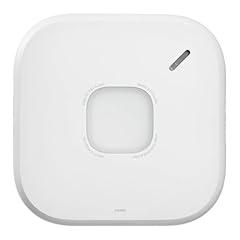
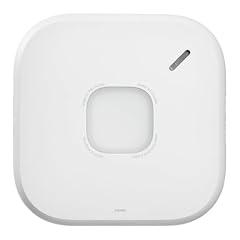
Overview
This is a battery-powered, wall or ceiling mounted combination smoke and carbon monoxide alarm for ordinary indoor single-family residences. It uses six replaceable CR123A lithium batteries, supports Wi-Fi and wireless alarm interconnection, and is intended to provide local smoke and carbon monoxide warning even when it is not connected to the cloud. The manufacturer says it uses photoelectric smoke sensing and an electrochemical carbon monoxide sensor with a 10-year service life. Its defining features are its local spoken hazard and room-location messages, plus wireless interconnection with compatible SC5 and Nest Protect alarms. The manual documents different smoke and carbon monoxide horn patterns, weekly testing, low-battery voice prompts, fault messages, and an end-of-life signal at about 10 years. Manufacturer documentation states conformance to UL 217 and UL 2034, but an exact current listing record and label match were not located in a public UL or ETL registry during this review.
What works
- Local smoke and carbon monoxide detection remains available without a cloud connection, according to the installation guide.
- Manufacturer-stated voice alerts identify smoke or carbon monoxide and can announce a configured room location.
- The manual documents wireless Smart Interconnect for compatible SC5 and Nest Protect alarms, with distinct smoke and carbon monoxide alarm patterns.
- Low battery, malfunction, cleaning, and end-of-life conditions have local voice and visual notifications.
- The manual calls for replacement at about 10 years and provides lithium-battery recycling guidance.
What does not
- The claimed UL 217 and UL 2034 conformance could not be independently matched to an exact current public certification record and product label.
- No independent product-specific fire response or cooking-nuisance test results were located. Photoelectric sensing and false-alarm resistance claims therefore rest primarily on manufacturer documentation.
- This battery version needs six disposable CR123A lithium batteries replaced together after a low-battery warning, creating both maintenance and battery-waste demands.
- Wireless interconnection must be tested throughout the home. The manual warns that building materials, layout, and metal objects can reduce range or reliability.
- A public security-update commitment, product end-of-support policy, and product-specific cybersecurity certification were not located.
Who is it for
It suits an occupant of a single-family home who needs a battery-powered combination alarm in a location without existing alarm wiring, and who will maintain it actively. The practical fit is a household that wants local spoken smoke and carbon monoxide warnings, phone notifications as a supplemental feature, and wireless connection to compatible SC5 or Nest Protect alarms. The household should be able to reach the unit for weekly tests, monthly cleaning, and prompt replacement of all six CR123A batteries when warned.
Who is it not for
It is not for marine, RV, commercial, industrial, or other settings outside ordinary indoor family living units, because the manual specifically limits the intended use. It is also not a complete accessibility solution for people who cannot reliably hear the horn or voice messages, since the manufacturer recommends dedicated visual-alert equipment for hearing-impaired residents. Households unable to maintain replaceable batteries, complete weekly interconnection tests, or accommodate a roughly 10-year replacement cycle should not treat its smart functions as a substitute for those safety tasks.
Integrity
The main health benefit is dual-hazard local warning. Manufacturer documents describe photoelectric smoke sensing, electrochemical carbon monoxide sensing, separate temporal horn patterns, and spoken messages that can identify the hazard and location. The product continues to operate as a standard local smoke and carbon monoxide detector without cloud connection. Its manual also directs occupants to evacuate for alarms, test weekly, clean monthly, and replace an alarm that fails a test. The record is less complete than ideal for a life-safety product. The manufacturer states UL 217 and UL 2034 conformance, but this review did not locate a public registry match for the exact battery product. No product-specific independent nuisance or fire-response testing was found. Environmentally, the stated 10-year sensor life can limit premature electronics replacement, but the unit uses six replaceable CR123A lithium batteries. The manual instructs users to recycle batteries and electronics through appropriate local facilities rather than putting batteries in fire or household waste.
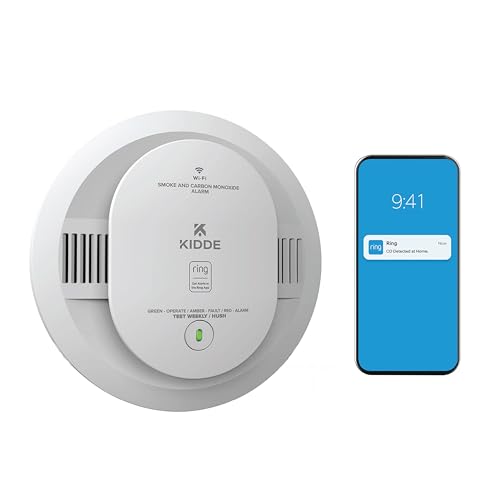
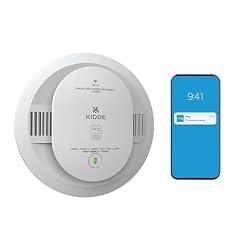
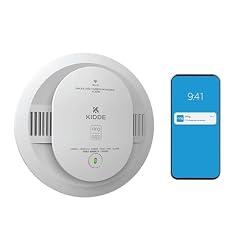
Kidde Smart Smoke and CO Detector
Overview
This product is a round, residential combination smoke and carbon monoxide alarm powered by two replaceable AA batteries. It uses a photoelectric smoke sensor and electrochemical carbon monoxide cell, with a local test and hush control, colored status lights, and spoken fire or carbon monoxide warnings. It is intended for ordinary indoor family living spaces, not boats, RVs, hazardous locations, or workplace compliance. The manufacturer’s exact product guide says it conforms to UL 217 and UL 2034, provides an 85 dB or louder alarm at 10 feet, and signals replacement after 10 years. I did not find a public third-party listing registry record for this exact product, so that standards claim remains manufacturer-documented rather than independently registry-verified. Wi-Fi and the Ring app add remote notifications, while local alarming and wire-free interconnection are designed to operate separately from those mobile alerts.
What works
- The documented local warning is 85 dB or louder at 10 feet and includes distinct spoken fire and carbon monoxide messages.
- The manufacturer documents wire-free interconnection among compatible alarms, so a local hazard alarm can activate the connected network without relying on Wi-Fi.
- The guide explicitly treats phone notifications as supplemental, rather than as the primary life-safety warning.
- Clear fault, low-battery, sensor-fault, and end-of-life voice prompts support maintenance and replacement.
- The exact product documentation specifies photoelectric smoke sensing and an electrochemical carbon monoxide sensor.
What does not
- The exact product’s UL 217 and UL 2034 conformance is documented by the manufacturer, but a matching public UL or ETL registry entry was not located during this review.
- The claimed faster detection and greater precision are based on the manufacturer’s internal comparison, not an identified independent test of this product.
- A photoelectric-only smoke sensor has known detection tradeoffs, and the guide itself notes that ionization sensing can respond sooner to some fast flaming fires.
- Remote alerts require a 2.4 GHz Wi-Fi network, internet access, the Ring app, and a compatible mobile device. The guide warns that these alerts are ancillary.
- It requires annual replacement of two disposable AA batteries under normal use, and the product materials do not provide a detailed electronics recycling program.
Who is it for
This product suits households that need a battery-operated combination alarm in a conventional indoor residence and want local smoke and carbon monoxide warning plus optional Ring app notifications. It is especially relevant for a remodel, addition, rental, or other location where running interconnect wiring is impractical. It also fits homes prepared to replace approved AA batteries yearly, test the alarm weekly, clean it at least annually, and label the ten-year replacement date. Connected compatible units can extend the local warning across a home after wire-free setup.
Who is it not for
It is not for RVs, boats, commercial or industrial workplaces, hazardous locations, or households seeking an alarm intended for hearing-impaired occupants. It also does not suit buyers who need phone alerts to serve as the only emergency warning, because the manufacturer says mobile notifications depend on stable Wi-Fi and are not for life-safety or critical purposes. Homes without reliable 2.4 GHz Wi-Fi can still use its local alarm functions, but will not receive the smart features. Anyone unwilling to manage yearly AA battery changes should choose a power arrangement better matched to that maintenance routine.
Integrity
The product’s core safety functions are concrete and appropriately separated. Manufacturer documentation identifies photoelectric smoke detection, an electrochemical carbon monoxide sensor, distinct local voice messages, an 85 dB or louder audible alarm at 10 feet, and a ten-year end-of-life alert. Its exact manual states conformance to UL 217 and UL 2034, but a matching public listing record from a third-party certification directory was not located, so the claim should not be read as independently registry-confirmed here. The Ring connection adds household-alert data and requires an account, Wi-Fi, and internet. Ring publishes privacy controls, two-factor authentication, and a vulnerability-reporting channel, while its privacy notice describes collection of account, device, network, and setup information. The product uses two disposable AA batteries and should have them removed before disposal. The manual specifies a ten-year service life, which can limit premature electronics replacement, but it gives limited product-specific guidance for recycling the alarm itself. CPSC sources returned historical recalls for unrelated older Kidde alarm models, not this product.

Heiman 3-Pack Smart CO Detectors with Gateway
Overview
This is a three-unit, battery-powered carbon monoxide alarm set intended for residential CO detection, with an included gateway described in the marketplace record. It is not a smoke alarm, heat alarm, natural-gas detector, or combination smoke and CO product. HEIMAN identifies the C1-R as a 3 V lithium-battery CO alarm using an electrochemical sensor, a 915 MHz proprietary RF interconnect, and a claimed 10-year battery life. The manufacturer also states at least 85 dB at 10 feet and an ETL UL 2034 certification claim. Radio documentation identifies the C1-R as an FCC-authorized 915 MHz carbon monoxide alarm. However, the marketplace description conflicts with the manufacturer specification by describing 2.4 GHz Wi-Fi, app alerts, and a gateway for this C1-R version. Those connected features are not established for this exact RF model.
What works
- HEIMAN states that the dedicated electrochemical sensor is for carbon monoxide detection, rather than implying smoke or combustible-gas detection.
- The manufacturer specifies local audible and flashing warning, with sound rated at least 85 dB at 10 feet.
- The C1-R is specified as a 915 MHz RF-interconnected model, so its core alarm link is described as separate from household Wi-Fi.
- HEIMAN states a 10-year battery and sensor service life, plus low-battery and end-of-life reminders.
- The manufacturer specifically names C1-R among C1-series models it says obtained ETL certification to UL 2034.
What does not
- This product provides no smoke or fire detection. Homes that need smoke coverage require separately listed smoke alarms in the appropriate locations.
- A current issuing-body directory match and the product back-label were not available for independent confirmation of the claimed ETL listing for this exact product.
- The marketplace description says Wi-Fi, app alerts, and a gateway, while HEIMAN's own C1-R specification identifies a 915 MHz proprietary RF model. This is a material claim conflict.
- No independent product-specific fire, cooking-nuisance, CO response, or interconnection performance testing was located beyond the manufacturer's certification claims.
- No clear public security-update, end-of-support, or connected-data policy was located for the claimed smart and gateway features.
Who is it for
This product fits a household seeking several compact, battery-powered carbon monoxide alarms that are intended to sound together through local RF interconnection. It is most relevant where CO hazards come from fuel-burning appliances, fireplaces, generators used outdoors, or an attached garage, and where adding wired alarms would be impractical. The claimed 10-year battery life may also suit locations where routine battery changes are difficult. Installation should follow local code, the supplied instructions, and the final product label, especially around sleeping areas and on each required level.
Who is it not for
It does not suit anyone looking for smoke detection, fire detection, heat detection, natural-gas detection, or a single combination alarm. It is also a poor fit for buyers who specifically need confirmed Wi-Fi notifications, app control, cloud alerts, or gateway-based operation, because the available manufacturer specification for C1-R instead describes local 915 MHz RF interconnection. New construction, rentals, and code-sensitive installations should not rely on the online description alone. Confirm the physical listing mark, installation instructions, interconnect compatibility, and local requirements before installation.
Integrity
The key health point is that this is a dedicated residential carbon monoxide alarm. HEIMAN describes an electrochemical CO sensor, local audible and visual alarming, RF interconnection, and a 10-year battery and sensor life. The manufacturer also says the C1-R was among models certified to UL 2034 through ETL, but this assessment could not independently match the exact product to a current public issuer registry entry or inspect its physical label. No CPSC recall or safety warning specifically naming this product or manufacturer was located in the searched U.S. recall sources. The product contains a lithium battery and electronic components, so it should not enter household trash or curbside recycling. Its claimed long service life could reduce replacement frequency, but clear product-specific battery and electronics recycling instructions were not located.

First Alert SMCO410 Z-Wave Smoke and CO Alarm
Overview
This is a ceiling or wall mounted residential combination alarm with a photoelectric smoke sensor, electrochemical carbon monoxide sensor, 85 dB horn, test and silence button, and sealed lithium-metal power supply. It is designed to provide local smoke and carbon monoxide alarms, with optional Z-Wave communication for supported smart-home systems. The manufacturer’s specification sheet depicts the exact product with an Intertek mark and states conformance to UL 217 and UL 2034. It also states a 10-year sealed battery, distinct three-beep smoke and four-beep carbon monoxide patterns, and end-of-life chirps. The exact Intertek directory record could not be independently retrieved during this review, so the life-safety listing evidence is strong but not registry-confirmed here. Ring notifications require a compatible Ring Alarm or Ring Alarm Pro system with its Smoke and CO Listener.
What works
- Combination smoke and carbon monoxide coverage uses separate photoelectric and electrochemical sensors, according to the manufacturer specification.
- The specification sheet states a local 85 dB horn at 10 feet with different audible patterns for smoke and carbon monoxide.
- A sealed 10-year lithium-metal battery is stated to eliminate routine battery replacement, with low-power, malfunction, and end-of-life signals.
- The product is listed in the Z-Wave Alliance catalog for U.S. frequency plans, providing independently documented smart-home radio certification.
- The manufacturer provides a 10-year limited warranty and named technical support channels.
What does not
- The exact Intertek listing record for this product could not be independently matched in the public directory during this review, despite the manufacturer’s displayed Intertek mark and listing number.
- The manufacturer claims reduced cooking nuisance alarms, but NIST research shows newer UL 217 alarms can still alarm during common cooking events. Correct placement remains important.
- It is not a conventional hardwired or alarm-to-alarm interconnected system. Remote alerts depend on compatible Z-Wave equipment and the specified Ring listener.
- The marketplace description implies Ring base-station compatibility, but the manufacturer adds a material requirement, the Ring Alarm Smoke and CO Listener.
- A sealed battery reduces maintenance but means the full electronic alarm must be replaced at end of life. Product-specific recycling instructions were not located.
Who is it for
This product suits a household that needs local smoke and carbon monoxide warning in one battery-powered alarm, especially where installing new wiring is impractical. It is also relevant for people already using a compatible Ring Alarm or Ring Alarm Pro system with the required Smoke and CO Listener, and who want supplemental away-from-home notifications. The stated 10-year sealed battery is useful for occupants who can commit to weekly testing but want to avoid routine battery changes. Installation still needs to follow the manual and local code requirements.
Who is it not for
It is not suited to homes that need wired, code-required interconnection between every alarm, because its Z-Wave link and app alerts are supplemental rather than a substitute for a conventional interconnected alarm circuit. It is also a poor fit for buyers expecting Ring notifications from the alarm alone, since the manufacturer requires a compatible Ring Alarm system and Smoke and CO Listener. Households with recurring cooking alarms should not treat the nuisance-reduction claim as a guarantee and should prioritize correct alarm placement.
Integrity
The core health protection is a combined photoelectric smoke sensor and electrochemical carbon monoxide sensor with a local 85 dB horn. The manufacturer’s specification sheet shows an Intertek mark and states UL 217 and UL 2034 conformance. That supports the claimed dual-hazard purpose, although the exact public third-party directory entry was not independently retrieved in this review. No current product-specific CPSC recall or safety action was located. The sealed lithium-metal battery is stated to last 10 years, reducing disposable battery use and low-battery maintenance. At end of life, however, the whole alarm becomes electronic waste because its battery is not replaceable. EPA guidance identifies lithium-metal batteries in smoke alarms as material that should not enter household trash or curbside recycling. Use a battery or electronics recycler that accepts the complete device, following local rules.