
10 Best Label Printer
 Daniel Kenitz
Please note that we participate in affiliate marketing programs. When you purchase through links on our site, we may earn a commission. As an Amazon Associate we earn from qualifying purchases. This comes at no additional cost to you and helps support the resources required to provide valuable content.Advertising Disclosure
Top-rated Label Printer Comparison
1

2
4
5
6
7
8
9
Overview
A label printer creates text, barcodes, symbols, or simple graphics on adhesive label stock. Most products supplied here use direct thermal printing: a heated printhead develops an image on heat-sensitive material, so routine printing does not require ink, toner, or ribbons. That reduces cartridge handling, but it does not eliminate consumable waste or prove that the label coating is safer. The printer, label stock, power system, software, and intended use all determine whether the setup is appropriate.
Start with the label format. Desktop shipping models generally support media up to about 4 by 6 inches, while compact makers use narrower rolls, commonly around 20 to 50 mm wide. Confirm the actual supported width, roll or fan-fold compatibility, feed method, and whether the printer works with the exact stock you plan to use. A stated resolution such as 203 or 300 dpi describes the print grid, not whether a barcode will scan reliably. Likewise, labels-per-minute figures are usually manufacturer claims; they may describe a particular 4 by 6 format, omit setup time, or represent a maximum rather than sustained output.
For barcode work, look for an independent test on the exact printer and label stock reporting grades under ISO/IEC 15416 for linear symbols or ISO/IEC 15415 for two-dimensional symbols. A claimed barcode feature, advertised DPI, or successful test label is not equivalent to a measured, conforming grade. Durability claims need similar care: waterproof, fade-resistant, scratch-resistant, or permanent wording should be backed by repeatable abrasion, aging, legibility, and adhesion results. ASTM D3330/D3330M peel testing, an applicable ANSI/UL 969 recognition, or an ISO/IEC 17025-accredited report is more meaningful than a listing description alone.
For powered products, distinguish radio authorization from electrical safety. An FCC Equipment Authorization record can substantiate the wireless function, but it is not a UL, ETL, or CSA safety listing. For a high-confidence purchase, trace the exact model and adapter through UL Product iQ, the Intertek ETL directory, CSA records, or an OSHA-recognized NRTL directory. Rechargeable products also need model-specific battery evidence, such as IEC 62133-2 or UL 2054 certification and a UN Manual of Tests and Criteria Part III subsection 38.3 transport-test summary. Check CPSC Recalls and SaferProducts.gov as part of the safety record.
Direct thermal labels deserve separate scrutiny. “BPA-free” alone does not identify the developer, establish that BPS or other phenolic developers are absent, or describe the adhesive. Prefer an exact-stock technical or safety data sheet and independent laboratory analysis using a validated method. Also check whether the app is required, which devices it supports, what permissions it requests, whether updates continue, and whether data can be deleted. USB can provide a wired fallback, but compatibility claims still need model-specific documentation.
Across the supplied reviews, the recurring limitations are substantial: no model-matched NRTL listing for many printers or adapters, no independent barcode or throughput testing, and no exact-stock disclosure of thermal developer or adhesive chemistry. Durability claims were commonly unsupported. Several mobile workflows disclosed collection or sharing of identifiers, usage, location, files, print content, or diagnostics, with inconsistent disclosures between app stores. Rechargeable models lacked located battery certification or transport evidence. No supplied product had a documented combination of repair parts, battery service, electronics take-back, and label-liner recovery. These products should not be treated as validated systems for regulated, medical, food-contact, archival, outdoor, high-consequence, or scan-critical labeling without additional evidence.
Integrity
The scores below compare the supplied products against the category’s health, environmental, and evidence criteria. They indicate how much supporting information was located; a higher score does not turn an unverified marketing claim into proof of performance or safety.
HHealth & Safety
Thermal-label chemical safety
This measures disclosure and evidence for the heat-reactive developer and adhesive in direct-thermal labels, including BPA, BPS, and other phenolic developers. It matters because the consumable—not just the printer—is handled repeatedly and may be used near sensitive applications. Among the supplied products, relatively higher scores reflect more useful manufacturer claims, but none supplied an exact-stock chemistry disclosure and independent laboratory report; lower scores reflect less traceability.
Battery and charging safety
This covers overheating, shock, battery failure, charging instructions, and transport evidence for rechargeable products or supplied adapters. Corded printers avoid an onboard rechargeable battery, while portable makers add a battery and charger that need model-specific records. Higher-scoring products had clearer input instructions or precautions; lower-scoring products lacked certification or transport summaries. No located evidence should be read as proof that an uncertified product is unsafe.
EEvidence
Verified electrical and wireless compliance
This asks whether the exact printer and its wireless function can be traced to independent NRTL and FCC records. FCC authorization supports lawful radio operation, but it is not full electrical-safety certification. Higher-scoring products had model-matched FCC evidence, sometimes with radio test materials; lower-scoring products had only related-model records or no located authorization. No supplied product had located model-matched NRTL evidence for both printer and adapter.
Verified print and barcode quality
This measures independent evidence that output remains legible and barcodes scan at the claimed size, resolution, and speed. Higher scores would require an exact-model, exact-stock report with ISO/IEC 15416 or 15415 grades and measured throughput. The supplied products scored similarly because no independent barcode-grade report was located for any of them. Advertised DPI, speed, or a successful sample print is not equivalent to verification.
Label stays readable and attached
This covers fading, smudging, curling, abrasion, environmental aging, and peel adhesion for the exact printer-and-label combination. It matters when a shipping, inventory, or asset label must survive handling or storage. The supplied scores are relatively close because reviews generally found only manufacturer claims and no accredited durability or peel test. Products with clearer manuals or qualified claims score better, but none demonstrated long-term performance here.
Claims match the product
This measures whether compatibility, width, resolution, speed, battery life, waterproofness, and inkless claims are specific and traceable to model documentation. Higher-scoring products had manuals, support pages, or clearer technical specifications; lower-scoring products showed conflicting dimensions, speeds, brand names, or connection claims. A documented specification still remains a manufacturer claim unless independently tested, so this topic measures traceability rather than guaranteed performance.
Reliable connection and respectful app practices
This evaluates stated device compatibility, app maintenance, permissions, data handling, and dependence on an account or cloud service. It matters because many compact printers require a phone app, while some desktop printers offer USB as a fallback. Higher scores reflect active support and clearer compatibility evidence; lower scores reflect conflicting disclosures, tracking, collection of files or identifiers, encryption concerns, or limited connection options.
Safety record and accountable support
This measures whether the responsible manufacturer or seller is identifiable, warranty and safety contacts are usable, and recall or incident information is transparent. Higher-scoring products had published support contacts, model-specific materials, or clearer warranty terms. Lower scores reflected ambiguous branding or weaker documentation. The reviewed products generally had no product-specific recall located, but absence of a located recall is not proof of a complete safety record.
EEcology
Lower-waste label system
This measures the disposable label face stock, adhesive, release liner, packaging, and misprints, including evidence for recycled content or responsible fiber. Direct thermal printing avoids ink and toner but still consumes single-use labels. The supplied products cluster closely because their reviews generally found no exact FSC or SFI evidence, recycled-content specification, liner-recovery route, or packaging documentation. A higher score therefore reflects relatively better material information, not a waste-free system.
Built to last and recover materials
This measures service life, replacement parts, battery service, continued label availability, and electronics take-back or recycling. It matters because replacing a small printer can outweigh the material savings from avoiding cartridges. Higher-scoring products had clearer warranties, support, or ongoing software and consumable availability; lower-scoring products lacked repair or recovery documentation. Across the set, no product had a fully documented repair, battery-service, and take-back pathway.
Full reviews

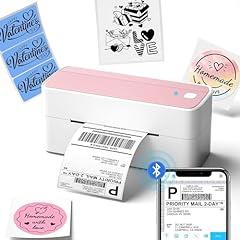
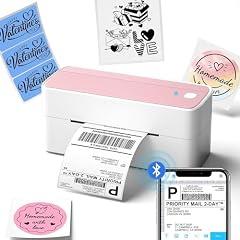
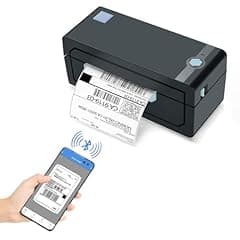
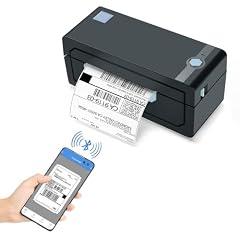
Phomemo 241BT Bluetooth Thermal Label Printer
Overview
This is a corded desktop direct-thermal label printer for shipping and business labels. It prints in monochrome, uses heat-sensitive labels instead of ink or toner, and is intended for 4 by 6 inch shipping labels as well as label stock within the maker's stated 25.4 to 117 mm width range. Phomemo states that this unit weighs 720 g, prints at 203 dpi, connects by USB or Bluetooth, and uses a 24 V, 2.5 A power adapter. FCC test documentation independently includes the PM-241-BT within the authorized model family for its Bluetooth radio. No model-specific independent barcode-grade, label-aging, or electrical safety listing was located in the checked public registers.
What works
- Its Bluetooth radio is traceable to FCC authorization documentation that includes the PM-241-BT model family.
- Direct-thermal operation eliminates ink and toner cartridges.
- The manufacturer documents support for common shipping-label widths from 25.4 to 117 mm.
- Phomemo provides setup and print-quality guidance, including use of the specified 24 V, 2.5 A power adapter and adjustable speed and darkness settings.
What does not
- No public model-specific UL, ETL, or CSA electrical safety listing was located for the printer or included power adapter.
- No independent ISO/IEC barcode verification or measured throughput report was located for this printer and label stock.
- Phomemo's BPA and BPS-free label claim is not backed by an accessible safety data sheet, developer chemistry disclosure, or independent laboratory report for the supplied labels.
- Direct-thermal labels, release liners, and misprints remain single-use materials, with no product-specific recycled-content, forestry-certification, or liner-recovery evidence located.
- No documented replacement-parts, repair, battery service, or electronics take-back pathway was located for this product.
Who is it for
This product suits a home seller, small office, or shipping station that needs compact monochrome labels, uses standard direct-thermal stock, and values phone or computer connection options. It is especially relevant when most output is routine carrier labels, inventory labels, or address labels that do not need color, archival permanence, or weatherproof performance. The documented FCC authorization for the Bluetooth model family offers some independent confirmation for buyers who plan to print wirelessly in the United States.
Who is it not for
It is not suited to buyers who need independently verified barcode grades for regulated, high-volume, or scan-critical workflows. It is also a poor fit for long-term outdoor labels, labels exposed to heat, abrasion, oils, or solvents, or records that must remain readable for years, because direct-thermal durability for this exact printer-and-label combination was not independently demonstrated. Households seeking documented phenol-free consumables, certified adapter safety, repairability, or a manufacturer take-back program should require that evidence before use.
Integrity
The main health consideration is the label stock, not ink, because the printer uses direct-thermal media. Phomemo markets some compatible shipping labels as BPA and BPS free, but accessible product information does not identify the thermal developer, adhesive chemistry, or test method. That matters because EPA's thermal-paper assessment found that replacement developers involve trade-offs and did not identify a universally low-concern option. For frequent label handling, choosing labels with a model-specific technical sheet and independent chemistry testing would provide stronger evidence. The printer is powered by an external 24 V, 2.5 A adapter, not an internal battery. Its Bluetooth function is included in an FCC-authorized model family, but an independent public NRTL electrical-safety listing for the exact printer and adapter was not located. Direct thermal printing avoids cartridges, yet it still uses disposable coated labels, adhesive, and release liner. No product-specific recycling, recycled-content, or take-back documentation was located.

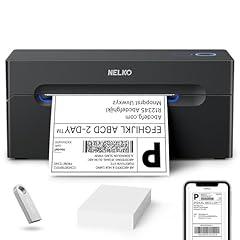
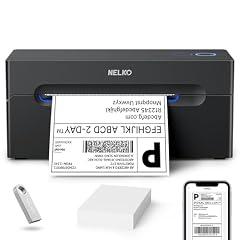
Nelko Bluetooth Thermal Shipping Label Printer
Overview
This is a compact, mains-powered direct-thermal printer for shipping, return, storage, and barcode labels. It accepts direct-thermal media 1.54 to 4.1 inches wide, including the common 4 by 6 inch format. It uses no ink, toner, or ribbon, but the printed image depends on heat-sensitive label stock. Nelko states a 203 dpi resolution, maximum 150 mm/s speed, Bluetooth and USB connections, and a 24 V, 2 A power input. The Bluetooth radio is traceable to a model-matched FCC equipment authorization, which is meaningful independent evidence for U.S. wireless compliance. A hands-on third-party test measured about 1.2 seconds per label by wire, broadly consistent with a fast shipping-label workflow. That test did not provide ISO barcode grades, and no accredited print, adhesion, electrical-safety, or consumable-chemistry report for this exact product was located.
What works
- The Bluetooth model is traceable to an FCC equipment authorization for U.S. radio compliance.
- A third-party hands-on test measured wired output at about 1.2 seconds per label.
- The manufacturer documents direct-thermal media from 1.54 to 4.1 inches wide, without a proprietary-label requirement.
- The manual provides overheating, cleaning, accessory-use, and unplugging precautions, plus a one-year defect warranty.
- Nelko publishes drivers, setup guides, support email, and a U.S. phone number.
What does not
- No model-matched UL, ETL, CSA, or other NRTL listing for the printer or supplied power adapter was located.
- No independent ISO barcode-grade report was located, so scannability at the claimed speed and resolution remains unproven.
- The included labels are described as BPA-free, but no exact-stock safety data sheet, BPS disclosure, phenolic-developer disclosure, or independent chemical analysis was found.
- The mobile workflow depends on Shipping Printer Pro. Its store listings declare no data collection, but the iPhone app has not shown an update since January 29, 2024, and user reports describe preview and connection problems.
- No disclosed recycling, take-back, repair-parts, or replacement-printhead program was found.
Who is it for
This product suits a home seller or small business that mainly creates standard shipping labels and wants a small wired desktop printer with optional phone printing. It is most appropriate when labels are generated as PDFs from a computer, since Nelko itself recommends USB for more stable computer printing. It also suits users who need flexible media widths up to 4.1 inches and prefer to source their own compatible direct-thermal labels. The stated one-year defect warranty and published support contacts provide a defined support route for basic setup issues.
Who is it not for
It is not well suited to operations that require documented electrical safety certification for procurement, workplace policy, or insurance requirements, because no model-matched NRTL listing was located. It is also a poor fit for medical, food-contact, archival, outdoor, or high-heat labeling where chemical disclosure, long-term fade resistance, adhesion testing, and barcode-grade evidence matter. Buyers who cannot tolerate app-dependent Bluetooth setup, stale previews, or intermittent reconnection should use the USB workflow or select a product with more current, independently documented mobile software support.
Integrity
The key health issue is the direct-thermal label stock, not ink. Nelko's compatible 4 by 6 label marketing describes the material as BPA-free, but it does not identify the alternative thermal developer, disclose BPS or other phenols, or provide an independent laboratory report for the supplied labels. This matters because EPA's thermal-paper assessment found that potential BPA alternatives involve health or environmental trade-offs. Use independently documented phenol-free, BPA-free, and BPS-free labels where lower chemical uncertainty is important. The printer has model-matched FCC evidence for its Bluetooth radio, and its manual warns that the printhead can become hot. No recall or public safety action for this product was located in the checked U.S. sources. Direct thermal printing avoids cartridges, toner, and ribbons, but every label still uses single-use face stock, adhesive, and often a release liner. Nelko does not publish an FSC claim, recycled-content evidence, take-back route, repair-parts program, or end-of-life recycling plan for this product.

JADENS Bluetooth Thermal Shipping Label Printer
Overview
This is a compact, mains-powered direct-thermal shipping-label printer for roll or fan-fold labels. JADENS specifies a 1.57 to 4.1 inch media-width range, 203 dpi resolution, USB and Bluetooth connections, and a claimed maximum speed of 150 mm/s. It is intended for black-and-white address, barcode, and shipping labels rather than documents or color work. Its Bluetooth radio has a model-matched FCC equipment authorization for 2.4 GHz operation. The manufacturer states that Bluetooth works with iOS, Android, and Windows, while Macs use USB rather than Bluetooth. JADENS also publishes a 24 V, 2 A adapter specification, setup support, and a one-year limited warranty. No independent print-grade, label-aging, adhesion, electrical-safety listing, or thermal-paper chemistry report for this exact product and included labels was located.
What works
- A model-matched FCC authorization supports the legality of its 2.4 GHz Bluetooth radio in the United States.
- Direct-thermal operation avoids buying ink or toner, as stated by the manufacturer.
- The stated 1.57 to 4.1 inch media range accommodates common 4 by 6 inch shipping labels.
- JADENS identifies its warranty holder, publishes U.S. phone and email contacts, and provides a one-year limited warranty.
- The iOS app listing declares no data collection, while the Android listing describes encrypted transmission and a deletion-request option.
What does not
- No model-specific UL, ETL, or CSA electrical-safety listing was found for the printer or supplied power adapter.
- The included or recommended direct-thermal labels lack a disclosed developer chemistry, adhesive formulation, safety data sheet, or independent BPA, BPS, and phenolic test report.
- No independent ISO barcode-grade, measured speed, abrasion, fade, or peel-adhesion testing was found for this printer and a specified label stock.
- Android app disclosures say the app may collect location and photos or videos, unlike the no-data-collected declaration on iOS.
- The manufacturer does not publish a repair-parts catalog, printhead replacement program, or product take-back and recycling route.
Who is it for
This product suits a home seller, small online shop, or office that mainly prints ordinary black-and-white shipping labels in the common 4 by 6 inch format. It is most appropriate for someone comfortable using USB with a Mac or Windows computer, or Bluetooth from an iPhone, iPad, Android device, or Bluetooth-enabled Windows laptop. It also fits users who value avoiding ink and toner and can accept manufacturer-stated performance figures rather than independently validated barcode and durability results.
Who is it not for
It is not suited to operations that require documented UL, ETL, or CSA electrical listing for procurement, insurance, workplace policy, or risk control. Buyers handling pharmaceuticals, food-contact packaging, sensitive goods, or high-heat and long-storage labels should seek disclosed thermal-label chemistry and independently tested adhesion and legibility. Mac users who specifically need Bluetooth printing should choose another setup, since JADENS says macOS Bluetooth printing is unsupported. It is also a weak fit for buyers needing repair parts or a documented electronics recycling program.
Integrity
The printer itself has no battery, and JADENS specifies a 24 V, 2 A external adapter. Its Bluetooth function can be traced to a model-matched FCC authorization, but no independent North American electrical-safety listing was located for the printer or adapter. No JADENS recall was located in the reviewed U.S. recall sources. The manufacturer provides a one-year warranty and published support contacts, although coverage excludes some wear and use with third-party labels. Direct-thermal printing eliminates ink and toner cartridges, which can reduce consumable packaging and cartridge waste. It still relies on single-use adhesive labels and release liners. The manufacturer and a label document make BPA-free and waterproof claims for thermal labels, but neither provides developer chemistry, adhesive disclosure, a safety data sheet, or independent laboratory testing for BPA, BPS, or other phenolic developers. There is also no published take-back, battery-free electronics recycling, or replacement-parts pathway for this product.
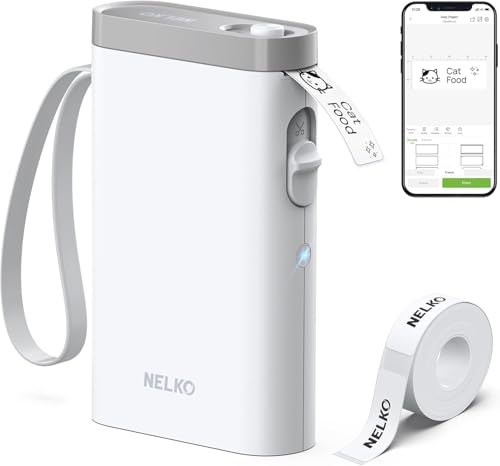
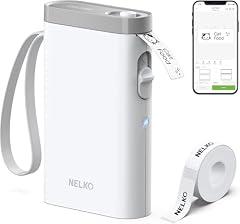
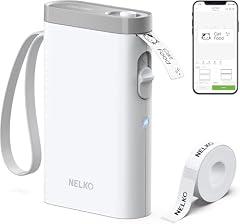
Nelko P21 Bluetooth Label Maker Machine
Overview
This is a compact, rechargeable direct-thermal label printer for making small monochrome organization labels from an iOS or Android phone. Nelko states that the P21 uses Bluetooth through its app, prints at 203 dpi, supports gap labels and continuous labels, and has a 1200 mAh battery charged by USB-C. Its official support page lists a maximum print speed of 20 mm/s and dimensions of 80 x 30 x 132 mm. The Bluetooth transmitter has an independently traceable FCC equipment authorization for the P21 model and the 2.4 GHz band. That confirms radio authorization, not complete electrical or battery safety certification. There is no located independent barcode-grade test, battery test summary, electrical safety listing, or laboratory chemistry report for the supplied label roll. The catalog speed claim of 30 mm/s also conflicts with Nelko's current 20 mm/s support specification.
What works
- Small direct-thermal format avoids buying ink, toner, or ribbons, as manufacturer-stated.
- The exact P21 Bluetooth radio has a traceable FCC authorization record.
- Nelko provides a model-specific support page, user manual, support email, phone number, and U.S. mailing address.
- The app has recent iOS and Android updates, and the official product page limits this model to small labels rather than 4 x 6 shipping labels.
What does not
- No model-matched UL, ETL, CSA, battery certification, or UN 38.3 battery transport summary was located.
- The supplied and recommended thermal labels are marketed as BPA-free, but no safety data sheet or independent analysis identifies the thermal developer, adhesive chemistry, or BPS status.
- No independent ISO barcode verification, abrasion test, peel-adhesion test, or environmental aging report was located for this printer and label stock.
- Nelko's current support page says up to 20 mm/s, while the catalog record says 30 mm/s, which weakens specification traceability.
- The mobile app discloses tracking identifiers and collection of device identifiers, email, user content, usage data, and diagnostics. Google Play also states that collected data is not encrypted.
Who is it for
This product suits a person who needs occasional, small, phone-designed labels for storage bins, school supplies, cables, jars, files, price tags, or household organization. It is specifically suited to users comfortable using a mobile app and Bluetooth rather than a built-in keyboard or computer workflow. The compact manufacturer-stated dimensions and rechargeable battery fit light portable use. It is also appropriate when labels can be tested on the intended surface before relying on them for a longer-term task.
Who is it not for
It is not for shipping departments, sellers, or households needing standard 4 x 6 shipping labels, because Nelko states that this is not a shipping-label printer. Avoid relying on it for medication, laboratory, food-safety, asset-tracking, or regulated barcode labels where verified scan grades, chemical disclosure, long-term legibility, or validated adhesion are required. It is also a poor fit for people who do not want app-based setup, Bluetooth permissions, or the app's disclosed collection of identifiers and other usage-related data.
Integrity
The main material issue is the direct-thermal label stock. Nelko-compatible P21 labels are marketed as BPA-free and some listings also describe them as non-toxic, water-resistant, oil-resistant, and scratch-resistant. Those are manufacturer or seller claims, not independent chemical evidence. No located safety data sheet or accredited laboratory report identifies the exact thermal color developer, adhesive, BPS status, or other phenolic developers. Avoid treating a BPA-free statement as proof of low chemical concern. Direct-thermal printing eliminates cartridges, ink, toner, and ribbons, which reduces those consumables. It still uses adhesive labels and release liner, and no evidence was located for recycled face stock, responsibly sourced paper, reduced-liner construction, or recycling instructions for used rolls. The printer has a rechargeable battery, but no documented battery replacement service, electronics take-back, or battery recycling program was located. No P21-specific CPSC recall was located in the reviewed sources.

Liene PixCut S1 Photo Sticker Printer
Overview
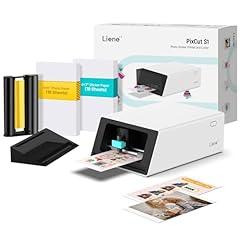
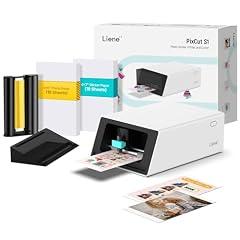
This product is a compact, mains-powered photo printer and cutter for making small custom stickers, labels, and 4 x 6 inch photos. It uses dye-sublimation media, not direct-thermal label stock. The official package description lists 18 4 x 7 inch sticker sheets, 18 4 x 6 inch photo sheets, a combined CMY and protective-layer cartridge, and a preinstalled cutting blade. Liene states that the sticker sheets are automatically laminated during the four-pass print process, then cut through its phone app. Its support page documents Bluetooth connection, Android and iOS support, no Windows support, a 24 V external power adapter, and a one-year limited warranty. The wireless radio is traceable to a model-specific FCC identifier. No independent barcode-grade, print-throughput, adhesion, abrasion, or chemical-composition report was located for the printer and its supplied sticker media.
What works
- The product combines dye-sublimation printing and shape cutting in one documented phone-app workflow.
- Its wireless function is traceable to the DHP700 model-specific FCC identifier, rather than relying only on a marketplace logo.
- The supplied starter materials support both 4 x 7 inch sticker projects and 4 x 6 inch photo prints.
- Liene publishes a help center with operating specifications, troubleshooting material, a 30-day return policy, and a one-year limited warranty.
What does not
- No public independent test was located for barcode scan grades, actual print speed, color accuracy, or cut precision on the supplied sticker stock.
- Waterproof, fade-resistant, scratch-resistant, removable, and residue-free sticker claims are manufacturer-stated, with no accessible adhesion, aging, or abrasion test report.
- The official material pages do not disclose the dye, laminate, adhesive, face-stock, or release-liner chemistry, and provide no safety data sheet or BPA and BPS testing.
- The app's published privacy materials describe account and device binding, print and cut task information, and broad device telemetry collection. The Android listing also declares sharing of app activity and performance data.
- Operation is app-based and Windows is explicitly unsupported. This limits desktop-centered craft or business workflows.
Who is it for
This product suits a home crafter, teacher, family, or small hobby project that needs short runs of glossy photo stickers, decorative labels, gift tags, or printed photos in a compact desktop format. It is most suitable for someone comfortable designing from an Android or iOS device and using Liene-only media. The supplied starter pack makes sense for trying both photo and sticker outputs without separately sourcing a printer, cutter, paper, and laminate. Its documented one-year warranty and listed support contact also help buyers who value a defined support route.
Who is it not for
It is not suited to shipping labels, inventory labels, regulatory labels, or any barcode workflow where scan performance must be measured and documented. Buyers needing permanent outdoor labels, high-tack labels for textured surfaces, chemical-resistant marks, or independently proven waterproof durability should use a system with matched laboratory data. It also does not fit privacy-sensitive users unwilling to use an app that pairs and binds the device while collecting device and task telemetry. Windows-only or desktop-first users should choose a product with documented computer support.
Integrity
This is a thermal dye-sublimation product, not a direct-thermal label printer. That means its sticker output does not depend on the heat-reactive phenolic color-developer coating associated with direct-thermal receipt and shipping-label paper. However, Liene does not publicly identify the chemistry of its dyes, laminated top layer, adhesive, sticker face stock, or release liner. There is no accessible safety data sheet or independent chemical test for the exact consumables, so low-exposure material claims cannot be confirmed. The product has no onboard battery. Its manual documents a 24 V external supply and model-specific FCC radio identification, but no public NRTL electrical-safety listing was located. Each refill couples paper with a spent dye-sub cartridge, with 36 prints per cartridge, creating ongoing paper, liner, cartridge, and packaging waste. Liene provides blade-replacement instructions and sells replacement media, but no U.S. take-back, repair-parts catalog, or recycling program for the device and cartridges was found.

Phomemo M110 Portable Label Printer
Overview
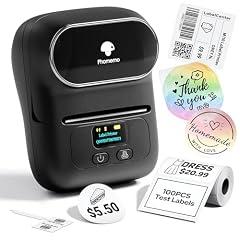
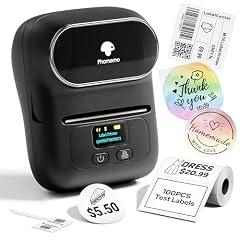
This is a compact, rechargeable direct-thermal label printer for small labels, barcode labels, storage tags, and similar black-only jobs. It works through Bluetooth with the Print Master mobile app or through USB with a computer. Phomemo states that it accepts 20 to 50 mm label stock, prints at 203 dpi, weighs 222.8 g, and uses a USB-C charged lithium battery. Its Bluetooth radio is traceable to an FCC equipment authorization filing for the M110, which is stronger evidence than a listing logo. However, no public NRTL listing, battery certification record, transport-test summary, independent barcode-grade report, or label-stock technical data sheet was located. Phomemo's own M110 pages also conflict on battery capacity, with 1,200 mAh on the current product page and 1,500 mAh on another M110 page.
What works
- The M110 Bluetooth function is tied to an FCC authorization filing for this model.
- Phomemo provides model-specific setup, driver, and support material, including stated Windows, macOS, ChromeOS, iOS, and Android support.
- The stated 20 to 50 mm media range covers small organization, inventory, and identification labels.
- Direct thermal operation eliminates ink cartridges, although it still requires coated label rolls and release liners.
What does not
- No public UL, ETL, CSA, IEC 62133-2, UL 2054, or battery UN 38.3 record was located for this product or its battery.
- No independent, model-specific testing was located for barcode grades, actual print speed, abrasion resistance, adhesion, or fade resistance.
- The BPA-free label claim does not identify the thermal developer, confirm BPS or other phenolic developers are absent, or provide an independent laboratory report.
- Manufacturer specifications are inconsistent, including 1,200 mAh and 1,500 mAh battery claims for M110 pages.
- The Print Master app's store disclosures report collection of user content and identifiers, and Android reports third-party sharing of device or app-performance data.
Who is it for
This product suits a home organizer, classroom, mobile seller, or small office that needs occasional black labels for bins, files, price tags, or basic inventory. Its compact stated size and weight make it practical where a desk printer would be inconvenient. It is also suitable for a user who can work within 20 to 50 mm labels and is comfortable designing labels through a phone app or USB-connected computer. It fits low-consequence labels where independent barcode grading and long-term environmental durability are not required.
Who is it not for
It is not suited to users who need documented electrical and battery safety certification, such as safety-managed workplaces or buyers who require model-specific certification files. Avoid using it for safety-critical, medical, legal, archival, outdoor, freezer, high-heat, chemical-exposure, or long-life identification labels because independent durability and barcode-grade evidence was not located. It is also a poor fit for households seeking fully disclosed phenol-free thermal media, or for privacy-sensitive users unwilling to grant an app access to content and identifiers.
Integrity
Phomemo describes compatible thermal labels as BPA-free, but that is not enough to establish low chemical concern. The company does not publicly identify the exact thermal color developer, adhesive chemistry, BPS status, or provide an independent laboratory analysis for the supplied roll. That matters because thermal papers use reactive developers, and the EPA notes that BPA alternatives involve tradeoffs rather than a universally low-concern substitute. The printer avoids ink cartridges, which removes one recurring consumable, but direct-thermal labels still create single-use face stock, adhesive, release-liner, and misprint waste. No verified recycled-content, responsibly sourced paper, liner-reduction, take-back, repair-parts, battery-service, or recycling program was located. No U.S. recall or public CPSC action was located in the checks performed, but public battery certification and charging-test documentation were also not found.

Arkscan 2054K-WF Wireless Label Printer
Overview
This is a mains-powered desktop direct-thermal label printer for shipping, inventory, barcode, and product labels. It uses heat-sensitive label stock rather than ink or toner. Arkscan states that the Wi-Fi version prints labels from 0.5 to 4.25 inches wide, up to 90 inches long, at 203 DPI and up to 5 inches per second. It accepts roll and fanfold labels. Its wireless radio is independently traceable to a model-matched FCC equipment authorization for 2.4 GHz Wi-Fi. The manufacturer also documents USB and Wi-Fi setup, including an initial USB connection for Windows network setup. No independent laboratory report was located for actual throughput, barcode grades, print permanence, or adhesive performance using a specified label stock.
What works
- The 2.4 GHz Wi-Fi implementation has a model-matched FCC authorization record.
- Direct-thermal operation avoids routine ink and toner purchases, as manufacturer-stated.
- Arkscan publishes concrete media dimensions, 203 DPI resolution, supported printer languages, and operating conditions.
- The manufacturer sells a replacement mainboard for this Wi-Fi product, providing a documented repair path for one major component.
- Arkscan publishes setup materials and offers phone, chat, and remote technical support, as manufacturer-stated.
What does not
- No exact label chemistry, safety data sheet, or independent testing was found to identify BPA, BPS, or alternative thermal color developers in recommended labels.
- No model-specific UL, ETL, or CSA electrical-safety listing was located for the printer or its supplied power adapter.
- No independent barcode-grade, print-speed, abrasion, fade, adhesion, or environmental-aging report was located for this product and label combination.
- The manufacturer calls its labels strong adhesive, but does not publish peel-adhesion values or conditions for that claim.
- No documented manufacturer take-back program, electronics recycling partnership, or recycled and responsibly sourced label-stock evidence was located.
Who is it for
This product suits a small online seller, stockroom, or home business that needs a fixed desktop printer for common shipping and inventory labels, has access to mains power, and values USB plus local Wi-Fi connectivity. It is especially relevant where labels are produced in varied widths rather than only 4 by 6 inch shipping formats. The buyer should be comfortable following device setup steps, including the manufacturer-documented USB step used to put the printer on a Wi-Fi network.
Who is it not for
It is not well suited to buyers who need third-party evidence that every barcode will meet a particular scan-grade requirement, or who need labels proven to endure abrasion, sunlight, freezer storage, chemicals, or long archival periods. It also does not fit purchasers with strict procurement rules requiring a model-specific NRTL electrical listing. Organizations that need disclosed thermal-paper chemistry, low-phenol evidence, recycling commitments, or a documented end-of-life take-back route will need more documentation than is available here.
Integrity
The product is a plugged-in desktop printer, not a portable battery product. Its wireless function has a model-matched FCC authorization, which supports legal U.S. radio operation. However, an FCC authorization is not an electrical-safety listing. No model-specific UL, ETL, or CSA listing was located for the printer or supplied adapter. A search of CPSC recall resources did not identify a product-specific recall, and Arkscan identifies a U.S. business contact and states a one-year limited warranty. Direct-thermal printing avoids ink and toner cartridges, but it requires consumable heat-sensitive labels and release liner. Arkscan describes its labels as direct thermal and strong adhesive, yet no exact developer chemistry, BPA or BPS test report, adhesive technical sheet, recycled-content evidence, or FSC documentation was located. Replacement mainboards are sold by the manufacturer, which is a useful repair signal, but no formal electronics take-back or recycling program was found.

Omezizy D450BT Bluetooth Thermal Label Printer
Overview
The Omezizy D450BT is a compact direct-thermal shipping-label printer for labels from 1 to 4.6 inches wide, including 4 by 6 inch parcel labels. It connects by USB or Bluetooth, uses a mobile app for phone printing, and does not use ink or toner cartridges. The manufacturer states that its internal compartment holds up to 250 4 by 6 labels and that output is 203 dpi at up to 72 labels per minute. The wireless hardware has a model-matched FCC equipment authorization, with filed Bluetooth test reports for the D450BT. That verifies the radio authorization, not electrical safety certification or print quality. The product documentation and support material also leave important qualifications unclear, including whether Bluetooth printing from a Mac is supported. Omezizy's general support page says Bluetooth computer connection works on Windows, but not Mac.
What works
- The D450BT model is covered by an FCC equipment authorization and Bluetooth test documentation.
- Its built-in compartment is stated to hold up to 250 4 by 6 labels, reducing the need for a separate roll holder.
- Direct-thermal operation avoids ink and toner cartridges, according to the manufacturer.
- Omezizy publishes a U.S. support phone number, support email, and stated weekday support hours.
What does not
- No model-specific UL, ETL, or CSA electrical-safety listing was located for the printer or supplied power adapter.
- No safety data sheet, developer chemistry disclosure, or independent test was located for the included sample labels.
- No independent ISO barcode-grade, throughput, adhesion, abrasion, or fading test was located for this printer and label combination.
- The stated Bluetooth compatibility needs qualification. Omezizy's product page includes macOS, while its support guidance says Bluetooth computer use is Windows only, not Mac.
- The Android Labelife listing declares collection of personal information and device identifiers, sharing of location and app-performance information, and no deletion option. This conflicts with the iOS listing's developer-reported no-data-collected disclosure.
Who is it for
This product suits a home seller or small business that prints ordinary indoor shipping labels, mailing labels, or inventory labels in modest batches. It is most practical for someone who can use USB when needed, has room for a compact desktop unit, and values storing a 4 by 6 label roll inside the printer rather than using a separate holder. It also fits buyers who understand that 203 dpi direct thermal output is intended for standard logistics labels, not long-life archival marks or detailed photographic work.
Who is it not for
It is not suited to operations that require independently documented electrical safety certification, validated barcode grades, or tested label performance in heat, sunlight, moisture, abrasion, or chemical exposure. It is also a poor fit for food-contact or high-handling labeling unless the buyer sources label stock with its own chemistry and compliance documentation. Mac users who specifically need Bluetooth computer printing should not assume it works, because Omezizy's support guidance limits Bluetooth computer use to Windows. Privacy-sensitive Android users should also review the Labelife disclosures before relying on mobile printing.
Integrity
The main health uncertainty is the consumable, not the printhead. This direct-thermal product includes sample labels, but no material safety sheet, thermal developer disclosure, or independent analysis was located for their BPA, BPS, other phenolic developer, adhesive, or liner chemistry. That matters because BPS is listed under California Proposition 65, and thermal-label materials can use BPS or other color developers. No product-specific California warning or recall was found. Direct thermal printing removes ink and toner cartridges, which avoids those consumables. It still depends on single-use adhesive labels, and no evidence was located for recycled face stock, liner reduction, responsible fiber certification, reusable parts, repair parts, or a manufacturer take-back program. The product has a stated two-year warranty and reachable support contacts, but end-of-life recycling instructions and replacement-part availability were not documented.

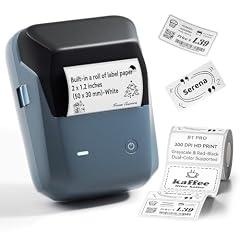
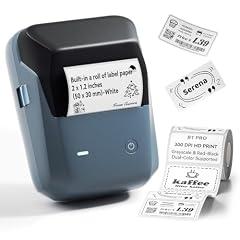
NIIMBOT B1 Pro Label Maker Printer
Overview
This is a compact, rechargeable direct-thermal label printer for home organization, retail tags, inventory labels, and similar short-format work. It uses heat-sensitive label stock rather than ink or toner, connects by Bluetooth or USB-C, and takes 20 to 50 mm wide labels. NIIMBOT’s own product page lists a 300 dpi printhead, 48 mm effective print width, maximum 40 mm-per-second speed, 1,500 mAh battery, and 5 V, 2 A input. Its Bluetooth radio has model-matched FCC authorization documentation that covers the B1 Pro within the B1 family filing. That is meaningful evidence of U.S. radio authorization, but no public UL, ETL, or CSA listing was located for the printer, battery, or charger. No independent laboratory barcode-grade, print-durability, battery-safety, or thermal-label chemistry report for this product and supplied roll was located.
What works
- Model-matched FCC documentation identifies the B1 Pro among the covered label-printer models for its Bluetooth radio.
- NIIMBOT publishes concrete operating specifications, including 300 dpi resolution, 20 to 50 mm label width, 48 mm effective print width, Type-C charging, and 5 V, 2 A input.
- Official Windows software support explicitly lists the B1 Pro, alongside Bluetooth and Type-C connection claims.
- The manufacturer identifies an accessible support email and publishes a support portal and service policy.
What does not
- No public NRTL listing or battery transport-test summary was located for this printer, its internal battery, or any supplied charging adapter. This is missing verification, not evidence of a defect.
- The supplied thermal-label roll has no accessible safety data sheet, developer chemistry disclosure, or independent test confirming absence of BPA, BPS, or other phenolic developers.
- No independent ISO barcode-grade, print-speed, abrasion, fading, peel-adhesion, or environmental-aging report was located for the printer and its label stock.
- The companion app discloses collection of location, contact, identifiers, usage, diagnostic, purchase, and other data, although Apple says these categories are not linked to identity.
- NIIMBOT's official service policy directs buyers to the sales channel for specific warranty terms, so product-level U.S. warranty handling is not fully defined on the manufacturer site.
Who is it for
This product suits a home organizer, small shop, classroom, or office user who needs compact labels rather than shipping-label volume. It is most appropriate for indoor bins, files, price tags, basic inventory, and short barcode labels within the stated 20 to 50 mm label-width range. It also fits users who are comfortable designing labels in NIIMBOT software on a phone, or on Windows, and who can use the manufacturer’s specified 5 V, 2 A charging conditions. The FCC-documented Bluetooth function is useful where wireless printing is needed.
Who is it not for
It is not suited to buyers who need independently verified barcode grades for regulated, fulfillment, healthcare, or high-throughput inventory workflows. It is also a poor fit where labels must remain legible outdoors, under prolonged UV exposure, repeated abrasion, immersion, or demanding chemical contact, because product-specific durability testing was not found. People minimizing contact with phenolic thermal-paper developers, including households with frequent child handling of labels, should seek label stock with an exact safety data sheet and independent chemistry report. Privacy-sensitive users may prefer a printer with less data-intensive companion software.
Integrity
The main health uncertainty is the consumable, not the printhead. NIIMBOT and a regional seller describe compatible labels as BPA-free, but no exact label-stock safety data sheet, developer identity, adhesive composition, or independent laboratory report was found. That matters because direct-thermal papers use chemical developers, and EPA’s thermal-paper assessment notes that replacing BPA does not automatically establish low concern across health and environmental endpoints. Avoid treating an unsupported BPA-free statement as proof that labels are free of BPS or other phenolic developers. The B1 Pro’s Bluetooth radio is supported by model-matched FCC authorization documentation. Public evidence was not found for a UL, ETL, or CSA listing, battery certification, battery take-back program, replacement battery service, or electronics recycling route. Thermal printing avoids cartridges, but this system still consumes coated label face stock, adhesive, release liner, packaging, and misprints. No verified recycled-content, FSC, liner-reduction, or end-of-life material program was located.

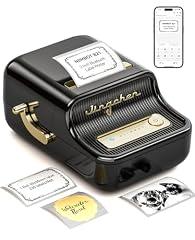
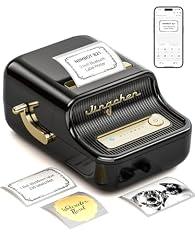
NIIMBOT B21 Portable Label Printer
Overview
This is a compact, rechargeable direct-thermal label printer for black-only adhesive labels up to about 50 mm, or 2 inches, wide. It is intended for household organization, jars, retail tags, mailing labels, and small-batch product identification. Labels are designed in the NIIMBOT phone app over Bluetooth, while B21 support material also describes Windows use through a data USB connection. The underlying B21-C product family has an FCC equipment authorization for its Bluetooth, Wi-Fi, and NFC radios, an independently traceable compliance record. The family manual also documents low-battery, high-temperature, paper-out, and cover-open stops, but these are manufacturer safety statements rather than independent battery certification. Print resolution, output speed, barcode grading, and supplied-label chemistry lack model-specific independent test reports.
What works
- The B21-C family wireless hardware is traceable to an FCC equipment authorization, including the responsible manufacturer and radio bands.
- The family manual describes automatic stops for high temperature, low battery, missing paper, and an open cover.
- The official app is currently maintained on Android, and the iPhone listing documents Bluetooth operation, templates, and cloud-stored designs.
- Support material specifies direct-thermal B-series labels for indoor use and states at least two years of content life below 70 C.
What does not
- No model-matched UL, ETL, CSA, IEC 62133-2, UL 2054, or UN 38.3 battery evidence was located for the printer, battery, or charger.
- BPA-free and RoHS claims for labels are manufacturer statements, without an accessible report identifying BPS or other thermal color developers, adhesive chemistry, or the exact supplied roll.
- No independent ISO barcode-grade, print-speed, abrasion, peel-adhesion, or environmental-aging test was located for this printer and label stock.
- Direct-thermal B-series labels are recommended for indoor use, not UV exposure. The accessible manual also makes warranty coverage conditional and excludes problems attributed to non-brand consumables.
- The app's published disclosures include location, identifiers, usage, diagnostics, and purchase-related data. Android also reports sharing app activity and app-performance data with third parties.
Who is it for
This product suits a home organizer, hobby seller, pantry labeler, or small office that needs short-run black labels no wider than 2 inches and can work from a phone. It is particularly suited to indoor container labels, temporary inventory tags, filing, and routine retail or address labels where direct-thermal output is acceptable. It also fits users who value a compact rechargeable unit and are comfortable designing labels in an app, with USB-based Windows support documented for the B21.
Who is it not for
It is not suited to buyers who need independently verified barcode grades for shipping, inventory, healthcare, or point-of-sale workflows. It is also a poor fit for outdoor, sun-exposed, heat-exposed, archival, or long-life identification, because the B-series guidance limits these direct-thermal labels to indoor use. Avoid it where a third-party-certified battery and charger are required, where consumable chemistry must be documented, or where an app collecting location and device-related data is unacceptable.
Integrity
The traceable safety positive is the FCC authorization for the B21-C family radio hardware. Its manual gives practical charging, heat, moisture, damaged-cable, battery-leakage, and hot-printhead precautions, and describes several automatic protective stops. However, no model-specific North American NRTL listing or accessible battery transport and cell-safety record was located. The manual identifies Wuhan Jingchen Intelligent Identification Technology as manufacturer and describes a 12-month parts warranty, with a shorter printhead warranty. The printer uses direct-thermal adhesive labels, so it avoids ink cartridges and ribbons but still creates spent label stock and release-liner waste. NIIMBOT markets B-series labels as BPA-free and RoHS-certified, but no accessible technical sheet or independent laboratory report disclosed the exact thermal developer, BPS status, adhesive composition, recycled content, or forestry certification. The brand recommends these labels for indoor use, which is important because direct-thermal printing can lose readability under harsh exposure.