
10 Best Robotic Lawn Mower
 Daniel Kenitz
Please note that we participate in affiliate marketing programs. When you purchase through links on our site, we may earn a commission. As an Amazon Associate we earn from qualifying purchases. This comes at no additional cost to you and helps support the resources required to provide valuable content.Advertising Disclosure
Top-rated Robotic Lawn Mower Comparison
1

2

+
3
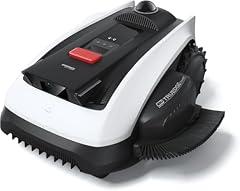
4

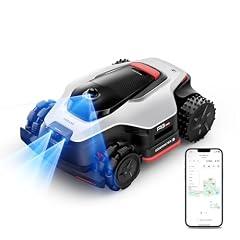
5
6

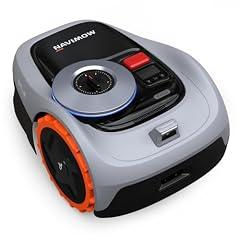
7
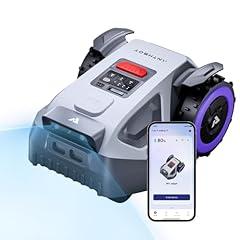
8
9

10
+
Overview
A robotic lawn mower trims grass automatically, usually by making repeated light cuts, returning to a charging station, and following a mapped lawn rather than waiting for a single weekly mowing session. The useful question is not simply how many acres a product claims to cover. It is whether the mower can map the actual property, remain inside safe boundaries, handle the lawn’s terrain, stop its blades promptly, and operate predictably under the weather, grass, slope, signal, and obstacle conditions found there.
Wire-free products commonly use some combination of RTK or Network RTK positioning, cameras, LiDAR, visual mapping, Wi-Fi, Bluetooth, cellular service, or a reference station. These systems can reduce installation work, but they do not remove the need for careful mapping. Buyers should check the manufacturer’s declared limits for slope, narrow passages, boundary edges, signal loss, drop-offs, water, wet grass, long grass, divided lawns, and restart behavior. A stated acreage or slope maximum should be treated as a favorable-condition ceiling unless independent testing reports the conditions and method.
Look for practical controls that let you set zones, no-go areas, schedules, cutting height, weather pauses, seasonal pauses, and daylight-only operation. These controls matter both for lawn quality and for reducing unnecessary repeated mowing. A higher cutting range and the ability to leave refuge areas unmown can support a less intensive lawn routine, but environmental claims should remain specific. “Eco-friendly,” “zero-emission,” carbon-saving, recycled-content, and similar claims need quantified boundaries and independent documentation; operating without direct exhaust is not the same as having no battery, electricity, manufacturing, or disposal impacts.
Safety evidence should be model-specific. A current listing in UL Product iQ, the Intertek ETL directory, or CSA Group’s listings should identify the mower, dock, power supply, battery pack, and relevant scope. The applicable North American robotic-mower safety framework is ANSI/OPEI 60335-2-107 / CSA C22.2 No. 60335-2-107; battery documentation may also include IEC 62133-2 testing. FCC authorization confirms radio compliance, not blade, charging, or battery-abuse safety. Buyers should also check CPSC Recalls and SaferProducts.gov.
Across the supplied products, recurring cautions are significant. No reviewed product had a publicly located, model-matched UL, ETL, or CSA robotic-mower safety listing. No product had independent model-specific wildlife testing proving that small animals are detected and protected. Several products had boundary, cliff, terrain, wet-ground, or obstacle limitations, including documented map departures, inadequate cliff detection, sticking, or contact with objects. Children, pets, and wildlife should not be treated as outside the risk merely because a product advertises AI or animal avoidance. Night mowing is especially difficult to justify where wildlife is present. Physical exclusion, conservative mapping, daylight scheduling, lawn checks, and supervision remain necessary.
Integrity
These topics separate useful automation from unsupported safety, sustainability, and performance claims. Scores are relative to the supplied products: higher scores indicate stronger evidence or controls in the reviewed material, not a guarantee of safe unattended operation.
HHealth & Safety
Verified electrical and battery safety
This measures independent certification covering the mower, dock, power supply, battery, and battery-management system for fire, shock, charging, and battery-abuse risks. It matters because the product charges outdoors and contains lithium-ion batteries. Scores were tightly clustered around 70–73: the main separator was the absence or presence of model-matched North American certification, not merely FCC or transport compliance.
Blade safety around people and pets
This measures lift, tilt, collision, stop, blade-brake, enclosure, and emergency-stop performance. A high score reflects tested evidence that cutting stops promptly when people, pets, or objects could reach the deck. Among the supplied products, the strongest scores were supported by independent quick-stop or obstacle testing; lower scores generally relied more heavily on manuals and manufacturer claims.
Stays in bounds and stable
This covers virtual boundaries, localization, cliff and water exclusion, slope limits, signal loss, and safe restart behavior. It is central because a mower can be well protected yet still reach a pond, road, drop, or mapped edge. Scores ranged from the low 50s to the low 80s: independent boundary testing helped, while documented boundary departures, weak cliff detection, or difficult terrain reduced scores.
EEcology
Wildlife-safe mowing evidence
This measures model-specific evidence that the mower avoids or stops for small animals, alongside night scheduling, exclusion zones, and blade stopping. AI obstacle recognition alone is not wildlife testing. Most supplied products scored roughly 68–78; the higher end reflected an independent fake-animal obstacle test or stronger scheduling controls, but no product supplied a published independent live-animal injury-avoidance study.
Supports lower-impact lawn care
This measures practical control over mowing frequency, height, zones, seasonal pauses, and daylight operation, including the ability to leave refuge areas. Scores were generally strong, about 72–80, because many products offer schedules, zones, no-go areas, and adjustable height. A high score means the owner has useful controls; it does not mean the mower automatically creates a lower-impact lawn.
Repairable design and responsible battery end-of-life
This measures battery replaceability, genuine parts, service, software support, warranty clarity, and a U.S. take-back route. It matters because keeping a mower in use can avoid premature disposal of a lithium battery. Higher scores came from removable or replaceable batteries, parts, and concrete warranties; lower scores reflected skilled-person replacement, unclear service, or no verified U.S. take-back program.
Honest energy and environmental footprint claims
This measures whether environmental claims are quantified, bounded, and independently documented rather than presenting battery-powered operation as impact-free. Scores ranged from the mid-60s to mid-70s. Stronger entries qualified operational claims or avoided broad claims; weaker evidence involved carbon-saving, eco, or zero-emission implications without a public life-cycle assessment or other named independent documentation.
EEvidence
Realistic coverage and performance claims
This measures whether acreage, slope, narrow-passage, edge, noise, runtime, charging, obstacle, and weather claims state their conditions and match independent results. Scores ranged from 52 to 86. Higher scores were tied to disclosed hands-on or test-center measurements, while lower scores reflected specification conflicts, unverified headline capacity, wet-ground limits, or charging results that differed materially from the manufacturer’s figure.
Independent proof for this exact model
This measures whether important safety, environmental, and performance claims can be checked through current third-party records or reproducible tests for the exact U.S. product. Scores were about 68–80. Higher scores reflected model-specific FCC records or independent functional testing, but even the better-scoring products still lacked complete North American mower-safety certification in the supplied reviews.
Secure app, camera, and location controls
This measures privacy disclosures, account and update security, support periods, and independent connected-device assessment. It matters because these mowers may collect maps, movement, location, obstacle data, diagnostics, images, or video. Scores ranged from the low 50s to high 70s; clearer support dates and consistent disclosures helped, while conflicting app-store and privacy-policy statements lowered confidence.
Full reviews

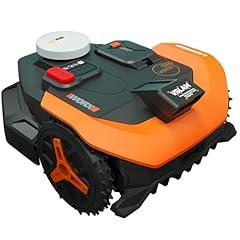
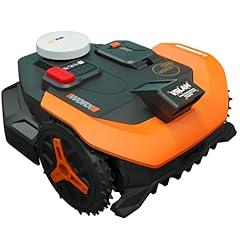
WORX Landroid Vision Cloud Robot Lawn Mower WR320
Overview
This is a battery-powered robotic lawn mower for residential lawns up to 1/2 acre. It uses a removable 20V 5Ah lithium-ion battery, an 8.7-inch three-blade cutting system, and a charging station. Worx states that it maps a yard without perimeter wire by combining stereo-camera Vision AI, cloud RTK positioning, Wi-Fi, Bluetooth, and RadioLink connectivity. The owner manual documents a safety-stop control, lift and upside-down error states, rain delay, out-of-area alerts, and a 30% slope limit. It also specifies a 1.57 to 3.54 inch electronic cutting-height range and scheduled, multi-zone app control. The connected radio hardware has an FCC equipment authorization, but no current public UL, ETL, or CSA listing matched to this exact mower, charger, and battery system was located. The product page also carries a California Proposition 65 warning for lead and DEHP exposure.
What works
- Wire-free setup and mapped navigation are defining manufacturer-stated functions, with RTK, camera, and RadioLink hardware included.
- The manual documents a safety-stop control, lift detection, upside-down detection, rain delay, battery-temperature limits, and an out-of-work-area error response.
- Scheduling, multi-zone management, six cutting-height settings, and weather-adaptive scheduling give owners meaningful control over when and where it cuts.
- The removable 20V battery, available replacement blades, three-year mower warranty, and stated Call2Recycle path support continued use and battery disposal planning.
- Its Wi-Fi and Bluetooth radio system is covered by an FCC authorization for a robotic lawn mower.
What does not
- No public model-matched UL, ETL, or CSA certification record was located for the mower, dock, charger, or battery system, so independent electrical and battery safety verification remains incomplete.
- Blade-stop and collision protections are described in the manual, but no independent test report was found for stopping performance around people, pets, or objects.
- Worx makes strong AI obstacle-avoidance claims, yet no model-specific wildlife collision test was found. Published robotic-mower research advises daylight-only use and lawn checks because camera-equipped mowers have not reliably avoided small animals before contact.
- The stated 1/2-acre coverage, inch-level positioning, 30% slope limit, and obstacle performance are manufacturer specifications, not independently reproduced results found in this review.
- The product has camera, location, cloud, and app functions. Worx publishes a privacy policy and provides firmware updates, but no independent cybersecurity assessment or minimum software-support period was located.
Who is it for
This product suits an owner of a maintained, mostly contained lawn of no more than about 1/2 acre who wants frequent automated trimming rather than occasional heavy cutting. It is most appropriate where the owner can create and inspect a digital map, use no-go tape around water, drop-offs, loose objects, and delicate beds, and supervise initial runs. It also fits someone who values app schedules, multi-zone control, a removable PowerShare battery, and a wire-free installation, while accepting that claimed navigation performance is manufacturer-stated.
Who is it not for
It is not suited to lawns with unfenced road access, open water, sharp drop-offs, dense ground clutter, or terrain that approaches or exceeds the stated 30% slope limit. Households with roaming pets, children using the lawn during scheduled mowing, or frequent visitors need a conservative operating plan and should not rely on camera detection alone. It is also a poor fit for buyers who require independently listed electrical safety certification, independently tested pet and wildlife avoidance, or verified cybersecurity support before using a camera-connected outdoor machine.
Integrity
The manual describes practical injury controls, including a safety-stop interface, lift and upside-down error responses, blade-maintenance instructions, and a requirement to disable the mower and remove its battery before servicing. These are manufacturer-documented safeguards, not independently published performance tests. The product page carries a California Proposition 65 warning that it can expose users to lead and DEHP, chemicals listed by California for cancer and reproductive harm. The removable lithium-ion battery is identified as recyclable, and the manual directs owners to the Call2Recycle program for disposal. Replacement blades are commercially available, which may help keep the mower serviceable. App scheduling, zones, height adjustment, and rain delay can support reduced or daylight-only mowing. However, no model-specific wildlife safety test was found. Independent research on robotic mowers recommends avoiding night operation and inspecting lawns for vulnerable small animals before mowing.

Ecovacs Goat A2000 Robotic Lawn Mower
Overview
This is a battery-powered, wire-free robotic lawn mower for lawns up to 2,000 square meters, or about one-half acre, according to ECOVACS. It uses dual LiDAR, a camera, 3D time-of-flight sensing, dual cutting discs, and a separate edge trimmer. The manufacturer specifies a 13-inch cutting width, electrically adjustable 1.2 to 3.6 inch cutting height, about 50 minutes of mowing per charge, and a 50 minute charge time. The defining feature is automated mapping with editable zones and schedules, but those are manufacturer-stated functions. An independent hands-on test of this exact mower found sensible obstacle avoidance around scattered objects, successful mowing on a wet and difficult lawn, and useful edge trimming. That same test reported an initial attempt to enter a garden bed until the reviewer added a no-go zone, showing that soft or poorly defined boundaries still need careful setup.
What works
- An independent field test found it navigated around scattered objects and behaved sensibly around active dogs.
- The app supports scheduling, multi-area maps, and editable restricted areas, according to ECOVACS.
- Its cutting height is electrically adjustable from 1.2 to 3.6 inches, allowing seasonal and turf-specific settings.
- Genuine replacement blades, trimmer line, brush, and trimmer kits are sold through the U.S. support store.
- ECOVACS publishes a U.S. instruction manual with model-specific dimensions, noise figures, capacity, and operating specifications.
What does not
- No model-matched UL, ETL, or CSA listing was located in the relevant public certification registers, so independent electrical and battery safety certification remains unproven.
- The manufacturer claims small-animal avoidance, including hedgehogs, but no published model-specific wildlife collision test was located.
- An independent test found the mower initially headed into a garden bed with an unclear edge, so no-go areas and map review are important safety steps.
- The one-year limited warranty treats batteries as consumables, and no U.S. manufacturer battery take-back program or replacement battery listing was located.
- The connected app has broad device permissions and ECOVACS disclosed a 2025 app security vulnerability that it says was fixed in version 3.4.0 or later.
Who is it for
It suits an owner of a roughly half-acre or smaller, regularly maintained lawn who wants wire-free mapping, scheduled mowing, and less routine edge work. It is most appropriate where the lawn perimeter, beds, ponds, drop-offs, and driveways can be mapped clearly and checked during initial runs. The buyer should be comfortable using a phone app, creating no-go zones, replacing consumable blades and trimmer line, and supervising setup rather than expecting completely unattended operation from the first day.
Who is it not for
It is not a good fit for households that need independently documented North American electrical, battery, or robotic-mower safety certification before allowing a machine to charge and operate outdoors. It also needs extra caution around wildlife, small pets, children, unfenced water, steep drop-offs, and loosely defined garden borders because model-specific wildlife testing was not located and a field test found an early boundary-mapping error. Buyers seeking a published battery replacement path, take-back program, or long battery warranty should look for clearer documentation.
Integrity
The product has practical risk controls on paper, including lift, collision, rain, LiDAR, camera, and time-of-flight sensors. ECOVACS also says its trimmer pauses when it detects a person or animal. Independent field testing supported obstacle avoidance in one real lawn setting, but it was not a formal blade-stop or small-animal safety test. Public model-matched UL, ETL, and CSA certification records were not located. The mower can support lower-disturbance routines because its app offers scheduling, separate areas, restricted zones, and adjustable cutting height. Those controls can be used to preserve selected lawn areas and avoid unnecessary mowing. ECOVACS sells several wearable cutting and trimming parts, which supports routine maintenance. However, battery replacement, U.S. take-back arrangements, and battery recycling instructions are not clearly documented for this product. Lithium-ion batteries should not go in household trash or curbside recycling.
ECOVACS Goat O1000 Robotic Lawn Mower
Overview
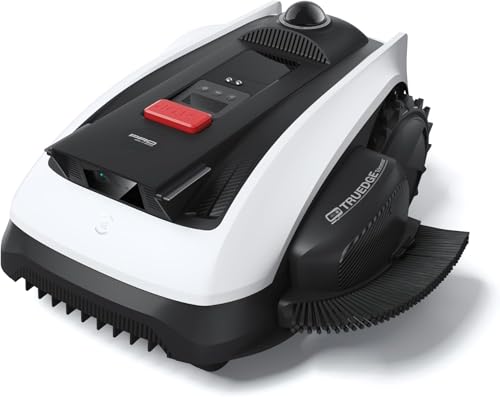
This is a 28.7-pound, battery-powered robotic lawn mower for smaller residential lawns. It uses wire-free LiDAR mapping, a camera, and 3D time-of-flight sensing to navigate, with an 8.66-inch blade deck plus a separate edge trimmer. The manufacturer specifies an 18 V, 5,200 mAh lithium-ion battery, about 90 minutes of mowing per charge, and a 70-minute charge time. The model-specific manual confirms rain, lift, collision, LiDAR, camera, and inertial sensors, plus Wi-Fi and Bluetooth connectivity. ECOVACS states that it manages multiple mapped areas, area-specific schedules, virtual boundaries, and slopes up to 45 percent. An independent reviewer also evaluated navigation, mapping, and real-lawn mowing, but the major safety, battery, and environmental claims do not have a publicly located third-party product certification report.
What works
- The manual documents rain, lift, collision, LiDAR, camera, and inertial sensing.
- Animal Protection time can limit the operating hours through the app.
- The manufacturer provides area-specific schedules and editable multi-area maps, which can support less frequent mowing and refuge zones.
- Published specifications give concrete operating limits, including 90-minute mowing time, 70-minute charging, and an 8.66-inch cutting width.
- The connected app declares encrypted data in transit and offers data-deletion requests through Google Play.
What does not
- No current, model-matched UL, ETL, or CSA listing was located for the mower, dock, power supply, or battery system.
- Obstacle avoidance, including the claim to recognize hedgehogs, is manufacturer-stated and lacks a located independent wildlife-avoidance test for this model.
- The 45 percent slope, narrow-passage, edge-cutting, and cutting-power claims are primarily based on manufacturer testing, with real-world results dependent on lawn conditions.
- The standard U.S. warranty is 12 months and treats batteries as consumable parts, while a U.S. battery take-back program and replacement battery parts pathway were not located.
- The mower has a camera and map-based cloud controls, but no independent cybersecurity assessment or stated minimum software-support period was located.
Who is it for
This product suits an owner of a small to medium, clearly defined lawn who wants routine mowing without installing perimeter wire. It is most appropriate where the lawn can be divided into mapped areas, rain delays and schedule limits can be used, and the terrain stays within the manufacturer’s stated operating limits. It also fits households willing to supervise setup, maintain blades and trimmer line, keep people and pets away during operation, and use a Wi-Fi and Bluetooth app for mapping, scheduling, alerts, and updates.
Who is it not for
It is not well suited to homes that need independently certified proof of charging and battery safety before operating an unattended outdoor machine. It is also a poor fit for yards with unfenced drop-offs, water hazards, loose soil, heavily irregular terrain, or slopes that exceed the stated limit. Households with hedgehogs, small pets, or other vulnerable wildlife should not rely on obstacle recognition alone. Avoid unsupervised night operation, use Animal Protection scheduling, and choose another arrangement if robust U.S. battery replacement and take-back support is essential.
Integrity
The documented safety package includes lift, collision, rain, LiDAR, camera, and inertial sensing. The manual instructs users to switch off the product before lifting or servicing it, and it identifies temperature limits for charging and operation. However, no publicly located current UL, ETL, or CSA listing tied to this exact mower, charging station, and power supply confirms independent North American electrical and battery safety certification. For wildlife, the app includes Animal Protection operating-time limits, which can support daylight-only schedules. That is more actionable than an obstacle-avoidance claim alone, but no independent model-specific test was located showing reliable avoidance of live small animals. ECOVACS sells genuine blades and trimmer parts, but its 12-month warranty excludes normal battery aging, and a U.S. battery take-back program or replacement-battery parts route was not located. The product page makes no quantified lifecycle or carbon claim.

DREAME A3 AWD 2000 Robot Lawn Mower
Overview
This is a battery-powered, wire-free robotic mower for lawns mapped through the Dreamehome app. The 0.5-acre version is manufacturer-rated for 2,000 square meters, weighs 16.1 kg, uses a 7.9-inch cutting width, and offers a stated cutting-height range of 1.2 to 3.9 inches. It includes a charging tower, power supply, and replaceable blade accessories. Dreame states that this model uses 360-degree LiDAR and binocular AI vision for mapping and obstacle avoidance, supports up to 150 zones, and can work on slopes up to 80 percent. The product page also states that it has lift alerts, PIN lockout, 4G tracking, weather sensing, and two separate maps. These are manufacturer claims, not independently verified product-level test results. A three-year warranty and a 30-day return policy are listed by Dreame.
What works
- Manufacturer-stated mapping supports two maps, no-go areas, multiple mowing modes, and up to 150 zones.
- The stated 1.2 to 3.9 inch cutting-height range can support taller grass and seasonal mowing adjustments.
- Dreame sells compatible replacement blade sets, rather than treating blades as unavailable consumables.
- The manufacturer lists a three-year warranty, plus a 30-day return policy.
- The mower can follow saved schedules after mapping without a Wi-Fi connection, according to Dreame's support information.
What does not
- I found no current model-matched UL, ETL, or CSA public listing confirming North American electrical, charging, battery, and robotic-mower safety certification.
- LiDAR, camera obstacle avoidance, lift alerts, and virtual boundaries are manufacturer-stated. I found no independent test report for this exact product that measures blade stopping, boundary escape, slopes, or collision avoidance.
- There is no published model-specific wildlife collision-avoidance test, and the product information does not provide a daytime-only wildlife protection setting.
- The product has camera, location, Wi-Fi, Bluetooth, 4G, and app functions, but no independent security assessment or stated minimum software-support period was found.
- Dreame offers blade accessories and warranty coverage, but I found no U.S. manufacturer battery take-back program or clear public battery replacement procedure for this model.
Who is it for
This mower suits an owner of a mapped lawn of up to about 0.5 acre who wants app-based zone control, does not want to install a perimeter wire, and can prepare the property before mowing. It is most appropriate where the lawn has clearly defined edges, safe exclusion zones around water and drop-offs, reliable access to the charging station, and a household able to supervise setup and update the map when landscaping changes. The stated height range also suits users who want to avoid very short mowing.
Who is it not for
It is not a hands-off choice for households with young children, roaming pets, or regular small-wildlife activity during mowing hours, because exact-model independent evidence for blade, bystander, and wildlife protection was not located. Avoid relying on the stated 80 percent slope capability near retaining walls, ponds, roads, stairs, or other consequences of a navigation error. It is also poorly suited to buyers who require a publicly verifiable North American safety listing, independently tested camera and location security, or a documented U.S. battery take-back route.
Integrity
The product has rotating replacement blades, a battery, charging equipment, cameras, cellular tracking, and wireless connectivity. Dreame states that it uses lift alerts, PIN lockout, LiDAR, binocular vision, virtual no-go zones, weather sensing, and an IPX6 mower enclosure. These are useful design claims, but they are not substitutes for independently available testing of blade stopping, collision response, boundary behavior, battery abuse, or charging safety. Dreame lists compatible blade replacements, a three-year warranty, and a 30-day return policy, which can help keep the mower in service. Its stated zone, schedule, and height controls can also let owners leave areas unmown or mow less frequently. However, no model-specific wildlife test, U.S. battery take-back program, published life-cycle assessment, or public UL, ETL, or CSA listing was found in the checked records. No CPSC recall for this product was identified in the recall search performed.
Dreame A3 AWD Robot Lawn Mower
Overview
This is a battery-powered, app-connected robotic lawn mower for mapped residential lawns up to 0.25 acre. The manufacturer specifies a 7.9-inch cutting width, a 1.2 to 3.9 inch height range, a 5 Ah, 18 V lithium battery, four-wheel drive, Wi-Fi, Bluetooth, cellular connectivity, GPS, cameras, and LiDAR. It uses a charging station and virtual boundaries rather than perimeter wire. Dreame documents editable zones, exclusion shapes, schedules, physical Stop control, PIN-gated restart after a stop, and replacement blades. Its manual specifies a 65-minute charging time and 1,000 square meters per 24 hours in standard mode. Those figures conflict with the marketplace listing's 45-minute charge claim. The reviewed sources did not provide a current North American safety certification record, accredited test report, or independent test for this exact product.
What works
- The official manual documents a physical Stop control, and app restart after a stop requires PIN entry at the mower.
- Manufacturer documentation supports practical lawn controls, including schedules, zones, no-go shapes, five mowing modes, and 1.2 to 3.9 inch cutting-height adjustment.
- The manual gives concrete operating limits, including a 0.25-acre recommended capacity, a 65-minute charge time, and a maximum stated 80 percent slope.
- Blades are user-serviceable according to the official instructions, with a stated 6 to 8 week replacement interval and named genuine blade parts.
- Dreame states a three-year product warranty and publishes U.S. return, replacement, and warranty-repair terms.
What does not
- The marketplace's 45-minute charging claim conflicts with Dreame's official manual, which specifies 65 minutes for this version.
- No current UL, ETL, or CSA product listing, battery test documentation, or model-specific North American robotic-mower safety report was located.
- There is no independent, model-specific wildlife collision-avoidance test. The manual instead instructs users not to operate where people or animals are in the work area.
- The lithium battery is replaceable only by skilled persons. No U.S. battery or electronics take-back pathway for this product was identified.
- The camera, location, Wi-Fi, Bluetooth, and cellular functions create a meaningful data footprint. Dreame publishes a general privacy policy, but no product-specific independent security assessment or guaranteed software-support period was located.
Who is it for
This product suits a homeowner with a clearly bounded lawn of about 0.25 acre or less who is willing to map the property, create exclusion areas, inspect the lawn for toys and debris, and supervise initial operation. It is best aligned with users who want scheduled maintenance mowing rather than occasional cutting of overgrown grass. The documented zone controls, selectable mowing modes, adjustable height, and wire-free mapping can help an attentive owner tailor operation around planted beds, paths, and areas intentionally left unmown.
Who is it not for
It is not suited to households that need independently verified blade, battery, or wildlife-safety performance before allowing an autonomous mower to operate. Keep it away from lawns where children, pets, or small wildlife may enter the work area, since the manual specifically directs users not to operate around people or animals. It is also a poor fit for properties with cliffs, water hazards, public-path crossings, narrow unplanned passages, or slopes that approach its stated 80 percent maximum. Buyers relying on a 45-minute recharge claim should note the official 65-minute specification.
Integrity
The official manual identifies real hazards that require active management. It warns that lithium batteries can burn or explode if abused, says to use the supplied charger and original batteries, and requires the charging station to remain at least 23.6 inches from combustible material. The product has a physical Stop control, but its instructions still say to keep people and animals out of the mowing area, so obstacle sensing should not be treated as proof of safe unsupervised operation around pets or wildlife. For lower-impact lawn care, the app documentation supports schedules, zones, exclusion shapes, and adjustable cutting height. These controls can help an owner leave refuge areas and avoid unnecessary mowing. The battery is lithium and only replaceable by skilled persons, while blade replacement is documented. No product-specific U.S. battery take-back program, life-cycle assessment, recycled-content evidence, environmental certification, active CPSC recall, or independently verifiable North American electrical-safety listing was located in the reviewed records.

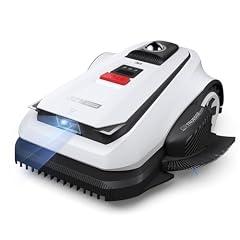
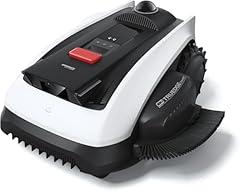
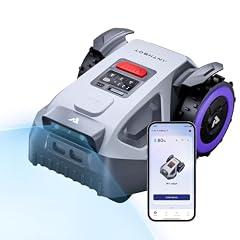
Navimow i105N Robot Lawn Mower
Overview
The Navimow i105N is a wire-free robotic mower for lawns up to 1/8 acre. It uses a separate antenna, satellite positioning, camera-based VisionFence navigation, and an app to map mowing areas, off-limit islands, channels, schedules, and optional night operation. The official manual specifies a 55 Wh lithium-ion battery, 7.1-inch cutting width, 2 to 3.6-inch cutting-height range, roughly 60 minutes of mowing per charge, and a 90-minute charge time. Its most defining capability is virtual-boundary mowing rather than buried perimeter wire, a manufacturer-stated function. The manual documents safety directions, PIN locking, blade maintenance, terrain limits, and battery protections. Independent evidence is more limited, though Consumer Reports includes this exact mower in its laboratory program and one hands-on editorial test reported strong collision avoidance.
What works
- Independent hands-on testing reported excellent collision avoidance during several spring 2024 mowing sessions.
- The app documentation confirms editable mowing zones, off-limit areas, channels, schedules, and a switch that can send the mower back to its dock instead of mowing at night.
- The official manual gives concrete operating limits, including 1/8-acre recommended coverage, 30% maximum internal slope, 10% boundary slope, and 2 to 3.6-inch cutting height.
- The 55 Wh battery has documented over-temperature, short-circuit, over-current, and over-charge protections, according to the manufacturer.
- A three-year mower warranty and two-year battery and power-adapter warranty are published by Navimow.
What does not
- No current UL, ETL, or CSA public listing was established for the United States version, so independent North American electrical and robotic-mower safety certification remains unproven.
- The safety manual still tells users to keep people and pets off the lawn while operating. Camera obstacle avoidance is not a substitute for an empty, inspected mowing area.
- Animal Friendly Mode is a manufacturer claim, not a published model-specific wildlife collision test. The app also allows night mowing, when wildlife exposure can be harder to monitor.
- The battery is service-replaceable only through after-sales service or a professional technician, rather than user-replaceable.
- The privacy policy explains data collection and account deletion, but no independent cybersecurity assessment or minimum software-support period was located.
Who is it for
This mower suits an owner of a compact lawn at or below about 1/8 acre who wants to avoid installing perimeter wire and can spend time on initial mapping, antenna placement, and routine checks. It fits a yard with a clear sky view, defined edges, moderate terrain within the stated 30% interior slope limit, dependable Wi-Fi or Bluetooth access, and an adult able to remove toys, sticks, wires, and other debris before scheduled mowing. It also suits users who value app-controlled zones and daytime scheduling.
Who is it not for
It is not suited to lawns larger than its stated 1/8-acre recommendation, steep areas beyond 30% inside the map or 10% at boundaries, or properties with unfenced drop-offs, ponds, busy public access, or uncertain boundary edges. Households where children, pets, or wildlife may enter the mowing area unpredictably need a more controlled mowing routine, because the manual directs users to keep them away during operation. It is also a poor fit for buyers requiring a verified North American electrical safety listing or user-swappable batteries.
Integrity
The product uses a 21.6 V, 55 Wh lithium-ion battery. The manufacturer documents battery-management protections for overheating, short circuit, over-current, and over-charge, plus temperature limits that block charging or mowing outside specified conditions. The manual also specifies PP for the frame and ASA for the cover. It provides detailed blade-replacement instructions and directs users to replace all three blades and screws together. Accessible documentation did not establish a UL, ETL, or CSA listing for the United States version. For lawn-management impact, the app can define off-limit areas, zones, schedules, and a night-mowing switch. That makes daylight-only use and refuge areas practical, but the manufacturer’s animal detection claim lacks a model-specific wildlife safety test. The manual instructs owners not to send the mower or battery to household trash, landfill, or incineration, and to use local collection channels. EPA guidance likewise says lithium-ion batteries should not go into household garbage or curbside recycling. No CPSC recall for this mower was identified in the checked records.

ANTHBOT M5 Robot Lawn Mower
Overview
This is a compact, battery-powered robotic mower for small urban or suburban lawns. It uses a 7.9-inch, five-blade cutting disc, a charging dock, and a phone app. The manufacturer specifies lawns up to 500 square meters, or about 1/8 acre, a 3 to 7 cm cutting-height range, and slopes up to 45 percent. It maps work areas without perimeter wire using RTK positioning, dual cameras, Wi-Fi, and built-in 4G. Its operating manual documents a lift-related fault response, a physical stop button, rain sensing, safety-key status, mapped-area error handling, and warnings not to run it around people or pets. Those are documented manufacturer safeguards, not independent performance validation. The manual also shows that reliable RTK setup needs a relatively open location, away from trees, eaves, and building obstructions. No model-matched U.S. UL, ETL, or CSA certification record or accredited independent safety test was provided in the reviewed documentation.
What works
- App controls support scheduled mowing and a 3 to 7 cm cutting-height range, which can help limit unnecessary cutting when used deliberately.
- The official manual documents a stop control, lift-related fault handling, rain sensing, mapped-area errors, and an instruction to keep people and pets away during operation.
- The manufacturer provides U.S. repair intake, official replacement blades, and a stated two-year M Series battery warranty.
- Wire-free RTK and dual-vision mapping can reduce installation work on an open, well-suited small lawn, according to the manufacturer.
What does not
- No independently checkable U.S. UL, ETL, or CSA listing for this exact mower, dock, and battery system was identified in the reviewed materials.
- There is no model-specific independent wildlife avoidance test. The manual instead instructs owners to schedule operation when no people or pets are on the lawn.
- RTK performance depends on open sky exposure. The manual warns against placement under trees, eaves, or among surrounding buildings.
- The privacy disclosures conflict. The company's policy describes collection of device, Wi-Fi or Bluetooth, usage, event, and lawn-map data, while its Apple privacy label declares no data collected.
- No manufacturer battery or electronics take-back program for U.S. end of life was identified.
Who is it for
It suits an owner of a small, fairly open lawn within the stated 500 square meter capacity who wants frequent light trimming instead of periodic manual mowing. The user should be comfortable creating maps, setting exclusion zones, maintaining the blades, and monitoring an app-connected device. It is better aligned with a property where the RTK base station can be placed with clear sky view, the charging dock can sit level, and children, pets, wildlife, toys, sticks, and irrigation activity can be kept out of the mowing area.
Who is it not for
It is not suited to households that need independently verified electrical and blade-safety certification before operating an autonomous cutting tool. Avoid unsupervised use where children, pets, or wildlife may enter the lawn, especially at night, because no model-specific wildlife safety testing was located and the manual itself requires keeping people and pets away. It is also a poor fit for heavily tree-covered yards, tight building corridors, steep terrain beyond the stated limit, flood-prone areas without exclusion zones, or buyers unwilling to share mapping and device data through a connected app.
Integrity
The manual contains practical safety controls and operating limits. It describes a stop button, lift-related fault detection, rain sensing, mapped-boundary errors, and warnings to clear debris, avoid bad weather, and never let the mower run unattended near people, pets, or children. The blade disc uses freely rotating blades that can pivot inward after hitting an obstacle, but there is no disclosed third-party blade-stop or bystander-protection test for this product. For longevity, the manufacturer offers repair intake, replacement blades, and a two-year battery warranty for the M Series. The manual gives battery storage and moisture precautions, yet its advice about accessing the battery is inconsistent, noting a replacement procedure while also discouraging opening the compartment. No U.S. take-back program or product life-cycle documentation was identified. App scheduling, zones, and adjustable height can support lower-impact mowing practices, but nighttime wildlife protection remains unproven.
Roborock Neo Q110H Robot Lawn Mower
Overview
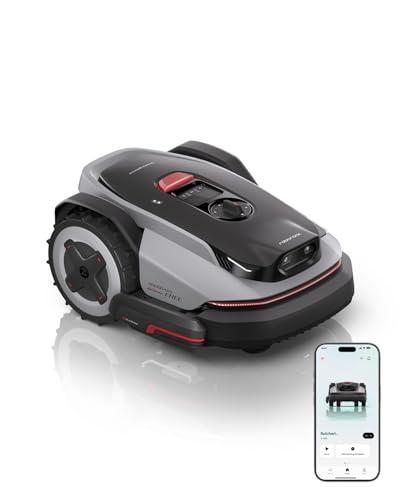
This is a 27-pound, battery-powered robotic mower for mapped lawns up to 1/4 acre. It uses a charging station, RTK reference station, binocular camera, Wi-Fi, Bluetooth, and the Roborock app rather than a perimeter wire. The manufacturer manual identifies a 21.6 V, 4.6 Ah lithium-ion battery, 8.66-inch cutting width, manual 1.57 to 3.15 inch cutting-height range, and about 150 minutes of mowing per full charge. Manufacturer documentation describes lift and tilt detection, a physical stop control, rain delay, mapped-area operation, and automatic return to charge. An independent week-long field review found generally solid object avoidance and an easy app, but also reported getting stuck on uneven terrain and performing poorly on a sharp incline. Public evidence located for this exact mower includes that editorial test and its FCC compliance statement, not a model-matched UL, ETL, or CSA electrical-safety listing.
What works
- The manual documents lift and tilt states, and requires physical button confirmation before mowing resumes after either event.
- The mower has practical lower-impact controls, including app scheduling, rain-delay adjustment, a wildlife-friendly app setting, and manual cutting height from 1.57 to 3.15 inches.
- The battery compartment is accessible for end-of-life removal, and the manual directs owners to use a professional battery recycling facility.
- Roborock's lawn-mower policy gives the main unit and battery a two-year limited warranty in North America.
- Independent field testing found the app easy to use and object avoidance generally solid in the tested yard.
What does not
- No model-matched UL, ETL, or CSA listing, ANSI or CSA mower test report, or battery-abuse test documentation was located in the reviewed public records.
- The wildlife-friendly setting and binocular-camera obstacle avoidance are manufacturer claims, not published model-specific small-animal avoidance testing.
- The 1/4-acre coverage statement lacks detailed public conditions for grass density, terrain, tree cover, obstacles, and recharge cycles.
- Independent testing reported that uneven ground, paving, tall plants, and a sharp incline could stop or defeat the mower, despite its terrain claims.
- The connected app collects or may collect account, device, media, location, usage, and diagnostic data. No independent security assessment or guaranteed software-support period was located.
Who is it for
It suits an owner of a small, relatively simple lawn with reliable Wi-Fi and clear satellite conditions who is prepared to map the work area, remove toys, wires, stones, and other debris before mowing. It is most appropriate where routine, frequent trimming at a chosen height is the goal, rather than cutting overgrown grass. The documented rain delay, scheduling, mapped zones, and automatic recharging are useful for someone who can supervise setup and keep children and pets off the lawn while it operates.
Who is it not for
It is not suited to households that need independently certified electrical and blade-safety documentation before allowing an autonomous mower to operate. Avoid relying on camera avoidance as protection for hedgehogs, other small wildlife, pets, or unattended children because model-specific wildlife testing was not located. It also is a poor fit for lawns with sharp inclines, irregular ground, dense garden obstacles, frequent paving transitions, weak Wi-Fi, or unreliable satellite reception. The independent field test specifically found terrain-related sticking and poor sharp-slope performance.
Integrity
The safety case rests mostly on Roborock's own manual. It documents a physical stop control, lift and tilt detection, manual confirmation before resuming after a lift or tilt event, rain sensing, and instructions to keep children and pets off the lawn. The manual also lists IPX6 ratings for the mower body and charging station, IPX5 for the RTK station, and IP67 for the charger. These are manufacturer-stated specifications. A model-matched UL, ETL, or CSA electrical-safety certification record was not located in the reviewed public sources. For material life and disposal, the mower uses a 21.6 V, 4.6 Ah lithium-ion battery. Roborock says to replace it through after-sales service or a dealer, and provides instructions for removal only when disposing of the product, with delivery to a professional recycling facility. The two-year battery warranty is useful, though a dedicated U.S. manufacturer take-back program was not confirmed. Wildlife protection is less established. The app offers a wildlife-friendly setting, but published testing showing that this model prevents small-animal injury was not found.
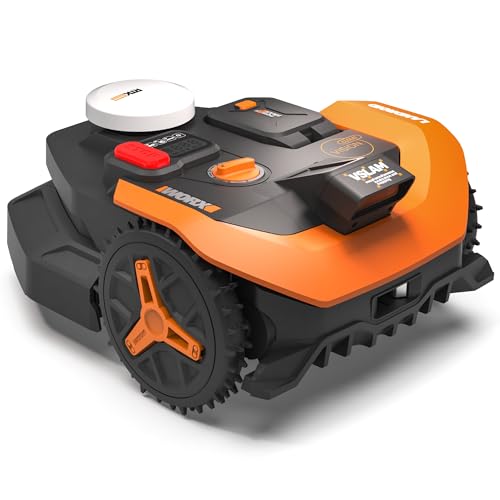
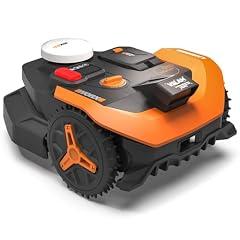
WORX Landroid Vision Robot Lawn Mower WR310
Overview
This product is a battery-powered robotic mower for lawns up to 0.25 acre. It uses a removable 20 V, 4 Ah lithium-ion battery, an 8.7-inch three-blade cutting deck, and an adjustable 1.57 to 3.54 inch cutting height. WORX specifies 2-wheel drive, a 30 percent slope limit, stereo cameras, RTK Cloud positioning, Wi-Fi, Bluetooth, a rain sensor, and app-based schedules and zones. The wire-free setup and mapped mowing are supported by a 2026 independent hands-on test of the 2-wheel-drive Vision Cloud product. That tester found setup and automatic mapping straightforward, object recognition generally useful, and performance good on a flatter yard. The same test found that steep, roughly 20 to 30 degree perimeter sections caused wheelspin and trouble turning uphill. A publicly verifiable, model-matched UL, ETL, CSA, or equivalent North American robotic-mower safety listing was not located in the reviewed registers.
What works
- Independent testing found wire-free setup and automatic lawn mapping easy on a real yard.
- The removable 4 Ah battery can also be used in compatible WORX cordless tools, which can keep the pack useful outside mowing season.
- Manufacturer documentation provides app scheduling, multi-zone management, adjustable cutting height, rain sensing, and no-go line hardware.
- Independent testing confirmed it handled a constructed 17 degree ramp, matching the stated 30 percent slope limit under that test condition.
What does not
- No public model-matched electrical, battery, or robotic-mower safety certification record was located in the reviewed UL, ETL, or CSA sources.
- Object recognition is not a guarantee of safe avoidance. In independent use, it avoided some toys but drove over a dog's bone while the blades contacted it.
- The 2-wheel-drive layout struggled on parts of a steep real lawn, despite completing a controlled 17 degree ramp test.
- There is no model-specific published wildlife collision test. Camera-based obstacle avoidance should not be treated as evidence of protection for small animals.
- WORX provides a California Proposition 65 warning for lead and DEHP. The warning identifies a potential chemical exposure, not the amount or route of exposure.
Who is it for
This product suits an owner with a maintained, mostly open lawn of no more than about one quarter acre, especially where installing perimeter wire is impractical. The strongest fit is a flatter yard with clear grass boundaries, dependable RTK coverage at the address, and enough time to supervise early mapping and refine exclusion areas. It also suits a household already using compatible WORX 20 V batteries, since the removable mower battery can be used in other tools. Daytime scheduling and manual wildlife checks remain important operating habits.
Who is it not for
It is not suited to yards with unprotected ponds, drops, busy public access, frequent unsupervised children or pets, or regular small-animal activity where the mower could operate unattended. It is also a poor fit for lawns that genuinely require reliable traction at or beyond its stated 30 percent slope limit. The independent test found wheelspin on steeper perimeter terrain. Buyers needing a publicly confirmed North American mower safety listing, documented small-animal testing, or independently assessed connected-device security will find those evidence records missing for this product.
Integrity
The product uses a 20 V, 4 Ah removable lithium-ion battery and has a three-year limited warranty stated by WORX. The removable battery is a practical longevity feature, and WORX documentation for its Landroid line describes battery recycling through Call2Recycle. However, a current public certification record covering this exact mower, dock, charger, and battery system was not located in the reviewed UL, ETL, or CSA sources. WORX lists scheduling, zones, rain sensing, height adjustment, and no-go controls that can support daylight-only mowing and refuge areas when the owner uses them deliberately. Those controls are useful, but there is no model-specific wildlife collision study. Research on robotic mowers has found that camera and sensor-equipped models cannot be assumed to detect small hedgehogs before contact. WORX also posts a California Proposition 65 warning for lead and DEHP, without exposure quantities for this product.

DREAME LiDAR Robot Lawn Mower
Overview
This is a battery-powered, app-connected robotic lawn mower for mapped residential lawns. The 3500 version has a 7.5 Ah battery, four-wheel drive, a 40 cm cutting width, and adjustable cutting height from 3 to 10 cm. It uses LiDAR and binocular camera vision to map without a boundary wire or RTK base station, according to Dreame. Dreame rates it for lawns up to 3,500 m², or 0.87 acre, slopes up to 80 percent, and obstacle avoidance. Independent testing confirms that this exact mower cut about 600 m² on one charge in roughly four hours under the tester's standard conditions. Independent tests also documented blade rapid-stop, lift sensing, collision sensing, and app-based mapping functions. The large, 23.9 kg mower is designed for frequent maintenance cuts rather than clearing overgrown grass.
What works
- Independent testing found roughly 600 m² of mowing per charge, with a recharge time under 1.5 hours in that test.
- Independent testing documented blade rapid-stop, lift sensing, collision sensing, LiDAR, camera sensing, and a rain sensor.
- The 40 cm dual-disc deck and four-wheel drive are concrete capabilities for a larger, mapped lawn.
- Dreame states that the app supports separate maps, multiple zones, schedules, edge, spot, manual, and whole-lawn mowing modes.
- The manufacturer publishes a bounded environmental claim, saying battery power eliminates direct exhaust during use rather than claiming the whole product is emissions-free.
What does not
- No current model-matched UL, ETL, or CSA electrical safety listing was located for the mower, charging station, power supply, or battery system.
- The product page presents conflicting warranty information, showing a three-year warranty in one section and a one-year warranty in another.
- No U.S. battery take-back program, repair manual, parts catalog, or clear long-term software-support commitment was located.
- Wildlife avoidance has some independent feature testing, but no published model-specific study was located using a repeatable small-animal collision method.
- The connected app handles location, device, diagnostic, identifier, browsing, and possible photo or video data according to its Apple disclosure. Its security assessment and minimum update-support period are not published.
Who is it for
It suits a homeowner with a large, regularly maintained lawn that is realistically within about 0.87 acre, has clear mapped routes, and includes slopes or uneven ground that benefit from four-wheel drive. It is most appropriate for someone comfortable setting up a connected mower, checking its first runs, defining exclusion zones around ponds, drop-offs, beds, and loose objects, and using daytime schedules. The independent runtime result is most relevant to buyers who can accept charging cycles as part of frequent automated mowing.
Who is it not for
It is not appropriate for households that need independently verified North American electrical certification before operating a lithium battery mower outdoors. It is also a poor fit where toddlers, pets, or wildlife may access the mowing area unsupervised, especially at night, because obstacle sensing is not a substitute for exclusion and supervision. Avoid using it as a brush cutter or on neglected, tall grass. Buyers needing transparent U.S. repair parts, battery collection, and a clear warranty term should seek clearer service documentation.
Integrity
The strongest safety evidence is functional rather than certification-based. Independent testing of this model reports a blade rapid-stop function, lift and collision sensors, plus a rain sensor. The product manual also identifies different water-ingress ratings for the mower, dock, and power supply. However, a current model-specific UL, ETL, or CSA listing covering the complete North American charging and battery system was not located. A search of the public CPSC recall database did not identify a recall for this mower. For lawn impact, the app's zones, schedules, no-go areas, and 3 to 10 cm height adjustment can help owners mow less often and leave refuge areas when they choose daylight-only, reduced-frequency routines. Dreame's direct-exhaust claim is properly limited to use, not manufacturing or disposal. Battery end-of-life remains a weak point because no U.S. manufacturer take-back route was located, and published warranty information conflicts between one and three years.