
10 Best Robot Vacuums of 2026
 Daniel Kenitz
Please note that we participate in affiliate marketing programs. When you purchase through links on our site, we may earn a commission. As an Amazon Associate we earn from qualifying purchases. This comes at no additional cost to you and helps support the resources required to provide valuable content.Advertising Disclosure
Top-rated Robot Vacuum Comparison
1

2
4
5
6
7
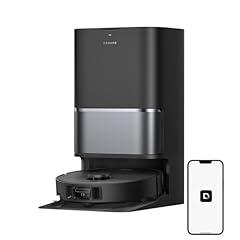
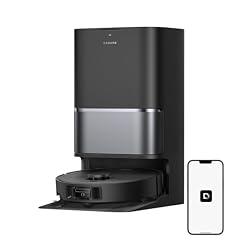
8
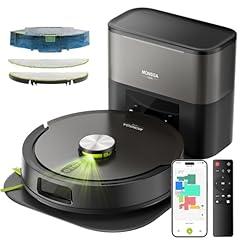
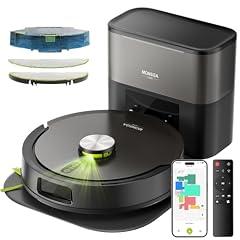
9
Robot vacuum overview
Robot vacuums combine automated vacuuming, mapping, charging, and on some models wet mopping. The useful question is not which product advertises the largest suction number, but whether it cleans the surfaces in your home, avoids hazards, contains dust, and can be maintained safely over time.
Cleaning performance should be supported by reproducible testing on both hard floors and carpet. Look for model-specific results covering debris pickup, embedded dirt, pet hair, edges, mopping, runtime, coverage, docking, and obstacle handling. The relevant performance framework is IEC/ASTM 62885-7:2020+AMD1:2022. Independent tests in the supplied reviews show why headline specifications can mislead: advertised Pa values did not by themselves establish carpet pickup, hair handling, stain removal, or coverage. Runtime and “hands-free” capacity also depend on cleaning mode, floor layout, debris load, and maintenance. A product can perform well on hard floors yet struggle with embedded carpet dirt, fine dust at edges, pet hair, or dried stains.
Electrical and charging claims deserve separate verification. A complete robot, dock, power supply, and rechargeable-battery system should have a current, model-specific listing from a U.S. Nationally Recognized Testing Laboratory. Buyers can check OSHA’s NRTL list and scope, UL Product iQ, Intertek’s ETL directory, or CSA’s product database. The applicable vacuum-appliance standard is UL 1017 / CSA C22.2 No. 243. FCC authorization only addresses radio equipment; it does not establish electrical safety for the complete charging system. Across the supplied products, no current complete-system U.S. NRTL listing was publicly verified.
For dust and allergy concerns, a replaceable filter labeled “HEPA” or “HEPA-style” is not enough. Meaningful evidence would identify a sealed airflow path and final-stage filtration or particle-emission testing for both the robot and, where applicable, the self-empty dock. A bag that seals during removal may reduce spills, but it does not prove low emissions while cleaning or emptying.
Wet-mopping systems vary substantially. Separate clean- and dirty-water tanks, mop washing, drying, and clear maintenance instructions can reduce stagnant water and odor, but they do not make a product disinfecting or germ-killing. Use only supported liquids and follow instructions for emptying tanks, washing pads or rollers, cleaning trays, and drying components. A passive cloth mop requires substantially more manual care than a washing dock.
Connected models create maps and may use cameras, microphones, Wi-Fi, or cloud accounts. Review privacy controls, update and vulnerability-reporting policies, support duration, and whether an independent security assessment covers the exact model. Navigation claims are not safety guarantees. Repeated warnings in the supplied reviews include clearing cords, socks, toys, tassels, pet items, and small clutter; protecting stairs and elevated edges; and not relying on obstacle avoidance around pet waste. Some products missed cords or simulated pet messes, and one supplied model had an unresolved dock-voltage conflict for U.S. use. No category-wide contraindication was found beyond these recurring preparation and verification needs.
Integrity
The topics below separate documented controls and tested performance from unsupported labels. Scores are relative signals from the supplied reviews, not certifications or guarantees.
EEvidence
Verified electrical and charging safety
This measures a current, model-specific U.S. NRTL listing for the complete robot, dock, power supply, and battery system, rather than a seller certificate or logo. It matters because the appliance charges unattended. All supplied products scored similarly because reviews repeatedly found no publicly verifiable complete-system UL, ETL, or CSA listing. The meaningful high-score condition would be a current listing in the relevant NRTL database and scope.
Proven cleaning performance
This measures reproducible independent results for pickup, carpet, edges, runtime, coverage, docking, and mopping across hard floors and carpet. It matters because advertised suction does not predict every cleaning task. Higher supplied scores were supported by exact-model tests such as 89% carpet debris removal, 93% pet-hair pickup, 1,763 square feet of tested coverage, or low residual mop water. Lower scores relied mainly on manufacturer claims or found uneven results.
Honest specs and health claims
This measures whether suction, runtime, hands-free capacity, obstacle avoidance, filtration, pet-hair, allergy, and air-quality claims state conditions and match evidence. It matters because Pa figures, “HEPA,” and “days hands-free” can imply more than testing supports. Higher scores aligned with qualified independent measurements; lower scores reflected conflicting specifications, in-house-only results, unsupported health implications, or claims contradicted by testing.
Environmental claim integrity
This measures whether environmental claims have specific boundaries, quantified comparisons, and credible support for the product and its consumables. It matters because a washable pad or large dust bag does not establish overall environmental superiority. The supplied scores were close together: products commonly documented some reusable parts or warranties but lacked lifecycle assessments, energy or water comparisons, recycled-content certification, or clear recycling evidence.
HHealth & Safety
Dust containment and filtration
This measures whether the robot and self-empty dock keep fine dust out of room air through a sealed airflow path and documented final filtration. It matters because auto-emptying can disturb collected debris. Among the supplied products, higher scores generally accompanied clearer washable-filter or bag-handling documentation, but no product had independently documented sealed-system and particle-emission performance; lower scores reflected especially limited filtration evidence.
Battery and dock fire safety
This covers overheating, shock, battery failure, unattended charging, charging limits, and model-specific recalls or warnings. It matters because these products routinely recharge themselves. The supplied products clustered around similar midrange scores: manuals often specified the supplied power equipment and temperature limits, but no complete-system U.S. NRTL listing was publicly verified. A recall search with no result is not certification.
Mop hygiene and cleaning-chemical safety
This measures clean/dirty-water separation, mop washing or drying, maintenance instructions, odor and residue controls, and supported liquids. It matters because damp pads and dirty tanks can stagnate. Higher-scoring products had automated washing or drying plus clearer tank and chemical instructions; lower-scoring or passive systems required prompt pad washing and water emptying. No supplied evidence established disinfecting or germ-killing performance.
Safe operation around people, pets, stairs, and clutter
This measures cliff sensing, obstacle avoidance, cord and hair entanglement, collision behavior, and recovery around real household hazards. It matters because a scheduled robot may operate unattended. The strongest supplied results included avoidance of 21 of 24 or 11 of 12 tested objects; weaker products missed cords, small objects, or simulated pet messes. Even higher-scoring models still required floor preparation and stair precautions.
Camera, map, and app-data protection
This covers home maps, camera or microphone data, account access, remote control, secure updates, support duration, and independent cybersecurity assessment. It matters because a mapped robot can reveal the layout and use of a home. Higher scores reflected privacy controls, vulnerability channels, or stated update policies; lower scores reflected missing product-specific security assessments, support end dates, or unclear data handling. FCC radio authorization is not cybersecurity verification.
EEcology
Disposable-bag, pad, filter, and water waste
This measures recurring waste from dust bags, filters, pads, detergent, and water, balanced against washable parts and replacement availability. It matters because a self-empty or mop-washing dock can shift convenience into ongoing consumables. Higher-scoring products documented reusable pads or washable filters and available parts; lower scores involved more disposable components, unclear intervals, or limited recycling information. None supplied a quantified product-wide waste comparison.
Built to last and serviceable
This measures warranty coverage, replacement parts, battery access, repair instructions, wear-part availability, and software support. It matters because a robot with an unavailable battery or unsupported app can become e-waste before its physical components fail. Higher scores included a verified three-year robot-and-dock warranty or published repair and parts channels. Lower scores lacked battery procedures, long-term software dates, or clear parts availability.
Credible environmental claims
This measures whether claims such as recyclable, eco-friendly, low-waste, energy-saving, or non-toxic apply clearly to the complete product and consumable system. It matters because bags, water, detergent, batteries, and electronics all contribute to impact. The supplied products had broadly similar scores because most lacked quantified energy or water testing, lifecycle assessments, or certified boundaries. Vague environmental language should not be treated as evidence.
Full reviews

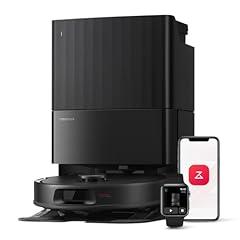
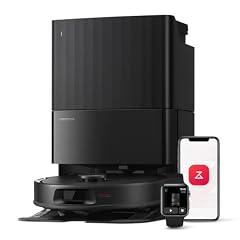
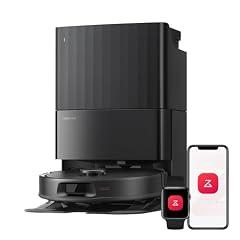
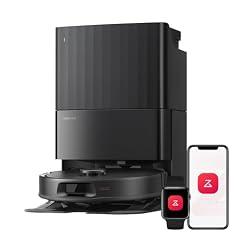
Roborock Qrevo S5V Vacuum and Mop
Overview
This is a Wi-Fi robot vacuum and wet mop with a self-emptying, mop-washing dock. The robot is 13.78 by 13.9 by 3.80 inches and uses a 5,200 mAh lithium-ion battery, according to Roborock's product page. Its dock stores clean and dirty water separately, empties collected debris into a disposable bag, washes the two mop cloths, and warm-air dries them. Its cleaning results have meaningful independent support. Vacuum Wars measured 92% removal of embedded sand from medium-pile carpet, 92% removal of flattened pet hair, zero hair tangles in its long-hair test, and strong dried-stain mopping results. In contrast, both Vacuum Wars and TechGearLab found weak clutter avoidance. The product uses structured-light sensing rather than an RGB camera, but it missed many test obstacles and could pull at thin cords. Roborock states 12,000 Pa suction and up to 180 minutes of runtime, but those manufacturer ratings are not equivalent to a standardized laboratory certification.
What works
- Independent testing found 92% embedded-sand removal from medium-pile carpet and 92% flattened pet-hair removal.
- The main brush had zero hair tangles in Vacuum Wars' 7-inch hair test, reducing routine brush cleanup.
- Independent mopping tests found strong dried-stain removal. The dock washes mop cloths and uses warm air for drying.
- The product has a washable robot filter, washable mop cloths, separate clean and dirty water tanks, and a bag handle designed to seal on removal.
- Roborock publishes a vulnerability disclosure channel and commits to at least two years of software security updates from official sale.
What does not
- Obstacle avoidance is a real limitation, not merely an evidence gap. Independent testing found that it avoided only 6 of 24 test obstacles, while another test found cord grabbing and collisions with simulated pet messes.
- No current model-specific UL, ETL, or CSA listing for the complete robot, dock, power supply, and battery system was publicly verifiable in the searched certification registers.
- There is no model-specific independent particle-emissions report or documented sealed-system and final HEPA filtration performance for the robot and auto-empty dock.
- The dock requires disposable dust bags. Mop cloths, filters, brushes, and water-tank components also require ongoing cleaning and periodic replacement.
- The product documentation requires clearing cords, fragile items, and pet or child hazards from the floor before operation. It should not be relied on to recognize every hazard.
Who is it for
This product suits a household with mostly hard floors plus low or medium-pile rugs, routine dry debris, and frequent washable-floor mopping needs. It is especially relevant where long human or pet hair makes brush maintenance burdensome, because the anti-tangle result was independently strong. It also fits users willing to manage clean water, dirty water, disposable dock bags, and routine sensor and filter cleaning. The 1,243 square feet per charge estimated in independent testing is practical for many moderate-size, relatively tidy single-floor areas.
Who is it not for
It is not appropriate for homes where charging cords, small toys, pet waste, loose clothing, or other hazards often remain on the floor. Independent tests found poor obstacle avoidance and a cord-entanglement incident, so unattended cleaning around those hazards carries a meaningful mess, damage, or dragging risk. It is also a poor fit for households needing independently verified HEPA-level allergen containment, publicly verifiable NRTL certification of the complete charging system, or a product with documented long-term software support beyond Roborock's stated two-year minimum.
Integrity
The dock's separate clean and dirty water tanks, mop washing, and warm-air drying can reduce the time that used mop cloths sit wet. The manual still requires emptying and rinsing the dirty-water tank as needed, cleaning mop cloths before use, and avoiding disinfectants or unapproved cleaning liquids. Independent testing found clean mopping results, although it also measured more water left behind than the test average. The product has a washable filter and reusable mop cloths, but its auto-empty dock uses disposable dust bags. The manual specifies periodic replacement of filters, mop cloths, and brushes. It gives battery-removal instructions for end-of-life recycling and directs users to a professional battery recycler. Roborock provides a one-year limited warranty, offers official repair channels, and says some parts and service information may be available on request. No model-specific third-party filtration test or complete electrical-safety listing was publicly verified in this assessment.

Roborock Saros 10R Robot Vacuum and Mop
Overview
This product is a Wi-Fi-connected robot vacuum and wet mop with a self-emptying, mop-washing dock. It uses dual rotating mop pads, an internal washable filter, a disposable dock bag, clean and dirty water tanks, and a 14.4 V, 6,400 mAh lithium-ion battery. The dock is designed to wash pads with hot water, dry them with hot air, refill the robot, and collect debris. Its most substantiated strengths are independent rather than advertised results. Vacuum Wars bought and tested this exact product, reporting 80% pickup of embedded sand from medium-pile carpet, 92% pickup of flattened pet hair, and 24 of 24 obstacles avoided at its highest avoidance setting. Roborock states the 3.14-inch body can access low-clearance furniture. However, public searches did not establish a model-specific U.S. NRTL listing for the complete robot, dock, charger, and battery system, or independent fine-particle emission testing for the dock.
What works
- Independent testing found strong medium-pile carpet deep cleaning and flattened pet-hair pickup.
- Independent obstacle testing reported all 24 test objects avoided at the highest sensitivity setting.
- The documented dock separates clean and dirty water, washes pads, dries them with heated air, and uses a removable cleaning tray.
- The manual specifies a washable robot filter and reusable mop cloths, which can reduce some recurring disposables.
- Roborock publishes privacy documentation, a vulnerability disclosure policy, and a security-update policy.
What does not
- A public, model-specific U.S. NRTL safety listing for the complete robot and dock was not established in the certification registers checked.
- There is no identified independent test of sealed airflow, HEPA-grade final filtration, or airborne dust released during dock emptying.
- The dock requires disposable dust bags, while the manual calls for mop-cloth replacement every one to three months and filter replacement every six to twelve months.
- Independent testing found slightly above-average streaking risk in a water-use assessment, despite above-average dried-stain mopping results.
- The camera-enabled app can support remote viewing and home mapping. Roborock documents data practices, but no model-specific independent cybersecurity certification or penetration test was found.
Who is it for
This product suits a household that wants automated routine cleaning across hard floors, rugs, and medium-pile carpet, especially where low furniture and everyday floor clutter make conventional robot navigation difficult. It is most appropriate for users willing to maintain a water-based dock, empty dirty water, replace bags and wear parts, and manage app permissions. Pet households may benefit from the independently tested obstacle avoidance and good flattened-hair pickup, but should still schedule periodic manual deep cleaning and inspect brushes, sensors, and the dock.
Who is it not for
It is not well suited to buyers who need publicly verifiable third-party electrical certification for the full charging system, or who need proven HEPA-level allergen containment during robot cleaning and dock emptying. Avoid relying on it unsupervised around loose cords, stairs with nearby low objects, sleeping infants, or water on the floor, because the manual specifically warns about these conditions. It also does not suit buyers seeking a low-consumable system, a bag-free dock, long stated software support, or independently audited camera and map-data security.
Integrity
The manual gives concrete safeguards for wet cleaning. It requires clean and dirty water to be handled separately, directs users to empty and rinse the dirty-water tank, and specifies heated-air mop drying. It also prohibits disinfectants and directs users to use only Roborock-recommended cleaning solution in the cartridge. These instructions reduce misuse risk, but they are not evidence that the system disinfects or sanitizes floors. The robot has a washable filter and reusable cloth pads, but its dock uses disposable dust bags and the manual specifies replacement intervals for filters, brushes, and pads. The manual gives lithium-ion battery storage and temperature limits, requires the supplied dock, charger, and accessories, and directs end-of-life battery disposal through a professional recycler. No model-specific CPSC recall was located in the U.S. recall search completed for this assessment. Public evidence of a complete-appliance NRTL listing, dock particle-emission testing, and independently certified environmental claims was not found.

Roborock Q7 M5+ Vacuum and Mop
Overview
This product is a circular robot vacuum with a detachable mop cloth, combined dustbin and water tank, LiDAR navigation, Wi-Fi app control, and an auto-empty dock using a 2.7 L disposable dust bag. The robot measures 12.8 by 12.8 by 3.9 inches and uses a 14.4 V, 3200 mAh lithium-ion battery. It supports only 2.4 GHz Wi-Fi. Roborock states 10,000 Pa suction, three water-flow levels, multi-floor maps, and up to seven weeks before bag replacement. Its suction figure comes from the company's internal full-battery Max+ test. Independent testing provides more useful context, finding strong hard-floor and dried-stain performance, but weaker carpet pickup and substantial hair-wrap concerns. The dock automatically empties the robot after cleaning, but it does not wash or dry the mop cloth.
What works
- Independent testing found effective hard-floor cleaning, including 79% debris pickup in one controlled test.
- Independent testing found the mop effective on dried stains for this product class.
- The manufacturer documents automatic return-to-dock charging and automatic dustbin emptying after a cleaning run.
- The manual identifies the complete charging system, specifies the battery type, and gives clear cord, heat, water, and ventilation precautions.
- The product has a washable robot filter and washable mop cloth, rather than disposable pads or detergent cartridges.
What does not
- No current, model-specific UL, ETL, or CSA listing for the complete robot, dock, power supply, and battery system was publicly verified.
- There is no model-specific independent evidence of sealed-system filtration, HEPA-grade final filtration, or particle emissions during dock emptying.
- Independent testers found below-average carpet pickup, brush hair tangling, collisions with obstacles, and a need to clear cords and clutter before use.
- The mop is a manually fitted, manually washed cloth. The dock does not clean or dry it, and the manual says to empty unused tank water immediately.
- The self-empty dock requires disposable bags. Roborock provides a one-year machine warranty, but parts availability is conditional and model-specific parts support is not publicly detailed.
Who is it for
This product suits a household with mostly hard floors, manageable daily debris, and enough open floor space to let a robot follow a mapped route. It is particularly suited to someone who can clear cords, small objects, and pet items before scheduled runs, manually fill and empty the mop tank, and wash the mop cloth after use. The auto-empty dock can reduce routine dustbin handling, while the app offers scheduling, room maps, no-go zones, and child-lock controls for regular maintenance cleaning.
Who is it not for
It is not well suited to homes with heavy shedding pets, carpets that need deep debris extraction, or rooms where cords, socks, toys, and fragile objects routinely remain on the floor. Independent testing found hair wrap, weak carpet results, and poor obstacle avoidance, so it should not be left to navigate cluttered spaces without preparation. It is also unsuitable for elevated unguarded areas, wet floors, or homes that need an automatically washed and dried mop system for frequent wet cleaning.
Integrity
The product uses a lithium-ion battery and a 120 V auto-empty dock. Its manual gives specific safety limits, including use only with the supplied charging system, dry handling of charging contacts, ventilation, and keeping the dock away from heat, moisture, and fire sources. The product's FCC compliance statement identifies its connected robot, dock, and power-supply system. A public model-specific NRTL electrical safety listing was not located, and no published recall for this exact product was found in the checked U.S. recall sources. For hygiene, Roborock instructs users to use cold water, avoid disinfectants unless specifically recommended, wring the reusable mop cloth, and empty unused water immediately. The dock collects debris in a disposable bag, creating recurring bag waste, although the mop cloth and robot filter are washable. Roborock publishes a vulnerability disclosure process and promises at least two years of software security updates for robotic vacuums. Its privacy materials describe collection of map, device-status, and usage data, but no exact-model independent cybersecurity certification was located.

Roborock Q10 S5+ Robot Vacuum and Mop
Overview
This is a Wi-Fi connected robot vacuum and mop with a 5,200 mAh lithium-ion battery, LiDAR navigation, a single vibrating mop cloth, and an auto-empty dock. The dock transfers debris into a disposable bag, while the robot uses a combined dustbin and water tank. It is intended for routine hard-floor and carpet cleaning, with app controls, room maps, no-go zones, recharge and resume, and a mop that retracts for carpet. Independent tests substantiate notably strong carpet pickup and hair-tangle resistance. Vacuum Wars measured 96% embedded-sand removal and no hair remaining tangled in its 7-inch hair test. The manufacturer states 10,000 Pa suction, up to 150 minutes of runtime, and up to seven weeks per dust bag, but those operating figures are manufacturer internal-test claims. No model-specific, publicly verifiable U.S. NRTL electrical listing was located in this review.
What works
- Independent testing found very strong embedded-sand pickup on carpet, at 96% in one controlled test.
- Independent testing found no hair tangling in a 7-inch hair test, supporting the anti-tangle brush design.
- The manual documents a washable filter and a washable mop cloth, which can reduce routine replacement waste.
- The manufacturer provides model-specific maintenance instructions, accessible battery-removal steps, replacement parts, and a one-year limited warranty.
What does not
- Independent tests found weak clutter avoidance. One test scored it 6 out of 24, and another found it detected about 40% of obstacles and could catch on cords.
- The auto-empty dock does not wash or dry the mop cloth. The manual requires emptying unused water, washing the cloth, and air-drying it after mopping to limit odor.
- The dock uses disposable dust bags, and the manual calls for replacement when full. Fine-particle filtration and sealed-system performance were not independently documented.
- A model-specific U.S. NRTL listing for the complete robot, dock, power supply, and battery system was not publicly verified during this review.
- Roborock's broad privacy policy and security policies exist, but no independent cybersecurity assessment or stated product-specific software support end date was found.
Who is it for
This product suits a household that wants scheduled maintenance cleaning across mixed hard floors and low or medium pile carpet, and can clear floors before each run. It is especially relevant where long hair is a frequent brush-maintenance issue, because an independent test found no hair tangling. It also fits users comfortable with app setup and regular hands-on mop care, including filling and emptying the onboard water tank, washing the cloth, and replacing dock bags when full.
Who is it not for
It is not suited to homes where cords, socks, small toys, pet waste, or fragile objects routinely remain on the floor. Independent tests found poor obstacle recognition, entanglement with cords, and missed clutter. It also requires a physical barrier near open stairs or elevated edges, as the manual warns that sensors can malfunction. People seeking a self-washing, self-drying mop system, documented HEPA-grade containment, or independently verified electrical safety certification should choose a product with those records.
Integrity
The manual gives useful practical safety limits. It specifies the compatible dock and power supply, warns against wet charging contacts, directs users to keep the unit away from heat and moisture, and requires clearing cords and hazardous items before cleaning. It also identifies a 14.4 V, 5,200 mAh lithium-ion battery and provides removal instructions for professional battery recycling. No model-specific U.S. recall or safety warning was identified in the review, but a publicly verifiable NRTL listing for the complete charging system was not located. For hygiene, the product has no mop washing or drying dock. Users need to empty unused water, wash the mop cloth after each use, and air-dry it. The washable filter and reusable mop cloth reduce some waste, but the self-empty dock depends on disposable bags, and the manual gives no independently verified HEPA or sealed-filtration evidence. Roborock publishes a privacy policy, vulnerability disclosure policy, and software security policy, while independent cybersecurity testing for this product was not found.

Roborock QV35A Robot Vacuum and Mop
Overview
This product is a round, Wi-Fi connected robot vacuum and mop with a 14.4 V, 5,200 mAh lithium-ion battery and a separate empty, wash, and fill dock. It uses a rubber main brush, side brush, LiDAR mapping, obstacle sensor, two rotating mop cloths, clean-water and dirty-water tanks, and a disposable dock dust bag. The manufacturer specifies 8,000 Pa maximum suction, a 330 mL onboard dustbin, 2.4 GHz Wi-Fi, and cold-air mop drying. Independent evidence is available for cleaning, but not for every advertised figure. Vacuum Wars measured 1,536 square feet per charge and a carpet deep-clean result of 90 in its own tests. A separate hands-on test found good routine vacuuming and useful dock washing, while reporting inconsistent obstacle avoidance and limited performance on stubborn dried-on grime. No current, model-specific U.S. NRTL electrical listing was publicly verifiable in the checked registries.
What works
- Independent testing found strong carpet deep-clean performance and substantial area covered per charge.
- The dock uses a bagged auto-empty system, and the manual says its bag seals on removal to help limit dust escape.
- The product has separate clean-water and dirty-water tanks, automatic mop washing, adjustable wash frequency, and configurable drying.
- The manual provides a practical battery-removal procedure for end-of-life recycling, and official replacement bags, mop cloths, brushes, and filters are sold.
- Roborock publishes an app privacy policy, firmware-update function, and vulnerability-disclosure channel.
What does not
- A current, model-specific UL, ETL, or CSA listing for the complete robot, dock, charger, and battery system was not publicly verifiable.
- The washable filter and bagged dock are documented, but independent sealed-system or fine-particle emission testing was not found. Allergy or air-quality benefits are therefore unproven.
- Independent testing and hands-on review both indicate obstacle avoidance can be inconsistent. Cords, small objects, stairs, pets, and children still require preparation and supervision.
- Cold-air drying and separated tanks improve hygiene management, but they do not sanitize. The dirty-water tank, mop cloths, tray, and filters still need regular cleaning.
- The dock requires disposable bags, and mop cloths, brushes, and filters have recurring replacement intervals.
Who is it for
This product suits a household that wants scheduled maintenance cleaning across hard floors and low to medium-pile rugs, and can give the dock a permanent hard-floor location with room in front. It is especially relevant for people who value automatic dust emptying, mop washing, water refilling, and app-based room routines, but are willing to empty dirty water, clean the tray, replace bags, and handle occasional deeper cleaning manually. It also fits users comfortable with a connected appliance and a 2.4 GHz home Wi-Fi network.
Who is it not for
It is not appropriate for homes where loose cords, small toys, fragile objects, pet waste, or stair-edge hazards cannot reliably be cleared or physically blocked before a run. The manual specifically requires floor preparation and physical barriers in raised areas, so it should not be trusted as the sole safety control around children, pets, lofts, or open stairs. It is also a poor fit for buyers needing independently verified HEPA-level containment, publicly verifiable U.S. electrical listing evidence, hot-water washing, or deep removal of dried-on floor soil.
Integrity
The product uses a rechargeable lithium-ion battery and a 120 V dock. Its manual limits use to the supplied dock, advises keeping the system away from heat, water, and damaged cords, and gives temperature and storage instructions. The manual also identifies a removable battery pack and directs users to professional battery recycling at disposal. No model-specific CPSC recall or warning was identified in the sources checked, but a public NRTL listing for the complete system was not found. For hygiene, clean and dirty water are separated, the mops can be washed at the dock and cold-air dried, and the tray is removable. These controls reduce, but do not eliminate, stagnant-water and odor risk because regular tank, tray, mop, and filter cleaning remains necessary. Waste is mixed: mop cloths and the filter are washable, while the dock requires disposable dust bags and several wear parts. Roborock sells replacement parts and documents battery removal, but does not provide a model-specific environmental assessment or quantified waste, water, or energy claim.

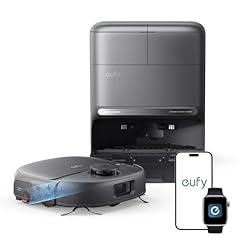
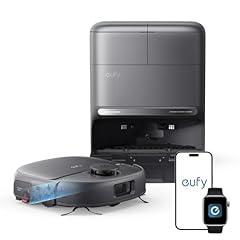
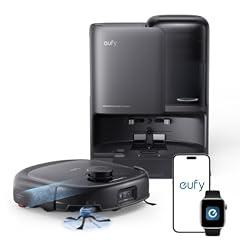
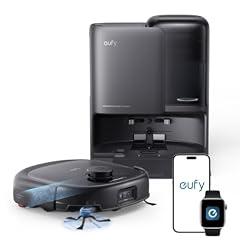
Eufy C28 Robot Vacuum and Mop
Overview
This product is a Wi-Fi connected robot vacuum and roller-mop with a combined charging, dust-emptying, mop-washing, drying, and water-management station. The robot has a 5,200 mAh lithium-ion battery, 120 mL clean-water and 100 mL dirty-water onboard reservoirs. Its station uses 2.2 L clean and dirty-water tanks plus a 3 L disposable dust bag. It is intended for routine hard-floor mopping and vacuuming, with carpet vacuuming between wet-cleaning areas. Manufacturer documentation states 15,000 Pa suction, LiDAR and line-laser navigation, six drop sensors, a child lock, and warm-air mop drying. Independent tests provide the strongest evidence for cleaning, reporting 89% removal of embedded carpet sand, 100% removal of embedded pet hair, and no hair wrap in a seven-inch hair test. Public, model-specific U.S. NRTL certification and particle-emission test results were not located.
What works
- Independent testing found strong pickup of embedded carpet debris and pet hair.
- Independent testing found no hair wrap in a seven-inch hair test, supporting the detangling-brush claim.
- The dock separates clean and dirty water, washes the roller, and dries it with warm air. Independent testing confirmed the wash and 50 C drying functions.
- The manual gives specific maintenance intervals for the roller mop, brushes, dustbin, sensors, cleaning tray, and dirty-water components.
What does not
- A public, model-specific UL, ETL, or CSA listing for the complete robot, dock, power supply, and battery system was not located.
- No independent test was located for sealed airflow, HEPA-grade filtration, or fine-particle emissions during cleaning and automatic emptying.
- Independent obstacle testing was mixed, with the product avoiding 15 of 24 common test obstacles. Clear cables and small objects before use.
- The self-empty station relies on replaceable 3 L dust bags, and wet cleaning requires routine dirty-water tank and tray cleaning.
Who is it for
This product suits households with mostly sealed hard floors, low or medium-pile rugs, shedding pets, and a consistent cleaning routine. Its independently tested carpet pickup, pet-hair removal, and low hair-wrap result are especially relevant where daily debris accumulates. It also fits users who can place the dock on a level hard floor with Wi-Fi coverage, keep floor cables and small items picked up, empty dirty water regularly, and accept buying dust bags and replacement wear parts.
Who is it not for
It is not well suited to households that need proven allergy-grade dust containment, because no model-specific sealed-system or particle-emission evidence was located. It also needs supervision or careful preparation in homes with loose charging cables, very small objects, pet waste, or children’s toys, since independent obstacle testing was incomplete. Choose another cleaning approach for deep-pile carpeting, frequent edge-only messes, or situations where the station cannot be kept on a hard, level floor and maintained regularly.
Integrity
The wet-cleaning system has meaningful hygiene controls, not a sanitizing claim. It separates clean and dirty water, washes the roller mop, and uses warm-air drying. The manual recommends standard drying to reduce odor and directs users to empty and clean the dirty-water tank regularly to prevent mildew. It also limits cleaner use to the brand's approved solution and warns against homemade or other cleaning liquids, which reduces material-compatibility uncertainty but creates a product-specific supply dependency. The product uses a lithium-ion battery and a disposable 3 L dust bag. The manual identifies removable wear parts and gives replacement intervals for brushes, roller mop, filters, and bags. However, no publicly verifiable U.S. NRTL listing for the complete charging system was located, and no model-specific recall was identified. CPSC recalls found for Anker Innovations involved other battery-powered products, not this product. The app privacy notice says robot-vacuum use can generate cleaning history, floorplans, detected home-environment details, and, where fitted and consented to, visual data for navigation.
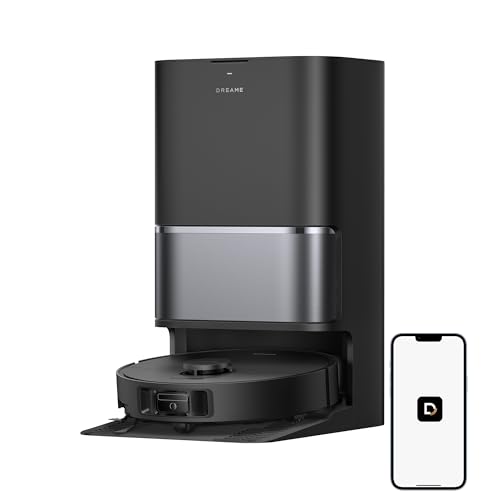
Dreame L40 Ultra Robot Vacuum and Mop
Overview
This product is a Wi-Fi connected robot vacuum and mop with a self-emptying, mop-washing dock. The manufacturer specifies a 5,200mAh battery, 3.2L dust bag, 4.5L clean-water tank, 4.0L used-water tank, 10.5mm mop lift, and 25,000Pa maximum suction. It uses extendable side-brush and mop hardware, plus a dock intended to empty dust, wash pads, and hot-air dry them. A hands-on independent review reported 96% pickup on hard floor and 89% on mid-pile carpet, plus seven of 12 dried mopping stains cleared in one pass. Those results are useful but are not a published IEC or ASTM laboratory report. The manufacturer’s 25,000Pa suction figure and claimed dock functions are product specifications, not independently certified performance measures.
What works
- An independent hands-on reviewer reported strong measured pickup on hard floor and mid-pile carpet.
- The dock has separate clean- and used-water tanks, and the manual specifies automatic mop washing, water refill, dust emptying, and pad drying.
- The manufacturer documents replacement intervals for bags, filters, brushes, and mop pads, which helps make recurring maintenance predictable.
- Dreame’s United States policy provides a three-year warranty for the robot body and dock, although the battery is covered for one year.
What does not
- No current, model-specific public UL, ETL, or CSA electrical-safety listing for the complete robot, dock, charger, and battery system was verified.
- The documentation identifies filters and a dust bag but does not substantiate a sealed system, HEPA-grade final filtration, or particle-emission performance.
- In an independent obstacle course, thin cables in dim light fooled the product twice in 30 runs. The manual also directs users to clear cords and place a physical barrier at stairs.
- The used-water tank requires cleaning after every use to limit odor. The manual also limits liquids to Dreame-approved cleaning solution.
- Dreame’s privacy policy covers device usage data, including cleaning records and potentially videos or photos, but no model-specific independent cybersecurity assessment or defined software-support end date was found.
Who is it for
This product fits households that want scheduled vacuuming and wet mopping across mainly hard floors, low- to medium-pile rugs, and ordinary daily debris. It is particularly suited to users willing to maintain a dock system by refilling clean water, emptying used water, replacing dust bags, and cleaning sensors. The measured hard-floor and carpet pickup results support routine floor maintenance. It also suits buyers who value documented United States warranty coverage for the robot and dock, rather than relying only on marketplace support.
Who is it not for
It is not suited to households that need independently verified HEPA or sealed-system allergen containment, or those where a public US NRTL listing is a non-negotiable electrical-safety requirement. Do not run it unattended in cluttered areas with loose charging cables, small toys, pet accidents, or unprotected stairs. The manual explicitly requires cord clearing and stair barriers, and independent testing found missed thin cables in dim light. Buyers unwilling to manage dirty water and recurring bags, filters, pads, and brushes should also avoid a self-washing dock design.
Integrity
The safety manual provides meaningful operating limits. It calls for a grounded outlet, manufacturer-specified charging equipment, charging and storage between 32°F and 104°F, and removal from service if the battery or appliance is damaged. No model-specific CPSC recall or public safety warning was identified in the United States searches performed. However, a public US NRTL listing for the complete electrical system was not verified. The dock separates clean and used water and dries mop pads, but hygiene still depends on maintenance. Dreame directs users to clean the used-water tank after each use and use only approved cleaning fluid. The product relies on a disposable dust bag, specified for replacement every two to four months, while filters, mop pads, and brushes are recurring wear items. A three-year warranty for the robot and dock may support a longer useful life, though the battery warranty is one year and no app support end date was published.

MONSGA Robot Vacuum and Mop Combo
Overview
This is a round robot vacuum and basic drag-mop system with a self-emptying charging station. It uses a removable water tank and cloth pad rather than a dock that washes or dries mops. The manufacturer states a 4 L disposable dust bag, 460 ml water tank, 3,200 mAh battery, up to 160 minutes of runtime, LiDAR mapping, five stored maps, and app control through Smart Life or Tuya. Independent hands-on testing corroborated orderly LiDAR navigation, automatic return to the station, and reliable pickup of everyday debris on hard floors and short-pile carpet. The same test found weaker results on medium and long-pile carpet, plus limited scrubbing against dried stains. Its bag-sealing and docking plate performed well in that test, but published standardized cleaning, particle-emission, and electrical-safety reports for this product were not located.
What works
- Independent testing found reliable pickup of crumbs, dust, pet hair, and fine sand on hard floors and short-pile carpet.
- Independent testing found orderly room coverage, useful map storage, and reliable recharge-and-resume behavior.
- The self-empty station used a pull-out sealed 4 L bag, and an independent test reported no visible dust cloud during emptying or bag replacement.
- The manufacturer provides a limited warranty for eligible direct and authorized-store purchases, with customer-support contacts for the United States.
What does not
- No current public model-specific UL, ETL, or CSA listing for the complete robot, dock, charger, and battery system was located.
- No standardized independent test was located for pickup, runtime, coverage, mopping, or fine-particle emissions, so the 8,000 Pa, 160-minute, 90-day, and coverage claims remain manufacturer-stated.
- This is a simple wet-pad system with no mop washing or drying. The available instructions describe filling the tank with water, but do not establish a hygiene program or supported cleaner-use limits.
- The product connects through Smart Life or Tuya, but the brand's public privacy page is largely website-focused and does not clearly explain map-data handling, firmware-support duration, or independent cybersecurity review.
Who is it for
It suits households wanting scheduled maintenance cleaning of hard floors and short-pile rugs, especially where pet hair and routine crumbs are the main debris. The self-emptying bag station can reduce how often users handle collected dust, and the independent hands-on test supports its basic navigation and daily pickup performance. It also fits users comfortable maintaining a cloth mop manually, emptying and refilling the water tank, replacing bags and filters, and preparing floors by removing cables, toys, and small objects first.
Who is it not for
It is not suited to households needing documented electrical certification, independently verified allergen containment, or robust app-security assurances. People with severe dust allergies should not treat the product's filter label or sealed-bag claim as proof of a fully sealed HEPA system, because no model-specific airflow or particle-emission test was found. It is also a poor fit for thick carpets, dried or sticky floor messes, unattended operation around loose cords or pet items, or raised areas without a physical fall barrier.
Integrity
The product uses disposable dust bags and replaceable filters, while its mopping side uses reusable cloth pads. The manufacturer says the bag has a pull-out seal, and independent testing found no visible dust cloud during station emptying or bag replacement. That is helpful for routine debris handling, but it does not establish sealed-system HEPA performance. EPA guidance distinguishes a true HEPA vacuum from a product that merely includes a HEPA filter, requiring tested efficiency and no air bypass. The available safety instructions warn against damaged charging equipment, excessive heat, water exposure, burning debris, and use near unsecured edges. They also instruct users to clear cords, sharp objects, and small valuables, and to use a physical barrier on raised areas. No product-specific CPSC recall or warning was located. The brand labels its store shipping as carbon neutral, but no product-level carbon accounting, recycled-content evidence, energy test, take-back program, or repair documentation was located.

Eufy E25 Robot Vacuum and Mop Combo
Overview
This is a Wi-Fi connected robot vacuum and roller-mop system with a large dock. The dock automatically collects debris into a 3 L disposable bag, supplies clean water, holds 2.5 L of clean water and 1.8 L of dirty water, and is designed to wash and dry the roller mop. The robot uses a 5,200 mAh lithium-ion battery, has an RGB obstacle camera and LiDAR navigation, and is intended for hard floors plus carpets. Its 20,000 Pa suction figure, self-washing mop, hot-air drying, and anti-tangle brush claims are manufacturer-stated. Independent testing provides more useful evidence than the Pa number alone. One test program found notably strong pet-hair pickup, above-average combined mopping, 1,070 square feet of coverage per charge, and avoidance of 21 of 24 test obstacles. That same testing found only average crevice pickup, below-average measured airflow, and slightly above-average water left after mopping.
What works
- Independent testing found strong pet-hair collection with little brush tangling.
- Independent testing measured 1,070 square feet of coverage per charge, which supports use across several rooms.
- The manufacturer documents separate clean and dirty water tanks, mop drying controls, and instructions to empty and rinse the dirty-water tank.
- The user guide includes no-go and no-mop zones, child lock, camera and sensor cleaning, and a battery-replacement support resource.
What does not
- No current, model-specific public UL, ETL, or CSA listing for the complete robot, dock, charging system, and power supply was located in the relevant public certification registers.
- The product documentation identifies a washable filter, but does not substantiate a sealed system, HEPA-grade final filtration, or particle-emission performance during self-emptying.
- Independent testing found slightly elevated leftover water after mopping. The manual also says drying must be enabled and the dirty-water tank cleaned regularly to limit odor and mildew.
- Obstacle avoidance is demonstrably capable but not fail-safe. Independent reviewers observed missed items or a dragged charging cable, while the manual still instructs users to remove cords and small objects first.
Who is it for
This product suits households with mostly hard floors, some rugs or carpet, shedding pets, and enough space for a full-size water and self-emptying dock. It is particularly relevant for people who will use scheduled maintenance cleaning and are willing to empty dirty water, replace dust bags, clean the tray, and keep sensors maintained. The independent results support routine fur pickup, broad floor coverage, and regular wet cleaning better than they support deep crevice cleaning or unattended operation in clutter.
Who is it not for
It is not well suited to households that need documented HEPA-level allergen containment, a publicly verifiable complete-appliance safety listing, or verified cybersecurity testing for the camera, maps, and app. Avoid relying on it around loose cables, socks, toys, pet waste, or unsupervised young children without preparing the floor, because its avoidance system can miss hazards. It is also a poor fit for all-carpet homes, homes with persistent dried spills, or anyone unwilling to manage dirty water and disposable dust bags.
Integrity
The health-relevant design is mixed. The dock separates clean and dirty water, and the manual explicitly directs users to run mop drying after every wet-cleaning task and to empty and rinse the dirty-water tank to reduce odor and mildew risk. Independent testing supports useful obstacle avoidance and mopping performance, but recorded more residual water than the test average. The manual also requires floor preparation and regular sensor cleaning, so the camera-based avoidance system should not be treated as a safety substitute. A washable onboard filter and removable brushes can reduce some routine replacement demand. However, the station uses a 3 L disposable dust bag, and the manufacturer does not provide model-specific evidence of sealed HEPA-level filtration or fine-particle emissions during emptying. A battery replacement support resource exists, but the user guide says other servicing should be performed by authorized personnel. No product-specific U.S. recall or CPSC warning was located in the review, and no public model-specific U.S. NRTL listing was found.

Roborock Qrevo S Pro Vacuum and Mop
Overview
This is a Wi-Fi robot vacuum and wet mop with a large self-service dock. The 13.8 by 13.9 by 3.8 inch robot uses a 14.4 V, 5,200 mAh lithium-ion battery. Its dock empties dust into a bag, washes two spinning mop pads, refills the robot, and dries the pads. A hands-on reviewer reported 4-liter clean and dirty-water tanks in the dock. Roborock states that the dock heats wash water at its internal heater outlet to as much as 167°F, and provides 113°F warm-air drying. It also states 18,500 Pa maximum suction, but identifies this as internal testing and qualifies that real results vary. Independent two-week home testing found good pickup of everyday debris and clean-smelling mop pads, while also finding missed debris on textured rugs and limited removal of larger cereal and stuck-on food.
What works
- The dock separates clean and dirty water, auto-washes mop pads, dries them, refills the robot, and auto-empties dust into a bag, according to Roborock documentation.
- Independent home testing over two weeks found it removed most everyday floor debris, transitioned between carpet and hard floors, and left the tested mop pads looking and smelling clean.
- The manual gives concrete safety limits, including use of the supplied dock and charging equipment only, no disinfectants, cord pickup before cleaning, and barriers at elevated edges.
- Washable filters and reusable mop cloths reduce some recurring disposable material use. Roborock also sells replacement main and side brushes for the wider compatible Qrevo family.
- Roborock publishes a vulnerability-reporting channel and commits to at least two years of security updates for robotic vacuums.
What does not
- No current, model-specific public UL, ETL, or CSA listing for the complete robot, dock, charger, and battery system was located in the applicable U.S. listing directories. This is missing verification, not evidence of a defect.
- The 18,500 Pa figure, 167°F wash figure, 65-day bag interval, pollen-filtration figure, and most performance claims are manufacturer testing claims, not reproducible independent laboratory results.
- Independent home testing found the robot could push large dry cereal around, miss some rug debris, drag a small toy, and catch socks. Clear floors remain necessary despite obstacle avoidance.
- The auto-empty dock uses disposable dust bags. There is no publicly located model-specific sealed-system or particle-emissions test supporting allergy or room-air claims.
- The product relies on the Roborock app for intended operation and mapping. Published security support is only a minimum two-year commitment, and no model-specific independent cybersecurity assessment was located.
Who is it for
It suits households with mostly sealed hard floors plus low to medium-pile rugs, where frequent maintenance cleaning matters more than deep carpet extraction or scrubbing dried spills. It is especially practical for people able to give the roughly 13.4 by 19.2 inch dock a stable hard-floor location, refill and empty large water tanks every few days, and keep floors clear before scheduled runs. Buyers should be comfortable using the app and performing routine filter, brush, tray, and bag maintenance.
Who is it not for
It is not appropriate for homes that regularly leave cords, socks, small toys, pet accessories, sharp debris, or loose clothing on the floor. Independent testing documented some object dragging and sock entanglement, and the manual warns that cords can be pulled and damaged. Avoid unattended use near unprotected loft edges, terraces, furniture tops, or other drops. It also does not suit people seeking a verified sealed HEPA system, independently certified electrical listing, laboratory-proven allergy containment, or a product that can scrub hardened spills from textured carpets or floors.
Integrity
The wet-cleaning system has practical hygiene controls. It keeps clean and dirty water in separate dock tanks, washes pads during use, and offers warm-air drying. Roborock cautions against disinfectants and directs users to its approved cleaning solution, which avoids implying that the dock disinfects or sanitizes floors. The manual also warns that wet floors can be slippery and that drying outlets can be hot. No active U.S. recall specific to this product was located in the CPSC recall database during this review. However, a public U.S. NRTL listing for the complete product system was not located. Dust bags create recurring waste, although the filter and mop cloths are washable and replacement brushes are sold. Roborock offers a one-year limited warranty, repair support, some parts on request, and a minimum two-year security-update policy. It does not make a product-specific quantified environmental claim or publish a life-cycle assessment.