
10 Best Robot Mower
 Daniel Kenitz
Please note that we participate in affiliate marketing programs. When you purchase through links on our site, we may earn a commission. As an Amazon Associate we earn from qualifying purchases. This comes at no additional cost to you and helps support the resources required to provide valuable content.Advertising Disclosure
Top-rated Robot Mower Comparison
1

2
4
5
6
7
8
9
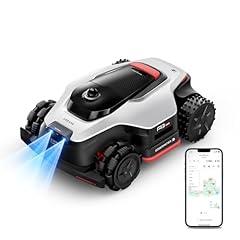

Robot Mower Overview
A robot mower maintains turf by cutting small amounts frequently, returning to a charging station when needed, and following a mapped work area. The difficult part is not simply whether it has cameras, LiDAR, RTK, or all-wheel drive. It is whether the complete system mower, blades, battery, dock, charger, software, map, and yard setup works predictably on the property where it will operate.
Start with the real mowing area, not the headline acreage. Published capacity can be a manufacturer target, and actual coverage changes with lawn shape, connected sections, obstacles, grass length, moisture, slope, tree cover, buildings, and how often the mower must recharge. Slope figures also need context: a percentage or degree limit may apply only inside the mapped work area, under dry conditions, or without a particular attachment. Cutting-height ranges can be reversed or inconsistent across retail and manufacturer materials. A useful listing defines the model-specific area, slope, height range, weather limits, operating time, recovery behavior, and boundary limitations in matching documentation.
Wire-free navigation is not the same as unrestricted navigation. RTK systems need a suitable antenna location and clear sky view; LiDAR and camera systems can be affected by lighting, buildings, trees, narrow passages, and unclear edges. Virtual boundaries should not be treated as physical protection beside roads, pools, water, public paths, neighboring property, or drop-offs. Look for installation instructions that specify margins, restricted zones, no-go areas, dock clearances, and what happens when positioning is lost. Independent yard testing is especially useful when it reports boundary keeping, docking, traction, cut quality, wet-weather behavior, and recovery after interruptions rather than repeating marketing claims.
Blade safety should be model-specific. Look for documented lift, tilt, flip, blockage, and emergency-stop behavior, along with instructions for keeping children, pets, and hands away from the underside. Charging safety applies to the complete mower, battery, dock, and power supply not just the battery cell. A traceable UL or ETL listing in the relevant directories, or another qualified North American certification record, is stronger evidence than an FCC authorization. FCC records verify radio compliance; they do not establish blade-contact or battery-fire safety. CPSC Recalls and SaferProducts records should also be checked for the exact product.
Connected controls introduce another decision. App, Wi-Fi, Bluetooth, cellular, camera, map, location, account, and software-update practices should be clear. Check CISA and NIST vulnerability records, manufacturer security advisories, supported-software dates, privacy disclosures, and the product’s FCC authorization where radios are present. A privacy policy is not independent security testing, and an advertised animal-detection feature is not wildlife testing.
For longevity, favor documented replacement blades, batteries, wheels, chargers, and service routes; warranty coverage alone does not prove parts availability. Battery recycling should follow an appropriate rechargeable-battery program. Higher cutting settings, daylight scheduling, lower mowing frequency, mapped habitat islands, and no-go areas can reduce disturbance, but they require deliberate owner choices.
Across the supplied products, recurring contraindications are clear: none should be treated as safe to run around unsupervised children, pets, people, or wildlife. Buyers should be especially cautious near roads, pools, ponds, steep drops, public paths, and unclear boundaries. Several products lack complete-system UL or ETL evidence, and no supplied product had independent, species-relevant wildlife testing. Navigation can fail or require remapping, particularly with obstructed positioning, poor lighting, uneven ground, or software problems. One product also had a confirmed remote-control security incident, making connected-security history a serious purchase consideration.
Integrity
Robot mowers combine exposed cutting hardware, a rechargeable electrical system, autonomous navigation, and connected software. The scores below distinguish documented safeguards and independent evidence from broad claims; a higher score means stronger supplied evidence against the specific topic, not a guarantee of unattended safety.
HHealth & Safety
People, pet, and blade-contact safety
This measures whether blades stop or exposure is prevented when the mower is lifted, tilted, blocked, touched, or emergency-stopped. It matters because a robot mower carries moving blades into shared outdoor spaces. Higher-scoring examples document several controls and, in one case, independent lift-stop testing; lower-scoring products rely mainly on manuals or marketing and lack model-specific contact testing.
Battery and charging safety
This measures protection against overheating, short circuits, overcharging, water-related faults, and unsafe charging across the mower, battery, dock, and charger. A high score requires credible complete-system certification evidence, not merely a battery specification. Among these products, scores are higher where battery protections and charging instructions are concrete, but no supplied product had clearly located complete UL or ETL evidence.
Stays in bounds and avoids hazards
This measures whether navigation keeps the mower inside its work area and responds appropriately to roads, pools, drops, people, pets, and obstacles. Higher scores are associated with independent boundary or obstacle testing plus clear mapping limits; lower scores reflect manufacturer-only detection claims, documented boundary departures, weak cliff detection, or sensitivity to trees, buildings, lighting, and setup.
App, camera, and remote-control security
This measures protection for accounts, wireless controls, cameras, location data, and software updates. It matters because a connected mower can expose maps or permit unwanted control. Higher-scoring products have clearer support, privacy, or radio evidence and no identified critical issue in the supplied review; the lowest scores reflect unresolved or confirmed security concerns, including a reported remote takeover incident.
EEcology
Environmental impact over the mower's life
This measures operating electricity, battery replacement burden, durability, repair access, and availability of parts such as blades, wheels, batteries, and chargers. Higher-scoring products document replaceable wear parts, service, warranties, or repairable batteries; lower scores reflect limited battery access, unclear energy use, or weak parts documentation. A warranty can reduce early replacement burden but does not by itself prove repairability.
Wildlife detection and protection
This measures demonstrated avoidance or safe stopping for small animals, with daylight-only operation available by default. It matters because cameras and obstacle sensors may detect wildlife only after contact. Scores are generally moderate: several products offer wildlife modes or animal-recognition claims, but the supplied reviews found no exact-model, species-relevant independent wildlife test. Night scheduling therefore remains an owner decision.
Biodiversity-friendly mowing control
This measures practical control over frequency, time of day, cutting height, flowering areas, habitat zones, and no-go areas. Higher scores occur where apps document many zones, schedules, habitat islands, and higher cuts; lower scores reflect fewer controls or less precise documentation. These features can support less disruptive mowing, but they do not automatically create a wildlife-safe regime.
EEvidence
Honest acreage, slope, navigation, and obstacle claims
This measures whether acreage, slope, height, obstacle, wire-free, mapping, and weather claims include material limits that match the exact product. Higher-scoring products pair precise manuals with independent testing; lower scores show conflicting retail specifications, broad capacity claims, undocumented conditions, or firmware histories that reveal navigation limits. Buyers should treat the smallest clearly supported operating envelope as the practical one.
Independently verified safety and performance
This measures traceable third-party certification, radio authorization, or qualified testing of the exact mower. Higher-scoring products in this set have independent field evidence or FCC records, and the strongest have both field-tested behavior and model-specific safety observations. A lower score means important claims remain manufacturer-stated, especially where no UL, ETL, NRTL, or exact-model safety report was found.
Works reliably in the yard it is sold for
This measures coverage, docking, navigation, traction, rain handling, cut quality, and recovery from interruptions in real yards. Higher-scoring products have independent reports showing boundary control, obstacle handling, slope traction, or even cuts; lower scores reflect setup difficulty, pauses, docking errors, stuck behavior, or no exact-model field test. Results still depend heavily on the buyer’s terrain and map.
Full reviews
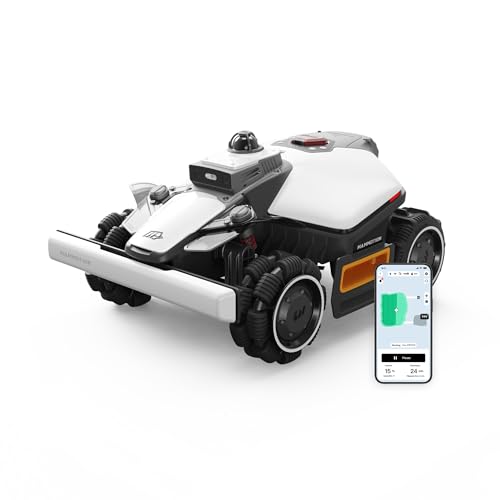
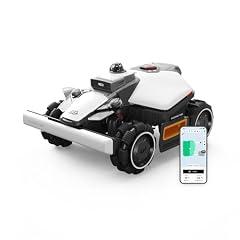
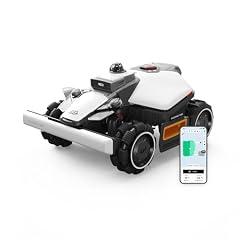
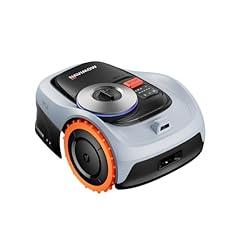
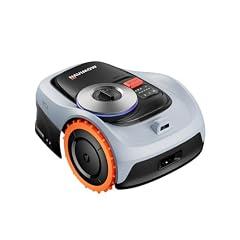
Mammotion LUBA Mini AWD 1500 Robot Mower
Overview
This is a residential, wire-free robotic mower for lawns up to 0.37 acre. The high-cut version uses a 7.8-inch main cutting disc plus a 4.7-inch edge disc, with a 2.2 to 4.0 inch main cutting-height range. It weighs about 39 pounds and runs from a removable 21.6 V, 6.1 Ah lithium-ion battery. Setup requires app-based mapping, a charging station, and suitable placement with clear space around the dock. Mammotion documents LiDAR, AI vision, a physical bumper, lift and tilt sensing, an emergency stop button, virtual fences, no-go zones, and app scheduling. The manufacturer also states 20-zone management, 80 percent maximum task-area slopes, IPX6 protection for mower and dock, and 150-minute mowing and charging times. The exact product has U.S. radio authorization, but accessible evidence does not show an independent U.S. certification or safety test report for the complete mower and charging system.
What works
- The manufacturer documents an emergency stop button, security key, lift sensor, tilt sensor, bumper, and instructions to remove the disabling key before service.
- Virtual fences and no-go zones can be mapped around pools, ponds, flowerbeds, irrigation equipment, pet houses, and other hazards.
- The app offers scheduling, selectable obstacle sensitivity, rain return-to-dock control, and a nighttime wildlife setting that can slow or stop mowing.
- The removable 131.76 Wh battery carries a manufacturer-stated three-year warranty, and official replacement blades and wheels are sold.
- A 2026 independent field test of the closely related 1000 version reported notably effective edge cutting, though it is not a test of this high-cut version.
What does not
- No traceable UL or ETL listing, or published independent ANSI robotic-mower safety test, was located for the complete mower, dock, charger, and battery system.
- Obstacle avoidance is adjustable and can be turned off. DropMow is a beta feature that the manual specifically prohibits near unclear edges, steps, drop-offs, ponds, ditches, pools, or low-visibility areas.
- The company claims broad obstacle recognition, but no species-specific independent wildlife testing was located for this product. Night wildlife protection must be enabled by the owner.
- Remote control, live yard video, 4G, Wi-Fi, Bluetooth, GPS tracking, and cloud functions increase data exposure. The app-store privacy label and Mammotion's broader connected-product data statement are not equally detailed.
- Independent performance evidence is limited. Available field testing concerns the lower-cut 1000 version, not this exact high-cut product.
Who is it for
This product suits an owner of a mapped residential lawn of no more than about 0.37 acre who wants automated maintenance while retaining detailed app control. It is most relevant where the lawn has several separate areas, moderate obstacles, or slopes within the documented limits, and where the owner can carefully map water, flowerbeds, cables, and low objects as exclusions. The 2.2 to 4.0 inch cutting-height range is specifically useful for lawns that need a higher mowing setting. It also suits owners willing to inspect blades, maintain the dock area, and manage software settings.
Who is it not for
It is not suited to households that need independently verified full-system electrical and blade-safety certification before allowing an autonomous mower to operate. Do not treat camera and LiDAR avoidance as a substitute for keeping children, pets, and bystanders off the lawn during mowing. It is also unsuitable for unmapped areas near pools, ponds, ditches, steps, roads, or drop-offs, particularly if using DropMow. Owners who do not want app accounts, location-linked operation, live camera capability, firmware updates, or cloud-connected data handling should choose a less connected mowing arrangement.
Integrity
The safety design documented for this product includes an emergency stop control, security key, lift and tilt sensing, physical bumper, mapped virtual boundaries, and configurable obstacle detection. The manual requires supervision around people, pets, and children, plus clear lawn preparation. It also warns that DropMow should not be used by water, drop-offs, steps, or unclear perimeters. These are important operational limits, not evidence that every hazard is reliably detected. The product has a removable 131.76 Wh lithium-ion battery and a manufacturer-stated three-year battery warranty. Mammotion instructs owners to use only the supplied charger, keep the dock away from combustibles, use a weatherproof GFCI outlet outdoors in the United States, and recycle the battery through an appropriate collection point. Replacement blades are available, but they are wear parts with a recommended replacement interval of three months or 150 hours. No current CPSC recall or warning for this product was located, and no accessible UL or ETL full-system listing was found.
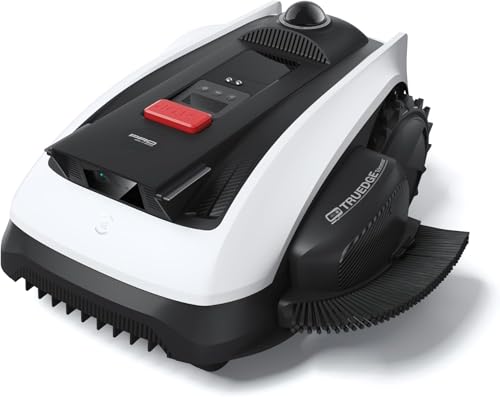
ECOVACS Goat O1000 Robotic Lawn Mower
Overview
This is a 28.66-pound, battery-powered robotic mower with an 8.66-inch rotary cutting width, a separate edge-trimming module, charging station, and app-based mapping and scheduling. ECOVACS specifies a 5,200 mAh lithium-ion battery, about 90 minutes of mowing per charge, a 70-minute charge time, and a 1.18 to 3.15 inch electrically adjustable cutting height. The defining feature is manufacturer-stated wire-free mapping using dual LiDAR, a camera, and 3D time-of-flight sensing. ECOVACS also lists lift, collision, and rain sensors, IPX6 ratings for mower and station, and a 45 percent maximum work-area slope. Independent hands-on reporting supports capable mowing and edge work in a roughly quarter-acre yard, but also documents a fall into a window well and advises careful mapping and physical exclusion of hazards.
What works
- Wire-free mapping can eliminate perimeter-wire installation, according to the manufacturer.
- The app provides map editing, separate mowing areas, and area-specific schedules that can support a less frequent mowing routine.
- ECOVACS sells replacement blade kits, trimmer line, trimmer brushes, and trimmer kits for this product.
- A hands-on reviewer found it handled most mowing in a roughly quarter-acre connected yard, while noting that setup and exclusion zones mattered.
What does not
- No traceable UL or ETL listing for the complete mower, battery, dock, and charger system was located during verification.
- ECOVACS warns that light rain, slippery cobblestones, and the station recharge passage can lead to boundary violations. It recommends remapping or physical barriers when this occurs.
- The advertised quarter-acre capacity is not published as a maximum-area specification on ECOVACS's product page. That page instead gives a mowing-rate estimate.
- The manufacturer states that the vision module cannot detect small animals well in low light, and nighttime mowing is not recommended.
- The wildlife avoidance claim, including the claim to avoid hedgehogs, lacks model-specific independent wildlife testing.
Who is it for
This product suits an owner of a small, mostly connected, maintained lawn who wants scheduled mowing without installing a perimeter wire. It is most appropriate where the owner can spend time preparing a map, adding no-go zones, and physically blocking hazards such as window wells, pool edges, roads, and abrupt drops. It also fits yards with consumable-part upkeep in mind, since blades, trimmer line, and brushes are available from the manufacturer. Daytime scheduling and a relatively flat to moderate, dry work area are important conditions.
Who is it not for
It is not appropriate for households that cannot reliably keep children, pets, toys, or small wildlife out of the mowing area while it operates. Avoid relying on its virtual boundary alone beside roads, pools, steep drop-offs, or window wells. ECOVACS documents circumstances in which it can cross a boundary, including light rain, slippery cobblestones, and the charging-station passage. It is also a poor fit for night mowing where wildlife may be present, very uneven or slick slopes, or buyers requiring independently documented electrical safety certification for the complete charging system.
Integrity
The mower has manufacturer-documented lift, collision, rain, camera, LiDAR, and time-of-flight sensors. Its lithium-ion battery has a stated charging temperature protection range, and both mower and station are rated IPX6. However, no traceable UL or ETL certification for the complete mower, dock, charger, and battery system was found. ECOVACS also acknowledges that virtual-boundary errors can occur in rain, near the station passage, or on slippery cobblestones, so physical barriers remain important around consequential hazards. For wildlife, ECOVACS says low light can prevent the vision module from detecting small animals and explicitly discourages nighttime mowing. Scheduling, separate mapped areas, and the 1.18 to 3.15 inch height range give owners practical tools to mow less often, avoid night operation, and retain taller habitat areas. Replacement blades, trimmer line, brushes, and trimmer kits are listed for sale, which supports maintenance rather than immediate disposal. Model-specific independent wildlife testing was not located.

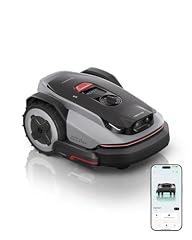
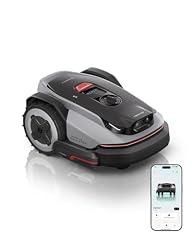
Segway Navimow i210 AWD Robotic Mower
Overview
This is a battery-powered robotic lawn mower for lawns up to 0.25 acre, using a five-blade cutting disc, a 5.1 Ah lithium-ion battery, app control, and a charging station. The manufacturer specifies an 18 cm cutting width, 2 to 6 cm cutting-height range, about 120 minutes of mowing and charging time per cycle, and a 45 percent maximum incline. That slope figure was measured on dry, obstacle-free grass under specified test conditions. It maps and operates without perimeter wire when Network RTK coverage is available, although the manual says a local antenna is needed where that service is unavailable. Its published safety design includes a physical STOP button, PIN lock, child lock, camera sensor, and lift sensor that the manufacturer says stops blade rotation immediately. No qualified independent field test, wildlife test, or US electrical safety listing for this exact product was located in the reviewed sources.
What works
- The manual documents a lift sensor that immediately stops blade rotation, plus a physical STOP button, PIN lock, and optional child lock.
- The manufacturer provides concrete operating limits, including 0 to 40 C operating temperature, 45 percent maximum slope, IP66 mower and dock protection, and IP67 power-adapter protection.
- Mapping, scheduling, zones, off-limit islands, weather responses, and selectable Network RTK or local RTK positioning are documented in the product manual.
- The official product page states a three-year product warranty and two-year battery coverage, and the manual identifies replacement blade assemblies and service-directed battery replacement.
What does not
- The safety safeguards are manufacturer-documented, but no traceable UL or ETL listing, exact-model third-party safety test, or independent blade-contact test was found.
- Obstacle avoidance claims are broad, including pets and small objects, but no independent validation for this exact mower was found. The manual still requires owners to clear toys, wires, stones, children, and pets before operation.
- The advertised 45 percent slope capability has narrow test conditions. Wet grass, long grass, obstacles, uneven ground, poor signal, and separated lawn areas can reduce performance.
- There is no exact-model wildlife collision testing located. Research on robotic mowers shows that camera and sensor systems cannot be assumed to protect small animals before contact.
- The app supports full mower control for shared registered users. Navimow publishes privacy and deletion information, but no public supported-software lifecycle or product-specific security vulnerability program was located.
Who is it for
This product suits an owner of a maintained lawn of roughly one-quarter acre or less who can keep the mowing area clear, create a careful digital boundary, and check whether Network RTK coverage works at the address. It is particularly oriented toward lawns with moderate slopes, since the manufacturer specifies up to 45 percent grades under dry, obstacle-free test conditions. The owner should be comfortable using a phone app for mapping, schedules, settings, lock controls, and occasional recovery or maintenance.
Who is it not for
It is not appropriate for a yard where children, pets, or wildlife may be left in the mowing area during scheduled operation. The manual specifically directs users not to leave it operating when people or pets are nearby. It also is a poor fit for lawns with unprotected road access, pools, drop-offs, loose toys, wires, tall grass, persistent mud, or slopes beyond the specified limit. Buyers who need independently verified safety, wildlife protection, electrical certification, or exact-model performance testing should not treat the published manufacturer claims as substitutes for that evidence.
Integrity
The product uses exposed pivoting cutting blades beneath the deck, so its lift sensor, STOP button, locks, and instructions to remove people and pets from the lawn are important safeguards rather than optional conveniences. Navimow states that the lift sensor immediately stops blade rotation. The manual also directs users to use the original charger and battery, connect the supply through a 30 mA or lower residual-current device, and avoid charging or operating outside the stated temperature limits. No US recall or regulator warning was located in the reviewed searches. The mower has a 110 Wh lithium-ion battery and manufacturer-stated IP66 protection for the mower and charging station. Blades are replaceable, while battery replacement is directed to professional service. Scheduling, zones, off-limit islands, and a 2 to 6 cm cutting-height range can support less frequent mowing and habitat exclusions. However, the manual permits night operation and no exact-model wildlife safety test was located. Wildlife should be excluded before mowing, especially after dark.

ECOVACS Goat O1000 Vision Robot Lawnmower
Overview
This product is a 24.25-pound, battery-powered robotic mower with a charging dock and a separate RTK reference station. It is designed for mapped, wire-free mowing of lawns up to one-quarter acre. Manufacturer specifications list an 18 V, 4,000 mAh lithium-ion battery, an 8.66-inch cutting width, a 1.2 to 3.2-inch cut-height range, about 65 minutes of continuous mowing, and about 100 minutes of charging. Its defining mechanism is manufacturer-stated RTK, camera, and 3D time-of-flight navigation with app-based maps, zones, no-go areas, schedules, and remote control. The mower itself has a model-specific FCC equipment authorization for its radio equipment. That authorization is not an electrical, battery, blade, or mowing-performance certification. The manufacturer sells compatible blades and an AC adapter, but no traceable UL or ETL listing for the complete mower, dock, charger, and battery system was located.
What works
- Wire-free mapping, editable zones, no-go areas, schedules, and remote control can support structured mowing routines, according to the manufacturer.
- The manufacturer specifies a 1.2 to 3.2-inch cutting-height range, including a 3-inch-plus setting that can support less intensive lawn management.
- Model-specific FCC authorization confirms the radio equipment was authorized for U.S. operation.
- Official replacement blade kits and a compatible AC adapter are listed by the manufacturer, which is useful for routine maintenance.
What does not
- The manufacturer says the mower can leave mapped boundaries or enter no-go zones in light rain, low light, on cobblestones, and within a 2-meter free area around the dock.
- Obstacle sensing has material limits. The manufacturer says it cannot identify objects under 10 cm, objects behind or beside it, and may struggle with black, white, transparent, bumpy-ground, dim-light, or rainy scenarios.
- The product page says it is safe for pets and wildlife day and night, but support documentation says AI recognition cannot operate after dark and must be manually enabled.
- No model-specific independent field test, blade-contact test report, or traceable U.S. electrical safety listing for the complete charging system was located.
- Publicly documented ECOVACS lawnmower and vacuum security vulnerabilities make current firmware and account-security status important, but exact applicability and remediation status for this product are not clearly documented.
Who is it for
This product suits an owner with a lawn at or below the manufacturer-stated one-quarter-acre capacity, a clear place for both the dock and tall RTK reference station, reliable Wi-Fi, and time to create and inspect the map. It fits yards with grass paths at least 2.3 feet wide and slopes within the stated 45 percent mowing limit. It is most appropriate where mowing can be scheduled in daylight, the perimeter is away from roads and water, and toys, hoses, pet items, and low objects are removed before each run.
Who is it not for
It is not suited to households that need unattended operation around small children, loose pets, wildlife, pools, roads, retaining-wall edges, or other high-consequence hazards. The product's own support materials acknowledge missed low obstacles, degraded sensing in rain or dim light, and possible boundary departures. It is also a poor fit for owners expecting verified day-and-night wildlife detection, or for complicated yards where the dock's surrounding free area, weak RTK reception, slick cobblestones, or frequent rain could put the mower near an unsafe boundary.
Integrity
This mower uses a 4,000 mAh lithium-ion battery and is rated IPX6 for the mower, charging station, and RTK station by the manufacturer. The radio equipment has model-specific FCC authorization. That is a useful compliance record for wireless operation, but it does not independently establish blade-contact, charging-fire, or overall robotic-mower safety. No product-specific CPSC recall was located in the review work, and no traceable UL or ETL certification for the full mower and charging system was found. Wildlife protection is the major limitation. The manufacturer states that AI recognition is manually enabled, detects only a few obstacle types, performs poorly in rain and dim conditions, and does not work after dark. Daytime scheduling and no-go zones can reduce exposure, while the 3.2-inch maximum cut height can support a higher-cut regime. Official blades and an adapter remain available, though the battery is treated as a consumable under the warranty. Retired lithium-ion batteries should be routed through an appropriate rechargeable-battery recycler, not household trash.

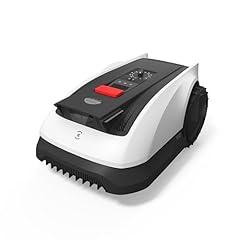
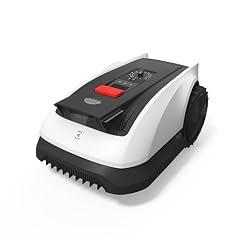
ANTHBOT Genie3000 Robotic Lawn Mower
Overview
The ANTHBOT Genie3000 is a battery-powered, wire-free robotic mower for routine residential grass maintenance. It uses a 7.9-inch, five-blade cutting disc, app-adjustable 1.18 to 2.76-inch cutting height, a charging dock, and an RTK reference station. The manufacturer states a 10Ah battery, up to 30 zones, a 45 percent slope limit, and coverage up to 3,600 square meters, or about 0.89 acre. Its navigation combines RTK positioning with four cameras, Wi-Fi, Bluetooth, and 4G capability. Independent field testing found quiet operation, effective avoidance of test dummies and cats, but also false obstacle detections, RTK placement sensitivity, streaking, and performance better suited to much smaller, tidy lawns than the maximum-area claim suggests. The manual provides a top-mounted stop control, PIN lock, rain sensor, restricted-zone mapping, and warnings to keep people and pets away while operating.
What works
- Independent testing found the camera system avoided test animal dummies, cats, and non-grass areas during mowing.
- Independent testing measured operating noise below 67 dB, which supports low-disruption routine mowing.
- The manufacturer provides practical controls for schedules, mowing zones, restricted areas, and cutting height.
- The owner manual documents a stop control, PIN lock, rain detection, collision-sensor fault reporting, and restricted-area mapping.
- A charging-station replacement set and replacement blades are offered through the manufacturer.
What does not
- The advertised maximum coverage is manufacturer-stated. Independent testing found RTK setup and mapping became difficult on larger properties, with a result better suited to roughly 275 square meters or less.
- Independent tests reported false obstacle detections, streaks, pauses, and occasional missed areas. Dense grass, weeds, mud, and sand can further reduce results.
- No traceable US NRTL listing for the complete mower, dock, and charger was located in UL or Intertek public certification records.
- The manual says the battery is replaceable only by skilled persons, and clear public access to a replacement battery or detailed repair manual was not established.
- The mower can operate at night, but no exact-model wildlife testing on hedgehogs or other small nocturnal animals was found. The manual does not set daylight-only mowing as the default.
Who is it for
This product suits an owner with a maintained, mostly grass lawn who can give the RTK station an unobstructed, permanent location and is comfortable creating maps and restricted zones in an app. It is most credible for regular maintenance mowing rather than reclaiming tall or weedy turf. It also suits a property where the owner can schedule operation when children, pets, visitors, and wildlife are not present. Buyers should treat the stated 0.89-acre capacity as a maximum-condition claim, not a dependable expectation for a complex yard.
Who is it not for
It is not suited to households that need a mower to operate safely around unsupervised children, pets, or frequent visitors. The manual specifically directs owners not to leave it unattended when people or pets are nearby. It is also a poor fit for lawns with poor RTK visibility from dense trees, buildings, or enclosed spaces, shifting or muddy ground, tall weeds, or a need for a consistently finished edge. Night mowing is unsuitable where hedgehogs, small mammals, or other nocturnal wildlife may be active.
Integrity
The manual documents some meaningful safeguards, including a physical stop button, PIN lock, collision and rain-sensor error reporting, restricted zones, and battery temperature limits. It also directs users to keep children and pets away during operation, avoid manual contact with moving parts, use the original dock, and store the battery system away from heat and moisture. These are operating instructions, not traceable US third-party certification of the complete mower, dock, and charger. The product avoids gasoline use at the point of mowing, but its lifecycle case is limited by a proprietary battery that the manual says skilled persons should replace. Blades and a charging-station set are sold separately, which is helpful, while replacement-battery access and a detailed repair manual were not established. Camera and location data are relevant privacy considerations. The app policy describes local image processing and consent-based collection of maps, logs, and anti-theft location data, while the App Store disclosure says no app data are collected, creating a disclosure mismatch that needs clarification.

ANTHBOT M5 Robot Lawn Mower
Overview
This is a compact, battery-powered robotic mower for mapped lawns up to 500 square meters, or about one-eighth acre. It uses a 7.9-inch disc with five small blades, a 45 Wh battery, a charging dock, and app-based adjustment of the 1.2 to 2.8 inch cutting height. The supplied RTK reference station, Wi-Fi, Bluetooth, and 4G are intended to support wire-free mapping, remote status, and scheduling. ANTHBOT, not an independent tester, states that the M5 uses full-band RTK plus two HDR cameras, supports up to 20 zones, and can handle slopes up to 45 percent. Its current manual documents a physical stop button, safety key, rain sensor, and a lifted or sunk error condition. I found manufacturer documentation and a detailed manual, but not traceable US third-party certification or independent field testing for this exact mower.
What works
- The manual documents a physical stop button, safety key, rain sensor, and lift-related fault detection.
- The manufacturer provides an unusually concrete operating specification, including a 45 Wh battery, 40-minute claimed mowing time, and 60-minute claimed recharge time.
- App controls can set 20 zones, restricted areas, schedules, and a relatively biodiversity-friendly 3 to 7 cm cutting range, according to ANTHBOT.
- ANTHBOT lists a three-year warranty for the mower and charging station, plus a two-year battery warranty.
- The manual gives useful setup limits, including an open location for the RTK station and clear space around the charging station.
What does not
- No traceable UL or ETL listing, ANSI robotic-mower test report, or other US third-party certification for the complete mower, dock, charger, and battery system was located.
- The claim to recognize more than 1,000 obstacles, including wildlife, is explicitly based on ANTHBOT laboratory data. No species-specific independent wildlife testing for this mower was found.
- The safety instructions warn that the battery is replaceable only by skilled persons, which limits practical battery repair and replacement.
- Camera and remote-control features require account, network, and device data handling. The privacy policy is detailed, but no public security-update support period or vulnerability disclosure program was identified.
- Performance claims for slope, coverage, edge cutting, and navigation near trees or buildings are manufacturer-stated rather than independently field-tested.
Who is it for
It fits an owner of a relatively open, small urban or suburban lawn that is genuinely within about one-eighth acre, has dependable Wi-Fi or cellular coverage, and can accommodate a carefully placed RTK station. It is most suitable for someone willing to map boundaries and restricted areas in the app, keep toys and loose objects off the grass, and use a higher cutting height with daylight scheduling. The compact body and narrow 7.9-inch cut are better aligned with regular maintenance mowing than reclaiming long, dense grass.
Who is it not for
It is not appropriate for households that need independently certified blade, charging, or wildlife-safety performance before allowing a mower to operate around children, pets, hedgehogs, or other small animals. Avoid relying on it near unfenced roads, pools, drop-offs, or other hazards unless mapping and restricted areas provide a reliable physical safety margin. It also suits poorly shaded, signal-obstructed, or unusually complex sites where the RTK base cannot be placed openly, and buyers who need easy owner battery replacement or documented US third-party performance testing.
Integrity
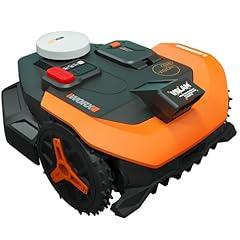
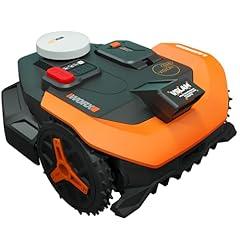
The documented safety provisions include a large stop control, safety key, rain sensor, warnings to keep children away from the blades and charging equipment, and a manual fault condition for a mower that is lifted or sunk. The battery instructions are appropriately cautious about heat, moisture, short circuits, damage, and use of non-original packs. However, the verification did not locate a traceable UL or ETL listing for the complete US product system, so those safeguards should not be treated as independently certified. For ecology, the 3 to 7 cm cutting adjustment, 20-zone mapping, restricted areas, and scheduling can help an owner mow less intensively and exclude habitat or flowering patches. The product page also bases schedules on sunrise, sunset, and rain data, though it does not establish a daylight-only default. The wildlife-recognition claim remains manufacturer laboratory evidence, not independent animal-collision testing. The battery needs specialist replacement, and responsible end-of-life handling should use a qualified lithium-ion collection program rather than household trash.

WORX Landroid Vision Cloud Robot Lawn Mower WR320
Overview
The WORX WR320 is a two-wheel-drive robotic lawn mower for manufacturer-stated lawns up to 1/2 acre. It uses a removable 20V, 5 Ah lithium-ion battery, an 8.7-inch three-blade cutting system, six height settings from 1.57 to 3.54 inches, a charging base, Wi-Fi, Bluetooth, and RadioLink-assisted RTK navigation. Its owner manual lists IPX6 water protection and a 30 percent slope limit. Its defining setup feature is wire-free mapping through camera-based vision and cloud RTK, with app-created zones and no-go areas. The navigation and obstacle claims are largely manufacturer-stated. An independent 30-day test of the closely related Vision Cloud 2WD platform found setup and automatic mapping straightforward, but also found object recognition inconsistent and traction weaker at steep lawn edges. The exact WR320 has FCC authorization for its wireless radio, but verification did not locate a public UL or ETL listing for the complete mower, dock, charger, and battery system.
What works
- Wire-free setup, zones, no-go areas, scheduling, and manual map editing are documented in the product manual.
- The removable 5 Ah PowerShare battery, charger, and replaceable blades are identified by part number, and replacement batteries are sold by WORX.
- The exact product radio has an FCC equipment authorization, which verifies U.S. radio compliance for the wireless hardware.
- The manual provides a physical safety stop, lift and upside-down fault states, rain delay, and specified blade-blockage maintenance steps.
- WORX states that autonomous Landroid mowers default to daytime operation, a useful wildlife-conscious setting if retained in the schedule.
What does not
- No public UL or ETL certification record was located for the complete mower, charging dock, charger, and battery combination, so independent electrical and abnormal-operation certification is unproven.
- The product's camera and AI obstacle avoidance has not been independently validated for the exact WR320. A related Vision Cloud 2WD test avoided some toys but drove over a dog bone, where blades contacted it.
- The stated 30 percent slope limit needs careful interpretation. A related two-wheel-drive field test handled a controlled 17-degree ramp but struggled and spun its wheels around parts of a steeper real lawn.
- The app and camera can collect location, account, device, usage, diagnostic, and potentially garden-image data. The published privacy notice is transparent, but no public model-specific software support end date was located.
- No exact-model independent wildlife collision testing was found. Daylight scheduling reduces exposure to nocturnal animals but does not prove reliable detection of small animals.
Who is it for
This product suits an owner of a maintained lawn within the manufacturer-stated 1/2-acre limit who wants to avoid installing a perimeter wire and is prepared to set up maps, no-go areas, schedules, and Wi-Fi. It is most appropriate for relatively open grass with clearly distinguishable edges, modest slopes, and an owner willing to inspect the yard before operation. The removable 5 Ah PowerShare battery is also practical for households already maintaining compatible WORX cordless tools and willing to carry out routine blade, cleaning, and battery care.
Who is it not for
It is not suited to yards bordering roads, pools, unfenced drop-offs, or other places where a navigation mistake could create a serious hazard. Households with unsupervised children, pets that leave toys or bones in the mowing area, or frequent small-animal activity should not rely on camera avoidance alone. It is also a poor fit for steep, loose, wet, heavily rooted, cluttered, or complex lawns, because related two-wheel-drive testing found traction and object recognition limitations. Privacy-sensitive users who do not want location and possible garden-image collection should avoid its connected features.
Integrity
The WR320 has a physical safety stop, documented lifted and upside-down fault states, rain delay, and a three-blade cutting disc. Its manual requires the specified WORX battery and charger, identifies a 20V, 5 Ah lithium-ion battery, and lists IPX6 water protection. The exact wireless radio has FCC authorization. That is radio compliance, not a substitute for a publicly traceable UL or ETL listing of the full mower and charging system. No product-specific CPSC recall or safety warning was identified during verification. Its repair profile is better than a sealed-battery design. The battery and blades are replaceable, and WORX sells the specified replacement battery. The product also offers schedules, no-go areas, and a high 3.54-inch cut setting, which can support less frequent, higher mowing and habitat exclusions. WORX says Landroid mowers default to daylight operation, aligning with wildlife guidance to avoid nighttime mowing. However, no independent wildlife-safety test for this exact product was located, so users should still inspect lawns and keep nighttime mowing disabled.
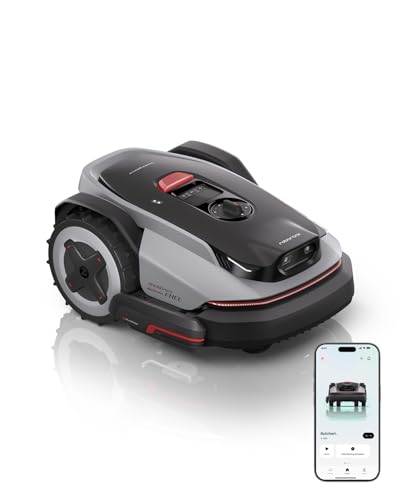
Roborock Neo Q110H Robot Lawn Mower
Overview
The RockNeo Q110H is a battery-powered robotic lawn mower for a manufacturer-stated mowing area of up to 1/4 acre. Its documented hardware includes a 22 cm, or 8.66 inch, cutting width, adjustable 40 to 80 mm cutting height, a 21.6 V 4.6 Ah lithium-ion battery, a charging station, and a separate RTK reference station. It maps a defined work area rather than using a perimeter wire. Roborock documents a physical STOP control, lift and tilt detection, a PIN lock, binocular-camera obstacle detection, rain delay, and local confirmation before mowing can resume after a lift or tilt. These are manufacturer-documented safeguards, not model-specific independent safety-test results. The manual also makes clear that dependable RTK operation requires an open reference-station location away from walls or fences. Independent field testing and model-specific third-party electrical safety certification were not located.
What works
- The documented lift and tilt response requires a local manual restart before mowing resumes.
- The app provides schedules and a wildlife-friendly setting that can restrict operation during selected hours.
- The 40 to 80 mm cut-height range gives the owner practical control over a less closely cut lawn.
- Roborock provides two years of stated warranty coverage for both the main unit and battery.
- The manual gives concrete placement rules for the charging station and RTK reference station, which can help avoid avoidable setup failures.
What does not
- No model-specific independent blade-contact, wildlife, docking, or terrain test report was located.
- No model-specific UL or ETL electrical-safety listing was identified for the mower, charger, and dock system.
- The product can operate at night with its camera fill light. Wildlife-friendly operation is an owner-selected app setting, not a demonstrated animal-detection result.
- The manual does not substantiate the marketed 45% slope figure with operating limits or test conditions.
- RTK positioning depends on an open antenna location, and the manual requires the mower to remain within its mapped work area.
Who is it for
This product suits an owner of a relatively open, maintained lawn within the manufacturer-stated 1/4 acre area who can install the RTK antenna in clear space, keep the charging area unobstructed, and actively map the work area. It is better aligned with households able to keep children, pets, toys, wires, stones, and other loose hazards off the lawn during scheduled mowing. It also fits users who want to set a higher cut height and limit operating hours through the app rather than mow on a fixed frequent schedule.
Who is it not for
It is not well suited to yards where children or pets routinely use the lawn while equipment may be scheduled to run, because the manual explicitly requires them to be kept away during operation. It is also a poor fit for wildlife-sensitive properties that need proven small-animal avoidance, since no exact-product wildlife collision test was located and the mower can operate after dark. Buyers with heavily enclosed yards, dense obstructions, unreliable WiFi, or no open location for the RTK reference station should consider the documented installation constraints carefully.
Integrity
The mower uses exposed rotating blades, so its documented safety approach matters. Roborock specifies a STOP control, lift and overturn sensors, PIN locking, local restart after a lift or tilt, and binocular-camera obstacle avoidance. The safety guide still instructs owners to keep children and pets away, clear the lawn of debris, use only the supplied charger, and connect charging equipment through an RCD-protected circuit. No model-specific UL or ETL listing, independent blade-contact test, or CPSC recall was identified in this review. Its 21.6 V lithium-ion battery has stated two-year warranty coverage. Roborock advises professional battery replacement about every two years, provides disposal instructions, and says the pack should go to a professional battery-recycling facility. Schedules, a wildlife-friendly app setting, and a 40 to 80 mm cutting range can support reduced mowing intensity. That matters because research links less frequent mowing with greater urban arthropod abundance and diversity. The product itself has not been independently tested for small-animal protection.

Dreame A3 AWD Pro Robot Lawn Mower
Overview
This is a battery-powered, app-connected robotic mower for lawns up to 2,500 square meters, or about 0.62 acre. It uses four-wheel drive, a 15.8-inch dual-disc cutting deck, LiDAR, and binocular cameras to map and mow without boundary wire or an RTK antenna. The manufacturer specifies a 5Ah battery, 3 to 10 cm cutting-height range, and a maximum stated slope of 80 percent, or 38.7 degrees. Independent field testing of the 2,500 version found strong traction over hills, roots, loose rocks, and uneven ground. The same testing found automatic mapping rough around boundaries, so manual mapping gave better control. Another independent review observed a physical emergency stop. No traceable UL or ETL listing, or published model-specific test report to the robotic-mower safety standard, was located in the checked certification registers.
What works
- Independent field testing found reliable traction on uneven ground, roots, loose rock, and substantial hills.
- Independent testing found the vision system stopped before contact with toys, a ball, and dogs.
- A physical emergency-stop button and a front bumper that stops the blades were independently observed.
- The manufacturer provides zone, edge, spot, manual, and all-area mowing modes, plus multi-zone and dual-map controls.
- The manufacturer specifies a 3 to 10 cm cutting-height range, which can support a higher-cut, less intensive mowing routine.
What does not
- No traceable UL or ETL certification record, or model-specific robotic-mower safety test report, was found for the mower, dock, charger, and battery system.
- Wildlife claims remain unproven for small animals. No species-relevant independent collision or detection testing was located for this product.
- Automatic mapping produced rough edges in independent testing. Careful manual mapping is important near roads, pools, drop-offs, and planted areas.
- The edge-cutting mode operates at a fixed 1.2-inch height in independent testing, which can scalp a lawn maintained taller.
- Independent testing cautioned against wet, steep lawns, and found that the mower can get stuck in corners.
Who is it for
It suits an owner with a defined residential lawn up to about 0.62 acre, uneven terrain, roots, or meaningful slopes, who can spend time on initial manual mapping and periodic inspection. It is most appropriate where the mower can operate within a clearly separated lawn, rather than beside unprotected traffic, water, or drop-offs. The 5Ah battery version is intended for this coverage tier, and the wire-free mapping design may be useful where installing perimeter cable or an RTK antenna is impractical.
Who is it not for
It is not appropriate for households that expect camera-based obstacle avoidance to replace supervision around children, pets, small wildlife, pools, roads, steep retaining edges, or fragile garden borders. Avoid it for yards that must be mowed wet or have persistently slippery steep slopes. It also does not fit buyers who require independently traceable electrical safety certification, a published model-specific blade-contact test report, or independently validated wildlife safety. Owners maintaining taller grass should note the fixed low edge-cut setting.
Integrity
The mower has meaningful physical and operational safeguards, including an emergency-stop button, a front bumper reported to stop the blades on contact, PIN entry, and app-based controls. Its manufacturer also states that it can identify more than 300 obstacle types and offers animal-activity zones. Independent testing supports avoidance of several large, visible test obstacles, but it is not evidence that the product protects small or resting animals. Robotic-mower research shows that some models can injure hedgehogs and that contact detection alone is not enough. No matching US recall was located in the checked federal recall database. However, no traceable UL or ETL listing was found for this complete mower and charging system. Battery operation eliminates direct exhaust during mowing, but Dreame does not publish operating-energy use or a repair manual. Tool-free, reversible replacement blades are a practical maintenance feature. Scheduling, zones, and a 3 to 10 cm cut range can help owners mow less often and leave flowering or habitat areas excluded, which is more biodiversity-conscious than frequent uniform mowing.

DREAME A3 AWD 2000 Robot Lawn Mower
Overview
This is a battery robotic lawn mower for mapped residential lawns up to 0.5 acre, according to Dreame. It has a 7.9-inch cutting width, app-set cutting height from 1.2 to 3.9 inches, a 5Ah battery, four-wheel drive, a charging station, and replaceable small blades. It is intended to map, mow, recharge, and resume without a perimeter wire or RTK antenna. Dreame states that its navigation combines 360-degree 3D LiDAR with binocular AI vision, supports up to 150 zones, and is rated for slopes up to 80 percent. The official manual documents safety directions, including a STOP control, lift and tilt fault states, original-charger-only use, and a 30 mA residual-current device for the charging connection. Those are manufacturer documents, not independent safety testing. No traceable certification record or independent field test for this exact 0.5-acre version was located.
What works
- Four-wheel drive and an 80 percent slope claim give the product a defined intended use for uneven grass, though this is manufacturer-stated.
- The manufacturer documents app-controlled zones, mowing modes, no-go areas, and a 1.2 to 3.9 inch cut-height range, useful controls for tailoring mowing frequency and habitat exclusions.
- The manual includes concrete operating safeguards, including warnings to keep people and animals out of the work area, use the STOP control, and switch the product off before maintenance.
- Dreame sells replacement blade sets and includes spare blades, which supports routine wear-part replacement rather than immediate disposal.
What does not
- No UL, ETL, or other traceable US third-party certification record for the complete mower, battery, charger, and dock was located.
- The exact product lacks independent safety, obstacle avoidance, wildlife, energy-use, and yard-performance testing in the sources reviewed.
- Camera, live tracking, app control, and 4G features add privacy and account-security exposure. Dreame publishes a general privacy policy, last updated October 31, 2023, but no model-specific security-support period was found.
- The product listing's 45-minute fast-charge claim conflicts with the A3 AWD series manual, which lists a 54-minute charge time for the 0.5-acre version.
- The manual says the battery is replaceable only by skilled persons, limiting owner repair.
Who is it for
It suits an owner of a contained residential lawn approaching, but not exceeding, 0.5 acre who wants wire-free mapping and is prepared to inspect the yard before each run. The strongest fit is grass with firm terrain, open access to a correctly installed charging station, and zones that can be explicitly mapped around gardens, pools, drop-offs, toys, and public-facing areas. The owner should be comfortable using the app to set no-go areas, schedules, height, and manual recovery steps when mapping or docking fails.
Who is it not for
It is not suited to households that need independently verified child, pet, wildlife, charging, or cybersecurity performance. Do not treat camera and obstacle claims as a substitute for excluding children, animals, pools, roads, steep edges, or clutter from the work area. It is also a poor match for yards with unreliable Wi-Fi or Bluetooth access, frequent standing water, fog, dense clutter, unprotected public access, or a dock location near combustible material. Owners seeking do-it-yourself battery replacement should also look elsewhere.
Integrity
The manual gives useful, product-family safety instructions. It says to keep hands and feet away from blades, not lift or move the mower while on, avoid use when people or animals are in the work area, and turn it off before clearing blockages or servicing it. It also directs users to install the charging connection with a 30 mA residual-current device, avoid standing water, and keep the station at least 23.6 inches from combustible material. No relevant US consumer-product recall was located in the CPSC review. For ecology, the app controls can support less disruptive mowing because Dreame states users can set up to 150 zones and select cutting heights up to 3.9 inches. Replacement blades are available, but the lithium-ion battery is a skilled-service part, and no model-specific energy-use or battery-life data was located. Dreame's wildlife and obstacle-detection claims have not been independently tested for this exact product, so daytime scheduling and conservative no-go zones remain important.