
10 Best Robot Vacuum and Mop
 Lauren Wilson
Please note that we participate in affiliate marketing programs. When you purchase through links on our site, we may earn a commission. As an Amazon Associate we earn from qualifying purchases. This comes at no additional cost to you and helps support the resources required to provide valuable content.Advertising Disclosure
Top-rated Robot Vacuum and Mop Comparison
1

2
3
4
5
6
7
8
+
9
Robot vacuum and mop: what to look for
Robot vacuums and mops combine automated floor coverage, debris pickup, mapping, and depending on the dock water refilling, mop washing, drying, and dust collection. The useful question is not how large the suction number looks. It is whether the exact product cleans different floor types consistently, avoids household hazards, controls dust and dirty water, and can be maintained safely over time.
Independent cleaning results are the strongest performance signal in this set. Look for model-specific testing that explains its methods and reports results for hard floors, carpet, embedded debris, pet hair, edges, mopping, hair tangling, coverage, and obstacles. IEC/ASTM 62885-7 methods are relevant to household cleaning robots; IEC 62849 can apply to navigation, mobility, and energy evaluation. A manufacturer’s test is more useful when it names the exact model, conditions, method, and results. A number such as 8,000, 15,000, or 30,000 Pa describes a stated suction specification, not necessarily pickup in a real home. The supplied reviews repeatedly show why: strong headline suction can coexist with weak fine-debris pickup, poor carpet-edge cleaning, missed pet hair, or inconsistent self-emptying.
For electrical and battery safety, look for an exact-product listing in UL Product iQ, Intertek’s ETL directory, or the CSA Group database. The model, dock, power supply, and battery system should be traceable not just the brand or a related family. FCC authorization confirms radio compliance, not protection from shock, overheating, charging failure, or fire. Also check the CPSC Recalls database and SaferProducts.gov, along with the product label and manual.
For indoor air, a washable, bagged, or “HEPA” filter is not by itself a measured allergen-control result. Prefer a named filter specification, replacement documentation, and standardized or independent dust-emission and particle-capture evidence. Be cautious with “antibacterial,” “sanitizing,” or “germ-killing” wording: those claims need an applicable EPA registration and label support. Hot-water mop washing and drying can help with maintenance, but they do not prove that floors or mop pads are disinfected.
A wet system should have clear instructions for clean and dirty water, mop washing, drying, tray cleaning, detergent use, and recontamination control. Even advanced docks still require dirty-water handling, tank and tray cleaning, and replacement parts. Consider the app separately: cameras, microphones, maps, cleaning history, and remote functions can add household-data exposure. Look for clear permissions, retention, deletion, update, and cloud-dependence information.
Finally, check the recurring footprint and service path. Disposable bags, filters, brushes, mop pads, detergent, water, and heated drying all affect ownership impact. A removable or serviceable battery, documented wear parts, repair support, warranty coverage, firmware policy, and recycling instructions can reduce premature replacement.
Recurring safety caveats
The supplied reviews identify several repeated limits. Most products require cords, toys, socks, sharp objects, liquids, fragile items, loose rugs, and other clutter to be removed before operation; obstacle avoidance is not dependable enough to replace floor preparation. Pet waste and small flat objects are particular hazards, and several products performed poorly in obstacle tests. Physical barriers may still be needed at stairs, balconies, lofts, or raised edges. Wet systems also require regular dirty-water, tray, pad, and tank care; products without washing and drying docks require prompt manual washing and air-drying. No exact-product UL, ETL, or CSA listing was verified for most supplied products, so buyers should not infer electrical or fire safety from FCC authorization or marketing badges. No product should be treated as a proven allergy-control, disinfecting, or antimicrobial appliance without matching evidence.
Integrity
Robot vacuums and mops affect health and environmental burden through dust handling, charging and battery safety, wet-system upkeep, navigation risks, connected-device data, energy and water use, and the parts that must be replaced. The scores below reflect how well the supplied evidence addressed those issues; they do not turn an unverified claim into a proven benefit.
HHealth & Safety
Indoor-air and health-impact control
Measures whether the robot captures rather than redistributes household dust and allergens, uses appropriately specified filtration, and avoids unsupported health, allergen, or antimicrobial benefits; a high score means low exposure risk with evidence matched to the claim.
Verified electrical and battery safety
Measures whether the exact robot, dock, power supply, and battery system have credible third-party safety certification and clear safe-use controls; a high score means independently listed protection against shock, overheating, fire, and charging failures.
Dirty-water and mop hygiene
Measures whether dirty-water storage, mop washing, drying, drainage, cleaning, and solution instructions limit odor, residue, and microbial growth; a high score means the wet-cleaning system can be kept sanitary without risky chemical use or excessive maintenance burden.
Safe navigation around a real home
Measures reliable avoidance of stairs, cords, rugs, liquids, pet waste, small objects, and furniture hazards, plus appropriate warnings for situations the robot cannot safely manage; a high score means fewer collisions, entanglements, water incidents, and preventable property or pet hazards.
EEvidence
Independently tested cleaning performance
Measures demonstrated pickup, carpet cleaning, mopping, edge cleaning, hair handling, coverage, and obstacle performance in repeatable third-party tests; a high score means strong results across realistic floor types rather than impressive-looking specifications alone.
Claims that match real-world results
Measures whether advertised suction, runtime, self-emptying, obstacle avoidance, mop washing, drying, carpet protection, and cleaning claims are specific, qualified, and borne out in testing; a high score means buyers are not asked to infer performance from misleading headline numbers.
Privacy and app security
Measures whether cameras, microphones, maps, and account data are minimized, transparently handled, securely updated, and usable without unnecessary cloud dependence; a high score means clear controls and a credible record of protecting household data.
Evidence beyond the brand's own marketing
Measures the amount, quality, and traceability of independent evidence for safety, performance, durability, and claims; a high score means the exact model is supported by credible third parties using disclosed methods, not badges, reviews, or seller assertions alone.
Traceable seller, support, and regulatory record
Measures whether the brand, importer, model identity, US support, manuals, and regulatory record are clear enough to investigate safety issues and obtain remedies; a high score means the buyer can identify who stands behind the product if something goes wrong.
EEcology
Energy, water, and disposable-consumable footprint
Measures electricity use, water use, dock heat-drying demands, detergent dependence, and recurring bags, pads, filters, and brush waste; a high score means effective cleaning with low operating resource use and fewer throwaway supplies.
Repairability and expected service life
Measures whether batteries, brushes, wheels, sensors, filters, mop parts, tanks, docks, and software support can be maintained or repaired for years; a high score means fewer premature replacements and less electronic waste.
Full reviews

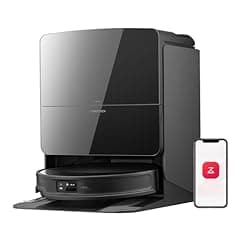
Roborock Saros 10R Robot Vacuum and Mop
Overview
This is a Wi-Fi connected robot vacuum and mop with a separate Empty Wash Fill Dock. The robot uses a 14.4 V, 6,400 mAh lithium-ion battery. Its dock auto-empties debris into a disposable bag, washes the rotating mop cloths, refills the robot, and can use hot water for mop washing. The manufacturer manual specifies a washable robot filter, separate clean and dirty water tanks, and a cleaning-solution cartridge. Independent testing supports several important capabilities. RTINGS found outstanding hard-floor pickup, strong mopping, a very low profile for furniture clearance, and effective obstacle avoidance. Vacuum Wars also found strong carpet deep-clean pickup and no tangling in its long-hair test. Results are less uniform on carpet. RTINGS found weak fine-debris pickup at carpet edges and corners, plus disappointing embedded pet-hair pickup that can require repeat passes. The prominent 22,000 Pa suction figure was not substantiated by the manufacturer material reviewed or a standardized performance report.
What works
- Independent testing found outstanding pickup of fine, medium, and large debris on hard floors, including wall edges and corners.
- Independent tests found highly effective obstacle handling, including reliable avoidance of pet waste, although cords and rug tassels still need attention.
- The low, body-mounted sensor design allows cleaning beneath furniture with limited clearance.
- The dock has separate clean and dirty water tanks, hot-water mop washing, drying controls, and a removable cleaning-tray module.
- The manual supports routine maintenance with a washable filter, removable mop cloths, replaceable dust bag, and an accessible battery cover.
What does not
- RTINGS found poor fine-debris removal along carpet edges and corners, and embedded pet hair may need multiple passes. This is a demonstrated performance limitation.
- No verified UL, ETL, or CSA electrical safety listing for the exact robot and dock was located. FCC authorization addresses radio compliance, not charging or fire safety.
- The washable filter has no published HEPA class, allergen-capture efficiency, or standardized robot dust-emission result, so indoor-air performance is unproven.
- The wet system still requires emptying and washing the dirty-water tank, cleaning the tray, and keeping mop cloths clean. Neglect can increase odor and residue risk.
- The dock uses disposable dust bags and heated washing and drying. Published exact-model energy, water-use, and consumable-life measurements were not located.
Who is it for
It suits a household with mostly hard floors, low-clearance furniture, and routine light-to-moderate debris where hands-off vacuuming and mopping matter. It is particularly relevant for users willing to maintain water tanks, mop cloths, filters, and the dock tray as directed. Homes with clutter can benefit from the independently tested obstacle avoidance, but should still pick up charging cables, fragile objects, rug tassels, and anything that could be pulled or damaged. It also fits users comfortable managing settings through a connected app.
Who is it not for
It is not a strong fit for homes where deeply embedded pet hair in carpet is the main cleaning task. Independent testing found that the split brush system can leave embedded pet hair behind and may need repeat passes, while fine carpet debris is also weak at edges and corners. It is also unsuitable for people unwilling or unable to empty dirty water, clean the tray and sensors, replace bags, or monitor a heated wet-cleaning dock. Privacy-sensitive households should avoid app camera, microphone, and remote-viewing functions unless they accept the associated connected-device data handling.
Integrity
The product has a washable filter and sealed disposable-bag removal design, but neither the manual nor the reviewed product material gives a HEPA grade, allergen-capture percentage, or standardized dust-emission result. That means it should not be treated as an independently verified allergen-control device. The manufacturer manual explicitly says not to use disinfectants and to use only its recommended cleaning solution, which avoids implying that ordinary mop washing sanitizes floors. It also requires routine cleaning of the dirty-water tank, tray, mop cloths, and sensors. The 6,400 mAh lithium-ion battery is removable after opening the battery cover, and the manual directs owners to professional battery recycling. This helps end-of-life handling, but the system also relies on disposable dust bags, replacement mop cloths, and dock heating. The dock is rated at up to 12 A during hot-water mop washing, and exact independent measurements of electricity, water consumption, and consumable life were not found. The product has a traceable FCC radio filing and US support details, but no exact-model UL, ETL, or CSA listing was verified.

Roborock QV35A Robot Vacuum and Mop
Overview
This product is a round, app-connected robot vacuum and mop with a charging, dust-emptying, water-refilling, mop-washing dock. The exact product manual identifies a 14.4 V, 5,200 mAh lithium-ion battery, a 330 mL onboard dustbin, washable filter, separate clean and dirty water tanks, and a disposable dock bag. It uses dual spinning mop cloths that can lift for carpets. Roborock states 8,000 Pa suction, cold-air mop drying, LiDAR mapping, and Reactive Tech obstacle avoidance. Independent Vacuum Wars testing confirms good embedded carpet-cleaning results and very low long-hair tangling in its stated tests, but reports weak obstacle-avoidance performance. The manual also requires active upkeep, including emptying and rinsing the dirty-water tank, cleaning the tray, and replacing mop cloths, filters, brushes, and bags on varying schedules.
What works
- Independent lab-style testing recorded a 90 score in embedded carpet cleaning and very low 7-inch hair tangling.
- The docked dust bag seals when removed, which reduces direct dust release during disposal when it is installed correctly.
- The manual provides concrete maintenance instructions, replacement intervals, battery specifications, safety warnings, and a US support contact.
- Roborock sells named replacement brush covers, brushes, side brushes, mop cloths, dust bags, and cleaning solution for this product family.
- The product has a documented FCC radio authorization trail for its 2.4 GHz Wi-Fi hardware, plus a stated minimum two-year security-update policy for robotic vacuums.
What does not
- Independent testing found obstacle avoidance weak, so the advertised avoidance feature should not be treated as reliable protection from cords, small objects, pet waste, or other floor hazards.
- No exact-product UL, ETL, or CSA electrical-safety listing was located in the relevant public certification registers during this review. FCC compliance is radio compliance, not electrical or fire-safety certification.
- The washable filter is identified in the manual, but the manufacturer documentation reviewed does not state a filtration class or provide independent allergen-capture or exhaust-leakage results.
- The wet system requires regular emptying and rinsing of the dirty-water tank and cleaning tray. Cold-air drying helps, but it does not remove that sanitation burden.
- Ongoing ownership creates waste from disposable dust bags, mop cloths, brushes, filters, and a built-in lithium-ion battery. No exact-product measured energy or water-use data was located.
Who is it for
This product suits a household that wants scheduled maintenance cleaning on mixed hard floors and low to medium pile carpets, and can give the dock a permanent hard-floor location with enough clearance. It is particularly practical for someone willing to empty dirty water, rinse the tray, inspect brushes, and replace consumables on schedule. Independent results support its use for routine carpet debris pickup and hair management, while the dock reduces how often the user handles collected dust. It also suits users comfortable using a 2.4 GHz Wi-Fi app and maintaining no-go zones.
Who is it not for
It is not suited to households that need dependable autonomous avoidance of charging cables, children’s toys, pet accidents, liquids, or small fragile objects. Independent testing found its obstacle avoidance weak, and the manual says to clear cords, sharp objects, valuables, and unstable items before operation. It should not run unsupervised near unguarded stairs, lofts, open terraces, or elevated furniture. Buyers seeking independently listed electrical safety, independently verified allergen filtration, measured energy and water data, or long guaranteed software support beyond two years should look for documentation that specifically provides those assurances.
Integrity
For dust handling, the dock uses a disposable bag with a sealing handle, and the robot has a washable filter. That can limit routine dust contact, but neither the manual nor the reviewed product page specifies a certified filtration grade or independently measured allergen containment. The product makes no disinfecting or antimicrobial cleaning claim. Its manual instead says not to use disinfectant and to use only Roborock-recommended cleaning solution. The wet dock washes mop cloths and dries them with cold air, but hygiene still depends on the owner. The dirty-water tank must be emptied and rinsed, and the cleaning tray and filters need regular cleaning. The lithium-ion battery should be taken to a professional recycling organization at end of life. Consumables include bags, mop cloths, filters, and brushes, although several wear parts are sold separately and the manufacturer offers repair support and a one-year limited warranty.

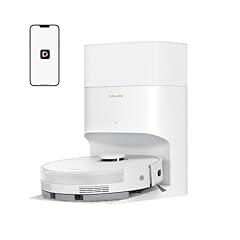
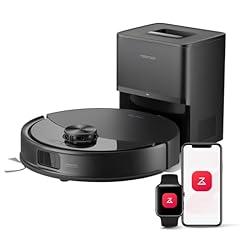
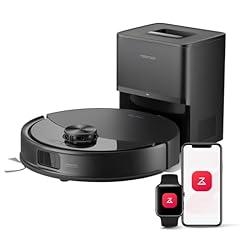
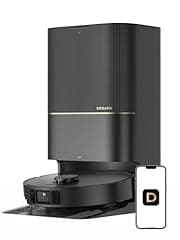
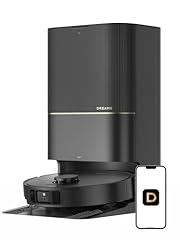
Dreame D20 Plus Robot Vacuum and Mop
Overview
This is a round, Wi-Fi-connected robot vacuum with a removable water tank and mop pad, plus an auto-empty base that transfers collected debris into a disposable bag. The manufacturer documentation identifies dual main brushes, laser distance mapping, cliff and edge sensors, a 4.8 Ah battery, 75 W rated robot power, and approximately six-hour charging. It supports 2.4 GHz Wi-Fi and the Dreamehome app. The product vacuums and uses a damp pad for light mopping. Its manual specifically says to use water only, wash the pad after each use, empty unused tank water, and remove the mop assembly when not mopping. The advertised 13,000 Pa suction, carpet behavior, runtime, detangling performance, and cleaning coverage were not supported by an exact-product independent lab test found in this review. Public evidence also did not establish an exact US UL, ETL, or CSA safety listing for the robot and dock.
What works
- The manual specifies a bagged auto-empty base, and says the bag seals when removed to reduce loose debris during disposal.
- Water-only mopping avoids routine detergent and disinfectant use in the tank, as directed by the manufacturer.
- The documentation provides concrete hazard controls, including cliff sensors, child lock, cable removal, stair barriers, and warnings against liquids and combustible materials.
- Dreame's US policy provides three-year coverage for the robot vacuum main body, charging dock, and auto-empty base. The battery pack has one-year coverage.
- Brushes, pad, tank, filter, sensors, dust bag, and air duct have published cleaning or replacement instructions.
What does not
- The filter is described only as a filter. The exact manual does not provide a HEPA class, particle-capture rating, or allergen-retention test result.
- No exact-product independent performance test was located for pickup, carpet cleaning, mopping, edge cleaning, hair handling, obstacle avoidance, or stated suction performance.
- The mop system has no dirty-water tank, pad washing station, or drying function. The owner must wash and completely dry the pad and tank after use to limit odor or mildew.
- The manual requires floor preparation, including removal of cables, toys, sharp objects, and fragile items. It also calls for a physical stair barrier, so it is not a substitute for household hazard control.
- The connected app's disclosed data practices include location, identifiers, browsing history, photos or videos, diagnostics, and contact information. Apple notes that these disclosures are developer-provided and not independently verified.
Who is it for
This product suits a household with mostly hard floors, manageable low-pile rugs, and an owner willing to prepare rooms before each run. It fits routine dry debris pickup with occasional damp-pad mopping, particularly where a bagged auto-empty base can reduce hands-on bin emptying. It also suits buyers who value a documented US warranty and can keep up with pad washing, water-tank emptying, brush cleaning, filter care, and replacement bags. It is better matched to maintained spaces than cluttered rooms.
Who is it not for
It is not suited to homes where loose cords, small toys, pet waste, fragile objects, liquids, or open stair edges are routinely present. The manual requires those hazards to be removed or blocked, so households needing dependable recognition of small obstacles should not assume this product provides it. It is also unsuitable for buyers who need independently verified allergen filtration, measured cleaning performance, or confirmed US third-party electrical listing. People unwilling to handle disposable bags, wash a mop after every use, or share app-related data should choose a different arrangement.
Integrity
The product has a bagged debris system, and the manufacturer says its bag seals when pulled out. That can reduce visible debris spills at bag changes, but the available exact-model documentation does not name a HEPA grade or publish particle-filtration results. There are no antimicrobial, disinfecting, or sanitizing claims to evaluate. For mopping, the manual directs users to use water only, wash the pad after each run, empty leftover water, and fully air-dry the pad and tank. Those steps matter because this is not a self-washing or self-drying mop system. Its environmental tradeoffs are straightforward. The manual calls for recurring replacement of the mop pad, main brushes, side brush, dust-box filter, and disposable dust bag. The lithium-ion battery is restricted to skilled replacement, although the policy gives the battery one year and the main robot, dock, and auto-empty base three years of US coverage. No exact-product independent energy, water-use, durability, or cleaning-performance report was located. The connected app also has broad developer-disclosed data categories, so app use adds a privacy consideration alongside its scheduling and mapping functions.

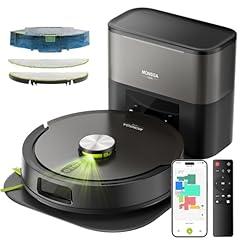
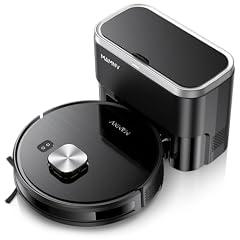
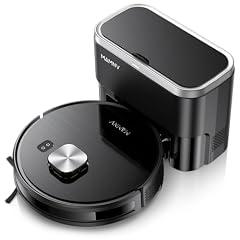
MONSGA Robot Vacuum and Mop Combo
Overview
This product is a circular robot vacuum with a detachable, passive mop pad, a 460 mL water tank, LiDAR navigation, and a self-emptying station that uses a 4 L disposable dust bag. It connects through Smart Life or Tuya on 2.4 GHz Wi-Fi, and its manual specifies a 3,200 mAh lithium-ion battery, a stated maximum 160-minute runtime, and three suction and water-flow settings. The manufacturer states 8,000 Pa suction, five-map memory, carpet boost, and up to 90 days between bag changes. An independent hands-on review found dependable daily pickup of crumbs, dust, pet hair, and fine sand on hard floors and short-pile carpet, plus low hair wrap on the rubber main roller. That review also found that the rigid mop is for light maintenance rather than dried stains, and that flat clutter such as cables is commonly missed.
What works
- An independent hands-on review found solid daily pickup on hard floors and short-pile carpet.
- The independent review observed very little hair wrapping around the rubber main brush during several days of pet-hair use.
- The 4 L bag uses a pull-out sealing arrangement, and the independent review reported no visible dust cloud during bag removal.
- The manual provides specific battery, charging, laser, cable, wet-surface, balcony, and maintenance precautions.
- MONSGA states that eligible original owners receive 24 months of repair, replacement, or refund coverage, with US support contact information.
What does not
- Independent testing found frequent collisions and near-routine misses of flat objects, including cables that can become entangled or sucked in.
- The rigid mop pad did not remove dried stains in independent testing, and the reviewer found it can spread soil rather than lift it.
- The product page promotes deep carpet cleaning, but its own surface recommendation lists hard flooring types, while independent testing found weaker results on medium- and long-pile carpet.
- No exact-model UL, ETL, or CSA electrical-safety listing was located during verification, despite the charging dock and lithium-ion battery system.
- The product relies on Smart Life or Tuya connectivity, while the available MONSGA privacy policy primarily addresses website and purchase data rather than robot map data, app retention, or security-update commitments.
Who is it for
This product fits a household that wants scheduled maintenance vacuuming across hard floors, laminate, tile, or short-pile rugs, especially where daily crumbs and pet hair are the main messes. It is most suitable when floors can be cleared before each run and someone can wash and fully air-dry the mop pad after use. The self-emptying station can reduce direct contact with collected dust, while LiDAR mapping, no-go zones, remote control, and a stated two-year warranty suit users willing to do routine app setup and upkeep.
Who is it not for
It is not suited to homes where cables, toys, pet waste, very small objects, or liquid spills are often left on the floor. Independent testing found that flat obstacles are often missed, creating entanglement and property-risk concerns. It is also a poor fit for buyers needing reliable deep cleaning of medium- or long-pile carpets, removal of dried floor stains, or an automatically washed and dried mop system. People who require independently listed electrical safety, detailed connected-device privacy terms, or demonstrated cloud-security support should seek clearer documentation.
Integrity
The product uses a bagged self-emptying station rather than an open bin. MONSGA describes a sealed pull-out bag, and an independent review observed that bag changes did not create a visible dust cloud. The manual identifies a HEPA filter, but neither a filtration efficiency rating nor exact-model allergen-capture testing was located. There are no disinfecting, antimicrobial, or germ-killing claims to assess. The manual also gives meaningful precautions for lithium-ion battery use, charging indoors, wet surfaces, cables, balconies, damaged cords, and sensor maintenance. The wet system has no dirty-water tank, mop washing, or heated drying. The manual directs users to empty the reservoir, wash the pad, and air-dry components for 24 hours, so sanitation depends on consistent manual care. Disposable dust bags, filters, and brush wear parts add recurring material waste. The supplied extra mop pad and stated 24-month warranty help with routine service, but no exact-model energy-use data, parts catalog, battery replacement procedure, or manufacturer recycling program was located. No US recall or regulator warning for this product was located during verification.

Roborock Q10 S5+ Robot Vacuum and Mop
Overview
This product is a 13.9-inch circular robot vacuum with a detachable vibrating mop, a 5,200 mAh lithium-ion battery, and a compact auto-empty dock. It uses a combined onboard dustbin and water tank, then transfers dry debris to a disposable dock bag. Mopping is a manual-care system, the cloth must be dampened and fitted before use, then washed and air-dried after use. Roborock states 10,000 Pa suction, up to 150 minutes in internal testing, LiDAR mapping, carpet sensing, mop lift, and structured-light obstacle avoidance. Independent tests support unusually strong carpet pickup and hair-tangle control. Vacuum Wars measured 96% embedded-sand removal and no hair tangling in its stated test. The same independent evidence, plus other hands-on reviews, found weak small-object avoidance, so its hands-free claim is materially limited in cluttered homes.
What works
- Independent testing found 96% embedded-sand pickup from carpet, a strong result for routine carpet debris.
- Independent testing found no hair tangling in a 7-inch hair test, reducing brush-cleaning burden.
- The dock automatically transfers debris from the robot to a 2.7 L disposable bag, with the stated interval qualified by Roborock as use-dependent.
- The manual documents a washable filter, removable mop cloth, accessible brushes, removable wheel axle, and battery-removal instructions for end-of-life recycling.
What does not
- Independent obstacle testing was poor. One lab scored only 6 of 24 objects, and another found it missed small obstacles, tangled with cords, and crossed simulated pet messes.
- The dock does not wash or dry the mop. The user must empty unused water, wash the cloth, and air-dry it after each use to limit odor.
- The product uses disposable dock bags and recurring replacement brushes, filters, and mop cloths. Roborock specifies replacement intervals for several parts.
- FCC authorization and clear charging instructions were verified, but a model-specific UL, ETL, or CSA electrical-safety listing for the robot, dock, and power supply was not independently confirmed.
Who is it for
It suits a household that wants scheduled dry-debris maintenance on open hard floors and carpets, especially where long hair is a recurring brush-wrap problem. It is most appropriate for someone willing to pick up cords, socks, toys, and pet items before every run, and willing to remove, wash, and dry the mop cloth after mopping. The auto-empty dock reduces routine dustbin handling, while the documented app can set rooms, schedules, carpet areas, and no-go zones. It is better suited to maintenance cleaning than unattended cleanup of a busy household.
Who is it not for
It is not suited to homes where cords, small toys, loose clothing, pet waste, or water on the floor cannot reliably be cleared first. Independent testing found poor small-object avoidance and entanglement risk, while the manual itself requires floor preparation and a physical barrier at raised edges. It also does not suit people seeking a self-sanitizing wet-cleaning system. There is no mop washing or drying dock, so leaving the cloth or unused water in place can create odor and hygiene problems. Buyers requiring independently verified electrical listing documentation should seek clearer model-specific evidence.
Integrity
For dust control, the product combines a washable onboard filter with a self-emptying dock bag, which can reduce direct contact with collected debris. Roborock does not make a disinfecting or antimicrobial claim for this product. Its manual instead says not to use disinfectant, to use only its recommended cleaning solution, and to empty unused water, wash the mop cloth, and air-dry it after mopping. That is sensible maintenance advice, but the dock does not wash or dry the cloth itself. The manual identifies the robot, auto-empty dock, power supply, U.S. support contact, FCC compliance statement, and a 14.4 V, 5,200 mAh lithium-ion battery. It also provides battery-removal instructions for professional recycling and specifies replacement cycles for filters, brushes, and cloths. The tradeoff is ongoing material use from disposable dock bags and replacement wear parts. Product-specific safety listing evidence from UL, ETL, or CSA was not independently located during verification.

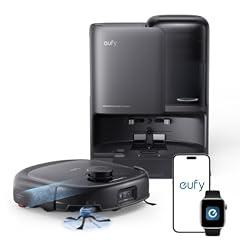
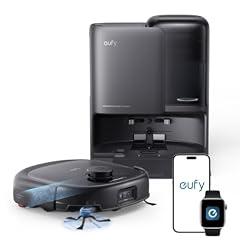
Eufy E25 Robot Vacuum and Mop Combo
Overview
This is a Wi-Fi robot vacuum and roller-mop system with a self-emptying, mop-washing dock. The product has a 2.5 L clean-water tank, 1.8 L dirty-water tank, 3 L disposable dust bag, 5,200 mAh lithium-ion battery, and a 300 mL onboard dustbin. The manufacturer lists up to 218 minutes in quiet vacuum-only mode, while its dock can draw up to 900 W during dust collection. Independent retail-purchase testing found notably strong carpet pet-hair pickup, no hair wrapping in a long-hair test, above-average dried-stain mopping, and good obstacle avoidance. The 20,000 Pa suction headline is manufacturer-stated, and bench testing instead found below-average airflow and suction. The product uses LiDAR plus an RGB camera, so app-connected operation can collect maps, cleaning history, home-environment information, and, with consent, camera images for navigation and obstacle avoidance.
What works
- Independent testing found 93% pickup of flattened pet hair from carpet and no brush tangling in a long-hair test.
- Independent obstacle testing recorded 21 avoided obstacles out of 24, and the product supports no-go and no-mop zones.
- The roller mop continuously separates dirty water from the roller, and independent testing found above-average dried-stain results.
- The dock washes and dries the mop roller, self-empties debris, and provides substantial 2.5 L clean-water and 1.8 L dirty-water storage.
- Official support includes an exact-product user guide, maintenance instructions, US contact details, and a battery-replacement tutorial.
What does not
- The filter is not identified as HEPA or given a particle-capture rating, so allergen containment is not independently established.
- No exact-product UL, ETL, or CSA electrical-safety listing was located in the issuing bodies' public registers. Matter certification confirms smart-home interoperability, not electrical safety.
- Early customer reports described dirty-water-tank leaks. Independent testing did not reproduce the issue, but a reviewer reports that revised tanks were supplied.
- Independent bench tests found below-average airflow and suction, which can matter in crevices, grout lines, and seams.
- The product needs 3 L disposable dust bags, filters, brushes, mop-care parts, water, electricity, and regular dirty-water-tank cleaning.
Who is it for
This product suits a household with mostly hard floors plus low or medium pile carpet, especially where shedding pets create routine hair pickup and brush-maintenance work. It fits someone who has room for a roughly 17-inch-tall dock near an outlet and can refill clean water, empty dirty water, replace dust bags, and run the drying cycle after mopping. Its independently tested mapping, obstacle avoidance, and pet-hair handling make it most relevant for frequent scheduled cleaning across several rooms, rather than occasional deep cleaning alone.
Who is it not for
It is not suited to people seeking verified HEPA-level allergen filtration or independently listed electrical safety for the exact robot and dock. It also needs preparation in homes with loose cords, small objects, high-pile or thick rugs, reflective floors near drops, fireplaces, vents, or large water spills. The manual says cliff sensors can be less effective in some of these conditions and that no-go zones are not for isolating hazards. Buyers who cannot regularly clean the dirty-water tank and dry the mop should avoid a wet-cleaning system like this.
Integrity
The wet system has useful hygiene controls, but they require active maintenance. The manual directs users to run drying after every mopping task, empty and rinse the dirty-water tank regularly, and clean the tray to reduce odor and mildew. Its roller system separates dirty water from the mop during cleaning, though independent testing found slightly more water left behind than the test average. No disinfecting, sanitizing, antimicrobial, or health-benefit claim was substantiated for the supplied cleaning system. The exact product uses a lithium-ion battery and a disposable 3 L dust bag. Its manual gives a 130 W maximum for drying and charging and 900 W for dust collection, but no independently measured lifetime energy or water-use study was found. The manufacturer provides maintenance guidance and an exact-product battery-replacement tutorial, which supports serviceability. A CPSC battery-fire recall announced in 2025 involved a different Anker power bank, not this product. No exact-product recall was located.

Dreame X40 Ultra Robotic Vacuum Cleaner
Overview
This is a Wi-Fi connected robot vacuum and mop with a large floor dock. The robot has a 300 mL dust box and 80 mL onboard water tank. Its dock uses 4.5 L clean-water and 4.0 L used-water tanks, a 3.2 L disposable dust bag, and washable spinning mop pads. It is intended for routine indoor cleaning of hard floors and carpets. Dreame states that it provides up to 12,000 Pa suction, 158°F mop washing, removable and 10.5 mm liftable mops, and camera plus structured-light obstacle recognition. Independent long-term and household testing supports strong navigation, broadly effective vacuuming and mopping, and effective edge reach. Testing also found that the auto-empty dock can leave debris behind, especially with heavy pet hair.
What works
- Independent reviewers found reliable avoidance of common hazards including socks and charging cords.
- Independent three-month testing covered wood, tile, carpet, medium-pile rugs, wet spills, and mixed debris.
- The dock separates clean and used water, automatically washes mop pads, and supports heated drying. These are manufacturer-documented functions.
- The manual specifies a sealing dust-bag handle, which can reduce dust spill during bag removal.
- Dreame provides a US limited warranty of three years for the robot body and dock components, with one year for the battery.
What does not
- No model-specific UL, ETL, or CSA electrical safety listing was located in the checked public certification registers.
- The filter is documented as washable, but no particle-filtration efficiency rating or independent allergen-capture result was located.
- Hot-water washing is not a disinfecting claim, and the manual requires emptying the used-water tank after every use to prevent odor.
- Independent testing found weak dock auto-empty suction and noted potential clogging with heavy pet hair.
- The camera-equipped app can process household mapping and device data. A general privacy policy exists, but no model-specific independent security assessment or security-update commitment was located.
Who is it for
It suits a busy household with a mix of sealed hard floors, low-pile rugs, crumbs, tracked-in debris, and frequent small obstacles. The dock is most useful where regular mop washing, water refilling, dust-bag disposal, and app scheduling reduce daily work. It is also appropriate for a larger home that can accommodate a substantial dock and where the owner will follow the manual's routine, especially emptying used water after each use and cleaning sensors, vents, and washboard components on schedule.
Who is it not for
It is not suited to homes that need a demonstrated HEPA-grade filtration result for allergy management, because no model-specific filtration efficiency evidence was located. It is also a poor fit for households that cannot empty dirty water after each use or maintain a wet dock. Avoid unsupervised use around unprotected drops, liquids, loose cords, fragile objects, sleeping infants, or high-pile carpets. The manual specifically calls for clearing cords and loose items, and recommends app-based avoidance for medium and high-pile carpet.
Integrity
The product uses a disposable dock bag and a washable robot dust-box filter. Its manual says the bag seals when removed, which may limit debris spill, but it does not provide a verified filtration class or an independently measured allergen-capture result. The manual also prohibits putting disinfectant, alcohol, or other non-approved liquids in the water system. Heated washing may help remove soil from mop pads, but it is not evidence of surface disinfection. Wet-system hygiene depends on active upkeep. Dreame instructs users to empty the used-water tank after every use, clean the washboard periodically, and replace mop pads every one to three months. Independent testing also documented recurring disposable bags, filters, pads, brushes, detergent, and a yearly consumables estimate around $200 in one market. The US warranty covers major robot and dock components for three years, but the battery has one year of coverage and is specified for removal by qualified technicians at end of life.

MAMNV Robot Vacuum and Mop
Overview
This is a circular, app-connected robot vacuum with a fixed mop pad, a 230 mL onboard dustbin, a 240 mL water tank, LiDAR mapping, and a bagged auto-empty dock. Manufacturer documentation lists a 5,000 mAh battery, 160-minute maximum runtime, 45 W robot power, Wi-Fi limited to 2.4 GHz, and a 3.5 L disposable dock bag. It vacuums and mops from the same removable water-tank module. Independent retail-purchase testing found unusually strong vacuum performance, including 87% removal of embedded sand from medium-pile carpet, 21 CFM airflow, and efficient mapping coverage. The same testing found a basic flat-pad mop with no scrubbing pressure or carpet lift, very poor dried-stain removal, high hair wrapping, and no true small-object avoidance. The manufacturer claims up to 90 days of dock storage, while the independent review describes the claim as up to about 10 weeks depending on debris volume.
What works
- Independent testing found 87% embedded-sand removal from medium-pile carpet.
- Independent testing measured strong airflow and efficient LiDAR-guided coverage.
- The 3.5 L bagged auto-empty dock can reduce direct contact with collected debris.
- Manufacturer documentation provides concrete maintenance and safety instructions, including water-only use in the tank.
What does not
- Independent testing found exceptionally poor mopping, including single-digit dried-coffee stain removal.
- It has no true avoidance for cords, toys, socks, pet waste, or other small floor hazards.
- The mop does not lift over carpet and has no scrubbing pressure, so mixed-floor mopping needs setup and supervision.
- No exact-model UL, ETL, or CSA electrical listing was located in the searched public certification registers.
- Filter efficiency, app data handling, security-update commitments, and long-term battery parts support were not independently documented.
Who is it for
This product suits someone whose priority is scheduled dry debris pickup on hard floors and moderate-pile carpet, and who can prepare rooms before each run. It is particularly aligned with a home that benefits from mapped no-go zones, multi-floor maps, and a bagged dock that reduces routine bin handling. It is more appropriate where spills are dealt with separately and the mop is treated as a light maintenance pass rather than a cleaner for adhered stains. Owners should be willing to wash the pad, empty and replace bags, and inspect the brush for wrapped hair.
Who is it not for
It is not appropriate for homes where the robot must safely navigate pet waste, charging cables, children’s toys, socks, loose rugs, or clutter without active preparation. Independent testing confirmed there is no true small-object avoidance. It also does not fit buyers expecting scrubbed floors, automatic mop washing or drying, carpet-safe mop lifting, or effective removal of dried kitchen and drink stains. Heavy-shedding households should plan for brush cleaning because independent testing found substantial hair wrapping. People requiring documented third-party electrical listing or a clearly published app security policy should seek stronger documentation.
Integrity
The bagged auto-empty dock is the most useful indoor-air feature. It can reduce how often a user opens the small onboard bin, and the product documentation describes a multi-stage filter arrangement. However, no exact-model filter-efficiency test or independently verified allergen-capture result was located, so it should not be treated as a proven allergy-control appliance. No disinfecting, antimicrobial, or germ-killing claim was found. The manual directs users to use water only in the tank, rather than cleaning agents or disinfectant water. The wet system is a basic reusable flat mop, not a wash-and-dry station. Independent testing found poor stain removal and more residual water than preferred, which makes prompt pad washing and air-drying important to limit odor and residue. The product uses disposable 3.5 L dock bags, plus replaceable filters, pads, and brushes. Some compatible third-party dust bags are sold, but clear manufacturer documentation for replacement batteries, long-term parts supply, take-back, or recycling was not located. No product-specific US recall was located in the searched CPSC records.

Yeedi M12 PRO Robot Vacuum and Mop
Overview
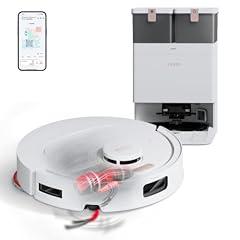
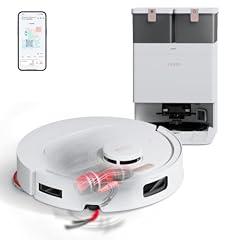
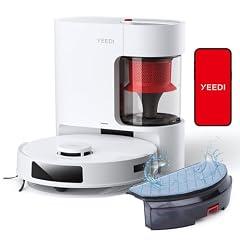
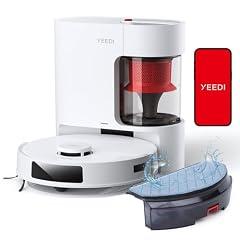
This is a battery-powered robot vacuum and mop with an all-in-one dock. Documentation matching the robot and dock identifies separate clean-water and dirty-water tanks, a dust bag, a mop-washing tray, 2.4 GHz Wi-Fi, and a 20 V charging system. The matched documentation also lists about 4.5 hours of charging time, 650 W dock emptying power, and 35 W during mop washing. The product is intended for routine hard-floor and carpet maintenance, not wet-surface pickup. Manufacturer-stated features include high suction, laser navigation, automatic emptying, mop washing, hot-air drying, and mop lift for carpets. Independent testing of the earlier M12 Pro+ found good routine hard-floor pickup and mopping, but that is not a direct test of this newer listing. The available brand lineup page still described the M12 Pro Gen 2 as coming soon, so exact US performance and specification substantiation remains limited.
What works
- Matched product documentation provides concrete dock, battery, radio, power, tank, and maintenance specifications rather than relying only on marketplace copy.
- The wet system separates clean and dirty water, and the manual calls for monthly dirty-water-tank and dock-area cleaning.
- Washable mop pads are specified, which can reduce pad waste compared with fully disposable pads.
- The app supports mapped cleaning, room and area controls, schedules, no-go boundaries, and adjustable water settings, according to the manufacturer.
What does not
- No exact-product US UL, ETL, or CSA electrical safety listing was verified. The manual gives sensible battery and charger restrictions, but those are not third-party certification.
- The filter is described as washable, but no verified HEPA grade, particle-capture efficiency, or sealed-system test result was located.
- Independent testing located for the earlier M12 Pro+ is not a direct test of this product. That testing reported weak carpet pickup, inconsistent mapping, and poor handling of cords and small obstacles.
- The connected app's disclosed privacy label says identifiers and usage data may be used to track users, and it may collect location, diagnostics, and device data.
- Routine ownership includes disposable dust bags and filters, plus recurring cleaning of the dirty-water tank, mop tray, brushes, sensors, and dock.
Who is it for
This product fits a household that mainly needs scheduled upkeep of open hard floors and can give the dock a permanent, level location near a suitable outlet and reliable 2.4 GHz Wi-Fi. It is more appropriate for someone comfortable with monthly cleaning of the dirty-water tank, mop tray, and dock, plus regular filter and brush care. The strongest supported use is routine debris pickup and mopping between deeper manual cleans, not unattended cleanup of a cluttered or high-risk home.
Who is it not for
It is not well suited to homes with loose cables, pet waste, shag rugs, long carpet fibers, frequent floor clutter, or occupants who need a robot to run unsupervised. Matched instructions call for clearing low objects, using physical stair barriers, folding carpet tassels, and avoiding long-fiber rugs. It also does not suit buyers who require a verified HEPA filtration rating, a clearly documented US third-party electrical listing, minimal app data collection, or an owner-replaceable battery.
Integrity
The matched documentation gives practical safety controls. It specifies the supplied dock for charging, limits use to indoor household settings, warns against standing water, combustible materials, hot debris, damaged cords, and non-original batteries. It also says to clean the anti-drop sensors and use physical barriers at stairs. No product-specific CPSC recall was identified in the searched federal recall records, but the absence of a recall is not independent safety certification. For indoor air, the product uses a dust bag and washable filter, but no verified HEPA class or filtration-efficiency result was located. The wet system can be maintained hygienically only with recurring cleaning of the dirty-water tank and mop-washing tray. Washable mop pads reduce disposable-pad waste, while dust bags, filters, brushes, and mop parts remain recurring consumables. The battery is specified as replaceable by skilled personnel, which limits owner repair and may shorten practical service life if support or parts become unavailable.

Yeedi C12 Plus Robot Vacuum and Mop
Overview
The Yeedi C12 Plus is a Wi-Fi robot vacuum with a bagless auto-empty station and a removable water reservoir with a washable flat mop pad. It is intended for routine vacuuming and light wet wiping on hard floors, with carpet detection, a laser navigation module, app mapping, and physical buttons for basic operation. The manufacturer states up to 8,000 Pa suction and up to 300 minutes of runtime, but no product-specific independent performance report using a disclosed vacuum-robot test method was located. Its strongest documented technical point is traceability. The product family appears in an FCC authorization filing under Ecovacs, and the submitted label states conformity with UL 1017 and certification to the applicable CSA vacuum-cleaner standard. That is stronger than an unverified marketplace badge, though an exact public listing in the UL, ETL, or CSA directories was not located. The dock automatically transfers dust to a reusable container, not a disposable bag.
What works
- A submitted product label identifies UL 1017 conformity and CSA vacuum-cleaner certification, and the wireless radio has an FCC authorization record.
- The bagless dock and washable mop pad can reduce disposable bag and pad use when maintained as directed.
- Basic manual operation remains available without accepting the app privacy terms or using cloud-enabled controls.
- The official manual gives concrete hazard controls for charging temperatures, cords, stairs, water exposure, battery handling, and sensor cleaning.
What does not
- No exact-model independent lab report was located for pickup, carpet cleaning, mopping, edge cleaning, hair handling, or obstacle performance. The 8,000 Pa and runtime figures remain manufacturer claims.
- The filtration documentation does not identify a filter efficiency class or provide product-specific allergen-capture testing. A claim of improved indoor air quality would therefore be unproven.
- This is not a self-washing or self-drying mop system. The manual calls for washing the mop after each cleaning, then air-drying the dust container and filter, which leaves meaningful hygiene work to the owner.
- Its infrared obstacle detection is described as having about a 10 cm maximum range. The manual specifically tells users to remove cords, slippers, cloths, and fringed rugs, so it should not be treated as dependable small-object or pet-waste avoidance.
- The battery is replaceable only by skilled persons, and the stated warranty period is 12 months. Long-term battery repair, parts pricing, and firmware-support duration are not clearly documented.
Who is it for
This product fits a household that wants scheduled maintenance cleaning of mostly open hard floors and low to moderate carpet, and is willing to prepare rooms before a run. It is particularly suited to users who value a bagless auto-empty station, can wash the mop pad after use, and prefer to retain basic button control rather than rely entirely on the app. It is also a more suitable match where light damp wiping is enough and the owner can keep cables, small objects, loose rug fringe, and standing water out of the cleaning path.
Who is it not for
It is not appropriate for households that need reliable avoidance of pet waste, charging cords, toys, liquids, or other small hazards left on the floor. Its own instructions require clearing these items, and its stated infrared obstacle range is short. It also does not suit people seeking hands-off mopping hygiene, because the pad needs washing after every use and there is no mop washing or drying dock. Buyers with severe dust or allergen concerns should seek a product with a clearly specified filter class and independent filtration evidence.
Integrity
The product uses a dry dust container, washable mop pad, washable filter, and bagless auto-empty station. These choices can reduce recurring disposable bag and pad waste, but they shift routine cleaning to the owner. The manual calls for washing the mop after every cleaning, cleaning filters regularly, and fully air-drying the dust container and filter before reuse. There is no supplied antimicrobial solution or supported sanitizing claim. For electrical safety, the submitted product label in the FCC file states UL 1017 conformity and certification to the applicable CSA vacuum-cleaner standard. The product manual also gives detailed limits for charging, water exposure, battery damage, storage, and cord hazards. The robot's radio is FCC-authorized, which addresses wireless compliance rather than privacy or overall product safety. No product-specific CPSC recall or safety warning was located in the searched public records as of August 9, 2026. The app policy says cleaning maps, operational logs, network information, and some device data can be collected, while account cancellation supports deletion or de-identification subject to legal retention duties.