
10 Best Reverse Osmosis Filter
 Daniel Kenitz
Please note that we participate in affiliate marketing programs. When you purchase through links on our site, we may earn a commission. As an Amazon Associate we earn from qualifying purchases. This comes at no additional cost to you and helps support the resources required to provide valuable content.Advertising Disclosure
Top-rated Reverse Osmosis Filter Comparison
1

2
4
5
6
7
8
9
10
Reverse-osmosis filters: what to look for
Reverse osmosis (RO) pushes water through a semipermeable membrane and other filter stages to reduce dissolved solids and selected contaminants. It can be installed under a sink with a faucet, or used as a countertop dispenser with a removable reservoir. Some systems include storage tanks, pumps, UV stages, remineralization cartridges, TDS displays, automatic flushing, or filter-life alerts. Those features affect convenience and maintenance, but a long stage count or a “near-zero TDS” number does not by itself prove protection from a particular contaminant.
Start with the water, not the product. Use your local utility’s Consumer Confidence Report, the EPA drinking-water standards, or a state-certified laboratory result for private-well water to identify the actual concern. Then match that concern to the exact system, membrane, replacement filter, feed-water limits, and tested claim. A system certified for TDS reduction is not automatically certified for lead, arsenic, nitrate, fluoride, PFAS, VOCs, cysts, bacteria, or viruses. The relevant proof is a current listing in the NSF Certified Product Listings, IAPMO R&T Listing Directory, or WQA Gold Seal directory that names the exact model and claim. NSF/ANSI 58 is the key RO standard; NSF/ANSI 53 and NSF/ANSI 401 apply when those specific contaminant claims are made. NSF/ANSI/CAN 372 addresses lead content in components, not broad contaminant removal.
Treat headline percentages carefully. “99%” or “99.99%” may describe one contaminant, one test condition, a start-of-life sample, or a related model rather than the complete product and replacement filter. A manufacturer-commissioned laboratory test can be useful evidence, but it is not the same as a current certification listing or proof of performance at cartridge end of life. TDS measures dissolved material, not every health-relevant contaminant, and a TDS meter cannot confirm PFAS, nitrate, microbes, or a safe source. Alkaline or remineralization stages change composition and taste; the supplied reviews do not establish added health benefits from alkaline water.
Check practical limits before installation. Feed pressure, temperature, pH, hardness, turbidity, iron, manganese, hydrogen sulfide, and maximum TDS vary by product. Well water may need testing, disinfection, softening, or prefiltration. Tank systems require cleaning and careful handling of standing water; tankless systems still need flushing, leak checks, and timely cartridge replacement. UV is not proof of microbial protection unless the complete product has an applicable NSF/ANSI 55, NSF/ANSI 244, or NSF P231 certification. Electrical systems need a suitable grounded or protected outlet, while under-sink systems generally need a drain connection and space for a faucet or tank.
Efficiency claims also need context. A stated 2:1, 3:1, 4:1, or 5:1 purified-to-drain ratio is not independently verified unless supported by an NSF/ANSI 58 recovery or efficiency rating or an EPA WaterSense listing. Batch systems make reject water visible; plumbed systems send it to the drain. Finally, compare filter intervals, proprietary-cartridge availability, service parts, cleaning instructions, replacement cost, and disposal options. Maintenance failure can reduce treatment performance and increase waste.
Across the supplied products, the recurring safety boundary is clear: these systems are generally intended for treated municipal water or tested potable water, not untreated, microbiologically unsafe, flood-affected, or unknown water. None should be treated as an emergency or certified microbial purifier without the applicable evidence. Buyers with a known contaminant should require a model-matched claim, and buyers with private wells should test first. Storage tanks and reservoirs require regular cleaning, flushing, and draining after non-use; neglect can create hygiene problems. Under-sink products also require correct pressure, plumbing, drain, electrical, and leak protection. No broader category-wide contraindication was identified beyond these repeated source-water, maintenance, and installation limits.
Integrity
The scores below reflect how well the supplied products document safe use, contaminant performance, materials, maintenance, environmental burden, and claim scope. A high score means stronger evidence or safer operating support for that topic; it does not mean every product is suitable for every household or contaminant.
HHealth & Safety
Health protection for your actual water
This measures whether a system’s verified reductions and feed-water limits match a documented local concern. RO can be appropriate for dissolved contaminants, but source water must be tested first. Higher-scoring products supplied clearer limits and better model-specific evidence; lower-scoring products relied more on broad claims without proving that the buyer’s actual exposure was addressed.
Proven reduction of claimed contaminants
This measures whether claims for lead, arsenic, nitrate, fluoride, PFAS, VOCs, cysts, or other contaminants were certified or independently tested for the exact system and replacement filter. Higher scores came from exact NSF, IAPMO, or WQA claims; lower scores reflected start-of-life tests, related models, or manufacturer claims that were not certification-level proof.
Protection against microbial failure
This measures tank or reservoir hygiene, flushing, cleaning, non-use instructions, and any verified UV or microbial-purifier claim. Higher-scoring products offered clearer sanitation and non-use procedures or tankless designs. Lower-scoring products lacked applicable NSF/ANSI 55, NSF/ANSI 244, or NSF P231 evidence, even when they advertised UV or microbial reduction.
Safe materials in contact with water
This measures whether the sold configuration’s housings, tubing, faucet, tank, and filters have credible lead-content and extraction-safety evidence. Higher scores were associated with exact NSF/ANSI/CAN 372 or material-safety listings. Lower scores involved claims about BPA-free or food-grade materials without complete-system verification.
Leak, pressure, and electrical safety
This measures structural integrity, leak and backflow protection, electrical safety, and clarity of installation requirements. Higher-scoring products supplied leak checks, shutoffs, operating limits, or stronger exact-system listings. Lower scores reflected missing UL or ETL evidence, unclear electrical coverage, storage tanks, or incomplete certification of the installed configuration.
Safe performance between filter changes
This measures filter and membrane life, alerts, automatic flushing, replacement availability, and service instructions. Higher scores included filter indicators, alarms, documented intervals, flushing, and non-use procedures. Lower scores left more uncertainty about end-of-life performance, UV-lamp maintenance, proprietary replacements, or what happens when users miss service.
EEcology
Water waste and efficiency
This measures verified recovery, product-to-drain performance, and reject-water management. Higher-scoring products had test data or stronger efficiency evidence; some also stated ratios such as 3:1 or 4:1, though those claims were often unverified. Lower scores involved conventional drain-producing systems with no WaterSense label or independent recovery rating.
Filter waste and repairability
This measures cartridge frequency, membrane burden, service-part availability, and repair options. Higher scores came from transparent schedules, discrete replaceable parts, and available tanks, pitchers, or service components. Lower scores involved multiple proprietary cartridges, combined all-in-one media, frequent replacement, no recycling route, or uncertain replacement availability.
EEvidence
Honest claims and understandable limits
This measures whether percentages, stage counts, PFAS or alkaline claims, TDS figures, and certification language state the tested contaminant, conditions, model, and limitations. Higher-scoring products separated certified claims from manufacturer testing. Lower scores used broad lists or “99.99%” language that exceeded the exact evidence or confused testing with certification.
Independent certification of the exact system
This measures whether an accredited third party lists the exact model, configuration, and replacement filter—not merely a component, related product, or factory test. Higher scores came from current NSF, IAPMO, or WQA entries naming the product and claims. Lower scores reflected inaccessible, outdated, related, or absent registry records.
Full reviews

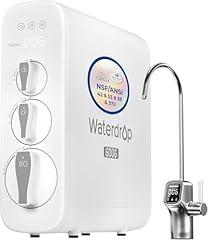
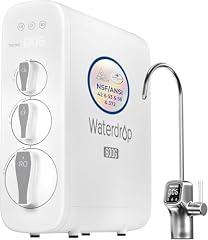
G3 Tankless Reverse Osmosis System
Overview
This is a powered, tankless under-sink reverse-osmosis system with a separate smart faucet, drain connection, and three replaceable cartridges. It is intended for indoor use on municipal tap water. Waterdrop specifies feed water of 14.5 to 87 psi, 41 to 100 F, pH 6.5 to 8.5, turbidity below 1 NTU, hardness below 7 grains per gallon, and total dissolved solids below 750 ppm. Well water needs prefiltration and testing first. The current performance sheet identifies certification by IAPMO R&T to NSF/ANSI 42 and 58 for listed reduction claims, plus NSF/ANSI 372 for low-lead material compliance. It reports over 97.5% chlorine reduction and 93.59% dissolved-solids reduction under test conditions. The tankless format avoids stored product water, but it has no UV stage or independent microbiological purifier certification. Waterdrop states a 2:1 purified-water-to-drain-water ratio and a 600-gallon-per-day rating.
What works
- The current performance sheet reports IAPMO R&T certification to NSF/ANSI 42 and 58 for the claims listed there, including chlorine, dissolved solids, cadmium, hexavalent chromium, selenium, and fluoride.
- NSF/ANSI 372 certification supports low-lead compliance for water-contact materials in the certified configuration.
- The manufacturer gives concrete municipal-water operating limits, filter-change intervals, and a 30-minute flush instruction after membrane replacement.
- A tankless design eliminates a storage reservoir, which removes one common location for stagnant stored water.
What does not
- The product is not a microbiological water purifier. It has no UV treatment and the manufacturer warns against using it with microbiologically unsafe water without adequate disinfection.
- The manufacturer's PFAS, lead, arsenic, and broad contaminant marketing exceeds what is clearly itemized as certified in the current NSF/ANSI 42 and 58 tables. PFAS is not listed in that performance sheet.
- The unit needs electricity and a nearby drain, and it is only specified for relatively low-turbidity municipal water within stated pressure, hardness, pH, and dissolved-solids limits.
- It uses proprietary disposable cartridges on a recurring schedule, including a prefilter at six months, carbon block at 12 months, and membrane at up to 24 months.
Who is it for
This product suits a household on tested municipal water that wants a compact, under-sink source of lower-dissolved-solids drinking water and can accommodate a powered unit, dedicated faucet, and drain saddle. It is most appropriate when the local water report identifies contaminants covered by the documented chlorine or reverse-osmosis performance claims, and when incoming water stays within the stated pressure, turbidity, hardness, pH, and dissolved-solids limits. The filter-life display and defined cartridge intervals are useful for households prepared to perform routine replacement.
Who is it not for
It is not suited to untreated private-well water, flood-affected water, or any source with possible microbial contamination unless the water is properly disinfected and professionally tested first. It is also unsuitable where a cabinet lacks power or a practical drain connection, or where feed water exceeds the stated 750 ppm dissolved-solids, hardness, turbidity, or pressure limits. Buyers whose primary concern is PFAS, lead, or another specific contaminant should not treat the broad marketing language as proof of reduction without matching the product's documented claims to local laboratory or utility results.
Integrity
The strongest health evidence is the current performance sheet's IAPMO R&T certification statement for NSF/ANSI 42 and 58 claims, plus NSF/ANSI 372 low-lead material compliance. The sheet reports tested chlorine reduction above 97.5% and dissolved-solids reduction of 93.59%. It also lists results for several dissolved contaminants. These results apply under specified test conditions, not to every possible source-water problem. The tankless layout avoids holding filtered water in a reservoir, but it does not replace disinfection. There is no UV stage or verified microbiological purifier claim, and the manufacturer says unsafe water requires adequate disinfection. Waterdrop states a 2:1 product-water-to-drain-water ratio, which is materially better than many older RO layouts but remains a manufacturer-stated operating figure. Cartridge replacement creates ongoing plastic and filter-media waste, although the published six, 12, and 24 month intervals make that burden predictable.

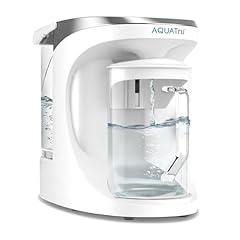
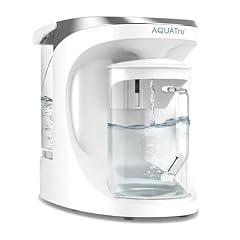
Aqua TRU Carafe Countertop Water Purifier
Overview
This is a plug-in countertop reverse-osmosis water purifier that processes tap water in batches and collects the treated water in a 64-ounce borosilicate-glass carafe. It needs no plumbing, uses a 120-volt outlet, and has a 2.5 L tap-water tank with a 1.9 L clean-water capacity. AquaTru states that one full tank normally takes about 12 to 15 minutes to filter. Its defining evidence is unusually specific for this format. The current performance data sheet identifies this product as IAPMO R&T certified to NSF/ANSI 42, 53, 58, 372, and 401 for named claims, including lead, fluoride, pentavalent arsenic, nitrate, PFOA, PFOS, selected pharmaceuticals, and microplastics. The same data sheet sets important feed-water limits, especially hardness below 10 gpg, 1,500 mg/L maximum TDS, cold water only, and water that is microbiologically safe or adequately disinfected.
What works
- IAPMO R&T certification is documented for this product under NSF/ANSI 42, 53, 58, 372, and 401, with named contaminant reductions rather than a generic RO claim.
- The performance data sheet reports certified reductions for lead, fluoride, nitrate, pentavalent arsenic, PFOA, PFOS, and microplastics under the applicable test conditions.
- The batch-fill design avoids a permanent water-line connection, reducing the practical risk of a pressurized plumbing leak.
- The glass carafe reduces treated-water contact with plastic during storage and pouring, while the complete system is documented as meeting NSF/ANSI 372 lead-content requirements.
- Filter-change lights, a maintenance alert, stated replacement intervals, and currently sold replacement filters make maintenance requirements relatively clear.
What does not
- This is not a microbiological water purifier. The manufacturer specifically says not to use it with water that is microbiologically unsafe or of unknown quality without adequate disinfection.
- The arsenic claim is limited to pentavalent arsenic. The data sheet warns that reverse osmosis may not remove trivalent arsenic well, a significant consideration for some private wells.
- Hard water above 10 gpg can rapidly scale the membrane, slow filtration, stress the pump, and require descaling or earlier membrane replacement.
- It creates reject water. Its verified 63% efficiency means roughly 37% of input water is not delivered as treated water under the rated test conditions.
- The system requires multiple disposable cartridge replacements. The pre-carbon filter is scheduled every six months, VOC filter annually, and RO membrane every two years.
Who is it for
It suits a one or two-person household, renter, or office user who wants batch-treated drinking water without modifying plumbing. It is especially relevant when a local utility report or a properly collected lab result identifies contaminants covered by its certified claims, such as lead, fluoride, nitrate, pentavalent arsenic, or certain PFAS. The buyer should have municipally disinfected water, or other water already known to be microbiologically safe, plus hardness at or below 10 gpg or upstream softening.
Who is it not for
It is not appropriate as the sole treatment for untreated well water, water of unknown microbiological quality, or an emergency water source, because it has no verified UV or microbiological purifier certification and its instructions require adequate disinfection. It is also a poor fit for water with hardness above 10 gpg unless softened first. Households needing large volumes quickly may find the 1.9 L clean-water capacity and batch processing restrictive. Anyone unable to clean reservoirs weekly and replace filters on schedule should avoid relying on it.
Integrity
The health evidence is strong for the contaminants specifically named in the performance data sheet. IAPMO R&T certification is documented for the exact product family under NSF/ANSI 42, 53, 58, 372, and 401. That includes lead-content compliance for water-contact materials and claim-specific treatment results for several metals, fluoride, nitrate, PFAS, cysts, chlorine or chloramine, microplastics, and selected trace organic contaminants. The glass carafe is borosilicate glass, although the feed tank and internal water path are not all glass. The key limits matter. This product is for cold, microbiologically safe water, and it is not a substitute for disinfection. Weekly washing of both tanks and carafe is specified to limit algae growth. Its 63% verified efficiency is favorable for a batch RO unit, but it still produces reject water. Cartridge replacement also creates ongoing material waste, with three filter types replaced on six-month, annual, and two-year schedules. No relevant CPSC recall or California Proposition 65 warning was identified in the checked sources.

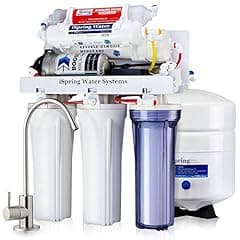
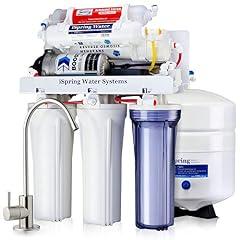
iSpring RCC7P-AK Reverse Osmosis System
Overview
This is an under-sink, tank-based six-stage reverse-osmosis drinking-water system with a 75-gallon-per-day rated membrane, separate faucet, electric booster pump, carbon and sediment prefilters, a polishing carbon filter, and an alkaline remineralization stage. It needs a drain connection and mains power for the pump. The manufacturer lists a 30 to 70 psi inlet-pressure range, which makes the pumped design relevant where ordinary household pressure is marginal. The manufacturer states that the unit reduces TDS and a broad list of contaminants, including lead, fluoride, arsenic, and PFAS. Those broad claims were not matched to a current independent listing for this exact pumped product. Current NSF listings and the manufacturer’s newer manual identify certification for related non-pumped models, not this exact configuration. Its alkaline stage may change mineral content and taste, but this is not evidence of a general health benefit.
What works
- The booster pump is manufacturer-stated to support feed pressures from 30 to 70 psi, a useful installation feature for homes with lower water pressure.
- The manufacturer provides a concrete service schedule, with one-year prefilter packs, a two-year membrane pack, and a three-year package that includes the later-stage filters.
- The manual directs owners to test TDS periodically and inspect for leaks daily during the first two weeks after installation.
- Replacement filters, membrane packages, tubing, and other service parts are identified by model-specific part numbers, which supports repair rather than full-unit replacement.
What does not
- The product’s broad reduction claims, including PFAS, lead, arsenic, and fluoride, were not independently confirmed for this exact pumped configuration in a current NSF, IAPMO, or WQA registry search.
- Current manufacturer documentation distinguishes this pumped product from the closely related models it identifies as NSF certified. A certification statement for a related model should not be treated as certification of this product.
- It has a pressurized storage tank but no UV stage or independently verified microbiological purifier claim. Sanitation and on-time filter replacement remain important.
- The manufacturer states a filtered-water-to-wastewater ratio of up to 1.5:1, but no WaterSense label or independently verified efficiency rating was found for this exact product.
- The alkaline remineralization stage is a taste and composition feature, not a proven wellness intervention. Human evidence does not establish broad health benefits from alkaline water.
Who is it for
This product suits a household that has tested its source water and specifically needs point-of-use reduction of dissolved solids or contaminants commonly addressed by RO, while also having limited inlet pressure. It is most appropriate for a homeowner with cabinet room, an available drain connection and electrical outlet, and willingness to replace multiple filters on schedule. A buyer who prefers RO water with some minerals added back for taste may also value the final remineralization stage, provided they do not treat it as a medical or health treatment.
Who is it not for
It is not a substitute for identifying the actual contaminant in a utility water report or a certified private-well test. Households needing independently documented reduction of PFAS, nitrate, a specific arsenic species, lead, or microbial hazards should select a system whose exact configuration carries that claim in a current third-party registry. It is also unsuitable where there is no drain, power outlet, or room for a tank and housings. People seeking health benefits from alkaline water, or households unable to keep up with sanitation and filter changes, should not rely on this setup.
Integrity
The main health strength is the RO treatment format, which can reduce some dissolved contaminants when correctly matched to the source water and maintained. The pump extends the manufacturer-stated inlet range down to 30 psi. The system also has a defined replacement schedule and directs periodic TDS checks. However, the evidence trail is weaker than its advertising breadth. Current independent certification records support related iSpring RO models and replacement components, but did not confirm the exact pumped product and its full contaminant list. The product creates reject water. iSpring states a ratio of up to 1.5 gallons of filtered water per gallon sent to drain, but this figure was not independently verified and the product is not listed as WaterSense labeled. Its multiple disposable sediment, carbon, membrane, and mineral cartridges create recurring material waste, although the availability of separate replacement parts and filter packs makes ongoing repair more practical than replacing the entire system. No relevant U.S. CPSC recall or California Proposition 65 product warning was found in the searched sources.

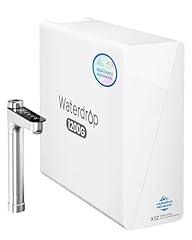
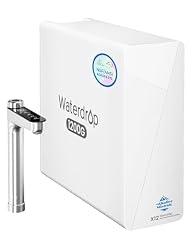
X12 1200 GPD Tankless RO System
Overview
This is a powered, tankless under-sink reverse-osmosis system for a dedicated faucet. It is designed for municipal tap water, measures 18.2 by 6.25 by 16.72 inches, and requires a grounded electrical outlet. Waterdrop states a 1,200-gallon-per-day production rating, 3:1 purified-water-to-drain ratio, 11 filtration stages, on-demand UV function, and alkaline-mineral finishing filter. The strongest independently documented point is an IAPMO R&T certificate that names this exact product and its X12-F3 replacement component for TDS reduction. Waterdrop's performance sheet reports laboratory results for several additional contaminants, including lead, nitrate, fluoride, PFOA, and PFOS, but the accessible IAPMO certificate lists only TDS as the reduction claim for this model. Its alkaline pH target of 7.5 and asserted health or bone benefits are manufacturer claims, not established health outcomes.
What works
- An IAPMO R&T certificate names the exact product with its specified membrane filter for TDS reduction.
- The tankless design avoids a stored-water reservoir, and the manual provides first-use flushing, automatic flushing, filter-life alerts, and replacement instructions.
- The replacement schedule is reasonably transparent. Waterdrop states six months for F2, 12 months for F1A, and 24 months for the X12-F3 membrane filter.
- The exact product is represented as certified to NSF/ANSI 372 low-lead requirements by IAPMO R&T.
What does not
- The accessible independent certificate identifies TDS reduction only. It does not independently confirm the product's advertised reductions for lead, fluoride, nitrate, PFAS, arsenic, or other contaminants.
- Waterdrop's health-oriented alkaline-water language goes beyond the human evidence. A pH target and added minerals do not establish better health or stronger bones.
- The UV function has an indicator, but no NSF/ANSI 55, NSF P231, or NSF/ANSI 244 microbiological certification was located for this product.
- It is limited to municipal water within stated conditions, including 14.5 to 87 psi, 41 to 100 F, less than 750 ppm TDS, less than 7 grains per gallon hardness, and low turbidity. Untreated well water needs prefiltration.
- The system uses proprietary disposable cartridges and a powered faucet, so replacement waste and electrical dependence remain practical drawbacks.
Who is it for
This product fits a household using treated municipal water that wants high on-demand output from a dedicated drinking-water faucet and has room for a 38-pound powered unit under the sink. It is most appropriate where the local water report or a recent laboratory result shows a concern that is within the product's documented operating limits, especially where lower dissolved solids and improved chlorine taste are the practical goals. The user should be prepared to follow the stated cartridge schedule, confirm fittings are dry after installation, and keep a grounded outlet available.
Who is it not for
It is not suited to a buyer relying on untreated private-well water, water above the stated TDS, hardness, turbidity, temperature, or pressure limits, or a household that has not identified its source-water concern. People specifically addressing lead, arsenic, nitrate, fluoride, or PFAS should not treat the broad marketing list as equivalent to exact-model certification for each contaminant. It is also a poor fit where there is no under-sink outlet, where a nonpowered system is required, or where cartridge disposal and recurring proprietary replacements are unacceptable.
Integrity
The important certification finding is narrower than the marketing. An IAPMO R&T certificate names this exact system and its X12-F3 filter for TDS reduction, and Waterdrop represents the product as certified to NSF/ANSI 372 for low lead. The manufacturer performance sheet also reports strong laboratory reductions for metals, nitrate, fluoride, PFOA, and PFOS, but those individual claims were not matched to a public exact-model certification entry. The product is intended for municipal water, not untreated well water without prefiltration. The alkaline-mineral stage can raise pH and dissolved solids after reverse osmosis. That may change taste, but broad wellness and bone-strength language is not supported by robust human evidence. Tankless construction avoids a holding tank, while automatic flushing and change reminders can support hygiene if followed. Waterdrop states a 3:1 purified-water-to-drain ratio, but no WaterSense listing or independently verified efficiency rating was found. The six, 12, and 24-month cartridge schedule also creates ongoing plastic-cartridge waste.

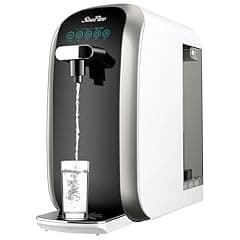
SimPure Y7P-BW UV Countertop Reverse Osmosis Water Filter
Overview
This countertop, plug-in reverse-osmosis dispenser uses a removable feed-water tank rather than a plumbing connection. SimPure lists a 5-stage design, two preinstalled replacement cartridges, a 4:1 pure-to-drain ratio, a feed-water TDS limit below 500 ppm, and about 8.8 ounces per minute dispensing. The system has a 0.45-gallon internal purified-water reservoir, so it is not an instant-flow unit. An SGS report on a SimPure Y7/Y7P sample documented strong start-of-life reductions for lead, arsenic, fluoride, nitrate, PFOA, PFOS, and other tested contaminants. That is useful independent testing, but it is not the same as certification. NSF's current public listing returns no matching SimPure product under NSF/ANSI 58, despite the product being advertised as NSF/ANSI 58 certified.
What works
- An independent SGS report found high start-of-life reductions for lead, arsenic, fluoride, nitrate, PFOA, and PFOS in a Y7/Y7P sample.
- The no-plumbing format can suit renters or kitchens where under-sink installation is impractical.
- The manufacturer provides filter-change and low-water alerts, a manual flush function, and instructions to drain tanks before storage longer than one week.
- Official replacement kits are listed for this system, with both composite and RO cartridges changed on a six-month schedule.
What does not
- The advertised NSF/ANSI 58 certification could not be confirmed. NSF's current official listing shows no matching SimPure product under that standard.
- The SGS report is limited to a tested Y7/Y7P sample and start-of-life challenge testing. It does not establish certified performance throughout cartridge life.
- The UV feature is not supported by an NSF/ANSI 55, NSF P231, or NSF/ANSI 244 certification found in this review.
- No independent public listing was found for the complete product's electrical safety, structural integrity, or water-contact material compliance.
- Two proprietary cartridges are replaced every six months, creating recurring plastic and filter-media waste.
Who is it for
This product fits a renter, apartment resident, office user, or small household that has municipally supplied tap water, no documented microbial emergency, and limited ability to alter plumbing. It is most practical for someone who can fill a feed tank, keep the unit near a grounded outlet, clean and descale it as directed, and reliably replace both cartridges every six months. The independent start-of-life contaminant testing is most relevant when lead, arsenic, nitrate, fluoride, PFOA, or PFOS are documented concerns in the incoming water.
Who is it not for
It is not appropriate as a substitute for testing a private well or responding to a boil-water notice, suspected sewage contamination, or a confirmed microbial hazard. The UV feature lacks the independent microbiological certification needed to treat it as a verified purifier. It also does not suit households needing a certified NSF-listed system, those unable to keep a reservoir and feed tank clean, or users with feed water above the stated 500 ppm TDS limit. People who need continuous high-volume dispensing may find the internal reservoir limiting.
Integrity
The strongest health evidence is an SGS challenge report for a SimPure Y7/Y7P sample. At the start of operating life, it reported substantial reductions for several relevant dissolved contaminants, including lead, arsenic, fluoride, nitrate, PFOA, and PFOS. The report does not replace a current third-party product certification, and NSF's official NSF/ANSI 58 listing shows no matching SimPure product. The product's BPA-free food-grade plastic statement is manufacturer-stated, not independently confirmed for all water-contact parts. SimPure states a 4:1 pure-to-drain ratio, which could reduce RO wastewater if achieved in routine use, but no independent efficiency listing was found. The unit avoids bottled-water purchases in some use patterns, while still requiring two proprietary cartridges every six months. Separately, EPA denied entry in February 2025 to a shipment of a different SimPure T1 product over device-reporting requirements tied to antimicrobial claims. That action did not name this countertop product.

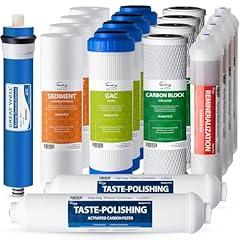
iSpring F19K75 2-Year Replacement Set
Overview
This is a 19-piece, two-year replacement supply for compatible six-stage under-sink reverse-osmosis systems, not a complete water-treatment appliance. It includes four sediment, four granular-carbon, four carbon-block, two post-carbon, and four alkaline cartridges, plus one 75 GPD membrane. iSpring states that it fits its compatible alkaline RO systems and other standard 10 by 2.5 inch housing systems. Its instructions call for shutting off feed and tank valves, correctly seating O-rings, and periodically checking treated water with a TDS meter. Independent confirmation is configuration-limited. NSF lists the same FP15, FG15, FC15, MC7, FT15 and FA15 module set in certain complete iSpring systems, with certified reduction claims for asbestos, barium, cadmium, trivalent chromium, copper, fluoride, lead, selenium and TDS. The filter pack itself is not separately listed. An older listed configuration without the alkaline module is certified only for TDS reduction, so results depend on the exact installed system and source water.
What works
- The package supplies the sediment, carbon, membrane, post-carbon, and alkaline stages needed for a two-year maintenance schedule.
- The included module set matches modules in NSF-listed complete iSpring configurations with verified reductions for several contaminants, when installed in those exact configurations.
- The replacement instructions address depressurizing the system, O-ring placement, membrane handling, and periodic TDS monitoring.
- Standard 10 by 2.5 inch prefilter housings and individually replaceable components can support repair instead of replacing an entire system.
What does not
- The product itself is not independently listed as a certified replacement pack. NSF certification applies to complete, specified system configurations.
- The broad contaminant-removal language exceeds what the older NSF-listed alkaline system configuration independently confirms, which is TDS reduction only.
- It provides no UV stage or independently verified microbiological purification claim. Tank cleaning and hygiene remain the responsibility of the installed system owner.
- No verified recovery ratio, drain-water ratio, or WaterSense label was located. Reverse osmosis can create substantial reject water.
- Nineteen disposable cartridges and a membrane create a meaningful material-waste burden over the stated supply period.
Who is it for
This product suits an owner of a compatible, conventional six-stage under-sink iSpring RO system who wants to keep the manufacturer’s staged replacement schedule on hand. It is most appropriate where the household has reviewed its utility report or a current well-water laboratory result, confirms that feed water remains within the system limits, and can perform careful cartridge changes. It is especially practical for users prepared to monitor TDS, replace prefilters on time, and retain the complete system configuration that matches the independently listed module set.
Who is it not for
It is not suited to someone seeking a standalone water filter, a microbiological purifier, or proof that every advertised contaminant claim applies to any compatible housing. Private-well households with iron, manganese, hydrogen sulfide, high turbidity, excessive hardness, or water outside the stated pressure, TDS, pH, temperature, and chlorine limits need water testing and possibly pretreatment first. It also does not fit households that cannot manage periodic sanitation, leak checks, and filter changes, or those prioritizing verified low wastewater operation.
Integrity
The important health distinction is between the replacement pack and a complete installed system. NSF independently lists the pack’s module combination in certain complete iSpring configurations, including certified reductions for lead, fluoride, asbestos, several metals, and TDS. That is useful evidence for those exact configurations, but it does not independently certify this replacement bundle on its own or prove the same results in every compatible system. The alkaline stage adds calcium and magnesium according to the manufacturer, but the stated mineral addition does not establish a distinct health benefit. The manual gives concrete maintenance steps, including depressurizing before service, keeping O-rings seated, avoiding bare-hand contact with the membrane, and periodically checking TDS. It does not add UV treatment or an independently verified microbial-purification claim. No product-specific recall, regulatory action, or Proposition 65 warning was identified in the sources reviewed. Environmentally, reusable housings help avoid replacing the full appliance, but the pack still uses 19 disposable filter cartridges and RO wastewater performance was not independently documented.
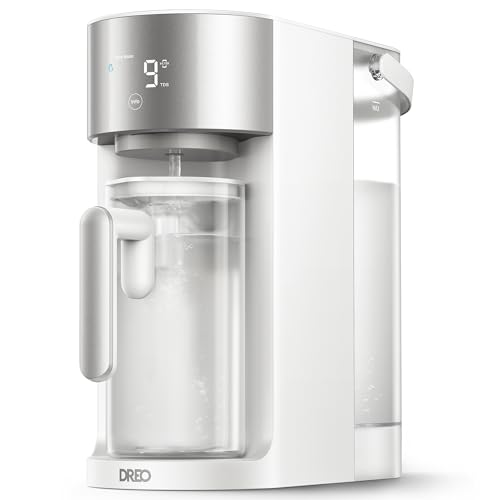
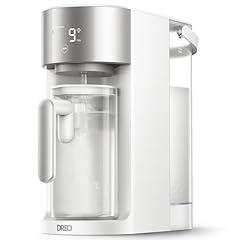
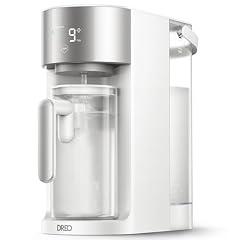
DREO Reverse Osmosis Countertop Water Filter System
Overview
This is a plug-in countertop reverse-osmosis water filter for tap water. It has a 3 L raw-water tank and a 1.1 L autofill pitcher, measures about 14.5 by 6.7 by 13.4 inches, and uses one twist-in RO composite cartridge. It does not need a water-line connection, so purified water is made in batches rather than supplied continuously. DREO states that the unit uses seven filtration layers, provides a 3:1 pure-water-to-drain ratio, shows incoming and purified-water TDS, reminds users about filter life, and self-flushes. Its manual provides concrete upkeep instructions, including four-tank flushing before first use or after a filter change and weekly washing of the tank and pitcher. DREO also describes SGS testing and compliance with NSF/ANSI 58, but an exact-model certification listing and public performance data sheet were not independently confirmed in the major U.S. certification registries checked.
What works
- Compact, installation-free format is practical for renters, offices, and small counters.
- The manufacturer provides explicit use limits, including tap water only, 40 F to 100 F water, and caution that very hard water or TDS above 1,000 can clog the filter.
- The manual gives meaningful hygiene instructions, including weekly washing of the tank and pitcher, four-tank flushing after long nonuse, and descaling every three months.
- Replacement cartridges, tank, pitcher, and descaling-kit parts are sold through the manufacturer, which supports continued maintenance.
- A filter-life display and replacement instructions reduce some guesswork around routine cartridge changes.
What does not
- The exact product and replacement cartridge were not independently confirmed in NSF, IAPMO R&T, or WQA public certification listings, so contaminant reductions and water-contact-material safety are not independently established for this configuration.
- The broad 99.99% contaminant-removal language is not paired with a public, exact-model reduction table showing test conditions and results for each named contaminant. The manufacturer footnote ties 99.99% to E. coli, which does not substantiate every broader contaminant claim.
- This is not documented as a UV system or microbiological water purifier. Its stored tank and pitcher require regular manual cleaning, so hygiene depends materially on the user following the schedule.
- A 3 L source tank and 1.1 L pitcher suit batch use, not high-volume or continuous household demand.
- The manufacturer says hard water and source water over 1,000 TDS can clog the filter, which makes it a poor fit for some private wells and very mineral-rich supplies without first checking the water.
Who is it for
This product suits one or two people, renters, and small offices that use municipally supplied tap water, have limited counter space, and want a plug-in RO format without plumbing work. It is most appropriate when a local Consumer Confidence Report or a recent water test identifies a concern that is compatible with the product's stated treatment scope, and when the user is willing to wash the reservoir and pitcher weekly, descale periodically, flush after nonuse, and budget for a proprietary replacement cartridge. The 3 L tank is best suited to modest daily drinking and cooking use.
Who is it not for
It is not a good safety-first choice for households responding to a documented lead, arsenic, nitrate, PFAS, or microbial problem unless they obtain exact-model third-party performance evidence for that contaminant and verify source-water compatibility. It is also a poor fit for untreated, visibly dirty, sediment-heavy water, very hard water, or water above 1,000 TDS, which the manufacturer says can obstruct the filter. Large families, frequent entertainers, and anyone unable to maintain weekly cleaning should avoid relying on its small stored-water system.
Integrity
The practical health feature is not a sterilization claim but a maintenance routine. The manual calls for flushing four tanks at startup, after a cartridge replacement, and after extended nonuse. It also calls for weekly tank and pitcher cleaning and periodic descaling. Those steps matter because the system stores water in a tank and pitcher, and no independently verified UV or microbiological-purifier certification was identified for this product. DREO states that the cartridge has a 265-gallon capacity and that the system achieves a 3:1 pure-water-to-drain ratio. Those figures can reduce cartridge frequency and RO reject water if achieved in normal use, but they remain manufacturer-stated because a public exact-model performance sheet or WaterSense listing was not located. Replacement cartridges and several service parts are available, including the pitcher, tank, and descaling kit. The cartridge is nevertheless a proprietary disposable composite unit, so it creates ongoing material waste. The manufacturer claims SGS testing and NSF/ANSI 58 compliance, but a current exact-product listing in a major U.S. certifier registry was not independently confirmed.

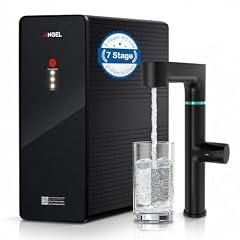
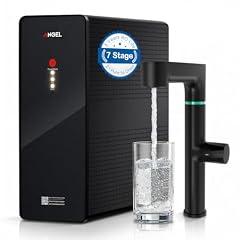
ANGEL X1 Pro Reverse Osmosis Water Filter
Overview
This is a compact under-sink reverse-osmosis product with a separate faucet and storage tank. Published retail specifications identify a 14.25 by 5.04 by 12.99 inch unit, 0.5 gallon-per-minute maximum flow, 39 to 104 F operating range, and a stated feed-water limit of 1,000 ppm TDS. It is intended to improve the taste and dissolved-solids profile of treated cold water at one sink. The product is marketed as a seven-stage system that reduces PFAS or PFOS, chlorine, TDS, taste and odor, with a claimed 2:1 purified-water-to-drain-water ratio. Those are manufacturer-stated claims, not independently confirmed performance results for this exact product. A current NSF listing for the manufacturer covers one membrane component's material and lead-content evaluation only, rather than this complete product or its advertised contaminant reductions.
What works
- Compact under-sink format with a dedicated faucet and storage tank.
- Manufacturer-stated filter-change indicator can help prompt routine service.
- Manufacturer states the RO membrane can last 24 to 36 months, which could reduce service frequency.
- The stated 2:1 purified-water-to-drain-water ratio is relatively water-conscious if achieved under household conditions.
What does not
- No current NSF, IAPMO, or WQA certification listing was located for this exact complete product.
- PFAS or PFOS, lead, and other reduction claims lack an accessible product-specific performance sheet or test report with methods and reduction figures.
- The available NSF record for the manufacturer applies to a membrane component's material requirements only, not whole-system treatment performance.
- No accessible US installation manual was located to confirm sanitation, idle-period flushing, leak response, replacement part numbers, or warranty limits.
Who is it for
This product suits a household on municipally treated cold water that wants an under-sink RO format with a tank, separate faucet, change reminder, and a small published footprint. It is most appropriate where the buyer first checks the local water utility report or a properly collected water test, then treats the product's stated TDS limit, temperature range, and pressure range as installation constraints. The buyer should also be comfortable confirming replacement-filter availability before installation.
Who is it not for
It is not well suited to a household choosing treatment for a documented contaminant such as lead, arsenic, nitrate, fluoride, or PFAS when product-specific certified reduction is required. Private-well users, homes with microbial concerns, and households with uncertain water pressure need water testing and a system with clear sanitation and performance documentation. It also does not fit installations exposed to hot water, water below 39 F, water above 104 F, or feed water above the stated 1,000 ppm TDS limit.
Integrity
The central health limitation is evidence scope. The product advertises reductions for PFAS or PFOS, TDS, chlorine, taste and odor, but accessible materials do not provide a product-specific performance data sheet with contaminant-by-contaminant results, test conditions, or certification. The current NSF record found for Shenzhen Angel identifies a membrane component that meets material requirements and lead-content requirements. It does not certify this complete product, its faucet, tank, filters, structural integrity, or advertised contaminant reductions. Published product information describes plastic construction, a filter-change indicator, RO membrane life of 24 to 36 months, and a 2:1 purified-to-drain ratio. These could reduce routine cartridge use and wastewater if substantiated in the installed configuration. However, the exact replacement filters, sanitation process, and end-of-life handling are not clearly documented in accessible US materials. No product-specific US recall or regulatory warning was located in the searched sources.

NU Aqua 5-Stage Reverse Osmosis Water Filter System
Overview
This is a plumbed under-sink, five-stage reverse-osmosis drinking-water system. It uses three replaceable prefilters, a 100-gallon-per-day membrane, an inline coconut-shell carbon postfilter, a dedicated faucet, and a pressurized storage tank. The standard configuration does not include the optional UV or alkaline stages. The manufacturer specifies 45 to 80 PSI feed pressure, 40 to 100 F incoming water, and a maximum feed-water TDS of 1,000 ppm. It also says the system must not be used on microbiologically unsafe or unknown-quality water without adequate disinfection. An NSF official listing identifies the exact product under NSF/ANSI/CAN 61 for water-contact materials. However, the product was not found in NSF's reverse-osmosis system listing under NSF/ANSI 58, so its stated reductions of lead, fluoride, arsenic, and other contaminants are not independently confirmed here.
What works
- The exact product appears in NSF's official NSF/ANSI/CAN 61 listing for drinking-water component health effects.
- The manual provides concrete operating limits, including 45 to 80 PSI for this non-pump version and a 40 to 100 F inlet-water range.
- It includes a leak-stop valve, and the manual requires it to be installed, checked after pressurization, and monitored after maintenance.
- Maintenance instructions are unusually detailed, covering flushes, annual sanitation, filter replacement, extended non-use, O-rings, tubing, fittings, and faucet replacement.
- The system uses separate standard-style housings and a separately replaceable membrane, rather than a sealed disposable appliance.
What does not
- The manufacturer claims reduction of lead, fluoride, arsenic, radium, chromium, and other contaminants, but no current independent NSF/ANSI 58, IAPMO, or WQA listing was found for the complete product and those exact reduction claims.
- The NSF listing supports water-contact material health effects, not complete reverse-osmosis performance, structural integrity, or the contaminant claims in the manual.
- The product has a storage tank and no UV stage in this configuration. Hygiene depends on the owner following flushing, annual sanitation, and non-use instructions.
- No verified recovery rating or purified-water-to-drain-water ratio was found, so its wastewater burden cannot be quantified.
- The manual directs users to use the brand's replacement filters and requires substantial periodic part replacement, creating ongoing cartridge and plastic waste.
Who is it for
This product suits a household on treated municipal water that wants a conventional under-sink reverse-osmosis layout with a separate faucet and storage tank. It is most appropriate where incoming cold-water pressure is reliably within 45 to 80 PSI, there is cabinet space for the tank and housings, and the owner can install a drain saddle and check fittings. It also suits a hands-on user willing to track six to nine month prefilter changes, membrane service, flushing, and annual sanitation rather than relying on automatic filter-life alerts.
Who is it not for
It is not suited to a private well or other source with microbiologically unsafe or unknown water unless adequate disinfection is selected and verified for that water source. It is also unsuitable where pressure is below 45 PSI without adding a pump, above 80 PSI without a regulator, or where water hammer or freezing conditions are likely. Buyers needing independently certified reduction of a specific contaminant, such as lead, arsenic, fluoride, nitrate, or PFAS, should use a product with an exact current certification and claim matched to their local water report.
Integrity
The strongest independently confirmed health point is the NSF/ANSI/CAN 61 listing for the exact product, which addresses health effects from listed water-contact components. That does not establish whole-system contaminant reduction. The manufacturer specifies that microbiologically unsafe or unknown water requires adequate disinfection, an important limitation because this standard five-stage version has a storage tank but no UV treatment. Its manual gives useful sanitation, flushing, and extended non-use directions, including annual sanitation and drying filters during longer shutdowns. The manufacturer claims broad reductions for metals and dissolved contaminants, but an exact complete-system certification for those claims was not located in the NSF reverse-osmosis directory. Ecologically, the separate housings, membrane, tubing, and fittings can be serviced individually, but the product requires recurring disposable filters and eventually tubing, fittings, O-rings, and a faucet. No independently verified recovery or reject-water ratio was located, so water efficiency remains unquantified.
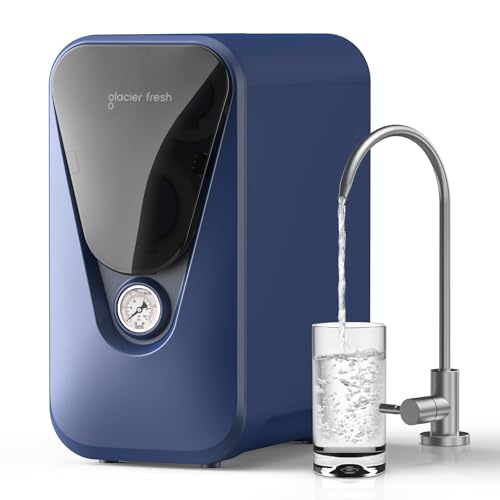
Glacier Fresh GFU03 Reverse Osmosis System
Overview
The GLACIER FRESH U03 Classic is an under-sink reverse-osmosis drinking-water system for a dedicated single-outlet faucet. It uses composite carbon, RO membrane, and granular carbon cartridges, requires a cold municipal-water supply, a drain connection, and countertop drilling if no faucet hole is available. The manufacturer lists a 0.6 GPM rated flow, 0.25 to 0.7 MPa inlet pressure, 41 to 100 F feed-water range, and no electrical requirement. The company claims NSF 42, 53, 58, 401, and 372 certification, plus reductions for PFAS, lead, arsenic, fluoride, microbes, and more. Independent registry searches did not confirm this exact product in NSF, IAPMO, or WQA directories. Its own materials also conflict on whether it is a five-stage or seven-stage system, while describing an internal tank alongside tankless marketing. Those issues limit confidence in the scope of its advertised performance.
What works
- The installation manual gives concrete cold-water-only, pressure, temperature, drain-saddle, leak-check, and initial flushing instructions.
- The manufacturer sells the RO cartridge and combined PPC plus carbon replacement cartridge separately.
- The manual directs owners to replace expired prefilters, monitor TDS, and flush after cartridge replacement.
- No-electric operation is a stated design feature, avoiding a powered pump and allowing operation during outages when incoming pressure is adequate.
What does not
- Exact-product certification for the advertised NSF standards and contaminant reductions was not independently confirmed in the NSF, IAPMO, or WQA product registries.
- Claims extend to bacteria and viruses, but there is no independently confirmed UV or microbiological purifier certification for this product.
- The manufacturer describes the product as both five-stage and seven-stage, and as tankless with a tank inside. These inconsistencies make the design and claim scope harder to evaluate.
- The stated 3:1 pure-to-drain ratio is not backed by a verified WaterSense label, NSF efficiency rating, or published exact-product performance sheet.
Who is it for
This product suits a municipal-water household that wants a compact, dedicated drinking-water faucet and has sufficient cold-water pressure within the stated 0.25 to 0.7 MPa range. It is most appropriate for a buyer comfortable drilling a countertop and drain pipe, performing initial flushing, watching water quality with a TDS meter, and replacing cartridges on schedule. It can fit a kitchen where an unpowered RO setup is useful and where the purchaser treats the advertised contaminant reductions as manufacturer claims rather than independently verified guarantees.
Who is it not for
It is not a strong fit for a household responding to a documented lead, arsenic, nitrate, PFAS, or microbial problem that needs an independently certified reduction claim for that specific contaminant. Private-well users should first obtain a certified laboratory water test and confirm that source-water conditions fit the system. It is also unsuitable where inlet pressure is below the stated minimum, where countertop or drain drilling is not possible, or where owners cannot reliably replace prefilters and membrane cartridges. Do not use it as an emergency microbiological treatment device.
Integrity
Reverse osmosis is a credible treatment mechanism for many dissolved contaminants when the unit is correctly selected, installed, and maintained. EPA notes that RO performance depends on source-water and operating conditions, and that membranes and filters need regular replacement. This product's manual provides useful installation limits, startup flushing, leak checks, and a warning that an exhausted prefilter can damage the membrane. The product's advertised contaminant list is much broader than its independently confirmed evidence. The manufacturer claims multiple NSF standards and broad reductions, including PFAS and microbes, but no exact-product listing was confirmed in the major US certification registries checked. Material safety, structural integrity, and lead-content compliance therefore remain unverified for the complete installed configuration. Its claimed 3:1 pure-to-drain ratio could reduce wastewater compared with conventional RO, but it is manufacturer-stated rather than WaterSense or independently verified. Replaceable cartridges support maintenance, but also create recurring plastic filter waste.