
10 Best Red Light Masks
 Lauren Wilson
Please note that we participate in affiliate marketing programs. When you purchase through links on our site, we may earn a commission. As an Amazon Associate we earn from qualifying purchases. This comes at no additional cost to you and helps support the resources required to provide valuable content.Advertising Disclosure
Top-rated Red Light Mask Comparison
1
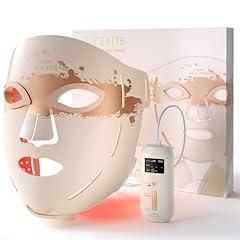

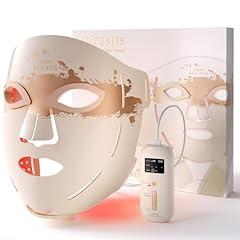
2
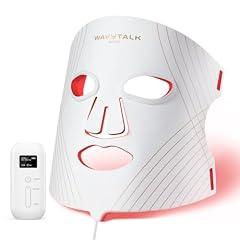
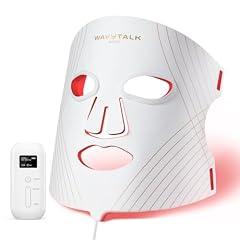
4
5
6
7
8
9
Red light masks: what matters
Red light masks use visible red, blue, amber, and near-infrared light to expose facial skin during timed home sessions. The intended uses in this category include gradual improvement in the appearance of wrinkles and treatment of mild-to-moderate inflammatory acne. Results depend less on the number of LEDs or color names than on whether the product delivers the right wavelength, dose, treatment schedule, and facial coverage consistently.
A substantiated product should identify its actual model, legal manufacturer, wavelength bands, irradiance at the skin-facing distance, session duration, treatment frequency, and resulting fluence. Fluence is the amount of light energy delivered during a session, expressed in J/cm²; it is calculated from irradiance and time. A product that states only “high power,” “medical grade,” “hundreds of LEDs,” or a headline figure such as 70, 100, or 120 mW/cm² has not necessarily shown how much light reaches the skin in each mode. The supplied reviews repeatedly found conflicts between retail power claims and FDA-listed values, as well as disagreements about LED counts, batteries, wavelengths, and treatment modes.
Look for model-specific evidence rather than evidence about the technology generally. The strongest regulatory signal is an FDA 510(k) record that matches the same brand, legal manufacturer, model, wavelengths, configuration, and intended use. “FDA registered,” “FDA certified,” or “FDA-cleared technology” is not enough when the product itself cannot be matched to the record. FDA clearance also does not mean that the exact product produced a clinical trial result; several supplied clearances relied on nonclinical testing or substantial equivalence.
For optical performance, the most useful evidence is a current report from an ISO/IEC 17025-accredited laboratory using a recognized method such as CIE S 025 or IES LM-79. It should identify the tested model, treatment mode, distance, wavelength spectrum, irradiance, fluence, and coverage uniformity. A controlled human study is relevant only when its wavelengths, dose, schedule, and home-use design are comparable. Category-level evidence cannot prove that a particular mask works at its advertised output.
Safety documentation should include IEC 62471 photobiological testing and a risk classification, built-in eye shielding or other credible eye protection, and clear limits on session length and frequency. Charging and battery claims should be supported by finished-product electrical testing, a recognized UL or ETL listing where available, and an IEC 62133-2 or UN 38.3 record for the relevant battery configuration. Skin-contact materials should be identified and supported by applicable ISO 10993 testing, not simply described as “medical grade” or “hypoallergenic.”
Across the supplied products, recurring cautions include photosensitivity disorders, photosensitizing medicines or topical products, light-triggered seizures or migraines, eye disease, recent eye surgery, pregnancy or breastfeeding, active infection, broken or irritated skin, suspicious lesions, cancer at the treatment site, and severe or rapidly worsening acne. Users should follow the product’s specific instructions, use eye protection as directed, and stop for burning, swelling, rash, unusual heat, visual symptoms, or persistent irritation. Rechargeable masks should not be discarded in household trash; use an appropriate battery or electronics recycling route.
Integrity
These topics distinguish a plausible light routine from a product whose output, safety controls, materials, and accountability are documented for the exact device. Scores reflect the supplied reviews; they are comparative signals, not proof that a product is safe or effective.
HHealth & Safety
Evidence for the promised skin result
This measures whether human studies support the mask’s acne or wrinkle promise using comparable wavelengths, dose, schedule, and home-use design. A high score reflects realistic alignment between the claim and evidence; the strongest supplied scores belonged to products with model-matched indications or wavelengths and schedules close to controlled studies. Lower scores reflected category-level evidence, unavailable protocols, or broad claims not tested on the product.
Measured light dose and even coverage
This asks whether the actual mask delivers its stated wavelengths, irradiance, session fluence, and reasonably even facial coverage at the skin. It matters because LED count and advertised power do not establish dose. Higher-scoring products had FDA-documented model-specific output or clearer performance specifications; lower-scoring products relied on seller figures, lacked spectral-radiometric reports, or had conflicts between retail and regulatory measurements.
Eye and light-exposure safety
This measures protection from blue-light, retinal, thermal, and glare hazards during ordinary use. Eye shields, automatic dimming, use limits, and IEC 62471 testing strengthen a score. The supplied products scored higher when FDA documentation recorded eye protection and photobiological testing. Lower scores reflected basic eye padding or warnings without an exact-model risk assessment, classification, or credible evidence about exposure near the eyes.
Charging and battery safety
This covers protection against shock, overheating, fire, battery failure, and unsafe charging for the finished mask, charger, and battery configuration. Higher scores were associated with FDA-recorded IEC 62133-2 or electrical testing and clearer configuration matching. Lower scores reflected no UL or ETL listing, no battery test summary, or no independent certification for the supplied rechargeable system.
Clear warnings and safe-use instructions
This measures whether instructions identify photosensitivity, medicines, eye limits, treatment duration, charging limits, and when to seek clinical advice. High-scoring products supplied specific schedules, warnings, eye guidance, and stop-use instructions. Lower-scoring products offered only brief warnings or omitted medication, pregnancy, eye-condition, skin-condition, and clinical-advice guidance. This matters because light exposure can be inappropriate for several recurring risk groups.
Skin-contact material safety and hygiene
This assesses whether face-contacting materials are disclosed, skin-safe, cleanable, and durable. Higher scores reflected identified silicone, ABS, or related materials plus FDA-filed ISO 10993 cytotoxicity, irritation, or sensitization testing. Lower scores reflected “medical-grade” or “skin-friendly” language without a material declaration, biocompatibility evidence, cleaning protocol, or durability information for the exact mask.
EEcology
Battery, repair, and end-of-life impact
This measures avoidable waste from rechargeable masks, including battery replacement, charger recycling, repair, take-back, packaging, and certified recycled content. Scores were generally limited because most products had non-user-replaceable batteries and no named take-back or recycling partner. A higher relative score came from a corded design that avoids battery aging, or documentation suggesting a replaceable controller battery; neither automatically provides a complete end-of-life solution.
EEvidence
Honest claims and honest certification language
This measures whether advertising separates cosmetic aspiration from supported treatment claims and uses “FDA-cleared” only for the exact cleared model. Higher scores reflected narrower claims and better alignment with regulatory records. Lower scores reflected “FDA approved” or “certified” wording, unsupported collagen or rapid-result claims, or marketing for modes and conditions absent from the documented clearance.
Verifiable U.S. device status
This checks whether the brand, legal manufacturer, model, wavelengths, configuration, and intended use match an FDA 510(k) record. It matters because a clearance for a related family or different manufacturer does not establish the status of the retail product. High-scoring products had exact model matches; low-scoring products relied on vague clearance language or conflicting configurations.
Independent proof, not seller assertions
This measures whether important safety, performance, material, and sustainability claims have current, model-specific reports from identifiable independent bodies. Strong evidence names the laboratory, method, date, tested configuration, and result. Higher-scoring products had more model-specific regulatory or test documentation; lower-scoring products cited unnamed studies, inaccessible reports, seller claims, or standards without the underlying certificate or laboratory result.
Traceability, recalls, and accountability
This measures whether buyers can identify the legal manufacturer, model, lot or serial number, support contact, warranty, and relevant corrective action. Higher scores reflected clearer manufacturer and model records, warranty or support channels, and no unresolved relevant recall pattern. Lower scores reflected thin seller trails, missing customer contacts, uncertain configurations, or limited postmarket information. No recall record alone is not proof of safety.
Full reviews
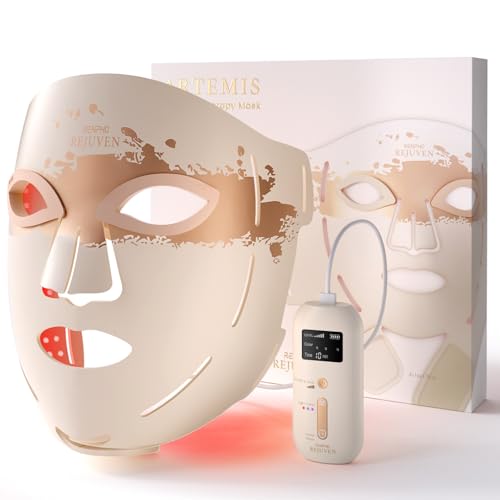
RENPHO 2026 Red Light Therapy Mask
Overview
This is a soft silicone, face-worn LED mask with a separate rechargeable controller, adjustable strap, eye cups, and red, blue, and near-infrared modes. The linked instructions specify 630 nm red, 415 nm blue, and 850 nm near-infrared light, five brightness levels, and a usual schedule of 10 minutes, three to four times weekly. The FDA-cleared E100B platform is indicated for full-face wrinkles with red plus infrared light, and mild-to-moderate inflammatory acne with blue or mixed light. The strongest evidence is regulatory rather than a published trial of this RENPHO-branded unit. FDA's clearance record identifies E100B among the cleared models and records model-specific irradiance ranges of 6 to 8 mW/cm² for red plus near-infrared, 2 to 4 mW/cm² for blue, and 9 to 12 mW/cm² for mixed mode. However, public documents conflict on LED count, with one manual stating 108 and retail materials stating 324.
What works
- The E100B platform can be matched to an FDA clearance with wrinkle and mild-to-moderate inflammatory-acne indications.
- FDA's public summary records the relevant wavelengths, treatment timing, irradiance ranges, and model family rather than relying only on LED count.
- The cleared platform was assessed against IEC 62471 photobiological safety requirements and includes fitted eye cups.
- FDA-filed information describes silica-gel face contact material and biocompatibility testing for cytotoxicity, sensitization, and skin irritation.
- The manual gives concrete setup, cleaning, storage, charging, contraindication, and one-year warranty instructions.
What does not
- No public ISO/IEC 17025 laboratory report was found that maps irradiance or light uniformity across this exact retail configuration.
- The accessible product documents conflict on an important specification, reporting either 108 or 324 LEDs for E100B. LED count alone does not establish delivered dose.
- The public instructions cite electrical and battery standards, but no UL or ETL listing for the finished consumer product and supplied charging configuration was verified.
- The battery is not user-replaceable. The manual directs local e-waste recycling, but no manufacturer take-back program or repair pathway beyond return-to-manufacturer service was found.
- The product is not appropriate for every user, with listed exclusions for pregnancy, photosensitivity, light-triggered seizures, certain eye conditions, and several medical conditions.
Who is it for
This product suits an adult seeking a hands-free home light treatment for mild-to-moderate inflammatory acne or the appearance of full-face wrinkles, who can follow a measured schedule rather than expect an immediate cosmetic change. It is most suitable for someone comfortable with a separate rechargeable controller, fitted eye cups, and cleaning the silicone contact surface after use. The evidence is strongest for the cleared treatment indications and reported output range, not for the retail claim of a particular LED count or perfectly even facial coverage.
Who is it not for
It is not for children or teens, pregnant or breastfeeding people, or anyone trying to conceive, because the instructions specifically exclude these groups. Avoid it if you have a photosensitive disorder, inherited eye condition, light-triggered seizures, a silicone or plastic contact allergy, open or bleeding facial wounds, or a tumor in the treatment area. People taking photosensitizing medicines, those with heart concerns, or anyone needing treatment for severe acne should first seek clinician guidance rather than self-treat with this mask.
Integrity
The useful safety documentation is unusually specific for this product class. FDA's record for the E100B platform says it underwent nonclinical evaluation to electrical safety, home-use, electromagnetic-compatibility, therapeutic-light, photobiological-safety, and lithium-battery standards. It also records biocompatibility evaluation for the skin-contacting mask. The supplied instructions require eye cups, prohibit direct viewing of the LEDs, advise starting at the lowest intensity, and list substantial contraindications. These safeguards matter especially because blue light can be uncomfortable or irritating for some users. The face-contacting section is described as silica gel, with alcohol-wipe cleaning instructions. The controller contains a lithium-ion battery that users are told not to replace. The product has a one-year warranty and directs owners to local e-waste and lithium-battery recycling rules. No verified manufacturer take-back program, replacement battery program, recycled-content certification, or independent sustainability certification was found. No relevant FDA or CPSC recall was identified in the checks performed.
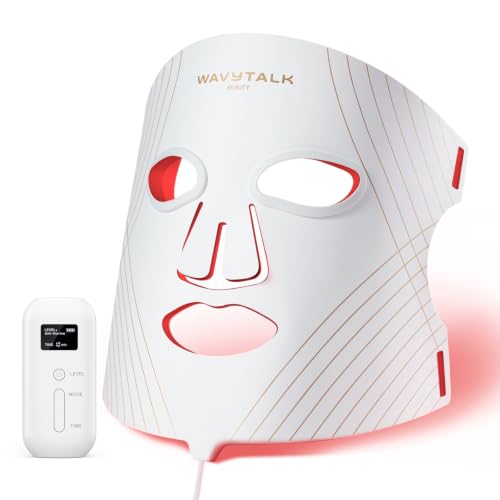
Wavytalk LED Face Therapy Mask
Overview
This is a flexible, rechargeable facial LED mask with a separate controller, straps, eye pads, a storage bag, and three advertised light modes. The brand states 456 LEDs, 630 nm red plus 850 nm near-infrared for fine lines, 415 nm blue plus 630 nm red for acne, and 590 nm amber for dullness. It states a 10-minute automatic session, up to 90 minutes of runtime, and a four-hour charge. An FDA clearance record does name this mask model among a group cleared for full-face wrinkles and mild to moderate inflammatory acne. That submission reports testing to electrical, battery, photobiological, usability, and skin-contact standards. However, its documented mixed-light configuration uses 415 nm, 630 nm, and 850 nm, not the retail product's separate 590 nm amber mode. The brand's 28-day results are based on a stated Intertek-verified study of 23 people, but the report and its dose measurements are not publicly available.
What works
- The FDA submission for this mask model documents nonclinical testing to IEC electrical, home-use, battery, photobiological, and usability standards.
- The cleared configuration supports treatment of full-face wrinkles and mild to moderate inflammatory acne.
- The regulator's submission identifies the mask body as soft silica gel and reports skin-contact testing for cytotoxicity, sensitization, and irritation.
- The brand provides a three-year warranty, a U.S. phone number, and email support contact.
What does not
- The retail amber mode does not match the 415 nm, 630 nm, and 850 nm mode configuration documented in the FDA clearance record. That weakens the link between the marketed product and the clearance.
- No public accredited-laboratory spectral report confirms the retail unit's irradiance, fluence, wavelength accuracy, or facial coverage uniformity.
- The claimed 28-day clinical outcomes come from a small, unpublished manufacturer-cited study, so its methods and results cannot be independently assessed.
- The brand permits supervised use by ages 13 to 18, while the FDA submission says the cleared device is for adults only.
Who is it for
This product is most suited to an adult who wants a cordless, soft facial mask for a routine focused on mild inflammatory acne or the appearance of full-face wrinkles, and who is willing to use it consistently with eye pads in place. The strongest support is for the red, near-infrared, blue, and red configuration represented in the FDA record. It also suits a buyer who values a separate rechargeable controller, adjustable session settings, a three-year stated warranty, and accessible U.S. support details.
Who is it not for
It is not appropriate for children. The brand says ages 13 to 18 need supervision, but the FDA submission describes the cleared device as adults only, so minors should not rely on the clearance. People with photosensitivity disorders, porphyria, lupus, epilepsy, active cancer, photosensitizing medication use, glaucoma, cataracts, recent eye surgery, or light-triggered migraines should avoid it or obtain clinician guidance. It is also a poor fit for anyone needing independently published dose data or a verified treatment for pigmentation, scarring, or severe acne.
Integrity
The safety documentation is stronger than the retail performance documentation. The FDA submission for this mask model reports IEC 62471 photobiological assessment, IEC 60601 electrical and home-use testing, IEC 62133-2 lithium battery testing, and ISO 10993 skin-contact testing. The brand includes eye pads and gives meaningful photosensitivity, eye-condition, migraine, pregnancy, and cancer cautions. The retailer configuration still needs care because its amber mode does not match the cleared mixed-light configuration. The face-contact body is identified as silica gel in the FDA submission, while the brand calls its materials medical-grade silicone, PC plastic, and nylon. No public full test reports, battery transport summary, repair instructions, replaceable-battery option, take-back program, recycled-content certification, or named recycling partner were located. The rechargeable controller may extend use versus disposable devices, but eventual battery and electronics recycling remains the buyer's responsibility through an appropriate local collection program.

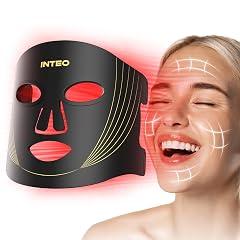
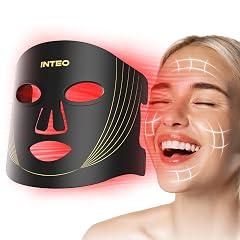
INTEO Red Light Therapy Mask
Overview
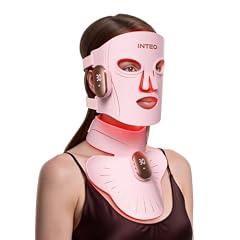
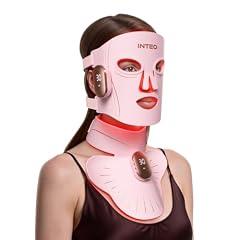
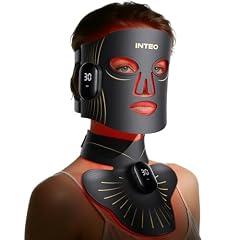
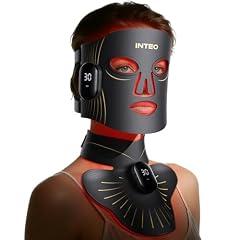
This is a cordless, face-and-neck LED mask with a separate magnetic battery controller, adjustable straps, eye covers, and preset 10 to 30 minute sessions. The product manual describes four individual modes, 850 nm infrared, 630 nm red, 600 nm orange, and 460 nm blue, plus a 2,000 mAh rechargeable battery and USB-C charging. The catalog description instead calls the red wavelength 660 nm, so the published specifications are not fully consistent. The maker states that 680 LED elements provide 120 mW/cm² and full face-and-neck coverage. Those are not independently measured figures. Human research supports some home-use red and near-infrared LED approaches for photoaged skin, but no clinical study, calibrated optical report, or FDA clearance matching this product was located. The included timer and eye covers are useful design features, but there is no product-specific IEC photobiological safety report available for review.
What works
- The manual provides concrete operating details, including four wavelength modes, a rechargeable 2,000 mAh battery, USB-C charging, and timed shutoff.
- Its flexible silicone face-and-neck format is designed for hands-free, close-contact sessions, with adjustable straps and supplied eye covers.
- A damp-cloth cleaning instruction is provided, which supports basic removal of skin oil and residue between sessions.
- Comparable human research exists for home-use 660 nm and 850 nm LED mask protocols, although it does not verify this product's output or results.
What does not
- The red-light specification conflicts across published materials, with 630 nm in the manual and 660 nm in the catalog description.
- The stated 120 mW/cm² output and claimed even coverage have no identified independent spectral, irradiance, fluence, or uniformity test report for this product.
- No exact-product FDA clearance, IEC 62471 photobiological assessment, UL or ETL listing, battery transport test summary, or biocompatibility report was located.
- The manual does not identify photosensitizing medicines, light-sensitive conditions, pregnancy precautions, eye-use limits beyond supplied covers, or clear charging warnings. Its claim of side-effect-free results is too absolute.
- No published battery replacement, take-back, recycling, recycled-content, legal-manufacturer, lot-traceability, or warranty documentation was found.
Who is it for
This product suits an adult who wants a hands-free cosmetic skincare routine for the face and neck, understands that results are uncertain, and is comfortable treating the stated wavelengths, LED count, and power as manufacturer claims rather than verified performance. It is most practical for someone who values a cordless silicone mask, a 10 to 30 minute timer, and simple wipe-down care. A user should be able to follow a conservative schedule and stop if discomfort, skin irritation, or visual symptoms occur.
Who is it not for
It is not well suited to people with a photosensitive condition, a history of light-triggered migraines, eye disease, unexplained facial pigmentation, active inflammatory skin disease, or use of photosensitizing medicines, unless a clinician says light exposure is appropriate. It is also a poor fit for anyone who needs documented light dose, independently tested eye safety, a verified medical-treatment claim, or a certified charging system. Households needing a replaceable battery, formal recycling route, or clear warranty and recall traceability should seek stronger documentation.
Integrity
The useful health-related facts are largely manufacturer-stated. The manual identifies four modes, including visible blue light at 460 nm, and includes eye covers, a timer, adjustable straps, and a silicone contact surface. It recommends wiping the mask with a damp cloth and keeping it dry rather than submerging it. Comparable controlled studies support the plausibility of certain red and near-infrared home LED protocols, but they cannot establish the benefit, dose, or safety of this unit. The key gaps are product-specific. No independently accessible optical test, IEC 62471 report, electrical certification record, battery test summary, skin-contact biocompatibility evidence, or exact-product FDA clearance was found. Published claims also conflict on whether the red mode is 630 nm or 660 nm. The manual lacks meaningful guidance for photosensitivity risks and makes an overly broad side-effect-free claim. No repair, battery replacement, take-back, or recycler program was identified.

INTEO Red Light Therapy Mask
Overview
This is a flexible, cordless LED face and neck mask sold with a detachable controller, USB-C charging cable, eye protectors, straps, and timed sessions from 10 to 30 minutes. The seller presents four light modes and a 680-LED face, neck, and chest format. Its own instructions recommend 20-minute sessions three to four times weekly. The listed manufacturer and product model match an FDA-cleared LED mask configuration. The clearance covers blue light for mild to moderate inflammatory acne, plus amber and red plus infrared modes for full-face wrinkles. FDA-reviewed specifications identify 630 nm red, 460 nm blue, 605 nm amber, and 850 nm infrared light, with stated irradiances of 16, 20, and 11 mW/cm² by mode. Those figures conflict with the seller's 660 nm, 600 nm, 120 mW/cm², and 2,000 mAh descriptions. Human evidence supports home red and blue LED treatment for acne, but results remain gradual and variable.
What works
- The listed manufacturer and product model match an FDA-cleared mask for specified acne and full-face wrinkle indications.
- FDA-reviewed documentation reports protective eye shields and passed IEC 62471 photobiological safety testing.
- Face-contacting components passed cytotoxicity, sensitization, and irritation testing under relevant ISO 10993 methods.
- The controller provides automatic shutoff and selectable 10 to 30 minute sessions, according to the product instructions.
What does not
- The seller's 120 mW/cm² output claim conflicts with the FDA-reviewed configuration, which lists 16 mW/cm² for red plus infrared, 20 for blue, and 11 for amber.
- The seller's 660 nm red and 2,000 mAh battery claims conflict with the FDA-cleared configuration, which specifies 630 nm red and a 1,000 mAh battery for this model.
- Instructions warn about pregnancy, wounds, infections, children, and eye protection, but do not clearly list photosensitizing medicines or a detailed set of light-sensitive conditions.
- No public, model-specific map of facial irradiance uniformity or named independent laboratory report was located.
Who is it for
This product fits an adult seeking a hands-free home device for mild to moderate inflammatory acne or gradual improvement in the appearance of full-face wrinkles, and who can follow a consistent schedule. It is particularly relevant for someone who values a face and neck format, selectable session lengths, and cordless control. Expectations should be limited to the FDA-cleared light modes and indications. The seller's claims about pigmentation, redness, oil balance, coverage uniformity, and very high output are not established by the FDA record reviewed here.
Who is it not for
It is not appropriate for children, or for anyone with open wounds or active skin infection in the treatment area. The available instructions also say not to use it during pregnancy. People taking photosensitizing medicines, with a diagnosed light-sensitive condition, significant eye disease, or a history of reactions to light should seek clinician guidance before use because the instructions are not sufficiently specific on those risks. It also does not suit someone seeking treatment for severe acne, a rapidly changing skin lesion, or a guaranteed result for pigmentation or redness.
Integrity
The strongest health evidence is model-specific. FDA documentation links the listed manufacturer and product model to a cleared over-the-counter LED mask, and reports passed electrical, home-use, battery, electromagnetic compatibility, eye-safety, and skin-contact biocompatibility testing. The documentation describes protective eye shields, while the consumer instructions also call for their use. Important labeling inconsistencies remain. The marketplace description claims 660 nm red light, 120 mW/cm², and a 2,000 mAh controller, while the FDA-reviewed configuration specifies 630 nm red light, mode-specific irradiances from 11 to 20 mW/cm², and a 1,000 mAh battery. No replaceable-battery program, manufacturer take-back route, or recycling partner was identified. Treat it as rechargeable electronic waste at end of life and use a qualified electronics or battery collection program.

MEGELIN LED Light Therapy Mask
Overview
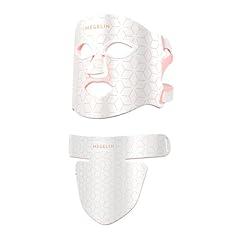
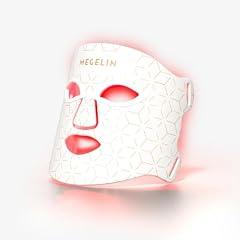
This is a rechargeable LED face-and-neck mask set with a wired controller, adjustable straps, seven selectable visible-light colors, and 10, 15, or 20 minute timer settings. The manual identifies the face mask as JML1 and recommends 10 to 20 minute sessions, three to five times weekly for four weeks. It also directs users to clean and dry skin before use and wipe the mask with a damp cloth after use. Its most important evidence is regulatory, not marketing. FDA cleared the JML1 family in October 2025 for red-light treatment of full-face wrinkles and, for JML1, blue-light treatment of mild to moderate inflammatory acne. The FDA record specifies 660 nm red light at 10 mW/cm² and 460 nm blue light at 15 mW/cm² for JML1. It does not validate separate benefits commonly attached to the other color settings.
What works
- The exact JML1 model is included in an FDA clearance for full-face wrinkle treatment and mild to moderate inflammatory acne.
- The FDA clearance gives model-specific wavelength and intensity specifications, rather than relying only on LED count or generic power claims.
- The cleared file reports testing to home-use electrical safety, lithium-battery safety, and photobiological safety standards.
- Skin-contact materials are identified as silica gel, ABS, and polyurethane fiber, with FDA-filed biocompatibility testing for cytotoxicity, sensitization, and irritation.
What does not
- No public ISO/IEC 17025 laboratory report or facial irradiance map was located, so dose uniformity across the face and neck cannot be independently checked.
- The manual gives important photosensitivity warnings, but it does not name specific photosensitizing medicines or give detailed eye-protection directions.
- The seven-color presentation goes beyond the FDA-cleared red and blue treatment indications. Benefits for the other colors are not established by the clearance.
- The manual tells owners to remove and recycle the battery at end of life, but no manufacturer take-back program, replacement-battery path, or named recycling partner was located.
Who is it for
This product suits an adult who wants a face-and-neck LED format for the two uses supported by its U.S. clearance, full-face wrinkles with red light and mild to moderate inflammatory acne with blue light. It is most appropriate for someone able to follow a regular short-session routine, keep skin clean and dry, avoid use while charging, and perform the recommended first-use sensitivity check. The controller timer and face-and-neck coverage are practical for a structured home routine rather than spot treatment.
Who is it not for
It is not for children or for someone seeking treatment for severe, cystic, or medically complicated acne. The manual says not to use it during pregnancy, while preparing for pregnancy, or while breastfeeding. It also excludes people with photosensitivity, people taking medicines that cause light sensitivity, and people with certain eye or skin conditions, including lupus erythematosus, photosensitive eczema, or albinism. Anyone with eye disease, unexplained rashes, burning, or persistent redness should seek clinical guidance instead of continuing use.
Integrity
The key health finding is that the exact JML1 model appears in FDA clearance K252264, with defined 660 nm red and 460 nm blue modes and specific intended uses. The FDA-filed summary reports compliance testing to IEC 62471 for photobiological safety, IEC 60601 home-use electrical standards, and IEC 62133-2 for the lithium battery. It also reports ISO 10993 testing of body-contacting materials for cytotoxicity, sensitization, and irritation. The manual still matters in day-to-day use. It warns against use during charging, calls for a photosensitivity test, and says to stop if burning or discomfort occurs. Ecologically, the stated five-year product life and rechargeable controller may reduce replacement frequency. However, the battery is not presented as consumer-replaceable, and no brand take-back or independently documented recycling route was found. Owners should use a local approved battery or electronics recycler at end of life.

MEGELIN LED Light Therapy Facial Mask
Overview
This is a rechargeable, flexible silicone facial LED mask with a separate controller, Type-C charging cable, straps, and two eye patches. The available product manual identifies 288 LEDs, seven color modes, and a manufacturer-stated power density of 35 mW/cm². It directs users to wear the eye patches, avoid use while charging, and use the mask for 10 to 20 minutes, three to four times weekly. The stated red, blue, and infrared modes are 630 nm, 460 nm, and 850 nm. Human studies support some home-use red and blue LED approaches for mild to moderate acne, while red and near-infrared masks have shown modest wrinkle improvements in controlled studies. However, no independent spectral, irradiance, coverage, or clinical testing was located for this exact product. Its product number also does not appear among the model names in the FDA clearance cited by the brand.
What works
- The manual provides a concrete home-use routine, eye patches, charging restrictions, cleaning directions, and a stop-use instruction for irritation.
- The manufacturer-stated 630 nm red, 460 nm blue, and 850 nm infrared modes overlap with wavelength ranges studied in home LED masks.
- Flexible silicone and wipe-clean guidance can make routine face-contact hygiene more practical than rigid, hard-shell designs.
- The accessible manual names the product model and identifies the seller as Megelin US, which provides a limited starting point for support.
What does not
- No independent laboratory report was located for this exact product's wavelengths, irradiance, session dose, output uniformity, or photobiological risk group.
- The instructions omit important specific cautions for photosensitizing medicines, photosensitive disorders, eye disease, pregnancy-related clinical advice, and treatment escalation.
- The brand's current $159 mask page calls its mask FDA-cleared, but the FDA record lists only JML-series models, not this product number.
- The seven-color benefit claims go beyond the stronger human evidence located for red and blue LED acne treatment and red or near-infrared wrinkle treatment.
- No verified battery certification, charger listing, replaceable-battery plan, take-back program, or named electronics recycling partner was located.
Who is it for
This product is most suited to an adult who wants a hands-free, home skin-care device and understands that results, if any, are likely to be gradual. It fits someone primarily interested in mild acne support or modest appearance-focused wrinkle care, who can follow a regular 10 to 20 minute routine and use the supplied eye patches. It is also better suited to a user comfortable treating the stated irradiance and seven-mode claims as manufacturer information, rather than independently measured performance data.
Who is it not for
It is not suited to anyone seeking a product with independently verified optical output, exact-model FDA clearance, or publicly verifiable electrical and photobiological certification. People with a photosensitive condition, a history of light-triggered reactions, significant eye disease, or use of photosensitizing medicines should seek clinician guidance first, because the available instructions are incomplete on these risks. It is also unsuitable for children, for use while charging, or for users who need replaceable batteries, formal e-waste support, or clear long-term repair arrangements.
Integrity
The available manual identifies flexible silicone as the face-contact material and says to wipe it with a soft damp cloth, avoid abrasive cleaners, and never immerse it. It includes eye patches and tells users not to operate the mask while charging. Those are useful basic precautions, but the instructions do not give the more complete medication, photosensitivity, or eye-risk screening expected for a light-emitting facial device. The brand's current product page uses FDA-cleared language, while the FDA clearance found names JML-series masks and does not identify this product number. The manufacturer-stated optical figures were not backed by an accessible independent test report for this unit. No relevant CPSC or FDA recall was located in the checked databases, but no verified battery certification, repair pathway, battery replacement option, take-back program, recycled-content certification, or named recycling partner was located either.

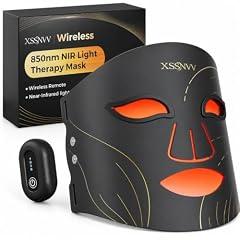
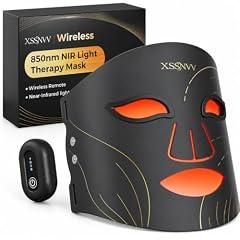
XSSNVV Wireless LED Therapy Mask
Overview
This is a rechargeable, flexible face mask for 10-minute light sessions. Marketplace material describes 272 LEDs, four modes, 620 nm red, 460 nm blue, 580 nm amber, and 850 nm near-infrared light. It is sold as a cordless facial device for wrinkles, acne, redness, and general skin appearance. The model is named in an FDA-cleared file held by Shenzhen Siken 3D Technology Development, not XSSNVV. That file supports over-the-counter treatment of wrinkles and mild to moderate acne, lists red, blue, and infrared light, and documents 6 to 27 mW/cm² for the red plus infrared mode. It also reports passed electrical, battery, eye-safety, and skin-contact testing. However, the marketplace version's advertised amber mode and 272-LED configuration are not established by that FDA file, creating an identity and claim-consistency gap.
What works
- The named model appears in an FDA-cleared over-the-counter device file for treatment of wrinkles and mild to moderate acne.
- The FDA file documents wavelengths of 620 nm red, 460 nm blue, and 850 nm infrared, plus a 10-minute recommended treatment time.
- The regulatory submission reports compliance testing to IEC 62471 for photobiological safety and includes an integrated eye shield.
- The cleared model file identifies ABS, silicone, and strap materials, with passed cytotoxicity, sensitization, and irritation testing.
- Human evidence supports home-use red and blue LED devices for mild to moderate acne, although study devices and schedules vary.
What does not
- The product listing adds a 580 nm amber mode, while the FDA file for this model describes only red, blue, and infrared output. That discrepancy weakens confidence that the marketed configuration exactly matches the cleared configuration.
- The public FDA file gives irradiance ranges but does not publish a raw laboratory spectral map or facial uniformity results for the retail unit.
- No public exact-product IEC test report, UL or ETL listing, battery transport summary, or named independent laboratory report was located.
- Publicly accessible instructions did not establish complete cleaning steps, charging limits, warranty terms, lot traceability, or a manufacturer take-back program.
- The found marketplace safety wording advises against use by people who are pregnant, photosensitive, or taking photosensitizing medicines, but a full product instruction manual was not available to confirm all warnings.
Who is it for
This product suits an adult who wants a hands-free home light routine for mild to moderate acne or gradual wrinkle improvement, and who is prepared to use it consistently rather than expect immediate cosmetic change. Its documented model file supports 10-minute sessions and includes red, blue, and infrared modes. It is most appropriate for users who can verify the received product label and instructions against the cleared configuration, especially the stated wavelengths and manufacturer information.
Who is it not for
It is not suited to children, people with known photosensitivity, or people taking photosensitizing medicines unless a clinician says it is appropriate. Avoid self-treating severe, cystic, painful, scarring, or suddenly changing acne with a light mask alone. Buyers who require a publicly available independent optical test report, certified charger listing, complete cleaning protocol, replaceable battery, or clear recycling route should select a product with those documents. The listing's amber-mode claim also makes it unsuitable for buyers needing an exact match to the FDA-cleared configuration.
Integrity
The strongest health evidence is model-specific but must be read carefully. An FDA-cleared file identifies SKB-2418 among the covered models and supports over-the-counter treatment of wrinkles and mild to moderate acne. The file reports passed electrical, home-use, therapeutic-light, lithium-battery, photobiological, and biocompatibility evaluations. It identifies ABS, silicone, and strap materials for intact-skin contact, and reports testing for cytotoxicity, sensitization, and irritation. The marketplace configuration is less fully documented. Its claimed amber output does not appear in the cleared model description, and no public report verifies LED count, uniform facial coverage, or the exact retail battery and charger. No manufacturer take-back, battery replacement path, recycled-content certification, or named recycling partner was found. Rechargeable electronics should be kept out of household trash and taken to an appropriate battery or e-waste collection program when retired.
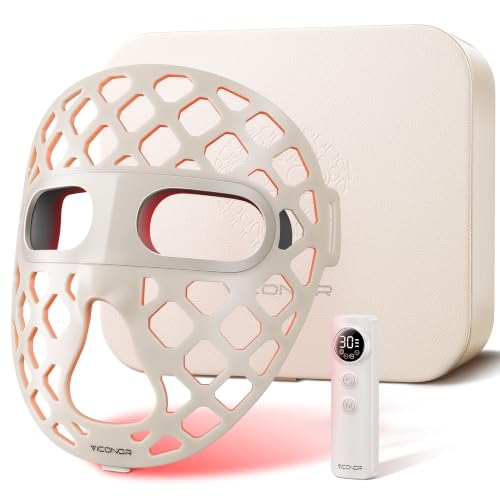
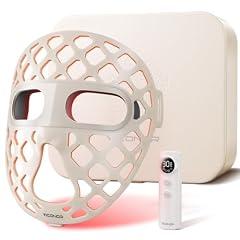
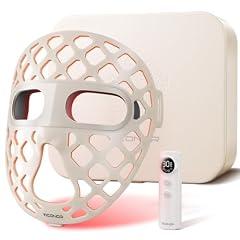
Viconor Red Light Therapy Mask
Overview
This is a cordless, face-worn LED mask sold for cosmetic skin-brightening, texture, dullness, shine, and skin-firming aims. The manufacturer states that its open-grid silicone format has 54 LED packages, described as 216 light cores, with 415 nm blue, 590 nm yellow, 630 nm red, and 850 nm near-infrared light. It also states that the controller offers three modes, three brightness settings, and 10, 15, 20, or 30 minute timed sessions. The central limitation is verification. No model-specific irradiance, fluence, spectral report, facial uniformity map, clinical study, or independent laboratory report was publicly provided. Human research supports some home LED treatment approaches, particularly red and near-infrared wavelengths for wrinkles and blue-red approaches for acne, but this product's actual dose and treatment mode cannot be matched to that evidence. Its 2,600 mAh rechargeable controller and eye cushions are manufacturer-stated features, not independently safety-tested findings.
What works
- The manufacturer states clear nominal wavelength bands, including 630 nm red and 850 nm near-infrared, which are wavelengths used in controlled facial phototherapy studies.
- A built-in timer with four stated session lengths may help users keep a repeatable routine rather than estimating exposure time.
- The stated 2,600 mAh rechargeable controller supports cordless use during a session.
- The manufacturer describes a flexible open-grid soft-silicone format intended to reduce the enclosed feel of a solid face mask.
What does not
- There is no public, model-specific measurement of irradiance, treatment fluence, wavelength accuracy, or facial coverage. LED count alone cannot establish an evidence-relevant dose.
- No exact-product IEC 62471 photobiological-safety report, eye-safety classification, or independent assessment of the claimed light-blocking eye cushions was located.
- No public certification record was located for the finished mask, supplied charging configuration, or battery transport pack, such as UL, ETL, or a battery UN 38.3 test summary.
- The public product page does not provide an instructions document with contraindications, photosensitizing medicine warnings, cleaning directions, material composition, warranty terms, or a model-specific FDA clearance reference.
- Claims about yellow light improving skincare absorption and the product delivering professional-grade care are not supported by model-specific clinical or performance evidence on the public page.
Who is it for
This product is most relevant to an adult seeking a portable cosmetic LED routine who values a cordless controller, adjustable session timer, and a less enclosed mask format. They should treat the stated wavelength mix and comfort claims as manufacturer information, not independently confirmed performance. It is better suited to someone using it conservatively for general appearance goals, who can stop if irritation or visual discomfort occurs and who does not need a documented treatment dose, medical indication, or independently certified electrical configuration.
Who is it not for
It is not suited to anyone seeking a verified treatment for acne, wrinkles, pigmentation, or a diagnosed skin condition, because no model-specific clinical evidence or measured dose was publicly available. People with retinal disease, light-triggered migraine, photosensitive epilepsy, a photosensitivity disorder, or use of photosensitizing medicines should obtain clinician advice before light exposure. It is also unsuitable for households that require independently verified battery and charger safety, clear cleaning instructions, repair support, or formal product traceability.
Integrity
The manufacturer identifies the face-contact format as soft silicone and says the mask uses eye cushions, a rechargeable 2,600 mAh controller, and automatic timed shutoff. Those details may be useful design features, but they are manufacturer statements. No exact-product biocompatibility file, cleaning protocol, material declaration, photobiological-safety report, electrical-safety listing, or independent battery test summary was publicly available for review. A public search did not identify a matched FDA clearance, recall, warning letter, or adverse-event pattern for this exact face mask. That absence does not establish clearance or safety. The product page also did not identify a battery replacement option, mail-back program, named electronics recycler, recycled-content certification, or end-of-life guidance. Because it is a rechargeable electronic mask, users should keep the battery and charger out of household trash and use a local battery or electronics recycling program when the product reaches end of life.

INTEO Red Light Therapy Mask
Overview
This is a rechargeable, full-face LED mask for hands-free home sessions. Its listed configuration uses a 2,000mAh lithium-polymer battery, controller, timer, eye shields, and red plus near-infrared, blue, and amber light modes. The supplied instructions describe 10 to 30 minute sessions and a wipe-clean flexible silicone mask. The listed 2,000mAh configuration and model number align with an FDA-cleared device family. The FDA record specifies 630nm red, 850nm infrared, 460nm blue, and 605nm amber light. It reports 15 to 22 mW/cm² for red plus infrared, 16 to 29 mW/cm² for blue, and 6 to 10 mW/cm² for amber. The cleared indications for this model are full-face wrinkle treatment with red plus infrared and mild to moderate inflammatory acne treatment with blue light.
What works
- The matching FDA-cleared device family supports two defined uses, full-face wrinkles with red plus infrared light and mild to moderate inflammatory acne with blue light.
- The FDA submission gives model-specific wavelength, irradiance, timer, battery, and intended-use information, rather than relying on LED count alone.
- The cleared design includes an eye shield and automatic treatment shutoff, and its submission reports passed IEC 62471 photobiological safety testing.
- Patient-contacting components passed cytotoxicity, skin sensitization, and irritation testing in the FDA submission.
- The public instructions provide practical cleaning directions, including wiping the silicone surface after use and avoiding harsh cleaners.
What does not
- The FDA record names Dongguan Yanxi Technology as the legal manufacturer, not INTEO. The available public material does not document the commercial relationship, so the clearance match rests on the shared model number and matching battery configuration.
- Public sources do not provide the full optical test report, measurement map, test laboratory, or session fluence by mode. The FDA summary reports irradiance ranges, but not facial uniformity results.
- The available instructions give basic charging and cleaning steps, but do not clearly list photosensitizing medicines, photosensitivity disorders, pregnancy considerations, active skin lesions, or when to seek clinical advice.
- No public battery-pack transport summary, charger certification listing, replaceable-battery path, take-back program, or named electronics recycler was located.
- The available product instructions describe red plus near-infrared as 630nm and 830nm, while the FDA-cleared model specification is 630nm and 850nm. Buyers should rely on the product label and supplied instructions for their specific unit.
Who is it for
This product fits an adult who wants a cordless, face-only home light-therapy routine and can follow timed sessions consistently. It is particularly relevant to someone seeking a cleared red plus infrared treatment for full-face wrinkles or blue-light treatment for mild to moderate inflammatory acne. The recorded 15 to 22 mW/cm² red plus infrared output and 10 to 30 minute timer create a concrete at-home protocol. It also suits users who value a flexible, wipe-clean mask and included eye shielding rather than a handheld light.
Who is it not for
It is not appropriate for a buyer who needs clinician-directed treatment for severe, cystic, painful, scarring, or rapidly worsening acne. People with a known photosensitivity disorder, a history of light-triggered migraine or seizure, active facial wounds or infection, skin cancer at the treatment area, or use of photosensitizing medicines should consult a clinician before use. It is also a poor fit for households needing a replaceable battery, independently listed charger, documented recycling route, or fully disclosed material formulation.
Integrity
The strongest health documentation is the FDA-cleared model family. Its public submission records passed patient-contact testing for cytotoxicity, sensitization, and irritation. It also records passed electrical, home-use, lithium-battery, electromagnetic compatibility, and IEC 62471 photobiological safety testing. The design includes an eye shield and automatic shutoff. The FDA-cleared uses are narrower than broad skincare language, covering full-face wrinkles with red plus infrared and mild to moderate inflammatory acne with blue light. Important gaps remain. The public record does not disclose the silicone formulation, the testing laboratory, a full battery transport summary, or a certification listing for the supplied charging configuration. No product-specific recall or warning was identified in searched U.S. recall databases through August 23, 2026. The legal manufacturer in the FDA record is Dongguan Yanxi Technology, while the product is sold under INTEO. No battery replacement, take-back, recycled-content, or named e-waste recycling program was found.

Ulike ReGlow LED Light Therapy Mask
Overview
This is a cordless, face-worn LED light therapy mask with a rechargeable controller. It uses 272 LEDs across four manufacturer-named modes, combining 465 nm blue, 590 nm yellow, 630 nm red, and 830 nm near-infrared light. Sessions are timed for five or eight minutes, and the manufacturer recommends using it three times weekly, with no more than 20 minutes in a session. The defining fact is model-specific U.S. clearance. FDA records identify this exact product as an over-the-counter device for treatment of full-face wrinkles and mild to moderate inflammatory acne. FDA documentation also records an output range of 1 to 40 mW/cm², but public records do not provide mode-by-mode irradiance maps or an independent facial coverage measurement. The supplied controller has a 3.7 V, 2600 mAh lithium battery.
What works
- The exact product has FDA clearance for full-face wrinkles and mild to moderate inflammatory acne.
- FDA documentation confirms 272 LEDs, four wavelength combinations, and fixed five or eight minute treatment times.
- The FDA submission reports passed IEC photobiological, home-use electrical, electromagnetic compatibility, and lithium-battery safety testing.
- Skin-contacting components passed reported ISO tests for cytotoxicity, irritation, and skin sensitization.
- Built-in eye shielding is part of the cleared design, and the FDA submission reports IEC 62471 photobiological testing.
What does not
- Public FDA documents give a broad 1 to 40 mW/cm² intensity range, not independently published mode-specific irradiance, fluence, or facial uniformity data.
- The brand's claims about collagen, skin barrier strengthening, brightness, and overall skin health extend beyond the cleared wrinkle and inflammatory-acne indications.
- The brand's online guidance identifies several groups who should avoid use, but it does not clearly list photosensitizing medicines or conditions in the accessible product page.
- The exact face-contact material formulation and a detailed cleaning or durability protocol were not publicly documented in the reviewed sources.
- No public battery replacement program, repair pathway, take-back program, or recycling partnership was identified.
Who is it for
This product fits an adult who wants an at-home, timed light treatment specifically for mild to moderate inflammatory acne or full-face wrinkles, and who can follow a routine of several short sessions per week. It is most relevant for someone who values a product whose exact model, manufacturer, wavelengths, treatment times, eye-shield design, battery specification, and intended uses can be matched to FDA records. It also suits users comfortable with a rechargeable controller and a separate mask-to-controller connection.
Who is it not for
It is not suited to children or to anyone seeking treatment for severe, cystic, scarring, or medically unexplained acne, where clinical assessment is more appropriate. The brand advises against use by people with heart disease or dysfunction, autoimmune disease, impaired ability to sense heat or stimuli, intoxication, unconsciousness, or within two weeks after surgery. Pregnant or breastfeeding users should seek clinical advice first. People taking photosensitizing medicines, with light-sensitive conditions, active skin irritation, or significant eye disease should obtain individualized medical guidance before light exposure.
Integrity
The strongest health evidence is product-specific regulatory documentation. FDA cleared this exact model for full-face wrinkles and mild to moderate inflammatory acne in adults. Its FDA submissions report passed IEC 62471 photobiological testing, electrical and home-use standards, lithium-battery safety testing, and ISO 10993 testing of body-contacting components for cytotoxicity, irritation, and sensitization. The cleared design includes an eye shield, although public documentation does not disclose its risk-group classification or quantitative blue-light exposure results. The controller uses a 9.62 Wh lithium battery. Public records show product identification can include lot number, serial number, and manufacturing date, supporting traceability. No relevant U.S. recall or regulatory warning was identified in the reviewed official product records. Environmental information is thin. There is no publicly identified replaceable-battery design, repair plan, take-back scheme, recycled-content certification, or named electronics recycling partner for this product.