
10 Best Protein Powders
 Lauren Wilson
Please note that we participate in affiliate marketing programs. When you purchase through links on our site, we may earn a commission. As an Amazon Associate we earn from qualifying purchases. This comes at no additional cost to you and helps support the resources required to provide valuable content.Advertising Disclosure
Top-rated Protein Powders Comparison
1

2
4
5
6
7
8
9
Protein Powders
Protein powders are concentrated foods or supplements used to add protein to a shake, smoothie, recipe, snack, or less reliably as part of a meal replacement. Whether one is useful depends first on the protein source and serving dose. Whey, milk, pea, rice, pumpkin, hemp, and other plant proteins can contribute to daily intake, but collagen is different: it is an incomplete protein and should not automatically be treated as equivalent to whey or a complete plant-protein serving for muscle support.
Start with the label. Look for a clearly stated protein amount per serving, named protein sources, a complete ingredient list, and an amino-acid profile when muscle or recovery is the goal. Across the reviewed products, servings ranged from about 20 to 30 grams of protein for conventional protein powders, while collagen products supplied collagen doses of 7.83 or 20 grams but were not complete muscle-support proteins. A large headline number can mislead when collagen is counted within total protein, when a proprietary blend hides the amounts of individual sources, or when a product uses a large scoop but provides little useful protein. “BCAAs” also do not establish quality unless the amount especially leucine is disclosed.
Match the product to the use. A post-exercise serving commonly cited in the supplied evidence is roughly 20 grams or more of high-quality protein, but individual needs depend on body size, training, and the rest of the diet. A protein powder is not automatically a meal replacement: products described that way supplied as little as 150 or 160 calories per serving, and may not provide the energy and full nutrient profile of a meal. Collagen may be reasonable for a skin- or joint-focused use at studied doses, but it is not a substitute for complete workout protein.
Safety evidence should be product-specific. Independent listings in the NSF Certified Dietary Supplements, NSF Functional Foods Guideline 229, Informed Protein, Informed Sport, or Informed Choice registries are stronger than an uncertified marketplace logo or a general facility claim. A current, lot-matched certificate of analysis should identify the lot and expiry date and report protein or identity, heavy metals, and microbiological results using appropriate laboratory methods. A manufacturer’s statement that products are third-party tested, or a tool that allows a buyer to request a report, is useful but not the same as a reviewed report for the container in hand.
Read allergen information beyond “dairy-free” or “vegan.” Milk, soy, egg, fish, beef, peanut, tree nuts, sesame, coconut, gluten-related claims, sweeteners, sugar alcohols, fibers, enzymes, probiotics, and shared-equipment statements can all affect suitability and tolerance. Simpler formulas are easier to evaluate, while inulin, gums, sugar alcohols, probiotics, enzyme blends, and sweeteners may cause digestive symptoms for some people.
The recurring safety caveats in these reviews are substantial. Several products had California lead or cadmium warnings, allegations, settlements, or other documented exposure concerns, while current lot-specific numerical results were often unavailable. Historical recalls or compliance records do not prove that every current container is unsafe, but they make lot verification more important. People with milk, fish, egg, beef, peanut, tree-nut, sesame, coconut, pea, or other relevant allergies should check the physical label. People with digestive sensitivities, pregnant or nursing people, children, medically complex users, and anyone trying to minimize contaminant exposure should seek appropriate professional advice. Tested athletes should choose a product with current, searchable sport-testing coverage rather than relying on a general quality or contents certification.
Integrity
These topics distinguish a convenient source of protein from a product whose dose, ingredients, manufacturing, environmental claims, and evidence can be checked. Scores below are comparative signals from the supplied reviews, not replacements for reading the current label and verifying the lot or certification.
HHealth & Safety
Health impact and intended-use fit
This measures whether the stated serving can realistically support the use claimed—muscle, recovery, a dietary protein gap, meal support, or collagen-related skin and joint goals. Higher-scoring products generally supplied about 20–30 grams of identified protein or a studied collagen dose and described a narrower use. Lower scores reflected collagen used as muscle protein, incomplete meal-replacement claims, or undisclosed blend composition.
Protein quality and nutrition label fidelity
This asks whether the labeled protein comes from identifiable sources with useful essential amino acids, rather than vague blends, collagen counted as equivalent muscle protein, or amino-acid inflation. Higher-scoring products named their sources and, in some cases, supplied an amino-acid profile. Lower scores reflected undisclosed source proportions, low leucine, conflicting serving information, or a collagen blend that did not show how much came from each source.
Contaminant and microbiological safety
This covers lead, cadmium, inorganic arsenic, mercury, pesticides, pathogens, and spoilage organisms at the labeled serving. Higher scores were associated with independent product certification or documented screening, while lower scores appeared where California warnings, allegations, settlements, or historical safety concerns were present without current lot-specific numerical results. A missing report is not proof of contamination, but it limits exposure confidence.
Allergen and tolerance safety
This measures how clearly the product identifies milk, soy, egg, fish, beef, peanuts, tree nuts, sesame, coconut, gluten-related claims, sweeteners, fibers, enzymes, and shared-equipment risks. Higher-scoring products gave specific ingredient and allergen information. Lower scores reflected conflicting lecithin records, incomplete cross-contact details, or complex formulas containing ingredients that may trigger allergy or digestive intolerance.
Manufacturing accountability and traceability
This concerns the responsible manufacturer, lot and expiry information, quality systems, and compliance history. Higher-scoring products had identifiable manufacturers and facilities listed in GMP registries, such as NSF/ANSI 455-2. Lower scores reflected limited traceability, unsupported facility claims, or compliance concerns. Facility certification supports manufacturing controls but does not independently certify every finished product or its current lot.
Sport and adulterant control
This measures protection against undeclared stimulants, anabolic agents, drugs, and other prohibited substances. Higher-scoring products were listed in Informed Sport, Informed Choice, or another recognized ongoing testing program, with relevant batches identifiable. Most lower-scoring products had no exact-product sport listing. NSF contents or functional-food certification can address other quality questions but is not the same as sport certification.
EEvidence
Independent product verification
This measures whether the exact product is currently searchable in an independent registry that checks identity, label claims, contaminants, or manufacturing controls. The strongest supplied scores belonged to products listed by NSF Functional Foods, NSF/ANSI 173, or Informed Protein. A company-level GMP listing, marketplace badge, or claim that a product is “NSF certified” is weaker unless the exact product appears in the certifier’s current registry.
Current lot test transparency
This measures whether the brand publishes or supplies a recent, independently issued report matched to the buyer’s lot and expiry date. The strongest example supplied included protein, heavy-metal, microbiological, pesticide, solvent, and allergen categories for a named lot, although even that report gave pass results rather than numerical metal concentrations. Lower scores reflected testing claims without a report or reports for another flavor or product.
Claim honesty
This measures whether protein, collagen, recovery, gut-health, weight-management, immunity, organic, grass-fed, and climate claims are specific and supported at the sold dose. Higher scores came from products whose central protein claims matched labels and independent checks. Lower scores reflected collagen included in a total-protein headline, undisclosed botanical or probiotic doses, unsupported digestion or weight-loss promises, or sourcing claims without corresponding certification.
EEcology
Protein sourcing and climate impact
This measures disclosure of protein origin and credible support for lower-impact or responsibly produced sourcing. Higher scores in the supplied set generally came from plant-based or organic-positioned products with some sourcing or certification information, while lower scores reflected animal proteins or broad grass-fed, pasture-raised, or regenerative claims without product-specific verification. No supplied product had a product-specific lifecycle assessment establishing its climate footprint.
Packaging and end-of-life impact
This considers material use, bulk or refill formats, recycled content, and realistic disposal instructions. The supplied products generally scored in a narrow middle range because tubs, canisters, and pouches were present but material specifications, recycled-content percentages, and local recycling routes were often missing. A recyclable-pouch or reduced-plastic claim is useful only when the material and practical disposal pathway are clear.
Full reviews

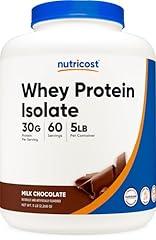
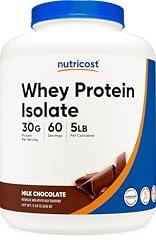
Nutricost Whey Protein Isolate Milk Chocolate 5LBS
Overview
This is a 5-pound milk-chocolate whey protein isolate powder intended to be mixed with 6 to 10 ounces of a beverage. Nutricost states that one scoop provides 30 grams of protein. The matching independently listed label identifies instantized whey protein isolate, cocoa, natural and artificial flavors, salt, acesulfame potassium, and sucralose. Whey is a complete dairy protein, and human evidence supports adequate protein intake around resistance training for muscle protein synthesis and training adaptations. The listed 30-gram serving is within a practically useful single-serving range. The key product-specific limitation is safety evidence, Nutricost displays a California Proposition 65 lead warning, while no current lot-specific heavy-metal, microbiological, or protein-potency report was publicly available for review.
What works
- A manufacturer-stated 30 grams of whey protein per scoop is a useful dose for post-exercise protein intake.
- The identified protein source is whey protein isolate, rather than a vague blend or collagen counted as muscle protein.
- The independently listed matching label clearly identifies milk and soy allergens.
- The manufacturer identifies a responsible brand, provides contact information, and states that the product is made and quality tested in the United States with globally sourced ingredients.
What does not
- Nutricost displays a California Proposition 65 warning that consuming this product can expose users to lead. The warning does not provide an exposure amount or a lot-specific result.
- No current lot-matched certificate of analysis was publicly available to verify protein content, heavy metals, or microbiological results.
- No current listing was found in the reviewed NSF, USP, Informed Sport, or similar independent product-certification registries.
- The flavored formula contains sucralose and acesulfame potassium, which may not suit buyers avoiding non-nutritive sweeteners.
- Ingredient information differs across retail listings on lecithin source, so buyers with soy allergy should inspect the tub they receive.
Who is it for
This product fits an adult who wants a large-format flavored whey isolate powder to help close a dietary protein gap, particularly after resistance training or when a regular meal is impractical. A 30-gram serving is consistent with doses used in research on post-exercise muscle protein synthesis, provided it complements rather than replaces an overall adequate diet. It is most appropriate for people who tolerate dairy and the listed sweeteners, and who are comfortable checking the physical label and lot details when the product arrives.
Who is it not for
It is not suitable for anyone with a milk allergy. People with soy allergy should also avoid it unless the received package clearly shows a soy-free lecithin source, because a matching independent label lists soy lecithin while another retailer lists sunflower lecithin. Those seeking independently certified sport testing, public lot-specific contaminant reports, or a product without a lead exposure warning should choose a product with that documentation. It also may not suit people who avoid sucralose, acesulfame potassium, artificial flavors, or dairy proteins.
Integrity
The health case for whey itself is sound. NIH identifies whey as a complete protein containing all essential amino acids, and human trials support protein supplementation alongside resistance training for modest improvements in lean mass and strength when total dietary protein needs are not already met. This product's stated 30-gram serving is therefore a credible amount for its post-workout use. It is not a meal replacement, weight-loss treatment, or substitute for medical nutrition care. Safety documentation is less complete. The brand's product page carries a California Proposition 65 lead warning, and no public, current lot-specific report was found showing heavy-metal, microbiological, or protein testing. No recognized independent supplement or sport-certification listing was located. Nutricost states the product is made and quality tested in the United States with globally sourced ingredients, but it does not publicly identify dairy origin, farm practices, package resin, recycled content, or realistic disposal guidance. The 5-pound plastic tub may reduce repeat purchases versus smaller containers, but its end-of-life impact cannot be assessed from disclosed materials.

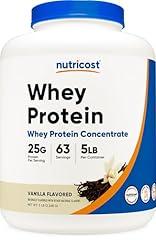
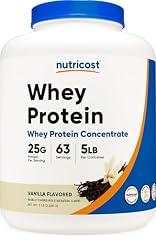
Nutricost Vanilla Whey Protein Powder, 5 Pounds
Overview
This is a vanilla flavored whey protein concentrate powder in a 5-pound tub. The independently listed Nutrition Facts panel gives 25 g protein in a 36 g scoop, with 130 calories, 3 g carbohydrate, 2 g added sugar, 75 mg cholesterol, and 300 mg sodium. The tub is listed as providing 63 servings and is intended to be mixed with 6 to 10 ounces of a beverage. Its protein source is clearly identified as instantized whey protein concentrate with sunflower lecithin. The listed nonprotein ingredients are natural flavors, salt, and sucralose, and the label declares milk. Whey is a complete dairy protein that can fit post-exercise protein intake, but the product itself has not been located in a searchable independent product-certification registry or with a public, lot-matched test report. Most importantly, the manufacturer currently displays a California warning that this vanilla product can expose consumers to lead.
What works
- Provides a clearly labeled 25 g serving of whey protein concentrate, a complete protein source suited to filling a dietary protein gap after training.
- The ingredient list is short and specific, without a proprietary protein blend or added free amino acids that could obscure the protein source.
- Milk is explicitly declared, and sucralose, salt, and flavoring are identified rather than hidden behind a broad blend.
- The listed 5-pound format provides 63 measured servings for routine shake use.
What does not
- The manufacturer posts a California warning that this vanilla product can expose consumers to lead. This is a concrete contaminant concern, not merely missing documentation.
- No current public lot-specific report was located showing protein verification, heavy-metal levels, or microbiological results for this product.
- The brand's third-party-testing and GMP-facility statements were found, but no current certification for this exact product was located in the major searchable supplement registries.
- It contains milk and uses sucralose. It is not suitable for people with milk allergy, and some people prefer to avoid or do not tolerate nonnutritive sweeteners.
- At 300 mg sodium, 75 mg cholesterol, and 2 g added sugar per scoop, it may be less suitable for buyers trying to minimize those nutrients.
Who is it for
This product suits an adult who tolerates dairy and wants a straightforward whey concentrate shake to help meet daily protein needs around resistance training or when regular meals fall short. One scoop supplies 25 g labeled whey protein, which is within the amount commonly used to contribute high-quality protein after exercise. The large tub and 63-serving capacity also fit someone who expects to use protein powder regularly. It is more appropriate as a food supplement than as a replacement for a varied diet or a medically tailored nutrition plan.
Who is it not for
It is not appropriate for anyone with a milk allergy, because whey is milk-derived and the label declares milk. People who experience lactose-related digestive symptoms may also find a whey concentrate less comfortable than a product specifically formulated for their tolerance needs. Competitive athletes subject to drug testing should use a product enrolled in a recognized banned-substance certification program, since no such verification was located for this exact product. Pregnant people, people trying to reduce lead exposure, and households serving children should take the manufacturer's California lead warning especially seriously.
Integrity
The health case is mixed. The product identifies its whey concentrate source and lists 25 g protein per scoop, and whey is a complete dairy protein that can help meet post-exercise protein needs when total dietary protein is inadequate. The label also clearly identifies milk, sucralose, salt, and flavoring. However, the manufacturer currently includes a California warning that the vanilla product can expose consumers to lead. No public lot-matched report was located to quantify that exposure or independently show heavy-metal and microbiological results for a current container. Nutricost states that the product is non-GMO, gluten-free, made in a GMP-compliant FDA-registered facility, and quality tested in the United States with globally sourced ingredients. Those are manufacturer statements, not current product-specific certification evidence. No public sourcing detail for the dairy, animal-welfare standard, climate program, recycled content, package material, or practical disposal instructions was located. The rigid plastic tub is a substantial single-use package, with no verified end-of-life claim identified.

Naked Whey 2LB Grass Fed Protein Powder
Overview
This is a 2 pound tub of unflavored whey protein powder, intended to be mixed into drinks or foods to add protein around training or across the day. The manufacturer states that a 30 g serving supplies 25 g protein, 120 calories, 2 g sugar, and 5.9 g branched-chain amino acids. It identifies the formula as one ingredient, grass-fed whey protein. The defining verified point is that Naked Whey is currently listed in NSF's functional-food certification registry at a 30 g serving. That provides independent oversight of the listed product, rather than relying only on the marketplace description. A 25 g whey dose is also within the range used in human muscle-protein-synthesis research, although that evidence concerns whey protein generally, not a clinical trial of this finished powder. Public, lot-matched test reports were not located.
What works
- The exact unflavored product is currently listed in NSF's independent functional-food certification registry.
- A manufacturer-stated 25 g protein serving is a practical dose for post-exercise or meal protein intake.
- The stated formula is one unflavored whey ingredient, with no added sweeteners, flavors, gums, or sugar alcohols.
- Whey is a complete dairy protein source, and human studies support appropriately dosed whey protein alongside resistance exercise.
What does not
- This is a milk-derived product and is unsuitable for people with a milk allergy or a dairy-free diet.
- The product is whey concentrate rather than isolate, so lactose-sensitive users may tolerate it poorly.
- No current, purchaser-accessible certificate of analysis matched to an individual tub lot was located.
- The product is not listed in the NSF Certified for Sport registry, so tested athletes do not have that specific banned-substance assurance.
- Grass-fed, pasture, regenerative, and full farm-traceability statements come from the manufacturer, without an identified independent agricultural certification.
Who is it for
This product fits an adult who wants a plain dairy protein powder for smoothies, oatmeal, baking, or a post-training drink and prefers to control flavoring separately. Its stated 25 g protein serving is aligned with the amount commonly used in whey research, especially when total daily food intake and resistance training are already in place. It also suits buyers who value an independently listed NSF functional-food certification and do not need a sport-specific banned-substance program. The 2 pound format is better suited to regular use than occasional supplementation.
Who is it not for
It is not appropriate for anyone with a milk allergy, and it is not a dairy-free or vegan option. People with lactose intolerance, irritable bowel symptoms triggered by dairy, or a need for the lowest possible lactose intake may be better served by a verified whey isolate or a suitable non-dairy protein. Tested athletes should use a product enrolled in NSF Certified for Sport or Informed Sport. It also does not replace a complete meal, medical nutrition therapy, or individualized dietary guidance for kidney disease or other medically managed protein restrictions.
Integrity
Naked Whey is independently listed by NSF under its functional-food certification program, at a 30 g serving. NSF describes this type of certification as including label review, product testing, and ongoing monitoring for relevant contaminants. This is meaningful independent evidence for the exact product, but it is not the same as NSF Certified for Sport. No lot-specific, buyer-accessible report showing protein, heavy-metal, and microbiological results for a current tub was found. The formula is manufacturer-stated to be a single grass-fed whey ingredient and free from added sweeteners and soy. Milk remains the material allergen, and the concentrate format can retain enough lactose to matter for sensitive users. The brand describes pasture-raised sourcing, regenerative practices, and farm-level traceability, but no independent organic, regenerative, or animal-welfare certification was identified for this product. Packaging material and realistic disposal instructions were also not disclosed.

Wholesome Wellness Multi Collagen Protein Powder
Overview
This is an unflavored, animal-derived collagen powder sold in a 16-ounce tub. The label on file in the NIH Dietary Supplement Label Database specifies 58 servings, with one 7.83 g scoop providing 7 g protein and a 7.83 g multi-collagen complex. Its declared sources are hydrolyzed bovine collagen peptides, bovine and chicken bone broth collagen, fish collagen peptides, and eggshell membrane collagen. No other ingredients are listed. The most consequential independently confirmed fact is that NSF currently lists this exact Multi Collagen Protein powder under its dietary-supplement certification program, at a two-scoop serving of about 15.66 g. That provides meaningful outside verification of the finished product. The product is better understood as a collagen supplement than as a complete protein powder. Its label amino-acid profile is strongly glycine and proline weighted, with low leucine, and the separate source amounts are not disclosed.
What works
- The exact powder is currently listed in NSF's dietary-supplement certification registry.
- The label identifies the five collagen source categories and lists no fillers, flavors, sweeteners, or other ingredients.
- One scoop delivers 7 g labeled protein, and two scoops align with the 15.66 g serving listed by NSF.
- Human research supports collagen peptides for some skin and joint outcomes at doses overlapping a one to two scoop daily use, although this finished blend was not studied.
What does not
- Collagen is not an adequate stand-alone muscle-building or meal-replacement protein. It has a low essential-amino-acid and leucine profile compared with complete proteins.
- The product combines five sources in one 7.83 g blend, but does not disclose how much comes from each source or collagen type.
- No current, consumer-accessible lot-matched certificate of analysis was found for heavy metals, microbiology, or labeled protein.
- Fish and egg are declared allergens. The reviewed label does not provide a detailed cross-contact policy.
- FDA issued Wholesome Wellness a warning letter in February 2021 over disease-treatment claims for a different supplement, not this collagen powder.
Who is it for
This product suits an adult who specifically wants a plain collagen supplement to add to coffee, smoothies, or food, and who can safely consume bovine, chicken, fish, and egg-derived ingredients. A one or two scoop routine provides a collagen amount that overlaps doses used in some studies of skin hydration, elasticity, and exercise-related joint discomfort. It is also suited to buyers who place value on the exact finished powder appearing in the current NSF dietary-supplement registry and who prefer a formula without added flavors, sweeteners, or vitamins.
Who is it not for
It is not appropriate for people with fish or egg allergy, or for anyone avoiding animal-derived ingredients. It also does not fit a vegan, vegetarian, halal, kosher, or seafood-free household unless the product's source and certification details meet that household's own requirements. People seeking a primary post-workout protein, muscle-gain supplement, or meal replacement should choose a product designed to provide a complete essential-amino-acid profile. Pregnant or nursing people, children, and people managing a medical condition or medication regimen should seek individualized clinical guidance before using a supplement.
Integrity
The strongest quality finding is current independent certification. NSF lists this exact Multi Collagen Protein powder in its dietary-supplement registry, which is stronger evidence than an unverified marketplace badge. The NIH label record confirms a 7.83 g scoop, 7 g protein, no other ingredients, and declared fish and egg allergens. NSF certification does not replace the value of a current lot-specific report, and no public report matching a purchaser's lot was located. The collagen sources are animal-derived, including bovine, chicken, fish, and eggshell materials. The manufacturer states grass-fed, pasture-raised bovine material and wild fish, but no public farm, fishery, species, country-of-origin, organic, regenerative, or marine-sustainability certification was located for this product. The tub's material, recycled content, and disposal instructions were also not substantiated in the reviewed records. FDA's February 18, 2021 warning letter concerned disease claims for another Wholesome Wellness product, not a recall or contaminant finding for this powder.

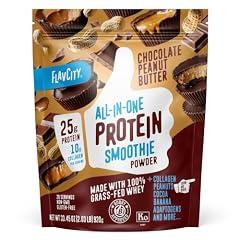
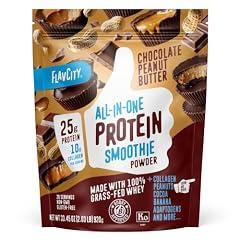
FlavCity Grass Fed Chocolate Peanut Butter Protein
Overview
This is a chocolate peanut butter flavored powder sold as a 20-serving protein smoothie. It is mixed with water or milk and is positioned for convenient protein intake, rather than as a complete ready-to-drink meal. FlavCity states that each scoop provides 25 g total protein, including 10 g grass-fed bovine collagen, and lists grass-fed whey protein concentrate, peanut flour, organic cocoa, banana powder, coconut milk powder, stevia, monk fruit, cordyceps, and reishi. The protein source is identifiable, but the label does not publish an amino-acid profile or separate the whey contribution from the total protein beyond identifying the 10 g collagen portion. This matters because whey is a high-quality muscle protein, while collagen is not nutritionally interchangeable with whey for muscle protein synthesis. The current product page also carries a California warning for potential lead and cadmium exposure.
What works
- The ingredient list clearly identifies whey protein concentrate and 10 g bovine collagen per scoop, rather than using an unnamed protein blend.
- A 25 g total-protein serving can help fill a dietary protein gap, and sports-medicine guidance commonly uses about 20 g of high-quality protein around exercise.
- Milk and peanut allergens are declared, and a retailer label also identifies possible tree-nut cross-contact from shared equipment.
- The listed sweeteners are stevia and monk fruit, with 0 g added sugar shown on the retailer nutrition label.
What does not
- A February 2026 California Proposition 65 settlement covered this exact chocolate peanut butter smoothie among products alleged to expose users to lead and cadmium. The settlement does not admit liability, but the product currently carries a related warning.
- No public, lot-matched certificate of analysis was located for protein content, heavy metals, or microbiological testing, so a buyer cannot verify the specific bag's results.
- The 25 g protein total includes 10 g collagen. The manufacturer does not provide the whey grams, leucine content, or a full amino-acid analysis needed to judge muscle-protein quality precisely.
- Claims around focus and cognition from cordyceps and reishi are not dose-specific, and the product does not disclose their amounts or finished-product human trial evidence.
- No searchable current certification was located in the major independent supplement or sport-testing registries reviewed.
Who is it for
This product fits an adult who wants a sweetened, shakeable chocolate peanut butter powder and can safely consume dairy and peanuts. It is most practical for someone who already gets most nutrition from meals and wants a convenient way to add some protein after exercise or during a busy day. It may also suit people who specifically want collagen alongside whey, provided they understand that its 25 g total protein includes 10 g collagen and should not be treated as 25 g of whey-quality muscle protein.
Who is it not for
It is not suitable for people with milk or peanut allergy, and people with tree-nut allergy should account for the shared-equipment advisory. Children, pregnant people, and people trying to minimize lead or cadmium exposure should be especially cautious because the current product warning and the 2026 California settlement concern this exact flavor. Tested athletes should select a product enrolled in a recognized banned-substance program. Anyone with kidney disease, a medically prescribed protein restriction, or a complex medical condition should consult their clinician before using a high-protein powder regularly.
Integrity
The useful nutrition feature is transparent identification of whey concentrate and bovine collagen, plus an explicitly declared 10 g collagen amount. Human evidence supports whey as a high-quality protein source for training-related muscle support, but collagen does not produce the same muscle-protein-synthesis response as whey. The formula also contains milk and peanuts, with a retailer label warning that shared equipment may expose it to tree nuts. Safety evidence is the central concern. In February 2026, FlavCity and DTBE settled California Proposition 65 claims that included this chocolate peanut butter product. The agreement states that the companies denied the allegations, but it imposed limits or warning requirements for lead and cadmium exposures in covered products. FlavCity's current page displays a California lead and cadmium warning. The brand states that its whey and collagen are grass-fed and its cocoa is organic, but no product-level environmental certification, source-origin documentation, recycled-content disclosure, or practical end-of-life packaging guidance was located.

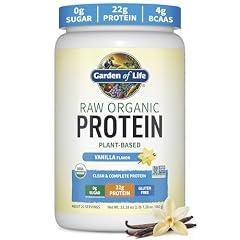
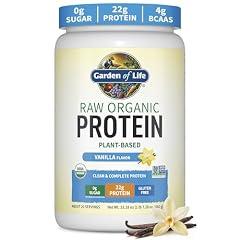
Garden of Life Vegan Vanilla Protein Powder
Overview
This is a vanilla plant-protein powder sold as a 20-serving container. A 33 g scoop is intended for shakes, baking, or use around workouts. Garden of Life states that each serving supplies 22 g protein, 4 g BCAAs, zero sugar, vitamins A, D, E and K, plus a probiotic and digestive-enzyme blend. Its protein ingredients are pea protein alongside sprouted rice, grains, seeds, legumes and chlorella. The 22 g serving is broadly aligned with evidence-based post-exercise protein amounts for many adults, although the brand does not publish a product-specific essential-amino-acid or leucine analysis. The exact vanilla product is currently listed by NSF under its functional-food certification program. Raw Organic Protein is also on Informed Choice's current certified-products list for North America, supporting independent controls beyond the manufacturer label.
What works
- The stated 22 g protein serving fits the roughly 20 g high-quality protein amount commonly used after exercise for a 150-pound adult.
- NSF currently lists the exact vanilla powder under its certification program, with Garden of Life and a U.S. facility identified.
- Informed Choice currently lists Raw Organic Protein for North America, indicating ongoing banned-substance control relevant to tested athletes.
- The product is presented as USDA Organic, Non-GMO Project Verified, Certified Vegan and NSF gluten-free, with dairy and soy excluded as manufacturer-stated properties.
- Its protein sources are named rather than hidden in an unnamed proprietary protein blend.
What does not
- The brand does not publish a current lot-matched certificate of analysis that buyers can use to verify protein, heavy metals and microbiological results for their container.
- A California Proposition 65 case covering Raw Organic Protein powders was settled in 2015 over lead and cadmium exposure concerns. This is historical, not an active recall, but it makes current lot transparency especially important.
- Garden of Life's publicly available heavy-metals table is dated July 2020 and reports typical results, not a current independently issued report for a purchasable lot.
- The product claims a complete amino-acid profile, but no public amino-acid panel or leucine dose was found for this exact formula.
- The enzyme and probiotic blend is named, but the label does not provide enzyme activity units or strain-specific evidence sufficient to substantiate broad digestive claims.
Who is it for
This product suits adults who need a convenient vegan protein addition after resistance exercise or between meals, especially those avoiding dairy and soy ingredients. The stated 22 g protein serving is a practical amount for a shake after training, provided the rest of the day's food supplies adequate total protein and calories. It also fits buyers who value independently listed NSF contents certification and Informed Choice screening, but who do not require access to a current lot-specific laboratory report before use.
Who is it not for
It is not well suited to people who need rigorous, current heavy-metal documentation for every protein powder lot, including frequent daily users, pregnant people, children, or people advised by a clinician to minimize contaminant exposure. Those with sesame allergy should scrutinize the ingredient panel because sesame sprout is listed. People sensitive to erythritol, stevia, gums, added enzymes, or probiotic cultures may also find the formula less tolerable. It is not a complete meal replacement because its main function is supplemental protein.
Integrity
The product has meaningful independent certification support. NSF's current registry identifies Raw Organic Protein Vanilla, its 33 g serving, the responsible company and a U.S. facility. Informed Choice also currently lists Raw Organic Protein for North America, which adds banned-substance screening relevant to competitive sport. Garden of Life presents the formula as USDA Organic, Non-GMO Project Verified, Certified Vegan and NSF gluten-free. These designations support ingredient and allergen-related claims, but do not replace a lot-specific contaminant report. Contaminant history needs context. A 2015 California Proposition 65 settlement covered this powder family for lead and cadmium, with requirements to reduce exposure or provide warnings. Garden of Life later published typical heavy-metal figures for vanilla in July 2020, but this was not a current lot-matched certificate from an identified accredited laboratory. The container is a rigid jar, and no verified recycled-content, refill, or consumer disposal instructions were located. Organic sourcing is a credible lower-pesticide-input attribute, but the brand does not quantify this product's climate footprint or ingredient origins.

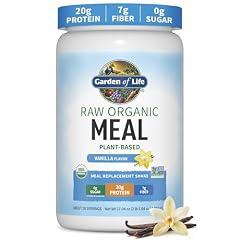
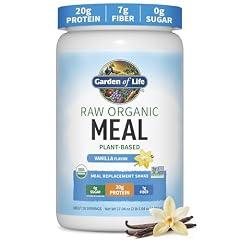
Garden of Life Vegan Meal Replacement Shake
Overview
This is a 37.04-ounce vanilla plant-protein powder with 28 servings. It is mixed as one scoop in 8 to 10 ounces of water or plant milk, and is marketed for meal replacement, a snack, or post-workout use. The manufacturer states that each scoop provides 20 g of organic plant protein, 7 g fiber, 18 vitamins and minerals, probiotics, and digestive enzymes. The protein blend is disclosed, led by organic pea protein and sprouted brown rice protein, followed by grains, seeds, and legumes. An independent NSF registry currently lists Raw Organic Meal Vanilla as a certified functional food at one 37.5 g scoop. That is meaningful external product verification, but the brand does not publicly provide a current lot-specific certificate showing protein, heavy-metal, and microbiological results.
What works
- The exact vanilla powder is currently listed in NSF's independent functional-food certification registry.
- The stated 20 g protein serving aligns with the approximate post-exercise protein amount cited by sports-nutrition guidance for a 150-pound person, provided total daily protein intake is adequate.
- The ingredient list identifies the main protein sources, including pea and sprouted brown rice, rather than using an unnamed protein blend.
- The manufacturer states USDA Organic, Non-GMO Project Verified, vegan, and NSF Certified Gluten-Free status for this product line.
- The stated 7 g fiber per scoop can make a liquid snack more filling than a low-fiber protein-only shake.
What does not
- A 2015 California settlement covering Raw Organic Meal required lead and cadmium reduction or warnings, so contaminant control is a documented historical concern for this product family.
- A 2016 multistate Salmonella outbreak was linked to specific recalled Raw Meal lots, including vanilla products. Those lots are long expired, but the event is relevant microbiological history.
- The brand's public heavy-metal table is from 2020 and reports typical results, not a current lot-matched certificate with methods and laboratory identification.
- At roughly 150 calories per serving, this is a light meal replacement when mixed with water and may not supply enough energy for a full meal.
- It contains sesame, erythritol, guar gum, many botanical ingredients, enzymes, and a probiotic, which can complicate allergy and digestive-tolerance decisions.
Who is it for
This product suits an adult who wants a portable, plant-based breakfast or snack base and is comfortable building it into a more substantial meal with fruit, milk, nut butter, or other foods. It is particularly relevant for people avoiding dairy or soy who value disclosed pea and rice proteins, organic ingredient sourcing, and a current independent NSF product listing. For recreational post-workout use, its stated 20 g protein serving is a realistic contribution to a broader daily protein plan, not a complete recovery strategy by itself.
Who is it not for
It is not a simple single-ingredient protein powder, so people with sesame allergy, sensitivity to erythritol or guar gum, or intolerance of enzyme and probiotic blends should select a simpler formula. People with celiac disease should still check each container's gluten-free marking and seal integrity. Those relying on a powder as a nutritionally complete, high-calorie meal should choose a product or food combination that supplies enough calories and fats. Tested athletes should use a product specifically enrolled in a banned-substance certification program.
Integrity
The product's strongest confirmed quality signal is its current listing in NSF's functional-food registry for Raw Organic Meal Vanilla. The manufacturer also states USDA Organic, Non-GMO Project Verified, vegan, and NSF Certified Gluten-Free status. Organic sourcing can restrict many synthetic agricultural inputs, but it does not establish a low climate footprint, and the brand does not provide ingredient-origin or product-level climate-impact data for this powder. Safety history needs context. Specific Raw Meal vanilla lots were recalled during the 2016 Salmonella Virchow outbreak, which sickened 33 people across 23 states and led to six hospitalizations. A California settlement also covered lead and cadmium in the Raw Organic Meal family. The brand published typical heavy-metal figures in 2020, but it does not publish current lot-specific reports. The powder is sold in a rigid plastic canister, with no verified recycled-content or local disposal guidance found.

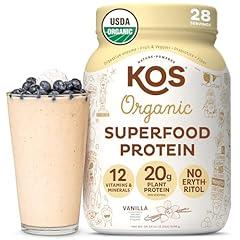
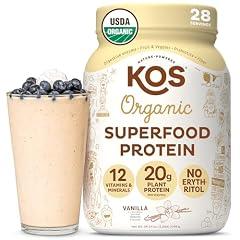
KOS Vegan Protein Powder Vanilla USDA Organic
Overview
This is a vanilla plant-protein powder sold in a 28-serving tub. The manufacturer directs users to mix two scoops with 8 to 12 ounces of water or non-dairy milk. Its stated serving supplies 20 g protein, 3 g fiber, 12 added vitamins and minerals, digestive enzymes, and sweetening from coconut sugar, stevia, and monk fruit. It is a powder for adding protein to drinks, oats, or baking, rather than a nutritionally complete meal. The protein ingredients are identified as pea, pumpkin seed, quinoa, chia, and flax, but the product does not publish an amino-acid analysis or a finished-product protein potency result. A lot-specific report from independent laboratory Qalitex, dated November 4, 2025, reported all four tested heavy metals below 0.005 ppm and absent tested pathogens for lot 10030. That result is encouraging, but it does not erase the product's prior California lead-related consent judgment or verify every tub currently sold.
What works
- The stated 20 g serving is within the commonly used 20 to 40 g per-dose range for supplemental protein around resistance exercise.
- Protein sources are named rather than hidden behind a generic protein blend, including pea, pumpkin seed, quinoa, chia, and flax.
- A published lot-specific laboratory report identifies the lot and test methods, with low reported heavy-metal results and absent tested pathogens.
- The manufacturer clearly states that the formula excludes dairy, soy, gluten, and erythritol.
What does not
- The brand does not publish a full amino-acid profile, leucine content, protein digestibility measure, or finished-product protein assay, so muscle-protein quality cannot be fully assessed.
- A California Proposition 65 consent judgment covered the vanilla plant-protein product for lead. This is a documented historical safety concern, even though the later published lot report is more favorable.
- The lot report covers metals and microbiology, but not the labeled protein amount, pesticides, amino-acid identity, or sport-prohibited substances.
- Inulin, acacia gum, coconut ingredients, stevia, monk fruit, and digestive enzymes can be poorly tolerated by some people. The product does not provide a public cross-contact policy.
Who is it for
This product fits an adult who wants a sweetened vegan protein addition for smoothies, oats, or baking and prefers to avoid dairy, soy, gluten, and erythritol. A 20 g serving can help close a dietary protein gap, especially when used alongside a normal meal pattern and resistance training. It is most suitable for someone comfortable checking the tub's lot number and using the brand's batch report tool, because the public quality evidence is lot-specific rather than an ongoing independent product certification.
Who is it not for
It is not well suited to drug-tested athletes, because no current NSF Certified for Sport, Informed Sport, or equivalent banned-substance enrollment was found for this exact product. People who need a true meal replacement should choose a product or meal with substantially more energy and complete nutrition, since this serving is only about 160 calories. Those with a history of sensitivity to fermentable fibers, sugar substitutes, coconut, or digestive-enzyme blends may also need a simpler formula. Pregnancy, breastfeeding, kidney disease, and medically prescribed diets warrant clinician guidance.
Integrity
KOS states that its plant-protein range uses USDA Organic certified ingredients through CCOF, and its formulation is entirely plant based. Plant proteins generally avoid the direct livestock inputs associated with animal-derived protein, but KOS does not publicly identify ingredient countries of origin, farm-level practices, or a product-specific climate footprint. The powder is sold in a rigid plastic tub, with no verified recycled-content, refill, or location-specific disposal information identified. The main safety issue is mixed evidence over time. A November 2025 lot report from ISO 17025-accredited Qalitex found lead, cadmium, arsenic, and mercury below 0.005 ppm and found no tested pathogens. However, a California Proposition 65 consent judgment also covered the vanilla product for lead and imposed testing and warning-related requirements. Buyers should treat the specific lot report as relevant to its listed lot, not as proof for every batch.
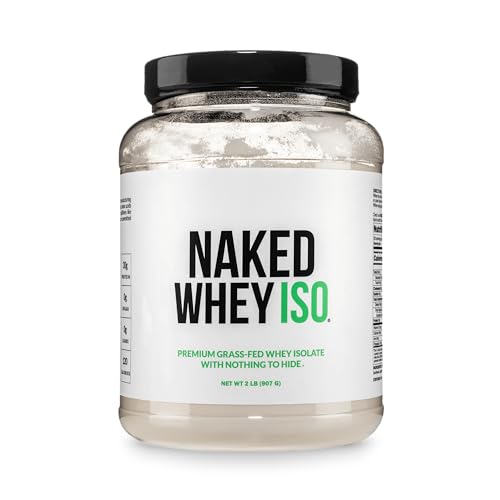
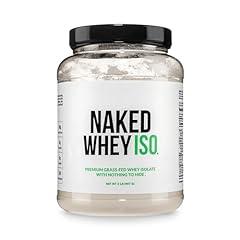
Naked Whey Isolate Protein Powder
Overview
This is an unflavored, 2-pound whey isolate powder intended for shakes, smoothies, and baking. The manufacturer directs users to mix two rounded scoops with 6 to 10 ounces of liquid. It lists 30 g protein and 8.4 g branched-chain amino acids per serving, with whey protein isolate and sunflower lecithin as the only ingredients. The use case fits established sports-nutrition evidence. NIH identifies whey as a complete protein and notes that roughly 20 g of high-quality protein can support training recovery, so the stated 30 g serving is a realistic dose for supplementing dietary protein. The product itself has not been located in a current NSF Certified for Sport, Informed Sport, USP, or comparable product registry. The brand says nutritional values receive independent verification and that a certificate of analysis is available on request, but no current lot-matched report was publicly available for review.
What works
- The stated 30 g whey serving exceeds the roughly 20 g high-quality protein amount NIH describes for exercise recovery use.
- The manufacturer lists a short, two-ingredient formula with no sweeteners, flavors, or added sugar.
- Whey isolate is a clearly identified complete milk protein rather than a proprietary blend or collagen-based protein count.
- The manufacturer states only 0.1 g lactose per serving, which may be useful for some people with mild lactose sensitivity.
What does not
- Milk is inherent to whey protein, and the accessible manufacturer page does not provide a prominent detailed allergen or cross-contact statement.
- No current, lot-matched public certificate of analysis was available to verify protein content, heavy metals, or microbiological results for a purchased unit.
- This exact whey isolate was not found in the reviewed sport-certification registries, so banned-substance control is unproven for tested athletes.
- The manufacturer describes the isolate as New Zealand sourced on the product page, while its FAQ refers more broadly to farms in New Zealand, Ireland, and the UK. That leaves the source of an individual tub unclear.
Who is it for
This product suits an adult who wants an unflavored whey powder to help close a protein gap around resistance training, recovery, or a protein-poor meal. The stated 30 g serving is within an evidence-based range for high-quality post-exercise protein, and the two listed ingredients make it practical for smoothies, oatmeal, or recipes where sweeteners and flavors are unwanted. It may also suit someone with mild lactose sensitivity who has previously tolerated whey isolate, while recognizing that the low-lactose figure is manufacturer-stated rather than independently verified by a public current-lot report.
Who is it not for
It is not appropriate for anyone with a milk allergy because whey is a milk protein. People with severe lactose intolerance should not treat the stated 0.1 g lactose figure as a guarantee of symptom-free use, especially without a current lot report. Buyers with celiac disease who require certified gluten-free products should seek a product with an independently searchable gluten-free certification rather than relying on an unverified claim. Tested competitive athletes should also choose a product enrolled in a current banned-substance certification program, since that protection was not verified here.
Integrity
The central health strength is straightforward protein delivery. The manufacturer identifies whey isolate as the protein source and lists 30 g protein per serving. Human evidence supports complete proteins such as whey as a way to supplement adequate daily protein around training, but protein powder does not replace a balanced diet or training program. The formulation contains milk-derived whey and sunflower lecithin. The brand states the product has very low lactose, no artificial sweeteners or flavors, and pasture-raised sourcing, but these claims were not independently certified for this exact product. Its sourcing disclosure is also inconsistent, naming New Zealand on the product page and New Zealand, Ireland, and the UK in its FAQ. No material declaration, recycled-content claim, refill option, or location-specific disposal instruction was located for the tub. Public current-lot contaminant and microbiological data were also not available.
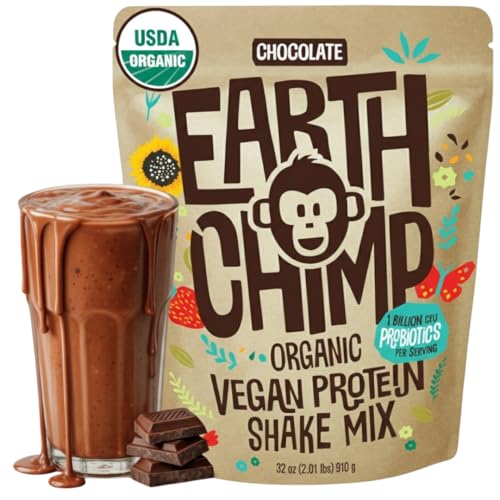
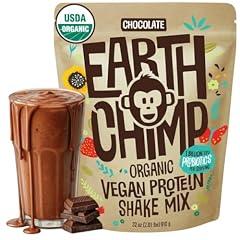
EarthChimp Organic Vegan Protein Powder Chocolate
Overview
This is a 2-pound chocolate plant-protein powder sold in a pouch, with 26 stated servings. The brand's product guide states that each serving supplies 20 g protein, 120 calories, 4 g fiber, 3 g sugar with no added sugar, and Bacillus coagulans probiotics. It is intended for shakes, smoothies, baking, snacks, and post-workout use. The protein dose is within the roughly 20 g post-exercise amount cited by NIH for a 150-pound athlete, although no amino-acid analysis or finished-product trial was located. The product has an important label-fidelity concern. EarthChimp's current product page describes pea, pumpkin, sunflower, and coconut proteins, while its product guide and ingredient page describe pea, pumpkin, and coconut proteins, with no sunflower. That discrepancy makes the precise formula and amino-acid profile unclear.
What works
- The manufacturer-stated 20 g protein serving is a practical post-workout amount for many average-size adults.
- The brand identifies a plant blend rather than presenting protein as collagen or an unspecified protein source.
- The official product guide states 4 g fiber and no added sugar per serving.
- The product is labeled USDA Organic and is marketed as vegan, dairy-free, soy-free, and gluten-free.
- The stated formula avoids sugar alcohols and uses monk fruit rather than erythritol.
What does not
- EarthChimp's own current pages conflict on whether sunflower protein is part of the blend, so the exact formula is not consistently documented.
- No product-specific amino-acid profile was located, so essential-amino-acid and leucine delivery cannot be assessed.
- No current lot-matched, independently issued certificate of analysis for heavy metals, microbiology, or protein content was located.
- No searchable NSF, USP, UL, Informed Sport, or NSF Certified for Sport listing was located for this product.
- The meal-replacement framing is not well matched to a 120-calorie serving unless it is combined with other foods.
Who is it for
This product fits an adult who wants a vegan protein addition for smoothies, oats, or a post-exercise snack and who values an organic-labeled formula. A 20 g serving can help fill a protein gap after resistance exercise or between meals, especially for someone avoiding dairy or soy. It is more suitable as a protein component than as a standalone meal. Buyers should be comfortable relying on manufacturer-stated nutrition and dietary claims rather than public lot-level test results.
Who is it not for
It is not well suited to tested athletes or other buyers who require an ongoing banned-substance certification, because no recognized sport-testing registry listing was located. People who need documented low heavy-metal exposure, such as frequent daily users, pregnant people, or highly risk-averse households, should note the absence of a public lot-specific contaminant report. Anyone with severe food allergies, celiac disease, or sensitivity to inulin, psyllium, monk fruit, or probiotic products should seek more specific allergen and tolerance documentation first.
Integrity
The health-positive basics are a manufacturer-stated 20 g plant-protein serving, 4 g fiber, no added sugar, and Bacillus coagulans. Human research supports adequate high-quality protein after training, and plant-protein blends can support post-exercise muscle protein synthesis. However, this product has not supplied an amino-acid profile, so its essential-amino-acid contribution cannot be confirmed. Evidence for Bacillus coagulans exists in certain studied strains and formulations, not necessarily this product's strain or dose. The package displays the USDA Organic seal and the brand states it is made in Dublin, Ireland. Organic certification can support restrictions on certain agricultural inputs, but EarthChimp does not publicly identify protein-source origins, provide a current lot report, or document pouch material and disposal instructions. The brand also states that it plants one tree per purchase, but a third-party verification record for that claim was not located. No relevant U.S. recall, warning letter, or California exposure warning was located in the sources searched.