
10 Best Powerstation
 Daniel Kenitz
Please note that we participate in affiliate marketing programs. When you purchase through links on our site, we may earn a commission. As an Amazon Associate we earn from qualifying purchases. This comes at no additional cost to you and helps support the resources required to provide valuable content.Advertising Disclosure
Top-rated Powerstation Comparison
1

2
4
5
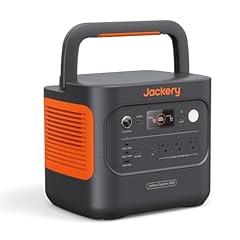
6
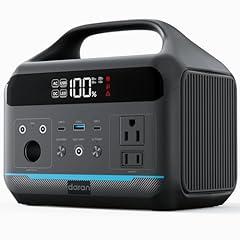
7
8
9
Portable power stations: what to look for
A portable power station stores electricity in a rechargeable battery and supplies it through AC outlets, USB ports, and sometimes 12V outputs. It can replace a fuel generator for selected portable loads, but it is not automatically a whole-home battery or a safe way to energize building wiring. The right choice depends on the devices you need to run, their continuous and startup wattage, how long they must operate, how quickly the station can recharge, and how much weight you can carry.
Start with usable energy, not the headline watt-hour number. A battery’s stated capacity is usually measured inside the pack; energy delivered at an outlet is lower after inverter and charging losses. In the supplied testing, stations rated around 768Wh to 1,152Wh delivered roughly 600Wh to 1,030Wh through AC, depending on load and method. Look for an independent test of the exact product that discloses load, temperature, cutoff, and whether AC, USB, or DC energy was measured. Continuous output and surge behavior matter just as much: a 1,800W rating does not mean every appliance will start, and a temporary “lifting” or “boost” mode may be limited to resistive loads or reduce voltage.
Charging claims also need conditions. “Fast” charging can refer to a particular wall-input mode, temperature, or percentage range. Independent tests in this group found full AC recharges ranging from about 55 minutes to under two hours, while solar charging was substantially slower on larger batteries with limited solar-input ceilings. Runtime, solar, UPS, expansion, and cycle-life claims should be checked against the exact manual and specification sheet rather than treated as universal figures.
For electrical safety, the strongest evidence is a current, model-specific listing from an OSHA-recognized Nationally Recognized Testing Laboratory. Check the exact model in UL Product iQ for UL 2743, the Intertek ETL directory, or the CSA Group listing database. A brand’s general statement that a product “meets” a standard, or a logo that cannot be independently searched, is weaker evidence. Battery safety documentation should identify the chemistry, pack protections, charging and discharge limits, and provide a model-matched UN 38.3 transport test summary. Protection details should cover overheating, short circuit, overcurrent, overvoltage, overload, and low-temperature charging, with clear fault behavior.
A UPS or home-backup label is not permission to connect the product to household wiring. Confirm the transfer equipment and installation requirements in the exact manual; never backfeed through a wall outlet. Many supplied reviews exclude servers, workstations, medical or other safety-critical equipment because transfer may take several milliseconds. Also check recalls and corrective actions for the exact product in CPSC and related safety databases.
Common limitations recur across this category. These products are generally not weatherproof, should be kept dry and ventilated, and should not be used when damaged, swollen, hot, or wet. Small stations cannot provide long appliance runtime; larger ones can be heavy and may have meaningful idle draw. A gasoline generator has additional carbon-monoxide, exhaust, fuel-fire, and hot-surface hazards and must be operated outdoors. Finally, lithium batteries should not go in household trash or curbside recycling; use an appropriate battery or household-hazardous-waste route, especially for damaged packs.
Integrity
## Health and Ecology The review scores below reflect the quality and completeness of the evidence supplied for each product. A higher score means the relevant documentation or testing was stronger and more model-specific; it does not mean a product is risk-free or suitable for every load.
HHealth & Safety
Verified electrical safety listing
This measures whether the exact product is listed by an OSHA-recognized testing laboratory to an applicable portable-power-pack standard, such as UL 2743. It matters because a searchable, current listing is stronger than a self-issued logo. Among these products, the Jackery Explorer 1000 v2 scored 94, while several products scored 62–74 because no exact public UL, ETL, or CSA record was confirmed.
Battery fire-safety documentation
This measures whether chemistry, pack protections, operating limits, and a model-matched UN 38.3 transport summary are documented. Lithium stations need this evidence for both fire-risk planning and transport. The Jackery Explorer 2000 Plus scored 87 because an exact transport report was available; many others scored 68–75 because no public model-matched summary was found.
Protection against fire, shock, and overload
This measures documented safeguards for overheating, short circuit, overcurrent, overvoltage, low-temperature charging, and overload, including what the product does after a fault. Clear limits in an exact manual matter more than a generic BMS claim. Scores ranged from 54 for the EcoFlow Delta 3 Plus, where high-load thermal concerns were reported, to 87 for the Jackery Explorer 1000 v2.
Safe home-backup and transfer use
This measures whether backup and UPS claims explain transfer time, output limits, compatible transfer equipment, and installation requirements without implying that a station can safely backfeed a building. Most products are plug-in backup sources, not grid-connected systems. Stronger scores went to products with clearer limits, such as the Jackery Explorer 2000 Plus at 78; medical, server, workstation, and home-wiring exclusions remain important.
Recall and corrective-action record
This measures whether relevant recalls, regulator warnings, or unresolved defect actions affect the brand or exact product. A higher score reflects no relevant unresolved action found and transparent handling where applicable. Scores were generally 70–78 because exact-product recalls were not identified, but the EcoFlow reviews noted a separate Delta Max 2000 recall, showing why buyers should check the exact model rather than rely on brand reputation.
EEvidence
Independently tested usable power
This measures outlet-level watt-hours, continuous output, surge behavior, voltage stability, and recharge performance under disclosed conditions. It is one of the most useful ways to distinguish nominal capacity from delivered energy. Scores ranged from 60 for the ALLWEI product, with no credible independent capacity test, to 91 for the Jackery Explorer 500 v2, which had independent AC, USB-C, DC, and continuous-output measurements.
Honest runtime, solar, UPS, and cycle claims
This measures whether headline claims state the conditions and limitations that make them true. High-quality evidence distinguishes a temporary surge mode from continuous output, cell capacity from outlet energy, and a UPS transfer of several milliseconds from zero interruption. Scores ranged from 50–57 for products with conflicting or weakly supported specifications to 82 for the Jackery Explorer 500 v2, whose claims were better aligned with testing and manual limits.
Independent evidence transparency
This measures the amount of current, model-specific third-party evidence available beyond brand marketing, including certifications, test reports, warranty terms, and technical documents. The Jackery Explorer 1000 v2 scored 84 because its exact model appeared in a public SGS certification record and had independent efficiency testing. Products without searchable certification, transport documentation, or calibrated performance reports generally scored 66–76.
EEcology
Long service life and repair support
This measures expected cycle life, warranty, service, firmware support, spare parts, and whether components can be repaired or replaced. Longer use can reduce early electronic waste, but manufacturer cycle claims are not the same as independent testing. Scores reached 82 for the Anker SOLIX C300 DC, supported by a three-year warranty and documented support, while sealed products with limited repair information scored closer to 69–73.
Efficient power delivery
This measures energy lost during charging, AC or DC conversion, and standby. Efficiency matters because losses reduce runtime and require more electricity to refill the battery. Independent results separated products clearly: the Jackery Explorer 500 v2 scored 89 and delivered 73% overall AC charging efficiency in its test, while the Anker SOLIX C300 scored 69 for measured overall AC efficiency.
Responsible battery end-of-life plan
This measures whether the brand gives U.S. buyers a practical collection or take-back route and safe instructions for damaged batteries. Lithium products must not enter household trash or curbside recycling. Scores were mostly 69–75: Anker’s C300 DC scored 74 with recycling and a mail-back route, while several brands offered only general recycling instructions without a named U.S. collection partner.
Credible environmental claims
This measures whether claims about solar use, recyclability, recycled content, or environmental benefit are specific and supported, rather than suggesting the battery is impact-free. Scores clustered from 64 to 74. A solar-input option alone is not lifecycle evidence, and the reviews generally found no product-specific life-cycle assessment or recycled-content substantiation. Higher-scoring claims were still qualified rather than treated as proof of zero impact.
Full reviews

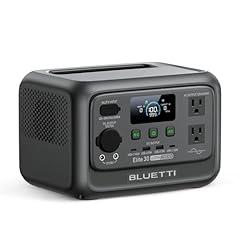
BLUETTI Elite 30 V2 Solar Generator
Overview
This is a compact lithium iron phosphate portable power station for charging and running small electronics, lights, networking gear, tool batteries, and limited household loads. BLUETTI states that it stores 288Wh, supplies 600W continuously, weighs about 9.5 pounds, and provides two AC outlets, USB-C ports rated to 100W and 140W, USB-A, 12V, and car-style DC outputs. Its manual gives useful operating limits that qualify the headline claims. The 1,500W Power Lifting mode is only for pure resistive loads, while actual output remains 600W. BLUETTI also states an outage switchover of 10ms and 80 percent AC charging in 45 minutes at 77°F. A TechRadar reviewer used a unit for about 130 days during work, travel, and storm outages, but did not publish calibrated capacity, efficiency, voltage-regulation, or transfer-time measurements.
What works
- The manufacturer provides a concrete 600W continuous-output limit and port-level ratings, which makes load planning more practical.
- The official documentation specifies LiFePO4 chemistry, charging and discharge temperature ranges, a 5-year warranty, and a claimed 3,000-plus cycle life.
- The manual documents inverter overload, overtemperature, short-circuit, PV overvoltage, DC overcurrent, and low-temperature charging protections.
- A hands-on reviewer reported practical use for small-device charging, tools, modem or router backup, and short outage tasks over roughly 130 days.
What does not
- No current, model-specific UL, ETL, or CSA listing was independently located in the relevant public certification registers, so electrical safety certification cannot be confirmed.
- No model-matched UN 38.3 transport test summary was publicly located. The chemistry and safety instructions are documented, but transport-test evidence remains unverified.
- No publicly available calibrated independent test report was located for usable AC capacity, idle draw, outlet efficiency, recharge speed, or 10ms transfer performance.
- The UPS documentation specifically says not to use it for data servers or workstations that require high-performance UPS behavior.
- Its 288Wh capacity is inherently limited for long-duration household backup, and the manual rates the enclosure only IP20, not rainproof.
Who is it for
It suits a person who needs a carryable power source for phones, laptops, cameras, routers, small lights, tool-battery charging, or short outage tasks, and who can keep combined AC loads within 600W. The low weight and broad port selection make it practical for car travel, camping, job sites, and moving around a home during a blackout. It also fits buyers who value a documented LiFePO4 battery and a manufacturer-stated 5-year warranty, while accepting that runtime will be modest for AC appliances.
Who is it not for
It is not appropriate for someone seeking whole-home backup, long refrigerator runtime, medical equipment that requires a specified uninterrupted supply, data servers, or workstations. BLUETTI itself says the UPS mode is not for high-performance UPS applications. It should not be used outdoors in rain or high humidity because the documented enclosure rating is IP20. Do not connect it to household wiring or attempt backfeed through an outlet. A properly selected transfer setup and qualified electrical guidance are needed for building-circuit backup.
Integrity
The product uses a LiFePO4 battery, and the manufacturer documents charging from 32°F to 104°F, discharge from minus 4°F to 104°F, ventilation, grounding, and storage away from flammable materials. The manual also lists responses for overload, short circuit, inverter overtemperature, PV overvoltage, and charge or discharge temperature faults. Those are useful documented safeguards, but they are manufacturer documentation rather than a model-specific public NRTL listing. No model-matched UN 38.3 summary was publicly located. BLUETTI states more than 3,000 cycles, up to 10 years of service, and a 5-year warranty. The manual tells owners to use designated recycling centers, not household trash, and to contact a professional battery recycler for a malfunctioning battery. It does not identify a U.S. product take-back program or named collection partner. A search of CPSC recall materials did not identify a recall or product-safety warning for this exact product as of August 10, 2026.

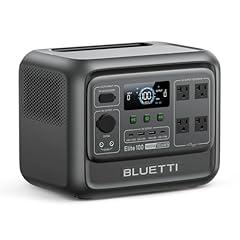
BLUETTI Elite 100 V2 Solar Generator
Overview
This is a 25.3-pound portable power station with a 1,024Wh lithium iron phosphate battery, four 120V AC outlets, USB ports, 12V outputs, and a 1,800W AC-output limit. It is intended to run plug-in devices during camping, travel, or a short outage, and to recharge from AC power, solar, a vehicle, or a generator. The official manual documents 0°C to 40°C charging and -20°C to 40°C discharging limits. BLUETTI states 1,200W maximum AC charging, 1,000W maximum solar input, 80 percent charging in 45 minutes at 25°C, and UPS switchover within 10ms. Independent reviewers confirmed it operated several household loads separately, while one test noted that a sustained 2,000W induction load exceeded its capability. No publicly searchable model-specific UL, ETL, or CSA portable-power-pack listing, model-matched UN 38.3 test summary, or calibrated usable-capacity report was located.
What works
- The official manual clearly specifies outlet limits, solar-voltage limits, temperature limits, and fault codes for overload, short circuit, overtemperature, and DC overcurrent.
- Lithium iron phosphate chemistry and a manufacturer-stated 4,000-plus cycles to 80 percent capacity support a potentially long service life, although no public cycle-life test report was found.
- A 60-month manufacturer warranty is listed for this product in the US.
- Independent hands-on reviews found the unit could run several ordinary household appliances individually within its stated output limit.
- The manual specifically cautions that motors and compressors can draw two to four times their rated power, which is useful information for avoiding overloads.
What does not
- No model-specific UL, ETL, or CSA electrical-safety certification could be independently confirmed in the relevant public listing directories.
- A model-matched UN 38.3 lithium-battery transport test summary was not publicly located, despite the product being a large lithium battery pack.
- No independent, calibrated report was found for usable AC watt-hours, conversion efficiency, idle draw, voltage regulation, or surge behavior.
- The UPS claim has an important manufacturer limitation, it is not intended for data servers or workstations requiring a high-performance UPS.
- This is a plug-in backup source, not documented as equipment for connecting to household wiring or backfeeding a panel. It lacks a supplied transfer switch or installation instructions for that use.
- The manual provides general recycling directions but identifies no US take-back program or named collection partner for the complete product.
Who is it for
It suits a camper, road-tripper, renter, or homeowner who needs a portable source for lights, phones, laptops, a router, small kitchen appliances, or a refrigerator during a brief outage. The 1,024Wh capacity and 1,800W AC limit fit intermittent loads rather than whole-home demand. It also suits users who will operate it indoors in a dry, ventilated space, follow the stated temperature limits, and plug essential devices directly into the unit instead of attempting household-panel connection.
Who is it not for
It is not appropriate for anyone planning to energize household circuits, use a wall outlet to feed power back into a building, or install it as a substitute for listed transfer equipment. It is also unsuitable as the only backup for servers, workstations, or other equipment needing a high-performance UPS, because the manual expressly excludes those uses. Avoid it for sustained loads above 1,800W, wet or dusty exposure, cold-weather charging below 0°C, or safety-critical use where independently verified electrical listing and capacity data are required.
Integrity
The documented safety information is reasonably detailed for operating limits. The manual identifies overload, short-circuit, overtemperature, DC-overcurrent, PV-overvoltage, and low-temperature charging faults. It instructs users to keep the unit away from flammable materials during storage, avoid damaged ports and cables, and use qualified service personnel. It also says the UPS mode should not be used for servers or workstations requiring high-performance backup. No exact-product CPSC recall or regulator warning was located in the searched US sources. The battery uses lithium iron phosphate chemistry, and BLUETTI lists a five-year warranty plus a manufacturer-stated 4,000-plus cycles to 80 percent capacity. Those are favorable durability signals, but public independent cycle testing and repair documentation were not found. The disposal guidance directs owners to recycling centers and warns against putting a malfunctioning battery in a collection box, but it does not provide a named US take-back route. Environmental claims for a bio-based enclosure apply to a separately identified version, not clearly to this dark-gray product.

VTOMAN 600W Portable Power Station
Overview
This is a compact lithium iron phosphate portable power station with a 299Wh battery, two AC outlets rated at 600W continuous output, a stated 1200W peak, three USB-A ports, one 60W USB-C port, and 12V DC outputs. It is intended for low to moderate power devices during camping, travel, and short outages, rather than sustained household backup. The manufacturer says it weighs 14.8 pounds and can expand to 939Wh with a separately sold battery. The core capacity claim has meaningful independent support. A detailed third-party test of the same PB-20 version measured 273Wh from the AC output at a 150W resistive load. The manufacturer also documents a LiFePO4 battery, a 12V to 30V and 100W maximum input, and a 0°C to 55°C charging range. Its published specifications conflict in places, including an earlier page claim of 200W solar input alongside a 100W specification table.
What works
- Independent testing measured 273Wh at the AC outlet under a disclosed 150W load, close to the stated 299Wh battery capacity.
- The manufacturer specifies 600W continuous AC output, 1200W peak output, pure-sine-wave AC, and a 120W shared limit for the 12V DC ports.
- The manufacturer documents LiFePO4 chemistry, a stated 3,000-cycle to 80% capacity target, and charging is limited to 32°F to 131°F.
- The manual explicitly says it is not a UPS and requires manual output activation, which helps set a safer boundary for backup use.
What does not
- No model-specific UL, ETL, or CSA electrical safety listing was located in the relevant public certification registers. FCC, CE, RoHS, and UN38.3 claims are not equivalent to a U.S. NRTL safety listing.
- The brand claims UN38.3 compliance, but no model-matched UN 38.3 test summary was publicly available. Federal transport guidance says the manufacturer must provide this document upon request.
- Published charging specifications are inconsistent. One manufacturer section says 200W solar input and a 3.5 to 4.5 hour recharge, while its specification table states a 100W maximum input.
- The 24-month warranty requires membership registration for the second year, is limited to the original buyer, and no spare-parts, repair-manual, or U.S. battery take-back program was found.
Who is it for
This product suits campers, road trippers, and apartment dwellers who need a portable reserve for phones, laptops, lights, small fans, a CPAP within its load limits, or modest 12V equipment. It is particularly relevant when a roughly 299Wh battery and 600W AC ceiling fit the actual devices, and when the user can charge it before travel or has a correctly matched solar panel below the stated 30V input limit. It also fits users who value independently measured outlet capacity more than rapid wall charging.
Who is it not for
It is not appropriate for automatic outage protection of networking equipment, medical equipment, sump pumps, refrigerators that need dependable unattended restart, or any device that requires UPS behavior. The manual specifically says outputs must be turned on manually and that it cannot operate as a UPS. It should not be connected to household wiring, an RV electrical system, or a generator inlet without correctly specified transfer equipment and qualified installation. Buyers needing an independently listed U.S. electrical safety certification should select a product with a model-specific NRTL listing.
Integrity
The battery is manufacturer-identified as LiFePO4, and the documented charging range starts at 32°F, which is an important cold-weather limit for lithium batteries. VTOMAN describes overcharge, overdischarge, overvoltage, overcurrent, short-circuit, temperature protections, and a 600W output limit. Those protections are manufacturer claims, not a substitute for a publicly searchable UL, ETL, or CSA listing. No relevant U.S. CPSC recall or product safety warning was located in the searched records. The product is not a disposal-in-trash item. EPA guidance says lithium-ion devices should go to dedicated battery, electronics, or household hazardous-waste collection, not curbside recycling or household garbage. VTOMAN did not provide a clearly identified U.S. take-back or recycling route for this model. Its solar use claims describe a charging option, but no product-specific recycled-content, lifecycle, or carbon-impact evidence was found.

Anker SOLIX C300 Portable Power Station
Overview
This is a compact portable power station with a 288Wh lithium iron phosphate battery, three 120V AC outlets, USB ports, a 12V car socket, and solar, car, USB-C, or wall charging. It is intended for device charging, lighting, small electronics, and light-duty backup, rather than large appliances or whole-home power. The manufacturer specifies 300W continuous AC output, 600W SurgePad output, 100W maximum solar input, and a 9.1-pound body. Independent testing supports its basic outlet capability and fast wall charging. OutdoorGearLab measured 300W sustained AC output, 230Wh delivered through AC, and a 63-minute full recharge. That AC result is about 80% of the rated cell capacity, which is normal conversion loss but important when calculating runtime. Anker states a 10ms backup transfer, LiFePO4 chemistry, 3,000-cycle design life, and a five-year warranty, but public model-specific electrical listing and UN 38.3 transport-test documentation were not located.
What works
- Independent testing measured 300W sustained AC output, matching the stated continuous limit.
- Independent testing measured a 63-minute wall recharge with the supplied AC cord.
- The manufacturer publishes specific input, output, temperature, solar, and port limits for this product.
- A five-year manufacturer warranty is stated, alongside a LiFePO4 battery and 3,000-cycle design-life claim.
- Anker provides a product recycling page and a mail-back route for eligible U.S. recycling requests.
What does not
- No current model-specific UL, ETL, or CSA electrical safety certification record was located in the public registers checked.
- A model-matched UN 38.3 lithium-battery transport test summary was not publicly available, and detailed pack protection thresholds were not found.
- The 288Wh rating is cell capacity, not assured AC energy. Independent testing measured 230Wh through AC outlets.
- Independent testing and user reporting indicate meaningful inverter idle consumption, so leaving AC output enabled can drain this small battery quickly.
- Its 300W ceiling and 288Wh capacity limit it to low-power backup. It is not a substitute for transfer-switched home backup or a dedicated medical UPS.
Who is it for
This product suits a person who needs a portable source for laptops, phones, cameras, a router, LED lighting, or similarly light AC loads during car camping, field work, short outages, or travel. It is especially practical when compact size matters, since it weighs 9.1 pounds and has a narrow vertical form. Buyers should size loads from independently measured AC capacity of about 230Wh, not the 288Wh cell rating. The stated 100W solar input can be useful for slow daytime replenishment when compatible panels and safe outdoor conditions are available.
Who is it not for
It does not suit households expecting refrigerator, microwave, space-heater, sump-pump, or whole-home backup performance. A 300W continuous AC limit leaves little margin for motor startup and excludes many heating appliances. It also is not the right choice where uninterrupted operation is safety-critical, including medical equipment that requires a certified UPS or documented transfer compatibility. Do not connect it to household wiring or use it to backfeed utility power. Use listed transfer equipment installed for that purpose, and confirm the actual device load before relying on backup runtime.
Integrity
The product uses a LiFePO4 battery, a chemistry generally selected for long cycle life, and Anker states it is designed for 3,000 cycles with a five-year warranty. The official specifications set charging at 32°F to 104°F and discharge at minus 4°F to 104°F, which gives users concrete thermal boundaries. However, public model-specific UL, ETL, or CSA listing evidence was not located, and no public model-matched UN 38.3 test summary was found. Those are documentation gaps, not proof of a defect. No recall specific to this product was located in the U.S. recall sources checked. Anker does offer a recycling page and a mail-back application route, though the page does not clearly establish nationwide collection for this power station. Independent testing shows good direct usability for a small station, but AC conversion and idle losses mean less stored electricity reaches devices than the 288Wh cell figure suggests. Environmental language is broad, without product-specific recycled-content or lifecycle evidence.

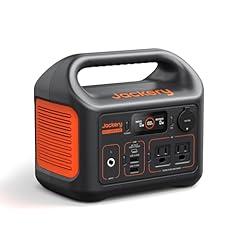
Jackery Portable Power Station 2200W Solar Generator
Overview
This is a 39.5-pound portable battery power station with a 2,042 Wh lithium iron phosphate battery, three 120 V AC outlets, USB outputs, and a 12 V vehicle-style outlet. It is intended to run appliances and electronics directly, recharge from wall power, a vehicle, or compatible solar panels, and provide limited backup power without installing a home battery system. Jackery states 2,200 W continuous AC output, 4,400 W surge output, up to 400 W solar input, and a battery-life target of 4,000 cycles to at least 70 percent capacity. Independent testing measured 1,740 Wh delivered through AC outlets, about 84 percent of rated storage, and confirmed 2,200 W sustained output. The manual also documents a less-than-20-millisecond UPS mode, but limits bypass-mode output to 1,500 W before an outage and warns against data servers, workstations, and similarly interruption-sensitive equipment.
What works
- Independent testing measured 1,740 Wh from the AC outlets, a useful real-world figure for outage and campsite planning.
- Independent testing confirmed 2,200 W sustained AC output, supporting use with many ordinary household appliances and cooking loads within that limit.
- The official manual specifies LiFePO4 chemistry, operating temperature limits, outlet ratings, error guidance, and detailed fire, shock, moisture, and damaged-battery precautions.
- Jackery states a 3-year warranty with an additional 2 years available through registration.
- Jackery offers a U.S. return-for-recycling program for end-of-life power stations purchased through authorized channels.
What does not
- No current, model-specific UL, ETL, or CSA portable-power-pack listing was located in the public certification registers checked. This is missing independent safety-listing evidence, not proof that the product is unsafe.
- A model-matched UN 38.3 lithium-battery transport test summary was not publicly located. The chemistry and handling instructions are documented, but pack-level transport-test evidence remains unverified.
- The product is not a substitute for a professionally installed transfer system. Its manual describes plug-in UPS operation, not connection to household wiring, and identifies a 1,500 W bypass-mode limit before an outage.
- The manual says it is not for equipment needing highly uninterrupted power, including data servers and workstations. A sub-20-millisecond switch is not zero-interruption backup.
- Published AC-output measurements vary by test method and load. The available independent AC test measured about 84 percent of rated storage, so runtime should be planned from usable outlet energy rather than the battery's nominal capacity.
Who is it for
This product suits a buyer who needs a movable, plug-in source of electricity for a short outage, RV, cabin, vehicle-based trip, or campsite and can keep combined AC demand at or below 2,200 W. Its independently measured 1,740 Wh AC output gives a concrete planning figure for refrigerators, networking equipment, lighting, laptops, cooking appliances, or charging gear used in rotation. It also suits someone who can lift or securely transport a roughly 39-pound unit and use it in a dry, ventilated setting.
Who is it not for
It is not for anyone planning to energize a home's branch circuits by plugging it into a wall outlet or making an unapproved grid connection. Household backup wiring needs appropriately rated transfer equipment and qualified installation. It is also unsuitable for wet outdoor exposure, heavy loads above 2,200 W, or critical equipment that cannot tolerate a brief transfer interruption. The manual specifically cautions against servers and workstations in UPS mode. Buyers needing repairable, user-replaceable battery modules should also seek fuller service documentation.
Integrity
The battery uses lithium iron phosphate chemistry, and the manual gives charge and discharge temperature limits, fire and shock precautions, error guidance, and directions to stop using a damaged or abnormal unit. It prohibits disassembly, exposure to heat, water, rain, or snow, and use with damaged cords. The documentation also discloses that UPS transfer is under 20 milliseconds rather than zero milliseconds, plus the lower 1,500 W bypass-mode limit. Publicly searchable model-specific NRTL safety certification and UN 38.3 test-summary evidence were not located during this review. For longevity, Jackery states 4,000 cycles to at least 70 percent capacity and offers 3 years of warranty coverage plus 2 additional years with registration. The battery is not user-serviceable, and public spare-parts or repair-manual support was not found. Jackery documents a U.S. return-for-recycling service for eligible end-of-life units and gives damaged-battery handling instructions. Its broad eco-friendly framing is less substantiated than the recycling policy, with no product-specific life-cycle or recycled-content evidence located.

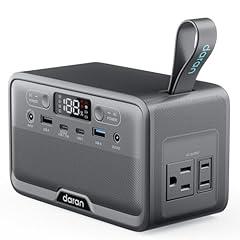
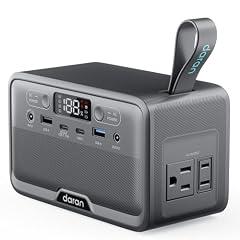
DARAN Portable Power Station 600W 288Wh
Overview
This is a compact lithium iron phosphate portable power station intended for camping, vehicle travel, device charging, and short emergency use. The manufacturer states 288Wh of storage, 600W continuous AC output with 1200W surge capacity, two AC outlets, USB outputs, 12V output, solar input, and wall or vehicle charging. It is not a fuel generator and it should only run loads that remain within its stated output limit. The manufacturer also states a 3,500-plus-cycle battery-life claim, BMS monitoring, and 12 protections. A published manual describes over-temperature, overload, over-voltage, and short-circuit protection, but these claims were not independently tested in the material located. Published specifications are inconsistent across product materials, including output-port details, dimensions, weight, operating temperature, and charging input figures. No model-specific independent usable-capacity, output-quality, efficiency, certification, or transport-test documentation was located.
What works
- Manufacturer states a 288Wh LiFePO4 battery and 600W continuous output, a useful size for low-power appliances and personal electronics.
- The manufacturer lists AC, solar, and vehicle charging options, which can support portable and off-grid use.
- Published instructions describe overload and over-temperature fault warnings, plus BMS protection against overheating, overload, over-voltage, and short circuits.
- The manufacturer states a 3,500-plus-cycle target to 80 percent capacity, which is a potentially meaningful longevity claim if achieved under stated conditions.
What does not
- No current model-specific UL, ETL, or CSA electrical-safety listing was located in the checked public certification sources.
- No model-matched UN 38.3 lithium-battery test summary was publicly located, despite transport rules requiring manufacturers or distributors to make one available on request.
- No independent measurement of usable watt-hours, sustained AC output, surge behavior, standby draw, conversion efficiency, or recharge time was located.
- The manufacturer mentions UPS capability, but the available materials do not state transfer timing, compatible transfer equipment, or installation requirements for home circuits.
- Product materials conflict on ports, weight, dimensions, operating range, and input specifications, so buyers should confirm the label and supplied manual for the exact unit.
Who is it for
This product suits a buyer who needs a small, self-contained power source for phones, laptops, lights, routers, cameras, small 12V equipment, or carefully matched low-power appliances during camping, road trips, or brief outages. It is most appropriate where a stated 600W ceiling and 288Wh battery are adequate, and where the buyer can use individual plug-in devices rather than household wiring. Confirm the actual ports, charging accessories, operating temperature range, and product label before relying on it for a specific device.
Who is it not for
It is not suited to buyers needing independently verified output, tested runtime, documented low idle draw, or a publicly searchable electrical-safety certification. It should not be used to energize home circuits, connect to a breaker panel, or backfeed an outlet. Households relying on uninterrupted medical equipment, high-starting-load appliances, space heaters, cooking devices, or other loads near or above 600W need equipment with model-specific backup documentation and clearly defined operating limits. It is also unsuitable for anyone who needs repair parts or a stated U.S. take-back program.
Integrity
The unit is manufacturer-described as using LiFePO4 chemistry, with BMS monitoring and protections for overheating, overload, over-voltage, and short circuits. Available instructions also call for ventilation, avoiding water and temperature extremes, using approved charging equipment, and not modifying the station. Those are useful operating precautions, but no model-specific UL, ETL, or CSA listing and no public UN 38.3 test summary were found in this review. No relevant U.S. recall or regulator warning was located in the checked sources. The claimed 3,500-plus-cycle life could reduce replacement frequency if it holds in use, but no independent cycle-life report, repair manual, spare-parts catalog, or detailed warranty term was found. The brand materials located do not provide a U.S. take-back route or damaged-battery disposal plan. At end of life, the battery station should not go in household trash or curbside recycling. Use a household hazardous-waste or qualified electronics recycling program, and follow local instructions for damaged batteries.

DARAN Portable Power Station 28000mAh 200W Solar Generator
Overview
This compact battery power station stores a manufacturer-stated 89.6Wh in a LiFePO4 battery and weighs 2.54 pounds. It is intended for low-power electronics, lights, phones, laptops, and similar loads, with two 120V AC outlets rated at 100W total continuous output, plus USB-A, USB-C, and 12V DC outputs. Daran states that the product uses a pure-sine-wave inverter, a BMS with 12 protections, 3,500-plus cycles to 80 percent capacity, and up to 40W solar input. These are manufacturer claims, not public independent laboratory results. A retailer-hosted product page gives charging conditions for some recharge claims, but public evidence did not establish the usable AC watt-hours, inverter efficiency, idle draw, or surge performance of this exact unit.
What works
- Very small 2.54-pound format is practical for carrying with personal electronics.
- Manufacturer states seven outputs, including a 45W USB-C port and two AC outlets for low-draw equipment.
- LiFePO4 chemistry is specifically identified, rather than left unspecified.
- Daran publishes a three-year warranty policy for products bought through authorized channels.
What does not
- No current, model-specific UL, ETL, or CSA portable-power-pack listing was located in the public certification registers checked.
- No model-matched UN 38.3 transport test summary, safety data sheet, or independent thermal test report was publicly located.
- Usable outlet capacity, AC efficiency, voltage regulation, idle consumption, and surge behavior have not been independently verified for this product.
- The 100W total AC limit is restrictive. It is not suitable for heating appliances, cooking devices, hair dryers, or normal refrigerator backup.
- UPS is named in the manufacturer's specifications, but public instructions found do not define transfer timing, compatible equipment, or safe home-transfer use.
Who is it for
This product fits a traveler, camper, car user, or outage-prepared household that needs a compact reserve for phones, tablets, cameras, LED lighting, Bluetooth gear, or a modest laptop load. Its stated 89.6Wh capacity and 100W AC ceiling make it more appropriate for short, low-power tasks than for operating appliances. It also suits buyers who value a small LiFePO4-based unit with direct USB-C charging options and who can keep their expected connected load clearly below the stated output limit.
Who is it not for
It is not for anyone needing dependable home backup, refrigerator runtime, CPAP operation without separately confirming the device's draw, power-tool use, cooking, or any resistive heating appliance. Do not connect it to household wiring, a wall outlet, or a generator inlet, because the available documentation does not identify approved transfer equipment or installation requirements. Buyers who require independently confirmed usable capacity, NRTL electrical certification, published battery transport documentation, repair parts, or measured efficiency should choose a product with those records publicly available.
Integrity
The battery is identified by Daran as LiFePO4, and the company claims BMS monitoring of voltage, current, and temperature plus 12 protections. The product documentation also instructs users not to short circuit, disassemble, expose, crush, heat, or place the battery product in fire or liquid. These are sensible precautions, but the public record reviewed did not provide a model-matched UN 38.3 test summary or an independently searchable U.S. electrical safety listing. No relevant CPSC recall or public CPSC incident report for this product, Daran R100, or Daran NEO was located in the searches performed. Daran states 3,500-plus cycles to 80 percent capacity and offers a three-year warranty, which could support longer use if achieved. However, no public repair manual, spare-parts catalog, take-back program, or U.S. battery recycling route was located. Recycle a failed unit through a qualified battery or household hazardous-waste program, not household trash.

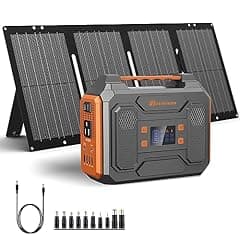
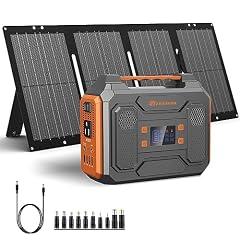
ZeroKor 300W Portable Solar Generator with 60W Foldable Solar Panel
Overview
This product is a compact lithium-ion portable power station intended for small electronics, camping gear, lights, laptops, and other loads below its stated 300W ceiling. The included package is represented as adding a foldable 60W solar panel. The station itself is listed at about 5 pounds and 8.5 by 6.7 by 4.1 inches. Its key figures are manufacturer-stated rather than independently measured. The available R200 manual specifies 280Wh capacity, two 110V AC outlets rated to 300W maximum, one 9V to 12.6V DC output, and USB outputs. It gives a rough runtime formula using 85 percent of rated capacity, and states that AC output does not operate while the unit is charging. I found no public, model-specific UL, ETL, or CSA listing, calibrated capacity test, or public UN 38.3 test summary for this exact product.
What works
- The documented 300W maximum and explicit instruction to keep connected loads below 300W set a clear operating boundary.
- The manual gives a conditional runtime method, using 280Wh times 0.85 divided by device wattage, rather than presenting one universal runtime.
- AC output is intentionally unavailable during charging, reducing ambiguity about AC pass-through use.
- The compact, roughly 5-pound format is manufacturer-stated and practical for carrying to campsites or vehicles.
What does not
- No public model-specific electrical safety listing was located in the UL, Intertek ETL, or CSA sources checked.
- No model-matched UN 38.3 transport test summary, detailed battery protection specification, or independent thermal test was publicly available.
- No independent, calibrated test report was located for usable AC capacity, continuous 300W behavior, voltage stability, charging efficiency, or idle draw.
- The stated life claim exceeds 1,000 cycles, but no cycle-test protocol, repair manual, spare-parts program, or service network was identified.
- The available documentation conflicts on warranty length, with one manual stating 14 months and the catalog record stating 12 months.
Who is it for
This product suits a camper, road-trip user, or outage-prepared renter who needs a light, carryable power source for phones, USB devices, LED lighting, a modest laptop load, or similarly low-watt equipment. It is most appropriate when the user can check each device's running and startup wattage, keep the combined load under the stated 300W maximum, and treat the 280Wh figure as a manufacturer rating rather than a tested delivered-energy result. The included solar panel can be useful where slow daytime recharging is acceptable.
Who is it not for
It is not appropriate for households expecting a home backup system, transfer-switch connection, refrigerator-scale loads, heating appliances, hair dryers, kettles, coffee makers, or equipment with substantial startup surges. It should not be used as a grid-connected power source or as a substitute for approved home standby equipment. Buyers who need a medical-device power plan, uninterrupted computer power, verified battery transport documentation, independently confirmed capacity, or an independently listed electrical safety certification need product-specific evidence that was not publicly located for this unit.
Integrity
The product uses a lithium-ion battery. Its manual warns against disassembly, modification, moisture exposure, and operation beyond the stated 300W limit. It also states that AC output will not pass through while charging. These are useful operating limits, but the public documentation does not identify the cell chemistry, detailed battery-management thresholds, low-temperature charging behavior, or a model-matched UN 38.3 transport test summary. No exact-model electrical safety certification record was located in the public registers checked. No relevant U.S. recall or regulator warning for this exact product was located in the sources reviewed. A solar panel can reduce reliance on wall power during use, but it does not make the battery product impact-free. No ZeroKor take-back or U.S. recycling plan was located. At end of life, EPA guidance says lithium-ion devices should not enter household trash or curbside recycling, and damaged batteries need specialized handling.
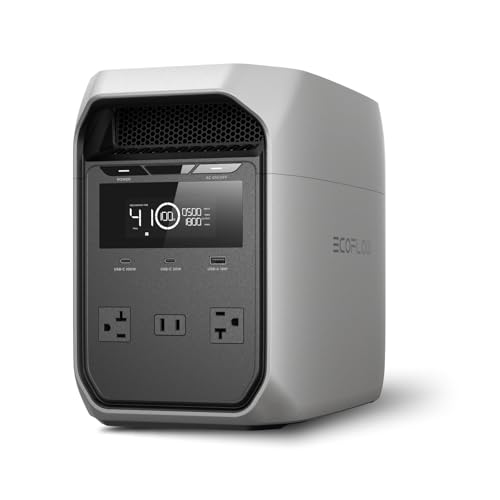
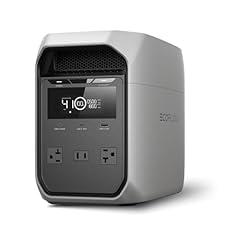
EF ECOFLOW DELTA 3 Portable Power Station
Overview
This is a 26.6 pound portable power station with a 1,024Wh lithium iron phosphate battery, 1,800W of rated 120V AC output, three AC outlets, USB-C charging up to 100W, USB-A, and solar input rated to 500W. It is intended to run plug-in appliances, electronics, and selected essential loads during camping, RV use, or short utility outages. It is not a fuel generator and it should not be connected to household wiring without appropriate transfer equipment. Its core capacity and charging performance have some independent support. The Solar Lab measured about 83% AC inverter efficiency and a full wall charge in just under 55 minutes. A separate test discharged 0.898kWh through a 1,500W heater, about 87.7% of rated capacity. EcoFlow documents a 10 ms standby UPS transfer, but this is manufacturer documentation rather than certification of critical-load compatibility.
What works
- Independent testing found roughly 83% AC inverter efficiency, a solid result for converting stored battery energy to wall-power output.
- Independent tests reported about 0.898kWh delivered through a 1,500W AC load, which is consistent with normal inverter losses from the 1,024Wh rating.
- The published manual specifies lithium iron phosphate cells and named protections for overload, short circuit, overcurrent, overvoltage, and high or low temperature operation.
- The manual documents a 10 ms standby UPS transfer for connected plug-in devices and explains the required wall-outlet setup.
- EcoFlow provides a five-year limited warranty, and its product material states more than 4,000 cycles to 80% capacity, although the cycle claim is not independently verified.
What does not
- No current model-specific UL, ETL, or CSA portable-power-pack certification record was located in the public certification registers checked.
- A model-matched UN 38.3 lithium-battery transport test summary was not publicly located. The available documentation identifies the chemistry and protections, but not this transport record.
- The UPS function is for appliances plugged directly into the station. The documentation does not identify a compatible transfer switch or approve direct connection to home circuits.
- The AC output can auto-switch off during light or intermittent loads unless its timeout is changed in the app. The manual specifically flags refrigerators and other intermittent appliances.
- EcoFlow gives disposal warnings, but it does not name a U.S. take-back program or collection partner for this product.
Who is it for
This product suits someone who needs a movable, approximately 1kWh battery for short outages, a home office, CPAP use, camping, or an RV, and plans to power devices directly from its outlets. It is particularly practical for users who value fast wall recharging and will use USB-C directly for laptops and other compatible electronics. It also fits a buyer who can monitor battery level, set the AC timeout appropriately, and understands that appliance runtime varies substantially with load and inverter losses.
Who is it not for
It is not appropriate for anyone seeking a whole-home backup system, direct connection to a breaker panel, or a substitute for properly installed transfer equipment. Do not use it to backfeed a home through an outlet. It is also a poor fit for multi-day refrigerator coverage, large resistive heaters, high-draw cooking appliances, or continuous heavy tool use, since its stored energy is about 1kWh before conversion losses. Households protecting medicines or critical equipment should account for the AC timeout setting and verify device compatibility before relying on UPS operation.
Integrity
The battery is lithium iron phosphate, and the manual identifies protections for overvoltage, overload, overcurrent, short circuit, and battery temperature. It blocks charging below the specified temperature range and provides fault messages for thermal and output problems. These are meaningful documented safeguards, but public searches did not locate a model-specific listing in the UL, ETL, or CSA product-certification registers, nor a matching public UN 38.3 transport test summary. No recall for this exact product was found in the CPSC material checked. EcoFlow did recall a different Delta Max 2000 model on October 9, 2025 after overheating and fire reports, with a firmware-update remedy, so firmware updates and the manual's storage instructions matter. EcoFlow documents disposal precautions for damaged batteries and says not to put an incompletely discharged product directly into a battery recycling box. It does not identify a U.S. take-back or collection partner for this product. Its solar and long-life messaging is plausible, but no product-specific life-cycle assessment or recycled-content evidence was located.