
10 Best Electric Pressure Washer
 Brianna York
Please note that we participate in affiliate marketing programs. When you purchase through links on our site, we may earn a commission. As an Amazon Associate we earn from qualifying purchases. This comes at no additional cost to you and helps support the resources required to provide valuable content.Advertising Disclosure
Top-rated Electric Pressure Washer Comparison
1

2
4
5
6
7
8
9
Electric pressure washers: what to look for
An electric pressure washer uses a motor and pump to turn a garden-hose supply into a concentrated water jet for rinsing vehicles, patios, decks, fences, siding, furniture, and paved surfaces. The useful question is not simply “How many PSI?” It is whether the machine delivers repeatable working pressure and flow, can be operated safely around water, and has controls and support that reduce avoidable damage, injury, waste, and early replacement.
Pressure and flow work together. PSI describes pressure; gallons per minute describes water volume. Many listings advertise a maximum pressure and maximum flow that do not occur together during ordinary cleaning. Some manuals distinguish initial-discharge or no-nozzle figures from rated working output. In the supplied reviews, independent measurements were sometimes substantially below headline numbers, while products with clearly stated rated figures were easier to compare. Look for a named test method such as CETA CPC100 or PWMA PW101, a separate working or rated pressure and flow, and independent laboratory or hands-on measurements. A PSI-only claim, unexplained “maximum” figure, or conflicting pressure and flow information is not enough to predict cleaning performance.
Electrical protection is especially important because these machines combine electricity, water, hoses, and wet ground. Prefer a documented grounded connection and integral GFCI protection with test and reset instructions. A product listing that merely says “water resistant,” “IPX5,” CSA, ETL, or CETA is not the same as a verifiable certification for the exact model. For independent electrical-safety evidence, the model and manufacturer should match a listing from an OSHA-recognized testing laboratory, such as UL, Intertek, or CSA, with a traceable certification record. The supplied reviews repeatedly found that marketplace certification claims could not be matched publicly, so buyers should inspect the delivered data plate and manual rather than relying on a badge in a listing.
High-pressure spray can cause injection-type wounds, propel debris, damage surfaces, and create recoil. Useful safeguards include a lockable trigger, secure hose and nozzle connections, clearly identified spray angles, pressure-release instructions, eye and foot protection guidance, and warnings to keep people, pets, and electrical equipment out of the spray path. A 0-degree or turbo nozzle deserves particular caution on skin, paint, soft wood, siding, and fragile surfaces.
A manageable setup also matters. Stable wheels or feet, a carry handle, practical hose and cord storage, and enough reach can reduce tipping, snags, and trips. Longer cords and hoses improve reach but still need deliberate routing. Small casters may work well on pavement but poorly on grass, gravel, rocks, or slopes.
Finally, consider the full service life. A meaningful residential warranty, accessible manual, replacement parts, registration, maintenance instructions, and service support are stronger evidence of a repairable product than a low purchase price. Detergent accessories do not make runoff harmless: soap, oil, metals, road grime, paint fragments, and loosened soil can enter storm drains. Use only compatible detergent, use as little as practical, and keep contaminated wash water out of storm drains and surface waters according to local requirements.
Across the supplied products, the recurring contraindications are clear: these are generally not commercial or continuous-duty machines; they should not be used with damaged cords, wet or unprotected connections, standing water, children or bystanders in the spray area, unmanaged hoses, or unsuitable chemicals. Several products lacked verified exact-model electrical certification, clear GFCI documentation, or dependable working-output evidence. No product should be selected on headline PSI alone, and no exact product-specific safety gap should be treated as proof that the product is unsafe but it should be treated as a reason to verify the delivered unit before use or choose better-documented equipment.
Integrity
The scores below reflect the supplied reviews across health, ecology, and evidence topics. A higher score indicates stronger documentation or safeguards in that area; it does not replace reading the manual, checking the delivered product, or following local runoff rules.
HHealth & Safety
Electrical and fire safety features
This measures grounded-cord details, integral GFCI protection, wet-location design, and clear electrical limits. For a washer used around water, these controls address shock, overheating, and fire risks. The strongest supplied scores were 89 for CRAFTSMAN and 88 for the Sun Joe models and Kärcher; lower-scoring products generally lacked clear GFCI, grounding, or exact electrical-use documentation.
High-pressure injury protection
This measures trigger locks, secure hoses and fittings, identified nozzles, and warnings about injection wounds and flying debris. These features matter because a pressure washer can penetrate skin or throw loose material. Kärcher scored 90, while several Sun Joe, CRAFTSMAN, Westinghouse, and Greenworks products scored in the mid-to-high 80s; lower scores reflected less complete or less verifiable controls.
Stable, manageable setup
This measures resistance to tipping, practical wheels or feet, and hose, wand, and cord management. A stable washer is easier to park and less likely to create trips or strain. Kärcher scored 84, while the Westinghouse ePX3500, CRAFTSMAN, and Greenworks 2100 scored 78–80. Products with small wheels, carry-only bodies, or conflicting hose information scored lower because terrain and routing remain important limitations.
Component failure protection
This measures protection against motor, pump, hose, fitting, and capacitor failures causing heat, leaks, bursts, or ejected parts, along with the absence of unresolved model-specific safety action. Total-stop systems, thermal sensors, pressure relief, and maintenance guidance support higher scores. Sun Joe SPX3000 scored 85; products without clear thermal, pressure, or maintenance documentation were generally near the high 60s or 70s.
EEcology
Water and electricity efficiency
This measures useful cleaning per gallon and watt, rather than rewarding an inflated maximum PSI. Separately stated working flow, total-stop operation, and credible performance measurements help. CRAFTSMAN scored 81, while Kärcher and Sun Joe SPX3000 scored 80. Lower scores generally reflected unverified output, contradictory flow claims, or no independent water and power measurements.
Runoff and detergent stewardship
This measures limits on detergent use and instructions for keeping contaminated wash water away from storm drains and surface waters. It matters because vehicle and outdoor cleaning can release soap, oil, metals, grime, and paint debris. Scores ranged only modestly: Sun Joe SPX3000 scored 73 and Kärcher 72, while many products scored 68–70 because their manuals lacked practical runoff-containment guidance.
Repairable, long-life design
This measures parts availability, service support, warranty coverage, and maintenance instructions that can prevent premature replacement and e-waste. Westinghouse ePX3500 scored 82, as did Kärcher; both had model-specific documentation and support elements. Lower scores reflected short warranties, missing parts catalogs, unclear service networks, or manuals that did not explain enough maintenance to support long ownership.
EEvidence
Verified working cleaning output
This measures whether pressure and flow describe repeatable working performance under a named method rather than a brief peak. Sun Joe SPX3000 scored 88, supported by an independent measurement close to its manual’s working figures; Greenworks 3000 scored 85 and CRAFTSMAN 82 with stronger rating disclosures. Products with conflicting or headline-only maximum claims scored as low as 45–52.
Honest performance and use claims
This measures whether PSI, GPM, quietness, water-saving, surface-compatibility, and accessory claims are qualified and supported. CRAFTSMAN scored 80, Westinghouse ePX3100v 80, and Greenworks 3000 82 because they separated rated from maximum output. Products with broad universal-use claims, contradictory specifications, or unsupported water-saving language scored in the low 40s to high 50s.
Independently verified electrical safety
This measures whether the exact model and manufacturer appear in a verifiable OSHA-recognized laboratory listing, not merely whether a marketplace displays a safety logo. Scores were generally modest: the highest supplied score was 76 for Greenworks 3000, while many products scored 68–73. Even documented GFCI protection did not count as independently verified product certification when no matching public listing was found.
Traceable model and safety record
This measures clear manufacturer identity, model and serial labeling, manuals, registration, and a responsible safety-notice record. Sun Joe SPX3000 scored 85; Westinghouse WPX3000e and ePX3500 scored 82. Lower scores reflected missing manuals, weak parts or registration trails, unclear manufacturers, or limited service information. No located recall is not the same as proof that a product is risk-free.
Full reviews

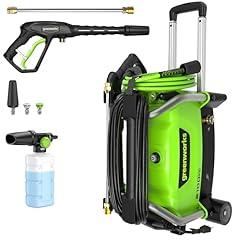
Greenworks 2100 PSI Electric Pressure Washer
Overview
This is a compact, corded, cold-water pressure washer for residential cleaning of vehicles, patios, decks, porches, driveways, and exterior surfaces. It uses a 120 V, 13 A universal motor, a 25-foot high-pressure hose, a 35-foot power cord, an onboard detergent tank, and 25-degree, 40-degree, and turbo quick-connect nozzles. Greenworks states a maximum 2,100 PSI and 1.2 GPM. Its manual also lists 1.2 GPM as the rated flow, while pressure remains identified as a maximum figure. The manufacturer calls the product PWMA certified, but an independently searchable record for this exact product was not located. The manual documents an in-plug GFCI, double insulation, a trigger safety lock, and instructions to use it only horizontally on a flat surface.
What works
- The manual documents an in-plug GFCI and double-insulated construction, meaningful shock-risk controls for wet outdoor work.
- A trigger safety lock, quick-connect nozzle retention check, hose inspection instructions, and strong warnings against spraying people or animals address key pressure-jet hazards.
- The stated 25-foot hose and 35-foot cord provide workable reach, while the telescoping handle, hose reel, and onboard storage can reduce loose-equipment clutter.
- The manual specifies a rated 1.2 GPM flow and Greenworks states PWMA performance certification, though the exact certification record was not independently located.
- A three-year limited warranty, product registration, maintenance instructions, and a service helpline support continued use.
What does not
- The 2,100 PSI figure is explicitly a maximum, not a documented rated working pressure or an independently published test measurement.
- No exact-model listing was located in a public UL, ETL, or CSA certification register. PWMA performance certification is not equivalent to independently verified electrical safety certification.
- The manual does not document a thermal cutoff, pressure-relief specification, or other detailed pump and motor failure-protection mechanism.
- The onboard detergent system has chemical restrictions, but the manual does not give practical instructions for containing or disposing of contaminated wash water.
- The manual carries a California Proposition 65 warning but does not identify the chemical or exposure pathway.
Who is it for
This product suits a homeowner doing intermittent, medium-duty cold-water cleaning on patios, outdoor furniture, siding, vehicles, small driveways, and similar residential surfaces. It is especially appropriate where a nearby weather-protected outlet and ordinary garden-hose supply are available, and where compact storage matters. The supplied wider-angle nozzles support lower-intensity general cleaning, while the turbo nozzle offers a more concentrated option. The user should be able to manage a cord and hose safely, keep connections dry, and follow the maintenance steps after use and before freezing weather.
Who is it not for
It is not for commercial cleaning, hot-water work, paint stripping, or jobs requiring a documented sustained pressure rating rather than a maximum PSI claim. It should not be used where power connections cannot remain dry and elevated, where the cord must cross busy walkways without protection, or where a stable horizontal setup is unavailable. Children and untrained users should not operate it. People cleaning oily vehicles, painted surfaces, lead-paint debris, or areas draining to storm inlets need a wastewater-containment plan that this product documentation does not provide.
Integrity
The strongest verified health features are electrical and spray controls in the operator manual. The product uses a GFCI built into its power-cord plug and double-insulated construction. The manual also requires dry, raised electrical connections, a drip loop, trigger locking before adjustments, inspection of the gun and high-pressure hose, and horizontal use on a flat surface. No recall was found for this exact product. A 2021 Greenworks spray-gun recall covered specified older 1,500 to 1,800 PSI models, not this product. For ecology and service life, the manual specifies 1.2 GPM rated flow, advises pump protector after use and before long storage, and provides a three-year limited warranty. It prohibits harsh detergent ingredients including bleach, alkaline chemicals, and ammonia. However, it does not explain how to capture or dispose of dirty detergent-bearing water. Users should keep wash water and loosened contaminants out of storm drains and follow local disposal rules. The manual also includes an unspecified California Proposition 65 warning.

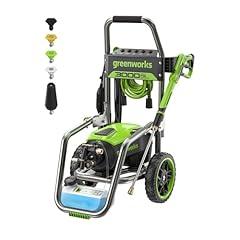
Greenworks Pro 3000 PSI Electric Pressure Washer
Overview
This is a corded, cold-water residential pressure washer with a brushless 14-amp motor, 25-foot high-pressure hose, 35-foot power cord, 10-inch wheels, five nozzle options, and a one-gallon detergent tank. It is intended for outdoor cleaning of vehicles, patios, decks, driveways, boats, and building exteriors, not professional use. The manufacturer clearly separates its two maximum conditions, 3,000 PSI at 1.1 GPM and 2.0 GPM at 100 PSI. Independent hands-on testing measured 2,700 PSI and 0.98 GPM, which is reasonably close to the stated high-pressure working condition. Its manual documents an inline GFCI, double-insulated construction, a trigger lockout, and a thermal relief valve that opens at 140°F. The exact electrical safety certification could not be confirmed through a public NRTL registry.
What works
- Independent testing found 2,700 PSI and 0.98 GPM, close to the stated 3,000 PSI at 1.1 GPM working condition.
- The manual documents an inline GFCI, double-insulated construction, outdoor-cord precautions, and instructions to keep connections dry and elevated.
- A trigger safety lockout, quick-connect nozzle retention check, hose inspection instructions, and 140°F thermal relief valve address key pressure-washer hazards.
- The 3-year limited tool warranty, accessible manual, parts finder, and authorized service support provide a documented service route.
What does not
- The 2.0 GPM figure is a maximum at only 100 PSI, not the flow delivered at the 3,000 PSI condition.
- The maker's claims of being the most powerful residential electric washer, twice the cleaning power, and a 10-year motor warranty were not independently substantiated in the reviewed evidence.
- The exact model's claimed CSA electrical certification was not verifiable through a public certification directory or a product certification file number.
- The manual restricts detergent types but does not give specific instructions for collecting wash water or keeping contaminated runoff out of storm drains.
- Independent handling testing described the gun holder as precarious, which matters when parking or moving the unit.
Who is it for
This product suits a homeowner who needs a corded machine for periodic cleaning of concrete, siding, decks, patio furniture, vehicles, or driveways, and has a nearby outdoor electrical supply plus a reliable water source. It is particularly appropriate for someone who values clearly stated high-pressure and high-flow conditions rather than reading the maximum PSI and GPM as simultaneous output. The 25-foot hose, 35-foot cord, and wheeled open frame suit medium-size outdoor areas where the machine can remain on level ground.
Who is it not for
It is not for commercial or daily professional washing, because the manual limits it to residential use and the warranty excludes commercial use. It is also unsuitable for anyone unable to keep electrical connections dry, raised, and away from wash runoff. Children, untrained users, and people who may treat a small spray wound as minor should not operate it. Choose a different setup for work requiring controlled wastewater collection, or for uneven sites where the hose, cord, and wheeled frame create additional trip and stability concerns.
Integrity
The main health protections documented in the manual are an inline GFCI, double insulation, a lockable spray-gun trigger, prescribed inspections of the gun and high-pressure hose, and a thermal relief valve that releases water before pump temperatures become harmful. These are meaningful safeguards, but they do not remove the risk of injection wounds or flying debris. Eye protection, secure footing, clear exclusion of bystanders, and dry electrical connections remain essential. A 2021 Greenworks spray-gun recall affected specified older 1,500 to 1,800 PSI products, not this product. The machine uses water rather than gasoline, avoiding exhaust emissions at the work site. Its verified high-pressure output can shorten cleaning time, but it still uses nearly one gallon per minute at high pressure. The detergent instructions prohibit household cleaners, acids, alkalis, bleach, solvents, flammables, and industrial solutions. They do not explain wastewater capture or storm-drain protection, so users must plan runoff control, use detergent sparingly, and follow local disposal rules.

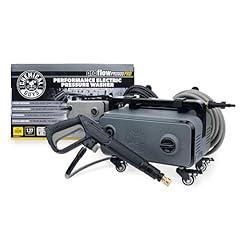
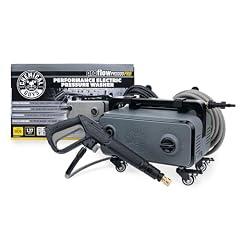
Chemical Guys PM2000 PRO Electric Pressure Washer
Overview
This is a compact, corded electric pressure washer intended primarily for vehicle washing, with occasional light-duty home cleaning such as patios, walkways, and outdoor furniture. The manufacturer lists a 14.5-amp, 1680-watt motor, a 25-foot flexible pressure hose, a 35-foot power cord, four quick-connect spray tips, a wash gun and wand, plus an onboard organizer. Its headline output is manufacturer-stated as up to 2,030 PSI and 1.77 GPM. Independent testing found roughly 1,000 PSI through each included tip and 1.2 to 1.3 GPM, which is more representative of expected in-use output. The product also has pre-installed locking caster wheels and storage for the hose, cord, gun, wand, and tips. No exact-model electrical safety certification or detailed safety manual was available to verify during this assessment.
What works
- Independent testing confirms usable, controlled output of about 1,000 PSI and 1.2 to 1.3 GPM through the supplied tips.
- Manufacturer-stated locking 360-degree casters can help keep the compact unit parked during use.
- The manufacturer documents a 25-foot hose, 35-foot cord, and organizer intended to secure the hose, cord, wand, gun, and tips.
- Four supplied quick-connect tips, 15, 25, 40, and 65 degrees, provide wider-pattern options for vehicle rinsing and surface cleaning.
What does not
- The advertised maximum 2,030 PSI and 1.77 GPM were not reproduced in independent testing, which measured substantially lower output at the supplied nozzles.
- No exact-model listing in a public UL, ETL, or CSA certification register was located, and no certification file number was provided.
- Available product documentation did not clearly verify integral GFCI protection, grounded-cord details, thermal shutdown, or pressure-relief safeguards.
- No detailed runoff or detergent-disposal directions were found for preventing vehicle wash water and cleaning chemicals from reaching storm drains.
- Only a 30-day Amazon warranty is stated in the catalog record, and no parts catalog or authorized repair network for this product was located.
Who is it for
This product suits a vehicle owner or detailing hobbyist who wants a compact, corded washer for routine rinsing, foam-cannon use with compatible fittings, wheel cleaning, and removal of light road film. The independently measured output is better aligned with controlled exterior washing than aggressive stripping or heavy restoration work. It also suits users with a nearby outdoor electrical outlet, room to manage a 35-foot cord, and a stable driveway or work area where the locking casters and onboard storage can be used properly.
Who is it not for
It is not well suited to users who need independently verified maximum-pressure performance for deeply stained concrete, paint stripping, or heavy-duty commercial cleaning. It is also unsuitable for anyone who cannot use a protected outdoor electrical connection or keep cords, hoses, and wash water managed around children, pets, and walking paths. Buyers who require a documented NRTL electrical certification, a detailed service-parts system, a longer warranty, or explicit wastewater-disposal instructions should select a product with those records available before use.
Integrity
The main safety concern is incomplete verification, not a confirmed defect. The product has identifiable manufacturer and product information, and no exact-model recall was found in the CPSC pressure-washer recall records reviewed. However, no exact-model UL, ETL, or CSA certification entry was located in public registers, and available product materials did not verify GFCI protection, thermal protection, or other wet-use electrical safeguards. Use a protected outdoor receptacle, keep plugs and connections dry, inspect the hose and fittings before each use, and never direct the jet at people, animals, tires, or electrical equipment. Independent testing indicates lower real-world pressure and flow than the maximum marketing figures. That can reduce water use during routine rinsing, but it does not eliminate runoff impacts. The available materials did not provide clear detergent limits or instructions for capturing contaminated vehicle wash water. Avoid sending wash water containing road grime, oils, brake dust, or detergent to storm drains, and follow local sewer or stormwater rules. Repair support and long-term parts availability were also not documented.

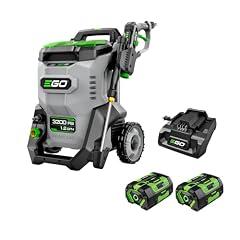
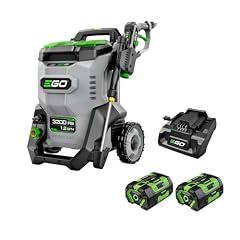
EGO Power+ 3200 PSI Electric Pressure Washer Kit
Overview
This is a cordless, cold-water pressure washer kit that uses two 56-volt lithium-ion batteries and includes two 6.0Ah batteries plus a 320W charger. It has a rolling body, telescopic handle, 25-foot high-pressure hose, short gun, stainless-steel wand, five nozzles, foam cannon, filter, and siphon hose for drawing fresh water from a container. It is intended for household exterior cleaning where a corded washer or gasoline engine is inconvenient. EGO states output is up to 3,200 PSI at 1.2 GPM, with up to 2.0 GPM in its high-flow configuration. An independent hands-on review describes the same 1.2 GPM working flow and places it mainly in light to moderate residential cleaning. The official manual documents a trigger lock-off control, nozzle-specific warnings, automatic shutoff after five minutes of standby, and a 30 cm minimum distance for cleaning tires. The product page lists an IPX4 weather-resistance rating and a five-year household tool warranty.
What works
- Battery operation removes a live mains cord from the wet washing area, although batteries and charger still require safe dry charging practices.
- The manual documents a lock-off trigger control, two-hand operating instructions, nozzle guidance, and specific tire-distance warnings.
- A telescopic handle, two wheels, onboard storage features, and a 25-foot flexible hose support practical movement and storage.
- The official parts list includes replaceable items such as the pump assembly, spray gun, wheels, filter, nozzles, lance, and electronic control system.
- EGO provides a five-year limited household tool warranty and three-year battery warranty, subject to its stated terms.
What does not
- The 3,200 PSI figure is an up-to claim under EGO testing, not a publicly located CETA or PWMA certified working-output rating.
- The stated 1.2 GPM working flow limits rinse throughput on broad, heavily soiled surfaces, even though a separate maximum 2.0 GPM figure is advertised.
- No product-specific independent laboratory test result was located to confirm pressure, flow, energy use, hose-burst protection, or thermal protection.
- The documentation located did not provide clear household instructions for capturing detergent, oil, paint residue, or contaminated wash water before it reaches a storm drain.
- The catalog record says ETL, while the official manual artwork shows a UL Listed mark. Neither exact certification record was publicly verified by a certification directory search.
Who is it for
This washer suits a household user who needs cordless cleaning for cars, patio furniture, fences, siding, small paved areas, or equipment away from an outlet. It is especially practical where carrying a long power cord across wet ground would create a nuisance or trip risk. The included batteries, charger, multiple nozzles, bucket-siphon option, and rolling handle make it a self-contained setup for intermittent tasks. Users should be comfortable following high-pressure safety steps and planning work around battery runtime and recharge time.
Who is it not for
It is not suited to unsupervised use, children, anyone unable to control a pressurized wand with both hands, or homes where bystanders and pets cannot be kept clear. Avoid it for work that can drive contaminated water, detergent, paint debris, oil, or vehicle residue into storm drains. It is also a poor fit for long, continuous, high-volume cleaning of large driveways or commercial sites, since the documented working configuration is 1.2 GPM and runtime is battery-limited. Do not use high-pressure spray on tires at close range or on delicate surfaces without checking the manual and surface guidance.
Integrity
The washer operates from removable batteries, so there is no mains power cord at the washing point. EGO lists IPX4 weather resistance, and its manual requires use of the lock-off trigger control, careful nozzle selection, two-hand control of the gun or lance, and separation from tires and valves. The manual also says the washer turns off automatically after five minutes in standby. These measures reduce some foreseeable spray and equipment-stress risks, but they do not make the jet safe for people, animals, fragile materials, or close-range tire cleaning. EGO publishes a service-parts list that includes the pump, gun, wheels, filters, nozzles, and electronics, and provides a five-year household tool warranty. Its recall page currently lists an unrelated hedge-trimmer recall, not this washer. No exact public certification-directory result was found for this product, and the ETL claim in the catalog conflicts with a UL Listed symbol shown in official manual artwork. For ecology, use only the minimum cleaning chemical needed and keep wash water, especially water carrying detergent, oil, paint, or grime, out of storm drains and surface waters.
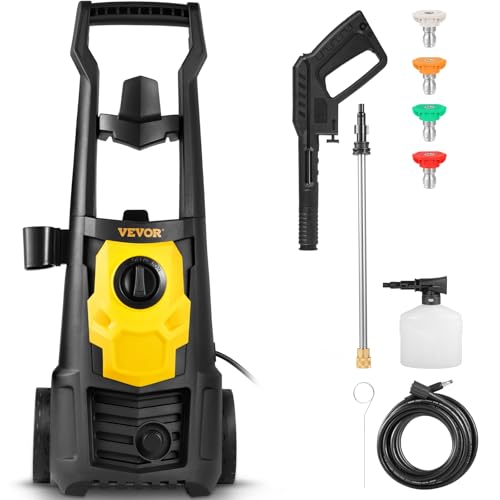
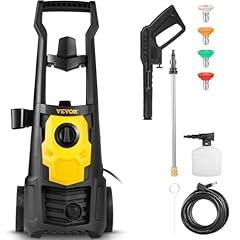
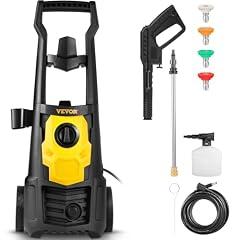
VEVOR Electric Power Washer 2000 PSI
Overview
This is a corded, cold-water electric pressure washer intended for household washing of hard outdoor surfaces, vehicles, fences, patios, and similar jobs. The catalog record specifies a 20-foot hose, four quick-connect nozzles, a foam bottle, a claimed 2,000 PSI maximum and 1.65 GPM maximum. It is a compact upright unit rather than a gas-powered machine. VEVOR's matching 1.65 GPM product documentation describes a 120 V, 1,500 W washer with GFCI protection, an IPX5-rated body, a trigger lock, total-stop pump control, and automatic temperature shutdown above 105 C. Those are manufacturer-stated features, not independently measured results. Important identity uncertainty remains. VEVOR's documentation for the matching configuration describes a 30-foot hose and hose reel, while this product record specifies 20 feet and no reel. No independent pressure-and-flow test for this exact product was located.
What works
- Manufacturer-stated GFCI protection and an IPX5-rated body address the wet-use electrical environment.
- The documented trigger lock and clearly differentiated spray patterns provide practical controls against accidental discharge and inappropriate jet selection.
- VEVOR states that total-stop control turns off the pump when the trigger is released, and that temperature protection activates above 105 C.
- A 1,500 W, 120 V format avoids fuel combustion emissions and indoor carbon-monoxide hazards associated with gasoline washers.
What does not
- The stated 2,000 PSI and 1.65 GPM are maximum claims. No independent test or named working-output method was located for this product.
- The product record conflicts with matching manufacturer documentation on hose length and whether a reel is included, which weakens accessory and configuration clarity.
- Manufacturer review summaries for the matching configuration flag stability and tipping concerns. Treat hose routing and parking on level ground as important.
- The available product documentation does not provide clear runoff capture, storm-drain avoidance, or detergent disposal instructions.
- ETL is claimed, but an exact searchable certification record or file number for this product was not located.
Who is it for
This product fits a homeowner doing intermittent, light to medium outdoor washing who has a nearby protected 120 V outlet and a level place to park the unit. The stated nozzle set suits switching between broader rinsing and more concentrated cleaning on durable surfaces. It is also suited to buyers who value an electric format for cars, patio furniture, fences, walkways, and routine grime removal, provided they treat the published pressure and flow figures as maximum claims rather than independently verified working output.
Who is it not for
It is not appropriate for anyone who needs independently verified working pressure and flow for demanding cleaning work, paint removal, or repeatable professional results. Avoid it where a long hose-and-cord layout would cross walkways, slopes, stairs, or unstable ground, especially because available review summaries mention tipping. It also needs careful adult-only use around children, pets, delicate materials, exposed electrical connections, and people nearby. Anyone washing oily vehicles or equipment where runoff enters a storm drain needs a containment plan beyond the supplied foam bottle.
Integrity
The useful safety provisions are manufacturer-stated GFCI protection, IPX5 water resistance, a trigger lock, total-stop pump control, and automatic temperature shutdown. Intertek is an OSHA-recognized testing laboratory, so an authentic ETL listing would be meaningful in the United States. However, the exact product's listing record or certification file was not located, so the ETL claim could not be independently matched. No product-specific pressure-washer recall surfaced in the CPSC records searched. This is an electric, 1,500 W washer, so it has no tailpipe emissions or fuel storage exposure during use. Its foam bottle can increase detergent runoff risk. EPA guidance warns that vehicle wash water can carry detergent, oils, metals, and hydrocarbons to storm drains. Use the minimum suitable detergent, avoid washing contaminants into drains or surface waters, and follow local wastewater rules. The documentation located does not give sufficiently specific runoff-disposal instructions.

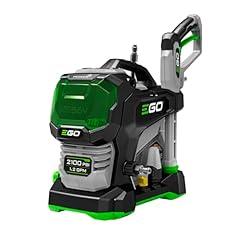
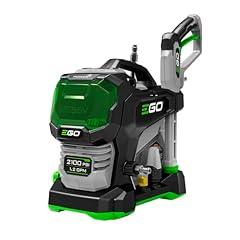
EGO Power+ 2100 PSI Electric Pressure Washer
Overview
This is a compact, battery-powered cold-water pressure washer sold without a battery or charger. It uses one compatible 56V battery, can draw from a garden hose or the supplied filtered siphon hose, and includes a 25-foot high-pressure hose, short gun, stainless-steel wand, foam cannon, and four spray nozzles. The bare tool weighs 20.4 pounds according to the operator manual. EGO rates it at up to 2,100 PSI and 1.2 GPM with the wand installed. An independent field test reported about 1,950 PSI under sustained flow and 1.18 GPM from a spigot, which broadly supports the stated hose-fed output, though it was not a laboratory certification test. The manual documents an IPX5 enclosure rating with the battery compartment closed, three speed modes, and a trigger lock-off. It is intended for outdoor cleaning, not unrestricted use on every surface.
What works
- The cord-free format avoids a live extension cord in a wet work area, and the manual rates the closed battery compartment IPX5 for water-jet exposure.
- A trigger lock-off, labeled nozzle choices, quick-coupler instructions, and explicit high-pressure warnings provide meaningful controls against accidental spraying and hose separation.
- Independent field testing found hose-fed flow of 1.18 GPM and sustained pressure near 1,950 PSI, reasonably close to the manufacturer’s maximum ratings.
- Onboard holders and straps secure the hose, siphon hose, wand, gun, foam cannon, and nozzles for storage.
- A five-year limited tool warranty, product registration, maintenance instructions, and authorized-service process support a longer usable life.
What does not
- The tool-only package requires a separately owned or purchased compatible battery and charger, so actual run time and total system cost depend on the battery selected.
- The output figures are maximum ratings, not a published PWMA or CETA-certified working rating. The available independent result is useful but not a controlled laboratory verification.
- Its compact 20.4-pound body has a carry handle and storage straps, but no wheeled cart. Carrying it alongside water hoses can still be awkward over uneven ground.
- The manual tells users to follow detergent disposal instructions, but it does not provide specific instructions to capture contaminated wash water or keep it out of storm drains.
- A TÜV Rheinland mark appears in the manual artwork, but an exact public certification record or file number for this product was not located during verification.
Who is it for
It suits a homeowner who already uses compatible 56V batteries and needs a compact washer for short outdoor jobs, such as rinsing vehicles, patio furniture, siding, fencing, bins, or small hard surfaces. It is particularly practical where running an extension cord is inconvenient, or where a bucket of clean water is the only available source. The included wide-angle nozzles and low-speed setting are better aligned with cautious vehicle and exterior rinsing than with prolonged stripping work. Users should be comfortable carrying the unit and managing separate water and pressure hoses.
Who is it not for
It is not suited to buyers who need uninterrupted, long-duration cleaning of large driveways, heavily stained concrete, or commercial-scale surfaces. Battery capacity, rather than an outlet, limits session length, and this tool-only version adds no battery or charger. It is also a poor fit for users who cannot safely carry and position a compact washer without wheels, or for households where children or untrained users may access it. Do not use the turbo nozzle on cars or wood, and do not use the washer in lightning-risk weather.
Integrity
The product avoids a mains power cord during washing, which removes the cord and plug shock hazards associated with many electric pressure washers. Its battery compartment is manufacturer-rated IPX5 when properly closed, and the manual requires compatible EGO batteries and chargers. It also includes a trigger lock-off, warnings not to point the jet at people, a minimum distance for tires, and instructions to check high-pressure connections because a loose coupling can burst under pressure. The manual states that operation stops if the washer or battery becomes too hot. Water use is capped by the stated 1.2 GPM maximum with the wand, and one field test found 1.18 GPM from a hose connection. The manual permits detergent only when formulated for pressure washers and directs users to follow its safety and disposal instructions. That is not a complete runoff plan. Wash water containing detergent, oil, dirt, or paint residue should be kept from storm drains and managed under local rules. No product-specific CPSC recall was found in the verification search.

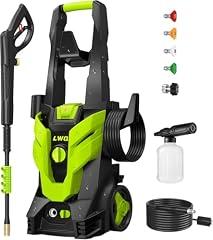
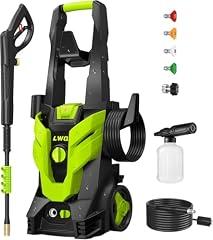
LWQ Pressure Washer with Foam Cannon
Overview
This compact corded electric pressure washer is intended for home exterior cleaning, including vehicles, patios, fences, driveways, and outdoor furniture. The documented S5 configuration includes a spray gun, a 20-foot high-pressure hose, four quick-connect nozzles marked 0, 15, 25, and 40 degrees, plus a foam cannon. Published dimensions and weight vary between sources, although the brand site describes a roughly 16.6-pound unit with wheels. The brand states maximum figures of 2,030 PSI and 2.5 GPM, but no CETA or PWMA performance certification, independent test result, or named test method was found. Its manual documents a trigger safety lock, cord and nozzle storage, total-stop operation, and thermal-overload troubleshooting. The brand claims CE and RoHS status, neither of which verifies US electrical safety certification.
What works
- The documented trigger lock can reduce accidental activation when the gun is not in use.
- Four marked quick-connect spray angles allow the user to select a wider or narrower spray pattern.
- The manual describes onboard cord and nozzle storage, helping keep small accessories together.
- The published manual describes thermal-overload shutdown troubleshooting and total-stop operation.
What does not
- No verifiable UL, ETL, CSA, or other OSHA-recognized laboratory listing was found for this exact product. CE marking is not a US NRTL certification.
- The manual directs use of a grounded outlet, but the available documentation does not confirm integral GFCI protection at the plug, a key safeguard for wet-use equipment.
- The stated 2,030 PSI and 2.5 GPM have no independent verification or CETA and PWMA certification. The advertised 1,500 W motor also makes those figures unsuitable as a presumed simultaneous working rating.
- Instructions address detergent-bottle rinsing, but do not provide clear guidance for keeping detergent-laden runoff out of storm drains or surface water.
- A one-year limited warranty is stated, but no parts catalog, authorized repair network, or product-registration system was located.
Who is it for
This product is suited to a homeowner doing intermittent, small-area outdoor rinsing who can work beside a known GFCI-protected outdoor receptacle and understands pressure-washer safety. Its compact, wheeled format, 20-foot hose, foam cannon, and selectable nozzles are practical for washing patio furniture, a vehicle, or limited sections of paving. The user should treat the published pressure and flow as maximum marketing figures rather than a verified working-output specification, inspect fittings before each use, and control wash-water runoff.
Who is it not for
It is not suited to workplace use, frequent heavy cleaning, or buyers who need a verified working PSI and GPM rating for selecting surface-cleaner attachments or planning productivity. It is also unsuitable for anyone unable to confirm GFCI protection at the outlet or plug before use near water. Households with children, pets, or people likely to handle the spray gun without training need especially strict storage and trigger-lock practices. Avoid delicate finishes, loose mortar, damaged wood, electrical fixtures, and any cleaning job where runoff could carry detergent into drains or waterways.
Integrity
The available S5 instructions provide meaningful basic controls, including a lockable spray-gun trigger, warnings not to point the jet at people, pets, or electrical outlets, inspection of hoses and connections, and a thermal-overload response. Those measures matter because high-pressure jets can inject water through skin and wet electrical equipment needs robust shock protection. The documentation tells users to use a grounded outlet, but it does not verify an integral GFCI. The brand's CE statement does not substitute for a US NRTL listing. No exact-product recall or CPSC safety warning was located. That is not proof of compliance. Recent CPSC actions on other marketplace pressure washers have specifically involved missing GFCI protection. The brand markets lower water use compared with a garden hose, but no independent cleaning-efficiency test supports that claim. Detergent-bottle cleaning is mentioned, while runoff and wastewater disposal instructions are largely absent. A stated one-year warranty may help with early defects, but parts availability and repair support remain unverified.
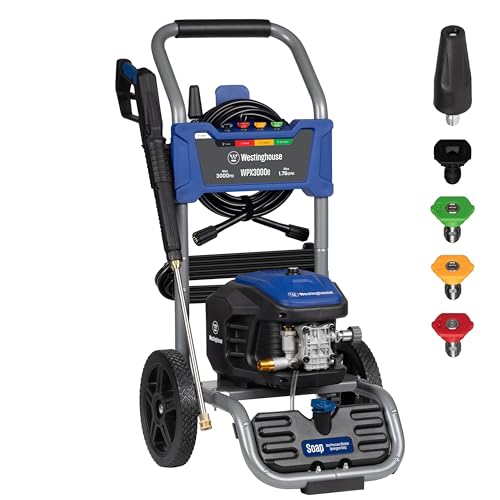
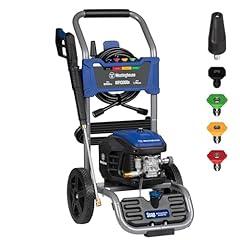
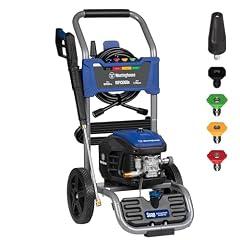
Westinghouse WPX3000e Electric Pressure Washer
Overview
This is a corded, cold-water electric pressure washer on a steel wheeled frame. It uses a 120 V, 13 A motor, a 25-foot nylon-braided high-pressure hose, a 35-foot power cord, five quick-connect nozzles, and a 0.45-gallon detergent tank. At 36.8 pounds, it is intended for homeowner cleaning of hard outdoor surfaces, siding, vehicles, fences, and patio furniture. The product data plate reproduced in a retailer-hosted manual identifies 2,600 PSI and 1.1 GPM as rated output. Westinghouse separately states 3,000 PSI and 1.76 GPM as maximum figures, with maximum flow measured at lowest pressure. The same data plate shows an ETL mark for UL 1776 and CSA C22.2 No. 68, plus a serial-number field. Westinghouse also publishes replacement parts and consumer warranty terms, although no independent flow, pressure, or power measurement for this exact unit was located.
What works
- The data plate shows ETL certification to the applicable North American pressure-washer safety standards, with an integral GFCI power cord.
- Rated output is plainly separated from peak pressure and maximum-flow figures, reducing the risk of reading the two maxima as simultaneous working output.
- The 35-foot GFCI cord, 25-foot hose, steel frame, and 10-inch never-flat wheels provide a practical working radius, based on manufacturer specifications.
- A model-specific replacement-parts list is published, including the hose, spray gun, nozzles, wheels, pump, and inlet filter.
- Consumer coverage includes one year of repair parts and labor and replacement parts through three years, subject to the warranty terms.
What does not
- No independent laboratory or credible hands-on meter test was found to confirm the stated 2,600 PSI and 1.1 GPM working output.
- The headline 3,000 PSI and 1.76 GPM figures are separate maximums, not a combined cleaning-output rating.
- The published materials promote detergent use but do not provide meaningful guidance for containing or disposing of contaminated wash water and detergent runoff.
- The catalog title calls the motor an induction motor, while the manufacturer product page only describes a heavy-duty AC motor. Independent confirmation of the motor type was not located.
- The consumer warranty excludes commercial or rental use after such use occurs, and the owner pays transportation costs for service.
Who is it for
It suits a homeowner who needs a corded washer for periodic driveway, patio, fence, siding, or vehicle cleaning and can work within reach of an outdoor receptacle. The rated 2,600 PSI and 1.1 GPM figures indicate substantial pressure with modest working water flow, so it is better aligned with deliberate spot cleaning and household maintenance than high-volume professional washing. It also fits owners who value a documented parts list, GFCI protection, and the ability to register the product for warranty contact.
Who is it not for
It is not for commercial cleaners, rental fleets, or anyone expecting warranty coverage after income-producing use. It is also unsuitable where an extension cord, wet electrical connections, stairs, or unstable terrain would make corded operation difficult. Buyers who need independently measured cleaning output should look for a product with published third-party pressure and flow testing. People washing oily vehicles, equipment, or chemically treated surfaces near storm drains need a contained wash area and a disposal plan, not just an onboard soap tank.
Integrity
The product data plate reproduced in the manual shows an ETL certification mark for UL 1776 and CSA C22.2 No. 68. It also identifies an integral GFCI cord. The safety material directs users to keep electrical connections dry and off the ground, avoid wet-hand contact with the plug, use cold water only, relieve pressure before service, and never direct the jet at people or electrical equipment. The product label also carries a California Proposition 65 warning, but the available product materials do not identify the substance or exposure pathway. Its electric format avoids on-site gasoline combustion, but it still uses water and can carry dirt, oil, metals, and detergent into drains. EPA guidance warns that outdoor vehicle washing can send detergent-rich and contaminated water into storm drains. Westinghouse provides a soap tank and says to use pressure-washer detergent, but the reviewed materials do not explain runoff containment or wastewater disposal. No product-specific CPSC recall was identified during the review, and serial labeling, registration, manuals, parts support, and warranty contact information improve traceability if a safety action occurs.

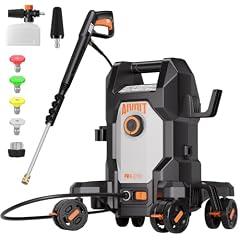
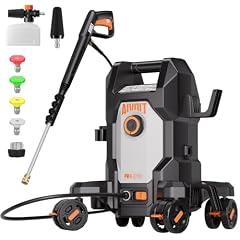
AIVOLT Electric Pressure Washer 4800PSI
Overview
This is a compact, cold-water electric pressure washer for home cleaning of hard outdoor surfaces, vehicles, fences, decks and walkways. It uses a 120 V, 13 A supply, a 25-foot high-pressure hose, four quick-connect spray nozzles and a foam cannon. The manual specifies 1,800 PSI rated pressure and 1.24 GPM rated flow, with 2,400 PSI and 1.76 GPM identified as peak or maximum figures. Those documented ratings conflict materially with the marketplace record, which advertises 4,800 PSI and 3 GPM for this same product. No independent pressure-and-flow test or CETA performance certification was found. The manual documents a plug-integrated GFCI, double insulation, a lockable spray-gun trigger and automatic pump cycling. It also documents four casters and onboard storage for the hose, cord, gun and nozzles. No product-specific U.S. recall was found in the CPSC recall search results reviewed.
What works
- The manufacturer manual specifies a GFCI plug, grounded-outlet use and instructions to keep electrical connections dry and off the ground.
- A positive trigger lock, two-hand operating instruction, quick-connect nozzle retention and clear liquid-injection warnings address key pressure-jet hazards.
- The manual provides routine maintenance instructions, a parts list for several consumable accessories, direct factory parts contact information and stated consumer coverage of one year for parts and labor plus a second year for parts only.
- Dedicated cord, hose, gun and nozzle storage can help keep the unit together during transport and storage, if the user rewinds and stores them as instructed.
What does not
- The advertised 4,800 PSI and 3 GPM figures conflict with the manufacturer manual for the same product, which states 2,400 PSI peak, 1,800 PSI rated, 1.76 GPM maximum and 1.24 GPM rated.
- No independent test was found to verify sustained working pressure, flow, electrical draw or the advertised cleaning performance.
- No verifiable listing for the exact product was found in the NRTL certification directories searched. A GFCI is documented, but that is not evidence of whole-product third-party certification.
- The manual does not provide meaningful stormwater disposal instructions for detergent, vehicle grime or contaminated pressure-wash runoff.
- Thermal overload or pump pressure-relief protection is not documented. The manual instead relies on operating limits, including never running the pump dry and avoiding hot water.
Who is it for
This product suits a homeowner doing intermittent, small-area outdoor cleaning who can use a grounded 120 V outlet and follow the manual closely. Its documented rated output is more consistent with washing a car, patio furniture, siding, fences, walkways and lightly soiled paving than with high-volume professional work. It also suits a user who values compact storage, because the manual provides holders for the cord, hose, gun, lance and nozzles. The buyer should treat the manual’s 1,800 PSI and 1.24 GPM rated figures as the meaningful working specifications.
Who is it not for
It is not suited to anyone selecting a washer specifically for the marketplace claim of 4,800 PSI or 3 GPM, since those figures conflict with the manufacturer’s own manual. It is also a poor fit for commercial, continuous-duty or large-area cleaning where independently verified sustained output, service infrastructure and a verified whole-product safety certification are important. Households with children, pets, poor outdoor electrical access, standing water or cluttered work areas need particularly careful supervision, dry cord connections, trigger locking and eye protection. Do not use it to wash hazardous residues toward a storm drain.
Integrity
The manual contains useful direct safety controls for a wet electrical tool. It specifies a GFCI in the power plug, a grounded 120 V outlet, dry elevated cord connections and a lockable trigger. It warns of injection wounds, flying debris, recoil, electrocution and slippery detergent-treated surfaces. It also carries a California warning that use may expose people to chemicals including lead, so hand washing after handling is prudent. The product avoids gasoline exhaust during use, but pressure washing can still create polluted runoff. The manual limits detergent to pressure-washer formulations and says to follow the detergent label, yet it does not explain how to contain or dispose of wash water. Detergent, oil, road grime and metals washed from vehicles should not enter storm drains. The manual does support longer service through storage, inlet-screen and nozzle maintenance, and a listed route to obtain several replacement parts. No product-specific CPSC recall was found in the sources reviewed.

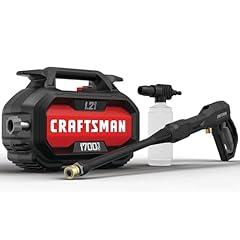
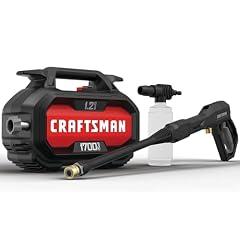
CRAFTSMAN CMEPW1700 Electric Pressure Washer
Overview
This is a compact, corded, cold-water electric pressure washer for light residential cleaning, including vehicles, patios, walkways, and outdoor furniture. It includes a 20-foot high-pressure hose, 35-foot power cord, soap bottle, 40-degree nozzle, and turbo nozzle. The manufacturer rates it at 1,700 maximum PSI and 1.2 GPM with the 40-degree nozzle, and identifies the ratings as determined under CETA CPC-100. Independent testing measured 1,500 PSI and 1.1 GPM with the 40-degree nozzle, which is close to the stated maximum figures. The manual documents an integral GFCI plug, a trigger lock-off, quick-connect nozzle system, double insulation, shutdown pressure-relief steps, and indoor storage requirements. The manufacturer provides a three-year limited warranty, but publicly accessible evidence of an exact-model NRTL electrical listing was not located.
What works
- Independent testing found 1,500 PSI and 1.1 GPM through the 40-degree nozzle, close to the stated maximum output.
- The integral GFCI plug and double-insulated construction provide meaningful electrical safeguards for wet outdoor work.
- A trigger lock-off, quick-connect fittings, nozzle-specific instructions, and pressure-relief shutdown procedure address common spray injury risks.
- At 16 pounds in independent testing, the compact unit is practical to lift and carry for short residential tasks.
- The manufacturer supplies a three-year limited warranty and product registration for service and safety notifications.
What does not
- The 1,700 PSI figure is explicitly a maximum, and the turbo nozzle measured only 700 PSI in the independent test.
- Only two nozzles are included, a 40-degree fan nozzle and turbo nozzle, which limits control compared with a broader tip set.
- Independent testing found the power cord and sprayer awkward to store, despite the onboard-storage claim.
- The manual tells users to use pressure-washer detergent, but does not provide meaningful instructions for containing or disposing of dirty, detergent-bearing wash water.
- The claimed CSA status could not be independently verified for this exact product through an issuing-body public directory, and no exact-model NRTL listing was located.
Who is it for
This product suits a homeowner with a nearby outdoor 120V outlet who needs a portable washer for periodic, light-duty work such as rinsing vehicles, cleaning patio furniture, washing a small deck, or refreshing a walkway. The independently measured 1,500 PSI with the broad 40-degree nozzle gives it useful cleaning output without the bulk of a gasoline machine. It is also a reasonable fit for someone able to carry and store a 16-pound corded unit indoors, drain it after use, and follow the GFCI and pressure-relief steps in the manual.
Who is it not for
It is not suited to commercial cleaning, large driveways, heavy paint preparation, or users who need long uninterrupted reach without managing a cord and 20-foot hose. The turbo nozzle is a concentrated, rotating spray and demands particular caution around vehicles, soft surfaces, loose material, people, pets, and glass. It is also unsuitable for households unable to keep children and bystanders clear, use a direct GFCI-protected outlet, store the product above freezing indoors, or prevent wash water from reaching storm drains.
Integrity
The manual provides an integral GFCI plug and double-insulated design, both important protections for a corded appliance used around water. It also identifies a trigger lock-off and directs the user to unplug the product, release residual pressure, and engage the lock-off before storage or service. The manual calls for eye protection and notes that operating noise can contribute to hearing loss. No exact-model CPSC recall was located in the reviewed U.S. recall records. The manufacturer states that output is CETA certified, and independent testing found the broad-nozzle pressure and flow close to the stated maximum. This modest-flow electric format can limit water use when it replaces a continuously running open hose, but the product has no wastewater capture system. Its manual advises using pressure-washer detergent only, yet does not explain runoff control. Detergent-rich vehicle wash water can carry oils, metals, and other contaminants into storm drains, so users should minimize soap and keep runoff out of drains and surface waters.