
10 Best Portable Power Stations of 2026
 Daniel Kenitz
Please note that we participate in affiliate marketing programs. When you purchase through links on our site, we may earn a commission. As an Amazon Associate we earn from qualifying purchases. This comes at no additional cost to you and helps support the resources required to provide valuable content.Advertising Disclosure
Top-rated Portable Power Station Comparison
1

2
4
5
6
7
8
9
10
+
Portable power station overview
A portable power station stores electricity in a rechargeable battery and delivers it through AC outlets, USB ports, and DC outputs. Some also accept wall, vehicle, or solar charging. Unlike a fuel generator, it produces no fumes during use, but it still contains a high-energy lithium battery, an inverter, chargers, wiring, and outlets that must be evaluated as one complete product.
The useful numbers are not just the battery label and headline wattage. A stated capacity such as 288Wh, 1,024Wh, or 2,048Wh describes stored energy under specified conditions; it does not tell you how much reaches an AC outlet. Conversion losses, inverter idle draw, output type, load size, temperature, and the cutoff point all matter. Independent testing should identify the exact product and disclose the load, output path, ambient conditions, cutoff point, and metering method. A measured result such as delivered watt-hours is more useful than an unqualified runtime claim.
Continuous AC output is equally important. Check the rated continuous watts, surge watts, outlet limits, grounding instructions, and whether the advertised “power lifting” or “X-Boost” mode changes the voltage or operating behavior. Several supplied reviews clarify that a 1,500W or 3,400W headline may not represent continuous inverter capacity. Some special modes work only with resistive loads and are unsuitable for voltage-sensitive equipment. Startup demand from refrigerators, pumps, compressors, tools, and other motors can also exceed running wattage.
Charging claims need conditions. A “45-minute” or “one-hour” recharge may depend on a particular wall input, app setting, temperature, battery state, solar-panel size, irradiance, and panel orientation. Solar input should be checked against the manual’s voltage, current, polarity, and maximum-watt limits. A panel’s rated wattage is not the same as power delivered in ordinary sunlight, and a bundled panel should have relevant test documentation where applicable.
For fire, shock, and burn protection, look for an independently verifiable complete-product listing, matched to the exact model number, through an OSHA-recognized NRTL and the applicable UL 2743 scope for portable power packs. UL Solutions Product iQ, Intertek’s ETL directory, CSA Group, and TÜV Rheinland records are useful only when the model match is exact. Manufacturer safety language, a mark in a manual, or certification of a related model is not equivalent to a confirmed complete-product listing. Check CPSC recalls and SaferProducts.gov for the exact brand, model, and closely related platform.
Battery evidence should identify the chemistry, battery-management protections, charge and discharge temperature limits, and model-specific UN 38.3 transport-test evidence. Charging safety depends on the exact manual, included charger nameplate, input limits, temperature cutoffs, and approved accessories. A buyer should also be able to locate the product label, serial number, warranty, U.S. support contact, safety notices, and a practical remedy if a problem arises.
Backup or UPS mode does not automatically make a portable station suitable for home wiring or critical equipment. Confirm the transfer time, load limits, grounding arrangement, warranty exclusions, and the manual’s restrictions. Do not connect a portable station to household wiring, a breaker panel, or an outlet in a way that could backfeed utility circuits. Across the supplied products, recurring cautions include no permanent or whole-home installation, no use for servers, workstations, medical or life-sustaining equipment unless specifically confirmed compatible, and keeping units dry and ventilated. High-draw and motor-driven appliances require particular care. Some products also lacked verified U.S. third-party listings, independent capacity testing, battery-replacement paths, or product-specific take-back programs; those are evidence gaps, not proof that a product is defective.
Integrity
The topics below distinguish documented protections and performance from broad claims. Scores are interpreted only within this supplied group: higher scores indicate stronger evidence against the stated definition, while lower scores identify areas where documentation, testing, or accountability was weaker.
HHealth & Safety
Fire, shock and burn protection
This measures whether the complete station has credible third-party safety certification covering its battery, enclosure, charging system, and AC outputs. It matters because a portable station combines high-energy cells with mains-voltage outlets. Among these products, higher scores generally reflect stronger documented safeguards and recall checks, while lower scores commonly reflect the absence of an exact-model UL, ETL, CSA, or TÜV listing. No supplied product had a confirmed complete-product NRTL listing.
Battery thermal-safety evidence
This measures documented chemistry, battery-management protections, operating temperatures, and transport-test evidence. Thermal limits and automatic responses matter when a station is charging, discharging, stored, or used in hot or cold conditions. The stronger scores in this group correspond to model-specific manuals, LFP chemistry details, temperature limits, and, in one case, a published UN 38.3 summary. Lower scores reflect broad chemistry language or missing model-specific battery evidence.
Safe charging and solar input
This measures whether wall, vehicle, and solar charging have clear voltage, current, temperature, accessory, and cutoff limits. Incorrect solar voltage or an unsuitable charger can damage the station or create unsafe heat. Higher-scoring products provide exact input ranges and maximums in their manuals; lower-scoring products have conflicting charge specifications, unclear conditions behind fast-charge claims, or no verified charger certification.
Safe, usable AC power
This measures whether AC outlets can deliver their stated continuous load with overload, short-circuit, temperature, grounding, and power-quality protections. It matters because a nominal wattage does not prove sustained output or safe operation with startup loads. Higher scores here are supported by independent rated-load testing and clear limits. Lower scores reflect only manufacturer claims, no independent waveform or sustained-load test, or misleading power-lifting language.
Backup-mode safety and limits
This measures whether pass-through or UPS features state transfer time, load limits, grounding, and safe-use boundaries. A 10ms, 14ms, or 20ms transfer is not zero interruption and may not suit servers, workstations, medical equipment, or other sensitive loads. Higher scores reflect tested transfer behavior and clear exclusions. A portable UPS also is not a listed stationary battery system or permission to connect to building wiring.
Traceable product and accountable recall support
This measures whether the buyer can identify the exact model and serial number and reach warranty, safety-notice, and recall support. Traceability matters when batteries or chargers share names across product generations. Higher scores in the supplied set reflect serial identification, U.S. contacts, warranties, and recall searches. Lower scores reflect conflicting warranty terms, unclear seller or manufacturer responsibility, or limited remedy and service documentation.
EEvidence
Independently verified usable capacity
This measures independently tested watt-hours and sustained output for the exact product, with disclosed test conditions. It is one of the clearest ways to separate a battery label from usable power at the outlet. Higher scores in this group come from measured AC or USB energy and rated-load testing. Lower scores reflect hands-on impressions or manufacturer capacity claims without calibrated watt-hour, load, cutoff, and metering details.
Honest charging and solar performance
This measures whether recharge times and solar claims disclose the charger, panel, sunlight, temperature, input limits, and other conditions needed to reproduce them. Higher scores are supported by timed independent charging tests or unusually specific manual limits. Lower scores result when a best-case time is presented without conditions, solar performance is weather-dependent and untested, or the supplied panel lacks relevant performance evidence.
Clear, non-misleading specifications
This measures whether capacity, surge, power-lifting, UPS, cycle-life, expandability, and runtime claims include the limitations that affect real use. Higher scores reflect agreement between the listing, manual, and testing, with special modes clearly bounded. Lower scores in the supplied products include chemistry conflicts, inconsistent capacity or charging figures, unclear standby measurements, and headlines that imply more continuous power than the inverter can provide.
EEcology
Low energy waste in use
This measures how efficiently stored energy reaches AC and DC devices and how much power the station consumes while switched on or charging. Idle draw can materially reduce runtime, especially with small loads. Higher scores are supported by independent watt-hour and efficiency testing plus documented auto-off or energy-saving behavior. Lower scores reflect noticeable standby consumption, conversion losses, or no independent measurement.
Battery life, repair and responsible end of life
This measures cycle-life evidence, serviceability, spare parts, battery replacement, and U.S. recycling or take-back support. Longer service life can reduce premature replacement, but cycle counts in the supplied reviews are generally manufacturer claims rather than independent lifecycle results. Higher scores combine a stated chemistry or cycle figure with warranty or recycling support. Lower scores reflect sealed batteries, no repair route, no replacement policy, or only generic disposal advice.
Full reviews

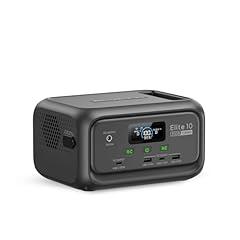
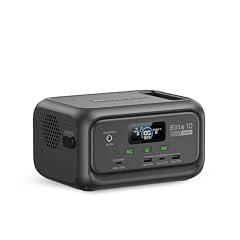
BLUETTI Elite 10 Mini Power Station
Overview
This is a small lithium iron phosphate portable power station with 128Wh of stored energy, one 200W AC outlet, USB and DC outputs, an LED light, and Bluetooth app control. It is meant for low-power travel, camping, desk, camera, router, and short outage uses, not high-watt appliances or whole-home backup. BLUETTI’s official US page confirms the 128Wh capacity, 200W AC rating, six outputs, and included AC and car charging cables. BLUETTI states a less-than-10ms UPS transfer, 70-minute recharge, 3,000 or more cycles to 80% capacity, and solar, car, AC, or combined AC-plus-solar charging. Those are manufacturer claims, not independently reproduced results located for this exact product. Most importantly, the 128Wh rating means airline approval is required under US FAA guidance. The catalog description’s unqualified flight-approved wording is therefore not sufficiently clear.
What works
- Compact 128Wh format and 200W AC output are confirmed on BLUETTI’s US product page.
- LiFePO4 battery chemistry is manufacturer-stated, and is generally used in products designed for longer cycle life.
- BLUETTI includes both AC and car charging cables, supporting ordinary travel and vehicle charging setups.
- The manufacturer documents UPS use, app control, LED lighting, and multiple charging paths for low-power backup use.
What does not
- No exact-product UL, ETL, CSA, or TÜV listing was located in the relevant public certification registers, so complete-product third-party electrical safety certification remains unverified.
- No independent bench test was located for usable AC, USB-C, or DC watt-hours, sustained 200W output, idle draw, or recharge time.
- The flight-approved claim is misleading as written. At 128Wh, US FAA guidance requires air-carrier approval and carry-on handling, subject to airline rules.
- The product is not waterproof, so it needs dry indoor storage and should not be treated as weather-resistant emergency equipment.
- No product-specific US battery take-back program or replaceable battery plan was located.
Who is it for
It suits a traveler, commuter, photographer, camper, or apartment resident who needs a compact source for a phone, laptop, camera gear, small light, router, or another load that stays within 200W. Its 128Wh capacity is better matched to short runtime needs than overnight appliance operation. It also fits someone who can charge from a wall outlet, vehicle, or compatible solar setup and who will store and operate it in a dry place. Air travelers need to obtain approval from their specific carrier before packing it in carry-on baggage.
Who is it not for
It is not appropriate for refrigerators, kettles, space heaters, hair tools, medical equipment without an independently validated backup plan, or any load above 200W. It is also not a whole-home or hardwired backup system and must never be connected in a way that can backfeed building wiring. Buyers who require independently verified delivered capacity, certified complete-product safety listing, weather resistance, or documented repair and battery-recycling support should look for a product with that exact evidence. Do not rely on the broad flight-approved claim without airline approval.
Integrity
The most favorable safety-related design detail is the manufacturer-stated LiFePO4 battery chemistry, paired with stated battery-management protections, output controls, low-load auto-off modes, and a 3,000-cycle claim. BLUETTI also supplies a user manual, customer support phone number, and warranty pathway. No exact-model CPSC recall or public regulatory action was located in the review. Important gaps remain. No public exact-model listing was found from UL, ETL, CSA, or TÜV to independently confirm the safety of the complete power station, charging system, enclosure, and AC outlet. No independent performance testing was found for real delivered energy, inverter behavior, or standby consumption. BLUETTI states long battery life, but no product-specific US take-back program or user-serviceable battery route was located. Lithium batteries should be routed through an appropriate local battery recycler, not household trash or curbside recycling.

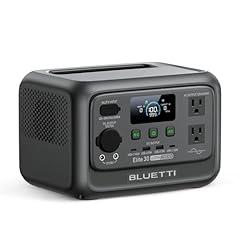
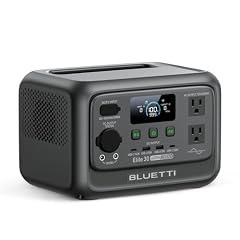
BLUETTI Elite 30 V2 Solar Generator
Overview
The BLUETTI Elite 30 V2 is a compact, 9.5-pound portable power station with a 288Wh lithium iron phosphate battery, a 600W continuous AC inverter, USB-C charging up to 140W, 12V outputs, and solar or vehicle charging. It is intended for short-duration power for phones, laptops, lights, routers, small tools, and similar loads, rather than extended appliance backup. The battery chemistry, capacity, operating temperatures, 12V to 28V solar-input range, and 600W output limit are documented in the manufacturer manual. A disclosed independent test measured 255Wh through the AC inverter at about 210W and 263.5Wh through the 12V output at 10A. The manual also clarifies that its 1,500W Power Lifting mode is only for certain resistive loads and does not raise actual output above 600W.
What works
- A disclosed independent test measured 255Wh at the AC outlet, about 88.5% of stated battery capacity, at an approximately 210W load.
- The manual sets specific charging and discharge temperatures, plus a 12V to 28V, 200W maximum solar-input range.
- The 600W continuous-output limit is clearly separated from the restricted Power Lifting mode for resistive loads.
- The manufacturer documents a 10ms UPS transfer claim and explicitly says it is not for data servers or workstations requiring high-performance UPS service.
- The manufacturer provides a five-year warranty and states more than 3,000 battery cycles.
What does not
- No exact-model UL, ETL, CSA, or TÜV NRTL listing was located in the public certification records searched. The safety design is documented by the maker, but complete third-party listing evidence was not verified.
- The 288Wh battery is small for refrigeration, electric heat, oxygen concentrators, or prolonged outage use. Independent reviewers also characterize it as a short-duration station.
- The 1,500W Power Lifting headline needs care. The manual limits it to pure resistive loads and says actual output remains 600W.
- The 80% in 45 minutes claim is manufacturer-stated at 77°F, so it is not a guaranteed result in hot, cold, or constrained wall-power conditions.
- A practical U.S. manufacturer take-back program and model-specific UN 38.3 transport-test summary were not located.
Who is it for
This product suits a person who needs a carryable power source for day trips, car travel, camping, occasional storm outages, or a compact desk backup. Its measured AC capacity is most appropriate for charging phones, tablets, cameras, laptops, lights, routers, and other modest loads for limited periods. It also fits users who can stay within the 600W continuous limit, use direct USB-C or 12V power where practical, and follow the published temperature and solar-voltage limits. The manufacturer-stated five-year warranty is relevant to buyers planning regular, moderate use.
Who is it not for
It is not for a household expecting whole-home backup, multi-day refrigeration, electric heat, cooking, or dependable operation of high-draw medical equipment. The 288Wh capacity and 600W continuous limit leave little margin for those duties. It should not be used to backfeed a building circuit or as a permanently installed energy-storage system. The manual specifically excludes servers and workstations that need high-performance UPS behavior. Users who require independently verified NRTL listing for a workplace, rental property, insurer, or local authority should obtain documentary confirmation before relying on it.
Integrity
The product uses lithium iron phosphate battery chemistry, and the manual specifies charging from 32°F to 104°F and discharging from minus 4°F to 104°F. It warns against rain, high humidity, damaged batteries, foreign objects in ports, and unapproved attachments. The documented solar-input ceiling is 28V open-circuit voltage and 200W maximum, which is important when matching third-party panels. The manual also says not to connect AC output to the grid. The manufacturer states that the battery is rated for more than 3,000 cycles and includes a five-year warranty. Its own product page claims a 4.5W standby draw, but independent full-system idle measurements were not located. The manual directs owners not to place the battery in household waste and to follow local disposal rules. No exact-model U.S. recall was located in the CPSC sources searched, but a public exact-model NRTL safety listing and a manufacturer U.S. take-back route were not verified.

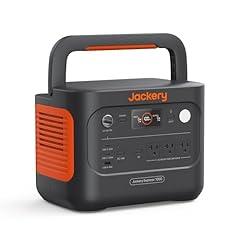
Jackery Explorer 1000 v2 Portable Power Station
Overview
This is a 23.8-pound portable battery power station with a 1,070Wh lithium iron phosphate battery, three 120V AC outlets, USB outputs including a 100W USB-C port, a 12V car outlet, and solar or vehicle charging inputs. It is intended for temporary power for camping, RV use, device charging, and selected outage loads, rather than permanent electrical installation. Jackery states a 1,500W continuous AC limit, 3,000W surge peak, 400W maximum solar input, and 4,000 cycles to at least 70 percent capacity. Independent AC testing measured 910Wh delivered, about 85 percent of the stated battery capacity. The manual also documents a 20ms backup transfer, but explicitly says it is not a zero-interruption UPS and should not be used for servers or workstations.
What works
- Independent AC-output testing measured 910Wh delivered, a solid 85 percent of the stated 1,070Wh battery capacity.
- The manual gives concrete operating limits, including 1,500W total AC output, 16V to 60V solar-input range, and 0C to 45C charging temperatures.
- Lithium iron phosphate chemistry, temperature warnings, ventilation instructions, and instructions to stop use after damage or abnormal heat are documented by the manufacturer.
- Energy Saving Mode is enabled by default and turns low-load outputs off after 12 hours, limiting avoidable standby drain.
- The backup function is clearly constrained. Jackery states a 20ms transfer time and warns users not to rely on it for equipment needing uninterrupted power.
What does not
- A matching UL, ETL, CSA, or TÜV listing for the complete product was not located in the searched public certification registers. The manual's FCC statement is not a product-safety listing.
- Jackery's claim of 62 protection layers is manufacturer-stated. No model-specific UN 38.3 battery test summary or detailed battery-management test record was located.
- The prominent one-hour recharge claim applies to Emergency Super Charge. Jackery's technical specifications list about 1.58 hours by AC adapter, and independent timing found standard charging closer to 102 minutes.
- Solar input is capped at 400W. Independent testing found a 200W panel reached 178W peak, so full solar recharge depends heavily on panel capacity and sunlight.
- No practical U.S. manufacturer take-back program, replacement battery path, or consumer repair documentation was located for this product.
Who is it for
It suits campers, RV travelers, photographers, and outage-prepared households that need a compact battery station for electronics, lights, a cooler, networking gear, or individual appliances whose real running demand stays below 1,500W. Its independently measured AC energy supports planning around roughly 910Wh of delivered power, not the full cell rating. It also fits users who can monitor appliance wattage, keep the unit dry and ventilated, and use solar only within the published voltage and current limits.
Who is it not for
It is not for anyone who needs a true zero-transfer UPS for servers, workstations, medical equipment, or other interruption-sensitive devices. The manual states that its backup transfer can take up to 20ms and recommends testing compatibility with only one connected device. It is also unsuitable for permanent home wiring, generator inlet connection, backfeeding a building circuit, wet outdoor use, or loads that exceed 1,500W continuously. Buyers needing documented third-party safety listing or a manufacturer battery recycling route should seek products with those records available.
Integrity
The product uses lithium iron phosphate cells, and Jackery documents charging only from 32F to 113F and discharging from 14F to 113F. The manual requires ventilation during charging, dry indoor use, inspection before use, and immediate discontinuation after damage, abnormal odor, or overheating. It also specifies input limits for vehicle and solar charging. These are useful safeguards, though the searched public NRTL certification records did not provide a match for the complete product, and no model-specific UN 38.3 summary was located. The stated 4,000-cycle life to at least 70 percent capacity could reduce replacement frequency if achieved, but it remains manufacturer-stated. Independent testing supports reasonably efficient AC delivery at 910Wh. The default low-load shutoff can reduce wasted energy. The manual says not to dispose of the unit with household waste, yet no clear U.S. manufacturer take-back program or user-replaceable battery option was located. No CPSC recall for this exact product was identified in the searched public recall records.

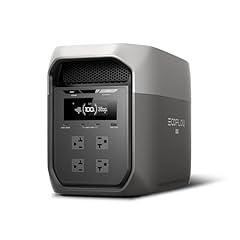
EF ECOFLOW DELTA 3 Max Portable Power Station
Overview
This is a 44.8-pound portable power station for temporary backup, vehicle-based camping, and off-grid device power. It has a 2,048Wh lithium iron phosphate battery, four 120V AC outlets with 2,400W total rated output, USB and 12V outputs, Wi-Fi and Bluetooth control, and a 500W maximum solar input. It is not a fuel generator, and solar panels are separate. EcoFlow states that it uses battery monitoring and protections for temperature, voltage, overload, short circuit, and current, with charging limited to 32°F to 113°F. The maker also states a sub-10-millisecond backup transfer and a 68-minute wall-charge time to 80%. Independent tests support its basic power delivery. One test measured about 1,618Wh delivered through AC loads, while another found the 2,400W continuous output operated as stated.
What works
- Independent testing found about 79% AC-delivery efficiency, approximately 1,618Wh usable through AC loads.
- Independent testing found the 2,400W continuous output functioned as stated under appliance loads.
- The product documentation gives specific LFP chemistry, temperature limits, solar-input limits, and multiple battery and inverter protections.
- EcoFlow states a 3-year warranty with a further 2 years available after product registration.
What does not
- No exact-product UL, ETL, CSA, or TÜV safety listing could be verified in a public certification register, so independent certification of the complete U.S. product remains unproven.
- A previous EcoFlow Delta Max 2000 product was recalled on October 9, 2025 after six reported fires. That recall does not name this product, but it makes careful setup, firmware updates, and supervision important.
- AC idle consumption was independently measured at about 27W, which can materially shorten runtime when the inverter is left on without a meaningful load.
- The 500W solar-input ceiling limits recharge speed in poor weather, and the battery cannot be expanded.
Who is it for
This product suits someone who needs a self-contained reserve for a refrigerator, router, lights, laptops, small kitchen appliances, or a CPAP during short outages, and can keep the unit indoors, dry, ventilated, and close to the loads. It also fits car camping or RV use where a roughly 45-pound unit can remain near the vehicle. Its independently observed AC energy delivery makes it more appropriate for planned essential loads than for guessing from advertised device-runtime charts.
Who is it not for
It is not for anyone seeking a permanently installed home battery, grid connection, or a unit that can safely feed household circuits without approved transfer equipment and qualified installation. Do not use it to backfeed a wall outlet or electrical panel. It is also unsuitable where it must be carried far by one person, left in rain or dusty conditions, recharged below freezing, or relied upon for multi-day solar operation in shaded locations. Users needing more than 2,048Wh cannot add an extra battery.
Integrity
The product uses lithium iron phosphate cells, a chemistry generally selected for longer cycle life and lower thermal reactivity than many nickel-cobalt battery designs. EcoFlow documents overvoltage, overload, over-temperature, short-circuit, low-temperature, undervoltage, and overcurrent protections, plus a 32°F to 113°F charging range. These are manufacturer specifications, not a substitute for a publicly verified U.S. safety listing of the complete product. Public certification evidence confirmed Class B electromagnetic-compliance testing, but did not confirm an exact-product UL, ETL, CSA, or TÜV safety listing. EcoFlow lists five years of coverage only when the additional two years are registered. The maker specifies roughly 4,000 cycles to about 70% capacity, which may reduce premature replacement. However, no product-specific U.S. take-back program or replacement-battery path was found. Recycle a damaged or depleted unit through an appropriate hazardous-waste or lithium-battery handler, never curbside or household trash.

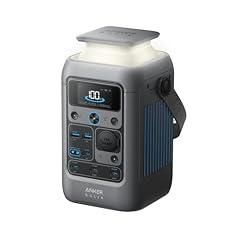
Anker SOLIX C300 Portable Power Station
Overview
The Anker SOLIX C300 DC is a compact, DC-only portable power station for charging USB devices and running 12V car-socket equipment. It stores a manufacturer-stated 288Wh and provides up to 300W combined output through four USB-C ports, two USB-A ports, and one 12V car socket. It weighs 6.17 pounds and measures about 4.9 by 4.7 by 7.9 inches. The exact manual sets useful operating boundaries, including a 100W maximum solar input, an 11V to 28V solar range, and 0°C to 40°C charging temperatures. Two USB-C ports can each accept or deliver up to 140W. Independent field reviewers confirmed its compact DC-focused layout and practical use with laptops and small travel electronics, but no rigorous published bench test was found that quantifies delivered watt-hours, idle draw, or sustained 300W output under a disclosed protocol. It has no AC outlets and includes no wall charger.
What works
- The DC-only design avoids implying that it can run household plug-in appliances.
- The manual gives specific USB-C, car-socket, solar-input, temperature, and total-output limits.
- Two bidirectional USB-C ports are rated at up to 140W each, which can support high-power laptop charging with compatible equipment.
- Independent field testing confirmed the compact size, low weight, and practical travel-electronics use.
- The manual provides automatic shutoff settings and an on-screen overheating indicator.
What does not
- No wall charger is included, and reaching the stated fast-charge setup requires compatible high-power USB-C adapters and cables.
- It has no AC outlets, so it cannot directly power devices with standard household plugs.
- No exact-model UL, ETL, CSA, or TÜV listing was verified in the relevant public certification registers.
- Independent reviews were found, but no published calibrated test established usable watt-hours, standby draw, or sustained maximum output.
- The manual warns that the 140W USB-C ports can present a fire risk with additional equipment, so compatible cables and connected equipment matter.
Who is it for
This product suits a traveler, camper, field worker, or outage-prepared household that mainly needs DC power for phones, tablets, cameras, drones, USB-C laptops, lights, or a compatible 12V cooler. Its small footprint and 6.17-pound weight make it practical where carrying a larger inverter-equipped station is unnecessary. It is especially appropriate for someone who already owns suitable USB-C charging equipment and understands that the published 280W recharge arrangement requires two high-power USB-C power sources.
Who is it not for
It is not appropriate for anyone needing standard household AC outlets, refrigerator backup through a wall plug, medical equipment that requires AC power, or a home backup system. It is also a poor fit for buyers expecting a wall charger in the box or easy rapid recharging from one ordinary outlet. Do not use it as a building-connected power source or attempt any backfeed arrangement. Users unable to confirm solar-panel voltage, connector compatibility, and cable ratings should avoid improvised solar setups.
Integrity
The product uses LiFePO4 battery chemistry, confirmed by independent product coverage, and its manual specifies charging from 0°C to 40°C and discharging from minus 20°C to 40°C. It also shows an overheating warning icon, directs users to stop use until the unit cools, limits solar input to 100W, and warns against exceeding the 300W total-output limit. These are useful operating controls, but an exact-product NRTL safety certification could not be verified from public UL, ETL, CSA, or TÜV records. No recall specific to this product was identified in the CPSC material reviewed. However, Anker has had separate U.S. recalls for other lithium-ion power banks in 2024 and 2025 because of fire and burn hazards. The manual instructs users not to disassemble the unit and to keep it cool and dry. Public evidence of a replacement-battery program, spare-parts availability, or a product-specific U.S. recycling take-back route was not found, so end-of-life planning should rely on an appropriate local lithium-battery collection program.

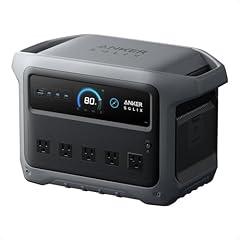
Anker SOLIX C1000 Gen 2 Power Station
Overview
This is a 24.9-pound portable battery power station for camping, short outages, vehicle travel, and temporary device power. It has a manufacturer-stated 1,024Wh battery, 2,000W continuous AC output, 600W solar input limit, multiple USB outputs, and a 10 ms backup mode. Its manual specifies a floating-ground AC design, so certain equipment may require a separately purchased ground-neutral plug. Independent load-bank testing measured 890Wh delivered, or about 87% of the rated capacity. The same independent test recorded a 49-minute recharge with Ultra Fast mode enabled. The product documentation provides unusually specific solar voltage and current limits, plus battery-management temperature cutoff information. However, its power claims are not fully consistent, because the product listing states 3,000W peak output while the manual describes SurgePad support up to 2,400W and an AC overload response at about 2,500W.
What works
- Independent testing measured 890Wh delivered from the 1,024Wh-rated battery.
- Independent testing confirmed the stated 49-minute recharge when Ultra Fast mode is enabled.
- The manual gives specific solar limits, 11V to 60V, 600W maximum, with parallel-panel instructions.
- The manual documents battery-management temperature alerts, output short-circuit shutdown, and AC overload protection.
- A five-year U.S. warranty applies, with serial-number evidence required for warranty service.
What does not
- No exact-model UL, ETL, CSA, or TÜV public listing was found to independently establish complete U.S. portable-power-pack safety certification.
- The listing's 3,000W peak claim conflicts with the manual's 2,400W SurgePad description and roughly 2,500W overload threshold.
- The unit uses a floating-ground AC output, and some connected equipment may need an extra ground-neutral plug.
- Independent testing found the cooling fan noticeably loud at high loads.
- The battery is not user-serviceable, and Anker's stated U.S. recycling route is limited to a District of Columbia mail-back program.
Who is it for
This product suits a camper, road traveler, renter, or household preparing for short outages who needs substantial temporary AC power without a fuel-burning generator. It is especially relevant for someone who can keep total appliance demand within the documented 2,000W continuous limit and values a compact 24.9-pound format. It also fits a user with suitable portable solar panels who can verify their combined open-circuit voltage stays at or below 60V and who wants fast wall recharging before a trip or storm.
Who is it not for
It is not appropriate as a permanently installed home battery, a grid-connected system, or a way to backfeed household wiring. Users needing dependable support for equipment that requires a bonded neutral should address the floating-ground limitation before use. It is also unsuitable for long unattended outage coverage, high-draw appliances that exceed the 2,000W continuous rating, or users who need expandable battery capacity. Anyone unable to lift about 25 pounds safely should plan for assistance when moving it.
Integrity
The product has traceable battery transport-test evidence. An exact-model UN 38.3 report identifies a 51.2V, 1,024Wh battery pack and records passing altitude, thermal, vibration, shock, external-short-circuit, impact, overcharge, and forced-discharge tests. Its manual also gives charging and discharging temperature boundaries and directs the user to stop operation when battery-management temperature alerts appear. No exact-model recall was found in the U.S. Consumer Product Safety Commission material reviewed. However, Anker has recalled several separate power-bank models for fire and burn hazards, so the brand's wider battery recall history is relevant context, not evidence that this product is recalled. Anker offers a recycling page, but its stated U.S. mail-back program is specifically tied to District of Columbia requirements. End-of-life handling elsewhere should use a local lithium-battery or household hazardous-waste route.

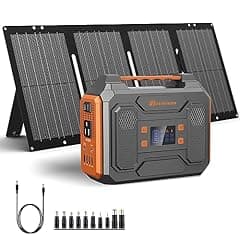
ZeroKor 300W Portable Solar Generator with 60W Foldable Solar Panel
Overview
This is a compact lithium-ion portable power station intended for low-draw electronics, lighting and small camping loads. The available R200 manual states 280Wh of battery capacity, two 110V AC outlets rated to 300W maximum, a 9V to 12.6V DC outlet, USB outputs, and a roughly 5-pound, 8.5 by 6.7 by 4.1 inch enclosure. It can recharge by wall adapter, vehicle power or a compatible solar input. The key limits are manufacturer-stated, rather than independently bench verified. Its documented solar input range is 13V to 23V and 2.4A maximum. The manual also says AC output does not operate during charging, so it is not documented as an uninterrupted backup supply. I did not locate a public exact-product UL, ETL, CSA or TÜV listing, or a method-disclosed independent capacity and load test.
What works
- Compact 5-pound format is practical for carrying between a vehicle, tent and small work area, manufacturer-stated.
- The manual provides a clear 300W maximum AC limit and input-voltage range for compatible charging equipment.
- AC outlets are documented not to pass power while the unit is charging, which reduces ambiguity about its backup function.
- The manual documents a lithium-ion battery, operating range of 14F to 104F, and a high-temperature indicator.
What does not
- No public exact-product listing to UL 2743 or another OSHA-recognized laboratory certification was located.
- No traceable UN 38.3 battery transport-test summary, cell chemistry detail, or model-specific battery safety file was located.
- No method-disclosed independent test was located for usable watt-hours, sustained 300W output, waveform quality, efficiency or standby draw.
- Documentation is inconsistent. The available manual describes solar charging as using a panel not included and gives a 14-month warranty, while the product record describes an included 60W panel and a 12-month warranty.
- There is no documented U.S. maker take-back program, repair pathway, replacement battery policy or spare-parts support.
Who is it for
This product fits a person who needs a light, carryable energy reserve for phones, USB accessories, LED lighting, camera batteries, a laptop charger, or similarly modest loads that stay within the stated 300W ceiling. It also suits occasional car or campsite use where the buyer can check the actual wattage of every connected device and can follow the specified solar-input range. It is more appropriate for short portable sessions than for an always-connected household backup role.
Who is it not for
It is not suitable for high-wattage heating appliances, cooking appliances, hair tools, large refrigeration loads, or any device with a startup demand beyond its stated 300W maximum. It is also not the right choice for critical medical equipment, unattended overnight use, or a home backup installation, because no exact-product NRTL listing was located and no UPS transfer-time specification is documented. Buyers needing repeatable solar performance should also avoid assuming the bundled panel's output without panel-specific test documentation.
Integrity
The primary health consideration is that this is a lithium-ion energy-storage product. The available manual identifies an operating temperature range, a high-temperature warning indicator, and limited charging and output behavior. Those are useful operating instructions, but they do not substitute for an independently listed complete product. UL 2743 is the OSHA-recognized portable-power-pack standard, and no public exact-product certification record was located in the checked UL, ETL, CSA or TÜV sources. No ZeroKor R200 recall was located in the checked CPSC sources. The manual claims more than 1,000 cycles, but it does not state the test conditions, remaining-capacity threshold, service plan or replaceable-battery option. No manufacturer recycling program was found. At end of life, lithium-ion devices should go to a dedicated battery or electronics recycler or household hazardous-waste collection point, not household trash or curbside recycling. EPA notes that damaged or improperly discarded lithium-ion batteries can create fire risks.

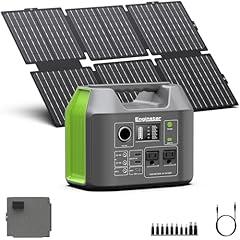
EnginStar Portable Solar Generator 300W
Overview
The EnginStar R300 is a compact lithium-ion portable power station sold here with a foldable 60W solar panel. The station is intended for low-power camping, travel, emergency, and device-charging use. Its published dimensions are about 9.1 by 7.6 by 5.5 inches and its stated weight is 6.5 pounds. The manufacturer manual states a 296Wh battery, two 110V pure-sine AC outlets with a 300W ceiling, regulated 12V and 24V DC outputs, USB outputs, and a 19V, 3.42A wall input. It specifies a 12V to 25V, 50W to 100W solar-input range, so the included 60W panel fits that stated range. The manual also describes short-circuit and overpower shutdown. An independent video reviewer, who disclosed receiving the product and using affiliate links, observed 20W to 33W solar input near sunset and reported overload shutdown testing. Those observations are useful but are not laboratory verification.
What works
- The compact, 6.5-pound manufacturer-stated format is practical for car camping, short outages, and carrying between rooms.
- The manual gives concrete input boundaries, including 19V wall charging and 12V to 25V solar input.
- The manual specifies 300W AC output, pure-sine wave power, and automatic short-circuit or overload shutdown.
- A disclosed reviewer observed the bundled panel producing 20W to 33W in late-day sunlight, showing that the solar input operated under those conditions.
What does not
- No exact-product UL, ETL, CSA, or TÜV safety listing was verified in a recognized certification register. A reviewer’s ETL statement is not sufficient evidence of an exact-model listing.
- The battery is described only as lithium-ion. No model-specific UN 38.3 test summary, battery-management specification, cell supplier, or detailed thermal cutoff information was located.
- The 296Wh capacity and 300W output have not been confirmed through a disclosed, independent bench test with metering, load conditions, and cutoff criteria.
- Pass-through charging is supported, but the manual advises against using AC outlets while charging and gives no transfer-time specification for UPS-style backup.
- The internal battery is non-removable, and no manufacturer-operated U.S. take-back program or repair-parts policy was located.
Who is it for
This product suits a person who needs a small, carryable source of electricity for phones, cameras, lighting, a laptop, a low-draw fan, or similar equipment that remains comfortably below the stated 300W shared limit. It also fits car campers or short-duration outage preparation where a 296Wh class battery is enough and users can monitor the display, follow the stated solar-voltage range, and accept a roughly seven-hour manufacturer-stated wall recharge time.
Who is it not for
It is not for running high-draw heating appliances, kettles, hair tools, large refrigerators, laser printers, or equipment with substantial startup surges. The manual specifically warns that some appliances can exceed its protection threshold. It is also unsuitable as a documented UPS, a building-connected backup system, or a product for users who require confirmed third-party electrical safety certification. Households needing repairable battery storage, verified long-cycle data, or a formal recycling program should not assume those supports are available here.
Integrity
The manual provides useful basic safety directions. It identifies a lithium-ion battery, states a 14 F to 104 F operating range, directs users not to cover, disassemble, heat, or short-circuit the product, and describes AC and DC overpower shutdown. It also tells users to use solar panels within a stated 12V to 25V range. However, the available documentation does not supply a model-specific battery transport-test summary, detailed thermal-protection thresholds, or a verified exact-product listing from a U.S. Nationally Recognized Testing Laboratory. No product-specific U.S. recall or regulator warning was found in the searches performed. That is not proof of safety. The battery is internal and the manual claims more than 1,000 charge cycles, but provides no test conditions. The manual asks users to send electronic waste and batteries to dedicated collection points, yet no EnginStar U.S. take-back route was verified. For end of life, confirm acceptance with a local household hazardous-waste program or battery recycler, especially if the product is damaged.
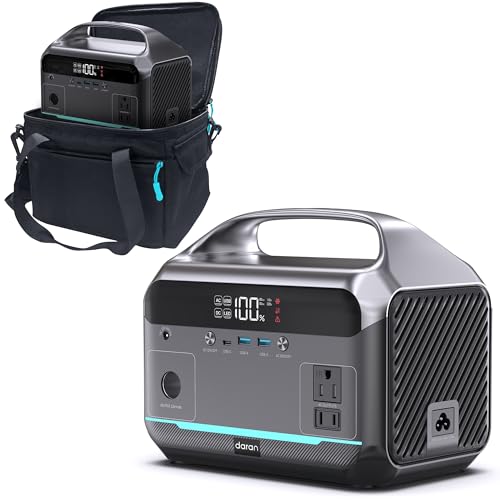
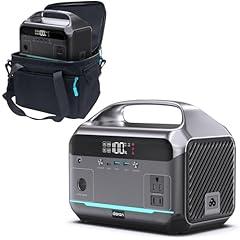
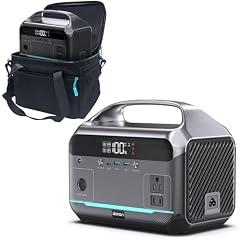
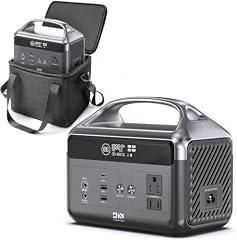
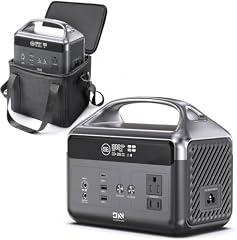
Daran Portable Power Station 288Wh
Overview
This is a compact portable power station with a manufacturer-stated 288Wh lithium iron phosphate battery, two 120V AC outlets rated at 350W continuous and 600W surge, USB-A, 60W USB-C, and a 12V car socket. The manual lists an 8.16-pound weight and a 10.0 by 6.6 by 8.2 inch case. It is intended for phones, laptops, lights, small fans, cameras, routers, and other loads that remain within its 350W limit. The exact-model manual documents a 10-26V DC solar input capped at 100W, overload and short-circuit responses, and overheat and low-temperature warnings. It also warns that the station is not for life-safety medical equipment. No exact-model NRTL listing or independent outlet-capacity, usable-energy, charging-efficiency, or idle-draw bench test was located. The manufacturer makes a general UL claim, but an exact product certification could not be confirmed from a public issuer register.
What works
- The manual specifies a compact 288Wh lithium iron phosphate battery and 8.16-pound carry weight.
- Documented AC protections include overload cutoff, short-circuit response, and overheat shutdown guidance.
- The stated 10-26V DC, 100W maximum solar input gives clear electrical limits for compatible panels.
- The manual lists a 350W continuous AC limit, which is more useful than relying on peak power alone.
What does not
- No exact-model UL, ETL, CSA, or TÜV portable-power-station listing was confirmed, despite the brand's general certification claim.
- No independent bench test was located to verify usable watt-hours, sustained 350W output, waveform quality, charging time, or idle consumption.
- The product record's 2.1-hour fast-charge statement lacks the charger, starting state, and test conditions needed to reproduce it.
- The manual acknowledges that the battery percentage can be inaccurate after storage or initial use and may require repeated full discharge and recharge to recalibrate.
- The UPS claim lacks a stated transfer time and load conditions, so it is not appropriate to assume uninterrupted support for sensitive equipment.
Who is it for
This product suits a camper, road-trip user, renter, or outage-prepared household that needs a carryable battery for low-power electronics and understands the 350W continuous ceiling. Its stated capacity and outlet mix fit charging phones, laptops, cameras, lights, a router, or a small fan. It also suits someone who can use a compatible solar panel within the documented 10-26V, 100W input range and who will monitor device wattage before connecting it.
Who is it not for
It is not for anyone powering heaters, kettles, coffee makers, full-size refrigerators, power tools with high startup demand, or other loads that can exceed 350W. It is also not for life-safety medical equipment, as the manual explicitly excludes that use. Households needing seamless backup for computers, networking equipment, or alarms should not rely on the UPS claim without a published transfer-time specification. Buyers who require a verified U.S. third-party safety listing or independently measured capacity should seek product-specific evidence first.
Integrity
The documented battery chemistry is lithium iron phosphate, and the manual describes battery-management protections for overcharge, over-discharge, over-current, short circuit, temperature, overload, and low-temperature conditions. Those are useful safeguards, but they are manufacturer documentation rather than an independently confirmed complete-product safety listing. No exact-product recall or CPSC safety warning was found in the U.S. recall search reviewed for this assessment. For longevity, the brand and related product materials state a 3,500-cycle target to about 80 percent capacity, but no independent cycle-life data was found for this product. The manual says the battery is built in, must not go in household trash, and should not be disassembled for separate recycling. It directs users to local disposal rules, but no dedicated U.S. manufacturer take-back path or replacement-battery program was verified.