10 Best Blood Pressure Monitors

Discover the top blood pressure monitors of 2023! Uncover cutting-edge accuracy, user-friendly designs, and personalized health insights. Your perfect health companion awaits—explore our expert comparison now!

Top-rated Blood Pressure Monitors Comparison

1

Best Overall
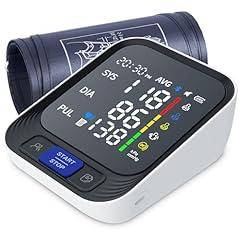
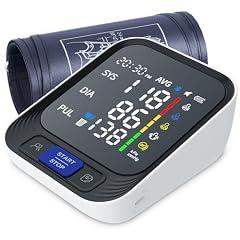
Acenis Blood Pressure Monitor with Large Screen
Easy-to-read large color screen.
Adjustable cuff fits various arm sizes.
Convenient for home blood pressure monitoring.
9.8

(516 reviews)

Ranking details

1K+ bought in past month

available_at_amazon
Acenis Blood Pressure Monitor with Large Screen
9.8

(516 reviews)

Easy-to-read large color screen.
Adjustable cuff fits various arm sizes.
Convenient for home blood pressure monitoring.

1K+ bought in past month

available_at_amazon

2

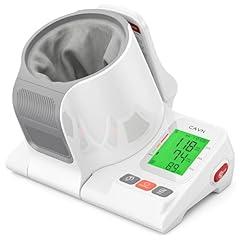
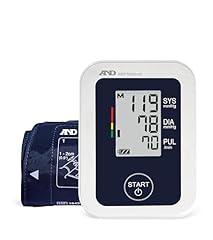
CAVN Barrel-Type Blood Pressure Monitor
Easy-to-read display enhances user convenience.
Compact design offers excellent portability.
Accurate readings ensure reliable health tracking.
9.6

(317 reviews)

Ranking details

10% off

CAVN Barrel-Type Blood Pressure Monitor
9.6

(317 reviews)

10% off

Easy-to-read display enhances user convenience.
Compact design offers excellent portability.
Accurate readings ensure reliable health tracking.

3

Best Affordable
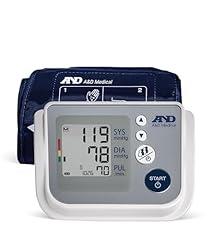
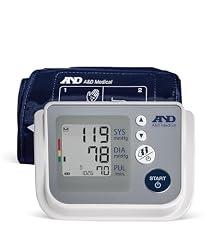
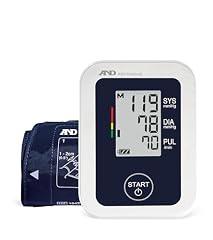
A&D Medical Blood Pressure Monitor UA-651
Wide range cuff fits most adults comfortably.
Precise readings ensure reliable blood pressure tracking.
FSA/HSA eligibility offers flexible purchasing options.
9.3

(4,389 reviews)

Ranking details

10% off

A&D Medical Blood Pressure Monitor UA-651
9.3

(4,389 reviews)

10% off

Wide range cuff fits most adults comfortably.
Precise readings ensure reliable blood pressure tracking.
FSA/HSA eligibility offers flexible purchasing options.

4

A&D Medical UA-767F Blood Pressure Monitor
Supports multiple users for family monitoring.
Detects body movement for accurate readings.
Wide-range cuff fits various arm sizes.
8.9

(1,218 reviews)

Ranking details

10% off

A&D Medical UA-767F Blood Pressure Monitor
8.9

(1,218 reviews)

10% off

Supports multiple users for family monitoring.
Detects body movement for accurate readings.
Wide-range cuff fits various arm sizes.

5
Invaxe Blood Pressure Monitor with Large Cuff
Easy-to-read display for quick results.
Large cuff fits a wide range of sizes.
Automatic operation simplifies blood pressure monitoring.
8.6

(2,568 reviews)

Ranking details
Invaxe Blood Pressure Monitor with Large Cuff
8.6

(2,568 reviews)

Easy-to-read display for quick results.
Large cuff fits a wide range of sizes.
Automatic operation simplifies blood pressure monitoring.

6

Hot Deal
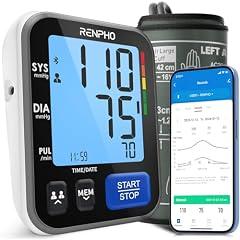
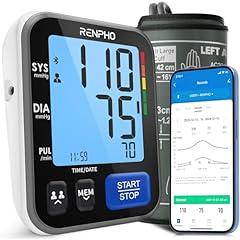
RENPHO Bluetooth Blood Pressure Monitor
Bluetooth connectivity for easy data tracking.
Accommodates large adult arm sizes comfortably.
Supports multiple users with data storage.
8.4

(1,704 reviews)

Ranking details

11% off

RENPHO Bluetooth Blood Pressure Monitor
8.4

(1,704 reviews)

11% off

Bluetooth connectivity for easy data tracking.
Accommodates large adult arm sizes comfortably.
Supports multiple users with data storage.

7

Popular
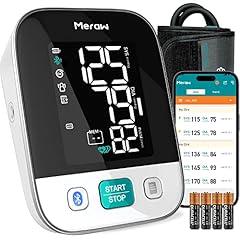
Meraw Blood Pressure Monitor with Bluetooth Tracking
Bluetooth app tracks health data seamlessly.
Detects irregular heartbeats accurately.
Wide cuff fits various arm sizes comfortably.
8.2

(1,793 reviews)

Ranking details
Meraw Blood Pressure Monitor with Bluetooth Tracking
8.2

(1,793 reviews)

Bluetooth app tracks health data seamlessly.
Detects irregular heartbeats accurately.
Wide cuff fits various arm sizes comfortably.

8

Acenis Blood Pressure Monitor with Large LCD Screen
Large, easy-to-read color LCD screen.
Detects irregular heartbeat and hypertension.
Adjustable cuff fits various arm sizes.
8.1

(68 reviews)

Ranking details
Acenis Blood Pressure Monitor with Large LCD Screen
8.1

(68 reviews)

Large, easy-to-read color LCD screen.
Detects irregular heartbeat and hypertension.
Adjustable cuff fits various arm sizes.

9

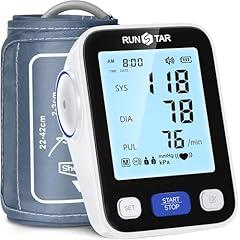
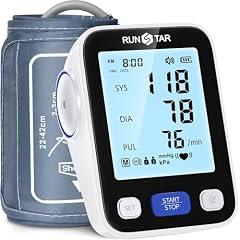
Runstar Blood Pressure Monitor with Wide Range Cuff
Wide cuff range fits most arm sizes.
Stores up to 198 total readings.
Convenient storage bag for easy transport.
7.9

(881 reviews)

Ranking details
Runstar Blood Pressure Monitor with Wide Range Cuff
7.9

(881 reviews)

Wide cuff range fits most arm sizes.
Stores up to 198 total readings.
Convenient storage bag for easy transport.

10

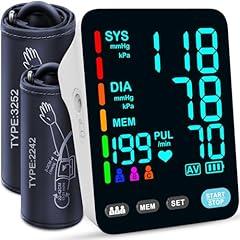
YONLO Blood Pressure Monitor with Dual Cuffs
Dual cuff sizes for versatile arm fit.
Large LED display for easy reading.
Memory for multiple users and readings.
7.6

(1,379 reviews)

Ranking details
YONLO Blood Pressure Monitor with Dual Cuffs
7.6

(1,379 reviews)

Dual cuff sizes for versatile arm fit.
Large LED display for easy reading.
Memory for multiple users and readings.

Blood-pressure monitors: what to look for

An automatic upper-arm blood-pressure monitor uses an inflatable cuff and oscillometric measurement to estimate systolic pressure, diastolic pressure, and pulse. It is a home-tracking tool, not a diagnosis. A useful monitor is not defined by a large display, a high review average, a fast reading, or a claim such as “clinical-grade.” The important questions are whether the exact monitor-and-cuff configuration has credible accuracy evidence, whether the cuff fits the person using it, and whether the device helps produce and preserve readings that a health professional can interpret.

Start with the exact model and cuff. The strongest evidence in this set came from products named in the ValidateBP U.S. Blood Pressure Validated Device Listing or the STRIDE BP Validated Devices List, or from a peer-reviewed human study using a recognized protocol. Look for ANSI/AAMI/ISO 81060-2:2018 or its applicable amendments, and check that the listing covers the exact monitor, cuff, and intended population. A study of a related model, a broad family name, or a different cuff does not automatically validate the product in the box. FDA clearance is also useful, but it answers a different question: it establishes a traceable U.S. regulatory record and substantial equivalence, not a guarantee that every reading is accurate or that every advertised configuration has been clinically validated.

Cuff fit is central. Measure the upper arm and compare it with the manufacturer’s cuff chart and the validated configuration. Among the supplied products, documented ranges included 22–32 cm, 22–36 cm, 22–42 cm, 18–42 cm, and 32–52 cm. A marketplace claim such as “fits all arm sizes,” an extra-large range that exceeds the public clearance record, or an integrated cuff with no replacement-size option should be treated cautiously. A poor fit can make otherwise impressive accuracy claims irrelevant.

Technique and record quality matter as much as convenience. Look for instructions covering quiet rest, seated posture, back and feet support, arm position at heart level, bare-skin cuff placement, remaining still and silent, movement errors, repeat readings, and comparison with a clinician. A memory count can mislead: 60 or 199 readings are less useful if they lack date, time, user identity, or context. Bluetooth and app syncing can improve trend review, but check whether records remain separated, can be exported, and can be deleted, and whether the app’s privacy disclosures explain collection, sharing, retention, and account requirements.

Power and support deserve attention too. Replaceable batteries can avoid dependence on a sealed battery, while rechargeable designs may reduce routine disposable-battery waste but can be harder to repair when the internal battery fails. Check the stated charger or battery requirements, warranty, replacement-cuff availability, repair pathway, and end-of-life instructions. Certification language also needs scrutiny: “FDA registered,” “FDA listed,” and “FDA cleared” are not interchangeable with “FDA approved,” and a self-issued accuracy badge is not an independent validation.

Across the supplied reviews, recurring cautions include not using these monitors for infants or children unless the exact product is intended and validated for them; not assuming pregnancy or preeclampsia is covered; and not relying on a reading to diagnose a condition, change medication, or dismiss urgent symptoms. Several products also exclude or warrant clinician guidance for serious arrhythmia, circulation problems, wounds, IV therapy, mastectomy history, or implanted electrical devices. Read the exact manual, confirm cuff fit, and discuss unusual readings with a health professional.

Integrity

The topics below reflect what can affect the safety, usefulness, and environmental burden of an automatic upper-arm monitor. Scores distinguish products with model-specific evidence and practical support from products whose claims or documentation are incomplete; they do not replace clinical advice.

EEvidence

Clinically validated measurement accuracy

This measures whether the exact monitor-and-cuff configuration passed an appropriate independent human validation protocol for its stated users. It is the key distinction between a substantiated accuracy claim and marketing language. Higher-scoring products were listed by ValidateBP, supported by STRIDE BP equivalence, or backed by a documented clinical study. Lower scores reflected bench testing alone, related-model evidence, or no inspectable human validation.

Verifiable U.S. device authorization

This measures whether the exact marketed product can be traced to a valid U.S. regulatory record naming the maker, model, intended use, and authorization. That matters because “FDA registered” or “FDA approved” wording can be vague or inaccurate. Higher-scoring products had identifiable FDA clearance or device records; lower scores reflected only a listing, mismatched labeler, or no exact authorization found.

Honest claims and meaningful certifications

This measures whether claims about accuracy, arrhythmia, FDA status, clinical grade, and certifications match the evidence for the exact product. Higher-scoring products used specific, qualified claims supported by records. Lower-scoring examples used phrases such as “FDA approved,” “510K approved,” or broad detection and all-arm-size claims that exceeded the documented indication, cuff range, or available validation evidence.

Independent evidence buyers can inspect

This measures whether the seller identifies the exact model, cuff, protocol, study or reviewer, and regulatory record so a buyer can check the evidence. For this category, a public registry entry or full validation publication is more useful than a logo. Higher-scoring products had model-specific ValidateBP, STRIDE BP, PubMed, or FDA trails; lower scores relied on family-level or equivalence claims with limited underlying reports.

HHealth & Safety

Cuff fit that matches the user

This measures whether the supplied cuff covers stated arm circumferences with clear sizing instructions and validation support. Fit is especially important here because an incorrect upper-arm cuff can undermine an otherwise accurate monitor. Higher-scoring products documented ranges such as 18–42 cm, 22–42 cm, or two cuffs reaching 52 cm; lower-scoring products had conflicting or unsupported larger-size claims, or no clear alternative cuff.

Guidance that prevents bad readings

This measures instructions for rest, posture, arm position, cuff placement, movement, errors, repeat readings, and clinician comparison. These safeguards matter because home technique can create misleading results even when the device itself has been tested. The strongest supplied scores belonged to products with specific rest, heart-level, stillness, and retest guidance; lower scores reflected incomplete public protocols or missing manuals.

Supports safer blood-pressure self-monitoring

This measures whether the product frames readings as information for a health professional rather than encouraging diagnosis, medication changes, or false reassurance. For this product type, warnings about limitations and irregular-heartbeat indicators are important. Higher-scoring reviews described clear medical-use boundaries and clinician advice; lower-scoring products relied more on broad accuracy or detection claims without enough interpretation guidance.

Reliable records and trend tracking

This measures whether readings retain date, time, user identity, and measurement context when stored or synced. That matters when a clinician is reviewing a trend or when several household members share a monitor. Higher-scoring products offered dated multi-user histories or substantial timestamped storage; lower-scoring devices stored sequential readings without context, lacked export, or left app record integrity unclear.

Safe power and charging design

This measures whether batteries, USB power, charging, adapters, and electrical-safety claims are clearly specified and supportable. A home monitor should have understandable power instructions and credible safety evidence. Higher scores were associated with documented electrical and home-use testing or clear replaceable-battery designs; lower scores reflected unclear charger details, conflicting power descriptions, or unsupported electrical-certification claims.

Post-market safety record

This measures unresolved recalls, safety alerts, serious malfunction signals, and the availability of a traceable corrective-action or support path. It matters because a cleared or validated monitor can still have later problems. Higher-scoring products had no material issue located and clearer warranty or support information. A lower score can reflect limited manufacturer history, unresolved signals, or weak support documentation; no located recall is not proof of future safety.

Protection of app-linked health data

This measures collection, sharing, security, retention, deletion, and account controls when readings enter an app. It matters because blood-pressure history is sensitive health information. Higher-scoring products either avoided connectivity or documented encryption and deletion controls with limited exposure. Lower scores reflected cross-app tracking disclosures, broad personal-data collection, or privacy details that were only developer statements and not independently audited.

EEcology

Lower-waste power and end-of-life design

This measures battery replaceability, durability, repair or replacement support, packaging disclosure, and recycling instructions. For monitors, replaceable AA or AAA batteries can avoid a sealed battery becoming the device’s only failure point, while rechargeable units may reduce routine disposable-battery waste but can be harder to repair. Higher scores combined durable-use or warranty support with clearer disposal guidance; most products lacked take-back or packaging details.

Full reviews

Acenis Blood Pressure Monitor with Large Screen
#1 - Best Overall

Acenis Blood Pressure Monitor with Large Screen

Buyer Score 98/100Integrity Score 80/100Acenis

Overview

This is an automatic, oscillometric upper-arm blood-pressure monitor for adults. It inflates and deflates the cuff automatically, then displays systolic pressure, diastolic pressure, and pulse. The supplied cuff is stated to fit upper arms measuring 22 to 42 cm. It runs on four AAA batteries, and the available instructions also describe USB-C power. The strongest independently verifiable fact is regulatory traceability. FDA records identify the exact AOJ-30F model in a cleared Class II arm-monitor family for adult home and clinical use. The FDA summary also documents stored readings with time, low-battery indication, and testing against electrical, electromagnetic compatibility, biocompatibility, and blood-pressure-monitor standards. The manufacturer claims clinical testing, but no public model-specific human validation report was located on ValidateBP, STRIDE BP, or PubMed. Memory capacity is also inconsistent across available product materials.

What works

  • Exact model is named in an FDA-cleared Class II upper-arm blood-pressure monitor record.
  • FDA documentation supports adult home use, oscillometric measurement, stored readings with measurement time, and low-battery indication.
  • The stated 22 to 42 cm cuff range is clearly defined, and the available instructions explain bare-arm placement and heart-level arm support.
  • Available instructions appropriately say the monitor is for self-monitoring, not diagnosis, and advise against self-diagnosis or medication changes.
  • The FDA submission documents conformance testing categories including IEC electrical safety, electromagnetic compatibility, biocompatibility, and ISO 80601-2-30.

What does not

  • No public, model-specific clinical validation study or exact-model listing on ValidateBP or STRIDE BP was located, despite the manufacturer’s clinical-testing claim.
  • Available product materials conflict on memory capacity, with one source stating two users with 99 readings each and another stating 199 each. This makes record-retention expectations unclear.
  • The manufacturer uses the phrase 510K approved. FDA records show a 510(k) substantial-equivalence clearance, which is not the same regulatory wording.
  • The product is not indicated for pregnant people, including people with preeclampsia, in the FDA summary.
  • No product-specific recycling, take-back, repair-parts, or packaging-material disclosure was located.

Who is it for

This product fits an adult household that wants a conventional upper-arm monitor with a stated 22 to 42 cm cuff range, separate user selection, local on-device records, and replaceable batteries. It is particularly suited to people who prefer an FDA-cleared monitor without an app or Bluetooth account, since the cleared AOJ-30F configuration has no wireless data transmission. Users should still measure on bare skin after resting, sit with back and feet supported, keep the arm at heart level, and discuss patterns with a clinician.

Who is it not for

It is not appropriate for infants, children, or people unable to provide consent. Pregnant users, especially those with suspected or diagnosed preeclampsia, should choose a monitor specifically supported for that population because the FDA summary says effectiveness was not established there. It is also a poor fit for anyone whose arm falls outside the stated 22 to 42 cm range, anyone needing app export or cloud sharing, or anyone who requires publicly inspectable model-specific clinical validation evidence before relying on home readings for care decisions.

Integrity

The product has meaningful U.S. regulatory traceability. FDA identifies the exact model in a cleared Class II monitor family and documents adult upper-arm use, four AAA batteries, stored readings, low-battery indication, and evaluation against electrical safety, electromagnetic compatibility, biocompatibility, and blood-pressure-monitor standards. The available instructions also appropriately frame readings as self-monitoring information rather than a diagnosis, and say not to self-medicate based on results. No active product-specific FDA recall, safety communication, or warning letter was located in the searches performed. That is not proof that no future issue can arise. Replaceable AAA cells can extend use without discarding the monitor when power is depleted, but no manufacturer recycling or take-back guidance was located. Do not place used batteries or the monitor in household trash where local e-waste or battery-recycling programs are available.

CAVN Barrel-Type Blood Pressure Monitor
#2 - Hot Deal

CAVN Barrel-Type Blood Pressure Monitor

Buyer Score 96/100Integrity Score 85/100CAVN

Overview

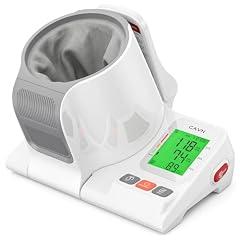
This is a tabletop, arm-in automatic blood-pressure monitor for adults. Rather than wrapping a conventional cuff, the user places a bare upper arm in the fixed barrel, rests the elbow on its support, then starts an oscillometric reading. The manufacturer states that it accommodates upper arms from 7.1 to 16.5 inches, stores 99 readings for each of two users, uses a rechargeable battery with Type-C charging, and shows a three-color display. The important evidence is stronger than the retail presentation alone. The exact model is named in a July 16, 2025 FDA clearance record for Cemho Medical Technology. That public submission reports an 85-adult clinical accuracy study that met ISO 81060-2:2018 with Amendment 1 requirements, including the stated 18 to 42 cm arm range. It is a self-contained monitor, not an app-connected product.

What works

  • The exact model is traceable to an FDA 510(k) clearance record for a noninvasive blood-pressure measurement system.
  • FDA's public clearance summary reports ISO-conforming clinical accuracy testing in 85 adults, across the stated 18 to 42 cm arm range.
  • The arm-in layout and elbow support can simplify repeat positioning compared with a separate wrap cuff.
  • Two separate user memories can reduce accidental mixing of household readings, according to the manufacturer.
  • The FDA submission documents electrical safety and home-use testing to applicable medical-device standards.

What does not

  • The clinical test is summarized in the FDA submission, but a full peer-reviewed validation paper and an exact-model ValidateBP or STRIDE BP listing were not found.
  • The fixed barrel cannot be exchanged for a different cuff size, so people outside the 7.1 to 16.5 inch stated range need another option.
  • The color display is only a visual prompt, not a diagnosis. Users still need repeat measurements and clinical interpretation.
  • No app, export function, or detailed public documentation of how date and time are set was located, which limits sharing and auditability of long-term records.
  • No public battery recycling, replacement-parts, or take-back instructions were located.

Who is it for

It suits an adult household that wants a fixed upper-arm monitor with simple one-button use and separate on-device histories for two people. It is especially relevant for users whose upper-arm circumference is within 7.1 to 16.5 inches and who may find wrapping and tightening a standard cuff awkward. The FDA record supports its adult intended use and the stated cuff range. It also fits people who prefer keeping readings on the device rather than creating an app account or sending health data to a phone service.

Who is it not for

It is not for children, pregnancy monitoring, or people with an upper arm smaller than 7.1 inches or larger than 16.5 inches, because the cleared indication and clinical testing concern adults within the 18 to 42 cm range. It is also a poor fit for someone who needs clinician-ready exports, app synchronization, or detailed digital record management. Anyone with irregular or unexpectedly high readings should not rely on the display color or alter medication independently. Repeat the measurement and contact a health professional as appropriate.

Integrity

The central health finding is that the exact model is named in a U.S. FDA clearance record, under the device maker Cemho Medical Technology. That record reports clinical accuracy testing in 85 adults to ISO 81060-2:2018 with Amendment 1, plus electrical safety, electromagnetic compatibility, and home-use testing. The product is intended for adult upper arms from 18 to 42 cm. The manufacturer also provides basic posture and repeat-reading guidance, but the three-color display should not replace clinical assessment. The monitor has a built-in rechargeable battery, which can reduce disposable-battery use. However, no public instructions were found for battery replacement, battery recycling, product take-back, replacement parts, or packaging materials. A one-year manufacturer warranty and customer-support promise are published. No exact-model U.S. recall, FDA safety communication, or warning letter was identified in the checked sources, but public post-market information is limited for a recently cleared product.

A&D Medical Blood Pressure Monitor UA-651
#3

A&D Medical Blood Pressure Monitor UA-651

Buyer Score 93/100Integrity Score 90/100A&D Medical

Overview

This product is a nonconnected, automatic upper-arm blood-pressure monitor for home use. It uses an inflatable cuff and oscillometric measurement, displays systolic pressure, diastolic pressure, and pulse, and stores the latest 60 readings. The supplied wide-range cuff is documented by the manufacturer for upper-arm circumferences of 22 to 42 cm, and the unit runs on four replaceable AA batteries. An optional specified AC adapter is sold separately. The key evidence is strong and product-specific. ValidateBP lists this exact product for general-adult home use under ANSI/AAMI/ISO 81060-2:2018, and STRIDE BP also lists the UA-651 with published adult validation studies. FDA records show a 510(k) clearance for over-the-counter blood-pressure and pulse measurement. The manual provides detailed posture, rest, cuff-placement, movement, error, and clinician-consultation guidance.

What works

  • Exact product is listed by ValidateBP for general-adult home use under ANSI/AAMI/ISO 81060-2:2018.
  • FDA 510(k) documentation clearly identifies the product, intended use, maker, and over-the-counter status.
  • The supplied 22 to 42 cm cuff has printed fit-range guidance, with smaller, medium, and larger replacement cuffs documented.
  • The manual gives practical safeguards, including 5 to 10 minutes of quiet rest, correct posture, cuff positioning, movement warnings, and troubleshooting.
  • It does not transmit readings, so routine use does not require an app account or create app-linked health-data exposure.

What does not

  • The 60-reading onboard memory does not retain date, time, or separate user identities. The manual tells users to record date and time separately, which limits dependable trend review in shared households.
  • The product has no wireless syncing or direct export, so sharing a complete reading history with a clinician requires manual transcription.
  • Its irregular-heartbeat indicator is not a diagnosis. The manual notes that slight vibration can trigger it and that weak or irregular heartbeats can make measurement difficult.
  • Validation and intended-use materials support general adults, not newborns or pregnant people. The manual specifically says not to use it on newborn infants or pregnant women.
  • The monitor is rated IP20 and is not water resistant, so it needs dry indoor storage and use.

Who is it for

This product suits an adult who needs a straightforward, nonconnected upper-arm monitor for routine home tracking and whose arm measures within the supplied 22 to 42 cm cuff range. It is particularly practical for someone who can keep a paper or clinician-provided log, wants replaceable batteries rather than charging, and values a product with publicly inspectable validation and U.S. clearance records. It also fits a one-person household or a user willing to label and manually date readings, because the stored archive is not user-separated or time-stamped.

Who is it not for

It is not suited to pregnant people or newborns, because the manufacturer says clinical testing was not conducted for those groups and advises against use. It is also a poor fit for households where several people need clearly separated, time-stamped records, or for users who need automatic app syncing or downloadable readings for a clinician. People with an arm outside the available documented cuff sizes, severe circulatory deficit in the arm, an unhealed arm wound, an infusion, or another device attached to that arm need a clinician-guided approach.

Integrity

Health evidence is unusually inspectable for this product. ValidateBP lists the exact monitor for general-adult home use, STRIDE BP identifies adult validation studies, and FDA clearance records trace the product to authorized over-the-counter blood-pressure and pulse measurement. The manual appropriately says not to self-diagnose or start treatment from readings, advises clinician interpretation, and gives use restrictions for pregnancy, newborns, severe arm circulation problems, wounds, and infusion sites. No product-specific FDA recall or safety communication was located in the databases searched. The supplied cuff is stated to be free of natural-rubber latex. The monitor uses four replaceable AA batteries rather than a sealed rechargeable pack, which can extend service life, and A&D documents a five-year monitor warranty and two-year cuff warranty. The manual also lists replacement cuffs and customer-service support. However, it gives no dedicated battery-recycling, electronics-recycling, packaging, or manufacturer take-back instructions, so end-of-life handling remains the owner's responsibility.

A&D Medical UA-767F Blood Pressure Monitor
#4

A&D Medical UA-767F Blood Pressure Monitor

Buyer Score 89/100Integrity Score 89/100A&D Medical

Overview

This is a battery-powered, automatic upper-arm blood-pressure monitor for adult home use. It uses an inflatable cuff and the oscillometric method, with one-button measurement of systolic pressure, diastolic pressure, and pulse. The supplied wide-range cuff is manufacturer-stated to fit arm circumferences of 8.6 to 16.5 inches. It stores up to 60 readings each for four selected users, with date and time information and an average-reading function. The most important evidence is independently checkable. ValidateBP lists the exact UA-767F product family for general-adult home use under ANSI/AAMI/ISO 81060-2:2018. FDA records also show a 2014 substantial-equivalence clearance for the UA-767F and its AC-adapter counterpart as noninvasive blood-pressure measurement systems. The product is not connected to an app or network, so readings remain on the monitor unless a user manually records them elsewhere.

What works

  • The exact product family appears on ValidateBP's independently reviewed validated-device listing for general adults.
  • FDA's public clearance record specifically names this product as a Class II noninvasive blood-pressure measurement system.
  • Four user profiles and 60 stored readings per person can keep household records separated when users choose the correct profile.
  • The supplied 22 to 42 cm cuff covers a broad adult arm range, and the instructions provide cuff-fit, movement, and irregular-heartbeat indicators.
  • The manufacturer provides a five-year monitor warranty, a two-year cuff warranty, and compatible replacement-cuff guidance.

What does not

  • The supplied cuff does not fit every adult arm. People below 8.6 inches or above 16.5 inches need to confirm a compatible replacement cuff before use.
  • The irregular-heartbeat symbol flags a pulse pattern during a measurement. It is not a diagnosis of an arrhythmia or a substitute for clinical assessment.
  • Memory stays on the device and does not provide automatic export or syncing, so sharing trends with a clinician requires bringing the monitor or manually recording readings.
  • The product uses disposable AA batteries. Rechargeable cells may reduce waste, but no charger or rechargeable battery system is included.
  • FDA recall search results identify a 2016 recall for a different UA-767PBT-Ci variant, not this UA-767F product. No exact-model recall was identified in the reviewed FDA results.

Who is it for

This product suits an adult household that wants one upper-arm monitor shared by up to four people, particularly where each person needs a separate on-device history rather than phone syncing. It is most practical for users whose measured upper-arm circumference falls within the supplied 8.6 to 16.5 inch cuff range and who can follow seated, rested measurement instructions. Its independently listed general-adult validation and traceable FDA clearance are especially relevant for routine home tracking discussed with a clinician.

Who is it not for

It is not appropriate for newborns or infants, and the instructions limit its intended users to adults. People with arms outside the supplied cuff range should not guess at fit, because an incorrectly sized cuff can distort readings. Users who need automatic clinician sharing, cloud backups, caregiver alerts, or smartphone-based trend charts need a connected monitoring system. Anyone with an unhealed arm wound, intravenous line, blood transfusion, or severe circulatory deficit in the arm should follow clinical advice before cuff use.

Integrity

The health evidence is unusually inspectable for this type of home monitor. ValidateBP lists the UA-767F family for general-adult use using the ANSI/AAMI/ISO 81060-2:2018 protocol, and FDA's public clearance record names the product and its manufacturer. The manual includes useful safeguards, including warnings not to self-diagnose or begin treatment based on a reading, plus precautions for wounds, IV lines, circulation problems, and repeated cuff inflation. It also instructs users to keep the cuff at heart level and respond to fit or movement errors. The cuff is manufacturer-stated to be free of natural rubber latex. The product relies on four replaceable AA batteries, which avoids a sealed rechargeable pack but creates ongoing battery waste. Its manual directs users to dispose of used batteries and equipment under local rules. A five-year monitor warranty, two-year cuff warranty, and replacement-cuff compatibility guidance can support longer use. The FDA recall result located for this manufacturer involved a different UA-767PBT-Ci variant, not this product.

Invaxe Blood Pressure Monitor with Large Cuff
#5

Invaxe Blood Pressure Monitor with Large Cuff

Buyer Score 86/100Integrity Score 87/100Invaxe

Overview

This is an automatic, oscillometric upper-arm blood-pressure and pulse monitor for adults. It uses a supplied 22 to 42 cm, or 8.66 to 16.53 inch, cuff, stores up to 199 readings for each of two users, and runs on four AAA batteries or a 5 V Type-C power connection. The manufacturer’s guide describes cuff-fit and movement indicators, an irregular-heartbeat icon, date and time display, and averages of the latest two or three readings. The important evidence is unusually traceable for this configuration. FDA records list the AOJ-30G model from Shenzhen AOJ Medical Technology in a cleared Class II noninvasive blood-pressure-monitor submission. That submission reports ISO 81060-2:2018 clinical validation on related AOJ-30 series models, with data stated to cover the series, rather than a separately published study of this retail-branded unit. The guide also explicitly says not to diagnose yourself, change medicine, or use results without clinician input.

What works

  • The exact AOJ-30G model is named in an FDA 510(k) record for adult upper-arm blood-pressure and pulse measurement.
  • The supplied cuff covers 22 to 42 cm arms, and the guide gives placement and seated-position instructions.
  • Two separate user profiles retain up to 199 readings each, with date and time and a recent-reading average.
  • The guide includes cuff-looseness, movement, low-battery, range, and measurement-error prompts, plus detailed troubleshooting.

What does not

  • The public clinical evidence is an FDA submission summary that extends testing from related AOJ-30 models. A full, peer-reviewed validation report for this exact retail configuration was not located.
  • The irregular-heartbeat icon is a prompt, not a diagnosis. The guide says people with arrhythmia, pregnancy, pre-eclampsia, diabetes, poor perfusion, or renal disease should consult a clinician before use.
  • Stored records cannot be exported or app-synced according to the FDA description and manufacturer guide, so trend sharing requires manual transcription or photographs.
  • The retail listing calls the display 4.5 inches, while the manufacturer guide and product page specify 4.2 inches. The guide also says the Type-C cable is not included.

Who is it for

This product suits an adult household that wants a self-contained upper-arm monitor for routine home logs, especially if one or two people can use the 22 to 42 cm cuff. It is practical for users who prefer a large backlit screen, physical memory, replaceable AAA batteries, and no phone account or app. It also suits people who will follow seated-rest instructions, keep repeated readings separated by a few minutes, and bring the dated readings to a clinician for interpretation.

Who is it not for

It is not for children, infants, or people unable to communicate discomfort, which the manufacturer guide specifically excludes. Pregnant users, including those with pre-eclampsia, and people with atrial fibrillation or other arrhythmias, severe circulation problems, blood disorders, diabetes, kidney disease, or a prior mastectomy should seek clinician guidance because accuracy or safe cuff use may be more complicated. It also does not suit users who need automatic app sharing, downloadable records, a cuff outside 22 to 42 cm, or a monitor that can guide treatment decisions.

Integrity

The strongest health finding is traceability. The AOJ-30G is specifically named in FDA clearance records for adult, noninvasive upper-arm blood-pressure and pulse measurement. The FDA submission says clinical testing followed ISO 81060-2:2018 on related models in the series and that the data covered this model. It also documents electrical-safety and electromagnetic-compatibility testing standards. The public evidence does not provide a standalone peer-reviewed report for the retail-branded configuration. The guide has useful safety boundaries. It warns against self-diagnosis and medication changes, calls for clinician consultation in important higher-risk situations, and provides posture, rest, cuff-placement, movement, and error guidance. It uses replaceable AAA batteries and states a five-year service life, which can reduce premature disposal. However, there is no documented take-back program or detailed battery-recycling instruction. Disposal guidance is limited to following local regulations, and the power cable is not included.

RENPHO Bluetooth Blood Pressure Monitor
#6

RENPHO Bluetooth Blood Pressure Monitor

Buyer Score 84/100Integrity Score 75/100RENPHO

Overview

This is a battery-powered, Bluetooth upper-arm blood-pressure monitor for adults. It includes one wide-range cuff stated to fit arm circumferences of 22 to 42 cm, uses four AAA batteries or a micro-USB connection, and has a backlit display. The public user manual says it stores up to 240 readings across two device users and can sync measurements to the RENPHO Health app. The exact product is named in the FDA device-listing database under the Class II noninvasive blood-pressure measurement category. That is meaningful traceability, but the publicly available 510(k) summary associated with that listing names older Transtek models, not this exact RENPHO configuration. No exact-model entry was located on ValidateBP or STRIDE BP, and no published independent clinical validation report for this monitor and its supplied cuff was found. Its accuracy claim therefore remains unconfirmed by the preferred independent sources.

What works

  • The exact product is named in an FDA device listing for Class II noninvasive blood-pressure systems.
  • The manufacturer-stated 22 to 42 cm cuff range gives concrete sizing information for many adult upper arms.
  • The manual provides useful measurement safeguards, including quiet rest, heart-level arm positioning, remaining still, and averaging at least two readings.
  • Two on-device user profiles and date-time-stamped stored readings can reduce accidental mixing of household records.
  • Four replaceable AAA batteries allow use without relying on a rechargeable internal battery.

What does not

  • Independent clinical validation for this exact monitor and supplied cuff was not located in ValidateBP, STRIDE BP, or a published validation study.
  • The public 510(k) summary tied to the FDA listing does not identify this exact RENPHO product, which limits authorization traceability.
  • One supplied cuff does not fit arms below 22 cm or above 42 cm, and public evidence did not confirm validation across that full stated range.
  • The USB power route lacks publicly located adapter specifications or an independently verifiable electrical-safety certification for the complete setup.
  • App-linked readings are health data. RENPHO offers deletion requests, but its privacy policy permits processing by service providers and does not provide product-specific security documentation.

Who is it for

This product suits an adult household that wants an upper-arm monitor with a single clearly stated 22 to 42 cm cuff range, basic on-device records for two people, and optional Bluetooth trend tracking. It is most practical for people who can follow the posture and repeat-reading instructions, have an arm within the stated cuff range, and plan to review results with a clinician. Replaceable AAA power also suits users who do not want a monitor dependent on an internal rechargeable battery.

Who is it not for

It is not a suitable choice for people whose care depends on an independently validated exact monitor-and-cuff configuration, because that evidence was not publicly located. It also does not suit children, pregnancy-specific monitoring, or anyone with an arm smaller than 22 cm or larger than 42 cm unless a clinician confirms an appropriate validated cuff. People with arrhythmia should seek clinical guidance, since the manufacturer warns that movement or arrhythmia can affect readings. Privacy-sensitive users may prefer a monitor that does not require app syncing.

Integrity

The product has useful basic safeguards. Its instructions advise resting before measurement, keeping the arm at heart level, avoiding movement and speech, taking repeated readings, and comparing concerning differences with a professional measurement. The exact product appears in an FDA device listing, but that listing should not be read as proof of an independently published clinical validation study. No exact-model validation entry was located on the main public validated-device lists. From an environmental standpoint, replaceable AAA batteries can extend usable life compared with a sealed battery, and RENPHO states that U.S. products have an 18-month limited warranty. The company provides a privacy deletion request path for app data. Public product-specific recycling guidance, replacement-cuff availability, packaging disclosure, and independently verified electrical certification for USB use were not located. Use established battery and electronics recycling channels when the product reaches end of life.

Meraw Blood Pressure Monitor with Bluetooth Tracking
#7

Meraw Blood Pressure Monitor with Bluetooth Tracking

Buyer Score 82/100Integrity Score 81/100Meraw

Overview

This is an automatic, battery-powered upper-arm blood-pressure monitor for adult indoor use. It uses a 22 to 42 cm, or 8.7 to 16.5 inch, cuff and transmits readings by Bluetooth to the Meraw Health app. The supplied monitor is intended to measure systolic pressure, diastolic pressure, and pulse rate, with an irregular-heartbeat indicator. Its strongest evidence point is external. STRIDE BP publicly lists the Transtek TMB-2084 as an adult home upper-arm device equivalent to the clinically validated TMB-1491. The U.S. device-identifier database also identifies Meraw TMB-2084 devices as made by Guangdong Transtek Medical Electronics. The public validation trail is therefore meaningful, although it relies on an equivalence determination rather than a published validation trial of this retail configuration itself.

What works

  • STRIDE BP lists the TMB-2084 platform for adult home upper-arm use as equivalent to a validated Transtek monitor.
  • The product can be traced in the U.S. device-identifier database to Guangdong Transtek Medical Electronics, rather than only to a retail brand.
  • The manufacturer provides specific setup and measurement instructions, including five minutes of rest, supported posture, heart-level arm placement, stillness, and bare-skin cuff placement.
  • The stated 22 to 42 cm cuff range covers many adult upper arms, and the manual gives placement guidance.

What does not

  • The accessible clinical evidence is an equivalence listing tied to a prior TMB-1491 validation study, not a public, modern ISO validation report for this exact retail configuration.
  • The irregular-heartbeat symbol is a measurement flag, not a diagnosis. The app itself says it gives no medical suggestions.
  • The companion app's no-data-collected declarations are developer-provided. A detailed public privacy notice, retention terms, and deletion procedure were not located.
  • Power uses replaceable AAA batteries, but no public UL, ETL, or CSA certification record was identified for this product.

Who is it for

This product suits an adult who needs routine at-home upper-arm blood-pressure checks and whose measured arm circumference falls within 22 to 42 cm. It is particularly relevant for someone who can follow a repeatable measurement routine, rest before readings, sit with back and feet supported, and keep the cuff at heart level. Bluetooth trend viewing may help a user organize readings for a clinician, provided the user treats the app as a recordkeeping tool rather than medical advice.

Who is it not for

It is not intended for children, pregnancy, or people who are or may be pregnant, according to the product manual. The manual also says it is unsuitable for people with implanted electrical devices such as pacemakers or defibrillators. It is a poor fit for anyone with an arm outside the stated 22 to 42 cm cuff range, or for users who need a public, exact-configuration ISO validation report. People seeking diagnostic interpretation, medication guidance, or reliable app-based data deletion controls should not rely on this product alone.

Integrity

The product has a traceable device record in the U.S. database under its manufacturer, Guangdong Transtek Medical Electronics. Its measurement platform is also publicly listed by STRIDE BP as equivalent to a validated adult home monitor. The manual includes practical safeguards, such as resting before measurement, using bare skin, staying still, and positioning the arm at heart level. It also limits use to adults and lists pregnancy and implanted electrical devices as contraindications. The unit uses four replaceable AAA batteries rather than a sealed internal battery, which can extend usable life if the monitor remains functional. Its cuff is described by the manufacturer as nylon with an inflatable air bladder. Public materials did not establish a product-specific battery take-back plan, repair-parts program, packaging disclosure, or third-party electrical-safety certification. Used batteries should be handled through appropriate local battery recycling or household-waste channels.

Acenis Blood Pressure Monitor with Large LCD Screen
#8

Acenis Blood Pressure Monitor with Large LCD Screen

Buyer Score 81/100Integrity Score 80/100Acenis

Overview

This is a battery-powered, automatic upper-arm blood-pressure monitor for adults. It uses the oscillometric method to display systolic pressure, diastolic pressure, and pulse rate. The manufacturer’s product page describes a 3.4-inch color-backlit display, voice guidance, two user profiles with 99 stored readings each, and a cuff-wearing and movement prompt. The underlying AOJ-30B model is traceable to an FDA 510(k) clearance for an over-the-counter Class II noninvasive blood-pressure measurement system. That FDA filing documents clinical testing under ISO 81060-2:2013 and identifies adult upper-arm home use. It also records stored measurement time and Bluetooth transmission capability. The retail documentation is less clear about the actual cuff range. FDA material for the cleared model lists 22 to 36 cm, while the manufacturer page lists 22 to 32 cm.

What works

  • The underlying AOJ-30B model has a verifiable FDA 510(k) clearance for adult upper-arm blood-pressure and pulse measurement at home or in medical facilities.
  • FDA clearance documentation records clinical testing to ISO 81060-2:2013 for the AOJ-30B model.
  • Stored readings include blood pressure, pulse, and measurement time, which supports reviewing dated trends.
  • The manufacturer states that cuff-placement and movement prompts help flag common sources of poor readings.
  • The FDA file documents electrical, home-use, electromagnetic compatibility, and cuff-contact biocompatibility testing for the cleared model.

What does not

  • The publicly available evidence does not establish that the Acenis retail labeling, supplied cuff, and any included USB accessories exactly match the cleared AOJ-30B configuration.
  • Cuff sizing is inconsistent across sources, with FDA material listing 22 to 36 cm and the manufacturer page listing 22 to 32 cm.
  • No public Acenis privacy notice or app documentation was found, despite FDA documentation that the underlying model can transmit readings by Bluetooth.
  • The accessible retail documentation does not clearly explain repeat-reading practice, clinical comparison, or how to respond safely to unusually high or low readings.
  • No published peer-reviewed validation paper or entry in the ValidateBP or STRIDE BP lists was located for this exact model.

Who is it for

This product fits an adult household user who wants a conventional upper-arm monitor with a large color screen, spoken feedback, local memory for two people, and a traceable cleared underlying device model. It is most suitable when the buyer first measures their mid-upper-arm circumference and confirms that it falls within the cuff range printed on the product they receive. It can also suit users who want readings stored with time information for discussion at a routine clinical visit.

Who is it not for

It is not appropriate for pregnancy or suspected preeclampsia, because the FDA documentation says effectiveness has not been established for pregnant patients. It is also a poor fit for anyone whose arm circumference is outside the supplied cuff range, or for households needing a clearly documented extra-large cuff. People who require a fully documented app privacy policy, downloadable records, or explicit clinician-facing guidance should use a product whose retail documentation makes those details available. Do not use readings alone to change medication or rule out urgent symptoms.

Integrity

The underlying AOJ-30B model has meaningful U.S. regulatory traceability. Its FDA filing documents ISO 81060-2 clinical testing, IEC electrical and home-use testing, electromagnetic compatibility testing, and skin-contact biocompatibility evaluation of the cuff system. The same filing limits intended users to adults and states that effectiveness has not been established in pregnancy, including preeclampsia. The manufacturer lists four replaceable AAA batteries and automatic shutoff after 60 seconds. A retail manual also describes USB-C power, but the specific adapter requirements and independent certification of that added setup are not clear in the reviewed sources. No manufacturer recycling program, repair-parts policy, packaging disclosure, public Acenis privacy policy, or public recall record for this product was located. Replaceable AAA batteries should be taken to an appropriate battery-recycling collection point rather than placed in household trash.

Runstar Blood Pressure Monitor with Wide Range Cuff
#9

Runstar Blood Pressure Monitor with Wide Range Cuff

Buyer Score 79/100Integrity Score 77/100runstar

Overview

The RunStar BP-205 is an automatic upper-arm blood-pressure and pulse monitor for adults. RunStar states that it includes one 22-42 cm cuff, a 4.2-inch LCD screen, four AA batteries, a USB-C cable, and storage for 99 dated readings each for two users. It is intended for at-home spot checks, using an inflatable upper-arm cuff and a one-button measurement process. An FDA clearance record covers BP-205 within a group of adult upper-arm monitors and specifies 22-42 cm arm coverage. The FDA summary states that clinical testing used the ISO 81060-2:2013 protocol. A separate federal device-identification record lists RunStar BP-205 as commercially distributed, but names Shenzhen Brav as manufacturer while the clearance record names Shenzhen HBcare as applicant. The public records do not explain that relationship or publish the full clinical report.

What works

  • The FDA clearance record specifically includes BP-205, adult home use, upper-arm measurement, and 22-42 cm cuff coverage.
  • The FDA clearance summary reports clinical testing to an established automated blood-pressure monitor validation standard.
  • The supplied cuff range is broad enough to cover many adult upper arms, provided the arm measures between 22 and 42 cm.
  • RunStar states that two people can retain separate, date-and-time-stamped reading histories.
  • The monitor can operate from replaceable AA batteries, which is useful when a wall outlet is unavailable.

What does not

  • The full clinical-validation report, testing laboratory, participant data, and model-to-brand manufacturing relationship are not publicly explained.
  • RunStar's USB-C power claim lacks published adapter specifications or independently verifiable electrical-certification details.
  • The product information does not document a replacement-cuff program, calibration service, or a routine path for comparing readings with a clinician's equipment.
  • The manufacturer does not publish packaging composition, electronics recycling instructions, or a take-back program for this monitor.
  • The device stores readings locally, but the published information does not describe export options for this non-connected model.

Who is it for

This product suits an adult household seeking a conventional upper-arm monitor for routine home tracking, especially where two people want separate on-device histories without depending on a phone app. It is most appropriate for arms measuring 22 to 42 cm when the cuff can be placed on bare skin correctly. Users who can follow standard measurement preparation, including quiet rest, supported arm position, and repeated readings, can use its dated memory as a practical record to bring to appointments.

Who is it not for

It is not suited to people with arm circumferences below 22 cm or above 42 cm, because the supplied cuff is outside its stated fit range. It is also not the right choice for anyone who needs a publicly inspectable, model-specific clinical study with full results, or documented cloud syncing and data export. People making treatment decisions, experiencing concerning symptoms, or seeing unexpectedly high or low readings should not rely on one home result without clinician guidance.

Integrity

The most important health finding is that an FDA clearance record includes BP-205 in an adult upper-arm monitor group, with 22-42 cm cuff coverage. Its FDA summary reports clinical testing under ISO 81060-2:2013. RunStar also provides basic placement and preparation guidance in its product materials. Accurate technique still matters. Rest quietly for five minutes, use a bare arm, support the arm at heart level, avoid talking, and take repeat readings before discussing trends with a health professional. The monitor uses replaceable AA batteries and includes a USB-C cable, but the published material does not provide adapter safety details, recycling instructions, packaging disclosure, replacement parts, or a take-back program. Replaceable batteries can keep a monitor usable when batteries run down, but spent batteries and the device itself should be routed through appropriate local battery and electronics recycling channels. No product-specific FDA recall or safety communication was identified in the regulatory material reviewed.

YONLO Blood Pressure Monitor with Dual Cuffs
#10

YONLO Blood Pressure Monitor with Dual Cuffs

Buyer Score 76/100Integrity Score 81/100YONLO

Overview

This is an automatic oscillometric upper-arm blood-pressure monitor for people over 12. The listed package includes two cuffs, covering arm circumferences from 22 to 42 cm and 32 to 52 cm, plus a large backlit display and multi-user memory. It is intended to measure systolic pressure, diastolic pressure, and pulse rate at home. The important evidence point is that the exact A02-SE model is included in Shenzhen GoodlyMed's FDA-cleared A02 series. The FDA filing identifies both cuff ranges and describes clinical performance, electrical-safety, electromagnetic-compatibility, and biocompatibility testing. The manufacturer manual for the representative A02-SE4 configuration reports ISO 81060-2:2018 clinical testing, but a public peer-reviewed validation paper or ValidateBP listing for this retail configuration was not found.

What works

  • The exact model is named in an FDA-cleared A02 upper-arm monitor series from the listed manufacturer.
  • Two cleared cuff ranges cover 22 to 52 cm arms, reducing the chance that many adult users must guess at fit.
  • The instructions give useful measurement safeguards, including five minutes of rest, avoiding caffeine, smoking, exercise, and meals for 30 minutes, and taking repeat readings.
  • The manual says not to alter medication from monitor readings and advises medical review for concerning results or recurrent irregular-heartbeat symbols.
  • FDA documentation reports biocompatibility, home-use electrical safety, usability, electromagnetic compatibility, and automated sphygmomanometer performance testing.

What does not

  • Clinical-validation details available publicly are manufacturer-reported for a representative model, not an independently published study or a public ValidateBP entry for this retail configuration.
  • Power information is inconsistent across sources. The product listing states four AAA batteries and USB-C, while FDA and representative-manual documentation describe four AA batteries and USB power.
  • Memory is useful for household tracking, but no verified export, clinician-sharing, or context-tagging function was found.
  • The cited representative manual excludes pregnancy and cautions that arrhythmias, poor perfusion, diabetes, renal disease, motion, and shivering can affect readings.
  • No manufacturer take-back program, replacement-cuff availability, or US-specific recycling instructions were located.

Who is it for

It suits an adult household that needs a basic, non-app upper-arm monitor and has arm sizes within either supplied cuff range, 22 to 42 cm or 32 to 52 cm. It is particularly practical for a household that wants separate on-device profiles and does not need cloud syncing or spreadsheet export. Users should be willing to follow the preparation steps, sit quietly, position the cuff at heart level, and take repeated readings rather than treating a single result as definitive.

Who is it not for

It is not appropriate for pregnancy or possible pregnancy, because the representative manufacturer instructions say the device is not suitable for that use. People with pacemakers, defibrillators, frequent rhythm irregularities, major circulatory problems, or conditions that can affect measurement should consult a clinician before relying on home readings. It is also a poor fit for anyone who needs verified app privacy controls, downloadable records, a confirmed battery specification, or a publicly published validation study for the exact retail configuration.

Integrity

The product is traceable to a US FDA-cleared noninvasive blood-pressure measurement system. The clearance summary includes A02-SE in the covered series, names both cuff ranges, and reports testing to medical electrical-safety, home-use, usability, electromagnetic-compatibility, biocompatibility, and automated sphygmomanometer standards. The available representative manual also gives concrete precautions, including not changing medication based on readings and seeking clinical advice for persistent irregular-heartbeat alerts. No product-specific recall, FDA warning letter, or safety communication was found in the reviewed sources. There is still a documentation gap around the retail unit's power setup. Retail materials say AAA batteries and USB-C, while FDA and representative-manual documents state AA batteries and USB power. Use the supplied instructions and avoid mixing power sources. The manual directs users to dispose of batteries and the device under local rules, but no US take-back or repair-parts program was found.