
10 Best Portable Ac
 Lauren Wilson
Please note that we participate in affiliate marketing programs. When you purchase through links on our site, we may earn a commission. As an Amazon Associate we earn from qualifying purchases. This comes at no additional cost to you and helps support the resources required to provide valuable content.Advertising Disclosure
Top-rated Portable Ac Comparison
1

2
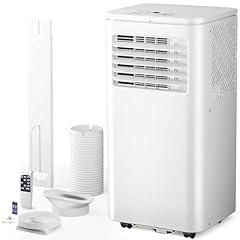
4
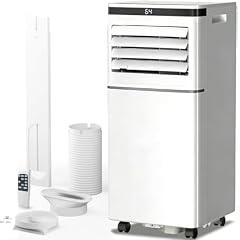
5
6
7
8
9
Portable AC: what to look for
A portable air conditioner removes heat from one room and exhausts it outdoors through a window kit. Whether it works well depends less on the largest number in the title than on the unit’s delivered cooling capacity, hose arrangement, window seal, room heat load, and electrical installation. Sun exposure, insulation, ceiling height, open doors, occupants, and heat-producing appliances can all reduce practical performance.
Start with the DOE seasonally adjusted cooling capacity, or SACC. This rating is more useful than an older ASHRAE BTU figure because it accounts more closely for portable installation losses. In the supplied products, headline ratings such as 8,000, 10,000, 14,000, and 16,000 BTU sometimes corresponded to materially lower SACC figures, including about 5,000, 6,000, or 10,000 BTU. A room-size claim without a clearly stated SACC basis should be treated as an estimate, not a dependable sizing guarantee. The relevant DOE record is the U.S. Department of Energy’s Compliance Certification Management System, using the portable-air-conditioner test method in 10 CFR Part 430, Subpart B, Appendix CC. CEER, the combined energy-efficiency ratio, is the corresponding efficiency measure to compare alongside SACC.
The hose design also matters. Dual-hose units use separate intake and exhaust paths and can maintain more balanced indoor pressure when the window kit is sealed. Single-hose units exhaust indoor air outdoors, which can draw replacement air through leaks, reduce cooling effectiveness, and bring outdoor smoke indoors. Look for a manual that identifies the exact hose configuration, window-opening range, maximum hose length, clearance requirements, limits on bends or extensions, and whether the supplied foam and panels can create a tight seal. Never assume “drainage-free” means maintenance-free: high humidity or dry mode may still require a drain, and storage usually requires emptying and drying the unit.
For electrical and fire safety, look for a traceable current listing for the exact product in an OSHA-recognized Nationally Recognized Testing Laboratory directory, such as UL Solutions Product iQ, Intertek’s ETL directory, or CSA Group’s product listings. The listing should identify the applicable standard, commonly UL 484 or UL 60335-2-40 as appropriate. Check the CPSC Recalls database and SaferProducts.gov as well. A mark shown in a photograph, a listing for a related model family, or a brand assertion is weaker than an exact searchable record. Follow the manual’s requirements for a grounded wall outlet; several supplied reviews prohibit adapters and extension cords.
Noise claims also need context. A number such as 42, 45, or 50 dB is difficult to interpret without the fan speed, measurement distance, and test method. Independent sound testing or a recognized method is stronger than an unqualified “quiet” or “sleep” claim. Smart controls should likewise be supported by an FCC authorization for the exact radio-equipped model.
Recurring safety cautions are important. Single-hose units require extra care during wildfire-smoke events and around naturally drafted gas appliances, fireplaces, furnaces, or water heaters because depressurization can increase smoke entry or backdrafting risk. Use working carbon-monoxide alarms and qualified local guidance where combustion appliances are present. No supplied product should be treated as an air cleaner. Across the category, buyers should also expect regular filter cleaning, condensate monitoring, careful window sealing, and qualified service for mildly flammable R-32 refrigerant.
Integrity
Portable AC decisions involve more than cooling output. The topics below distinguish delivered room performance, electrical and indoor-air risks, moisture and noise management, operating impact, refrigerant handling, installation quality, and the strength of the evidence behind each claim. Higher scores indicate stronger assessment results among the supplied products, not a guarantee that every installation will be safe or effective.
HHealth & Safety
Real cooling for the stated room size
This measures whether SACC, hose design, and installation limits support the advertised room coverage. It matters because ASHRAE BTU headlines can substantially exceed delivered portable-AC capacity. Among the supplied products, the strongest results were products with independently documented SACC figures, while lower scores clustered around conflicting room claims or no DOE-style rating.
Verified electrical and fire safety
This checks for an exact-model U.S. safety listing and no unresolved fire, shock, overheating, or cord action. A high score was associated with traceable ETL, CSA, or comparable evidence covering the product; lower scores reflected only related-family evidence, visible marks without a searchable match, or no public listing. Grounded-outlet and no-extension-cord instructions still matter.
Indoor-air and backdrafting risk
This measures whether the hose layout and window seal limit negative pressure, smoke infiltration, and combustion-gas backdrafting. Dual-hose products generally scored higher in the supplied set because they can better balance pressure when sealed. Single-hose products scored lower or raised stronger cautions, especially for wildfire smoke and rooms containing naturally drafted fuel-burning appliances.
Condensate, leaks, and mold control
This assesses self-evaporation, overflow protection, drainage options, and cleaning and storage instructions. High-scoring products documented full-tank alerts or shutoff, continuous drainage, filter cleaning, and drying before storage. Lower results were associated with conditional “drainage-free” claims or incomplete instructions. Humid conditions can still require manual drainage even when normal cooling is advertised as drainage-free.
Noise that is realistically tolerable
This measures whether sound claims identify speed, distance, and a recognized test method, and whether the result suits bedroom use. Scores were generally moderate because many products stated 42–53 dB without test context. The supplied independent testing showed that a headline noise claim can understate disruptive operation, so “quiet” and “sleep mode” should not be treated as verified sleep performance.
Window-kit fit and exhaust integrity
This checks whether the hose, adapters, panels, seals, and installation limits can preserve exhaust integrity without unsafe extensions or hot-air recirculation. Higher scores went to products with defined window ranges, hose limits, sealing materials, and clearance instructions. Lower scores reflected conflicting dimensions, restricted hose lengths, unclear kits, or listings that did not establish how the product was tested.
EEvidence
Independent proof, not seller assertions
This measures whether capacity, efficiency, sound, safety, materials, and smart-radio claims identify the exact product and are supported by DOE, an NRTL, FCC, or an accredited laboratory. The highest supplied score belonged to a product with independent electrical, capacity, and efficiency documentation. Lower scores reflected manuals, retailer statements, related-family records, or unsupported listing claims.
Honest BTU, efficiency, noise, and coverage claims
This checks whether the listing separates ASHRAE BTU from SACC, explains CEER and room-size assumptions, qualifies noise measurements, and states the limits of drainage and energy claims. Higher-scoring listings presented the lower regulated-style capacity alongside the headline figure. Lower scores had conflicting coverage, wattage, CEER, noise, or configuration details that could mislead sizing and operating-cost expectations.
Traceable maker, support, and recall readiness
This measures whether the manufacturer or importer, U.S. contact, warranty, serial-number guidance, replacement parts, and registration path are clear. Higher scores came from products with model-specific support, importer or contact information, registration, and longer or extendable warranty coverage. Lower scores lacked clear U.S. support, parts access, serial guidance, or a reliable path for future safety notices.
EEcology
Electricity use and verified efficiency
This compares electricity against delivered cooling using CEER and SACC, while considering standby use and controls that avoid unnecessary runtime. Higher-scoring products had EnergyGuide, DOE-style, or independent efficiency evidence; lower scores relied on catalog “energy-saving” language or internally conflicting wattage and annual-use figures. A larger BTU headline does not by itself mean more efficient cooling.
Lower-impact refrigerant and responsible service
This measures disclosure of refrigerant type and charge, lower-GWP selection, and practical recovery or service information. R-32 was commonly disclosed and scored better than products using or documenting older R-410A, but it remains mildly flammable and climate-relevant if leaked. Higher scores reflected verified rating-plate or certification evidence; low scores reflected unknown charge, conflicting refrigerant records, or absent service details.
Full reviews
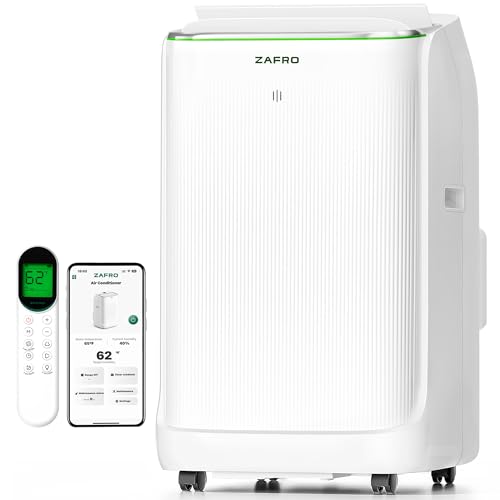
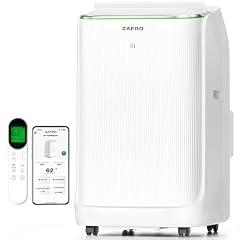
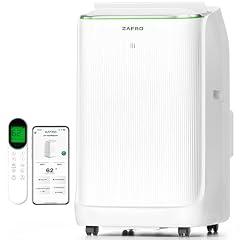
ZAFRO Smart Inverter Portable Air Conditioner 14000 BTU
Overview
This is a 115 V, 54-pound portable air conditioner with a dual-hose window setup, app, remote, cooling, fan, dry, sleep, extra, and eco modes. The product documentation lists two exhaust hoses, five window panels, sealing foam, a drain hose, and a 20-inch wall-clearance instruction. It is intended to cool one closed room through a window opening, rather than to serve as central cooling. The seller states 10,000 BTU SACC capacity, 14,000 BTU non-SACC capacity, R-32 refrigerant, a 42 dB minimum sleep-mode sound level, and self-evaporating drainage. Those figures were not independently verified for this exact product through a searchable DOE certification record, safety-listing directory, or lab report. Energy claims also need caution, because exact-product listings conflict between CEER 12.8 and CEER 10.3.
What works
- The dual-hose design and included sealing materials support a tighter window installation. EPA specifically advises owners of two-hose portable units to keep the window-kit seal tight during wildfire-smoke events.
- The supplied documentation identifies a practical installation package, including two hoses, five adjustable window panels, foam seals, a drain hose, remote, and mounting hardware.
- The product documentation specifies R-32 refrigerant. EPA identifies R-32 as below the 700 GWP limit applied to relevant residential and light-commercial air-conditioning equipment.
- The documentation provides basic placement and sealing directions, including a 20-inch clearance from walls and instructions to fill window gaps with foam.
What does not
- No exact-product electrical safety certification was located in searchable UL, ETL, or CSA listing resources. That is missing verification, not evidence of an electrical defect.
- No exact-product DOE certification record or independent lab report was located to substantiate the stated SACC capacity, CEER, annual energy use, sound level, or room-size coverage.
- The energy-efficiency claim is inconsistent across exact-product listings. One source states CEER 12.8, while an auction listing for the same product and UPC states CEER 10.3.
- The 42 dB claim is described as a minimum or sleep-mode figure, without an identified test distance, fan speed, or independent acoustic test report.
- Self-evaporating drainage reduces routine emptying only under suitable humidity and load conditions. The product still includes a drain hose, and water management remains necessary if condensate accumulates.
Who is it for
This product fits a renter or homeowner who needs movable, single-room cooling and can install a dual-hose kit in a compatible window. It is most suitable where the window opening can accept the supplied panel system and where the user can keep both hose connections and foam seals intact. It also fits someone who values app or remote control and is prepared to treat the stated 10,000 BTU SACC capacity, 42 dB sound claim, and drainage-free claim as manufacturer statements rather than independently verified performance figures.
Who is it not for
It is not well suited to someone who needs independently documented electrical certification, regulated efficiency data, or a verified sound test before operating an appliance in a bedroom or nursery. Households with naturally drafted gas water heaters, furnaces, fireplaces, or other combustion appliances nearby should get qualified guidance on depressurization and use working carbon-monoxide alarms. It is also a poor fit for large, open, poorly insulated, or sun-exposed areas if the purchase depends on the stated 700-square-foot coverage, which was not independently substantiated.
Integrity
The product uses a dual-hose layout and comes with foam sealing material. This matters for indoor air because EPA says owners of two-hose portable air conditioners should make the window-kit seal as tight as possible during smoke events. A poor seal can still admit outdoor pollution. In homes with naturally drafted combustion appliances, household depressurization can contribute to backdrafting, so placement and carbon-monoxide protection matter. R-32 is disclosed in product documentation. EPA states that R-32 is below the 700 GWP threshold relevant to certain residential and light-commercial air-conditioning equipment, but the refrigerant charge, recovery instructions, and service documentation were not located. No current product-specific CPSC recall was identified in the recall and unsafe-product resources reviewed. Searchable independent confirmation of the exact product's DOE performance record and U.S. electrical safety listing was not located, leaving the cooling, efficiency, noise, and safety claims unverified.

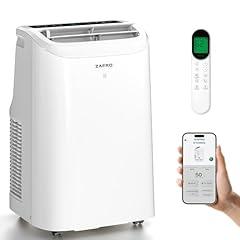
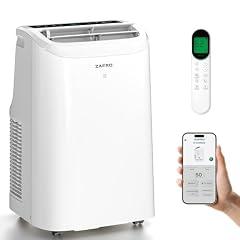
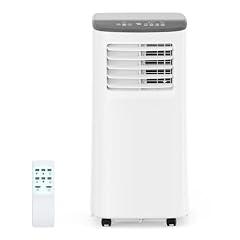
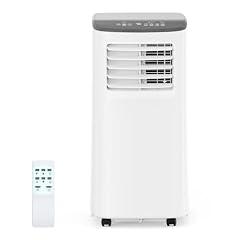
ZAFRO 10000 BTU Portable Air Conditioner
Overview
This is a 115 V, single-hose portable air conditioner for a windowed room. It is a roughly 52-pound floor unit with cooling, fan, dehumidifying, sleep, remote, touch-control, and Wi-Fi functions. The available product documentation states 10,000 BTU under the older marketing convention and 6,000 BTU SACC, with coverage up to 250 square feet. SACC is the more relevant cooling figure for a portable unit. The documentation also describes a self-evaporating cooling mode, but it specifically requires draining in prolonged dehumidification or high humidity. Its 47 dB figure is manufacturer-stated for sleep mode, without a stated test distance or independent acoustic report. Searches did not locate an exact-model DOE certification record, NRTL listing record, FCC authorization, or independent lab report. The documentation is also inconsistent on wattage and annual electricity use, listing 800 W and 634 kWh in one version, and 900 W and 675 kWh in another.
What works
- The stated 6,000 BTU SACC is presented alongside the larger 10,000 BTU figure, which gives a more realistic basis for a small-room cooling expectation.
- Available instructions include a window panel, exhaust hose, sealing foam, drainage provisions, a stated 20-inch clearance, and a broad stated window-kit range.
- The available manual does not treat drainage-free operation as absolute. It describes tank-full shutdown, manual drainage, and continuous drainage for high humidity or extended dry-mode use.
- R-32 refrigerant is disclosed in an available manual. EPA lists HFC-32 at a 675 global-warming-potential value, lower than several legacy HFC refrigerants.
What does not
- No exact-product UL, ETL, CSA, or other searchable U.S. NRTL certification record was located. That is missing verification, not evidence of a specific electrical defect.
- The single exhaust hose creates negative pressure. EPA says single-hose portable units can draw unfiltered outdoor smoke indoors and should be used sparingly during smoky conditions.
- The 47 dB claim applies to sleep mode, with no distance, fan setting detail beyond that mode, or independent sound test located.
- Product documents conflict on rated wattage and annual electricity consumption. The claim of being energy-efficiency certified was not substantiated by an exact-product certification record.
- The available documentation discloses R-32 but not the refrigerant charge, service details, serial-number location, U.S. importer information, or a clear product-registration path.
Who is it for
It suits a renter or homeowner who needs spot cooling in a closed, small room of roughly 250 square feet or less, has a compatible sash or sliding window, and can place the unit near a grounded wall outlet. It is also suited to someone prepared to inspect the window seal, keep clearance around the cabinet, clean the washable filter, and empty or continuously drain it when humidity is high. The app, remote, timer, and sleep mode may be useful convenience controls, though their performance was not independently verified.
Who is it not for
It is not suited to a home that has a naturally drafted gas water heater, furnace, fireplace, or other combustion appliance in or near the conditioned area unless a qualified professional has addressed depressurization risk and carbon-monoxide protection. It is also unsuitable as a clean-air strategy during wildfire smoke, because its apparent single-hose layout can pull outdoor air through leaks. Choose another arrangement for large, open rooms, windows outside the stated kit range, bathrooms or laundry areas, or situations where a verified safety listing and independently documented efficiency are required.
Integrity
The available manual gives practical moisture controls, including a tank-full stop condition, manual draining, continuous drainage for extended dehumidification or high humidity, and washable-filter cleaning. These instructions reduce, but do not eliminate, leak and standing-water risk. The product should be kept level, clear of obstructions, and out of wet rooms. No exact-product CPSC recall was located in the recall search reviewed, but no exact-model NRTL safety listing was found either. The supplied hose arrangement appears to be single-hose. EPA warns that this design can create slight negative pressure, bringing smoke through leaks during poor outdoor-air events. It can also add backdrafting concern where naturally drafted fuel-burning equipment is present. An available manual identifies R-32 refrigerant. EPA lists it as an A2L refrigerant with a global warming potential of 675, lower than older high-GWP options but still climate-active and subject to use conditions. No charge amount or recovery and service documentation was located.

Antarctic Star Portable Air Conditioner 8000 BTU
Overview
This is a single-hose, 115-volt portable air conditioner on casters, supplied with one exhaust hose, window panels, remote control, cooling, fan, and dehumidifying modes. The manual calls for a grounded 15-amp dedicated circuit, at least 20 inches of clearance, and a window opening from 20 to 40 inches. It also says not to extend the hose or bend it beyond 45 degrees. An Intertek energy-efficiency report for this exact model configuration measured roughly 5,350 BTU per hour seasonally adjusted cooling capacity, with a represented value of 5,000 BTU and CEER of 6.9. That is materially different from the product page's 8,000 BTU and 450 square foot presentation. Its EnergyGuide also identifies 5,000 BTU and CEER 6.2. The product is therefore better treated as a small-room unit with an independently documented regulated capacity, not as a dependable solution for a 450 square foot room.
What works
- Independent Intertek testing documents a represented 5,000 BTU SACC rating for the exact model configuration.
- The manual gives concrete installation limits, including a 20 to 40 inch window-panel range, 20-inch clearance, one exhaust hose, and no hose extension.
- Water-full alarm and shutoff, manual and continuous drainage instructions, washable filters, and dry-out storage directions address common moisture-management needs.
- The independently documented refrigerant is R-32, a lower-GWP option than older R-410A systems, with flammability and qualified-service precautions in the manual.
What does not
- The catalog's 8,000 BTU and 450 square foot claims conflict with the 5,000 BTU EnergyGuide rating and independent test documentation, so the stated room coverage is not well supported.
- It is a single-hose design. EPA advises using this layout sparingly during wildfire smoke because it can draw more smoke indoors through building leaks.
- The 42 dB noise claim is not qualified by fan speed, measurement distance, or an independent sound test, and the manual does not substantiate it.
- The test report photographs an ETL mark, but a current searchable NRTL product listing for this exact product was not located. The report itself says it does not establish certification status.
Who is it for
This product suits a renter, dorm resident, or homeowner cooling one enclosed small room with a compatible sliding or hung window, a nearby grounded dedicated 15-amp outlet, and space to keep the hose short and unobstructed. It is most appropriate where the buyer can size the room conservatively around the verified 5,000 BTU SACC rating rather than the larger catalog coverage claim. It also suits someone willing to clean filters every two weeks and drain or dry the unit before storage.
Who is it not for
It is not suited to buyers expecting reliable cooling across a 450 square foot open-plan area, rooms with strong sun, high occupant loads, or multiple heat-producing appliances. It is also a poor fit for homes using naturally drafted gas appliances in or near the cooled space without professional assessment, because single-hose exhaust can depressurize the room. During wildfire smoke events, people with respiratory vulnerability should avoid relying on this single-hose layout. Choose another setup if the window opening falls outside the manual's 20 to 40 inch panel range or a dedicated outlet is unavailable.
Integrity
The exact model configuration has unusually useful independent energy evidence. An Intertek report tested it as a single-duct portable unit under ANSI/AHAM PAC-1 and DOE Appendix CC methods, documenting about 5,350 BTU per hour SACC and a represented CEER of 6.9. Its EnergyGuide identifies a 5,000 BTU capacity and CEER 6.2. These regulated figures are more decision-useful than the larger 8,000 BTU catalog figure. The documented R-32 refrigerant has lower climate impact than legacy R-410A, but it is mildly flammable. The manual requires qualified refrigeration service, warns against ignition sources, and identifies a refrigerant charge limit. It also gives drainage, filter-cleaning, and internal dry-out instructions that can reduce standing water and mold risk. No product-specific CPSC recall was identified in the recall search, but current independent listing confirmation for the photographed ETL mark was not available.

Antarctic Star Portable Air Conditioner 8000 BTU
Overview
This is a single-hose, floor-standing portable air conditioner for a window-vented room. It includes an exhaust hose, window panels, remote control, mesh filter, dehumidifying mode, fan mode, timer, wheels, and a drain port. It uses 115-volt power and requires a grounded, dedicated 15-amp circuit. Independent Intertek testing of the identical Antarctic Star model platform measured about 5,250 BTU per hour of DOE seasonally adjusted cooling capacity, with about 787 to 789 watts input at the tested condition. That is the useful cooling figure for sizing, rather than the 8,000 BTU figure used in the product listing. Intertek documentation also identifies the platform as cETLus eligible under current UL and CSA air-conditioner safety standards.
What works
- Intertek testing measured roughly 5,250 BTU per hour SACC, providing a regulated-basis cooling figure for room planning.
- The exact model platform was evaluated to UL 60335-1, UL 60335-2-40, and corresponding CSA requirements, with authorization to bear the ETL listing mark.
- The manual specifies a grounded three-prong connection, dedicated circuit, and cord test and reset procedure.
- Water-full alarm and automatic shutoff are documented, and storage instructions call for draining the unit and running fan mode to dry its interior.
- The tested platform recorded low off and inactive power of roughly 0.6 watts, with a tested CEER near 6.6.
What does not
- The product listing's 8,000 BTU and 350 square foot presentation does not clearly disclose the DOE SACC basis. Independent testing found about 5,250 BTU SACC, creating a material clarity problem.
- This is a single-hose design. It exhausts indoor air outdoors and can create negative pressure that draws unfiltered outdoor air through leaks.
- EPA advises using single-hose portable air conditioners sparingly during wildfire smoke because they can pull more smoke indoors.
- The 51 dB noise claim lacks a stated fan speed, distance, or independent sound report, so bedroom quietness is not independently established.
- The R-32 refrigerant type is disclosed, but no public product documentation located for this unit gave the refrigerant charge or a product-specific service and recovery plan.
Who is it for
This unit fits a renter, dorm resident, or homeowner who needs temporary cooling in one modest, enclosed room and can vent a hose through a compatible window. The independently tested cooling capacity is about 5,250 BTU SACC, so it is better matched to a small bedroom, office, or similarly sized space with moderate heat gain than to an open-plan area. It also suits someone able to use a grounded dedicated outlet, seal the window kit carefully, and drain and dry the unit before storage.
Who is it not for
It is not well suited to large, sunny, poorly insulated, open-plan, or high-occupancy rooms where the listing's 350 square foot claim could encourage oversizing expectations. Avoid relying on it in a room with naturally drafted gas water heaters, furnaces, or fireplaces unless a qualified professional has addressed depressurization and backdrafting risk. During heavy wildfire smoke, people with asthma, COPD, heart disease, or smoke sensitivity should not treat this single-hose product as clean-air equipment. It does not replace a properly sized particle air cleaner.
Integrity
The strongest safety evidence is a current Intertek safety evaluation for the identical model platform. It covers UL 60335-1 and UL 60335-2-40, plus Canadian counterparts, and authorizes ETL marking. The manual adds meaningful use safeguards, including a grounded dedicated circuit, a cord test function, water-full alarm, automatic shutoff, and instructions to drain and dry the machine before storage. The main indoor-air limitation is structural. A single exhaust hose places the room under negative pressure, which EPA says can draw smoke indoors through building leaks. It should be used sparingly in smoky conditions, with a tightly sealed window panel. The reported R-32 refrigerant has a global-warming potential of 675 and is allowed by EPA with use conditions. It is lower impact than some older common HFC blends, but it is not a very-low-impact refrigerant. No applicable recall or CPSC safety action for this product was located in the checked sources.
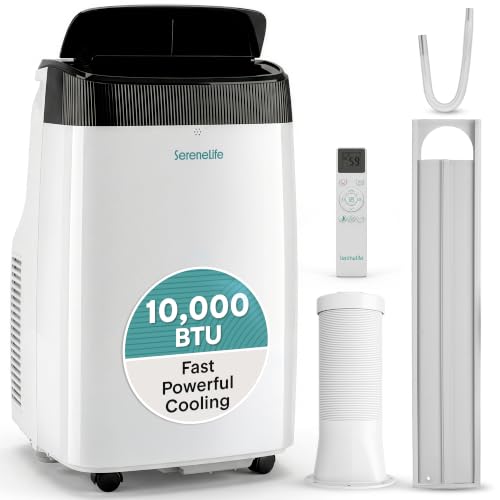
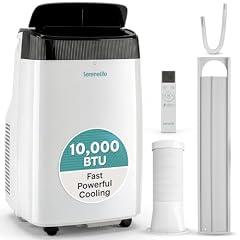
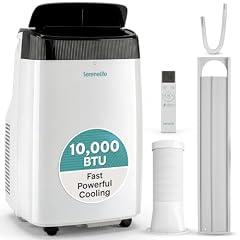
SereneLife Portable Air Conditioner 10,000 BTU
Overview
This is a single-hose, floor-standing portable air conditioner with a window exhaust hose, adjustable window panel, remote control, three fan speeds, cooling, fan, and dehumidification modes. The manufacturer manual specifies 120 V power, 1,150 W rated input, washable mesh filters, and automatic condensate evaporation with a manual drain when its internal reservoir fills. Its regulated cooling figure is 6,300 BTU/h SACC with a 6.6 CEER in DOE certification data. That is the useful capacity figure for this single-duct configuration, rather than the larger 10,000 BTU marketing figure. The current product listing says up to 450 square feet, while the manufacturer manual says up to 270 square feet. This unresolved discrepancy makes room-size expectations especially important. The manual rates operating sound at 56 plus or minus 3 dBA, but does not identify test distance or speed.
What works
- DOE certification data provides a specific 6,300 BTU/h SACC cooling rating and 6.6 CEER for the exact single-duct model.
- The manufacturer includes the exhaust hose and adjustable window panel, and specifies a maximum developed hose length of 1,500 mm.
- Automatic water evaporation, a full-tank shutdown alert, manual drainage instructions, and seasonal drying guidance address ordinary condensate management.
- The manufacturer provides a washable-filter cleaning schedule, including vacuuming every two weeks to limit airflow loss.
- Product registration, a U.S. phone contact, and operating documentation are available from the manufacturer.
What does not
- The advertised 450 square foot coverage conflicts with the manufacturer's own 270 square foot guidance, while DOE-rated cooling is 6,300 BTU/h SACC rather than the headline 10,000 BTU figure.
- Its single-hose design depressurizes the room, which can pull unfiltered outdoor air through leaks and is a concern during heavy wildfire smoke.
- The manual does not provide a sound test method, measurement distance, or speed for its 56 plus or minus 3 dBA claim, so bedroom noise cannot be independently predicted.
- A current NRTL product-directory record for the exact product was not located, despite third-party retail specifications describing it as ETL listed.
- The manual permits an extension cable if the cord is too short, rather than clearly prohibiting extension-cord use for this high-load appliance.
Who is it for
This product suits someone cooling a small, closed room with a nearby compatible window, such as a bedroom, study, or small home office. It is most appropriate where the real DOE-rated 6,300 BTU/h cooling capacity is sized conservatively, heat sources are limited, and the exhaust hose can remain short, smooth, and well sealed. It also suits a user willing to vacuum the washable filters regularly, monitor the full-water alert, drain it when necessary, and dry the unit before seasonal storage.
Who is it not for
It is not suited to buyers expecting dependable cooling across a 450 square foot open-plan area, sunny large room, or space with high internal heat loads. Avoid placing this single-hose product in a room shared with naturally drafted gas water heaters, furnaces, fireplaces, or other combustion appliances unless a qualified professional has addressed depressurization and carbon-monoxide safety. It is also a poor fit for a clean-air room during severe wildfire smoke, for people highly sensitive to continuous appliance noise during sleep, or for installations needing a long or sharply bent hose.
Integrity
The most important indoor-air issue is the single-hose layout. It exhausts room air outdoors and can create slight negative pressure. EPA guidance says this can draw outdoor smoke through building leaks, and depressurization can also worsen combustion-gas backdrafting risks where naturally drafted fuel-burning appliances are present. The product is therefore not an air cleaner, and its washable screen is for equipment airflow protection rather than fine-particle filtration. The manufacturer manual identifies R32 refrigerant and gives flammability and qualified-service warnings. R32 has lower climate impact than older R410A, but the product documentation reviewed does not state refrigerant charge or end-of-life recovery details. The manual also carries a California warning for acrylonitrile. No CPSC recall specific to this portable air conditioner was identified in the recall search, though the brand has had an unrelated pool recall. Its condensate instructions are comparatively complete, with auto-evaporation, overflow shutdown, draining, filter cleaning, and two-hour fan drying before storage.
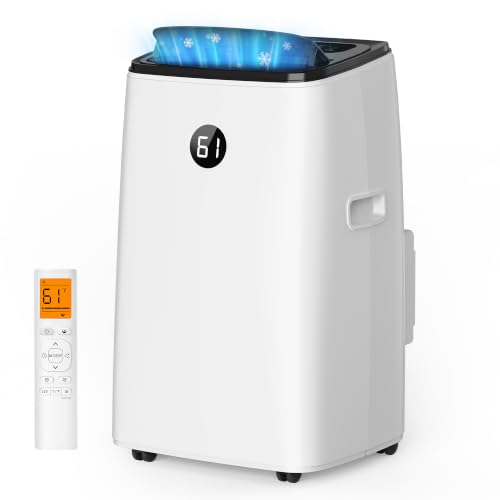
AGTANA 14000 BTU Portable Air Conditioner
Overview
This is a floor-standing, corded 115 V portable air conditioner sold for spot cooling, fan circulation and dehumidification. Public sales records for this product describe a 54-pound unit with a remote, window kit, 1,250 W input, and a stated window-opening range of 20.5 to 57.3 inches. The 14,000 Btu headline is an ASHRAE-style figure. A third-party sales record also reports 10,000 Btu SACC, the more useful portable-AC cooling measure, but I could not confirm this model in the DOE certification search results. The stated 700-square-foot coverage and 48 dB noise figure therefore remain manufacturer claims, rather than independently verified performance figures. Publicly available product data identifies R-32 refrigerant, but no rating plate, charge amount, manual, or service documentation was located.
What works
- Public product records consistently describe cooling, fan, and dehumidifier modes in one portable unit.
- A 10,000 Btu SACC figure is reported by an independent sales listing, which is more informative than relying only on the 14,000 Btu headline.
- The listed window-kit range, 20.5 to 57.3 inches, gives a concrete starting point for checking fit before installation.
- R-32 is identified in third-party product data. EPA lists HFC-32 as a lower-GWP refrigerant acceptable with use conditions for self-contained room air conditioning.
What does not
- No exact-model DOE certification result was located, so the reported SACC, CEER, and stated 700-square-foot coverage could not be independently confirmed.
- No exact-model UL, ETL, or CSA listing was found in the searchable certification records reviewed. This is missing evidence, not evidence of an electrical defect.
- The 48 dB figure does not identify fan speed, measurement distance, or a third-party test method.
- The available product descriptions indicate a single exhaust hose. Single-hose portable ACs can draw outdoor air into a room through leaks, especially during wildfire smoke.
- No exact manual, U.S. support page, parts source, registration path, or verified warranty document was located.
Who is it for
This product suits a renter or homeowner who needs movable cooling for one room, has a compatible sliding or sash window, and can verify the unit's label and included parts on arrival. It is most suitable for a reasonably enclosed space where the manufacturer-stated 700-square-foot maximum is treated as an upper limit, not a guaranteed outcome. It also fits a user who wants fan and dehumidifier functions in the same appliance and is prepared to inspect the window seal, drainage provisions, and electrical labeling before regular use.
Who is it not for
It is not well suited to someone who needs independently documented safety certification, verified efficiency data, or a clear manufacturer service and parts pathway before purchase. Avoid relying on it as the sole cooling plan for a large, sunny, open-plan, poorly insulated, or high-heat-load room, because the 700-square-foot claim is not independently confirmed. It is also a poor fit for homes with active wildfire smoke, or rooms near naturally drafted gas appliances, unless the hose arrangement, window seal, ventilation, and carbon-monoxide safeguards are professionally assessed.
Integrity
The principal indoor-air concern is the likely single-hose layout. EPA advises using single-hose portable air conditioners sparingly during smoky conditions because exhausting room air can pull smoke in through other gaps. A tight window-panel seal matters for cooling performance and smoke control. The product is also described as self-evaporating, but no manual was found to confirm when drainage is needed, how overflow is prevented, or how the internal water path should be cleaned. Promptly address any leak or standing water, since EPA identifies moisture control and drying within 24 to 48 hours as central to mold prevention. Third-party product records identify R-32 refrigerant. EPA lists HFC-32 with a global-warming potential of 675 and as acceptable with use conditions for self-contained room air conditioning, which is a lower-impact choice than older high-GWP refrigerants. However, the refrigerant charge, safety labels, recovery instructions, exact electrical certification, and service information were not independently documented for this product. No exact-product CPSC recall or warning was located in the searches reviewed.

Garvee 3-in-1 Portable Air Conditioner 8,000 BTU
Overview
This is a corded, single-hose portable air conditioner for spot cooling one room. It is listed with cooling, fan, and dehumidifier modes, a remote, a 24-hour timer, and a window exhaust kit. Retailer data independent of the catalog describes a 699-watt, 115-volt unit using R-32 refrigerant, weighing about 50 pounds, with a claimed 350-square-foot coverage area. The defining limitation is rating clarity. A closely matching manual for the same unit family identifies the 8,000 BTU figure as an ASHRAE rating, while no searchable DOE SACC or CEER value was located for this product. That means the stated room coverage cannot be independently checked on the federal portable-AC basis. The listing also provides only one exhaust hose, which is relevant to both cooling performance and indoor-air pressure.
What works
- The listed R-32 refrigerant has a lower climate impact than older high-GWP refrigerants, though the refrigerant charge is not disclosed.
- A continuous-drain option and a full-water alert are documented for the matching unit family, giving users a practical way to manage condensate in dry mode.
- The included window kit, remote, timer, fan, and dehumidifier functions support basic room-by-room operation.
- Published dimensions and weight indicate a compact floor unit that can be moved between rooms on its casters.
What does not
- The 8,000 BTU and 350-square-foot claims lack a product-specific DOE SACC rating, so real cooling capacity for that room size is unverified.
- The 50 dB sound claim gives no fan speed, measurement distance, or independent sound test, so bedroom suitability is uncertain.
- A single-hose configuration can depressurize the room and draw unfiltered outdoor air through leaks, especially during wildfire smoke events.
- No searchable exact-product UL, ETL, or CSA listing was located, so independent U.S. electrical-safety certification could not be confirmed.
- Warranty information conflicts across available product data, with one-year and three-year statements, which weakens after-sale clarity.
Who is it for
This product fits a renter, dorm resident, or homeowner seeking portable spot cooling in a small enclosed room with a compatible sliding or sash window. It is most suitable where the room is materially smaller than the stated maximum, doors and windows can remain closed, and the window panel can be sealed carefully. It also suits someone willing to monitor drainage in humid weather, clean the washable filter, and verify warranty terms directly with the seller before relying on long-term coverage.
Who is it not for
It is not well suited to buyers who need verified cooling for a true 350-square-foot room, because no product-specific DOE SACC rating was found. Avoid using a single-hose portable unit as the main cooling approach during wildfire smoke, particularly in a leaky home. Households with naturally drafted gas water heaters, fireplaces, or other combustion appliances nearby should consider the depressurization risk and maintain working carbon-monoxide alarms. It is also unsuitable for buyers requiring confirmed NRTL electrical certification or clearly documented service parts and warranty support.
Integrity
The product is listed as using R-32 refrigerant. EPA materials identify R-32 as below the 700 global-warming-potential threshold applied to several residential air-conditioning applications, making the refrigerant choice preferable to many older HFC options. However, the available product information does not disclose the refrigerant charge, service instructions, or end-of-life recovery pathway. Refrigerant work should therefore be left to qualified service personnel. Its single-hose arrangement is the principal indoor-air concern. EPA advises using single-hose portable air conditioners sparingly in smoky conditions because exhausting indoor air can create negative pressure and draw smoke in through building leaks. Exhausting air can also contribute to combustion-appliance backdrafting in susceptible homes. Condensate needs routine attention, since EPA guidance emphasizes keeping drains clear and preventing standing water to reduce leakage and mold risk. No product-specific recall or regulatory safety action was identified in the sources reviewed, but independent electrical-listing evidence was not located.

Garvee Portable Air Conditioner 14K BTU 3-in-1
Overview
This product is a large, floor-standing portable air conditioner intended to vent through a window slider kit. Its manual documents separate outdoor-air intake and hot-air exhaust hoses, plus cooling, dry, fan, timer, sleep, remote-sensor, and heat-mode instructions for heat-capable versions. The manual also specifies 18 inches of surrounding clearance, a grounded outlet, and a sealed window installation. The 14,000 BTU headline is an ASHRAE figure, not the regulated seasonally adjusted measure. Seller materials for this same product instead report 10,200 or 10,500 BTU SACC, while retaining the 750 square foot coverage claim. That inconsistency matters more than the headline number. An ETL Listed mark appears in the product manual, but an exact retail-version match could not be independently retrieved from Intertek’s public directory.
What works
- The supplied manual documents a two-hose setup, with one hose for outdoor intake and one for hot-air exhaust.
- The window-kit instructions emphasize sealing gaps, minimizing hose length, avoiding sharp bends, and allowing 18 inches of clearance.
- The manual includes full-tank shutdown, manual drainage, continuous-drain, filter-cleaning, and end-of-season drying instructions.
- The product manual displays a cETLus mark and gives grounded-outlet and dedicated-circuit safety directions.
What does not
- The cooling claim is unclear. Product materials cite 10,200 and 10,500 BTU SACC for the same product, while the headline emphasizes 14,000 BTU and 750 square feet.
- The ETL mark is shown in the manual, but the exact retail version was not independently confirmed in Intertek’s searchable public listing.
- The 50 dB and under-42 dB sleep claims lack a stated speed, distance, or independent sound-test report.
- Support details are inconsistent. The manual identifies Creative Innovation and Acekool contact information, while seller materials identify Garvee and give differing warranty periods.
Who is it for
This product suits someone who needs portable, window-vented spot cooling or seasonal heating in a room with enough floor space for a 71-pound appliance, two hoses, and a properly sealed standard window opening. It is most appropriate where the room is reasonably insulated, doors can stay closed, and cooling demand is below the most optimistic 750 square foot marketing claim. It also fits a user willing to clean the filter monthly, check the drain setup, and follow the manual’s clearance and hose-routing requirements.
Who is it not for
It is not well suited to a buyer who needs a clearly verified cooling capacity for a full 750 square foot open-plan room, or who expects the 14,000 BTU headline alone to predict performance. Bedroom users who need independently measured low noise should look for a product with a stated test method and measurement distance. Households with naturally drafted gas appliances should be especially cautious, because the manual does not provide specific backdrafting guidance. Buyers needing straightforward warranty support and parts identification may also find the conflicting brand, importer, and warranty information difficult to manage.
Integrity
The two-hose configuration is a meaningful indoor-air advantage when both hoses and the window panel are properly sealed. It reduces the room depressurization associated with a conventional one-hose portable unit. The manual nevertheless gives no product-specific guidance for use near naturally drafted fuel-burning appliances, nor for wildfire-smoke events. Keep the window kit sealed, maintain carbon-monoxide alarms where fuel-burning appliances are present, and avoid relying on the product as an air cleaner. The manual provides practical moisture controls, including a full-tank stop, manual draining, continuous drainage for heat and dry modes, monthly filter cleaning, and complete draining before storage. It does not clearly disclose the exact refrigerant type or charge for this retail version, directing users to the rating plate instead. Its safety section discusses flammable R32 or R290 refrigerants, so refrigerant work and disposal should be handled by qualified personnel. No exact-product CPSC recall or incident report was identified in the searches performed.

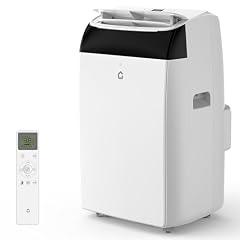
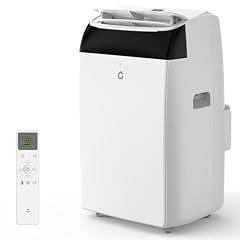
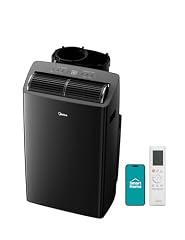
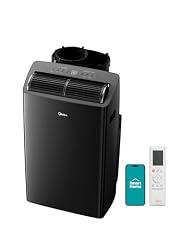
Midea Portable Air Conditioner with Heat, 14,000 BTU, Black
Overview
This is a 77-pound, floor-standing portable air conditioner and heat-pump unit that vents through a window. It uses a hose-in-hose, dual-air-path design, includes cooling, heating, dry and fan modes, and is controlled at the unit, by remote, or through Wi-Fi app functions. The supplied manual covers this product version and specifies standard grounded-outlet use, with no extension cords or adapters. The most important independently checkable figure is 12,000 BTU per hour of seasonally adjusted cooling capacity, not simply the 14,000 BTU figure used in some retail titles. A government product registry identifies it as a dual-duct unit with a 14.2 CEER efficiency rating. Midea states coverage up to 550 square feet and sound as low as 42 dBA, but the noise claim lacks a disclosed test distance and operating speed. The unit uses flammable R32 refrigerant and needs careful placement, sealed window installation, and qualified sealed-system service.
What works
- Its 12,000 BTU SACC cooling capacity and 14.2 CEER are recorded in a government product registry for the exact model family.
- The hose-in-hose layout functions as a dual-hose configuration, which avoids the indoor negative pressure associated with single-hose portable units when the window connection is well sealed.
- The official manual provides concrete safety and maintenance instructions, including grounded-outlet use, no extension cords, filter cleaning, drainage steps, and storage drying.
- Heating, cooling, dehumidification, fan operation, timer controls, remote control, and app connectivity make it suitable for seasonal single-room comfort needs.
What does not
- The 14,000 BTU wording in retail materials can obscure the more decision-useful 12,000 BTU SACC rating, even though the latter is regulator-listed.
- The 42 dBA quiet-operation figure is manufacturer-stated and does not identify measurement distance, fan speed, or an independent sound test report.
- R32 has lower climate impact than older high-GWP refrigerants, but it is flammable. The manual requires ignition-source precautions and qualified service.
- Water management is not entirely hands-off. The manual says to drain the collection tray after a full-water alert and to dry the unit in fan mode before storage.
- A retailer identifies a UL listing, but a searchable issuing-body certification record for this exact version was not located during verification.
Who is it for
It suits someone cooling a single enclosed room that has a compatible window and cannot accept a fixed window air conditioner. The strongest fit is a room whose real heat load is consistent with Midea's up-to-550-square-foot guidance, with doors and windows kept closed and the supplied window kit sealed carefully. It also fits users who value a portable heat-pump mode for mild weather, app and remote controls, and a dual-hose air path that is preferable to a single-hose portable unit during outdoor-smoke events.
Who is it not for
It is not appropriate for users who need quiet, independently documented bedroom sound performance, because the low-noise figure is manufacturer-stated without test conditions. Avoid it where the window cannot be securely sealed, where the hose path must be excessively long or crushed, or where only an extension cord would reach the outlet. It also needs extra caution in rooms with open flames, sparking equipment, or fuel-burning appliances because it contains flammable R32 refrigerant. It is not an air cleaner for wildfire smoke.
Integrity
The verified performance record is unusually useful for a portable unit. Its 12,000 BTU SACC cooling capacity and 14.2 CEER are listed by a government energy registry, and the EnergyGuide document also shows 14.2 CEER. Its dual-hose airflow arrangement is a health advantage when installed tightly. EPA guidance says dual-hose portable air conditioners avoid the negative-pressure effect that can draw unfiltered outdoor air into a home, unlike single-hose designs. The unit uses R32, a lower-global-warming-potential refrigerant than older common room-air-conditioner refrigerants, but it is flammable. The manual warns against ignition sources, piercing, burning, and unqualified service. Drainage and storage matter for hygiene. The manual instructs users to empty a full water tray, clean filters, and run fan mode for 12 hours before storage to dry internal moisture. The 2025 Midea mold recall involved specified U and U+ window units, not this portable product.

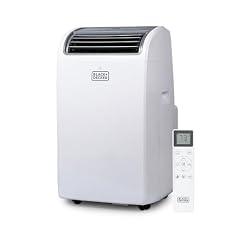
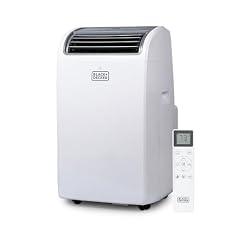
BLACK+DECKER Smart Portable Air Conditioner BPACT14WT
Overview
This is a floor-standing, single-hose portable air conditioner for indoor residential use. It includes an exhaust hose, window-slider kit, remote, casters, washable intake filter, and cool, fan, and dehumidify modes. BLACK+DECKER's product information identifies a 14,000 BTU rating under ASHRAE 128, plus auto-water evaporation and R-32 refrigerant. The unit is about 16.5 inches wide, 14.06 inches deep, and 27.09 inches high. The most important limitation is rating clarity. Retail listings tied to this product report different seasonally adjusted capacities, including 7,700 and 10,200 BTU, while the manufacturer page foregrounds the larger ASHRAE figure. The supplied configuration is single hose, which exhausts indoor air outdoors. UL certification documentation does identify this exact product under current U.S. room-air-conditioner safety standards, provided the purchased unit bears the UL mark.
What works
- Exact-model UL certification is documented to UL 60335-1 and UL 60335-2-40 safety standards.
- The manufacturer documents cooling, fan, and dehumidifying operation, with a remote and window installation kit included.
- The manual provides practical moisture-control steps, including draining when indicated, continuous drainage for dehumidifying use, weekly filter cleaning, and complete draining before storage.
- The manufacturer identifies R-32 refrigerant, a lower climate-impact option than older R-410A when the product marking matches the documentation.
- Model support is relatively traceable, with a one-year limited warranty, customer-support contact, product registration, and rear-label serial-number instructions.
What does not
- Cooling capacity and room-coverage messaging is not clear. The 14,000 BTU headline uses ASHRAE 128, while product listings report conflicting lower seasonally adjusted capacities.
- Its single-hose design can depressurize a room. Federal wildfire-smoke guidance warns that this type of portable air conditioner can draw outdoor smoke indoors.
- It is not drainage-free in every condition. The manual says the tank must be drained when a full-tank code appears and recommends continuous drainage in dehumidify mode.
- Noise claims are not well qualified. Available product materials variously state 52, 54, or 56 dB without a stated fan speed, distance, or independent sound-test report.
- No exact-model CEER or EnergyGuide record was located in the verification sources, so operating-efficiency claims cannot be independently assessed here.
Who is it for
This product fits a renter or homeowner who needs temporary spot cooling in a room with a compatible, sealable window and has enough floor space for a roughly 27-inch-tall unit. It is better suited to a modest enclosed room than to relying on the stated 700-square-foot maximum, because the documented capacity information is inconsistent and the supplied design uses one exhaust hose. It also suits someone prepared to clean the washable filter weekly, inspect the window seal, and drain the unit if its tank-full indicator appears.
Who is it not for
It is not appropriate for a bedroom where low, well-documented sound is essential, because published sound figures conflict and do not state the measurement conditions. Avoid using it near naturally drafted gas water heaters, furnaces, fireplaces, or other combustion appliances unless a qualified professional has addressed depressurization and a working carbon-monoxide alarm is in place. It is also a poor fit during heavy wildfire smoke if preserving clean indoor air is a priority, since single-hose units may pull outdoor air inward. California buyers should note the manufacturer's notice that BPACT models are not available for sale there.
Integrity
The strongest verified safety point is the exact-model UL certificate, which lists room-air-conditioner certification to UL 60335-1 and UL 60335-2-40. The manual also specifies a grounded LCDI power cord, warns against operating with a damaged cord or plug, and directs users to unplug before cleaning. No exact-model CPSC recall was located in the reviewed recall sources. The main indoor-air caution is inherent to the single-hose layout, not a defect unique to this product. Exhausting room air can create negative pressure, which can worsen smoke infiltration and may contribute to combustion-gas backdrafting where naturally drafted fuel-burning equipment is present. The manufacturer identifies R-32 refrigerant, which is below the EPA's 700 global-warming-potential limit for newly made portable room air conditioners. Refrigerant charge and end-of-life recovery instructions were not found in the reviewed product documentation.