
10 Best Portable Ac
 Lauren Wilson
Please note that we participate in affiliate marketing programs. When you purchase through links on our site, we may earn a commission. As an Amazon Associate we earn from qualifying purchases. This comes at no additional cost to you and helps support the resources required to provide valuable content.Advertising Disclosure
Top-rated Portable Ac Comparison
1

2


4
5

6
7
8
9

10

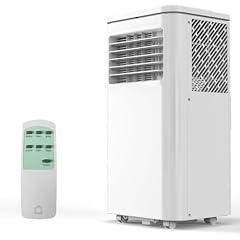
Portable AC: what to look for
A portable air conditioner removes heat from one room and exhausts it outdoors through a window kit. Whether it works well depends less on the largest number in the title than on the unit’s delivered cooling capacity, hose arrangement, window seal, room heat load, and electrical installation. Sun exposure, insulation, ceiling height, open doors, occupants, and heat-producing appliances can all reduce practical performance.
Start with the DOE seasonally adjusted cooling capacity, or SACC. This rating is more useful than an older ASHRAE BTU figure because it accounts more closely for portable installation losses. In the supplied products, headline ratings such as 8,000, 10,000, 14,000, and 16,000 BTU sometimes corresponded to materially lower SACC figures, including about 5,000, 6,000, or 10,000 BTU. A room-size claim without a clearly stated SACC basis should be treated as an estimate, not a dependable sizing guarantee. The relevant DOE record is the U.S. Department of Energy’s Compliance Certification Management System, using the portable-air-conditioner test method in 10 CFR Part 430, Subpart B, Appendix CC. CEER, the combined energy-efficiency ratio, is the corresponding efficiency measure to compare alongside SACC.
The hose design also matters. Dual-hose units use separate intake and exhaust paths and can maintain more balanced indoor pressure when the window kit is sealed. Single-hose units exhaust indoor air outdoors, which can draw replacement air through leaks, reduce cooling effectiveness, and bring outdoor smoke indoors. Look for a manual that identifies the exact hose configuration, window-opening range, maximum hose length, clearance requirements, limits on bends or extensions, and whether the supplied foam and panels can create a tight seal. Never assume “drainage-free” means maintenance-free: high humidity or dry mode may still require a drain, and storage usually requires emptying and drying the unit.
For electrical and fire safety, look for a traceable current listing for the exact product in an OSHA-recognized Nationally Recognized Testing Laboratory directory, such as UL Solutions Product iQ, Intertek’s ETL directory, or CSA Group’s product listings. The listing should identify the applicable standard, commonly UL 484 or UL 60335-2-40 as appropriate. Check the CPSC Recalls database and SaferProducts.gov as well. A mark shown in a photograph, a listing for a related model family, or a brand assertion is weaker than an exact searchable record. Follow the manual’s requirements for a grounded wall outlet; several supplied reviews prohibit adapters and extension cords.
Noise claims also need context. A number such as 42, 45, or 50 dB is difficult to interpret without the fan speed, measurement distance, and test method. Independent sound testing or a recognized method is stronger than an unqualified “quiet” or “sleep” claim. Smart controls should likewise be supported by an FCC authorization for the exact radio-equipped model.
Recurring safety cautions are important. Single-hose units require extra care during wildfire-smoke events and around naturally drafted gas appliances, fireplaces, furnaces, or water heaters because depressurization can increase smoke entry or backdrafting risk. Use working carbon-monoxide alarms and qualified local guidance where combustion appliances are present. No supplied product should be treated as an air cleaner. Across the category, buyers should also expect regular filter cleaning, condensate monitoring, careful window sealing, and qualified service for mildly flammable R-32 refrigerant.
Integrity
Portable AC decisions involve more than cooling output. The topics below distinguish delivered room performance, electrical and indoor-air risks, moisture and noise management, operating impact, refrigerant handling, installation quality, and the strength of the evidence behind each claim. Higher scores indicate stronger assessment results among the supplied products, not a guarantee that every installation will be safe or effective.
HHealth & Safety
Real cooling for the stated room size
This measures whether SACC, hose design, and installation limits support the advertised room coverage. It matters because ASHRAE BTU headlines can substantially exceed delivered portable-AC capacity. Among the supplied products, the strongest results were products with independently documented SACC figures, while lower scores clustered around conflicting room claims or no DOE-style rating.
Verified electrical and fire safety
This checks for an exact-model U.S. safety listing and no unresolved fire, shock, overheating, or cord action. A high score was associated with traceable ETL, CSA, or comparable evidence covering the product; lower scores reflected only related-family evidence, visible marks without a searchable match, or no public listing. Grounded-outlet and no-extension-cord instructions still matter.
Indoor-air and backdrafting risk
This measures whether the hose layout and window seal limit negative pressure, smoke infiltration, and combustion-gas backdrafting. Dual-hose products generally scored higher in the supplied set because they can better balance pressure when sealed. Single-hose products scored lower or raised stronger cautions, especially for wildfire smoke and rooms containing naturally drafted fuel-burning appliances.
Condensate, leaks, and mold control
This assesses self-evaporation, overflow protection, drainage options, and cleaning and storage instructions. High-scoring products documented full-tank alerts or shutoff, continuous drainage, filter cleaning, and drying before storage. Lower results were associated with conditional “drainage-free” claims or incomplete instructions. Humid conditions can still require manual drainage even when normal cooling is advertised as drainage-free.
Noise that is realistically tolerable
This measures whether sound claims identify speed, distance, and a recognized test method, and whether the result suits bedroom use. Scores were generally moderate because many products stated 42–53 dB without test context. The supplied independent testing showed that a headline noise claim can understate disruptive operation, so “quiet” and “sleep mode” should not be treated as verified sleep performance.
Window-kit fit and exhaust integrity
This checks whether the hose, adapters, panels, seals, and installation limits can preserve exhaust integrity without unsafe extensions or hot-air recirculation. Higher scores went to products with defined window ranges, hose limits, sealing materials, and clearance instructions. Lower scores reflected conflicting dimensions, restricted hose lengths, unclear kits, or listings that did not establish how the product was tested.
EEvidence
Independent proof, not seller assertions
This measures whether capacity, efficiency, sound, safety, materials, and smart-radio claims identify the exact product and are supported by DOE, an NRTL, FCC, or an accredited laboratory. The highest supplied score belonged to a product with independent electrical, capacity, and efficiency documentation. Lower scores reflected manuals, retailer statements, related-family records, or unsupported listing claims.
Honest BTU, efficiency, noise, and coverage claims
This checks whether the listing separates ASHRAE BTU from SACC, explains CEER and room-size assumptions, qualifies noise measurements, and states the limits of drainage and energy claims. Higher-scoring listings presented the lower regulated-style capacity alongside the headline figure. Lower scores had conflicting coverage, wattage, CEER, noise, or configuration details that could mislead sizing and operating-cost expectations.
Traceable maker, support, and recall readiness
This measures whether the manufacturer or importer, U.S. contact, warranty, serial-number guidance, replacement parts, and registration path are clear. Higher scores came from products with model-specific support, importer or contact information, registration, and longer or extendable warranty coverage. Lower scores lacked clear U.S. support, parts access, serial guidance, or a reliable path for future safety notices.
EEcology
Electricity use and verified efficiency
This compares electricity against delivered cooling using CEER and SACC, while considering standby use and controls that avoid unnecessary runtime. Higher-scoring products had EnergyGuide, DOE-style, or independent efficiency evidence; lower scores relied on catalog “energy-saving” language or internally conflicting wattage and annual-use figures. A larger BTU headline does not by itself mean more efficient cooling.
Lower-impact refrigerant and responsible service
This measures disclosure of refrigerant type and charge, lower-GWP selection, and practical recovery or service information. R-32 was commonly disclosed and scored better than products using or documenting older R-410A, but it remains mildly flammable and climate-relevant if leaked. Higher scores reflected verified rating-plate or certification evidence; low scores reflected unknown charge, conflicting refrigerant records, or absent service details.
Full reviews

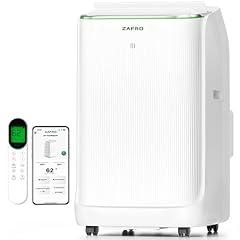
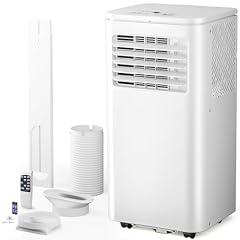
ZAFRO Smart Inverter Portable Air Conditioner 14000 BTU
Overview
This is a 115 V, 54-pound portable air conditioner with a dual-hose window setup, app, remote, cooling, fan, dry, sleep, extra, and eco modes. The product documentation lists two exhaust hoses, five window panels, sealing foam, a drain hose, and a 20-inch wall-clearance instruction. It is intended to cool one closed room through a window opening, rather than to serve as central cooling. The seller states 10,000 BTU SACC capacity, 14,000 BTU non-SACC capacity, R-32 refrigerant, a 42 dB minimum sleep-mode sound level, and self-evaporating drainage. Those figures were not independently verified for this exact product through a searchable DOE certification record, safety-listing directory, or lab report. Energy claims also need caution, because exact-product listings conflict between CEER 12.8 and CEER 10.3.
What works
- The dual-hose design and included sealing materials support a tighter window installation. EPA specifically advises owners of two-hose portable units to keep the window-kit seal tight during wildfire-smoke events.
- The supplied documentation identifies a practical installation package, including two hoses, five adjustable window panels, foam seals, a drain hose, remote, and mounting hardware.
- The product documentation specifies R-32 refrigerant. EPA identifies R-32 as below the 700 GWP limit applied to relevant residential and light-commercial air-conditioning equipment.
- The documentation provides basic placement and sealing directions, including a 20-inch clearance from walls and instructions to fill window gaps with foam.
What does not
- No exact-product electrical safety certification was located in searchable UL, ETL, or CSA listing resources. That is missing verification, not evidence of an electrical defect.
- No exact-product DOE certification record or independent lab report was located to substantiate the stated SACC capacity, CEER, annual energy use, sound level, or room-size coverage.
- The energy-efficiency claim is inconsistent across exact-product listings. One source states CEER 12.8, while an auction listing for the same product and UPC states CEER 10.3.
- The 42 dB claim is described as a minimum or sleep-mode figure, without an identified test distance, fan speed, or independent acoustic test report.
- Self-evaporating drainage reduces routine emptying only under suitable humidity and load conditions. The product still includes a drain hose, and water management remains necessary if condensate accumulates.
Who is it for
This product fits a renter or homeowner who needs movable, single-room cooling and can install a dual-hose kit in a compatible window. It is most suitable where the window opening can accept the supplied panel system and where the user can keep both hose connections and foam seals intact. It also fits someone who values app or remote control and is prepared to treat the stated 10,000 BTU SACC capacity, 42 dB sound claim, and drainage-free claim as manufacturer statements rather than independently verified performance figures.
Who is it not for
It is not well suited to someone who needs independently documented electrical certification, regulated efficiency data, or a verified sound test before operating an appliance in a bedroom or nursery. Households with naturally drafted gas water heaters, furnaces, fireplaces, or other combustion appliances nearby should get qualified guidance on depressurization and use working carbon-monoxide alarms. It is also a poor fit for large, open, poorly insulated, or sun-exposed areas if the purchase depends on the stated 700-square-foot coverage, which was not independently substantiated.
Integrity
The product uses a dual-hose layout and comes with foam sealing material. This matters for indoor air because EPA says owners of two-hose portable air conditioners should make the window-kit seal as tight as possible during smoke events. A poor seal can still admit outdoor pollution. In homes with naturally drafted combustion appliances, household depressurization can contribute to backdrafting, so placement and carbon-monoxide protection matter. R-32 is disclosed in product documentation. EPA states that R-32 is below the 700 GWP threshold relevant to certain residential and light-commercial air-conditioning equipment, but the refrigerant charge, recovery instructions, and service documentation were not located. No current product-specific CPSC recall was identified in the recall and unsafe-product resources reviewed. Searchable independent confirmation of the exact product's DOE performance record and U.S. electrical safety listing was not located, leaving the cooling, efficiency, noise, and safety claims unverified.

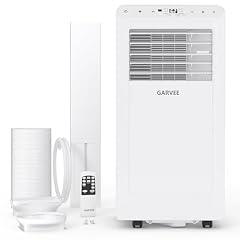
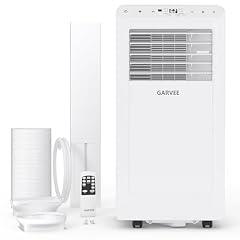
Garvee 3-in-1 Portable Air Conditioner 8,000 BTU
Overview
This is a corded, single-hose portable air conditioner for spot cooling one room. It is listed with cooling, fan, and dehumidifier modes, a remote, a 24-hour timer, and a window exhaust kit. Retailer data independent of the catalog describes a 699-watt, 115-volt unit using R-32 refrigerant, weighing about 50 pounds, with a claimed 350-square-foot coverage area. The defining limitation is rating clarity. A closely matching manual for the same unit family identifies the 8,000 BTU figure as an ASHRAE rating, while no searchable DOE SACC or CEER value was located for this product. That means the stated room coverage cannot be independently checked on the federal portable-AC basis. The listing also provides only one exhaust hose, which is relevant to both cooling performance and indoor-air pressure.
What works
- The listed R-32 refrigerant has a lower climate impact than older high-GWP refrigerants, though the refrigerant charge is not disclosed.
- A continuous-drain option and a full-water alert are documented for the matching unit family, giving users a practical way to manage condensate in dry mode.
- The included window kit, remote, timer, fan, and dehumidifier functions support basic room-by-room operation.
- Published dimensions and weight indicate a compact floor unit that can be moved between rooms on its casters.
What does not
- The 8,000 BTU and 350-square-foot claims lack a product-specific DOE SACC rating, so real cooling capacity for that room size is unverified.
- The 50 dB sound claim gives no fan speed, measurement distance, or independent sound test, so bedroom suitability is uncertain.
- A single-hose configuration can depressurize the room and draw unfiltered outdoor air through leaks, especially during wildfire smoke events.
- No searchable exact-product UL, ETL, or CSA listing was located, so independent U.S. electrical-safety certification could not be confirmed.
- Warranty information conflicts across available product data, with one-year and three-year statements, which weakens after-sale clarity.
Who is it for
This product fits a renter, dorm resident, or homeowner seeking portable spot cooling in a small enclosed room with a compatible sliding or sash window. It is most suitable where the room is materially smaller than the stated maximum, doors and windows can remain closed, and the window panel can be sealed carefully. It also suits someone willing to monitor drainage in humid weather, clean the washable filter, and verify warranty terms directly with the seller before relying on long-term coverage.
Who is it not for
It is not well suited to buyers who need verified cooling for a true 350-square-foot room, because no product-specific DOE SACC rating was found. Avoid using a single-hose portable unit as the main cooling approach during wildfire smoke, particularly in a leaky home. Households with naturally drafted gas water heaters, fireplaces, or other combustion appliances nearby should consider the depressurization risk and maintain working carbon-monoxide alarms. It is also unsuitable for buyers requiring confirmed NRTL electrical certification or clearly documented service parts and warranty support.
Integrity
The product is listed as using R-32 refrigerant. EPA materials identify R-32 as below the 700 global-warming-potential threshold applied to several residential air-conditioning applications, making the refrigerant choice preferable to many older HFC options. However, the available product information does not disclose the refrigerant charge, service instructions, or end-of-life recovery pathway. Refrigerant work should therefore be left to qualified service personnel. Its single-hose arrangement is the principal indoor-air concern. EPA advises using single-hose portable air conditioners sparingly in smoky conditions because exhausting indoor air can create negative pressure and draw smoke in through building leaks. Exhausting air can also contribute to combustion-appliance backdrafting in susceptible homes. Condensate needs routine attention, since EPA guidance emphasizes keeping drains clear and preventing standing water to reduce leakage and mold risk. No product-specific recall or regulatory safety action was identified in the sources reviewed, but independent electrical-listing evidence was not located.

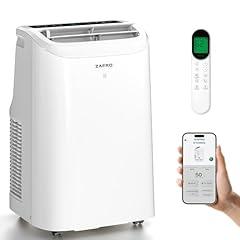
ZAFRO 10000 BTU Portable Air Conditioner
Overview
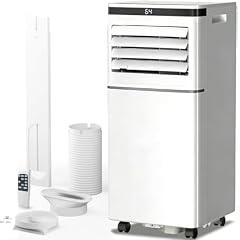
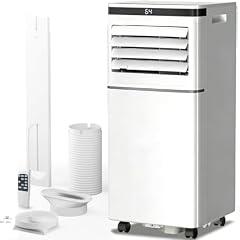
This is a 115 V, single-hose portable air conditioner for a windowed room. It is a roughly 52-pound floor unit with cooling, fan, dehumidifying, sleep, remote, touch-control, and Wi-Fi functions. The available product documentation states 10,000 BTU under the older marketing convention and 6,000 BTU SACC, with coverage up to 250 square feet. SACC is the more relevant cooling figure for a portable unit. The documentation also describes a self-evaporating cooling mode, but it specifically requires draining in prolonged dehumidification or high humidity. Its 47 dB figure is manufacturer-stated for sleep mode, without a stated test distance or independent acoustic report. Searches did not locate an exact-model DOE certification record, NRTL listing record, FCC authorization, or independent lab report. The documentation is also inconsistent on wattage and annual electricity use, listing 800 W and 634 kWh in one version, and 900 W and 675 kWh in another.
What works
- The stated 6,000 BTU SACC is presented alongside the larger 10,000 BTU figure, which gives a more realistic basis for a small-room cooling expectation.
- Available instructions include a window panel, exhaust hose, sealing foam, drainage provisions, a stated 20-inch clearance, and a broad stated window-kit range.
- The available manual does not treat drainage-free operation as absolute. It describes tank-full shutdown, manual drainage, and continuous drainage for high humidity or extended dry-mode use.
- R-32 refrigerant is disclosed in an available manual. EPA lists HFC-32 at a 675 global-warming-potential value, lower than several legacy HFC refrigerants.
What does not
- No exact-product UL, ETL, CSA, or other searchable U.S. NRTL certification record was located. That is missing verification, not evidence of a specific electrical defect.
- The single exhaust hose creates negative pressure. EPA says single-hose portable units can draw unfiltered outdoor smoke indoors and should be used sparingly during smoky conditions.
- The 47 dB claim applies to sleep mode, with no distance, fan setting detail beyond that mode, or independent sound test located.
- Product documents conflict on rated wattage and annual electricity consumption. The claim of being energy-efficiency certified was not substantiated by an exact-product certification record.
- The available documentation discloses R-32 but not the refrigerant charge, service details, serial-number location, U.S. importer information, or a clear product-registration path.
Who is it for
It suits a renter or homeowner who needs spot cooling in a closed, small room of roughly 250 square feet or less, has a compatible sash or sliding window, and can place the unit near a grounded wall outlet. It is also suited to someone prepared to inspect the window seal, keep clearance around the cabinet, clean the washable filter, and empty or continuously drain it when humidity is high. The app, remote, timer, and sleep mode may be useful convenience controls, though their performance was not independently verified.
Who is it not for
It is not suited to a home that has a naturally drafted gas water heater, furnace, fireplace, or other combustion appliance in or near the conditioned area unless a qualified professional has addressed depressurization risk and carbon-monoxide protection. It is also unsuitable as a clean-air strategy during wildfire smoke, because its apparent single-hose layout can pull outdoor air through leaks. Choose another arrangement for large, open rooms, windows outside the stated kit range, bathrooms or laundry areas, or situations where a verified safety listing and independently documented efficiency are required.
Integrity
The available manual gives practical moisture controls, including a tank-full stop condition, manual draining, continuous drainage for extended dehumidification or high humidity, and washable-filter cleaning. These instructions reduce, but do not eliminate, leak and standing-water risk. The product should be kept level, clear of obstructions, and out of wet rooms. No exact-product CPSC recall was located in the recall search reviewed, but no exact-model NRTL safety listing was found either. The supplied hose arrangement appears to be single-hose. EPA warns that this design can create slight negative pressure, bringing smoke through leaks during poor outdoor-air events. It can also add backdrafting concern where naturally drafted fuel-burning equipment is present. An available manual identifies R-32 refrigerant. EPA lists it as an A2L refrigerant with a global warming potential of 675, lower than older high-GWP options but still climate-active and subject to use conditions. No charge amount or recovery and service documentation was located.
16000 Dual Hose Portable AC
Overview
This is a corded, freestanding portable air conditioner for sliding-window installation. It uses two window hoses, includes adjustable panels, sealing foam and a drain hose, and is controlled from the unit, remote or app. The published manual identifies a 115-volt inverter-compressor design using R-32 refrigerant, with cooling stated as 16,000 Btu and 12,000 Btu SACC. The dual-hose layout is its most consequential design feature. EPA guidance explains that dual-hose portable units avoid the room depressurization associated with single-hose designs when correctly installed. The 12,000 Btu SACC figure is the relevant capacity format, but I could not independently confirm this exact product in a DOE certification record. Product materials also conflict on important specifications, including wattage, weight, stated room coverage and sound level, so the performance and efficiency claims should be treated as manufacturer-stated rather than independently verified.
What works
- The supplied two-hose design can reduce negative pressure and unwanted air infiltration when both hoses and the window seal are installed correctly.
- The stated 12,000 Btu SACC is the cooling metric used in DOE portable-air-conditioner testing, rather than only the higher nominal Btu figure.
- The included kit lists two hoses, window panels, sealing foam, fasteners and a drainage hose, which supports a complete sliding-window installation.
- The product documentation calls for a removable filter to be cleaned about every two weeks and instructs users to dry it before refitting.
- R-32 is a lower-global-warming-potential refrigerant than legacy high-GWP refrigerants, although the refrigerant charge is not disclosed.
What does not
- No current UL, ETL or CSA listing for this exact product was located in the searchable public certification directories, so U.S. electrical safety certification could not be verified.
- No independent DOE certification record, accredited laboratory report, or exact-product sound test was located for the stated cooling capacity, efficiency or noise claims.
- Published product materials conflict, including 1,310 versus 1,660 watts, 54 versus 56 pounds, 38 versus 42 dB, and room-size claims ranging from 650 to 800 square feet.
- The 42 dB claim does not identify fan setting, measurement distance, or a recognized test method, making bedroom noise performance uncertain.
- Self-evaporating drainage does not eliminate leak risk. The documentation still provides a drain hose and identifies incorrect drainage-hose connection or tilting as causes of water leakage.
Who is it for
This product suits a renter or homeowner with a compatible horizontal or vertical sliding window, enough floor space for a 54 to 56 pound unit, and a room that can be closed and sealed while cooling. It is most appropriate for someone who values the stated dual-hose configuration and can follow the installation steps, including fitting the panels, sealing gaps and keeping clearance around the cabinet. The stated 12,000 Btu SACC may suit a substantial single room, but room size should be adjusted downward for strong sun, poor insulation, high ceilings, open doors or heavy appliance loads.
Who is it not for
It is not a good fit for a household that needs independently documented electrical certification before operating a high-wattage appliance, because an exact-product NRTL listing could not be verified. It is also unsuitable where no compatible sliding window can be tightly sealed, where hoses would need to be sharply bent or routed far from the window, or where frequent stair carrying is required. People using a bedroom during wildfire smoke events should still prioritize tight window sealing and particle filtration. This unit is not documented as an air cleaner, and unverified noise claims make it a cautious choice for noise-sensitive sleepers.
Integrity
The notable health-related point is the stated dual-hose configuration. EPA wildfire-smoke guidance explains that single-hose portable air conditioners can draw outdoor air inward by depressurizing a room, while dual-hose configurations maintain more balanced pressure. That benefit depends on both hoses being installed and the window-panel gaps being sealed. The documentation includes sealing foam and directs users to clean the removable filter regularly, but it does not establish particle-filtration performance or make this product an air purifier. The stated R-32 refrigerant has lower climate impact than older high-GWP refrigerants and falls below EPA's 700 GWP threshold used in relevant newer air-conditioning categories. Its charge quantity, service instructions and end-of-life recovery details were not found. No model-specific CPSC recall was located in the public recall search reviewed, but exact-product UL, ETL or CSA certification and independent DOE performance records were not verified. A one-year manufacturer warranty is stated, with limited publicly traceable support and registration information.

Antarctic Star Portable Air Conditioner 8000 BTU
Overview
This is a single-hose, 115-volt portable air conditioner on casters, supplied with one exhaust hose, window panels, remote control, cooling, fan, and dehumidifying modes. The manual calls for a grounded 15-amp dedicated circuit, at least 20 inches of clearance, and a window opening from 20 to 40 inches. It also says not to extend the hose or bend it beyond 45 degrees. An Intertek energy-efficiency report for this exact model configuration measured roughly 5,350 BTU per hour seasonally adjusted cooling capacity, with a represented value of 5,000 BTU and CEER of 6.9. That is materially different from the product page's 8,000 BTU and 450 square foot presentation. Its EnergyGuide also identifies 5,000 BTU and CEER 6.2. The product is therefore better treated as a small-room unit with an independently documented regulated capacity, not as a dependable solution for a 450 square foot room.
What works
- Independent Intertek testing documents a represented 5,000 BTU SACC rating for the exact model configuration.
- The manual gives concrete installation limits, including a 20 to 40 inch window-panel range, 20-inch clearance, one exhaust hose, and no hose extension.
- Water-full alarm and shutoff, manual and continuous drainage instructions, washable filters, and dry-out storage directions address common moisture-management needs.
- The independently documented refrigerant is R-32, a lower-GWP option than older R-410A systems, with flammability and qualified-service precautions in the manual.
What does not
- The catalog's 8,000 BTU and 450 square foot claims conflict with the 5,000 BTU EnergyGuide rating and independent test documentation, so the stated room coverage is not well supported.
- It is a single-hose design. EPA advises using this layout sparingly during wildfire smoke because it can draw more smoke indoors through building leaks.
- The 42 dB noise claim is not qualified by fan speed, measurement distance, or an independent sound test, and the manual does not substantiate it.
- The test report photographs an ETL mark, but a current searchable NRTL product listing for this exact product was not located. The report itself says it does not establish certification status.
Who is it for
This product suits a renter, dorm resident, or homeowner cooling one enclosed small room with a compatible sliding or hung window, a nearby grounded dedicated 15-amp outlet, and space to keep the hose short and unobstructed. It is most appropriate where the buyer can size the room conservatively around the verified 5,000 BTU SACC rating rather than the larger catalog coverage claim. It also suits someone willing to clean filters every two weeks and drain or dry the unit before storage.
Who is it not for
It is not suited to buyers expecting reliable cooling across a 450 square foot open-plan area, rooms with strong sun, high occupant loads, or multiple heat-producing appliances. It is also a poor fit for homes using naturally drafted gas appliances in or near the cooled space without professional assessment, because single-hose exhaust can depressurize the room. During wildfire smoke events, people with respiratory vulnerability should avoid relying on this single-hose layout. Choose another setup if the window opening falls outside the manual's 20 to 40 inch panel range or a dedicated outlet is unavailable.
Integrity
The exact model configuration has unusually useful independent energy evidence. An Intertek report tested it as a single-duct portable unit under ANSI/AHAM PAC-1 and DOE Appendix CC methods, documenting about 5,350 BTU per hour SACC and a represented CEER of 6.9. Its EnergyGuide identifies a 5,000 BTU capacity and CEER 6.2. These regulated figures are more decision-useful than the larger 8,000 BTU catalog figure. The documented R-32 refrigerant has lower climate impact than legacy R-410A, but it is mildly flammable. The manual requires qualified refrigeration service, warns against ignition sources, and identifies a refrigerant charge limit. It also gives drainage, filter-cleaning, and internal dry-out instructions that can reduce standing water and mold risk. No product-specific CPSC recall was identified in the recall search, but current independent listing confirmation for the photographed ETL mark was not available.

Antarctic Star Portable Air Conditioner 8000 BTU
Overview
This is a single-hose, floor-standing portable air conditioner for a window-vented room. It includes an exhaust hose, window panels, remote control, mesh filter, dehumidifying mode, fan mode, timer, wheels, and a drain port. It uses 115-volt power and requires a grounded, dedicated 15-amp circuit. Independent Intertek testing of the identical Antarctic Star model platform measured about 5,250 BTU per hour of DOE seasonally adjusted cooling capacity, with about 787 to 789 watts input at the tested condition. That is the useful cooling figure for sizing, rather than the 8,000 BTU figure used in the product listing. Intertek documentation also identifies the platform as cETLus eligible under current UL and CSA air-conditioner safety standards.
What works
- Intertek testing measured roughly 5,250 BTU per hour SACC, providing a regulated-basis cooling figure for room planning.
- The exact model platform was evaluated to UL 60335-1, UL 60335-2-40, and corresponding CSA requirements, with authorization to bear the ETL listing mark.
- The manual specifies a grounded three-prong connection, dedicated circuit, and cord test and reset procedure.
- Water-full alarm and automatic shutoff are documented, and storage instructions call for draining the unit and running fan mode to dry its interior.
- The tested platform recorded low off and inactive power of roughly 0.6 watts, with a tested CEER near 6.6.
What does not
- The product listing's 8,000 BTU and 350 square foot presentation does not clearly disclose the DOE SACC basis. Independent testing found about 5,250 BTU SACC, creating a material clarity problem.
- This is a single-hose design. It exhausts indoor air outdoors and can create negative pressure that draws unfiltered outdoor air through leaks.
- EPA advises using single-hose portable air conditioners sparingly during wildfire smoke because they can pull more smoke indoors.
- The 51 dB noise claim lacks a stated fan speed, distance, or independent sound report, so bedroom quietness is not independently established.
- The R-32 refrigerant type is disclosed, but no public product documentation located for this unit gave the refrigerant charge or a product-specific service and recovery plan.
Who is it for
This unit fits a renter, dorm resident, or homeowner who needs temporary cooling in one modest, enclosed room and can vent a hose through a compatible window. The independently tested cooling capacity is about 5,250 BTU SACC, so it is better matched to a small bedroom, office, or similarly sized space with moderate heat gain than to an open-plan area. It also suits someone able to use a grounded dedicated outlet, seal the window kit carefully, and drain and dry the unit before storage.
Who is it not for
It is not well suited to large, sunny, poorly insulated, open-plan, or high-occupancy rooms where the listing's 350 square foot claim could encourage oversizing expectations. Avoid relying on it in a room with naturally drafted gas water heaters, furnaces, or fireplaces unless a qualified professional has addressed depressurization and backdrafting risk. During heavy wildfire smoke, people with asthma, COPD, heart disease, or smoke sensitivity should not treat this single-hose product as clean-air equipment. It does not replace a properly sized particle air cleaner.
Integrity
The strongest safety evidence is a current Intertek safety evaluation for the identical model platform. It covers UL 60335-1 and UL 60335-2-40, plus Canadian counterparts, and authorizes ETL marking. The manual adds meaningful use safeguards, including a grounded dedicated circuit, a cord test function, water-full alarm, automatic shutoff, and instructions to drain and dry the machine before storage. The main indoor-air limitation is structural. A single exhaust hose places the room under negative pressure, which EPA says can draw smoke indoors through building leaks. It should be used sparingly in smoky conditions, with a tightly sealed window panel. The reported R-32 refrigerant has a global-warming potential of 675 and is allowed by EPA with use conditions. It is lower impact than some older common HFC blends, but it is not a very-low-impact refrigerant. No applicable recall or CPSC safety action for this product was located in the checked sources.

Garvee 8000 BTU Portable Air Conditioner
Overview
This is a single-hose, floor-standing portable air conditioner with cooling, fan, and dehumidification modes, a remote, caster wheels, a window panel, and one exhaust hose. The manual specifies a 115 V, grounded 15 A dedicated circuit, a window opening range of 50 to 102 cm, and a hose that must not be extended or bent beyond 45 degrees. Its most important verified performance figure is 5,000 BTU DOE SACC, while 8,000 BTU is the separate ASHRAE figure. The 350 square foot coverage claim is therefore not well explained, especially because another supplied specification gives an 8 to 12 m² application area. Noise claims are also inconsistent. Retail specifications show up to 65 dB(A), while the product listing promotes 48 dB. The product is documented with an ETL mark and an Intertek authorization covering Garvee portable air conditioners to current U.S. and Canadian appliance safety standards, though the public authorization does not name this exact product configuration.
What works
- The manual gives specific installation limits, including a grounded dedicated circuit, no extension cord, 50 cm clearance, compatible sliding-window panels, and a maximum hose bend.
- Condensate handling is detailed. It has a water-full indicator, manual drainage steps, an optional continuous drain path, two-week mesh-filter cleaning, and a dry-out storage procedure.
- The documented R-32 charge is 6.4 oz. R-32 has a lower global-warming potential than older common HFC air-conditioner refrigerants and falls below EPA's 700 GWP threshold for the relevant AC category.
- The product carries an ETL mark, and an Intertek authorization identifies the manufacturer, Garvee branding, and UL 60335-1 and UL 60335-2-40 safety standards.
What does not
- The advertised 8,000 BTU figure is not the DOE cooling capacity. Independent retail documentation identifies 5,000 BTU SACC, and the listing does not clearly foreground that distinction.
- The 350 square foot claim is weakly supported. The same product documentation also states an 8 to 12 m² application area, which is much smaller.
- The 48 dB sound claim is not reconciled with separate specifications stating up to 65 dB(A), and neither identifies test distance or operating setting.
- This is a single-hose design. It depressurizes the room while exhausting indoor air, which can pull unfiltered outdoor air through leaks and is a concern around naturally drafted combustion appliances.
- The stated manufacturer warranty is only 30 days in the product record, while a separate retail listing states 90 days. The support path is identifiable, but warranty clarity and parts availability are limited.
Who is it for
This product fits someone cooling a small, closed room near a compatible sliding or double-hung window, with a grounded dedicated 115 V outlet and enough floor space to keep the unit and hose properly positioned. It is most defensible for targeted comfort cooling, not as a whole-apartment solution. The user should be able to install the window panel tightly, keep the hose short and unobstructed, clean the mesh filter every two weeks, and drain the unit if its water-full indicator appears.
Who is it not for
It is not well suited to buyers expecting dependable cooling across a 350 square foot room during high heat, rooms with high ceilings or substantial solar gain, or open-plan spaces. Avoid this single-hose format during wildfire smoke events unless the window seal is exceptionally tight, because negative pressure can draw outdoor air indoors. It also deserves extra caution in homes with naturally drafted gas water heaters, furnaces, fireplaces, or other combustion appliances. Buyers wanting a clearly documented longer warranty or verified bedroom noise measurement should seek clearer documentation.
Integrity
The product manual includes practical electrical safeguards. It calls for a grounded three-prong, dedicated 115 V and 15 A circuit, prohibits adapters and extension cords, and directs users to test the resettable power-cord safety plug. The product is marked ETL, and Intertek documentation links Garvee portable air conditioners made by Nantong Ningpu Electrical Appliance to UL 60335-1 and UL 60335-2-40 safety requirements. No exact-product CPSC recall or safety warning was identified in the searched records. The manual also addresses water management, including a water-full shutdown indication, draining, filter cleaning, and running fan mode before storage to dry the interior. Its R-32 refrigerant charge is disclosed, which helps service and recovery planning. R-32 has a GWP of 675, lower than R-410A, but it is still an HFC and must not be intentionally released. The manual directs service work to qualified personnel and warns against damage to the refrigerant circuit.
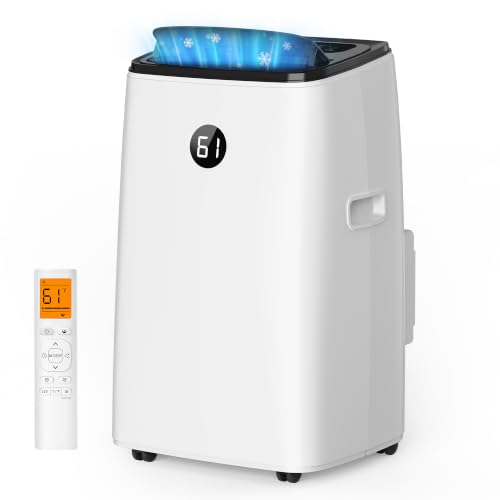
AGTANA 14000 BTU Portable Air Conditioner
Overview
This is a floor-standing, corded 115 V portable air conditioner sold for spot cooling, fan circulation and dehumidification. Public sales records for this product describe a 54-pound unit with a remote, window kit, 1,250 W input, and a stated window-opening range of 20.5 to 57.3 inches. The 14,000 Btu headline is an ASHRAE-style figure. A third-party sales record also reports 10,000 Btu SACC, the more useful portable-AC cooling measure, but I could not confirm this model in the DOE certification search results. The stated 700-square-foot coverage and 48 dB noise figure therefore remain manufacturer claims, rather than independently verified performance figures. Publicly available product data identifies R-32 refrigerant, but no rating plate, charge amount, manual, or service documentation was located.
What works
- Public product records consistently describe cooling, fan, and dehumidifier modes in one portable unit.
- A 10,000 Btu SACC figure is reported by an independent sales listing, which is more informative than relying only on the 14,000 Btu headline.
- The listed window-kit range, 20.5 to 57.3 inches, gives a concrete starting point for checking fit before installation.
- R-32 is identified in third-party product data. EPA lists HFC-32 as a lower-GWP refrigerant acceptable with use conditions for self-contained room air conditioning.
What does not
- No exact-model DOE certification result was located, so the reported SACC, CEER, and stated 700-square-foot coverage could not be independently confirmed.
- No exact-model UL, ETL, or CSA listing was found in the searchable certification records reviewed. This is missing evidence, not evidence of an electrical defect.
- The 48 dB figure does not identify fan speed, measurement distance, or a third-party test method.
- The available product descriptions indicate a single exhaust hose. Single-hose portable ACs can draw outdoor air into a room through leaks, especially during wildfire smoke.
- No exact manual, U.S. support page, parts source, registration path, or verified warranty document was located.
Who is it for
This product suits a renter or homeowner who needs movable cooling for one room, has a compatible sliding or sash window, and can verify the unit's label and included parts on arrival. It is most suitable for a reasonably enclosed space where the manufacturer-stated 700-square-foot maximum is treated as an upper limit, not a guaranteed outcome. It also fits a user who wants fan and dehumidifier functions in the same appliance and is prepared to inspect the window seal, drainage provisions, and electrical labeling before regular use.
Who is it not for
It is not well suited to someone who needs independently documented safety certification, verified efficiency data, or a clear manufacturer service and parts pathway before purchase. Avoid relying on it as the sole cooling plan for a large, sunny, open-plan, poorly insulated, or high-heat-load room, because the 700-square-foot claim is not independently confirmed. It is also a poor fit for homes with active wildfire smoke, or rooms near naturally drafted gas appliances, unless the hose arrangement, window seal, ventilation, and carbon-monoxide safeguards are professionally assessed.
Integrity
The principal indoor-air concern is the likely single-hose layout. EPA advises using single-hose portable air conditioners sparingly during smoky conditions because exhausting room air can pull smoke in through other gaps. A tight window-panel seal matters for cooling performance and smoke control. The product is also described as self-evaporating, but no manual was found to confirm when drainage is needed, how overflow is prevented, or how the internal water path should be cleaned. Promptly address any leak or standing water, since EPA identifies moisture control and drying within 24 to 48 hours as central to mold prevention. Third-party product records identify R-32 refrigerant. EPA lists HFC-32 with a global-warming potential of 675 and as acceptable with use conditions for self-contained room air conditioning, which is a lower-impact choice than older high-GWP refrigerants. However, the refrigerant charge, safety labels, recovery instructions, exact electrical certification, and service information were not independently documented for this product. No exact-product CPSC recall or warning was located in the searches reviewed.

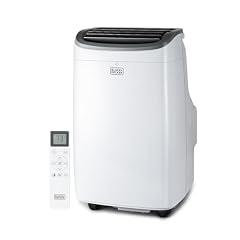
BLACK+DECKER 10,000 BTU Portable Air Conditioner
Overview
This is a floor-standing, single-hose portable air conditioner with cooling, fan, and dehumidifying modes. The manufacturer lists a remote, casters, a washable filter, an exhaust hose, window hardware, and a drain hose. Current manufacturer support lists the unit at 47.3 pounds and 15.3 by 14 by 24.8 inches. Its capacity needs careful reading. The prominent 10,000 BTU figure is an ASHRAE rating, while the manufacturer’s current product page identifies 5,500 BTU. The DOE certification record cited in independent research lists a 6,300 BTU seasonally adjusted cooling capacity and 6.6 CEER, with a single-duct, fixed-speed configuration. Those lower regulated figures are more relevant to installed performance than the headline BTU number. The 450 square foot coverage claim is therefore optimistic for a hot, sunny, open, or leaky room.
What works
- DOE certification data identifies a regulated cooling capacity and CEER, rather than relying only on the large headline BTU number.
- The manual describes auto-evaporation, a full-tank stop function, drainage instructions, and weekly washable-filter cleaning.
- The included exhaust hose, window panel, adapters, and drain hose provide the core parts needed for a vented installation.
- Manufacturer support, warranty activation, and product documentation are available, with a stated one-year parts and labor warranty.
What does not
- It is a single-hose design. Exhausting indoor air creates negative pressure that can pull unconditioned outdoor air into gaps, which weakens cooling and is a concern during wildfire smoke.
- The 450 square foot claim is not well aligned with the lower seasonally adjusted capacity. Room layout, sun exposure, insulation, and sealing will matter substantially.
- The published 54 dB sound figure does not identify fan speed, measurement distance, or an independent test method, so bedroom noise remains uncertain.
- Product documentation conflicts on refrigerant and cooling figures. Current support says R-32, while another manufacturer page still says R-410A, making the exact revision important.
Who is it for
It suits someone who needs movable, compressor-based cooling in a small enclosed bedroom, office, or rental room where a window unit cannot be installed. The room should have a compatible window, a direct grounded wall outlet, and enough floor space for a 47.3 pound appliance and its exhaust path. It is most appropriate where the window panel can be sealed carefully and the user can clean the filter weekly, inspect the hose, and drain the unit if it signals a full tank.
Who is it not for
It is not well suited to a large, open 450 square foot living area, a top-floor room with strong sun, or a poorly sealed space where the lower regulated capacity may be insufficient. Avoid relying on it in a room with naturally drafted gas appliances, a fireplace, or other combustion equipment unless the home has been evaluated for depressurization and carbon monoxide safety. During wildfire smoke, EPA advises using single-hose portable air conditioners sparingly because they can draw smoky outdoor air indoors. Light sleepers should also treat the unqualified noise claim cautiously.
Integrity
The important health limitation is the single exhaust hose. EPA guidance explains that exhausting indoor air can depressurize a home and, in a smoky event, draw outdoor smoke through leaks. Depressurization can also contribute to combustion-gas backdrafting where naturally drafted fuel-burning appliances are present. A tight window-panel seal and working carbon monoxide alarms matter in relevant homes. The manual offers useful moisture controls. It states that the unit auto-evaporates condensate in normal cooling use, stops when its tank is full, and can be drained. It also calls for weekly filter cleaning and end-of-season draining, which helps limit stagnant water and dust buildup. Refrigerant disclosure is unresolved across manufacturer materials. Current support says R-32, a lower global-warming-potential refrigerant than R-410A, while another current manufacturer page still names R-410A. The exact product rating plate should be checked before service or disposal.

GarveeTech 10000 BTU Portable Air Conditioner
Overview
This is a single-hose, wheeled portable air conditioner for a windowed room. It measures about 15.75 by 13.19 by 34.65 inches, weighs 53.5 pounds, and includes an exhaust hose, window kit, remote, cooling, fan, dehumidifying, sleep, and timer functions. The supplied product documentation states 10,000 BTU on the older ASHRAE basis and coverage up to 450 square feet. The more useful regulated-style capacity figure is 6,000 BTU SACC, which is independently listed for the same NPLD3-06C/X1E configuration by a major retailer. That supports use in a modest, reasonably sealed room, not automatic performance across every 450-square-foot space. An Intertek Authorization to Mark for the model designation family lists this exact designation rule under the U.S. and Canadian household air-conditioner safety standard. The public evidence does not provide a product-specific DOE certification record, CEER value, or sound test report.
What works
- The same model configuration is independently listed at 6,000 BTU SACC, a more realistic cooling metric than the prominently stated 10,000 BTU ASHRAE figure.
- The model designation is within an Intertek ETL-certified portable-air-conditioner family evaluated to UL 60335-2-40 and the corresponding Canadian standard.
- The manual documents a water-full indicator, manual drainage, and operating guidance, which gives users a defined response when condensate accumulates.
- The included hose and adjustable window kit provide the basic equipment needed to exhaust heat outdoors, without permanent installation.
What does not
- The 450-square-foot claim is not paired with a product-specific DOE record or a clear room-condition basis, so actual coverage can be substantially lower in sunny, leaky, humid, or high-heat-load rooms.
- This is a single-hose design. It exhausts indoor air and can draw replacement air through gaps, which can worsen smoke infiltration and can be unsuitable near naturally drafted combustion appliances.
- No independently verifiable CEER, annual energy-use label, or product-specific sound test was found. Sleep-mode noise claims therefore remain unproven.
- The product documentation requires drainage when the water-full indicator appears. Self-evaporation does not eliminate the need to monitor moisture in humid use.
- A one-year manufacturer warranty is stated, but clear public information on U.S. service contacts, parts, registration, and model-specific recall handling is limited.
Who is it for
It suits someone cooling one modest room with a compatible sliding or sash window, especially a renter or home-office user who needs a movable unit rather than a permanently installed system. It is most appropriate where the room is reasonably well sealed, receives moderate sun, and is clearly smaller than the headline maximum. The buyer should be able to route and seal the exhaust hose, keep clearance around the unit, clean the filter, and drain condensate when the water-full indicator calls for it.
Who is it not for
It is not well suited to large open-plan areas, rooms near the claimed 450-square-foot limit with strong sun or major heat sources, or spaces where quiet sleep is the priority because no independent sound result was located. Avoid relying on it in a wildfire-smoke clean room, since a single-hose portable air conditioner can draw smoky outdoor air through building leaks. Households with naturally drafted gas water heaters, furnaces, fireplaces, or other combustion appliances nearby should address depressurization and use working carbon-monoxide alarms before operating an exhaust appliance.
Integrity
The strongest safety evidence is not a seller badge. The exact model designation falls within an Intertek ETL-certified portable-air-conditioner family assessed to the current U.S. and Canadian appliance safety standard. No product-specific CPSC recall or safety warning was identified in the searched public records. This supports electrical safety traceability, though a buyer should still confirm the ETL mark and control number on the delivered product and use a properly grounded wall outlet. The product is a single-hose portable AC, so its exhaust can create negative pressure indoors. EPA specifically advises using single-hose portable air conditioners sparingly during smoky conditions because they can pull smoke in through leaks. Condensate needs active attention in humid operation, with draining when indicated and cleaning before storage. Product listings for this model configuration identify R-32 refrigerant, which has lower climate impact than older R-410A, but the refrigerant charge and end-of-life recovery instructions were not independently documented.