
7 Best Nuwave Air Purifier
 Lauren Wilson
Please note that we participate in affiliate marketing programs. When you purchase through links on our site, we may earn a commission. As an Amazon Associate we earn from qualifying purchases. This comes at no additional cost to you and helps support the resources required to provide valuable content.Advertising Disclosure
Top-rated Nuwave Air Purifier Comparison
1

2
4
5
6
Choosing a Nuwave air purifier
A portable air purifier pulls room air through one or more filter stages and returns cleaner air to the room. Its useful performance depends less on the number of stages or the claimed particle size than on how much cleaned air it can deliver, how consistently it can operate, and whether its emissions and electrical safety have been independently checked.
For smoke, dust, pollen, and other fine particles, look first for a model-specific smoke CADR clean air delivery rate reported through AHAM Verifide, ENERGY STAR, or testing using ANSI/AHAM AC-1-2020. CADR is more useful than a bare claim such as “99.99% capture,” because it combines filtration with airflow. A filter may capture a high percentage of particles in a test while the complete product moves too little air to clean a room quickly. Among the supplied products, independently reported smoke CADR ranges from 183 to 443 cfm, showing why model-specific results matter.
Room-size claims need similar care. A large square-foot figure may describe only one air change per hour, which can be too slow during wildfire smoke, heavy allergies, or other high-particle events. More useful ratings state the assumed air-change rate and account for ceiling height. AHAM and ENERGY STAR sizing data provide a more practical comparison than an unexplained maximum-room number. A buyer should match the verified room rating to the actual room, rather than treating a whole-home or one-hour claim as a rapid-cleaning guarantee.
Ozone and byproducts are a separate safety question. Electronic cleaners, ionizers, plasma systems, and electrostatic stages should be checked against the California Air Resources Board certification list and its ozone limit. ENERGY STAR records and UL 867 or UL 2998 documentation can add useful evidence, especially when an electronic feature is enabled. A low-ozone result does not prove strong particle, gas, germ, or odor removal, so these claims should be evaluated separately.
Carbon or other odor media should not be treated as proof of gas cleaning by itself. Meaningful VOC, formaldehyde, smoke-gas, or odor claims require disclosed sorbent quantity and pollutant-specific capacity or breakthrough testing. The supplied reviews repeatedly found that carbon layers were present but that mass, test concentration, airflow, duration, or breakthrough endpoints were not publicly documented.
Maintenance determines whether performance lasts. Check the manual for cleaning intervals, filter indicators, replacement part numbers, service life, and whether washing is actually supported. Reusable media can reduce routine waste, but electrically charged or contaminated filters may require careful handling and complete drying; reuse without post-maintenance performance testing is not proof that capture remains unchanged. Also check a current UL, ETL, or CSA listing for electrical and fire safety, and review CPSC and SaferProducts.gov records for recalls or incidents.
Finally, treat health, germ, virus, mold, allergy, and wellness language cautiously. A room purifier can reduce airborne particles, but the supplied reviews do not establish diagnosis, treatment, prevention, whole-room sterilization, or remediation of mold, combustion, or chemical sources. Across the reviewed products, recurring limitations include unproven gas-removal capacity, recurring disposable-filter waste, uncertainty about useful-speed noise, and the need to size rooms conservatively. Several products also require handling collected contaminants during washing. Severe smoke exposure, medical needs, and persistent chemical or mold problems require measures beyond a portable purifier.
Integrity
These topics separate measurable room-air cleaning from broad marketing language. The scores below reflect the supplied reviews and compare the products on evidence, safety, upkeep, and resource use—not price or customer popularity.
HHealth & Safety
Health-relevant particle cleaning
This measures how much fine-particle cleaning a unit can deliver for smoke, allergens, and dust in a correctly sized room. A high score was associated with model-specific CADR evidence: supplied products scored 86–96, with verified smoke CADR from 183 to 443 cfm. A low score would leave the buyer relying mainly on filter-percentage or square-foot claims.
No harmful ozone or chemical byproducts
This measures intentional ozone generation and credible low-emission testing, including electronic features when enabled. The supplied scores were generally high, from 86 to 96, because several products had CARB or ENERGY STAR ozone evidence. A lower score would reflect unverified ionizer or plasma emissions, or safety evidence limited to brand statements rather than CARB, UL, ETL, or comparable records.
Gas and odor removal that is proven
This measures whether VOC, formaldehyde, smoke-gas, and odor claims have meaningful sorbent quantity and standardized capacity or breakthrough testing. Scores ranged only from 48 to 74. The higher-scoring products still had important evidence gaps, while the lowest-scoring products had carbon claims without persuasive pollutant-specific capacity data. A carbon layer alone is not proof of durable gas removal.
Filtration that stays effective with normal upkeep
This measures sealing, filter service life, replacement availability, and whether washing preserves particle capture. Scores ranged from 71 to 80. Higher-scoring products provided clearer maintenance instructions and replacement information; lower scores reflected uncertainty about post-wash performance, filter durability, or the practical limits of “never replace” designs. Reusable media still require careful cleaning and drying.
Electrical and fire safety
This measures traceable third-party electrical certification and the absence of unresolved recall, overheating, shock, or fire concerns. Scores ranged from 70 to 86. Higher-scoring products had stronger CARB, ENERGY STAR, or other documented safety support, while lower scores often reflected a missing exact-model UL, ETL, or CSA record. Missing public traceability is uncertainty, not proof of a defect.
Quiet enough to run when cleaning is needed
This measures sound at a fan setting that provides useful CADR, not merely the quietest low-output mode. Scores ranged from 72 to 85. The better-supported products included useful low-noise particle-cleaning evidence or favorable independent testing; lower scores reflected manufacturer-only dB ranges or high maximum-speed noise. Buyers should not assume a sleep-mode figure represents smoke-cleaning performance.
EEvidence
Room-size claims that match real cleaning speed
This measures whether square-foot claims state an air-change assumption and match measured CADR. Scores ranged from 45 to 94. Higher-scoring products gave actionable AHAM or ENERGY STAR room ratings and disclosed faster versus one-air-change-per-hour sizing. Lower scores reflected large headline areas that were not reconciled with independently listed room sizes.
Honest health and germ claims
This measures whether allergy, asthma, virus, mold, antimicrobial, and wellness language stays within the evidence for a room purifier. Scores ranged from 52 to 79. Higher scores generally kept the emphasis on measured particle reduction; lower scores reflected broad health, germ, or “healthier breathing” claims not established by CADR or public model-specific testing.
Claims verified by accountable third parties
This measures searchable, current, model-specific verification rather than brand statements or unexplained badges. Scores ranged from 86 to 96. Higher-scoring products combined programs such as AHAM Verifide, ENERGY STAR, CARB, or documented laboratory testing. Lower scores would leave core performance, ozone, or safety claims dependent on manufacturer materials or family-level evidence.
EEcology
Clean air with less electricity
This measures clean-air output per watt and standby burden during continuous use. Scores ranged from 55 to 97. Higher-scoring products had ENERGY STAR data showing strong CADR-to-power performance, including one product with a 10.2 cfm-per-watt result and Most Efficient status. A lower score can mean substantial annual electricity use even when particle CADR is strong.
Lower filter waste without sacrificing performance
This measures replacement frequency, filter availability, reuse performance, and end-of-life options. Scores ranged from 71 to 78. Higher scores reflected washable prefilters or reusable media plus clearer maintenance systems, but no supplied product had public post-wash testing or a dedicated filter-recycling route. Disposable main filters remain a recurring material burden.
Full reviews

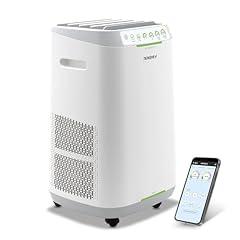
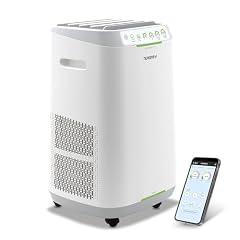
Nuwave Forever Smart Air Purifier
Overview
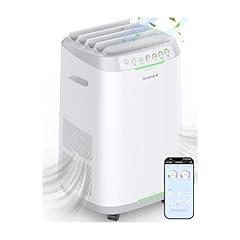
This is a 21.6-pound, corded floor or tabletop air purifier with Wi-Fi controls, six fan speeds, sensors, and a 60-watt rated input. Its filter assembly uses two stainless-steel prefilters, two Bio-Guard filters, two ozone-emission-removal filters, and one Bio-Guard 360 filter. The prefilters and Bio-Guard media are cleaned rather than routinely discarded, while the ozone filters must remain dry. Its core particle performance is independently verifiable. ENERGY STAR includes this product in a certified model group reporting 267 cfm smoke CADR, 232 cfm dust CADR, and 259 cfm pollen CADR. ENERGY STAR sizes that performance at 414 square feet, whereas Nuwave's 2,002-square-foot statement is explicitly based on one hour, which is a much slower air-change assumption. CARB also lists this exact product as certified.
What works
- ENERGY STAR verification provides model-group CADRs of 267 cfm for smoke, 232 cfm for dust, and 259 cfm for pollen.
- ENERGY STAR reports low measured ozone emissions of 2.3 ppb, and CARB lists this exact product as certified for sale in California.
- The 60-watt product is ENERGY STAR certified, with reported smoke clean-air delivery of 4.8 cfm per watt and partial-on power of 0.47 watt.
- The manual gives concrete cleaning instructions and intervals for the washable prefilters and Bio-Guard filters.
What does not
- The 2,002-square-foot claim represents one hour of cleaning. ENERGY STAR's 414-square-foot room size is the more useful guide for faster routine particle control.
- No public, model-specific post-wash filtration test was located, so particle capture after repeated cleaning and drying remains unproven.
- Odor, VOC, and formaldehyde claims lack public sorbent mass, gas-capacity, or breakthrough data, so meaningful gas-removal endurance is unproven.
- The manufacturer claims ETL certification, but a public exact-model listing in an NRTL directory was not located during this review.
- Maintenance is hands-on. The manual advises gloves and a mask because trapped contaminants can be released during filter cleaning, and it requires complete drying before reuse.
Who is it for
This product fits a buyer who wants verified high airflow for smoke, dust, pollen, or pet-particle control in a main room around 414 square feet, assuming ordinary ceiling height and regular operation. It also suits someone willing to vacuum, wash, and fully dry filter components on schedule rather than purchase routine disposable filters. The low verified ozone result is relevant for households that want an electronically classified purifier without a high-emission ozone generator. It is a substantial 21.6-pound unit, so it is better placed where it can remain in service.
Who is it not for
It is not well suited to someone who needs simple, no-contact maintenance, has difficulty handling dusty filters, or cannot allow up to a day for washed filters to dry completely. People relying on a purifier for sustained odor, chemical, VOC, or formaldehyde control should seek product-specific gas-capacity evidence, which is not publicly supplied here. It is also not the right sizing choice for treating a 2,002-square-foot area at a fast, health-relevant air-change rate. For bedrooms, the stated 21.41 dB figure is manufacturer-stated and not tied to a verified useful cleaning setting.
Integrity
The strongest health evidence is third-party program verification rather than the product's smaller-particle marketing. ENERGY STAR lists this model within a certified group with 267 cfm smoke CADR and 2.3 ppb ozone emissions. CARB separately lists the exact product as certified, which supports compliance with California's air-cleaner ozone requirements. The manufacturer's viral, bacterial, and chemical-removal claims refer to third-party laboratory work, but the public materials do not provide enough protocol detail to establish real-room health outcomes or gas-removal capacity. The filter design can reduce routine disposal because the stainless-steel prefilters and Bio-Guard media are washable. That benefit requires careful upkeep. The manual calls for cleaning prefilters at least every two months and Bio-Guard filters around every three months, with complete drying required. It also warns that contaminated filters can release trapped material if shaken or handled carelessly. The ozone-removal filters cannot be washed, and the manual says water damage requires replacement.

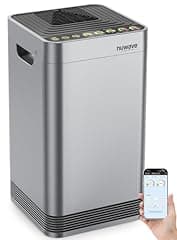
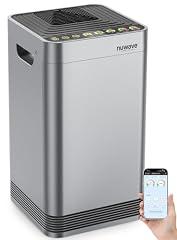
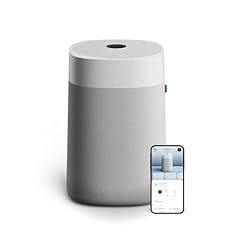
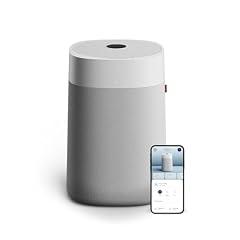
Nuwave Oxypure Smart Whole House Air Purifier
Overview
This is a 26-pound, floor-standing smart air cleaner with four installed filter stages, a stainless-steel prefilter, washable Bio-Guard electrostatic filter, ozone-removal filter, and disposable HEPA and activated-carbon combination filter. It has six fan speeds, automatic air and odor sensing, sleep mode, and Wi-Fi app control. The manual directs users to clean the washable stages and replace the HEPA-carbon stage every 6 months to 1 year. Particle-cleaning evidence is stronger for the product family than for this exact configuration. A commercial distributor lists a 345 CADR at the highest speed, while public ENERGY STAR data for a closely related OxyPure base version reports 351 dust CADR and 356 smoke CADR. The claimed 2,934-square-foot coverage is not a practical high-air-change sizing figure. The product manual instead says up to 1,200 square feet, so room sizing needs caution.
What works
- The filter design includes washable prefilter and Bio-Guard stages, which can reduce recurring disposable-filter use if maintained as instructed.
- The manual provides specific maintenance steps, including cleaning intervals and a 6-month to 1-year replacement interval for the HEPA-carbon filter.
- Genuine replacement HEPA-carbon, ozone-removal, Bio-Guard, and stainless prefilter parts remain listed for the product family.
- Public ENERGY STAR records for a closely related OxyPure base version provide meaningful smoke and dust CADR data, rather than relying only on a particle-capture percentage claim.
What does not
- The exact product configuration could not be matched to a current searchable CARB, ENERGY STAR, UL, or ETL record, so its catalog certification claims are not independently confirmed here.
- The room-size messaging is inconsistent. The manual states up to 1,200 square feet, while the listing states 2,934 square feet, with no equally prominent cleaning-rate context.
- It uses an 8,000-volt charged Bio-Guard stage. The manual states a 0.050 ppm ozone limit and includes an ozone-removal filter, but no model-specific public low-ozone test result was located.
- The carbon layer is not quantified, and no standardized VOC, formaldehyde, or odor-capacity testing was found. Gas and odor claims therefore remain unproven.
- The 31.4 dBA figure appears to describe sleep mode. No independent noise measurement at a particle-cleaning setting was located.
Who is it for
This product fits a buyer who wants a substantial floor unit for a large, closed room and is prepared to follow a maintenance schedule. It is particularly suited to households that value washable prefiltration for pet hair, larger dust, and similar debris, while retaining a replaceable HEPA-carbon stage for finer particles. It also suits users who want automatic sensing and app control, but who will size the unit conservatively, closer to the manual's 1,200-square-foot figure than the larger marketing claim.
Who is it not for
It is not well suited to people with asthma, significant smoke exposure, or high sensitivity to ozone who require a publicly verifiable, exact-model low-emission certification and independently published CADR. It is also unsuitable for buyers needing reliable VOC, formaldehyde, or persistent-odor removal, because carbon quantity and breakthrough testing were not found. Avoid treating it as a whole-house system, a medical device, or room sterilizer. People unable to clean filters, dry them completely, and replace the disposable stage on schedule should choose a simpler maintenance design.
Integrity
The notable health feature is a layered system that combines mechanical filtration, a charged washable Bio-Guard stage, an ozone-removal filter, and a disposable HEPA-carbon filter. The manual says the charged stage uses 8,000 volts and that the product meets a 24-hour ozone limit of 0.050 ppm. Those are manufacturer statements, not a substitute for a searchable exact-model third-party ozone record. The current CARB register lists later OxyPure models, but an exact match for this product was not located. On waste, the washable stainless prefilter and Bio-Guard filter are claimed to be reusable for up to 20 years, and genuine replacement parts remain available. That can reduce waste compared with replacing every filtration layer. The HEPA-carbon filter is still disposable every 6 months to 1 year, and no take-back or recycling program was found. No relevant U.S. recall or regulator exposure warning for this air cleaner was located in the searches performed.

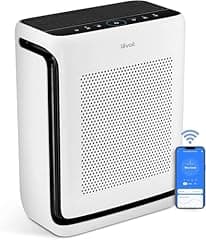
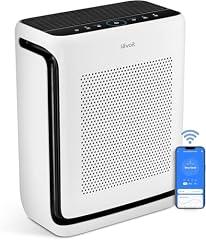
LEVOIT Vital 200S-P Smart Air Purifier
Overview
This is a 13.2-pound, app-connected room air cleaner with a washable pre-filter, a disposable particle and activated-carbon filter, an infrared particle sensor, and automatic fan control. It is intended for pet hair, airborne dust, pollen, smoke particles, and other indoor particles. The main filter is replaced rather than washed. Its defining evidence is unusually strong for particle cleaning. ENERGY STAR lists the exact U.S. model with 242 CFM smoke CADR, 263 CFM dust CADR, and 240 CFM pollen CADR. The manufacturer separately states 388 square feet at 4.8 air changes per hour and 1,862 square feet at one air change per hour. Those are different use cases, so the smaller figure is the more relevant continuous-cleaning size. ENERGY STAR also reports zero ozone emissions. Claims for VOCs, formaldehyde, odors, and fumes rely on an activated-carbon layer, but no carbon mass or pollutant-capacity test was located.
What works
- Exact U.S. model is listed by ENERGY STAR with independently reported particle-cleaning CADRs, including 242 CFM for smoke.
- ENERGY STAR product data reports zero ozone emissions, and the unit uses fan-and-filter technology rather than an intentional ionizing feature.
- The manufacturer gives both a realistic 388-square-foot, 4.8-ACH figure and a 1-ACH maximum-area figure, which makes room sizing clearer.
- Maintenance is concrete: clean the washable pre-filter every 2 to 4 weeks and replace the main carbon and particle filter about every 12 months.
- ENERGY STAR reports 5.3 smoke CADR per watt and 0.52-watt partial-on power for this model.
What does not
- The activated-carbon stage has no disclosed sorbent mass or independent breakthrough or capacity testing for VOCs, formaldehyde, smoke gases, or odors.
- Quiet-mode figures are manufacturer-stated, and no independent sound test tying decibels to a meaningful cleaning setting was located.
- The manufacturer carries a California Proposition 65 warning that the product can expose users to lead. The warning does not identify the exposure route or dose.
- A retailer reports an ETL safety listing, but a model-specific NRTL record was not located in a publicly searchable issuer database during this review.
- The disposable main filter is a combined particle and carbon component. No take-back or recycling route, or post-wash performance test for the reusable pre-filter, was located.
Who is it for
It suits a household that wants independently documented particle cleaning for a medium bedroom, living room, or pet area, especially where airborne dander, pollen, dust, or smoke particles are the main concern. Use the manufacturer’s 388-square-foot, 4.8-ACH figure as the practical reference for sustained cleaning in a typical room. It also fits people willing to keep up with pre-filter cleaning every 2 to 4 weeks and replace the main filter roughly annually. App scheduling and filter reminders can help households that want automatic operation without relying on the app for basic controls.
Who is it not for
It is not designed as a primary control for high chemical, solvent, formaldehyde, or persistent odor exposure. The carbon layer is present, but its quantity and gas-removal capacity are not publicly documented, and the particle sensor cannot detect gases. People responding to wildfire smoke should not size it around the 1-ACH maximum-area claim, particularly with high ceilings or leaky rooms. It is also unsuitable for locations with combustible vapors, industrial oil fumes, heavy moisture, or oxygen administration, which the manual specifically warns against. California buyers concerned about lead exposure should weigh the Proposition 65 warning.
Integrity
For particles, this product has meaningful third-party accountability. ENERGY STAR lists the exact U.S. model as a fan-and-filter air cleaner, with smoke, dust, and pollen CADRs and zero ozone emissions. Those data support using it for airborne particles, not treating it as a gas monitor or a medical device. The manufacturer’s own guidance also tells users to seek professional diagnosis and treatment rather than treating the purifier as a health treatment. The filter system includes a washable pre-filter that captures lint and pet fur, reducing replacement of that first stage. The main particle and carbon filter is disposable and is expected to last about 12 months, or less in polluted conditions. The filter seller identifies the carbon as FSC-certified wood carbon, but no recycling or take-back program was found. Levoit also posts a California Proposition 65 warning for lead exposure, without public dose or exposure-route detail.
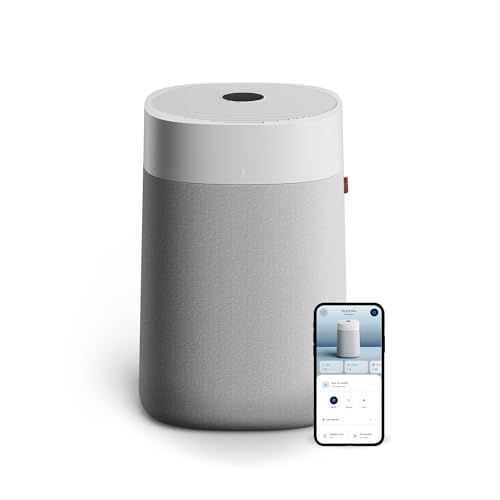
Blueair Blue Pure 211i Max Air Purifier
Overview
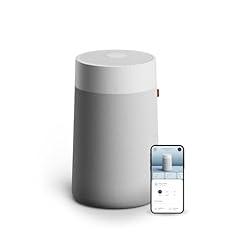
This is a 16.2-pound floor air purifier for large rooms, with Wi-Fi and app controls, an automatic particle-sensing mode, four manual speeds, a night mode, and a washable fabric pre-filter over a replaceable particle-and-carbon main filter. Blueair states 23 to 53 dB operation, up to 46 W power use, and a main-filter life of up to nine months. Its defining strength is independently listed particle-cleaning performance. The AHAM Verifide directory lists this product at CADR 410 for dust, smoke, and pollen, with a 635-square-foot room rating. It is also listed as Energy Star certified and has California CARB certification for ozone and electrical-safety requirements. Blueair's current product page instead states higher CADRs and a 674-square-foot recommendation, so the independently listed 635-square-foot figure is the more cautious sizing basis.
What works
- AHAM independently lists CADR 410 for smoke, dust, and pollen, indicating strong fine-particle cleaning capacity for a large room.
- California CARB certification confirms testing against the state's ozone-emission limit and required electrical-safety criteria.
- Energy Star records list this exact product as certified for the United States and Canada.
- The washable fabric pre-filter can reduce visible dust buildup, while genuine main filters remain available in several versions.
- The manual provides clear filter-reset and pre-filter cleaning instructions, and the product includes auto and night modes.
What does not
- Blueair's current 674-square-foot and higher CADR claims do not match the published AHAM directory entry of 635 square feet and CADR 410. Size the room from the independently listed figure.
- The standard particle-and-carbon filter is described for light household odors. Blueair does not publish sorbent mass or a standardized gas-capacity and breakthrough report for the standard filter.
- The 23 dB figure is the low setting. Blueair states up to 53 dB on high, the setting associated with its strongest cleaning output.
- The main filter is disposable and is expected to be replaced within up to nine months. No take-back program or post-use filtration testing was identified.
- Blueair claims capture of viruses, bacteria, chemicals, and allergens, but those capture claims should not be interpreted as proof of infection prevention, treatment, or room sterilization.
Who is it for
This product suits a household that needs substantial verified particle reduction in one large, normally sized room, such as a living room, open main floor area, or large bedroom. It is especially relevant for pollen, pet dander, household dust, cooking particles, and smoke particles when it can be operated at an appropriately high speed. It also fits users who value automatic fan adjustment, app-based controls, and a washable outer pre-filter, and who accept an ongoing main-filter replacement cost about every six to nine months.
Who is it not for
It is not for someone expecting one unit to rapidly clean an entire 3,235-square-foot home, a space with unusually high ceilings, or several separated rooms. Its independently listed room-size basis is 635 square feet, not the larger one-hour marketing figure. It is also not a strong evidence-based choice where persistent VOCs, formaldehyde, heavy odors, or wildfire smoke gases are the main concern, because standard-filter carbon quantity and gas breakthrough performance are not published. People needing a medical device or infection-control intervention should not treat it as one.
Integrity
The product has unusually strong public verification for its core safety and particle-cleaning functions. AHAM lists CADR 410 for smoke, dust, and pollen, and Energy Star lists the exact product as certified for the United States and Canada. California CARB certification is particularly relevant because it requires air-cleaner testing against the state's 0.050 ppm ozone limit and electrical-safety requirements. No matching current U.S. recall for this product was identified in the CPSC recall search. The system combines a washable fabric pre-filter with a replaceable particle-and-carbon main filter. Washing the fabric layer can extend its usefulness, but the main filter remains a recurring waste stream, with Blueair stating a life of up to nine months. Blueair sells replacement filters and directs users to recycle the appliance as electronic waste, but no product-specific filter recycling or take-back program was identified. The carbon filter is intended for light household odors, not documented high-capacity gas control.

Nuwave OxyPure ZERO Air Purifier with Bio Guard Filter
Overview
This is a 60-watt, wheeled room air cleaner with six fan speeds, air-quality sensors, app control, adjustable outlet vents, and an electrostatic filtration system. Its seven filter elements include washable stainless-steel prefilters, washable Bio-Guard filters, a washable Bio-Guard 360 filter, and two ozone-emission-removal filters. The manual calls for recurring cleaning and complete drying before reinstallation. Its core particle-cleaning performance is independently documented. Energy Star lists model 47251 with smoke, dust, and pollen CADR values of 267, 232, and 259 cfm, respectively. That same record sizes it at 414 square feet, while the manufacturer’s 2,002-square-foot claim is explicitly based on only one air change per hour. Energy Star also records 2.3 ppb ozone emissions. The product is not a HEPA purifier, despite its frequent placement in HEPA shopping categories.
What works
- Energy Star independently verifies a 267 cfm smoke CADR, which is meaningful particle cleaning for a properly sized room.
- Energy Star records low ozone emissions of 2.3 ppb for this exact model.
- Energy Star lists fan-and-filter technology, United States market certification, and an efficient 4.8 smoke-CADR-per-watt result.
- Washable prefilters and electrostatic Bio-Guard filters can reduce routine disposable-filter use, if they are cleaned and fully dried as instructed.
- Replacement parts, including the Bio-Guard 360 filter and power base, remain listed by the manufacturer for this model family.
What does not
- The 2,002-square-foot claim corresponds to one air change per hour. Energy Star’s 414-square-foot room size is the more useful figure for routine particle control.
- The manual and marketing use strong germ-killing language for the electrostatic filters, but this review found no human-health evidence showing that the product prevents illness or sterilizes a lived-in room.
- The exact model was found in Energy Star records, but it was not listed under model 47251 in the current CARB certified-device list, despite product materials claiming CARB certification.
- Gas and formaldehyde claims rely on a manufacturer-posted Intertek test summary. Sorbent quantity, long-duration capacity, and breakthrough performance are not transparently documented.
- The 21.4 dB figure is a manufacturer sleep-mode specification, not an independent sound measurement at a documented high-cleaning setting.
Who is it for
This product suits a buyer who wants independently verified particle cleaning in a medium-size bedroom, office, or living area and is willing to do hands-on filter care. The Energy Star smoke CADR of 267 cfm supports useful cleaning in a room around its listed 414-square-foot size, rather than an entire 2,002-square-foot open home. It also fits households trying to reduce recurring disposable-filter purchases, provided someone can wash the electrostatic elements carefully, keep them completely dry, and maintain the sensors.
Who is it not for
It is not suited to people who need a simple set-and-forget HEPA filter system, have limited ability to handle dusty filters, or cannot ensure filters are fully dry before reinstallation. It is also a poor fit for a 2,002-square-foot space where rapid smoke or allergen control is needed, because that advertised area is based on one air change per hour. Buyers seeking proven odor, VOC, formaldehyde, virus, or infection-risk reduction should not treat the product’s particle CADR or germ language as evidence of those outcomes.
Integrity
The strongest health evidence is model-specific Energy Star verification. It records 267 cfm smoke CADR and 2.3 ppb ozone emissions for this fan-and-filter unit, supporting particle reduction and low ozone output when operated as tested. The product uses energized electrostatic Bio-Guard elements, so cleaning and drying instructions matter. The manual warns that filters must be fully dry before reuse and gives recurring cleaning intervals for filters and sensors. Washable stainless-steel and electrostatic filter elements can reduce routine filter waste. However, zero-waste language is incomplete because the unit still contains ozone-emission-removal filters, and manufacturer materials say those filters should be replaced when the product indicates their service life has ended. Replacement components are available from the manufacturer. Current CARB records list related OxyPure Zero models, but not model 47251, so the product’s CARB certification claim could not be confirmed for this exact model. No product-specific U.S. recall or regulatory warning was identified in the checked records.

Blueair Blue Pure 311i Max Air Purifier
Overview
The Blue Pure 311i Max is a Wi-Fi connected, floor-standing room air purifier with a 360-degree intake, automatic particle-sensing mode, four fan settings, a removable particle-and-carbon main filter, and a washable fabric pre-filter. It is intended for indoor particle control rather than source control, ventilation, or treatment of illness. Its core cleaning figures are independently listed by ENERGY STAR for the United States and Canada: 283 cfm smoke CADR, 314 cfm dust CADR, 365 cfm pollen CADR, and a 439 square foot rated room size. The same record reports 2 ppb ozone emissions and an 8.4 cfm per watt integrated energy factor. Blueair states that the unit cleans larger spaces more slowly, including 2,107 square feet in one hour, and specifies 23 to 50 dB operation. The main filter has a stated life of six to nine months, depending on use and air conditions.
What works
- ENERGY STAR independently lists substantial particle-cleaning output, including 283 cfm smoke CADR and 298 cfm PM2.5 CADR.
- The registered 439 square foot room size is tied to published CADR figures, making the faster-cleaning use case clearer than the much larger one-hour claim.
- ENERGY STAR reports ozone emissions of 2 ppb, a low measured result for a unit using electrostatic as well as mechanical filtration.
- Its 8.4 cfm per watt integrated energy factor and automatic mode support lower-energy continuous operation.
- The manual provides specific filter-change instructions, a six to nine month replacement window, and washable pre-filter care guidance.
What does not
- The supplied particle-and-carbon filter has no public, model-specific sorbent mass or standardized gas-capacity and breakthrough data. Odor and VOC removal is therefore not well quantified.
- Blueair's 2,107 square foot figure is a one-hour cleaning claim, not the independently listed 439 square foot room-size rating. Large rooms will receive slower cleaning.
- The product uses electrostatic filtration. Although the verified ozone result is low, buyers who require a purely mechanical filter design should note the mechanism.
- No model-specific public UL, ETL, or CSA electrical-listing record was located in the checked certification directories.
- The main filter is disposable every six to nine months. The washable outer pre-filter reduces some waste, but no filter take-back or recycling route was identified.
Who is it for
This product suits someone who wants independently documented particle reduction in a bedroom, home office, nursery, or similarly sized enclosed room of about 439 square feet or less. It is particularly relevant during smoke events, pollen seasons, and routine dust or pet-dander control, provided the unit can be run at a useful fan speed. It also fits households that value app controls, automatic response to PM2.5 readings, and a washable fabric pre-filter, while accepting recurring main-filter purchases every six to nine months.
Who is it not for
It is not designed to solve mold growth, combustion sources, high indoor carbon dioxide, or an ongoing chemical or gas exposure. Those conditions require source removal, ventilation, and in some cases professional assessment. It is also a less certain fit for people whose main problem is persistent odors or VOCs, because the supplied carbon filter's sorbent quantity and gas breakthrough capacity are not publicly quantified. Buyers needing a purely mechanical filtration approach, public electrical-listing documentation, or a lower disposable-filter burden should consider those requirements carefully.
Integrity
The strongest health evidence is the independently listed particle performance. ENERGY STAR records smoke, dust, pollen, and PM2.5 clean-air delivery rates for this exact product, along with a 439 square foot room-size rating. It also records 2 ppb ozone emissions. This is important because Blueair's HEPASilent system combines mechanical and electrostatic particle collection, rather than relying on a mechanical filter alone. Blueair supplies a particle-and-carbon main filter and washable fabric pre-filter. The manual says to clean the pre-filter regularly and replace the main filter when indicated, usually after six to nine months. Genuine replacement filters remain available, including a standard particle-and-carbon option and optional enhanced-carbon versions. The washable pre-filter can reduce replacement of the outer layer, but the main filter remains disposable and no product-specific filter recycling or take-back program was identified. No relevant United States recall or regulatory warning was located in the checked public sources.

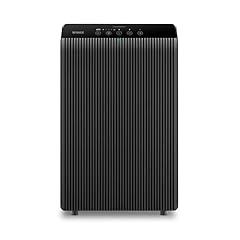
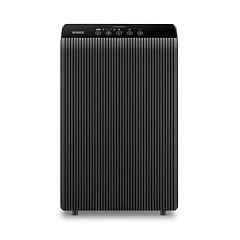
Winix 5510 Air Purifier Large Room
Overview
This is a freestanding, Wi-Fi connected room air cleaner with a washable fine-mesh prefilter, a pellet-style activated-carbon filter, a True HEPA filter, and a switchable PlasmaWave electronic stage. It has automatic fan control, sleep mode, five fan speeds, and app control. The supplied replacement filter set is intended to last about 12 months under typical conditions. Its defining performance figure is independently verified through AHAM, with smoke, dust, and pollen CADRs of 253, 252, and 247 cfm and an AHAM room size of 392 square feet at 4.8 air changes per hour. Winix also states a much larger 1,882 square foot area for one air change per hour, which is a slower-cleaning scenario. CARB lists this exact product as a certified electronic air cleaner. Winix states it is UL listed, while its published low-speed noise figure of 23.5 dBA and ozone measurement are manufacturer-provided figures.
What works
- AHAM verification provides model-specific particle-cleaning data for smoke, dust, and pollen.
- The 392 square foot AHAM room rating is tied to 4.8 air changes per hour, making the primary sizing claim usable.
- CARB certifies this electronic air cleaner, which requires compliance with California's ozone-emission limit.
- The prefilter is permanent and washable, while the HEPA and carbon filters have a clear approximate 12-month replacement interval.
- PlasmaWave can be turned off, including automatically in sleep mode.
What does not
- The carbon filter is described as using carbon pellets, but neither carbon mass nor pollutant-specific capacity or breakthrough testing is publicly provided.
- The 1,882 square foot claim reflects only one air change per hour. It should not be treated as the room size for fast particle reduction.
- PlasmaWave is an electronic air-cleaning feature. CARB certification supports low ozone emissions, but no public UL 2998 zero-ozone certification was found for this product.
- The quiet 23.5 dBA figure applies to the slowest setting. Independent sound data at the high-output settings was not found.
- The HEPA and carbon filters are disposable yearly consumables, and no product-specific filter recycling or take-back program was identified.
Who is it for
It suits a household that wants measurable particle reduction in one regularly used room of roughly 392 square feet or less with an 8-foot ceiling, such as a bedroom, living room, or home office. It is especially relevant where pollen, pet dander, dust, cooking particles, or episodic smoke are concerns. The buyer should be willing to run it at higher fan speeds when rapid cleaning is needed, replace the HEPA and carbon filters about yearly, and use the washable prefilter as routine maintenance.
Who is it not for
It is not designed to solve a building-wide air-quality problem, active mold growth, combustion leaks, or a major ongoing VOC source. People needing rapid cleaning across a larger open-plan area should not size it from the one-air-change, 1,882 square foot claim. Buyers with a strict preference for a purifier without any electronic ionization or plasma stage may prefer a mechanical-only design, even though this product is CARB certified and allows PlasmaWave to be switched off. It also is not a substitute for ventilation, source control, or medical care.
Integrity
The strongest health evidence is for particles. AHAM verifies the product's smoke, dust, and pollen CADRs, and its stated 392 square foot room size corresponds to 4.8 air changes per hour. That makes its particle-cleaning capacity more concrete than broad square-foot claims. EPA guidance supports portable HEPA filtration as a supplement to source control and clean-air ventilation, not as a complete solution for indoor pollution or respiratory illness. The product includes PlasmaWave, an electronic stage that can be disabled. CARB lists the exact product as certified, meaning it meets California's 0.050 ppm ozone-emission limit for indoor air cleaners. Its filter arrangement creates some recurring waste because the HEPA and carbon filters are replaced about every 12 months. The washable permanent prefilter reduces that burden, but no product-specific recycling route for the disposable filters was identified. No relevant U.S. CPSC recall or regulatory warning for this product was found in the reviewed sources.