
10 Best Noise Cancelling Headphones
 Daniel Kenitz
Please note that we participate in affiliate marketing programs. When you purchase through links on our site, we may earn a commission. As an Amazon Associate we earn from qualifying purchases. This comes at no additional cost to you and helps support the resources required to provide valuable content.Advertising Disclosure
Top-rated Noise Cancelling Headphone Comparison
1

2
4
+
5
6
7
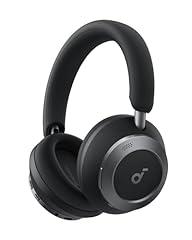
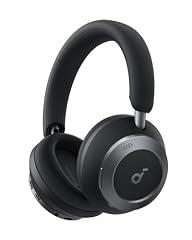
8
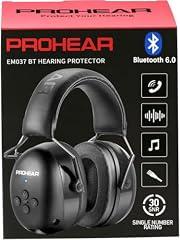
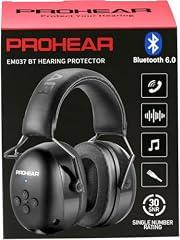
9
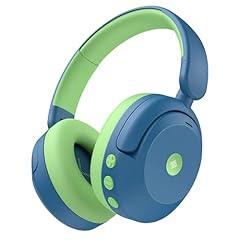
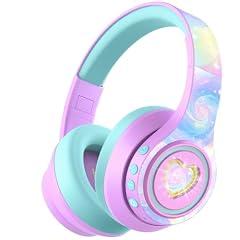
Noise-cancelling headphones: what to look for
Noise-cancelling headphones combine the earcup or earbud seal with active noise cancellation (ANC), which uses microphones and electronics to reduce outside sound. The result depends on more than the number printed on the box. Fit, passive isolation, ANC behavior, sound quality, battery performance, and the ability to hear surroundings all affect whether the product is useful in a plane, train, office, street, or home.
The strongest starting point is independently measured noise reduction. Look for testing that separates passive isolation from ANC and covers low-frequency engine or bus rumble, speech, office noise, and high-frequency sounds. A headline such as “25 dB,” “30 dB,” or “90% noise reduction” is incomplete unless the test conditions, frequency range, exact model, and measurement method are clear. The supplied reviews show why: some products performed well against travel rumble but weakly against speech, while others reduced high-frequency sound mainly through the earcup seal. A good seal can also be lost with glasses, shallow earcups, heat, movement, or an unsuitable fit.
Battery claims need the same caution. “Up to” figures may apply with ANC and transparency disabled, at a particular volume, or under manufacturer test conditions. Independent results in the supplied products range from roughly 20 hours to more than 46 hours, and some current listings conflict with older manuals or support documents. Wired playback is useful when the battery is empty, but ANC commonly stops working in wired mode. Rechargeable models should also have clear charging instructions and traceable safety information; a long runtime is not a battery-safety certification.
For wireless models, check the exact model number against the FCC Equipment Authorization System and FCC ID database, and look for a Bluetooth SIG Qualified Product Database record rather than relying only on a claimed Bluetooth version or codec. For electrical and battery safety, relevant records may include UL Product iQ, Intertek’s ETL directory, or CSA listings for applicable standards such as UL 62368-1, UL 2054, or UL 62133-2. A radio authorization supports lawful wireless operation, but does not prove ANC performance, battery safety, hearing safety, or sound quality.
Health-focused buyers should look for a configurable volume limiter, listening-dose monitoring, loudness warnings, and a usable awareness or transparency mode. Ordinary volume buttons are not the same as exposure control. Among the supplied products, only some documented a limiter or sound-dose tracking, and several had no such feature. Clear sound and low distortion also matter: poor tuning or audible ANC artifacts can encourage higher volume. Comfort, heat, clamping pressure, pad construction, and disclosed skin-contact materials affect whether a product can be worn safely and consistently for long sessions.
Finally, consider service life. Replaceable ear pads, standard cables, official parts, repair guidance, firmware support, warranty coverage, and a battery or electronics recycling route can keep a common wear failure from becoming e-waste. Recycled-content or sustainability claims should be matched to records such as EPEAT, TCO Certified, UL SPOT, or a manufacturer material declaration and take-back program.
Recurring cautions in the supplied reviews are important: no category product should be treated as hearing protection or used at excessive volume; ANC and transparency modes should not replace attention around traffic, cycling, platforms, machinery, or other hazards; many products lack a volume cap or exposure monitor; and several are not water-resistant despite broad exercise or travel marketing. Fit-related heat, pressure, seal loss with glasses, and unreliable microphones or multipoint connections also recur. Rechargeable products should not be charged when wet and should be recycled at end of life. One child-focused product had a manufacturer-stated volume limit, but its published settings conflicted, so that control still requires checking before use.
Integrity
These topics distinguish a headphone that merely advertises ANC from one with evidence about hearing exposure, comfort, safety, longevity, and environmental handling. Scores below describe the relative separation visible in the supplied reviews; they do not replace model-specific testing or safe-use instructions.
EEvidence
Proven noise reduction
This measures independently tested passive isolation and ANC attenuation across rumble, speech, and high-frequency noise. It is the central performance question for this category: a claimed decibel figure is not enough. Scores ranged from 45 to 93. Higher-scoring products had RTINGS or SoundGuys measurements showing useful travel, office, or street reduction; lower-scoring products had weak ANC or only manufacturer claims.
Independent proof, not marketing
This measures whether important safety, wireless, battery, acoustic, and environmental claims match public third-party records or reproducible tests for the exact product. Scores ranged from 68 to 90. Higher-scoring products combined model-specific FCC records with independent acoustic or battery testing; lower-scoring products had few independent tests, conflicting documents, or claims that could not be matched to the exact revision.
Verified wireless connection
This measures lawful, traceable radio authorization, Bluetooth qualification, and tested connection stability and latency. It matters because a claimed Bluetooth version does not prove reliable pairing or usable delay. Scores ranged from 68 to 92. Higher-scoring products had exact-model FCC documentation and stable independent connection testing; lower-scoring products lacked model-specific authorization or qualification evidence.
Honest, traceable claims
This measures whether ANC, battery, charging, codec, water-resistance, spatial-audio, hearing, and sustainability claims state conditions and match the exact manual and independent evidence. Scores ranged from 48 to 88. Higher-scoring products had qualified claims corroborated by testing; lower-scoring products had conflicting battery, Bluetooth, ANC, water-resistance, or driver specifications.
HHealth & Safety
Hearing-safe listening controls
This measures volume limiting, listening-dose monitoring, loudness warnings, and controls that help prevent excessive exposure. It matters because ANC can make high playback levels feel comfortable while still exposing the ears to sound. Scores ranged from 60 to 82: the higher-scoring product documented sound-dose tracking or a configurable limiter, while lower-scoring products offered only ordinary volume controls or general warnings.
Battery and charging safety
This measures protection and documentation for overheating, swelling, fire, shock, and unsafe charging in rechargeable headphones. Buyers should look for model-specific instructions, charger details, recall checks, and UL, ETL, or comparable battery and product records. Supplied scores ranged from 70 to 92; the higher end included the wired model with no rechargeable battery, while many wireless models lacked a public model-specific UL or ETL listing.
Clear, controlled sound
This measures independently tested frequency response, distortion, channel balance, and audible ANC artifacts. Controlled sound matters because muddy, harsh, imbalanced, or distorted playback can encourage higher volume. Scores ranged from 52 to 89. Higher-scoring products had low distortion and well-matched drivers or balanced reproduction; lower-scoring products had bass-heavy or inaccurate tuning and little or no model-specific laboratory evidence.
Comfort and contact-material transparency
This measures fit range, pressure, heat and sweat management, pad construction, and disclosure of materials touching the skin. It matters because heat, shallow cups, pressure, or undisclosed materials can limit safe sustained wear. Scores ranged from 70 to 81. Higher-scoring products had comfortable tested fits or clearer construction details; lower-scoring products raised concerns about heat, shallow earcups, material disclosure, or fit-dependent sealing.
Safe awareness and predictable ANC
This measures transparency or awareness modes, ease of changing them, and ANC behavior around wind, voices, and sudden artifacts. It matters when a wearer must hear announcements or environmental cues. Scores ranged from 68 to 85. Higher-scoring products had independently usable transparency modes and predictable controls; lower-scoring products lacked awareness modes or provided only unverified manufacturer claims.
EEcology
Built to last and supportable
This measures hinge, headband, pad, cable, battery, and port durability together with warranties, replacement parts, repair guidance, and firmware support. It matters because a worn pad, cable, or battery should not automatically end the product’s life. Scores ranged from 62 to 80. Higher-scoring products had replacement pads, repair guides, official parts, or meaningful warranty support; lower-scoring products had glued construction, breakage concerns, or no verified repair pathway.
Lower-impact materials and end of life
This measures recycled materials, hazardous-substance and packaging disclosures, environmental certification, and practical take-back or recycling routes for electronics and embedded batteries. It matters because most wireless headphones contain batteries that should not enter household trash. Scores ranged from 68 to 80. Higher-scoring products had recycling programs, reused or recycled-material claims, or sustainability records; lower-scoring products lacked material declarations, certification, or product-specific take-back support.
Full reviews
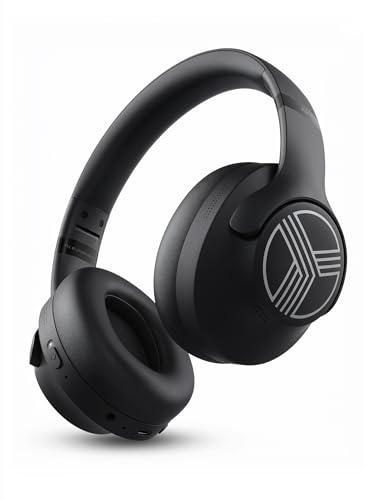
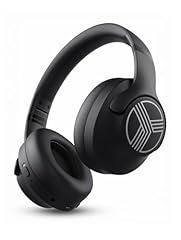
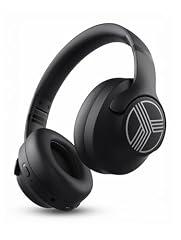
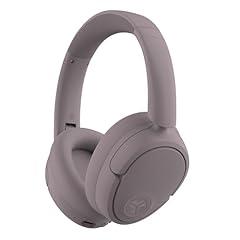
TREBLAB Z2 Bluetooth Noise Cancelling Headphones
Overview
This product is a closed, wireless over-ear headphone with 40 mm drivers, USB-C charging, physical buttons, a 3.5 mm auxiliary input, and active noise cancellation. The current manufacturer manual identifies a 243 g unit, while the product page states Bluetooth 5.3, IPX4 splash resistance, two-device use, and up to 58 hours of playback. Those are manufacturer-stated figures, not independent performance results. There is meaningful traceability for radio compliance. A 2023 filing names this product and its Z2-B variant and declares FCC Part 15 Subpart B compliance. Independent testing of an earlier Z2 sample found a fairly balanced sound profile, straightforward buttons, and about 20 hours of battery life, but weak noise cancellation, appreciable sound leakage, shallow earcups, and poor integrated microphone quality. The current product page and older official support documentation also give conflicting battery, Bluetooth, and ANC specifications.
What works
- A model-specific FCC filing supports lawful US radio compliance.
- The current manual documents multipoint connection for two devices and physical controls for volume, calls, playback, ANC modes, and gaming mode.
- An independent test of an earlier Z2 sample found generally balanced sound and easy-to-use physical controls.
- The current manual gives specific recycling routes for US users, including Call2Recycle and electronics recycling directories.
What does not
- Independent testing of an earlier Z2 sample found that ANC did little to reduce low engine rumble or general background noise. No current model-specific attenuation report was found.
- There is no documented volume limiter, listening-dose monitor, or exposure warning system for safer listening.
- The manufacturer does not provide a public UL or ETL listing for the rechargeable product or charging system that could be matched to this product.
- Official materials conflict. The current sales page states 58 hours, Bluetooth 5.3, and up to 25 dB ANC, while older official Z2-B support specifications state 35 hours, Bluetooth 5.0, and up to 20 dB ANC.
- The older independent test found shallow earcups could become uncomfortable, audio leaked at higher volume, and the built-in microphone sounded distorted.
Who is it for
This product suits an adult who wants a conventional over-ear Bluetooth headphone for casual music, light gym use, commuting, and switching between a phone and computer. Physical buttons can be useful for people who do not want touch controls, and the auxiliary port offers a wired fallback. It is also relevant for buyers who value documented US radio compliance and want basic disposal directions for an embedded-battery device. Expectations for noise cancellation and call quality should remain modest because the independent evidence is from an earlier Z2 sample and was unfavorable in both areas.
Who is it not for
It is not well suited to frequent flyers, rail commuters, or office workers who rely on strong reduction of engine rumble, nearby conversation, or shared-workspace noise. The available independent test found weak ANC and notable leakage. It is also a poor fit for people needing clear built-in microphone performance for remote work, or those with sensitive ears who need deep earcups for long sessions. Children, teens, and anyone managing hearing-risk exposure may need a product with a verified volume cap or listening-exposure controls. Avoid using it where hearing surrounding traffic, alarms, or instructions is necessary.
Integrity
The manual contains practical charging precautions. It says to charge only when the headphones are dry, avoid temperatures below 37 F or above 113 F, and avoid disassembly or modification. The product also has a model-specific FCC compliance filing, including an RF exposure statement. These are useful safeguards, but no public UL or ETL certification record was located for the rechargeable product or its charging arrangement. No US recall or regulator action specific to this product was located in the searched public sources. The earlier official specification identifies replaceable artificial-leather earpads, but the current material disclosure is limited. A one-year limited warranty and support channel are documented, although normal battery degradation and consumable cushions are excluded. The manual directs US owners to Call2Recycle, Earth911, RecycleNation, and Greener Gadgets for disposal. No verified recycled-content claim, formal take-back program, repair guide, or public spare-parts catalog was found.

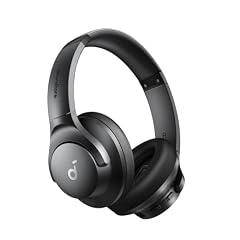
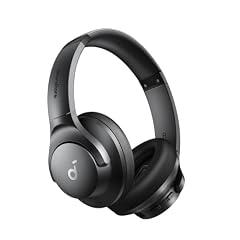
Soundcore Q20i Hybrid Noise Cancelling Headphones
Overview
This product is a closed-back, foldable Bluetooth over-ear headset with hybrid active noise cancelling, 40 mm dynamic drivers, a 3.5 mm wired input, physical controls, and a companion app for equalizer and listening-mode changes. It is intended for commuting, travel, home listening, and office use. The manufacturer states 40 hours of playback with noise cancelling on, 60 hours with it off, and fast charging through USB-C. Independent testing gives the central claims useful support. TechGearLab measured average noise reduction of 25 dB across frequencies and 49 hours of battery life with noise cancelling active. Consumer Reports also rated active noise reduction excellent. The sound tuning is not neutral, however. Independent assessments describe a bass-heavy, sometimes muddy presentation with elevated treble, even though the app offers EQ adjustment. Transparency mode is available, but independent listening found it somewhat unnatural.
What works
- Independent testing measured 25 dB average noise reduction across frequencies, including useful reduction of low-frequency hum and some voices.
- Independent testing measured 49 hours of playback with active noise cancelling, exceeding the manufacturer's 40-hour claim under its stated test conditions.
- The over-ear design was independently found lightweight and comfortable in extended wear, with soft memory foam and protein-leather-covered cushions.
- The manufacturer provides app-based EQ, three listening modes, multipoint connection, wired playback, firmware support, and a published maintenance diagram.
What does not
- The default sound is independently reported as bass-heavy, muddy, and occasionally sharp in the treble. EQ did not fully correct this in testing.
- Transparency mode is present but was independently described as unnatural, which can limit its usefulness where natural environmental sound matters.
- No verified listening-exposure monitor, output limiter, or user-selectable volume cap was found. The manual provides only general high-volume warnings.
- The product has no current model-specific UL or ETL listing located, and no current Bluetooth SIG qualification record was located. Its former TCO certification expired in October 2025.
- Replacement pads, battery parts, and a consumer repair procedure were not verified, despite the manufacturer publishing a maintenance diagram.
Who is it for
This product suits a listener who primarily wants over-ear isolation for commuting, aircraft-like engine rumble, household appliances, or a shared office, and who can tolerate a bass-forward sound or is willing to adjust EQ. It also fits people who need unusually long between-charge use, a wired fallback when the battery is depleted, and the ability to switch between two Bluetooth devices. The lightweight fit may work well for long desk sessions, provided the ear openings fit the wearer comfortably.
Who is it not for
It is not well suited to listeners who need neutral, detailed music reproduction, critical mixing, or consistently clear calls in loud public places. Large-eared users should take care because independent testing found the earcups comparatively small. It is also a weaker fit for children, people managing hearing-risk exposure, or anyone needing a verified volume cap or listening-dose monitor. Do not rely on transparency mode as a substitute for full environmental awareness near traffic, rail platforms, cycling hazards, or driving.
Integrity
The manual gives sensible baseline safety directions, including avoiding extended high-volume listening, avoiding use while driving, keeping the charging port dry, using original or certified cables, avoiding charging while worn, and keeping the battery away from excessive heat. These are instructions, not an exposure-control system. No verified maximum-output test, automatic loudness limit, or cumulative listening monitor was found. A model-specific U.S. radio authorization record is publicly associated with the product, but a current Bluetooth SIG qualification record was not located. The manufacturer provides firmware support, maintenance information, and U.S. support contact details. It also published a maintenance diagram, though replacement pads, batteries, and repair instructions were not verified. The product was listed under TCO Certified Headsets 9 from October 17, 2023 through October 17, 2025, so that certification is historical rather than current as of August 16, 2026. No recall specific to this headset was found in the reviewed U.S. recall material. Anker has recalled other Soundcore battery-powered products, not this product, so charging instructions and proper electronics recycling remain important.

Soundcore Q30 Hybrid Noise Cancelling Headphones
Overview
This product is a closed-back, over-ear wireless headphone with active noise cancellation, a 3.5 mm wired mode, physical buttons, USB-C charging, and two-device multipoint connection. It uses 40 mm drivers and weighs 260 g according to the manufacturer. The supplied manual specifies 40 hours of playback with noise cancelling on, 60 hours with it off, and a two-hour charge time. Its defining strength is independently measured noise control. SoundGuys found meaningful active reduction of low and mid-frequency noise, while the earcups provide strong passive isolation at higher frequencies. Its independent battery result was 46 hours 35 minutes. The product also has a documented transparency mode, app EQ, and firmware updates. Documentation is not fully consistent, however. The current product page says Bluetooth 5.3, while the available manual for this model states Bluetooth 5.0, and the product-page battery figures differ from the catalog record.
What works
- Independent laboratory testing confirms useful ANC for engine rumble, office noise, and higher-frequency sounds.
- Independent testing measured 46 hours 35 minutes of wireless battery life on one charge.
- Transparency mode can be activated quickly from the right earcup for brief conversations or awareness.
- The product has an FCC authorization record matching the model, and the manufacturer documents multipoint pairing, USB-C charging, wired playback, and firmware updates.
- Independent reviewers found the lightweight plastic construction comfortable over extended sessions.
What does not
- No verified listening-exposure monitor, volume cap, or safe-listening warning system was found for this product.
- No model-specific UL, ETL, or comparable public battery or charger safety listing was located, although the manual gives basic dry-port and certified-charger instructions.
- The measured default tuning is heavily bass-emphasized with a pronounced high-treble peak. The tested EQ presets made only limited corrections.
- It has no dust or water-resistance rating, so sweat, rain, and gym use are unsuitable.
- The old available manual lists Bluetooth 5.0 and 40 hours with ANC, while the current product page lists Bluetooth 5.3 and 40 hours with ANC. The catalog record's 50-hour figure is not clearly reconciled.
Who is it for
This product suits an adult commuter, frequent flyer, student, or home-office user who wants over-ear isolation for long listening sessions and can use headphones carefully in dry conditions. It is especially relevant when engine rumble, street noise, or nearby conversation is disruptive, because independent testing supports meaningful attenuation across those situations. It also fits people who need both a 3.5 mm cable option and wireless two-device pairing, and who are willing to use the companion app to adjust a bass-heavy default sound.
Who is it not for
It is not appropriate for gym use, wet-weather activity, or work where sweat, rain, or dust are likely, because it has no dust or water-resistance rating. It is also a poor fit for people who need built-in hearing-health safeguards, such as a dependable volume limiter or exposure tracking, since no such control was documented. Those sensitive to strong bass or treble should be cautious, because independent measurements found substantial bass emphasis and an upper-treble peak. People needing a fully traceable battery-safety certification should seek clearer model-specific documentation.
Integrity
The product provides physical volume buttons, app EQ, ANC modes, and a transparency function, but the reviewed documentation does not establish a listening-exposure monitor, maximum-volume limiter, or WHO-ITU style safe-listening implementation. Independent sound testing found low audible distortion, but also a strongly bass-weighted default response and elevated treble region that may not suit every listener. Transparency can be enabled with a one-second earcup gesture, which is useful when environmental awareness matters. For charging, the manual directs users to dry the USB port, use a certified USB-C cable and charger, and keep the headphones powered off during charging. An FCC authorization matches the product model. No product-specific CPSC recall was found in the reviewed sources, though public UL or ETL battery-system certification was not located. Soundcore offers an 18-month headphone warranty, firmware support, and replacement ear pads. A practical product-specific electronics take-back path, recycled-material claim, and full contact-material disclosure were not found.

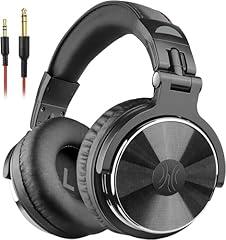
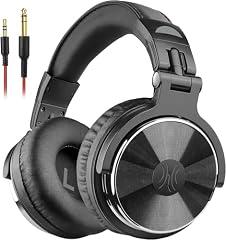
OneOdio Studio Monitor DJ Headphones
Overview
The OneOdio Pro-10 is a closed, over-ear wired headphone intended for DJ cueing, recording, instruments, podcasts, and general listening. It uses 50 mm dynamic drivers, has a stated 32-ohm impedance and 110 dB sensitivity, and connects directly through 3.5 mm and 6.35 mm stereo connections. The included wired setup comprises a 1.2 m microphone cable and a 2 m to 3 m coiled cable. Its defining practical point is that it has no rechargeable battery, Bluetooth radio, app, or active noise cancellation. OneOdio states a two-year warranty and sells compatible replacement cables. Important documentation is inconsistent, however. The current manufacturer page states 1,600 mW maximum input power, while the product manual states 30 mW, so that specification should not be relied upon for source matching or high-output use.
What works
- Wired-only construction eliminates charging, battery-aging, and Bluetooth authorization concerns.
- The supplied 3.5 mm and 6.35 mm cables support direct use with common consumer and music equipment.
- Detachable cables are a real serviceability advantage, and compatible replacement cables are listed by the manufacturer.
- OneOdio states that its products are covered for quality issues for 24 months, with repair or replacement potentially available.
What does not
- There is no active noise cancellation, transparency mode, or published independent isolation measurement for this product.
- No built-in volume limit, listening-dose monitor, or hearing-exposure warning was identified. Listening level depends on the connected source.
- The manufacturer's 1,600 mW maximum-input claim conflicts with the 30 mW figure in the product manual. This is a documentation problem, not proof of an electrical hazard.
- No model-specific RTINGS or SoundGuys laboratory review was identified for sound, distortion, fit pressure, or isolation.
- Skin-contact materials are described only generally as soft ear cushions, without a detailed material declaration or allergy-oriented guidance.
Who is it for
This product suits a listener or creator who specifically needs a simple wired over-ear headphone for a keyboard, guitar practice setup, DJ cueing, podcast monitoring, computer, or analog audio source. The two included cable types reduce the need for an adapter when moving between 3.5 mm consumer equipment and 6.35 mm music gear. It also fits someone who prefers no battery to charge and values the ability to replace a worn or damaged cable through the manufacturer’s accessory store.
Who is it not for
It is not suited to commuters, frequent flyers, or office users who need measured active noise cancellation or a transparency mode for street awareness. It is also a poor fit for children, people managing tinnitus or hearing-loss risk, and households needing a built-in loudness cap, because the product provides no verified volume limiting or exposure monitoring. Buyers who need dependable published acoustic measurements, skin-contact material disclosure, or a clearly documented maximum-input limit should choose a product with those records.
Integrity
The key health advantage is structural rather than a special safety feature. This is a wired product without a rechargeable battery or wireless radio, so it avoids charging-related battery hazards and does not need Bluetooth certification. That does not make it hearing-safe by itself. The product has no identified volume limiter, exposure-dose tracking, or safe-listening warning system, despite WHO guidance favoring these controls. Its closed over-ear design may provide some passive isolation, but no independent attenuation data was found. For longevity, detachable cables and a manufacturer-listed replacement-cable path are meaningful, and OneOdio states a 24-month quality-issue warranty. No product-specific CPSC recall was identified in the recall check. Material and environmental disclosure remain limited. No detailed skin-contact composition, recycled-content statement, third-party sustainability certification, or electronics take-back program for this model was identified. The wired design also means there is no embedded lithium-ion battery requiring special end-of-life handling.

Lux ANC Over Ear Headphones Active Noise Cancelling
Overview
This is a 235 g, foldable over-ear Bluetooth headphone with 40 mm drivers, hybrid active noise cancellation, an awareness mode, physical controls, USB-C charging and USB-C digital audio. JLab specifies a 600 mAh lithium-polymer battery, 40 hours with ANC on, 70 hours total, and a companion app with safe-hearing controls, custom EQ, firmware updates and multipoint connection support. Independent SoundGuys testing confirmed considerably longer runtime than the ANC-on claim, 44 hours 22 minutes at a music level peaking at 75 dB SPL. Its measured noise control is strongest in higher frequencies, where the earcups seal well. Low-frequency ANC reduced much commuter rumble, but was measured more modestly, about 10 to 20 dB below 700 Hz. The same review found a bass-forward and bright sound that can become fatiguing for some listeners, although app EQ can adjust it.
What works
- Independent testing measured 44 hours 22 minutes of playback at a moderate 75 dB SPL test level.
- Laboratory measurements show strong passive blocking of higher-frequency noise, supplemented by useful, though not class-leading, low-frequency ANC.
- The app includes an adjustable volume limiter, custom 10-band EQ, ANC controls and firmware updating.
- The exact headphone carries an FCC identifier, and JLab documents USB-C audio, multipoint connection and SBC and AAC support.
- Deep faux-leather cushions and a cloth-covered headband were found comfortable for extended listening by an independent reviewer.
What does not
- The stated 35 dB ANC figure lacks published test conditions, while independent results show more limited low-frequency cancellation than that headline alone suggests.
- Independent listening found elevated bass and a 5 to 10 kHz peak that can make cymbals and sibilance tiring over long sessions.
- Awareness mode was usable in independent testing, but did not recreate the surrounding space particularly naturally.
- No model-specific UL or ETL electrical-safety listing, Bluetooth SIG qualification record, or published battery protection test was located.
- A 2025 independent materials screen rated skin-contact parts green, but rated the overall product red because of chemical findings in non-skin-contact hard plastics. JLab does not publish a full material declaration.
Who is it for
This product suits adults and teens seeking a foldable over-ear set for commuting, shared offices, study, calls and general media use. It is particularly relevant for listeners who benefit from strong high-frequency isolation, want USB-C wired audio as a backup, or want to tune a bass-heavy default sound through a 10-band app EQ. The independently measured runtime also suits people who prefer charging roughly weekly rather than daily. Use the app's volume limiter if the headphones will be used for extended listening.
Who is it not for
It is not a good fit for people who require a verified electrical-safety listing for a rechargeable device, a documented Bluetooth SIG qualification, or detailed chemical disclosure for all contact and housing materials. It is also unsuitable for heavy rain, workouts or other wet use because no ingress-protection rating is documented. Listeners sensitive to treble sharpness, those who need exceptionally strong aircraft or heavy-transit rumble control, and people who need highly natural awareness for walking or cycling should take the measured limitations seriously. Young children need a purpose-designed, supervised volume-limited product.
Integrity
For hearing health, the useful feature is not a claimed maximum volume but the adjustable volume limiter documented in the JLab app. The app also offers EQ, so users bothered by the measured bass lift and bright upper treble can reduce the incentive to turn volume up. Physical buttons provide direct access to noise control. Awareness mode exists, but independent use testing found it only adequate, so it should not be treated as a substitute for caution around traffic. The product has a 600 mAh lithium-polymer battery and USB-C charging. An exact FCC identifier is printed on the product documentation, but no model-specific UL or ETL listing was found in the reviewed directories. No product-specific CPSC recall was identified in the reviewed records. JLab offers a two-year warranty, firmware support and an electronics recycling program for old headphones of any brand. It also states that its packaging is recyclable. Those are constructive end-of-life measures, although replacement parts and full material disclosure are not clearly documented.

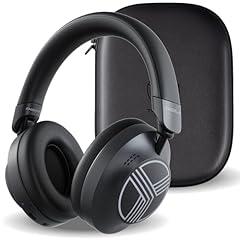
TREBLAB Z7 Pro Noise Cancelling Headphones
Overview
The TREBLAB Z7-Pro is a closed-back, over-ear wireless headphone with foldable earcups, a USB-C charging port, a 3.5 mm wired input, physical controls, a carrying case, and hybrid active noise cancellation. The manufacturer documents 40 mm drivers, an ambient sound mode, a 5 V charging recommendation, and a one-year limited warranty. The current manual also shows a 257.5 g product weight. Independent laboratory testing is the defining evidence here. RTINGS found strong overall noise isolation, including useful reduction of engine rumble, conversation, and computer-fan noise, plus more than 37 hours of continuous playback. The same testing found a bass-heavy, muddy and sometimes piercing tuning with no equalizer, poor microphone performance in noise, and wireless latency that is not well suited to gaming. Manufacturer materials also conflict on some version-specific runtime and wireless specifications, so those claims need caution.
What works
- Independent testing found strong overall ANC and isolation for commuting, travel, and office background noise.
- Independent testing measured more than 37 hours of continuous battery life, and wired audio remains available if the battery runs out.
- The product has an FCC authorization record matching Productech and the Z7-Pro model family.
- RTINGS found the design comfortable and well built, with a carrying case for transport.
- The manual provides an ambient sound mode that can amplify outside voices when ANC is not appropriate.
What does not
- Independent testing found muddy, piercing sound in places, and there is no equalizer to tailor the tuning.
- The integrated microphone performed poorly in independent testing, especially with background noise.
- The product warning label states that it can expose users to bisphenol A. The warning does not quantify real-world exposure or establish harm from normal use.
- No model-specific UL, ETL, or CSA battery and charger certification record was located during verification.
- Manufacturer pages and documents conflict on battery-life and Bluetooth-version claims, which weakens traceability for the exact version sold.
Who is it for
This product suits an adult commuter, traveler, or office listener who prioritizes independently tested noise reduction, long measured playback time, and the option to continue listening through a 3.5 mm cable. It is also plausible for moderate exercise where splash resistance is useful, provided the over-ear fit remains secure. It fits listeners comfortable with a pronounced bass-forward sound and who do not need regular calls in noisy places, app-based EQ, or dependable wireless gaming performance.
Who is it not for
It is not well suited to people who need clear work calls, frequent video meetings, or reliable voice pickup on busy streets, because independent testing found the microphone thin, muffled, and readily masked by ambient sound. Avoid relying on it for competitive wireless gaming, since tested latency was not considered suitable. People seeking an adjustable neutral sound should also look elsewhere because no EQ is provided. Those avoiding bisphenol A exposure warnings, or requiring independently listed battery safety certification, need a product with clearer documentation.
Integrity
The manual gives practical charging instructions, including a 5 V DC, 0.5 to 2 A power-source recommendation, keeping the headphones dry before charging, avoiding temperature extremes, and disconnecting after charging. An FCC authorization record identifies Productech wireless ANC headphones matching the Z7-Pro model family. No product-specific CPSC recall was located in the verification search. No model-specific UL, ETL, or CSA safety listing for the battery or charging system was found. The current product label carries a California Proposition 65 warning for bisphenol A. That is important contact-material information, but it is not a quantified exposure measurement or proof of injury from ordinary use. The manufacturer identifies soft leather and memory foam, while other seller materials describe faux leather, metal, and plastic, without a complete skin-contact material declaration. The manual directs owners to electronics-recycling resources, but no manufacturer take-back program, recycled-content claim, replacement-pad store, or battery-repair pathway was verified.

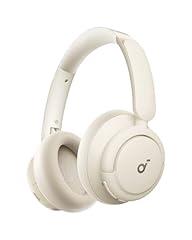
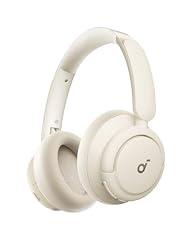
Soundcore Space One Pro Noise Cancelling Headphones
Overview
This product is a closed-back, wireless over-ear headphone for travel, commuting, desk work, and wired listening through its included 3.5 mm cable. It uses Bluetooth 5.3, has a USB-C charging port, physical controls, app-based EQ and noise-control settings, multipoint connection, and a folding headband design. It is not water or sweat resistant. Its most important independently confirmed attribute is strong noise isolation. RTINGS found excellent combined passive and active attenuation for engine rumble, office noise, and conversation. RTINGS also measured 36.1 hours of continuous battery life, while Soundcore states up to 40 hours with noise cancelling and 60 hours in normal mode under specified iPhone, 50 percent-volume conditions. SoundGuys found it comfortable and highly packable, but reported heat buildup, a somewhat flimsy feel, and an unusually bass-heavy stock tuning that changes noticeably with ANC mode.
What works
- Independent testing found excellent combined passive isolation and active noise reduction for travel and office noise.
- The radio has a model-matched FCC authorization, supporting lawful US Bluetooth operation.
- Independent continuous battery testing reached 36.1 hours, which supports long trips between charges.
- Transparency intensity can be adjusted in the app, and independent assessment found it usable for hearing approaching traffic and surroundings.
- The supplied 3.5 mm cable permits wired listening, including use with in-flight entertainment systems.
What does not
- Independent sound measurements found a strongly bass-heavy and uneven default tuning, with a major change when ANC is switched off.
- There is no water or sweat resistance rating. Moisture ingress around the USB and AUX ports is an acknowledged concern.
- The manufacturer states a 93 dB maximum volume and offers a Safe Volume control, but there is no documented exposure-dose tracking or certified listening limit.
- No model-specific UL or ETL electrical-safety listing was located, despite the embedded lithium-polymer batteries.
- The complex folding mechanism packs small, but an independent reviewer found it somewhat flimsy, and publicly documented replacement-pad or battery support is limited.
Who is it for
This product suits frequent travelers, commuters, and office users who need independently tested isolation from aircraft-like rumble, traffic, HVAC noise, and nearby conversation. It also fits listeners who value a compact folding over-ear format, multipoint use across two devices, and an analog cable for planes or older equipment. It is better suited to people willing to use the app, especially its custom EQ and adjustable transparency controls, rather than those expecting neutral sound with no setup.
Who is it not for
It is not appropriate for running, gym use, cycling in rain, or any use where sweat and water exposure are likely, because it has no water-resistance rating and the maker warns of ingress risk around its ports. People who need a documented safe-listening system with exposure tracking should look elsewhere, since this product offers a volume control but not a verified dose monitor. It is also a poor fit for listeners who dislike strong bass or do not want to adjust EQ settings.
Integrity
For hearing health, the manufacturer lists a 93 dB maximum volume and provides a Safe Volume setting in the app, but does not document exposure-time monitoring, personalized loudness warnings, or a certified output limit. The product does offer adjustable transparency and a direct noise-control button, which can help a user restore awareness before walking near traffic or speaking with others. Its lack of water and sweat resistance is a practical safety limitation, especially around the charging and AUX ports. The exact model has an FCC equipment authorization and publicly available radio and SAR test documentation. No product-specific CPSC recall or active safety warning was identified in the checked US recall sources. The manufacturer provides an 18-month headphone warranty and firmware updates through the app. However, public evidence for replacement pads, battery service, recycled materials, reduced packaging, or a model-specific take-back route is limited. The manual directs owners to use appropriate electronics and battery collection rather than household trash.

iClever BTH20 Kids Noise Cancelling Headphones
Overview
This product is a 220 g, over-ear Bluetooth headset for children, with active noise cancellation, a 3.5 mm wired option, 40 mm drivers, a 500 mAh lithium-polymer battery, USB-C charging, and fold-flat rotating earcups. Its controls provide two ANC settings, low and high, plus an off setting. ANC does not operate in wired mode. The manufacturer states a 40 dB maximum combined active and passive noise-reduction figure, 35 hours of battery life with ANC on, 60 hours with ANC off, and an 80 dBA output limit. Those acoustic, battery-life, and volume figures were not independently laboratory measured for this product. Its Bluetooth transmitter is the strongest externally verified element, with an FCC equipment authorization matching the BTH20 model.
What works
- The exact BTH20 wireless radio has an FCC equipment authorization for 2.402 to 2.480 GHz operation.
- A wired 3.5 mm cable is included, providing playback when the battery is depleted.
- The manufacturer documents clear physical ANC controls with low, high, and off modes.
- The manufacturer states an 80 dBA volume cap, which is lower than many common children’s headphone caps.
- The official manual gives concrete charging limits, DC 5 V, 1 A, and basic damaged-cable and heat warnings.
What does not
- No RTINGS, SoundGuys, or comparable independent laboratory measurements were found for its claimed 40 dB noise reduction, sound quality, output cap, or battery runtime.
- The 80 dBA cap is manufacturer-stated, not independently verified, and the product lacks exposure tracking, listening-time alerts, and password-protected parental volume control.
- There is no transparency or awareness mode in the manual. Users must turn ANC off to improve awareness of nearby sounds.
- No model-specific UL, ETL, CSA, or comparable public battery and charger safety listing was located during verification.
- The manufacturer discloses ABS and protein-leather pads, but does not provide a detailed contact-material declaration, replacement-pad listing, repair guide, or take-back program.
Who is it for
This product suits a child who needs an over-ear headset for tablets, school audio, audiobooks, or travel, and whose caregiver wants both Bluetooth and a simple wired fallback. The physical ANC button may be practical for a child who can understand and operate a basic low, high, or off control. It also fits households that value a manufacturer-stated 80 dBA cap and long claimed runtime, while recognizing that neither figure has model-specific independent acoustic testing behind it.
Who is it not for
It is not suited to children who need verified hearing-dose monitoring, locked parental volume settings, or a laboratory-confirmed maximum output. It is also unsuitable for walking near traffic, cycling, or other activities where hearing surrounding warnings matters, because the documented controls include ANC modes but no transparency mode. Families needing independently measured noise reduction for flights or sensory use should note that the 40 dB figure is a manufacturer claim, not a published third-party test result.
Integrity
The product uses a rechargeable 3.7 V, 500 mAh lithium-polymer battery. The manual instructs users to stop using damaged equipment, replace a charging cable that becomes hot, and keep the headset away from heat and open flames. It specifies charging from a 5 V, 1 A source, while a power adapter is not included. The exact wireless radio has an FCC authorization, but a public model-specific battery or charger safety listing was not located. The manufacturer states that the headset uses ABS and protein-leather ear pads and is free of BPA and PVC. Those material claims were not supported by a public material declaration or third-party certification. No product-specific recycling or take-back path, repair instructions, replacement ear pads, or battery-service route was located. At end of life, the embedded lithium battery means the product should go to an electronics or battery recycler, not household trash or curbside recycling.
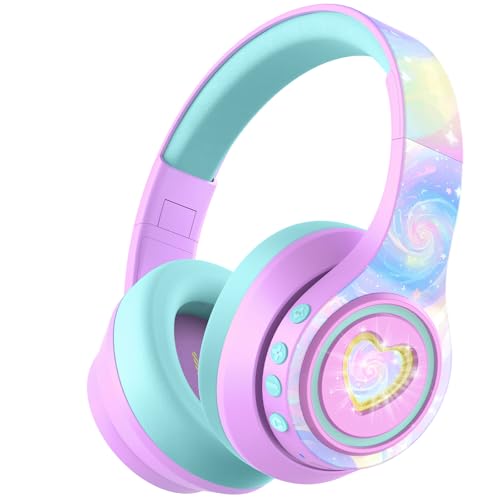
iClever Auraa Kids Bluetooth Headphones
Overview
This product is a wireless over-ear headset intended mainly for children, with 40 mm drivers, physical controls, a microphone, USB-C charging, LED earcup lighting, and a detachable 3.5 mm cable. The manufacturer states that active noise cancelling also operates in wired mode, and lists 304 stainless-steel arms with a thickened ABS headband. Its main safety-oriented feature is a manufacturer-stated 80 dBA volume cap. That is not an independently measured output result, and the product does not document listening-dose tracking, warnings, or parental lockout controls. A hands-on reviewer found nearby speech became quieter with noise cancelling, but reported uneven results with some speaker voices. A model-specific radio-frequency exposure test report identifies the product as a rechargeable 3.7 V lithium-ion wireless headset, although broader electrical-safety certification was not located.
What works
- A model-specific third-party radio-frequency exposure test report identifies this exact wireless headset and its rechargeable 3.7 V battery.
- A hands-on review found that noise cancelling made a nearby voice much quieter, which can help reduce background distraction.
- The manufacturer states that the 80 dBA maximum volume cap and active noise cancelling work in both wireless and wired use.
- The detachable audio cable offers a non-Bluetooth listening option, including when wireless charging is inconvenient.
- The manufacturer provides a 12-month warranty and includes a cable, charging lead, and storage bag.
What does not
- No RTINGS, SoundGuys, or comparable laboratory isolation test was found, so the claimed up-to-35 dB noise reduction is unverified.
- The 80 dBA cap is manufacturer-stated, with no independent maximum-output measurement located. It also lacks the dose monitoring and exposure warnings in the WHO-ITU safe-listening framework.
- No transparency or awareness mode was documented. Noise cancelling can reduce awareness of speech and surrounding sounds.
- No matching UL, ETL, Bluetooth SIG qualification, or model-specific battery safety listing was located in the searched public registers.
- The manufacturer page lists both 47 hours with noise cancelling and 75.5 hours of battery life without clearly defining the latter test condition. A hands-on reviewer also raised durability and long-wear headband concerns.
Who is it for
This product suits a child or young teen using a tablet, laptop, or seatback entertainment on trips, in a shared home, or in a noisy study space. It is especially relevant where a parent wants a claimed capped-output headset rather than unrestricted consumer headphones, and where a wired 3.5 mm fallback is useful. The dedicated ANC button, physical volume controls, folding design, and included storage bag fit supervised everyday travel and school-media use. It is also workable for households that prefer no required companion app.
Who is it not for
It is not suited to users who need independently measured noise cancelling, verified acoustic performance, or a documented electrical-safety certification for the exact product. It is also a poor fit for walking, cycling, playground supervision, or other situations where a child must reliably hear surrounding people, because no awareness mode was documented. Families needing detailed skin-contact material disclosures, replaceable pads or batteries, repair instructions, or a manufacturer electronics take-back route should look for products that publish those records. It is not hearing protection for concerts or industrial noise.
Integrity
The manufacturer states an 80 dBA volume limit, while the WHO-ITU framework sets a more conservative child reference exposure of 75 dBA for 40 hours weekly and calls for exposure tracking, warnings, and protective volume reduction. This product documents the cap but not those broader dose-management controls. Noise cancelling may help avoid turning volume up in noisy places, but its attenuation has not been measured by an independent headphone laboratory. There is no documented awareness mode, so children should not use ANC where hearing people or hazards matters. A public model-specific radio-frequency test report identifies a rechargeable 3.7 V lithium-ion battery. No matching UL or ETL electrical-safety listing was found in the searched directories. No relevant CPSC recall or product safety warning was located in the searched U.S. records. iClever identifies steel and ABS structural materials, but does not provide a full skin-contact material declaration, battery replacement plan, repair guide, or product take-back program.