
10 Best Neck Fans
 Lauren Wilson
Please note that we participate in affiliate marketing programs. When you purchase through links on our site, we may earn a commission. As an Amazon Associate we earn from qualifying purchases. This comes at no additional cost to you and helps support the resources required to provide valuable content.Advertising Disclosure
Top-rated Neck Fans Comparison
1

2
4
5
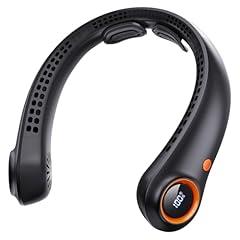
6
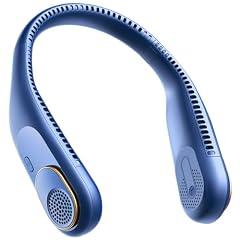
7
8
9
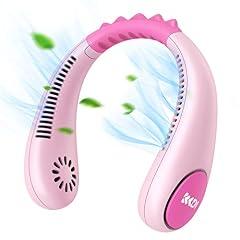
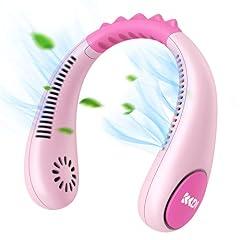
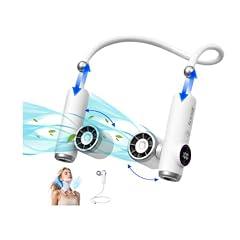
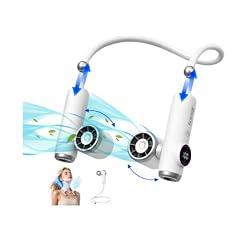
Neck fans: what to look for
Neck fans are wearable personal-airflow devices. Most use small internal fans to move surrounding air toward the face, neck, or chest; some also use thermoelectric plates that contact the neck and create a local cooling sensation. They can improve comfort during commuting, travel, desk work, queues, events, and light activity, but they do not cool a room. A cooling plate may feel colder than ordinary airflow, yet that local effect should not be confused with protection from dangerous heat or treatment for a medical symptom.
The useful questions are whether the airflow, runtime, sound, weight, and fit have been measured under stated conditions. A headline such as “20-hour runtime,” “quiet,” “strong airflow,” or “cold air” is difficult to compare unless the exact model, speed setting, test conditions, and measurement method are disclosed. Runtime changes substantially with speed and with cooling or heating functions. Noise claims can also be misleading: supplied reviews include products whose advertised figures lacked test conditions or conflicted with independent measurements. Terms such as “air conditioner,” “hot-flash relief,” and “heat protection” can overstate what an ambient-air fan does.
For airflow, look for an independent report identifying the exact product and describing its test conditions, ideally using ANSI/AMCA 230 or ISO 5801. For sound, an ISO 3744 measurement is more useful than an unexplained decibel number, particularly because the fan sits close to the ears. A credible report should identify the model, date, setting, airflow or cooling configuration, and method. Manufacturer testing can be useful only when it is an accredited laboratory report with those details; unspecified internal testing is not equivalent.
Rechargeable neck fans also need a complete-product safety record, not just a logo or a radio-compliance statement. Look for a matched listing in an accredited U.S. certification directory, such as UL Solutions Product iQ, Intertek’s ETL directory, CSA Group’s product database, or TÜV Rheinland Certipedia, through the OSHA Nationally Recognized Testing Laboratory program. For a wearable fan and its battery, the relevant safety references include UL 507 for fans and UL 2054 or UL 2595 for batteries and battery-powered appliances. A certification should match the product and battery configuration a buyer will receive.
For products with a cooling plate, the important evidence is different from a simple airflow test. Buyers should look for contact-temperature measurements over time, automatic limits or shutoff, pressure and fit guidance, and warnings against prolonged use. The supplied reviews repeatedly found that cooling plates had manufacturer limits but no independent skin-contact testing. Guarded or enclosed air inlets reduce ordinary finger and hair contact, but a manufacturer’s “bladeless” or “hair-safe” claim is not the same as an exact-model entanglement test.
Across the supplied products, no matched U.S. electrical and battery certification was verified. No neck fan should be used as the primary response to dangerous heat, heat illness, or symptoms requiring medical attention. Several reviews also warn that fans may increase body temperature above 90°F; safer responses include shade, water, rest, air-conditioned or otherwise cool recovery, and prompt medical help when needed. Children, people with impaired heat or skin sensation, circulation problems, chronic conditions, or heat-sensitive medication use need particular caution. Do not use these devices while sleeping, wet, damaged, swollen, unusually hot, or near water and flames. Rechargeable lithium-battery products should not go in household trash or curbside recycling at end of life.
Integrity
A neck fan combines a close-worn electrical device, a rechargeable battery, moving parts, and sometimes a skin-contact cooling plate. The topics below distinguish documented protections and reproducible evidence from listing claims. Scores are relative to the supplied products; a higher score indicates stronger reviewed evidence, not a guarantee that every risk has been eliminated.
HHealth & Safety
Verified electrical and battery safety
This measures whether the complete fan and matched rechargeable battery have current, traceable third-party certification. It matters because a logo or FCC statement does not establish fan or battery safety. Supplied scores were generally around 68–70, reflecting that no product had a matched UL, ETL, CSA, or TÜV record verified. A high score would require a buyer-verifiable listing, not merely a seller statement.
Heat-safety and health guidance
This measures whether the product clearly says it is a comfort aid, not protection from dangerous heat or a treatment for symptoms. That matters because a neck fan cannot replace water, shade, rest, cooling space, or medical care. Scores ranged from 52 to 76: higher-scoring reviews found more concrete limits and warnings, while lower-scoring products used heatwave, hot-flash, or air-conditioner language without clear limits.
Cooling-plate skin safety
This applies to thermoelectric or metal plates touching the neck. It measures documented contact temperatures, controls, shutoff behavior, and safe-use warnings. It matters because prolonged cold, heat, pressure, or tight fit can injure skin. Airflow-only products scored relatively well because no plate was identified, while plate-equipped products scored from 72 to 86; even the higher-scoring plate products lacked independent contact-temperature testing.
Hair and finger entanglement protection
This measures whether guards and airflow openings prevent ordinary hair capture, finger contact, and debris entry. It matters because the fan is worn beside hair, clothing, and skin. Supplied scores ranged from 72 to 80. Higher-scoring products had enclosed or mesh-covered openings and clearer instructions; lower-scoring products relied mainly on “bladeless” or “hair-safe” marketing without an exact-model guard or entanglement test.
Safe charging and overheating controls
This measures compatible charging specifications, battery-management information, temperature protection, and precautions against overheating, smoke, or fire. It matters because the battery is worn close to the body and often charged through a generic USB connection. Scores ranged from 69 to 79. Higher scores reflected concrete input, cable, temperature, and charging warnings; lower scores lacked battery test records, approved charger limits, or documented over-temperature protection.
Wearability, noise, and usable airflow
This measures weight, fit, airflow direction, sound, and whether the device is practical near the ears for its intended wearing time. It matters because a fan can pinch, press, feel heavy, or interfere with conversation. Scores ranged from 54 to 87. Higher-scoring products had independent weight, comfort, cooling, or sound observations; lower scores reflected conflicting noise claims, uncertain fit, or substantial close-to-ear noise at high power.
EEvidence
Independently verified cooling performance
This measures reproducible third-party measurements of airflow, cooling-plate effect, runtime, and noise under stated conditions. It matters because speed, battery capacity, and “strong wind” claims do not establish useful output. Scores ranged from 69 to 87. Higher-scoring products had exact-model independent measurements, including cooling temperature, runtime, or sound; lower-scoring products had only hands-on observations or manufacturer figures without a disclosed method.
Honest claims and accurate specifications
This measures whether capacity, runtime, speed, airflow, noise, and terms such as “air conditioner” or “medical” match exact-model evidence and are properly qualified. It matters because many listings overstated cooling or supplied conflicting numbers. Scores ranged from 48 to 72. Higher scores reflected more consistent, qualified specifications; lower scores reflected impossible or conflicting figures, unsupported therapeutic language, or advertised noise and runtime claims that did not match testing.
Traceable model and clean safety record
This measures whether the buyer can identify the responsible brand, importer, model, battery, support contact, and regulatory history. It matters because certification, manuals, recalls, and replacement support are meaningful only when tied to the same product. Scores ranged from 56 to 83. Higher-scoring products had consistent model details, manufacturer information, warranty or FCC records; lower-scoring products had conflicting identifiers, incomplete support information, or uncertain configuration matching.
EEcology
Battery longevity, repair, and responsible disposal
This measures whether a short-life rechargeable product can avoid premature disposal through battery health information, repair, replacement options, warranty support, and practical U.S. recycling guidance. It matters because built-in lithium batteries can turn the whole fan into e-waste when they degrade. Scores ranged from 68 to 78. Higher-scoring products had removal instructions, a warranty, or repair coverage; most still lacked a practical replacement-battery pathway.
Verified materials and packaging impact
This measures whether recycled-material, chemical, packaging, and durability claims are specific and independently traceable. It matters because vague “eco-friendly” language does not show what the product or packaging contains. Scores were tightly grouped from 68 to 72: listings commonly identified plastics such as ABS, polycarbonate, PP, or silicone, but none supplied strong recycled-content, safer-chemical, packaging, or sustainability certification evidence.
Full reviews

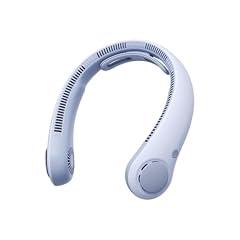
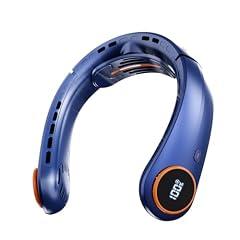
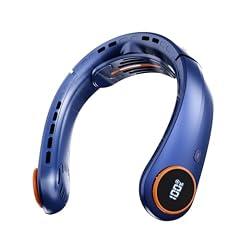
JISULIFE Portable Neck Fan Sunny Blue
Overview
This is a rechargeable, U-shaped personal fan worn around the neck. The manufacturer describes five speed settings, adjustable airflow direction, a USB-C charging connection, a 5000 mAh lithium-ion battery, a 280 g weight, and a polycarbonate body. It is an air-moving fan, not a neck air conditioner with a thermoelectric cooling plate. The useful concrete design features are its hands-free format and enclosed airflow path, including a manufacturer-stated hair-safe inlet. Its documentation is less consistent than it should be. The current official page presents 16.5 hours, 3.5 m/s, and 51 to 66 dB in its specification table, but its headline area also says up to 28 hours and 6 m/s. No exact-product independent airflow, runtime, or noise report was located.
What works
- The supplied manual gives specific charging guidance, including a 5V 2A input limit, inspection of the cable before use, and stop-use instructions for smoke, fire, or malfunction.
- The fan has five selectable speeds and an adjustable neck format, both manufacturer-stated features that can help direct airflow without holding a separate device.
- The official specifications identify a 280 g wearable unit and a polycarbonate housing, which gives buyers a concrete weight and main housing material.
- The manufacturer identifies a hair-safe inlet, while the manual also warns users not to insert fingers or objects into openings.
What does not
- No matched UL, ETL, CSA, or TÜV safety listing for the complete fan and battery was identified in the public certification resources searched. The product brief claims UL, but provides no certificate or listing number.
- No independent exact-product test report was found for airflow, runtime, noise, battery safety, or ergonomic comfort under disclosed conditions.
- The official product page conflicts with itself on maximum runtime and wind speed. Its headline claims differ from its own specification table, so the performance figures are not reliably presented.
- The manual carries important battery and overheating warnings, but it does not document battery-management testing, over-temperature shutdown, a battery transport test summary, or a repairable battery design.
- The product is not a substitute for heat-safety measures. Its marketing does not clearly say not to rely on a neck fan in dangerous heat.
Who is it for
This product suits an adult who wants brief, hands-free airflow during commuting, concerts, indoor work, light walking, or breaks outdoors, and who can keep track of a rechargeable device. Its stated 280 g weight, adjustable neck position, five speeds, and guarded inlet are practical for someone who dislikes holding a small fan. It is most appropriate where shade, hydration, and access to cooler indoor space are already available, rather than as the main way to cope with high heat.
Who is it not for
It is not for anyone who needs medically reliable cooling, works for long periods in dangerous heat, or may mistake airflow for protection from heat illness. Federal heat guidance says fans should not be the primary cooling method in extreme heat, and indoor fans can increase body temperature above 90°F. It is also unsuitable for unsupervised children, people unable to follow charging and opening safety instructions, or users likely to expose it to rain, soaking, bathrooms, hot parked cars, or other high-temperature environments.
Integrity
The available manual provides more useful safety information than the sales page. It says not to use the fan after water has entered it, not to block the air openings, not to store it above 60°C, and to stop using it if smoke, fire, or other malfunction occurs. It also specifies a 5V 2A charging input and warns against battery crushing or disassembly. The product has no cooling plate, so there is no documented cold-contact hazard from a thermoelectric neck surface. A manufacturer brief claims CE, FCC, RoHS, UKCA, and UL, but no matched public U.S. safety certification record or certificate number was found for the complete product. No exact-product U.S. recall was identified in the searched CPSC resources. The manufacturer offers a stated 12-month warranty, but no battery replacement, repair procedure, recycled-content claim, packaging specification, or product-specific lithium-battery recycling instruction was located. At end of life, the built-in lithium-ion battery should be handled through an appropriate battery or electronics collection program, not household trash.

JISULIFE Portable Neck Fan
Overview
This is a rechargeable, U-shaped wearable fan intended to direct air upward around the face and neck while leaving the user’s hands free. The product documentation identifies a 4000mAh, 14.8Wh lithium-ion battery, USB-C charging, a 5V 2A maximum input, 5W maximum fan power, and a stated weight of about 258g. It has no cooling plate, so it cools only through moving air. The exact-product manual states five speeds and a 25 dB minimum noise figure, but neither airflow, runtime, nor noise was supported by an independent test report. Documentation for other FA14 retail versions instead describes three speeds and 4 to 16 hours of runtime, while the current manual gives 2 to 13.5 hours. That variation makes the specific configuration and performance claims harder to interpret.
What works
- Hands-free format directs air toward the head and face without holding a fan.
- The documented 4000mAh lithium-ion battery and USB-C input give concrete charging specifications.
- The enclosed-airflow design reduces direct access to rotating blades, and the manual provides outlet-cleaning instructions.
- JISULIFE states a one-year warranty for defects in materials and workmanship.
What does not
- No matched UL, ETL, CSA, or TÜV listing for the complete product and battery was verified in the named U.S. safety directories.
- No independent airflow, sound, runtime, ergonomic, or battery-protection test for this exact product was located.
- Published FA14 descriptions conflict on speed count and runtime, so the advertised operating figures are not consistently traceable to one configuration.
- The product is marketed for hot weather without clear heat-health limits. A personal fan provides comfort, not protection from heat illness.
- The battery is built in, and no practical replacement-battery, repair-parts, or U.S. take-back program was documented.
Who is it for
It suits an adult who wants a compact, hands-free source of airflow for short commutes, indoor work, travel queues, or lightly active outdoor use. The stated 258g weight, flexible neck-worn format, USB-C charging, and five selectable settings are practical for someone who prefers not to carry a handheld fan. It is most appropriate when the aim is local comfort around the face and neck, not meaningful cooling of the body or a replacement for air conditioning, shade, hydration, or rest.
Who is it not for
It is not for anyone relying on it during extreme heat, heat illness, strenuous outdoor work, or hot enclosed spaces. CDC guidance notes that fans can raise body temperature above 90°F, so people who are older, medically vulnerable, pregnant, taking heat-sensitive medicines, or already feeling unwell should use established heat-response measures rather than depend on this device. It also is a poor fit for buyers needing verified electrical certification, independently measured noise or runtime, replaceable batteries, or a documented repair path.
Integrity
The fan does not use a thermoelectric cooling plate, which avoids prolonged cold or hot plate contact against neck skin. Its enclosed format also limits direct blade contact, although the available documentation does not show an independent entanglement or guard-safety test. The manual specifies a 5V 2A maximum charging input and tells users to stop use if smoke or fire occurs. However, matched third-party certification of the complete fan and its battery protections was not verified. JISULIFE offers a one-year defect warranty, but no replacement battery, parts catalog, or product take-back route was found. The battery is lithium-ion and should not enter household trash or curbside recycling. EPA guidance directs users to separate battery recycling or household hazardous-waste collection. Material descriptions name ABS and silicone, but claims such as eco-friendly materials were not backed by a product-specific recycled-content, chemical, or packaging certification. No matching CPSC recall was identified in the searched records.

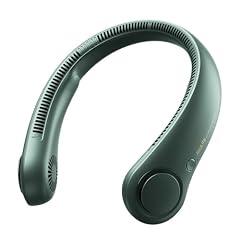
Torras CooliFY Air 2026 Neck Fan
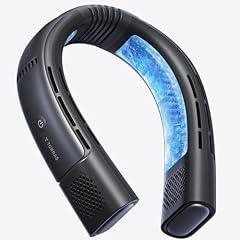
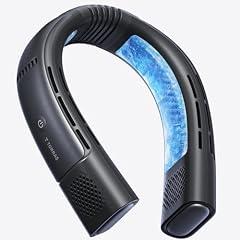
Overview
This is a rechargeable, neck-worn personal cooling device with fan, cooling, and heating modes. The official manual identifies a 5V, 2A input and a built-in 5,000mAh, 18.5Wh lithium battery. It is worn with the outlets facing upward, while its neck-contact cooling plate provides the direct cooling sensation. TORRAS states that the product weighs 395g, has 36 vents, reaches 31dB, and can run for 4 to 24 hours depending on mode. Those figures are manufacturer-stated, not independently reproduced in a disclosed laboratory report. The manual is more useful on basic operating limits, including a 0C to 40C operating range and a 30-minute maximum continuous cooling or heating session.
What works
- The official manual gives concrete battery specifications, input requirements, operating-temperature limits, and a named responsible manufacturer contact.
- Its direct-contact plate and separate fan, cooling, and heating controls provide more than ordinary airflow alone, though cooling performance is manufacturer-stated.
- The manual includes meaningful skin-contact guidance, including a 30-minute maximum continuous cooling or heating session and instructions to stop use if unwell.
- The battery is not presented as sealed forever. The official manual describes removal steps and directs replacement by qualified personnel.
- TORRAS publishes a 365-day warranty for authorized-channel purchases, including Amazon purchases.
What does not
- No matched listing was located in the public UL, ETL, CSA, or TÜV certification resources checked for complete-product electrical and battery safety certification.
- No accredited, exact-product report was located for airflow, cooling-plate temperatures, runtime, or noise. The available performance figures are TORRAS laboratory claims.
- The product page and associated materials contain inconsistent weight and runtime claims. TORRAS states 395g and up to 24 hours, while other product materials cite different figures.
- The plate touches the neck, but no independent surface-temperature or skin-contact test was located. The manual warning reduces risk but does not replace measured thermal evidence.
- No product-specific U.S. recycling instructions, replacement battery sales, materials disclosure, or packaging specification was located.
Who is it for
It suits an adult who wants short-duration, hands-free personal comfort while commuting, sitting in a warm office, cooking, traveling, or taking breaks from light outdoor activity. The best fit is someone able to follow the manual closely, keep the plate clean, use the stated 5V, 2A charging input, and limit continuous cooling or heating sessions to 30 minutes. It is also more appropriate for a buyer who values a published one-year warranty and documented service contact over an undocumented disposable gadget.
Who is it not for
It is not a substitute for air conditioning, shade, hydration, rest, or emergency heat response during dangerous heat. People working in extreme heat, older adults, children, pregnant people, and people with heat-sensitive medical conditions should use more protective heat plans and seek medical guidance where appropriate. The manual also advises against use with implanted electronic medical devices, on wounds, or by people who cannot reliably sense temperature. Choose another format if close-to-ear fan noise, neck pressure, or unverified cooling output is unacceptable.
Integrity
The official manual offers better safety direction than many minimal wearable-device listings. It specifies the 5V, 2A input, cautions against damaged cables and damp charging, advises use of certified chargers, and warns users not to exceed 30 continuous minutes of cooling or heating. It also tells users to stop if they feel unwell and lists several health-related cautions. No exact-product CPSC recall or U.S. regulator warning was located in the sources checked. The product uses a built-in lithium battery, so it should not enter household trash or curbside recycling. EPA guidance calls for lithium-ion devices to go to dedicated battery or household hazardous-waste collection. TORRAS documents technician-level battery removal and provides a one-year warranty, but it does not publish a product-specific U.S. recycling route, battery-health information, recycled-material content, or independently verified packaging claims.
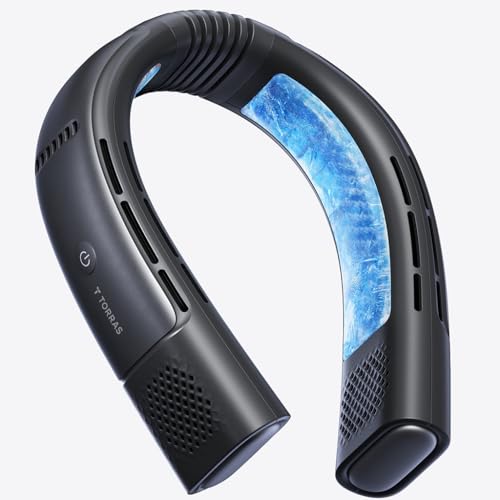
TORRAS COOLiFY 2026 Neck Air Conditioner
Overview
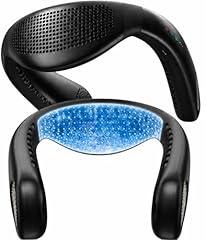
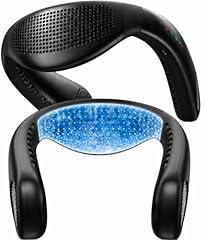
This is a 15.36-ounce battery-powered neck wearable with semiconductor contact plates, four air outlets, cooling, heating and fan settings, plus Bluetooth app control. Manufacturer documentation lists a 5,000mAh, 18.5Wh battery, 5V/3A or 9V/2A input, a 32°F to 104°F operating range, and up to 28 hours of runtime under its own laboratory conditions. Independent hands-on testing in a 76°F room found a coldest plate point of 52°F after four minutes and 58 dB at maximum fan. This supports localized contact cooling, but also indicates potentially noticeable near-ear sound. The same test found the foldable pivoting neckband stayed at the selected adjustment. Documentation identifies guarded air openings and basic use warnings, but no U.S. NRTL electrical or battery listing, or exact-model battery safety report, could be verified.
What works
- Independent testing recorded localized cooling to 52°F in a 76°F room after four minutes.
- The pivoting neckband was independently observed to flex and hold its selected fit.
- Published documentation gives input limits, battery capacity, operating temperature range, and charging-port information.
- The guide depicts protective air openings and warns against inserting fingers or objects into the guard.
What does not
- No UL, ETL, CSA, or TÜV listing for the complete wearable and battery could be verified in the relevant U.S. certification registers.
- Independent testing measured 58 dB at maximum fan, which can be conspicuous beside the ears.
- No exact-model report was found for cooling-plate contact limits, automatic thermal cutoff, or prolonged skin-contact safety.
- The product manual includes broad claims about cooling the body's core and helping heat-related symptoms, but no product-specific human evidence was found to support those health implications.
- The 28-hour runtime is manufacturer-stated, applies to favorable settings, and is not an independently verified all-mode result.
Who is it for
It suits an adult who wants portable, localized neck cooling during short outdoor walks, commuting, spectator events, travel, or light activity, and who accepts a 15.36-ounce wearable and periodic charging. The independently measured cold plate performance and adjustable hinge are most relevant for someone seeking immediate sensory relief at the neck and face rather than room cooling. It is better matched to intermittent personal comfort use than to all-day maximum-cooling operation.
Who is it not for
It is not appropriate as protection from dangerous heat, for people working in high-heat environments, or for anyone who may delay shade, hydration, air conditioning, rest, or medical care because the device feels cooling. People with reduced heat or cold sensation, fragile skin, circulation concerns, implanted medical devices, or difficulty removing the product should consult an appropriate clinician and follow the manual's cautions. It also may not suit noise-sensitive users, video callers, or people needing independently certified battery safety.
Integrity
The product has traceable radio authorization through an FCC filing that identifies the manufacturer, model, Bluetooth frequency range, and test laboratory. FCC authorization addresses radio compliance, not complete electrical or rechargeable-battery safety. No U.S. NRTL listing or exact-model UL 2054, UL 2595, IEC 62133-2, or UN 38.3 documentation was located. No exact-model CPSC recall was found in the recall search reviewed. The manual warns against use by people unable to care for themselves, infants, and people insensitive to heat. It also warns against damage, liquids, heat, puncture, and inserting objects into the guard. However, it does not publish plate contact-temperature limits or a U.S. battery recycling path. The battery appears integrated, with no verified replacement or repair program. At end of life, the whole product should go to an electronics or battery collection program, not household trash or curbside recycling.

Taiofan Bladeless Wearable Neck Fan
Overview
This is a rechargeable neckband fan designed to direct airflow toward the face and neck while leaving the hands free. Independent retailer listings that reproduce the product details identify five speed settings, USB-C charging, a stated 5000mAh lithium battery, and ABS plastic with silicone or plastic construction. A separate marketplace listing reports a packaged weight of 0.98 pounds, but that figure is not confirmed by the manufacturer. The product is an airflow fan, not a documented air conditioner. No cooling plate is described in the available exact-product specifications. Its stated 12 to 16 hour low-speed runtime and 3.5 hour high-speed runtime are manufacturer claims reproduced by retailers, not independently measured results. Searches did not locate an exact-product manual, accredited airflow or sound report, or a matched U.S. third-party electrical and battery certification record.
What works
- Five stated speed settings provide a practical way to reduce airflow when close-to-ear fan noise or draft is uncomfortable.
- The neckband format can provide hands-free personal airflow for commuting, standing tasks, or short outdoor activity.
- Retailer-reproduced specifications consistently describe USB-C charging and a 5000mAh rechargeable battery.
- The enclosed, bladeless-style housing leaves no conventional fan blades exposed, although no exact-product guard test was found.
What does not
- No matched UL, ETL, CSA, or TÜV certification record was located for the complete fan and its battery, so electrical safety certification is unverified.
- No exact-product independent measurements were located for airflow, runtime, sound level, weight, or cooling effect.
- The phrase that it blows cold air is not supported by evidence of a thermoelectric cooling plate or a measured air-temperature reduction.
- No accessible exact-product manual was found with charging limits, battery protection details, warranty terms, replacement parts, or disposal instructions.
Who is it for
This product suits an adult who wants modest, hands-free airflow during commuting, desk work, travel, queuing, or brief low-intensity outdoor use. The useful concrete features are its neckband form, five stated speed settings, and rechargeable battery. It is most appropriate for someone who treats it as a comfort accessory and can take shade, hydration, rest, and air-conditioned breaks when conditions demand them. Buyers should be comfortable using a USB-C rechargeable device without independently verified runtime or noise figures.
Who is it not for
It is not suitable as primary protection during extreme heat, strenuous outdoor work, sports in hot conditions, or for anyone with heat illness symptoms. says not to rely on a fan as a primary cooling device, and CDC notes that fans can increase body temperature above 90°F. It is also a poor fit for buyers who require verified U.S. electrical certification, documented battery protections, very low close-to-ear noise, a repairable battery, or clear warranty and recycling support. Keep its airflow inlets clear of long loose hair and clothing.
Integrity
The available product descriptions indicate an enclosed, bladeless-style wearable fan with a rechargeable lithium battery, but they do not substantiate a cooling plate, medical benefit, or protection from heat illness. No exact-product safety certification record, accredited performance test, manufacturer manual, or public recall was located in the checked sources. That is missing verification, not evidence of a confirmed defect. The lithium battery is the main end-of-life concern. EPA says lithium-ion batteries and devices containing them should not go in household trash or curbside recycling because damage can cause fires. Use a dedicated battery or e-waste collection route, follow local instructions, and do not attempt to open the product to remove a battery unless the manufacturer provides safe removal instructions. No recycled-content, packaging, repair, replacement-battery, or sustainability certification was found.

Sweetfull Portable Neck Fan 360° Cooling
Overview
This is a rechargeable, neck-worn personal fan intended to move air around the face and neck while leaving the hands free. The product record describes a 5200mAh battery, USB-C charging, four speeds, an 8.8-ounce weight, a listed 45 dB noise level, and an enclosed airflow design. It is a fan, not an air conditioner and not a cooling-plate device. SweetFull's own product page confirms a 5200mAh rechargeable battery, three turbo motors, an LED battery and speed display, and a neck-worn format. Those are manufacturer statements, not independent measurements. The same page conflicts with itself by describing both three adjustable wind speeds and four speed settings. It also advertises under 30 dB, which conflicts with the marketplace record's 45 dB specification. No independent airflow, runtime, noise, battery-safety, or certification report for this exact product was located.
What works
- The enclosed, bladeless airflow layout is designed to keep rotating components out of normal finger and hair contact, according to the manufacturer.
- The manufacturer states that the product has three turbo motors, a 5200mAh rechargeable battery, and an LED battery and speed display.
- The product does not advertise a neck-contact cooling plate, avoiding the direct cold or hot surface exposure associated with thermoelectric wearables.
- SweetFull states that one year of warranty support and customer support are included.
What does not
- No matched UL, ETL, CSA, or TÜV listing, or other traceable third-party electrical and battery safety certification, was located for this exact product.
- No independent test report was located for airflow, claimed maximum runtime, sound level, battery protection, or wearable comfort.
- The manufacturer page gives conflicting speed information, and its under 30 dB claim conflicts with the marketplace record's 45 dB figure. These differences make performance expectations uncertain.
- Published product information does not document battery-management protections, charging limits, a compatible charger specification, battery replacement, or a product-specific end-of-life plan.
- The marketing does not give clear heat-health limits. A personal fan should not be treated as protection from dangerous heat.
Who is it for
This product fits an adult who wants hands-free personal airflow for short commutes, desk work, errands, travel, or light outdoor activity, and who understands that the airflow and runtime figures are manufacturer-stated rather than independently verified. The enclosed design may be useful for people concerned about exposed fan blades or hair catching in conventional neck fans. It is most appropriate where cooler air, shade, hydration, and breaks are already available, rather than as the main method of staying safe in heat.
Who is it not for
It is not suited to anyone relying on it during dangerous heat, especially older adults, young children, pregnant people, or people with heart, lung, or other chronic conditions. CDC guidance says fans can increase body temperature when indoor temperatures exceed 90 degrees Fahrenheit. It is also a poor fit for buyers who require independently verified noise, runtime, airflow, charging protection, or U.S. third-party electrical certification. Noise-sensitive users should note the conflicting published sound claims before depending on it for long wear.
Integrity
The practical health advantage is its claimed enclosed airflow layout. SweetFull says the design keeps hands away from the internal fan system, but no exact-product guard test or electrical safety certification was located. There is no advertised neck-contact cooling plate, so the product does not introduce the direct cold-surface or hot-surface contact issue that can apply to thermoelectric neck coolers. Its heat messaging lacks an important limit, because fans move air but do not replace air conditioning, hydration, shade, rest, or emergency heat response. The battery is rechargeable, and SweetFull states a one-year warranty, which may help avoid immediate replacement. However, no battery replacement instructions, repair parts, recycled-material certification, packaging specification, or product-specific recycling guidance was found. The EPA advises that lithium-ion devices should not go into household trash or curbside recycling. They should go to an appropriate battery or electronics recycling route instead. No exact-product recall or public incident report was located in the CPSC databases searched, but that absence is not proof of safety.

Taiofan Bladeless Portable Neck Fan 5000mAh
Overview
Taiofan DT03 is a rechargeable, wearable neck fan intended to direct air around the face and neck during commuting, travel, outdoor activity, or desk work. Retailer listings consistently describe a 5000 mAh battery, three internal fans, five speed settings, an LED display, and a plastic neckband format. Those are manufacturer-stated specifications, not independently tested measurements. The product does not appear to use a thermoelectric cooling plate, so there is no metal cold-contact surface pressing against the neck. Its evidence limits are more defining than its feature list. No matched U.S. third-party electrical or battery certification, independent airflow, runtime, noise, or ergonomic test report was located. Published retailer specifications also conflict on important basics, including weight and wattage, so the actual carried load and power draw cannot be established confidently from available documentation.
What works
- Hands-free neckband form leaves both hands available while providing manufacturer-stated airflow from three internal fans.
- Five manufacturer-stated speed settings allow the user to reduce airflow when full output is unnecessary.
- The available product descriptions indicate fan-only cooling rather than a neck-contact cooling plate, avoiding a documented cold-contact surface risk.
- The product identity is reasonably consistent across retailer listings, which name the DT03 model and 5000 mAh battery claim.
What does not
- No matched UL, ETL, CSA, or TÜV listing was located for the complete fan and its rechargeable battery.
- No independent report was located for airflow, runtime, noise, temperature rise, battery protection, or wear comfort.
- Retailer listings for the same model conflict on weight and wattage, so these useful buying specifications are not reliably established.
- The available product claims do not provide heat-safety limits, such as not relying on a fan as protection during dangerous heat.
- No battery replacement, repair path, warranty detail, material disclosure, or product-specific recycling instruction was found.
Who is it for
This product fits an adult who wants a hands-free source of local airflow for short walks, transit, light outdoor tasks, travel queues, or a warm desk area, and who accepts that the published capacity and performance figures are manufacturer-stated. It is most suitable where access to USB charging is easy and where the user can stop, seek shade, hydrate, or move to air conditioning if heat becomes uncomfortable. The fan-only design may also appeal to people who specifically do not want a cold plate against the neck.
Who is it not for
It is not suited to anyone who needs independently verified battery safety, measured runtime, low-noise evidence, or a known product weight before wearing a device near the ears and neck. Do not treat it as heat-stress protection for outdoor work, sports, heat waves, older adults, young children, pregnancy, or people with heart, lung, or heat-sensitive health conditions. It is also a poor fit for users with long loose hair unless they are prepared to keep hair clear of the air inlets, because no exact-model guard or entanglement test was found.
Integrity
No exact-product recall was identified in the U.S. Consumer Product Safety Commission material reviewed, but that is not evidence of tested safety. The most important unresolved health issue is the absence of a matched U.S. electrical and rechargeable-battery certification record, plus the lack of independent testing for charging temperature, battery protections, fan noise, airflow, and hair-entanglement resistance. The fan-only layout avoids a documented neck-contact cooling plate, but it should provide comfort only, not protection from heat illness. CDC guidance notes that fans can increase body temperature above 90°F. The product has a built-in rechargeable battery, yet no replacement battery, repair instructions, durability commitment, or take-back program was found. When it reaches end of life, it should not go in household trash or curbside recycling. EPA advises taking lithium-ion devices to a dedicated battery or electronics recycler, or a household hazardous-waste collection point.

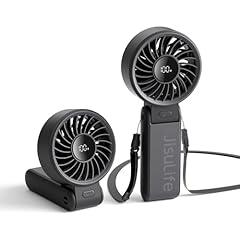
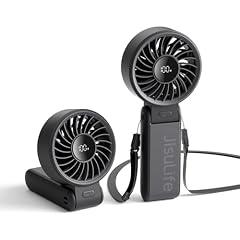
Handheld Fan Life 7
Overview
This is a foldable, rechargeable personal fan intended for hand-held, desk, or lanyard-supported neck use. JISULIFE specifies a 5,000 mAh, 18.5 Wh lithium-ion battery, five speeds, USB-C input at 5 V and 2 A, and a 3.5 to 19.5 hour stated working range that varies by speed and use. Its official product page lists 5.1 m/s maximum wind speed, 48 to 67 dB noise, 250 g weight, and a safety switch. The available exact-model manual supplies concrete charging, moisture, heat, blade-cleaning, and battery-disposal precautions. However, no current U.S. NRTL listing for the complete product and battery, or accredited exact-model airflow, noise, runtime, or battery-safety report, was located. The product page and supplied catalog also present inconsistent runtime figures, so the longest runtime should be treated as a manufacturer claim rather than a confirmed result.
What works
- The foldable head and included lanyard support three defined use positions, hand-held, desktop, and neck-worn.
- The manual gives a specific 5 V, 2 A charging input limit and warns against wet use, blocked vents, high heat, battery crushing, and damaged cables.
- A removable cover allows access for cleaning after the fan has fully stopped.
- The manual includes battery-removal steps and directs disposal under local regulations.
What does not
- No matched UL, ETL, CSA, or TÜV U.S. safety-certification record was located for the complete fan and rechargeable battery.
- No accredited, exact-model report was located for airflow, sound, runtime, battery protection, or thermal performance.
- The stated runtime is inconsistent across available product materials, with 19.5 hours on the official product page and 12 hours in supplied catalog imagery.
- At 220 to 250 g, the product has meaningful hanging weight, and there is no independent fit or close-to-ear noise assessment.
- Its open airflow design requires the stated care around fingers, hair, debris, and cleaning while the fan is stopped.
Who is it for
This product suits an adult who wants a compact personal breeze for commuting, a desk, queues, travel, or short outdoor breaks, and who values being able to angle the fan rather than wearing a fixed neck-band fan. It is particularly suited to users comfortable following charging limits, keeping the vents clear, and cleaning the removable cover. The lanyard mode is more appropriate for relatively stationary use where the 220 to 250 g hanging load and directed airflow can be adjusted as needed.
Who is it not for
It is not for anyone seeking a certified wearable electrical product for workplace, institutional, or safety-sensitive use, because a matched U.S. third-party safety listing was not located. It is also unsuitable as primary protection during extreme heat. CDC guidance says fans can increase body temperature above 90°F, so people at risk from heat illness need air conditioning, shade, hydration, breaks, and medical response when symptoms occur. Young children should not use it unsupervised, and long hair or loose items need to stay clear of the inlets and rotating parts.
Integrity
The fan does not have a cooling plate, so there is no direct cold-metal neck-contact exposure to assess. Its manual does include useful basic precautions, including avoiding prolonged direct airflow on older adults and children, keeping fingers and objects away from the fan, avoiding moisture, not blocking the openings, and stopping use if smoke or fire occurs. It also specifies a 5 V, 2 A charging limit and advises use of a safety-certified adapter. The body is manufacturer-stated ABS plastic and contains a lithium-ion battery. The manual provides unusually practical battery-removal steps, but no recycled-content, safer-material, packaging, U.S. take-back, or repair-parts evidence was located. At end of life, the battery or product should not go into household trash or curbside recycling. EPA advises taking lithium-ion devices to a dedicated battery, electronics, or household hazardous-waste collection point.

Kids Portable Bladeless Neck Fan
Overview
This product is a rechargeable, hands-free neck fan intended for children ages 4 to 14. It sits around the neck and directs air upward through enclosed airflow channels. The available product guide describes four settings, USB-C charging, a built-in 2600 mAh battery, and a stated 3 to 6 hour runtime. It also lists a 0.55 lb weight, plastic and silicone construction, and stated noise of 25 to 45 dB. Those figures are manufacturer-stated, not independently verified test results. The product guide gives basic care advice, including keeping vents clear, avoiding water and excessive heat, disconnecting after charging, and stopping use if unusual odor, overheating, or abnormal charging behavior occurs. No matched U.S. third-party electrical or battery certification record, accredited performance report, or detailed battery test documentation was located in this review.
What works
- The enclosed, bladeless airflow layout reduces access to the fan mechanism, and the guide tells users to keep hair, clothing, and vents clear.
- The stated 0.55 lb weight and flexible neckband are practical child-focused design features, although comfort has not been independently evaluated.
- Four selectable airflow modes offer a lower-intensity option as well as higher airflow, according to the product guide.
- The guide includes useful basic upkeep directions, including cleaning intake areas and keeping moisture away from the charging port.
What does not
- No matched NRTL electrical or rechargeable-battery certification record was located for this product, so its complete-device safety compliance cannot be independently confirmed.
- The stated runtime, noise range, airflow coverage, battery capacity, and cooling performance have not been supported by an accredited independent test report.
- The product is marketed for hot-weather activities but does not provide clear heat-illness limits. CDC guidance says fans provide comfort but should not be relied upon to prevent heat illness in very hot conditions.
- The built-in battery is not presented as replaceable, and the available documentation does not provide a concrete repair path, battery health specification, or product-specific recycling instructions.
- Material claims include food-grade silicone, but no material certification, chemical disclosure, recycled-content evidence, or packaging specification was located.
Who is it for
This product suits a supervised child ages 4 to 14 who wants a small, hands-free source of moving air for a school pickup, travel, reading, light play, or a short outdoor outing. It is most suitable where an adult can check fit, keep hair and clothing away from the vents, and supervise charging. The stated 0.55 lb weight, four settings, and USB-C charging may suit families seeking a compact personal fan rather than a room-cooling appliance. Its stated 3 to 6 hour runtime also fits shorter use periods better than all-day use.
Who is it not for
It is not suitable as protection from extreme heat, strenuous sports in hot conditions, or any situation where a child needs dependable heat-illness prevention. CDC advises that fans do not prevent heat-related illness in very hot conditions, and indoor fan use above 90°F can increase body temperature. Children with heat illness symptoms, significant heat sensitivity, or a medical condition affected by heat need cooling, hydration, shade, and medical guidance rather than a wearable fan. It is also not a good fit for households requiring independently certified electrical and battery safety evidence or a replaceable battery.
Integrity
The product guide describes enclosed airflow channels rather than exposed blades, and it gives practical instructions to keep long hair, scarves, clothing, dust, and moisture away from vents and the charging port. It also advises stopping use if abnormal odor, overheating, or charging behavior occurs. These are useful precautions, but they are manufacturer guidance rather than proof of independently verified electrical, battery, hair-entanglement, or noise safety. There is no cooling plate described, so there is no documented cold-contact surface against the neck. The main ecological limitation is the built-in rechargeable battery with no identified replacement program or product-specific end-of-life instructions. EPA says lithium-ion devices should not go in household trash or curbside recycling. At end of life, take the complete fan to an appropriate battery or electronics collection point, and follow local instructions if it is damaged.

Rolosar Portable Neck Fan with LED Display
Overview
This is a rechargeable, neck-worn personal blower fan that is also presented as separable into two handheld fans. Public product information describes five speeds, an LED battery display and light, USB-C charging, and a manufacturer-stated 6000 mAh battery. A public retailer page says runtime is 1.8 to 8 hours, but no exact-product independent airflow, runtime, noise, or battery test was located. The product is described as bladeless with internal blockage protection, but that is a manufacturer-stated design claim, not a verified guard test. Its specifications have material accuracy problems. The same public page promotes a 26,000 rpm motor while its specification table says 14,000 rpm, and it lists dimensions of 0.1 by 0.1 by 0.1 inches. Those contradictions make the performance, size, and comfort details unreliable until supported by a manual or test report.
What works
- The format can provide hands-free airflow, and the heads are manufacturer-stated to detach for handheld use.
- Five manufacturer-stated speed settings allow lower or stronger airflow selection.
- The manufacturer-stated LED display may make remaining charge easier to check than a fan without a charge indicator.
- The product is presented as having enclosed airflow openings rather than exposed fan blades, which may reduce ordinary hair contact risk.
What does not
- No matched UL, ETL, CSA, or TÜV certification record was located for the complete product or its battery.
- No independent exact-product testing was located for airflow, runtime, noise, battery protection, charging temperature, or hair-entanglement resistance.
- The marketing language frames use in very hot outdoor conditions without clear heat-illness limits. CDC says fans should not be relied on to prevent heat illness in very high temperatures.
- Published specifications conflict on motor speed and report implausible dimensions, which is a concrete reliability problem rather than merely missing evidence.
- No accessible product manual, importer details, battery chemistry, replacement-battery option, or practical repair documentation was located.
Who is it for
This product suits an adult who wants portable airflow for short commutes, seated work, travel, festivals, or light outdoor activity, and who treats its battery, noise, and runtime claims as unverified. The detachable, hands-free format may be useful where holding a small fan is inconvenient. It is most appropriate for comfort in moderate conditions, with access to shade, water, and a way to stop charging if the product becomes unusually warm. Buyers should retain the seller documentation and inspect the actual label before first use.
Who is it not for
It is not suited to anyone who needs documented electrical certification, verified battery safeguards, measured low noise, or dependable all-day runtime. It is also not a safe primary heat-response tool for workers, hikers, older adults, children, people with heart or respiratory conditions, or anyone in extreme heat. CDC guidance says a fan may add comfort but does not prevent heat illness in very hot conditions. Households with long hair or children should not treat the unverified hair-safe claim as a substitute for supervision.
Integrity
No matched listing was located in the searched UL, ETL, CSA, or TÜV certification resources for this complete wearable fan. No exact-product recall or CPSC safety warning was found in the searches performed, but that is not equivalent to certification or proof of safe charging. Rechargeable portable fans have been recalled in the United States when lithium-ion batteries overheated during charging, so charging should be attended and stopped if there is swelling, odor, smoke, or unusual heat. The public marketing includes unsupported claims about comfort in intense heat and does not give evidence-aligned limits. A neck fan moves air and can improve comfort, but it is not a substitute for air conditioning, hydration, shade, rest, or medical help for heat illness. No recycled-material, packaging, repair, replacement-battery, or recycling program was identified. At end of life, EPA says lithium-ion devices should not go into household trash or curbside recycling, and should instead go to an appropriate battery or hazardous-waste collection point.