
10 Best Beverage Cooler
 Brianna York
Please note that we participate in affiliate marketing programs. When you purchase through links on our site, we may earn a commission. As an Amazon Associate we earn from qualifying purchases. This comes at no additional cost to you and helps support the resources required to provide valuable content.Advertising Disclosure
Top-rated Beverage Cooler Comparison
1

2
4
5
6
7
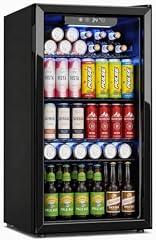
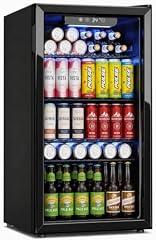
8
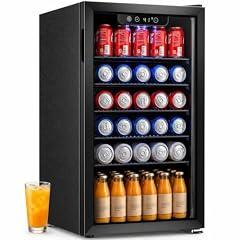
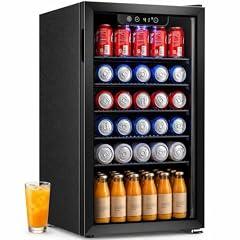
9
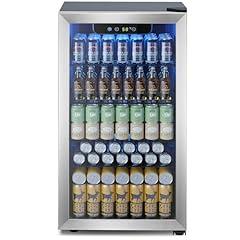
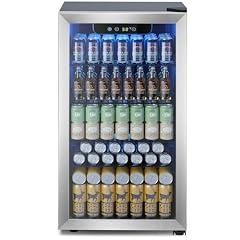
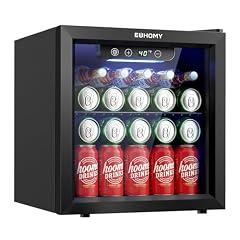
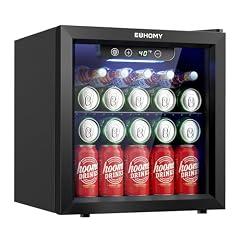
Beverage cooler overview
A beverage cooler is a dedicated cabinet for chilling sealed cans, bottles, beer, wine, soda, water, and similar drinks. Most supplied products are compressor-cooled, freestanding units with glass doors, adjustable shelves, digital controls, and no freezer. A few are designed for under-counter installation, while a passive ice chest is a different option entirely: it uses insulation and ice rather than electricity or refrigerant.
Whether a cooler works well depends on more than its lowest displayed temperature or advertised can count. Temperature control should be assessed by whether the cabinet reaches and holds its stated setting under realistic loading, door openings, and room conditions. A display range such as 34–61°F is only a manufacturer claim unless supported by model-specific testing. For perishable time-and-temperature-control foods, the relevant FDA Food Code benchmark is 41°F or below; a beverage-only cooler should not be treated as a validated food refrigerator merely because its display reaches that number. Several supplied manuals explicitly restrict their products to beverages and warn against storing food, medicines, blood, or biological products.
Installation is part of performance and safety. Buyers should confirm whether the exact product is freestanding or genuinely built-in, then follow the manual’s clearance, leveling, grounding, ventilation, ambient-temperature, and door-swing requirements. Marketing that says “under-counter” or “built-in” is not enough when the manual requires open space around the cabinet. A grounded outlet, no extension cord, an undamaged cord, and protection from water and heat recur across the reviewed products. Flammable R-600a refrigerant makes intact tubing, unobstructed ventilation, and qualified service especially important.
Capacity claims also need translation into real use. “130 cans,” “180 cans,” or “210 cans” may depend on a particular can size, shelf arrangement, or tightly packed layout. Bottle shapes and taller containers can reduce usable space. Cubic-foot figures can conflict across product materials, and a headline count does not establish standardized usable capacity. Measure the opening, cabinet depth, door clearance, and required airflow before buying.
For electrical safety, look for a current, exact-model listing in UL Product iQ, Intertek’s ETL Listed Product Directory, or the CSA Group Product Listing database, covering the complete appliance and its refrigerant system under the applicable refrigerator safety standard. A logo or marketplace specification without a matching model record is an unresolved claim. For energy, prefer an exact-model ENERGY STAR Product Finder entry, DOE Compliance Certification Database record, FTC EnergyGuide information, or model-specific test documentation. Stated annual kWh figures without those records are not verified efficiency results.
Finally, check the refrigerant type and charge on the rating label, manual, or technical sheet; confirm recall status through CPSC resources; and ask how the unit will be repaired and retired. A meaningful warranty, named support contact, manuals, parts information, and refrigerant-recovery guidance reduce the chance that a failed cooler becomes early waste. Across the supplied reviews, no product should be assumed suitable for perishable food, medicine, or other temperature-sensitive storage without independent temperature checking. Built-in claims, frost-free descriptions, certification marks, energy figures, capacity counts, and quiet-operation claims were repeatedly inconsistent or unsupported for exact models. R-600a products also require care because the refrigerant is flammable, and every refrigerant-containing cooler should be recycled through a service that recovers the refrigerant rather than placed in ordinary trash.
Integrity
The scores below compare the supplied products on the stated health, ecology, and evidence criteria. Higher scores indicate stronger supporting documentation or performance evidence; they do not turn an untested claim into a guarantee.
HHealth & Safety
Verified electrical and refrigerant safety
This measures whether the complete cooler, including its refrigerant system, has an independently verifiable safety listing for the exact model, with clear ratings and no unresolved safety action. It matters because these are mains-powered appliances and many use flammable R-600a. Among the supplied products, the strongest scores—up to 92—came with exact-model or model-configuration Intertek documentation; scores near 70 generally reflected unconfirmed UL or ETL claims.
Reliable safe-temperature control
This measures whether the cooler reaches and holds its stated temperature under realistic use and clearly limits storage to beverages when food safety is not established. It matters because a displayed 34°F or 40°F setting does not prove the contents are that cold. Higher-scoring products reached the low 70s with clearer manuals or ranges; lower scores reflected conflicting settings, warmer restart temperatures, or no independent accuracy and swing testing.
Safe installation and heat management
This measures clearance, freestanding or built-in designation, stability, cord instructions, ventilation, and protection against overheating or improper placement. It matters because blocked vents and enclosed installations can increase heat and operating risk. The strongest supplied scores, as high as 88, were associated with concrete clearance and grounding instructions. Lower scores reflected missing clearances or conflicts between marketplace built-in language and manuals requiring freestanding placement.
EEcology
Measured energy use
This measures electricity consumed for the storage volume, preferably through exact-model ENERGY STAR, DOE, EnergyGuide, or model-specific test records. It matters because annual kWh claims affect operating cost and environmental impact. The supplied products generally scored in the high 60s or low 70s, but most figures were manufacturer-stated and unsupported by matching records. Conflicting annual figures, including for larger coolers, lowered confidence.
Lower-impact refrigerant
This measures whether the refrigerant and charge are disclosed and whether the sealed system uses a lower-global-warming-potential option with suitable safety documentation. It matters because refrigerant choice affects climate impact and R-600a is flammable. Products with documented R-600a scored as high as 88, while products with undisclosed refrigerant details or only syndicated specifications scored lower. A lower-GWP refrigerant still requires correct servicing and recovery.
Responsible disposal and recovery
This measures whether the owner receives clear take-back, recycling, refrigerant-recovery, and disposal guidance, with repairable or separable components where documented. It matters because coolers contain refrigerant, oil, foam, electronics, glass, and metals. Scores ranged roughly from the high 60s to the mid-70s. Higher scores reflected disposal warnings or service guidance, but no supplied product had a clearly documented take-back route; use an appliance recycler that recovers refrigerant.
EEvidence
Honest capacity and fit claims
This measures whether can counts, bottle counts, cubic-foot figures, dimensions, door swing, and shelf layouts describe usable storage. It matters because capacity changes with container size and configuration. The supplied scores reached 76 where retailer or product-family information corroborated the physical format, but conflicting counts and undefined can sizes lowered confidence. A high score is not a promise that every advertised can will fit in a mixed load.
Honest cooling, noise, and feature claims
This measures whether claims such as quiet, frost-free, rapid, constant-temperature, commercial-grade, or indoor-only are qualified and supported at model level. It matters because several products had conflicting defrost descriptions, unsupported noise claims, or marketing that overstated built-in suitability. Scores ranged from 48 to 73. Higher scores reflected more restrained or documented claims; lower scores reflected direct conflicts or absent testing.
Independently verifiable model identity
This measures whether a buyer can match the exact model, manufacturer or importer, certification file, rating label, and independent registry record. It matters because similar-looking coolers are sold under multiple brands and product-family documents can be mistaken for exact-model evidence. Scores as high as 91 came with traceable Intertek model documentation. Scores near the 60s reflected syndicated listings, inconsistent model names, or unconfirmed certification marks.
Durable and repairable cooling system
This measures warranty quality, service contacts, manuals, parts availability, and practical coverage for compressor or sealed-system failures. It matters because a cooler with no repair pathway can become waste after a minor failure. The supplied scores ranged from 55 to 80. Higher scores included written parts-and-labor coverage or troubleshooting and named support; lower scores reflected one-year or unclear warranties, no parts catalog, and no documented sealed-system support.
Clean safety and compliance record
This measures whether the exact product, seller, importer, or manufacturer has unresolved recalls, warnings, prohibited sales, or inconsistent compliance information. It matters because a clean search is useful context but does not replace certification or testing. Supplied scores clustered around 70–78, with no matching CPSC recall identified in the reviewed records for the products discussed. Higher scores reflected clearer responsible-business and model information; lower scores reflected unresolved identity or compliance uncertainty.
Full reviews

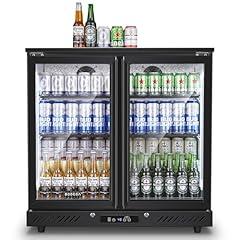
BODEGA Back Bar Cooler with Glass Doors
Overview
This is a two-door under-counter back-bar beverage cooler with four adjustable metal shelves, glass doors, an interior light, lock, automatic defrost, and digital temperature control. The manufacturer describes 7.38 cubic feet of capacity, 115 V, 146 W input, and a 32 F to 50 F temperature setting range. Its manual specifies fan-assisted cooling and a 0.05 lb charge of R600a refrigerant. The manual contains a meaningful storage limit that is more restrictive than the broad beverage and food imagery in some sales copy. It says this product is for display and storage of non-potentially-hazardous bottled or canned products only. It also requires a grounded outlet, no extension cord, and 4 inches of surrounding ventilation clearance. No current UL, ETL, CSA, ENERGY STAR, DOE efficiency, or model-specific independent temperature-performance listing was located for this product.
What works
- The manual gives an explicit beverage-only storage limit, reducing ambiguity about use with perishable foods.
- Electrical requirements are concrete, including 115 V, 60 Hz, 1.4 A, a grounded outlet, and no extension cord.
- The manual specifies 4 inches of ventilation clearance, stable level placement, accessible plug access, and protected vents.
- The refrigerant type and charge are disclosed. R600a is isobutane, which EPA lists with zero ozone-depletion potential and a global-warming-potential value of 3.
- The manual includes troubleshooting and illustrated replacement procedures for the fan, light tube, starter, and ballast.
What does not
- No current NRTL certification record for the complete product was located, and the manufacturer product page lists certification as blank.
- There is no located independent temperature test showing that this product holds its stated setting under a loaded, real-world condition.
- The manual limits use to non-potentially-hazardous bottled or canned products, so it is not documented as a refrigerator for cold-holding perishable foods.
- Capacity claims conflict. The manual and brand page state about 7.4 cubic feet, while the catalog record states 7.7 cubic feet, and can-count claims also vary.
- Energy figures conflict and lack test conditions. The manual states 1.34 kWh per day, while the catalog record reports 663 kWh per year, which is not the same annualized use.
Who is it for
This product suits a bar, tasting room, event station, office refreshment area, or home beverage setup that needs a roughly 35-inch-wide, counter-height display cooler for sealed cans and bottles. It is most appropriate where staff can maintain the stated 4-inch ventilation clearance, keep the unit level, use a dedicated grounded outlet, and monitor temperatures. The four adjustable shelves, lock, glass doors, and stated 32 F to 50 F adjustment range fit beverage display and access rather than general food refrigeration.
Who is it not for
It is not suited to operations that need documented cold holding for milk, prepared foods, cut produce, garnishes, or other time and temperature controlled foods. The manual expressly limits storage to non-potentially-hazardous bottled or canned products, and no independent temperature-holding evidence was found. It also is not a good fit for a tightly enclosed cabinet, a location without 4 inches of airflow clearance, an extension-cord installation, or buyers who require a traceable UL, ETL, CSA, ENERGY STAR, or DOE record before installation.
Integrity
The most useful safety disclosure is the model-specific manual, which identifies a 115 V, grounded electrical setup and warns against extension cords, damaged cords, blocked ventilation, and unqualified repairs. It also specifies 4 inches of clearance and cautions that the refrigerant is flammable. The product page does not provide a certification, and no current independent NRTL listing was located for the complete cooler. That leaves third-party verification of the electrical and sealed-system design unresolved. The manual identifies 0.05 lb of R600a, also called isobutane. EPA lists R600a with zero ozone-depletion potential and a global-warming-potential value of 3, but it is an A3 flammable refrigerant and depends on correct sealed-system design and servicing. The manual directs disposal to qualified experts, but no product-specific take-back or recycling program was found. At retirement, use an appliance recycler that recovers refrigerant, compressor oil, and other regulated components rather than placing the cooler in ordinary waste.

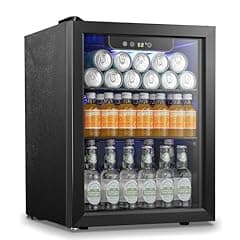
Antarctic Star Beverage Refrigerator 26 Bottle 130 Can
Overview
This is a compact, freestanding compressor beverage refrigerator with a glass door, four wire shelves, digital controls, and a claimed 3.2 cubic feet of storage. The product listing claims space for 26 wine bottles or 130 cans. Those counts are not tied to a stated bottle shape or can size, so they should be treated as layout-dependent rather than guaranteed usable capacity. Its most important independently confirmed feature is electrical safety verification. An Intertek authorization covers this exact product model under U.S. and Canadian household refrigeration safety standards. Intertek documentation also identifies a 22 g R600a refrigerant charge. The manual gives detailed freestanding clearance, leveling, grounding, and heat-management directions. However, no independent temperature-performance or energy-use result was located for this product.
What works
- The exact product model is included in an Intertek ETL authorization for household refrigeration safety requirements.
- Intertek documentation identifies R600a refrigerant with a 22 g charge, a very low global-warming-potential refrigerant option.
- The manufacturer manual gives concrete freestanding installation directions, including clearance, leveling, grounded-outlet, and no-extension-cord instructions.
- The manual identifies a U.S. support contact and provides operating, cleaning, door-reversal, and installation instructions.
What does not
- The manual presents conflicting temperature information. It describes a 32 to 61 F setting range, then says the lowest setting is 40 F after loading.
- No independent test report was located for cabinet temperature accuracy, temperature swing, pull-down time, noise, or annual electricity consumption.
- The 26-bottle and 130-can claims do not identify the bottle profile, can size, or test loading method, limiting confidence in real-world capacity.
- No written warranty duration, sealed-system coverage, parts catalog, service manual, or product-specific recycling instructions were located.
Who is it for
This product suits a household, office, or bar user who wants a compact, freestanding refrigerator mainly for sealed beverages and has room to preserve the specified ventilation clearances. It is most appropriate where a 115 V grounded outlet is available and the unit can sit level in a temperature-controlled indoor space. It also suits a buyer who values an independently documented ETL safety authorization and prefers R600a over older high-GWP refrigerants, while accepting that the stated container capacity depends on the actual bottle and can mix.
Who is it not for
It is not suited to built-in cabinetry, garages, RVs, patios, or other hot, humid, or outdoor locations. The manual expressly limits it to freestanding indoor use and warns that enclosure or blocked ventilation can overheat the unit. It is also not appropriate for storing temperature-sensitive perishable food without a separate verified thermometer and a proven ability to hold 41 F or below. Buyers needing measured quiet operation, verified energy consumption, readily orderable repair parts, or explicit compressor warranty coverage need more documentation than was located.
Integrity
The strongest health and safety finding is the independently documented Intertek authorization for the exact product model. The authorization covers household refrigeration safety standards used in the United States and Canada. The operating instructions reinforce that safety basis with grounding, no-extension-cord, ventilation, stable-surface, and indoor freestanding-use directions. The temperature documentation is less reassuring because it contains conflicting lower-limit statements and acknowledges warmer areas near the door. There is no independent temperature-holding result for this product. The sealed system uses 22 g of R600a, also called isobutane. EPA lists R600a as an acceptable household-refrigeration refrigerant and assigns it very low global-warming potential, but it is flammable and should never be serviced or punctured casually. No product-specific take-back or recycling program was found. At retirement, use an appliance recycler that recovers refrigerant and oil rather than placing the product in mixed waste. No matching CPSC recall was located in the recall search reviewed.

Antarctic Star 68 Can Beverage Cooler
Overview
This is a freestanding, compressor-cooled beverage refrigerator with a glass door, two wire shelves, front leveling legs, and a small 1.7 cubic foot format. The product documentation specifies a 40 to 61 F adjustable setting range, with 43 F as the default. It is intended for drinks, not demonstrated as a precision refrigerator for perishable food. Independent certification documentation identifies this exact product as covered by an Intertek authorization to mark for the applicable US and Canadian household refrigerating-appliance safety requirements. The same certification construction report documents a 115 V, 60 Hz, 1.0 A electrical rating and 18 g of flammable R600a refrigerant. The manual calls for 2 inches of clearance at each side, above, and behind the unit.
What works
- The exact product is documented under an Intertek safety authorization covering US and Canadian household refrigeration standards.
- The manual gives a specific 40 to 61 F control range and acknowledges that temperatures can vary inside the cabinet.
- The sealed system uses 18 g of R600a, a low-global-warming-potential refrigerant recognized by EPA as acceptable for household refrigeration.
- Clear installation guidance includes 2 inches of ventilation clearance on all three ventilated sides, leveling legs, accessible plug placement, and no extension-cord use.
What does not
- No independent temperature-accuracy, temperature-swing, pull-down, or noise test for this product was found.
- Its 40 F minimum setting can meet the 41 F food-safety benchmark in principle, but the manual does not clearly limit use for perishable food or verify cabinet-wide temperatures under load.
- The product is freestanding only, so enclosing it in cabinetry or blocking the required ventilation space can increase overheating and poor-cooling risk.
- The manual warns that R600a is flammable and that refrigerant-circuit repairs require trained personnel. It provides disposal warnings but no manufacturer take-back program or parts ordering route.
- The written manual requires proof of purchase for warranty service, but it does not provide detailed sealed-system coverage, a parts list, or a repair manual for consumers.
Who is it for
This product suits a renter, office, home bar, or entertainment area that needs a compact, freestanding place for canned and bottled drinks and can provide open space around all sides. It is most appropriate for buyers who can use a grounded wall outlet, keep the rear area accessible, and accept manual defrost care. The documented temperature range is useful for chilled beverages, especially where a standard kitchen refrigerator is not convenient.
Who is it not for
It is not for built-in cabinetry, garages with uncontrolled heat, or locations where the required 2 inches of ventilation clearance cannot be maintained. It is also not a strong choice for storing meat, dairy, prepared foods, medicine, or other temperature-sensitive items, because no independent temperature-uniformity evidence was located and the manual does not give a clear perishable-food storage statement. Households unable to supervise children around a lockable glass-door appliance should also follow the manual's child-entrapment precautions carefully.
Integrity
The strongest safety finding is traceability. An Intertek authorization names the exact product under US and Canadian household refrigeration safety standards, and the certification construction report identifies its electrical rating, compressor-family components, and R600a refrigerant charge. R600a has very low climate impact compared with older high-GWP refrigerants, but it is flammable. The manual appropriately says not to puncture tubing, keep flames and explosive fumes away, and use trained service personnel for sealed-system repairs. The manual provides practical heat-management instructions, including 2 inches of side, top, and rear clearance, upright settling time before operation, and avoiding extension cords. It also directs disposal under federal or local rules because the appliance contains flammable refrigerant. No matching CPSC recall or product safety warning was found in the searches performed. However, no current ENERGY STAR listing, model-specific EnergyGuide label, measured energy-use result, manufacturer recycling program, or consumer parts pathway was located.

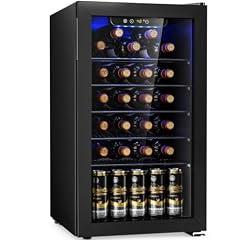
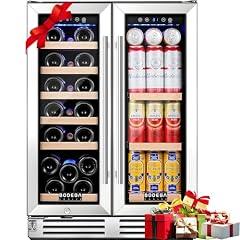
BODEGA Dual Zone Wine and Beverage Refrigerator
Overview
This is a 24-inch, front-vented dual-compartment cooler intended for bottled wine and canned beverages. The manufacturer specifies a 23.4 by 22.7 by 33.4 inch cabinet, 19 standard 750 mL Bordeaux bottles, 57 cans, wooden wine shelves, wire beverage racks, two glass doors, and built-in or freestanding placement. The manufacturer states that the wine zone adjusts from 41 to 68 F and the beverage zone from 36 to 50 F. A model-specific manual hosted by a major retailer matches the dual-zone format and documents grounded-outlet use, front built-in installation dimensions, and a flammable refrigerant circuit. There is no model-level independent temperature test, energy label, or publicly verifiable safety-listing record supplied for this product. The product is for wine and beverages, not a validated refrigerator for perishable food storage.
What works
- Separate controls allow a warmer wine zone and a colder beverage zone, according to the manufacturer.
- The manual provides a built-in installation drawing with cabinet-opening dimensions and shows a front lower ventilation grille.
- The manual instructs use of an exclusive grounded outlet, accessible plug, level floor, and unobstructed ventilation.
- The manufacturer states a 24-month warranty covering the compressor and other accessories, plus customer support contact information.
What does not
- No matching UL, ETL, or CSA model-level listing was publicly verifiable in the searched certification sources, despite marketplace metadata suggesting possible certifications.
- There is no independent temperature-accuracy, pull-down, or temperature-swing test for this exact cooler. It should not be treated as validated storage for time-temperature-control-for-safety foods.
- The manufacturer claims quiet operation at 42 dB or less and commercial use, but no model-specific test report was located for either claim.
- Capacity information is internally inconsistent. The product page says 57 cans, while marketplace specifications also state 74 cans for the same product.
- No model-specific EnergyGuide label, ENERGY STAR record, or DOE energy test record was located. The stated annual energy figure is therefore unverified.
Who is it for
This product suits a household bar, kitchen, office lounge, or hospitality space that needs separated storage for sealed wine and packaged drinks, has a roughly 24-inch undercounter opening, and can provide a dedicated grounded outlet. It is most appropriate for buyers who will measure their own cabinet opening, leave the front grille unobstructed, verify actual interior temperatures with an independent thermometer, and primarily store beverages rather than safety-sensitive chilled foods. Its stated bottle count is based on narrow standard Bordeaux bottles, so buyers with wider bottles should plan for fewer usable slots.
Who is it not for
It is not for anyone who needs certified commercial food-service refrigeration, documented temperature stability, or dependable holding of meat, dairy, prepared foods, or other time-temperature-control-for-safety foods. The wine side starts at 41 F, which is the FDA Food Code cold-holding benchmark, and no independent performance test confirms sustained product temperatures. It is also unsuitable for a closed cabinet without the specified front ventilation, locations with inaccessible outlets, or installations near heat and direct sun. Buyers needing a traceable NRTL certificate, verified energy label, or clearly documented refrigerant charge should select a product with those records.
Integrity
The manual contains meaningful basic safety instructions. It calls for a grounded dedicated wall outlet, no extension cable, an accessible plug, a level load-bearing floor, clear ventilation openings, and care to avoid damage to the refrigerant circuit. It also identifies the circuit as using a flammable refrigerant, while a related model manual identifies R600a. However, the exact product's refrigerant charge and its model-level NRTL safety listing were not publicly verifiable from the records searched. The product has no independently located energy certification or model-specific consumption test. The manufacturer gives disposal language directing users to collection systems or retailers, but does not offer a U.S. take-back program or service documentation for refrigerant recovery. At end of life, use an appliance recycler that recovers refrigerant and compressor oil before processing. No matching CPSC recall or public incident report was located in the searched sources.
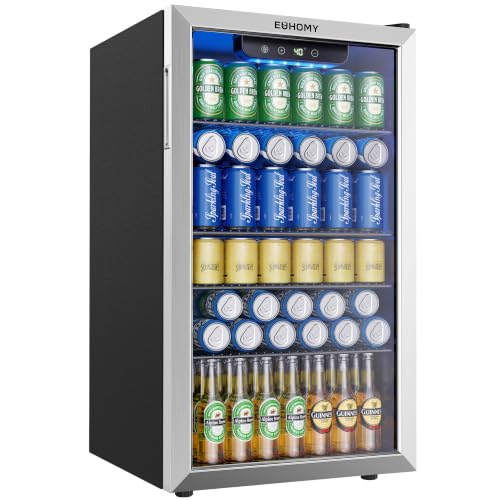
Euhomy Mini Fridge Beverage Cooler 3.2 Cu.Ft
Overview
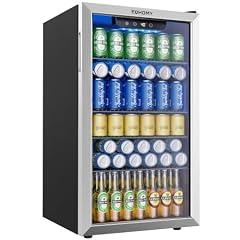
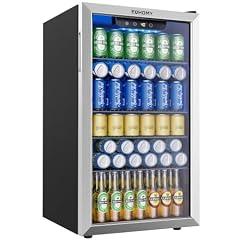
This is a freestanding, single-door beverage refrigerator for canned drinks, beer, wine, and other beverages. Euhomy identifies the product as a 3.2 cubic foot compact freezerless unit measuring 18.9 inches deep, 17.5 inches wide, and 31.5 inches high. The manufacturer states it has adjustable shelves, a reversible door, frost-free operation, 115-volt power, and space for up to 130 cans. The manufacturer states a 32°F to 61°F digital setting range and a three-layer glass door. Its available BR-110 manual instead describes beverage storage, warns that internal temperatures vary by location, and directs users to operate it only in a dry, ventilated area between 60°F and 90°F. No model-specific independent temperature, noise, energy-use, refrigerant-charge, or safety-listing record was located in the public sources reviewed.
What works
- The manufacturer provides concrete external dimensions and a 3.2 cubic foot capacity claim for planning a freestanding location.
- The available BR-110 instructions give useful electrical and placement guidance, including a grounded 115V outlet, a dedicated 15A socket, no extension cord, ventilation access, and a level hard surface.
- A digital control is manufacturer-stated, with a 32°F to 61°F selectable range and a displayed internal-temperature reading.
- Euhomy offers a one-year limited warranty for defects in materials and workmanship, plus a US phone number, email support, and stated lifetime technical support.
What does not
- No current model-specific UL, ETL, CSA, ENERGY STAR, DOE, or EnergyGuide record was independently confirmed in the public sources reviewed.
- The product has no independently published temperature-accuracy or temperature-swing test, so its ability to safely hold perishable food at 41°F or below is unproven.
- The manufacturer’s cooling-range presentation is unclear. The product page advertises 32°F to 61°F, while the available BR-110 instructions tell users that the lowest cooling setting is 40°F after loading.
- The exact product’s refrigerant type and charge are not disclosed on the reviewed product page or available BR-110 manual, and Euhomy does not publish a product-specific recycling or sealed-system service document.
Who is it for
This product suits a household, office break room, bedroom, or home bar that needs a dedicated freestanding beverage cabinet rather than a food refrigerator. Its stated 18.9 by 17.5 inch footprint and 31.5 inch height are practical for a narrow indoor location with ventilation around the unit. It is most appropriate for buyers storing packaged drinks who can use a grounded dedicated outlet, keep the room within the stated 60°F to 90°F operating range, and are comfortable relying on manufacturer-stated capacity and cooling claims.
Who is it not for
It is not suited to storing meat, dairy, prepared meals, medicines, blood products, or other temperature-sensitive items, because there is no independent evidence that this specific product holds food-safe temperatures under realistic loading and room conditions. It is also unsuitable for built-in cabinetry, outdoor exposure, garages that fall outside the stated room-temperature range, or any site without clearance for ventilation. Buyers who require independently verified electrical listing, measured energy consumption, documented refrigerant details, or compressor-specific warranty coverage should use a product with those records.
Integrity
The available BR-110 instructions contain meaningful basic safety directions. They call for a grounded 115V supply, advise against extension cords and ungrounded adapters, require ventilation openings to remain clear, and warn users not to store flammable aerosols. The manual also identifies the unit as a beverage appliance, not a refrigerator for blood, drugs, or biological products. Its stated temperature range alone does not establish reliable cold holding for perishable foods, which are generally held at 41°F or below in the FDA Food Code. The exact product’s refrigerant and charge were not disclosed in the reviewed materials. That prevents confirmation of the climate impact and whether the complete appliance has the safety listing required for a flammable refrigerant system such as R-600a. No matching recall or regulatory action was located in the public searches reviewed. At end of life, refrigerant, compressor oil, metal, and foam should go through an appliance recycler that recovers refrigerant rather than through ordinary trash.

EUHOMY 24 Inch Beverage Refrigerator
Overview
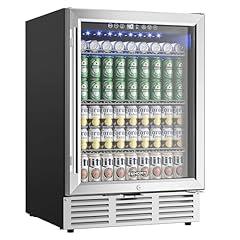
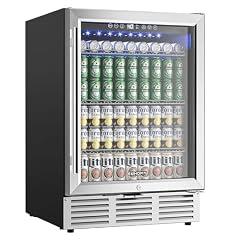
This product is a single-zone, compressor beverage cooler intended for under-counter or freestanding use. Its manufacturer documentation describes a 37 to 65 F adjustment range, three wire shelves, a reversible glass door, adjustable feet, and a 115 V, 60 Hz, 1.5 A electrical rating. The product is intended for drinks, not perishable food or medicines. A technical label document identifies R-600a refrigerant with a 30 g charge and carries an ETL Listed marking referencing UL 60335-1 and UL 60335-2-24. The marking is visible in product documentation, but an exact matching public Intertek directory record was not located. Published product documents also conflict on depth and weight, so cabinet fit should be confirmed from the unit's own rating label and installation drawing before cabinetry is cut.
What works
- The disclosed R-600a charge is 30 g. EPA lists R-600a as an acceptable household refrigeration refrigerant with GWP 3.
- The manufacturer provides grounded-outlet, dedicated-circuit, leveling, ventilation, and no-extension-cord instructions.
- The product documentation states that it can be installed built-in or freestanding, with reversible-door instructions.
- A one-year limited warranty, replacement-parts availability by request, phone support, and lifetime technical support are manufacturer-stated.
- The manual expressly says not to store perishable food, medicine, or medical products.
What does not
- The ETL claim appears on product documentation, but an exact model match was not independently confirmed in Intertek's public listing resources.
- There is no located independent temperature-accuracy, temperature-swing, noise, or energy-use test for this product.
- Product documents conflict on cabinet depth and net weight, which creates a real fit-planning risk for built-in installations.
- The stated 180-can capacity is not accompanied by a clearly documented can size and shelf configuration in the verified manual material.
- R-600a has low climate impact, but it is flammable. Refrigerant tubing must not be punctured and service requires trained personnel.
Who is it for
This product suits a household, office break room, or bar buyer who wants a dedicated beverage cabinet rather than food refrigeration, has a 24-inch under-counter opening or a stable freestanding location, and can provide a grounded dedicated outlet. It is most appropriate where the room stays within the manufacturer's 50 to 90 F operating range and where the installer can preserve the specified ventilation space. Measure the delivered product before finalizing a built-in opening because published dimensions are inconsistent.
Who is it not for
It is not for storing meat, dairy, prepared meals, medicines, vaccines, or other temperature-sensitive products. Its lowest stated setting is 37 F, but no independent test was located to show temperature accuracy under load or during hot-room use. It also does not suit locations exposed to weather, persistent moisture, direct sun, or temperatures outside the stated 50 to 90 F range. Avoid it where cabinetry dimensions cannot be verified before installation, or where a damaged refrigerant line could be serviced only by an unqualified person.
Integrity
The important health limitation is use case. The manufacturer says this is for beverages and specifically instructs users not to store perishable food, medicine, or medical products. That matters because the FDA Food Code cold-holding benchmark for time and temperature control for safety food is 41 F or below, while this product has no located independent test showing loaded-cabinet accuracy or temperature stability. Its sealed system is documented as using 30 g of R-600a, also called isobutane. EPA lists it with GWP 3 for household refrigeration, a lower climate-impact option than many legacy refrigerants. R-600a is also A3 flammable, so the manual's warnings against puncturing tubing, using extension cords, and servicing it without trained personnel are material safety instructions. EPA directs refrigerated appliances to appropriate refrigerant recovery and recycling at disposal. No manufacturer take-back program or model-specific recycling pathway was located. Public CPSC recall searches did not identify a matching recall for this product.

Icyglee 126 Can Mini Fridge Cooler
Overview
This is a freestanding, compressor-cooled beverage refrigerator with a black glass door, digital temperature display, reversible door, and four removable shelves. The product record lists a 3.2-cubic-foot interior, 18.9 by 17.5 by 31.3 inch exterior, and 50-pound weight. It is intended for cans, bottles, soda, beer, and wine rather than freezer storage. The manufacturer states a 34 to 64°F adjustable range, 360-degree air circulation, a tempered low-E glass door, LED lighting, and capacity for up to 126 cans. An independent retailer reproduction of the product listing repeats these claims, but no product-specific laboratory temperature test, safety certificate record, refrigerant label, EnergyGuide label, or installation manual was located. The product record also says manual defrost, which conflicts with the frost-free claim in the sales copy.
What works
- Four removable shelves are stated to allow a configurable layout for cans and bottles.
- The manufacturer-stated 34 to 64°F range includes temperatures suitable for chilled beverages.
- A reversible door and adjustable feet are useful manufacturer-stated placement features for a freestanding cooler.
- Searches found no matching CPSC recall or public safety warning for this product or brand.
What does not
- No exact-model UL, ETL, or CSA listing record was located, so independent electrical and refrigerant-system safety verification remains unconfirmed.
- No independent temperature-accuracy or temperature-swing testing was located. Do not rely on the display alone for perishables requiring 41°F or colder storage.
- The claimed 126-can capacity is not tied to a defined can size or shelf arrangement. The brand's related 3.2-cubic-foot product page instead says nearly 120-plus cans.
- The sales copy calls the cooler frost-free, while the product record lists manual defrost. That is a direct claim inconsistency.
- No exact-model refrigerant type, refrigerant charge, EnergyGuide label, parts catalog, service manual, or take-back program was found.
Who is it for
This cooler suits a household, office, dorm room, or bar area that needs separate storage for packaged drinks and has room for a 31.3-inch-tall, freestanding appliance. It is most appropriate for buyers who can leave ventilation space around the cabinet, use the shelves to accommodate their own bottle and can mix, and verify actual cabinet temperature with a separate thermometer. It is also better suited to people storing beverages rather than relying on it as the sole refrigerator for perishable food.
Who is it not for
It is not suited to buyers who need independently documented electrical certification, a verified low-impact refrigerant, measured energy performance, or a published service-parts pathway. It is also not appropriate for built-in installation, because the available product information identifies it as freestanding and no exact installation clearance document was located. Households storing meat, dairy, prepared foods, or medicines should choose equipment with validated temperature performance and use continuous temperature monitoring where required.
Integrity
The key health issue is verification rather than a known product defect. No matching CPSC recall or public warning was located in the searches performed, but no exact-product record was found in UL, Intertek ETL, or CSA listing resources. The product's stated 34°F minimum could support cold beverage service, yet no model-specific evidence was found showing that it reaches and holds that temperature under load. FDA food-safety guidance uses 41°F or below for cold holding of time and temperature controlled foods. Environmental disclosure is limited. The catalog record reports 289 kWh per year, but no exact EnergyGuide, DOE compliance record, or ENERGY STAR entry was located to verify it. Refrigerant type and charge are not disclosed, so its climate impact and the safety basis for its sealed system cannot be assessed. At retirement, use an appliance recycler that recovers refrigerant, compressor oil, and recyclable metals, as EPA guidance recommends.

COWSAR Mini Fridge, 130 Can Beverage Refrigerator
Overview
This is a freestanding, compressor-cooled beverage refrigerator listed as a 3.2 cubic foot black unit with a glass door, interior light, digital controls, four shelves, and 115-volt power. It is intended for chilled drinks in a home bar, office, or similar indoor space. The marketplace description states a 130-can capacity and a 32 to 61°F control range, but those are manufacturer-stated claims, not independently tested results. COWSAR’s own store lists a 3.2 cubic foot beverage-cooler variant with a 32 to 61°F range and a one-year warranty. However, its published dimensions and door description do not fully match this product listing, and no model-specific manual, rating-label image, certification file, energy label, or temperature test report was located. That leaves important safety, fit, and performance details unconfirmed.
What works
- Compressor cooling and a 32 to 61°F setting range are manufacturer-stated for the 3.2 cubic foot product line.
- The product is identified as freestanding, which is the appropriate installation category for a cooler without built-in ventilation documentation.
- COWSAR publishes a U.S. service address, phone number, and support email, plus a one-year repair warranty claim.
- Four adjustable shelves and a claimed 130-can layout can provide flexible beverage organization, though container size is not specified.
What does not
- The claimed ETL approval could not be matched to a public Intertek listing for this specific product, certification file, or appliance standard.
- No independent temperature, noise, energy-use, or cooling-uniformity test was found. The stated 1°F precision, 36 dB noise, and daily energy claims remain unproven.
- Published product details are inconsistent. COWSAR’s 3.2 cubic foot page describes a non-reversible door and different dimensions, while this product is described as reversible.
- The catalog identifies R-134a refrigerant, but no product rating label or charge amount was found. EPA lists HFC-134a as unacceptable in new household refrigerator and freezer equipment from January 1, 2021.
Who is it for
This product fits a buyer seeking a freestanding beverage-only cooler with a roughly 31-inch height, glass-door display, and manufacturer-stated space for a large supply of standard cans. It is most suitable for a home bar, office break area, game room, or other indoor location where drinks, not temperature-sensitive food, are the intended contents. The buyer should have enough surrounding space for ventilation and should confirm the delivered unit’s rating label, door swing, dimensions, refrigerant, and certification mark before installation.
Who is it not for
It is not appropriate for anyone who needs documented cold-holding performance for milk, meat, prepared foods, medicines, or other temperature-sensitive items. The published setting range alone does not prove that stored contents remain at 41°F or below, the FDA Food Code benchmark for cold holding. It also does not suit built-in cabinetry unless the delivered instructions specifically permit that installation. Buyers needing verified low energy use, a lower-impact refrigerant, readily available parts, or a confirmed safety-certification record should require those documents before relying on this product.
Integrity
The listing claims ETL approval, and Intertek explains that an ETL Listed mark indicates testing to applicable North American safety requirements. However, no public directory record or certification number was found that ties this exact product to an Intertek appliance listing. Treat the approval as unconfirmed until the physical rating label can be checked. For food safety, use an independent thermometer if storing anything perishable. FDA guidance uses 41°F or below as the cold-holding benchmark. The catalog specifies R-134a, but the product’s official pages do not provide a rating-label image or refrigerant charge. EPA identifies HFC-134a as a high-global-warming-potential refrigerant and says it is unacceptable in newly manufactured household refrigerators and freezers from January 1, 2021. At end of life, do not place the cooler in ordinary trash. EPA advises using an appliance recycler or disposal route that recovers refrigerant, compressor oil, and other components.

Electactic Mini Fridge 130 Can Beverage Cooler
Overview
This is a freestanding compressor beverage cooler with four wire shelves, a tinted double-pane glass door, touch controls, front leveling legs, and a reversible door. The product is intended for indoor beverage storage, not outdoor, garage, RV, or enclosed-cabinet use. Its supplied instructions specify 2 inches of clearance at the sides and top, 4 inches at the rear, and about 22 inches in front for door opening. The exact underlying JC-90VEL-F design is covered in an Intertek listing construction report for UL 60335-1 and UL 60335-2-24 refrigerator safety requirements. That report identifies Electactic among the covered brands. The manual states a 115 V, 60 Hz grounded connection and a digital setpoint range of 32 F to 61 F, but later says the lowest setting is 40 F and acknowledges warmer areas near the door. There is no model-specific independent temperature-stability test located.
What works
- The exact model appears in an Intertek ETL listing construction report covering the applicable household-appliance and refrigerating-appliance safety standards.
- The documented sealed system uses R-600a, or isobutane, with a 22 g charge in the covered model configuration.
- Installation instructions are unusually specific about clearances, level placement, grounded direct connection, avoiding extension cords, and keeping the cord away from the compressor.
- The product manual documents four wire shelves, a reversible door, front leveling legs, and a tinted double-pane glass door.
What does not
- The manual presents inconsistent low-temperature information, first describing a 32 F setpoint range and later stating that 40 F is the lowest setting.
- No independent model-level test was located for actual pull-down time, temperature swings, cabinet noise, or the 130-can layout.
- The manual does not clearly say that perishable foods should not be stored in this beverage cooler. Its stated 40 F minimum also leaves little margin below the FDA 41 F cold-holding benchmark.
- A one-year warranty and service phone numbers are stated, but no parts catalog, service manual, compressor coverage terms, or manufacturer take-back program was located.
Who is it for
This product suits someone setting up a dedicated indoor drink station who has a stable floor, a grounded wall outlet, and enough open space around the cabinet for ventilation. It is most appropriate for canned and bottled beverages in a home bar, dorm common area, office break area, or similar indoor setting. The user should be comfortable following the documented clearance, leveling, and direct-plug instructions, and should verify the internal temperature with a separate thermometer if drinks need to be kept at a particular serving temperature.
Who is it not for
It is not for storing meat, dairy, prepared meals, or other perishable foods that require dependable cold holding at 41 F or below. The documented temperature information is internally inconsistent, and no independent stability test was located. It is also unsuitable for enclosed cabinetry, garages, RVs, patios, or other hot, humid, or outdoor locations. Households that need formal service documentation, readily orderable replacement parts, or long sealed-system warranty coverage should look for a product with those records published before purchase.
Integrity
The strongest safety evidence is independent listing documentation. The exact JC-90VEL-F design appears in an Intertek ETL construction report assessed to UL 60335-1 and UL 60335-2-24, including refrigeration-appliance electrical safety requirements. The available manual also provides practical setup controls, including specified ventilation gaps, a grounded direct connection, no extension cord, and instructions not to allow the cord to contact the compressor. The listed refrigeration system uses 22 g of R-600a. This is a non-ozone-depleting, lower-climate-impact refrigerant, though it is flammable and is intended only for equipment designed and safety-listed for it. No manufacturer recycling or take-back instructions were located. At end of life, use an appliance recycler or local program that recovers refrigerant and compressor oil rather than placing the unit in ordinary trash. No matching U.S. recall or regulatory action was located in the searched sources.

EUHOMY 48 Can Beverage Refrigerator with Glass Door
Overview
This is a compact, compressor-cooled countertop beverage refrigerator with a glass door, reversible hinge, wire shelf, digital controls, and leveling legs. The published manual lists exterior dimensions of 16.9 by 16.2 by 18.5 inches, a 115 V, 60 Hz, 1.0 A electrical rating, and 14 g of R-600a refrigerant. It is intended for indoor, freestanding beverage storage, not for perishable food. The manufacturer-stated control range is 40 to 61°F. That lower setting is close to the 41°F cold-holding benchmark, but no model-specific independent temperature-accuracy or cycling test was located. Installation guidance is comparatively detailed, including a 50 to 90°F ambient range, a hard level surface, and 2 inches of clearance on every side. A retailer presents an ETL safety claim, but an exact matching public NRTL registry record was not independently confirmed.
What works
- The published manual clearly limits use to bottled or canned beverages and says not to store perishable foods.
- The manual gives concrete heat-management instructions, including freestanding-only use, 2-inch clearances, and a 50 to 90°F operating environment.
- The refrigerant type and charge are disclosed, R-600a at 14 g. EPA classifies R-600a as a low-GWP refrigerant acceptable with specified use conditions.
- A written one-year limited warranty, phone and email support, lifetime technical support, and purchasable replacement parts are stated in the published manual.
What does not
- No independent model-specific testing was located for temperature accuracy, temperature swings, noise, cooling speed, or the stated annual energy use.
- The lowest stated setting is 40°F, but the product is expressly not for perishable foods, and there is no independent evidence that it reliably holds food-safe temperatures under load.
- The exact product's ETL claim could not be confirmed in the public certification directory, despite a retailer repeating the claim.
- Capacity and noise claims are not fully consistent across public materials. One listing says 48 cans and 38 dB, while another closely related listing says 50 cans and under 38 dB.
- Public specifications conflict on voltage. The published manual specifies 115 V, while some marketplace specification data state 220 V.
Who is it for
This product suits someone who wants a small, dedicated indoor drink cooler for canned or bottled beverages in a home office, bedroom, bar area, apartment, or similar conditioned room. It is most appropriate where it can stand on a firm, level surface with open space around the cabinet and a grounded 115 V outlet. The documented 40 to 61°F range makes it a beverage-serving appliance rather than a general-purpose food refrigerator. It also suits owners comfortable monitoring actual cabinet temperature with a separate thermometer.
Who is it not for
It is not suited to storing meat, dairy, prepared meals, infant food, or other perishable foods that require dependable cold holding. The manual expressly limits it to bottled and canned beverages, and no independent loaded-temperature testing was found. It is also unsuitable for a built-in cabinet, garage, outdoor area, unheated space, or a tight enclosure because it is freestanding only and needs ventilation clearance. Buyers requiring independently verifiable electrical certification, low measured energy use, or a longer sealed-system warranty need more documentation than is publicly available here.
Integrity
The key health safeguard is the manual's explicit beverage-only limit. It says not to store perishable food, which matters because the stated minimum setting is 40°F and no independent evidence was found showing how closely the cabinet holds that setting under realistic loading. The manual also specifies grounding, warns against damaged cords and adapters, requires freestanding installation, and gives ventilation clearances. A retailer claims ETL certification, but the exact product could not be matched to a public NRTL listing during this review. The sealed system uses 14 g of R-600a, also called isobutane. EPA lists R-600a as a low-global-warming-potential refrigerant that is acceptable with use conditions, while classifying it as flammable. The manual warns against puncturing refrigerant tubing and calls for trained servicing. It gives only general disposal advice, with no manufacturer take-back program located. At end of life, use an appliance recycler that recovers refrigerant, oil, and metal rather than placing it in ordinary trash.