
10 Best Magnesium Glycinate
 Lauren Wilson
Please note that we participate in affiliate marketing programs. When you purchase through links on our site, we may earn a commission. As an Amazon Associate we earn from qualifying purchases. This comes at no additional cost to you and helps support the resources required to provide valuable content.Advertising Disclosure
Top-rated Magnesium Glycinate Comparison
1

2
4
5
6
7
8
9
+
10
Magnesium glycinate: what to look for
Magnesium glycinate products provide magnesium bound to glycine, but the useful number is **elemental magnesium** the amount of magnesium itself not the total weight of magnesium glycinate or a larger compound blend. A label saying “500 mg glycinate,” “1,000 mg complex,” or “1,441 mg chelated magnesium” may provide much less elemental magnesium. Buyers should look for a clearly stated elemental amount per serving, the number of capsules or gummies in that serving, and directions that make the daily intake easy to calculate.
For healthy adults, the supplied reviews repeatedly use **350 mg per day** as the upper limit for magnesium from supplements and medicines. A lower, conservative serving may be easier to tolerate, while higher amounts can cause diarrhea, nausea, or abdominal cramping. The form also matters: a product presented as glycinate may contain oxide, citrate, malate, chloride, or other salts. Every salt should be named, and the label should distinguish each compound’s weight from total elemental magnesium. Proprietary blends and unclear front-panel figures make dose and tolerability harder to judge.
A focused formula is generally easier to assess than a sleep or “calm” stack. Added vitamin B6, vitamin D, zinc, copper, manganese, sweeteners, botanicals, amino acids, 5-HTP, GABA, ashwagandha, lemon balm, apigenin, or L-theanine can create cumulative-dose, sedation, allergy, or interaction questions. Each active ingredient should have a disclosed amount. Claims about sleep, cramps, anxiety, energy, heart health, or disease treatment should be qualified: the supplied reviews describe human evidence for magnesium and sleep as limited or uncertain, and report that magnesium is unlikely to prevent typical idiopathic cramps in older adults.
Testing claims need the same scrutiny. “Third-party tested,” “GMP,” or “FDA-registered facility” does not by itself verify the contents of the finished product. Stronger evidence is an active matching entry in the **USP Verified**, **NSF Certified Dietary Supplements**, **NSF Certified for Sport**, **Informed Choice**, or **Informed Sport** public registries. Facility GMP certification is useful but is not finished-product certification. The most buyer-relevant laboratory evidence is a current, lot-matched certificate of analysis that identifies the laboratory, methods, limits, test date, package lot, elemental-magnesium potency, identity, heavy metals, and microbiology.
Capsules, gummies, powders, and liquids also need appropriate performance and stability controls. Evidence may include finished-product disintegration or dissolution for capsules, and stability and microbiological testing for gummies and liquids. Packaging is a separate consideration: concentrated, durable packaging without individual sachets can avoid some unnecessary material, but none of the supplied products disclosed enough package resin, recycled content, or recycling information to verify a lower-waste claim.
Across the supplied products, recurring safety gaps matter. Buyers with kidney impairment should seek clinician guidance because reduced clearance can raise toxicity risk. Magnesium can reduce absorption of oral bisphosphonates and tetracycline or quinolone antibiotics, so dosing should be separated according to pharmacist or prescriber advice; many labels did not provide usable timing instructions. People should also total magnesium from antacids, laxatives, multivitamins, and other supplements. Extra caution is warranted with pregnancy, breastfeeding, children, heart or liver conditions, thyroid or hormone-sensitive conditions, serotonergic medicines, sedatives, or multi-ingredient calming products. Persistent insomnia, cramps, weakness, palpitations, or suspected deficiency should not be self-treated solely from marketing claims.
Integrity
The category was assessed across dose, interaction safety, formula design, product performance, evidence, manufacturing accountability, and packaging. Higher scores reflect clearer labels, more usable warnings, stronger finished-product verification, or better-documented controls—not a guarantee that a product will treat a condition.
HHealth & Safety
Useful dose without excess
This measures whether elemental magnesium is clearly stated, sensible for an adult, and unlikely to create avoidable gastrointestinal problems. Among these products, higher scores generally went to clearly quantified servings below 350 mg, such as 70, 160, 210, or 300 mg. Lower scores reflected ambiguous amounts, unusually high permitted use, or a 500 mg serving that exceeds the adult supplemental upper limit.
Medication and kidney-safety warnings
This measures whether the label tells higher-risk buyers what to do about impaired kidney function and medicines that magnesium can bind, especially oral bisphosphonates and tetracycline or quinolone antibiotics. The strongest supplied score was 90 where a safety handout included kidney and spacing cautions. Lower-scoring products offered only generic advice or no practical timing instructions.
Low unnecessary ingredient risk
This measures whether the product stays focused and quantifies added vitamins, minerals, herbs, sweeteners, amino acids, and sleep-active ingredients. Simple magnesium-only or nearly magnesium-only capsules scored highest, around 78–80. Lower scores reflected proprietary blends, undisclosed quantities, multiple calming ingredients, or added nutrients that complicate cumulative-dose, sedation, allergy, or interaction review.
Clean safety and recall record
This measures the available record of recalls, FDA warnings, adverse-event signals, contamination, and undeclared ingredients involving the product or responsible brand. Scores were generally moderate to high where no matching FDA action was found, but that absence is not proof of clean batches. Lower confidence followed unresolved quality concerns or a public notice about unauthorized GMP claims.
Reliable capsule, gummy, powder, or liquid performance
This measures whether the finished dosage form is documented to deliver its labeled amount through shelf life, including disintegration or dissolution for capsules and stability and microbiology controls for gummies and liquids. Most supplied products scored in the high 60s or 70 because public performance reports were limited. A high score therefore means better documented controls, not confirmed performance for every bottle.
EEvidence
Honest glycinate form and dose
This measures whether the label separates elemental magnesium from compound weight and names every salt, including oxide or citrate in a blend. Higher scores, up to 88, went to products that clearly stated both figures and named the sources. Lower scores reflected “500 mg” or “1,000 mg” presentations that could be mistaken for elemental magnesium, or labels that did not establish the elemental amount.
Claims match human evidence
This measures whether sleep, calm, cramp, muscle, heart, bone, and energy claims stay proportionate to human evidence and avoid treatment promises. Higher-scoring products used more restrained or nutritionally framed claims, reaching the mid-70s. Lower scores reflected confident sleep, cramp, rapid-absorption, or disease-adjacent marketing despite limited, mixed, or unfavorable evidence for some uses.
Independently verified contents and contaminants
This measures certification of the exact finished product, not merely its factory or an ingredient, through a current public USP, NSF, Informed Choice, or Informed Sport registry. Most products scored about 68–74 because no matching entry was found. BioEmblem scored 90 because its two-capsule formula was listed in NSF Certified for Sport; that is the clearest distinction in this set.
Batch test results buyers can check
This measures whether a current bottle’s lot can be matched to an independent report covering identity, elemental-magnesium potency, contaminants, laboratory details, methods, limits, and date. BioEmblem scored 82 with a named-lot Labdoor certificate, although its tested amount was 349 mg versus a 300 mg label claim. Other products had sample reports, incomplete images, or no public lot match.
Accountable manufacturing quality
This measures whether the responsible manufacturer is identifiable and supports compliant quality controls without misleading certification language. Nutricost and BioEmblem scored 85 and 88 based on identifiable manufacturing or certification evidence. Lower scores reflected vague accountability or, for one brand, an NSF notice stating that an unauthorized NSF GMP certificate had been distributed.
EEcology
Lower-waste packaging
This measures avoidable packaging burden, including excess secondary packaging, individual servings, and nonrecyclable components. Concentrated bottles of capsules avoid single-dose sachets and generally scored around 68–70, while two-bottle or liquid formats offered less favorable practical signals. None of the supplied products disclosed enough resin, recycled content, or package-specific recycling guidance to verify a genuinely lower-waste package.
Full reviews

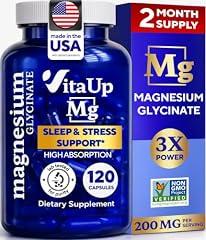
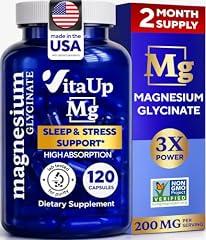
VitaUp Magnesium Glycinate 200mg Supplement
Overview
This is a 120-count vegan capsule supplement intended for adults, with directions to take two capsules once daily, preferably before a meal. VitaUp states that the two-capsule serving provides 200 mg of magnesium as magnesium glycinate, making the bottle a stated 60-day supply. Rice flour, silicon dioxide, and a hypromellose capsule are the only listed non-active ingredients. The clearest issue is dose consistency. VitaUp’s posted certificate image for lot VM2500381 reports 144 mg magnesium per capsule, which would equal 288 mg for the stated two-capsule serving, not the 200 mg stated on the product page. The report does show a current lot number and test date, but does not identify the laboratory or give numerical contaminant results. Sleep and relaxation are the intended uses, although human trial evidence for magnesium as a sleep aid remains uncertain.
What works
- Focused formula with one listed active nutrient and no added herbs, melatonin, vitamins, or sedative ingredients, according to the manufacturer.
- The stated 200 mg daily magnesium amount is below the adult upper limit of 350 mg per day from supplements and medicines.
- VitaUp posts a lot-numbered certificate image dated March 30, 2026 that covers magnesium, selected heavy metals, and microbiological checks.
- Two capsules once daily is a straightforward routine, and 120 capsules are presented as a 60-day supply.
What does not
- The posted test image reports 144 mg magnesium per capsule, conflicting with the stated 200 mg per two-capsule serving.
- Directions shown online do not provide usable cautions for kidney impairment or for separating magnesium from medicines whose absorption it can reduce.
- The certificate image lacks a laboratory name, accreditation details, quantitative heavy-metal results, detection limits, and a visible way for a buyer to match it to their own bottle.
- No matching finished-product certification was found in the public USP or NSF dietary-supplement registries. The manufacturer’s third-party-tested and GMP claims therefore remain unconfirmed by those programs.
- Promises of falling asleep faster and waking fully rested are stronger than the current human evidence, which is mixed and limited.
Who is it for
This product fits an adult who specifically wants a simple magnesium-only capsule rather than a sleep blend containing melatonin, botanicals, or multiple minerals. The stated two-capsule daily routine and 120-capsule bottle suit someone planning a roughly two-month trial of supplemental magnesium for general dietary support or relaxation. It is most appropriate for a person who can confirm the lot and potency details directly with the seller, because the manufacturer-posted certificate and the listed serving dose do not agree.
Who is it not for
It is not a good self-directed option for people with kidney disease, reduced kidney function, or a history of elevated magnesium, because impaired clearance can raise toxicity risk. People taking oral bisphosphonates or tetracycline or quinolone antibiotics should not rely on the sparse online directions, since magnesium can reduce absorption and usually requires dose spacing. It also does not suit anyone seeking a publicly certified finished product, a fully documented independent laboratory report, or a treatment for persistent insomnia, cramps, heart disease, or other medical conditions.
Integrity
The formula is relatively low in co-ingredient exposure. VitaUp lists magnesium glycinate, rice flour, silicon dioxide, and a vegetarian hypromellose capsule, with no added sleep-active ingredients. The stated 200 mg daily dose would be below the NIH adult upper limit for supplemental magnesium. However, the manufacturer’s posted lot VM2500381 report lists 144 mg per capsule, creating an unresolved discrepancy with the stated 200 mg per two-capsule serving. Magnesium can also cause gastrointestinal effects and poses greater risk when kidney function is impaired. VitaUp displays third-party testing, GMP-compliant facility, non-GMO, and USA-made claims. Public USP and NSF finished-product registries did not show a matching certification. The posted report has no named laboratory, accreditation, numerical contaminant values, or acceptance limits. FDA recall and warning-letter searches did not identify a product-specific action in the reviewed sources. The blue bottle is durable, but the product materials and recycling instructions are not disclosed, so its end-of-life footprint cannot be confirmed.

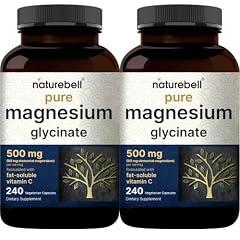
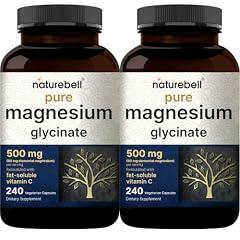
NatureBell Magnesium Glycinate 500mg, 480 Count
Overview
This is a two-bottle capsule product totaling 480 vegetarian capsules. Its label, independently reproduced online, identifies 500 mg magnesium glycinate per capsule, providing 90 mg elemental magnesium, plus 40 mg vitamin C as ascorbyl palmitate. The suggested use is one capsule daily, which makes the combined package a long supply. The 90 mg elemental dose is well below the adult upper limit of 350 mg per day from supplements and medicines. The label separates magnesium glycinate from elemental magnesium, an important distinction that the front-facing 500 mg wording can obscure. NatureBell states that the product is made in California, non-GMO, free of several common allergens, made in a cGMP facility, and third-party lab tested. Those manufacturing and testing statements were not backed by a public, product-specific certification entry or lot-matched laboratory report. Claims for sleep, cramps, heart, muscle, and joint benefits are broader than the strongest human evidence supports.
What works
- The label identifies both compound weight and elemental magnesium, 500 mg glycinate and 90 mg magnesium per capsule.
- One capsule supplies a conservative 90 mg elemental magnesium dose, below the adult supplemental upper limit of 350 mg daily.
- The formula is limited to magnesium glycinate, 40 mg vitamin C, rice flour, and a vegetable cellulose capsule.
- The 480-capsule two-bottle format can provide a lengthy supply when used at the stated one-capsule daily direction.
What does not
- NatureBell's public claims of third-party testing and cGMP manufacturing are not supported by a matching USP, NSF, Informed Choice, or Informed Sport finished-product registry entry.
- No current lot-specific certificate of analysis was publicly available to verify identity, magnesium potency, heavy metals, microbes, or capsule performance.
- The product page calls the formula filler free, but the independently reproduced label lists rice flour as an other ingredient.
- The product does not provide clear, usable public warnings about kidney impairment or required spacing from tetracycline and quinolone antibiotics and oral bisphosphonates.
- Sleep and cramp claims need restraint. Sleep trial findings remain uncertain, and high-quality evidence finds magnesium unlikely to prevent idiopathic cramps in older adults.
Who is it for
This product fits an adult who wants a low, gradual supplemental magnesium dose rather than a high-dose regimen, and who can read the Supplement Facts panel rather than relying on the 500 mg front-label wording. One capsule provides 90 mg elemental magnesium, so it may suit someone supplementing an already magnesium-containing diet or testing tolerance cautiously. The large two-bottle count is also practical for a household that expects to use the same simple capsule formula consistently over many months.
Who is it not for
It is not well suited to anyone with kidney impairment, kidney failure, unexplained weakness, or a history of high blood magnesium unless a clinician directs use. People taking doxycycline, ciprofloxacin, levofloxacin, other tetracycline or quinolone antibiotics, or oral bisphosphonates need medication-specific spacing guidance from a pharmacist or prescriber. It is also not a strong fit for buyers seeking independently certified contents, publicly checkable batch tests, a high elemental-magnesium dose, or a product specifically proven to treat insomnia or recurrent leg cramps.
Integrity
The useful health detail is the actual elemental amount. Each capsule is labeled as 90 mg elemental magnesium from 500 mg magnesium glycinate, with 40 mg vitamin C. A one-capsule daily direction stays below the 350 mg adult upper limit for supplemental magnesium. Higher supplemental intakes can cause diarrhea, nausea, and abdominal cramping, and magnesium toxicity risk rises when kidney function is impaired. Magnesium can also reduce absorption of some antibiotics and oral bisphosphonates. NatureBell publicly states that the product is third-party tested and made in a cGMP facility, but no matching independent finished-product certification or lot-specific report was located. A 2025 Colombian regulator alert addressed unauthorized local marketing of NatureBell magnesium glycinate there, not a United States recall or a confirmed contaminant finding. The product uses bottles and capsules, but the available product information does not disclose bottle resin, recycled content, recyclability instructions, or other package-material details.

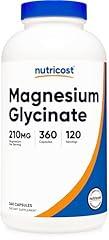
Nutricost Magnesium Glycinate Supplement, 210 mg, 360 Count
Overview
This is a 360-capsule magnesium supplement. Its labeled serving is three vegetarian capsules, providing 210 mg of elemental magnesium from magnesium bisglycinate, or 70 mg per capsule. That supplies 120 labeled servings. The independently listed label also identifies hypromellose capsule material, stearic acid, a rice extract blend, and vegetable magnesium stearate as inactive ingredients. The 210 mg supplemental dose is below the NIH adult upper limit of 350 mg per day from supplements and medicines, although magnesium can still cause digestive effects in some people. Nutricost states that batches are independently tested. Its manufacturing facilities are currently listed by NSF as certified to NSF/ANSI 455-2 dietary-supplement GMP requirements, but no public finished-product certification or lot-specific test report was located for this product.
What works
- The label clearly separates 210 mg elemental magnesium from its magnesium bisglycinate source.
- The labeled daily amount remains below the NIH adult upper limit for magnesium from supplements and medicines.
- It is a focused formula, with magnesium as the only active nutrient and no sleep-active herbs, vitamins, or added minerals.
- Nutricost Manufacturing is listed in NSF's current GMP certification directory for capsule manufacturing operations.
What does not
- Three capsules are required for the full labeled 210 mg serving.
- The available caution is general. It does not give practical spacing instructions for bisphosphonates, tetracycline antibiotics, or quinolone antibiotics, and it does not specifically flag kidney impairment.
- Nutricost claims independent batch testing, but public lot-matched reports showing magnesium potency, identity, heavy metals, and microbiology were not located.
- No active public certification entry was located for this exact finished product in the NSF dietary-supplement registry or USP Verified database.
- A pending settlement concerns allegations about earlier 120-count and 240-count Nutricost magnesium glycinate labeling. Nutricost denies wrongdoing, and this 360-count product is not identified in the settlement notice.
Who is it for
This product fits a healthy adult who wants a plainly labeled, moderate supplemental magnesium amount rather than a high-dose formula. The 210 mg serving is below the adult supplemental upper limit, and the 360-capsule bottle provides 120 days at the labeled three-capsule schedule. It also suits someone seeking magnesium without added melatonin, botanicals, vitamins, flavoring, or sweeteners. Buyers should be comfortable swallowing three capsules daily and should treat the stated third-party testing as a manufacturer claim unless they can obtain a report for their own lot.
Who is it not for
It is not a self-directed option for people with kidney impairment or kidney failure, because reduced clearance raises magnesium-toxicity risk. It is also unsuitable for anyone unable to separate magnesium from oral bisphosphonates, tetracycline antibiotics, or quinolone antibiotics. Those medicines can have reduced absorption when taken too close to magnesium. Pregnant or nursing people, children, and people managing gastrointestinal illness, recurrent diarrhea, or complex medication schedules should seek individualized advice. It also does not suit buyers who require a publicly accessible, lot-specific certificate of analysis before use.
Integrity
The formula is relatively simple. Its only active nutrient is magnesium, listed as magnesium bisglycinate, while the inactive ingredients are a cellulose capsule, stearic acid, rice-derived processing ingredients, and vegetable magnesium stearate. The dose is 210 mg per day at the labeled serving, below the NIH upper limit of 350 mg for magnesium from supplements and medicines. This does not remove interaction concerns or the need for kidney-specific caution. Nutricost Manufacturing holds current NSF/ANSI 455-2 GMP facility certification that covers capsule operations. That is a meaningful manufacturing-system check, but it is not a certification of this finished product's contents or contaminant limits. Public lot-specific results were not located. Research did not identify an FDA recall or warning letter for this current product. A pending settlement addresses alleged labeling of earlier 120-count and 240-count magnesium glycinate variants, which Nutricost denies. The bottle material and recycling instructions are not publicly disclosed, limiting assessment of its packaging footprint.

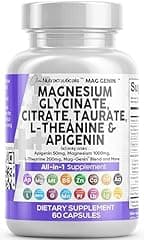
Magnesium Glycinate Complex 1000mg Supplement - 60 Count
Overview
This is a 60-capsule nightly supplement, labeled for two capsules daily before bed, or 30 servings. Its Supplement Facts panel lists 200 mg L-theanine, 50 mg apigenin, 1 mg vitamin B6, 11 mg zinc, and 3 mg copper. It also lists a 1,000 mg proprietary magnesium blend containing oxide, citrate, glycinate, malate, and taurate. The important limitation is that the panel does not disclose the elemental magnesium amount. The 1,000 mg figure is the weight of the mixed magnesium-ingredient blend, not a usable elemental-magnesium dose. A separate 100 mg proprietary blend combines 5-HTP, GABA, tryptophan, passionflower, lemon balm, glycine, phosphatidylserine, and ashwagandha, so individual doses for these active ingredients are also unknown. The brand states that every batch is independently tested and made in a GMP-certified facility, but no lot-matched report or active public product certification was located.
What works
- The two-capsule serving and 30-serving bottle are plainly stated on the product label.
- L-theanine, apigenin, zinc, copper, and vitamin B6 have individually stated quantities on the Supplement Facts panel.
- The capsule shell is listed as vegetarian cellulose, and the label does not list sugar as an ingredient.
- The brand identifies its distributor and provides a contact route, which gives buyers a direct accountability channel.
What does not
- The label does not state elemental magnesium. This prevents a reliable comparison with the adult supplemental upper limit of 350 mg per day and obscures the meaningful magnesium dose.
- The magnesium blend includes oxide and citrate as well as glycinate, malate, and taurate. Oxide is among the forms more commonly associated with diarrhea, while the contribution of each form is undisclosed.
- A 100 mg proprietary blend combines multiple sleep-active ingredients, including 5-HTP, GABA, tryptophan, botanicals, and ashwagandha. Individual amounts and interaction risk cannot be assessed from the label.
- The directions and online caution are general. They do not give the standard timing instructions for antibiotics or oral bisphosphonates, or a specific kidney-impairment warning.
- The manufacturer claims third-party batch testing, but no public, lot-specific certificate of analysis or matching USP, NSF, Informed Choice, or Informed Sport certification was found.
Who is it for
This product fits an adult who specifically wants a compact, bedtime-oriented multi-ingredient formula rather than a single-ingredient magnesium supplement. The stated two-capsule routine includes 200 mg L-theanine and 50 mg apigenin alongside a mixed magnesium blend, and the bottle supplies 30 nightly servings. It is better suited to a person who is not using other sedating, serotonergic, mineral, or herbal products and who can review their full supplement list with a pharmacist or clinician first. The label's hidden elemental-magnesium dose makes it less useful for someone tracking magnesium intake precisely.
Who is it not for
It is not a good fit for people with kidney impairment, unexplained nausea or diarrhea, or a clinician-directed magnesium regimen because the elemental-magnesium dose is not disclosed. People taking doxycycline, ciprofloxacin or another tetracycline or quinolone antibiotic, or an oral bisphosphonate such as alendronate, need specific spacing advice that this label does not provide. Avoid self-selecting this complex formula when using antidepressants, other serotonergic drugs, sedatives, sleep medicines, or multiple mineral supplements. It is also unsuitable for children and for pregnancy or nursing without clinician guidance.
Integrity
The formula has meaningful safety transparency gaps. Its 1,000 mg proprietary magnesium blend does not declare elemental magnesium, even though supplement labels ordinarily identify the elemental mineral amount. This matters because supplemental magnesium can cause diarrhea and cramping, magnesium toxicity risk rises with impaired kidney function, and magnesium can reduce absorption of several medicines. The product also combines several sleep-active ingredients inside a 100 mg proprietary blend, including 5-HTP, GABA, tryptophan, botanicals, and ashwagandha. The manufacturer states that it is made in the United States in a GMP-certified facility and that each batch is third-party tested. Those claims were not backed by a public lot-specific report or a current finished-product entry in the major public certification registries searched. No relevant FDA recall or warning letter for this product, brand, or named distributor was located in the reviewed public records. The packaging appears to be a standard plastic supplement bottle, with no package-specific recycled-content, resin, or recycling instructions disclosed.

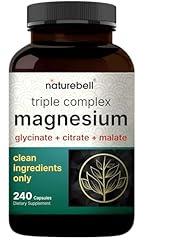
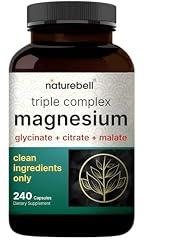
NatureBell Triple Complex Magnesium Supplement
Overview
This is a 240-capsule magnesium supplement with a stated serving of two gelatin capsules, or 120 servings. Its label lists 300 mg elemental magnesium, 71% of the Daily Value, from magnesium glycinate, citrate, and malate. It also lists 40 mg vitamin C as ascorbyl palmitate. The 1,000 mg figure is the combined weight of the three magnesium salts, not elemental magnesium. NatureBell states that the blend contains 500 mg glycinate, 350 mg citrate, and 150 mg malate per serving, and that it is made in a cGMP-compliant facility and third-party tested. The product page and label image do not provide a public certificate of analysis, testing laboratory, lot-specific results, or a recognized finished-product certification. The stated use is routine mineral supplementation, not a proven treatment for insomnia, anxiety, or muscle cramps.
What works
- The Supplement Facts panel clearly separates 300 mg elemental magnesium from the 1,000 mg combined salt blend.
- The focused formula lists only magnesium forms, 40 mg vitamin C, and a gelatin capsule.
- A 300 mg supplemental magnesium serving remains below the adult supplemental upper limit of 350 mg per day used by U.S. nutrition authorities.
- The 240-capsule bottle provides 120 stated two-capsule servings, reducing the frequency of replacement compared with small bottles.
What does not
- The available label image does not provide usable warnings for kidney impairment or instructions to separate magnesium from certain antibiotics and oral bisphosphonates.
- Magnesium citrate can contribute to loose stools or abdominal discomfort, especially when combined with other magnesium products or laxatives.
- NatureBell's third-party testing statement is not backed by a public, lot-matched certificate showing elemental magnesium potency, heavy metals, and microbiological results.
- No active matching entry was identified in major public finished-product certification registries such as USP, NSF, or Informed Sport.
- The capsule is gelatin, so it is unsuitable for people seeking a vegetarian or vegan capsule.
Who is it for
This product fits an adult who wants a plainly quantified, moderate supplemental magnesium amount for general dietary support and is comfortable taking two capsules daily. It may suit someone who specifically wants a mixed glycinate, citrate, and malate formula rather than a single salt, and who does not avoid gelatin. The 120-serving bottle is practical for a household or individual planning a roughly four-month routine. It is most appropriate when magnesium intake from other supplements, antacids, and laxatives is checked first.
Who is it not for
It is not well suited to people with impaired kidney function, unexplained recurrent diarrhea, or a history of magnesium-related gastrointestinal intolerance unless a clinician directs use. People taking doxycycline, ciprofloxacin or related antibiotics, or oral osteoporosis medicines such as alendronate need specific timing advice that the available label does not provide. It is also a poor fit for vegans and for buyers who require publicly checkable lot-specific contaminant, potency, dissolution, or microbiological test results. Pregnant or breastfeeding users should seek individualized clinical advice.
Integrity
The product identifies its active amounts in a conventional Supplement Facts format and uses a simple formula. NatureBell states that it is made in a cGMP-compliant U.S. facility and third-party tested, but neither a named laboratory nor product-specific, lot-matched test reports were publicly available during this review. No matching finished-product certification was identified in the public USP, NSF, or Informed Sport registries. A 2025 California Proposition 65 notice named NatureBell and alleged lead exposure from several other NatureBell herbal and fiber products. That notice did not identify this magnesium product, and it is a private enforcement notice rather than a finding that this product contains lead. The bottle appears to be a durable amber plastic container with a screw cap and holds 120 servings, but NatureBell does not disclose resin type, recycled content, or package-specific recycling instructions.
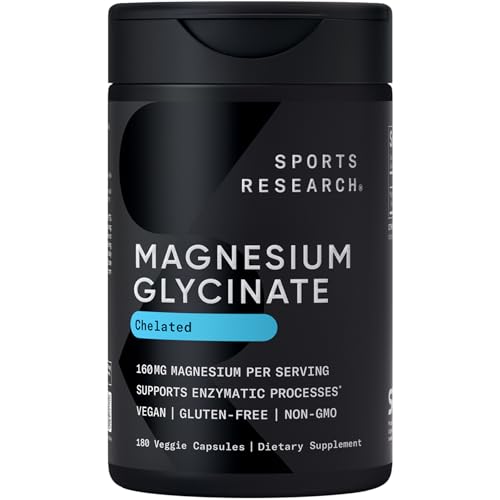
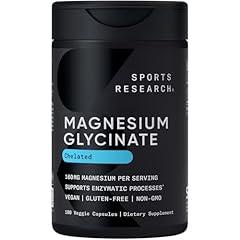
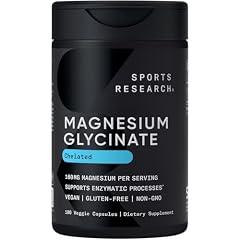
Sports Research Magnesium Glycinate 160 mg Vegan 180ct
Overview
This is an adult magnesium glycinate supplement in a 180-count vegan capsule format. A two-capsule serving supplies 160 mg elemental magnesium, listed as coming from 1,441 mg chelated magnesium glycinate. The labeled directions allow two capsules once or twice daily with a meal, making the bottle a 45 to 90 day supply depending on use. The elemental amount is clearly separated from the much larger glycinate-compound weight, which is the meaningful figure for tracking magnesium intake. Its formula is narrow, with hypromellose capsule material and organic rice hulls as the only listed non-magnesium ingredients. The manufacturer and retail label state third-party testing, gluten-free status, non-GMO verification, and US cGMP production, but public records reviewed did not establish an active finished-product contents certification or a lot-matched laboratory report for this capsule product.
What works
- The label clearly identifies 160 mg elemental magnesium per two-capsule serving, rather than presenting 1,441 mg of glycinate as elemental magnesium.
- One or two daily servings provides 160 to 320 mg supplemental magnesium, below the 350 mg adult upper limit for magnesium from supplements and medicines.
- The ingredient list is focused, with no added melatonin, herbs, vitamins, sweeteners, or sleep-active blend.
- The label includes a kidney-disease and prescription-medication consultation warning.
What does not
- The warning does not tell users to separate magnesium from tetracycline or quinolone antibiotics, or from oral bisphosphonates, despite established absorption interactions.
- Restful-sleep language is cautious, but human trial evidence for magnesium supplementation and sleep remains uncertain and low quality.
- No active USP, NSF/ANSI 173 contents-certified, NSF Certified for Sport, Informed Choice, or Informed Sport listing was identified for this exact finished capsule product.
- No public lot-specific certificate of analysis was found showing identity, elemental-magnesium potency, contaminant limits, laboratory identity, and test date.
- The bottle and shipping packaging materials are not clearly disclosed, so recyclability and material footprint cannot be assessed.
Who is it for
This product fits an adult who wants a simple magnesium supplement rather than a multi-ingredient sleep formula. Its 80 mg per-capsule increment lets a user begin conservatively or use the labeled two-capsule 160 mg serving. The labeled one or two daily serving directions remain below the adult supplemental magnesium upper limit of 350 mg. It is also suited to people seeking a vegan capsule with no listed soy, gluten, sweeteners, herbs, or added vitamins. A clinician should still guide use for a diagnosed deficiency or ongoing symptoms.
Who is it not for
It is not a self-treatment for insomnia, frequent muscle cramps, heart symptoms, or a suspected magnesium deficiency. Sleep evidence for supplemental magnesium is uncertain, and magnesium has not shown meaningful cramp prevention in older adults. People with kidney disease or impaired kidney function should not start it without clinician guidance because magnesium clearance can be reduced. People taking doxycycline, ciprofloxacin, levofloxacin, other tetracycline or quinolone antibiotics, or oral osteoporosis drugs such as alendronate need individualized timing advice because the label does not provide the necessary spacing directions. Keep it away from children and pets.
Integrity
The health-positive features are a plainly declared elemental dose and a restrained formula. The 160 mg two-capsule serving is distinguished from the 1,441 mg magnesium glycinate compound weight, avoiding a common source of dose confusion. The listed one or two daily serving range remains under the adult upper limit for supplemental magnesium. The product label also flags kidney disease and prescription medication use, although it lacks specific medicine-spacing instructions. Retail and manufacturer materials state gluten-free and non-GMO status, third-party quality and heavy-metal testing, and cGMP facility production. An independent IGEN registry entry supports non-GMO testing for the softgel version, not this 180-count vegan capsule. No publicly checkable finished-product certification or batch-specific laboratory report was located for this capsule. Searches did not identify a product-specific FDA recall or warning letter. Packaging material and recycling instructions were not disclosed, leaving its environmental footprint unverified.
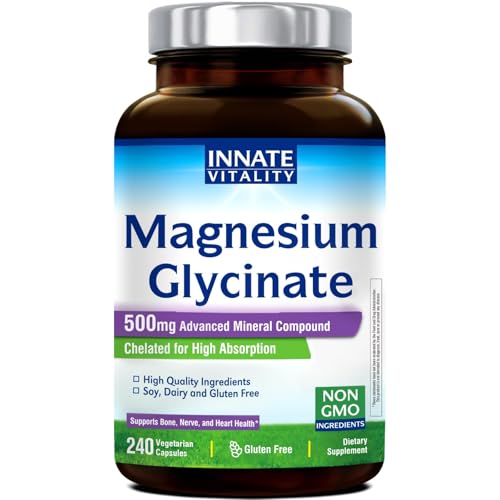
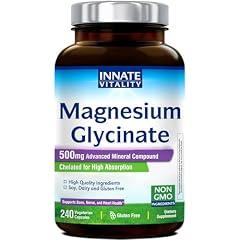
Innate Vitality Magnesium Glycinate 500mg Supplement
Overview
This is a 240-capsule magnesium glycinate supplement intended for one capsule daily with food. The manufacturer’s Supplement Facts panel lists 70 mg elemental magnesium, supplied by 500 mg magnesium glycinate, per vegetarian capsule. That makes the bottle a 240-day supply when used as directed. It contains organic rice concentrate and a vegetable cellulose capsule in addition to the magnesium ingredient. The elemental amount is clearly separated from the larger magnesium glycinate weight, which helps prevent dose confusion. At 70 mg daily, it is well below the adult upper limit of 350 mg per day for supplemental magnesium. The manufacturer claims a non-buffered, fully chelated formula, but those properties have not been independently confirmed. A publicly posted laboratory report tested a 2024 sample for heavy metals and microbiology, but it has no lot number and does not verify elemental-magnesium potency for the bottle a buyer receives.
What works
- The label clearly distinguishes 70 mg elemental magnesium from 500 mg magnesium glycinate.
- One daily capsule provides a conservative supplemental amount, below the adult supplemental upper limit.
- The formula is focused, with no added vitamins, herbs, sweeteners, or sleep-active ingredients.
- The manufacturer posts a laboratory report showing microbiology results within stated limits and heavy metals below quantification limits for one tested sample.
What does not
- The label tells people taking medication to consult a professional, but does not give usable spacing directions for antibiotics or oral bisphosphonates, and does not specifically flag kidney impairment.
- The posted laboratory report has no batch or lot number and does not include identity or elemental-magnesium potency testing, so it cannot confirm the contents of a buyer’s bottle.
- No active matching USP, NSF, Informed Choice, or Informed Sport finished-product certification was identified.
- Claims that it promotes restful sleep and relieves muscle cramps are broader than the human evidence. Sleep trial evidence is uncertain, and magnesium is unlikely to help typical idiopathic cramps in older adults.
Who is it for
This product fits an adult who wants a small, plainly disclosed supplemental magnesium amount rather than a high-dose formula. The 70 mg elemental dose may suit someone adding modest magnesium intake alongside food, especially if they prefer a capsule with no added melatonin, botanicals, or multinutrient blend. Its 240-capsule format also suits a household seeking a long supply with one daily capsule. It is not a substitute for evaluating symptoms that could reflect a deficiency or another medical condition.
Who is it not for
It is not appropriate for children without clinician guidance, or for people with kidney impairment or kidney failure, because reduced magnesium clearance raises toxicity risk. People taking doxycycline, ciprofloxacin or related antibiotics, or oral osteoporosis medicines such as alendronate, need specific dose spacing advice that this label does not provide. Pregnant or lactating people and anyone using diuretics, long-term acid-suppressing medicines, or multiple magnesium-containing antacids or laxatives should discuss total magnesium intake with a clinician. It is also not a well-supported treatment for persistent leg cramps or insomnia.
Integrity
The product has a short disclosed formula. The manufacturer’s panel names magnesium glycinate, organic rice concentrate, and a vegetable cellulose capsule. It also states vegan, gluten-free, dairy-free, soy-free, and non-GMO properties. These are manufacturer statements, rather than certifications verified through a public finished-product registry. A public October 2024 laboratory report for an Innate Vitality magnesium glycinate sample found tested microbes absent or below its listed limits, and heavy metals below quantification limits. However, it identifies no lot number and does not report magnesium potency, so it is not a buyer-checkable certificate for a specific bottle. No matching public USP, NSF, Informed Choice, or Informed Sport certification was found. The manufacturer claims GMP-compliant United States production, but no public independent audit certificate was located. The packaging appears to be a conventional bottle, with no package-specific recycled-content or recyclability disclosure identified.

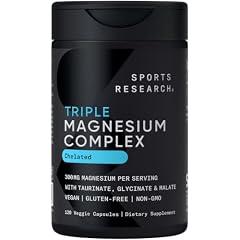
Sports Research Chelated Triple Magnesium Complex Chelamax
Overview
This is a 120-count vegetarian-capsule magnesium supplement. Independent retailer listings that reproduce the product label describe a daily serving of four capsules supplying 300 mg elemental magnesium from magnesium glycinate, magnesium taurinate, and magnesium malate. That makes the bottle a 30-day supply at the labeled use. The 300 mg amount is below the NIH adult upper limit of 350 mg per day for magnesium from supplements and medicines, though it can still cause gastrointestinal effects in some users. The formula is narrowly focused. The disclosed non-active ingredients are vegetable cellulose capsule, organic rice flour, and organic tapioca starch. The label names all three magnesium forms, but does not state how the 300 mg elemental magnesium is divided among them. I found no current public listing for this exact product in USP, NSF dietary-supplement, NSF Certified for Sport, or Informed Sport registries, and no publicly checkable lot-specific report for it.
What works
- Provides a clearly stated 300 mg elemental-magnesium serving, below the NIH adult supplemental upper limit of 350 mg.
- Uses a focused formula without added sleep agents, vitamins, herbs, sweeteners, or stimulant ingredients.
- Names glycinate, taurinate, and malate rather than presenting an unspecified magnesium blend.
- Uses a vegetable-cellulose capsule, with no gelatin listed in the reproduced ingredient panel.
What does not
- Four capsules are needed for the stated 300 mg daily serving, which may be inconvenient for people who avoid high pill counts.
- The product does not disclose the elemental-magnesium contribution from each of its three named forms.
- No active public certification entry was found for this exact finished product in major independent supplement registries.
- No lot-matched public certificate of analysis was located to verify potency, heavy metals, microbiology, identity, or capsule performance.
- Magnesium can interfere with absorption of some antibiotics and bisphosphonates, yet product-specific medication-spacing and kidney-risk directions were not independently confirmed.
Who is it for
This product fits an adult who specifically wants a straightforward magnesium supplement, prefers vegetarian capsules, and is comfortable taking four capsules per day. Its 300 mg labeled dose may suit someone supplementing an incomplete dietary intake while staying below the NIH upper limit for supplemental magnesium. It is also suited to buyers who want named glycinate, taurinate, and malate forms without added melatonin, botanicals, vitamins, or flavored powder ingredients. The buyer should still review all magnesium sources, including antacids and laxatives, before adding it to a routine.
Who is it not for
It is not a good fit for people with kidney impairment or anyone told to limit magnesium, because reduced kidney clearance can raise toxicity risk. People taking oral bisphosphonates or tetracycline or quinolone antibiotics should seek pharmacist or prescriber guidance on dose timing, since magnesium can reduce absorption. It also does not suit buyers who need an independently certified finished product, public batch-specific contaminant results, or documented capsule dissolution data. Children should not use the adult serving without clinician direction, because their supplemental upper limits can be lower.
Integrity
The labeled daily amount is 300 mg elemental magnesium, a level below the NIH adult upper limit of 350 mg per day from supplements and medicines. Even so, magnesium supplements can cause diarrhea, nausea, and abdominal cramping, and very high intakes can be dangerous. Magnesium can also reduce absorption of certain oral medicines, including bisphosphonates and some antibiotics. The publicly reproduced product information names magnesium glycinate, taurinate, and malate, but does not quantify each form separately. The brand has active NSF Certified for Sport listings for certain creatine products, not for this magnesium product. That is evidence that the company appears in an independent registry, but it does not verify this formula. I found no public, lot-matched testing report for this product. The bottle format avoids single-use serving sachets, but no package-specific material specification, recycling instructions, recycled-content statement, or other packaging disclosure was located. FDA recall and warning-letter searches did not surface a product-specific unresolved action in the material reviewed.
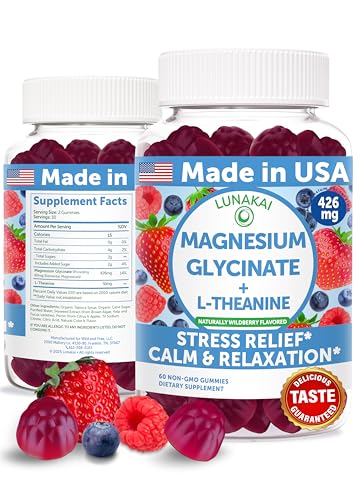
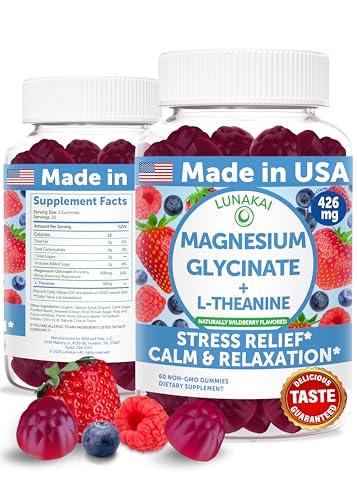
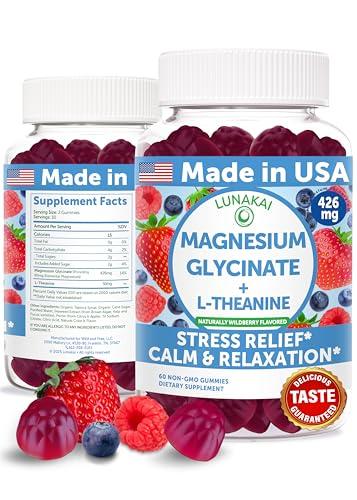
Lunakai Magnesium Glycinate Gummies with L-Theanine
Overview
This is a 60-count wildberry gummy supplement, with a labeled serving of two gummies and 30 servings per bottle. The Supplement Facts panel shown by Lunakai lists 60 mg elemental magnesium, supplied by 426 mg magnesium glycinate, plus 50 mg L-theanine. It also lists 2 g added sugar per serving and a pectin-based ingredient system with organic tapioca syrup, organic cane sugar, seaweed extract, citric acid, natural flavors, and natural color. The manufacturer directs adults to chew two gummies daily, preferably with a meal in the evening. The 60 mg elemental magnesium amount is clearly separated from the much larger magnesium glycinate compound weight, which avoids a common labeling ambiguity. The brand states that the product is made in the USA with global ingredients and third-party purity tested, but no public certificate matched to an individual lot was available for review.
What works
- The label clearly distinguishes 60 mg elemental magnesium from 426 mg magnesium glycinate per serving.
- At 60 mg daily, the labeled elemental magnesium dose is well below the 350 mg adult upper limit for supplemental magnesium and is less likely to cause dose-related diarrhea than high-dose products.
- The formula is relatively focused, with magnesium glycinate and 50 mg L-theanine as the only listed active ingredients.
- The pectin-based gummy is labeled vegan, gluten-free, non-GMO, and free of gelatin, with no artificial colors or flavors claimed by the manufacturer.
What does not
- The label and retailer information reviewed provide no usable guidance for kidney impairment or for separating magnesium from antibiotics, bisphosphonates, and other interacting medicines.
- The calming and sleep claims are broader than the dose-specific evidence. Magnesium sleep trials remain uncertain overall, and most positive L-theanine sleep studies used about 200 mg daily or more, versus 50 mg here.
- The brand states that products are third-party purity tested, but a current public registry certification and a lot-matched certificate of analysis for this exact product were not available to verify.
- Two gummies provide 2 g added sugar. The product is marketed for adults and kids, but the reviewed directions do not provide age-specific dosing.
Who is it for
This product suits an adult who specifically wants a low-dose, chewable magnesium option rather than a high-potency magnesium supplement. Its 60 mg elemental magnesium serving is conservative relative to the adult supplemental upper limit, and the label plainly identifies that amount. It may also fit someone who avoids gelatin and prefers a vegan, pectin-based gummy. The 30-day bottle format is appropriate for a simple once-daily evening routine, provided the buyer understands that the sleep and stress-support effects at these doses are uncertain rather than established.
Who is it not for
It is not well suited to people seeking a substantial magnesium dose for a clinician-identified need, since two gummies provide only 60 mg elemental magnesium. People with kidney disease or impaired kidney function should not self-select it without clinician guidance, because magnesium toxicity risk rises when the kidneys cannot clear magnesium effectively. People taking oral bisphosphonates or certain antibiotics should seek pharmacist or prescriber advice on timing, as the reviewed product information does not provide spacing instructions. It is also a poor fit for households needing child-specific dosing guidance or avoiding added sugars.
Integrity
The product label gives unusually clear magnesium math for a gummy. It identifies 60 mg elemental magnesium from 426 mg magnesium glycinate, alongside 50 mg L-theanine. The inactive ingredients include pectin, tapioca syrup, cane sugar, water, seaweed extract, citric acid, natural flavors, and natural color. Two gummies contain 2 g added sugar. The manufacturer states that the gummies are vegan, non-GMO, gluten-free, and made in the USA with global ingredients. No public matching entry was found in the major finished-product certification registries reviewed, and no current lot-specific independent certificate covering identity, potency, contaminants, and gummy stability was publicly available. The brand's general third-party-testing statement therefore cannot substitute for batch-level verification. No product-specific FDA recall or warning letter was identified in the searches reviewed. The product is supplied in a plastic bottle, but no package-specific recycled-content, recyclability, or material-disclosure information was found.

Alliwise Magnesium Glycinate Supplement
Overview
This is a 120-softgel magnesium product with a labeled serving of two softgels and 60 servings. The manufacturer’s Supplement Facts image lists 61 mg elemental magnesium per serving, supplied as 500 mg magnesium glycinate, plus MCT oil, beeswax, gelatin, glycerol, water, titanium dioxide, Sunset Yellow, and tartrazine. The listed daily elemental amount is modest, not 500 mg of elemental magnesium. The brand recommends two softgels daily and markets them for sleep routines, calm, muscle relaxation, bone support, and nighttime leg discomfort. Its own posted test-report image, dated September 25, 2025, reports 51.2 mg magnesium per 1 g serving rather than the label’s 61 mg, and it does not show a purchaser-matchable package lot or expiry. That mismatch and limited lot traceability are central limitations.
What works
- The label clearly distinguishes 61 mg elemental magnesium from 500 mg magnesium glycinate per serving.
- The labeled elemental dose is below the adult 350 mg daily upper limit for supplemental magnesium.
- A 120-softgel bottle is labeled as a 60-day supply at two softgels daily.
- The manufacturer names the softgel excipients rather than using an undisclosed blend.
What does not
- The brand-posted September 25, 2025 test image reports 51.2 mg magnesium per serving, below the label claim of 61 mg.
- The posted report cannot be matched to a buyer’s package lot or expiration date, so it is not a usable lot-specific certificate of analysis.
- No matching current certification entry was found for this exact product in the searched USP, NSF, Informed Choice, or Informed Sport public registries.
- The visible product information does not provide usable kidney-impairment cautions or medicine-spacing directions for bisphosphonates and certain antibiotics.
- Sleep and nighttime leg-discomfort marketing is stronger than the clinical evidence, especially for idiopathic leg cramps in older adults.
Who is it for
This product fits an adult who specifically wants a low supplemental magnesium amount, 61 mg elemental magnesium per labeled daily serving, rather than a high-dose formula. Its two small softgels may be practical for someone who has trouble with large tablets and is comfortable using an animal-gelatin softgel. It is most appropriate when magnesium is being used as a modest dietary supplement, not as a stand-alone treatment for insomnia, recurrent cramps, or a diagnosed deficiency. Users should still check their total magnesium from other supplements and medicines.
Who is it not for
It is not suited to vegetarians or vegans because the listed softgel ingredients include gelatin, despite the manufacturer’s vegetarian-friendly description. People with impaired kidney function should not self-direct magnesium supplementation without clinical advice. Anyone taking oral bisphosphonates, tetracycline antibiotics, or quinolone antibiotics needs individualized timing guidance because magnesium can reduce absorption. It is also a poor fit for people seeking a well-documented sleep or leg-cramp intervention, or for buyers who require a package-lot-matched independent test report and public finished-product certification.
Integrity
The formula is not as minimal as the clean-formula marketing suggests. The manufacturer’s label image lists gelatin, MCT oil, beeswax, glycerol, titanium dioxide, Sunset Yellow, and tartrazine alongside magnesium glycinate. This means it is not vegetarian, and buyers sensitive to animal-derived gelatin or color additives should take note. The visible product information also lacks practical medicine-spacing and kidney-safety instructions. The brand posts an SGS-branded report dated September 25, 2025 that includes microbiology, heavy-metal, chromium, and magnesium results. However, it does not provide a consumer-matchable package lot or expiry, and its reported magnesium result is 51.2 mg per serving versus the 61 mg label claim. No package-material specification, recycling instructions, or credible packaging sustainability disclosure was located, so the environmental profile cannot be substantiated beyond the durable bottle format shown.