
10 Best Lithium Rv Batteries
 Daniel Kenitz
Please note that we participate in affiliate marketing programs. When you purchase through links on our site, we may earn a commission. As an Amazon Associate we earn from qualifying purchases. This comes at no additional cost to you and helps support the resources required to provide valuable content.Advertising Disclosure
Top-rated Lithium Rv Batteries Comparison
1

2
3
4
5
6
7
8
9
10
Lithium RV batteries: what to look for
Lithium RV batteries store electricity for house loads such as lights, refrigeration, electronics, inverters, solar systems, and other auxiliary equipment. Most products supplied here use lithium iron phosphate (LiFePO4) chemistry, while one reviewed alternative is sealed AGM lead-acid. The battery only works safely as part of a matched system: the battery, charger or converter, solar controller, alternator path, DC-to-DC charger, inverter, cables, fuses, disconnects, mounting, and temperature controls all matter.
Start with the actual energy requirement. A stated 12.8V and 100Ah rating equals 1,280Wh of nominal energy; 300Ah equals 3,840Wh. Those figures are not the same as usable energy at every load. Runtime also depends on discharge current, cutoff voltage, inverter and wiring losses, temperature, and how much capacity the manufacturer permits you to use. A large amp-hour figure does not prove that the battery can deliver its advertised continuous or surge current. Look for a traceable independent test of the exact model and revision that reports test temperature, discharge current, end voltage, sample identification, usable amp-hours or watt-hours, continuous and surge output, voltage behavior, and cutoff behavior. An ISO/IEC 17025-accredited report is stronger evidence than a general product-page claim.
A battery-management system (BMS) should address overcharge, over-discharge, overcurrent, short circuit, cell imbalance, and unsafe temperature. A high-quality description gives thresholds and recovery behavior, ideally supported by an exact-pack safety record or fault test. A Bluetooth app, LEDs, or a stated BMS rating can help monitoring, but does not by itself prove protection performance. Low-temperature charging deserves separate attention: a credible product specifies a charge cutoff below its safe cell temperature, or controlled self-heating with activation and recovery conditions. “All-weather” or “cold-weather” wording without those details is not equivalent evidence.
For a permanently installed or occupied RV, look for a current third-party certification for the exact finished battery, not merely its cells, charger, Bluetooth electronics, or a broad logo claim. Relevant records may be checked in UL Solutions Product iQ for ANSI/CAN/UL 1973, the Intertek ETL directory, CSA Group listings, or TÜV Rheinland Certipedia. A certification claim that cannot be matched to the model in the certifier’s register should be treated as unverified. Also look for a model-specific UN 38.3 test summary naming the battery, design or model, laboratory, and report number; a general statement that the battery is “UN 38.3 certified” is not the same document.
Installation instructions should cover charger and converter settings, alternator or DC-to-DC charging, solar-controller compatibility, cable sizing, external fusing, disconnects, terminal protection, mounting, ventilation or enclosure requirements, and series or parallel limits. “Drop-in replacement” is not a substitute for checking those details against the RV system. Cycle-life claims should state depth of discharge, temperature, discharge rate, and end-of-life capacity. Warranty terms, seller identity, serial or lot traceability, recall procedures, and a reachable replacement process also matter.
Across the supplied products, the recurring caveat is that none had a confirmed exact finished-pack UL, ETL, CSA, or TÜV listing, and most lacked independent exact-model performance or fault testing. Several products had conflicting capacity, cycle-life, BMS, chemistry, or warranty claims. Many manuals did not provide a complete RV wiring design. Multiple products either lacked low-temperature charge protection or required charging above freezing. These batteries should therefore not be treated as unconditional lead-acid replacements, direct alternator connections, engine-start batteries, or professionally certified stationary systems without additional documentation and system-specific installation checks. Damaged or swollen lithium batteries require special handling and must not enter household trash or curbside recycling.
Integrity
## Health and Ecology The scores below compare the supplied products on the defined health, ecology, and evidence topics. A higher score reflects stronger documentation or controls found in the review; it does not turn an unsupported marketing claim into independent proof.
HHealth & Safety
Fire, burn and smoke protection
This measures pack-level measures intended to reduce fire, burn, electrical-arc, and harmful-smoke exposure. For an RV, that includes enclosure design, instructions, temperature controls, and evidence beyond LiFePO4 chemistry alone. Supplied scores ranged from 69 to 78. Higher-scoring products described more concrete BMS, enclosure, temperature, or handling controls; lower scores still lacked confirmed exact-pack certification.
Protection against electrical faults
This measures whether the BMS addresses overcharge, over-discharge, overcurrent, short circuit, cell imbalance, and unsafe temperature, with stated thresholds and supporting evidence. That matters because RV batteries can feed high-current inverters and wiring faults. Scores ranged from 70 to 78. Higher scores reflected more complete manufacturer-described protections, while reviews commonly noted that trip thresholds and independent fault tests were missing.
Safe charging in freezing conditions
This measures whether charging stops below a stated safe cell temperature or uses controlled self-heating, rather than relying on an unsupported all-weather claim. Freezing-charge protection is important in seasonal or winter RVs. Scores ranged from 50 to 80. Higher-scoring products specified a cutoff, recovery point, or heating sequence; the lowest-scoring standard battery explicitly lacked low-temperature charge protection.
Safe RV installation compatibility
This measures whether the instructions address chargers, converters, alternators, DC-to-DC chargers, solar controllers, fuses, cable sizing, mounting, terminals, ventilation, and series or parallel use. A battery can be electrically suitable yet unsafe as a drop-in replacement. Scores ranged from 68 to 78. Higher scores had more concrete setup guidance, but even the stronger reviews often lacked a complete RV wiring design.
EEvidence
Independently certified battery safety
This measures certification of the exact finished battery for stationary or auxiliary use, rather than certification of cells, chargers, or electronics. Relevant evidence includes a matching UL 1973, ETL, CSA, or TÜV register entry. Scores were tightly grouped from 68 to 70 because no supplied product had a confirmed exact finished-pack listing in the reviewed registers. A logo or broad compliance statement was not treated as equivalent.
Independently proven capacity and power
This measures traceable testing of the exact model for usable capacity, energy, continuous and surge current, voltage behavior, and cutoff behavior under stated conditions. Scores ranged from 68 to 88. The highest-scoring product had an independent hands-on load test measuring about 168 to 171Ah against a 165Ah rating, although it was not an ISO/IEC 17025 laboratory report. Most others had only manufacturer ratings.
Honest ratings and compatibility claims
This measures whether capacity, energy, current, cycle life, temperature, ingress protection, Bluetooth, expansion, and drop-in claims are specific, internally consistent, and supported. Scores ranged from 50 to 78. Higher scores had fewer contradictions and clearer limits. Lower scores included conflicting amp-hour and watt-hour figures, incompatible BMS ratings, ambiguous cycle claims, or marketplace details that disagreed with manufacturer documentation.
Traceable, transport-compliant battery
This measures whether the actual battery can be identified for shipment and corrective action through a model-specific UN 38.3 test summary, hazard information, and a traceable manufacturer or importer. Scores ranged from 69 to 78. Higher scores reflected clearer product or manufacturer information, but the reviews repeatedly found that a promised UN 38.3 status was not accompanied by the required model-specific summary and report identification.
Recall readiness and safety accountability
This measures whether the responsible company can identify affected batteries by model or lot, provide a practical remedy, and respond if a defect emerges. Scores ranged from 70 to 74. The products generally had no matching CPSC recall or warning located in the reviewed records, but that is not proof that a product is defect-free. Stronger accountability requires reachable support, serial or lot traceability, and a clear recall process.
EEcology
Long-life design and enforceable support
This measures whether cycle-life claims identify depth of discharge, temperature, discharge rate, and end-of-life capacity, alongside a reachable warranty and replacement process. Longer service can reduce premature disposal. Scores ranged from 60 to 78. Higher scores were associated with clearer warranty or support routes and more qualified cycle-life claims; lower scores included conflicting cycle figures, vague coverage, or no enforceable product-specific terms.
Responsible end-of-life handling
This measures whether the brand provides U.S. take-back or qualified-recycling directions and safe terminal-preparation instructions. Lithium batteries must stay out of household trash and curbside recycling; terminals should be isolated before transport. Lithium-product scores ranged from 68 to 72, indicating broadly limited brand-specific support. The AGM alternative scored 82 because lead-acid batteries have established U.S. collection channels.
Full reviews

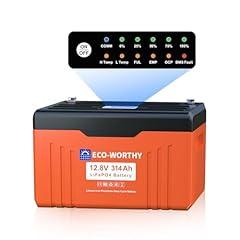
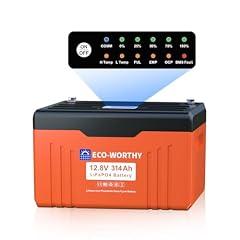
ECO-WORTHY 12V 300AH Lithium Battery with Bluetooth
Overview
This is a 12.8V lithium iron phosphate auxiliary battery for RV, off-grid solar, cabin, and backup loads. The current official product page describes 314Ah, or 4,019Wh, in a 60.4-pound case with Bluetooth, state-of-charge lights, an audible alarm, and a 200A battery-management system. It is intended to be paired with a compatible lithium charger, solar charge controller, or a DC-to-DC charger for vehicle alternator charging. The supporting manual located for this product family documents the prior 300Ah, 3,840Wh configuration, rather than the current 314Ah specification. An independent bench review of that 300Ah version measured 315Ah at roughly 60A, observed a clean overcurrent shutdown above 271A, and found that it rejected charging after freezer exposure. Those are useful checks, but they are not an accredited test report for the current 314Ah revision.
What works
- An independent bench test of the 300Ah version measured 315Ah, exceeding its stated 300Ah capacity under the reviewer’s test conditions.
- The same independent test found low-temperature charge lockout operated after freezer exposure, reducing the risk of charging lithium iron phosphate cells while cold.
- The manufacturer documents high and low voltage, overcurrent, temperature, and fault indications, plus an audible alarm and Bluetooth status monitoring.
- The installation guidance specifically calls for a DC-to-DC charger when charging from an RV or vehicle alternator, rather than implying an unrestricted drop-in replacement.
- A published three-year limited warranty for lithium iron phosphate batteries provides a support route, contact details, and a stated repair, replacement, or refund process.
What does not
- No exact finished-product ANSI/CAN/UL 1973, ETL, CSA, or TÜV certification record was found for this 12V battery. Pack-level safety certification remains unverified.
- No model-specific UN 38.3 test summary was located, so the transport-test record and pack traceability documentation are not publicly established.
- The available manual identifies a 300Ah, 3,840Wh version, while the current product page states 314Ah, 4,019Wh. Buyers should confirm the label, revision, and included documentation before installation.
- Cycle-life claims are inconsistent across product materials. The older manual states up to 15,000 cycles, while the current official page states 6,000-plus cycles, without test conditions such as depth of discharge or end-of-life capacity.
- The installation material recommends suitable cable gauge and ventilation but does not provide a complete RV-specific fuse, cable-size, terminal-cover, mounting, and converter-setting plan.
Who is it for
This product fits an experienced RV, van, cabin, or small off-grid user who needs roughly 4kWh of nominal 12V storage in one 60-pound battery and can design the surrounding system correctly. It is most appropriate where a compatible lithium charger, solar controller, or DC-to-DC alternator charger will be used, with appropriately sized conductors, overcurrent protection, secure mounting, and a realistic load plan. Bluetooth status data and visible fault indicators can be useful for an owner who routinely monitors the battery rather than treating it as a maintenance-free black box.
Who is it not for
It is not well suited to households requiring independently listed pack safety certification for an inspected stationary energy-storage installation, or anyone who needs a publicly available transport test summary and detailed lot traceability. It is also unsuitable as an unplanned replacement for a lead-acid RV battery where the converter, alternator circuit, cable size, fuse protection, and inverter surge demand have not been checked. A single 200A-class battery can shut down on large inverter inrush loads, including the independently tested attempt to start a 15,000 BTU air conditioner.
Integrity
Lithium iron phosphate chemistry is generally used for its thermal stability, but chemistry alone does not verify the safety of the finished pack. This product has documented battery-management protections and an independently observed cold-charge cutoff on the earlier 300Ah version. However, no public third-party safety listing was found for this exact 12V product, and the public documentation does not establish its model-specific UN 38.3 transport test summary. The brand publishes U.S. support contacts and a three-year lithium battery warranty, but the product materials reviewed do not provide a brand take-back program for this battery. At end of life, it should not go in trash or curbside recycling. U.S. EPA guidance calls for isolating or taping the terminals and using a qualified battery recycler, electronics recycler, or household hazardous-waste program. No relevant U.S. consumer-product recall or public safety warning was found in the searches performed.
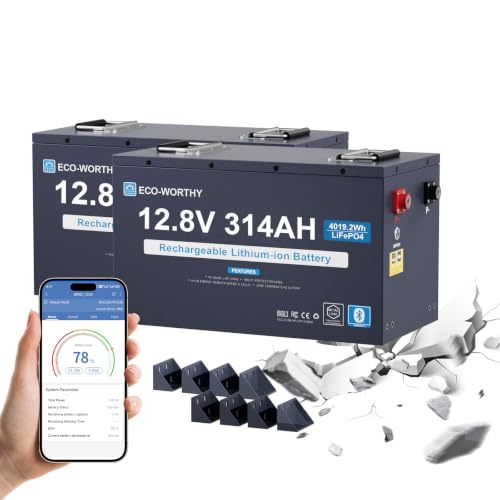
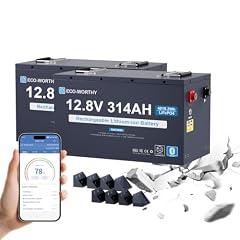
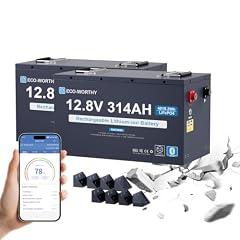
12V 280Ah LiFePO4 Battery Pack
Overview
This is a pair of 12.8 V, 280 Ah lithium iron phosphate auxiliary batteries for RV, camper, solar, trolling-motor, and other 12 V deep-cycle systems. Together, the stated nominal energy is 7.17 kWh. Each battery is listed at 68.5 pounds, measures about 16.5 by 8.6 by 9.7 inches, uses M8 terminals, and has a metal enclosure with mounting feet. The manufacturer states a 200 A continuous charge and discharge rating, Bluetooth monitoring, low-temperature charge protection, and series or parallel expansion. An independent published teardown and load test of the metal-case 280 Ah version reported 284.2 Ah, which supports the stated capacity for that tested sample. No current third-party finished-pack safety listing or accredited exact-model performance report was located during verification.
What works
- An independent published load test reported 284.2 Ah from one metal-case 280 Ah battery, slightly above its nominal rating.
- The manufacturer specifies a metal enclosure, internal cell supports, and four mounting feet, features intended to improve fixed mounting in mobile installations.
- The stated 200 A continuous discharge rating can support substantial 12 V inverter loads when the wiring, fuse, terminals, and inverter are correctly matched.
- The manufacturer states that Bluetooth monitoring shows voltage, capacity, and battery status, which can help identify abnormal operation.
What does not
- No exact-product UL, ETL, CSA, or TÜV finished-pack safety certification was located in the applicable certification registers.
- The available independent performance evidence is a published single-product teardown and load test, not an ISO 17025-accredited report covering capacity, thermal behavior, surge current, and protection cutoffs.
- The current product page gives broad RV compatibility claims, but it does not provide complete RV-specific installation instructions for alternator charging, fuse sizing, cable sizing, converter settings, and terminal protection.
- The listed warranty information is unclear. The marketplace record says three years, while the manufacturer page advertises up to 10 years without tying that duration to this product.
- No exact-product UN 38.3 test summary or brand-operated U.S. take-back program was located.
Who is it for
This product suits an experienced RV, camper, boat, or off-grid solar owner who needs a large 12 V energy bank and can design the rest of the system correctly. It is most relevant where two 280 Ah batteries can be securely mounted, individually fused, and connected to a lithium-compatible charger or controller. The published capacity test is useful reassurance for buyers who value measured output, while Bluetooth monitoring may help owners routinely check state and status.
Who is it not for
It is not well suited to buyers who need independently certified finished-pack safety for an insurance, inspection, commercial, or stationary home-energy requirement. It also is not for a simple lead-acid replacement where the existing converter, alternator, wiring, fuse protection, and mounting have not been checked for lithium compatibility and high current. Avoid relying on it for freezing-weather charging without confirming the actual battery temperature and the BMS cutoff behavior in the installed system.
Integrity
Lithium iron phosphate chemistry is the stated cell chemistry, and the product uses a metal case rather than the ABS housing documented for an older 280 Ah version. The manufacturer states that its BMS addresses overcharge, over-discharge, overheating, short circuit, and low-temperature charging. Those are meaningful protective functions, but the exact finished product was not found in a current independent safety-certification register, and detailed verified BMS cutoff thresholds were not available for this metal-case version. A published independent capacity test provides some evidence that a tested unit met its energy claim. Long-life claims remain less well documented because the stated cycle count is not paired here with an accredited exact-product cycle-life report. The brand did not provide a clear U.S. take-back route for this product. Spent, damaged, or swollen lithium batteries should not go in household trash or curbside recycling, and their terminals should be protected before delivery to a qualified battery recycler or household hazardous-waste program.

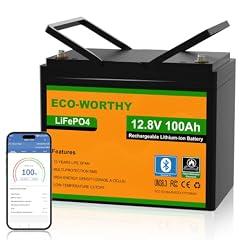
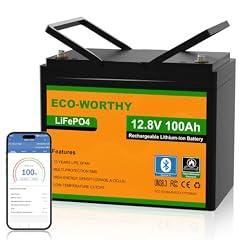
ECO-WORTHY 12V 100AH Bluetooth Lithium Battery
Overview
This is a 12.8V, 100Ah lithium iron phosphate auxiliary battery in a compact Group 24-style case. It is intended for RV house power, boats, trolling motors, and small solar or off-grid systems, not for starting an engine. The stated nominal energy is 1,280Wh, and the listed 100A continuous charge and discharge limits place it in the roughly 1,200W class before normal inverter losses. ECO-WORTHY documentation states that the product has Bluetooth status monitoring, a 100A battery-management system, and charging cutoff below -7°C, or about 19°F. Its two-page product manual also specifies LiFePO4 chemistry, 10.5kg weight, M8 terminals, and thermal cutoffs. Those are manufacturer specifications, not independent test results. I did not locate a current third-party certification-register entry, an exact-model capacity test report, or a model-specific UN 38.3 test summary.
What works
- The manufacturer provides explicit low-temperature charge protection, with cutoff at -7°C and recovery at -2°C.
- The stated 100A continuous discharge limit is concrete enough to set an approximate 1,200W DC power ceiling.
- Bluetooth monitoring can show battery status without opening a compartment, according to the manufacturer.
- The compact Group 24-format dimensions can suit RV and marine battery bays with limited space.
- A published three-year limited warranty and U.S. support contact are available from the manufacturer.
What does not
- No current UL, ETL, CSA, or TÜV register listing was located for this exact finished battery product.
- No traceable independent load test was located to confirm usable capacity, voltage behavior, or BMS cutoff operation.
- The available documentation is brief and does not provide RV-specific fuse sizing, cable sizing, alternator charging, converter settings, or mounting instructions.
- The 4,000-cycle claim is not tied to a stated depth of discharge, temperature, discharge rate, or end-of-life capacity.
- A model-specific UN 38.3 test summary and clear U.S. recycling or take-back instructions were not located.
Who is it for
This product suits an experienced RV, boat, trolling-motor, or small solar user who needs about 1.28kWh of nominal 12V storage in a compact Group 24-sized space. It is most appropriate where loads remain comfortably below the stated 100A continuous limit and where the owner can confirm lithium-compatible charger, converter, and solar-controller settings. The manufacturer-stated cold-charge cutoff is relevant for an unheated battery compartment that may approach freezing, although it does not heat the battery or permit charging in severe cold.
Who is it not for
It is not suited to engine starting, high-power inverter loads that can exceed the stated 100A continuous limit, or installations where the owner expects a fully documented drop-in RV conversion. Choose a more thoroughly documented system if alternator charging, cable and fuse selection, compartment mounting, or insurer and campground certification requirements need exact guidance. It also is not for users who need independently verified capacity, a third-party listed finished pack, a published transport test summary, or a manufacturer take-back route before installation.
Integrity
LiFePO4 chemistry is identified in the manufacturer documentation, and the product has a stated battery-management system with overcharge, over-discharge, overcurrent, short-circuit, and temperature protections. The clearest cold-weather safeguard is the stated low-temperature charge cutoff below -7°C. That feature addresses damaging lithium charging in cold conditions, but it is manufacturer-stated and was not supported here by an independent fault or cold-charge test report. The product carries a three-year limited warranty, which offers a defined route for manufacturing-defect claims. However, the 4,000-cycle claim lacks the depth-of-discharge and end-of-life conditions needed to judge expected service life. No exact-model certification-register listing, test summary for lithium transport, or U.S. take-back program was located. Spent or damaged lithium batteries should not go in household trash or curbside recycling, and terminals should be protected before transport to an appropriate battery recycler.
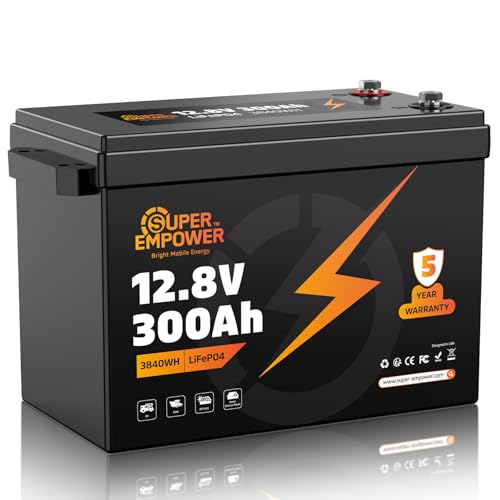
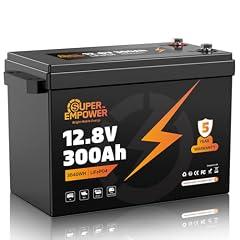
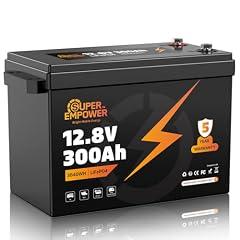
Super Empower 12V 300Ah Lithium Battery
Overview
This is a 12.8V, 300Ah LiFePO4 deep-cycle battery in a 15.35 by 7.59 by 9.84 inch, 58.4 pound case for RV auxiliary power, solar, marine, and off-grid use. The manufacturer lists 3,840Wh, M8 terminals, a recommended 40A charging current, and 300A continuous discharge, equating to a claimed 3,840W output. Its central safeguards are manufacturer-stated BMS control and a charge cutoff below 32°F. The maker also states UL and FCC compliance, but an exact-product safety certification could not be confirmed in the UL or ETL certification directories, and no model-specific independent capacity test or UN 38.3 test summary was located. Published specifications also conflict, including 200A versus 300A discharge claims and 4,000 versus 5,000 cycles at full depth of discharge.
What works
- Manufacturer documentation states automatic charging cutoff below 32°F, with recovery above 41°F.
- The manufacturer documents BMS protections for overcharge, over-discharge, overcurrent, short circuit, imbalance, and temperature conditions.
- Published product support includes a phone number, email address, street address, and a manufacturer-stated five-year limited warranty.
- The manufacturer provides charging-voltage guidance and identifies dedicated LiFePO4, solar-controller, and DC-to-DC charging paths.
What does not
- The stated UL and FCC compliance could not be matched to an exact-product UL or ETL safety listing. FCC compliance is not a substitute for finished-pack battery safety certification.
- No independent, model-specific load test was located to confirm actual capacity, continuous current, surge behavior, or protective cutoffs.
- Published specifications conflict. The marketplace record describes a 200A BMS, while the manufacturer page lists 300A continuous discharge. Cycle-life claims also vary between sources.
- Installation instructions lack the complete RV-specific fuse sizing, cable gauge, inverter limits, alternator guidance, mounting details, and terminal-cover guidance needed for a turnkey installation.
Who is it for
This product fits a technically capable RV, marine, or off-grid user assembling a 12V auxiliary-power system who can verify charger settings, install appropriate overcurrent protection, measure the battery compartment, and independently configure cable sizing. Its stated 3.84kWh capacity is suited to substantial house loads, while the published cold-charge cutoff is relevant to systems stored in occasional freezing conditions. It is more appropriate where the owner uses a separate battery monitor and confirms the real current limit before selecting an inverter.
Who is it not for
It is not suited to buyers who need a third-party-listed battery for an inspected installation, insurance requirement, unattended critical backup system, or stringent workplace safety policy. It is also unsuitable as an engine-start battery or golf-cart battery, both uses the product documentation warns against. RV owners expecting a simple lead-acid swap without reviewing converter, solar-controller, alternator, fuse, cable, and inverter compatibility should use a system with more complete installation documentation. Winter users should not assume discharge operation means safe charging below freezing.
Integrity
LiFePO4 chemistry is manufacturer-stated, but chemistry alone does not establish finished-pack fire safety. The available documentation gives useful use restrictions, including avoiding short circuits, heat, flames, damage, and engine-start or golf-cart use. It also states charge cutoff below 32°F. Those are meaningful safeguards, although their operation has not been independently verified for this exact product. The manufacturer publishes a limited warranty and reachable support contacts, but the cycle-life claims are inconsistent across published sources and lack disclosed test conditions or an independent report. No model-specific take-back program, recycling instructions, or UN 38.3 test summary was located. At end of life, lithium batteries should not enter trash or curbside recycling. Terminals should be isolated with nonconductive tape or separate packaging before using a qualified battery recycler or household hazardous-waste program.

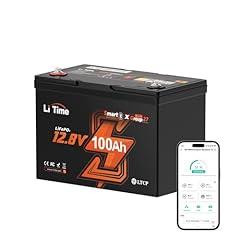
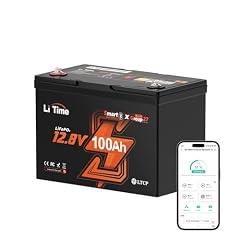
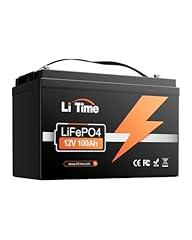
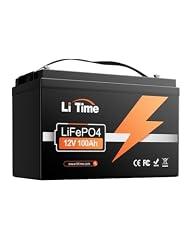
Litime 12V 100Ah Bluetooth LiFePO4 Battery
Overview
This is a 12.8V, 100Ah lithium iron phosphate battery in the BCI Group 27 footprint, intended as a house, trolling-motor, marine, solar, or RV auxiliary-power battery. The manufacturer manual specifies 1,280Wh nominal energy, a 100A battery-management system, 100A continuous charge and discharge limits, and a 500A one-second surge rating. It measures 12.13 by 6.69 by 8.31 inches and has M8 terminals. LiTime states that Bluetooth 5.0 provides battery monitoring and controls, that the enclosure is IP65 rated, and that charging is blocked below 32°F and resumes above 41°F. The product documentation provides these operating claims, but no public third-party listing for this exact finished battery, accredited performance report, or model-specific transport test summary was located in this review.
What works
- The manufacturer provides concrete electrical limits, including 100A continuous charge and discharge current and a 500A one-second surge limit.
- Manufacturer documentation gives a defined low-temperature charging safeguard, stopping charge below 32°F and resuming above 41°F.
- The manual supplies useful physical installation details, including terminal size, torque range, dimensions, orientation restriction, and identical-battery requirements for series or parallel use.
- A five-year limited warranty is published for 12V LiTime batteries of this capacity, with a U.S. customer-service contact.
What does not
- No current UL, ETL, CSA, or TÜV public certification record was located for this exact finished battery. A manufacturer statement of IEC 62619 compliance is not equivalent to a public independent listing.
- No independent load test or accredited laboratory report was located for this exact Group 27 version, so the stated capacity, continuous power, surge behavior, and cutoff behavior remain unconfirmed.
- The published RV guidance does not fully address alternator charging, converter settings, cable sizing, external fusing, or mounting practices. A lithium-compatible charger or DC-to-DC charging plan needs separate verification.
- LiTime claims UN 38.3 compliance, but no model-specific test summary with laboratory and battery-design identification was publicly provided.
Who is it for
This product suits a technically capable RV, boat, kayak, or off-grid owner whose battery compartment is sized for a Group 27 case and whose normal loads stay within a 100A continuous limit. It is most appropriate where the owner can confirm charger, converter, solar-controller, and alternator compatibility before installation. The documented 32°F charge cutoff is useful for a battery installed in an area that can approach freezing, provided the owner understands that it blocks charging rather than warming the cells.
Who is it not for
It is not suited to an installation that needs independently listed finished-pack safety certification for insurance, workplace, commercial, or tightly regulated use. It also is not for a casual drop-in replacement where the existing RV converter or vehicle alternator has not been checked for lithium charging. Choose another setup if sustained loads may exceed 100A, if reliable charging below freezing is required, or if a complete manufacturer wiring plan covering fuses, conductor sizing, and alternator isolation is needed.
Integrity
Lithium iron phosphate is the stated cell chemistry. This product has exposed high-current M8 terminals, so its insulating caps, specified terminal torque, correctly sized external overcurrent protection, and protected cable routing matter to burn and arc prevention. LiTime documents battery-management and low-temperature charge protection, but the review did not find public independent certification or exact-model fault-test evidence that verifies those protections under standardized abuse conditions. LiTime publishes a five-year limited warranty and general recycling guidance, but not a product-specific U.S. take-back program. At end of life, do not put this battery in household trash or curbside recycling. EPA guidance calls for separate battery recycling or household hazardous-waste handling, with terminals covered using nonconductive tape or otherwise isolated to reduce short-circuit and fire risk. No LiTime recall or public CPSC safety action for this product was located in the reviewed sources.

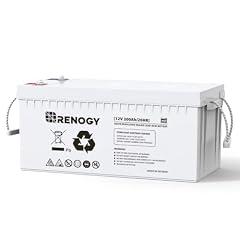
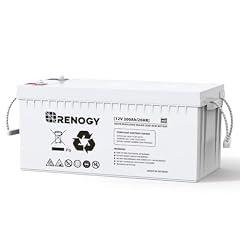
Renogy Deep Cycle AGM Battery 12V 200Ah
Overview
This is a 127.9-pound, 12V 200Ah deep-cycle absorbed glass mat battery for RV auxiliary power, solar storage, marine, cabin, and backup applications. Despite appearing in a lithium RV battery search category, it is a sealed lead-acid AGM product, not a lithium battery. Renogy specifies 2,400Wh nominal energy, 200Ah when discharged over 20 hours to 10.5V, and 200A maximum continuous discharge current. Those are manufacturer-stated specifications, not independently verified test results. Its documentation is more useful than the marketplace title alone. It specifies 14.4V to 14.8V boost charging, 13.6V to 13.8V float charging, and a safe charging temperature range of 32°F to 122°F. The manual also permits up to four batteries in parallel and gives series arrangements, while cautioning against mixing battery ages, brands, capacities, or chemistries. No current independent finished-product safety certification or third-party capacity test was located in the reviewed certification registers and published sources.
What works
- The manufacturer provides specific capacity, voltage, charge, discharge, temperature, and connection limits rather than an unqualified drop-in claim.
- The manual gives RV-relevant charging parameters, battery-bank arrangements, inspection steps, and warnings against mixing mismatched batteries.
- The sealed AGM construction immobilizes the sulfuric-acid electrolyte under normal handling, according to the manufacturer documentation.
- A 500-cycle claim is tied to 50% depth of discharge, and the product is covered by a two-year prorated material and workmanship warranty.
What does not
- No current UL, ETL, CSA, or TÜV finished-product certification record for this exact battery was located during verification.
- No independent, traceable load test was located to confirm delivered capacity, voltage sag, surge behavior, or the 2,000A five-second claim.
- This is not a lithium battery and has no lithium-style BMS. The manual instead directs users to install an external low-voltage disconnect and to observe current limits.
- It contains lead and sulfuric acid. A cracked case can leak corrosive electrolyte, and the manufacturer says not to discard it with household waste.
- The stated 200Ah rating applies to a 20-hour discharge. Available capacity is manufacturer-stated to be lower at faster discharge rates.
Who is it for
This product suits an RV, boat, cabin, solar, or backup-power owner who specifically wants a large sealed lead-acid AGM battery and can accommodate a 127.9-pound unit. It is most appropriate where the charger or solar controller can be set to the documented AGM voltages, where charging below 32°F can be prevented, and where the system includes proper fusing, cabling, terminal protection, and a low-voltage disconnect. It also suits planned battery banks using matched units and conservative 50% depth-of-discharge operation.
Who is it not for
It is not for buyers specifically seeking a lithium RV battery, low weight, built-in Bluetooth monitoring, automatic low-temperature charge blocking, or an internal electronic BMS. It is also unsuitable for anyone expecting a plug-and-play replacement without checking converter, solar-controller, alternator-charger, inverter, fuse, and cable compatibility. Avoid using it where it may freeze while charging, where a damaged casing cannot be promptly isolated, or where the installation space cannot safely support and secure nearly 128 pounds.
Integrity
The key material issue is that this is a lead-acid battery. The AGM design immobilizes sulfuric-acid electrolyte and is described as sealed during normal handling, but the manual says a cracked case can eventually leak acid and corrode nearby materials. Safe handling still requires avoiding impact, keeping terminals clean and insulated, controlling charge voltage, and using an external low-voltage disconnect to limit damaging over-discharge. Renogy provides a model-specific manual, U.S. support contact details, a stated 500-cycle life at 50% depth of discharge, and a two-year prorated warranty. The manual instructs owners not to place the battery in household waste and to use required recycling channels. EPA guidance likewise says lead-acid batteries should go to a battery retailer or household hazardous-waste program, never trash or curbside recycling. No recall or public safety warning for this exact product was identified in the reviewed U.S. CPSC sources. Independent finished-product safety certification and performance-test evidence were not located.

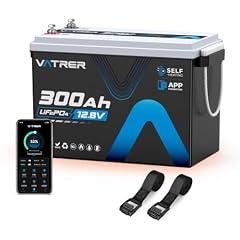
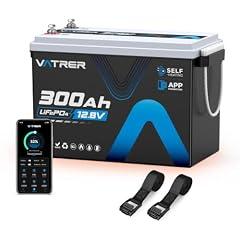
VATRER POWER 12.8V 300Ah LiFePO4 Lithium Battery
Overview
This is a 12.8V, 300Ah lithium iron phosphate auxiliary battery for RV, marine, solar, camping and off-grid use. Vatrer states 3,840Wh of nominal energy, a 200A continuous charge and discharge limit, 2,560W inverter power, M8 terminals, Bluetooth monitoring and an IP65 enclosure. Its current product page lists a 54.67 pound weight and 15.12 by 7.64 by 9.76 inch case. The defining cold-weather feature is manufacturer-documented 90W self-heating. The manual says heating begins below 32°F when charging current exceeds 10A, then stops at 41°F. The manufacturer also documents BMS cutoffs for overcharge, over-discharge, overload, short circuit and high temperature. No independent capacity test or certifier register listing for this finished battery was identified during verification.
What works
- Manufacturer documentation gives concrete 200A, voltage, temperature and BMS cutoff specifications.
- The self-heating system has defined activation and stop temperatures, plus a stated 10A minimum charging-current condition.
- The manufacturer provides charger voltage guidance, solar and DC-to-DC charging guidance, and series and parallel connection instructions.
- Bluetooth monitoring is intended to show state of charge, voltage, current, temperature and battery status.
What does not
- No third-party finished-pack safety certification or independent capacity and fault-protection test was located for this product.
- The manufacturer product page and its downloadable self-heating manual conflict on physical dimensions and weight, which weakens confidence in documentation control.
- The manual gives useful connection diagrams but does not provide a complete RV installation plan with circuit fuse sizing, cable gauges, terminal covers and vehicle-specific alternator protection.
- The 4,000-plus cycle claim is manufacturer-stated and not tied to a published independent cycle-life report or a stated end-of-life capacity threshold.
- No product-specific UN 38.3 test summary or brand take-back program was located.
Who is it for
It suits an experienced RV, van, boat or off-grid user building a 12V deep-cycle system around a compatible lithium charger, solar controller or DC-to-DC charger. The stated 3.84kWh capacity and 200A discharge ceiling fit substantial 12V loads and moderate inverter use, provided the owner designs cabling and overcurrent protection for that current. It is particularly relevant for users who expect to recharge in freezing weather and can meet the heater's stated requirement for more than 10A charging current.
Who is it not for
It is not for engine starting, since the manufacturer says it is a deep-cycle battery and gives no cold-cranking rating. It is also unsuitable for buyers who need a finished battery with independently verified UL, ETL, CSA or TÜV safety certification, or independently confirmed capacity. Novice RV owners without a compatible lithium charging profile, DC-to-DC alternator charging plan, correctly sized cables and fuses should not treat it as a simple drop-in lead-acid replacement. Do not use it where a permanently installed listed energy-storage system is required.
Integrity
The battery uses lithium iron phosphate chemistry, but chemistry alone does not prove a finished pack is safe. Vatrer documents a BMS intended to disconnect for overcharge, over-discharge, overload, short circuit and high temperature. Its manual also warns against short circuits, water immersion, heat exposure, terminal contact with metal objects and use of an unsuitable charger. The cold-weather heater is intended to prevent charging cold cells, but its function remains manufacturer-stated rather than independently tested. No CPSC recall or public warning specific to this product was found in the verification search. Vatrer publishes general disposal advice that says not to place lithium batteries in trash or curbside recycling, to insulate exposed terminals, and to use a qualified recycling or household hazardous-waste route. That is useful guidance, but no product-specific take-back pathway or transport test summary was located. The manufacturer lists five-year coverage for 12V 300Ah batteries, with buyer shipping and depreciation responsibilities after year three.
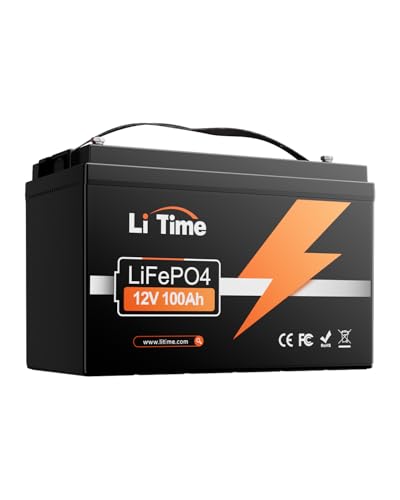
LiTime 12V 100Ah LiFePO4 Battery BCI Group 31
Overview
This is a 12.8V, 100Ah lithium iron phosphate deep-cycle battery in a Group 31-size case for RV house power, solar storage, trolling motors, and other auxiliary loads. LiTime specifies 1,280Wh of nominal energy, 100A continuous charge and discharge capability, 400A for one second, M8 terminals, IP65 enclosure protection, and a 4P4S expansion limit. It is not intended to start an engine. The capacity rating has some independent support. One published load test of this 100Ah LiTime battery reported 104Ah and 1,331Wh at a 4A discharge. The remaining key electrical and durability figures are manufacturer-stated. The product manual gives a 32°F to 122°F charge range, yet this standard version does not claim built-in low-temperature charge cutoff or self-heating. Its documented 100A BMS is a meaningful protective feature, but no public exact-product UL 1973 listing or accredited pack safety report was located.
What works
- An independent published 4A test reported 104Ah and 1,331Wh, exceeding the nominal capacity claim under that test condition.
- The manufacturer documents a 100A continuous discharge rating and 400A one-second surge rating, useful for moderate inverter and RV house loads.
- The Group 31 footprint, M8 terminals, terminal-torque guidance, and series and parallel limits are documented in the product manual.
- LiTime provides a five-year limited warranty for eligible 12V batteries of this capacity.
What does not
- No public current UL 1973, ETL, CSA, or TÜV listing was located for this exact finished battery. FCC, CE, RoHS, and UN38.3 claims do not substitute for a U.S. finished-pack stationary battery safety listing.
- The manual limits charging to 32°F and above, but this version does not claim low-temperature charge cutoff or self-heating. It needs a charging system that prevents below-freezing charging.
- BMS protection is stated, but publicly available exact-product documentation does not provide all protection thresholds or an independent fault-protection test report.
- RV guidance covers charging voltage, terminal torque, and expansion, but does not provide a complete vehicle-specific fuse, cable-size, mounting, or ventilation installation design.
- The long cycle-life claims are tied to depth of discharge, but no public exact-product cycle test report with temperature and end-of-life capacity criteria was located.
Who is it for
This product suits an RV, camper, boat, or off-grid user building a modest 12V auxiliary-power system with loads at or below its manufacturer-stated 100A continuous limit. It is most appropriate where the battery compartment accepts the approximately 13 by 6.77 by 8.5 inch Group 31 format, where a lithium-compatible charger or solar controller can be set near 14.4V, and where charging can be prevented below 32°F. It also fits users who want to expand later with identical batteries under the stated 4P4S limit.
Who is it not for
It is not for engine starting, golf carts, or applications needing guaranteed operation while charging below freezing. Buyers who need a finished-pack U.S. safety listing, independently documented abuse testing, or a verified low-temperature charge cutoff should use a product whose exact model appears in a current certifier register. It is also unsuitable as a direct RV battery swap when the existing converter, alternator, wiring, fuses, cable sizing, and mounting arrangement have not been checked for lithium charging and the expected continuous current.
Integrity
Lithium iron phosphate is the stated chemistry, and the manufacturer documents an enclosed ABS case, IP65 protection, insulated terminal caps, a 100A battery-management system, and instructions to stop use if terminal insulation melts. These are useful safety measures, but the publicly located documentation does not establish independent finished-pack safety certification for this exact product. The manual also makes the cold-weather limitation clear, charging is specified only from 32°F to 122°F. LiTime states a five-year limited warranty and publishes capacity-based cycle claims of 4,000 cycles at full discharge, 6,000 at 80 percent discharge, and 15,000 at 60 percent discharge. The conditions are not supported by a public exact-product cycle-life report. No LiTime recall or CPSC safety warning for this product was located in the checked U.S. recall sources. Clear product-specific U.S. take-back or recycling instructions were not located, so spent or damaged batteries should be kept out of household trash and curbside recycling, with terminals protected before using a qualified battery recycler or local hazardous-waste program.

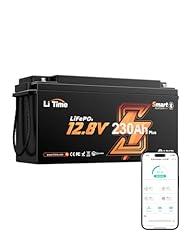
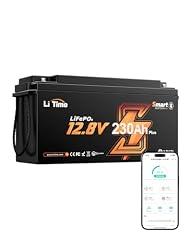
Litime 12V 230Ah Bluetooth Lithium Battery
Overview
This is a 46-pound, 12.8V lithium iron phosphate deep-cycle battery for RV house power, solar storage, trolling motors, and other 12V auxiliary loads. Its stated capacity is 230Ah, or 2,944Wh, in a 19.02 by 6.69 by 9.45 inch ABS case with M8 terminals. It is not intended as an engine-starting battery. The manufacturer documents a 200A battery-management system, 200A maximum continuous charge and discharge current, and a 1,000A one-second surge rating. It also states that charging stops below 32°F and resumes at 41°F. These are manufacturer-stated specifications, not independently verified results. The product page lists FCC, CE, RoHS, and UN38.3 claims, but this review did not locate a public certification listing for the finished battery or a model-specific UN38.3 test summary.
What works
- The manufacturer provides specific charge, discharge, surge-current, terminal-torque, and temperature limits rather than only broad compatibility claims.
- Manufacturer-stated low-temperature charge protection stops charging below 32°F, which addresses a key LiFePO4 cold-weather risk.
- The documentation limits expansion to matched batteries, up to four in series and four in parallel, and advises against mixing Bluetooth and non-Bluetooth versions.
- LiTime publishes a five-year battery warranty policy with repair or replacement procedures and a U.S. support contact.
What does not
- No current public UL, ETL, CSA, or TÜV listing was located for this exact finished battery. FCC, CE, and RoHS claims are not equivalent to U.S. pack-safety certification.
- No traceable independent capacity, power, cutoff, or fault-protection test report for this exact version was located.
- The short manual gives torque and series-parallel limits, but it does not provide complete RV installation guidance for cable sizing, fuse selection, mounting, converter settings, or alternator load management.
- LiTime claims UN38.3 compliance, but a model-specific transport test summary with laboratory and report details was not publicly available during this review.
Who is it for
This product suits an RV, camper, boat, or off-grid user building a professionally fused 12V auxiliary-power system who needs roughly 2.9kWh of manufacturer-stated storage in one narrow battery. It is especially relevant where temperatures may fall near freezing, because the documented battery-management system is stated to stop charging below 32°F. The buyer should already have, or plan to use, a LiFePO4-compatible charger, properly sized overcurrent protection, and a DC-to-DC charger when charging from an alternator.
Who is it not for
It is not suited to engine starting, nor to a buyer expecting a fully documented drop-in RV conversion. The manual does not substitute for an installer’s cable, fuse, mounting, and charging-source design. It is also a poor fit where an independently listed finished battery is required by an insurer, professional installer, inspection authority, or risk-management policy. Anyone needing verified delivered capacity, independently tested fault behavior, or a published model-specific transport report needs documentation not located for this product.
Integrity
The battery uses lithium iron phosphate cells in an ABS enclosure and has a manufacturer-stated 200A battery-management system covering overcharge, over-discharge, overcurrent, short-circuit, and temperature protections. The most concrete documented safety feature is low-temperature charging protection, with charging stopped below 32°F and resumed at 41°F. Those protections are manufacturer statements, not independently confirmed pack-level safety test results. LiTime lists FCC, CE, RoHS, and UN38.3 on the product page, but no public third-party safety listing for this finished battery or matching UN38.3 summary was located. No CPSC recall or public safety warning for this product was found in the reviewed U.S. sources. LiTime offers recycling guidance, but not a product-specific take-back program. At end of life, terminals should be taped or individually bagged and the battery taken to a qualified battery recycler or household hazardous-waste program, never placed in trash or curbside recycling.

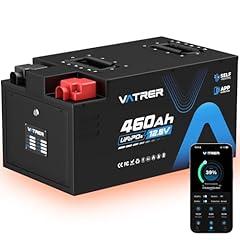
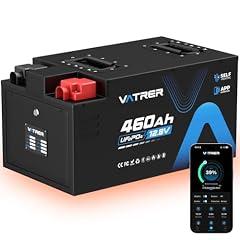
Vatrer Power 12.8V 460Ah LiFePO4 RV Battery
Overview
This is a large 12.8V lithium iron phosphate battery for RV, solar, off-grid, and backup auxiliary-power systems. It is specified at 460Ah, or 5,888Wh nominal energy, measures 18.78 by 10.75 by 9.92 inches, and weighs 104.7 pounds. The manufacturer states a 300A continuous charge and discharge limit, 3,840W maximum inverter load, Bluetooth app monitoring, and a steel enclosure. Its most distinctive function is manufacturer-stated self-heating for charging in cold weather. Documentation says incoming charging power heats the cells below 32°F, then normal charging starts after the cells reach 41°F. The manufacturer also states that the BMS protects against overcharge, over-discharge, overcurrent, short circuit, and temperature faults. No exact-model third-party pack-safety listing or independent capacity load test was located.
What works
- Large single-battery energy store, the 12.8V by 460Ah rating equals 5,888Wh nominal energy.
- Manufacturer documentation gives a specific self-heating sequence for subfreezing charging, rather than simply claiming cold-weather use.
- Manufacturer-stated 300A BMS protection and app monitoring provide defined electrical limits and routine status visibility.
- The manufacturer publishes charging voltage, recommended charging current, temperature ranges, terminal type, dimensions, and weight.
- A published five-year limited warranty category covers the 460Ah line, with stated contact channels and serial-number based warranty terms.
What does not
- No exact-product ANSI/CAN/UL 1973, ETL, CSA, or TÜV finished-pack certification could be verified in a certifier register.
- No independent, traceable load test was located to confirm delivered capacity, voltage behavior, continuous output, or protection cutoffs.
- The documentation does not provide the BMS trip thresholds, fault-test results, cable-sizing table, fuse specification, terminal torque, or complete RV alternator guidance.
- Manufacturer information conflicts on ingress protection and expansion. The product specification lists IP54 and up to four series with ten parallel units, while other product materials describe IP65 and a 4P4S configuration.
- The 5,000-cycle claim is not tied to a stated depth of discharge, test temperature, end-of-life capacity, or independent cycle-life report.
Who is it for
This product suits an experienced RV, cabin, or off-grid owner who needs roughly 5.9kWh of nominal 12V storage in one very heavy enclosure and can design the surrounding system correctly. It is most relevant where a suitably sized LiFePO4 charger, solar controller, DC-to-DC charger, inverter protection, fuse, cables, and secure mounting are already planned. Its manufacturer-stated heater is particularly relevant for users who expect charging opportunities during freezing weather and can supply adequate charging current.
Who is it not for
It is not suited to buyers seeking a finished-pack safety certification that can be independently checked, or to anyone who needs independently measured capacity and fault-protection performance for insurance, professional installation, or critical backup use. It also is not a casual drop-in replacement for lead-acid batteries. At 104.7 pounds, it requires safe lifting and secure restraint. Avoid using it for engine starting, or combining it with unlike batteries, unless the complete charging, fusing, alternator, and inverter system has been designed for this battery.
Integrity
The pack is manufacturer-described as lithium iron phosphate, with a steel enclosure, a 300A BMS, and automatic cold-weather heating. Those features can reduce some foreseeable misuse risks when used within the stated limits, but they are manufacturer claims rather than independently verified finished-pack safety performance. No exact-model third-party safety listing or published independent performance test was found. The manufacturer supplies a limited warranty path and identifies support contacts, although its cycle-life claim lacks published test conditions. No exact-product recycling or take-back program was located. At end of life, do not place this battery in household trash or curbside recycling. EPA guidance says lithium-ion batteries should go to a qualified battery recycler or household hazardous-waste program, with terminals covered using non-conductive tape or otherwise isolated before transport.