
10 Best Laser Projector
 Daniel Kenitz
Please note that we participate in affiliate marketing programs. When you purchase through links on our site, we may earn a commission. As an Amazon Associate we earn from qualifying purchases. This comes at no additional cost to you and helps support the resources required to provide valuable content.Advertising Disclosure
Top-rated Laser Projector Comparison
1


2
3
4
5

6

7


8

9
10
Overview
A laser projector creates a large image by using laser light instead of a conventional replaceable lamp. The useful choice is not simply the one with the largest lumen, contrast, screen-size, or “4K” number. A projector works well when its measured light output suits the room and screen, its optics match the available distance, its image remains accurate at a usable setting, and its safety and support claims can be traced to the exact product.
Start with placement. Standard-throw models need meaningful distance between the projector and screen; ultra-short-throw models can produce a large image close to a wall but require especially careful alignment and stable placement. Look for a model-specific throw range, screen-size range, ventilation clearances, mounting instructions, and limits for keystone correction, lens shift, zoom, and automatic obstacle avoidance. Digital correction can make setup easier, but physical alignment generally avoids sacrificing image geometry or low-latency performance.
Brightness should be comparable. A stated ANSI or ISO lumen figure is more useful than an unexplained “peak” or “white brightness” claim. ISO 21118:2020 is the relevant projector measurement method, but buyers should still ask which picture mode, throw distance, and screen size were used. The brightest mode may have a green cast, while color-accurate modes can be substantially dimmer. Battery operation can reduce output further. A large maximum screen-size claim is therefore not proof that the image will remain bright or usable, especially with room lights or daylight present.
Read resolution claims carefully. Several supplied products accept 4K signals but use a native 1080p imaging chip with pixel shifting. “4K supported,” “4K UHD,” and displayed 3840 × 2160 do not necessarily mean a native 4K imaging device. For gaming, check the actual refresh rate and independently measured input lag at the resolution you will use. A projector may accept 120Hz or 240Hz signals while output remains 60Hz, or may disable keystone and other setup features in low-latency mode. HDR, Dolby Vision, contrast, black levels, color accuracy, and brightness uniformity also need independent testing rather than marketing labels alone.
Laser safety deserves separate attention. Look for a model-specific IEC 60825-1 classification, IEC 62471-5 photobiological risk-group evidence, clear beam warnings, enclosure and fault protections, and installation instructions that keep the beam away from children and ordinary eye level. Class 1 does not mean users should stare into the beam; Risk Group 1 and Risk Group 2 products still require the stated precautions. A manufacturer declaration is useful, but an accessible accredited test report or regulator record is stronger evidence.
For electrical safety, verify the exact projector and included power supply in UL Product iQ, Intertek’s ETL directory, CSA, or TÜV Rheinland records. FCC authorization covers radio operation, not shock, fire, thermal, or laser safety. Smart models should have an FCC ID, a firmware-update path, a privacy policy, and a defined security-support period. Finally, compare warranty length, repair and battery-service options, operating and standby power, light-source-life conditions, recycling or take-back arrangements, and materials disclosures. Across the supplied products, recurring cautions include direct-beam exposure especially around children missing public electrical or laser certification, insufficient brightness for daytime or very large-screen use, misleading peak-mode figures, weak HDR or black levels, and incomplete repair or end-of-life support. No supplied product should be treated as a substitute for a television’s enclosed viewing geometry when people can freely cross the beam.
Integrity
Laser projectors combine optical radiation, heat-producing electronics, software, and sometimes lithium batteries. The supplied reviews show that the strongest products are not necessarily those with the most impressive headline specifications: they are the ones with model-level evidence, usable measured performance, clear setup limits, and a realistic service and disposal path.
HHealth & Safety
Laser eye-safety controls
This measures accessible laser emissions, enclosure labeling, classification, and protections against faults or foreseeable exposure. For projectors, look for IEC 60825-1 and IEC 62471-5 evidence, beam warnings, dimming or eye-guard functions, and placement above children’s sightlines. The supplied scores run from 64 to 82: higher-scoring products provide clearer Class 1 or Risk Group documentation and precautions; lower-scoring products leave classification or test evidence incomplete.
Electrical, heat, and battery safety
This covers shock, overheating, fire, power-supply failure, and—on portable models—lithium-battery risks. Exact-model UL 62368-1, ETL, CSA, TÜV, UL 2054, or IEC 62133-2 evidence is stronger than a generic compliance mark. Scores range from 70 to 79. The better-supported products document power, ventilation, operating limits, or recognized safety evidence; lower-scoring products commonly lack a public listing for the projector or adapter.
Safe setup and viewing geometry
This measures whether throw distance, mounting, ventilation, auto-alignment, and ultra-short-throw instructions prevent unstable installation, blocked vents, excess heat, or unsafe access to optics. Scores range from 70 to 90. Higher-scoring products provide concrete clearances, image ranges, mounting limits, and model-specific safeguards. Lower-scoring products leave mounting loads, ventilation distances, or optical-access limits unclear, making improvised shelves or ceiling installations harder to assess.
EEvidence
Usable brightness at the claimed screen size
This measures whether output is reported using ANSI or ISO methods and remains usable with accurate color at the intended image size. Scores range from 60 to 91. Higher-scoring products have independent measurements close to their claims, often in a usable picture mode. Lower-scoring products rely on undisclosed peak modes, conflicting screen-size figures, or claims that have not been independently measured.
Picture accuracy and responsive playback
This covers native resolution, color accuracy, uniformity, contrast, HDR handling, refresh rate, and input lag. Scores range from 52 to 91. Higher-scoring products have independent measurements supporting accurate color, even brightness, and responsive playback. Lower-scoring products show weak blacks, green or pink casts, limited HDR, frame skipping, or unverified gaming claims. Pixel-shifted 4K should not be described as native 4K.
Connected-device security and support
This measures radio authorization, firmware availability, security support, privacy controls, and smart-platform legitimacy. Scores range from 68 to 85. Higher-scoring products have exact-model FCC evidence, documented over-the-air or USB updates, and—where supplied—defined security-support dates. Lower-scoring products lack a public support end date, firmware history, privacy detail, or radio record, even when they include Wi-Fi, Bluetooth, or Google TV.
Truthful, comparable specifications
This tests whether claims about lumens, contrast, 4K, Dolby formats, Netflix, battery life, and light-source life state their conditions and agree across listings and manuals. Scores range from 52 to 85. Higher-scoring products make important distinctions—such as native resolution versus 4K input—and align better with independent testing. Lower-scoring products contain conflicting screen sizes, brightness figures, contrast definitions, warranty terms, or ambiguous native-resolution wording.
Independent proof, not seller assertions
This measures whether safety, radio, electrical, and performance claims identify the exact model in an accredited listing, regulator record, or reproducible independent test. Scores range from 69 to 83. Higher-scoring products combine FCC records with independent brightness or image testing and clearer model documentation. Lower-scoring products rely mainly on self-issued declarations, generic marks, or claims that cannot be matched to a public third-party record.
Durability, repairability, and support evidence
This considers warranty, maintenance, firmware support, replacement parts, battery service, thermal design, and realistic light-source life. The strongest supplied evidence combines a long warranty or defined support period with a lamp-free source and documented updates; the weakest offers only a long life claim and a short warranty. Buyers should treat 20,000–35,000-hour ratings as manufacturer estimates unless test conditions and service provisions are also clear.
EEcology
Long service life and repair support
This measures whether a projector can remain useful through its laser-life rating, thermal design, firmware support, warranty, replacement parts, and battery service. Scores range from 70 to 78. Higher-scoring products combine long light-source claims with clearer warranties, update paths, or service channels. Lower-scoring products may still claim 20,000–35,000 hours but provide little evidence of repair parts, replaceable batteries, laser-engine service, or support after the warranty.
Energy use and end-of-life responsibility
This covers operating and standby power, efficient light sources, materials information, packaging, and recycling or take-back options. Scores range from 69 to 81. Higher-scoring products disclose power figures, low standby use, restricted-substance information, carbon accounting, or recycling guidance. A laser light source can avoid lamp replacement, but it does not by itself establish low lifetime energy use or a U.S. end-of-life route; those details were often missing.
Full reviews

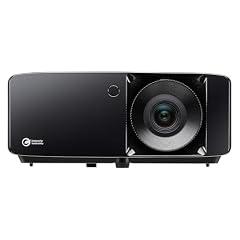
Optoma HZ41 Full HD Laser Projector
Overview
This is a compact, fixed-installation 1080p DLP laser projector for home entertainment, casual gaming, and mixed-use rooms. It accepts 4K HDR signals, but its native imaging resolution is 1920 by 1080. It has two HDMI 2.0 inputs, a 15 W speaker, wired Ethernet control, and no built-in Wi-Fi according to an independent retailer specification. Optoma states 4,600 ISO-measured lumens, a 30 to 300 inch image range, and up to 30,000 laser hours in Eco mode. Its claimed 8.6 ms input lag at 1080p and 120 Hz is useful for gaming, but no product-specific independent measurement was located. The published specification is unusually detailed about throw ratio, operating limits, power use, and signal support, while third-party picture-quality and electrical-listing evidence remains limited.
What works
- The manufacturer identifies ISO 21118 as the method behind its 4,600-lumen rating.
- Native 1080p, HDR10 and HLG support, plus HDMI 2.0 inputs, are clearly specified.
- The stated 8.6 ms lag at 1080p and 120 Hz could suit responsive casual gaming, although it is not independently measured.
- The 30 to 300 inch range, 1.1x optical zoom, and horizontal and vertical keystone give defined placement options.
- Published standby power is 0.5 W, with stated operating draw of 120 to 170 W.
What does not
- No product-specific independent brightness, color, contrast, HDR, or input-lag review was found.
- The 300,000:1 contrast figure is dynamic contrast, not a demonstrated native contrast result.
- No exact-model UL, ETL, CSA, or TÜV electrical safety listing was located in public certification directories.
- Laser safety documentation describes a Class 1 laser product with Risk Group 2 viewing precautions, so direct beam viewing remains an eye hazard.
- Warranty information conflicts across sources, with the retailer listing one year for the projector while Optoma's current home-laser policy lists two years.
Who is it for
It suits someone furnishing a living room, recreation room, classroom-like multipurpose room, or gaming space that needs a bright Full HD image without regular lamp replacement. The buyer should have a practical standard-throw mounting position, because a 120 inch screen is specified at roughly 13.5 feet. It is also appropriate for users who connect consoles, streaming sticks, PCs, or cable boxes externally and value 1080p at up to 120 Hz more than built-in smart-TV software.
Who is it not for
It is not for a dedicated dark-room viewer who needs independently measured color accuracy, native contrast, HDR brightness, or calibrated movie performance. It also does not suit households where children can readily approach or stare into the lens beam, unless the projector can be mounted and supervised according to its laser warnings. Buyers needing built-in wireless streaming, a verified third-party electrical listing, or a clear exact-model warranty term should seek documentation before relying on those conditions.
Integrity
Optoma's laser-safety material describes its laser projectors as Class 1 products under IEC 60825-1 and Risk Group 2 under IEC 62471-5. That does not mean the projection beam is safe to stare into. The safety instructions call for supervising children, avoiding optical aids in the beam, keeping clear during startup, and not opening or disassembling the unit. These precautions matter in homes, playrooms, and low-mounted installations. The product has no battery. Its published external power supply accepts 100 to 240 V, and stated standby use is 0.5 W. The laser source is claimed to last up to 30,000 hours in Eco mode, which can avoid replacement lamps, but brightness declines with use and that lifetime is not a guarantee. A public exact-model third-party electrical listing and a product-specific recycling or take-back commitment were not located. Optoma offers an RMA process and out-of-warranty repair contact path, though its stated warranty terms should be confirmed at purchase.

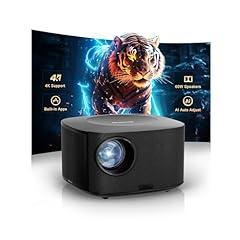
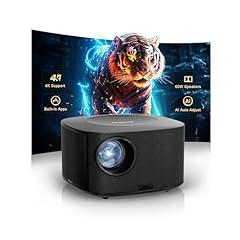
ONOAYO ONO5Pro 2.0 Smart Projector
Overview
This is a mains-powered LCD home-entertainment projector for table, tripod, wall, or ceiling use. It has a native 1920 x 1080 image and can accept compressed 4K input, rather than displaying a native 4K image. Independent product-database documentation also identifies it as an LED LCD projector, not a laser projector. The manufacturer-stated feature set includes Wi-Fi 6, Bluetooth 5.2, HDMI, USB, built-in streaming apps, auto focus, auto keystone, obstacle avoidance, a sealed optical engine, and thermal management. The listing and associated documentation do not provide an accredited performance test, a public electrical-safety listing, or a model-specific radio authorization. Brightness, speaker power, and light-source-life figures also vary across product materials, so the advertised large-screen and high-brightness use cases are not independently established.
What works
- Its native 1080p resolution and 4K-input limitation are clearly documented, which helps set realistic source-resolution expectations.
- Manufacturer documentation describes automatic focus, keystone correction, screen fitting, and obstacle avoidance, useful for frequent repositioning.
- The documented connection set includes HDMI, USB, 3.5 mm audio, Wi-Fi 6, and Bluetooth 5.2.
- The manufacturer states a one-year return period, three-year repair service, and ongoing customer support.
What does not
- No public UL, ETL, CSA, TÜV, or other model-specific independent electrical-safety listing was located.
- No model-specific FCC equipment authorization, firmware-release record, security-support term, or clear privacy policy was located.
- Brightness claims conflict across materials, including 2500, 3000, and 3500 ANSI lumens, without a published ISO measurement report.
- Audio claims also vary between 40 W and 60 W, while light-source-life claims range from 8,000 to 80,000 hours.
- The headline 4K wording can be misunderstood, because the product projects native 1080p after accepting 4K input.
Who is it for
It suits a buyer who wants a plug-in 1080p projector for casual evening movies, streaming, presentations, or console use in a darkened room, and who values automated alignment more than calibrated picture performance. It is also suited to someone able to use HDMI or USB sources if the built-in app platform changes. The buyer should treat brightness, audio output, gaming latency, and large-screen claims as manufacturer-stated rather than independently measured specifications.
Who is it not for
It is not suited to buyers specifically seeking a laser projector, native 4K projection, or a projector backed by published laser-safety and third-party electrical certification records. It is also a poor fit for daylight viewing, critical color work, competitive gaming, or permanent installations that require published throw calculations, mounting loads, ventilation clearances, and tested input-lag data. Households needing defined privacy practices and a stated security-update lifespan should not rely on the smart platform without further documentation.
Integrity
The available product documentation identifies an LED LCD light source, not a laser light source. That removes the specific accessible-laser exposure issue implied by the search category, but no IEC 62471 photobiological-safety report or model-specific third-party safety listing was located. The manual instructs users to place the unit on a stable, flat surface and keep ventilation unobstructed. It also describes thermal monitoring and a sealed optical engine, but these are manufacturer statements rather than independently verified protections. The manufacturer states that it offers one year for returns, three years of repair service, and ongoing support, which could extend useful life if honored. However, no public spare-parts program, take-back or recycling program, standby-power disclosure, materials disclosure, or firmware-support schedule was located. Conflicting 8,000-hour and 80,000-hour light-source-life claims prevent a reliable estimate of service life and replacement impact.
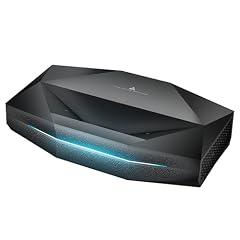
AWOL Vision Aetherion Pro 4K Projector
Overview
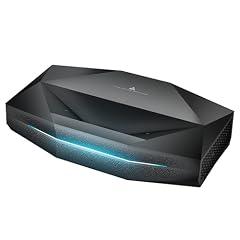
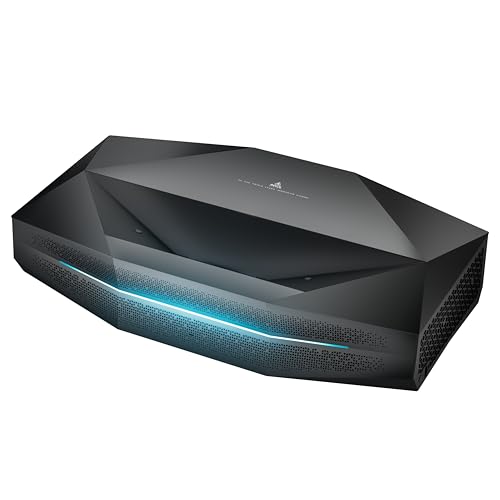
This is a mains-powered ultra-short-throw home projector for a fixed media-console installation near a wall or compatible screen. AWOL states that it uses an RGB triple-laser light source, a pixel-shifted 4K DLP system, 2,600 ISO lumens, and supports 80 to 200 inch images. It includes Google TV, wired networking, Wi-Fi, Bluetooth, three HDMI 2.1 inputs, USB-C DisplayPort, and gaming features. Independent testing confirms the basic format and finds particularly deep dark-scene contrast, rich color volume, and very low input lag across a wide range of supported modes. The same testing finds only decent brightness for dark or very dim rooms, warm and inaccurate color before calibration, and VRR artifacts at some refresh rates. The 200 inch, 25,000-hour, 6,000:1 contrast, 1 ms latency, and 110 percent Rec. 2020 figures remain manufacturer-stated specifications rather than publicly available full laboratory reports.
What works
- Independent testing found very low input lag, broad resolution support, and sharp DLP motion for gaming.
- Independent testing found deep dark-scene contrast, rich colors, and an iris control that can trade brightness for black level.
- The manufacturer documents three HDMI 2.1 ports, USB-C DisplayPort, Ethernet, Wi-Fi, Bluetooth, and eARC support.
- The manufacturer provides a 30-day return period and a two-year total warranty for the Aetherion series.
What does not
- Independent testing found brightness only suitable for dark rooms or very dim living rooms, not substantial ambient light.
- Out-of-box color runs warm and is not especially accurate, so calibration matters for accurate skin tones and natural images.
- VRR can create visible artifacts at some refresh rates, and its high-refresh mode can limit output to 1080p.
- The manual makes laser-safety and electrical-compliance declarations, but no exact-model UL, ETL, CSA, TÜV, FDA test record, or public FCC equipment authorization was located.
Who is it for
This product suits a buyer building a permanent large-screen setup in a dark or tightly light-controlled room, with a low console directly below a properly aligned screen or wall. It is especially relevant for console or PC users who want independently demonstrated low input lag, VRR support, and sharp fast motion at a large image size. It also fits viewers willing to adjust settings or arrange calibration rather than relying on accurate color immediately after setup.
Who is it not for
It is not suited to bright family rooms, daylight viewing, or outdoor use, because independent testing found its brightness only decent and unable to overcome much ambient light. It is also a poor fit for people who need a portable projector or routinely move equipment between rooms, since the unit is large and requires manual focus and alignment after placement. Households that cannot maintain a no-stare rule around an active projection lens should treat the laser safety instructions seriously.
Integrity
The published manual classifies the product as a Class 1 laser product and states compliance with IEC 60825-1, IEC 62471-5, and the applicable U.S. laser-product rules under Laser Notice No. 57. It also warns users not to stare into the lens, not to open or modify the enclosure, and specifies protective eyewear for service work. Those are meaningful operating controls, but the available evidence is a manufacturer manual, not a public independent laser test report or regulator record for this exact product. No model-specific CPSC or FDA recall was located in the checked U.S. recall sources. AWOL states a 25,000-plus-hour laser life and two years of warranty coverage, which can support longer use, but it does not publish a clear U.S. spare-parts program, repair pricing, energy-use figures, standby-power figure, or product take-back program. Remote-control batteries require separate responsible disposal.

Optoma ML1080UST Photon Go Projector
Overview
This is a 3.8-pound portable ultra-short-throw DLP projector with native 1920 by 1080 resolution, an RGB triple-laser light source, integrated Google TV, dual 10 W speakers, and a built-in lithium battery. It is intended to sit inches from a wall or screen, rather than across a room. HDMI sources can be accepted at 4K for HDR playback, but output remains 1080p. Its standout capability is verified placement geometry. Independent testing confirmed a 100-inch image at about 9.7 inches from the surface. Independent testing also measured 653 lumens in the brightest mode, close to the manufacturer's 650-lumen claim. The same review found rich color and usable 27 ms gaming response, but dark scenes show dark gray rather than deep black, and HDR is more convincing at smaller screen sizes.
What works
- Independent testing measured 653 lumens, closely matching the stated 650-lumen output.
- A 0.18:1 ultra-short-throw lens produces a 100-inch image from roughly 9.7 inches away.
- Independent testing found good color reproduction, sharp 1080p detail, and about 27 ms input lag for casual gaming.
- Google TV, streaming apps, stereo speakers, and a built-in battery make it usable without separate playback hardware.
What does not
- The 2,500,000:1 contrast figure is dynamic, not representative of mixed bright and dark scenes. Independent testing found blacks closer to dark gray.
- Brightness is suitable for dark rooms at 100 inches, but moderate ambient light calls for a smaller image. HDR is best kept below about 85 inches.
- The manufacturer's 1.5-hour battery estimate limits untethered movie viewing, especially at brighter settings.
- No exact-model UL, ETL, CSA, TÜV, FCC equipment authorization, IEC laser classification report, or battery-cell safety certificate was located in the checked public registries and documentation.
Who is it for
This product suits an apartment, dorm, bedroom, RV, or other compact room where there is no clear long throw path between seating and a wall. It is particularly practical for someone who wants a temporary 60 to 100 inch streaming setup that can be moved after use, with sound and Google TV already included. It also fits casual console play, as independent testing found about 27 ms lag at 1080p and 60 fps. Dark or well-controlled lighting is important for the larger image sizes.
Who is it not for
It is not suited to bright living rooms, daytime outdoor viewing, or users expecting television-like HDR impact at 100 inches. The measured light output is credible, but it cannot overcome substantial ambient light. It is also not for critical movie viewers who prioritize deep blacks, because independent testing found dark scenes remain grayish. Households with children should supervise setup and operation, keep faces out of the beam, and prevent access to the lens. Competitive gamers may also require lower documented latency.
Integrity
The manual gives meaningful operating controls. It instructs users not to stare into the beam, use optical aids in the beam, open the enclosure, or let children operate it unsupervised. It also specifies 15 cm of clearance around intake and exhaust vents, a 0 to 40 C operating range, and warnings against incorrect battery replacement, heat exposure, and moisture. These are useful safeguards, but publicly available documentation did not provide an exact-model IEC laser classification report or an independently searchable U.S. electrical-safety listing. The built-in battery is listed as 15,000 mAh and about 166.5 Wh, with USB-C PD 3.0 charging. The manufacturer states 20,000 hours of laser-light-source life, 60 W Eco power use, 85 W Bright power use, and standby at or below 0.5 W. The long claimed light-source life can reduce lamp replacement, but no model-specific battery replacement program, spare-parts commitment, take-back program, or public repair documentation was identified.

JMGO N1S Triple Laser 4K Home Theater Projector
Overview
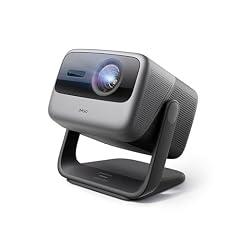
This is an AC-powered 4K DLP home projector with an integrated gimbal stand, triple RGB laser light source, Google TV, two HDMI inputs, and a claimed 40 to 300 inch image range. It is intended for tabletop or dedicated-mount home entertainment, with automatic focus and keystone correction for quick placement. Independent testing supports its core brightness case. ProjectorCentral measured 2,749 ANSI lumens in a more usable mode and 3,524 ANSI lumens in its green-biased Ultra Brightness mode. Testing also found a 1080p DLP chip using four-phase pixel shifting to produce the 3840 by 2160 image. The product's 3,300 ISO-lumen and 300-inch claims are manufacturer-stated. Its 4K 60Hz low-latency mode measured about 20 ms, but verified testing found no true 120Hz or 240Hz display output.
What works
- Independent tests found high usable brightness and very even screen illumination, supporting use in moderately lit rooms.
- Independent testing measured about 20 ms input lag at 4K 60Hz in Ultra-Low Latency mode.
- Independent testing found broad color coverage, including full Rec.709 coverage and near-complete P3 coverage.
- The official manual documents Class 1 laser classification, an RG2 viewing warning, operating limits, and use of the supplied power adapter only.
- The official support page confirms Google TV with native Netflix, Wi-Fi 6, Bluetooth 5.2, and eARC audio output.
What does not
- The image is not especially accurate out of the box, and independent reviewers found Ultra Brightness visibly green-biased.
- It is limited to HDR10. Independent testing found that accepted 120Hz and 240Hz signals do not produce true higher-frame-rate output.
- The 4K image uses pixel shifting from a native 1080p DLP chip, rather than a native 4K imaging chip.
- The product page calls its ports HDMI 2.1, but independent EDID analysis found no FRL high-bandwidth support.
- No exact-model UL, ETL, CSA, or TÜV electrical safety listing was located, and JMGO does not publish a clear security-support end date, repair-parts program, or take-back program.
Who is it for
This product suits a home viewer who needs a bright, compact projector for a living room or flexible media space and will mostly watch movies, streaming, sports, or single-player games at 4K 60Hz. The integrated gimbal can simplify temporary setups where the projector must aim upward, sideways, or from a shelf. It also suits users who value built-in Google TV and Netflix, but who can place the unit near the correct throw distance rather than relying heavily on digital keystone correction.
Who is it not for
It is not well suited to competitive gamers who need verified 120Hz or 240Hz output, or to viewers who are sensitive to DLP rainbow artifacts or RGB-laser speckle. Color-critical work and viewers seeking accurate out-of-box cinema color need calibration or another display approach. Households with children should keep the projection beam out of eye level and should not permit staring into it. It is also unsuitable for users needing independently listed electrical safety documentation, long guaranteed software support, readily documented parts access, or a manufacturer recycling program.
Integrity
The official manual identifies the accessible laser system as Class 1 under IEC 60825-1 and labels the projected light as Risk Group 2 under IEC 62471-5. It says not to stare into the beam, not to disassemble the laser module, and to use only the supplied power adapter. The manual also specifies a 0 to 40 C operating range and a 100 to 240 V, 240 W adapter. An exact-model FCC authorization for the associated S91A smart-projector platform was located, supporting the Wi-Fi and Bluetooth radio authorization. No CPSC or FDA recall or warning specific to this product was identified in the reviewed U.S. sources. However, no exact-model U.S. UL, ETL, CSA, or TÜV electrical listing was located. JMGO states that the body is mainly plastic and metal and that the packaging uses recyclable EPP. It discloses 240 W consumption, but does not provide standby-power data, ENERGY STAR or EPEAT registration, a public take-back route, or a documented spare-parts and repair program.

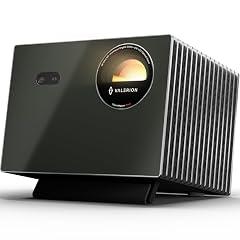
Valerion VisionMaster Pro2 Laser Projector
Overview
This product is a 15.4-pound, mains-powered DLP home projector with an RGB triple-laser light source, a motorized 0.9 to 1.5 throw-ratio optical zoom, built-in Google TV, three HDMI inputs, and 24W of built-in audio. It is intended for fixed home cinema, gaming, and planned outdoor movie setups, rather than battery-powered travel use. The manufacturer states 3,000 ISO lumens, 40 to 300 inch images, 25,000-hour laser life, Dolby Vision, HDR10+, and 1080p at 240Hz. Independent testing supports a genuinely bright, colorful image and responsive high-refresh gaming. ProjectorCentral measured 2,503 ANSI lumens in Standard mode, while the 3,383-lumen peak mode had a heavy green bias and is not suitable for normal viewing. Independent reviews also find strong color volume and good out-of-box accuracy, but note raised blacks in brighter scenes, rainbow artifacts for some viewers, and no optical lens shift.
What works
- Independent measurement supports strong usable brightness, 2,503 ANSI lumens in Standard mode without the color-compromising brightness boost.
- Independent testing found excellent color volume, good out-of-box color accuracy, and clear DLP motion for movies and games.
- The motorized optical zoom, autofocus, adjustable feet, and tripod mount provide practical positioning options.
- The product has model-specific FCC wireless test documentation showing a Part 15 Subpart E pass for its Wi-Fi functions.
- The manual gives concrete installation limits, including 20 cm side clearance and 15 cm rear clearance for ventilation.
What does not
- The 3,000 ISO-lumen claim is only reached in a measured peak mode with a pronounced green cast, so it is not representative of normal viewing.
- This is pixel-shifted 4K DLP, not a native 4K imaging panel, although independent testing found the resulting image sharp.
- There is no lens shift, so off-center placement can require keystone correction instead of preserving the cleanest optical geometry.
- Rainbow artifacts can affect sensitive viewers. The available reduction mode can add a conspicuous high-pitched fan whine.
- No model-level UL, ETL, CSA, or TÜV electrical safety listing was located, and no public independent laser safety test report was found.
Who is it for
It suits a home theater or gaming user who can place a 15.4-pound projector on a stable table, tripod, or suitable mount, has wall power available, and can control at least some room lighting. It is particularly relevant for viewers wanting a large 16:9 image with optical zoom flexibility, built-in Google TV, and high-refresh 1080p gaming. Users who are prepared to position the unit squarely with the screen, follow the stated ventilation clearances, and adjust picture settings will make better use of its tested brightness and calibration controls.
Who is it not for
It is not suited to people who need a grab-and-go projector for frequent travel, since it has no internal battery, carrying handle, or lens protection. It is also a poor fit where the projector must sit substantially off-center, because it lacks lens shift and digital keystone can be necessary. People sensitive to DLP rainbow artifacts or high-pitched fan noise should take particular care. Do not treat it as a child-accessible decorative light source, stare into its active lens, modify the enclosure, or use it in wet conditions or with blocked vents.
Integrity
The manufacturer’s manual identifies this as a Class 1 laser product and states compliance with IEC 60825-1, IEC 62471-5, and applicable FDA laser-performance requirements. It also warns against looking into the active lens, altering the enclosure, or attempting service. The same manual specifies 20 cm side clearance, 15 cm rear clearance, dry use, and qualified service only. These are meaningful safety instructions, but the review found no public independent laser test report or model-level UL, ETL, CSA, or TÜV electrical listing. No CPSC recall was identified in the agency search through August 16, 2026. The laser source is manufacturer-rated for 25,000 hours and avoids periodic lamp replacement, which can reduce consumable waste. Valerion provides a two-year warranty and has issued firmware updates for this product family. However, no public U.S. take-back program, ENERGY STAR listing, quantified operating or standby power figure, repair-parts catalog, or repairability documentation was located. The manual notes that standby still consumes power, so disconnecting it during long absences is a practical energy measure.

4K Home Theater Projector
Overview
This is a corded, portable LCD home projector with two HDMI inputs, two USB ports, AV, a headphone jack, Wi-Fi, Bluetooth, and native 1920 x 1080 resolution. It is intended for tabletop, ceiling, or rear projection, with auto focus and automatic or manual keystone adjustments. The manufacturer manual identifies an LED light source, not a laser light source, and lists a 100,000-hour lamp claim. The radio hardware is independently documented through a U.S. FCC authorization for this exact model, covering Bluetooth plus 2.4 GHz and 5 GHz Wi-Fi. Picture specifications need more caution. The official manual and earlier product documentation state 1500 ANSI lumens, while the current retail listing states 2000 ANSI lumens. No independent brightness, color, contrast, HDR, or input-lag measurement was located for this product.
What works
- Exact-model FCC authorization supports the Wi-Fi and Bluetooth radio claims.
- The manufacturer manual documents native 1920 x 1080 resolution, two HDMI inputs, two USB ports, and wired audio output.
- Auto focus, auto keystone, and four projection modes are documented in the manufacturer manual.
- The manual identifies an LED light source rather than a laser source, avoiding a laser-specific eye exposure issue in normal use.
What does not
- The 1500 ANSI lumen figure in the manual conflicts with the current 2000 ANSI lumen retail claim, and neither figure has an independent measurement located.
- No independent review or lab result was found for image accuracy, brightness uniformity, HDR behavior, contrast, or gaming input lag.
- No exact-model UL, ETL, CSA, or TÜV electrical-safety listing was verified for the projector or its supplied power equipment.
- The manual provides basic warnings but lacks detailed ventilation clearances, mounting load limits, and optical safety test documentation.
- The projector has an update menu, but no defined security-support period, firmware history, or product-specific privacy policy was located.
Who is it for
This product suits a buyer who wants a Full HD projector for occasional movies, presentations, or console use in a light-controlled room, and who can provide their own streaming stick or other HDMI source. Its documented HDMI, USB, wired-audio, Wi-Fi, Bluetooth, auto-focus, and keystone functions make it practical for a flexible tabletop or ceiling setup. It is better suited to users comfortable treating the claimed peak brightness and contrast as unverified manufacturer specifications, rather than calibrated performance figures.
Who is it not for
It is not suited to buyers who need a verified high-brightness projector for daytime viewing, a proven 300-inch presentation image, color-critical work, or competitive gaming with a measured low input lag. Households that require a confirmed U.S. electrical-safety listing for installed electronics should seek a product with an exact-model UL, ETL, CSA, or equivalent listing. It is also unsuitable for people expecting built-in licensed streaming apps, since the manufacturer says protected streaming services require an external Fire Stick or Roku.
Integrity
The manufacturer manual identifies an LED light source and warns users not to look directly into the projection light, not to touch the lens, not to open the unit, and to keep it away from moisture. This is not documented as a laser projector, so laser-specific Class 1 or Risk Group evidence is not applicable to its stated LED design. However, no IEC photobiological-safety report or exact-model electrical-safety listing was verified. No product-specific U.S. recall or regulator warning was located in the searches performed. The stated 100,000-hour LED life could reduce light-source replacement, but it is a manufacturer claim without stated test conditions. The manual says to disconnect mains power when the unit is off, but does not disclose operating watts, standby power, materials restrictions, packaging details, recycling instructions, take-back service, replacement parts, or a repair program. A two-year manufacturer warranty is stated in the retail record.

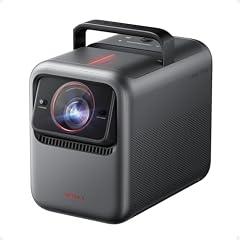
NEBULA X1 Triple Laser 4K Projector
Overview
This is a mains-powered, portable-format 4K DLP projector with an RGB triple-laser light source, retractable carry handle, Google TV, Wi-Fi and Bluetooth. It is intended for home cinema and occasional outdoor viewing, rather than battery-powered travel use. Independent testing confirms a bright, evenly illuminated image that can light a 100-inch screen in a dark room and tolerate some ambient light. The manufacturer states 3,500 ANSI lumens, 30,000-hour light-source life, Dolby Vision, automated focus and screen alignment, and image sizes up to 300 inches. Independent measurements broadly support the brightness claim, including about 2,970 lumens in Movie mode and 3,329 lumens in the NebulaMaster mode in one review. Independent testing also found very good contrast, vivid color and good out-of-box accuracy. Motion and competitive gaming are the main performance limits, because playback is capped at 60 Hz and input lag is not suited to fast-reaction games.
What works
- Independent testing found high brightness, strong uniformity, vivid color and good out-of-box picture accuracy.
- Measured Movie and calibrated-style modes were near the stated 3,500-lumen class, rather than relying only on a very dim accurate preset.
- The exact product has FCC authorization for its Wi-Fi and Bluetooth radios, with grants covering 2.4 GHz and 5 GHz operation.
- Automated focus, screen fitting and motorized optical adjustments can reduce setup effort when moving the projector between rooms or outdoor locations.
- Google TV, official Netflix integration and Dolby Vision support were confirmed in independent testing.
What does not
- No public, model-specific IEC 60825-1 laser classification report, IEC 62471-5 risk-group report, or independent U.S. electrical safety listing was located during verification.
- The 300-inch maximum is a manufacturer limit, not an independently established recommendation for a bright, color-accurate image in typical home or backyard conditions.
- Independent testing found visible DLP rainbow artifacts for some viewers, slight blue-tinted white balance before calibration, and raised blacks in the darkest scenes.
- It is not a high-speed gaming projector. Independent testing found 60 Hz output only and input lag too slow for most shooters, platformers and competitive play.
- The product has no internal battery, is comparatively large for a portable projector, and its published repair-parts commitment is not specific to this projector.
Who is it for
It suits a buyer who wants one substantial, AC-powered projector for a dedicated living room, multipurpose media room, or planned backyard movie night. The useful case is a roughly 80 to 150-inch screen after dusk or in a room with controllable light, where independent testing supports bright, colorful viewing and good contrast. It also fits viewers who value built-in streaming, Dolby Vision and setup automation, and who play slower single-player games rather than reaction-critical competitive titles. A stable table or suitable dedicated mount is important.
Who is it not for
It is not suited to households seeking a battery projector for camping, frequent travel, or use away from an outlet. It also is not the right fit for players who need 120 Hz or faster output and low input lag for competitive shooters, fighting games or rhythm games. People sensitive to DLP rainbow effect should view one before relying on it for long sessions. Families requiring publicly documented laser classification and a verified UL, ETL or CSA electrical listing for the exact product should request that documentation before installation, especially around children or in shared spaces.
Integrity
The radio hardware has model-specific FCC authorization, which verifies the Wi-Fi and Bluetooth transmitter authorization for U.S. use. The exact-projector FCC filing also includes a user manual and RF test documentation. However, verification did not locate a public IEC 60825-1 laser classification report, IEC 62471-5 photobiological risk-group report, or UL, ETL or CSA electrical listing for this exact product. That is missing public proof, not evidence of a confirmed hazard. Keep the enclosure intact, do not look into the projection optics, and use only the supplied power equipment. The manufacturer states a 30,000-hour laser-light-source life, which could reduce lamp replacements if achieved, but public test conditions and projector-specific repair parts support are limited. Anker offers a U.S. recycling route and describes documented data destruction and environmental processing, but it does not publish product-specific operating or standby power figures for this unit. Its privacy notice says Nebula smart projectors collect usage, performance, settings and device-log data when used with its services.

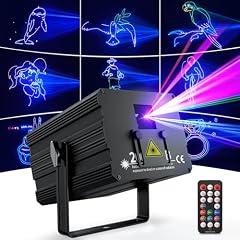
EYTSE 2W Animation Laser Stage Light
Overview
This corded stage laser is a compact RGB animation fixture for DJ setups, clubs, parties, and small stages. The manufacturer specifies 2W total laser output, divided as 450 mW red, 350 mW green, and 1,200 mW blue. It has app, DMX512, sound-reactive, remote, automatic, and master-slave control modes, plus manufacturer-stated built-in patterns and scene saving. The wireless function has documented FCC Part 15 testing for a model series that includes this product. That radio evidence does not validate laser safety. In February 2026, FDA Import Alert 95-05 listed this exact model under its identified manufacturer for nonstandard laser products and missing required certification tags. The product should therefore be treated as a high-output laser fixture with unresolved U.S. radiation-compliance concerns, not as a casual household novelty light.
What works
- Manufacturer-stated control options support app, DMX512, sound-reactive, remote, automatic, and master-slave workflows.
- The manufacturer publishes individual RGB output figures that add to its stated 2W total output.
- FCC Part 15 test documentation identifies this product in the tested Bluetooth model series.
- The manufacturer states that the aluminum housing includes a cooling fan and a mounting bracket.
What does not
- FDA Import Alert 95-05 lists this exact model under its named manufacturer for nonstandard laser products and missing certification tags. This is a concrete U.S. radiation-compliance concern.
- The manufacturer uses an FDA-compliant claim, but the active FDA import alert conflicts directly with that representation.
- No exact-model IEC 60825-1 classification report, photobiological safety report, or independent laser-output test was located.
- No exact-model UL, ETL, CSA, or TÜV electrical-safety listing was located.
- No published firmware-support period, software security policy, standby-power figure, repair-parts policy, or laser-source life specification was located.
Who is it for
This product is aimed at an experienced operator who needs flexible control for a controlled visual-effects setup, such as a DJ booth or small stage. The useful features are the manufacturer-stated app drawing and text tools, DMX512 input, music response, remote control, and reusable scenes. Its 2W claimed RGB laser output means the operator should understand beam placement, keep projections above audience eye level, maintain clearance around ventilation, and be able to stop use if the unit lacks a compliant permanent safety label.
Who is it not for
It is not appropriate for children, unsupervised home parties, low-ceiling rooms, audience scanning, or any setting where beams can enter eyes, reach roads, or point toward aircraft. It is also unsuitable for buyers who require a verified Class 1 or equivalent low-risk product, an independently listed power system, or clear U.S. laser compliance before installation. The active FDA import-alert entry for this exact model and manufacturer makes it particularly inappropriate where venue insurance, venue rules, or professional laser-safety procedures require documented compliance.
Integrity
The central health finding is serious. FDA Import Alert 95-05, dated February 3, 2026 for the named manufacturer, lists this exact model as a laser light show product with nonstandard and missing-certification-tag concerns. FDA describes this alert as detention guidance for electronic products that may fail applicable performance standards or lack the required certification. This conflicts with the product's own FDA-compliant representation. The available instructions advise users not to look into the beam, to mount the fixture above head height, and to keep ventilation openings clear. Those are relevant precautions, but no exact-model IEC laser-classification report or independent laser-safety test was found. The product is mains powered and has no battery. The manufacturer states 20W operation and an aluminum housing with a fan, but publishes no standby use, light-source-life, parts, repair, take-back, recycling, or packaging disclosures. That leaves its long-term energy and end-of-life footprint largely unquantified.
HAPPRUN 3000 Outdoor Projector with Google TV
Overview
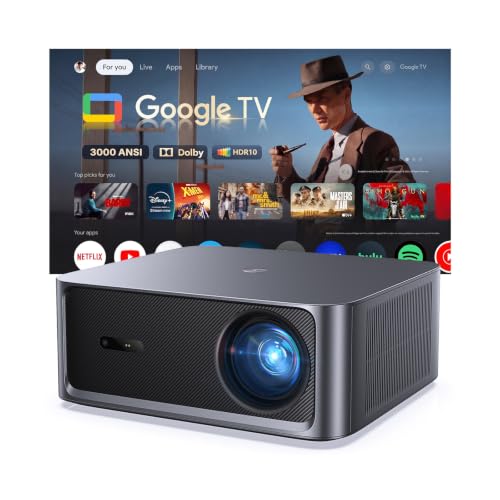
This is a mains-powered LCD home-entertainment projector with an LED light source, one HDMI input, one USB input, 3.5 mm audio output, Wi-Fi, Bluetooth, Google TV, automatic focus, and electronic keystone adjustment. The manufacturer manual identifies its native display resolution as 1920 x 1080, so it accepts 4K content but is not a native 4K display. HAPPRUN states 3,000 ANSI lumens, HDR10+, a 40 to 300 inch image range, dual 10 W speakers, Wi-Fi 6, and Bluetooth 5.2. Those performance claims were not supported by a reproducible independent brightness, color, contrast, HDR, motion, or gaming-latency test located for this exact product. The manual provides practical ventilation, moisture, lens-viewing, and mounting guidance, but model-level UL, ETL, CSA, IEC, FCC, laser-safety, and photobiological-safety records were not located.
What works
- The manufacturer manual clearly documents an LED light source and native 1920 x 1080 resolution, avoiding an implication that 4K decoding equals native 4K projection.
- Built-in Google TV and the option to use Basic TV without internet are documented in the manufacturer manual.
- Automatic focus, four installation modes, auto keystone, screen fit, and obstacle avoidance are documented setup features.
- The manual identifies an M5 stand-mounting point, HDMI, USB, and 3.5 mm audio connections.
- The manufacturer provides lens-viewing, ventilation, dry-location, and dust-cleaning instructions.
What does not
- The advertised 3,000 ANSI lumen output, 300 inch maximum image, 20,000:1 contrast, color coverage, HDR10+ result, and Dolby audio quality lack independent model-specific measurements.
- No model-specific electrical-safety listing from UL, ETL, CSA, or TÜV was located for the projector or its supplied power equipment.
- No model-specific FCC equipment authorization was located despite the Wi-Fi and Bluetooth claims, and no published security-support period or firmware-release history was found.
- The manual recommends switching off after six hours of continuous use, which matters for long viewing sessions.
- No verified energy-consumption, standby-power, materials, recycling, spare-parts, or repair-program disclosure was located.
Who is it for
This product suits someone planning a fixed or semi-fixed movie setup in a darkened room or after-dark outdoor space, who wants built-in Google TV rather than adding a streaming stick. It is also relevant for users who value automatic focus and image alignment over a compact travel format. The documented 1080p panel is appropriate for ordinary HD streaming and console use where confirmed low input lag and native 4K detail are not essential. Leave airflow clearance and use a stable table, stand, or suitable ceiling mount.
Who is it not for
It is not suited to buyers who need independently measured daylight performance, calibrated color, dependable HDR performance, confirmed gaming response, or native 4K imaging. It is also a poor fit for safety-sensitive installations that require a verified UL, ETL, CSA, or TÜV listing for the exact projector and power supply. Do not place it where children can stare into the active lens, where its vents can be covered, in damp outdoor conditions, or in an enclosed cabinet. Long unattended sessions conflict with the manual's six-hour shutdown recommendation.
Integrity
The manufacturer manual identifies this as an LED LCD projector, not a laser projector. That reduces concern about accessible laser radiation, but it is not a substitute for a model-specific IEC 60825-1 or IEC 62471-5 safety report. The manual warns against looking into the operating lens, directs users to keep children away, requires a dry and ventilated location, and says not to block the air outlet. It also recommends powering off after six continuous hours. No model-specific independent electrical-safety listing, radio authorization, photobiological-safety report, or public safety recall was located in the checked sources. The documentation does include dust-removal guidance, which can help preserve cooling performance. However, no verified standby-power figure, operating-energy measurement, material-restriction declaration, packaging disclosure, recycling or take-back program, replacement-parts catalog, or repair commitment was located. Its claimed long light-source life should therefore not be treated as a proven service-life outcome.