
10 Best Laser Measuring Tapes
 Daniel Kenitz
Please note that we participate in affiliate marketing programs. When you purchase through links on our site, we may earn a commission. As an Amazon Associate we earn from qualifying purchases. This comes at no additional cost to you and helps support the resources required to provide valuable content.Advertising Disclosure
Top-rated Laser Measuring Tapes Comparison
1

2
3
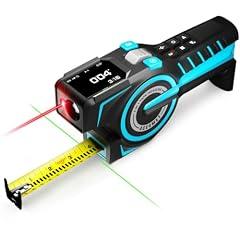
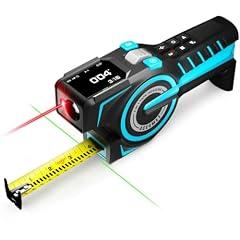
4
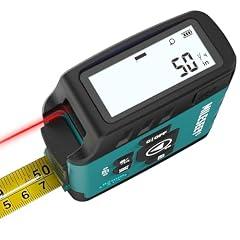
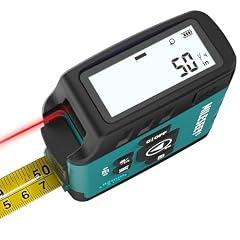
5
6
7
8
9
10
Laser measuring tapes: what to look for
Laser measuring tapes use a visible laser to calculate the distance to a target, sometimes alongside a physical tape blade. Laser-only models are useful for straight-line room dimensions, heights, areas, and volumes; hybrid models add a short manual tape for close measurements, edges, and surfaces where a laser cannot establish a clear line of sight. The laser reading is not automatically a digital reading of the physical blade, so buyers should confirm which measurement method the display represents.
The most important performance question is not the largest number on the package. Verified measuring accuracy means repeated readings agree with traceable reference distances across the stated range. The strongest evidence would be an exact-model report from an ISO/IEC 17025-accredited laboratory, using ISO 16331-1:2017 and traceability to NIST or another national metrology institute. A manufacturer claim such as ±1/16 inch, ±2 mm, or a similar figure is useful specification information, but it is not the same as an independently verified result. Accuracy can also vary with distance, temperature, target angle, surface reflectance, and setup.
Range claims need the same scrutiny. A stated 100, 165, 229, or 328 feet may apply only to favorable targets and lighting. Bright sunlight, dark or porous surfaces, glass, polished metal, water, angled targets, movement, and weak reflections can shorten the practical range or cause errors. Look for plainly stated limitations, target-card instructions, and independent range testing under realistic conditions rather than assuming the maximum figure is an all-condition working range.
Calculation modes are only as dependable as the measurements and the software behind them. Area, volume, continuous, level, angle, midpoint, and Pythagorean modes should explain the reference end, setup geometry, and limits. A front-versus-rear reference setting matters because including or omitting the tool body can create a systematic offset. Physical tapes also need a controlled lock and retraction system; a magnetic or movable hook can help positioning but does not prove blade or recoil durability.
For laser safety, look for a stated class, wavelength, maximum output, permanent product and aperture labels, direct-beam warnings, and clear instructions. The supplied products commonly identify Class 2 or Class II lasers below 1 mW, but several reviews found no independently authenticated labeling or output test. FDA CDRH requirements in 21 CFR 1040.10 and 1040.11, FDA Laser Notice No. 56, and IEC 60825-1 are the relevant reference points. A Class 2 laser is low hazard for ordinary intended use, not safe to stare into or aim at people, animals, reflective surfaces, or optical instruments.
Rechargeable products should have credible battery and charging evidence. Look for UL Product iQ, Intertek ETL, an OSHA-recognized testing laboratory listing, or a manufacturer-supplied UN 38.3 lithium-battery test summary. Replaceable AAA or AA batteries avoid a built-in charging circuit, while sealed lithium batteries create a more important end-of-life and charging-safety question. IP54, “water resistant,” “shock resistant,” and “waterproof” are not interchangeable claims: an IP rating should be supported by an IEC 60529 test, and drop or impact claims by an appropriate test report.
Across the supplied reviews, no product was independently verified as a traceable precision instrument. Repeated warnings include reduced performance in bright light and on weak, dark, reflective, or angled targets; lack of independent accuracy, range, battery, drop, or ingress testing; and the need to keep laser beams away from eyes and optical aids. Several hybrid models also lack independent tape-blade, lock, or recoil testing. Do not rely on these products alone for surveying, legal boundaries, inspection records, precision fabrication, safety-critical installation, or costly cuts where traceable accuracy is required. Treat uncertain water-resistance claims conservatively, and route rechargeable tools and batteries through appropriate recycling rather than household trash.
Integrity
These products combine an accessible laser, electronics, batteries, and—in hybrid models—a retractable blade. The topics below distinguish documented controls and support from seller claims that remain unverified.
HHealth & Safety
Laser eye-safety compliance
This measures laser class, output, wavelength, permanent labeling, warnings, and safe-use instructions. It matters because even low-hazard handheld lasers can injure or dazzle eyes when deliberately viewed or reflected. Among the supplied products, higher scores were associated with specific Class 2 and below-1 mW documentation; the strongest example also had an exact-model IEC 60825-1 certificate. Lower scores reflected missing class, wavelength, output, or label evidence.
Battery and charging safety
This measures safeguards against overheating, short circuits, battery damage, and unsafe charging. It matters most for USB-rechargeable lithium products, which add a battery and charging path to a handheld tool. Higher-scoring products either used replaceable alkaline cells or supplied clearer battery information; lower-scoring products lacked UL or ETL evidence, a UN 38.3 summary, or independent charging tests. No supplied product had complete public battery-safety proof.
Tape blade and retraction safety
For hybrid products, this measures whether the blade, hook, lock, and recoil remain controlled and intact. A failed lock or uncontrolled retraction can cause hand injuries, while a laser-only meter avoids this particular hazard. The supplied laser-only products scored 100 because no physical blade or recoil mechanism was present. Hybrid scores were lower because manuals described locks or controlled retraction, but independent cycle, drop, or durability testing was generally absent.
Recall status and accountable support
This measures whether the exact product and responsible seller or manufacturer can be identified, whether recalls or incident signals are addressed, and whether warranty support is real. Higher scores generally reflected named manufacturers, published contact routes, and stated warranties; lower scores reflected unclear responsibility or inconsistent warranty information. The reviews did not identify an exact-product recall for the supplied products, but a clean recall search is not proof of safety.
EEvidence
Verified measuring accuracy
This measures repeated distance readings against traceable reference distances across the stated range. It carries extra importance because accuracy is the category’s main performance discriminator. Higher-scoring products had clearer, qualified manufacturer specifications and, in one case, stronger supporting documentation, but no supplied product had a located exact-model ISO 16331-1 or ISO/IEC 17025 accuracy report. Lower scores reflected unsupported or conflicting tolerances.
Real usable range
This measures whether the advertised maximum range remains credible on bright, dark, weakly reflective, angled, and outdoor targets. It matters because laser distance meters often perform best indoors on stable, reflective surfaces. Higher scores reflected manuals that disclosed sunlight, reflectance, temperature, or target-card limits. Lower scores reflected large headline ranges without realistic conditions or independent testing.
Calculation and mode reliability
This measures whether area, volume, indirect, Pythagorean, angle, level, continuous, and reference-end modes produce correct results and explain setup limits. Higher-scoring products had manuals describing multiple modes, reference points, and operating procedures. Lower scores reflected advanced feature lists without traceable geometry testing or clear warnings. Manufacturer-described functions should not be mistaken for independently validated calculations.
Durability and water/dust resistance
This measures whether accuracy and safe operation survive ordinary handling and whether IP, drop, shock, or waterproof claims are test-supported. Higher scores came from clearer manufacturer specifications and more credible support, but no supplied product had complete independent durability evidence. Conflicting claims such as IP54 and “waterproof” should be treated cautiously: IP54 is not an immersion or unrestricted waterproof rating.
Independent proof of safety and performance
This measures whether current third-party reports identify the exact model, test method, laboratory, and traceability. It is a major discriminator because seller statements alone cannot establish accuracy, range, battery, laser, or durability performance. The supplied scores were generally modest: one Fanttik model had an exact-model IEC 60825-1 laser certificate, while most products lacked a publicly located ISO/IEC 17025 report for their key performance claims.
Honest, usable specifications
This measures whether range, accuracy, laser, battery, charging, IP, warranty, app, and certification claims are specific, consistent, and supported by manuals and issuer records. Higher scores went to products with clear limitations and consistent documentation, including the Bosch meters. Lower scores reflected conflicting accuracy figures, mismatched model manuals, unexplained certification marks, incorrect units, or claims such as “waterproof” unsupported by the available evidence.
EEcology
Repairability and responsible end of life
This measures battery replaceability, repair and spare-parts support, product longevity, take-back options, and recycling guidance. It matters because sealed rechargeable meters can become electronic waste when their battery fails. Higher scores went to products with removable AAA or AA cells, manufacturer recycling directions, or service and parts routes. Lower scores reflected sealed batteries and no removal, repair, take-back, or product-specific recycling instructions.
Full reviews
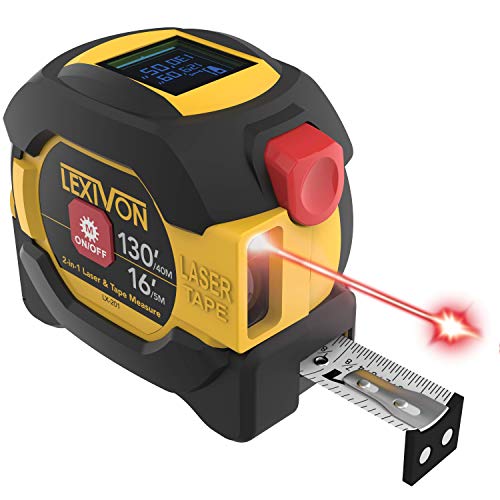
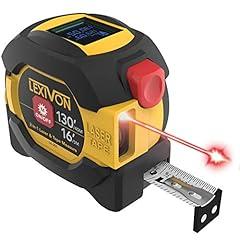
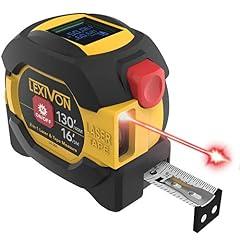
LEXIVON LX-201 Digital Laser Tape Measure
Overview
This is a compact combination tool with a 16 ft, 5 m steel tape and a laser distance meter stated to reach 130 ft, 40 m. It runs on two replaceable AAA batteries, has a backlit display, a magnetic tape hook, and an AutoLock button for controlled tape retraction. The manufacturer manual states a laser accuracy claim of plus or minus 1/16 inch, continuous measurement, and feet, inches, fractions, meters, centimeters, and millimeters. The manufacturer’s own manual identifies a Class 2, 630 to 670 nm laser with maximum output below 1 mW and gives a direct-beam warning. It also explains that laser readings use the rear of the unit as the default reference, while point measurements require subtracting the 3-3/8 inch body length. No model-specific ISO 16331-1 accuracy report, accredited laboratory report, IP test, or independent certification listing was located.
What works
- The official manual gives concrete laser safety details, Class 2, 630 to 670 nm, below 1 mW, plus a do-not-stare warning.
- Replaceable AAA batteries avoid a built-in lithium battery and charging circuit, and the manual specifies alkaline 1.5 V cells and correct polarity.
- The manufacturer documents the rear reference point and the 3-3/8 inch correction needed for point measurements, which helps prevent a common setup error.
- AutoLock holds the physical blade after extension, and the manual instructs controlled retraction with the release button.
- A one-year measuring-instrument warranty is stated, with a two-year extension available after timely registration.
What does not
- The stated plus or minus 1/16 inch accuracy was not supported by a model-specific ISO 16331-1 test or an ISO/IEC 17025-accredited calibration report.
- No independent test report was located for maximum range, repeatability, drop resistance, tape durability, or the AutoLock mechanism.
- The maker calls the housing shock resistant, but no IP rating or independent dust, water, shock, or drop-test evidence was located.
- Laser range depends on target reflectivity, strong light, temperature, and staying within range, but the manual does not provide quantified outdoor or low-reflectance performance limits.
- The manual shows CE, FCC, MID, recycling, and crossed-bin symbols, but it does not identify certificate numbers or a U.S. listing for this exact product.
Who is it for
This product suits a homeowner, installer, or light-duty trades user who needs both a conventional 16 ft tape and occasional room-scale laser measurements in a dry indoor setting. It is especially practical for measuring walls, cabinets, furniture openings, flooring layouts, or ceiling heights when holding a tape alone is awkward. The documented rear-reference system is suitable for users willing to read the manual and keep the back of the unit against the starting surface. Replaceable AAA batteries also suit people who prefer not to manage rechargeable tool batteries.
Who is it not for
It is not a strong fit for survey, finish carpentry, fabrication, inspection, or any work where a documented traceable accuracy result is required. Users who need dependable outdoor range in bright sun, performance on dark or angled targets, or a quantified dust and water rating should use equipment with those conditions independently tested. It is also unsuitable for children or anyone unlikely to follow laser precautions. Do not direct the Class 2 beam at eyes, people, animals, reflective surfaces, or optical instruments.
Integrity
The supplied manual identifies a Class 2 visible laser, 630 to 670 nm and below 1 mW, and includes a direct-beam warning. That stated classification is consistent with the low-hazard handheld measuring category, but the review did not locate an independently authenticated compliance record or a model-specific laboratory laser-output test. The manual instructs users not to stare into the beam and to keep the device away from children. It also specifies two alkaline AAA cells, with no charging system or internal lithium battery. The replaceable batteries are a practical longevity benefit because they can be removed for storage and replaced without opening the main product. EPA guidance recommends checking local options or using a battery recycler for used AAA alkaline batteries. The manual includes a crossed-bin symbol, but no manufacturer take-back program, spare-parts program, repair instructions, or product-specific recycling path was located. No recall or regulator safety notice for this product was found in the reviewed U.S. recall searches.

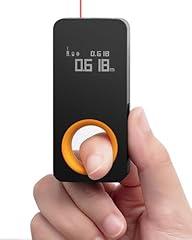
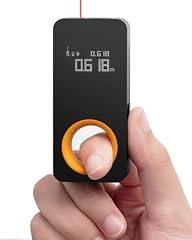
HOTO 98ft Laser Measuring Tool with OLED Display
Overview
This is a compact rechargeable laser distance meter, not a physical tape measure. It takes point-to-point readings with a single button, shows them on a 0.96-inch OLED screen, and can connect by Bluetooth to the Mi Home app. The submitted manual lists a 0.16 to 98 foot range, a 3.7 V 200 mAh lithium battery, USB-C charging at 5 V and 1 A, and a weight of about 36 g. These are manufacturer specifications submitted with its wireless equipment filing. Its laser documentation is comparatively specific. The manual identifies a Class 2 laser, output below 1 mW, and 630 to 680 nm wavelength, with an instruction not to direct it at eyes, bodies, or highly reflective surfaces. The Bluetooth function has an FCC equipment authorization for this exact product. No independent ISO 16331 accuracy or range report, battery safety listing, or jobsite durability report was located.
What works
- The submitted manual gives concrete laser safety information, including Class 2 status, below-1 mW output, wavelength, and eye-exposure warnings.
- Laser emission is documented to stop automatically after 30 seconds, which limits unintended continuous operation.
- The manual qualifies the stated accuracy and range for indoor reflective surfaces and warns that sun, weak targets, temperature changes, and low charge can increase error.
- The Bluetooth radio for this exact product has an FCC equipment authorization, with an associated emissions test report and identified responsible party.
- HOTO publishes a one-year limited warranty and support route, including repair or replacement for eligible hardware defects.
What does not
- No ISO 16331 test report or ISO/IEC 17025 laboratory report was found to independently confirm repeatability or the stated accuracy across its full range.
- No UL or ETL listing, UN 38.3 battery test summary, or independent charging safety report was located for the internal battery or charging system.
- The catalog describes the product as both IP54 and waterproof. IP54 does not mean waterproof, so the water-resistance claim is overstated or unclear.
- The submitted manual documents direct distance measurement and reference-end selection, but does not validate advanced calculations against traceable geometries.
- The sealed rechargeable design has no published battery-removal procedure or U.S.-specific take-back instructions.
Who is it for
This product fits a homeowner, renter, furniture planner, or light-duty DIY user who needs quick indoor point-to-point dimensions and values compact carry size over advanced surveying functions. Its roughly 36 g body, USB-C charging, OLED screen, and automatic laser shutoff suit occasional room, wall, shelving, or appliance-clearance checks. It is more appropriate where the target is reasonably reflective and the user can confirm important dimensions with a second measurement. The documented Bluetooth connection can also suit users who want to transfer simple measurements into the Mi Home app.
Who is it not for
It is not a suitable substitute for a calibrated construction, engineering, legal, or inspection instrument, because no independent accuracy or repeatability report was found. Avoid relying on it alone for safety-critical cuts, property boundaries, fabrication tolerances, or dimensions that drive costly material orders. It is also a poor match for sustained bright-sun outdoor work, dark or low-reflectance targets, highly reflective surfaces, or unstable temperatures, because the manual says these conditions can increase error. Keep it from children and never direct the beam toward eyes, people, animals, or reflective surfaces.
Integrity
The laser safety record is specific but largely manufacturer-documented. The submitted manual labels the product as a Class 2 laser with output below 1 mW and a 630 to 680 nm wavelength, and it instructs users not to aim at eyes, bodies, or highly reflective surfaces. It also specifies a 30-second automatic laser shutoff. The Bluetooth radio has an FCC equipment authorization and a filed emissions report, but that authorization is not a certification of laser, battery, measurement, or drop safety. The product contains a small rechargeable lithium battery. HOTO gives a one-year limited warranty and states that repair or replacement may be available for eligible defects. The manual directs users not to discard end-of-life equipment or batteries with household waste and references electronics collection, but that guidance is framed around WEEE. No published U.S. battery-removal procedure, take-back program, independent battery test summary, or durability test report was found. No exact-product CPSC recall or safety incident record was located in the searches performed.

ACEGMET DTX10 Digital Laser Tape Measure
Overview
This is a large handheld hybrid measuring tool with a 12-foot physical steel tape, a digital tape readout, and a laser distance meter advertised for distances up to 330 feet. It is intended for layout, renovation, carpentry, and other jobs that alternate between short physical pulls and longer line-of-sight measurements. The product record identifies an alloy-steel blade, auto-lock mechanism, USB-C charging, and a 2-inch IPS screen. Manufacturer documentation for the closely related DTX10 platform states 12-foot tape accuracy of plus or minus 1.5 mm, laser accuracy of plus or minus 2.0 mm plus a distance-dependent term, a 2,600 mAh rechargeable lithium-ion battery, and Class 2 lasers below 1 mW. An FCC equipment authorization independently identifies a DTX10 Bluetooth laser distance meter made by Shenzhen Mileseey, but it verifies radio authorization, not the product's distance accuracy, laser output, battery safety, or jobsite durability. No independent ISO 16331-1 accuracy report was located.
What works
- The manual gives specific Class 2 laser, wavelength, output, and do-not-stare warnings, rather than only a general laser caution.
- It documents practical range limitations, including weak returns, overly strong returns, strong light, and use of a reflective target or white paper.
- The manufacturer describes front, rear, and green-line reference options, continuous measurement, area, volume, height, level, and mixed-data calculations.
- A published FCC authorization record identifies the related DTX10 Bluetooth radio and its responsible manufacturer.
What does not
- The stated tape and laser accuracy figures are manufacturer figures, with no located ISO 16331-1 or accredited-laboratory verification for this product.
- No UL or ETL listing, UN 38.3 battery test summary, or third-party charging and battery safety report was located for the product.
- No IP rating, drop-test result, or accredited ruggedness report was located, so resistance to dust, water, and jobsite impacts is unproven.
- The documentation found is for DTX10 rather than clearly naming the DTX10-GEN 2 retail version, which limits confidence that every specification and instruction applies unchanged.
Who is it for
This product suits a DIY renovator, installer, cabinet planner, or maintenance worker who wants one sizable handheld tool for short tape pulls and occasional indoor laser measurements. It is most appropriate where the user can check important dimensions against a known reference, can work with a cooperative target surface, and benefits from documented area, volume, incremental, and reference-point functions. The manual's warnings and target guidance make it more suitable for a user willing to follow setup instructions than for unattended or quick-estimate work.
Who is it not for
It is not suited to work where measurements must be independently traceable, contract-critical, or accepted without field verification, because no accredited accuracy or repeatability report was found. It is also a poor fit for wet, dusty, high-impact, or outdoor bright-light conditions that demand an independently supported ingress rating, drop rating, and long-range target performance. Children should not use it, and anyone unable to avoid direct eye exposure should choose a non-laser measuring method. Do not rely on it around explosive or corrosive environments.
Integrity
The available DTX10 manual contains meaningful laser-use information. It identifies the distance laser as Class 2, lists a 630 to 670 nm wavelength and output below 1 mW, and warns users not to stare into the beam or aim it at others. It also says the green alignment laser is below 1 mW. These are manufacturer-provided specifications, not an independently located laser-performance test or FDA product report. The manual also specifies automatic laser shutoff after 30 seconds of inactivity. The product uses a rechargeable lithium-ion battery, and the manual says used batteries and the tool should not go into household waste. It directs users to designated collection points, which is useful basic guidance. However, no U.S. battery take-back program, repair parts catalog, battery test summary, or documented recycling partnership was located. Searches of the CPSC recall database did not identify a recall for ACEGMET, DTX10, or the documented manufacturer name in the product records reviewed.
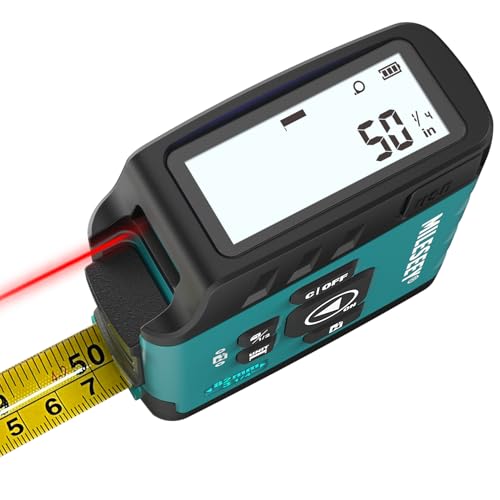
MiLESEEY 3-in-1 Digital Laser Tape Measure
Overview
This is a rechargeable, handheld 3-in-1 measuring tool that combines a retractable 16-foot tape, a digital tape readout, and a red laser distance meter. It is intended for room dimensions, renovation layouts, furniture placement, and other short-to-medium range work. The manual documents area, volume, continuous, and two- and three-point Pythagorean modes, with front or rear reference selection. MiLESEEY states a Class 2, 630-670 nm laser with output below 1 mW, a 40 m maximum laser range, a 5 m tape, and micro-USB charging. The product manual includes direct-beam eye warnings. No model-specific ISO 16331-1 accuracy report, accredited range test, battery safety listing, or publicly accessible durability report was located. Its published accuracy claims also conflict across sales materials, which matters where measurements are used for cutting or installation.
What works
- The manual gives clear Class 2 laser precautions, including not aiming at people or viewing the beam through optical instruments.
- The documented operating modes cover direct distance, continuous measurement, area, volume, and two- and three-point Pythagorean calculations.
- It combines a physical 5 m tape with a manufacturer-stated 40 m laser meter, reducing tool changes for mixed room and trim work.
- The manufacturer specification identifies front and rear measurement references, 20 stored readings, and automatic laser shutoff after 30 seconds.
What does not
- No independent, model-specific ISO 16331-1 or ISO/IEC 17025 accuracy and repeatability report was found.
- The published laser accuracy is inconsistent. The manual specifies plus or minus 3 mm plus 5 x 10^-5 D, while retail material advertises plus or minus 1/8 inch at 130 feet.
- No UL, ETL, or equivalent publicly verifiable listing, nor a model-specific UN 38.3 battery test summary, was located for the rechargeable product.
- A retailer describes a 1 m drop claim, but no underlying accredited drop-test report or IP ingress rating was located.
- No manufacturer repair parts, battery-removal instructions, take-back program, or product-specific recycling instructions were located.
Who is it for
This product suits a homeowner, decorator, or general DIY user who needs one compact tool for cabinet openings, room dimensions, furniture planning, or occasional renovation measurements. The physical tape is useful for short pulls where a laser cannot establish a clear line of sight, while the manufacturer-stated 40 m laser range can simplify indoor room measurements. It is most appropriate when readings can be checked before cutting costly material, and when the user can follow the manual's laser precautions and charging instructions.
Who is it not for
It is not the right instrument for survey, inspection, fabrication, legal measurement, or precision trade work that requires documented traceability and verified repeatability. Users working outdoors in bright sun, on dark or angled targets, or at the stated maximum range should not assume the published range will be achieved, because target-condition testing was not provided. It also needs careful supervision around children and reflective surfaces. Do not use it if a damaged charging port, swollen case, unreliable tape lock, or erratic reading is observed.
Integrity
The laser is manufacturer-stated as Class 2, 630-670 nm, and below 1 mW. The manual instructs users not to stare into the beam, aim it at others, or view it through an optical lens. Those warnings align with the basic exposure concern for a handheld visible laser. FDA rules require Class II laser products to carry specified warning labeling, but this review could not independently inspect the product body, packaging, or a compliance file to confirm every required label. The rechargeable lithium battery avoids routine disposable-battery use, but no public UL, ETL, battery safety report, or UN 38.3 summary for this exact product was found. Searches found no product-specific CPSC recall or FDA laser recall result. The manufacturer does not provide located instructions for battery removal, repair parts, take-back, or recycling. At end of life, EPA advises keeping lithium-ion batteries out of household trash and curbside recycling because damaged batteries can cause fires.
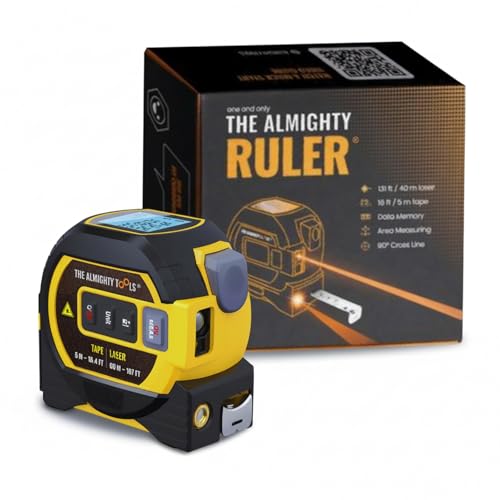
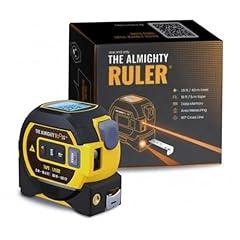
Almighty Ruler Laser Tape Measure 131 ft
Overview
This is a handheld 3-in-1 measuring tool that combines a 5 m physical tape, a laser distance meter, and a cross-line marking function. The listed yellow version is the 40 m, or 131 ft, laser-range variant. It is intended for room dimensions, furniture, shelving, picture placement, and other layout work where a conventional tape may be inconvenient. The maker states that this version uses a 19 mm manganese-steel tape, ABS and TPR housing, two replaceable AAA batteries, and memory for 20 readings. It also advertises length, area, volume, continuous, and Pythagorean functions. These are manufacturer statements, not independently validated results. Most importantly, the published accuracy specification combines ±1/16 inch with ±0.5 mm, figures that are not equivalent, and no model-specific accredited accuracy report was located.
What works
- The maker specifies a 5 m physical tape plus a 40 m laser distance mode, which can cover short layout tasks and room-scale measurements in one tool.
- Replaceable AAA batteries are listed for this version, avoiding a sealed rechargeable battery pack.
- The maker states that memory holds 20 readings, which can reduce manual note taking during a multi-step layout.
- The product page names useful calculation modes, including area, volume, continuous measurement, and single and dual Pythagorean functions.
What does not
- No model-specific independent accuracy, repeatability, range, drop, ingress, or functional-mode test report was located.
- The published laser accuracy claim is internally inconsistent, because ±1/16 inch and ±0.5 mm are materially different tolerances.
- The reviewed seller pages do not disclose laser class, wavelength, maximum output, or the required laser-label details needed to assess eye-exposure compliance.
- Outdoor, bright-light, angled-target, and low-reflectance range limits are not clearly qualified.
- No stated IP rating, repair parts program, recycling instructions, or battery take-back path was located.
Who is it for
This product suits a home DIY user who wants one compact device for basic indoor tasks such as checking a room, planning shelving, sizing furniture, or laying out picture positions. The stated 40 m laser range and 5 m tape cover common home dimensions, while the claimed reading memory and calculation modes may be useful for someone recording several cabinet, wall, or floor measurements. It is most appropriate where measurements can be checked against a known tape or reference dimension.
Who is it not for
It is not suited to work where a stated tolerance must be defensible, such as precision finish work, regulated construction documentation, fabrication, surveying, or professional estimating without independent verification. The inconsistent published accuracy figures make the claimed tolerance unsuitable as a sole basis for critical cuts or orders. It is also a poor fit for bright outdoor measurement, dark or angled targets, wet or dusty jobsites, and use around children or by anyone who cannot reliably avoid direct laser viewing, because laser classification and environmental protections are not disclosed on the reviewed pages.
Integrity
The product uses an accessible laser, but the reviewed seller material does not state its laser class, wavelength, maximum output, or compliance labeling. Those omissions prevent confirmation that the handheld laser is correctly classified and labeled for U.S. use. No matching CPSC recall result or public regulatory action was located during this review, but that is not the same as independent safety clearance. A 30-day return policy and a contact route are stated by the seller. For materials, the maker lists ABS and TPR housing, a coated manganese-steel tape, and two replaceable AAA batteries for the 131 ft version. Replaceable cells can avoid disposal of the entire tool when power is depleted. However, no spare-parts program, disassembly guidance, recycling instructions, take-back service, IP rating, or independently verified durability evidence was found. Used batteries should be routed through an appropriate local battery-recycling program rather than household trash.
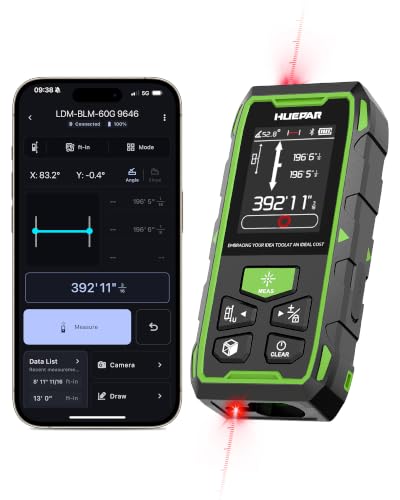
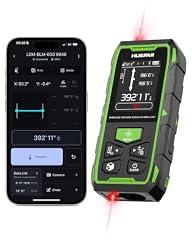
Huepar Dual Laser Measuring Tool 393ft
Overview
This is a compact rechargeable laser distance meter with laser apertures at both ends. It is intended for direct distance readings, two-direction span measurements, room area and volume calculations, continuous measurement, and angle-assisted functions. The supplied accessories are a target plate, USB-C cable, pouch, hand strap, and manual. Matching product records identify an ABS and TPE rubber housing, an IP54 claim, and a 120 m bidirectional or 60 m unidirectional measuring range. The manufacturer-stated accuracy is plus or minus 2 mm, and matching records describe a Class 2 laser below 1 mW. Those are plausible specifications for this format, but no model-specific ISO 16331-1 accuracy report, accredited range test, battery safety listing, or ingress test report was located. The published five-year warranty claim also conflicts with Huepar's official US policy, which limits its five-year service to specified laser-level products bought through its own site.
What works
- Bidirectional measurement can capture a full span without repeatedly repositioning the product, based on the manufacturer-stated design.
- The stated 120 m bidirectional range and 60 m one-way range suit large indoor rooms and longer layout tasks when target conditions allow.
- A USB-C rechargeable lithium-ion battery avoids disposable-cell replacement, according to matching product documentation.
- The stated Class 2, under 1 mW laser specification is a lower-hazard consumer laser category when labeling and safe-use instructions are followed.
What does not
- No model-specific independent accuracy, repeatability, range, calculation, drop, ingress, or battery test report was located.
- The IP54 dust and splash resistance claim is manufacturer-stated, not supported by a located accredited IEC 60529 report.
- Bright light, low-reflectance surfaces, angled targets, and obstructed beam paths can reduce usable range or cause errors, and the claimed maximum range is not independently qualified for those conditions.
- The advertised five-year warranty is not clearly supported by Huepar's official US warranty page, which says its five-year coverage applies only to certain laser levels purchased from its own site.
- No removable-battery, repair-parts, take-back, or product-specific recycling instructions were located.
Who is it for
This product fits a DIY user, estimator, installer, or interior-layout worker who needs quick indoor distance and room calculations rather than a physical tape. Its compact format, magnetic back, target plate, USB-C charging, two-direction measurement, and stated 120 m maximum span are useful for measuring rooms, hallways, ceilings, cabinetry clearances, and empty interior spaces. It is most appropriate where readings can be checked against a known reference when accuracy is consequential, because the stated plus or minus 2 mm performance was not independently verified.
Who is it not for
It is not suited to work where documented traceability is required, including survey control, formal construction acceptance, legal boundary work, or calibration-controlled quality systems. Those uses need a product with a model-specific accredited accuracy certificate and defined test conditions. It is also unsuitable for rain immersion, washdown areas, or dusty environments beyond ordinary splashes because IP54 is only a manufacturer-stated claim. Children and anyone unable to follow laser warnings should not operate it. Never intentionally view either beam or aim it at eyes, vehicles, or reflective optical equipment.
Integrity
Matching product records describe a visible Class 2 laser with output below 1 mW. FDA guidance says Class 2 products still require warning labels and that direct, prolonged viewing is a hazard. The exact product body, packaging, and manual labels were not independently inspected, so compliance with US laser labeling requirements could not be confirmed. No product-specific CPSC recall or FDA laser enforcement action was located in the searches reviewed. The product uses ABS and TPE rubber plus an internal rechargeable lithium-ion battery. No UL or ETL listing, UN 38.3 battery test summary, battery removal procedure, repair-parts program, or manufacturer take-back route was located. At end of life, the EPA says lithium-ion batteries and battery-containing electronics should not enter trash or curbside recycling. They should go to a dedicated battery, electronics, or household hazardous-waste collection route.

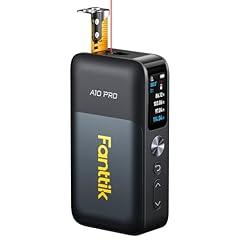
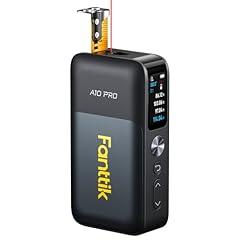
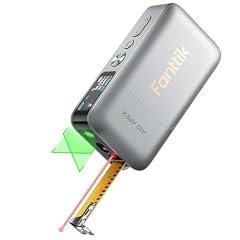
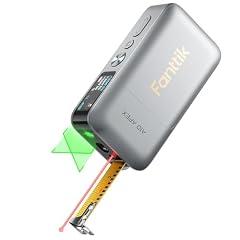
Fanttik A10 Pro Digital Laser Tape Measure
Overview
This product is a compact, rechargeable combination laser distance meter and physical tape measure. It uses a 9.8-foot tape for close work and a laser function stated to measure from 0.2 to 165 feet. The manual identifies a 3.7 V, 500 mAh lithium battery, USB-C charging, a 1.47-inch color display, 30-reading memory, and distance, area, volume, and level functions. Its laser safety documentation is more concrete than most performance evidence. An exact-model certificate records a Class 2, 655 nm plus or minus 10 nm laser tested to IEC 60825-1, while the manual lists Class II, below 1 mW, and gives eye-exposure warnings. Fanttik states laser accuracy of plus or minus 1/8 inch at 30 feet, tape accuracy of plus or minus 1/16 inch, and angle accuracy of plus or minus 1 degree. No independent ISO 16331-1 accuracy or range report was located.
What works
- An exact-model certificate documents a Class 2 laser assessment to IEC 60825-1.
- The manual gives the laser class, wavelength range, power limit, battery specification, operating temperature, and troubleshooting conditions.
- The combined tape and laser format can cover close physical dimensions and longer line-of-sight distances without changing tools.
- Manufacturer-stated functions include distance, area, volume, level, three reference points, six unit formats, and 30-reading memory.
- Fanttik identifies a U.S. responsible party, publishes support contact details, and states a one-year warranty.
What does not
- No publicly located ISO 16331-1 or accredited-laboratory report verifies the stated distance, tape, angle, range, or calculation accuracy.
- The 165-foot maximum is manufacturer-stated. The manual acknowledges weak and overly strong reflected signals can cause errors, and directs users to use a reflector when the signal is weak.
- No UL or ETL listing, UN 38.3 battery test summary, charger safety certification, or public battery protection test report was located.
- No IP rating, drop-test report, or validated rough-handling claim was located. The manual instead says to avoid impacts, bending, moisture, and rust.
- The manual instructs users to retract the tape and use its lock, but no independent blade, hook, recoil, or lock durability test was located.
Who is it for
This product fits a homeowner, DIY user, estimator, or interior installer who needs quick room dimensions plus short physical measurements such as boards, openings, cabinetry, or furniture. Its stated 165-foot laser range and 9.8-foot tape make the format practical for ordinary indoor renovation, layout, and takeoff tasks. It is better suited to measurements that can be checked when needed than to work requiring documented calibration, formal measurement traceability, or verified outdoor long-range performance.
Who is it not for
It is not appropriate as the sole instrument for surveying, legal boundary work, precision fabrication, inspection records, or other work where traceable accuracy is required. Those users need a meter with an independently available calibration and ISO 16331-1 performance record. It is also a poor fit for exposed wet, dusty, or impact-heavy jobsite use because no IP or drop-test evidence was located. Keep the Class 2 beam away from eyes and away from children or untrained users.
Integrity
The manual contains Class 2 laser precautions, including instructions not to stare into the beam or view it through optical aids, and identifies the laser as below 1 mW. A certificate for the exact model group records Class 2 classification at 655 nm plus or minus 10 nm under IEC 60825-1. This is useful safety evidence, but public verification did not establish the permanent labels on the product body or full U.S. laser-product compliance documentation. No exact-product CPSC or FDA recall was located in the searches performed. The sealed 3.7 V, 500 mAh lithium battery avoids disposable cells, but Fanttik does not provide public battery-removal, spare-parts, take-back, or recycling instructions for this product. At end of life, do not place the product in household trash or curbside recycling. EPA guidance directs households to battery collection or household hazardous-waste facilities that accept lithium batteries and electronics.

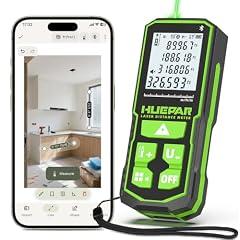
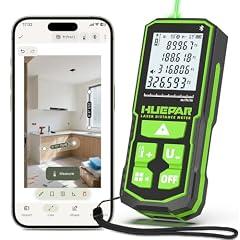
Huepar 330Ft Green Laser Distance Meter
Overview
This is a handheld green-laser distance meter for room dimensions, layout work, and indirect height measurements. It uses two removable 1.2 V, 1200 mAh NiMH cells, can accept AA cells, and has USB-C charging according to the published product manual. It has Bluetooth app functions, a 2-inch display, three reference points, continuous measurement, area and volume calculations, angle readout, and four Pythagorean modes. The available manual states a 100 m, or 330 ft, maximum range, plus or minus 1/16 inch accuracy, IP54 protection, and a Class 2 visible laser rated below 1 mW at 490 to 560 nm. These are manufacturer-stated specifications, not independently validated results. I found no public, model-specific ISO 16331-1 accuracy report, accredited IP test report, or electrical safety listing for this product.
What works
- The published manual gives clear Class 2 laser, wavelength, output, and direct-eye-exposure warnings.
- No physical tape blade is present, so blade recoil and sharp-edge tape hazards do not apply.
- Removable NiMH cells and stated AA compatibility give an alternative to a sealed battery pack.
- The published manual explains reference-point selection, continuous mode, calculations, and target-related signal errors.
What does not
- No public accredited test report was located to validate the stated accuracy, range, IP54 rating, or calculation performance.
- The laser classification is stated in the manual, but permanent product-label compliance could not be independently confirmed from available evidence.
- No UL or ETL electrical safety listing, charger certification, or charging-protection test evidence was located for this exact product.
- The published product documentation says two-year quality coverage, while Huepar's official five-year policy is limited to certain laser levels sold through its own site. This makes the five-year marketplace warranty claim unclear.
- The stated maximum range needs favorable target and lighting conditions. The manual itself flags weak signal, strong signal, and high background brightness errors.
Who is it for
This suits an adult DIY user, estimator, or indoor tradesperson who needs a compact laser meter for checking room lengths, cabinet openings, floor areas, or ceiling heights. It is most appropriate where a clear target can be reached directly and the user can keep the tool steady, select the correct front, middle, or rear reference point, and verify important dimensions manually. Replaceable NiMH or AA power can also suit users who value field-serviceable batteries.
Who is it not for
It is not suited to children or to anyone likely to aim the visible laser toward faces, reflective surfaces, traffic, or optical instruments. It is also a poor fit for survey, legal, engineering, or inspection work that requires traceable calibration and independently documented accuracy. Users needing dependable long outdoor measurements on dark, angled, or sunlit targets should use a tool with validated outdoor performance. Buyers who need confirmed electrical certification or unambiguous five-year coverage should seek clearer documentation.
Integrity
The safety documentation available for this product identifies a Class 2 visible laser below 1 mW and instructs users not to stare into the beam or direct it at people or reflective surfaces. That is a low-hazard laser category when used correctly, but the available evidence does not independently show the required permanent product labels or a U.S. compliance record. No product-specific CPSC recall or FDA action was located in the checks performed. The tool uses removable NiMH cells rather than a permanently sealed pack, which can extend service life and allows replacement. NiMH batteries and the electronic tool should not go in household trash or curbside recycling. The manufacturer provides support contact information, but I found no product-specific take-back program, spare-parts catalog, repair instructions, or accredited durability testing. Warranty wording also needs confirmation before purchase because the marketplace claim and Huepar's official policy do not align.

Elikliv 197Ft Laser Tape Measure and 16Ft Manual Measure
Overview
This product combines a 16-foot physical tape with a laser distance meter claimed to reach 197 feet. It has a backlit LCD, USB-C charging, and stated distance, continuous, area, volume, and indirect Pythagorean modes. The published manual also describes selectable front and rear measurement references, which matters when measuring from a wall, floor, or tool edge. The accessible documentation states that it uses a Class II laser rated below 1 mW and instructs users not to stare into the beam or aim it at people or animals. Those are manufacturer-stated safety details, not independently authenticated label or output testing. Its claimed ±1/16-inch accuracy, 197-foot maximum range, rechargeable battery performance, tape durability, and calculation results were not supported by an identified ISO 16331-1 or ISO/IEC 17025 test report for this product.
What works
- Two measurement formats provide a stated 16-foot tape and 197-foot laser option.
- The published instructions explain front and rear references, continuous measuring, and calculation modes.
- Published safety directions identify a Class II, under-1 mW laser and warn against direct eye exposure.
- A published manual describes USB-C charging and a rechargeable lithium-ion battery.
What does not
- No independent, traceable accuracy or repeatability report was located for this product.
- The maximum-range claim is not qualified with target reflectance, angle, bright-light, or outdoor test conditions.
- No UL, ETL, UN 38.3, ingress, drop, or tape-retraction durability evidence was identified.
- The available documentation does not provide battery-removal, spare-parts, repair, or product take-back instructions.
Who is it for
This product suits a homeowner, woodworker, or interior renovator who wants one compact tool for short physical measurements and longer indoor room measurements. Its stated front and rear laser reference choices can be useful for measuring between walls, cabinetry, ceilings, and floors. It is most appropriate where a quick result is useful but can be checked against a physical tape or another reference when a cut, layout, or installation depends on tight tolerances.
Who is it not for
It is not for survey, inspection, engineering, billing, or fabrication work that requires documented traceability and verified accuracy across the working range. It is also a poor fit for repeated outdoor work in strong sunlight, on dark or angled targets, or at long distances because published range conditions were not located. Keep it away from children and anyone likely to look into or intentionally aim the visible laser, and do not use a damaged or swollen battery device.
Integrity
The published instructions identify a Class II laser with stated output below 1 mW, and tell users to avoid direct eye exposure, staring into the beam, aiming it at people or animals, and using it carelessly around reflective surfaces. That is useful safe-use guidance. However, no independently verified output test, product-body label record, or public safety certification record was located, so the claimed laser class and output should not be treated as independently confirmed. The tool is described as ABS-bodied with an alloy-steel, nylon-wrapped tape blade and an internal rechargeable lithium-ion battery. No repair, replacement-battery, or take-back program was identified. At end of life, the whole device should go to an electronics recycler or household hazardous-waste program rather than household trash or curbside recycling, because EPA warns that lithium-ion batteries can create fire hazards if crushed or damaged in waste handling.

Fanttik A10 Apex Digital Laser Measure
Overview
This is a rechargeable handheld measuring tool that combines a 3 m physical tape, a laser distance meter stated to reach 50 m, and a green cross-line laser for alignment. It has a 1.47-inch color display, a 500 mAh lithium battery, USB-C charging, 30 stored readings, and distance, area, volume, and level functions. The physical tape is described in the manual as high-carbon steel with a nylon coating. The published manual states distance accuracy of plus or minus 3 mm at 10 m, tape accuracy of plus or minus 1/16 inch, and angle accuracy of plus or minus 1 degree. Those figures are manufacturer specifications, not results from an ISO 16331-1 or ISO/IEC 17025 accuracy report located in this review. A third-party certificate identifies the A10 Apex among tested models as a Class 2 laser product under IEC 60825-1:2014, although the laboratory accreditation and the product's installed labels were not independently confirmed.
What works
- A third-party laser-safety certificate names the A10 Apex and reports Class 2 classification under IEC 60825-1:2014.
- The manual gives concrete operating limits, including 0.05 to 50 m laser range, 3 m tape range, temperature limits, battery specification, reference choices, and stored-reading capacity.
- The manual gives direct warnings against staring into the beam, viewing it with optical instruments, aiming at reflective surfaces, modification, and child operation.
- A named U.S. responsible party, telephone support, email support, and 12-month limited warranty are published.
What does not
- No ISO/IEC 17025 report or ISO 16331-1 test report was located to independently verify the stated laser, tape, angle, or calculation accuracy.
- No UL or ETL listing, UN 38.3 battery test summary, or model-specific charging safety report was located for the internal lithium battery and supplied USB charging cable.
- No IP rating, drop rating, IEC 60529 report, or rough-handling test report was located. The manual advises keeping the tool dry and avoiding impacts or bending.
- The Class 2 certificate is useful evidence, but it does not independently establish that every retail unit carries the required permanent laser labels or that the test laboratory holds relevant ISO/IEC 17025 accreditation.
Who is it for
This product suits a homeowner, renovator, decorator, or light-duty trade user who wants one compact tool for room dimensions, cabinet or furniture layout, short physical measurements, and basic line alignment. Its stated 3 m tape is suited to close work, while the stated 50 m laser range can reduce repeated walking when measuring indoor rooms. It is more appropriate where the manufacturer-stated tolerance of plus or minus 3 mm at 10 m is acceptable and the user can verify important dimensions manually before cutting or ordering materials.
Who is it not for
It is not a suitable sole measurement reference for surveying, legal boundary work, precision fabrication, calibration-sensitive installation, or any task where an independently traceable accuracy certificate is required. Users working in rain, dusty environments, frequent drops, or rough jobsite handling should choose a tool with a published and independently supported IP and drop rating. It should also be kept away from children and not used by anyone unable to follow the manual's laser precautions, especially around reflective surfaces or optical viewing equipment.
Integrity
The principal health issue is laser exposure. The manual identifies a Class II laser under 1 mW at 630 to 670 nm and contains meaningful precautions: do not stare into the beam, inspect it with optical tools, point it toward reflective surfaces, modify it, or allow children to operate it. A CTNT certificate also lists the A10 Apex as Class 2 under IEC 60825-1:2014. The permanent product and package labels were not inspected in this review, so retail-unit labeling remains unconfirmed. The product uses a 3.7 V, 500 mAh lithium battery. No independent electrical-safety listing or battery transport test summary was found. The manual directs users not to discard the equipment with household trash and refers them to local disposal rules and EPA recycling guidance. That is useful end-of-life direction, but no battery-removal instructions, repair parts program, take-back service, or certified recycler partnership was found. No product-specific CPSC recall was located in the reviewed search results.