
10 Best Laser Engraving Machine
 Daniel Kenitz
Please note that we participate in affiliate marketing programs. When you purchase through links on our site, we may earn a commission. As an Amazon Associate we earn from qualifying purchases. This comes at no additional cost to you and helps support the resources required to provide valuable content.Advertising Disclosure
Top-rated Laser Engraving Machine Comparison
1

2
3
4

5
6
7
8
9
10
Laser engraving machines: what to look for
A laser engraving machine focuses light to mark, darken, or cut a workpiece. Diode systems in the supplied products are commonly aimed at wood, paper, leather, acrylic, coated metal, glass, stone, ceramics, and similar craft materials; some machines add an infrared source for metal marking. The useful choice depends less on a headline wattage than on the complete operating system: accessible beam risk, enclosure design, smoke handling, material guidance, fire controls, serviceability, and evidence for the exact finished machine.
Start with the laser source and the actual working area. Optical output should be distinguished from electrical input or total machine consumption: the reviews include products marketed with figures such as 10 W optical output alongside 72 W, 80 W, or 120 W machine-power claims. Work areas also vary substantially, from about 100 × 100 mm or 150 × 200 mm to 400 × 415 mm. A larger bed can accommodate bigger panels or batches, but it does not by itself indicate cutting ability. Speed, spot size, precision, cutting depth, and laser-head life are often manufacturer claims; conflicting figures in the supplied products show why a buyer should look for condition-specific test methods rather than rely on “0.01 mm,” maximum-speed, or one-pass cutting language.
Laser exposure is the first safety question. An open-frame Class 4 machine leaves direct and reflected beam exposure to eyewear, access control, supervision, and workspace design. A cover or small module shield is not equivalent to a light-tight enclosure. For an enclosed product, check whether the lid, baseplate, key control, shutter, emergency stop, and remote interlock actually prevent or interrupt emission during normal opening and foreseeable fault conditions. A Class 1 claim should be supported by a test report for the exact finished model and enclosure configuration under IEC 60825-1 Edition 3, plus FDA CDRH product identification and model-specific report or accession documentation under 21 CFR 1040.10 and 1040.11 or FDA Laser Notice 56. Logos or general statements are not enough.
Smoke and fire controls are equally important. Engraving and cutting can produce smoke, ultrafine particles, vapors, soot, and combustible residue. Look for a defined capture path, exhaust-flow information, replaceable filtration, filter safety information, or clear outdoor-exhaust instructions. A fan or air assist can move smoke or reduce scorching; it does not establish effective capture. Prefer explicit material exclusions covering PVC and vinyl, fluoropolymers, treated wood, unknown plastics, coatings, and chemically finished leather. Keep every job attended, clear combustibles, and use appropriate emergency controls; a flame sensor is an added response layer, not a substitute for supervision.
Electrical claims should apply to the complete machine and supplied power supply. An exact finished-product UL Product iQ or Intertek ETL listing is stronger evidence than a component claim. For connected products, verify the exact radio authorization in the FCC Equipment Authorization System; radio approval does not prove laser or electrical safety. Also look for a named manufacturer, model, serial or lot information, manufacture date, U.S. safety contact, warranty, replacement parts, repair instructions, and a searchable recall history.
Across the supplied products, the recurring contraindications are clear: open or conditionally enclosed machines are unsuitable for unattended operation, uncontrolled access by children or pets, bedrooms, shared living spaces, and workplaces without effective exhaust and fire controls. Unknown plastics, PVC or vinyl, fluoropolymers, treated wood, uncertain coatings, and unidentified leather or rubber should not be processed without authoritative material-specific safety information. No supplied product had publicly located exact-model evidence proving every laser, electrical, emissions, and performance claim, so buyers needing that level of assurance should require the records before purchase.
Integrity
The topics below separate engineered protection and responsible use from headline specifications. Scores are relative to the supplied products; a higher score indicates stronger documented evidence or controls for that topic, not a guarantee that the machine is safe in every setup.
HHealth & Safety
Laser exposure protection
This measures whether accessible laser emission is controlled by an enclosure, interlocks, keyed control, shutter, and emergency stop. It matters because open-frame machines can expose eyes and skin to direct or reflected Class 4 beams. The strongest supplied scores were 79 for the enclosed AlgoLaser Pixi Black and 78 for the enclosed xTool S1; open-frame products commonly scored in the 32–48 range.
Smoke and fume control
This measures whether smoke, particles, and vapors have a defined capture and exhaust or filtration route. Laser cutting wood, plastics, leather, and coatings can affect everyone in the room, so a pipe or fan should not be confused with proven filtration. Scores ranged from 48–58 for several open-frame machines to 76 for the xTool M2 and AlgoLaser Pixi compact enclosed models, although their reviews still noted missing airflow or filter-performance details.
Safe-material guidance
This measures whether the instructions clearly exclude materials that can release toxic, corrosive, or sensitizing emissions. It matters because broad claims to process plastic or leather can conceal major differences in chemistry. Longer’s RAY5 20W and RAY5 10W scored 83 and 78, respectively, for specific exclusions; lower-scoring products generally lacked clear warnings for PVC, vinyl, fluoropolymers, treated wood, coatings, or unknown materials.
Fire prevention controls
This measures safeguards against ignition of the workpiece, residue, and nearby combustibles, including supervision instructions, emergency stops, interlocks, air assist, and flame sensing where fitted. Laser cutting remains a fire risk even inside an enclosure. The supplied scores ran from 56 for the open LaserPecker LP2 to 80 for the xTool S1; reviews repeatedly emphasized attendance, combustible clearance, and an extinguisher.
Electrical and power safety
This measures whether the complete machine, power supply, and accessories have verifiable grounding, overcurrent, thermal, and U.S.-appropriate safety evaluation. Electrical approval should cover the finished product rather than a component or generic report. Scores were tightly grouped at 68–71, but the reviews repeatedly said exact UL or ETL listings for the machine and adapter were not found, so similar scores do not mean equally strong public proof.
Recall readiness and product traceability
This measures whether the maker identifies the exact model and production information, provides a reachable safety contact, and can deliver a correction or recall. That matters for machines with lasers, power supplies, software, and replaceable modules. Supplied scores ranged from 70 to 76. Higher-scoring products generally had clearer manufacturer contacts, warranties, or radio records, but no score confirms that a future recall will be handled well.
EEcology
Emission and waste responsibility
This measures whether the machine reduces avoidable air pollution and explains handling of soot, scrap, prohibited materials, and contaminated filters. It matters because outdoor venting can shift pollution rather than remove it, while filters become waste. Scores ranged from 50 for the open AlgoLaser DIY Kit to 71 for the xTool M2. Most reviews found little specific guidance for filter saturation, soot, or contaminated-waste disposal.
Repairability and service life
This measures access to replacement laser modules, optics, belts, electronics, filters, repair instructions, warranty, and support. A repairable machine is less likely to be discarded after a common failure. The supplied scores ranged from 54 for the LaserPecker LP2 to 85 for the Longer RAY5 20W. Published replacement guides and parts support drove the stronger results; claims of a warranty alone were weaker evidence.
EEvidence
Honest cutting and engraving claims
This measures whether optical power, speed, precision, work area, and material capability are separated and supported by repeatable, condition-specific evidence. It matters because electrical input can be mistaken for optical output, and cutting varies with material, color, focus, speed, and passes. Scores ranged from 48 for the LaserPecker LP2 to 78 for the xTool F2 and WECREAT Vista; conflicting precision and cutting claims remained common.
Independently verified safety and specifications
This measures whether an identifiable independent laboratory or certification body tested the exact finished machine, not merely a component or seller-issued certificate. It is especially important for laser containment and electrical safety. Scores ranged from 68 to 72, but every supplied review identified gaps such as missing exact-model IEC reports, FDA records, UL listings, or ETL listings. A relatively high score therefore indicates better evidence, not complete certification.
Verifiable labels and connected-device compliance
This measures whether laser labels, model and maker information, dates, and applicable radio authorizations can be checked. For Wi-Fi or Bluetooth machines, an FCC grant supports radio traceability but does not establish laser or electrical safety. Scores ranged from 50 for the Longer RAY5 10W listing to 82 for the xTool M2 and AlgoLaser Pixi Black, where connected-radio records were identifiable.
Full reviews

xTool M2 10W Laser Engraver
Overview
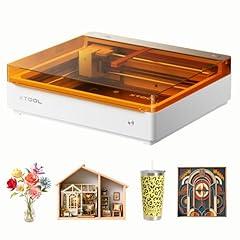
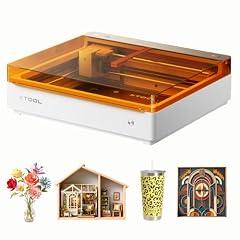
This is a 10W blue-diode desktop laser engraver and cutter in a fully enclosed format. It is intended for small craft work on materials such as wood, paper, felt, fabric, leather, and selected acrylics. xTool lists a 426 by 320 mm work area for its 10W module, a 600 mm/s maximum XY travel speed, a 5 MP close-view camera, and a 16 MP distance-view camera. These are manufacturer specifications. The defining safety feature is manufacturer-stated Class 1 operation with a Class 4 working laser contained by the housing. xTool says lid and baseplate interlocks halt operation if either is opened or removed, and its safety instructions describe an emergency stop. The exact product also has an FCC equipment authorization for its Wi-Fi and Bluetooth functions. No public, exact-product laser safety report or UL or ETL electrical listing was located in this review.
What works
- The exact product's Wi-Fi and Bluetooth functions have an FCC equipment authorization, with Makeblock identified as the grantee.
- Manufacturer safety instructions describe an enclosed Class 1 configuration, plus lid and baseplate interlocks intended to stop operation when opened.
- The material guidance specifically excludes PVC or chlorine-containing vinyl, polycarbonate, and unknown leather or foam.
- The maker documents a one-year standard warranty for the laser module, mainboard, motors, baffle assembly, and limit sensors.
What does not
- Laser Class 1 status and interlock performance are manufacturer-stated. A public independent IEC 60825-1 test report for this exact finished configuration was not located.
- The basic package includes an exhaust pipe, but no verified airflow rating, included filter, or contaminated-filter disposal instructions were located.
- Fire control depends heavily on active supervision, housekeeping, ventilation, a nearby CO2 extinguisher, and an optional fire safety set. A built-in flame detection claim was not found.
- No UL or ETL listing for the complete product or supplied power adapter was located. The maker specifies a low-voltage 25V input, but that does not independently verify mains-side electrical safety.
- The product is explicitly not user-serviceable. The manufacturer offers component coverage and factory repair, but a public parts catalog and consumer repair manual were not located.
Who is it for
It suits a home crafter or small studio user who wants an enclosed, camera-assisted machine for modest-size wood, paper, fabric, felt, leather, and dark acrylic projects. It is most appropriate for someone with a stable nonflammable work surface, practical outdoor exhaust or a suitable separately obtained purifier, and the ability to remain present throughout every job. The 426 by 320 mm manufacturer-stated work area fits batches of tags, ornaments, cards, coasters, and similar flat craft pieces rather than large panels.
Who is it not for
It is not suitable for anyone who needs independently published laser-safety and electrical-certification records for the complete product, such as an institutional buyer with formal procurement requirements. It is also unsuitable for unattended production, bedrooms, poorly ventilated apartments, or spaces used by children without controlled access. Avoid it if your intended materials are PVC, chlorine-containing vinyl, polycarbonate, unknown foam, unknown leather, coated stock of uncertain composition, or reflective metals. Users who require self-service repairs and readily documented spare-part availability should also look elsewhere.
Integrity
The key health protection is the manufacturer-stated enclosed Class 1 design. xTool says the internal working laser is Class 4, so the enclosure, lid interlocks, baseplate interlock, intact labels, and correct operating procedure are essential rather than optional. Its safety material also directs users not to process unknown materials and specifically bars PVC or chlorine-containing vinyl, polycarbonate, and unknown leather or foam. This is useful guidance because laser processing can create harmful smoke, dust, and gases. Ventilation remains a buyer responsibility. xTool calls for workplace ventilation, appropriate air purification where needed, and supervision because cutting can ignite materials. The basic product has an exhaust pipe, but public documentation reviewed here did not establish included filtration performance, exhaust flow, or disposal instructions for soot and used filters. The maker provides a one-year standard warranty for major components, but describes the product as not user-serviceable, which limits repairability despite factory service and extended coverage options.

AlgoLaser 10W Laser Engraver and Cutter
Overview
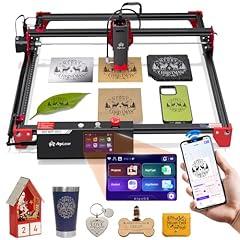
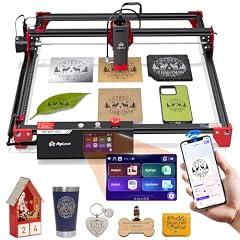
This is an open-frame, user-assembled blue-diode laser engraver and cutter. The product listing presents it as a 10 W machine with a 3.5-inch touchscreen, Wi-Fi and USB connectivity, up to 12,000 mm/min motion, and a claimed 0.05 by 0.10 mm spot. AlgoLaser separately states a 400 by 435 mm work area. These are manufacturer-stated performance figures, not independently validated measurements. The supplied documentation identifies the 10 W module as a 455 nm Class 4 laser. It documents a key lock, emergency stop, motion and tilt protections, and laser safety eyewear requirements. This is not a protective enclosure. The beam path and workpiece remain accessible during ordinary operation, so safe use depends on a controlled work area, appropriate eyewear, active supervision, and separately arranged ventilation.
What works
- The maker sells replacement mainboards, wiring, switches, belts, motors, and limit switches for this machine.
- The documented emergency stop and key lock provide a way to halt or restrict operation.
- The manual explicitly warns against unattended operation, flammables, and inadequate ventilation.
- A 12-month limited warranty and maker support channel are published.
What does not
- This is an open-frame Class 4 laser, not an enclosed Class 1 system. Direct and reflected beam exposure remain serious hazards during normal use.
- No built-in enclosure, specified exhaust flow, or included filtration system was verified for the standalone machine.
- The maker's material guidance excludes PVC, vinyl, unknown plastics, polycarbonate, and chlorinated materials, but the primary manual's exclusion list is less specific than its general ventilation warning.
- No exact-model UL, ETL, FDA laser-product report, or exact finished-product IEC test certificate was located. A radio test filing is not electrical or laser-safety certification.
- Optical power, cutting capability, spot size, and speed remain manufacturer-stated. No independent, condition-specific performance test was located.
Who is it for
It suits an experienced adult maker who needs a large open work area for wood, cardboard, selected acrylic, leather, slate, or coated-metal marking projects, and who can set up a dedicated controlled workspace. That space needs local exhaust to outdoors or a suitable separately purchased capture system, fire-resistant support surfaces, appropriate wavelength-rated eyewear for everyone present, and continuous supervision. It also suits an owner prepared to assemble, tune, clean, and occasionally repair a belt-driven machine, since the maker offers several common replacement parts.
Who is it not for
It does not suit homes where children, visitors, pets, or untrained users can enter the work area during operation. It is also unsuitable for bedrooms, living spaces, shared rooms, and other locations that cannot support controlled access and effective smoke extraction. Buyers seeking a machine whose normal operation keeps laser radiation enclosed, or those unwilling to wear protective eyewear and remain present for every job, should use an enclosed system instead. It should not be used on PVC, vinyl, chlorinated materials, unknown plastics, or materials with unknown coatings or treatments.
Integrity
The central safety fact is the documented Class 4, 455 nm laser module. OSHA identifies Class 4 lasers as immediate eye and skin hazards from direct or reflected beams, with potential fire hazards. The machine's key lock and emergency stop are useful administrative and shutdown controls, but they do not replace an enclosure or controlled-access workspace. The manual calls for eyewear, ventilation, a fireproof area, an extinguisher nearby, and constant supervision. AlgoLaser sells a compatible optional smart enclosure with lid-pause functionality and a separate smoke purifier, which confirms that containment and fume management are add-ons rather than established features of this standalone product. The maker publishes replacement electronics and motion parts, which can extend service life. No product-specific filter disposal guidance, finished-product electrical listing, or independently auditable laser-safety certificate was located. A laboratory FCC radio report names the model family, supporting wireless testing only, not laser or mains safety.

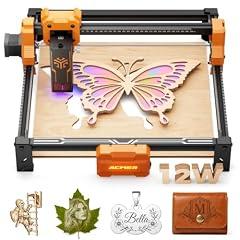
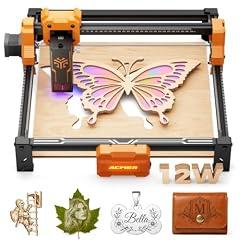
ACMER S2 Laser Engraver
Overview
This is an open-frame, USB-connected diode laser engraver and cutter with a 300 by 300 mm work area. ACMER's model-specific manual lists a 12 W, 450 nm laser module, 24 V DC input, and compatibility with LightBurn and LaserGRBL. It is intended for marking and cutting selected materials such as wood, paper, leather, dark acrylic, coated metal, ceramic, and glass. The manufacturer states speeds up to 10,000 mm per minute and a 0.06 by 0.06 mm spot on its product page. Its own 12 W manual instead uses 0.08 mm line intervals in the parameter table, and the supplied listing's 0.01 mm precision claim is not backed by a test method. This is a physically open machine, not an enclosed laser workstation. The manual requires protective eyewear, ventilation, constant visual supervision, a nonflammable mat, and clearance from combustibles.
What works
- The model-specific manual gives 12 W, 450 nm, 24 V, work-area, focus-distance, material, and software details.
- Manufacturer parameter tables provide practical starting settings for engraving and cutting wood, MDF, black acrylic, leather, paper, ceramic, glass, and anodized aluminum.
- The machine uses USB rather than a wireless connection, so no radio authorization is indicated for this configuration.
- ACMER publishes a downloadable manual, firmware, drivers, a one-year warranty statement, and U.S. support contact details.
What does not
- This is an open-frame laser. The verified manual relies on supplied goggles and user behavior rather than an enclosure, lid interlock, keyed control, shutter, or documented emergency stop.
- The manual says work produces substantial smoke but specifies only a ventilated area. No integrated extraction path, airflow specification, filtration system, or filter replacement and disposal instructions were verified.
- Material advice is not conservative enough for a laser cutter. The manual broadly lists plastic and leather but does not specifically prohibit PVC, vinyl, fluoropolymers, treated wood, coated materials, or unknown leather.
- No exact-model FDA laser report, IEC 60825-1 test report, UL or ETL listing, or identifiable third-party test certificate was located. The optical-power, precision, and spot-size claims also lack a reproducible independent protocol.
Who is it for
This product suits an informed hobby user working on small wood, dark-acrylic, paper, or anodized-metal marking projects in a dedicated workshop. That person needs to be able to set up effective local exhaust or outdoor venting, keep the machine in view for the entire job, maintain a noncombustible work surface, and restrict access by children and bystanders. It is most appropriate where the 300 by 300 mm work area and USB workflow fit the intended pieces, and where the user can test settings on scrap material first.
Who is it not for
It is not appropriate for shared living spaces, bedrooms, classrooms, apartments without a safe exhaust route, or households where children, visitors, or pets can approach the work area. It also does not suit users seeking built-in laser containment, documented fail-safe interlocks, verified electrical listing, or independently audited laser specifications. Avoid it for unknown plastics, vinyl, PVC, fluoropolymer materials, pressure-treated or coated wood, and unknown leather. It is also unsuitable for unattended production or any setting unable to provide continuous supervision and immediate fire response.
Integrity
The principal health issue is the open laser path. ACMER's manual directs the operator and nearby people to wear laser safety glasses, forbids aiming the laser at people, calls for adult supervision of minors, and requires the machine to remain in view. Those instructions are important, but they are administrative controls rather than physical containment. The manual lists a blue 450 nm, 12 W module and does not provide an exact-model third-party laser classification report, enclosure test, or certification record. Smoke control is also user-provided. The manual acknowledges substantial smoke and calls for ventilation, but no capture hood, exhaust-flow figure, filter specification, or waste guidance was verified. OSHA guidance calls for adequate ventilation for fumes and vapors created by laser cutting. The maker offers support, a one-year warranty statement, and downloadable software resources, which may help keep the unit in service. No product-specific CPSC recall was located in the searched public recall sources, but serial-number and label details were not verified from product photographs.

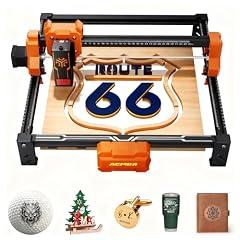
ACMER S2 12W Laser Engraver Cutter
Overview
This is an open-frame diode laser engraver for small hobby work. ACMER’s own S1 material describes a 130 by 130 mm work area, 2.5 W or 3.5 W optical laser options, a 445 nm wavelength, and a stated maximum speed of 10,000 mm per minute. It is intended for computer-controlled marking and limited cutting of materials such as wood, paper, leather, acrylic, and some plastics. The product record is materially inconsistent with those manufacturer sources. It calls the product S1 in one field, but presents an S2-style 12,000 mW, 300 by 300 mm specification elsewhere. The available S1 manual instead identifies an open Class 4 laser with only a small module-mounted protective cover, not a safety enclosure. No exact finished-product laboratory certificate, FDA product-report accession, or U.S. electrical listing was located in the checked public registers.
What works
- The official S1 documentation gives concrete working-area, wavelength, module-power, and speed specifications.
- The manufacturer manual explicitly warns about Class 4 laser injury, smoke, ignition, adult supervision, and unattended operation.
- ACMER provides an official download page for the S1 manual, drivers, firmware, and machine data files.
- The manual includes routine lens, belt, pulley, and laser-module maintenance guidance, and the manufacturer sells a compatible 6 W replacement module.
What does not
- The product record's 12,000 mW and 300 by 300 mm claims conflict with the manufacturer’s S1 specification of 2.5 W or 3.5 W and 130 by 130 mm. This is a concrete claim-integrity problem.
- This is an open Class 4 machine, not an enclosed laser system. The module cover reduces some diffuse light, but it is not a protective housing with lid interlocks.
- The manual calls for ventilation but documents no integrated fume capture, filtration, extraction flow, or filter disposal method.
- Material advice is too broad for a laser cutter. It names plastic and leather as usable but does not specifically exclude PVC, vinyl, fluoropolymers, treated wood, coated materials, or unknown materials.
- No exact-model FDA laser-report accession, IEC test report from an identifiable laboratory, UL listing, ETL listing, or verifiable product label set was found.
Who is it for
This product fits an adult hobby user who needs a very small, open-bench engraver for occasional marking projects within a 130 by 130 mm area. The user should be able to set focus manually, keep a computer connected, select known laser-safe stock, and work in a dedicated, well-ventilated area. It is most appropriate where the operator can provide controlled access, appropriate laser eyewear, a noncombustible work surface, and continuous in-person supervision for every job.
Who is it not for
It is not appropriate for homes where children, pets, visitors, or untrained users can enter the work area during operation. It also does not suit buyers who need an enclosed machine, interlocked lid protection, built-in smoke filtration, documented electrical certification, or auditable independent laser testing. Avoid it for unattended batch work, apartments without a practical exhaust plan, cutting unknown plastics or coated materials, and projects that genuinely require a 300 by 300 mm workspace or a verified 12 W laser output.
Integrity
The available S1 manual identifies the machine as a Class 4 laser and warns that direct exposure can injure eyes or burn skin. It directs users to wear laser safety goggles, keep the unit away from children, ventilate the work area, remain present during operation, control nearby combustibles, and keep a fire extinguisher accessible. Those warnings are meaningful, but the physical protection described is a small laser-module cover rather than a full enclosure with safety interlocks. The material guidance is incomplete for a cutter that creates smoke and residues. The manual permits broad categories including plastic and leather, while providing no named exclusions for PVC, vinyl, fluoropolymers, treated wood, coatings, or unknown stock. No integrated extraction, replaceable filter specification, or contaminated-filter disposal method was documented. ACMER does provide downloads and some maintenance guidance, plus a compatible replacement module, which may support repair. Public checks did not locate an exact-model independent laser, electrical, or finished-product certification record.

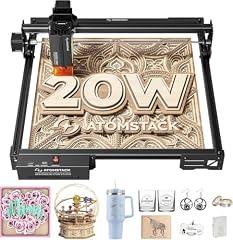
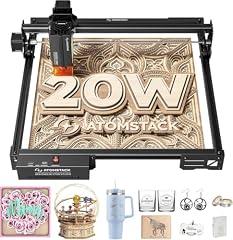
Atomstack A20 PRO V2 Laser Engraver
Overview
This product is a large, open-frame diode laser engraver and cutter for supervised workshop use. AtomStack states that it uses a 455 nm, 20 W optical-output diode laser, has a 400 by 365 mm work area, and connects through USB or 2.4 GHz Wi-Fi to LightBurn, LaserGRBL, and AtomStack software. The maker also lists wood, leather, dark acrylic, coated metals, and other materials among possible applications. The defining safety fact is that this is a manufacturer-described Class 4 frame laser, not an enclosed Class 1 system. It has no built-in fume capture or protective cabinet. AtomStack claims flame detection, a tilt alarm, a removable magnetic filter cover, and supplied laser glasses, while its instructions still require ventilation, eye protection, and continuous attendance. Published performance figures are manufacturer-stated and internally inconsistent, including 0.01 mm and 0.02 mm accuracy claims.
What works
- The manufacturer states a 400 by 365 mm work area, which can accommodate larger plaques, signs, and batch layouts.
- The product is listed as compatible with LightBurn, LaserGRBL, AtomStack desktop software, and mobile software.
- AtomStack lists machine-specific replacement cables, a compatible laser module, and related accessories, plus a 12-month warranty for new products.
- The maker claims flame detection and a tilt alarm, and the instructions explicitly say not to leave the machine unattended.
What does not
- This is an open-frame Class 4 laser, so the beam path is not contained by an interlocked protective enclosure.
- The machine-only package has no built-in smoke extraction, filtration, or outdoor-exhaust system. An enclosure and air-assist kit are sold separately.
- Material warnings are too general for a laser cutter. The instructions say to avoid toxic fumes, but do not provide clear exclusions for PVC, vinyl, fluoropolymers, treated wood, coated materials, or unknown leather.
- No model-specific independent IEC laser-safety report, UL or ETL electrical listing, or FDA laser-product report accession was located during verification.
- AtomStack's own published accuracy figures differ, so the stated precision is not independently established.
Who is it for
This product suits an experienced hobbyist or small workshop operator who already has a dedicated laser-safe setup. That means controlled access, suitable laser eyewear, a noncombustible work surface, local exhaust or an appropriate enclosure, and the ability to stay with the machine throughout every job. Its manufacturer-stated 400 by 365 mm work area is useful for signs, flat gift items, templates, and small production batches. It also fits users who want desktop software flexibility and can validate settings on offcuts before processing a finished item.
Who is it not for
It is not suited to homes with children, pets, shared rooms, or spaces where other people can enter the beam area during operation. It is also unsuitable as a plug-and-play indoor craft machine for users without an enclosure, effective local exhaust, material knowledge, and fire supervision. Avoid it for unattended production, apartment use without a safe exhaust route, or processing unknown plastics, vinyl, PVC, fluoropolymers, treated wood, coated stock, or unknown leather. Users seeking an enclosed, interlocked laser system should choose a different product format.
Integrity
The principal health issue is accessible Class 4 laser radiation. This open-frame configuration does not provide an interlocked enclosure that contains the beam during normal work. A removable magnetic cover and supplied glasses are not substitutes for controlled access, a protective housing, remote interlock capability, key control, and an independently documented safety system. AtomStack claims flame detection and a tilt alarm, but its instructions still require eye protection, ventilation, and constant supervision. Smoke and particulate control are also external responsibilities. The standard machine is sold without built-in extraction or filtration, while the enclosure and air-assist equipment are optional accessories. No filter-disposal or contaminated-scrap guidance was found. The manufacturer offers parts and a 12-month new-product warranty, which may help extend service life. FDA has an open recall involving other AtomStack laser models for a missing remote interlock connector. That recall does not name this product, but it reinforces the need to verify installed safety controls and labeling before use.

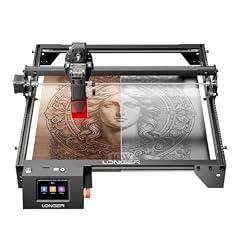
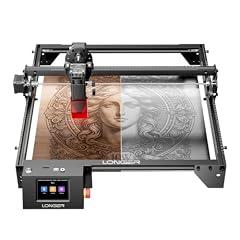
Longer Ray5 10W Laser Engraver
Overview
The Longer Ray5 10W is an open-frame, diode-laser engraver and cutter with a manufacturer-stated 400 × 400 mm work area. It is intended for flat workpieces such as wood, acrylic, coated metal, leather, glass, and ceramics, using USB, memory card, or Wi-Fi control. The supplied documentation identifies a dual-diode, 450 to 460 nm laser module with a manufacturer-stated 10 to 11 W optical output and 0.06 × 0.06 mm focused spot. Its defining limitation is exposure control. The manufacturer’s own manual identifies the 10W module as Class 4, while the machine is an open-frame design rather than an interlocked enclosure. Goggles and operating rules are supplied, but no exact-model FDA product-report record, independent laser test report, or enclosed fail-safe configuration was located. The manual does provide unusually useful material exclusions, ventilation guidance, and no-unattended-use instructions.
What works
- Manufacturer documentation gives a 400 × 400 mm workspace, useful for medium-size signs, panels, and batches of small items.
- The manual provides specific warnings against PVC, ABS, HDPE, polystyrene foam, and other unsuitable materials, rather than treating every material as safe.
- The manual tells users to work in a well-ventilated area, keep an extinguisher nearby, clear combustible debris, and never leave operation unattended.
- The manufacturer sells replacement 10W laser modules and hosts Ray5 maintenance, firmware, cleaning, and parts-replacement guidance.
What does not
- This is a confirmed open-frame Class 4 laser configuration, so it does not contain accessible beam or reflected-light exposure with an enclosure and interlocked lid.
- No exact-model FDA accession record, IEC 60825-1 test report, UL listing, or ETL listing was located in the relevant public registers.
- The basic package does not establish a specified smoke-extraction path, filtration system, airflow rating, or contaminated-filter disposal process.
- The manufacturer’s current product page attributes several safety features to the Ray5 range, but it also says 5W and 10W versions lack included limit switches. Exact 10W configuration should be confirmed before use.
- Cutting claims vary across manufacturer documents and depend heavily on material, color, focus, air assist, and settings. Independent repeatability data was not located.
Who is it for
This suits an experienced hobbyist or small workshop user who needs a roughly 16-inch square work area for wood, cardboard, paper, selected acrylics, anodized or coated items, and similar projects. The user should already have a dedicated, ventilated work area, a suitable noncombustible base, an extinguisher, controlled access, and a plan for enclosure or extraction. It also suits someone willing to use material safety data, test settings on offcuts, maintain optics, and replace modules or wear parts when needed.
Who is it not for
It is not suited to homes where children, pets, visitors, or untrained users can enter the operating area. It is also inappropriate for bedrooms, kitchens, shared living spaces, or other locations without effective outdoor exhaust or a purpose-designed containment setup. Buyers needing an enclosed, interlocked laser system with independently auditable laser and electrical certification should choose a different format. It should not be used for unknown plastics, PVC or vinyl, fluorinated materials, treated wood, painted or coated items of uncertain composition, or combustible work left unattended.
Integrity
The principal health issue is the accessible high-energy beam. The manufacturer’s manual calls the 10W module Class 4 and warns that direct or scattered radiation can injure eyes and skin. It supplies wavelength-specific goggles and directs users not to look at the beam, allow unsupervised access, or operate near pets. Those measures are important, but they do not substitute for physical containment. No public exact-model independent laser-safety report or FDA product-report record was located. The manual recognizes fire and emissions risks. It calls for supervision, nearby fire suppression, removal of combustible debris, and operation in an open, well-ventilated area. Its material-exclusion table is a meaningful safeguard, especially for PVC, which it says can release chlorine gas. However, the basic machine has no verified built-in fume capture or filter-disposal program. Replacement modules and published repair guidance can extend service life, but scraps, soot, and contaminated accessories still need local waste handling appropriate to the material used.

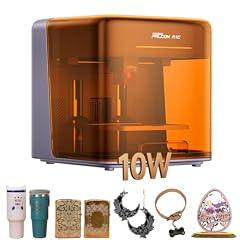
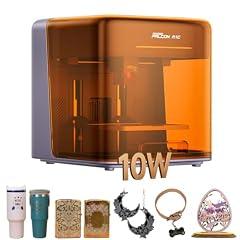
Creality Falcon A1C 10W Laser Engraver
Overview
This is a compact, enclosed desktop laser engraver with a 10W blue diode module, a 150 by 150 mm work area, and up to 148 mm of material height. It is intended for small wood, leather, paper, fabric, dark acrylic, and coated-material projects. The camera-equipped purple-gray version adds visual positioning, while autofocus and a lifting platform are intended to reduce setup steps. Creality states a 15,000 mm/min maximum motion speed, but also says actual processing speed depends on the material, design, module, and settings. The manufacturer documents a closed enclosure, lid detection, flame detection, tilt detection, a safety key, and an emergency stop. Its Class 1 claim is conditional on the enclosure and stated operating conditions. The product's wireless hardware has an identifiable FCC authorization, but no publicly located FDA laser-product accession record or exact-model independent laser-safety test report was found.
What works
- The documented emergency stop, lid detection, tilt detection, flame detection, and safety key provide several layers of operational control.
- The enclosed format is materially safer for normal closed-lid use than an open-frame beam path, provided interlocks remain intact.
- The 10W version includes a cutting plate and is specified for a compact 150 by 150 mm project area with 148 mm vertical clearance.
- Creality sells compatible replacement laser modules and a replacement cutting plate, and lists a one-year warranty.
What does not
- The Class 1 statement is manufacturer-provided and conditional. An exact-model IEC 60825-1 test report and FDA laser-product report accession were not publicly located.
- The supplied documentation calls for ventilation and includes an exhaust hose connection, but the air purifier is optional. No verified airflow, filter efficiency, or replacement-filter disposal specification was located.
- The manual warns about smoke, reflective materials, supervision, and fire, but does not clearly list conservative exclusions for PVC, vinyl, fluoropolymers, unknown plastics, treated wood, or coated materials.
- A UL 62368-1 marking appears in the filed guide, but an exact finished-product listing could not be independently confirmed in a public UL or ETL directory.
- The 15,000 mm/min figure is a maximum rather than a condition-specific performance result, and no independent output-power verification was located.
Who is it for
It suits an adult hobby user making small, repeatable personalized items such as coasters, tags, cards, ornaments, leather patches, and marked coated surfaces. The 150 by 150 mm bed favors compact work rather than large signs or sheet cutting. It is best used on a stable bench with an outdoor exhaust route or a purpose-built, maintained filtration setup, a nearby fire extinguisher, and continuous supervision. It also fits users who value autofocus, camera-assisted layout, and a contained closed-lid workflow, while accepting that actual material settings need testing.
Who is it not for
It is not for unsupervised operation, bedrooms, poorly ventilated apartments, or households where children can access the machine. The enclosure does not eliminate smoke, toxic decomposition products, or ignition risk. It is also unsuitable for users who need documented, independently auditable FDA laser reporting, an exact-model third-party laser test report, or independently confirmed finished-product electrical certification. Avoid it for PVC, vinyl, fluoropolymer, unknown plastic, treated wood, painted, plated, or otherwise unidentified materials unless their composition and laser-processing hazards have been verified. Its small bed also limits larger fabrication jobs.
Integrity
The most meaningful safety feature is the closed enclosure used with its safety systems intact. Creality documents lid detection, tilt detection, flame detection, a removable safety key, and an emergency stop. Its instructions also say not to bypass the open-cover stop function, require supervision, ask users to keep combustibles away, clean residue, and keep a fire extinguisher nearby. Those controls reduce risk, but they do not replace careful material selection or ventilation. Laser processing still produces smoke and particles. The manual calls for a well-ventilated area and an exhaust hose connection, while Creality sells air purification separately. OSHA guidance supports local exhaust for laser-generated contaminants. The product instructions do not provide sufficiently specific exclusions for chlorinated plastics and other hazardous feedstocks. The manual includes an electronics recycling symbol for markets using WEEE systems, but no product-specific US filter, soot, or contaminated-scrap disposal instructions were located. Replacement modules and a cutting plate are available, which can reduce premature disposal.
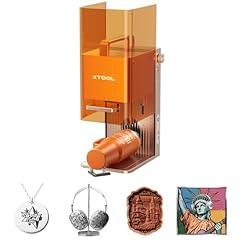
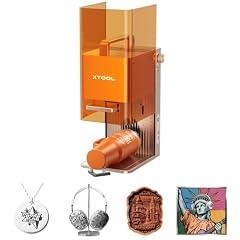
xTool F2 Dual Laser Engraver
Overview
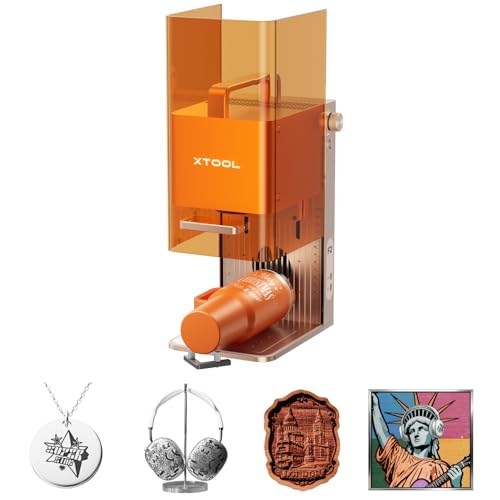
This is a compact, portable desktop laser engraver and cutter for small workpieces. It combines a manufacturer-stated 15 W, 445 nm blue diode laser for materials such as wood and leather with a 5 W, 1064 nm infrared laser intended for metal marking. The stated internal work area is 115 by 115 mm, maximum workpiece height is 120 mm, and the unit is supplied with Wi-Fi, USB, and IP connectivity. Its defining safety fact is that it is a Class 4 laser product, not an inherently Class 1 consumer appliance. xTool says the lid interlock can stop processing when opened, but only when enabled in software and when the enclosure fully closes. The company also warns that openings, a removed baseplate, or oversized work can expose users to Class 4 radiation. A university equipment listing independently corroborates the basic dual-laser configuration and compact work area, while output, speed, camera, and material-performance claims remain manufacturer-stated.
What works
- The dual 15 W blue and 5 W infrared laser configuration is independently corroborated by a university equipment listing.
- The compact 115 by 115 mm work area and roughly 120 mm material clearance suit small tags, jewelry, coasters, and similar items.
- A physical key, emergency stop button, and software-enabled lid-stop function are documented by the manufacturer.
- The built-in Wi-Fi radio has identifiable FCC authorization documentation for the exact product.
- xTool states that security support for this connected product continues through at least December 2030.
What does not
- This is a Class 4 laser system. The manufacturer says diffuse beams can leak from openings when the lid is lifted or baseplate removed, and reserves it for trained professional operation under a Laser Safety Officer.
- The interlock is conditional, not absolute. It depends on the enclosure fully closing and the software setting being enabled.
- Safety goggles are not included, despite the manufacturer requiring wavelength-appropriate eye protection for Class 4 conditions.
- The basic package requires exhaust to outdoors or a qualified purifier. Direct indoor discharge is expressly prohibited, and no included filtration performance was verified.
- No public exact-product UL, ETL, IEC laser classification report, or FDA laser-product report accession was located in the reviewed public registers.
Who is it for
This product fits a trained maker, workshop technician, or small customization business that primarily marks small metal objects and engraves compact nonmetal pieces. The user needs a stable nonflammable work surface, active supervision, a practical route for outdoor exhaust or a qualified purifier, and the ability to keep the enclosure fully closed for routine work. It is also suited to an organization that can designate a Laser Safety Officer, train operators, control access, and supply appropriate eye protection for any open-enclosure operation.
Who is it not for
It is not for casual household use around children, pets, visitors, or untrained coworkers. xTool explicitly says not to use it in residential areas or public places when operating under Class 4 conditions. It is also unsuitable for anyone unable to provide ventilation, a controlled workspace, fire-response equipment, and continuous supervision. Buyers expecting a fully enclosed Class 1 experience, bundled goggles, indoor smoke recirculation without a separately qualified purifier, user-replaceable internal parts, or broad software compatibility should look for a product designed and documented for those conditions.
Integrity
The principal health issue is optical hazard. xTool identifies this as a Class 4 system with direct, reflected, and potentially leaked radiation hazards when the enclosure is open, incomplete, or altered. It documents a lid-stop setting, key control, emergency stop, and remote-interlock option, but also requires trained professional users, a Laser Safety Officer, controlled access, and wavelength-appropriate goggles in Class 4 operation. These are meaningful controls, but they place substantial responsibility on the operator. The safety instructions give unusually specific material warnings. They advise against unknown materials and call for caution with PVC, vinyl, ABS, polycarbonate, and materials containing chlorine, fluorine, phenol, or aldehydes. Exhaust must go outdoors or to a qualified purifier, not indoors. The instructions also require supervision, cleanup of residue, and fire extinguishing equipment. Filters, soot, and contaminated scrap have no product-specific disposal protocol in the reviewed documentation. The machine is not user-serviceable, although xTool provides a 12-month main-parts warranty and states connected-product security support through 2030.

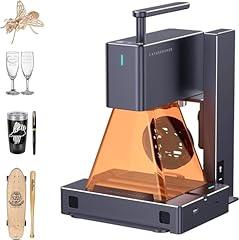
LaserPecker LP2 Portable Laser Engraver
Overview
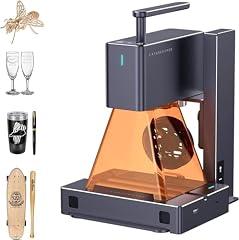
This is a compact, 5 W, 450 nm blue-diode engraver with a powered stand and a rotary roller for cylindrical work. LaserPecker states a 100 by 100 mm standard workspace, expanding to 100 by 2,000 mm with the roller, plus a claimed maximum speed of 600 mm/s. It connects by Bluetooth or USB and is intended for marking small craft and personalization items. The defining safety fact is that the beam source is a Class 4 laser. The manufacturer says Class 1 operating conditions require its fully closed Standard Enclosure, which is not inherent to handheld or roller use. The supplied documentation contains meaningful warnings about eye injury, skin burns, fires, reflections and laser-generated contaminants, but the exact product configuration is not a sealed, exhaust-equipped workstation. Claimed FCC, FDA, CDRH and IEC credentials were found in manufacturer materials, but no exact-model certificate, test report, FDA accession record, or U.S. electrical listing was located in an issuing-body register.
What works
- The roller is manufacturer-stated to extend the usable work path to 100 by 2,000 mm for long or cylindrical items.
- The official manual directly warns about eye, skin, reflection, fire and airborne-contaminant hazards, rather than presenting the laser as harmless.
- LaserPecker documents a U.S. support route and a 12-month warranty for listed main LP-series components, including the laser module, controller, motor, stand and protective cover.
- The product uses a low-voltage 12 V, 5 A input according to the manufacturer documentation.
What does not
- This roller-oriented configuration leaves the Class 4 beam accessible unless a separate fully closed enclosure is used. The manufacturer says exposed-beam operation needs controlled-area measures, trained operators and wavelength-appropriate eyewear.
- Smoke control is limited to a small machine fan and general ventilation guidance. No included local-exhaust path, airflow specification, sealed enclosure, or replaceable capture-filter specification was found.
- Material safety guidance is broad rather than conservative. The manual tells users to assess whether a material releases harmful gas, but does not give a clear prohibited-material list for PVC, vinyl, fluoropolymers, treated wood, coated materials or unknown leather.
- The manual says there are no user-replaceable components. Warranty repair is available, but public repair instructions and a retail parts catalog for this model were not found.
- Marketing presents broad material capability, while the manual says metal and glass cannot be directly engraved without preparation or a transfer layer. Results depend substantially on the material and setup.
Who is it for
This product fits an experienced hobbyist or small personalization operator who needs to mark small objects, tumblers, curved pieces, or longer narrow workpieces with the roller. The user should have a dedicated, access-controlled work area, understand reflective-material risks, and be prepared to add a fully closed enclosure and local exhaust. It is most appropriate where portability and flexible positioning matter more than cutting thick stock, unattended operation, or a large enclosed work bed.
Who is it not for
It is not suited to homes with children, pets, frequent visitors, or shared living spaces where the beam area cannot be controlled. It also does not suit buyers expecting a plug-in enclosed machine with built-in fume capture, fire detection, key control, or independently documented electrical certification. Avoid using it for unknown plastics, vinyl, PVC, fluoropolymer materials, treated wood, coated goods, or leather of uncertain treatment. Users unable to provide active supervision, protective controls and ventilation should choose a more contained setup.
Integrity
The main health issue is optical exposure. LaserPecker identifies this product as a 5 W, 450 nm Class 4 source, with hazards from direct, reflected and scattered light. Its guidance says Class 1 conditions depend on a fully closed Standard Enclosure, and it directs exposed-beam users toward controlled-area procedures, eyewear, training and supervision. The roller-focused product is therefore not equivalent to a closed laser workstation. The manual also recognizes smoke, toxic-gas and fire risks, but its practical fume advice is to use a fan or a spacious ventilated location. OSHA guidance calls for adequate ventilation to control laser-generated fumes and vapors, and local capture is the stronger control. No included capture filter, extraction performance figure, or filter and soot disposal instructions were verified. The product has a 12-month main-component warranty, but the manual prohibits user replacement of components, which may limit repair outside supported service.

AlgoLaser MK3 8W Diode Laser Engraver
Overview
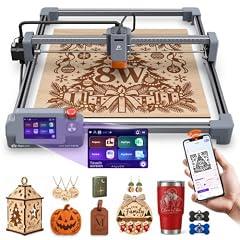
This is an open-frame, desktop diode laser engraver with an 8W laser module, a manufacturer-stated 400 x 400 mm work area, and a 3.5-inch touchscreen running AlgoOS. It is intended for engraving and light cutting projects such as wood, leather, paper, selected acrylics, coated metal, and other compatible materials. The machine is supplied in a mostly assembled kit format, rather than as an enclosed laser workstation. The defining tradeoff is the open work area. AlgoLaser presents a Class 1 enclosure as optional, not part of this machine-only configuration, so the beam path, reflected light, smoke, and ignition hazards are not physically contained by the product. The maker states a maximum motion speed of 15,000 mm/min and provides material parameter tables, but I found no public, exact-model independent test report for optical output, laser classification, electrical listing, or full-machine safety performance.
What works
- The manufacturer publishes a 400 x 400 mm work area, useful for larger signs and grouped small parts.
- The touchscreen supports direct text entry and sketching at the machine, according to the manufacturer.
- AlgoLaser provides downloadable material-setting references that acknowledge results vary with material finish, color, focus, speed, and power.
- The maker offers a one-year worldwide warranty and an online support portal for this product.
What does not
- This is an open-frame laser. The machine-only product does not provide an included protective enclosure, interlocked lid, or enclosed fume path.
- No public exact-model IEC laser classification report, FDA product-report accession, UL listing, or ETL listing was located during verification.
- The manufacturer material table includes PolyVinyl Chloride as a tested engraving material without a clear prohibition. OSHA identifies hydrogen chloride as a thermal decomposition product of PVC.
- No specified extraction airflow, replaceable filter system, or disposal instructions for soot and contaminated waste were found for this configuration.
- The claimed optical power, maximum speed, and repeatability claims remain manufacturer-stated rather than independently validated.
Who is it for
It suits an adult maker working in a dedicated workshop who needs a broad 400 x 400 mm bed for engraving wood-based craft blanks, paper, untreated leather, slate, and suitable opaque acrylic. The buyer should be prepared to add a correctly designed enclosure, outdoor exhaust or suitable extraction, wavelength-appropriate eyewear, fire controls, and supervised work practices. Its touchscreen workflow may suit users who want to place, edit, and run simple jobs at the machine rather than depend on a computer for every operation.
Who is it not for
It is not suited to homes with children, pets, visitors, shared living areas, or any room where the open beam and smoke cannot be isolated. It is also unsuitable for buyers expecting an enclosed, plug-in safety system with automatic fume capture, published third-party electrical certification, or independently documented laser classification. Do not use it for PVC, vinyl, fluoropolymer materials, unknown plastics, coated materials of unknown composition, pressure-treated wood, or unknown leather, because heating these materials can create hazardous decomposition products or contaminants.
Integrity
The principal health concern is containment. This product is an open-frame diode laser, while the manufacturer describes a Class 1 enclosure as an optional add-on. An open frame does not contain direct or reflected laser light, smoke, ultrafine particles, or vapors. A reported emergency stop is useful, but it is not a substitute for an enclosure, interlocked access control, correct eye protection, source capture, and continuous supervision during engraving or cutting. The most significant documentation problem is material guidance. AlgoLaser's own parameter sheet lists PVC, even though OSHA identifies hydrogen chloride as a decomposition product from heating or laser cutting PVC. No verified exact-model filter specification, exhaust-flow rating, filter disposal process, or independent full-machine safety certification was located. The maker does publish support resources, interchangeable-module claims, and a one-year warranty, which may help maintain the machine, but published replacement-part coverage and repair instructions remain limited.