
10 Best Student Laptop
 Daniel Kenitz
Please note that we participate in affiliate marketing programs. When you purchase through links on our site, we may earn a commission. As an Amazon Associate we earn from qualifying purchases. This comes at no additional cost to you and helps support the resources required to provide valuable content.Advertising Disclosure
Top-rated Student Laptop Comparison
1

2
4
5
+
6
7
8
9
Student laptops: what matters beyond the headline specifications
A student laptop is primarily a portable tool for browser research, course portals, documents, presentations, email, video calls, streaming, and depending on its hardware and operating system programming, creative work, or specialized school software. Whether it works well depends less on a single processor label than on the relationship between processor, memory, storage, display, battery, software support, and serviceability.
Start with the exact delivered configuration. The supplied reviews repeatedly found conflicts between marketplace listings and manufacturer documentation: advertised memory or SSD capacity did not always match the documented factory configuration, external storage was sometimes presented as if it were internal storage, and processor generations or core counts were occasionally wrong. A credible listing should identify the exact model and configuration, with processor details checked against Intel ARK or AMD specifications and the operating system checked against Microsoft or ChromeOS support documentation.
For ordinary coursework, memory and storage affect day-to-day responsiveness. Four gigabytes leaves little room for browser tabs, meetings, updates, and school applications; 8GB is more practical for basic work, while 16GB gives more headroom for multitasking. Storage capacity is not the same as storage type: a 256GB SSD, 128GB UFS drive, 64GB eMMC drive, and a bundled external drive provide different experiences and levels of convenience. Independent model-specific benchmarks and sustained-load tests are more useful than a claimed “up to” speed or an unqualified comparison with another processor.
The screen matters for reading comfort. Look for a clearly identified panel resolution and brightness, and prefer independent testing for flicker, surface temperature, and sustained use. The supplied products include everything from 1366-by-768 panels to 1920-by-1506 displays, while claimed brightness figures ranged from modest indoor panels to manufacturer claims that were not independently tested. A Full HD label alone does not establish brightness, flicker safety, color quality, or comfort.
Battery claims also need context. Manufacturer figures such as “up to 16 hours” or “long battery life” use particular test conditions; standardized Wi-Fi or web-browsing results from Notebookcheck or Consumer Reports provide a more useful comparison. Check battery capacity, charger wattage, USB-C Power Delivery support, and whether the exact port supports charging or only data. A laptop with a measured 12.9-hour web result is materially different from products with unverified four- to nine-hour claims, but even tested runtime depends on workload.
For safety and accountability, look for a traceable charger and battery, a current recall check, and certification records in the CPSC, UL Product iQ, Intertek ETL, or CSA databases. A battery transport-test summary under UN 38.3 and a battery certification such as UL 2054 or UL 62133-2 add useful evidence. FCC authorization confirms wireless compliance, not complete electrical or battery safety. For software, prefer a supported Windows or ChromeOS update path and a clearly stated Microsoft 365 term; “lifetime Office” wording is not a substitute for license details.
The recurring safety caveats are significant: several products lacked exact UL, ETL, CSA, battery, or FCC records; many had no independent display, heat, charging, or runtime tests; and multiple listings had material specification conflicts. Four-gigabyte systems, discontinued processors, fixed memory, unsupported Windows claims, unclear chargers, and ambiguous software licenses can make a product unsuitable for a full school term. Confirm the delivered hardware, charger markings, operating-system support, software entitlement, and return or warranty route before relying on a listing.
Integrity
These topics cover the factors most likely to affect safe daily use, comfort, useful life, environmental impact, and confidence that a student laptop delivers what its listing promises. Scores are comparative signals from the supplied reviews, not proof that an unverified product is defective or certified.
HHealth & Safety
Electrical and battery safety
This measures traceable safety certification for the laptop, charger, and rechargeable battery, plus the absence of unresolved fire, shock, swelling, overheating, or recall concerns. It matters because students often charge and carry laptops daily. Among the supplied products, higher scores reached the high 70s, while lower-scoring products commonly lacked exact UL, ETL, CSA, battery, or UN 38.3 records.
Thermal and visual comfort
This measures independently tested surface temperatures, display flicker, and brightness for sustained reading. It matters during long study sessions, especially with the laptop on a desk or lap. The strongest supplied result scored 92 and combined no PWM flicker with a measured 30.3°C palm rest; lower-scoring products generally had only manufacturer brightness claims or no model-specific heat and flicker testing.
Privacy and wireless compliance
This measures identifiable camera, microphone, biometric, Wi-Fi, and Bluetooth hardware, including FCC authorization and meaningful privacy controls. It matters for video classes, shared spaces, and biometric sign-in. Higher supplied scores were associated with a physical camera shutter, documented wireless authorization, or clear controls; lower scores reflected undocumented radios, fingerprint practices, camera shutters, or microphone controls.
EEvidence
Measured student work performance
This measures whether processor, memory, storage, and sustained performance match the listing and support real coursework. It matters because burst clock speed and core-count wording can overstate everyday capability. Higher supplied scores were linked to independently specified processors and credible configurations; lower scores reflected discontinued chips, only 4GB memory, conflicting processor details, or no sustained-load testing.
Battery and charging honesty
This measures whether real-world runtime and charging behavior support the advertised figures, and whether the charger and USB-C Power Delivery details are clear. It matters for classes away from outlets. The strongest supplied score was 88, supported by a 12.75-hour measured web result; lower scores reflected disputed battery capacities, slow charging, or manufacturer-only runtime claims.
Secure software and genuine licenses
This measures whether the operating system has a supported update path and whether included software has clear, limited, authentic license terms. It matters because unsupported systems and ambiguous Office promises create security and usability risks. Higher scores accompanied ChromeOS updates through June 2031 or clearly defined Microsoft terms; lower scores reflected “lifetime” Office wording, unclear activation, or unsupported processor and Windows combinations.
Listing claim honesty
This measures whether processor generation, memory, storage, display, battery, durability, AI, and Office claims are specific and supported for the exact delivered product. It matters because several supplied listings overstated or confused core specifications. The strongest score was 93 for a well-documented configuration; many products scored 48–53 after conflicts involving storage type, processor generation, memory, battery capacity, or software.
Independent model verification
This measures how much important safety, performance, energy, and sustainability information is confirmed by registries or reproducible third-party testing rather than seller assertions. It matters because a familiar brand name does not verify a reseller configuration. Scores ranged from 68 to 93; the highest evidence included independent runtime, comfort testing, and an EPA ENERGY STAR record, while lower scores had few exact-model records.
Manufacturer accountability
This measures whether the responsible manufacturer or importer, exact model, warranty, support route, and recall remedy can be traced. It matters when a battery, charger, operating-system, or configuration problem appears after purchase. Higher supplied scores, up to 94, came with identifiable manufacturer support, warranty, and service channels; lower scores reflected unclear U.S. support, inconsistent identities, or seller-customized bundles.
EEcology
Repairability and service life
This measures whether memory, storage, battery, keyboard, screen, and other parts can be serviced, and whether manuals, parts, warranty support, and repair routes exist. It matters because a repairable laptop can remain useful longer. The supplied scores ranged from about 70 to 88: higher-scoring products had documented component access or genuine-parts support, while lower-scoring ones lacked service manuals or had fixed memory.
Energy and lifecycle impact
This measures verified operating efficiency, responsible materials, and end-of-life take-back rather than a vague green claim. ENERGY STAR, EPEAT, TCO Certified, and a documented U.S. recycling route are useful evidence. Scores were highest where ENERGY STAR records and lifecycle or recycled-material information were available; products without exact registry matches or take-back documentation generally scored around 69–72.
Full reviews
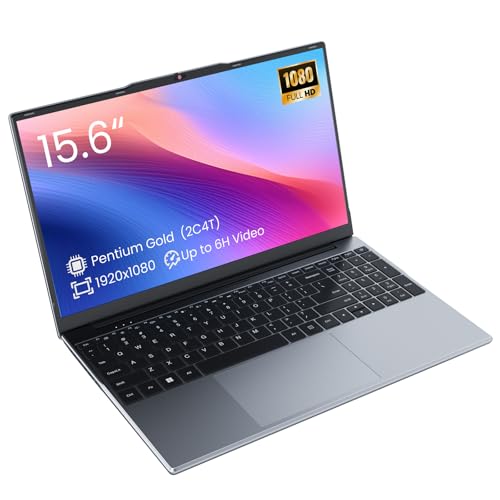
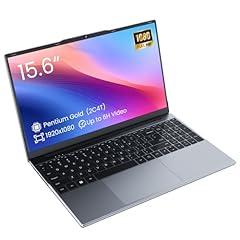
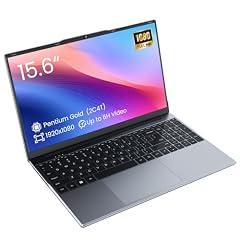
Phatom 15.6" FHD Laptop, 4GB RAM, 128GB SSD
Overview
The DGBook A1 is a 15.6-inch, non-touch Windows laptop intended for basic school and office tasks. An independent retailer listing corroborates the core configuration, 4 GB of memory, 128 GB solid-state storage, a 1920 x 1080 display, HDMI, Wi-Fi 5, Bluetooth 5, and a numeric keypad. Intel confirms that its named Pentium Gold 4415Y processor is a 2017-era, 2-core, 4-thread, 1.60 GHz mobile chip with a 6 W design power. That supports light document work, browsing, and video playback, but the 4 GB memory configuration leaves little room for demanding multitasking. The most consequential issue is software compatibility. The named processor does not appear on Microsoft's current supported Windows 11 processor list, despite the product's Windows 11 compatibility claim.
What works
- The 15.6-inch, 1920 x 1080 display configuration is corroborated by an independent retailer listing.
- Intel independently confirms the named processor has two cores, four threads, and a low 6 W design power.
- The listing states a practical set of basic connections, including HDMI, USB, Wi-Fi 5, Bluetooth 5, and a numeric keypad.
- The claimed dual memory slots and 16 GB maximum capacity offer a potential memory upgrade path, but this has not been confirmed by a service manual.
What does not
- The named Pentium Gold 4415Y is absent from Microsoft's supported Windows 11 processor list. Microsoft says unsupported Windows 11 hardware is not supported and can face compatibility issues.
- The listing contains material specification conflicts. It describes a 3 GHz maximum processor speed even though Intel lists no Turbo Boost and a 1.60 GHz base frequency for this chip.
- Battery claims are inconsistent across syndicated listings, with 4 hours in the supplied record and up to 6 hours of local video playback elsewhere. No independent runtime test was located.
- No exact-model thermal test, display flicker test, FCC authorization record, battery test summary, or NRTL safety certification record was located.
- No manufacturer service manual, parts catalog, U.S. recycling program, ENERGY STAR record, EPEAT record, or TCO Certified record was located.
Who is it for
This product fits a person whose work is limited to a small number of browser tabs, word processing, email, streamed lessons, and simple spreadsheets, and who values a full-size 15.6-inch screen and numeric keypad. It is more appropriate when the buyer can verify the installed Windows edition and activation, accept that the claimed memory expansion is unconfirmed, and use it primarily near power. The processor's verified low-power design is suited to light rather than sustained workloads.
Who is it not for
It is not suited to students who need many simultaneous browser tabs, video editing, programming environments, local AI tools, gaming, engineering software, or dependable all-day battery use. It is also unsuitable where a supported Windows 11 platform, documented firmware updates, independently verified wireless authorization, or clear electrical safety certification is required. Households buying for children or remote learners should not assume the stated battery figure or Windows 11 compatibility without checking the actual device before relying on it.
Integrity
No CPSC recall matching this product or brand was found in the search performed, which is different from a verified safety clearance. Searches also did not locate an exact-model UL, ETL, CSA, or other NRTL listing, a battery certification record, or a supplied UN 38.3 battery test summary. The product identifies a lithium-polymer battery and a 12 V charger, but the accessible specifications give inconsistent battery-life claims. There is no independent test of surface heat, display flicker, or brightness behavior. The processor is independently identified as a low-power 6 W mobile part, which can limit energy use in light tasks. However, no exact-model ENERGY STAR, EPEAT, or TCO Certified registration was located, and no U.S. take-back program, service manual, or replacement-parts catalog was found. Memory and storage expansion are claimed, which could extend useful life if the chassis actually permits service, but that claim remains unverified without a manual or teardown.
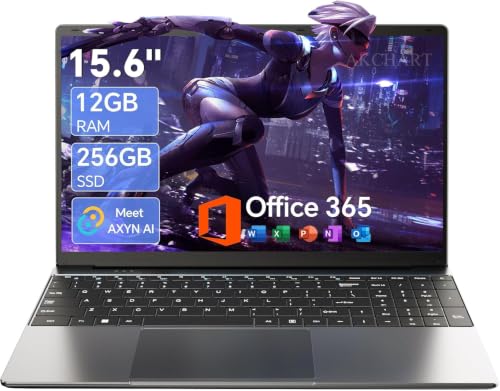
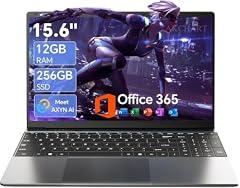
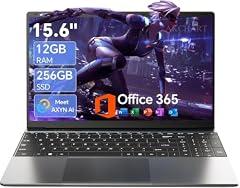
AKCHART AI Laptop 15.6" 12GB RAM 256GB SSD
Overview
This is a 15.6-inch Windows laptop intended for documents, web use, video calls, and basic coursework. The product listing states a 1920 by 1080 IPS display, 256GB SSD, 12GB DDR4 memory, Wi-Fi 5, Bluetooth 4.2, a 7000mAh battery, and a 180-degree hinge. Those display, storage, battery, and hinge details are manufacturer-stated, not independently measured for this configuration. Its Intel Celeron J4105 processor is independently identifiable. Intel confirms it is a four-core Gemini Lake chip from 2017 with 1.5GHz base frequency and up to 2.5GHz burst frequency. Intel also lists the processor's maximum supported memory as 8GB, which conflicts with the product's 12GB memory claim. An FCC filing links the M156FH model family to Shenzhen NST Industry and Trade and documents radio testing, but no model-specific independent performance, battery, display, or thermal review was located.
What works
- The M156FH model family is named in an FCC equipment filing, providing traceable wireless-hardware documentation.
- Intel verifies the listed J4105 as a real four-core processor with a 2.5GHz maximum burst frequency.
- The product states a 15.6-inch, 1920 by 1080 IPS screen, a practical size and resolution for reading documents and spreadsheets.
- A one-year warranty is stated in the product information.
What does not
- The stated 12GB memory conflicts with Intel's published 8GB maximum memory specification for the J4105 processor.
- The J4105 is discontinued, and Intel ended servicing updates for this processor family on December 31, 2024.
- J4105 is absent from Microsoft's current Windows 11 supported Intel processor list, despite the Windows 11 Home claim.
- No independent model-specific battery-runtime, display-flicker, brightness, surface-temperature, or sustained-performance testing was found.
- No public UL, ETL, CSA, battery-certification, ENERGY STAR, EPEAT, or TCO record was located for this product.
Who is it for
This product fits a user whose work is limited to short documents, email, web research, streamed classes, and simple video calls, and who values a large manufacturer-stated 1080p screen and numeric keypad layout. It is most appropriate where the buyer can verify the installed memory, Windows activation, Office entitlement, charger markings, and return options immediately after delivery. The processor's verified four-core design can handle modest workloads, but there is no independent test of this exact configuration's responsiveness or battery endurance.
Who is it not for
It is not suited to students who depend on demanding engineering, programming, media-production, gaming, data-analysis, or many-tab multitasking workloads. It is also unsuitable where long-term Windows hardware support, independently verified charging safety, measured battery life, repair parts, or established recycling support are requirements. Households that need clear camera privacy controls should seek a product with a documented physical shutter or microphone control. Buyers should be especially cautious if the delivered system reports 12GB memory, because that specification conflicts with Intel's published J4105 limit.
Integrity
The useful compliance finding is a U.S. FCC equipment filing for a 15.6-inch laptop family that includes M156FH. The filing identifies Shenzhen NST Industry and Trade as the responsible applicant and reports passing Bluetooth radio testing. That supports traceability for the wireless implementation, but it is not a battery, charger, electrical-safety, or privacy certification. No public listing was found for this product in the searched UL, ETL, CSA, ENERGY STAR, EPEAT, or TCO registers. No model-specific independent display, heat, battery, or repairability test was found either. The product states a 7000mAh rechargeable battery, but does not provide a public UN 38.3 summary or battery safety certification record. No relevant U.S. CPSC recall was identified in the searches, although absence of a recall does not establish electrical safety. A documented U.S. take-back program and replacement-parts catalog were not located.
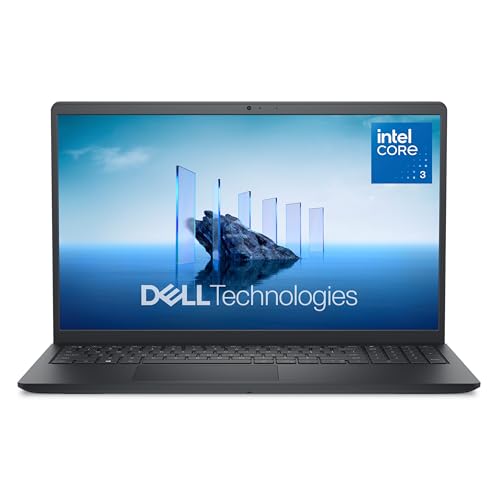
Dell 15 Laptop DC15250 15.6-inch FHD
Overview
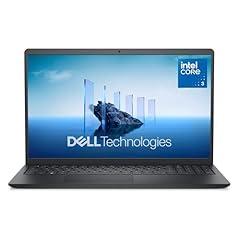
This product is a 15.6-inch non-touch Windows laptop in Carbon Black, configured in the listing with an Intel Core 3 100U processor, 8GB of DDR4 memory, a 512GB SSD, integrated graphics, and a 1920 x 1080 anti-glare display. It is intended for web research, documents, video calls, streaming, and basic schoolwork rather than sustained demanding workloads. Dell’s manual confirms that this platform supports the listed six-core Core 3 processor, two memory slots, up to 16GB memory, a 65W adapter, and either a 41Wh or 54Wh battery. The 41Wh battery and lower-cost display configuration are important limits. Independent testing of a closely related Carbon Black 41Wh unit found good short-task thermals but modest battery runtime and a low-frequency flicker issue on its 120Hz panel. The listing also incorrectly describes the Core 3 100U as 12th generation, while Intel identifies it as a Series 1 processor released in 2024.
What works
- Dell documents two SODIMM slots, replaceable memory, SSD, wireless card, battery, speakers, and fan, supporting maintenance over the product’s life.
- The platform uses a 65W adapter with stated electrical limits, and Dell documents battery temperature protection that prevents discharge past 70°C.
- Windows 11 Home has a current Microsoft support and security-update path, provided the owner continues installing feature updates.
- Independent testing of the same laptop family found cool, quiet behavior during sustained stress, although this came with reduced long-term CPU power.
What does not
- Independent testing of the 120Hz panel found sharp 201Hz PWM flicker below maximum brightness. This can be a real comfort problem for flicker-sensitive users.
- A tested 41Wh version lasted 5 hours 12 minutes of video playback, so unplugged use is unlikely to cover a full day reliably.
- The tested plastic Carbon Black chassis had a 720p camera, one microphone, and no physical camera privacy shutter. The exact camera implementation should be checked on arrival.
- The listing’s 12th-generation processor description conflicts with Intel’s official Series 1 identification for the Core 3 100U.
- No product-specific UL, ETL, battery certification, ENERGY STAR, or EPEAT record was located during verification.
Who is it for
This product suits a student or household user who mainly works at a desk or has regular access to an outlet and needs a full-size screen, numeric keypad, local SSD storage, and standard Windows applications. It is appropriate for research, writing, browser-based learning platforms, spreadsheets, ordinary video calls, and light multitasking. It also fits a user who values documented access to internal memory, storage, battery, cooling, and wireless parts, and who can verify the exact display and camera configuration after delivery.
Who is it not for
It is not well suited to people with known sensitivity to display flicker, because independent testing of the 120Hz panel found low-frequency PWM when brightness is reduced. It also does not fit users who need dependable all-day unplugged runtime, long video editing or compiling sessions, color-critical photo work, or powerful graphics. Buyers who require a physical webcam shutter, USB-C charging, or DisplayPort output should confirm the exact chassis and port variant, since these features vary within this product family.
Integrity
The documented 41Wh lithium-polymer battery has stated charging limits and a discharge over-temperature protection point of 70°C. Dell specifies a 65W adapter with 100V to 240V input support. No active product-specific CPSC recall, UL listing, ETL listing, or public battery certification record was located for this configuration during verification, so the electrical evidence is meaningful but incomplete. The most material health concern is the tested 120Hz display option. Independent measurements found aggressive 201Hz PWM below full brightness, which can cause discomfort for flicker-sensitive users. Dell documents software low-blue-light controls, but that does not independently establish flicker safety. For lifecycle impact, Dell publishes free U.S. consumer take-back and recycling options. The service manual also documents replaceable battery, memory, SSD, wireless card, fan, and display-related components, which can help keep a repairable unit in use longer. No product-specific ENERGY STAR, EPEAT, or TCO certification record was found.

Lenovo Chromebook 14" FHD Touchscreen Abyss Blue
Overview
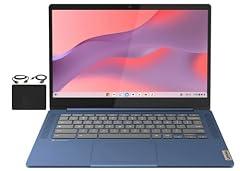
This is a 2.9-pound, 14-inch ChromeOS laptop intended for browser-based schoolwork, video calls, streaming, and cloud files. Lenovo’s official documentation confirms the relevant product family uses a MediaTek Kompanio 520 processor, 4GB or 8GB of soldered memory, 64GB or 128GB eMMC storage, a 47Wh battery, Wi-Fi 6, microSD expansion, USB-C charging, and a physical camera shutter. Independent testing of the 4GB and 64GB version confirmed the basic processor and storage configuration, very long web battery life, silent operation, and low surface temperatures. It also found weak performance for demanding workloads and slow eMMC storage. The catalog’s screen description is not fully resolvable. Lenovo documents a 300-nit IPS touchscreen option and a separate 250-nit, 45% NTSC TN option, while this listing combines touchscreen wording with the latter panel specifications.
What works
- Independent testing measured about 14.4 hours of Wi-Fi web use at 150 nits, and about 11.2 hours at maximum brightness.
- The fanless chassis stayed quiet, with a measured maximum underside temperature of 33 C during extended load.
- ChromeOS has a documented automatic update schedule through June 2033 for the Slim 3 Chromebook 14 family.
- A physical camera shutter is documented by Lenovo, and the installed wireless module is covered by Lenovo regulatory documentation.
- The product family is actively registered in the United States as EPEAT Gold with EPEAT Climate+ status.
What does not
- Independent testing found the 4GB memory and entry-level processor limiting for demanding multitasking, Linux workloads, creative applications, and games.
- The tested 64GB eMMC drive was slow, with only about 46GB initially free. Storage and memory are soldered rather than upgradeable.
- The independently tested 250-nit TN panel had poor viewing angles, limited color coverage, and uneven brightness, though it did not use PWM dimming.
- The listing makes conflicting hardware claims. Lenovo’s official port list has USB-C, USB-A, microSD, and a headset jack, not built-in HDMI or Ethernet, and the tested configuration did not have a backlit keyboard.
- No exact public UL, ETL, CSA, or battery test record was located for the supplied charger and internal battery.
Who is it for
It suits a student or household user whose work stays mostly in Chrome, Google Workspace, web research, email, learning platforms, and video streaming. The light 14-inch format, independently measured full-day web runtime, quiet fanless design, USB-C charging, and microSD slot are practical for commuting between classes or rooms. It is most appropriate where cloud storage is normal and a basic ChromeOS workflow is acceptable. Confirm the actual display panel and port layout with the seller before relying on touchscreen use or a particular monitor connection.
Who is it not for
It is not suitable for students who regularly run large spreadsheets, many heavy browser tabs, local media projects, coding environments, demanding Android apps, or games. The independently tested 4GB and 64GB configuration has limited multitasking headroom and slow, non-upgradeable internal storage. It also needs careful display confirmation for people sensitive to poor viewing angles or who work outdoors, because the lower-specification panel tested was dim for sunlight and had weak color accuracy. Buyers needing built-in HDMI, Ethernet, or a backlit keyboard should not rely on this listing’s claims.
Integrity
For comfort, independent testing found a notably cool, silent chassis. The maximum underside temperature after sustained load was 33 C, and no display PWM flicker was detected. The tested lower-specification TN screen still has meaningful ergonomic limits, including poor viewing-angle stability, limited color coverage, and only moderate indoor-oriented brightness. The product family includes a physical camera shutter, and Lenovo’s regulatory documentation identifies an FCC-authorized Wi-Fi and Bluetooth module used in this computer family. The product family has active United States EPEAT Gold and Climate+ registration. Its registry record covers energy use below the applicable ENERGY STAR maximum, external-power-supply efficiency beyond Level VI, battery removal information, service support, take-back provisions, materials controls, and product carbon-footprint disclosure. Independent teardown reporting found the screwed-in battery, speakers, and wireless card can be replaced after opening the bottom cover. Memory and eMMC storage remain soldered, which limits upgrades and can shorten practical usefulness for users whose needs grow.

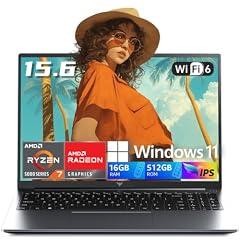
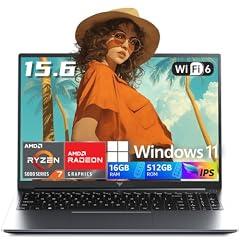
AMD Laptop Ryzen 7 5700U
Overview
This is a 15.6-inch Windows clamshell laptop intended for classes, office tasks, web work, and light entertainment. Seller-supplied specifications identify a Ryzen 7 5700U processor, 16 GB of DDR4 memory, a 512 GB solid-state drive, integrated Radeon graphics, a backlit keyboard, HDMI, USB-C, and Wi-Fi 6. AMD independently confirms that the named processor has eight cores, 16 threads, and a maximum 4.3 GHz boost clock. Federal equipment-authorization records independently connect the LX15PRO family, MALLRACE branding, and Shenzhen CYX Industrial as manufacturer. Those records provide meaningful wireless-device traceability. However, the product has no located independent review for display brightness, flicker, heat, sustained performance, or battery runtime. Most importantly, the listing's 54.72 Wh battery claim conflicts with a 38 Wh battery recorded in the regulatory family test documentation.
What works
- Federal equipment-authorization filings independently connect the product family, MALLRACE branding, and Shenzhen CYX Industrial.
- AMD confirms that the stated Ryzen 7 5700U processor has eight cores, 16 threads, and a maximum 4.3 GHz boost clock.
- The product family has documented FCC radio compliance testing for its wireless hardware.
- MALLRACE is listed under Shenzhen CYX Industrial in Wisconsin's electronics recycling manufacturer registry.
What does not
- The advertised 54.72 Wh battery conflicts with a 38 Wh battery specification in regulatory family test documents. This is a material unresolved listing conflict.
- No independent review was located for this exact product's battery runtime, charging behavior, surface temperatures, display brightness, or flicker.
- No matching UL or ETL electrical listing, battery certification record, or UN 38.3 battery test summary was located for the supplied product or charger.
- A current manufacturer support page with model-specific BIOS, driver, repair manual, replacement-parts catalog, and camera privacy-control documentation was not located.
Who is it for
This product suits a student or home user whose work is primarily browser research, documents, video calls, online coursework, and ordinary multitasking. The manufacturer-stated 16 GB memory and 512 GB solid-state storage are practical capacities for local class files and many open tabs, while AMD verifies the named eight-core processor's underlying specifications. It is more appropriate for someone comfortable confirming the installed battery, Windows activation, and return terms immediately after delivery, because several important product-specific claims remain untested.
Who is it not for
It is not suited to buyers who need documented all-day battery life, calibrated display quality, verified flicker behavior, or measured low surface temperatures for prolonged study sessions. It also does not fit users who need a clearly documented camera shutter, microphone hardware control, model-specific security-update support, or readily available self-repair parts. Avoid relying on the advertised battery capacity for travel planning until the actual unit is checked, because the listing and regulatory family record report different capacities.
Integrity
The strongest safety evidence is for the wireless platform. Federal authorization materials cover the LX15 family and explicitly include MALLRACE and LX15PRO among related models. The records identify Shenzhen CYX Industrial and document radio testing. They also identify a 19 V, 2.1 A adapter and a lithium-polymer battery specification of 38 Wh for the tested family. That battery figure conflicts with the product listing's 54.72 Wh claim, so runtime and capacity should be verified on the delivered unit. No matching UL or ETL listing, battery certification record, or UN 38.3 test summary was located. No independent display, heat, or runtime tests were found. On lifecycle handling, MALLRACE is listed under Shenzhen CYX Industrial in Wisconsin's electronics recycling manufacturer registry, but no Energy Star, EPEAT, or TCO product certification record was located.

NIMO 15.6 FHD Laptop
Overview
This product is a 15.6-inch Windows 11 Home laptop intended for schoolwork, office tasks, browsing, video calls, and general home use. The stated configuration has an Intel Core i5-12450H processor, 32GB DDR4 memory, a 1TB PCIe SSD, integrated graphics, and a 1920 by 1080 display. Intel independently confirms that this processor has eight cores, 12 threads, and a maximum 4.4 GHz turbo frequency. NIMO's own product page offers the 32GB and 1TB configuration, identifies a 53.58Wh battery, and lists Wi-Fi 6. Its manual describes a 100W USB-C Power Delivery charger, fingerprint sign-in, a webcam shield, HDMI, USB ports, microSD, and a numeric keypad. No independent model-specific performance, display-flicker, heat, or battery-runtime test was located.
What works
- The processor specification is independently corroborated by Intel, including eight cores, 12 threads, DDR4-3200 support, and 4.4 GHz maximum turbo.
- The manufacturer documents 32GB RAM and 1TB SSD configuration options, which can accommodate large document sets, many browser tabs, and local coursework files.
- The manual documents a physical webcam shield, plus Windows Hello fingerprint sign-in capability.
- NIMO publishes a two-year warranty for new products and a 90-day return policy, with a listed U.S. phone number and support email.
What does not
- No independent review or reproducible model-specific benchmark was located, so sustained performance, surface heat, screen brightness, and flicker behavior remain unproven.
- Battery claims are inconsistent. The product page states nine hours mixed use and 12.75 hours maximum runtime, while the N156 manual lists average battery life of five hours.
- No UL, ETL, CSA, battery certification, USB-IF certification, or UN 38.3 battery test summary for this product or its supplied charger was located.
- No ENERGY STAR, EPEAT, TCO Certified, recycling, take-back, spare-parts catalog, or self-repair documentation was located for this product.
- The listing calls the product AI-ready, but it does not identify a specific AI workload, software entitlement, or performance measure.
Who is it for
This product suits a student or home user who wants a full-size 15.6-inch keyboard with a number pad, substantial stated memory and storage, HDMI, USB ports, and a physical camera cover. It is most appropriate for document work, research, browser-heavy classes, spreadsheets, remote learning, and ordinary Windows applications. The processor specification is credible through Intel, and the published warranty and support contacts give a defined route for service. Buyers should treat the claimed battery runtime as uncertain and expect to use the charger during longer days.
Who is it not for
It is not for people who need independently tested all-day battery life, verified display brightness or flicker performance, or confirmed cool and quiet sustained operation. It is also unsuitable for safety-sensitive buyers who require publicly verifiable charger and battery certifications before use, because no applicable listing record or battery test summary was located. Avoid relying on it for serious gaming, graphics rendering, or GPU-accelerated creative work, since it uses integrated Intel graphics. Buyers requiring formal sustainability certifications, manufacturer spare parts, or documented self-repair procedures should choose a product with those records.
Integrity
The product's radio compliance has some external support. An FCC equipment authorization record for an N156 laptop identifies Wi-Fi and Bluetooth radio operation, while NIMO's manual describes a physical webcam shield and fingerprint reader. The product manual also gives battery-care instructions, including avoiding heat and physical damage. No product-specific CPSC recall or safety warning was located in the searched U.S. safety sources. Important evidence is still missing. No public UL, ETL, CSA, or battery-certification listing was found for the laptop or its supplied 100W USB-C charger. There is no located independent test of chassis temperatures, display flicker, or real battery runtime. The manufacturer offers warranty service, but its manual warns against unauthorized disassembly, and no parts catalog or repair guide was found. No ENERGY STAR, EPEAT, TCO Certified, recycling, or U.S. take-back record was located.

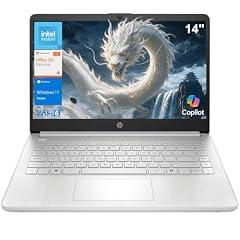
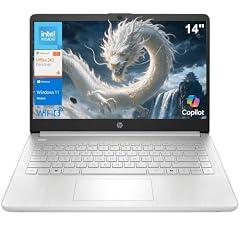
HP 2026 14" Student Laptop
Overview
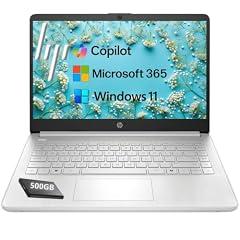
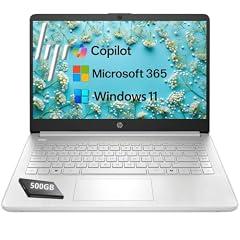
This is a compact Windows laptop intended for web research, documents, online classes, video calls, and light home productivity. The closest matching HP product sheet identifies a 14-inch, 3.24-pound model with an Intel N150 processor, 4GB of fixed LPDDR5 memory, 128GB of UFS storage, Wi-Fi 6, and a 41Wh battery. Intel independently confirms that the N150 is a four-core mobile processor with a 3.6GHz maximum turbo frequency. HP states that this configuration has a 1366 x 768 anti-glare, flicker-free display rated at 250 nits. It also states up to 7 hours 30 minutes of mixed-use battery life, with its own defined test methods, plus a one-year Microsoft 365 Personal subscription. The marketplace record is internally inconsistent about screen resolution, model size, storage, color, and Windows edition, so the exact unit and bundle should be confirmed before purchase.
What works
- The N150 processor specification is independently confirmed by Intel, including four cores and a 3.6GHz maximum turbo frequency.
- HP states a flicker-free, anti-glare display, which is relevant for reading and document work.
- HP states a low carry weight of 3.24 pounds and a 14-inch format suited to routine transport.
- The matching HP product sheet specifies a one-year limited hardware warranty and 90 days of setup and software support.
- HP clearly discloses that the included Microsoft 365 Personal term lasts one year and renews for a fee unless canceled.
What does not
- Only 4GB of onboard memory is specified, and HP lists it as onboard, limiting multitasking headroom and preventing a memory upgrade.
- The 128GB UFS storage capacity is modest for a Windows laptop, especially after system files, applications, and offline coursework.
- The 1366 x 768 panel and 250-nit brightness are manufacturer-stated entry-level display specifications, with no independent model-specific comfort testing located.
- Battery runtime and charging claims are based on HP test procedures, not an independent standardized review of this exact configuration.
- The marketplace record conflicts with the matching HP documentation on resolution, color, Windows S mode, and product identification.
Who is it for
This product suits a student or household user whose work is mainly browser-based, such as online coursework, email, word processing, web research, video streaming, and light video calls. The compact 14-inch size and HP-stated 3.24-pound weight fit frequent carrying between classes, rooms, or libraries. It also fits someone who can work within Windows 11 Home in S mode or is comfortable permanently switching out of S mode if software outside the Microsoft Store is required. Cloud storage habits help offset the limited internal capacity.
Who is it not for
It is not a strong fit for users who routinely keep many browser tabs, large documents, local media, or several desktop applications open at once. The specified 4GB onboard memory cannot be expanded, and 128GB of storage leaves limited room for installed software and files. It is also unsuitable for photo or video editing, programming workloads with local tools, modern PC gaming, or color-sensitive work. Buyers needing a sharp screen for prolonged reading outdoors should note the HP-stated 1366 x 768, 250-nit display. Privacy-sensitive users should seek a confirmed camera shutter if one is required.
Integrity
HP's matching product sheet states that the display is flicker-free and anti-glare. Those features can reduce avoidable visual discomfort, although no independent test of brightness, panel flicker, or surface temperatures for this exact configuration was located. HP specifies a 41Wh lithium-ion battery and 45W adapter, but a model-specific UL, ETL, battery-cell certification record, or battery test summary was not located in the checked public registers. Older HP battery recalls exist, but the recalled model families do not identify this newer configuration. HP states that the matching model is ENERGY STAR certified and EPEAT Gold with Climate+ registered, uses post-consumer recycled plastic in its keyboard keycaps, and ships in recyclable fiber-based outer packaging. Those environmental claims appear in HP documentation, but this review did not independently confirm a matching current registry entry. The product sheet provides a one-year limited hardware warranty, a U.S. support route, and a service manual exists for the related HP 14-inch platform, though the fixed memory limits upgrade life.

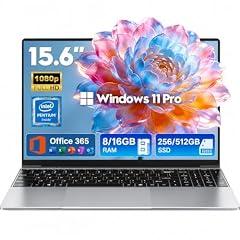
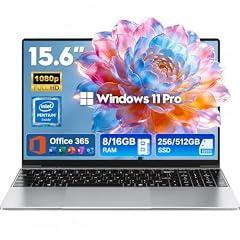
NIAKUN 2026 Laptop 15.6" Windows 11 Pro
Overview
This is a thin 15.6-inch Windows laptop intended for schoolwork, web use, documents, and basic business tasks. The listing states 16GB of memory, a 512GB solid-state drive, a Full HD matte LCD, integrated Intel graphics, a numeric keyboard, two USB ports, mini HDMI, Wi-Fi 5, Bluetooth 4.2, and a 38.5Wh battery rated for up to six hours. Those configuration details are manufacturer-stated and were not independently tested for this product. Its processor is independently identifiable. Intel confirms that the Pentium Gold 4425Y is a retired, discontinued 2019-era mobile chip with two cores, four threads, a 1.70GHz base frequency, 2MB cache, and a 6W design power. Microsoft includes the Pentium Gold 4000Y family in its supported Windows 11 processor list. No exact-product laboratory review, battery test, teardown, or certification record was located.
What works
- Microsoft lists the processor family as supported for Windows 11, which supports an official operating-system update path.
- The low-power Pentium Gold 4425Y is independently specified by Intel as a 6W mobile processor, a design suited to basic portable computing.
- The stated 16GB memory and 512GB SSD provide useful capacity for documents, browser tabs, and local coursework, although this exact configuration was not independently verified.
- NIAKUN publishes phone and email contacts and states a two-year manufacturing-defect warranty.
What does not
- The Pentium Gold 4425Y is a retired and discontinued processor. Independent benchmark data for the chip shows entry-level performance, and no sustained testing of this larger laptop was located.
- The listing describes the processor as one core, while Intel specifies two cores and four threads. It also presents a 2026 model year beside a processor Intel discontinued, which reduces confidence in specification handling.
- The promised Office 365 inclusion does not identify the plan, duration, activation method, or license holder. Microsoft 365 is subscription-based, so the practical entitlement cannot be verified from the claim.
- No exact-product UL, ETL, battery certification, FCC authorization, ENERGY STAR, EPEAT, TCO, repair manual, spare-parts catalog, or independent display and battery-runtime test was located.
- The brand site advertises a 16-inch 4425Y laptop, while this product record says 15.6 inches. Buyers should confirm the physical screen size and keyboard layout on delivery.
Who is it for
This product suits a buyer whose work is limited to writing assignments, cloud documents, email, web research, streamed lectures, and simple video calls, and who values a full-size screen and numeric keypad. The manufacturer-stated 16GB memory and 512GB SSD leave practical room for files and browser-heavy basic work. It is most appropriate where the buyer can confirm the installed Windows activation, Office entitlement, screen size, keyboard layout, charger labeling, and return terms immediately after receipt.
Who is it not for
It is not suited to students using engineering, design, programming, statistical, video-editing, 3D, or current-game workloads. The independently identified Pentium Gold 4425Y is a retired low-power processor, and the exact laptop has no published sustained-performance testing. It is also unsuitable for buyers who need independently verified battery endurance, display flicker behavior, certified charger and battery documentation, a camera shutter, traceable wireless approval, readily available repair parts, or a clearly defined Microsoft 365 license before setup.
Integrity
The product uses a rechargeable lithium-polymer battery, but no battery test summary or public certification record for the battery, charger, or complete laptop was located. No product-specific UL, ETL, or CSA listing was found in the checked public certification sources. Searches of CPSC recall and SaferProducts records did not identify a product-specific recall or public incident report. That absence is not evidence of certification or of long-term safety performance. The stated 38.5Wh battery is relatively modest in capacity, and Intel rates the identified processor at 6W, but whole-product power use has not been independently measured. No ENERGY STAR, EPEAT, or TCO record was located, and the manufacturer does not provide a U.S. recycling program, repair manual, parts catalog, or teardown information for this product. The brand does publish support contacts and a stated two-year warranty, which is a service route, not evidence that parts are available.

HP Laptop 2026 Business and Student Edition
Overview
This is a 14-inch Windows laptop positioned for web research, documents, video calls, streaming, and basic student work. The product record identifies an Intel N150 processor, 4 GB of memory, and 128 GB of UFS storage. HP's service documentation independently confirms that its related 14-dq6xxx platform was offered with the N150 and 128 GB UFS storage, but it also describes DDR4 memory rather than the listing's LPDDR5 claim. The verified N150 is a four-core, four-thread low-power processor with boost speeds up to 3.6 GHz. Independent processor results support basic coursework, but no reproducible review of this exact configuration was found. The advertised 1366 x 768 anti-glare display is a documented low-resolution, 250-nit option, which is usable indoors but limited for dense reading and detailed visual work.
What works
- The Intel N150 is independently specified as a four-core, four-thread processor, suitable for light browser, document, and classwork loads.
- HP's service guide documents the product family, internal components, and service parts, giving technicians a concrete maintenance reference.
- The documented HD anti-glare panel can reduce reflections in indoor study spaces.
- A one-year limited HP hardware warranty is stated for the closely matching official configuration.
What does not
- The product record contradicts itself on memory and storage, stating 4 GB and 128 GB in core specifications but also listing 8 GB and 512 GB elsewhere.
- The title's Microsoft 365 wording is not substantiated. HP's matching configuration lists no additional Office software, so buyers should not assume a perpetual Office license or paid subscription is included.
- 4 GB of memory is a real constraint for many browser tabs, video calls, and simultaneous school applications.
- The HD, 250-nit display has limited workspace and brightness for sustained reading, outdoor use, photo work, or accessibility needs.
- No exact-product independent battery, surface-temperature, display-flicker, or full-system performance test was located.
Who is it for
It fits a student or household user whose work is limited to a few browser tabs, word processing, school portals, email, streamed lessons, and occasional video calls. The 14-inch size is practical for carrying between rooms or classes, and the low-power Intel processor has independently documented basic performance. It is most appropriate when the actual delivered configuration is confirmed in writing as 4 GB memory and 128 GB UFS storage, and when the user has reliable cloud or external storage for files.
Who is it not for
It is not suited to users who regularly keep many browser tabs and desktop applications open, edit photos or video, write code with local tools, play modern games, or need a sharp screen for long reading sessions. The documented HD, 250-nit panel is also a poor fit for frequent outdoor use, visual design, or users who benefit from more on-screen space. Households needing a confirmed Microsoft 365 license should not rely on the product title because the matching HP configuration lists no additional Office software.
Integrity
The matching HP platform has a documented 41 Wh lithium-ion battery and HP publishes a maintenance guide that identifies the hardware family and parts. No recall or U.S. safety warning specific to this current product configuration was found in the checked CPSC sources. Older HP notebook battery recalls exist, but they cover batteries sold from 2013 through 2016 and do not identify this newer product. No exact battery certification record, NRTL listing, or manufacturer UN 38.3 test summary was located. HP's current related 14-inch N150 product pages state ENERGY STAR and EPEAT registration for some configurations, and HP describes recycled-material use on a related 14-inch model. Those claims could not be matched to this exact marketplace configuration in the public registries checked. The service guide is a useful longevity positive, although it states that the memory is not accessible or upgradeable. The listing's conflicting memory, storage, display-output, and software information remains the clearest quality-control concern.

Phatom FHD 15.6 Laptop 4GB 128GB SSD
Overview
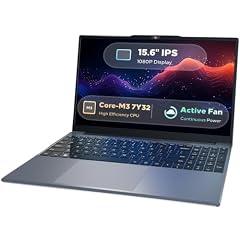
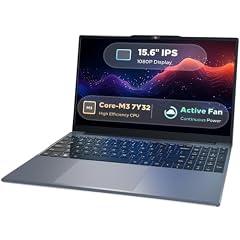
This is a 15.6-inch clamshell laptop presented for student and basic business use. The product listing states that it has a 1920 x 1080 IPS display, 4 GB of DDR3L memory, a 128 GB SSD, HDMI, three USB ports, Wi-Fi 5, Bluetooth, and a four-hour battery-life claim. It also states that storage can be expanded through an M.2 slot. Intel independently confirms that the listed Core m3-7Y32 is a 2017, two-core, four-thread mobile processor with a 1.1 GHz base frequency and up to 3.0 GHz turbo. Intel classifies it as discontinued and says servicing updates ended on December 31, 2024. The laptop itself has an FCC authorization record under the DGBOOK name, but independent testing of this exact configuration, its display, battery, charger, and sustained performance was not located.
What works
- The DGBOOK laptop family has an FCC authorization record for its Wi-Fi hardware.
- The claimed 15.6-inch, 1920 x 1080 IPS screen provides a larger work area for documents and browser-based coursework, manufacturer-stated.
- HDMI and three USB ports are listed, which can support a monitor and common wired accessories, manufacturer-stated.
- The listed Core m3-7Y32 processor specifications match Intel's official processor record, including two cores, four threads, and up to 3.0 GHz turbo.
What does not
- Only 4 GB of memory is listed, which is a concrete limitation for Windows multitasking, video calls, and many browser tabs.
- The Core m3-7Y32 is a discontinued 2017 processor, and Intel lists its servicing-update end date as December 31, 2024.
- Microsoft's current Windows 11 supported-processor documentation starts Core m support at the 8th generation, while this product is listed with a 7th-generation Core m3. The Windows 11 compatibility claim therefore needs clarification from the responsible seller or manufacturer.
- No independent test was located for this exact laptop's heat, screen flicker, battery runtime, charging behavior, or sustained performance.
- No public UL, ETL, CSA, ENERGY STAR, EPEAT, or TCO product record was located for this product, and the listing does not identify charger or battery safety certifications.
Who is it for
This product fits a buyer whose work is limited to single-task writing, basic web research, email, streamed classes, and occasional HDMI use with an external display. Its stated 15.6-inch Full HD screen may be useful for reading documents at a desk, and the 128 GB SSD can suit a small local file collection. It is most appropriate where the buyer can confirm the installed Windows edition, license status, charger details, return terms, and warranty contact before relying on it for school or work.
Who is it not for
It is not suited to students who regularly keep many browser tabs, Office files, video calls, and school platforms open at once, because the listed 4 GB memory leaves little working headroom. It is also a poor fit for gaming, editing, coding workloads with virtual tools, large spreadsheets, or long unplugged days. Buyers who require a clearly supported Windows 11 device, independently measured battery life, certified charging hardware, documented repair parts, or a camera privacy shutter should choose a product with those records.
Integrity
The strongest independently verifiable safety-related point is wireless compliance. An FCC authorization record identifies DGBOOK as a laptop made by Shenzhen Good Energy Technology Co., Ltd, with Wi-Fi testing documentation. That helps trace the radio hardware, but it does not verify the safety of the charger, battery pack, display, or entire retail configuration. No product-specific CPSC recall or public safety report was located in the searched U.S. recall resources. That is not evidence of electrical certification. No matching public UL, ETL, CSA, ENERGY STAR, EPEAT, or TCO record was located, and no battery test summary or charger certification was provided. The listing also lacks a public repair manual, parts catalog, recycling program, or take-back documentation. Its low-power processor may limit operating energy use, but there is no product-level energy measurement or lifecycle certification to substantiate an environmental claim.