
10 Best Karaoke Machines
 Brianna York
Please note that we participate in affiliate marketing programs. When you purchase through links on our site, we may earn a commission. As an Amazon Associate we earn from qualifying purchases. This comes at no additional cost to you and helps support the resources required to provide valuable content.Advertising Disclosure
Top-rated Karaoke Machine Comparison
1

2
3
4
5
6
7
8
9
10
Overview
A karaoke machine combines a speaker, one or more microphones, music playback, and controls for vocal effects such as echo. Some are simple portable speakers with Bluetooth, USB, AUX, or TF-card inputs; others add a built-in lyrics screen, Wi-Fi, karaoke apps, HDMI output, recording, lighting, or a TV connection. The right choice depends less on a headline wattage than on whether the complete setup works safely, predictably, and conveniently for the way you will use it.
Start with the physical format. A portable battery model is useful for rooms, patios, camping, and small gatherings, while a corded soundbar system is better suited to a television and fixed indoor use. Two included microphones support duets, but published descriptions should be checked against the manual because microphone type and charging arrangements can conflict. A screen can reduce setup with a phone or tablet, but smart models introduce accounts, apps, updates, and privacy considerations.
Power claims need careful interpretation. “Peak” or “maximum” watts are not the same as continuous or RMS output. A substantiated listing should identify the test method and conditions; an independent acoustic report should state sound-pressure level, measurement distance, input, weighting, and maximum-output conditions. Battery runtime should disclose whether the screen, lights, microphones, and normal playback were operating. Charging time, battery capacity, wireless range, and vocal-removal claims are also more useful when independently tested under stated conditions. Conflicting runtime figures, unexplained peak-power numbers, and claims such as professional, studio-quality, subwoofer, or waterproof should not be treated as proof of performance.
For electrical and battery safety, look for a model-specific listing for the complete unit and charging path in UL Product iQ, Intertek’s ETL directory, or the CSA Group database, with the applicable UL/CSA 62368-1 requirements. Rechargeable batteries should also have credible battery-safety evidence relevant to the product. A seller’s certification statement, a radio authorization, or a manual’s safety advice does not substitute for whole-product electrical verification. Check CPSC Recalls and SaferProducts.gov for safety notices, but a missing recall is not a safety certification.
Wireless products should have an FCC ID that resolves to the matching transmitter and model family in the FCC Equipment Authorization System. FCC radio authorization addresses legal radio operation and interference risk; it does not establish charging, shock, overheating, fire, hearing, or battery safety. For products marketed to children or families, look for the applicable Children’s Product Certificate and testing for materials, lead, phthalates, cords, microphones, batteries, and small parts. An age recommendation alone is not equivalent evidence.
Finally, consider service life. Useful documentation includes a manual, warranty terms, service contact, replacement batteries or microphones, common wear parts, and clear repair instructions. Battery chemistry, removability, replacement access, and end-of-life guidance should be stated. Rechargeable electronics and batteries should not be placed in household trash or curbside recycling; buyers should have a qualified battery or electronics collection route. Across the supplied products, no category-wide defect or contraindication was established, but recurring limitations are important: most lacked model-specific UL, ETL, or CSA listings, measured maximum loudness, child volume safeguards, battery-replacement details, and recycling or take-back information. Several products also had conflicting power, runtime, warranty, microphone, or battery specifications. Children should not use these systems unsupervised, and loud sessions require adult volume and duration management.
Integrity
## Health and Ecology The reviews distinguish between a feature being advertised and evidence that the exact product was independently checked. Scores below reflect that distinction: higher-scoring products had more model-matched documentation, while lower-scoring products more often relied on marketplace copy or left important safety and lifecycle details unresolved.
HHealth & Safety
Electrical and battery fire safety
This measures the complete speaker, microphones, charging path, power supply, and rechargeable batteries—not just whether the product turns on. It matters because karaoke machines are often charged at home and may be used around children. The supplied products generally scored about 69–74: higher scores still lacked some whole-product UL, ETL, or CSA listings, while lower evidence left charging and battery protection largely unverified.
Hearing-risk control
This measures whether loudness is measured and actively managed through a stated maximum output, distance-and-duration warnings, usable volume control, or child-focused limits. Karaoke encourages close microphone use and repeated singing, so unmeasured output is a meaningful gap. Scores ranged from 68 to 70; the stronger products had practical volume controls, but none supplied a located independent maximum-SPL report or clear safe-listening limiter.
Child material and physical safety
This concerns accessible materials, microphones, batteries, cords, covers, and small parts when a product is marketed for children or families. A high-scoring product would have age-appropriate testing and a Children’s Product Certificate where applicable. Scores clustered at 69–74. The relatively higher scores reflected clearer manuals or precautions, not confirmed child-product certification; no supplied product had located model-specific child-material evidence.
Bluetooth and wireless compliance
This measures whether Bluetooth and other transmitters are legally authorized and traceable for U.S. sale through an FCC ID matching the product and transmitter family. That matters for radio operation and interference, but it does not certify battery or electrical safety. Scores ranged from 68 to 93. The highest-scoring products had matching FCC authorizations; lower-scoring products lacked a confirmed authorization or only had indirect documentation.
EEvidence
Independently verified, model-matched evidence
This measures whether safety, battery, radio, acoustic, and performance evidence comes from an identifiable independent laboratory or regulator and matches the exact product sold. It matters because marketplace descriptions can combine untested claims with real features. Scores ranged from 68 to 82. Higher-scoring products had FCC records and clearer manuals; lower-scoring products lacked exact-model laboratory reports or relied heavily on seller statements.
Honest sound, power, and battery claims
This measures whether wattage, speaker size, runtime, charging time, range, TV connection, vocal removal, and microphone claims are specific and supported under disclosed conditions. Karaoke listings often present peak watts or optimistic runtime without test conditions. Scores ranged from 52 to 72. Higher-scoring reviews separated RMS from peak power or disclosed operating conditions; lower-scoring products had conflicting or untested headline specifications.
Clear, non-misleading product claims
This measures whether the listing and manual distinguish peak from continuous power, disclose battery limits, identify included parts, and avoid unsupported labels such as professional, waterproof, or certified. It matters when buyers are comparing inexpensive speakers with large headline numbers. Scores ranged from 48 to 72. Higher-scoring products gave clearer manuals or qualifications; lower-scoring products had contradictions about power, runtime, microphones, warranty, or battery configuration.
Privacy and update support for smart karaoke
This applies most to products with screens, Wi-Fi, apps, accounts, recording, or cloud services. Buyers should know what data connected features collect, whether deletion and child protections exist, and how updates are supported. Scores ranged from 58 to 85. Simple local-playback products scored higher on limited connected exposure, while smart models had more functionality but also unresolved policy age, data collection, or product-specific update questions.
Wireless radio compliance
This measures traceable U.S. authorization for Bluetooth and other transmitting microphones or speakers, separate from general evidence quality. An FCC ID should resolve to the matching transmitter and model family. The supplied products ranged from no confirmed record to strong exact-model authorizations, reflected in scores of 68–93. High-scoring examples had FCC grants or test exhibits; low-scoring examples lacked a matching public authorization despite wireless claims.
EEcology
Repairability and usable service life
This measures whether batteries, microphones, chargers, cables, and wear parts can be replaced and whether manuals, service contacts, parts, and warranty support are available. It matters because a failed battery can otherwise turn a working speaker into e-waste. Scores ranged from 62 to 76. Higher-scoring reviews identified clearer manuals, warranties, or a replaceable battery; lower-scoring ones lacked parts, battery access, or service pathways.
Battery and e-waste stewardship
This measures whether the battery chemistry and removability are identified, safe disposal instructions are provided, and a credible take-back or recycling route exists. Portable karaoke machines commonly contain rechargeable batteries in the speaker and sometimes the microphones. Scores ranged from 68 to 71, showing limited separation: some manuals advised collection rather than household waste, but most did not identify chemistry, removal, or a manufacturer-supported U.S. recycling program.
Full reviews

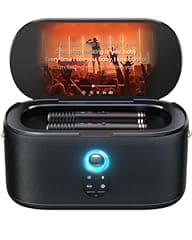
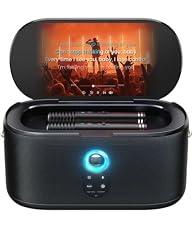
Ikarao Smart Karaoke Machine with Screen
Overview
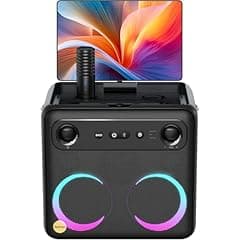
This is a battery-powered karaoke speaker with a fold-up 10.1-inch touchscreen, two wireless dynamic microphones that charge in onboard compartments, Wi-Fi and Bluetooth, HDMI output, USB, TF card, AUX connections, and a guitar or microphone input. At about 6.8 kg with the microphones, it is intended for home gatherings and portable party use rather than permanent installation. Its strongest concrete documentation is the model-matched FCC authorization for its Bluetooth and Wi-Fi radios. The manufacturer’s manual lists dual 4-inch woofers, 70W RMS power, 106 dB SPL, 32GB storage, and at least six hours of speaker use with the screen on or 11 hours with it off. The retail marketing also uses a 300W peak-power claim, which is not the same measure as the manual’s 70W continuous rating. No independent acoustic or battery-runtime report was located.
What works
- The exact Break X2 radio platform has an FCC equipment authorization covering Bluetooth and Wi-Fi transmissions for U.S. use.
- The public manual gives more useful technical detail than the peak-power headline, including 70W RMS, speaker configuration, input limits, microphone battery capacity, and stated run-time conditions.
- A built-in screen, HDMI output, local-media support, and two included rechargeable microphones allow karaoke use without assembling separate display and microphone hardware.
- The manual provides battery temperature, charging, swelling, leakage, and emergency-use instructions, plus a route to request battery replacement through support or a dealer.
What does not
- No model-specific UL, ETL, or CSA safety listing could be verified in the named U.S. safety certification registers. The manual discusses the meaning of a UL mark, but that is not a verifiable listing for this product.
- The stated 106 dB maximum sound level has no disclosed measurement distance, weighting, source level, or independent test report. There is no safe-listening limiter or hearing-duration guidance.
- The 300W headline is peak-power marketing, while the manual lists 70W RMS. That distinction is available only in the manual, not clearly alongside the main power claim.
- The connected product privacy policy discloses collection of device, Wi-Fi, location, playback, and recording-related data, but its posted product-policy version is dated 2023 and does not provide a defined security-update support period.
- Battery chemistry, main-speaker battery capacity, removability details, parts pricing, and a U.S. manufacturer take-back program were not identified.
Who is it for
This product suits an adult household that wants an all-in-one karaoke setup for living rooms, patios, or occasional small gatherings, and is comfortable managing Wi-Fi, app accounts, and device updates. The integrated lyric screen and two charging microphones reduce setup compared with combining a television, separate speaker, tablet, and microphones. It also suits users who value wired expansion, since the manual documents HDMI, AUX, USB, TF-card, and microphone or instrument connections. Users should treat the manufacturer’s battery-life and sound-level figures as operating estimates, not independently confirmed performance guarantees.
Who is it not for
It is not well suited to households needing independently certified electrical and battery safety evidence, especially where the unit will be routinely charged unattended or used around young children. It is also a poor fit for buyers seeking enforced safe-listening controls, measured maximum output under disclosed conditions, or quiet use in apartments and close rooms. Children should not operate it unsupervised because the manual warns of small-parts choking risk and requires adult supervision. Privacy-sensitive users who do not want a Wi-Fi karaoke device collecting usage and account-related data should use offline equipment instead.
Integrity
The model’s wireless compliance is a genuine strength. Its FCC authorization matches the Break X2 platform and covers Bluetooth and Wi-Fi operation. The manual also directs users to keep at least 20 cm from the transmitting speaker, use the specified charging equipment, avoid charging outside 5°C to 40°C, keep it away from flammables while charging, and stop use if smoke, odor, swelling, or leakage occurs. No product-specific U.S. recall or safety warning was located in the public CPSC recall search. For hearing, the manufacturer states 106 dB SPL, a level that can create substantial exposure in close use, yet it provides no tested conditions, volume ceiling, or safe-listening guidance. For end of life, the manual says not to put the product or rechargeable batteries in household waste and to use an appropriate recycling facility. However, it does not identify the main battery chemistry, give removal instructions, or document a manufacturer take-back route, limiting practical repair and recycling transparency.
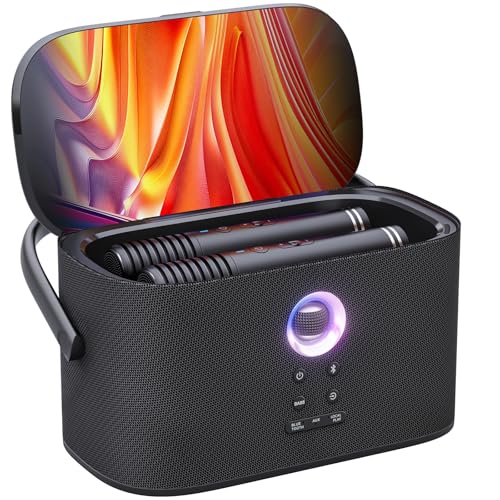
Karaoke Machine with Built-in Display
Overview
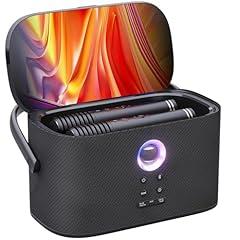
This is a battery-powered, portable karaoke speaker with an 8-inch lyric screen, Wi-Fi, Bluetooth, HDMI output, two wireless microphones, and charging storage slots for the microphones. It is intended to run karaoke and media apps directly, or connect to a television and other audio sources. Ikarao states that it has two 2.7-inch speakers, 140 W peak power, eight microphone effects, and a rechargeable battery. The wireless section has meaningful independent evidence. A U.S. FCC equipment authorization covers the Shell S2 as a listed model in the same product family, including Bluetooth and 2.4 GHz and 5 GHz Wi-Fi. The grant requires at least 20 cm separation from people during radio operation. Sound output, battery runtime, and the broader electrical safety system remain manufacturer-stated rather than independently tested. The maker's current pages also give differing battery-use figures, including up to 8 hours and at least 10 hours.
What works
- The Wi-Fi, Bluetooth, and radio configuration are traceable to an FCC authorization that specifically lists the Shell S2 model family.
- The integrated screen, HDMI output, and two chargeable wireless microphones make a self-contained karaoke setup, according to the manufacturer.
- A one-year warranty, 30-day return policy, and stated lifetime customer support provide a defined service contact path.
- The manufacturer distinguishes the advertised 140 W figure as peak power, rather than presenting it as continuous output.
What does not
- No model-specific UL, ETL, or CSA electrical-safety listing was located for the complete speaker, battery, or charging path.
- No independent acoustic report was located for maximum loudness, listening distance, distortion, or safe-listening controls. The product can produce party-level sound without a documented parental limit.
- The product is promoted for children and families, but no product-specific Children's Product Certificate or material-testing evidence was located.
- Battery performance is unclear. Ikarao materials cite both up to 8 hours and at least 10 hours, with no disclosed test conditions or battery capacity.
- No public parts catalog, battery replacement instructions, battery chemistry, or dedicated take-back program was located.
Who is it for
It suits an adult household or host that wants a compact, self-contained karaoke setup for living rooms, birthdays, apartments, and occasional outdoor gatherings. The built-in lyric display reduces dependence on a separate tablet, and HDMI can move lyrics to a television. It also fits users who value two included wireless microphones and direct Wi-Fi access to compatible karaoke or media services. The buyer should be comfortable treating the stated sound power and runtime as manufacturer claims, not independently measured performance.
Who is it not for
It is not a strong fit for households seeking documented electrical certification for a rechargeable speaker used around children, or for buyers who need verified battery safety, battery capacity, and replaceability information. It is also unsuitable where a safe maximum volume, parental loudness limit, or independently measured sound output is required. Users who will keep the Wi-Fi features connected should not choose it if they need a product-specific privacy notice with clearly stated retention, update, and child-account practices.
Integrity
The clearest independently checkable safety point is wireless compliance. The FCC authorization covers the Shell S2 within its listed model family for Bluetooth and Wi-Fi radios, and the filing specifies a 20 cm operating separation for radio exposure. That confirms radio authorization, not complete electrical or battery safety. No model-specific UL, ETL, or CSA listing was located for the speaker, battery, charging system, or supplied charging arrangement. No U.S. recall or regulator warning specific to this product was located in the search. The manufacturer markets the unit to kids and families, yet public evidence of child-material testing, battery chemistry, accessible-battery design, and disposal instructions was not located. It provides a one-year warranty and support channel, which may help extend use, but does not publish a parts catalog or battery replacement path. For end of life, treat the rechargeable electronics as e-waste and do not place the unit or its battery in household trash or curbside recycling.

Smart Karaoke Machine with Screen
Overview
This portable, battery-powered karaoke speaker combines a 10.1-inch touchscreen, two docked wireless microphones, speaker drivers, Wi-Fi, Bluetooth, USB, AUX, and HDMI connections in a roughly 12-pound unit. It is intended for home singing, small gatherings, and music playback, with lyrics shown on its own screen or an HDMI-connected television. Ikarao states that it has two 3.5-inch woofers, two 1-inch tweeters, 280W peak power, a 71Wh battery, and up to 9 hours of playback with the screen on. Those are manufacturer claims, not independent acoustic or battery tests. Its Bluetooth and Wi-Fi transmitter is more firmly documented, with a matching FCC equipment authorization issued in September 2024. The unit does not include a wall charger, so the charging setup depends partly on the buyer's USB-C power supply.
What works
- The Bluetooth, Wi-Fi, and BLE radio system matches an FCC equipment authorization for this karaoke speaker.
- The integrated screen and two docked microphones can reduce setup steps for household karaoke, as stated by the manufacturer.
- The maker provides concrete battery figures, 71Wh and separate screen-on and screen-off runtime claims, which are more useful than an undifferentiated runtime claim.
- A published support FAQ says the product receives periodic over-the-air software updates.
- The documented 12-month manufacturer warranty and support contact provide a basic service route.
What does not
- No model-specific UL, ETL, or CSA electrical-safety listing was located for the complete speaker, battery, charging path, and power supply.
- The stated 104 dB maximum sound level lacks independent test conditions, and no safe-listening limiter, parental volume setting, or distance-and-duration guidance was found.
- The product is promoted for kids and families, but no model-specific children's product certificate, materials testing, or age-grade evidence was located.
- Sound power, range, frequency response, microphone runtime, and main-battery runtime are manufacturer-stated rather than independently measured under disclosed conditions.
- The battery is not presented as user-replaceable, and no parts catalog, battery replacement procedure, or U.S. take-back program was located.
Who is it for
This product suits an adult household that wants a compact all-in-one karaoke setup for living rooms, family gatherings, and occasional outdoor use, rather than assembling a television, separate speaker, microphones, and streaming device. It is especially practical for users who value on-screen lyrics, HDMI output, USB-C charging, and microphones that store and recharge in the unit. Buyers should already have, or be prepared to choose, an appropriate USB-C PD charger because one is not included.
Who is it not for
It is not well suited to households seeking a documented electrical-safety listing for a rechargeable entertainment device, or to buyers who need independently measured loudness, battery endurance, or sound quality. It is also a weak fit for young children using the system unsupervised, because no child-product testing evidence or exposure-control features were located. Avoid treating it as a professional PA system, a weather-resistant outdoor speaker, or a repairable long-life appliance, because the available documentation does not substantiate those uses.
Integrity
The strongest independently checkable compliance evidence is for wireless operation. The matching FCC authorization covers the product's Bluetooth, BLE, and 2.4 GHz and 5 GHz Wi-Fi transmitters. FCC authorization addresses radio compliance, not the broader electrical safety or sound-performance claims. No matching UL, ETL, or CSA listing was located for the complete rechargeable karaoke unit or its charging arrangement. Ikarao states a 71Wh battery and up to 9 hours of use with the screen active. Its available guidance warns against heat, fire, water exposure, damaged parts, and opening the product. It also directs users to separate electronics collection rather than household trash. However, the battery chemistry, removal process, U.S. recycling route, and replacement-parts availability were not established. The connected screen can use online services, and Ikarao publishes a general privacy policy that describes device and account-related data handling, third-party sharing, and deletion requests. No product-specific privacy policy for this model was located.

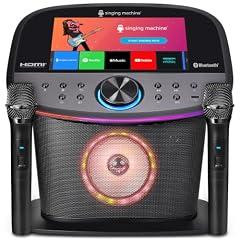
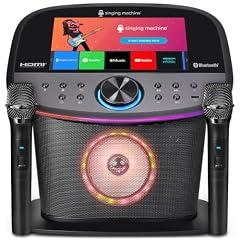
Singing Machine Platinum Plus Karaoke System
Overview
This is a mains-powered, touch-screen karaoke speaker for home and party use. It has Wi-Fi, Bluetooth, HDMI output for a TV, USB recording and playback, two wireless microphones, adjustable music and microphone levels, vocal effects, and lights. The maker says performances can be recorded as MP3 files to internal memory or a USB drive, and that music services can be accessed from the unit. Its radio hardware has a meaningful independent check. The FCC equipment authorization matches this model and covers Bluetooth plus 2.4 GHz and 5 GHz Wi-Fi operation. In contrast, sound output, battery life, charging performance, and maximum loudness were not supported by an independent acoustic or battery test located in this review. The maker's current product information also conflicts with its support information on Wi-Fi capability and adapter rating, so verify the label and manual supplied with the product before replacing the power supply.
What works
- Exact-model FCC authorization verifies the Bluetooth and Wi-Fi transmitter for U.S. operation.
- The manufacturer documents HDMI lyrics output, USB recording, Bluetooth streaming, and line output for external speakers.
- Two wireless microphones are included according to the manufacturer, and official support offers replacement microphones.
- A downloadable manual, model-specific troubleshooting, and manufacturer service contact are available.
What does not
- No exact-model UL, ETL, or CSA electrical-safety listing was located, so third-party verification of the complete power path is not established.
- No independent maximum-volume measurement or safe-listening limit was found. Users must actively manage speaker and microphone volume, especially around children.
- The manufacturer's pages conflict on Wi-Fi support and the supplied adapter rating. One page lists dual-band Wi-Fi and 15V, 1.5A, while support says 2.4 GHz only and names an 18V, 3A replacement specification.
- The connected karaoke app's disclosed practices include tracking identifiers and usage data, plus collection of account, device, and usage-related data. The product is not a privacy-minimal option.
- The standard manufacturer warranty is only 90 days, and no parts catalog or documented battery and electronics take-back route was located.
Who is it for
It suits a household that wants one stationary karaoke unit with an integrated touch screen, two microphones, TV lyrics through HDMI, and the option to record performances to USB. It is particularly practical for adults or supervised family gatherings where the owner can set up Wi-Fi, manage app accounts or subscriptions, and keep volume at a comfortable level. It also fits users who value manufacturer-provided troubleshooting and the ability to replace a lost microphone or adapter, rather than treating those accessories as disposable.
Who is it not for
It is not well suited to buyers who require a third-party electrical-safety listing for the complete product, or who need independently measured loudness and sound-quality data before use around children or noise-sensitive neighbors. It is also a poor fit for privacy-sensitive households that do not want an app ecosystem with account use, tracking disclosures, or possible subscription charges. Do not rely on a generic replacement adapter, because the maker's own published specifications conflict. Confirm the rating printed on the supplied unit and manual.
Integrity
The strongest verified safety evidence is radio compliance. The FCC authorization identifies this exact Wi-Fi touch-screen karaoke system and covers Bluetooth, 2.4 GHz Wi-Fi, and 5 GHz Wi-Fi. That authorization does not substitute for a third-party electrical-safety certification of the speaker, adapter, and complete power path. No matching UL, ETL, or CSA listing was located. No product-specific CPSC recall or safety warning was located in the searched U.S. records. The microphones use replaceable AA cells rather than an enclosed rechargeable pack, which avoids a built-in lithium battery in the microphones. However, the manufacturer information found does not clearly identify battery chemistry, provide product-specific end-of-life instructions, or offer a take-back route for the electronics. The maker does provide manuals, troubleshooting, replacement microphones, adapter guidance, and out-of-warranty service contact, but its normal warranty lasts 90 days. For connected use, the associated app discloses tracking and collection practices, so account and app permissions deserve review before family use.

Peski Portable Bluetooth Karaoke System
Overview
This is a compact, battery-powered karaoke speaker for casual home, party, and outdoor use. It measures 7 by 7 by 12 inches and is listed at about 4.4 pounds. The package is described as including two wireless microphones, a USB charging cable, and a manual. The microphones use AA batteries that are not included. The available product manual describes Bluetooth, AUX, USB, and TF-card playback, plus pairing two units for stereo playback. It also describes speaker and microphone volume controls. Those are manufacturer-stated functions, not independently tested performance results. The listing advertises 15 watts and up to 10 hours of battery life, while the available manual says approximately eight hours per charge. Neither source states test conditions, continuous versus peak power, battery capacity, or maximum sound level.
What works
- Two wireless microphones support duet use, according to the product manual.
- Bluetooth, AUX, USB, and TF-card playback provide several simple music-input options, manufacturer-stated.
- Speaker and microphone volume controls allow users to reduce level during shared use, manufacturer-stated.
- The manual instructs users to remove AA microphone batteries before long-term storage, which can help limit leakage damage.
What does not
- No model-matched UL, ETL, or CSA electrical-safety listing could be verified in the relevant public certification directories.
- No model-matched FCC authorization or FCC ID was located, despite Bluetooth and wireless microphone functions.
- No independent acoustic test, maximum sound-pressure figure, safe-listening guidance, or child volume limit was found.
- Battery-life disclosure conflicts, with 10 hours advertised in the listing and approximately eight hours stated in the available manual.
- The manual does not identify the built-in battery chemistry or capacity, explain whether it can be replaced, or provide end-of-life battery and electronics recycling instructions.
Who is it for
This product suits a household seeking a small, self-contained karaoke setup for occasional living-room singalongs, birthdays, camping trips, or informal gatherings. Its stated Bluetooth, wired AUX, USB, and TF-card inputs can accommodate common music sources without requiring an app, account, Wi-Fi connection, or screen. It is most appropriate for users who can manage speaker volume themselves, have spare AA batteries for the microphones, and treat the advertised sound and runtime figures as approximate rather than independently confirmed.
Who is it not for
It is not well suited to buyers who need verified electrical safety certification, documented radio authorization, or independently measured battery, loudness, and distortion performance. Families buying specifically for young children should note the absence of accessible child-product test documentation, an age label, and safe-listening controls. Avoid relying on it for long events where runtime is critical, because the available sources conflict on battery duration. It is also a weak fit for people seeking a repairable product with documented replacement batteries, parts access, or formal recycling support.
Integrity
The product contains a rechargeable speaker battery and four user-supplied AA microphone batteries. The manual advises charging through USB, keeping the unit dry, avoiding heat and impacts, and removing microphone batteries during extended storage. These are useful handling directions, but the available documentation does not identify the speaker battery chemistry, capacity, cell protections, charging limits, or whether the battery is user-replaceable. No model-matched UL, ETL, CSA, FCC, or independent laboratory documentation was located in the checked public sources. No matching CPSC recall or safety warning was found in the searched recall resources, but that is not evidence of certification or a safety test. The manual provides no battery take-back program, electronics-recycling route, or disposal guidance. Do not place rechargeable batteries or the product in household trash or curbside recycling, follow local battery and e-waste collection rules instead.

Karaoke Machine with Wireless Microphones
Overview
This product is a portable, rechargeable karaoke speaker for home gatherings, with two wireless handheld microphones, light effects, a shoulder strap, and playback from Bluetooth, USB, TF card, AUX, or FM. The available product manual says each microphone takes two AA batteries that are not included, while the main unit charges through a 5V USB connection. A wall charger is not included. Documentation submitted for the matching product platform identifies a 15W output and 3,600mAh built-in battery. The CYY manual claims 6 to 8 hours of playback, but gives no test volume, music source, lighting state, or battery-age conditions. The Bluetooth transmitter and the product's digital electronics have an FCC authorization matching this platform. That radio authorization is meaningful for wireless compliance, but it is not a safety listing for charging, battery fire resistance, or shock protection.
What works
- The matching product platform has an FCC authorization for its 2.4GHz Bluetooth transmitter and Class B digital electronics.
- Two wireless microphones are included for duet use, and their AA cells are user-replaceable.
- The manufacturer documents several playback routes, including Bluetooth, USB, TF card, AUX, and FM.
- The available manual provides basic heat, sunlight, charging, and feedback cautions.
What does not
- I could not verify a model-specific UL, ETL, or CSA electrical-safety listing for the complete speaker, battery, charging cable, or charger path.
- No independent acoustic test was located for maximum loudness, and the documentation lacks safe-listening guidance for children.
- No product-specific children's material testing, Children's Product Certificate, lead, or phthalate evidence was located despite family and child marketing.
- The available manual states a 12-month warranty, while the catalog record states a three-year manufacturer warranty. Buyers should confirm the applicable terms before relying on either.
- Battery chemistry, battery removability, replacement parts, take-back service, and end-of-life instructions are not clearly documented.
Who is it for
This product suits a household wanting a compact, cord-light karaoke setup for casual living-room parties, birthday activities, or outdoor gatherings where a phone or USB drive supplies the music. It is especially practical for pairs who want the included wireless microphones and do not mind buying and replacing AA batteries for them. Its documented 15W output and manufacturer-stated 6 to 8 hour runtime fit informal singing rather than long events or large spaces. Users should already have a suitable 5V USB charger.
Who is it not for
It is not well suited to households that require independently verified electrical safety certification for rechargeable devices, especially where charging will be unattended or near sleeping areas. It is also a weak fit for child-focused settings that need documented material and toy-safety testing, or for families seeking measured loudness limits and clear safe-listening controls. Choose another type of product if you need a supplied, safety-listed charger, a known battery chemistry, replaceable internal battery service, robust parts support, or a confirmed multi-year warranty.
Integrity
The strongest verified safety evidence is for wireless compliance. FCC authorization records identify a matching karaoke platform, its 2.4GHz transmitter, and testing to applicable Part 15 radio and digital-device requirements. This helps establish traceability for the Bluetooth function, but does not verify the rechargeable battery, charger, electrical insulation, or fire performance. I found no model-specific UL, ETL, or CSA listing for those areas. The manual tells users to keep the unit away from heat and prolonged sun exposure, use the supplied USB cable with a 5V charger, and keep microphones away from the speaker to limit feedback. It does not identify the built-in battery chemistry, explain whether it can be replaced, or give clear recycling or take-back instructions. The microphone AA batteries are replaceable, but the product's internal battery and electronic waste route remain unclear. EPA guidance is to keep lithium-ion devices out of household trash and curbside recycling, but the product documentation should identify its battery type and disposal path more clearly.

JYX Karaoke Machine with Wireless Mics and Party Lights
Overview
This is a roughly 22-pound portable karaoke and PA speaker with a wheeled base, retractable handle, two wireless microphones, remote, AUX cable, power adapter, USB and TF-card playback, Bluetooth, instrument input, and headphone monitoring. It is intended for home parties, casual singing, and simple phone-based livestream audio. JYX states that the AN20 has a 10-inch woofer, two 3.5-inch tweeters, 500W output, a 6,600 mAh battery, and up to 12 hours of play time. Its manual documents separate master, bass, treble, microphone, instrument, and monitor-volume controls, plus a local recording function that requires a USB drive or TF card. These are manufacturer-stated specifications, not independently measured results. Published product information conflicts with other model documentation that states a different battery capacity and much longer play time.
What works
- The manufacturer documents a retractable handle and built-in wheels, useful for moving a 22-pound unit between rooms.
- Two wireless microphones, a remote, AUX cable, and power adapter are listed as included.
- Separate master, microphone, bass, treble, instrument, and monitor controls allow practical adjustment during singing or casual PA use.
- The manual documents Bluetooth, USB, TF-card, AUX, instrument, headphone-monitoring, and local recording functions.
What does not
- No exact-model UL, ETL, or CSA safety listing was located in the relevant public certification registers.
- No matching FCC ID or public FCC authorization record was located for the product's Bluetooth or wireless microphone transmitters.
- There is no published independent acoustic test with maximum sound level, distance, input, or distortion conditions, despite the claimed 500W output.
- JYX's published specifications conflict. The official product page states 6,600 mAh and up to 12 hours, while another AN20 manual publication states 11,000 mAh and up to 120 hours.
- The available manual does not identify battery chemistry, whether the internal battery is replaceable, or end-of-life battery and electronics recycling instructions.
Who is it for
This product suits an adult household that wants a self-contained party speaker for occasional karaoke, gatherings, or casual instrument and phone playback. Its documented wheels and pull handle help when the speaker needs to move around a home, while the two included microphones allow duet use without buying separate transmitters. It also fits users who value physical controls for microphone level, bass, treble, and master volume, and who can accept manufacturer-stated power and battery figures rather than independently measured performance.
Who is it not for
It is not well suited to buyers who need verified electrical safety certification, traceable U.S. radio authorization, or independently measured sound output for schools, venues, rentals, or professional events. It is also a poor fit for households seeking child-specific safety documentation, safe-listening limits, or a measured maximum volume. Avoid relying on a precise battery-runtime expectation because published AN20 information conflicts on battery capacity and play time. Buyers needing a replaceable battery, spare-parts catalog, or formal recycling program should look for clearer service documentation.
Integrity
The product has physical volume controls and a mute function, but no published maximum sound-pressure measurement, exposure guidance, parental limit, or safe-listening control was located. Use conservative volume settings, especially around children, and avoid prolonged close-range listening. The available manual lists "FC," CE, and RoHS, but this does not provide a verifiable exact-model U.S. UL, ETL, CSA, or FCC authorization record. No relevant U.S. recall or regulator warning was located in the searched public records. JYX documents a six-month warranty on its product page and identifies replaceable AA microphone batteries and an AAA remote battery. However, the internal speaker battery's chemistry, removability, spare-part availability, and disposal route are not disclosed in the available materials. Treat the main unit as electronics and keep any damaged or swollen rechargeable battery out of household trash and curbside recycling.

HWWR Karaoke Machine with Wireless Microphones
Overview
This is a portable, battery-powered karaoke speaker for home parties and small gatherings. It combines a main speaker, two wireless microphones, remote, disco lighting, Bluetooth, AUX input, USB and TF card playback, and local recording to USB or TF media. The available product manual lists a 5 V charging input, a 3.7 V internal battery supply, and two AA batteries per microphone. It also lists about 8.8 pounds in weight and up to 8 to 10 hours of playtime, but these are manufacturer-stated figures rather than independent performance measurements. The most important independently traceable evidence is its radio authorization. An FCC equipment filing identifies the portable speaker as this product model and lists HWWR among its trademarks. I did not locate a model-specific UL, ETL, or CSA electrical-safety listing, an independent sound-output test, or a published battery-capacity specification.
What works
- An FCC equipment authorization record matches the product model and names HWWR as a listed trademark, providing traceable evidence for the Bluetooth transmitter.
- Two wireless microphones use replaceable AA batteries, according to the product manual, avoiding sealed rechargeable microphone packs.
- The documented input options support phone streaming, AUX connection, USB media, TF card media, and local recording, according to the product manual.
- The manual gives basic battery-care directions, including partial-charge storage and removing microphone batteries during long storage.
What does not
- No model-specific UL, ETL, or CSA listing was located for the complete speaker, charging path, or internal battery system.
- No independent maximum-volume measurement, safe-listening warning, or exposure-control feature was located, which matters around children and close-range karaoke use.
- The available manual states 500 W and up to 8 to 10 hours of playback, but does not disclose continuous versus peak power, test conditions, battery capacity, or an independent acoustic test.
- Battery chemistry, internal-battery removability, replacement parts, and a manufacturer recycling or take-back route were not disclosed in the available materials.
Who is it for
This product suits an adult household seeking a compact, carryable karaoke setup for occasional living-room, patio, camping, or small-event use. It is most appropriate where a phone can supply music over Bluetooth or where AUX, USB, or TF card playback is useful. Buyers who value two included microphones and replaceable AA microphone cells may find its setup practical. It also fits users comfortable managing volume manually and following basic battery storage guidance.
Who is it not for
It is not suited to buyers who need documented electrical certification for a school, venue, workplace, or risk-sensitive household. It is also a poor fit for homes needing a measured maximum loudness, child-oriented safe-listening controls, or a verified child-product test certificate. People who need reliable runtime planning, known battery capacity, service parts, a replaceable internal battery, or a formal recycling program need clearer documentation than is available here.
Integrity
The positive safety finding is a traceable FCC authorization for the Bluetooth speaker transmitter. The associated filing identifies HWWR as a trademark and documents a 3.7 V battery supply with 5 V adapter input. That is radio-compliance evidence, not an electrical fire-safety certification. No model-specific UL, ETL, or CSA listing was located, and no independent sound-pressure test or safe-listening limit was found. Use the volume control cautiously, especially with children nearby or microphones used at close range. The available manual advises storing the main unit partly charged and removing AA cells from microphones during long storage. It does not identify the internal battery chemistry, whether it can be removed, or a take-back program. If the internal cell is lithium-ion, EPA guidance is not to place the device or battery in household trash or curbside recycling. No product-specific CPSC recall or warning was identified in the review search.

HWWR Bluetooth Karaoke Machine with Microphones
Overview
This is a portable, battery-powered karaoke speaker intended for home parties and outdoor gatherings. The listed package includes two wireless microphones, a shoulder strap, USB charging cable and AUX cable. Its stated dimensions are 12 by 9.8 by 5.9 inches. Manufacturer-stated features include Bluetooth 5.3, USB, TF card and AUX playback, echo adjustment, TWS speaker pairing, and a 6.5-inch woofer. The strongest independent documentation is for radio compliance, not sound or battery performance. A public FCC authorization identifies an S-68 Karaoke Machine made by Guangzhou Suoka Technology and Electronics, with Part 15 grants covering 2.4 GHz and 5 GHz transmitting functions. Publicly available product documentation also states a 4,500 mAh rechargeable battery and DC 12V, 2A input, but no model-matched UL, ETL or CSA electrical-safety listing, acoustic test, or battery test report was located.
What works
- The matching S-68 radio system has a public FCC equipment authorization for Part 15 transmitting functions.
- Two wireless microphones are included, according to the product documentation.
- Separate microphone volume and echo controls are described in the product documentation.
- Bluetooth, USB, TF card and AUX inputs provide several manufacturer-stated playback options.
- A one-year warranty is stated in the product documentation.
What does not
- No model-matched UL, ETL or CSA listing was located for the complete speaker, charging path or rechargeable battery.
- No independent maximum loudness measurement or child-focused safe-listening control was located.
- The claimed battery capacity, sound output, range and zero-delay microphone performance lack publicly located independent performance testing.
- Published product documentation uses peak-power language, without a continuous-power rating or disclosed sound-test conditions.
- No replacement-battery, spare-parts catalog, take-back program or battery recycling instructions were located.
Who is it for
This product suits an adult household that wants a compact, portable karaoke setup for occasional living-room, backyard or camping use, and can use wired AUX or local USB and TF media when needed. It is especially relevant for groups that value two included wireless microphones and simple on-unit echo and microphone-volume adjustment. The stated 12 by 9.8 by 5.9 inch format and shoulder strap fit buyers who need something easier to move than a full PA system, while accepting that sound and battery figures remain manufacturer-stated.
Who is it not for
It is not a strong fit for households seeking independently documented electrical safety, battery testing or maximum-volume limits, particularly where young children will use it without close adult supervision. It also does not suit buyers who need a verified continuous wattage rating, independently measured loudness, dependable stated runtime, or professional event coverage. Outdoor users needing rain resistance should choose another product, because the available documentation says this unit is not waterproof. Repair-minded owners should also look elsewhere if replaceable batteries, published parts and end-of-life support matter.
Integrity
The useful safety finding is a public FCC authorization for the matching S-68 karaoke radio system. It covers Part 15 operation in the 2.4 GHz and 5 GHz bands. This supports traceability of the transmitting hardware, but it is not an electrical or battery-safety certification. No model-matched UL, ETL or CSA listing was located for the complete unit or its charging system. Available documentation describes a 4,500 mAh rechargeable lithium battery and directs users to use a DC 12V, 2A supply, avoid heat, moisture and direct sun, and avoid prolonged full-volume operation. Those are manufacturer-stated precautions, not independent test results. No product-specific battery chemistry label, removal procedure, recycling route, manufacturer take-back program, or spare-battery pathway was located. The stated one-year warranty may help with early faults, but no parts catalog or repair instructions were found.

VERKB Karaoke Machine with Wireless Microphones
Overview
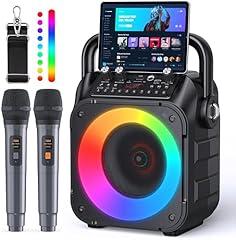
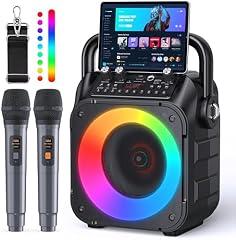
This is a compact, rechargeable karaoke speaker with two wireless rechargeable microphones, a carrying strap, LED lighting, a tablet slot, Bluetooth playback, USB, TF card and AUX inputs. It is intended for home singing, small gatherings and portable use. The manual documents separate master and microphone volume controls, microphone echo adjustment, USB-C charging cables, and a TWS mode for pairing two units. TWS only sends microphone audio through the main unit. The listed 200 W output and up to 20-hour playtime are manufacturer-stated figures. No model-matched independent acoustic test was located to establish continuous power, maximum sound level, distortion, or real battery runtime. The manual identifies a model-specific FCC identifier, and public filing indexes support a traceable radio authorization record, although the manufacturer name in those materials is not presented consistently.
What works
- The documented controls separate music volume, microphone volume, and echo adjustment.
- Two rechargeable microphones and two charging cables are included, according to the manual.
- Bluetooth, USB, TF card, and AUX playback provide several offline and phone-based input options.
- A model-matched FCC identifier is documented, with corresponding public filing materials indexed for the radio equipment.
What does not
- No model-matched UL, ETL, or CSA electrical safety listing was located for the complete speaker, charging path, and batteries.
- The 200 W and 20-hour claims lack disclosed test conditions or an independent acoustic and battery report.
- No maximum sound level, safe-listening limit, or distance-and-duration hearing guidance was found.
- Battery chemistry, capacity, removability, replacement parts, and recycling or take-back instructions were not disclosed in the located manual.
- The manual and FCC filing indexes present different manufacturer names, which weakens traceability.
Who is it for
It suits a household that wants a simple, portable karaoke setup for occasional family gatherings, children practicing with adult supervision, or small home parties. The physical controls, included rechargeable microphones, and multiple wired and wireless playback inputs make it practical when songs will come from a phone, tablet, USB drive, AUX source, or memory card. It is also appropriate for users who want to avoid an app account, Wi-Fi connection, or built-in screen.
Who is it not for
It is not a strong fit for buyers who need independently measured sound output, a verified continuous-power rating, or predictable battery runtime for an event. It also needs caution in homes with young children who may use it unsupervised, because no product-specific child-material certificate or small-part assessment was found. Anyone needing a safety-listed charging system, a replaceable battery, spare-parts support, or documented electronics recycling should choose a product with those details published.
Integrity
The manual instructs users to charge the speaker with the supplied cable and a 5 V USB charger, keep its high-capacity battery away from heat and direct sunlight, and avoid placing microphones close to the speaker. Separate volume controls can help an adult reduce level, but there is no published maximum sound-pressure measurement or safe-listening feature. A model-matched FCC identifier and filing materials provide meaningful traceability for the wireless radio. No model-matched UL, ETL, or CSA listing was found for the complete charging and battery system. The located documentation also does not state battery chemistry, battery capacity, whether the battery can be removed, or how to recycle the battery and speaker. No product-specific recall or regulator warning was located in the checked U.S. consumer-safety sources. The lack of parts, repair, and end-of-life guidance raises the likelihood of early e-waste if the battery or microphones fail.