
10 Best Jackery Portable Power Station
 Daniel Kenitz
Please note that we participate in affiliate marketing programs. When you purchase through links on our site, we may earn a commission. As an Amazon Associate we earn from qualifying purchases. This comes at no additional cost to you and helps support the resources required to provide valuable content.Advertising Disclosure
Top-rated Jackery Portable Power Station Comparison
1

2
4
5
6
7
8
9
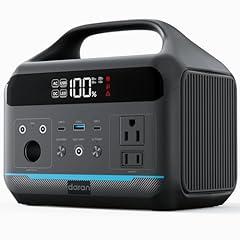
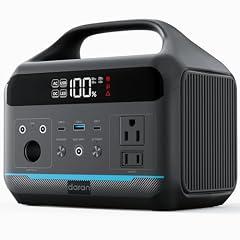
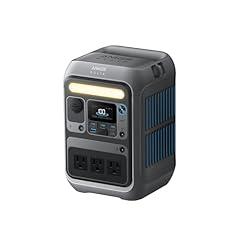
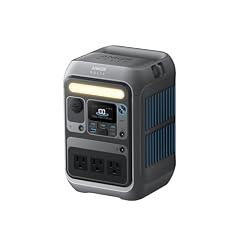
Portable power stations: what matters
Portable power stations store electricity in a rechargeable battery and deliver it through AC outlets, USB ports, 12V sockets, or solar and vehicle inputs. They can support camping, travel, communications equipment, selected appliances, and short outages. They are not automatically substitutes for fuel generators, whole-home systems, or professionally installed backup equipment.
The first useful distinction is stored energy versus delivered energy. A station advertised as 1,070Wh does not normally deliver 1,070Wh to an AC appliance because the inverter consumes some energy. In the supplied testing, stations rated around 1,070Wh delivered about 910Wh through AC, while a 2,042Wh-class station delivered 1,678Wh to 1,740Wh. Compare independently metered watt-hours under a disclosed test method, not just the battery number on the listing. Also check continuous AC output, surge behavior, voltage stability, and inverter idle draw against the actual loads you plan to connect.
Output ratings need similar care. “Power lifting” or surge figures do not necessarily mean the station can run that wattage continuously. Several manuals limit these modes to pure resistive heating loads, while actual inverter output remains lower. Motor-driven equipment such as refrigerators, pumps, compressors, and tools can require more power when starting. Pure sine-wave output is relevant for many electronics, but it does not make an undersized station suitable for every appliance. A UPS or emergency-power label also needs context: supplied products commonly switch in up to 10–20 milliseconds and warn against servers, workstations, medical equipment, or other loads that cannot tolerate interruption.
Charging claims should state the conditions. A one-hour or 45-minute figure may apply only to an emergency or Turbo mode, a particular temperature, or a high-power charger. Independent tests in the supplied reviews sometimes took substantially longer. For solar, check the permitted voltage range, current, wattage, connector, polarity, temperature limits, and whether inputs can safely be combined. Do not assume a panel is compatible because its advertised wattage appears suitable.
For safety evidence, look for the exact product not only its cells, cable, charger, or brand in an OSHA-recognized Nationally Recognized Testing Laboratory directory. Relevant records may list standards such as UL 2743 for portable power packs, UL 1778 for uninterruptible power systems, or another model-appropriate standard. UL Product iQ, Intertek ETL, CSA, TÜV SÜD, and the OSHA NRTL scope database are the relevant places to check. FCC authorization, when present, addresses radio emissions; it is not electrical-safety certification. A credible product should also have a manual with battery-management, thermal, short-circuit, overload, fault, grounding, charging, and safe-use limits.
Buyers should be able to identify the responsible company, model, serial information, warranty route, and recall remedy. Check the CPSC Recall Database and SaferProducts.gov rather than treating a seller’s “no recall” statement as clearance. For a lithium-battery product, ask for a model-appropriate UN 38.3 test summary and confirm the battery identity, watt-hours, labels, and handling documentation. Environmental claims deserve the same precision: product-specific lifecycle or environmental disclosures, independently verified recycled-content or carbon claims, repair or replacement support, and a practical U.S. recycling or take-back route matter more than broad “green” language.
Recurring cautions in the supplied reviews are important. Most products lacked a publicly verified exact-product NRTL listing, so missing certification evidence should not be mistaken for proof of safety. Do not use these stations in rain or wet conditions unless the documentation specifically permits it; many are intended for dry, ventilated use only. Do not exceed continuous or surge limits, combine solar and vehicle inputs unless the manual explicitly allows it, or use a non-zero-transfer UPS for interruption-sensitive equipment. Damaged, swollen, hot, odorous, or abnormal lithium-battery products should be removed from service and handled through the manufacturer or an appropriate hazardous-waste program not household trash or curbside recycling.
Integrity
These topics separate a portable power station’s documented safety, durability, and environmental responsibility from its headline capacity and output claims. Scores reflect the supplied product reviews; higher scores indicate stronger evidence or controls within this set, not a guarantee that a product is risk-free.
HHealth & Safety
Fire, burn, and shock protection
This measures battery-management, thermal, short-circuit, overcurrent, fault protection, and clear safe-use limits. These controls matter because portable stations combine high-energy lithium batteries, mains-voltage AC output, and solar or vehicle charging. Higher-scoring products documented temperature limits, warnings, fault codes, ventilation, and overload behavior; lower-scoring products had more limited or only manufacturer-stated protection evidence.
Safe power for connected devices
This measures protection against overload, short circuit, overheating, abnormal voltage, and unsafe high-starting-current loads, along with output-waveform and load limits. It matters because an appliance that starts successfully can still overload an inverter or create a hazard. Higher scores went to products with clearer output limits, fault handling, and testing; lower scores lacked independent power-quality or sustained-load evidence.
Safe charging and solar input
This measures whether AC, vehicle, and solar limits, connectors, polarity, voltage range, temperature boundaries, and fast-charge behavior are clearly specified and protected. Incorrect solar voltage, poor vehicle connections, or unsupported charging combinations can damage equipment or create heat. Higher-scoring products gave concrete input limits; lower-scoring products had conflicting solar figures, incomplete connector information, or identified charging-input concerns.
Recall readiness and traceability
This measures whether buyers can identify the responsible company, model, serial or batch information, support route, warranty, and recall remedy. Traceability matters when a lithium-battery defect emerges or a damaged product needs controlled handling. Higher-scoring products provided identifiable labels, U.S. support, and warranty routes; lower-scoring products had weaker documentation or less clear remedies. A clean recall search is not a safety certification.
EEvidence
Independently certified electrical safety
This measures whether the exact station—not merely its cells, charger, cable, or brand—is currently listed by an OSHA-recognized testing laboratory to an applicable standard such as UL 2743 or UL 1778. It is a key differentiator in this category. Most supplied products scored around 68–70 because no public exact-model listing was verified; the Jackery 1000 bundle scored 96 because an SGS record listed the exact model to UL 2743 and UL 1778.
Verified usable capacity and output
This measures independently metered watt-hours, continuous AC watts, surge behavior, voltage stability, and inverter losses against the listing. It matters more than nominal battery capacity when estimating runtime. Higher-scoring products had disclosed independent tests supporting both energy and output, with scores reaching 91; lower-scoring products had only manufacturer claims or no credible metered test.
Honest backup and performance claims
This measures whether runtime, capacity, recharge time, UPS or EPS switching, solar performance, cycle life, surge, and appliance claims state their conditions and match evidence. Higher-scoring products reconciled listing language with measured results; lower-scoring products used headline fast-charge or longevity claims without enough context, or had conflicting marketplace and manual information.
Battery shipping compliance
This measures whether the maker can provide a model-appropriate UN 38.3 test summary and accurate battery identity, ratings, labeling, and handling documentation. The information supports safer shipping, incident response, and recall management. Scores were generally 68–73 because the supplied reviews commonly could not locate a public product-specific summary, even where manuals and model labels were available.
EEcology
Long life and repair support
This measures whether cycle-life claims state their conditions and whether service, repair, firmware support, replacement parts, or battery-replacement pathways exist. Longer service can reduce the need to discard a whole station. Higher scores combined a stated warranty or service route with more credible longevity information; lower scores relied on cycle counts without test conditions or offered no documented consumer battery replacement path.
Safe recycling and take-back
This measures practical U.S. take-back, battery-recycling, and damaged-battery instructions. Lithium stations should not enter household trash or curbside recycling because batteries can start fires and recoverable materials can be lost. Higher-scoring products had a brand trade-in, mail-in, or designated-recycling route; lower-scoring products only said not to use household waste without a clear product-specific U.S. option.
Credible environmental disclosure
This measures whether carbon, recycled-content, material, packaging, and environmental claims are specific to the exact product and independently verified. It matters because a long-life battery can still carry material and manufacturing impacts. Scores were tightly grouped in the supplied set: none had strong product-specific lifecycle, recycled-content, or independently validated environmental disclosure, so broad green wording should not be treated as proof.
Full reviews

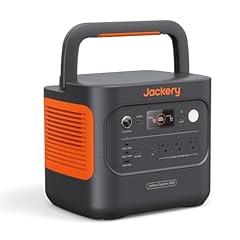
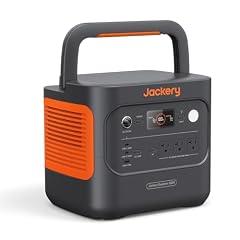
Jackery Portable Power Station 2200W Solar Generator
Overview
This is a 39.5-pound portable power station with a 2,042Wh lithium iron phosphate battery, three 120V AC outlets, USB outputs, a 12V car outlet, and a stated 2,200W continuous AC inverter. It is designed for portable household essentials, camping, and temporary backup, not for permanent wiring or 240V appliances. Jackery states a 4,400W surge rating, 4,000 cycles to at least 70% capacity, and a 3+2-year warranty. Independent load testing confirmed sustained 2,200W AC output and reported about 90% inverter efficiency. The manual also gives meaningful limits: it is for dry indoor use, has defined charge and discharge temperatures, and its less-than-20-millisecond backup switching is not suitable for servers, workstations, or other equipment requiring uninterrupted transfer.
What works
- Independent testing confirmed the stated 2,200W continuous AC output under demanding loads.
- Independent testing reported about 90% inverter efficiency, which supports more usable energy for AC loads than the battery rating alone suggests.
- The manual provides explicit dry-use, temperature, damage, ventilation, and storage precautions.
- The product has a documented 3+2-year warranty structure, and Jackery states that in-warranty and out-of-warranty repair pathways are available.
- The manufacturer identifies the model, capacity, battery chemistry, support channels, and serial-number-based warranty process.
What does not
- An exact-model electrical safety listing from an OSHA-recognized laboratory could not be confirmed through an issuer listing record. A UL-marked AC charging cable is not equivalent to a verified listing for the complete station.
- The 4,000-cycle life claim is manufacturer-stated. Public documentation does not provide the complete test conditions needed to predict real household service life.
- The battery is not user-replaceable, and the manual directs owners not to disassemble it. Repair depends on Jackery's authorized service process.
- Backup transfer is stated to be under 20 milliseconds, not zero milliseconds. The manual specifically warns against using it for servers, workstations, and similarly interruption-sensitive equipment.
- No product-specific lifecycle assessment, recycled-content disclosure, or independently verified environmental claim was located.
Who is it for
It suits a household or camper needing a movable, dry-location source for a refrigerator, router, lights, laptops, phone charging, or modest kitchen and workshop loads that remain within 2,200W. It is especially relevant where a roughly 40-pound unit can be carried safely and where the user will check appliance running and startup wattage before connecting it. Buyers should value independently supported inverter performance, a lithium iron phosphate battery format, and manufacturer-backed service rather than expansion batteries or permanent home integration.
Who is it not for
It is not for life-support equipment, servers, workstations, or other devices that cannot tolerate a transfer interruption. Jackery's manual says its backup mode is not zero-millisecond switching and recommends compatibility testing. It is also unsuitable for wet or outdoor exposure, high-temperature storage, 240V appliances, permanently installed backup circuits, or loads above 2,200W. Households needing battery expansion, user-replaceable cells, or a publicly traceable exact-model NRTL certification record should use a product designed and documented for those conditions.
Integrity
The lithium iron phosphate battery chemistry is identified in the manual and product specifications. The manual includes clear precautions against damaged cords, overheating, moisture, fire exposure, disassembly, and use outside its 32 to 113°F charging range. It also says to stop use after a drop, abnormal odor, overheating, or other unusual condition. No CPSC recall for this exact product was located in the review search. Jackery states a 4,000-cycle retention target and offers warranty repair, replacement, and out-of-warranty service. Its official trade-in and recycling program is a positive route for working older units, but product-specific instructions for damaged battery transport and a published exact-model UN 38.3 test summary were not located. Never place this product in trash or curbside recycling. Use the manufacturer, an electronics recycler, or local household hazardous-waste program for end-of-life handling.

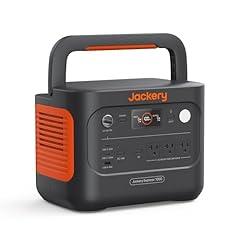
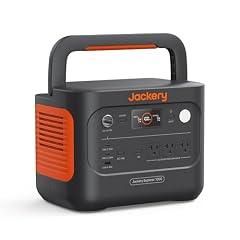
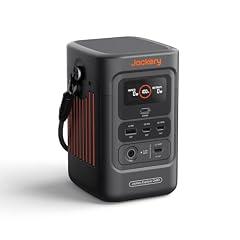
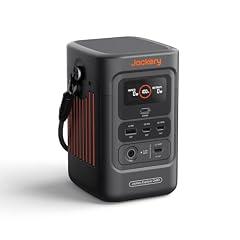
Jackery Explorer 1000 v2 Portable Power Station
Overview
This is a 23.8-pound portable lithium iron phosphate power station with 1,070Wh of stated battery capacity, three 120V AC outlets, a 1,500W rated AC inverter, a 3,000W surge claim, USB outputs including one 100W USB-C port, and a 12V car socket. It is intended for dry, indoor use such as a tent, RV, cabin, camping setup, or limited backup for electronics and small appliances. Jackery states 4,000 cycles to at least 70% capacity, a 3+2 year warranty, 400W maximum solar input, and emergency AC charging in one hour. Independent testing measured 910Wh of usable capacity, about 85% of the stated pack capacity, and confirmed a 1,500W maximum AC output. The manual also specifies a roughly 20 millisecond transfer to battery power, so it is not appropriate for equipment needing zero-interruption power.
What works
- Independent testing measured 910Wh of usable capacity and a 1,500W maximum AC output.
- The manual gives specific AC, USB, vehicle, and solar-input limits, plus charge and discharge temperature ranges.
- The product has high and low temperature warnings, fault codes, overload protection, and detailed fire and shock precautions in the manual.
- Jackery states a 4,000-cycle to 70% capacity target and provides a 3+2 year warranty when purchased through eligible channels.
What does not
- No current model-specific listing from an OSHA-recognized electrical safety laboratory was located. The manual shows FCC and battery-control marks, which are not a substitute for a traceable NRTL safety listing.
- The manual does not publicly identify the AC waveform, short-circuit response, grounding arrangement, or detailed protection thresholds.
- The one-hour recharge claim is specifically for app-enabled emergency charging. Jackery's own technical table lists 1.58 hours for AC charging, and independent testing also found nearly two hours.
- No product-specific UN 38.3 lithium-battery test summary was located publicly. The internal battery is sealed and not user-replaceable.
Who is it for
This fits a camper, RV user, remote worker, or outage-prepared household that needs portable power for phones, laptops, lights, a CPAP after compatibility testing, network gear, a small cooler, or other loads that stay within 1,500W. The independently measured 910Wh usable capacity gives a more realistic basis for planning runtimes than the pack rating alone. It also suits someone who can keep the unit dry, ventilated, and within its specified temperature range, and who is comfortable using the app for certain charging settings.
Who is it not for
It is not for life-safety equipment, data servers, workstations, or other devices that cannot tolerate a roughly 20 millisecond interruption when utility power fails. It is also unsuitable for wet outdoor exposure, rain, snow, marine splash zones, or use around damaged cables and connectors. Households expecting whole-home backup, long runtimes for high-wattage heaters, large cooking appliances, or loads above 1,500W need a different power plan. Do not rely on it for high-starting-current appliances without testing that exact load first.
Integrity
The product uses a lithium iron phosphate battery and has manufacturer-stated temperature warnings, fault codes, overload protection, stated input limits, and extensive instructions to avoid damaged equipment, moisture, overheating, fire exposure, and unapproved repair. Its manual expressly limits it to dry, indoor use and warns against relying on its transfer function for equipment with stringent uninterrupted-power needs. The supplied manual does not show a model-specific NRTL electrical safety mark or a traceable listing to a portable-power-pack standard. A current product-specific UN 38.3 test summary was also not located publicly. Jackery offers a U.S. support route, warranty repair or replacement for eligible defects, and a trade-in program described as refurbishing or recycling returned working power stations. The battery is sealed and not user-replaceable, which helps control unsafe repair but limits material recovery through component replacement.

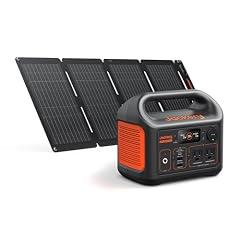
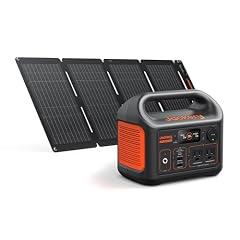
Jackery Solar Generator 300 with 40W Panel
Overview
This product combines the Explorer 300 v2 portable power station with a foldable SolarSaga 40 Air panel. The station uses a 288Wh LiFePO4 battery and supplies up to 300W of continuous AC power, with a manufacturer-stated 600W surge limit. It is intended for phones, laptops, cameras, lights, small electronics, and other loads that remain within its output ceiling. Jackery states that the station has a 4,000-cycle life to 70% remaining capacity, a five-year total warranty when the extension applies, 100W USB-C charging input, and a UL94 V-0 flame-retardant enclosure. The included panel is manufacturer-rated at 40W under standard test conditions, is IP68 rated, and has USB-A and USB-C outputs. Independent metered capacity and sustained-output testing of this exact v2 product was not located.
What works
- The LiFePO4 battery chemistry and 4,000-cycle to 70% claim are clearly specified by the manufacturer.
- Published limits identify 300W continuous AC output, 600W surge output, and 100W USB-C charging input.
- The bundled 40W panel has stated IP68 protection and published voltage, current, and temperature limits.
- Jackery provides a U.S. support route, a stated 3+2 year warranty structure, and a trade-in program for this product line.
What does not
- No public NRTL listing for the exact power station was located. A UL mark on the included AC charging cable does not establish certification of the station itself.
- No independent laboratory report for this exact v2 station was located to confirm usable watt-hours, inverter efficiency, voltage stability, or 600W surge behavior.
- The 288Wh battery and 300W ceiling restrict it to low-draw electronics and small appliances, not heaters, kettles, hair dryers, or other high-wattage loads.
- The internal battery is sealed and not user-replaceable, so battery aging cannot be addressed with a simple replacement.
Who is it for
This product fits campers, road travelers, photographers, and outage-prepared households that need to charge phones, cameras, laptops, lights, routers, or other modest loads. Its compact 8.16-pound station and foldable 40W panel suit people who value portability more than long appliance runtime. It is also suited to users who will check device wattage before connecting it, keep the station dry, ventilated, and within its stated charging and operating temperatures.
Who is it not for
It is not appropriate for households expecting whole-home backup or operation of high-wattage heat appliances, kitchen appliances, hair dryers, power tools with large startup loads, or full-size refrigeration. Users who need independently verified electrical safety certification for the exact station should select a product with a traceable NRTL listing. It is also unsuitable where rain or immersion is likely, because the panel has an IP68 claim but the station itself is not presented as waterproof or dustproof.
Integrity
Jackery specifies LiFePO4 cells, a chemistry generally selected for longer cycle life than earlier compact lithium-ion station designs. It also states that this station has a UL94 V-0 flame-retardant shell, battery management protections, and defined charging and discharge temperature ranges. Those are manufacturer statements, not substitutes for a public listing showing NRTL certification of the exact station. The included AC charging cable is stated to bear a UL certification mark, which applies to that cable rather than establishing certification of the entire product. No relevant CPSC recall was located in the recall search performed. Jackery identifies U.S. support contacts and offers a trade-in program that says returned stations are evaluated for refurbishment or recycling. The battery is not user-replaceable, which limits repairability. No product-specific lifecycle assessment, recycled-content disclosure, or independently validated carbon claim was located.

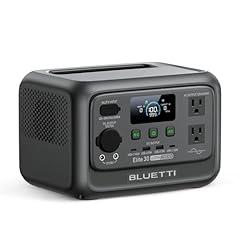
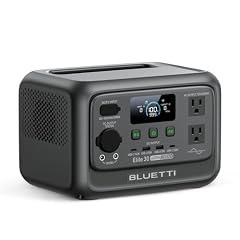
BLUETTI Elite 30 V2 Solar Generator
Overview
This is a compact lithium iron phosphate portable power station with a 288Wh battery, 600W total 120V AC output, USB-C and USB-A charging, 12V outputs, vehicle charging, and solar input. It weighs about 9.5 pounds. It is intended for short backup tasks, travel, camping, laptops, routers, phones, small electronics, and limited appliance use rather than prolonged household backup. The battery chemistry, 600W rating, 200W solar limit, 12V to 28V solar-input range, temperature limits, pure-sine-wave inverter, and protective fault indicators are manufacturer-documented. An independent reviewer measured 231Wh through AC output and 244Wh through DC output. The same reviewer measured UPS transfer below 10ms with an oscilloscope. No current model-specific NRTL electrical-safety listing was located in the major listing directories checked, so FCC compliance should not be read as independent electrical-safety certification.
What works
- Independent metering found 231Wh usable through AC and 244Wh through DC, credible results for a 288Wh-rated station.
- Independent oscilloscope testing confirmed an under-10ms transfer in UPS mode, including a successful desktop-computer transition.
- Independent testing confirmed nearly 240W combined delivery from the two USB-C ports, useful for high-power laptop and device charging.
- The manufacturer documents meaningful operating limits, including a 12V to 28V solar range, 200W maximum DC input, and 0C to 40C charging temperature.
- A five-year manufacturer warranty, serial-number identification, product registration, and U.S. support route improve post-sale traceability.
What does not
- No current model-specific UL, ETL, CSA, or other OSHA-recognized NRTL listing was located. FCC compliance covers radio interference, not full electrical-safety listing.
- The 1,500W Power Lifting mode is for simple resistive loads, not a general 1,500W inverter rating. Independent testing also found a high-inrush air duster could overload it with the mode off.
- AC idle draw was high in independent testing, about 19W with AC enabled and no load. Leaving outputs on can materially reduce stored runtime.
- The manufacturer publishes local-recycling guidance, but no practical U.S. brand take-back program for this product was found.
- No model-specific UN 38.3 lithium-battery test summary was publicly located during verification.
Who is it for
It suits a traveler, camper, remote worker, or renter who needs a light station for phone and laptop charging, a router or modem during a short outage, CPAP planning within its power limits, camera batteries, or occasional low-duration appliance use. It is particularly relevant where fast USB-C charging and a tested short-transfer backup function matter. The measured usable energy supports short, defined loads, so runtime should be calculated from the actual device wattage before relying on it for an overnight need.
Who is it not for
It is not suitable as whole-home backup, extended refrigerator coverage, long unattended use with AC output left enabled, or powering tools and appliances with large startup surges. Avoid treating the Power Lifting setting as a conventional 1,500W or high-surge inverter, particularly for motors, compressors, or sensitive electronics. Buyers whose workplace, insurer, landlord, or installation rules require an exact-model NRTL electrical-safety listing should select a product carrying that traceable certification.
Integrity
The lithium iron phosphate battery chemistry is generally associated with better thermal stability than many high-energy lithium-ion chemistries, but it remains a high-energy battery product that can create shock, burn, and fire hazards if damaged, overheated, wet, improperly wired, or used outside its limits. The manual documents solar voltage and temperature limits, warnings against connecting AC output to the grid, and fault indications for temperature, overload, and short circuit. These are useful safeguards, though independent NRTL certification of this exact product was not verified. The manufacturer states 3,000 or more cycles to 80 percent capacity and provides a five-year warranty with repair or replacement support. Its manual directs owners to designated battery recycling rather than household trash. However, BLUETTI does not appear to offer a practical U.S. take-back route for this product, and no product-specific lifecycle, recycled-content, carbon, or material disclosure was located. No U.S. CPSC recall for this exact model was located in the verification search.

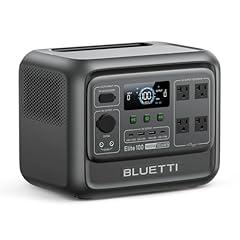
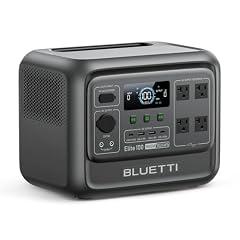
BLUETTI Elite 100 V2 Solar Generator
Overview
This is a 25.3-pound portable lithium iron phosphate power station with a 1,024Wh battery, 1,800W maximum 120V AC output, USB-C and USB-A charging, 12V outputs, wall, vehicle, generator, and solar charging, plus Wi-Fi and Bluetooth control. It is intended for portable electronics, camping equipment, selected home loads, and short backup use rather than whole-home power. The capacity and continuous-output specifications are stated in the U.S. manual. Independent metered testing measured about 903Wh at 1,800W and 936Wh at a 200W AC load, which is credible real-world usable energy after inverter losses. The manual documents short-circuit, overcurrent, overtemperature, overload, and solar-overvoltage fault handling. It also states a transfer time of 10ms, but specifically says it is not for data servers or workstations requiring a high-performance UPS.
What works
- Independent AC testing found roughly 88% to 91% of rated battery energy usable through AC output.
- Independent testing reported a clean sine-wave AC output and successful sustained 1,800W operation.
- The manual gives unusually concrete solar limits, 12V to 60V, 20A maximum, and 1,000W maximum input.
- The product records a serial number and fault history, and the manufacturer lists a five-year warranty and U.S. support contact.
- Documented protections include inverter overload, inverter short circuit, PV overvoltage, output overcurrent, and temperature faults.
What does not
- An exact-model UL, ETL, CSA, or other OSHA-recognized electrical-safety listing could not be verified in an issuing laboratory's public directory.
- The product title's 3,600W surge statement is not reconciled by the U.S. manual. The manual describes 2,700W Power Lifting only for resistive loads and says actual output remains 1,800W.
- The 10ms backup feature is not appropriate for servers or workstations that require a high-performance UPS, according to the manual.
- No model-specific UN 38.3 lithium-battery test summary was publicly located.
- The five-year warranty is useful support, but public documentation does not establish a battery replacement program, repair parts availability, or a brand take-back route.
Who is it for
This product fits campers, van users, road-trip travelers, and households wanting portable short-duration backup for lower-energy essentials. It is especially relevant where a roughly 25-pound unit is practical to carry and where the expected load stays at or below 1,800W. The independently measured AC capacity supports planning for laptop charging, lighting, communications, television, compact kitchen appliances used briefly, and selected refrigerator loads. Buyers using solar should be comfortable checking panel open-circuit voltage and connector compatibility before hookup.
Who is it not for
It is not appropriate as a whole-home battery, an all-night solution for high-draw electric heating, or a dependable power source for loads above 1,800W. Motor and compressor loads can need two to four times their rated power at startup, according to the manual. Do not rely on its 10ms switching claim for data servers, workstations, or equipment requiring a high-performance UPS. It also needs dry, ventilated operation and should not be used with damaged cords, plugs, batteries, or improvised solar wiring.
Integrity
The documented safety picture is reasonably detailed, though not independently complete. The U.S. manual specifies LiFePO4 chemistry, charge limits of 32°F to 104°F, a grounded terminal for certain appliances, and fault responses for overload, short circuit, PV overvoltage, overtemperature, and DC overcurrent. It also instructs users to keep the unit dry, ventilated, away from flammables, and out of service if damaged. The built-in radio functions carry FCC Part 15 compliance language. Independent testing supports useful AC energy and output performance, but an exact-product listing from an OSHA-recognized electrical testing laboratory was not verified in public certification directories. The manual directs owners not to place the battery in household trash or ordinary battery boxes if it is defective, and to use designated recycling or professional battery-recycling channels. No product-specific environmental disclosure, recycled-content claim, take-back program, or public UN 38.3 summary was located. The stated five-year warranty may help reduce early disposal, but repair and battery-replacement pathways remain unclear.

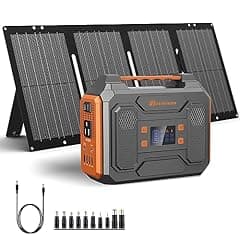
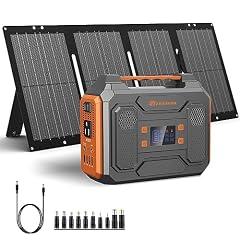
ZeroKor 300W Portable Solar Generator with 60W Foldable Solar Panel
Overview
This is a compact lithium-ion portable power station for charging low-power electronics away from an outlet. The product documentation specifies 280Wh of battery capacity, two 110V AC outlets rated to 300W maximum, a 9V to 12.6V DC output, USB outputs, and a 5-pound body. It is intended for phones, laptops, lights, cameras, and similarly modest loads, not heating appliances or motors with high starting demand. The supplied manual gives an input range of 13V to 23V at 2.4A through a DC5521 connector and says AC output is unavailable while charging. It also provides a rough runtime formula that assumes 85% of the stated capacity. These are manufacturer-stated figures, not independently metered results. No model-specific NRTL electrical-safety listing or credible independent capacity and output test was located in the checked public sources.
What works
- Compact, 5-pound format is practical for carrying low-power backup electricity.
- The manual gives concrete solar, vehicle, and AC charging input limits, including connector type and voltage range.
- Documented warnings cover moisture, wet hands, heat, fire exposure, disassembly, output-to-mains connection, and use above 300W.
- The manual provides a condition-based runtime estimate rather than presenting one fixed runtime for every device.
What does not
- No current model-specific UL, ETL, CSA, or other OSHA-recognized laboratory listing was located in the checked public certification sources.
- No credible independent test was located for usable watt-hours, sustained 300W AC output, waveform quality, voltage stability, or inverter idle draw.
- The battery is non-removable, and no replacement-battery, repair-service, or parts pathway was found.
- Warranty information conflicts across available materials, with the catalog record stating 12 months and the manual stating 14 months.
- The manual directs users to follow local disposal rules, but no U.S. brand take-back or product-specific recycling program was found.
Who is it for
This product suits a camper, road-trip traveler, or outage-prepared renter who needs a light power source for phones, LED lighting, cameras, a small laptop, or other loads that remain comfortably below 300W. It also suits a user who can verify solar-panel voltage and connector compatibility before connecting a panel. The compact size and multiple output types are most relevant where portability matters more than extended runtime or household-appliance capability.
Who is it not for
It is not suitable for a household expecting to run space heaters, kettles, hair dryers, toasters, pumps, compressor loads, medical equipment requiring validated backup performance, or any appliance near or above 300W. It is also a poor fit for wet-weather use because the manual says it is not waterproof. Buyers who require independently verified capacity, a traceable NRTL listing, a clear repair route, or a published battery recycling program need documentation that was not located for this product.
Integrity
The manual contains meaningful basic lithium-battery precautions. It says not to open or modify the product, expose it to rain, use it with wet hands, connect its output to mains power, or expose it to fire or extreme heat. It identifies a 13V to 23V, 2.4A maximum input range and instructs users to use original or certified charging equipment. Those limits are useful, but they are manufacturer documentation rather than confirmation from a model-specific independent safety listing. No recall or regulatory action for this product was located in the checked CPSC sources. Its lithium-ion battery is non-removable, and the manual only says to dispose of batteries and electronics under local rules. U.S. EPA guidance says lithium-ion devices should not go in household trash or curbside recycling, since they can cause fires. Use a household hazardous-waste or qualified electronics-recycling route, especially if the product is damaged.

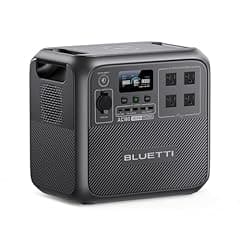
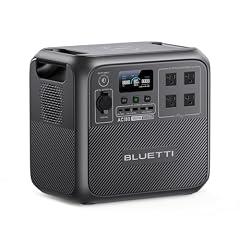
BLUETTI AC180 Portable Power Station
Overview
This product is a portable lithium iron phosphate power station with a 1,152Wh battery, four 120V AC outlets rated at 1,800W total, USB outputs, a 12V vehicle-style outlet, wireless phone charging, and a 35-pound enclosure. It can recharge from wall power, a vehicle, a generator, or solar input, and is intended for off-grid use, camping, and limited appliance backup during an outage. The battery chemistry, output rating, solar limits, temperature limits, grounding terminal, and warning labels are documented in the manufacturer manual. Independent testing is unusually useful here. Metered AC output ranged from 950Wh to 1,039Wh in several published tests, so practical AC runtime should be planned around roughly 1kWh rather than the cell-level 1,152Wh label. One independent test measured a full wall recharge in about 1.3 hours.
What works
- Published independent testing measured about 950Wh to 1,039Wh of usable AC energy, depending on load and test method.
- The manufacturer manual clearly specifies a 1,800W continuous AC limit, a 2,700W surge figure, and a restricted Power Lifting mode for resistive heating loads only.
- The manual documents solar input limits of 12V to 60V, 10A maximum, and 500W maximum, including a warning not to exceed 60V open-circuit voltage.
- Independent oscilloscope inspection found the AC sine-wave output acceptable for ordinary electronics.
- The manufacturer states a five-year warranty and 3,500-plus cycles to 80% original capacity.
What does not
- The manufacturer lists a UL standard among certifications, but an exact-model listing in an official NRTL public register was not confirmed during this assessment.
- The product is not an appropriate substitute for a medical-grade or zero-transfer-time UPS. The manual specifies switching of up to 20 milliseconds and warns users to test for data-loss risk.
- Independent measurements show that usable AC energy is below the 1,152Wh battery rating, and one published USB-C test measured only 71% DC efficiency.
- The product must stay dry, ventilated, and within stated temperature limits. It is not for grid connection, rain exposure, or self-repair.
- A model-specific UN 38.3 battery test summary and a clear damaged-battery disposal procedure were not publicly located.
Who is it for
This product fits a camper, car traveler, workshop user, or outage-prepared household that needs a movable power source for lights, communications gear, laptops, a cooler, intermittent kitchen appliances, or other loads within 1,800W continuous output. It is most suitable for someone who can lift or transport a 35-pound unit safely, understands appliance starting loads, and will plan AC runtime around approximately 950Wh to 1,039Wh from independent testing. It also suits solar users who can confirm their panel array remains within the 12V to 60V, 10A, and 500W input limits.
Who is it not for
It is not for life-supporting, aviation, nuclear, or other safety-critical equipment, because the manual expressly excludes those uses and the backup transfer can take up to 20 milliseconds. It is also unsuitable for whole-home grid connection, outdoor rain exposure, or any setup where solar-panel open-circuit voltage could exceed 60V. Buyers needing long unattended runtimes for low-wattage DC equipment should account for independently measured USB-C efficiency. Anyone unable to lift 35 pounds safely should use mechanical help or choose a different format.
Integrity
The product uses lithium iron phosphate battery chemistry and has documented operating limits, a grounding terminal, ventilation instructions, short-circuit, overload, and temperature alerts, plus a clear instruction not to connect AC output to the utility grid. The manufacturer also states that a battery-management system is included. These are useful safeguards, but the claimed UL-standard status could not be independently tied to a current, exact-model NRTL listing in a public register. No CPSC recall or product safety warning for this product was located in the public recall search performed through August 16, 2026. The manufacturer states 3,500-plus cycles to 80% capacity and a five-year warranty, which can support longer use if the claim holds under real conditions. Bluetti also operates a U.S. trade-in program that provides a return label for old branded devices. Still, no product-specific lifecycle assessment, recycled-content disclosure, public UN 38.3 summary, or clear damaged-battery return procedure was located. Never put this lithium battery product in household trash or curbside recycling.

Anker SOLIX C300 Portable Power Station
Overview
This compact portable power station stores a manufacturer-stated 288Wh in a lithium iron phosphate battery and provides household AC power, USB-C and USB-A charging, plus a 12V car socket. It weighs 9.1 pounds and is intended for lights, phones, laptops, small electronics and modest appliance loads during travel, camping or a short outage. The supplied manual specifies 300W maximum AC output, 600W SurgePad operation, 330W maximum AC charging, 140W USB-C input, and 100W maximum solar input through XT60. Independent bench testing measured 300W AC output, 240Wh delivered through AC, 266Wh through USB-C, and a 69-minute average full recharge. The exact product has not been confirmed in a public UL, ETL, CSA, or TÜV electrical-safety listing searched for this assessment.
What works
- Independent testing confirmed 300W continuous AC output, matching the stated limit.
- Independent testing measured up to 266Wh delivered through USB-C, useful where devices can charge directly without AC conversion.
- A 69-minute average full recharge in independent testing closely matched the stated fast-charge claim.
- The manual gives specific solar voltage, charging power, temperature, USB-C cable, overload, and high-temperature limits.
- The manufacturer states a five-year warranty and provides firmware updates through the app.
What does not
- Its 288Wh battery is a short-duration reserve, not meaningful whole-home or long-outage backup.
- Independent testing measured 240Wh through AC, so inverter losses materially reduce the energy available to plug-in devices.
- SurgePad is not suitable for precision equipment or devices with strict voltage requirements, according to the manual.
- No public exact-product NRTL safety listing was confirmed, so manufacturer safety documentation is not equivalent to independently listed electrical safety.
- A model-specific UN 38.3 lithium battery test summary and product-specific environmental disclosure were not located.
Who is it for
It suits a traveler, camper, photographer, or remote worker who needs a roughly 9-pound station for direct USB-C laptop charging, phones, lights, cameras, a small fan, or other loads that stay comfortably below 300W. It also fits someone who can recharge from a wall outlet, vehicle, compatible 140W USB-C source, or a correctly matched XT60 solar panel. The buyer should be able to monitor load limits and keep the unit dry, upright, and within its stated temperature range.
Who is it not for
It is not for whole-home backup, electric cooking or heating, refrigerators with uncertain startup demand, or appliances that need more than 300W continuously. It should not be relied on for life-supporting medical equipment or equipment that cannot tolerate a transfer interruption. The manual states a less-than-10-millisecond UPS function, but that does not establish suitability for every medical, server, laboratory, or precision load. Avoid it if you require an independently confirmed complete-product UL or ETL safety listing, a replaceable battery, or nationwide manufacturer take-back coverage.
Integrity
The product uses lithium iron phosphate battery chemistry, and its manual documents low-temperature and high-temperature alerts, port-overload shutdown, automatic idle shutdown options, and operating limits. It also warns that the 140W USB-C ports can present a fire risk when paired with unsuitable accessories. Use compliant connected equipment and a 5A USB-C cable for high-power charging. Solar input is limited to 11V to 28V and 100W, and exceeding that voltage can damage the station. No CPSC recall naming this product was located. CPSC has, however, recalled several other Anker lithium-ion battery products since 2023 for overheating, fire, and burn hazards, so model and serial information should be retained and the manufacturer recall page checked if a safety notice appears. Anker offers a recycling route tied to its District of Columbia program, but broad product-specific U.S. take-back coverage was not established. Never place a damaged or depleted station in trash or curbside recycling. EPA advises using a specialized recycler or household hazardous-waste program.