
10 Best Inversion Tables
 Brianna York
Please note that we participate in affiliate marketing programs. When you purchase through links on our site, we may earn a commission. As an Amazon Associate we earn from qualifying purchases. This comes at no additional cost to you and helps support the resources required to provide valuable content.Advertising Disclosure
Top-rated Inversion Table Comparison
1

2
4
5
6
7
8
9
10
Inversion tables: what to look for
An inversion table rotates a user backward while the ankles remain secured, using body weight and gravity for stretching or traction. Some models add angle stops, safety belts, lumbar supports, heat, massage, or vibration. These features can change how the table is operated, but they do not establish that it treats back pain, sciatica, disc disease, or other conditions. The supplied reviews repeatedly find that broader human evidence does not show reliable benefit from traction for many low-back-pain presentations, so relief claims should be treated as limited and qualified.
The most important distinction is controlled use. Look for a clearly stated height and weight range, a secure ankle-retention system with fit checks, a way to limit rotation, stable geometry, protected pinch points, and a practical method for returning upright. A tether or angle pin with shallow starting settings such as 10, 15, 20, or 30 degrees is more informative than a headline promise of “full inversion.” Instructions should explain how to balance the table, release the ankle lock, bend the knees or shift body weight, and obtain help if the user cannot return upright. A product that leaves the user dependent on upper-body strength or pulling hard on handles deserves particular caution.
Capacity figures also need scrutiny. A stated 300-, 350-, 400-, or higher-pound limit is a manufacturer specification unless it is supported by model-specific evidence of mechanical strength, fatigue, stability, and end-stop testing. One supplied bench even lists conflicting 400- and 660-pound limits, illustrating why buyers should follow the lower model-specific manual limit until the maker resolves a discrepancy. Height limits can be inconsistent too, and the fit of the ankle system matters as much as the frame rating.
For independent safety verification, look for an active listing for the complete, exact product not a seller badge, component mark, or general statement in the UL Product iQ directory or Intertek ETL directory. UL 1647 is the relevant safety standard identified in the supplied reviews for massage and exercise machines, including motorized and non-motorized inversion tables. A manufacturer manual saying that representative samples were listed is not the same as a readily traceable current listing for the exact model. Powered tables should additionally have identifiable electrical ratings, heat limits, automatic shutoff or fault protection, and instructions for damaged cords, wet conditions, and unattended use.
Medical wording needs equal care. “FDA registered,” “FDA listed,” and “FDA cleared” are not interchangeable. The supplied evidence describes FDA clearance for a broader Teeter family of manual, nonpowered traction devices, but not every current model. The FDA’s Class I, 510(k)-exempt category for nonpowered orthopedic traction apparatus does not prove that a particular marketplace product is cleared or clinically effective. Buyers should also be able to identify the manufacturer, exact model, manual, support contact, warranty, replacement parts, and any recall or adverse-event history.
Across the supplied products, the recurring safety caveat is that inversion is not appropriate without individualized medical guidance for people with cardiovascular or blood-pressure conditions, glaucoma or retinal problems, stroke risk, pregnancy, osteoporosis, fractures, spinal injury, anticoagulant use, hernias, recent surgery, vertigo, balance or neurological problems, weak ankles, or impaired strength and cognition. Children should not use these products, and beginners should not attempt early or full inversion alone. Anyone unable to secure the ankles or reliably return upright should avoid a head-down table. The category also includes non-inversion benches and lying-flat traction devices; they should not be treated as equivalent to an ankle-retaining inversion table.
Integrity
These topics focus on the risks that matter when a product rotates a person head-down, retains the ankles, carries a dynamic load, or adds powered heat and massage. The supplied scores distinguish detailed manuals and traceable evidence from headline claims that were not independently verified.
HHealth & Safety
Health impact and contraindication safety
This measures whether the manual identifies medical conditions that can make inversion unsafe and gives conservative setup and session guidance. For this category, high scores were associated with specific warnings about blood pressure, eye disease, pregnancy, stroke risk, osteoporosis, surgery, balance, and ankle problems; lower scores reflected generic advice to consult a clinician without condition-by-condition limits or first-use guidance.
Fall, entrapment, and escape protection
This measures protection against unintended rotation, collapse, pinching, head or neck impact, and being unable to return upright. High-scoring products used angle pins or tethers, stable frames, safety pins, and defined release instructions. Lower-scoring products lacked accessible manuals, independent testing, detailed angle limits, or a clear self-rescue method. A control feature is useful, but it remains dependent on correct setup and user ability.
Secure ankle hold and user control
This measures whether the ankle holders, height adjustment, balance settings, handles, and release controls fit the stated user range without excessive pressure or reliance on strength. Higher scores came with fit tests, secondary locks, footwear guidance, and checks for full engagement. Lower scores reflected sparse instructions or a return-to-upright process that mainly required pulling with the arms.
Real load capacity and structural margin
This measures whether height and weight limits are specific, consistent, and supported by structural, fatigue, stability, and end-stop evidence. The stronger supplied scores belonged to products with consistent 300-pound limits and clearer documentation, although public independent test reports were generally absent. Lower scores or concerns followed conflicting ratings, unsupported 350-pound claims, or no accessible model-specific structural evidence.
Electrical and heat-feature safety
This matters only when an inversion table includes heat, massage, vibration, a motor, remote, battery, or power supply. High scores generally belonged to manual products with no electrical parts, while powered products scored lower when no exact UL or ETL listing, temperature limit, electrical rating, or fault-protection detail was verified. Automatic shutoff and bounded session instructions improved the safety picture but did not replace certification evidence.
EEvidence
Independently verified safety
This measures whether the exact complete product has an active accredited certification to a relevant safety standard. The strongest supplied score was for a product whose manual and product documentation identified UL-listed construction, while the review still noted that an exact public directory record was not independently confirmed. Lower scores reflected manufacturer badges or claims without a traceable UL Product iQ or ETL directory listing.
Medical status and claim scope
This measures whether medical wording matches the exact product’s FDA status and intended use. Higher scores came from precise references to the broader FDA-cleared Teeter manual-table family and restrained wording; lower scores followed claims of FDA registration, pain therapy, or decompression without product-specific clearance. FDA category status or 510(k) exemption is not proof that a particular product treats a condition.
Honest relief and decompression claims
This measures whether claims distinguish temporary comfort or stretching from treatment or cure and remain consistent with human evidence. Higher-scoring products used more limited wording, while many inversion tables scored in the low-to-mid range because their marketing promised broad or lasting relief despite reviews finding little dependable benefit from traction for common low-back-pain and sciatica presentations.
Traceable maker and safety record
This measures whether the buyer can identify the responsible manufacturer, exact model, manual, support contact, warranty, replacement parts, and post-market record. Higher scores reflected named makers, model-specific manuals, support details, warranties, and parts information. Lower scores reflected marketplace-only documentation, unclear model identity, no parts pathway, or limited public safety history. No recall found is not the same as proof of safety.
Identity traceability and postmarket record
This measures the same practical safety trail from another buyer-facing angle: whether the product identity can be checked against CPSC, FDA, and manufacturer records and whether unresolved recall or adverse-event patterns are apparent. Products with named manufacturers and model-specific documentation scored better. A clean search result only means that no matching record was found in the supplied review; it does not establish structural performance.
EEcology
Environmental impact and service life
This measures material intensity, expected durability, repairability, spare-parts access, unnecessary electronics, and end-of-life guidance. Higher-scoring products combined steel construction with longer warranties, manuals, parts diagrams, or replacement support. Lower practical confidence came from short warranties, powered accessories without recycling guidance, inconsistent material descriptions, and no repair or parts pathway. Folding reduces storage burden, but it does not by itself prove a longer service life.
Full reviews

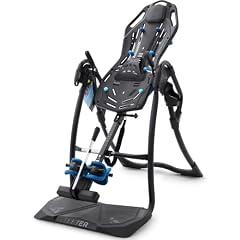
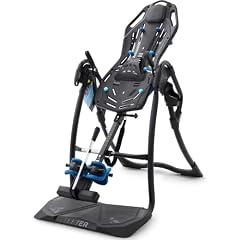
Teeter EP-560 Inversion Table
Overview
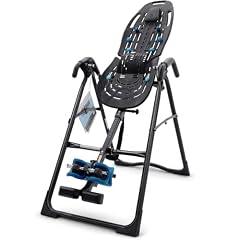
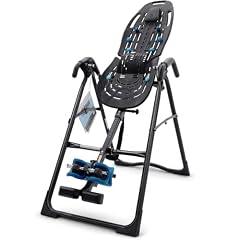
This is a nonpowered, folding home inversion table that secures the user at the ankles and rotates by shifting body weight. Teeter states that the EP-560 fits adults from 4 ft 8 in to 6 ft 6 in, supports up to 300 lb, and uses a powder-coated welded-steel frame with EVA foam and polypropylene ankle components. It includes a lumbar bridge, acupressure nodes, head pillow, adjustable angle tether, and a T-pin ankle closure. The included user guide sets a conservative start of 1 to 2 minutes at 20 degrees, with partial inversion limited by a tether to 60 degrees. It carries extensive warnings about cardiovascular, neurologic, bone, eye, balance, digestive, pregnancy, and postsurgical risks. FDA records verify a cleared Teeter manual-inversion product family for nonpowered spinal traction, though the public clearance does not name this current product version specifically.
What works
- The user guide gives unusually detailed contraindications, including glaucoma, hypertension, anticoagulant use, osteoporosis, vertigo, pregnancy, and recent surgery.
- The adjustable tether, height selector, three-position roller hinges, and explicit return-to-upright instructions provide meaningful rotation-control safeguards when set up correctly.
- The ankle system has a specific fit check, with instructions to hear, feel, see, and test the T-pin lock before every use.
- Teeter states a 300 lb capacity, a 4 ft 8 in to 6 ft 6 in fit range, heat-treated steel construction, and a five-year full warranty with repair or replacement coverage.
What does not
- The product's claims of back-pain relief and decompression exceed the strength of broad clinical evidence for traction. A Cochrane review found traction made little or no difference for pain or function in low-back pain, including sciatica.
- Full inversion still requires the user to reach, release the lockout, redistribute body weight, and follow the exit procedure. New, physically compromised, or uncertain users need a spotter.
- The manual says the product is UL Listed, but an active model-specific listing could not be independently retrieved from UL Product iQ during this assessment.
- The standard product is not powered, but its large steel, plastic, foam, and upholstered components have no published end-of-life recycling instructions.
Who is it for
This product suits an adult household user within the stated 4 ft 8 in to 6 ft 6 in and 300 lb limits who wants a nonpowered inversion platform for carefully paced stretching. It is most appropriate for someone able to stand securely, operate a close-fitting ankle lock, follow assembly and inspection instructions, and shift body weight to control rotation. A buyer should have enough indoor floor space for its 84 by 28.8 by 86 inch maximum in-use dimensions and be prepared to start at shallow angles, ideally with a spotter for initial sessions.
Who is it not for
It is not appropriate for children, people over the published height or weight limits, or anyone unable to independently secure and test the ankle lock or return upright. The manual specifically calls for physician approval for conditions affected by raised blood pressure, intracranial pressure, or inversion stress. This includes glaucoma or retinal history, hypertension, stroke risk, anticoagulant use, osteoporosis, fracture, severe spinal disease, vertigo, pregnancy, recent surgery, and impaired strength, alertness, or balance. It is also unsuitable where children or pets could access an unfolded, unsecured table.
Integrity
The strongest health feature is the manual's safety content. It requires physician approval where inversion could worsen a condition, lists concrete contraindications, instructs users to begin with short and shallow sessions, and tells them to stop for pain, dizziness, or light-headedness. FDA records show Teeter's manual inversion table family received a substantial-equivalence decision as a Class I nonpowered traction device. That status does not establish that inversion reliably treats back pain or sciatica. The standard EP-560 has no motor, heater, battery, or power supply. Teeter states that its frame is powder-coated welded steel, while the ankle supports use EVA foam and polypropylene. A five-year full warranty and parts-request support can extend service life. However, Teeter does not publish recycling guidance for the mixed steel, foam, plastic, and upholstery materials, so end-of-life recovery remains unclear.

Teeter FitSpine X3 Inversion Table
Overview
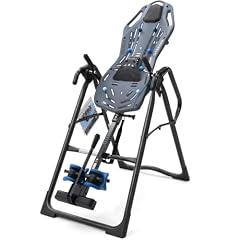
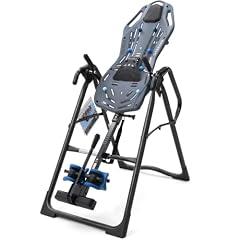
This is a manual, steel-frame inversion table for adult home use. The user locks both ankles into padded supports, reclines by shifting body weight, and can limit rotation with a tether marked at 20, 40, and 60 degrees. Teeter states a 4 ft 8 in to 6 ft 6 in height range, a 300 lb user limit, and a 65.8 lb product weight. It folds for storage and includes stretching handles, a lumbar bridge, acupressure nodes, and a head pillow. The strongest safety documentation is the model-specific user guide. It gives unusually detailed contraindications, requires physician approval, specifies fitting and balance checks, and directs new or compromised users to use a spotter. FDA records confirm a 2016 clearance for Teeter manual inversion-table devices as nonpowered traction devices, though the clearance does not name this particular product model. The manual displays a UL Listed statement, but an active, model-specific public UL Product iQ record could not be confirmed in this review.
What works
- The user guide gives specific warnings for cardiovascular, neurological, bone, vision, pregnancy, medication, and mobility risks.
- Angle tether, three roller-hinge settings, height adjustment, and ankle-height adjustment support gradual, individualized setup.
- The guide explains how to release the full-inversion lockout and return upright, rather than assuming the user can simply sit up.
- Teeter states a five-year full warranty covering defects in materials, workmanship, fabrics, and padding, including parts, labor, and transportation.
What does not
- The evidence base does not support traction as a reliable treatment for low-back pain or sciatica. Relief claims should be treated as temporary comfort claims, not a substitute for diagnosis or active care.
- Full inversion still requires correct balance settings, enough reach and upper-body control to release the lockout, and conservative practice before attempting it.
- The claimed UL status is shown in Teeter documentation, but this review could not independently trace an active public listing for this exact product model.
- The product is material-intensive at 65.8 lb, and Teeter does not provide clear end-of-life recycling instructions for its steel, foam, and plastic parts.
Who is it for
It suits an informed adult within Teeter's stated 4 ft 8 in to 6 ft 6 in and 300 lb limits who wants a manual stretching and inversion platform at home, has been cleared by a clinician where appropriate, and can follow setup instructions carefully. It is more suitable for someone able to test balance gradually at limited angles, inspect the frame and ankle lock before use, and keep clear floor space around a large freestanding table. The included handles and adjustable tether are useful for cautious, controlled sessions rather than aggressive exercise.
Who is it not for
It is not for children, people who may be alone and unable to release the lockout, or anyone with impaired strength, balance, cognition, sensation, or ability to follow the return-to-upright instructions. The manual specifically calls for clinician approval and identifies risks involving hypertension, heart or circulatory disease, anticoagulant use, stroke risk, glaucoma or other eye conditions, osteoporosis, spinal cord injury, acute joint swelling, pregnancy, dizziness, seizures, and medication-related drowsiness. It also is not appropriate for anyone seeking proven treatment for sciatica, disc disease, or persistent back pain without clinical evaluation.
Integrity
The safety guide is a meaningful strength. It warns that incorrect settings can cause rapid inversion or make return upright difficult, limits use to adults within the stated size range, advises a spotter for new or compromised users, and gives a broad contraindication list. FDA records confirm that Teeter manual inversion devices received 510(k) clearance in December 2016 as nonpowered orthopedic traction devices for adults. FDA registration alone is not the same as clearance, so those terms should not be treated interchangeably. Teeter states that the frame uses powder-coated welded steel, heat-treated steel hardware, EVA foam, and polypropylene-backed ankle supports. A five-year full warranty and available support documentation may extend useful life, but no verified recycling plan or quantified recycled-content disclosure was found. The product has no motor, heater, battery, or mains power supply, avoiding electrical and thermal exposure risks. Human evidence for traction remains limited and does not establish meaningful treatment benefit for most low-back pain or sciatica.

HOTMUZ Electric Decompression Table
Overview
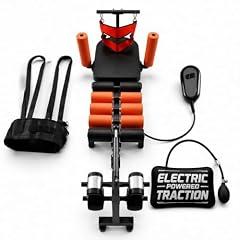
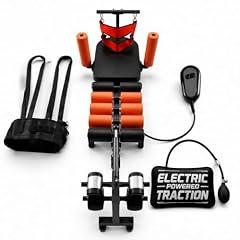
This is a low-profile, motorized supine traction table, not a conventional inversion table. The product is used lying flat, with straps, inflatable air bags, sponge rollers, and an electric push-pull motor intended to apply traction to the lower back and neck. The supplied product specifications list steel, PVC, and foam construction, a 47 by 6.7 by 17 inch stored size, and a one-year manufacturer warranty. The maker identifies this as model JMK-q02 and states that it has a linear motor, adjustable traction, built-in rollers for upright storage, and a 300-pound user capacity. Those are manufacturer statements, not independently confirmed test results. The maker also publishes meaningful contraindications for its traction products, including pregnancy, osteoporosis, spinal malignancy, spinal tuberculosis, and free-fragment disc herniation. Evidence for traction as a treatment for nonspecific low-back pain or sciatica remains weak overall, and does not establish that this particular product relieves disc disease or sciatica.
What works
- The manufacturer publishes specific traction contraindications, including pregnancy, osteoporosis, spinal malignancy, spinal tuberculosis, and free-fragment disc herniation.
- Motorized, button-operated traction may reduce the need to crank a manual mechanism while lying down, according to the manufacturer.
- The stated 300-pound capacity is more concrete than a generic adult-use claim, although it is not supported by a public structural-test report.
- The product identity is reasonably traceable through its named model, named manufacturer, stated materials, listed components, and one-year manufacturer warranty.
What does not
- No traceable UL or ETL certification listing for the complete motorized product was identified during verification.
- No public model-specific manual, structural endurance report, stability test, electrical test report, or replacement-parts catalog was identified.
- The stated 300-pound capacity, motor performance, cervical coverage, and safety controls are manufacturer claims without independent confirmation.
- Marketing ties the product to herniated discs, sciatica, and back-pain relief, but Cochrane finds traction has little or no clinically relevant benefit for low-back pain overall, including with sciatica.
- The product is powered, yet publicly available information does not establish electrical fault protection, heat limits, emergency return behavior, or pinch-point protection.
Who is it for
This product is most suited to an adult who has already discussed home traction with a qualified clinician, needs a supine motorized format rather than an inversion table, and can safely transfer on and off a low bench. It may be relevant for someone within the maker's stated 300-pound limit who wants lumbar and cervical positioning in one compact, storable unit. Its value is primarily convenience and controlled home positioning, not proven treatment of a diagnosed disc condition. Users should treat the capacity and feature claims as manufacturer-stated until independent testing is available.
Who is it not for
It is not appropriate for pregnancy, osteoporosis, spinal cancer, spinal tuberculosis, or an imaging-confirmed free-fragment disc herniation, all conditions the manufacturer identifies as traction contraindications. People with new weakness, worsening numbness, bowel or bladder symptoms, severe radiating pain, unstable balance, limited ability to get off a low table, or impaired ability to operate controls should seek clinical evaluation rather than self-treat. It is also a poor fit for anyone expecting proven relief of sciatica, disc disease, or chronic low-back pain from traction alone.
Integrity
The clearest health-positive finding is that HOTMUZ publicly names several major contraindications and says its traction products are adjuncts rather than replacements for professional care. That is more responsible than presenting traction as universally safe. However, the same marketing makes broad associations with herniated discs, sciatica, and chronic compression. The available evidence does not support treating traction as a reliably effective standalone treatment for low-back pain, and reported trial harms have included increased pain and aggravated neurological signs. The stated materials are steel, PVC, and foam, plus a motor and air-bag system. Steel may support a longer service life, but no public spare-parts list, repair instructions, electronics recycling plan, or independently verified electrical certification was identified. The one-year manufacturer warranty offers limited defined coverage, while the absence of documented replacement parts makes long-term repairability uncertain.
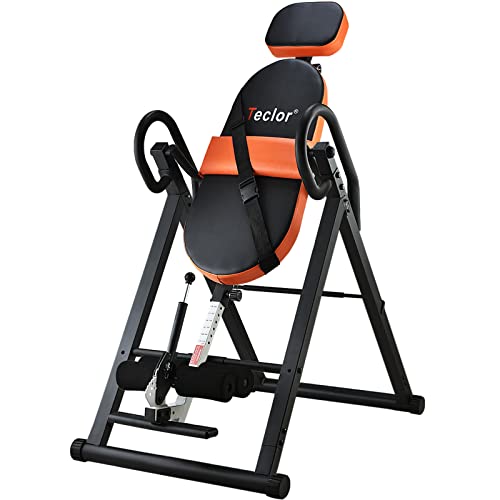
Teclor Inversion Table for Back Pain Relief
Overview
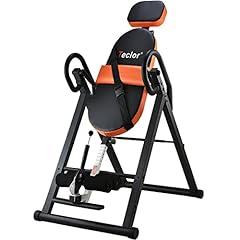
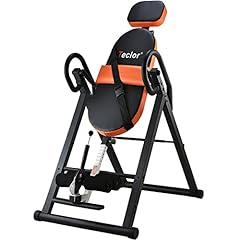
This is a manually operated, foldable steel inversion table for home stretching and inversion exercise. The product page states a 350-pound user capacity, a 30.3 by 15.3 inch backrest, adjustable fit from 4 ft 3 in to 6 ft 8 in, a ratchet ankle closure, safety belt, and extended return handles. These are manufacturer-stated specifications, not independently verified performance ratings. It rotates the user head-down to create traction-like spinal loading. The listing presents it as a back-pain relief and decompression product, but provides no visible contraindication guidance, time limits, model-specific instruction manual, or independent certification record. It is a nonpowered unit as listed, so there is no heat, motor, vibration, battery, or power-supply system to assess on this version.
What works
- Manufacturer states a broad 4 ft 3 in to 6 ft 8 in height range, with a locking height adjuster.
- Manufacturer states a 350-pound capacity and steel frame, which may suit larger adult users within the stated limit.
- The listed safety belt and extended foam-covered handles are practical control aids during entry and return upright.
- The foldable, manual format avoids electrical and heat-related exposure on this listed version.
What does not
- The product page makes broad back-pain relief and decompression claims, while systematic-review evidence finds traction offers little or no clinically meaningful benefit for most low-back-pain presentations.
- No public model-specific UL or ETL certification listing was located, so the stated capacity, stability, endurance, and angle-control performance remain unverified.
- No visible product-page contraindication list, conservative starting protocol, or medically specific warning accompanies a product that can raise head and eye pressure.
- A model-specific manual, replacement-parts catalog, repair instructions, and clear manufacturer warranty terms were not located in the reviewed materials.
Who is it for
This product is most suited to an informed adult seeking a manual home stretching device, who falls within the manufacturer-stated height and weight limits and can assemble, inspect, balance, and exit it without assistance. The foldable format can fit a home exercise area where storage matters. It is better matched to occasional, cautious inversion exercise than to someone expecting a proven treatment for diagnosed back disease. A clinician should clear use when there is any significant medical history or uncertain cause of pain.
Who is it not for
It is not suited to people with glaucoma or other eye disease, uncontrolled blood-pressure issues, heart disease, prior stroke, pregnancy, balance limitations, osteoporosis, recent injury, or difficulty operating ankle locks and returning upright. It is also unsuitable for anyone with new, severe, worsening, or neurologic back symptoms who needs assessment rather than self-treatment. Households where a user may invert alone despite limited strength, mobility, or judgment should avoid relying on the belt and handles as a substitute for safe supervision and medical clearance.
Integrity
The main health concern is the gap between the broad pain-relief marketing and the evidence base. A Cochrane review of traction for low-back pain found little or no clinically meaningful effect overall, and reported adverse effects in some studies, including increased pain and worsening neurological signs. Inversion also deserves medical screening because head-down positioning can be risky for people with cardiovascular, eye, neurologic, or pregnancy-related contraindications. The listed version is a manual steel product, which avoids electronics, batteries, and heat components. Steel can be recycled at end of life, but the product page does not provide recycling guidance, a spare-parts program, repair documentation, or a model-specific manual. No model-specific UL or ETL listing was located in the reviewed certification directories. No model-specific CPSC recall or FDA recall was identified in the public sources reviewed, though that does not independently validate structural safety.

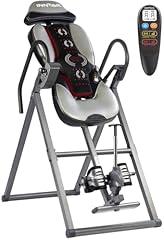
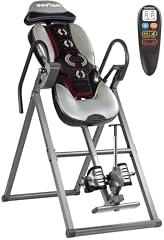
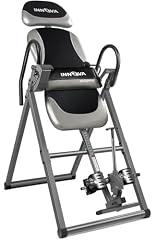
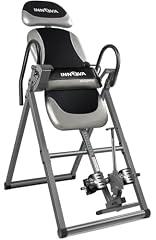
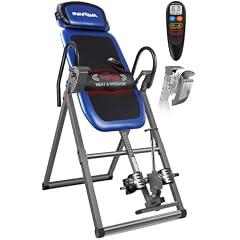
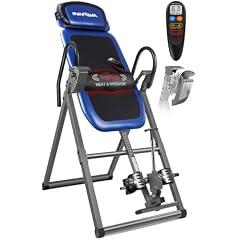
Innova ITM5900 Heat and Massage Inversion Table
Overview
This is a household inversion table with a detachable powered heat and vibration massage pad. The user adjusts the height tube, secures both ankles between U-shaped holders, selects an inversion stop, then shifts body position to rotate and return upright. The manufacturer states a 4 foot 10 inch to 6 foot 6 inch height range and a 300 pound maximum user weight. Its defining design feature is a six-position angle selector, stated to limit inversion to 15, 30, 45, 60, 85, or 90 degrees. The manual also specifies a 15-minute unattended shutoff for the heat and massage pad, plus a 30-minute maximum session. These are manufacturer instructions, not independent performance tests. No current UL or ETL certification listing for the complete product was located in the requested directories.
What works
- The manual gives a specific 4 foot 10 inch to 6 foot 6 inch fit range and 300 pound user limit.
- Six angle-stop settings provide a stated physical limit on rotation, including conservative 15 and 30 degree starting positions.
- The ankle setup instructions are unusually concrete, requiring snug U-shaped holders and a fully locked T-knob.
- The powered pad has stated session limits, burn precautions, cord-care instructions, and a 15-minute unattended shutoff.
- The manufacturer provides an identifiable company address, telephone support, a parts diagram, and a one-year limited warranty.
What does not
- No traceable active UL or ETL listing was found for the complete product, so electrical and mechanical safety testing cannot be independently confirmed.
- The 300 pound capacity and stated user-height range are manufacturer ratings. No independent structural, fatigue, stability, or end-stop test report was located.
- The return-to-upright method depends first on balance and body movement, then on pulling the built-in handlebars if needed. The manual also recommends having another person present.
- The contraindication list is substantial, but people with glaucoma, hypertension, heart or circulatory conditions, recent stroke, pregnancy, osteoporosis, spinal injury, anticoagulant use, weak ankles, or other relevant conditions need clinician approval.
- Human evidence does not establish inversion or traction as an effective treatment for nonspecific low-back pain or sciatica.
Who is it for
This product suits an adult household user within the stated 4 foot 10 inch to 6 foot 6 inch and 300 pound limits who has clinician approval for inversion and wants a manually adjustable home table. It is most suitable for someone able to assemble equipment, check fasteners, place it on a clear indoor floor, securely operate the ankle lock, and return upright using controlled body movement. The heat and vibration pad may suit users seeking a bounded comfort feature rather than a medical treatment.
Who is it not for
It is not for children under 13, unsupervised users who may have trouble returning upright, or households where children, pets, or bystanders can enter the operating area. It is also inappropriate without medical guidance for people with glaucoma, retinal detachment, hypertension, heart or circulatory disorders, recent stroke or transient ischemic attack, osteoporosis, recent fractures, spinal injury, pregnancy, anticoagulant use, implanted orthopedic supports, weak ankles, poor circulation, impaired heat sensation, or a pacemaker. Users needing a cleared medical traction device should choose a product with that documented status.
Integrity
The manual gives meaningful risk guidance. It says to obtain physician approval, begin at lower angles, secure the ankle holders, keep clear of moving parts, and have someone nearby during inversion. It also names numerous health conditions requiring medical consultation. For the powered pad, it warns against use on insensitive skin or with poor circulation, limits sessions to 30 minutes, and states an unattended unit should shut off after 15 minutes. These are manufacturer instructions, not independently certified safeguards. No active UL or ETL listing for the complete product was located during the directory checks, and no product-specific human clinical evidence was found. A Cochrane review concluded traction has little or no clinically relevant benefit for nonspecific low-back pain or sciatica. The product has a one-year limited warranty and a parts list, which modestly supports serviceability, but no material disclosure, recycling program, repair guide, or end-of-life electronics guidance was found. The heat and massage electronics add a separate disposal burden.

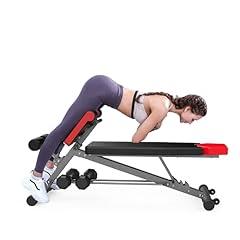
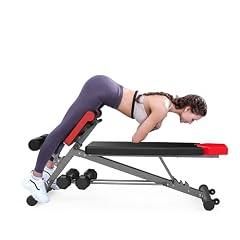
Finer Form Multi-Functional Gym Bench
Overview
This product is a manual, multi-functional steel exercise bench for back extensions, Roman-chair movements, sit-ups, flat pressing, and decline exercises. It is not an inversion table. Its design does not rotate a user head-down, so inversion-specific ankle locking, angle limiting, escape, and medical decompression functions are not present. The manufacturer states a 660-pound capacity, 36-pound net weight, heavy-duty steel frame, high-density padding, and a 1-year warranty. A model-specific assembly and use manual is publicly available and instructs users to inspect the bench, secure adjustments, use a level surface, and consult a physician before exercise. No active third-party UL or ETL certification listing for the complete product was identified in the relevant directories.
What works
- A static, non-powered bench avoids electrical, thermal, battery, and motor-related hazards.
- The manufacturer provides a model-specific manual, replacement-parts contact, and 1-year limited warranty.
- The stated 660-pound capacity is consistent between the manufacturer page and model-specific manual, though it is manufacturer-stated rather than independently verified.
- The format supports several strength exercises in one compact bench, including back extensions, sit-ups, flat presses, and decline work.
What does not
- This is not an inversion table, so it cannot provide controlled inversion, ankle retention for head-down use, or an assisted return-to-upright mechanism.
- No traceable UL or ETL certification for the complete product was located, and no independent structural, endurance, stability, or load-test report was found.
- The manual offers general exercise precautions but does not give detailed contraindications or use limits for people with acute back injury, neurologic symptoms, recent surgery, or balance limitations.
- Manufacturer language about posture correction, preventing lower-back pain, and injury prevention exceeds the product-specific human evidence located.
Who is it for
This bench suits an adult home-gym user seeking a manual platform for conventional back extensions, core work, decline sit-ups, and light to moderate pressing variations. It is especially relevant for someone who wants one compact piece of steel equipment rather than separate hyperextension and flat benches. The stated 660-pound limit may be useful for larger users or loaded exercises, but it should be treated as a manufacturer rating because independent load and fatigue testing was not located. Assemble it on a level floor and inspect fasteners before training.
Who is it not for
It is not for a shopper who actually needs an inversion table for controlled head-down positioning, ankle locking, angle adjustment, or an assisted return upright. It is also unsuitable as a self-treatment device for sciatica, disc symptoms, unexplained back pain, or neurologic symptoms. People with recent surgery, acute injury, osteoporosis, severe balance problems, fainting risk, or conditions where strenuous trunk extension is restricted should obtain individualized clinical guidance before using a back-extension bench. Keep children away during use and do not use a damaged or unstable unit.
Integrity
The important safety distinction is functional. This is a conventional manual exercise bench, not a traction or inversion medical device. The FDA category for nonpowered orthopedic traction equipment concerns products intended to apply therapeutic pulling force, which this bench is not described as doing. Evidence reviews support exercise as one option that can provide small improvements in chronic low-back pain, but they do not validate this specific bench as a treatment. Evidence for traction does not establish meaningful benefit for low-back pain or sciatica. The product uses a steel frame and has no electronics, which reduces e-waste and eliminates heat or wiring hazards. The manufacturer offers a 1-year limited warranty and a support route for replacement parts, but no detailed parts catalog, repair instructions, recycled-content disclosure, packaging disclosure, or end-of-life recycling guidance was found. Searches of the CPSC recall database did not identify an active recall for this exact product as of August 16, 2026.
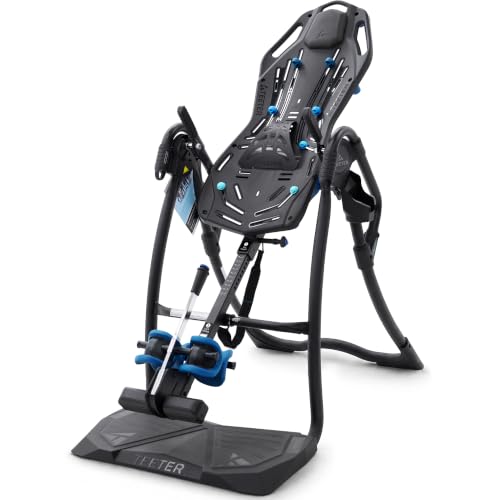
FitSpine LX9 Inversion Table
Overview
This is a nonpowered, home-use inversion table that secures the user at the ankles and rotates by shifting body weight. Teeter states a 300 lb user limit and a height range of 4 ft 8 in to 6 ft 6 in. It has a heat-treated steel frame, a flexible backrest, adjustable ankle cups, and a tether that limits rotation at marked 20, 40, or 60-degree settings. Its strongest documented safety provisions are its unusually detailed setup and contraindication instructions. The model-specific guide directs new users to begin with one to two minutes at a shallow angle, use a spotter while learning, verify ankle engagement with a click, visual, and pull test, and use body repositioning rather than sitting up to return upright. The guide also states that representative samples were UL Listed. FDA records show a 2016 clearance for Teeter manual inversion tables as nonpowered traction devices, though the public clearance record does not name this later product by model.
What works
- The guide gives specific contraindications, including cardiovascular, neurological, eye-pressure, bone, balance, pregnancy, recent-surgery, and medication-related concerns.
- Angle limiting, height adjustment, three roller-hinge responsiveness settings, and explicit return-to-upright instructions support gradual user-controlled inversion.
- The ankle-lock instructions are concrete and repeatable, including footwear limits and a required engagement test before inversion.
- The product guide states that representative samples were UL Listed, and UL 1647 covers nonpowered inversion tables.
- A five-year full manufacturer warranty covers defects in materials, workmanship, fabrics, and padding.
What does not
- The product's back-pain and decompression claims are broader than the overall human evidence for traction. A Cochrane review found traction usually made little or no clinically important difference for low-back pain, with or without sciatica.
- The public FDA clearance covers Teeter manual inversion tables as a device family, rather than naming this specific later model. FDA registration is not the same as product-specific FDA clearance.
- A traceable public UL directory listing for this exact model was not located during review, despite the model-specific guide stating it is UL Listed.
- Full inversion still requires the user to reach behind and pull the backrest and frame together to release the lockout. This is not suitable for people unable to perform that movement reliably.
- The large steel-and-foam product has no published recycling instructions or model-specific replacement-parts catalog located during review.
Who is it for
It suits an adult home user within the stated 4 ft 8 in to 6 ft 6 in and 300 lb limits who has clinician approval for inversion, can independently secure and test the ankle lock, and has clear indoor floor space. It is particularly aligned with someone who wants a manually controlled, nonpowered stretching device and is prepared to start with shallow, brief sessions. The detailed guide is useful for a cautious user willing to inspect fasteners, set balance carefully, and use a spotter while learning.
Who is it not for
It is not appropriate for children, people over the stated size limits, or anyone who cannot reliably operate the ankle lock and return-to-upright procedure. The guide specifically flags people with hypertension, elevated stroke risk, anticoagulant use, glaucoma or retinal history, osteoporosis, fractures, vertigo, neurological symptoms, hernia, pregnancy, obesity, recent surgery, or conditions affected by inversion. It is also a poor fit for users seeking proven treatment for sciatica or chronic low-back pain, or for homes where it cannot be stored flat and secured away from children.
Integrity
The product is nonpowered, so it introduces none of the battery, wiring, motor, vibration, or heated-surface risks found in powered recovery equipment. Its model-specific guide has strong practical warnings. These include physician approval, a long contraindication list, footwear rules, pre-use inspection, spotter use for beginners, limits on aggressive movement, and instructions intended to reduce rapid rotation, entrapment, and head or neck impact. The guide states that representative samples were UL Listed, although a public listing for this exact model was not located. FDA records show Teeter's manual inversion-table family was cleared in 2016 as a nonpowered traction device for adults. That regulatory status does not establish that inversion is an effective treatment for every claimed back condition. Human evidence for traction in low-back pain is limited and generally does not show important benefit. Ecologically, the durable steel construction, lack of electronics, support materials, and five-year warranty support a longer service life. Recycling guidance and a model-specific spare-parts catalog were not found.

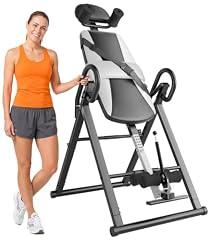
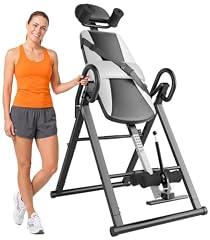
Innova ITX9900 Inversion Table with Lumbar Support
Overview
This is a manual, home-use inversion table with a steel-and-foam construction, a stated 300-pound user limit, and a stated height range of 4 feet 10 inches to 6 feet 6 inches. The user secures both ankles, reclines on the padded backrest, and uses body position to rotate. It has no heat, massage, motor, battery, or mains-powered function, so there is no electrical or thermal feature to manage. Its defining controls are manufacturer-stated rather than independently certified. They include a six-position angle pin with a cover, an air-adjustable lumbar pad, and a larger front plus smaller rear ankle-holder arrangement. The owner materials give unusually specific medical cautions and conservative initial-use guidance. However, I could not verify an active UL or ETL certification for this exact product, or independent structural testing behind its stated capacity.
What works
- The owner materials advise physician approval and name important contraindications, including glaucoma, retinal detachment, hypertension, circulatory disorders, pregnancy, anticoagulant use, weak ankles, and recent stroke.
- The stated six-position angle pin provides a defined mechanical stop rather than relying only on a strap, although the safety advantage is manufacturer-stated.
- The stated height range and 300-pound limit are specific, giving users clear fit boundaries to follow.
- It is a nonpowered product, so it avoids the wiring, heat exposure, and powered-pad failure risks found on electrically equipped inversion tables.
- A named manufacturer, support contact, model-specific owner material, parts diagram, and one-year limited warranty provide basic traceability.
What does not
- No active UL or ETL listing for this exact product was verified, so third-party confirmation of mechanical safety, stability, endurance, and load testing is unproven.
- The 300-pound capacity and six-position stop system are stated by the manufacturer, but independent structural-margin or fatigue-test results were not located.
- Returning upright depends on correct balance setup, ankle fit, arm movement, and sometimes knee bending or side handles. This can be difficult for people with limited mobility, weak grip, or impaired balance.
- Human evidence does not support traction as a reliable treatment for low-back pain or sciatica. It may provide a temporary stretching sensation, but it should not replace diagnosis or treatment.
- The warranty is limited to one year, and I found a parts diagram but not a clear current consumer replacement-parts catalog or end-of-life recycling program.
Who is it for
This product suits an adult home user within the stated 4 feet 10 inches to 6 feet 6 inches and 300-pound limits who has clinician approval for inversion, can independently fasten and check both ankle holders, and can return upright without assistance. It is most appropriate for someone seeking a manual stretching or comfort routine rather than treatment for a diagnosed spinal condition. The air lumbar pad may be useful for users who want to alter lower-back contact, while the six-position angle stop offers a more repeatable starting point than unrestricted inversion.
Who is it not for
It is not appropriate for anyone with glaucoma, retinal disease or detachment, uncontrolled high blood pressure, heart or circulatory disease, recent stroke or transient ischemic attack, pregnancy, osteoporosis, recent fracture, spinal injury, anticoagulant use, hernia, weak ankles, or other listed contraindications without explicit clinician approval. People who cannot reliably reach the ankle lock, control body position, grip the side handles, or rise after inversion should use another approach. It also does not suit buyers who require independently verified certification or evidence-based treatment for back pain or sciatica.
Integrity
The strongest health safeguard is the specificity of the owner warnings. The materials direct users to obtain physician approval, list many conditions for which inversion may be unsuitable, instruct beginners to start slowly, and emphasize ankle-lock checks. These are meaningful safeguards because inversion changes pressure and fall risk, but they do not establish that the product treats back pain. A Cochrane review found traction has little or no clinically important effect for low-back pain, including sciatica, and reported possible adverse effects in some studies. The product is a manual steel-and-foam unit without powered heat or massage components. That reduces electronics waste and removes electrical and thermal hazards. Steel can be recycled, but the mixed foam, fabric, plastic, and metal construction complicates full end-of-life recovery. Innova provides a parts diagram and one-year limited warranty, yet a clear current spare-parts store, repair program, recycling guidance, and third-party safety certification for this exact product were not verified. No product-specific CPSC recall was located in the review.
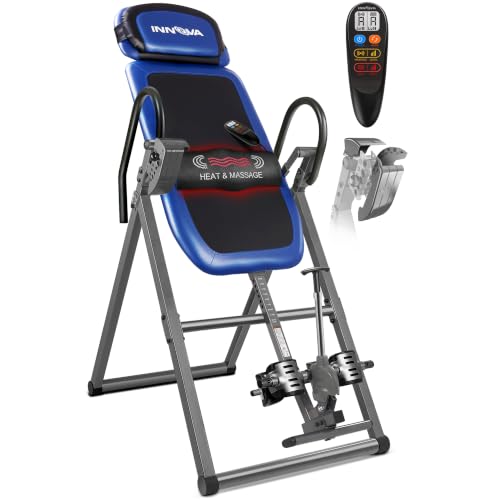
Innova ITM4800 Heat and Massage Inversion Table
Overview
This is a folding, steel-frame home inversion table with a padded backrest, headrest, side handles, adjustable ankle holders, and a removable lumbar pad that supplies heat and vibration. The manufacturer states a 300 lb user limit and a stated height range of 4 ft 10 to 6 ft 6. It uses a six-position angle pin and a height-based balance adjustment, so the user moves by shifting body weight rather than with a motor. The supplied manual gives unusually concrete setup and use directions, including low-angle starts, athletic shoes, ankle-lock checks, frame-fastener checks, clearance space, and a handle-assisted return if balance alone does not bring the user upright. The heat and vibration pad is electrically powered, with a manufacturer-stated 30-minute maximum session. No current third-party certification listing for the complete product was located.
What works
- The manual specifies a 300 lb limit and a 4 ft 10 to 6 ft 6 user range.
- Six preset inversion positions and balance adjustment provide a defined, gradual setup process.
- The ankle system has explicit instructions to use laced athletic shoes, snug U-shaped holders, and a fully locked adjustment knob.
- The manual sets a 30-minute maximum for the heat and vibration pad and directs users to unplug it after use.
- Model-specific instructions, support contact details, parts diagram, and one-year limited warranty improve basic traceability.
What does not
- The manual advises physician approval and lists important contraindications, but it does not replace individualized medical screening for blood pressure, eye, vascular, bone, neurologic, or pregnancy-related risks.
- Returning upright still depends substantially on body positioning and, if needed, pulling with the side handles. This can be unsuitable for users with limited grip, shoulder strength, coordination, or mobility.
- No active UL or ETL certification listing for the complete product was located, so independent electrical and mechanical safety testing could not be confirmed.
- The 300 lb rating is manufacturer-stated. Public structural endurance, stability, fatigue, and end-stop test results were not located.
- Human evidence does not support traction as a reliable treatment for low-back pain or sciatica, despite therapeutic wording around inversion and back relief.
Who is it for
This product suits an adult household user within the stated 4 ft 10 to 6 ft 6 and 300 lb limits who has been cleared by a clinician for inversion, can independently secure and release ankle holders, and has enough open indoor floor space. It is most practical for someone seeking a controlled home stretching or inversion routine, rather than a medical treatment, and who will follow the required checks for fasteners, ankle fit, angle selection, and cord condition.
Who is it not for
It is not appropriate for children, unsupervised users who cannot reliably return upright, or households where pets and bystanders cannot be kept clear. People with glaucoma or retinal problems, hypertension or heart and circulatory disorders, osteoporosis, recent stroke, pregnancy, recent fractures, spinal injury, weak ankles, anticoagulant use, or implanted orthopedic supports should not self-start inversion. Those with limited grip, shoulder strength, balance, sensation, or ability to follow multi-step setup instructions should choose a non-inversion option.
Integrity
The strongest health positive is the model-specific manual. It names many situations requiring medical consultation, including eye disease, hypertension, circulatory disorders, osteoporosis, pregnancy, recent fracture or stroke, spinal injury, anticoagulant use, and weak ankles. It also specifies low-angle starts, secured footwear, locked ankle holders, required clearance space, regular fastener checks, and a 30-minute limit for the heat and vibration pad. The product is a material-intensive steel, foam, and electronic appliance. The manual identifies wear-prone parts and includes an exploded parts diagram, but a public replacement-parts catalog, repair program, material disclosure, and recycling guidance were not located. The one-year limited warranty is short for a large durable item. No current product-specific CPSC recall was located in the checked public sources, but independent UL or ETL listing for the complete product could not be verified. Evidence reviews find traction provides little or no clinically meaningful improvement for typical low-back pain or sciatica.

JAGJOG Inversion Table for Back Pain Relief
Overview
This is a nonpowered, foldable home inversion table. The user secures their ankles, leans backward, and uses body weight for controlled inversion and stretching. The product page lists a 49 pound steel frame measuring about 78.7 by 29.5 by 40.9 inches when assembled, plus a one-year warranty. Those specifications are seller-provided, not independently tested figures. The listing states a 300 pound user limit and a 4 ft 3 in to 6 ft 6 in height range. It also describes six angle settings, a safety belt, ratchet ankle lock, locking pin, foam ankle rollers, lumbar padding, handles, and a foldable frame. A user manual is linked on the product page, but no accredited certification listing or model-specific structural test record was located. The page markets back-pain, spinal-decompression, and sciatica relief, claims that need more qualification than the listing provides.
What works
- The manufacturer provides a defined height range and user-weight limit, which is more usable than a one-size setup claim.
- Six stated angle settings and a belt intended to limit travel offer a gradual-inversion approach, if assembled and adjusted correctly.
- The stated ratchet ankle lock, locking pin, foam rollers, and handles address foot retention and controlled return upright.
- A linked user manual, named manufacturer, stated model name, and one-year warranty provide a basic traceability trail.
- The product has no stated motor, heater, massage system, battery, or external power supply, avoiding electrical and heat exposure concerns.
What does not
- The 300 pound capacity and structural durability are manufacturer-stated. No model-specific UL 1647 certification or independent strength, fatigue, stability, or end-stop test record was found.
- The public listing does not present a clear contraindication list or conservative medical screening guidance for risks such as uncontrolled blood pressure, glaucoma, retinal disease, pregnancy, heart disease, or recent surgery.
- The page makes back-pain, decompression, and sciatica-relief claims. Cochrane evidence on traction finds little or no average benefit for low-back pain, including sciatica, and reports some adverse effects in trials.
- No exact-product FDA clearance, UL listing, or ETL listing was located to substantiate the medical framing or independent safety verification.
- A foldable steel product is materially intensive, and no replacement-parts catalog, repair instructions, or end-of-life recycling guidance was located.
Who is it for
This product is suited to an adult seeking a nonpowered home stretching device who falls within the manufacturer-stated 4 ft 3 in to 6 ft 6 in range and does not exceed the stated 300 pound limit. It is most relevant for someone who has been medically cleared for inversion, can follow setup instructions carefully, has enough open floor area for its roughly 79 inch assembled length, and values a foldable frame for storage. The six stated angle settings may help a cleared user begin with modest inversion rather than immediately hanging fully inverted.
Who is it not for
It is not suitable for anyone without clinician clearance who has glaucoma or retinal disease, uncontrolled hypertension, cardiovascular disease, recent surgery, pregnancy, severe osteoporosis, a balance disorder, or a condition that makes being inverted risky. It is also a poor fit for people who cannot independently secure and release the ankle system, cannot reliably return upright, or may need help during a malfunction. Buyers seeking a medically validated treatment for sciatica, disc disease, or chronic back pain should not treat the product's relief language as evidence of therapeutic effectiveness.
Integrity
The listing describes mechanical safeguards that are relevant to home inversion, including six angle settings, a belt intended to limit inversion range, a ratchet ankle lock, a separate locking pin, handles, and foam ankle rollers. Those are manufacturer statements, not independent safety-test results. No active recall for this exact product was located, but inversion tables have a known category-level fall risk. A CPSC recall of another brand documented weld failures while users were inverted. The product is described as steel and nonpowered, so it avoids charger, battery, heating, and electronics disposal issues. Its foldable design may reduce storage burden, but the accessible materials provide no spare-parts program, repair documentation, material-recycling instructions, or verified durability testing. The one-year stated warranty gives only limited evidence of expected service life.