
10 Best Industrial Endoscope
 Daniel Kenitz
Please note that we participate in affiliate marketing programs. When you purchase through links on our site, we may earn a commission. As an Amazon Associate we earn from qualifying purchases. This comes at no additional cost to you and helps support the resources required to provide valuable content.Advertising Disclosure
Top-rated Industrial Endoscope Comparison
1

2
3
4
5
6
7
8
9
10
Industrial endoscopes: what to look for
An industrial endoscope, also called a borescope or inspection camera, lets you view engines, ducts, wall cavities, appliances, drains, and other spaces without dismantling them. The useful part is not simply the headline resolution. A product has to place a usable image at the working distance, reach the target without becoming stuck, tolerate the stated environment, and preserve enough information for the decision you need to make.
Start with access. Probe diameter, cable length, stiffness, articulation, bend limits, and the ability to replace a damaged probe determine whether the camera can reach the inspection area and return safely. A two-way articulated tip can help aim around bends, while front-and-side cameras can reduce the need to twist or reposition the cable. These features are manufacturer claims unless supported by documented testing, warranty evidence, or credible hands-on evaluation. Look for realistic bend, pull, temperature, and articulation limits rather than relying on cable length alone.
Image quality depends on more than “1080p,” “2K,” or megapixels. Focus distance, field of view, lighting control, sensor performance, screen quality, and whether the target is close enough all matter. Among the reviewed products, useful working ranges commonly ran from roughly 2 to 15 cm, while some products specified narrower ranges. A reproducible sample image or video should identify distance, lighting, lens diameter, orientation, and whether the file is unedited. An ISO 12233 resolution test, or an equivalent documented optical method, is stronger evidence than a pixel number by itself. Side cameras can be useful, but they do not prove that small cracks, leaks, corrosion, or defects will be detected reliably.
Treat waterproof language cautiously. “IP67” may apply only to the camera probe and cable, not the display, handle, connector, or charging port. A substantiated claim should identify the exact product, immersion depth, duration, water type, and covered components, with an IEC 60529 test report from an ISO/IEC 17025-accredited laboratory. Several reviewed products had probe-only wet-use limits, and the supplied evidence did not establish independent ingress testing for the exact product. Keep displays and charging connections dry unless their protection is separately documented.
For powered products, look for model-matched records in UL Product iQ, the Intertek ETL directory, or the CSA database, as applicable. Battery claims should be supported by records for standards such as UL 2054, UL 1642, or IEC 62133-2, and shipped lithium batteries should have a UN 38.3 test summary. Bright or unusual LED illumination warrants IEC 62471 or ANSI/IES RP-27 evidence. FCC records address applicable radio-frequency compliance, not general battery, shock, fire, or hazardous-location safety.
Do not use a consumer inspection camera around energized equipment, flammable vapors, combustible dust, sewer gas, or potentially oxygen-deficient confined spaces unless the exact product has appropriate approval and the work follows the required controls. The reviewed products had no verified hazardous-location approval. They are visual aids, not medical devices, confined-space equipment, gas monitors, or substitutes for calibrated professional inspection procedures. Recordings generally lacked secure traceability, calibration, orientation data, or tamper protection. Finally, rechargeable units should not go in household trash or curbside recycling; use an appropriate battery, electronics, or household-hazardous-waste collection route.
Integrity
These topics reflect the hazards and evidence gaps that matter when a camera, cable, bright LEDs, water exposure, and rechargeable power system are used in confined mechanical spaces. Scores are relative to the supplied products: higher scores indicate stronger documentation or safer boundaries in the reviewed material, not certification or a guarantee of safe use.
HHealth & Safety
User health and safety impact
This measures protection from battery fire, electric shock, hot probe surfaces, loose or sharp parts, and excessive LED exposure. For an endoscope, clear charging limits, damaged-battery warnings, probe temperature boundaries, and instructions not to look into bright LEDs matter. Supplied scores ranged from 70 to 74; higher-scoring products had more concrete warnings, while none had complete model-matched safety certification.
Safe-use boundaries
This measures whether the product clearly rules out live electrical equipment, flammable vapors, sewer gas, explosive atmospheres, and hazardous confined spaces, or has verifiable approval for such locations. The reviewed products generally lacked hazardous-location approval. Scores ranged from 68 to 80; higher scores reflected clearer prohibitions, but even the strongest result does not make a product suitable for classified or permit-required spaces.
Waterproofing that is proven
This measures whether the claimed IP protection covers the probe, cable, display, connectors, and stated immersion conditions. It matters because many listings say “IP67” while the manual limits protection to the probe. Scores ranged from 52 to 75, with higher results going to products that stated more specific probe-only limits; no supplied product had a publicly located exact-model accredited ingress report.
Probe and cable reliability
This measures resistance to kinking, breakage, detachment, snagging, and loss inside a pipe or engine. Buyers should look for bend radius, pull force, temperature, articulation-cycle, retrieval, warranty, and replacement-part information. Scores ranged from 64 to 76. Higher-scoring products supplied clearer handling limits or replacement options, while repeated gaps included no published mechanical testing and no defined pull or bend limits.
EEvidence
Inspection image quality
This measures whether focus distance, field of view, lighting, side-view capability, resolution, and display quality support a reliable visual check. Scores ranged from 59 to 80. The higher-scoring products had representative hands-on image evidence or specific focal information; lower-scoring products relied more heavily on inconsistent resolution claims or lacked reproducible samples and independent optical testing.
Reliable inspection records
This measures whether photos, video, dates, orientation, storage, export, and stated limitations support the consequence of the inspection. Scores ranged from 52 to 78. Removable storage, date settings, and local recording improved relative scores, but the supplied reviews repeatedly found no tamper protection, calibration, orientation metadata, or professional chain of custody.
Honest claims and intended use
This measures whether resolution, waterproofing, runtime, cable length, compatibility, and professional-use claims are specific and internally consistent. Scores ranged from 52 to 76. Higher-scoring products had fewer contradictions and clearer scope limits. Lower-scoring examples conflicted on articulation, runtime, zoom, resolution, autofocus, viewing angle, or recording capability, showing why headline specifications should be checked against the manual.
Independently verified exact model
This measures whether important claims are supported by a current, public, model-matched third-party record rather than a generic logo or unrelated report. Scores ranged from 68 to 74. One product had an exact-model EMC report, and another had independent hands-on image testing, but the supplied reviews found no complete exact-model record covering electrical safety, battery safety, ingress, LED exposure, and performance together.
U.S. compliance and recall traceability
This measures whether the responsible seller or manufacturer can be identified and connected to applicable FCC records, recalls, and safety reporting. Scores ranged from 69 to 73. The reviews generally found no product-specific CPSC recall, but absence of a recall is not certification. A named manufacturer, support route, warranty, FCC documentation where applicable, and searchable recall history provide stronger traceability.
EEcology
Repairability and end-of-life impact
This measures whether a probe, cable, battery, charger, or display can be repaired or replaced, and whether recycling or take-back instructions are available. A replaceable probe can prevent disposal of an otherwise working monitor. Scores ranged from 60 to 78. The strongest result came from a product with documented replacement probes and monitor parts; most built-in batteries lacked a user replacement route or product-specific U.S. take-back program.
Full reviews

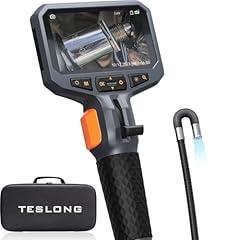
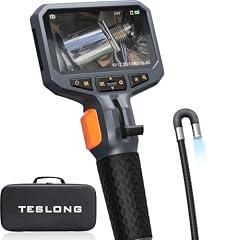
Teslong Two-Way Articulating Borescope with Light
Overview
This product is a handheld industrial inspection camera for looking into enclosed spaces such as engine cylinders, wall cavities, HVAC equipment, and plumbing access points. It combines a 4.5-inch screen, an articulating 1.55 m probe, adjustable tip LEDs, onboard photo and video capture, a USB-C charging port, a 32 GB memory card, and a carrying case. The available product manual identifies this configuration as an 8.5 mm single-lens, 2.0 MP camera with eight LEDs, 70-degree field of view, 20 to 100 mm depth of field, 210-degree two-way articulation, and a 3,000 mAh lithium-polymer battery rated for about four hours. Those are manufacturer-stated specifications, not independent test results. Teslong also specifies IP67 conditions for the probe only, up to 1 meter for 30 minutes. No publicly traceable exact-model third-party safety, ingress, optical, or image-resolution report was located.
What works
- The manufacturer gives concrete probe dimensions, focus range, field of view, articulation angle, storage format, and wet-use limits.
- The articulated tip can be straightened before removal, and the safety guidance specifically warns against forcing a stuck probe or control wheel.
- Photos and videos can be saved locally to the included 32 GB MicroSD card for later reference.
- The manufacturer publishes a 12-month limited warranty and U.S. support contact information.
What does not
- The IP67 claim is manufacturer-stated. No exact-model IEC 60529 test report or accredited laboratory report was publicly located.
- Only the probe is described as waterproof. The monitor, charging port, and other openings should not be submerged.
- The probe is not replaceable because of its articulated construction, so common probe damage can make the whole product uneconomical to repair.
- The manual claims FCC, CE, UKCA, and RoHS status, but no exact-model certificate number, public listing, or test report was located. The catalog's five-hour battery claim also conflicts with the manufacturer's approximately four-hour rating.
Who is it for
This product suits a DIY mechanic, maintenance worker, or homeowner who needs a self-contained camera for occasional visual checks inside engine bays, cylinders, walls, ducts, or other dry, powered-down equipment. Its 8.5 mm probe is better suited to openings that can accommodate that diameter, and the articulated tip is useful where a fixed forward-facing camera cannot see around a bend. It also fits users who want simple local photo or video documentation rather than a phone-dependent system.
Who is it not for
It is not for inspection near live electrical conductors, moving machinery, flammable vapors, sewer gas, or permit-required confined spaces. Teslong expressly warns against those uses, and there is no hazardous-location approval identified for this product. It is also unsuitable for medical or personal inspection, submerged monitor use, solvent exposure, or high-consequence professional diagnoses that require calibrated imagery, timestamps, traceable test records, or a replaceable probe. Users needing a slimmer probe should avoid assuming this 8.5 mm camera will fit narrow passages.
Integrity
The safety documentation has useful operating boundaries. It directs users not to inspect live electrical equipment, flammable substances, moving parts, or medical subjects. It also says not to look directly into the bright probe LEDs, not to submerge the monitor, and to stop use if there is abnormal heat, smell, swelling, smoke, or noise. These are manufacturer instructions, and no exact-model independent battery, charger, LED optical-radiation, or ingress test report was publicly located. Teslong provides a U.S. phone number, email contacts, and a 12-month limited warranty. A search of CPSC recall resources did not surface an identified recall for this product. The articulated probe is explicitly nonreplaceable, and the built-in lithium-polymer battery is not intended for user removal. No manufacturer take-back program, battery chemistry labeling, or U.S. recycling instructions specific to this product were located. Use an appropriate electronics or battery recycling route when it reaches end of life.

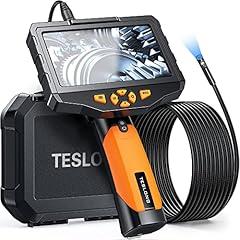
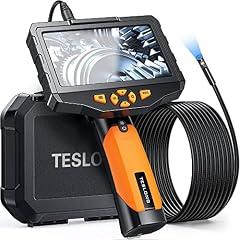
Teslong Dual Lens Endoscope Camera
Overview
This is a handheld, battery-powered inspection camera with a pistol-grip monitor, a detachable flexible probe, and switchable forward and side cameras. The listed configuration has a 5-inch 854 by 480 screen, 5-meter probe, 32 GB microSD card, photo capture, 720p video recording, and a 5,000 mAh lithium battery. It is intended for close-range viewing inside engines, walls, plumbing, ducts, and similar inaccessible spaces. Teslong states that the probe, not the monitor, is IP67 for immersion to 1 meter for up to 30 minutes. It also states close fixed-focus ranges of about 0.79 to 3.15 inches, so image usefulness depends heavily on keeping surfaces near the lens. The manufacturer provides a manual, U.S. support contact, and a 12-month warranty. No model-matched UL, ETL, battery transport, optical-radiation, or accredited ingress-test report was located in the checked public records.
What works
- The forward and side cameras can document surfaces that are hard to view by rotating a single fixed camera, manufacturer-stated.
- The stated close focus ranges and 78 to 80 degree fields of view set useful expectations for near-surface inspection, rather than implying long-distance focus.
- Photos and 720p video can be saved to microSD, and the operating display includes a date and time indicator.
- The probe is detachable, and Teslong sells compatible replacement probes for this monitor family.
- Teslong identifies U.S. phone and email support and states a 12-month warranty.
What does not
- The IP67 claim is manufacturer-stated. No exact-model IEC 60529 test report from an accredited laboratory was found.
- No publicly checkable UL, ETL, CSA, battery-cell, charger, or optical-radiation certification record was found for this product.
- The product is not presented with hazardous-location approval or clear warnings against use near energized equipment, flammable vapors, sewer gas, or confined spaces.
- The manufacturer calls it professional, but its 1-megapixel camera, fixed close focus, 854 by 480 display, and 720p video limit the evidence available for high-consequence diagnosis.
- The official product page carries a California cancer and reproductive harm warning, but does not identify the chemical or exposure route there.
Who is it for
It suits a homeowner, technician, or automotive DIY user who needs a self-contained camera for short, close-range visual checks in a dry engine bay, wall cavity, appliance, drain line, or HVAC access point. The 5-meter probe can reach beyond a nearby opening, while the side lens can help inspect a surface after the probe is in place. It is most appropriate where saved images or video support a routine visual check, not a safety-critical determination, and where the probe can be retrieved easily if it snags.
Who is it not for
It is not for work in a permit-required confined space, sewage atmosphere, fuel vapor area, classified hazardous location, or around live electrical equipment. The checked materials do not establish intrinsic safety or hazardous-location approval. It is also unsuitable when a finding must be traceable to calibrated optics, verified resolution, secure records, or a documented inspection procedure, such as formal nondestructive testing or an expert report. Avoid wet use of the monitor, connector, charging cable, and power source, because the stated immersion rating applies to the probe only.
Integrity
The product uses a rechargeable lithium battery and an LED-lit probe, but the checked public materials did not provide a model-matched UL, ETL, IEC 62133-2, UN 38.3, or optical-radiation test record. The manual gives basic operating directions and identifies a 5 V USB charging input, but it does not establish suitability for explosive atmospheres, live electrical work, or confined-space entry. Teslong's official product page also displays a California cancer and reproductive harm warning. The page does not specify the chemical or exposure route. The detachable probe is a practical repairability advantage, and compatible probes are sold separately. Teslong also states a 12-month warranty and lifetime technical support. However, battery chemistry, watt-hours, a U.S. battery take-back route, and product-specific end-of-life instructions were not found. Treat the device as electronic waste and route its lithium battery through an appropriate local battery or electronics recycling program rather than household trash.
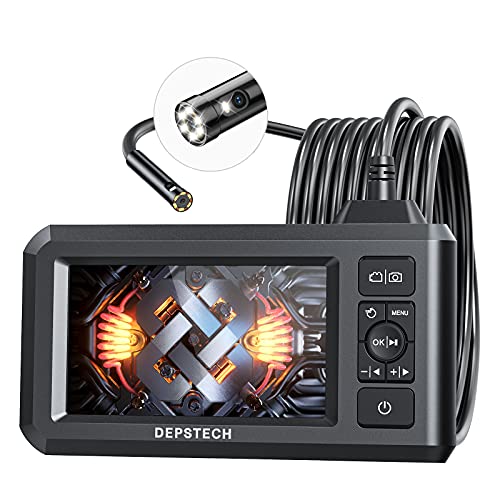
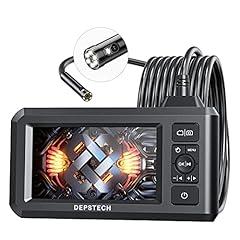
DEPSTECH Dual Lens 1080P Industrial Endoscope
Overview
This is a handheld, screen-equipped industrial inspection camera for looking into pipes, vehicle cavities, ducts, wall voids, and other inaccessible areas. It has a 16.5-foot semi-rigid cable, a 7.9 mm dual-camera probe, a 4.3-inch display, adjustable probe LEDs, and a Micro-USB charging port. Photos and video save to a TF card. The manufacturer states that the dual cameras offer front, side, and split-screen views, with fixed focus ranges of about 1.2 to 3.1 inches for the front camera and 0.8 to 2.4 inches for the side camera. Its manual specifically limits the IP67 claim to the probe, not the display or charging port. The same manual gives a 32 to 113 F operating range and warns users not to replace the built-in battery themselves.
What works
- Dual front and side cameras can show two directions without fitting a mirror, according to the manufacturer.
- The manufacturer gives concrete fixed-focus ranges for both cameras, which helps set realistic working-distance expectations.
- The manual supports photo and video capture to removable TF storage, with support stated up to 32GB.
- The manual identifies the probe, rather than the whole handheld unit, as IP67 rated.
What does not
- No publicly traceable UL, ETL, CSA, IEC 60529 ingress-test, battery transport-test, or optical-radiation report was found for this exact product.
- The manual does not plainly prohibit use near energized conductors, flammable vapor, sewer gas, or hazardous locations. It is not presented as explosion-protected equipment.
- The fixed-focus ranges are short, so images outside the stated working distance may not support close defect assessment.
- Recording is useful for reference, but the available documentation does not establish timestamps, measurement calibration, tamper resistance, or inspection-grade traceability.
Who is it for
This product suits a homeowner, DIY vehicle owner, maintenance worker, or technician who needs a self-contained camera for occasional visual checks in dry cavities, drain lines, appliances, HVAC ducts, or engine areas. It is especially suited to work where the object can be held roughly 1 to 3 inches from the probe, and where front and side views help locate a blockage, fastener, dropped item, or visible surface condition. The integrated screen and included storage reduce dependence on a phone or app.
Who is it not for
It is not suited to inspections around live electrical equipment, gasoline or solvent vapors, sewer gas, combustible dust, or permit-required confined spaces. The documentation does not establish hazardous-location approval or give adequate non-rated-use warnings for those environments. It also is not appropriate where a finding must be defensible as a professional diagnostic record, such as regulated nondestructive testing, insurance documentation, or safety-critical defect clearance. Users needing calibrated measurements, articulated steering, verified immersion limits, or removable battery service need a differently documented tool.
Integrity
The manual gives practical battery and temperature cautions. It says not to replace the built-in battery, advises charging it periodically, and sets operating conditions at 32 to 113 F. It also says to keep the device away from fire, oils, water, and chemicals. These are useful limits, but the documentation does not provide a publicly checkable battery certification, battery chemistry, watt-hour rating, charger safety listing, or lithium-battery transport test summary. The wet-use claim is narrower than the product title can suggest. The manual identifies only the probe as IP67 rated, so the display and Micro-USB port should remain dry. No exact-model third-party ingress report was located. The manual includes European WEEE and battery-disposal language, but no U.S. take-back, battery-recycling, replacement-battery, cable-repair, or spare-parts program was found. A manufacturer address and support contact are provided. No matching CPSC recall was located during this review.

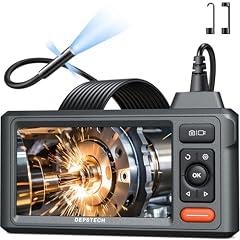
DEPSTECH 1080P Triple Lens Inspection Camera
Overview
This is a self-contained handheld inspection camera for looking inside pipes, wall cavities, engines, HVAC routes, and other inaccessible spaces. It uses a 5-inch IPS display and a 16.5-foot semi-rigid probe cable, rather than requiring a phone or computer. DEPSTECH states that the camera head switches among one front and two side views, has adjustable LEDs, and records 2 MP stills and 1080p video to an included 32 GB microSD card. DEPSTECH also states that only the probe is IP67 rated, not the display unit, and quotes 2 to 3 hours of operation. Those are manufacturer claims, not independently matched test reports. No publicly checkable exact-model safety, battery, ingress, optical, or hazardous-location certification was located in the reviewed certification sources. Its evidence supports ordinary visual checking, not a determination that a defect, leak, gas hazard, or electrical condition is safe.
What works
- Three selectable camera views can reduce repeated probe repositioning, manufacturer-stated.
- The manufacturer specifies onboard photo and video saving to an included 32 GB microSD card.
- The stated 16.5-foot semi-rigid cable gives useful reach for many household and vehicle inspection tasks.
- DEPSTECH publicly identifies the product and states a 24-month warranty with customer support.
What does not
- The IP67 claim is limited to the probe, with no public exact-model ingress report defining tested depth, duration, or water type.
- No public exact-model UL, ETL, CSA, battery transport, optical-radiation, or hazardous-location approval was located.
- There is no documented focus range, optical-resolution test, unedited sample set, timestamp specification, or tamper-resistant record system for this 5-meter version.
- The manufacturer does not publish bend radius, pull strength, temperature limits, or a replacement probe and cable listing for this product.
- A battery chemistry, watt-hour rating, replacement procedure, and U.S. recycling or take-back instructions were not found.
Who is it for
It suits a homeowner, DIY vehicle maintainer, or technician who needs a handheld visual aid for short, noncritical checks in dry spaces or where only the probe enters ordinary clean water. The practical use case is locating an obstruction, dropped item, loose fastener, or visibly damaged part before deciding what work is needed. The three stated views and local microSD recording are useful where a phone connection is inconvenient. Users should treat the images as preliminary visual information and keep the display, charging connection, and operator out of wet areas.
Who is it not for
It is not for work in fuel systems, gas lines, sewers with possible methane or hydrogen sulfide, classified industrial locations, or permit-required confined spaces. There is no verified explosion-protection rating for the product, and its lights and rechargeable electronics should not be presumed ignition-safe. It is also unsuitable where records must be traceable, time-stamped, calibrated, or defensible for formal inspection decisions. Choose a purpose-rated system for energized electrical equipment, medical use, high-temperature environments, retrieval jobs where a stuck probe would be costly, or work requiring documented optical performance.
Integrity
The important safety boundary is that DEPSTECH describes the probe as IP67, while the display unit is not presented as submersible. Keep the handheld unit, USB charging connection, and charger dry. The reviewed manufacturer page does not provide an exact-model third-party safety listing, battery-cell certification, lithium battery transport summary, LED optical-safety report, or hazardous-location approval. The product therefore should not be used around flammable vapor, combustible dust, live electrical hazards, or untested confined-space atmospheres. No matching CPSC recall or product-safety warning was located in the reviewed U.S. safety sources. That is not independent proof of product safety. Environmental information is limited. DEPSTECH states a 24-month warranty, but published exact-product guidance for battery replacement, cable replacement, repair service, battery chemistry, or U.S. recycling and take-back was not located. A failed internal battery, display, or attached probe may therefore be difficult to service, so use local electronics and battery recycling options rather than household trash.

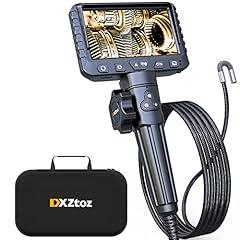
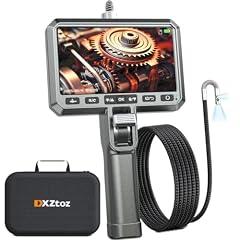
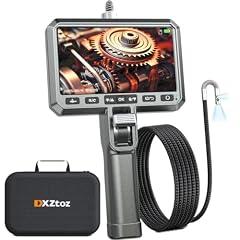
DXZtoz Two-Way Articulating Borescope
Overview
This is a self-contained industrial inspection camera with a 4.3-inch display, a rechargeable 3000 mAh lithium battery, a steerable probe, LED adjustment, and photo and video capture to a TF card. It is intended for looking into inaccessible machinery, engines, pipes, HVAC spaces, and similar non-medical areas. The available product manual states a 2 to 15 cm best viewing distance, 1920 by 1080 camera resolution, AVI recording, and two-way 180-degree steering. It also says only the camera and cable are waterproof, not the display unit. Those are manufacturer-stated specifications, not independently tested results. The documentation is materially inconsistent elsewhere, including references to 360-degree steering and differing probe and cable specifications, so the stated details should be confirmed against the unit and packaging received.
What works
- The manual provides a practical close-focus range of 2 to 15 cm, which is relevant for nearby engine and mechanical surfaces.
- Photo and AVI video recording to a TF card can preserve visual findings instead of relying solely on live viewing.
- The instructions explicitly separate the wet-use scope of the camera and cable from the non-waterproof display unit.
- The manual gives non-medical and no-child-operation limits, plus a warning not to disassemble a damaged product.
What does not
- No publicly traceable UL, ETL, CSA, IEC 62133-2, battery transport, optical-radiation, or ingress-test record was located for this exact product.
- The waterproof statement is limited to the camera and cable, and no exact-model report establishes immersion depth, duration, water type, or connector protection.
- The documentation contains conflicting steering and physical-specification statements. This is a claim-quality problem, not merely missing independent evidence.
- The instructions do not establish recording timestamps, orientation metadata, calibrated image performance, or diagnostic reliability for consequential professional inspection.
- No replacement-parts catalog, battery replacement procedure, or U.S. recycling and take-back instructions were located.
Who is it for
It suits a hands-on owner or technician who needs a compact, standalone camera for close visual checks inside an engine bay, appliance cavity, duct, dry pipe, or accessible machine space. The stated 2 to 15 cm focus range and two-way steering are most relevant when the target is near the probe tip and the user can treat images as a visual aid. It also fits users who want local photo or video capture without connecting a phone. Wet work should keep the display outside the wet area.
Who is it not for
It is not for medical or body examination, and the manual expressly excludes that use. It is also unsuitable for flammable-vapor areas, gas-related confined spaces, or work around energized electrical equipment where a hazardous-location rating and a job-specific safety procedure are required. Do not choose it for inspections that demand calibrated imaging, timestamps, traceable orientation, certified ingress protection, or formal nondestructive-testing records. Users who expect repairable probe, battery, or display modules should seek a product with documented parts and service support.
Integrity
The available instructions include useful basic limits. They state that the display unit must not be immersed, identify only the camera and cable as waterproof, advise against use around flammable gases or liquids, exclude medical and human-body use, and tell users not to disassemble a damaged product. The manual also identifies a 3000 mAh rechargeable lithium battery and USB-C charging. These are manufacturer instructions rather than independent safety certification evidence. No publicly checkable exact-product listing or test report was located for electrical safety, lithium-battery safety, optical radiation, or IP67 ingress performance. The visible certification-style markings in the manual are not enough to establish a U.S. safety listing. End-of-life support is also thin. The instructions direct users with damage to contact the seller, but no replaceable battery, probe, cable, parts catalog, manufacturer take-back program, or U.S. battery recycling guidance was located.

Daxiongmao Endoscope Camera with Light 4.3”
Overview
This is a handheld inspection camera with a 4.3-inch display, an attached 16.5-foot semi-rigid camera cable, adjustable LEDs, USB file transfer, and onboard 32GB storage claimed by the manufacturer. It is intended for visual checks in wall cavities, vents, plumbing, and vehicle areas without needing a phone or app. The manufacturer states that the product has switchable front and side cameras, 1080p capture, and its clearest working distance is 3 cm to 10 cm. An independently hosted manual copy describes the probe as IP67 waterproof, rather than the whole display unit. No public exact-product laboratory report was located for ingress protection, battery safety, optical output, or mechanical durability. Published product materials also conflict on warranty duration and describe the wet-use rating as both IP67 and IPX7.
What works
- Manufacturer-stated onboard storage, timestamps, photo capture, video recording, and USB transfer can support basic documentation of a household inspection.
- The manufacturer states that front and side cameras can be switched at the probe, which can reduce repositioning in tight cavities.
- The stated 3 cm to 10 cm best viewing distance gives users a practical limit for obtaining clearer close-up images.
- A 16.5-foot semi-rigid cable is manufacturer-stated to hold its shape, which can help guide the camera along relatively straight concealed routes.
What does not
- No public, model-matched UL, ETL, CSA, accredited laboratory, battery transport, optical-radiation, or ingress-test record was located.
- The waterproof claim is limited in the available manual to the probe. Depth, duration, liquid type, connector protection, and display-unit wet-use limits are not specified.
- The manufacturer provides no stated bend radius, pull rating, temperature range, retrieval method, replacement probe option, or cable-life test evidence.
- This is not documented as intrinsically safe or hazardous-location approved. It should not be energized around flammable vapors, sewer gas, or live electrical equipment.
- Published materials conflict on IP terminology and warranty length, reducing confidence in the precision of supporting claims.
Who is it for
This product suits a homeowner or occasional DIY user who needs live visual access inside a dry wall cavity, HVAC vent, drain section, appliance gap, or de-energized vehicle area. Its practical fit is a basic visual check where a 16.5-foot cable, onboard screen, and saved photos or clips are useful, but the finding will be confirmed by direct access or a qualified technician when the consequence of error is significant. It is also suited to users who can keep the screen and charging connection dry.
Who is it not for
It is not for inspections involving gasoline, solvents, methane, sewer gas, combustible dust, classified industrial locations, or any confined space with a potential hazardous atmosphere. It is also not for probing live electrical equipment or using image findings as a professional diagnostic, safety-release, or code-compliance record. Buyers needing documented immersion limits, calibrated image quality, repeatable measurement, replaceable probes, or a verified service path should use equipment with model-specific test reports and support documentation. Do not treat the camera as a gas detector or safety monitor.
Integrity
The available documentation identifies a lithium-polymer battery, but does not provide a public model-matched safety certification, battery capacity label, UN 38.3 transport summary, or optical-radiation report for the LED illumination. No exact-product listing was located in the checked UL, ETL, or CSA certification searches. No matching CPSC recall was located in the searched public recall resources as of August 16, 2026, which is not the same as independent safety verification. The wet-use claim should be read narrowly. The independently hosted manual describes the probe as IP67 waterproof, while the manufacturer page uses IPX7 for the cable. Neither source establishes safe use of the display, charging port, or other electronics in water. The product contains a rechargeable lithium battery and electronics, yet no manufacturer take-back program, battery-removal instructions, or replacement-parts catalog was located. At end of life, use an electronics or battery collection route, not household trash or curbside recycling.

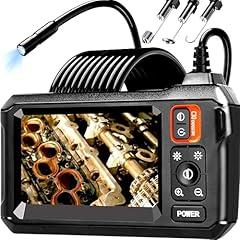
DXZtoz Dual Lens Borescope with Light
Overview
This product is a handheld industrial inspection camera with a 5-inch screen, a 5-foot semi-rigid 6.5 mm probe, adjustable tip LEDs, and local photo and video capture to a microSD card. It is intended for visual checks inside engines, equipment cavities, walls, and other inaccessible areas without taking them apart. The manufacturer’s own product page identifies two cameras, including a side-facing view, and two-way tip articulation up to 210 degrees. Its published instructions state a 2 to 15 cm best focus range, a 90-degree field of view, USB-C charging, and an included 32 GB memory card. These are useful working specifications, but no exact-product independent optical test, ingress report, battery-safety record, or hazardous-location approval was located. The product should therefore be treated as a visual aid, not as a certified diagnostic or intrinsically safe instrument.
What works
- The manufacturer states that the slim probe combines front and side cameras, which can reduce repositioning in cramped cavities.
- Manufacturer-stated two-way 210-degree articulation can help aim the camera after insertion.
- The instructions describe local photo and video recording to the included memory card, useful for documenting a visual check.
- The stated 2 to 15 cm focus range gives a concrete close-inspection working limit rather than relying only on a pixel claim.
What does not
- No public exact-product UL, ETL, CSA, battery transport, optical-radiation, or ingress-test documentation was found.
- Waterproofing is described only for the probe. No IP code, immersion depth, duration, liquid type, or coverage for the display and connectors was located.
- The published materials conflict on digital zoom, with one specification listing 10x and the instructions listing 8x.
- No public limits for bend radius, pull force, operating temperature, cable service life, replacement probe availability, or repair procedure were located.
- Recorded media is useful for reference, but the materials reviewed do not establish timestamps, orientation tracking, calibration, or traceable diagnostic records.
Who is it for
This product suits a hands-on mechanic, maintenance worker, or homeowner who needs to look inside a dry or controlled wet cavity and wants an onboard display instead of a phone-connected camera. The stated 6.5 mm probe, 5-foot reach, side view, and articulating tip are most relevant where access is narrow and the camera cannot simply be rotated. It also suits low-consequence documentation tasks, such as recording visible deposits, loose hardware, or an obstructed route before disassembly.
Who is it not for
It is not for work in flammable vapor areas, fuel tanks, sewers, hazardous dust locations, or permit-required confined spaces. No exact-product hazardous-location approval or safe-use warning set was located, and OSHA requires atmospheric evaluation and controlled entry procedures in permit spaces. It is also not appropriate where an inspection record must establish a professional finding, because no calibration, timestamp, orientation, or independently verified imaging evidence was found. Avoid relying on its waterproof claim for the display, charging port, or unknown immersion conditions.
Integrity
The safety case is mainly unverified rather than affirmatively problematic. Searches did not identify a matching CPSC recall or a public U.S. regulatory action, but no public exact-product listing was found in the searched UL, Intertek ETL, CSA, or FCC records. The manufacturer describes a rechargeable USB-C product with adjustable LEDs, yet does not publish battery chemistry, watt-hour rating, charger certification, optical-radiation testing, or an ingress test report. Keep the electronics and charging connection dry, use only in non-hazardous atmospheres, and do not treat the camera as gas-testing equipment. Repair and disposal information is limited. No replacement battery, probe, cable, or display parts catalog, repair guide, or U.S. take-back program was located. If the product contains a lithium-ion battery, EPA advises keeping battery-containing electronics out of household trash and curbside recycling because damage can create a fire hazard. Use an electronics or battery collection program at end of life.

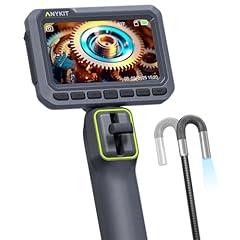
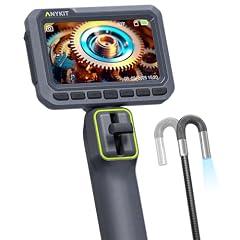
Anykit Articulating Borescope 210° Slim Probe Camera
Overview
This is a handheld, self-contained industrial inspection camera for looking inside engines, wall cavities, plumbing access points, and similar confined spaces. The product is sold with a 4-foot semi-rigid cable, a 0.22-inch probe, a 4.3-inch IPS display, adjustable tip LEDs, onboard image orientation controls, and a stated 210-degree two-way articulating tip. It records to an included 8 GB memory card, according to a third-party retail page reproducing the product specifications. The most consequential safety information comes from Anykit's general borescope safety manual, not an exact-product test report. It says the monitor is only water resistant, while camera probes are claimed to meet IP67 conditions of dust exposure and immersion to 1 meter for 30 minutes. The same manual clearly prohibits use near live electrical wiring, flammable substances, moving parts, or for medical inspection. No public third-party certification, ingress report, optical test, or battery transport summary matched to this product was located.
What works
- Two-way tip articulation is a concrete manufacturer-stated aid for viewing around obstructions in confined mechanical spaces.
- The dedicated display avoids dependence on a phone, app, wireless connection, or account for basic viewing.
- The manufacturer safety manual gives specific wet-use limits for the probe, and separately warns against submerging the monitor.
- The safety guidance directly addresses live electrical charge, flammable gases, moving machinery, bright LEDs, drain contamination, and safe handling of an articulating probe.
What does not
- The IP67 statement comes from a general Anykit safety document, not a publicly available ingress test report for this exact product.
- No independently checkable UL, ETL, CSA, TÜV, IEC 62471, battery certification, or UN 38.3 record was found for this product.
- There is no published exact-product optical test showing effective focus range, field of view, distortion, or image detail at working distances.
- Recording is useful for reference, but the available specifications do not establish timestamps, orientation metadata, tamper resistance, or an export workflow suitable for high-consequence inspection records.
- The catalog battery entry conflicts with the independently reproduced product description, which states a built-in 3000 mAh battery. Battery chemistry and replaceability are not clearly documented.
Who is it for
This product suits a mechanic, maintenance worker, or capable home user inspecting short, non-energized spaces where a 4-foot reach is enough. Its value is in seeing around nearby corners in engine bays, appliance cavities, ducts, and accessible plumbing areas without setting up a phone. It is most appropriate when the image is one input to hands-on diagnosis, not the sole basis for a safety-critical conclusion. Users should be prepared to keep the display dry and follow the articulation handling instructions.
Who is it not for
It is not suited to inspections near energized wiring, potentially explosive vapors, sewer gas, moving equipment, or permit-required confined spaces. The available documentation does not show hazardous-location approval for those environments. It is also unsuitable for medical or personal examination, which Anykit expressly prohibits. Buyers needing long plumbing runs need more than a 4-foot cable. Professionals who must produce auditable defect findings, measurements, timestamps, or independently validated optical evidence should use equipment and procedures designed for that level of record integrity.
Integrity
Anykit's published borescope safety guidance is more useful than a generic warning sheet. It says not to put the probe near live electrical charge, moving parts, flammable materials, or gases. It also advises gloves, eye protection, hygiene after drain work, drying the unit before charging, and avoiding direct viewing into the bright probe LEDs. The product is not a medical device and should not be used for personal inspection. The monitor should not be submerged. Anykit's general manual limits its IP67 claim to camera probes, with a stated maximum of 1 meter for 30 minutes. No matching third-party ingress, electrical safety, optical-radiation, or battery certification record was located. The manufacturer provides support contact details and general e-waste disposal advice, but says the camera contains no user-serviceable components. There is no identified take-back program, replacement battery option, or repair-parts listing, so a battery, cable, screen, or articulation failure may lead to whole-product replacement.

DEPSTECH 2K Dual Lens Endoscope Camera
Overview
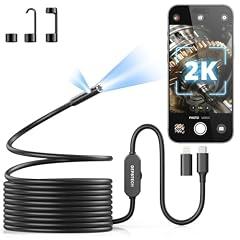
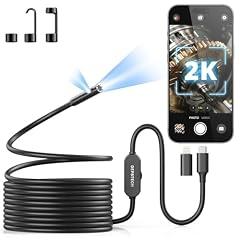
This is a phone-powered inspection camera for looking into drains, engine spaces, wall cavities, and other inaccessible areas. It connects by USB-C or a Lightning adapter and uses the DEPSTECHCAM app to show live video, take photos, and record MP4 video. DEPSTECH states that it has a 16.5-foot semi-rigid cable, a 7.9 mm dual-camera probe, adjustable LEDs, and a stated 2K, 2560 by 1440, image stream. The manufacturer identifies a close working range of about 2 to 10 cm for the main camera, with a shorter stated range for the side camera. Its published instructions say the camera probe and cable are IP67 rated, while the connector and phone must stay dry. These are manufacturer claims. No public exact-product ingress report, optical test chart, electrical-safety listing, or hazardous-location approval was located.
What works
- The stated 16.5-foot semi-rigid cable can reach into many household and vehicle cavities while retaining some directional control.
- Manufacturer documentation gives a concrete close-focus range, 80-degree field of view, adjustable lighting, and JPEG and MP4 capture formats.
- Forward and side cameras can reduce the need to withdraw and rotate the cable for a second view, although they do not create a literal 360-degree view.
- The manufacturer states a two-year product-support warranty and provides basic cable-care instructions.
What does not
- No publicly checkable UL, ETL, CSA, IP67 laboratory report, optical test report, or other independent certification was located for this exact product.
- The wet-use claim is limited by documentation, which does not provide an immersion depth, duration, water chemistry limit, or test report for this product.
- It is not presented as intrinsically safe or approved for flammable vapors, sewer gas, or hazardous locations, yet the marketing includes sewer and wiring uses.
- The advertised "360° inspection" wording overstates what two fixed front and side lenses can establish. It also lacks timestamp, measurement, calibration, and tamper-control features for consequential inspection records.
- No replacement cable, probe, connector, repair procedure, or manufacturer take-back program was identified.
Who is it for
This product suits a homeowner, hobby mechanic, or maintenance worker who needs a low-voltage visual aid for short, close-range checks in a dry or controlled setting. Examples include looking behind an appliance, checking a cooled engine compartment, locating a dropped metal item with the supplied magnet, or viewing a household drain after ordinary precautions. It is most appropriate when the phone is compatible, OTG is enabled on Android where needed, and the resulting pictures are used as informal evidence rather than a final diagnostic record.
Who is it not for
It is not suitable for work in spaces with gasoline vapor, sewer gas, other flammable atmospheres, or permit-required confined spaces. It has no verified hazardous-location approval, and OSHA requires atmospheric hazard controls and suitable equipment in those settings. It is also unsuitable for inspecting energized electrical equipment, medical or animal internal examination, hot engines or hot process equipment, or cases where a timestamped, calibrated, traceable inspection record is required. Users needing deep-water use should choose equipment with documented whole-system immersion limits.
Integrity
The product is USB-powered from the connected phone, rather than using a separate onboard rechargeable battery or charger. That reduces one common battery-fire pathway, but no public electrical-safety listing or exact-product optical-radiation report was found. The instructions advise against medical use, caution against pulling or striking the probe, and say to let hot engines or equipment cool before inspection. Keep the phone and USB connector dry, because the stated IP67 protection applies to the probe and cable, not the connected electronics. No exact-product recall or CPSC safety action was located in the checked U.S. sources. The manufacturer does not appear to publish replacement-part, repair, or take-back information for this product. Treat the cable-and-camera assembly as e-waste at end of life. If a connected device contains a lithium-ion battery, EPA says it should not enter household trash or curbside recycling.

Anykit HD Endoscope Camera 1920P 9.8ft
Overview
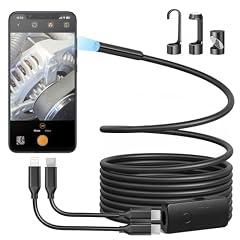
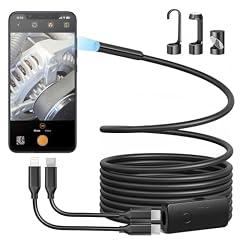
This is a phone-powered inspection camera with a 9.8-foot semi-rigid cable, an 8.5 mm fixed-focus probe, eight dimmable LEDs, and screw-on hook, magnet, and mirror attachments. It connects to compatible Android devices through USB-C and to supported iPhones or iPads through a Lightning adapter. Photos and video are saved to the connected phone through the Xscope app, according to the available product documentation. Anykit’s own manual for the related NTC30L model identifies a 3 to 10 cm front-view focus range, a 79-degree view angle, IP67 probe waterproofing, and a one-year limited warranty. The product record, however, uses a “1920P” headline while its detailed specifications identify 1080p video and a 2 MP sensor. No public, exact-product optical test, ingress test report, electrical-safety listing, or hazardous-location approval was located.
What works
- The semi-rigid 9.8-foot cable is intended to hold its shape for reaching behind panels, into drains, and around engine components, manufacturer-stated.
- The documented 3 to 10 cm front focus range gives a concrete working-distance limit rather than relying solely on a pixel claim.
- The manual says photos and recordings save directly to the connected phone, which simplifies retaining basic visual records.
- The available instructions clearly limit wet use to the probe and tell users to keep the connector and control unit dry.
- The manual expressly says this product is not for medical use or internal human or animal examination.
What does not
- The advertised “1920P” wording is not reconciled with the detailed 1080p and 2 MP specifications, which weakens confidence in the image-resolution claim.
- No traceable independent test report was located for this product’s IP67 claim, optical resolution, LED optical safety, or electrical safety.
- IP67 is described for the camera probe only. The cable controls and phone connector must remain dry.
- There is no stated approval for flammable atmospheres, live electrical work, sewer gas, or permit-required confined spaces.
- No published bend radius, pull rating, temperature range, replacement probe option, or repair parts catalog was located.
Who is it for
This product suits a homeowner, hobby mechanic, or maintenance worker who needs a low-complexity visual aid for short-range checks in dry equipment cavities, wall openings, sink traps, appliance gaps, or nonhazardous plumbing. It is most appropriate when the user already has a compatible phone, can work within the stated 3 to 10 cm focus range, and understands that the screen image is a guide for locating an issue rather than proof of its cause. The hook, magnet, and mirror can also help with light retrieval or side viewing.
Who is it not for
It is not for medical, ear, body, animal, or food-contact inspection. It is also unsuitable for inspections where a missed defect could create a safety, insurance, regulatory, or repair decision because no independent optical-performance or record-integrity evidence was located. Do not use it around energized electrical equipment, fuel vapor, combustible dust, sewer gas, or permit-required confined spaces. The available documentation does not provide an intrinsically safe or hazardous-location rating, and the phone connector and control section must stay dry.
Integrity
The available instructions provide useful basic limits. They say not to use the camera for medical or internal human or animal examination, keep children and bystanders away during use, avoid extreme temperatures, and keep the connector and control section dry. They also say the camera may become hot at maximum LED brightness. These are practical warnings, but no public electrical-safety listing, battery certification, LED optical-radiation report, or hazardous-location approval for this product was located. The probe-only water claim is manufacturer-stated as IP67, without a public exact-product test report that defines immersion depth, duration, water type, or coverage beyond the probe. Anykit provides a support phone number, email, manual, and limited warranty, but no published spare-parts catalog, repair procedure, take-back program, or product-specific recycling instructions were found. Treat the camera and accessories as electronic waste at end of life and use an electronics recycler rather than household trash.