
10 Best Indoor Bike Trainer
 Brianna York
Please note that we participate in affiliate marketing programs. When you purchase through links on our site, we may earn a commission. As an Amazon Associate we earn from qualifying purchases. This comes at no additional cost to you and helps support the resources required to provide valuable content.Advertising Disclosure
Top-rated Indoor Bike Trainer Comparison
1

2
4
5
6
7
8

9


Indoor bike trainers: what matters
An indoor bike trainer lets you exercise when outdoor riding is impractical. Wheel-on models clamp a compatible bicycle at the rear axle and press a roller against its tire. Direct-drive models remove the rear wheel and attach the bicycle to the trainer, usually through a cassette. Rollers support the bicycle without clamping it, so the rider supplies the balance. Self-contained stationary and recumbent bikes are related alternatives, but they do not require a separate bicycle.
The first buying question is whether the equipment and bicycle actually fit. Check rear axle type, dropout spacing, wheel and tire size, tire width, frame clearance, cassette or drivetrain requirements, and the combined rider-and-bike limit. A general “road and mountain bike” statement is not enough. Several supplied reviews found conflicting wheel ranges, axle limits, or load figures. Through-axles, unusual dropouts, wide tires, disc-brake clearance, e-bike loads, and unsupported frames can all change the answer. Follow the exact compatibility chart and manual, and use the more conservative limit when published information conflicts.
Next, decide whether you need measured or controllable performance. A resistance or power headline is meaningful only when the exact model and firmware are identified and the test reports the setup, cadence or load, reference instrument, uncertainty, and results. Useful verification should align with the applicable ISO 20957 requirements and, where claimed, a traceable independent laboratory report. A product that says “2,000 watts,” “±1% accuracy,” “19% gradient,” or “quiet” without those conditions is making a claim, not providing a demonstrated result. Independent ride tests can still be useful, but they are evidence from a tested sample rather than a safety certification or universal calibration certificate.
For powered trainers, look for the complete product and supplied adapter in a public North American third-party safety register: OSHA’s Nationally Recognized Testing Laboratory list, UL Product iQ, Intertek’s ETL directory, or the CSA listing database. FCC authorization of a Bluetooth radio does not establish electrical, fire, structural, or exercise-equipment safety. For smart features, confirm current Bluetooth, ANT+, Wi-Fi, app, firmware, subscription, and automatic-resistance support. Also check what data the app collects, whether an account is required, and whether advertised functions depend on a paid service.
Safety is more than a stable frame. Wheel retention, clamp tightening, level flooring, skewer or axle selection, roller contact, exposed belts and flywheels, pinch points, hot resistance units, and safe cool-down instructions all matter. Roller trainers require particular caution because the bicycle is not retained and can move off the ends. Wheel-on trainers trade lower setup cost for tire wear, noise, vibration, and possible heat at the tire-roller contact. Direct-drive designs avoid that tire abrasion but still have moving drivetrains and electrical components. No supplied product had a model-specific public third-party safety certification; several also lacked complete parts, service, or U.S. responsible-party information.
The recurring caveats are significant: confirm fit and load limits before riding; do not assume a product is quiet from an unmeasured claim; keep children, pets, loose clothing, and hands away from moving parts; and use extra care with fixed-flywheel bikes, open rollers, or forceful standing efforts. People with symptoms, recent injury, balance limitations, or cardiovascular, metabolic, or other conditions should obtain individualized clinical or exercise-professional guidance. No category-wide contraindication was found in the supplied data, but no trainer should be treated as a medical or rehabilitation device without supporting evidence.
Integrity
These topics distinguish a trainer that can support ordinary indoor exercise from one whose safety, fit, performance, data, and lifecycle claims are more convincingly documented. Scores reflect the supplied reviews and are most useful when read alongside each product’s stated limitations.
HHealth & Safety
Health value and safe training guidance
This measures whether the trainer supports adjustable aerobic exercise and offers useful intensity, progression, and medical-caution guidance. For this category, adjustable resistance alone is not a training prescription. Higher-scoring products had clearer warm-up, symptom-stop, physician-caution, or resistance guidance; lower-scoring products lacked progression ranges, heart-rate guidance, or rehabilitation support. None should be treated as a medical device.
Stable, secure ride
This measures resistance to tipping, roll-off, bicycle release, and unsafe mounting or dismounting. It matters because wheel-on clamps, direct-drive axle mounts, fixed bikes, and open rollers fail differently. Higher scores reflected documented retention, leveling, or stable independent riding; lower scores reflected balance dependence, rocking, conflicting limits, or no independent stability testing. Rollers deserve particular caution because they do not retain the bicycle.
Protection from rollers, pinch points, and heat
This measures guarding, warnings, and operating or cool-down instructions for rotating rollers, belts, flywheels, pinch points, and hot resistance contacts. Higher scores came with explicit moving-part warnings, emergency stopping, or setup guidance. Lower scores reflected exposed rollers or drivetrains, unclear guarding, or absent cool-down instructions. Keep hands, clothing, children, and pets away from moving equipment.
Electrical and fire safety
This measures the powered trainer, adapter, battery, wiring, and charging limits, with emphasis on a verifiable North American third-party safety listing. Higher scores generally belonged to non-powered products or products with fewer electrical dependencies; lower scores reflected powered systems without a public UL, ETL, CSA, or comparable listing. Bluetooth or FCC radio authorization alone does not establish complete electrical safety.
Your bike and body actually fit
This measures axle type, dropout spacing, wheel and tire dimensions, frame clearance, load limits, and trainer-tire requirements. It is especially important because several supplied products had contradictory wheel or weight information. Higher scores had detailed compatibility charts and adapters; lower scores omitted through-axle, tire-width, clearance, or combined-load information. Confirm the exact bicycle and the conservative published limit before use.
EEvidence
Measured resistance, power, and noise performance
This measures whether claims about power, resistance, gradient, cadence, and noise match repeatable tests under stated conditions. Higher scores came from independent power or acoustic comparisons tied to a tested sample; lower scores reflected manufacturer-only figures, setup sensitivity, or no quantified output. A displayed wattage or “silent” label is not independently established without test conditions and reference methods.
Reliable smart features and respectful data handling
This measures whether app compatibility, Bluetooth, ANT+, Wi-Fi, automatic resistance, firmware, subscriptions, and data collection are disclosed and maintained. Higher scores reflected documented protocols, current firmware or app support, and limited dependence on software; lower scores reflected unclear model matching, subscription requirements, stale privacy information, or broad data collection. Confirm the current app and privacy terms before relying on smart functions.
Honest performance and health claims
This measures whether marketing distinguishes wheel-on, direct-drive, roller, fluid, magnetic, and smart-trainer limits and qualifies health, quietness, app, calorie, and power claims. Higher scores belonged to products whose documentation separated tested findings from manufacturer statements. Lower scores reflected contradictory resistance descriptions, unmeasured noise or power claims, or calorie and rehabilitation suggestions that exceeded the evidence.
Independently verified, not self-declared
This measures traceable third-party certification or model-specific testing for safety, electrical integrity, accuracy, and durability. A higher score requires the exact product to appear in a public issuer register or have an independently issued report; a lower score relies mainly on seller or manufacturer declarations. Across the supplied products, no model-specific public third-party safety certification was located.
Traceable product and responsive safety support
This measures durable model or serial identification, an identifiable U.S. responsible business, safety notices, warranty terms, and a practical remedy path. Higher scores reflected serial labels, U.S. support, warranties, and accessible recall or service information. Lower scores lacked a public responsible-party route, serial format, or model-specific recall page. A warranty is helpful but does not replace recall readiness.
EEcology
Built to last and repair instead of discard
This measures service life, replacement parts, repair documentation, warranty support, and end-of-life handling. Higher-scoring products had identifiable replacement resistance units, rollers, belts, feet, skewers, or electronics. Lower scores had only a warranty or no public parts path. A durable frame helps, but repairability depends on whether practical parts and instructions remain available.
Low tire wear, vibration, and household disruption
This measures tire abrasion, floor vibration, and transmitted sound. Direct-drive and stationary-bike designs avoid the rear-tire contact inherent to wheel-on trainers, while rollers and wheel-on units can consume tires and transmit noise. Higher scores were supported by direct-drive designs or measured sound results; lower scores reflected unmeasured quiet claims, tire wear, rocking, or apartment-use concerns.
Full reviews

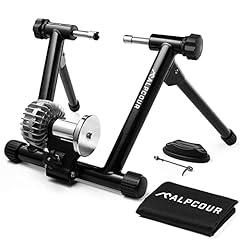
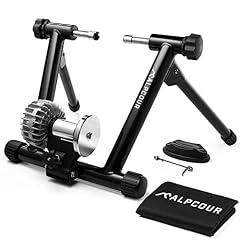
Alpcour Fluid Bike Trainer Stand
Overview
This product is a non-powered, wheel-on fluid trainer that clamps a bicycle by its rear quick-release skewer while a roller bears against the rear tire. It folds for storage and includes a front-wheel riser block, supplied trainer skewer, and carrying bag. The manufacturer identifies a stainless-steel frame and fluid resistance that increases with pedaling speed. The operating manual provides concrete setup and safety steps, including level-floor use, secure tightening, tire inflation, and keeping hands away from the spinning resistance wheel. A retailer lists a 350-pound maximum capacity, but no model-specific independent stability, resistance, power, or acoustic test was located. Compatibility information is inconsistent, with the manual stating 26 to 28 inch or 700c wheels while current retail and manufacturer pages state 26 to 29 inch or 700c wheels.
What works
- The product is entirely non-powered, so it has no charger, battery, app, account, or subscription dependency.
- The manual gives specific wheel-retention steps, including use of the supplied rear quick-release skewer, a lock ring, and correct roller tension.
- The manual includes useful basic safeguards, such as level-floor placement, pre-ride tightening checks, tire inflation, warm-up guidance, and a warning not to touch the spinning wheel.
- The manufacturer sells a replacement trainer skewer, which provides at least one identified service part.
What does not
- Wheel-size compatibility is contradictory across the product documentation. The manual specifies 26 to 28 inch or 700c wheels, while current sales pages say 26 to 29 inch or 700c.
- The supplied setup method is for a rear quick-release skewer. The available instructions do not specify through-axle compatibility, dropout spacing, tire width, frame clearance, or a rider-plus-bike limit.
- No model-specific independent test report or publicly traceable third-party safety certification was located for stability, durability, resistance, power, noise, or vibration.
- The manufacturer markets near-silent operation and reduced tire wear, but this is a tire-on-roller design. The manual itself warns that excess roller tension can damage both tire and resistance unit, and it provides no measured noise or tire-wear results.
- The manual warns about the rotating wheel and folding pinch points, but provides no cool-down guidance for the resistance unit after hard use.
Who is it for
This product suits a cyclist who already owns a conventional road or mountain bike with a compatible rear quick-release wheel and wants simple indoor aerobic riding without software or electrical equipment. It is most appropriate for steady fitness sessions, cadence work, and gear-based intensity changes on a level floor. The user should be comfortable installing the supplied skewer, checking tire inflation and roller contact before every session, and confirming fit against the more conservative 26 to 28 inch or 700c manual specification.
Who is it not for
It is not suited to riders whose bikes use through-axles, unusual dropout dimensions, very wide tires, or wheel sizes outside the manual's stated range, because the available documentation does not resolve those interfaces. It is also not suited to people needing verified power data, automatic resistance control, structured app workouts, or medically supervised rehabilitation settings. Apartment residents with sensitive neighbors should be cautious because no measured sound or vibration data was found, and tire-on-roller contact can transmit noise through flooring.
Integrity
The product can support indoor cycling, which is a practical route to aerobic activity, but the supplied guidance is basic. The manual advises warming up and consulting a physician before starting exercise, yet it does not provide intensity ranges, progression plans, heart-rate guidance, or rehabilitation protocols. Users with symptoms, recent injury, cardiovascular risk, or balance concerns need individualized clinical or exercise-professional guidance rather than relying on the product's marketing claims. This is a non-powered product, so it does not create battery or charging waste. Its stainless-steel frame is a durable material claim, and a replacement skewer is sold separately. However, the rear tire is deliberately driven against a roller. The manual warns that excessive tension can damage the tire and resistance unit, while the manufacturer makes unmeasured claims about noise reduction and extending tire life. No model-specific environmental declaration, repair manual, broader parts catalog, independent acoustic test, or public third-party certification was located. No product-specific CPSC recall or safety warning was found in the public recall search reviewed.
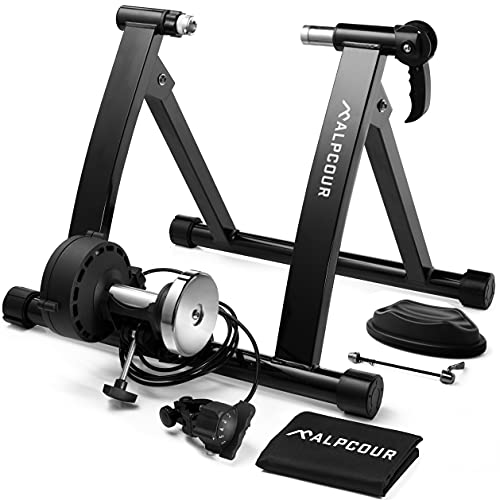
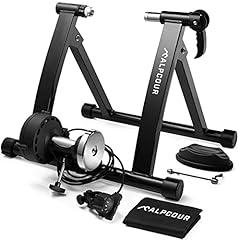
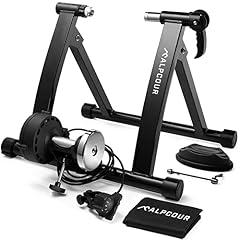
Alpcour Indoor Bike Trainer Stand with Magnetic Resistance
Overview
This product is a wheel-on indoor bicycle trainer. It holds a compatible road or mountain bike at the rear axle while a magnetic resistance unit presses against the rear tire. Resistance is changed from a handlebar-mounted cable control, and the package documentation lists a front wheel block, replacement skewer, and carry bag. The manual provides meaningful basic safety directions, including level-floor use, secure mounting, a 120 kg maximum weight, keeping hands away from the spinning wheel, and holding the bicycle during removal. These are documented instructions, not independent safety test results. Alpcour states that the frame is stainless steel, the trainer folds, and it has six resistance settings. However, the manual conflicts with that listing by describing seven settings and a wider wheel range. No model-specific wattage, sound, vibration, durability, or third-party certification results were located.
What works
- The supplied manual gives concrete mounting, tire-contact, dismounting, and pinch-point safety instructions.
- A front wheel block and trainer-specific replacement skewer are included, supporting a more controlled setup.
- The documented 120 kg maximum weight gives users one usable operating limit.
- It is non-powered, so it has no adapter, battery, charging, or powered-resistance fire exposure.
- Alpcour sells a replacement skewer and offers a one-year warranty, which provides a limited service path.
What does not
- Wheel and resistance specifications conflict across the product page and operating manual, making pre-purchase fit confirmation less reliable.
- No independent model-specific testing was found for stability, retention, noise, vibration, resistance power, or durability.
- The manual warns that insufficient tire contact can allow the bike to come out of the trainer, so setup precision is safety-critical.
- There is no disclosed power curve, maximum wattage, gradient simulation figure, or measured noise level.
- The product is not smart, with no connected training, power measurement, automatic resistance control, or digital workout data.
Who is it for
It suits an adult cyclist with a conventional road or mountain bike who wants simple indoor aerobic riding in a small storage space and can carefully follow wheel-on setup instructions. It is most appropriate for steady seated riding, warm-ups, cadence practice, and weather-related indoor sessions where exact power data is not needed. The user should confirm rear-axle arrangement, wheel size, tire condition, floor levelness, and that total supported rider load remains within the documented 120 kg limit before use.
Who is it not for
It is not a good fit for riders who need verified power, calibrated resistance, automatic app control, or documented low-noise performance for structured training. Avoid relying on it if bicycle compatibility cannot be confirmed, especially where unusual dropout spacing, axle hardware, tire width, or frame shape is involved. It also warrants extra caution for households with children or pets near the workout area, people unable to mount and dismount while holding the bike securely, and riders planning forceful standing sprints without independent stability evidence.
Integrity
Indoor cycling can contribute to evidence-based aerobic activity when intensity and duration are progressed sensibly. Federal guidance recommends building toward 150 to 300 minutes weekly of moderate aerobic activity, or an equivalent vigorous amount. The manual advises warming up and consulting a physician before starting exercise, but it does not provide heart-rate, perceived-exertion, progression, rehabilitation, or medical screening guidance. Its physical-therapy marketing therefore should not be read as evidence of rehabilitation suitability. The trainer is a non-powered wheel-on design, avoiding battery and charger waste. Its manual acknowledges the tire-contact tradeoff, warning against over-tightening and suggesting smooth tires plus a blanket or mat to reduce shaking and transmitted noise. Alpcour sells a replacement skewer and states a one-year warranty, but no replacement resistance unit, roller, cable, or repair manual was found. No product-specific public safety certification, independent test report, recall, or exposure warning was identified in the verification search.

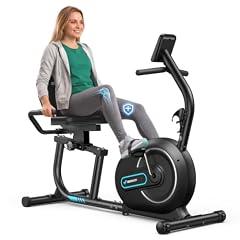
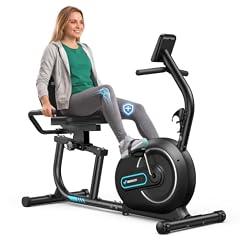
MERACH S08 Smart Bluetooth Recumbent Exercise Bike
Overview
This is a compact, home-use recumbent exercise bike. It uses a seated position with a backrest, front pedals, manual magnetic resistance, belt drive, pulse grips, a basic battery-powered display, and Bluetooth connection to the MERACH app. The published dimensions are about 52 by 25 by 38 inches, and the manual directs users to place it on stable, level flooring with clearance around it. Its most consequential documented feature is the eight-level resistance control, stated by MERACH rather than independently measured. The manual includes meaningful safety directions, including medical caution, secure assembly checks, adult-only use, footwear, moving-part precautions, and stopping for symptoms. However, published load limits conflict. The U.S.-oriented manual states 300 pounds, while MERACH's Japanese listing for the same model states 100 kg, about 220 pounds. Buyers need written confirmation of the applicable limit before use.
What works
- The recumbent layout provides a backrest and a stable seated pedaling position for low-impact aerobic exercise.
- The manual includes medical-caution language, symptom stop rules, level-ground setup, clearance guidance, and routine bolt and moving-part checks.
- Eight manually selected magnetic resistance settings provide a straightforward way to progress effort, as manufacturer-stated.
- The manual identifies a Bluetooth module with an FCC authorization, and the current MERACH app remains available on the U.S. App Store.
- A U.S. contact route, a serial-number field in the warranty documentation, and a stated limited warranty provide a basic support path.
What does not
- The same model has conflicting published maximum-user-weight limits, 300 pounds in the manual and 100 kg on MERACH's Japanese product page. This is a concrete safety-information conflict.
- No model-specific independent test report was located for frame stability, resistance accuracy, sound, vibration, durability, or pulse accuracy.
- No UL, ETL, CSA, or other North American electrical safety listing was located for the complete product. FCC authorization of its Bluetooth radio is not an electrical safety certification.
- The company markets reduced knee and cardiac burden and rehabilitation suitability, but no product-specific clinical evidence was located to substantiate those health claims.
- The app privacy policy allows cross-context behavioral advertising sharing as defined by California law, although it offers deletion and opt-out mechanisms.
Who is it for
This fits an adult who wants seated, low-impact home cardio rather than road-bike simulation or high-output interval work. It is most suitable for people who can independently transfer into the seat, securely fasten the pedals, use a level floor, and stay comfortably below the applicable confirmed load limit. The simple resistance knob, backrest, display, and optional Bluetooth workout logging suit someone building regular aerobic activity gradually. Medical conditions, medication affecting heart rate, or new exercise symptoms require clinician guidance, as the manual itself states.
Who is it not for
It is not appropriate for anyone near or above 220 pounds until MERACH resolves the published 100 kg versus 300-pound capacity conflict in writing. It also does not suit people needing clinically supervised rehabilitation, validated heart-rate monitoring, highly accurate calorie or power data, or automatic app-controlled resistance. Households with unsupervised children or pets need to account for the manual's adult-only warning and keep them away from moving pedals and the unit. People sensitive to app data sharing may prefer a fully offline workout setup.
Integrity
The product can support aerobic activity when effort is adjusted to the user, and federal guidance supports gradually building toward regular moderate or vigorous physical activity. Its manual appropriately advises medical consultation for relevant conditions and stopping for chest pain, irregular heartbeat, breathlessness, dizziness, or similar symptoms. Those safeguards are useful, but they do not turn the bike into a rehabilitation device or validate the pulse grips for medical use. The manual documents a metal frame, a battery-powered monitor, removable batteries, a serial-number field, and instructions to maintain or replace worn parts. It also identifies an FCC-authorized Bluetooth module, which supports radio compliance, not mechanical, fire, or electrical safety certification. No public model-specific third-party safety, noise, resistance-accuracy, or durability report was located. MERACH's privacy policy provides deletion and opt-out tools, but says personal information may be shared for cross-context behavioral advertising. No product-specific U.S. recall or CPSC warning was located in the searches reviewed.

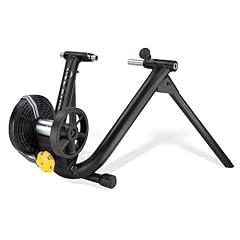
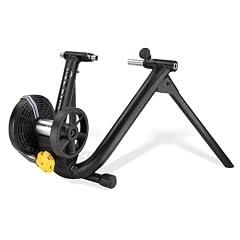
Saris M2 Smart Indoor Bike Trainer
Overview
This is a powered, wheel-on indoor bicycle trainer. The bicycle stays on its rear wheel, which is clamped into the frame with the supplied quick-release skewer, while a steel roller presses against the tire to create electronically controlled resistance. It is intended for home exercise and interactive cycling apps, not medical or commercial use. Its defining practical tradeoff is the tire contact. Saris instructs users to inflate the tire to the bicycle maker's pressure, tighten the roller until the clutch clicks, and use a slick, harder-compound tire to reduce wear, noise, and vibration. Independent testing found the frame stable in hard sprinting and found useful power agreement around steady moderate-to-hard efforts after calibration. The same testing found larger errors at low power and variable readings with speed and setup, so displayed power is better used for repeatable personal training than precision measurement.
What works
- The manual gives specific retention instructions, including use of the supplied rear skewer, full locking of the clamp, and 120 mm, 130 mm, and 135 mm quick-release hub positions.
- Leveling feet and fully extended legs are specified for uneven floors, and an independent ride test reported stable sprinting.
- Bluetooth control and ANT+ FE-C control are documented, with current wireless firmware-update support through the Saris app.
- Saris still sells replacement M2 resistance units, power supplies, clutch-knob kits, skewers, and feet.
- Home-use coverage includes a lifetime frame warranty for weld breakage and two years for electronics and resistance-unit bearings, according to the manufacturer warranty.
What does not
- The wheel-on roller is a confirmed consumable and household-noise issue. The manual says it shortens rear-tire life, and independent testing found the unit notably noisy.
- Independent power checks found meaningful low-power error and setup sensitivity. Tire pressure, roller tension, warm-up, and spindown calibration matter.
- The manual warns users to keep objects, children, and pets away from moving parts, but the roller and tire contact remain exposed during use.
- No publicly traceable North American NRTL electrical-safety listing or model-specific ISO, UL, ETL, CSA, or TÜV performance certificate was located for this product.
- The instruction material provides setup and equipment precautions, but not a structured progression plan or medical screening guidance for new or higher-risk exercisers.
Who is it for
This product suits an adult cyclist who already has a compatible quick-release rear wheel, has a firm and reasonably level training space, and wants controlled resistance in virtual cycling apps without removing the rear wheel. It is particularly practical for repeatable aerobic workouts when the rider is willing to keep tire pressure and roller tension consistent, warm up, and run a spindown calibration. It also suits someone who values an available replacement-parts path and can store the trainer away from children and pets.
Who is it not for
It is not suited to people who need quiet early-morning exercise in apartments, upstairs rooms, or homes with noise-sensitive neighbors. The tire roller creates audible mechanical noise and vibration, especially with knobby tires. It is also unsuitable without the correct quick-release or separately obtained compatible thru-axle hardware. Riders using power data for clinical monitoring, high-stakes testing, or tightly controlled racing should not treat its displayed watts as precision data, especially at lower outputs. Children and pets should not be near it while the wheel is turning.
Integrity
Indoor cycling can contribute to aerobic activity when intensity and volume are progressed appropriately. Federal guidance recommends adults build toward 150 to 300 minutes weekly of moderate aerobic activity, or the vigorous equivalent, while people with symptoms or relevant cardiovascular, metabolic, or pulmonary concerns should use appropriate medical screening. This trainer provides adjustable resistance but does not provide a medical or rehabilitation program. The manual documents FCC radio compliance and requires the supplied detachable low-voltage power supply. That is not the same as a publicly verifiable third-party electrical-safety listing. No product-specific current recall was located in the U.S. recall search, although Saris had a separate 2009 recall affecting named older Pro Series trainers, not this product. Ecologically, tire abrasion is an inherent downside of the wheel-on design. Saris explicitly recommends a slick, harder-compound tire, while its current sale of replacement electronics, resistance units, feet, and mounting parts supports repair rather than automatic replacement.

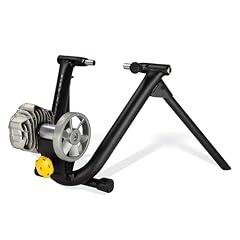
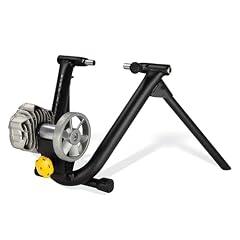
Saris Fluid2 Bike Trainer for Indoor Cycling
Overview
This is a wheel-on fluid resistance trainer that clamps a bicycle by its rear axle while an alloy roller presses against the rear tire. Pedaling faster and shifting gears raise resistance, so it can support conventional indoor aerobic sessions without mains power. The manufacturer lists a 300 lb combined rider and bike limit for the current Fluid2 configuration, plus specific rear dropout, wheel, tire, and thru-axle requirements. The supplied manual gives meaningful safety instructions, including a medical caution before beginning exercise, use of the supplied trainer skewer, a flat and level setup, and waiting for the wheel and pedals to stop before dismounting. Independent testing found usable progressive resistance and measured noise, but also found rocking during large out-of-saddle efforts and that app-estimated power is not a substitute for measured power.
What works
- Detailed manufacturer compatibility limits cover 120, 130, and 135 mm quick-release setups, specified wheel sizes, tire widths, and selected thru-axle adapters.
- The manual provides concrete safe-use guidance, including medical caution, low-RPM practice before standing efforts, and no dismounting until moving parts stop.
- It is mechanically simple and does not require a mains power supply for resistance.
- Saris currently lists Fluid2 replacement resistance units, trainer feet, and replacement skewers, and provides a lifetime frame warranty for home use with a two-year resistance-unit bearing and leakage term.
What does not
- Independent testing found the trainer can rock during large efforts, so aggressive standing sprints need particular caution despite the broad stance.
- The rear tire contacts a rotating roller. Saris warns that trainer use shortens rear-tire life, while independent testing also identifies roller heat and tire wear as limits for longer sessions.
- The exact basic product is not a controllable smart trainer. The separately sensor-equipped version can send speed or cadence, but resistance does not automatically follow virtual terrain.
- The product listing language can blur the distinction between this basic Fluid2 configuration and the separately sensor-equipped version. Independent testing found estimated virtual power materially inaccurate against a power meter.
- No model-specific public ISO test report or third-party safety certification record was located.
Who is it for
It suits an adult cyclist with a compatible quick-release road, hybrid, or limited-tire mountain bike who wants straightforward indoor aerobic riding and is comfortable controlling effort with cadence, gears, heart rate, or an existing on-bike power meter. It is especially relevant where a plug-free resistance unit and available service parts matter. The rider should stay within the 300 lb combined rider and bike limit stated by Saris, use the supplied trainer skewer, inflate the tire to its bicycle maker's recommendation, and set the feet level before riding.
Who is it not for
It is not suited to riders who need controlled resistance for virtual climbing, power-based testing from the trainer itself, or reliable high-intensity standing sprint work. Independent testing observed considerable rocking under big efforts, and virtual power estimated from wheel speed differed substantially from a power meter. It also needs a compatible rear-wheel setup. Do not assume it fits 26 inch wheels, 650c wheels, treaded 29 inch tires, or arbitrary thru-axle bikes. Apartment households sensitive to tire noise and floor vibration should account for the wheel-on contact before use.
Integrity
The health value is ordinary aerobic cycling rather than a medical or rehabilitation device. Saris does not make a treatment claim in the manual. It instructs riders to consult a clinician before starting an exercise program and to stop for chest discomfort, irregular heartbeat, shortness of breath, faintness, or other discomfort. It also warns users to build high-RPM and standing riding skills gradually, keep children and pets away, and avoid contact with moving parts. The resistance unit is fluid-based and operates without a wall-powered motor. Saris sells replacement Fluid2 resistance units, feet, and skewers, which supports repair rather than full-product disposal. Its manual also clearly states the tradeoff of wheel-on training, rear-tire life is reduced and knobby tires cause excessive noise and vibration. A slick or dedicated harder-compound trainer tire can reduce those effects, but it remains a consumable-tire design. A 2009 Saris recall involved different Pro Series trainer models, not this Fluid2 model.

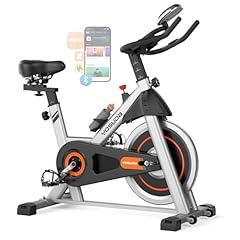
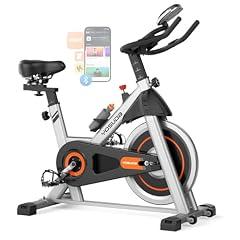
YOSUDA Indoor Cycling Bike with FED fitness APP
Overview
This product is a self-contained indoor cycling bike, not a trainer that holds a separate road or mountain bike. Independent marketplace data identifies a steel or alloy-steel, belt-driven Model 002 with a brake-pad friction resistance mechanism, a 300 lb stated user limit, and battery-powered console. The available model documentation lists a 30 lb flywheel, cage pedals, a tablet holder, and a manually operated emergency brake. The manual describes a four-way seat adjustment, two-way handlebar adjustment, and a stated rider-height range of 4 ft 8 in to 6 ft 1 in. It also describes Bluetooth connection to a fitness app. These are manufacturer-stated specifications, not independently tested fit, stability, power, noise, or app-reliability results. The marketplace wording is inconsistent because it calls this friction-brake product magnetic.
What works
- The supplied instructions call for a level surface, tightened hardware, regular inspections, and keeping loose clothing away from moving parts.
- A press-down resistance control is documented as an emergency stop for the fixed flywheel.
- The stated 300 lb user limit and multiple seat and handlebar adjustments give buyers concrete setup boundaries.
- A spare brake pad is listed in the box, and the brand publishes a parts catalog that includes brake assemblies, belts, cranks, monitors, and other service items.
What does not
- The product description is internally inconsistent. Independent listing data and the model manual identify brake-pad friction resistance, while marketplace wording also calls the bike magnetic.
- No model-specific independent test report was located for resistance, power, noise, vibration, stability, durability, or the 300 lb limit.
- No publicly traceable model-specific NRTL electrical listing or ISO or TÜV safety and performance certificate was located.
- The bike uses a fixed flywheel, so riders need to understand and use the emergency stop before dismounting. Children, pets, loose clothing, and damaged parts need to be kept away from the moving drivetrain.
- The brand privacy policy is dated September 21, 2020, while the current companion app can connect health platforms. The exact data practices for this older bike connection are not clearly disclosed.
Who is it for
This product suits an adult who wants a basic indoor cycle for self-paced aerobic sessions, has a level dedicated floor area, and falls within the manufacturer-stated 4 ft 8 in to 6 ft 1 in fit range and 300 lb user limit. It is more appropriate for someone comfortable setting resistance manually and following a video or app workout on their own device. The included emergency stop and stated adjustment range are useful, but they do not replace careful assembly, bolt checks, and gradual progression.
Who is it not for
It is not suited to riders who need validated wattage, calibrated training zones, automatic resistance changes, or measured low-noise performance for apartment living. People above the stated height or weight limits, those needing rehabilitation-specific programming, and people with new symptoms or known cardiovascular, metabolic, or renal disease who have not obtained appropriate clinical guidance should not rely on this bike's marketing for clearance. Households unable to keep children and pets away from a moving fixed flywheel should choose equipment with a more suitable safety arrangement.
Integrity
Indoor cycling can contribute to the aerobic activity recommended in U.S. physical-activity guidance when intensity and duration are progressed appropriately. The available manual gives a physician-consultation caution, setup advice, a stated 300 lb limit, and an emergency flywheel stop. It does not provide evidence-based progression ranges, validated calorie or power accuracy, or rehabilitation claims. The brand's app is currently available and advertises workout tracking and health-platform syncing, but the bike-specific connection and privacy details need clearer disclosure. This is a friction-brake bike, so its felt or brake-pad contact is a wear item rather than a tire-contact system. A spare brake pad is listed with the product, and the brand sells several replacement components, although many catalogued parts show as sold out. The brand publishes warranty and support pages, but public model-specific third-party safety, electrical, acoustic, vibration, and durability verification was not located. No product-specific CPSC recall or warning was located in the verification search.

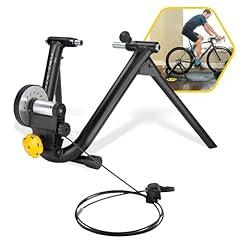
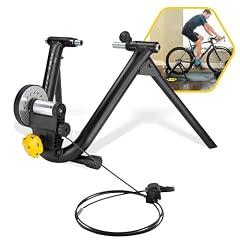
Saris Magnetic Plus Bike Trainer
Overview
This product is a non-powered, wheel-on magnetic bike trainer. It clamps a compatible bicycle by its rear axle, presses an alloy roller against the rear tire, and adds resistance through a handlebar-mounted shifter. Saris specifies five resistance levels, a 300 lb combined rider-and-bike limit, and compatibility with listed 650b, 700c, 27.5-inch, and limited 29-inch tire configurations. The supplied manual gives meaningful setup and rider-safety instructions, including use of the supplied quick-release skewer, full leg extension on a level surface, tire inflation to the bicycle maker’s pressure, and no high-speed or standing riding before lower-speed practice. Independent hands-on testing confirmed that the trainer’s published resistance curve broadly tracked a power meter, but it is not a smart trainer and does not directly measure power or control resistance through an app.
What works
- The handlebar shifter gives five manually selectable resistance levels, a practical way to vary steady aerobic sessions.
- Compatibility guidance is unusually specific for a basic wheel-on trainer, including axle spacing, tire-width limits, excluded wheel formats, and separately sold thru-axle options.
- The product is non-powered, so it has no charger, battery, mains adapter, or powered resistance electronics to introduce electrical or charging hazards.
- Saris still lists replacement feet, the bolt-action kit, clutch hardware, resistance unit, and related service parts.
- The manual provides concrete rider cautions, including medical consultation before starting, stopping for concerning symptoms, and waiting for all rotating parts to stop before dismounting.
What does not
- App use requires a separately purchased speed or cadence sensor. The trainer itself has no Bluetooth or ANT+ connection, no automatic resistance control, and no direct power measurement.
- Saris states 69 dB at 20 mph, but the available independent review describes the unit as loud. No model-specific independent acoustic test with a stated tire, floor, distance, and measurement method was located.
- The wheel-on design intentionally abrades the rear tire. Saris warns that trainer use shortens rear-tire life and that knobby tires increase noise and vibration.
- No public model-specific third-party safety certification or independently issued durability test report was located.
- A 2009 Saris trainer recall involved different Pro Series models, not this product. It still underlines why owners should inspect the clamp and supplied skewer before riding.
Who is it for
This product suits a rider who already has a compatible quick-release road or mountain bike and wants uncomplicated indoor pedaling without power cords, accounts, firmware, or automatic app control. It is most appropriate for seated, steady aerobic riding, warmups, and basic interval work where effort can be managed with gearing, cadence, perceived exertion, or a separate heart-rate monitor. It also suits someone who values an accessible parts catalog and can dedicate a smooth rear tire or trainer tire to indoor use.
Who is it not for
It is not suited to riders needing accurate measured watts, automated intervals, gradient simulation, or resistance that responds to a virtual route. It is also a poor fit for households with sleeping children, thin shared walls, or vibration-sensitive neighbors unless the user can test the setup and add floor isolation. Do not use it with excluded wheel and tire combinations, an unsupported axle arrangement, or without the supplied quick-release skewer. Riders new to standing efforts should follow the manual’s low-speed practice warning.
Integrity
Stationary cycling can contribute to aerobic activity when the rider chooses an appropriate intensity and progression. Federal physical-activity guidance recommends building toward 150 to 300 minutes of moderate aerobic activity weekly for most adults. The manual does not make rehabilitation promises and appropriately tells users to seek medical advice before beginning an exercise program, and to stop for chest discomfort, irregular heartbeat, shortness of breath, faintness, or other concerning symptoms. The product has no battery or external power supply, avoiding electronics-related e-waste and charging risks. Its steel-and-alloy frame is supported by replaceable mechanical parts, and Saris lists a resistance-unit replacement. The environmental tradeoff is tire contact. Saris explicitly says trainer use reduces rear-tire life and that knobby tires add vibration and noise. A smooth, harder-compound trainer tire and stable floor setup can reduce that avoidable wear and household disruption.

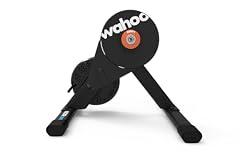
Wahoo Fitness KICKR CORE 2 Indoor Trainer
Overview
This is a 30 lb direct-drive indoor trainer that replaces the rear wheel and holds a compatible bicycle at its rear axle. It uses electromagnetic resistance, a belt drive, a preinstalled Zwift Cog, and a handlebar-mounted Click controller for virtual shifting in Zwift. Wahoo states a 250 lb maximum rider weight, 1,800 W maximum resistance, 16 percent maximum simulated incline, and compatibility with common 130 or 135 mm quick-release and 12x142 or 12x148 mm thru-axle bikes. The most useful independently checked finding is performance. One expert test found its power readings tracked only a few watts below two on-bike meters, while its adjustable Cog setup measured about 58 to 63 dB in that test. The trainer has wide, redesigned legs, and the same reviewer found it stable for sprinting. These are useful observations, but they are not a public laboratory safety certification.
What works
- Independent testing found close agreement with on-bike power meters and good cadence behavior.
- The direct-drive format removes rear-tire contact, avoiding the tire abrasion inherent to wheel-on trainers.
- Independent testing found approximately 58 to 63 dB drivetrain noise under stated riding and sprint conditions.
- Wahoo publishes unusually detailed axle, frame, drivetrain, wheel-size, and known-incompatibility guidance.
- A physical serial label, U.S. support contact, warranty process, firmware updates, Bluetooth, ANT+, and WiFi support provide a practical support path.
What does not
- No public UL, ETL, CSA, or other North American third-party electrical listing for this exact powered trainer was identified.
- The product page carries a California Proposition 65 cancer and reproductive-harm warning, but does not identify the relevant chemical or exposure route there.
- Wahoo's 1,800 W, 16 percent grade, and plus or minus 2 percent accuracy figures are manufacturer claims, even though one independent sample tested well.
- Zwift virtual shifting requires Bluetooth and Zwift access requires a subscription after the included trial for eligible new customers.
- The trainer is compatible with many bikes, not every bike. Wahoo lists unsupported axle standards, frame conflicts, and conditions for e-bikes.
Who is it for
It suits an adult cyclist who already owns a compatible road, gravel, or mountain bike, wants controlled indoor aerobic workouts, and expects to use Zwift. It is particularly practical in a multi-bike household where riders have compatible 8 to 13 speed drivetrains, because the single Zwift Cog avoids repeated cassette changes. Riders who train by power can use the independently encouraging power-data result, while still treating it as evidence from a tested sample rather than a universal calibration certificate. Set it up on a level, solid floor and confirm axle and frame clearance before riding.
Who is it not for
It is not for riders above Wahoo's stated 250 lb combined rider, bike, and battery limit, or for bicycles with unsupported rear hubs such as bolt-on, 141 mm Boost QR, 12x157 mm, Micro Spline without a workaround, or listed incompatible frames. It is also unsuitable for someone who needs a fully self-contained exercise bike, does not want app or subscription dependence, or cannot provide a stable installation space. Households with sleeping occupants below or adjacent to the riding room should not assume it is silent, because measured drivetrain noise remains substantial during hard efforts.
Integrity
Indoor cycling can support aerobic activity, but the product does not itself prescribe safe progression or medical screening. A sensible approach is to begin below maximal effort and build gradually. Federal guidance recommends 150 to 300 minutes weekly of moderate aerobic activity for most adults, with individual modifications for health conditions or symptoms. The product's controllable resistance and power display can help structure sessions, but they do not replace clinical advice. The direct-drive design avoids routine rear-tire wear. Independent testing also found lower drivetrain noise than the previous Cog setup, although vibration and noise still depend on correct frame, Cog, and adapter installation. Wahoo sells a replacement power cord and provides Cog replacement instructions, which supports limited serviceability. A durable serial label and U.S. support route aid safety follow-up. No public North American electrical listing or model-specific independent safety certificate was identified. The California Proposition 65 warning should be reviewed by buyers concerned about chemical exposure.

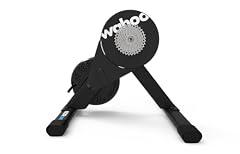
Wahoo Fitness KICKR CORE 2 Trainer with 11-Speed Cassette
Overview
This is a powered, direct-drive indoor bicycle trainer with a preinstalled 11-speed 11-28 cassette. You remove the bicycle’s rear wheel, attach the frame at the trainer’s axle mounts, and pedal against electronically controlled resistance. Wahoo states that it weighs 30 lb, supports a maximum 250 lb rider weight, and includes adapters for 130/135 mm quick-release and 12x142 or 12x148 mm thru-axle bikes. Its defining practical features are a belt-driven electromagnetic resistance unit, Wi-Fi, Bluetooth, ANT+, and automatic firmware updates. Wahoo states 1,800 W maximum resistance, 16 percent simulated grade, and plus or minus 2 percent power accuracy. Independent ride testing broadly supported the power claim over longer efforts, while reporting more variable short-interval comparisons. As a direct-drive unit, it eliminates roller-to-tire abrasion, but it still needs compatible frame spacing, a secure axle installation, sufficient floor space, and attention around the rotating cassette and drivetrain.
What works
- Independent testing found close long-interval power agreement with pedal-based reference meters.
- Direct-drive mounting avoids the tire abrasion and roller setup associated with wheel-on trainers.
- Wahoo publishes detailed axle, drivetrain, wheel-size, and known-frame compatibility guidance.
- Wi-Fi, Bluetooth, ANT+, automatic updates, and sensor bridging provide several connection paths.
- A durable serial-number label location, U.S. support contact, and one-year warranty are documented by Wahoo.
What does not
- No public model-specific UL, ETL, CSA, or other North American electrical safety listing was located for the complete trainer or supplied adapter.
- No public model-specific third-party safety, durability, or ISO test report was located.
- The 250 lb limit can be restrictive because Wahoo’s compatibility guidance applies it to the combined rider, bike, and battery load for e-bikes.
- The stock cassette does not work with Shimano CUES or LinkGlide without changing the cassette, and several axle and freehub standards are unsupported.
- The product page carries a California Proposition 65 cancer and reproductive-harm warning, but does not identify the chemical or exposure route on that page.
Who is it for
This product suits an adult cyclist who already owns a compatible road, gravel, hybrid, or mountain bike and wants controlled indoor aerobic rides, structured power workouts, or app-controlled virtual routes. It is particularly practical for users with 130/135 mm quick-release or 12x142 or 12x148 mm thru-axle bikes, an 8 to 13-speed compatible drivetrain, and a stable indoor training area. It also fits users who value direct-drive tire preservation and can keep their combined rider and bike load within Wahoo’s stated limit.
Who is it not for
It is not appropriate for households where the combined rider, bike, and battery weight exceeds 250 lb, or where floor space and a secure, level setup cannot be maintained. Riders with Shimano Micro Spline, Trek Thru-skew, bolt-on hubs, 12x157 SuperBoost, or certain listed frame designs should not assume fit. It is also a weaker fit for users who require a publicly verifiable North American electrical safety listing, formal third-party durability certification, quiet late-night use without managing drivetrain noise and vibration, or medical rehabilitation guidance.
Integrity
Cycling on a trainer can provide adjustable aerobic activity, but the product is exercise equipment, not a rehabilitation device. Wahoo supplies controlled-resistance modes and records power, cadence, speed, and distance. It does not replace medical screening, individualized intensity targets, gradual progression, cooling, hydration, or a clinician’s advice for people with symptoms or relevant health conditions. The direct-drive configuration avoids tire-to-roller wear, which can reduce replacement-tire waste. Wahoo states that the frame uses robust steel construction, and it sells drivetrain-related replacement components such as freehub bodies and adapters. A serial number is located on the drive-side flywheel cover for service requests. No product-specific CPSC recall was located in the search performed, but the product page carries a California Proposition 65 cancer and reproductive-harm warning without naming the relevant chemical or exposure route there. The powered trainer and adapter should be handled as electronic equipment at end of life.

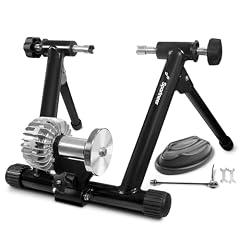
Sportneer Fluid Indoor Bike Trainer Stand
Overview
This is a non-powered, wheel-on indoor trainer that clamps a bicycle by its rear axle and presses the rear tire against a fluid-resistance roller. The product page lists an alloy-steel frame, fluid resistance, 26-29 inch and 700C wheel compatibility, a 24.3 pound product weight, and a folded size of 24 by 7.9 by 25.2 inches. Sportneer states that its dual-locking mount, wide frame, and front-wheel riser block reduce wobble, and that resistance rises automatically with wheel speed. Those are manufacturer claims, not published model-specific test results. No verified power range, resistance curve, noise test protocol, rider-plus-bike load limit, or public third-party safety certification was located. It is a simple mechanical trainer, not a connected trainer, so it does not measure power, control apps, or require charging.
What works
- Fluid resistance can provide progressively harder pedaling as speed rises, according to the manufacturer.
- The product page specifies compatibility with 26-29 inch and 700C wheels, which gives many conventional quick-release bicycles a starting fit range.
- Its folding frame and 24.3 pound listed weight make seasonal storage and relocation more practical.
- It is non-powered, so there is no charger, battery, mains adapter, or connected-service dependency to manage.
What does not
- The broad wheel-size claim is not enough to confirm safe fit. Rear-axle type, dropout shape, spacing, tire clearance, and through-axle adapter needs still need to be checked on the bicycle.
- No published, model-specific power, resistance, acoustic, vibration, stability, or durability test report was found.
- The claim that the frame eliminates wobble is not substantiated. An independent review of a closely related Sportneer wheel-on stand reported noticeable vibration and less stability during side-to-side riding.
- The tire contacts a roller, so tire wear, tire noise, and floor-transmitted vibration remain expected wheel-on-trainer issues. No trainer tire, mat, or replacement roller support was verified.
- No publicly traceable third-party certification or published replacement-parts catalog was located for this product.
Who is it for
It suits an adult rider with a conventional compatible bicycle who wants uncomplicated indoor aerobic riding, warmups, or steady cadence sessions without apps, charging, or power targets. The useful fit is a rider able to verify the rear axle and frame interface before mounting, use a level floor, and accept that resistance is governed mainly by wheel speed and bicycle gearing. A smooth road tire and a protective floor mat are sensible for a quieter, lower-vibration home setup.
Who is it not for
It is not for riders who need measured wattage, structured ERG control, virtual riding integration, repeatable resistance settings, or verified noise limits. It also needs caution for bicycles with through axles, bolt-on axles, unusual dropout shapes, disc-brake clearance constraints, very wide tires, or unclear rear-axle spacing. Avoid aggressive standing sprints or substantial side-to-side bike motion unless fit, clamp engagement, and trainer stability have been checked carefully. Shared-floor apartments may be unsuitable without vibration isolation.
Integrity
Indoor cycling can contribute to aerobic activity when progressed appropriately. Federal guidance identifies substantial health benefits for adults at 150 to 300 minutes weekly of moderate activity, but this product supplies no intensity targets, progression plan, heart-rate guidance, or medical screening advice. Riders with symptoms, a known condition, or uncertainty about vigorous exercise should use appropriate clinical or exercise-professional guidance. The frame is listed as alloy steel and the trainer is mechanical, which avoids battery and charging waste. That benefit is limited by the wheel-on contact system, which can abrade tires and transmit vibration through floors. Sportneer claims a quiet fluid roller, but no model-specific acoustic or vibration test was located. No product-specific CPSC recall or warning was identified in the U.S. recall search, yet no public third-party safety certificate, repair manual, or replacement-parts catalog was found.