
10 Best Ice Cream Maker Machine
 Lauren Wilson
Please note that we participate in affiliate marketing programs. When you purchase through links on our site, we may earn a commission. As an Amazon Associate we earn from qualifying purchases. This comes at no additional cost to you and helps support the resources required to provide valuable content.Advertising Disclosure
Top-rated Ice Cream Maker Machine Comparison
1

2
4
5
6
7
8
9
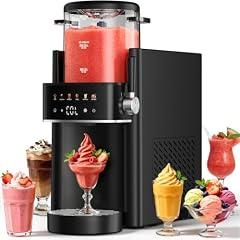
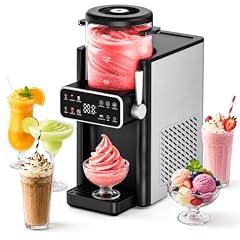
Ice cream maker machines: what to look for
Ice cream makers do not all freeze dessert the same way. Freezer-bowl models require a bowl or mug to be frozen for roughly 16–48 hours before churning. Compressor models freeze the mixture themselves, but they are heavier, use a refrigerant circuit, and still commonly produce soft serve that needs additional freezer time for a firm scoop. Frozen-base processors work differently again: they process a fully frozen pint, often after about 24 hours in the freezer, rather than turning a liquid mix into dessert on demand. Ice-and-rock-salt machines can make large batches without a compressor, but they require ice, salt, drainage, and more hands-on handling.
Capacity is one of the easiest claims to misread. A stated 2-quart or 6-quart bowl is not necessarily the usable liquid batch size: expansion, fill lines, and recipe limits often reduce it substantially. One supplied manual limits a 2.1-quart bowl to about 60% liquid fill; another limits a 2.5-liter bowl to four cups; a 6-quart format requires no more than two-thirds canister fill. Timing claims also need conditions attached. “Ready in 15 or 20 minutes” may exclude bowl-freezing, recipe chilling, extra freezer time, or the difference between soft serve and hard-pack texture. Starting temperature, sugar, alcohol, batch size, and recipe composition can change the result.
A useful comparison starts with the intended serving pattern: individual 16-ounce pints, roughly 1–2 quart household batches, or large gathering-size batches. Check whether the machine processes one container at a time, whether consecutive batches require another frozen container, and whether the finished product is soft serve, scoopable, or dependent on further freezing. For dairy, egg, nut, and allergen-containing recipes, accessible food-contact parts and complete disassembly matter more than a “self-cleaning” label. A rinse cycle is not necessarily a substitute for washing the vessel, paddle or auger, seals, lid passages, and dispensing path.
Claims should be checked against the exact model’s manual, rating label, and product documentation. Independent electrical certification should be traceable to a recognized issuer registry such as UL Solutions Product iQ, Intertek’s directory for ETL Listed products, or the CSA Group database; food-equipment sanitation claims should be matched to NSF listings where applicable. A logo or retailer statement alone did not provide that confirmation for the supplied products. Food-contact claims should identify bowls, pints, paddles, lids, seals, and dispensing parts individually, rather than simply saying “plastic,” “metal,” or “BPA-free.”
For health-related recipe claims, “dairy-free,” “low-sugar,” “protein,” or “keto” describes what ingredients a user may choose, not an automatic health outcome. Buyers remain responsible for nutrition, allergens, cross-contact, chilled storage, and egg safety. Several supplied reviews emphasized pasteurized eggs or a cooked base for homemade desserts; freezing does not make raw eggs safe. Follow the model’s limits for sugar and alcohol, and do not assume a soft-serve machine can safely process sugar-free or low-sugar mixtures.
Environmental comparisons are also conditional. Freezer-bowl and frozen-pint machines shift some energy use to the household freezer; compressor machines add undisclosed or disclosed refrigerant and standby considerations; ice-and-salt machines avoid onboard refrigerant but consume ice and salt. Look for measured watt-hours per finished batch, rated power, refrigerant identity and charge, disposal instructions, and credible ENERGY STAR information where claimed. Replacement bowls, pints, paddles, seals, lids, and dispensing parts can reduce waste, but a warranty alone does not establish repairability.
Recurring cautions in the supplied reviews are clear: many products lack model-specific registry-verifiable electrical or sanitation certification, complete food-contact material disclosure, measured energy use, refrigerant information, or replacement-part support. Many require advance freezing or extra freezer time, and several require hand washing despite easier-cleaning claims. Compressor products need ventilation and careful refrigerant handling. Raw egg and dairy recipes require safe handling, and certain frozen-drink machines exclude sugar-free or low-sugar mixtures. No supplied review established a category-wide contraindication beyond these operating, cleaning, and food-safety conditions.
Integrity
The scores below compare the supplied products only. A higher score indicates stronger evidence or safeguards for that topic; it does not mean every risk is eliminated, and missing certification or disclosure remains a meaningful limitation.
HHealth & Safety
Food-safe cleaning and handling
This measures access to food-contact parts, washing instructions, residue control, and safe handling guidance. It matters because paddles, seals, pints, augers, and dispensing paths can retain dairy, egg, or allergen residue. Among the supplied products, scores ranged from 52 to 84: higher-scoring designs gave detailed disassembly and cleaning steps, while lower scores reflected conflicting dishwasher claims or incomplete cleaning documentation.
Food-contact material safety
This measures whether bowls, pints, paddles, lids, seals, and dispensing paths have specific, traceable material information and food-contact support. Broad descriptions such as “plastic,” “metal,” or “BPA-free” do not identify every surface. Scores ranged from 53 to 74. Higher scores generally had more disclosed materials or clearer documentation, but no supplied product provided complete component-by-component transparency.
Electrical, heat, and moving-part safety
This measures protection against shock, overheating, fire, jams, moving paddles, pinch points, and unsafe compressor operation. It matters because these machines combine motors, rotating parts, cold systems, and sometimes batteries or dispensing mechanisms. Scores ranged from 69 to 81. Higher-scoring products documented interlocks, overload or overheat shutoff, grounding, ventilation, or operating limits; lower scores had thinner model-specific evidence.
Realistic healthy-treat claims
This measures whether claims about low sugar, dairy-free, protein, keto, or “healthy” treats describe ingredient flexibility rather than promise a health result. Scores ranged from 52 to 86. Higher scores used more qualified ingredient-choice language and avoided inflated outcomes. Lower scores reflected broad “healthy” or “guilt-free” framing, even where users could choose different recipes. Nutrition and allergen safety remain recipe-dependent.
EEcology
Energy and refrigerant footprint
This measures electricity per finished batch, standby or keep-cool use, and refrigerant disclosure for self-freezing machines. It matters because freezer-bowl products shift energy to a household freezer, while compressor products add cooling-system impacts. Scores ranged from 68 to 77. Higher scores reflected disclosed ratings or refrigerant information, but no supplied product had a complete low-energy assessment with measured watt-hours per usable batch.
Built to last and repair
This measures warranty, service access, and availability of replacement pints, bowls, paddles, lids, seals, and dispensing parts. It matters because a broken accessory should not automatically make a motor base or compressor appliance waste. Scores ranged from 54 to 86. Higher-scoring products had manufacturer-listed replacement parts; lower scores had unclear parts availability, conflicting durability signals, or no repair documentation.
Honest environmental claims
This measures whether claims such as recyclable, reusable, BPA-free, energy-saving, or eco-friendly are specific and supported, including whether they acknowledge trade-offs. Scores ranged from 70 to 75, so the supplied products were relatively close. The stronger examples gave more concrete disposal, refrigerant, or reuse information; none supplied a complete quantified lifecycle or recyclability assessment.
EEvidence
Honest capacity, timing, and function claims
This measures whether capacity, cycle time, pre-freezing, soft-serve, self-cleaning, keep-cool, and multi-function claims state their conditions and limits. Scores ranged from 50 to 84. Higher-scoring products clearly distinguished usable fill from bowl size, soft serve from firm ice cream, and processing time from preparation time. Lower scores included headline capacities or timing claims contradicted or narrowed by manuals.
Verified safety certification
This measures whether the exact model—not merely a component, logo, or seller statement—can be traced to UL, ETL, CSA, or applicable NSF certification records. Because this topic has extra weight, missing model-specific verification matters substantially. Scores ranged from 68 to 76, but no supplied product received confirmed public registry matching. A claimed certification and a traceable certificate are not equivalent.
Independently tested frozen-dessert performance
This measures exact-model testing of usable batch size, preparation, time, texture, consistency, noise, and cleanup. Scores ranged from 68 to 89. Higher-scoring products had independent kitchen or hands-on testing that confirmed texture and timing under stated conditions. Lower scores relied mainly on manufacturer claims or related-model testing, leaving more uncertainty about repeatable real-world performance.
Recall and support accountability
This measures traceable model information, warranty and support routes, recall notices, and the ability to obtain remediation. Scores ranged from 70 to 82. Higher-scoring products had named support paths, registration, clearer warranties, or established manufacturer parts channels. Lower scores lacked warranty terms, repair information, or durable support documentation. A clean recall search is not proof that certification or long-term support exists.
Full reviews

Instant Pot InstantChill Ice Cream Maker
Overview
This is a countertop, compressor-cooled frozen-dessert maker with a churn bowl and an integrated cold plate for rolled ice cream. It is designed for ice cream, gelato, sorbet, plant-based desserts, mix-ins, and rolled desserts. The maker states a maximum 2-pint batch in its bowl, while the cold plate holds up to 2/3 cup at a time. The manufacturer states that a one-pint ice cream batch generally reaches soft-serve consistency in about 20 minutes, with longer times for two pints and variation from recipe temperature and composition. It also states that no bowl pre-freezing is needed, but the appliance must stand upright for at least two hours before first use. Independent hands-on coverage exists, but published testing is still limited and does not provide a reproducible energy, temperature, or noise dataset.
What works
- A built-in compressor eliminates freezer-bowl preparation, according to the manufacturer.
- The bowl, paddle, and lid are removable and the official cleaning instructions specify warm, soapy hand washing and thorough drying.
- The official guidance sets useful operating limits, including a 4-cup bowl maximum and a stated soft-serve result rather than promising firm freezer-set ice cream immediately.
- The bowl and lid alignment system prevents the motor from starting when components are misaligned, according to the manufacturer.
What does not
- Food-contact materials are disclosed only broadly as metal, plastic, and silicone. The maker does not publicly identify the plastic, metal grade, silicone formulation, or a food-equipment certification for each contact part.
- No model-specific UL, ETL, CSA, or NSF listing could be matched in the relevant public certification registries searched.
- The manufacturer does not publicly disclose rated energy use, watt-hours per batch, refrigerant type, or refrigerant charge, which limits assessment of operating and end-of-life impact.
- The stated 20-minute timing applies to about one pint and soft-serve texture. Two-pint batches take longer, and warm, high-sugar, or alcoholic mixes may need additional time.
- Public replacement-part and repair documentation for wear items such as the bowl, paddle, lid, and seals is limited. The stated warranty is one year.
Who is it for
It suits a small household that wants freshly churned desserts without reserving freezer space for a pre-frozen bowl. The stated 2-pint maximum is practical for two to four modest servings, recipe testing, or making separate flavors in succession. It is also appropriate for users who want control over ingredients, including dairy-free bases or allergen-aware recipes, provided they separately manage cross-contact and use safe ingredients. A stable, ventilated counter location is important because this is a roughly 20-pound compressor appliance that should remain upright.
Who is it not for
It is not well suited to people who need large party-size batches, firm scoop-shop texture immediately after a cycle, or documented low energy use. The manufacturer says the usual one-pint result is soft serve, and two-pint batches take longer. It is also a poor fit for buyers who require traceable food-contact material specifications or a public independent electrical or sanitation certificate for the exact product. People with lifting limitations should avoid frequent cabinet storage because the appliance is heavy and should be stored upright.
Integrity
The product gives workable cleaning instructions for dairy and egg-based dessert residue. Its removable bowl, paddle, and lid are to be hand-washed with warm, soapy water, while the motor and base must stay dry. The cold plate should be wiped promptly, and all removable parts should be dried before reassembly. Users making custard-style mixes should still follow safe egg handling and refrigeration practices, because the appliance does not pasteurize ingredients. Material disclosure remains incomplete. The maker identifies metal, plastic, and silicone, but not the specific food-contact grades or certifications. The official product information also warns not to cut, pierce, or crush the internal refrigerant circuit, yet does not identify the refrigerant or publish energy-per-batch data. No product-specific recall or California exposure warning was identified in the searched public databases. The manufacturer provides product registration, consumer-care contact information, and a one-year limited warranty, but public repair and replacement-part information is limited.
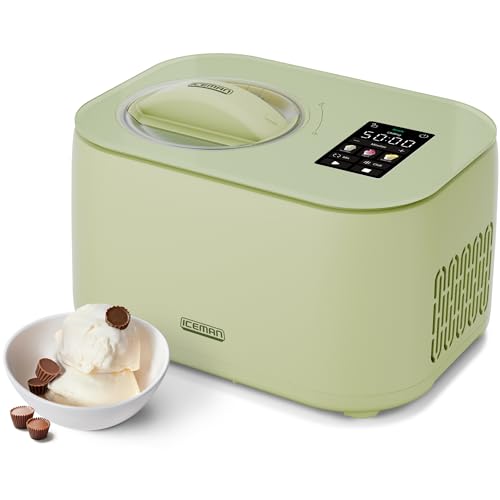
Chefman Iceman Trio Ice Cream Maker
Overview
This is a compact, household compressor ice cream maker that processes one removable pint-sized bucket at a time. It includes two stainless-steel buckets and storage lids, a clear lid, paddle, scoop, and shovel. The manufacturer lists 100W, 120V power, a 16.3-pound weight, and presets for ice cream, frozen yogurt, and Italian ice. The product does not require a bowl to be frozen in advance, according to the manufacturer. Its manual gives default cycles of 50 minutes for ice cream, 40 minutes for frozen yogurt, and 35 minutes for Italian ice. It also clarifies that the finished texture is soft-serve, and that hard-pack ice cream needs about four more hours in a freezer. The manual documents removable, washable food-contact pieces and a motor-protection response when a dense mixture stops the mix function.
What works
- Two stainless-steel pint buckets allow separate flavors or a clean spare container between batches, according to the manufacturer.
- The manual gives accessible cleaning instructions, and lists the bucket inserts, transparent lid, paddle, storage lids, scoop, and shovel as dishwasher safe.
- Timing claims are meaningfully qualified in the manual, with preset cycle lengths, ingredient-related freezing limits, and a clear hardening step.
- The manual includes grounded-plug, damaged-cord, moving-part, upright-storage, and refrigeration-settling instructions.
What does not
- The manufacturer posts a California cancer and reproductive-harm warning, but does not identify the chemical or the affected component on the product page or in the manual.
- Stainless steel is identified for the buckets, but the material composition and food-contact compliance basis for the paddle, clear lid, storage lids, and other plastic parts are not disclosed.
- The cETL approval claim appears on the manufacturer page, but an exact-product listing or certificate could not be confirmed in a public issuer registry during this review.
- No credible independent, exact-product performance test was located for batch output, texture, noise, electricity use, or long-term reliability.
- There is a one-year limited warranty, but no public parts catalog or repair instructions for common wear items were located.
Who is it for
This product suits a one- or two-person household that wants freshly churned small batches, different flavors on different days, and does not want to reserve freezer space for a pre-frozen bowl. It is also suited to users who accept soft-serve texture immediately after processing and can move finished ice cream to a freezer for later hardening. The removable buckets and dishwasher-safe accessories make it practical for recipe experimentation, provided users clean and dry every food-contact part after use.
Who is it not for
It is not well suited to households serving a crowd from one batch, because each batch uses a pint-sized bucket and hard-pack texture requires additional freezer time. It is also not a good fit for users seeking fully documented food-contact plastics, refrigerant details, measured energy use, or independently verified exact-product performance. People preparing egg-based desserts for young children, older adults, pregnant people, or immunocompromised guests should not rely on freezing to make raw eggs safe.
Integrity
The removable food-contact parts can be separated for washing, and the manual directs users to unplug the unit, let the chilling cylinder warm, and wash the bucket inserts, lid, and paddle before drying. For egg-containing recipes, use pasteurized eggs or a cooked base. FDA guidance specifically identifies homemade ice cream made with raw or undercooked eggs as a Salmonella risk. The manufacturer identifies the buckets as stainless steel, but does not fully disclose the materials of all other food-contact parts. It also posts a California cancer and reproductive-harm warning without naming the chemical or component. A manufacturer-stated cETL approval was found, but not a public exact-product registry match. The 100W rating is disclosed, while watt-hours per batch, standby use, refrigerant type, replacement-part availability, and end-of-life guidance are not publicly documented.

Nostalgia Ice Cream Maker - Vintage Style
Overview
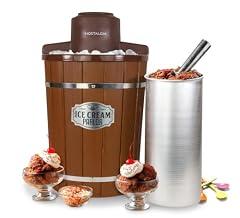
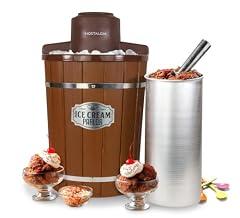
This is a countertop, ice-and-salt ice cream maker with a wood-slatted outer bucket, plastic liner, aluminum canister, lid, dasher, and electric churning motor. It is intended for homemade ice cream, frozen yogurt, gelato, and similar frozen desserts. The manufacturer states a six-quart capacity, while the instructions say not to fill the canister beyond two-thirds because the mix expands. This is not a self-freezing machine. The instructions call for a chilled mix and canister, one to two medium bags of broken ice, and roughly two to four cups of salt. Churning is expected to take about 30 minutes, after which the product may still yield a thick, milkshake-like texture that needs freezer hardening. The manual includes hand-washing, electrical, moving-part, and raw-egg handling directions. A retailer identifies this exact product as ETL Listed, but a model-specific public Intertek registry match was not located.
What works
- The exact-product instructions require washing the bucket, canister, lid, and dasher in warm, soapy water, with separate wipe-clean treatment for the motor.
- The manual gives a concrete food-safety precaution for egg recipes, advising 160 F heating or pasteurized eggs.
- The operating instructions specify the real preparation burden, including chilled ingredients, ice, salt, a maximum two-thirds fill, and roughly 30 minutes of churning.
- The manufacturer documents a locking motor mount, and the manual directs users to unplug before removing parts or cleaning.
- The maker provides an identifiable product page, support channel, and current one-year limited warranty terms.
What does not
- Food-contact materials are only partly identified. The canister is described as aluminum, but the exact plastic resin, food-contact compliance basis, and any BPA disclosure for the dasher and lid were not found.
- The manufacturer posts a California Proposition 65 warning. Its chemical disclosure associates this product with styrene, but does not quantify exposure or explain which component creates it.
- All removable components are hand-wash only according to the exact-product manual. A retailer's dishwasher-safe-parts listing conflicts with that instruction.
- No model-specific independent frozen-dessert test report was located. Published customer accounts are not a substitute for repeatable testing of batch size, texture, noise, or cleanup.
- The current manufacturer parts catalog did not show an exact replacement listing for this product, so long-term replacement availability for the dasher, canister, and motor remains unconfirmed.
Who is it for
This product suits a household that wants to make a large shared batch for a party, reunion, or seasonal gathering and is comfortable with the traditional ice-and-salt process. It is better aligned with users who can chill ingredients ahead of time, supervise a roughly 30-minute churn, manage meltwater and salt brine, and hand-wash every removable part. It also fits cooks who want control over their own dairy, sweetener, fruit, or egg choices rather than relying on preportioned frozen-dessert pods.
Who is it not for
It is not suited to someone seeking push-button frozen dessert with no ice, salt, preparation, or freezer hardening. It is also a poor fit for households that need dishwasher-safe food-contact parts, precise material disclosures, or a publicly traceable certification record. People who routinely prepare raw-egg recipes should not treat the machine as a safety control. They need to follow the manual's heating or pasteurized-egg guidance. Keep it away from unsupervised children because it uses an electrical motor near ice-water brine and has moving parts.
Integrity
The useful health feature is the manual's specific egg-safety direction. It calls for heating egg-containing mixtures to 160 F without boiling, or using pasteurized eggs. It also requires washing the bucket, canister, lid, and dasher with warm, soapy water, drying them thoroughly, and keeping the electric motor out of water. Those are meaningful handling instructions for dairy and egg-based mixes. Material disclosure is weaker. Nostalgia identifies an aluminum canister and a plastic liner, but does not publicly specify the resin or food-contact compliance basis for every food-contact plastic part. The manufacturer also carries a California Proposition 65 warning, and its chemical disclosure links this product to styrene. That warning does not itself quantify exposure. This product has no compressor or refrigerant, but no measured energy-per-batch data or substantiated environmental claims were found. Its ice-and-salt method also creates salty meltwater that should be cleaned up and managed responsibly.
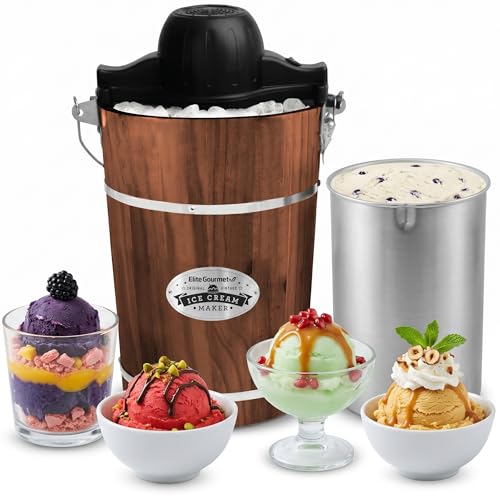
Elite Gourmet EIM949 Electric Ice Cream Maker
Overview
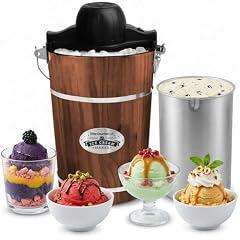
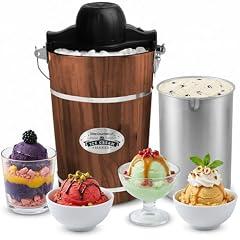
This product is a large, old-fashioned electric ice cream maker with a wood bucket, aluminum canister, electric drive, and an ice-and-rock-salt cooling method. It is intended for home batches of ice cream, gelato, frozen yogurt, or sorbet. The manufacturer states that the canister holds up to 6 quarts and that the motor turns the canister around a stationary paddle. Its linked use instructions call for adding ice and rock salt around the canister, then churning until the mixture thickens. Those instructions also limit the mix to no more than two-thirds full before freezing, which leaves room for expansion. The manufacturer says the canister and storage lid are dishwasher safe, while the motor unit and wood bucket require wiping rather than immersion. No model-specific electrical certification listing or rigorous independent performance test report was located during verification.
What works
- The manufacturer identifies a 6-quart aluminum canister, a practical format for a large shared batch.
- The food container, lid, and other major parts are removable, and the manufacturer states that the canister and lid are dishwasher safe.
- The ice-and-salt design has no self-freezing compressor or refrigerant circuit.
- The maker offers product registration, customer support, and a one-year limited warranty for manufacturing defects.
What does not
- The manufacturer provides a California warning for nickel, but does not identify the component, exposure route, or exposure amount.
- Food-contact materials are not fully disclosed. The aluminum canister is identified, but the paddle, lid, and any seals do not have complete material specifications.
- The catalog's automatic-clean claim is not supported by the manufacturer instructions, which instead describe disassembly, washing, wiping, and drying.
- Use requires substantial ice and rock salt, and the manufacturer does not publish wattage, batch energy use, or measured noise data.
- No exact-product listing was located in major independent electrical-safety or food-equipment certification registries, and no rigorous independent test report was located.
Who is it for
This product suits households that want to make one large dessert batch for a party, barbecue, family dinner, or other gathering and are comfortable with the traditional ice-and-rock-salt process. It is also suited to cooks who want control over their recipe, such as choosing pasteurized eggs, egg-free bases, dairy-free ingredients, or the amount of sugar. The removable canister and storage lid may be useful for users who prefer to store a small amount of leftover dessert in the same vessel.
Who is it not for
It is not suited to people who want a compact appliance, a self-refrigerating machine, or a quick frozen dessert without buying and handling ice and rock salt. It is also a poor fit for households that need complete food-contact material disclosure, traceable third-party electrical certification, or independently measured performance data. People with nickel sensitivity concerns, pregnant people, young children, older adults, and immunocompromised guests need added caution with recipes containing raw eggs or unpasteurized dairy.
Integrity
The main health concern is the manufacturer's California warning that the product can expose users to nickel. The warning does not specify which part is involved, whether the exposure is through handling or food contact, or the amount. Material disclosure is also incomplete beyond the aluminum canister and wood bucket. The cleaning approach is straightforward but not automatic. Wash food-contact pieces thoroughly, keep the motor dry, and dry the wood bucket before storage. For homemade ice cream containing eggs, FDA guidance recommends pasteurized eggs or egg products, or a cooked base, rather than raw or undercooked eggs. This matters especially when serving higher-risk guests. Ecologically, the product avoids compressor refrigerant because freezing comes from ice and salt. However, the maker does not disclose electricity per batch, motor wattage, replacement-parts availability, recycled content, or quantified environmental benefits. Its one-year limited warranty excludes several non-electrical and missing-part issues.

DASH My Mug Ice Cream Maker
Overview
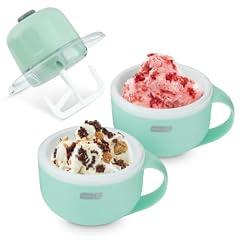
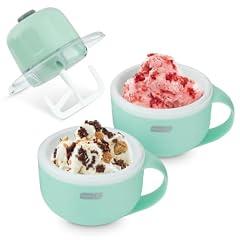
This product is a compact, plug-in frozen-dessert churner with two freezable mug bowls, a removable paddle, lid, ingredient chute, and 12-watt motor. It makes one cup of chilled mix at a time, which is a personal serving rather than a family batch. The bowl must be frozen upright for 24 to 48 hours and the mix must be chilled before use, according to the manufacturer manual. The stated result is soft serve after roughly 15 to 25 minutes of churning. Independent tests by Reviewed and Good Housekeeping broadly support that timing and compact format. Both also found that a firmer, scoopable result needs additional freezer time. The manufacturer manual is notably candid that longer churning alone will not make the dessert firm.
What works
- Independent testing found it compact, simple to operate, and capable of producing creamy frozen desserts after the required bowl preparation.
- Two freezable bowls can reduce the wait between individual batches, a configuration independently documented in testing.
- The food-contact mug, lid, and paddle detach for hand washing, and the manufacturer gives specific drying and storage instructions.
- The manufacturer manual clearly limits each batch to one cup and explains the required pre-freezing and chilled-ingredient conditions.
What does not
- This is not a no-prep machine. Each mug needs 24 to 48 hours in the freezer before use, and needs to be refrozen before reuse.
- Independent testing found the immediate result softer than expected. Firmer ice cream requires a separate container and additional freezer time.
- The manufacturer identifies the overall product as plastic but does not publicly specify the food-contact polymers, coatings, or complete material breakdown for every part.
- No exact-product listing was located in the major public UL, ETL, CSA, or NSF registries reviewed. The manual's statement that it passed FDA-guideline food-safety testing is a manufacturer statement, not a traceable third-party certificate.
- Hand washing is required. The small ingredient chute can become messy with generous mix-ins, according to independent testing.
Who is it for
This product suits one or two people who want occasional, customizable soft serve, sorbet, frozen yogurt, or dairy-free frozen desserts and can keep a clean bowl stored in a 0 F freezer. It fits a small kitchen, dorm-style space, or household where avoiding a large batch is useful. It also suits users willing to plan ahead, chill their mix, wash parts by hand, and accept soft serve immediately after churning or freeze it longer for a firmer texture.
Who is it not for
It is not suited to families, entertaining, or anyone needing multiple servings in one cycle. Each batch holds only one cup, and the bowls need lengthy refreezing before reuse. It is also a poor fit for spontaneous dessert making because the freezer bowl requires 24 to 48 hours of advance chilling. People who need dishwasher-safe parts, a documented third-party electrical listing for the exact product, or fully disclosed food-contact materials should seek a product with those records available.
Integrity
The removable mug, paddle, and lid can be washed with warm water and mild detergent. The motor must only be wiped with a damp cloth, and all parts need to be thoroughly dried before the mug returns to the freezer. Chilled ingredients and clean handling matter particularly for dairy and egg-containing recipes. The manufacturer states that the product passed food-safety testing in accordance with FDA guidelines, but it does not provide a public test report or complete food-contact material disclosure. This is a freezer-bowl machine, not a self-freezing compressor appliance. Its manufacturer-stated motor rating is 12 watts, and no refrigerant is used by the product itself. That can limit running energy, but the household freezer supplies the advance cooling. A one-year limited warranty and support contact are documented. No product-specific CPSC recall was located in the reviewed public recall records, but publicly available replacement-part and repair documentation is limited.

Cuisinart ICE-21P1 Ice Cream Maker
Overview
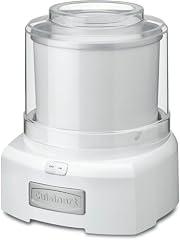
This is a 1.5-quart, freezer-bowl ice cream maker for household use. Its bowl contains cooling liquid within a double-insulated wall, so it has to be fully frozen before churning. The manufacturer says it makes frozen desserts in less than 20 minutes, but that is the active churn, not the bowl preparation. The exact product manual instructs users to wash the bowl, paddle, and lid by hand in warm soapy water and to dry them thoroughly. Independent testing by Consumer Reports found active times of 14 minutes for sorbet and 17 minutes for ice cream, excluding freezer-bowl preparation. It reported consistently creamy ice cream and sorbet, although some product remained frozen onto the bowl sides. Cuisinart states that all food-contact materials are BPA-free, but it does not publicly identify the polymer or metal composition of each food-contact part.
What works
- Independent testing found creamy, consistent ice cream and sorbet, including after overnight freezing.
- Consumer Reports measured short active cycles, 14 minutes for sorbet and 17 minutes for ice cream, once the bowl was frozen.
- The manual provides clear hand-washing, drying, storage, moving-part, and overheating instructions.
- Cuisinart sells compatible replacement lids and paddles, and provides a three-year limited household-use warranty.
What does not
- The freezer bowl requires advance freezing, so the stated sub-20-minute timing does not include preparation time.
- The bowl is hand-wash only, and independent testing found that some frozen mixture remained on its sides and that small amounts could reach crevices.
- BPA-free is manufacturer-stated, but the maker does not publicly disclose the specific material for every food-contact component or the cooling-liquid composition.
- A retailer lists the product as UL Listed, but an exact-model listing could not be confirmed in a public certification issuer registry.
Who is it for
It suits a household that has freezer space for a dedicated 1.5-quart bowl and usually plans dessert ahead. It is appropriate for people making occasional ice cream, sorbet, frozen yogurt, or dairy-free recipes who want a compact electric churner rather than a compressor appliance. It also suits users willing to hand-wash the food-contact parts promptly, follow the manual's limits on utensils and mix-in size, and transfer the finished dessert to a separate freezer-safe container for firm storage.
Who is it not for
It is not suited to people who need to start batches without planning ahead, make repeated batches in one session, or lack reliable freezer space. The bowl must be fully frozen before use, and the active cycle alone does not produce a firm scoopable storage texture for every recipe. It is also not appropriate for unsupervised children or users unable to follow moving-part and electrical precautions. Households using raw egg recipes should choose pasteurized eggs or a cooked base, because the product does not pasteurize ingredients.
Integrity
The manual identifies the lid, paddle, and freezer bowl as washable food-contact parts and directs hand washing with warm soapy water. It also says all food-contact materials are BPA-free. That is a useful manufacturer disclosure, but it is not a full material specification. For homemade recipes containing raw or undercooked eggs, FDA guidance recommends pasteurized shell eggs or pasteurized egg products, plus cleaning utensils and equipment after contact with raw egg. The machine uses a pre-frozen bowl rather than a compressor. Its manual describes cooling liquid sealed between double-insulated walls, but does not disclose its composition or publish energy-per-batch data. This limits energy and material assessment. Waste support is stronger than average for small appliances because Cuisinart continues to offer replacement lids and paddles and states a three-year limited warranty. No product-specific CPSC recall was located in the public recall search checked.

Slushie Machine with Temperature Display
Overview
This is a countertop, compressor-based frozen-drink machine for home use. It is designed to freeze prepared liquids without added ice and dispense slushes, frappes, milkshakes, chilled juice, spiked drinks, and soft-serve-style ice cream. The Amazon product page lists six preset programs, a timer of up to 12 hours, a self-cleaning mode, and dishwasher-safe removable parts. Those are manufacturer-stated claims, not independently verified test results. Capacity needs careful reading. The product page markets a 68-ounce vessel, but also identifies 54 fluid ounces as the recommended safe fill and 64 fluid ounces as the maximum liquid fill. The listing requires mixtures above 4 percent sugar and alcoholic drinks between 2.8 and 16 percent alcohol. Those restrictions are important operating limits, especially for low-sugar recipes.
What works
- The listing gives concrete recipe limits for sugar and alcohol, which helps reduce failed freezing cycles and auger jams.
- The listed 54-ounce recommended fill is large enough for several small servings in one batch, if the recipe meets the stated limits.
- The manufacturer states that removable parts are dishwasher-safe and that a self-cleaning mode is included.
- The product is clearly identified by a model name on its retail page, and Amazon states that product-support options are included.
What does not
- Food-contact materials for the bowl, lid, dispensing path, seals, and stirring assembly are not disclosed on the product page.
- No model-specific UL, ETL, CSA, or NSF certification could be verified in the relevant issuer registries.
- No independent, exact-product performance test was located to confirm cycle time, texture consistency, noise, energy use, or cleaning effectiveness.
- The capacity presentation is potentially confusing, since the advertised vessel figure exceeds both the stated recommended fill and stated maximum liquid fill.
- No wattage, refrigerant type, replacement-parts catalog, or manufacturer warranty terms were located for this product.
Who is it for
This product fits a household that wants to make several servings of sugar-containing frozen drinks from prepared liquids, rather than crush ice in a blender. It is most suitable for adults who can follow recipe constraints, clean the dispensing components after dairy, juice, or egg-containing mixtures, and have space for a roughly 25-pound countertop appliance. The stated 54-ounce safe fill and multiple presets make it practical for planned family gatherings, movie nights, and small home-bar batches.
Who is it not for
It is not well suited to buyers who need documented food-contact materials, independently verified electrical certification, or a traceable manufacturer parts and warranty program. It is also unsuitable for households wanting reliably low-sugar or sugar-free frozen drinks, since the listing requires more than 4 percent sugar for proper operation. Children should not operate it unsupervised. People preparing dairy or egg-based mixtures should not rely on the rinse cycle alone and need to fully wash accessible food-contact parts between batches.
Integrity
The useful hygiene feature is the manufacturer-stated combination of removable dishwasher-safe parts and a self-cleaning mode. That can help with routine cleanup, but a self-clean cycle is not a substitute for disassembly and washing after dairy, egg-containing, or strongly flavored mixtures. FDA food-safety guidance emphasizes food-contact surfaces that are cleanable and kept clean. The product page does not identify the materials of the tank, lid, seals, stirrer, or dispensing path, so material-specific food-contact assessment is not possible. No model-specific independent electrical or food-equipment certification was verified, and no exact-product independent performance test was located. Searches did not identify a product-specific CPSC recall, but the product page also did not provide a manufacturer recall-registration route, replacement-parts catalog, energy-use figure, or refrigerant disclosure. It makes no specific environmental benefit claim, which avoids unsupported green marketing, but its electricity and end-of-life footprint remain unquantified.
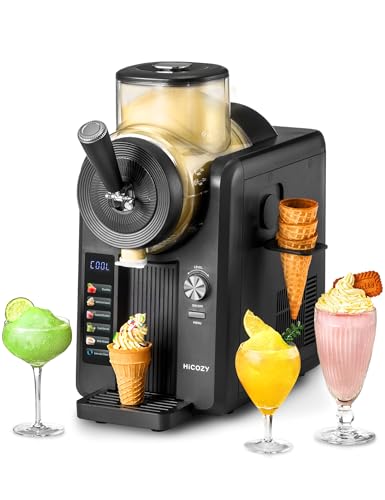
HiCOZY F3 slushie machine
Overview
This countertop frozen-drink and soft-serve machine uses a refrigerated evaporator and rotating auger rather than added ice. Independent hands-on reporting identifies a transparent vessel with up to 41 fluid ounces of capacity, a plastic auger, a stainless-steel evaporator, a dispensing handle, and five modes for slushies, soft ice cream, spiked drinks, cold drinks, and milkshakes. HiCOZY states that the appliance uses a variable-speed motor, a self-cleaning mode, removable dishwasher-safe parts, and double-wall insulation. Independent reviewers confirmed that it makes successful slushies without ice and observed roughly 20 to 45 minute drink cycles, depending on recipe and starting temperature. Soft-serve results were more conditional. One reviewer found the preset could produce grainy or overworked ice cream unless speed and prompt dispensing were adjusted. The product is therefore a small-batch refrigerated dessert dispenser, not a hands-off solution for every liquid or every ice-cream formula.
What works
- Independent hands-on testing confirmed ice-free frozen drinks, with slushie cycles generally taking about 20 to 45 minutes depending on ingredients and temperature.
- The vessel, auger, drip tray, and dispensing assembly can be removed, allowing dairy residue to be washed directly rather than relying only on a rinse cycle.
- Recipe limits are disclosed in independent reporting. Slushies need adequate sugar, and alcoholic drinks need an appropriate alcohol range to freeze correctly.
- HiCOZY provides a 12-month warranty for slushie machines, product registration, and US support channels.
What does not
- Food-contact materials are not fully specified. Stainless steel is named, but the maker does not clearly identify the plastic, seal, valve, and dispensing-path materials or provide a traceable food-equipment certification.
- Cleaning claims are not fully consistent. The product page calls the vessel dishwasher safe, while available manual information limits dishwasher use to the auger and drip tray. Dairy recipes still require disassembly and sink washing.
- Independent testing found that the soft-ice-cream preset may need manual speed adjustment and prompt dispensing to avoid graininess or buttering.
- No exact-product UL, ETL, CSA, or NSF listing was located in the relevant public certification registries. This is missing verification, not evidence of a fault.
- The manufacturer calls the insulated vessel more energy efficient, but provides no watt-hour-per-batch data or quantified comparison. No repair-parts catalog was located.
Who is it for
This product suits a household that wants small batches of frozen soda, juice drinks, milkshakes, or properly formulated frozen cocktails without buying or crushing ice. It is most appropriate for users willing to follow recipe constraints, chill ingredients when practical, and take removable parts apart after dairy desserts. The approximately 1.2 liter vessel and countertop format fit couples, small families, and occasional entertaining better than high-volume serving. It also suits users who value a dispensing handle over scooping from a conventional ice-cream bowl.
Who is it not for
It is not suited to people who need documented third-party electrical or food-equipment certification before bringing a food appliance home, because no exact-product listing was found. It is also a poor fit for households expecting sugar-free drinks to become smooth slushies, for large parties needing many servings at once, or for anyone unwilling to disassemble food-contact parts after cream-based recipes. Users seeking hard scoopable ice cream, measured energy use, readily available replacement parts, or fully disclosed food-contact plastics should look for a product with that documentation.
Integrity
For food handling, the important positive is access. Independent reviewers could remove the vessel, auger, drip tray, and dispensing pieces for washing. That matters after milk, cream, or egg-containing mixes, since the self-cleaning program is a rinse aid rather than a substitute for washing fat residue from all surfaces. Available manual information also warns users to keep hands and utensils out during operation and to keep the electrical base dry. Material disclosure remains incomplete. The product is described as having stainless-steel components, but the vessel and auger are plastic and the exact polymer, seals, and food-contact compliance documentation are not clearly published. Independent reporting identifies R290 refrigerant and about 200 watts of rated power in the US version, but no measured electricity-per-batch result was found. R290 has a low climate impact relative to older refrigerants, though it is flammable and makes correct servicing and end-of-life handling important. No US recall, safety action, or product-specific exposure warning was located in the searched public records.
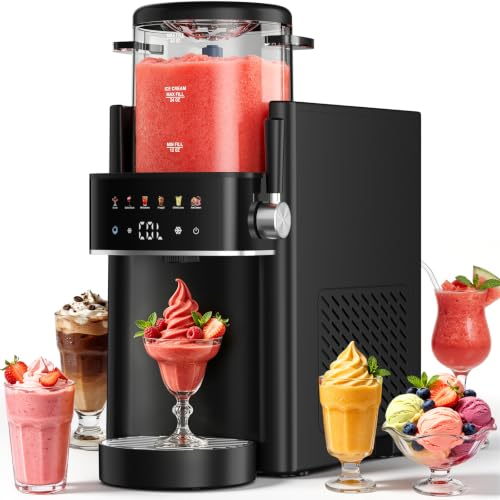
Ranvaira Slushie and Ice Cream Maker, 40OZ, Black
Overview
This is a compact, compressor-based countertop frozen-drink machine that also purports to make soft ice cream. The supplied manual identifies it as a 40-ounce unit, measuring about 11.8 by 7.3 by 15.8 inches and weighing roughly 16.5 pounds. It uses a removable processing vessel, auger, lid, dispensing handle, drip tray, and touchscreen controls. The available manual, hosted independently but presenting manufacturer instructions, specifies six presets and says chilled ingredients should be used. It sets a 40-ounce maximum for slushies, but a lower 24-ounce maximum for ice cream, an important capacity limit not obvious from the broad 40-ounce headline. The manual also describes an automatic water-cleaning cycle and top-rack dishwasher-safe removable parts. I found no exact-product electrical or sanitation certification in the searched UL, Intertek, CSA, or NSF registries, and no credible independent laboratory performance test for this product.
What works
- The instructions identify removable vessel, lid, auger, and drip tray parts, which supports more thorough washing than a sealed food path.
- The manual gives concrete fill limits, including a 12-ounce minimum and separate maximums for slushies and ice cream.
- Six stated presets cover slush, spiked slush, milkshake, frozen juice, frappé, and soft ice cream.
- The manual includes operational safeguards, including keeping the base dry, using a grounded outlet, avoiding moving parts, and stopping operation when the vessel is empty.
What does not
- Food-contact materials are not identified component by component. “Food-grade safe components” is not a material specification or independent food-contact verification.
- No model-specific UL, ETL, CSA, or NSF listing was located in the issuing organizations' searchable registries. This is unproven certification status, not evidence of a failed certification.
- No wattage, energy-per-batch result, standby consumption, or independent performance test was located for this product.
- The instructions refer buyers to a warranty card and support contact, but do not provide a public parts catalog, repair instructions, or replacement seal and auger availability.
Who is it for
This product suits a small household that wants single-machine frozen drinks and occasional soft frozen desserts, has a stable counter with ventilation space, and is prepared to use refrigerated mixtures. The stated 40-ounce slush capacity can fit a small gathering, while the lower 24-ounce ice-cream limit makes the frozen-dessert use more appropriate for a few servings. It also suits users willing to disassemble food-contact parts for regular washing rather than treating the automatic cleaning cycle as a substitute for deep cleaning.
Who is it not for
It is not suited to a food-service buyer who needs independently documented electrical and sanitation certification, traceable food-contact materials, or published service parts. It is also a poor fit for households serving high-risk people if recipes use raw eggs, because freezing does not make raw egg mixtures safe. Use pasteurized eggs, pasteurized egg products, a cooked base, or egg-free recipes. People needing documented low energy use, quiet operation, reliable full-batch timing, or long-term repair support should seek a product with those model-specific records.
Integrity
The clearest hygiene positive is the stated ability to remove and wash the vessel, lid, auger, and drip tray, with a top-rack dishwasher claim and a separate brush for deeper cleaning. That design can help remove dairy and sugar residues, but the automatic cleaning cycle should be followed by disassembly and washing. The available instructions do not specifically address pasteurized eggs or safe handling of egg-based ice-cream mixes. FDA guidance recommends pasteurized eggs or egg products, a cooked base, or egg-free recipes for homemade ice cream. Material disclosure is limited to generic plastic and “food-grade” wording. It does not identify the vessel polymer, seals, auger, dispensing-path materials, or supporting food-contact documentation. The manual reports R-290 refrigerant, which is propane and flammable, so ventilation, intact housing, and adherence to electrical precautions matter. No verified energy-use figures, recycling claims, parts program, or model-specific independent safety or sanitation certification were found.
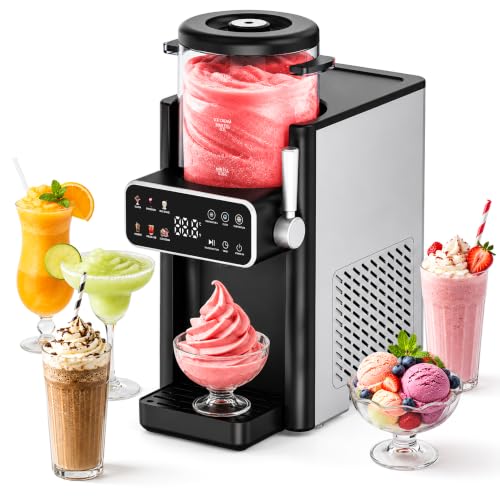
SiroSage Slushie & Ice Cream Maker
Overview
This is a countertop, self-freezing frozen-drink machine for home use. Its documented working capacity is 0.35 to 1.2 liters, and the manual describes a container, auger, evaporator, dispensing handle, sieve, and drip tray. The manufacturer-stated use is chilled slush, milkshakes, frappes, frozen juice, cocktails, and ice-cream-style recipes without adding ice. The available exact-model manual provides meaningful operating limits, including no hot liquids, a 10 cm ventilation clearance, and a two-hour settling period after unpacking. It also identifies a 20 g charge of flammable R290 refrigerant. Documentation remains incomplete for a US buyer. The manual lists 220 to 240 V power, while a separate seller record for this model lists 110 V. No traceable UL, ETL, CSA, or NSF listing for the exact product was located.
What works
- The manual gives a defined 0.35 to 1.2 liter operating range, which helps prevent overfilling.
- The bowl, lid, and dispensing parts are described as removable for warm soapy-water cleaning.
- The manual includes refrigerant, ventilation, blocked-motor, temperature-sensor, and damaged-cord safety instructions.
- The product has a named model and an identified manufacturing company in the available manual.
What does not
- US electrical compatibility is not reliably documented. The exact-model manual specifies 220 to 240 V, while a separate seller listing specifies 110 V.
- No current, model-specific UL, ETL, CSA, or NSF certification could be verified in the relevant issuer registries.
- Food-contact materials are only partly described by a reseller as a polycarbonate tank and stainless-steel body. Materials for the auger, seals, lid, and dispensing path are not fully disclosed.
- No independent exact-model performance test was located to substantiate the advertised 15-minute cycle, quiet-operation, texture, or dishwasher-safe claims.
- No replacement-parts catalog, repair instructions, or clearly traceable warranty terms were found.
Who is it for
This product fits a household that wants small batches of frozen beverages and is prepared to follow recipe limits, ventilation requirements, and manual cleaning steps. It is most suitable for drinks based on room-temperature liquids, with a documented maximum fill of 1.2 liters. It also suits users who can confirm the rating label and outlet voltage on the delivered unit before first use, and who have counter clearance around the compressor housing. Pasteurized dairy and egg ingredients are the safer choice for frozen dessert recipes.
Who is it not for
It is not appropriate for buyers who need confirmed North American electrical certification, commercial sanitation approval, or fully documented food-contact materials. Do not use it if the delivered rating label does not match the local supply voltage, or if its plug, cord, or enclosure is damaged. It is also a poor fit for heavy daily service, buyers needing replaceable wear parts, or households unwilling to disassemble and wash sugary or dairy-contact components after use. Avoid recipes containing raw eggs or unpasteurized dairy, especially when serving higher-risk people.
Integrity
The strongest health-positive evidence is the available cleaning guidance. The manual directs users to detach the bowl, lid, and dispensing components and wash them with warm soapy water, which is important because sugary, dairy, and egg-containing residue can remain in dispensing paths. For ice-cream-style recipes, the product does not make raw egg or raw dairy safe. FDA guidance recommends pasteurized eggs or egg products and pasteurized dairy for homemade ice cream. The manual identifies R290 refrigerant and a 20 g charge. R290 can offer a lower climate impact than many older refrigerants, but it is flammable, so the stated ventilation, settling, and disposal instructions matter. There is no verified energy-per-batch test, no ENERGY STAR record, no traceable safety or sanitation certificate, and no complete replacement-parts or repair documentation. No exact-product recall was located in the searched US recall sources.