
10 Best Hydroponic Garden
 Daniel Kenitz
Please note that we participate in affiliate marketing programs. When you purchase through links on our site, we may earn a commission. As an Amazon Associate we earn from qualifying purchases. This comes at no additional cost to you and helps support the resources required to provide valuable content.Advertising Disclosure
Top-rated Hydroponic Garden Comparison
1

2
3
4
5
6
7
8
9
10
Hydroponic gardens: what to look for
A countertop hydroponic garden grows plants without soil by holding roots in water and supplying light, oxygen, and nutrients. Most supplied products combine a reservoir, pump, grow light, planting baskets or sponges, and a timer. Some add local controls, water-level alerts, or app connectivity. The system can simplify indoor growing, but it does not make edible crops pathogen-free or guarantee the harvest claims shown in product listings.
Whether one works depends on more than pod count or LED wattage. Light output, spectrum, coverage, plant spacing, lamp height, reservoir access, pump circulation, nutrient dosing, crop choice, and cleaning all matter together. A stated 24W or 36W lamp rating tells you electrical input claimed by the maker, not how much usable plant light reaches the leaves. Similarly, 12, 15, 20, or 52 openings are planting positions, not proof that the system can support that many mature plants. Several supplied manuals advise thinning seedlings, pruning roots, leaving room for larger plants, or limiting the system to herbs and leafy greens.
For substantiated performance, look for independent measurements of photon output, photon efficacy, spectrum, coverage, and electrical input under disclosed growing conditions. The relevant evidence in this category includes testing using ANSI/ASABE S640, inclusion on the DesignLights Consortium Horticultural Qualified Products List, or a report from an ISO/IEC 17025-accredited laboratory. Independent crop trials should state the crop, spacing, light position, nutrient conditions, and harvest conditions. Claims such as “five times faster,” “quiet,” “silent,” or faster harvests should not be treated as measured facts without that support.
Powered gardens place a light, pump, adapter, and wiring beside water. For U.S. electrical safety, look for a current, exact-model listing from an OSHA-recognized testing laboratory, such as UL, Intertek ETL, or CSA, and verify it in the issuer’s public directory. CE, FCC, IC, RoHS, or generic test marks do not by themselves establish a U.S. wet-environment safety listing. For grow-light exposure, look for an IEC 62471 photobiological-safety report or equivalent certification record with exposure markings and placement guidance.
Edible crops also require transparent inputs. Buyers should be able to identify seed species and, where applicable, lot, germination, test-date, and planting information; identify nutrient ingredients and guaranteed analysis; and understand the materials that contact nutrient water. Fertilizer registration, seed-labeling records, and food-contact documentation were commonly absent in the supplied reviews. A transparent reservoir may help inspection, but it does not prove food-contact compliance.
Across the reviewed products, recurring concerns include missing independent electrical and light-safety verification, unmeasured growing performance, incomplete nutrient and food-contact disclosure, unclear or absent seed traceability, and limited cleaning or raw-produce guidance. Several products also had capacity or height inconsistencies. Use potable water, clean the reservoir, pump, tools, and other food-contact surfaces, follow nutrient labels, wash hands, and rinse harvested produce under running water. Keep cords, adapters, and light panels dry; unplug before cleaning; and do not assume indoor hydroponic growing makes raw produce or sprouts safe for people at higher risk of foodborne illness.
Integrity
The supplied products were assessed across health, ecology, and evidence topics. Higher scores indicate stronger support or disclosure in the reviewed materials; they do not turn an unsupported claim into a guarantee. The comparisons below describe what the scores rewarded and what remained missing.
HHealth & Safety
Safe food-growing design
This measures whether a garden explains potable water, cleaning, seed handling, nutrient use, and raw-produce risks. It matters because hydroponic roots sit in shared water and harvested greens may be eaten raw. Higher-scoring products, around 73–74, included more practical maintenance or produce guidance; lower-scoring products, around 68–70, left food hygiene and pathogen limits less clear.
Electrical safety around water
This measures protection against shock, overheating, fire, and water ingress from the lamp, pump, adapter, and reservoir. A high score requires an exact-model U.S. safety listing from a recognized laboratory, not merely CE, FCC, IC, or RoHS marks. The supplied scores were generally 68–73 because no complete UL, ETL, or CSA listing was found for most powered gardens.
Safe grow-light exposure
This measures whether spectrum, intensity, shielding, placement, and warnings reduce avoidable eye or skin exposure. A high score requires photobiological testing and usable exposure instructions. Powered gardens generally scored about 68–72 because no IEC 62471 report or comparable exact-product light-safety record was located. Non-powered seed kits scored much higher because they contain no grow lamp.
Transparent inputs for edible plants
This measures disclosure of seeds, nutrients, grow media, and reservoir materials that can affect the crop. Higher scores reflect clearer identification and safer labeled use; lower scores reflect generic A and B nutrient bottles, undisclosed formulas, missing fertilizer registration details, or unverified food-contact claims. Most powered gardens scored about 68–70, while none supplied complete input traceability.
Reliable pump, reservoir, and cleaning access
This measures resistance to leaks, pump failure, algae, blocked plumbing, unstable supports, and inaccessible cleaning surfaces. It matters because stagnant or dirty nutrient water can affect both plant health and electrical safety. Higher-scoring products, roughly 74–80, documented drains, removable decks, pump cleaning, water alerts, or troubleshooting; lower scores reflected weaker maintenance instructions or unresolved reliability concerns.
EEvidence
Proven plant-growing performance
This measures whether light output, coverage, plant capacity, and harvest-speed claims were independently tested under disclosed conditions. High scores require reproducible measurements rather than LED wattage or promotional photos. The supplied gardens mostly scored 68–71 because no independent PPF, PPE, spectrum, coverage, or crop-yield report was found; several advertised faster-growth claims remained unsupported.
Honest capacity and harvest claims
This measures whether pod count, usable spacing, height, tank capacity, timer, noise, smart features, and growth claims match the exact product and its limits. Higher scores, up to 74, reflected clearer manuals and fewer conflicts. Lower scores, around 52–60, reflected contradictory pod or tank figures, unclear light height, or unsupported claims about mature crop capacity and faster harvests.
Real third-party verification
This measures whether safety, performance, materials, and wireless claims can be matched to an independent issuer’s current record for the exact model. An FCC authorization can support a radio function, but it does not certify wet-location electrical or grow-light safety. Most products scored 68–74 because exact UL, ETL, CSA, IEC 62471, or accredited-laboratory records were not located.
Seeds that match the garden
This measures whether seeds have species, lot, germination, date, and planting information and whether the advertised crops fit the real spacing and light height. Higher scores, around 74–76, reflected useful supplied hardware or the ability to choose seeds separately. Lower scores reflected absent seed lots, unclear assortments, or a mismatch between pictured crops and realistic mature capacity.
Safe, durable smart controls
This measures whether app or Wi-Fi features are optional, secure, supported, and usable if cloud service ends. Local timers and pump controls improve resilience. Higher scores, about 77–80, came from products with local operation and clear basic controls; lower scores reflected app privacy concerns, unclear update support, or dependence on cloud features. Seed-only products scored highly because they have no connected controls.
EEcology
Energy and waste footprint
This measures actual electricity demand, water efficiency, durability, replacement parts, and recurring pod, sponge, plastic, battery, and electronics waste. A higher score reflects concrete power information and repair or replacement support, not a general “eco-friendly” claim. Supplied products typically scored 70–78: some stated 18–24W loads or replacement parts, but independent energy efficiency and end-of-life data were usually absent.
Full reviews

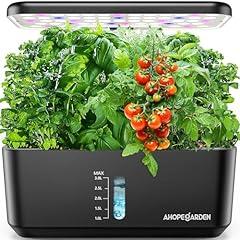
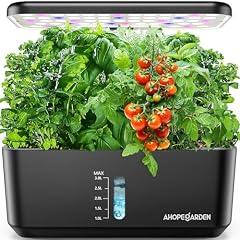
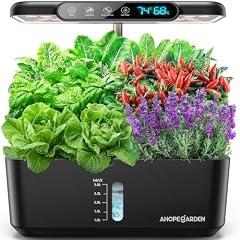
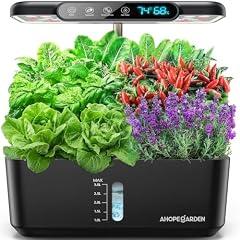
Ahopegarden Hydroponic Indoor Garden System
Overview
This countertop hydroponic garden combines a 3 L ABS-plastic reservoir, internal water pump, 10 planting openings, and a height-adjustable LED panel. It is intended for seeds supplied by the user, with included baskets, sponges, domes, unused-pod covers, two-part nutrient concentrate, and a power adapter. The manufacturer specifies an 18 W power draw, 57 LEDs, and a 16-hour-on, 8-hour-off light cycle. Its manual gives practical operating details that matter for a small indoor garden. It specifies 5 mL each of nutrient A and B per liter of water after germination, advises thinning to one plant per pod, and says larger plants may need transplanting. The manual also directs users to keep plants about 10 cm below the light and to keep unused openings and the water inlet covered. No independent laboratory report was located for the claimed light output, plant coverage, harvest speed, or energy use.
What works
- Local buttons run the light and pump, with no app, account, Wi-Fi connection, or cloud service described.
- The manufacturer provides concrete setup limits, including 3 L capacity, a 16-hour light schedule, 18 W rated consumption, and nutrient dilution instructions.
- The manual addresses several routine maintenance risks, including water-level monitoring, covering unused holes, removing domes after germination, thinning seedlings, and checking the pump for root entanglement.
- Replacement sponges, seed-starting supplies, and plant food are sold through the manufacturer, and the manufacturer states a 24-month warranty.
What does not
- No current UL, ETL, or CSA listing for this exact product was located in the relevant public certification directories. The manual's CE, FCC, and IC-style marks are not a substitute for a verified U.S. wet-environment electrical safety listing.
- No independent photobiological safety report or independent plant-light test was located. The 10 cm spacing instruction helps prevent plant scorching, but it does not establish eye and skin exposure safety.
- The nutrient dose is specified, but the manufacturer does not publish the nutrient guaranteed analysis, fertilizer registration details, seed lot data, or food-contact compliance documentation for the ABS reservoir.
- The manufacturer promotes rapid growth, but no independent report was located for photon output, spectrum, coverage, crop yield, or harvest time under disclosed conditions.
- The manual gives planting and maintenance guidance but does not tell users to wash harvested produce under running water before eating.
Who is it for
It suits an adult who wants a compact, hands-on herb or leafy-green garden on a stable indoor counter and is prepared to buy seeds. The documented 3 L reservoir, local controls, 16-hour timer, water-level window, and modest 18 W rated draw fit a small routine of checking water, pruning, cleaning, and harvesting regularly. It is also suited to users who prefer no app or wireless setup. The supplied manual is most useful for someone willing to follow its spacing, nutrient-dilution, and light-height instructions.
Who is it not for
It is not suited to households that require a publicly verifiable U.S. electrical safety listing for equipment operating beside water, or to users who need a documented photobiological safety classification for the grow light. It is also a poor fit for people expecting ten mature fruiting plants at once. The manual says to thin each pod and warns that tomatoes spread substantially, need separate space, and may require support. Do not rely on it as a food-safety system for raw produce, especially for people at higher risk from foodborne illness.
Integrity
The manual contains useful basic safeguards. It says to use the supplied adapter, keep water away from the LED panel, do not submerge the base, cord, plug, or light, stop using damaged equipment, and keep children supervised. It also specifies a 10 cm gap between plants and the light. However, independent U.S. electrical listing and photobiological test records for this product were not located. A search of the CPSC recall database did not identify an Ahopegarden recall, which is not evidence of certification or absence of all hazards. For edible growing, the manual gives a water and nutrient ratio and recommends covers to limit evaporation and mosquito breeding, but it does not publicly document nutrient composition, seed traceability, or food-contact compliance for the ABS reservoir. FDA guidance says homegrown produce should still be washed thoroughly under running water before eating. The manufacturer states 18 W consumption and sells replacement growing supplies, which can extend use, but it provides no verified durability, repairability, recycled-content, or end-of-life recycling program.

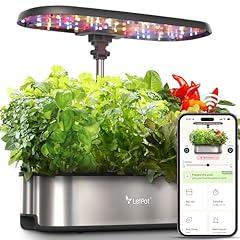
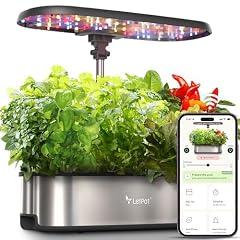
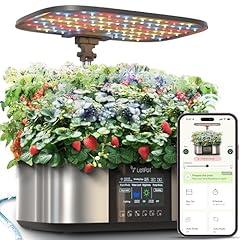
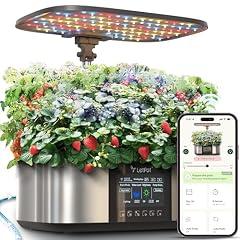
LETPOT LPH-SE Hydroponics Growing System
Overview
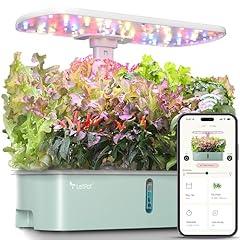
This is a countertop hydroponic garden for growing plants in 12 planting openings without soil. LetPot states that it has a 5.5 liter reservoir, a 24 watt red, blue, and white LED grow light, a circulating pump, and app plus onboard touch controls. The stated body materials are stainless steel and ABS resin. The maker also offers a separate replacement pump and publishes a one year warranty policy. Important claims remain manufacturer-stated rather than independently measured. No independent plant-light report was located for photon output, coverage, spectrum, energy draw, or the advertised faster-growth claim. The product page says the light adjusts to 30 inches, while the maker's product catalog describes 24 inches, so buyers should confirm the supplied version and its dimensions. Seeds are not listed as included, allowing growers to select their own crop, but the food-contact resin, nutrient ingredients, and seed information are not fully disclosed online.
What works
- The onboard touch panel can operate light modes and pump controls without relying entirely on the app, according to the manufacturer.
- A 5.5 liter reservoir, 12 planting openings, and 24 watt light are consistently stated in the maker's product page and catalog.
- A model-specific replacement pump is sold separately, which creates a repair path instead of making pump failure automatically terminal.
- LetPot publishes a one year product warranty and lists support contact options.
What does not
- No UL, ETL, or CSA safety listing for this exact water-adjacent garden was located in the relevant public certification directories.
- No IEC 62471 photobiological safety report, independent light-output test, or independent support for the faster-growth claim was located.
- The maker's own materials conflict on maximum light height, stating both 30 inches and 24 inches.
- Online input disclosure is incomplete. The product materials identify stainless steel and ABS, but do not identify the food-contact resin grade or provide a complete nutrient composition and safety label.
Who is it for
This product suits a person who wants a compact indoor garden for herbs or small leafy crops, has a stable counter or table near an outlet, and is willing to refill, clean, and monitor a reservoir. It is also suited to someone who values physical controls as well as optional app scheduling, rather than depending exclusively on Wi-Fi. Growers who prefer choosing their own seed varieties may find the seed-free format practical. It is most appropriate when realistic expectations are set around plant spacing and routine cleaning.
Who is it not for
It is not suited to households that require independently verified electrical safety certification for a powered water reservoir, or to users who need documented grow-light exposure testing. It is also a poor fit for anyone wanting a fully traceable edible-growing system with identified food-contact materials, nutrient analysis, and labeled seed lots. People growing large fruiting plants or expecting all 12 openings to support mature, full-size plants should use caution because usable spacing and light coverage have not been independently measured. Immunocompromised users should retain normal raw-produce washing and handling practices.
Integrity
Hydroponics does not make raw produce pathogen-free. The product information does not provide a practical food-safety protocol covering potable-water use, reservoir sanitation, seed handling, or harvest washing. For edible crops, use clean water, clean hands and equipment, and rinse harvested produce under running water. FDA guidance notes that washing reduces bacteria but does not eliminate it. The stated stainless steel and ABS construction does not establish that all wetted materials are food-contact documented. The 24 watt rating gives a useful upper bound for the light's stated power, but no measured electrical consumption or horticultural photon-efficiency report was found. A separately sold pump is a meaningful repair option, and the one year warranty supports basic service access. No product-specific U.S. recall or regulator warning was located in the screened public sources, but no exact-model U.S. electrical-safety or photobiological certification record was found either.
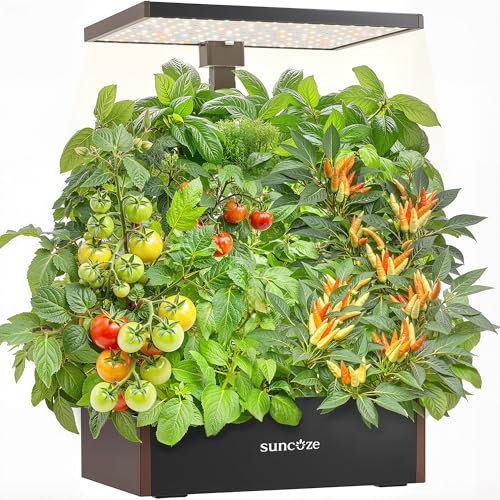
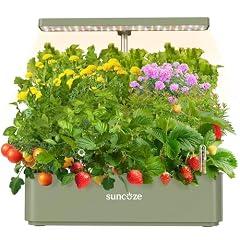
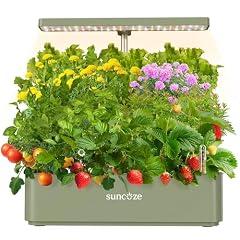
Suncoze Hydroponics Indoor Garden Kit 20 Pods
Overview
This is a countertop, recirculating hydroponic garden with 20 planting openings, a 10L reservoir, an adjustable lamp mast up to 25 inches, and local LCD controls for vegetable and flower or fruit modes. The manufacturer states that its pump cycles for 15 minutes on and 1 hour 45 minutes off, while low-water and nutrient reminders prompt routine attention. It is intended for household indoor growing of herbs, leafy greens, vegetables, or flowers. The product documentation identifies plastic construction and includes baskets, sponges, domes, caps, stakes, and A and B plant nutrients. Seeds are not listed as included. A notable documentation issue is that the official product page calls the light both 36W in its specifications and 30W in its description. No independent light-output test, food-contact material record, or current U.S. electrical safety listing for this exact product was located.
What works
- The manufacturer provides concrete operating details, including a 10L tank, 20 planting openings, a 25-inch maximum light height, and a timed circulation-pump cycle.
- Local controls, a fixed 16-hour light cycle, and water and nutrient reminders do not depend on an app, Wi-Fi connection, or cloud service.
- The available instructions call for fresh water, periodic full water changes, cleaning of the reservoir and grow deck, and covering unused openings to limit algae.
- A two-year manufacturer warranty is stated, and the brand publishes a manual and installation-video page for the product family.
What does not
- The official page contains an unresolved light-power contradiction, describing the lamp as both 30W and 36W. This weakens confidence in the technical claims.
- No independently verified PPF, spectrum, coverage, electrical-input, or harvest-performance data was found for this product.
- No current UL, ETL, CSA, IEC 62471, or equivalent public listing was located for the exact powered garden, light, or adapter. This is missing verification, not evidence of a defect.
- The materials are disclosed only as plastic. The available documentation does not identify food-contact resin grades, nutrient composition, fertilizer registration, or seed lot and germination information.
- The growing instructions address water changes and cleaning, but do not give complete home-produce handling advice such as washing harvested produce under running water and preventing cross-contamination from raw foods.
Who is it for
This product fits a household user who wants a relatively large countertop starting garden for herbs and leafy greens, has a stable indoor surface near a suitable outlet, and is prepared to supply their own seeds. Its local timer, reminder lights, large stated reservoir, and adjustable mast are practical for someone who wants routine-guided indoor growing without an app. It is most suitable when the user will thin crowded seedlings, change the water regularly, clean the reservoir between cycles, and treat harvested greens as raw produce that still needs safe handling.
Who is it not for
It is not well suited to buyers who require a publicly verifiable U.S. safety listing for electrical equipment used beside water, or documented photobiological testing for a grow light. It is also a poor fit for anyone expecting verified harvest speed, measured light coverage, known nutrient formulation, or traceable food-contact materials. Households with young children, pets, unstable furniture, or limited ability to manage spills and unplug the unit before cleaning should take the manual's electrical precautions seriously. It is not a commercial-growing product.
Integrity
The instructions offer several useful hygiene and maintenance controls. They call for clean water, water changes every two to four weeks, routine cleaning of the tank and deck, and caps over unused openings to reduce algae. These steps are relevant because hydroponic growing does not make raw leafy greens pathogen-free. FDA guidance identifies water quality and sanitation as important controls, and recommends washing home-grown produce under running water before eating. The product has no located recall or regulatory warning specific to this garden. However, no public U.S. listing was located to confirm electrical safety for the complete light, pump, reservoir, and power system, and no photobiological safety report was found. Plastic is the only disclosed material, while resin, food-contact status, and end-of-life instructions for U.S. users are not specified. The manufacturer does offer replacement seed-pod accessories and states a two-year warranty, which may help extend use, but measured electricity demand and light efficiency remain unverified.
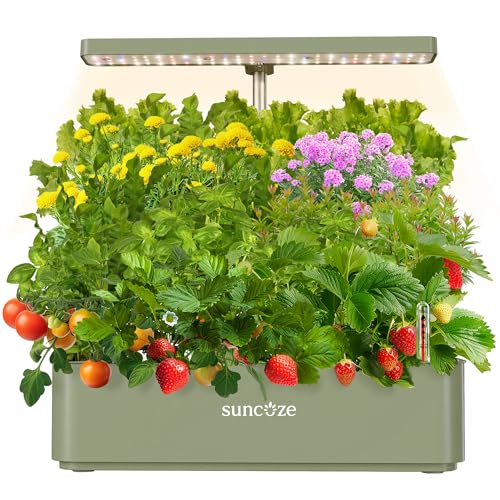
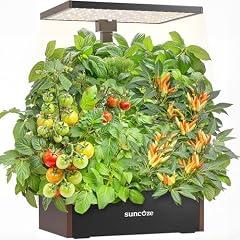
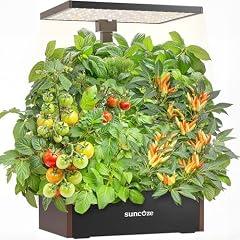
SUNCOZE Hydroponics Indoor Garden Kit
Overview
This is a compact countertop hydroponic garden for herbs and other small plants. It has 12 planting openings, a 4 L reservoir, a recirculating pump, planting baskets and sponges, A and B nutrients, and a height-adjustable LED panel. Seeds are not included. The maker lists dimensions of 15.16 by 7.2 by 7.09 inches and a 2.2 to 12.4 inch light-height range. The maker states that its 24 W full-spectrum light runs on a 16-hour-on, 8-hour-off cycle and that the pump cycles for 15 minutes on and 1 hour 45 minutes off. Low-water and nutrient alerts, plus a marked water gauge, are practical maintenance aids. No model-specific independent light-output test, photobiological safety report, or U.S. electrical safety listing was located in the certification sources checked.
What works
- Compact 12-site format and 4 L tank are clearly specified by the maker.
- The product includes baskets, sponges, and A and B nutrients, so seeds are the main planting input to add.
- Local low-water and nutrient alerts, plus a visible water gauge, can help prevent dry running when used as instructed.
- Published troubleshooting directs users to keep the reservoir above minimum, clear roots or debris from the pump, and clean it if circulation becomes noisy or blocked.
What does not
- No current UL, ETL, CSA, or other independently verifiable U.S. safety listing for this exact powered garden was located.
- No independent report was located for light spectrum, photon output, coverage, electrical input, or the advertised growth benefits.
- The supplied nutrient bottles are identified only as A and B nutrients. Their ingredient analysis, fertilizer registration, and crop-use directions were not independently verified.
- The reservoir and crop-contact parts are described only as plastic. No food-contact resin or material disclosure was located.
- Twelve openings do not ensure room for 12 mature herbs or vegetables. Crop spacing, seed quality, and harvest results depend on the seeds and growing conditions.
Who is it for
This product suits a beginner who wants a small indoor station for starting or repeatedly harvesting compact herbs and leafy greens, and who is prepared to choose their own seeds. Its narrow countertop footprint, included baskets and sponges, local refill indicators, and fixed light cycle simplify routine use. It is most appropriate for someone willing to inspect the water level often, clean the reservoir and pump, follow the nutrient label, and wash harvested produce under running water before eating.
Who is it not for
It is not suited to households that require independently verified electrical certification for appliances operated beside water, or to anyone who needs documented light safety testing. It is also a poor fit for users seeking verified harvest forecasts, mature fruiting vegetables, or reliable full-size spacing for all 12 openings at once. People with heightened food-safety needs should not treat indoor hydroponics as pathogen-free. They should use clean water, keep equipment sanitary, and handle raw produce carefully.
Integrity
The product combines water, a pump, and a 24 W light, so electrical precautions matter. The available instructions say to keep electrical parts out of water, use the supplied adapter, and unplug before cleaning. However, no exact-product listing was located in the UL, Intertek ETL, or CSA verification sources checked. No current CPSC recall or safety warning for this product was located. Avoid looking directly into the operating grow light because no model-specific photobiological safety assessment was found. Hydroponics does not make produce automatically safe. FDA guidance advises clean hands, sanitary food-contact surfaces, clean water, and rinsing home-grown produce under running water. The maker's maintenance guidance recognizes algae, debris, and pump blockage risks, but does not independently establish cleaning effectiveness. The garden uses plastic and electronics, and no replacement-parts or recycling program was located. Its 24 W rating is maker-stated, not independently measured, so lifetime electricity use and plant output cannot be quantified reliably.

LETPOT LPH-Air Hydroponic Indoor Garden System
Overview
This is a compact countertop hydroponic garden with 10 planting positions, a cycling water pump, adjustable LED panel, onboard touch controls, and optional Wi-Fi app control. LetPot states that the reservoir holds 4 L, the light uses 24 W, the panel can rise to 14 inches, and the housing is ABS plastic. The manufacturer also sells a US-adapter version. The manual gives crop-specific light-distance guidance, generally 2 to 8 inches from the panel, and recommends supports plus hand pollination for larger fruiting crops. Those are useful operating details, but no independent report was located for this unit's plant-light output, coverage, harvest speed, photobiological safety, food-contact materials, or electrical safety certification. The product is therefore most clearly documented as a small, app-enabled herb and leafy-green garden, not as independently proven equipment for ten full-size vegetable plants.
What works
- The manufacturer documents 10 pod positions, a 4 L reservoir, 24 W LED light, and a 14-inch maximum light height.
- Onboard touch controls can operate lighting and pump functions, so basic adjustment is not described as app-only.
- The manufacturer publishes crop guidance for light distance and photoperiod, including herbs and lettuce.
- A model-specific replacement pump is sold by the manufacturer, which can reduce repair waste if the original pump fails.
- The companion app has recent update history and an account-deletion process is published.
What does not
- No current UL, ETL, CSA, or comparable U.S. safety listing for the exact garden was identified, despite powered lighting and a water reservoir operating together.
- No exact-model IEC 62471 photobiological safety report, measured PPF or spectrum report, or independent harvest testing was found.
- The available materials statement identifies ABS plastic, but does not provide food-contact documentation or detailed disclosure for the supplied growing media, nutrients, or seeds.
- A recurring reliability concern is supported by manufacturer-hosted replacement-pump reviews, including reports of original pumps failing in under six months or around one year.
- The app's store privacy disclosure says identifiers may be used to track users, while location, photos, device identifiers, and diagnostics may also be collected.
Who is it for
It suits an adult who wants a compact indoor setup for herbs, lettuce, arugula, or seedlings, has a stable countertop near an outlet, and is willing to clean the reservoir and inspect the pump regularly. It is also a reasonable fit for someone who values physical controls but wants optional app scheduling and low-water reminders. The published 14-inch light height and manual guidance make it more practical for short crops than for plants that need substantial vertical room.
Who is it not for
It is not well suited to buyers who require independently listed electrical equipment around water, documented eye and skin safety for the grow light, or verified food-contact material records. It is also a poor fit for households that cannot keep raw-produce handling separate from raw meat preparation, or cannot commit to regular reservoir cleaning and pump checks. Avoid treating the ten openings as evidence that ten mature tomatoes, peppers, or other large crops will fit and fruit reliably.
Integrity
Hydroponic growing does not make raw produce pathogen-free. FDA guidance says home-grown produce should be rinsed under running water before eating, handled with clean hands, and kept separate from raw-meat preparation surfaces. The product documentation gives growing directions, but it does not provide a comparable practical food-safety protocol for potable water, reservoir sanitation, seed handling, nutrient use, or harvest hygiene. No exact-product U.S. electrical safety listing or photobiological safety test record was identified. This matters because the light and pump operate beside a water reservoir. LetPot does provide a one-year warranty, replacement pumps, adapters, and light panels, which may extend service life. Its stated 24 W light rating supports a modest electricity profile, but no independently measured plant-light efficacy or lifecycle assessment was located. The app has active updates and an account-deletion route, although its published privacy disclosures include tracking identifiers and collection of some device, location, photo, and diagnostic data.

MetryGrow MG-15 Indoor Garden Kit
Overview
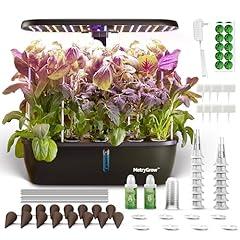
This is a countertop hydroponic garden with 15 planting positions, a stated 5.5-liter reservoir, circulation pump, adjustable light support, and a 24W full-spectrum LED panel. It is intended for indoor herbs, leafy greens, and small fruiting plants. A third-party hosted copy of the product instructions says the kit includes baskets, sponges, germination covers, shade covers, two nutrient bottles, support rods, labels, and a power adapter. Seeds are not included. The documented controls are local rather than app-based, with vegetable and fruit-and-flower light modes, a fixed 16-hour on and 8-hour off lighting cycle, and a stated 30-minute pump cycle. The same instructions describe removable trays and regular wiping to limit algae. The advertised 5-times-faster growth claim, light output for plants, nutrient composition, food-contact status of the resin reservoir, and U.S. product safety certification could not be independently verified.
What works
- The documented 15-site layout and 5.5-liter reservoir provide a concrete capacity for a compact indoor garden, manufacturer-stated.
- A fixed local timer and automatic pump cycle can reduce routine switching and watering tasks, manufacturer-stated.
- Removable trays, a water-level window, and shade covers for unused sites are practical maintenance features, manufacturer-stated.
- The instructions identify that seeds are not supplied, which avoids implying a seed kit with undisclosed varieties or lots.
What does not
- No current UL, ETL, or CSA listing for this exact product was located in the relevant public certification registers. The claim of a certified adapter does not name an issuer or listing number.
- No independent photobiological safety report, plant photon output report, coverage map, or measured electrical-input report was located for the light.
- The two included nutrient bottles are not accompanied by an accessible ingredient analysis, fertilizer registration record, or use label. The reservoir is described only as resin, without food-contact documentation.
- The instructions advise cleaning to limit algae but do not give practical edible-crop controls for potable water, reservoir sanitizing, nutrient replacement, hand hygiene, or washing harvested produce.
- The 5-times-faster growth and broad fruiting-plant claims lack disclosed test conditions. A 14-inch stated light adjustment may also constrain taller crops.
Who is it for
This product suits an indoor gardener who wants a compact, plug-in setup for herbs, lettuces, and short leafy crops, and who is comfortable supplying their own labeled seeds and checking crop-specific nutrient guidance. The fixed timer, water-level window, and stated automatic circulation are most relevant for someone seeking basic daily convenience rather than detailed environmental control. It also fits users prepared to clean the reservoir and trays routinely, monitor water quality, and treat harvested leaves as raw produce that still needs washing.
Who is it not for
It is not suited to households that require independently verified U.S. electrical safety certification for appliances operated beside water, or to buyers who need documented light-exposure testing. It is also a poor fit for people seeking traceable seeds, fully disclosed nutrients, verified food-contact materials, or independently measured harvest performance. Avoid relying on it for tall tomatoes or other large fruiting crops without accepting crowding and height limits. People unable to maintain cleaning, nutrient changes, and harvest hygiene should choose a lower-maintenance food-growing option.
Integrity
The main health issue is documentation, not a confirmed product defect. Public searches did not locate a product-specific CPSC recall or SaferProducts report, but they also did not locate a verifiable UL, ETL, or CSA listing for the complete garden. The instructions describe a powered light and pump near a water reservoir, so use a dry, stable surface, keep connections away from spills, and follow the adapter instructions. No photobiological safety test report was found for the LED. For edible crops, hydroponics does not make raw produce pathogen-free. FDA guidance emphasizes clean water, cleanable food-contact surfaces, sanitation, and rinsing produce before eating. This product's accessible instructions provide only general cleaning advice. Its 24W stated light and fixed 16-hour cycle suggest a modest electricity load, but no independently measured input power, photon efficiency, replacement-parts program, recycling plan, or food-contact material documentation was found. The kit uses disposable sponges and plastic accessories, which add recurring waste.

LetPot LPH-Max Smart Hydroponic Garden Kit
Overview
This is a countertop hydroponic garden with a 7.5-liter reservoir, a 36 W LED light, touchscreen controls, Wi-Fi app control, a 21-opening tray, and a separate two-opening tray for larger plants. LetPot states that it can automatically refill water from an external container and dose nutrients, while manual operation remains available. The box includes grow sponges, baskets, domes, nutrients, and accessories, but not seeds. An independent reviewer used the larger tray for lettuce and cherry tomato over about two months in manual mode. The lettuce was healthy before being eaten by a pet, and the tomato flowered but did not fruit during the test. This is useful real-world evidence of basic growing function, not a controlled measurement of light output, harvest yield, or growth speed.
What works
- Manual operation, light scheduling, and brightness changes remain accessible from the built-in control panel, independently tested.
- The two tray formats provide a concrete choice between 21 small planting positions and two larger positions.
- An independent two-month test documented healthy lettuce growth and a flowering tomato when used as directed in manual mode.
- The manual gives nutrient mixing ratios, identifies the main mineral analysis of both nutrient parts, and gives pump-access cleaning steps.
What does not
- No current UL, ETL, CSA, IEC 62471, DesignLights Consortium, or FCC record was located for this exact product, so electrical, photobiological, wireless, and light-performance verification remain unproven.
- The food-growing instructions do not provide a complete edible-produce safety protocol for potable water, sanitizing the system, seed hygiene, harvest handling, or washing produce before eating.
- Independent testing found that the seven-liter manual fill must pass through a very small opening, which can make spill-free replenishment difficult.
- Automatic mode requires a separate external water container. Independent testing also found the nutrient setup and instructions harder to follow than they should be.
Who is it for
It suits a home grower who wants to manage herbs, leafy greens, or a small number of larger plants indoors and is comfortable measuring nutrients, cleaning a pump, and following a setup manual closely. It is particularly relevant for someone who values adjustable light scheduling and the ability to operate core controls directly on the unit, rather than relying entirely on an app. The automatic refill function is most practical where there is safe, stable room for an external water reservoir.
Who is it not for
It is not a low-maintenance food system for households that need documented electrical and grow-light certification, comprehensive produce-safety instructions, or independently measured harvest claims. Avoid placing the automatic setup where pets, children, unstable furniture, finished flooring, or spill-sensitive electronics could disturb an external water container or hose. It is also a poor fit for users who do not want to mix two-part nutrients, obtain their own seeds, monitor water use, and periodically unplug and disassemble the pump for cleaning.
Integrity
The product mixes water, nutrients, pumps, and a powered LED light, so its written precautions matter. The available manual tells users to unplug before cleaning, keep the light board and power connections dry, inspect damaged insulation, avoid covering the unit, and not stare into the LEDs. Those are useful controls, but no current third-party listing or photobiological test record was located for this exact product. LetPot specifies ABS resin and stainless steel. A reviewer reports that LetPot described the ABS as BPA-free, but that material statement is not a substitute for an independently traceable food-contact record for the finished reservoir. The manual identifies nutrient mineral content and warns against overdosing, yet does not fully address produce washing or reservoir sanitation. The rated light-board power is 36 W, but actual electricity use, photon efficiency, repairability beyond replacement pumps, and end-of-life recycling guidance were not independently documented. No product-specific CPSC recall was located through September 6, 2026.

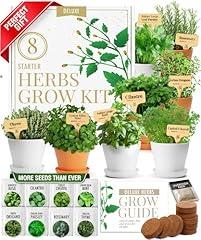
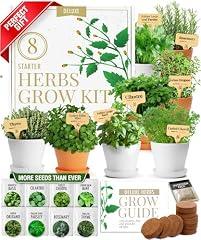
Home Grown Deluxe Herb Garden Kit
Overview
This is a soil-based herb starter set, not a hydroponic garden. The manufacturer describes eight seed types, pots, saucers, plant markers, peat growing medium, a nutrition pack, and a detailed grow guide. It is intended for a sunny windowsill, shelf, porch, or outdoor location, with the user adding water and providing adequate light. No lamp, pump, reservoir, cord, battery, or app is listed among the supplied components. That removes the product's own electrical, water-ingress, and smart-device risks. The manufacturer’s current product page lists oregano, thyme, lemon balm, parsley, basil, curled chervil, cilantro, and rosemary. This differs from the catalog description, which mentions mint, so buyers should confirm the seed packets received rather than rely on a generic herb list.
What works
- It is a non-powered, soil-based kit, so it does not place an included electrical light or pump beside water.
- The manufacturer states that eight pots, saucers, labels, growing medium, nutrition, and a guide are supplied for separate herb starts.
- A published grow guide for this kit format gives concrete watering, thinning, ventilation, mold-response, and transplanting directions.
- The reusable-pot format can support repeat planting without built-in electronic waste.
What does not
- The public descriptions do not consistently identify the eight herb varieties. The current manufacturer page and catalog description conflict, including over whether mint is included.
- No independent laboratory results were found for seed germination, light needs, yield, harvest timing, or the nutrition pack’s composition.
- No seed lot number, germination percentage, test date, purity data, fertilizer analysis, or pot food-contact material disclosure was located in the reviewed public materials.
- The growing instructions do not clearly tell users to use potable water, wash hands and harvested herbs, clean containers between crops, or keep raw produce separate from raw meat preparation.
Who is it for
This kit suits a beginner who wants a compact, hands-on soil herb project and has a sunny windowsill or protected outdoor spot. It is most appropriate for someone comfortable monitoring moisture, thinning seedlings, and moving larger herbs into bigger containers or the ground later. It also fits households that prefer a non-powered setup and do not need automated lighting, pumping, reminders, or a mobile app. The separate pots and labels are useful when starting multiple culinary herbs at once.
Who is it not for
It is not suited to buyers specifically seeking a hydroponic system, automatic watering, a built-in grow light, or dependable harvest output in a low-light home. It is also a poor fit for people who need documented seed germination data, full nutrient labeling, certified food-contact material information, or independently tested growing performance. Households serving raw herbs to people at elevated foodborne-illness risk should use careful produce-handling practices and should not treat home growing as a food-safety control.
Integrity
The major safety advantage is structural rather than certified. The supplied-product description contains pots, saucers, seeds, growing medium, nutrition, markers, and a guide, with no listed electrical or wireless components. Searches of U.S. consumer-product recall resources did not identify a matching recall record. No current third-party safety, materials, seed-quality, or performance certification record for this product was located. For edible herbs, ordinary fresh-produce precautions still matter. FDA guidance says home-grown produce should be washed under running water, handled with clean hands, and kept away from raw-meat cross-contamination. The available growing directions discuss moisture and mold but do not provide a complete food-safety routine. Environmentally, avoiding a pump, lamp, batteries, and app hardware reduces operating electricity and electronics disposal. The pots are described in the guide as reusable, but the materials, peat sourcing, nutrition-pack analysis, recycling route, and replacement-parts support are not publicly disclosed.

Ahopegarden Indoor Hydroponic Garden Kit
Overview
This is a countertop, soil-free garden for starting seeds in 10 basket-and-sponge positions, then growing herbs, leafy greens, flowers, or compact fruiting plants in a shared 3-liter reservoir. The package is documented to include baskets, sponges, nutrient A and B, a power adapter, covers, labels, and tweezers. Seeds are not included. Manufacturer documentation identifies an 18 W LED garden with a 16-hour or 22-hour light cycle, adjustable light height up to 14.57 inches, local pump and timer controls, plus a temperature and humidity display with low-water alert. Those are manufacturer-stated specifications, not independently measured performance results. The manual also gives nutrient mixing directions and routine steps for covering unused holes, changing water, cleaning, pruning, and transplanting plants that outgrow the light.
What works
- Compact 11.97 by 6.69 inch footprint and 3-liter reservoir are clearly specified by the manufacturer.
- Local controls retain core light and pump operation without requiring an app or Wi-Fi connection.
- The manufacturer provides practical instructions for low water, algae prevention, nutrient mixing, root rot, pruning, and oversized plants.
- A 24-month manufacturer warranty is stated for non-artificial product faults.
What does not
- No current UL, ETL, CSA, or other recognized U.S. electrical safety listing for this exact product was located in the relevant public certification records.
- No independent laboratory report was located for plant light output, spectrum, coverage, electrical input, or harvest performance.
- The included nutrient A and B are dosed in the manual, but their guaranteed analysis, ingredient traceability, and state fertilizer registration were not established.
- The instructions do not provide a full edible-produce safety protocol, including cleaning and sanitizing methods, potable-water controls, or a reminder to wash harvested produce.
Who is it for
It suits a beginner or apartment dweller who wants a small indoor setup for a few herbs, lettuce plants, or seed starts and is prepared to do hands-on maintenance. The shallow countertop format, visible water-level management, supplied sponge baskets, local controls, and stated 3-liter capacity fit a user who can check water regularly, clean the reservoir, thin crowded seedlings, and transplant plants that become too large for the adjustable light.
Who is it not for
It is not suited to someone who needs independently verified electrical certification, photobiological testing, or measured growing-light performance before placing powered equipment beside water. It also does not fit households seeking fully traceable fertilizer chemistry or seed-lot information for edible crops. Avoid treating 10 openings as 10 mature vegetable plants. Large, climbing, spreading, or heavily fruiting crops need more root volume, spacing, height, and often pollination support than this format provides.
Integrity
The manufacturer identifies the reservoir as ABS plastic and documents a 3-liter water capacity, 18 W rated consumption, local controls, and a low-water alert. The instructions advise using the supplied adapter, keeping water away from the LED fixture, replacing damaged cords or plugs, and not using the garden outdoors. These are useful operating precautions, but they are not a substitute for a recognized U.S. safety listing. No such listing for this exact product was verified in public UL, ETL, or CSA records. For edible plants, hydroponics does not make raw produce pathogen-free. The manual gives some useful maintenance direction, including covering unused openings to reduce algae, refreshing water and nutrients, and cleaning the system. It does not establish food-contact material compliance for the reservoir or disclose the nutrient formula. Use potable water, keep the reservoir and harvesting tools clean, wash produce before eating, and recycle the electronic garden through an appropriate electronics program rather than curbside recycling.

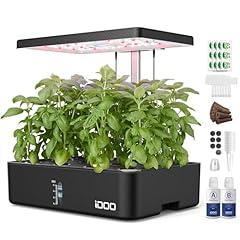
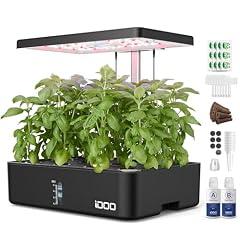
iDOO Hydroponics Growing System Kit 12Pods
Overview
This is a compact countertop hydroponic garden with 12 planting baskets, an adjustable LED panel, a fan, a timed pump, and a stated 4 L ABS-plastic water tank. The supplied manual says it runs from a 12 V, 3 A adapter, uses a 16-hours-on, 8-hours-off light cycle, and has an 11-inch maximum light-panel height. It includes A and B solid nutrient products, sponges, baskets, covers, and labels, but not seeds. The manual gives usable operating limits, including keeping the reservoir near 4 L, leaving empty positions around larger plants, and cleaning the pump monthly. It also states that the light panel is not waterproof and that the garden is for indoor household use. No independent report located for this product substantiates photon output, growing coverage, harvest rate, electrical safety certification, or photobiological light safety.
What works
- The manual provides concrete reservoir, pump, fan, light-height, timer, and nutrient-mixing instructions.
- A rear drain, removable pump filter cover, and monthly pump-cleaning instructions support routine maintenance.
- The controls are local rather than app dependent, and the manual documents automatic light and pump cycles.
- Seeds are not included, so growers can choose locally labeled varieties appropriate to their desired crop.
What does not
- No independently verifiable UL, ETL, CSA, or equivalent U.S. wet-environment safety listing was located for this product.
- The manual says the light panel is not waterproof, so spills and cleaning need careful separation from powered parts.
- No independent laboratory report was located for light spectrum, photon output, coverage, electrical input, or harvest-speed claims.
- The nutrient products are identified only as A and B solid nutrients. Their ingredient analysis, fertilizer registration, and food-contact documentation for the reservoir were not located.
- The catalog's indoor and outdoor use field conflicts with the manual, which says not to use the product outdoors.
Who is it for
It suits a household grower who wants a small, hands-on indoor setup for herbs and compact leafy crops, has a sturdy water-tolerant counter, and is willing to monitor water level, prune crowded plants, and clean the pump monthly. It is also suited to someone who prefers using their own properly labeled seeds rather than a bundled seed assortment. The stated 4 L reservoir and 11-inch light-height limit make it most practical for short crops and frequent small harvests.
Who is it not for
It is not suited to anyone needing independently certified electrical or grow-light safety documentation, especially where children, pets, splash-prone counters, or highly risk-averse electrical-safety requirements are involved. It is also a poor fit for tall, sprawling, or heavily fruiting crops that need more canopy height and wider spacing. People who want verified light-output data, a fully disclosed nutrient formulation, food-contact material documentation, or low-maintenance operation should note those records were not located.
Integrity
The manual contains meaningful operational safeguards. It specifies indoor use, a 12 V operating system, unplugging before tank or pump cleaning, keeping electrical parts dry, maintaining water for pump operation, and cleaning the pump at least monthly. It also instructs users to change water periodically, remove failing plants, and clean and disinfect the tank if root rot occurs. These steps matter because hydroponic growing does not make raw produce pathogen-free. FDA guidance calls for clean water-contact surfaces, regular water changes, sanitation, and washing home-grown produce under running water before eating. The reservoir material is disclosed only as ABS plastic. No food-contact documentation, nutrient ingredient analysis, fertilizer-registration record, independent light-performance test, or current U.S. electrical safety listing was located. The system uses replaceable sponges and contains electronics and plastic components, while a parts catalog or recycling program was not located. No current U.S. CPSC recall was identified in the searches performed through August 16, 2026.