
10 Best Hearing Aids
 Daniel Kenitz
Please note that we participate in affiliate marketing programs. When you purchase through links on our site, we may earn a commission. As an Amazon Associate we earn from qualifying purchases. This comes at no additional cost to you and helps support the resources required to provide valuable content.Advertising Disclosure
Top-rated Hearing Aids Comparison
1

2
4
6
7
8
9
10
Hearing aids: what to look for
Over-the-counter hearing aids are intended for adults with perceived mild-to-moderate hearing loss. They amplify sound; they do not restore normal hearing, and amplification alone does not guarantee clearer conversation. A useful product needs an appropriate fit, tolerable output, controls the wearer can use, and evidence that its processing helps rather than simply making every sound louder.
The strongest performance evidence in this category is independent testing of the exact model. HearAdvisor and HearingTracker reports, Consumer Reports laboratory results, or peer-reviewed human-outcomes studies can show whether a product improves speech clarity, handles feedback, performs in noise, and produces acceptable sound. Seller claims such as “AI noise cancellation,” “16-channel processing,” “speech enhancement,” or “no feedback” are not equivalent to model-specific testing. Among the supplied products, independent results sometimes showed a sharp split: strong music or quiet-speech performance alongside weak speech-in-noise results.
A buyer should also distinguish a real OTC hearing aid from a personal sound amplification product or a mislabeled amplifier. The exact product, manufacturer, intended use, and U.S. labeling should be traceable in the FDA Establishment Registration and Device Listing database. Relevant OTC air-conduction hearing-aid classifications include product codes QUF and QUD where applicable, and the product should align with 21 CFR 800.30. “FDA registered,” “FDA listed,” “FDA approved,” and “FDA certified” are not interchangeable claims; registration or listing is not proof of approval, safety, or performance.
Safety numbers need the same caution. Maximum output, gain, distortion, and sudden-sound behavior should be documented for the exact model and checked against the OTC requirements in 21 CFR 800.30(d), ANSI/CTA-2051, or IEC 60118-0. A number such as maximum output is not enough by itself if the product does not explain how input-controlled compression keeps loud sounds predictable. Similarly, battery runtime may describe standby time, case capacity, or ideal conditions rather than continuous listening. Claims about UV cleaning, waterproofing, noise reduction, tinnitus relief, or battery life should have a model-specific test report or be clearly identified as manufacturer claims.
Fit matters as much as headline technology. Look for multiple dome or tip sizes, separate left and right adjustment, usable physical controls or a validated fitting system, clear instructions, and support for replacement tips, wax guards, receivers, or other wear parts. A return period can help assess comfort and speech clarity, but terms may require advance authorization, original packaging, or an unused product, so it may not function as a full real-world trial.
Across the supplied reviews, the recurring safety caveat is that these products are not for children or severe or profound hearing loss. Prompt clinical assessment is needed for sudden, fluctuating, rapidly worsening, or one-sided hearing changes; dizziness; ear pain; drainage or blood; unusual ear shape or injury; substantial wax blockage; or one-sided tinnitus. Stop using a device and seek help if it becomes hot, causes burning, pain, irritation, cuts, retained parts, markedly uncomfortable loudness, or worsened hearing. No product should replace assessment when these warning signs are present.
Integrity
For hearing aids, health and ecology are inseparable from evidence quality: a comfortable rechargeable device may still be a poor choice if its output, identity, warnings, or fit cannot be checked. The scores below reflect the supplied reviews and distinguish documented strengths from unsupported claims.
HHealth & Safety
Hearing benefit for the right user
This measures whether the product is credibly suited to adults with perceived mild-to-moderate loss and promises useful, comfortable amplification rather than normal hearing. High-scoring products combine appropriate-use limits with evidence of benefit, such as strong quiet-speech testing; low-scoring products include conflicting severe-loss claims or lack model-specific benefit evidence. Scores ranged from 50 to 88.
Protection from painfully loud or distorted sound
This measures verified maximum output, gain control, distortion, and handling of sudden loud sounds. It matters because an aid that simply raises volume can be uncomfortable or unsafe. Higher scores indicate clearer output and safety documentation; lower scores reflect missing output data or reports of hiss, over-amplification, painful loudness, or other uncertainty. Supplied scores ranged from 52 to 82.
Fit to your hearing and ability to use it
This measures whether a wearer can choose tips, adjust each ear, use controls, and obtain safe fitting or support. It matters because a poor seal can cause discomfort or whistling, while limited personalization may leave speech unclear. Higher-scoring products offered multiple tips, app or per-ear controls, or clearer support; lower scores reflected preset-only fitting or difficult small controls. Scores ranged from 55 to 78.
Conversation help in noisy places
This measures speech understanding and feedback control in realistic noise, not just louder sound. It matters for restaurants, groups, and busy public places, where several supplied products performed poorly despite noise-cancellation marketing. Higher scores were supported by independent feedback or speech testing; low scores included very weak speech-in-noise results. Scores ranged from 48 to 90.
Warnings that prevent delayed medical care
This measures whether instructions clearly limit use to adults with perceived mild-to-moderate loss and identify symptoms requiring clinical care. Such warnings help prevent self-treatment of sudden, one-sided, painful, or otherwise unusual hearing problems. High scores reflected prominent age, use, red-flag, and reporting guidance; low scores reflected incomplete or unavailable warnings. Scores ranged from 52 to 91.
Safe in the ear and while charging
This measures evidence about ear-contact materials, fit parts, batteries, and charging equipment, including irritation, retained parts, overheating, burns, and battery hazards. Higher scores indicate clearer care and replacement guidance, while lower scores reflect missing biocompatibility or charger testing and reported heat or burning concerns. Supplied scores ranged from 65 to 73.
EEvidence
Real hearing aid, not a mislabeled amplifier
This measures whether the exact product, manufacturer, intended use, seller, and U.S. OTC labeling are traceable as an FDA-regulated hearing aid rather than a PSAP. High scores were supported by exact-model FDA listings; lower scores reflected conflicting amplifier language, unmatched manufacturer series, or no public device record. Supplied scores ranged from 48 to 90.
Independently tested sound performance
This measures whether a qualified independent lab tested the exact model for amplification, speech clarity, feedback, and sound quality. It matters because seller specifications cannot establish real-world usefulness. High scores came from HearAdvisor testing with model-specific results; low scores reflected no independent report, even when marketing listed detailed processing claims. Scores ranged from 54 to 93.
Verified safety and standards compliance
This measures whether model-specific accredited or independent reports substantiate electrical, charger, acoustic, material, or named standards claims. “FDA registered” or “FDA certified” language is not such proof. Higher scores reflected more traceable compliance evidence; lower scores reflected missing reports, mismatched model names, or unsupported IP, UV, IEC, ANSI, or charger claims. Scores ranged from 58 to 76.
Honest claims and complete labeling
This measures whether the listing, package, manual, and manufacturer information agree on intended use, battery life, connectivity, performance, FDA language, warranty, and returns. Higher scores reflected fewer contradictions and clearer limits; lower scores reflected conflicting runtime figures, severe-loss claims, “FDA approved” wording, or marketing promises without supporting evidence. Scores ranged from 35 to 72.
EEcology
Lower waste over the product’s life
This measures whether rechargeable power, replaceable tips or wax guards, repair support, warranties, parts, and take-back routes can prevent premature replacement and e-waste. Higher scores went to products with rechargeable cases, replaceable wear parts, warranties, or parts stores; lower scores reflected sealed systems and no repair, recycling, or take-back information. Scores ranged from 68 to 82.
Full reviews

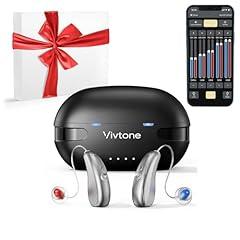
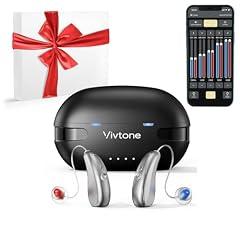
Vivtone Xpure Bluetooth Hearing Aids 2025
Overview
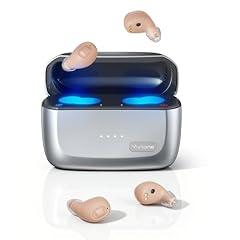
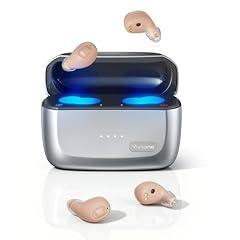
Vivtone Xpure is a rechargeable receiver-in-canal hearing product with behind-the-ear bodies, silicone ear tips, a portable charging case, physical controls, Bluetooth phone and media streaming, and app control. The manufacturer’s manual lists a lithium battery, 24 hours or more in hearing-aid mode, about three hours in Bluetooth mode, three charging-case recharges, and replaceable wax guards and ear tips. The exact Xpure model appears in the FDA-linked device identifier database as commercially distributed. Separately, HearAdvisor published model-specific laboratory listening tests. It found strong music streaming, better-than-category-average speech in quiet, and substantially better tuned than initial fitting results. Its speech-in-noise result remained low in absolute terms, and own-voice comfort was especially weak. The manual states maximum output below 117 dB and total harmonic distortion at or below 3 percent, but no public accredited report was located to independently confirm those specifications.
What works
- The exact model has publicly available independent laboratory listening results, rather than seller specifications alone.
- Independent testing found music streaming quality at 4.4 out of 5 and speech in quiet above the test category average.
- The app and manual allow separate controls for volume, frequency bands, noise reduction, feedback suppression, and maximum output settings.
- The manual provides replacement instructions for ear tips and wax guards, and the manufacturer offers a one-year defect warranty and 45-day return window.
What does not
- Independent testing found low speech-in-noise performance at 1.4 out of 5, so difficult restaurants, groups, and other noisy settings remain a limitation.
- Own-voice comfort scored 0.8 out of 5 in independent testing, which can make a user’s own voice sound boomy or unnatural.
- Public evidence does not substantiate the manufacturer’s claims that the app is clinically proven or provides audiologist-quality customization.
- The product page says no clinic visit is required, while the manual states fitting must be performed by a professional fitter or doctor. A voluntary FDA adverse-event report also alleged worsening hearing after use, though the report does not establish causation or a regulatory finding.
Who is it for
This format fits an adult who perceives mild to moderate hearing difficulty, especially with television, one-to-one conversation, phone calls, or quieter rooms, and who is comfortable using a smartphone app and small physical buttons. It is most relevant for someone who values direct phone and media streaming and is willing to spend time adjusting settings. The available independent test results suggest that careful fitting matters, since tuned performance was materially better than the initial configuration.
Who is it not for
It is not appropriate for children, people with severe or profound loss, or anyone with sudden, fluctuating, one-sided, or rapidly worsening hearing loss. People with ear pain, dizziness, drainage, substantial wax or a suspected foreign object should seek clinical assessment first. It is also a poor fit for people who need strong conversation help in restaurants, meetings, or groups, those highly sensitive to unnatural own-voice sound, or users unable to manage app permissions, Bluetooth pairing, small ear parts, and routine wax-guard care.
Integrity
The manual gives useful safety directions, including stopping use for ear trauma, inflammation, swelling, or pain. It advises medical evaluation for tinnitus, asymmetrical hearing loss, dizziness, headache, earache, ear discharge, wax blockage, and foreign objects. However, its consumer-facing labeling does not clearly reproduce all FDA OTC outside-box warnings, including the adults-only limitation. The manual also does not supply a publicly traceable accredited safety or electroacoustic test report. The rechargeable lithium design can reduce routine disposable-battery waste. Replaceable silicone tips and wax guards, plus instructions to change wax guards every three months, may extend usable life. The manufacturer states it repairs or replaces defects for one year. It offers replacement ear domes, but no product take-back program or detailed battery recycling route was located. The manual directs users not to put discarded batteries in household trash.

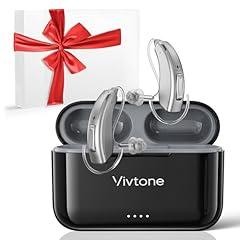
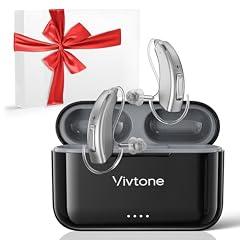
Rechargeable Hearing Aids Lucid508
Overview
This product is a pair of rechargeable behind-the-ear, air-conduction OTC hearing aids. It uses silicone ear domes, slim replaceable tubes, physical on-device controls, and a USB-C charging case. The official manual shows two aids, two spare tubes, eight silicone domes in three sizes, a cleaning brush, charging cable, case, and printed instructions. The strongest independently verified fact is identity. FDA's current public device listing names Lucid508 and Lucid508-S as over-the-counter air-conduction hearing aids. Vivtone states that the case provides 125 hours of backup power and that the aids offer three listening modes. Independent, model-specific laboratory results for amplification, sound quality, speech in noise, feedback suppression, distortion, and maximum output were not located.
What works
- FDA's public device listing includes Lucid508 and Lucid508-S as OTC air-conduction hearing aids.
- The manual provides multiple dome sizes and spare tubes, which can help accommodate ear shape and tube length.
- The manufacturer documents physical buttons, a cleaning brush, and replacement instructions for domes and tubes.
- Vivtone states that the portable charging case provides 125 hours of backup power for the pair.
- The manufacturer offers a 45-day return period and a one-year defect warranty, subject to its stated conditions.
What does not
- Vivtone markets this device for mild to significant hearing loss, but FDA OTC hearing aids are intended only for adults with perceived mild-to-moderate hearing loss.
- Claims about clear speech in noise, no whistling, tinnitus masking, and broad user success were not backed by independent testing of this model.
- No public, model-specific accredited test report was located for output limits, distortion, electroacoustic performance, charger safety, or ear-contact materials.
- The brand's stated peak-gain figures are inconsistent across product pages, with 38 dB on one page and 41 dB on another.
Who is it for
This product is most suited to an adult who perceives mild-to-moderate hearing difficulty, prefers a behind-the-ear style, and can manage button controls, cleaning, and changing silicone domes or tubes. It may fit someone who wants an OTC device with a portable charging case and does not need smartphone-based hearing testing or app-directed self-fitting. The 45-day manufacturer return window provides time to test comfort and everyday usefulness in quiet and moderately noisy settings.
Who is it not for
It is not for anyone under 18, or for people with suspected severe or profound hearing loss. It is also unsuitable for a person with sudden hearing change, one-sided hearing loss, ear pain, drainage, dizziness or vertigo, substantial wax blockage, or ringing in one ear, because FDA directs people with these signs to prompt clinical evaluation. Buyers who need independently verified speech-in-noise performance, exact output data, or validated audiogram-based personalization should seek a device with that evidence.
Integrity
FDA identifies OTC hearing aids as devices for adults with perceived mild-to-moderate loss, not a substitute for assessment of severe loss or medical red flags. This exact Lucid508 family is present in FDA's public OTC device listing. That listing establishes device identity and does not itself prove sound quality, safety testing, or FDA approval. Public independent reports for this model's output, distortion, speech performance, feedback control, charger safety, and ear-contact material testing were not located. The manual shows replaceable silicone domes and tubes, plus instructions for changing them. This can extend use when these fit components wear or become blocked. Vivtone also states a one-year defect warranty. However, no public take-back program, battery recycling route, accredited charger certification, or model-specific biocompatibility report was located. The rechargeable case may reduce disposable battery use, but its stated capacity remains a manufacturer claim.

Ceretone Supermini Rechargeable Hearing Aids
Overview
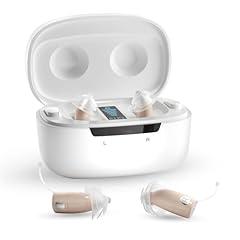
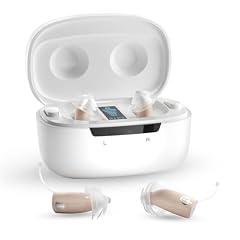
This is a pair of rechargeable, completely-in-canal OTC hearing aids for adults with perceived mild to moderate hearing loss. The company describes a no-app format with four preset modes, Standard, Restaurant, Outdoor, and Tinnitus Masking. Volume for each ear is changed with separate buttons on the charging case. It includes four ear-tip sizes, a USB-C charging cable, cleaning tool, and portable charging case. The product is listed by Audicon Corporation in FDA's device-listing database as an OTC air-conduction hearing aid, which confirms its device identity but does not itself prove FDA approval or independent performance. Ceretone states up to 20 hours per charge and 80 hours with the case. An independent WIRED reviewer confirmed strong battery endurance in use, but found broad, non-tunable amplification, persistent hiss, and excessive loudness at higher settings.
What works
- The exact product is listed in FDA's device database as an OTC air-conduction hearing aid for the U.S. market.
- Separate controls on the charging case adjust left and right volume independently, according to Ceretone's support instructions.
- Four preset listening programs and replaceable ear tips provide some practical day-to-day adjustment options, manufacturer-stated.
- Ceretone provides fitting, cleaning, charging, and ear-tip replacement instructions, plus a stated 60-day return period and limited warranty.
What does not
- No publicly available qualified-laboratory report was located for this exact product's output, distortion, speech-in-noise performance, feedback control, or charger safety.
- An independent reviewer found the amplification non-tunable, with lower-frequency sounds amplified too much, audible hiss, and painful loudness above moderate settings.
- The product page makes large numerical claims for power, voice focus, noise reduction, and feedback cancellation without publishing test methods or model-specific results.
- Warranty information conflicts within Ceretone's product page. One section states 12 months, while another states 15 months during a launch offer.
Who is it for
This product is most specifically suited to an adult who perceives mild to moderate hearing difficulty, wants a very small in-canal format, and is comfortable manually trying ear-tip sizes, volume settings, and preset programs. It may fit someone who does not want smartphone controls or Bluetooth streaming and who values a rechargeable case. The stated 60-day return period is particularly relevant because comfort and sound tolerance need real-world testing. Its simple controls can help a user who can operate buttons on the charging case reliably.
Who is it not for
It is not appropriate for children, for suspected severe or profound hearing loss, or for sudden, one-sided, painful, or medically concerning hearing changes. Those situations require prompt professional assessment. It also does not suit someone who needs fitting to an audiogram, remote clinician adjustment, Bluetooth audio streaming, or fine frequency-specific controls. The independent review found overly broad amplification and loudness at higher settings, so people sensitive to harsh sound, hiss, or loud environmental noise should be especially cautious and seek professional support if benefit is limited.
Integrity
FDA's listing identifies this product as an OTC air-conduction hearing aid, a category intended for adults with perceived mild to moderate hearing loss. Ceretone also clearly says it is not suitable for severe hearing loss. Public support articles describe separate volume control for each ear, four programs, cleaning instructions, correct insertion, and replacing ear tips. Those are useful safeguards, but the publicly accessible materials reviewed did not include the full package warning panel or a model-specific output and distortion report. Ceretone claims IP68 protection, but no issuing-body certificate or independent electrical, charging, or ear-contact-material test report was located for this model. Replaceable ear tips and a rechargeable case can reduce routine disposable-battery waste. However, no clear repair service, replacement charger catalog, battery replacement pathway, or take-back and recycling program was located. The product page also contains inconsistent warranty durations, which makes preserving written purchase terms important.

Ceretone Core One Pro Hearing Aids
Overview
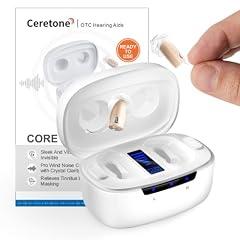
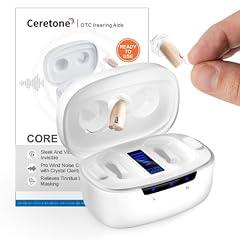
Ceretone Core One Pro is a pair of rechargeable, invisible-in-canal OTC hearing aids for adults who perceive mild to moderate hearing loss. The exact beige model is independently traceable in the U.S. device identifier database as an OTC rechargeable air-conduction canal hearing aid, under Audicon Corporation. That supports its identity as a real OTC hearing aid rather than a general sound amplifier. It uses preset listening programs and case-based volume controls, with replaceable ear tips, a cleaning tool, USB-C cable, and portable charging case. Ceretone states that each aid weighs 1 gram, runs for up to 20 hours per charge, and reaches up to 80 hours with its case. Those battery, comfort, speech-focus, wind-management, feedback-control, and tinnitus-masking statements are manufacturer claims, not findings from a public independent test of this exact product.
What works
- The exact product is listed in the U.S. device identifier database as an OTC rechargeable air-conduction hearing aid.
- Its stated use for adults with perceived mild to moderate hearing loss matches the FDA OTC hearing-aid category.
- Four preset programs, volume adjustment, replaceable ear tips, cleaning guidance, and U.S.-based support provide a practical basic-use system.
- The manufacturer offers a 60-day return period and publishes instructions for cleaning, charging, wearing, ear-tip replacement, volume adjustment, and program changes.
What does not
- No public independent laboratory report was found for this exact product's gain, output limit, distortion, feedback control, or speech-in-noise performance.
- No model-specific accredited safety, electrical charging, biocompatibility, or ingress-protection report was found in public certification directories checked.
- Volume is adjusted through the charging case rather than directly on each aid, and the product is not presented as a self-fitting system with hearing-test-based personalization.
- The manufacturer's public claims conflict. Its U.S. page says IP68 protection and shows inconsistent warranty terms, while another retailer describes the same model as IP66. The performance percentage claims are not accompanied by test methods or comparison details.
Who is it for
This product is most suited to an adult who perceives mild to moderate hearing difficulty, especially trouble following TV dialogue or conversations, and who wants a small in-canal OTC format without app-based setup. It may fit someone comfortable trying preset programs and adjusting loudness through the charging case rather than building a hearing profile. The manufacturer-stated 60-day return period is relevant because fit, comfort, and benefit from instant-fit canal devices vary substantially between ears and listening environments.
Who is it not for
It is not appropriate for children, people with severe or profound hearing loss, or anyone who cannot hear speech well even in quiet settings without professional assessment. Seek prompt medical evaluation rather than relying on an OTC device for sudden hearing change, one-sided loss, ear pain, drainage, dizziness, deformity, or substantial wax concerns. It is also a poor fit for people needing audiogram-based tuning, direct on-device controls, verified strong speech-in-noise performance, or independently documented output and charger-safety testing.
Integrity
The strongest health point is device identity. The exact model is publicly listed as an OTC rechargeable air-conduction hearing aid, and its stated intended user matches the FDA category for adults with perceived mild to moderate loss. FDA guidance also makes clear that OTC aids do not treat severe or profound loss and that medical red flags require clinical care. No product-specific FDA recall, safety communication, or public independent human-outcomes study was located in the sources checked. Rechargeability can reduce routine disposable-battery waste, and the manufacturer provides replacement ear-tip instructions, which can help extend usable life. However, no public repair program, take-back route, materials disclosure, battery service-life specification, or charger certification record was found. The manufacturer calls its packaging environmentally friendly, but it does not provide enough detail to assess that claim. Public protection claims also need clarification because stated IP ratings conflict across seller materials.

OTC Hearing Aids for Seniors and Adults
Overview
The ZDEER BS11150 is a pair of rechargeable, wireless, in-ear air-conduction hearing aids. It is intended for adults with perceived mild-to-moderate hearing loss, with touch controls for volume and three listening modes. The available manual describes three silicone ear-tip sizes, left and right markings, a charging case, and Bluetooth streaming for calls and media. These are manufacturer-stated operating details. The exact model appears in FDA's device-listing database as an over-the-counter wireless air-conduction hearing aid. That supports its device identity, but it is not the same as FDA approval or independent performance testing. I found no public model-specific HearAdvisor, HearingTracker, Consumer Reports, peer-reviewed, or accredited laboratory report for amplification accuracy, speech in noise, feedback control, distortion, or charger safety. The available manual also contains incomplete warning fields and a standards statement naming a different model, which weakens confidence in its labeling quality.
What works
- The exact product is listed by FDA as a wireless over-the-counter air-conduction hearing aid.
- The available manual provides user-adjustable volume, three listening modes, and left and right ear identification, manufacturer-stated.
- Three supplied ear-tip sizes give users a basic route to improve comfort and retention, manufacturer-stated.
- The manual states a one-year limited hearing-aid warranty and mail-in repair support, with replacement ear tips available by contacting the company.
What does not
- No public independent laboratory or clinical report was identified for this exact product's sound quality, speech-in-noise benefit, feedback control, or electroacoustic limits.
- No model-specific accredited report was identified for claimed ANSI or CTA conformance, ear-contact biocompatibility, or the charging system's electrical safety.
- The available manual leaves key age and time-period fields blank in mandatory-style medical warnings, and its standards statement refers to BS11151 rather than this product.
- The manual gives warranty information but does not clearly state a product-specific return period, and it does not provide a defined take-back program.
Who is it for
This product is most suited to an adult who perceives mild-to-moderate hearing difficulty, has no ear-health warning signs, and is comfortable selecting ear tips and changing touch controls without professional fitting. It may fit someone who wants a compact rechargeable pair for ordinary environmental sound and optional Bluetooth calls or media. The user should be willing to test fit and comfort carefully, follow the manual's cleaning and charging directions, and seek hearing-care support if amplification is not sufficient.
Who is it not for
It is not for anyone younger than 18, or for people with sudden hearing changes, one-sided hearing loss, one-sided ringing, vertigo, ear pain, drainage, blood, major wax blockage, or a malformed or injured ear. Those signs warrant prompt clinical assessment. It is also a poor fit for suspected severe hearing loss, people who need audiologist-programmed settings, users who cannot reliably manage tiny in-ear devices and touch controls, or anyone requiring independently verified speech-in-noise and output-performance data.
Integrity
FDA's listing identifies this exact product as an over-the-counter wireless air-conduction hearing aid, which is materially different from an ordinary sound amplifier. However, the advertising phrase FDA-registered should not be interpreted as FDA certification or approval. FDA specifically cautions that such wording can mislead consumers. The available manual correctly targets adults with perceived mild-to-moderate loss and includes several red-flag symptoms, but blank fields in that document reduce confidence that the warnings are complete as presented. The manual identifies soft silicone ear tips, instructs users to remove the device if it causes pain, irritation, or retained parts, and says to use a compliant 5 V, 2 A charger. It also directs local lithium-battery recycling, supplies a one-year limited warranty, and describes mail-in repair and replacement tips. Those measures can extend use, but no public model-specific biocompatibility, charger-certification, or formal electronics take-back evidence was identified.

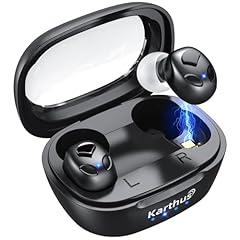
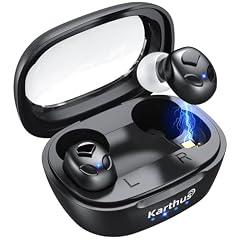
Karthus Rechargeable Hearing Aids with Noise Cancelling
Overview
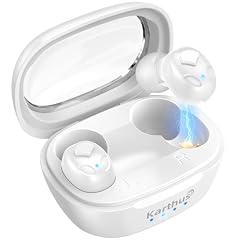
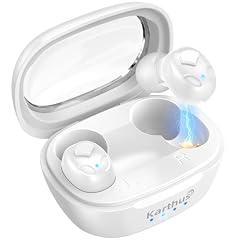
This is a rechargeable, in-ear OTC hearing product sold as a pair with a portable charging case. The Amazon listing says each full charge supplies 24+ hours of use, while the case adds 72+ hours. It also claims 16-channel digital processing, two listening modes, noise reduction, feedback suppression, and use by people aged 18 and older. Those are manufacturer claims, not independently confirmed performance results. The maker’s own site describes its products both as OTC hearing aids and as hearing amplifiers, while the available product page does not provide a full user manual, output specification, accredited test report, or traceable FDA listing for this exact product. Battery claims also vary across the listing, which refers to 80+ and 85+ hours in different places.
What works
- Rechargeable case design is clearly described, with a claimed 24+ hours per aid charge and 72+ additional case runtime.
- Two stated modes offer a simple choice between quiet daily settings and noisier places.
- The listing identifies adult use, with an 18-and-older statement.
- The compact in-ear format may be easier to carry than a device with disposable batteries, based on manufacturer descriptions.
What does not
- No independent laboratory report was located for this exact product's amplification, speech-in-noise performance, feedback control, or distortion.
- No model-specific accredited safety or electrical charging certification report was located.
- The visible listing does not present complete OTC medical red-flag warnings or clear instructions to seek prompt clinical assessment for concerning symptoms.
- The brand uses inconsistent product identity language, calling products both OTC hearing aids and hearing amplifiers.
- Runtime claims are inconsistent, with 80+ and 85+ hours both appearing in the listing.
Who is it for
This product is most relevant to an adult who perceives mild hearing difficulty, wants a small rechargeable in-ear device, and prefers simple controls rather than app-based fitting. Its stated Quiet and Noise-Canceling modes may suit someone who mainly alternates between home conversations and occasionally busier environments. The claimed charging-case runtime could also suit a person who finds frequent disposable-battery changes difficult. Fit comfort and real sound benefit remain individual because neither has independent verification for this exact product.
Who is it not for
It is not appropriate for anyone under 18, or for people with sudden or rapidly worsening hearing loss, one-sided loss, ear pain, drainage, dizziness, deformity, or a large difference between ears. Those situations need clinical assessment rather than self-treatment. It is also a poor fit for users who need an audiogram-based fitting, Bluetooth calling or streaming, detailed maximum-output data, independently tested speech-in-noise results, or documented charger and ear-contact safety testing. People unable to manage small in-ear parts should consider a format with professional fitting support.
Integrity
The health evidence is limited by missing model-specific documentation. The listing makes strong sound claims, including feedback suppression, noise reduction, and clear speech, but no independent electroacoustic or human-outcomes testing was located for this exact product. The visible sales material also lacks the complete, prominent medical red-flag guidance expected for an OTC hearing aid. That matters because OTC devices are intended only for adults with perceived mild-to-moderate hearing loss, not as a substitute for evaluating warning symptoms. Rechargeability can reduce disposable hearing-aid battery waste. However, no model-specific information was located on battery chemistry, charger certification, replaceable domes or other parts, repair options, take-back service, or electronics recycling. The brand states that hearing aids have a limited warranty for manufacturing defects and malfunctions, but its published terms do not establish a repair or recycling pathway for this product.

Karthus Rechargeable Hearing Aids with Noise Cancelling
Overview
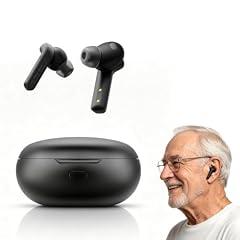
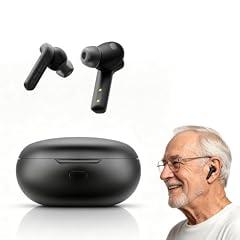
This product is a rechargeable, black, in-ear sound-amplifying pair sold online as OTC hearing aids for adults. The listing describes a compact 5.29-ounce package, a portable charging case, and two selectable modes called Quiet Mode and Noise-Canceling Mode. It also states that each full charge takes two hours and provides more than 24 hours of use, with more than 80 hours available from the case. Those runtime and mode statements are manufacturer claims, not independently verified results. The central limitation is documentation. The reviewed product page provides no user manual, package insert, model-specific output limits, fitting instructions, standards declaration, electrical-safety certification, or independent laboratory report. Searches of FDA regulatory resources did not identify a publicly traceable model-specific record that confirms this exact product's OTC device identity. The page also displays a dietary-supplement disclaimer, which is not an appropriate safety disclaimer for a hearing aid.
What works
- The listing limits use to people age 18 and older, which aligns with the adult OTC hearing-aid category.
- Manufacturer states a two-hour charge provides more than 24 hours of use, with more than 80 hours from the charging case.
- The compact in-ear format may be easier to conceal than behind-the-ear styles, although fit comfort is not independently evaluated.
- The listing offers separate quiet and noise-canceling modes, which may give users a basic environment choice. Performance of those modes is unverified.
What does not
- No independent laboratory report was located for this exact product's gain, maximum output, distortion, feedback control, speech-in-noise performance, or battery claims.
- No model-specific FDA listing, package label, user manual, or manufacturer support site was located to substantiate the claimed OTC hearing-aid identity.
- The product page lacks the red-flag symptom warnings and medical escalation information expected for an OTC hearing aid.
- A dietary-supplement FDA disclaimer appears on the hearing-aid page. This is a labeling inconsistency, not relevant safety guidance for this product.
- No replacement-parts catalog, repair process, battery specifications, charger certification, material disclosure, warranty detail, or recycling route was found.
Who is it for
This product is most relevant to an adult who reports mild hearing difficulty, wants a small in-ear device, and is comfortable making settings without professional fitting support. The manufacturer-stated case runtime could suit someone who values less frequent charging while away from an outlet. That use case depends on a good physical fit and tolerable sound, neither of which has been independently validated for this product. A hearing check remains useful before self-treatment, especially when the degree or cause of hearing difficulty is uncertain.
Who is it not for
It is not appropriate for anyone under 18, or for a person with severe, sudden, one-sided, rapidly worsening, or medically unexplained hearing loss. People with dizziness, ear pain, drainage, active infection, excessive wax, a history of ear surgery, or a large difference between ears should seek clinical assessment rather than rely on an online OTC listing. It is also poorly suited to users who need verified output limits, strong speech understanding in restaurants, app-based individualized fitting, reliable service, or documented charger and ear-contact safety testing.
Integrity
The product is presented as an OTC hearing aid for adults, but the public evidence available for this exact unit is incomplete. FDA explains that legitimate OTC hearing aids are for adults with perceived mild-to-moderate hearing loss and should not be expected to restore normal hearing. The reviewed listing does not supply the red-flag warnings, medical escalation directions, or adverse-event reporting information that help users recognize when medical care is more appropriate. No recall, warning letter, or product-specific adverse-event report was identified in the reviewed FDA resources. That is not proof of safety, particularly because a traceable model-specific device record was not found. The listing also provides no material disclosure, biocompatibility evidence, charger certification, replaceable-parts information, repair policy, take-back program, or battery-recycling guidance. Rechargeability may reduce disposable battery use, but the overall waste and repair profile cannot be assessed from the available documentation.

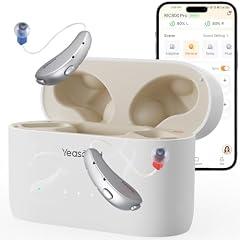
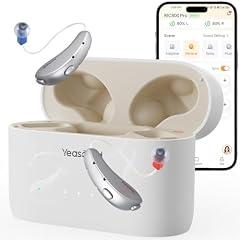
Yeasound RIC800 AI Hearing Aids
Overview
This product is a rechargeable receiver-in-canal, behind-the-ear OTC hearing aid pair for adults with perceived mild-to-moderate hearing difficulty. Each aid uses a receiver wire and ear dome, and the included portable case recharges both aids. The manufacturer specifies 31 hours per charge, three additional case charges, Bluetooth audio and call streaming, app controls, IPX8 water resistance, and a 25 mAh lithium-ion cell in each aid. Its model identity is independently traceable in FDA’s device-listing database as an OTC wireless air-conduction hearing aid. Independent HearAdvisor testing found strong speech clarity in quiet, excellent feedback control, and strong streamed-music quality. The same testing found speech in noise above the OTC category average but only mixed in absolute terms. The manufacturer’s published electroacoustic sheet reports maximum output of 111 to 114 dB SPL and 1.5% total harmonic distortion, but no public accredited safety certificate for this model was located.
What works
- FDA’s device-listing database identifies the RIC800 as an OTC wireless air-conduction hearing aid.
- Independent acoustic testing recorded 4.1 out of 5 for speech in quiet and a 4.5 out of 5 overall SoundScore.
- Independent testing recorded 5.0 out of 5 feedback handling, supporting a low risk of ordinary whistling.
- The manufacturer offers multiple receiver-wire sizes, replacement receivers and wax guards, plus a one-year warranty and remote support.
- The manufacturer states up to 31 hours of use per charge, with three further case charges.
What does not
- Independent lab testing rated speech in noise 2.1 out of 5, above category average but still mixed for demanding restaurants and group settings.
- Independent testing rated own-voice comfort 2.1 out of 5, so some users may notice an occluded or less natural voice.
- The fitting system was initially preset-based, and independent reviewers found limited personalization. A later app hearing-test update was still being retested.
- No public model-specific accredited report was located for IPX8, charger electrical safety, biocompatibility, or claimed standards conformance.
- The product page’s claim of using the same core as much more expensive prescription devices is not substantiated by public technical evidence.
Who is it for
This product fits an adult who perceives typical mild-to-moderate hearing loss, wants a discreet receiver-in-canal format, and can manage a smartphone app, charging case, and dome changes. It is particularly relevant for someone whose main needs are one-to-one conversation, television, calls, and streamed music. Independent testing supports good speech clarity in quiet and excellent feedback management. It may also suit a person who values rechargeable operation and wants access to manufacturer-provided remote support, rather than a fully clinician-fitted device.
Who is it not for
It is not appropriate for children, for sudden or one-sided hearing change, ear pain, drainage, dizziness, a visibly abnormal ear, or rapidly worsening hearing. Those situations need prompt clinical assessment rather than self-treatment. It is also a poor fit for people with severe or complex hearing loss, or for anyone who needs audiogram-based fitting and real-ear verification from the outset. People who are very sensitive to their own voice sounding blocked should take note of the low independent own-voice score. Very challenging restaurants and group conversations may remain difficult.
Integrity
The product’s regulatory identity checked out in the FDA establishment registration and device-listing database as an OTC wireless air-conduction hearing aid. That registration is not the same as FDA certification or a product-specific safety endorsement. The manufacturer publishes output, distortion, battery, temperature, humidity, and IPX8 specifications, and identifies ANSI S3.22 and IEC 60118-0 on its technical sheet. Public model-specific reports from an accredited electrical-safety, waterproofing, or biocompatibility laboratory were not located. The rechargeable lithium-ion design avoids routine disposable hearing-aid batteries. The manufacturer also sells replacement receiver wires and wax guards, which can extend use when these service parts wear out. Its stated one-year warranty covers material and workmanship defects, and it offers remote care. No credible brand take-back or electronics-recycling program was located, so end-of-life battery and device recycling remains the owner’s responsibility through an appropriate local electronics or battery collection route.

Vivtone SyncTune Bluetooth Hearing Aids
Overview
This is a rechargeable, in-ear pair of over-the-counter hearing aids with button controls, Bluetooth pairing, a charging case, silicone domes in five sizes, and replaceable wax guards. The published user manual describes seven volume levels, synchronized left and right mode changes, and four modes: general, noisy, tinnitus masking, and Bluetooth music. It is intended for adults with perceived mild-to-moderate hearing loss, and the manual appropriately says it will not restore normal hearing. The manufacturer states that a charge provides up to 16 hours of regular use, while continuous music or call streaming is listed at roughly 4 to 4.5 hours. It also states that the case uses a 15-second UV-C cycle and infrared drying. Publicly available manufacturer material, rather than independent laboratory reports, is the source for the hearing, noise-reduction, feedback, battery, UV-C, and drying claims.
What works
- Published instructions provide five dome sizes, seven volume settings, synchronized bilateral controls, and clear basic fitting steps.
- The manual includes practical maintenance guidance, spare domes, eight wax guards, and directions to replace these parts every two to three months.
- Bluetooth pairing and direct phone-call, music, and video streaming are documented in the manufacturer manual.
- The manufacturer offers a 45-day return policy, a 12-month warranty, and states that replacement parts and repairs are available in the United States.
What does not
- No model-specific independent laboratory report was found for amplification accuracy, speech-in-noise benefit, feedback control, UV-C effectiveness, or charging safety.
- The manual lists maximum output as 112 plus or minus 3 dB SPL. That can exceed the 111 dB SPL OTC limit unless the device qualifies for the higher compression-based limit, which the manual does not establish.
- The available manual does not present the complete FDA red-flag symptom list required for OTC hearing-aid labeling. It gives only a general instruction to stop use for pain or injury.
- The manufacturer describes the product as FDA-registered, but the public FDA listing located identifies the manufacturer and generic listed device types, not SyncTune by name. Registration is not independent product certification.
- Manufacturer pages make strong claims about 26 dB noise reduction, no whistling, 99% microorganism reduction, and hearing protection without accessible model-specific substantiation.
Who is it for
This product is most suited to an adult who perceives mild-to-moderate hearing difficulty, wants a small in-ear format, and is comfortable selecting a dome, adjusting seven volume levels, and learning button commands. It may fit someone who values phone and media streaming and can use the return period to assess comfort and usefulness in ordinary conversation. The published manual is especially relevant for users willing to maintain the product by cleaning it and replacing domes and wax guards regularly.
Who is it not for
It is not appropriate for anyone under 18, or for people with sudden, fluctuating, one-sided, severe, or rapidly worsening hearing loss. People with ear pain, drainage, bleeding, dizziness, suspected ear blockage, an ear deformity, or one-sided ringing should seek clinical assessment instead of relying on an OTC device. It is also a poor fit for users who need independently verified speech-in-noise performance, exact electroacoustic test data, or a professionally audiogram-based fitting. Those with implanted medical devices should discuss the manual's magnet warning with their clinician.
Integrity
The manual correctly limits intended use to adults with mild-to-moderate hearing loss and says the product does not restore normal hearing. It includes useful fit, cleaning, moisture, magnet, MRI and CT, and battery-storage cautions. However, its medical escalation language is incomplete compared with FDA OTC red-flag guidance. The stated maximum-output specification also does not clearly demonstrate compliance with the usual OTC output ceiling. No model-specific independent safety, sound-performance, charger-safety, biocompatibility, or UV-C efficacy report was located. For waste reduction, the package includes replaceable silicone domes and wax guards, and the manual directs users to replace them rather than discard the whole product. Vivtone also states that parts, repairs, warranty service, and support are available. The manual tells users not to dispose of the product with household waste and to follow local e-waste rules. A brand take-back program, recycler partnership, or independently verified battery lifecycle information was not identified.

iBstone Nova Hearing Aids for Seniors
Overview
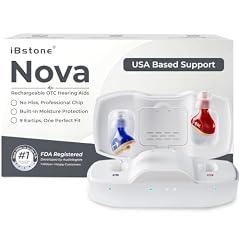
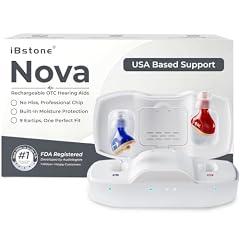
This product is a pair of rechargeable, completely-in-canal hearing aids with left and right color markings, silicone ear domes, a portable charging case, wax guards, cleaning tools, dry tablets, and an anti-loss strap. It is meant for adults with perceived mild-to-moderate hearing loss who can use physical controls to adjust sound. The manufacturer states that Nova has nine volume levels and Quiet, Noisy, and Outdoor modes, plus noise reduction and feedback control. Those performance claims have not been independently tested for this exact product. The product is marketed as an FDA-registered OTC hearing aid, but public FDA listing results identify the manufacturer with generic in-ear OTC products and an iBstone Edge series, not Nova by name. Battery claims also conflict across materials, ranging from 24 hours per charge to 80 or 100 hours of use, so its real-world endurance is not clearly established.
What works
- The compact in-canal format includes multiple silicone ear domes, which can help users trial a more secure fit.
- The manufacturer states that physical controls provide nine volume levels and three environment modes, without needing an app.
- The package is described as including a charging case, cleaning brush, wax guards, and dry tablets for routine care.
- The manufacturer offers a stated 45-day money-back period and one-year warranty.
What does not
- No independent laboratory report was found for this exact product's output, distortion, speech-in-noise performance, feedback control, or battery runtime.
- The public FDA device-listing search does not identify Nova by name, leaving the exact model's OTC identity difficult to trace from public records.
- Published runtime claims are inconsistent, with product materials citing 24 hours per charge, 80 hours, and 100 hours.
- The seller's public product page does not present the full OTC red-flag warning text, technical output specifications, or a model-specific safety test report.
- No charger certification, ear-contact biocompatibility report, repair-parts catalog, or take-back program was located for this product.
Who is it for
This product may suit an adult who believes they have mild-to-moderate hearing difficulty, especially in ordinary one-to-one conversations, and who prefers a small in-ear format with simple physical controls rather than an app. It is most appropriate for someone prepared to test several included dome sizes, adjust volume and modes gradually, and use the stated 45-day return period to assess comfort and usefulness. Its rechargeable case may also appeal to users who want to avoid routinely changing small disposable hearing-aid batteries.
Who is it not for
It is not appropriate for anyone younger than 18, or for people with severe or profound hearing loss, because OTC aids are intended only for adults with perceived mild-to-moderate loss. People with sudden or fluctuating hearing change, one-sided hearing loss or ringing, vertigo, ear pain, drainage, blood, an unusual ear shape, or possible blockage should seek prompt medical assessment instead. It is also a poor fit for buyers who need verified speech-in-noise results, app-based self-fitting, exact output data, or documented electrical and biocompatibility testing before use.
Integrity
The manufacturer presents Nova as a rechargeable in-canal hearing aid with silicone ear domes, a charging case, wax guards, cleaning tools, dry tablets, and an anti-loss strap. Rechargeability can reduce the stream of disposable hearing-aid batteries, while replaceable domes and wax guards can extend usable life. The manufacturer also states a one-year warranty, a 45-day return period, and support, although a clear public repair policy or replacement-parts catalog was not located. Important health documentation remains incomplete. No independent, model-specific acoustic test report was located to confirm maximum output, distortion, noise reduction, feedback suppression, or speech understanding in noise. Nor was a model-specific charger safety certification or ear-contact biocompatibility report found. Public FDA materials explain that registration does not mean a device has been FDA approved, cleared, or certified. The product's exact public listing identity should therefore be confirmed from its box label and enclosed instructions before use.