
10 Best Headset for Ps5
 Daniel Kenitz
Please note that we participate in affiliate marketing programs. When you purchase through links on our site, we may earn a commission. As an Amazon Associate we earn from qualifying purchases. This comes at no additional cost to you and helps support the resources required to provide valuable content.Advertising Disclosure
Top-rated Headset for Ps5 Comparison
1

2
3
+
4
5
6
7
8
9
10
Overview
A PS5 headset has two jobs: deliver game audio and carry voice chat. The connection determines whether those jobs work as advertised. Wired models usually connect through the DualSense controller's 3.5 mm jack; USB models can use a console-compatible USB connection; wireless models generally need a USB 2.4 GHz transmitter because PS5 does not natively support ordinary third-party Bluetooth audio. Bluetooth can still be useful with phones, tablets, computers, or other supported devices, but it should not be treated as the normal direct PS5 connection.
For wireless products, check that the headset and transmitter have a traceable FCC authorization. The FCC record should match the product identity, grantee, model, radio configuration, and where relevant the approved module and host integration. Bluetooth branding is not enough by itself: a matching Bluetooth SIG qualification record is stronger evidence. A general FCC statement or a radio test for a related product family may not establish that the exact retail product is covered.
Compatibility also means more than “works with PS5.” Look for clear instructions covering game audio, chat audio, microphone input, mute controls, and the connection mode being used. A product that supports Bluetooth on a phone may still require its USB transmitter for PS5. Some supplied products disclose important limitations, such as microphone chat not working through a particular console transmitter or microphone support being unavailable in a Switch Bluetooth mode.
Headline performance numbers need conditions. Battery life can change substantially with lighting, microphone use, connection type, volume, and software features; a claim such as “100 hours” may apply only to Bluetooth, low volume, lights off, and microphone disabled. Latency figures need a stated connection and a reproducible test. “7.1,” “3D,” “spatial,” or “surround” may describe software processing rather than physical multichannel audio. Microphone noise cancellation may refer to pickup processing, not noise cancellation for the listener. Independent testing is most useful when it reports its method, while an ISO/IEC 17025-accredited laboratory report is stronger evidence for formal claims.
Health and durability deserve equal attention. No supplied product documented a reliable volume limiter, listening-dose tracker, exposure warning, or parental hearing control. Buyers should not confuse a microphone’s noise reduction or passive earcup isolation with hearing protection. Battery models should have identifiable charging instructions and, ideally, model-specific evidence in UL Solutions Product iQ, Intertek’s ETL directory, or the CSA listing database. Wired models avoid rechargeable-battery charging risks, but they still require sensible volume and session limits.
Material descriptions such as “leatherette,” “protein leather,” “memory foam,” plastic, or metal identify broad components, not chemical safety. Stronger substantiation would include a model-specific material declaration and restricted-substance testing. For longevity, check whether pads, cables, microphones, batteries, and transmitters can be replaced, and whether the warranty and support route are clear. At end of life, rechargeable headsets should go to a separate battery or electronics collection route rather than household trash or curbside recycling.
Across the supplied products, the recurring caveats are the absence of hearing-safety controls, limited independent testing of battery life, latency, audio, and microphone claims, incomplete skin-contact material evidence, and little documented battery service or takeback support. Buyers should also watch for contradictory specifications and products whose advertised wireless or microphone features do not work on PS5 as implied.
Integrity
These topics assess the risks and evidence that matter when a headset sits against the skin, delivers sound directly to the ears, and may contain a rechargeable battery, wireless radio, or software-dependent features. A high score reflects stronger product-specific support in the supplied reviews; it does not mean every product is certified safe or suitable for every listener.
HHealth & Safety
Hearing-safety safeguards
This measures volume limiting, exposure tracking, warnings, or parental controls. These features matter because PS5 gaming can involve long sessions and directly delivered sound. None of the supplied products documented a true limiter or listening-dose system; scores clustered around 68–72. A higher score therefore reflects relatively better documented precautions, not proven protection. Buyers should still manage volume, breaks, and listening time themselves.
Battery and charging safety
This measures evidence that a wireless headset, battery, cable, and charging system reduce overheating, shock, burn, and fire risks. The topic is not applicable in the same way to wired products, which avoid rechargeable-battery charging. Among supplied products, scores ranged from 70 to 95, with wired models scoring especially well because they have no internal battery or charging system. A high score still requires traceable model-specific safety evidence.
Skin-contact material safety
This measures how clearly the maker identifies and substantiates ear-pad, headband, coating, and metal materials. It matters because these parts remain against the skin during long gaming sessions. Supplied scores ranged from 55 to 75. Higher-scoring products disclosed more construction information, but even those generally lacked a complete chemical declaration or restricted-substance report. Broad terms such as leatherette, protein leather, foam, or plastic are not chemical testing.
EEvidence
Verified wireless compliance
This measures whether every Bluetooth, 2.4 GHz, or other radio can be matched to a U.S. authorization and the correct product identity. It matters because a generic FCC statement or related-family filing may not cover the headset and transmitter sold to the buyer. Scores ranged from 68 to 100. Higher scores came from model-matched FCC records and test reports; lower scores reflected missing, incomplete, or conflicting identity evidence.
Honest PS5 compatibility
This measures whether game audio, chat, microphone input, mute controls, and claimed wireless modes work on PS5 as represented. It matters because direct Bluetooth audio is not the normal third-party PS5 route, and some products lose microphone functionality in particular modes. Scores ranged from 52 to 87. Higher scores had explicit transmitter or wired setup instructions and clearer limitations; lower scores had misleading or incomplete console claims.
Proven audio, microphone, latency, and battery claims
This measures whether performance claims are supported by reproducible measurements with disclosed conditions. It matters because battery runtime changes with lighting, volume, microphone use, and connection mode, while latency and microphone results depend on the test setup. Scores ranged from 54 to 86. Higher scores had independent testing for important claims; lower scores relied mainly on manufacturer figures for surround, latency, range, microphone, or endurance.
Straightforward, checkable claims
This measures whether marketing separates physical features from software effects and gives complete, internally consistent specifications. It matters because “7.1,” “spatial,” “noise cancelling,” “low latency,” and “all-platform” can describe narrower features than the headline suggests. Scores ranged from 50 to 78. Higher scores disclosed connection conditions and limitations; lower scores contained conflicting Bluetooth, driver, microphone, surround, or battery specifications.
Independent verification and accountable support
This measures model-specific independent evidence alongside warranty, U.S. responsible-party contact, customer support, and recall-remedy information. It matters when a wireless, battery-powered headset develops a fault or a claim needs checking. Scores ranged from 70 to 83. Higher scores combined traceable radio or test evidence with identifiable support and warranty routes; lower scores had limited public accountability or only general brand-level support.
EEcology
Built to last and supportable
This measures durability evidence, parts availability, repair instructions, and warranty support for pads, cables, microphones, batteries, and transmitters. It matters because replacing a small wear part can avoid replacing an entire headset. Scores ranged from 54 to 84. Higher scores were associated with detachable microphones or cables, meaningful warranties, and clearer support; low scores reflected sealed batteries, missing spare parts, unclear repair paths, or reported construction concerns.
Battery and e-waste takeback
This measures whether users have a practical U.S. route to recycle the headset and rechargeable battery, including manufacturer takeback or clearly identified certified recyclers. It matters because lithium-ion batteries should not enter household trash or curbside recycling. Scores ranged from 69 to 82. Higher-scoring products had documented retailer, mail-back, or recycling routes; lower scores had no product-specific program. Wired products avoid battery disposal, but remain electronic waste.
Lower-impact materials and manufacturing
This measures independently verified lifecycle and supply-chain improvements, including recycled content, hazardous-substance controls, packaging, manufacturing, and longevity. A high score requires evidence for the exact model, such as TCO Certified or comparable multi-criteria certification. Supplied scores were tightly grouped from 69 to 75, and most products had no such certification. A material claim or recycled-content statement alone is narrower than lifecycle verification.
Full reviews

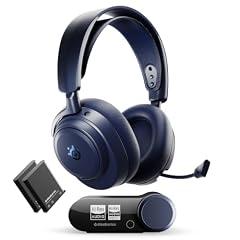
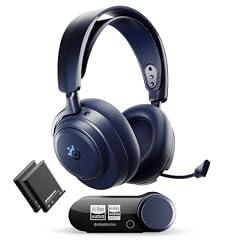
SteelSeries Nova Pro Wireless Headset
Overview
This is a full-size, closed-back wireless gaming headset with a retractable boom microphone, active noise cancellation, transparency mode, a desktop GameHub, and two removable 670 mAh lithium-ion batteries. It connects by 2.4 GHz wireless or Bluetooth, while the GameHub provides three USB inputs, a 3.5 mm line connection, source mixing, and on-device controls. The manual lists PC, Mac, PlayStation 4 and 5, Xbox One and Series consoles, Switch in TV mode, and USB-C mobile devices. SteelSeries states that the headset delivers 96 kHz/24-bit wireless audio and carries Hi-Res Wireless certification. Independent testing gives firmer evidence for its practical strengths, including very low wired and 2.4 GHz latency, good stereo matching and low audible distortion. Its default tuning is deliberately bass and treble forward rather than neutral, so EQ adjustment may be useful for long sessions or general music listening. Independent tests also found effective low-frequency ANC and strong background-noise handling from the microphone.
What works
- Independent testing found very low latency through wired and 2.4 GHz connections, supporting responsive game audio.
- The removable dual-battery system is genuinely serviceable, with a second battery and GameHub charging documented in the manual.
- Independent reviewers found the microphone clear in demanding noise, with AI noise reduction that separates speech from busy backgrounds.
- The GameHub has documented USB connections for PC, PlayStation, Xbox, Switch in TV mode, and other supported sources, with Bluetooth available separately.
- Replacement ear cushions, headband, GameHub, carrying bag, and accessories are listed through the manufacturer.
What does not
- The default sound is not neutral. Independent measurements found boosted bass and prominent treble that can make sibilants harsh or fatiguing.
- Noise reduction can alter voice character. One independent test found clear natural speech, while another heard somewhat muffled or robotic processing.
- The build relies heavily on plastic, and faux-leather pads can retain heat during long use.
- No model-specific public UL, ETL, CSA, or IEC battery-safety certificate was located, despite detailed charging and battery warnings in the manual.
- Skin-contact materials are only broadly described. There is no product-specific public restricted-substances declaration or full pad, coating, adhesive, and metal composition.
Who is it for
It suits a multi-platform player or home office user who regularly moves between a PC, PlayStation, Xbox, Switch in TV mode, phone, or Mac and benefits from a central wired and wireless audio hub. It is particularly relevant for long sessions where a charged spare battery is more useful than waiting for an internal battery to recharge. It also fits users willing to use the GameHub or app EQ controls, since independent measurements show a competitive, bass and treble forward default sound rather than an even all-purpose tuning.
Who is it not for
It is not well suited to listeners who want neutral music playback without adjustment, people sensitive to sharp consonants or treble emphasis, or anyone who finds faux-leather pads hot. Use caution around traffic, children, alarms, or other situations requiring environmental awareness, since ANC and closed ear cups reduce outside sound. It is also a poor fit for buyers who require independently published electrical-safety certification, detailed skin-contact chemical documentation, a waterproof headset, or a long manufacturer warranty beyond the North American one-year minimum.
Integrity
The manual includes a high-volume hearing warning, adjustable ANC and transparency controls, and a GameHub gain setting. These are useful controls, but there is no published maximum headphone sound-output measurement or automatic exposure limiter. The product has a matching FCC Supplier's Declaration of Conformity for the headset and transceiver, covering the named wireless product under FCC Part 15. No product-specific US recall was located during the public recall review. The removable battery is a repair-positive design. The manual identifies it as a 3.7 V, 670 mAh lithium-ion pack and gives charging, storage, swollen-battery, replacement, and disposal cautions. It also identifies battery raw materials including lithium cobalt oxide, graphite, copper, and aluminum. SteelSeries lists replacement parts and provides US recycling access through ERI, which is also reflected in New York's manufacturer recycling program. Public evidence does not establish recycled content, low-impact packaging, or a product-specific lifecycle assessment for this headset.

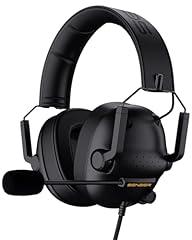
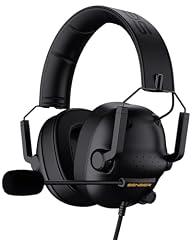
SENZER SG500 Pro Gaming Headset
Overview
This is a wired, over-ear gaming headset with a 3.5 mm plug, foldable earcups, removable boom microphone, inline volume and mute controls, and removable ear pads. An independent hands-on review confirms the wired connection, braided cable, folding design, magnetic removable synthetic-leather pads, and basic inline controls. It therefore avoids the battery, charger, radio, and wireless pairing issues that apply to rechargeable headsets. The product is marketed for PC and current game consoles, including PS5. PlayStation documents headset microphone configuration on PS5, and its support guidance confirms that a four-conductor 3.5 mm cable is required when wired headset chat is needed. Independent reviews report intelligible voice pickup and usable game audio, but no accredited measurements were found for output level, driver response, microphone noise reduction, or surround processing. Published specifications also conflict on impedance, so the technical sheet is not fully checkable.
What works
- Wired 3.5 mm operation eliminates rechargeable-battery and charging exposure concerns.
- Independent hands-on reporting confirms magnetic removable ear pads, which can be taken off for cleaning.
- The foldable earcups, detachable boom microphone, and inline mute and volume controls were independently observed.
- PS5 provides settings for a connected headset microphone, and its support guidance explains the wired chat cable requirement.
- Senzer publishes a contact address, email, phone number, and a registration-based warranty extension process.
What does not
- No volume limiter, listening-dose monitor, exposure warning, or parental volume control was found. Long sessions still require user-managed volume.
- No model-specific UL, ETL, CSA, TCO, FCC, Bluetooth, chemical-material, or accredited acoustic test record was located. The product is wired, so radio approval is not applicable.
- The synthetic-leather pads were independently observed, but no material declaration or restricted-substance test report was found for skin-contact surfaces.
- The surround and noise-cancelling microphone claims lack standardized, reproducible test data. Independent commentary describes the surround effect as software-based rather than true multichannel audio.
- Specifications are internally unclear. One published source lists 32 ohms while the marketplace record lists 16 ohms, and no manufacturer technical sheet was found to resolve the difference.
- No maker takeback program, parts catalog, repair instructions, or replacement cable and microphone availability was found.
Who is it for
This product suits a player who wants a straightforward analog headset for a PS5 controller, PC, Switch, phone, or another device with a compatible 3.5 mm headset jack. It is particularly relevant for people who prefer not to maintain a battery or wireless connection, want an inline mute control, and value ear pads that can be removed for cleaning. Check that the connected controller or device supports a four-conductor headset connection if microphone chat is important, and manage volume conservatively during extended sessions.
Who is it not for
It is not well suited to households seeking built-in hearing protection for children or frequent long-session users, because no volume cap, dose tracking, or exposure alert was found. It also does not suit buyers who need independently measured microphone isolation, latency, output level, or surround performance. Choose a product with clear model-specific test reports if voice clarity in a noisy home, proven acoustic behavior, chemical-material documentation, repair parts, or a formal electronics takeback route is a priority.
Integrity
The strongest health-related point is structural rather than certified. This is a wired headset, so it has no rechargeable battery, charging cable, or wireless transmitter to create battery overheating or radio-compliance questions. That does not make high-volume listening safe. No built-in safe-listening controls were found, while WHO guidance uses 80 dB for 40 hours per week as an adult reference exposure. Users need to set volume and session length themselves. The removable pads are a practical hygiene feature, although independent reporting identifies them as synthetic leather and no chemical-material declaration or restricted-substance test report was located. No product-specific safety certification, recall, Proposition 65 warning, environmental certification, recycled-content statement, or manufacturer takeback program was found in the checked sources. Because it contains no rechargeable battery, disposal is simpler than for a wireless headset, but the headset remains electronic waste and should go to an appropriate electronics recycler rather than household trash.

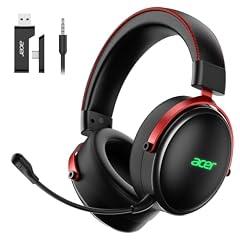
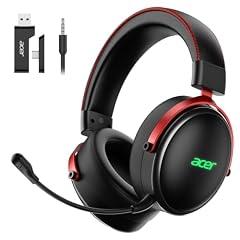
Acer Wireless Gaming Headset
Overview
This is an over-ear wireless gaming headset with a detachable boom microphone, USB-C charging port, 3.5 mm audio input, onboard volume control, microphone mute control, and a USB transmitter. The manufacturer manual, submitted with the radio authorization record, documents Bluetooth pairing, wired use, and transmitter mode for a PC or console. Retailer material describes a tri-mode design with 2.4 GHz wireless, Bluetooth 5.3, and 3.5 mm wired audio, plus a claimed 40-hour battery life, 50 mm drivers, ENC microphone processing, and 20 ms latency. Those performance figures are manufacturer or seller claims, not independently measured results. The headset and its matching transmitter have separately traceable U.S. radio authorizations, but the reviewed retail records conflict on branding, with one listing identifying the same model as Acesori or generic while the radio filings name Acer Gadget Inc.
What works
- The headset and its matching USB transmitter have model-specific FCC authorizations for 2.4 GHz operation.
- The filed manual documents three practical connection paths, Bluetooth, wired 3.5 mm audio, and USB-transmitter mode.
- A detachable microphone, physical mute control, and volume dial are documented in the manufacturer manual.
- The manual specifically directs console use through transmitter mode, which is the appropriate wireless path to test on PS5.
What does not
- No volume cap, listening-exposure monitor, hearing warning system, or parental audio control was documented.
- No public third-party acoustic, microphone, latency, range, or battery-life test was located for this product. The 20 ms and 40-hour figures remain unverified claims.
- The PS5 claim needs care. PlayStation states that ordinary third-party Bluetooth headsets are not supported wirelessly on PS5, so Bluetooth should not be assumed to work directly with the console.
- Ear-pad, headband, coating, and skin-contact material composition were not disclosed. No product-specific chemical test, TCO certification, or Proposition 65 information was located.
- No parts catalog, battery-service instructions, replacement ear-pad listing, or product-specific recycling instructions were located. Retail listings also show inconsistent brand identification.
Who is it for
This product suits a console or PC player who wants one over-ear headset that can use a USB transmitter at the desk or console, Bluetooth with a phone or tablet, and a 3.5 mm cable when wireless use is unsuitable. It is most appropriate for someone comfortable treating the listed battery, latency, microphone-noise-reduction, and driver claims as unverified. The detachable microphone and physical mute control are useful for ordinary game chat and for switching between gaming and media listening.
Who is it not for
It is not suited to parents seeking a headset with an enforced safe-volume limit or listening-time controls, because none were documented. It is also a poor fit for users with known sensitivities to coatings, faux leather, metals, or other skin-contact materials, since the materials are undisclosed. PS5 users should not select it expecting direct Bluetooth console audio. Those needing proven microphone quality, measured low latency, published battery testing, repair parts, or replaceable ear pads need documentation this product does not provide.
Integrity
The strongest verified safety evidence concerns radio compliance. The headset and the matching transmitter each have traceable FCC equipment authorization records under Acer Gadget Inc., covering 2.4 GHz operation. The manual provides basic charging direction through USB-C and shows a charge-status indicator. No product-specific CPSC recall or exposure warning was identified in the reviewed sources. Health documentation is otherwise limited. There is no documented safe-listening limit, exposure tracking, materials declaration, chemical test report, or independent battery-safety listing for the product. Acer publishes broader sustainability reporting and describes U.S. recycling activity for electronics and packaging, but no headset-specific takeback route, battery-removal procedure, repair guide, or lifecycle certification was located. The internal rechargeable battery appears not to be presented as user-serviceable.

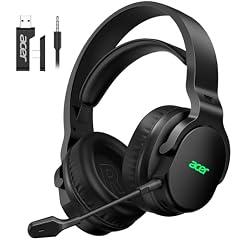
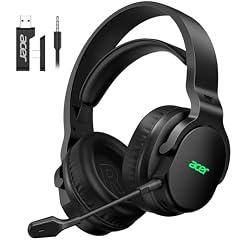
Acer Wireless Gaming Headset
Overview
This is a black, over-ear gaming headset with 50 mm dynamic drivers, a detachable boom microphone, physical controls, and a suspension-style headband. It is intended for game audio, voice chat, calls, and general listening across consoles, computers, and mobile devices. The manufacturer states that it can use a USB-C 2.4 GHz transmitter, Bluetooth 5.4, or a 3.5 mm wired connection. Its PS5 wireless claim is specifically tied to the included transmitter, not direct Bluetooth, which matches Sony's published limitation that third-party Bluetooth headsets are not supported directly on PS5. The listing also claims up to 45 hours with the logo light off and 20 hours with it on, but no independent battery, audio, microphone, latency, or range test report was located.
What works
- The PS5 wireless claim identifies a USB-C 2.4 GHz transmitter rather than implying unsupported direct Bluetooth use.
- The listing clearly distinguishes its three connection modes, including 3.5 mm wired listening.
- Sony documents that USB and 3.5 mm headsets can provide PS5 3D Audio, supporting the stated connection approach.
- The 45-hour claim includes a meaningful lighting condition and acknowledges that volume, connection mode, and use affect runtime.
- Acer provides a U.S. support and warranty pathway for its branded gadgets, although this exact model was not listed in the support article checked.
What does not
- No volume limiter, listening-exposure tracker, parental control, or safe-listening warning was identified for this product.
- No model-specific UL, ETL, or CSA listing for the headset battery or charging system was located in the checked public sources.
- No FCC authorization or Bluetooth SIG qualification could be independently matched to this exact product model and its transmitter.
- The 45-hour battery, reduced-delay wireless, ENC microphone, and audio claims were not backed by a published independent test report.
- Materials touching the skin, replaceable parts, battery service instructions, and a product-specific recycling program were not disclosed in the checked product and support materials.
Who is it for
It suits a PS5, PS4, PC, Mac, Switch, or mobile user who wants one headset for several connection types and understands how each works. PS5 users who want wireless game audio and chat should use the stated USB-C transmitter, while phone users can use Bluetooth and users with compatible analog ports can use the 3.5 mm connection. It also fits people who value a detachable microphone and physical buttons. The battery estimate is most relevant to users willing to keep the logo lighting off for longer sessions.
Who is it not for
It is not for households seeking a headset with verified safe-listening controls for children, because no volume cap, exposure monitoring, or parental audio control was identified. It is also unsuitable for anyone who expects direct Bluetooth audio on a PS5, since Sony says third-party Bluetooth headsets are not supported that way. Buyers who require independently measured microphone quality, latency, wireless range, battery life, material chemistry, or certified charging safety should choose a product with model-specific reports and traceable registrations.
Integrity
No recall, regulatory action, or product-specific Proposition 65 warning was located in the sources checked. That is not the same as a verified materials or battery-safety finding. The product page does not identify the ear-pad, headband, coating, or metal composition, and no public restricted-substance report was found. It also does not show a safe-listening feature such as a volume limiter or exposure warning. The manufacturer claims play-while-charging and provides runtime conditions, but public model-specific battery specifications and third-party safety listings were not located. Acer has a support and warranty infrastructure for branded gadgets, although the exact model was absent from the support list checked. For disposal, U.S. users can use the Battery Network locator for accepted rechargeable batteries, but Acer does not provide product-specific battery-removal or takeback instructions here. No model-specific TCO Certified or equivalent lifecycle certification was found.

AOC Wireless Gaming Headset 45Hr White
Overview
This is an over-ear wireless gaming headset with a detachable boom microphone, a USB 2.4 GHz transmitter, Bluetooth, and a 3.5 mm cable. It is intended for PS5, PS4, computers, Switch, phones, and other audio devices. The product materials are described by the seller as ABS, polycarbonate, aluminum, and leather, and the headset weighs 360 g. Its PS5 wireless mode is manufacturer-documented as using the included USB transmitter rather than standard Bluetooth. A Captain 300 manual held in U.S. radio-equipment records confirms the detachable microphone, 3.5 mm cable, USB transmitter, USB-C charging, 50 mm drivers, and a claimed 20 ms latency. However, that same record ties the design to another manufacturer and lists several other trademarks, not AOC. The 45-hour battery claim, Bluetooth version, microphone performance, and latency have not been independently measured for this AOC-branded product.
What works
- The supplied manual describes a USB-transmitter mode for PS5, which avoids relying on the console's standard Bluetooth audio support.
- A 3.5 mm cable provides a wired fallback, and the Captain 300 manual states that audio can still work after the battery is depleted.
- The microphone is detachable, so the headset can also be used without a boom mic.
- A stated 12-month warranty and 60-day return guarantee provide a basic support path, though the public support details are limited.
What does not
- No volume limiter, listening-dose tracker, exposure warning, or parental hearing control was documented.
- No model-specific UL, ETL, CSA, battery-cell, charger, or chemical-material test listing was located.
- The available U.S. radio filing supports a Captain 300 design, but its documented trademark list does not include AOC. This leaves the exact retail product's radio identity incompletely traceable.
- Performance evidence is weak. The available manual claims 20 ms latency and describes 40 hours with lighting on, while the retail materials claim up to 45 hours and 20 hours with RGB lighting. No independent audio, microphone, latency, range, or battery test resolves those figures.
- No replacement-parts catalog, battery service instructions, ear-pad parts listing, or manufacturer takeback program was found.
Who is it for
This product fits a user who needs one headset for PS5 USB-dongle audio, a computer, and occasional wired use through a 3.5 mm connection. It is most suitable for someone who values a detachable microphone and can use the cable as a fallback if charging is inconvenient. It also suits users who are comfortable treating the stated 45-hour runtime and 20 ms latency as manufacturer claims, rather than independently verified performance figures. The documented 12-month warranty may matter to buyers wanting a defined basic coverage period.
Who is it not for
It is not well suited to parents seeking built-in hearing protection for children or teens, because no volume cap, listening-time monitor, or exposure warning was documented. It is also a poor fit for people with material sensitivities who need verified pad, coating, or restricted-substance disclosures. Competitive players, remote workers, and streamers who need proven microphone clarity, latency, wireless range, or battery endurance should note that no independent product-specific measurements were found. Users seeking repairable electronics or brand-operated recycling should seek clearer parts and takeback documentation.
Integrity
The health documentation is limited. The product identifies broad enclosure materials, including ABS, polycarbonate, aluminum, and leather, but does not provide a skin-contact material declaration, restricted-substance test report, or a product-specific chemical certification. No hearing-safety feature, such as a volume ceiling or listening-exposure tracker, was documented. No product-specific CPSC recall or U.S. exposure warning was located in the sources reviewed. For charging safety, the available Captain 300 manual describes USB-C charging and a three-hour charge time, but no traceable U.S. listing for the complete headset, its battery, or charging equipment was found. There is also no published parts program or battery-removal guidance. At end of life, rechargeable headsets should not go in household trash or curbside recycling. U.S. EPA guidance directs users to battery or electronics recycling channels, with terminals protected where accessible.

AOC Wireless Gaming Headset 30H Battery
Overview
This is a white, over-ear wireless gaming headset intended for PS5, PC, Switch, mobile devices, and wired controller use. The product page states that it includes a USB 2.4 GHz dongle and 3.5 mm cable, alongside Bluetooth, a flip microphone, 50 mm dynamic drivers, an advertised 20 ms latency figure, and up to 30 hours of battery life. These are manufacturer-stated specifications, not independently measured results. PS5 support is plausible through the stated USB dongle or 3.5 mm connection, since PlayStation says USB and analog headsets are supported while ordinary third-party Bluetooth headset connections are not. The page also contains important specification conflicts. It markets Bluetooth 5.4 but its technical table lists Bluetooth 5, and it labels noise control as active noise cancellation while elsewhere describing passive isolation and a noise-canceling microphone.
What works
- Three stated connection methods provide practical options for consoles, computers, and mobile devices, USB dongle, Bluetooth, and 3.5 mm wired.
- The product page explicitly says Xbox wireless connection is unsupported, a useful limitation disclosure.
- The flip microphone is stated to mute when raised, which may make voice control easier during calls or game chat.
- The listed contact materials identify faux leather, memory foam, metal, and plastic rather than leaving all construction materials unspecified.
What does not
- No product-specific FCC authorization, Bluetooth qualification, UL, ETL, CSA, or battery safety listing was located for the headset or its USB radio dongle.
- No independent laboratory report was located to support the stated 20 ms latency, 30-hour battery life, 50 mm driver performance, surround effect, microphone noise reduction, or wireless range.
- The page is internally inconsistent on Bluetooth version and noise control. Bluetooth 5.4 conflicts with Bluetooth 5 in the specifications, and active noise cancellation conflicts with descriptions of passive isolation and microphone noise reduction.
- No volume limiter, exposure tracker, listening-time warning, or parental hearing control is disclosed.
- No U.S. takeback program, battery-removal instructions, replacement-parts catalog, or model-specific environmental certification was located.
Who is it for
This product suits a user who wants one budget-oriented headset format for PS5 through a USB dongle or controller cable, plus PC, Switch, and mobile use through the stated connection choices. It is most appropriate for someone comfortable treating the 30-hour battery, low-latency, surround, and microphone claims as unverified manufacturer specifications. The flip-to-mute microphone and included wired fallback are useful for casual multiplayer sessions where simple controls and connection flexibility matter more than documented acoustic performance or certification records.
Who is it not for
It is not well suited to households seeking built-in hearing protection for children or anyone managing long listening sessions, because no volume limiting or exposure guidance is disclosed. It also does not fit buyers who require traceable U.S. radio authorization, listed battery charging components, independently tested microphone and latency results, or clear chemical compliance documentation. Avoid relying on Bluetooth for direct PS5 headset use, because PlayStation says standard third-party Bluetooth headset connections are not supported. Xbox users also need a wired connection according to the product page.
Integrity
The stated skin-contact construction includes faux leather and memory foam, with metal and plastic elsewhere in the enclosure. That is better material naming than a completely generic listing, but no model-specific restricted-substance report, Proposition 65 disclosure, or TCO certification was located. There is also no disclosed safe-listening mode, maximum-volume control, listening exposure monitor, or parental control. Users should set conservative console or device volume and take listening breaks. The headset uses a rechargeable battery and charges in a stated two hours, but no exact battery specification, listed charger evidence, or third-party battery safety record was located. No product-specific CPSC recall was identified in the checked recall resources. The listing states two years of EU spare-parts availability, yet no parts catalog or repair instructions were found. No U.S. recycling or takeback pathway, removable-battery guidance, recycled-content evidence, or model-specific lifecycle certification was found.

Valorise Wireless Gaming Headset 7.1 Surround
Overview
This is an over-ear wireless gaming headset with a retractable microphone, a USB-A and USB-C dongle, Bluetooth connection, and a detachable 3.5 mm cable. Its filed manual says the dongle can be connected to a PS5, then selected as both the console audio input and output. The same manual describes a switchable 7.1 sound effect and a microphone mute control. Its wireless headset radio is independently traceable through an FCC equipment authorization granted on October 9, 2024. Regulatory filings identify a 3.7 V, 1000 mAh rechargeable lithium-ion battery and 5 V USB input. The advertised 100-hour runtime, 5 ms latency, ENC microphone performance, 7.1 audio quality, and wireless range were not supported by an independent electroacoustic, microphone, latency, or battery-life test report located in this review.
What works
- PS5 setup is unusually concrete in the filed manual, including selection of the headset for both audio output and microphone input through the USB transmitter.
- The wireless headset has a model-matched FCC authorization, with a radio test report identifying the Valorise UG-08S and reporting compliance with FCC Part 15 Subpart C testing.
- The FCC filing identifies the rechargeable battery as a 3.7 V, 1000 mAh lithium-ion cell and identifies 5 V USB charging input.
- The manual documents a detachable wired listening mode, microphone mute control, and the ability to disable the decorative lighting.
What does not
- No volume limiter, listening-dose tracker, exposure warning, or parental hearing control was documented. Long sessions still depend on the user's volume choices.
- No UL, ETL, or CSA listing for the product, battery, cable, or charging supply was located. The FCC authorization addresses radio compliance, not charger or battery fire safety certification.
- The 100-hour battery, 5 ms latency, 7.1 sound effect, microphone noise reduction, and range claims lack located independent performance measurements.
- The radio authorization clearly matches the headset's Bluetooth radio, but a separately traceable authorization for the included low-latency USB transmitter was not located.
- No publicly located parts catalog, repair instructions, battery replacement procedure, takeback program, or model-specific chemical and environmental certification was found.
Who is it for
This product suits a PS5 or PC user who wants a conventional over-ear headset with a USB wireless transmitter, wired fallback, and a documented path for selecting both game audio and chat microphone input. It is also appropriate for someone who values a retractable microphone, physical mute control, and optional decorative lighting. The best fit is an adult or supervised older teen who can manage listening volume and who accepts that the headline audio, latency, microphone, and runtime figures are manufacturer claims rather than independently measured results.
Who is it not for
It is not well suited to households seeking built-in hearing protection for children, because no volume ceiling, exposure alert, or parental control was documented. It is also a weaker fit for users who require a listed charging system, independently tested battery safety, substantiated low-latency performance, or a certified skin-contact material declaration. Repair-minded owners and buyers seeking a clear U.S. recycling route should look elsewhere, because no battery service instructions, spare-parts program, or manufacturer takeback information was located.
Integrity
The strongest safety evidence is radio specific. A model-matched FCC authorization and radio test report identify the product as a wireless headphone, with Bluetooth operation from 2402 to 2480 MHz. The filing also records a 3.7 V, 1000 mAh rechargeable lithium-ion battery and 5 V USB input. This is useful traceability, but it does not establish certification of the charging cable or any wall power adapter. The stated enclosure materials include ABS, polycarbonate, fabric, and memory-foam cushioning, but no model-specific chemical test report, TCO certification, or Proposition 65 warning record was located. No hearing-safety controls were documented. No public repair guide, spare-parts catalog, battery-removal procedure, recycling program, or model-specific lifecycle certification was located. The manual supports wired use and lighting disablement, which may reduce dependence on the battery during some use, but it does not resolve end-of-life serviceability.

FIFINE AmpliGame H9 Gaming Headset
Overview
The FIFINE H9 is a closed-back, over-ear wired gaming headset with a detachable omnidirectional boom microphone. It uses either a 3.5 mm analog connection or a USB control box, so it does not contain a rechargeable battery or require charging. FIFINE states that it has 50 mm dynamic drivers, protein-leather memory-foam ear pads, an adjustable headband, inline volume and microphone controls, and virtual 7.1 sound in USB mode only. The manufacturer specifically lists USB and 3.5 mm use with PlayStation consoles. PlayStation documents support for USB and analog headsets generally, while noting that not every third-party device is compatible. An independent frequency-response measurement exists for this model, but no publicly located accredited report established its microphone performance, surround effect, maximum output level, or latency.
What works
- Wired construction eliminates battery charging, battery aging, and battery fire concerns for this product.
- USB and 3.5 mm connection paths give a practical route for PS5 use, subject to console settings and device recognition.
- The boom microphone is detachable, which allows non-gaming listening without the microphone attached.
- FIFINE publishes a one-year warranty, with a stated extension to two years after timely product registration.
- The manufacturer clearly limits its virtual 7.1 claim to USB mode, rather than presenting it as an analog-headset feature.
What does not
- No volume cap, listening-dose tracker, exposure warning, or safe-listening mode was identified. This matters for long sessions because safe listening depends on both level and duration.
- Material descriptions identify protein leather and memory foam, but no model-specific restricted-substance declaration or skin-contact chemical test report was located.
- The independent audio evidence located was limited to frequency-response measurement. Microphone noise handling, latency, surround performance, and maximum listening output remain unproven by an accredited test report.
- The detachable microphone is a useful modular feature, but no publicly located parts catalog or repair guide confirmed replacement ear pads, cable, control box, or microphone availability.
- No U.S. takeback program, recycling instruction specific to this product, recycled-content disclosure, or model-specific environmental certification was located.
Who is it for
This product suits a PC or PS5 player who wants a simple wired over-ear headset and prefers to avoid charging routines. It is most appropriate for users who can connect by USB to a console or computer, or through a 3.5 mm controller jack, and who value a removable boom microphone for switching between game chat and ordinary listening. It also fits users willing to manage listening volume manually and troubleshoot console audio-input settings if needed.
Who is it not for
It is not well suited to children, households seeking built-in hearing protection, or anyone who needs a reliable maximum-volume limit or exposure tracking for long sessions. People with known sensitivity to synthetic leather, foam, coatings, or unspecified metal finishes should seek a headset with a full material declaration and chemical testing. It is also a poor fit for users who require independently measured microphone quality, latency, surround performance, replaceable ear pads, or established electronics recycling support.
Integrity
The important health limitation is the lack of documented safe-listening safeguards. The WHO and ITU adult reference is 80 dB(A) for 40 hours per week, but no H9 output limit, exposure monitor, warning system, or related test report was located. FIFINE identifies protein-leather memory-foam pads and a metal-adjustment structure, yet it does not publish a model-specific material declaration or chemical test report. No H9 recall or Proposition 65 warning was located in the U.S. sources searched. Its wired design avoids a rechargeable battery, charging cable heat, and battery disposal concerns. The detachable microphone could modestly extend use if a user prefers to remove it, and FIFINE publishes one-year coverage with a stated registration extension. However, no verified spare-parts catalog, U.S. takeback route, recycled-content disclosure, lifecycle assessment, or recognized multi-criteria environmental certification was located for this product.
Gvyugke Wireless Gaming Headset
Overview
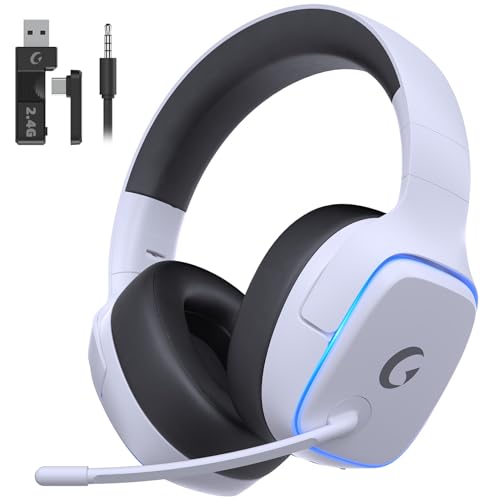
This is an over-ear gaming headset with a rechargeable battery, 2.4 GHz USB dongle wireless mode, Bluetooth, and a 3.5 mm wired connection. The available Captain 780 setup material describes 50 mm drivers, a detachable or rotating boom microphone depending on the variant, USB-C charging, and plastic construction with protein-leather, memory-foam ear pads. It is intended for console, PC, and mobile audio, with the USB dongle or 3.5 mm connection identified for PS5 use. A public FCC equipment-authorization record independently links the Gvyugke Captain 780 name to a wireless-headset family with the same radio module, antenna, circuit layout, and components as the tested unit. Battery life up to 70 hours, 20 ms latency, 7.1 surround sound, 10 meter Bluetooth range, and microphone noise reduction are manufacturer-stated figures. No independent audio, microphone, latency, range, or battery-runtime test report was identified.
What works
- A public FCC authorization and model-difference declaration provide traceable U.S. radio-compliance evidence for the Captain 780 wireless-headset family.
- Manufacturer setup material specifically identifies 2.4 GHz USB-dongle and 3.5 mm wired connection paths for PS5.
- The documented connection options include 2.4 GHz wireless, Bluetooth, and 3.5 mm wired use.
- A two-year manufacturer warranty is stated for defects in materials and workmanship under normal use.
What does not
- No volume limiter, listening-exposure tracking, warning system, or parental volume control was identified.
- No product-specific UL, ETL, or CSA battery and charging safety listing was identified in the reviewed public records.
- The claimed 70-hour runtime, 20 ms latency, 7.1 surround processing, microphone noise reduction, and wireless range lack independent performance measurements.
- Material disclosure is limited to broad descriptions such as plastic, protein leather, and memory foam, with no chemical test report or restricted-substance declaration located.
- No replacement-parts catalog, battery-service instructions, or U.S. takeback and recycling program was identified.
Who is it for
This product suits a PS5 or PC player who wants connection flexibility and is comfortable checking console sound settings. The documented PS5 paths are the 2.4 GHz USB dongle and the controller's 3.5 mm jack, rather than direct Bluetooth audio. It may also fit someone who needs one headset for wired console use and Bluetooth use with a phone, tablet, or laptop. The stated two-year warranty is relevant for buyers who retain proof of purchase and can use the seller or manufacturer support process if a defect appears.
Who is it not for
It is not suited to households seeking built-in hearing protection for children or long sessions, because no credible volume cap, exposure timer, or safe-listening warning feature was identified. It is also unsuitable for users who require independently measured battery life, microphone quality, audio tuning, low latency, or wireless range for competitive play. PS5 users expecting direct Bluetooth pairing should choose a different setup, because PlayStation does not support ordinary third-party Bluetooth audio headsets directly. Repair-focused users should also avoid relying on unspecified parts availability or battery service.
Integrity
The strongest verified safety-related point is radio traceability. The Captain 780 appears in a public FCC filing for a wireless gaming-headset family, and the filing states that the listed models share the same radio module, antenna, circuit layout, schematics, and components. That supports U.S. radio authorization for this configuration. It does not establish independent verification of sound quality, battery endurance, charging safety, or headset durability. For health use, no safe-listening controls or exposure safeguards were located. The available material description is limited to plastic construction and protein-leather, memory-foam ear pads, without a product-specific chemical declaration or laboratory restricted-substance report. No product-specific battery safety listing from UL, ETL, or CSA was identified, and no recall or exposure warning was found in the reviewed public sources. The brand materials reviewed also did not identify a U.S. battery takeback path, a removable-battery procedure, replacement parts, or model-specific environmental certification.
Gvyugke Wireless Gaming Headset 70H White
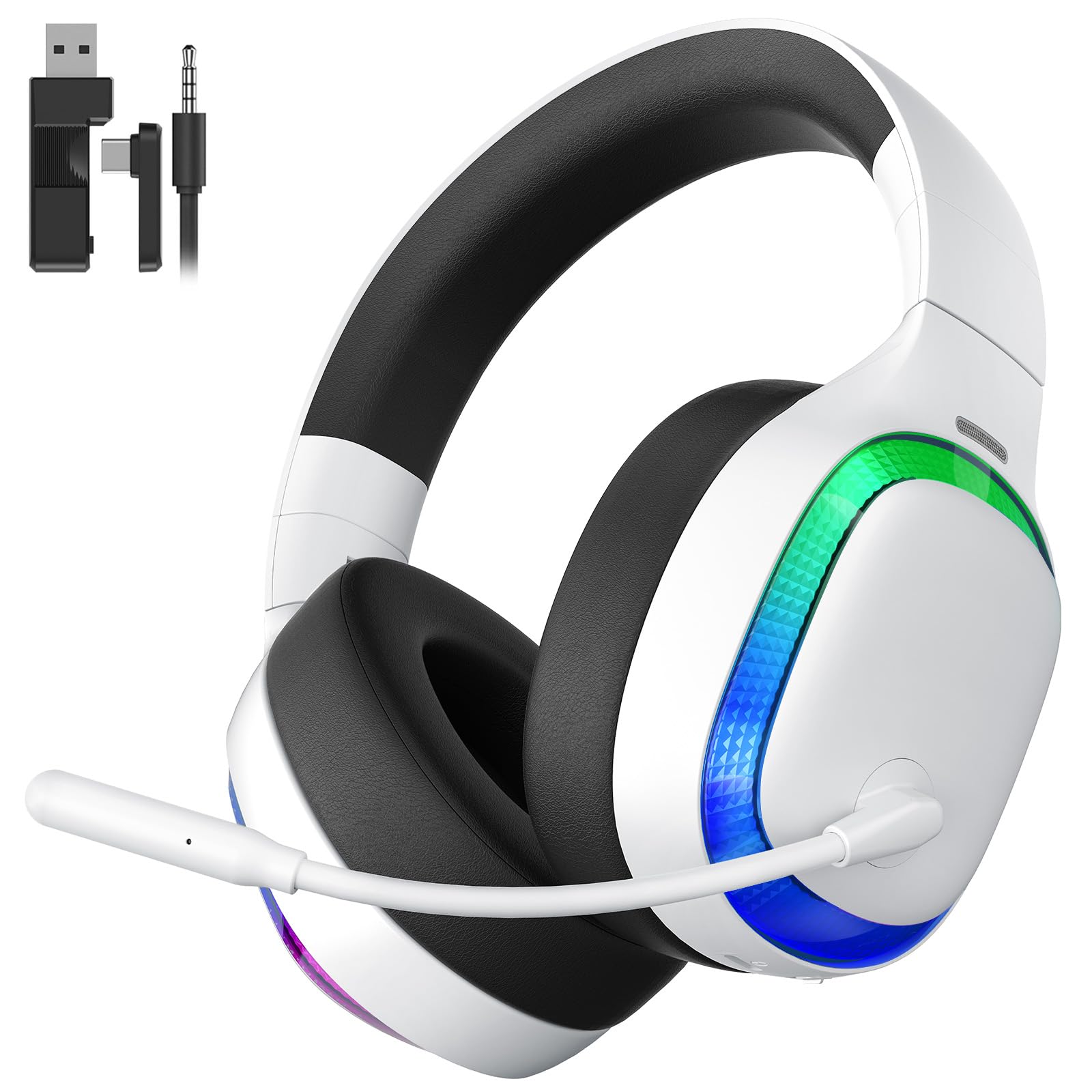
Overview
This is a white over-ear gaming headset with a boom microphone, a USB 2.4 GHz dongle, Bluetooth, a detachable 3.5 mm cable, USB-C charging, and 50 mm dynamic drivers. It is marketed for PS5, PS4, Switch, PCs, and mobile devices. The manufacturer states a fold-flat construction, 20 ms latency, noise-reducing microphone processing, and up to 70 hours of battery life. The radio hardware has a useful independent trace. An FCC authorization covers Gvyugke Captain 660 as a series model, with a 2.402 to 2.480 GHz headset radio. PS5 use should be through the USB dongle or analog cable, not Bluetooth, because Sony says standard third-party Bluetooth headset audio is not supported. The listing is internally inconsistent, claiming 70 hours in its title but 45 hours in its specifications, and it calls the model both Captain 660 and Captain 790.
What works
- The headset radio has a traceable FCC authorization that specifically includes the Captain 660 series model.
- It offers two practical console connection paths, the included USB wireless dongle and a 3.5 mm wired connection, according to the manufacturer.
- A detachable cable can reduce the consequence of a damaged wired lead, although replacement-part availability was not established.
- The listing states a 12-month warranty and 45-day return guarantee, which provides a stated support period.
What does not
- No safe-listening limiter, exposure meter, volume warning, or parental listening control was found.
- The product page gives conflicting battery figures, 70 hours in the headline and 45 hours in the specifications.
- No public UL, ETL, or CSA listing was found for the battery, charging system, or included power components.
- ABS, PP, and PU are identified as enclosure materials, but no model-specific chemical testing or skin-contact material declaration was located.
- FCC records substantiate the headset radio, but a public model-specific link between Captain 660 and its separate USB-dongle authorization was not located.
Who is it for
This product suits a budget-focused player who wants a conventional over-ear headset for PS5 or PC and is comfortable using a USB dongle for wireless console audio. It also suits someone who wants a wired 3.5 mm fallback for a controller or another compatible device. The documented FCC radio record is a concrete strength for a user who values traceable wireless authorization. Battery runtime should be treated as uncertain, so it is better suited to users who can recharge regularly rather than depend on the headline figure.
Who is it not for
It is not well suited to households seeking active hearing protection for children, long sessions, or sensitive listeners, because no volume cap, listening-time monitor, or exposure warning was identified. It is also a poor fit for buyers who need independently measured microphone quality, latency, range, surround performance, or battery endurance. Users expecting direct Bluetooth audio from a PS5 should choose another setup, since Sony says ordinary third-party Bluetooth headsets are not supported for PS5 wireless audio. Repair-focused buyers may also need clearer parts support.
Integrity
The strongest verified safety-related point is radio traceability. An FCC authorization covers the Captain 660 within a named headset series, and the filing identifies its 2.4 GHz operating range. That verifies radio authorization, not audio quality, battery safety, or Bluetooth branding qualification. No matching public record was located for a safe-listening feature, so users must manage volume and breaks themselves. The listing identifies ABS, PP, and PU construction, but it does not provide a skin-contact chemical declaration or independent restricted-substance test report. No product-specific UL, ETL, or CSA battery and charger listing was found. No manufacturer takeback program, battery-removal instructions, spare-parts catalog, or model-specific environmental certification was located. The stated detachable cable and 12-month warranty may help extend use, but the battery, pads, microphone, and dongle were not shown to be replaceable.