
10 Best Fish Oil Supplements
 Lauren Wilson
Please note that we participate in affiliate marketing programs. When you purchase through links on our site, we may earn a commission. As an Amazon Associate we earn from qualifying purchases. This comes at no additional cost to you and helps support the resources required to provide valuable content.Advertising Disclosure
Top-rated Fish Oil Supplements Comparison
1

2
4

6
7
8
9
10
Fish Oil Supplements: What Matters
Fish-oil supplements provide the long-chain omega-3 fats EPA and DHA. Whether a product is useful depends less on the headline amount of “fish oil” and more on how clearly it states the EPA and DHA dose, whether the oil is fresh and free from contaminants, and whether the finished product can be independently checked.
Start with the Supplement Facts panel. A meaningful label separates EPA and DHA from total oil and states the amount per daily serving. Several products here provide roughly 900–2,100 mg combined EPA and DHA, while others provide only a few hundred milligrams. The amount of oil in a capsule is not the same as its active omega-3 content: a product advertising 2,500 or 3,600 mg of fish oil may contain substantially less EPA plus DHA. Cod liver oil also adds vitamins A and D, so it should be evaluated differently from a plain fish-oil concentrate. A product that does not state EPA and DHA individually makes it difficult to compare or target intake.
The oil’s form and serving size matter, but neither replaces dose transparency. Products in this group use triglyceride, re-esterified triglyceride, or ethyl-ester forms, and daily directions range from one to three softgels. Lemon flavoring or enteric coating may affect tolerability, but flavoring can make some oxidation tests harder to interpret. “Burpless,” “wild caught,” “purified,” “mercury free,” and “third-party tested” are claims rather than proof unless the seller identifies the finished product, testing program, laboratory, lot, and numerical results.
For freshness, look for current peroxide, p-anisidine, and TOTOX results interpreted against recognized limits such as those in the GOED Voluntary Monograph, the USP fish-oil monograph, or Codex fish-oil standards. For purity, finished-product results should address heavy metals, dioxins, PCBs, and related marine contaminants. The strongest evidence in the supplied products came from active independent listings such as IFOS, NSF/ANSI 173, or NSF Certified for Sport. These programs are meaningful only when the exact formula and form match the product being sold; certification of a raw-oil supplier or a different formula is not enough.
The most useful batch evidence is a recent, lot-matched certificate of analysis. It should identify the bottle’s lot and expiration date and show numerical EPA/DHA potency, oxidation markers, and relevant contaminants, ideally from an ISO/IEC 17025-accredited laboratory. An active registry entry is helpful, but it does not automatically give a buyer the results for the bottle in hand. Among the supplied products, the strongest quality profiles combined transparent EPA/DHA labeling with IFOS or NSF certification and independent testing; lower-scoring products generally relied on manufacturer testing claims without public lot reports.
Source transparency also matters. Named species such as anchovy, sardine, pollock, sockeye salmon, tuna, or algae are more useful than “deep-sea fish.” Fish and shellfish allergens, gelatin, and the presence of added ingredients should be clear. Sustainability claims are stronger when they connect the finished product to an active MSC, MarinTrust, ASC, or comparable chain-of-custody record; “wild caught” alone does not establish lower-impact sourcing.
Finally, these are supplements, not prescription omega-3 medicines. Repeated cautions in the supplied reviews include fish allergy, fish-derived gelatin, and unsuitability for vegetarian or vegan users; clinician review for people taking anticoagulant or antiplatelet medicines, preparing for surgery, or managing cardiovascular or bleeding concerns; and the need not to substitute ordinary fish oil for prescribed treatment of severe high triglycerides. Added ingredients require extra caution: one product supplies vitamin D above the adult upper intake level, another contains vitamin K2, and a gummy contains undisclosed-amount red yeast rice, which can provide a lovastatin-equivalent compound. Pregnancy, breastfeeding, children, and existing medical conditions also warrant individualized advice.
Integrity
The products differ most in dose clarity, independent verification, formula complexity, and source traceability. The scores below reflect those differences within the supplied set; they do not establish that a supplement treats or prevents disease.
HHealth & Safety
Meaningful EPA + DHA dose
This measures whether the label states actual EPA and DHA per daily serving and whether the amount fits the purpose claimed. Higher-scoring products clearly separate EPA and DHA and often provide roughly 1,000 mg or more combined; lower-scoring products may disclose only total oil or, in one case, leave EPA and DHA amounts unresolved. Large oil-weight figures should never be treated as equivalent to active omega-3 dose.
Fresh, non-rancid oil
This measures finished-oil oxidation using peroxide, p-anisidine, and TOTOX results. Freshness matters because omega-3 oils can oxidize, and lemon flavoring can complicate p-anisidine interpretation. The supplied scores were highest where independent testing reported low oxidation for an identified lot; scores around 68–70 generally reflected claims without a current public lot report.
Contaminant control
This measures finished-product evidence for heavy metals, dioxins, PCBs, and related marine contaminants. High scores in the supplied set were associated with IFOS, NSF, or independent lot testing that reported contaminant results. Lower scores usually reflected a manufacturer statement such as “mercury free” or “third-party tested” without numerical, current results for the bottle being sold.
Safe formula beyond the fish oil
This measures added vitamins, herbs, sweeteners, and delivery ingredients that may introduce risks or obscure the omega-3 dose. Plain formulas without added actives scored better, while products containing high-dose vitamin D, vitamin K2, or red yeast rice raised more important review concerns. Buyers should evaluate the complete Supplement Facts panel, not just the EPA and DHA line.
Know what marine source you are taking
This measures whether the product identifies its fish or algal source, oil type, capsule material, and allergens. Higher-scoring examples name anchovy, pollock, salmon, tuna, or algae and identify fish or shellfish allergens. Lower scores reflect generic “deep-sea fish” wording or inconsistent source descriptions, making allergy, dietary, and traceability decisions harder.
EEvidence
Claims match the evidence
This measures whether heart, brain, joint, mood, eye, immune, and similar claims stay within human evidence for the stated dose and avoid implying disease treatment. Higher scores went to products using more restrained wording and clear dose information. Lower scores reflected broad support claims that extended beyond the supplied evidence or could be mistaken for treatment of triglycerides, cardiovascular disease, or other conditions.
Independently certified finished product
This measures certification of the exact finished formula, not merely its raw oil supplier. Active IFOS, NSF/ANSI 173, or NSF Certified for Sport listings produced the strongest scores in this category, reaching the mid-90s for some products. A generic testing claim, GMO certification, or certification of another formula does not provide the same assurance.
Current batch results you can check
This measures whether a buyer can match a recent independent report to the bottle’s lot and expiration date. The best available evidence included numerical potency, oxidation, and contaminant results for an identified lot, but several products still lacked a clean match to current inventory. Scores near 68–70 generally indicate no public lot report; higher scores indicate stronger, though not always perfect, batch transparency.
No unresolved regulatory red flags
This measures recalls, FDA enforcement, misleading certification or labeling findings, and serious safety alerts involving the product or responsible firm. Most supplied products had no relevant unresolved action, producing scores around 70–78. That absence is useful context, but it does not prove freshness, potency, purity, or suitability for an individual. Historical actions involving different products should not automatically be treated as a recall of the fish oil.
EEcology
Lower-impact source and traceability
This measures whether the marine or algal source is named and supported by credible environmental certification and chain-of-custody evidence. The strongest supplied scores belonged to products with MSC-linked or registry-based sourcing information, including salmon oil and some pollock products. Claims such as “wild caught,” “sustainably sourced,” or “Friend of the Sea certified” scored lower when an active product-specific traceability record was not found.
Full reviews
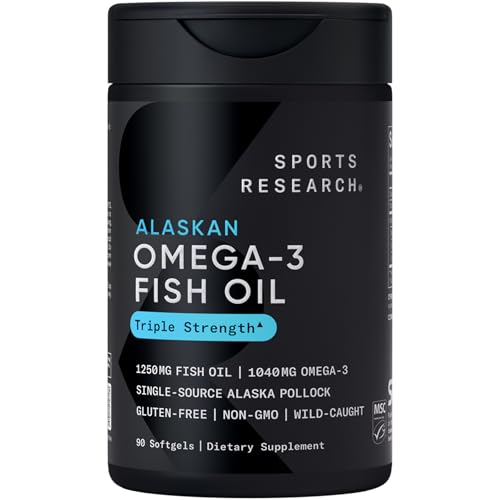
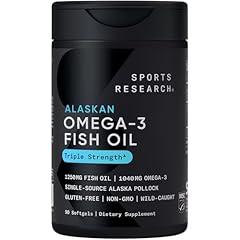
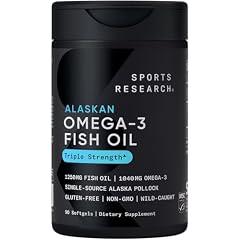
Sports Research Triple Strength Omega 3 Fish Oil
Overview
This is a 90-serving fish oil supplement for adults, taken as one softgel daily with food. The current label records 1,250 mg of wild Alaska pollock oil concentrate per softgel, providing 1,040 mg total omega-3s in triglyceride form. That includes 690 mg EPA and 260 mg DHA, or 950 mg combined, rather than relying on total oil weight alone. The product is listed in Nutrasource's IFOS registry as an independently certified finished fish oil. A publicly available IFOS report for a batch expiring July 2028 measured 1,038 mg total omega-3 per softgel and passed potency, oxidation, contaminant, and heavy-metal specifications. Those results are strong evidence for that reported batch, but they cannot confirm the lot delivered from an Amazon order unless its bottle lot matches. The formula uses a fish-gelatin softgel, glycerin, purified water, and tocopherols.
What works
- The label clearly separates EPA, DHA, and total omega-3 content, with 950 mg combined EPA plus DHA per daily softgel.
- An IFOS report for a recent batch measured low oxidation, including peroxide value 1.50, anisidine value 5.20, and TOTOX 8.20.
- That same independently issued batch report showed contaminant and heavy-metal results far below its IFOS specifications.
- The marine inputs are specifically identified as Alaska pollock oil and tilapia-sourced fish gelatin, and the label clearly declares fish as an allergen.
- The exact finished product is currently listed by Nutrasource as IFOS certified and IGEN certified.
What does not
- The published IFOS batch report is not matched to the specific lot sold through Amazon, so it does not prove the freshness or potency of every bottle in circulation.
- Fish oil supplements are not prescription triglyceride treatments. Broad heart, brain, and joint support language goes beyond what this mixed EPA and DHA dose can establish for an individual.
- It contains Alaska pollock and tilapia-derived gelatin, making it unsuitable for people with fish allergy and for vegetarian or vegan diets.
- The label advises medical review for pregnancy, nursing, diagnosed conditions, prescription medicines including blood thinners, and planned surgery.
- The product displays an MSC chain-of-custody code, but a directly verifiable public chain-of-custody record for this retail product was not located during this review.
Who is it for
This product suits an adult who wants a once-daily, concentrated fish oil with a clearly disclosed EPA and DHA dose, and who can safely consume fish. It is particularly relevant for someone seeking to add marine omega-3 intake without taking multiple low-dose capsules. The publicly available IFOS batch data is useful for buyers who place importance on measured oxidation, contaminant, and heavy-metal results. It also suits pescatarian users, but not vegetarian or vegan users because the capsule is fish gelatin.
Who is it not for
It is not suitable for anyone with fish allergy, nor for vegetarian or vegan households, because both the oil and capsule are fish-derived. People who are pregnant, nursing, preparing for surgery, taking anticoagulants or other prescription medicines, or managing a diagnosed medical condition should not treat it as routine self-care without clinician input. It is also not appropriate as a substitute for prescribed therapy for high triglycerides, cardiovascular disease, cognitive decline, arthritis, or other medical conditions.
Integrity
The strongest health-quality finding is independently published IFOS testing for a recent batch expiring July 2028. It reported 1,038 mg total omega-3 per softgel, peroxide value 1.50, anisidine value 5.20, and TOTOX 8.20. Those oxidation measures are below the IFOS specifications and below common GOED voluntary limits. The same report found very low measured PCBs, dioxins, mercury, cadmium, lead, and inorganic arsenic. This is meaningful finished-product evidence, though it remains lot-specific. The formula is relatively simple, with pollock oil, fish gelatin, glycerin, purified water, and tocopherols. Fish allergy and medication interaction warnings are prominent. The product is listed by Nutrasource as IFOS and IGEN certified. Its pollock is identified as wild Alaska pollock and the packaging carries an MSC code, supporting a sustainability claim, but this review did not independently confirm the retail product's chain-of-custody record. No product-specific FDA recall or warning letter was located in the regulatory checks performed.

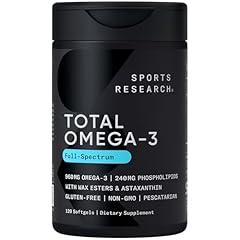
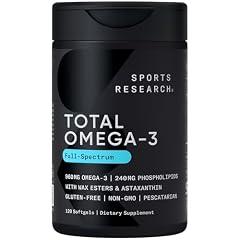
Sports Research Total Omega-3 Fish Oil Softgels
Overview
This is a 120-softgel, 60-day omega-3 supplement for adults. The labeled daily use is two softgels with food. Its 2,200 mg oil blend combines Alaska pollock fish oil, Superba 2 krill oil, calanus oil, and salmon oil. The current label lists 960 mg total omega-3 fatty acids, including 565 mg EPA and 255 mg DHA per daily serving. The key distinction is that the product names its individual marine sources and the EPA and DHA amounts, rather than presenting the 2,200 mg oil weight as the omega-3 dose. The exact product is listed in Nutrasource's registry as IGEN certified for no detectable tested genetically engineered material. That registry does not show IFOS or IKOS potency, contaminant, or oxidation certification for this exact formula, and no current lot-matched public test report was located.
What works
- The label clearly separates 820 mg combined EPA and DHA from the larger 2,200 mg total-oil blend.
- It identifies Alaska pollock, salmon, krill, and calanus oils, plus fish and crustacean shellfish allergens.
- The formula is comparatively simple, with fish-gelatin softgels, glycerin, water, and tocopherols as the other ingredients.
- The exact product has a current IGEN registry entry confirming no detectable material in its tested GMO panel.
What does not
- No current public, lot-specific report was found for this formula's EPA and DHA potency, oxidation values, or marine contaminants.
- IGEN certification verifies the tested non-GMO panel, not finished-product identity, omega-3 potency, freshness, heavy metals, PCBs, or dioxins.
- The 2,200 mg headline is total oil blend, while the labeled EPA plus DHA amount is 820 mg per day.
- It contains fish, crustacean shellfish, and tilapia-derived fish gelatin, so it is unsuitable for relevant allergies and not vegetarian or vegan.
Who is it for
This product fits an adult who wants a clearly labeled, maintenance-level EPA and DHA supplement and prefers a mixed marine-oil formula rather than a single-source fish oil. The daily serving supplies 565 mg EPA and 255 mg DHA, close to the roughly 1 g daily amount sometimes considered for people with existing coronary heart disease under clinician direction. It also suits someone who values explicit fish and shellfish allergen disclosure and wants 60 daily servings in one bottle. It is not a substitute for prescription triglyceride treatment.
Who is it not for
It is not appropriate for anyone with fish, crustacean shellfish, or tilapia-gelatin allergy. People who are pregnant, nursing, taking anticoagulant or antiplatelet medicines, have a bleeding condition, or have surgery planned should ask a clinician before using it, as the label directs. It is also a poor fit for vegans and vegetarians. People seeking a product with publicly accessible, current batch results for oxidation, contaminants, and potency should choose a formula that provides a lot-matched independent report. Do not use this dietary supplement as treatment for high triglycerides or cardiovascular disease.
Integrity
The health-positive features are transparent source naming, a declared 820 mg daily EPA plus DHA amount, and a simple excipient list. The current label also carries practical caution language for pregnancy, prescription medicines including blood thinners, and planned surgery. NIH notes that ordinary omega-3 supplements can lower triglycerides, but cardiovascular outcome evidence at about 1 g per day is mixed. Prescription omega-3 products at 4 g per day are a different treatment category. The exact product has a current Nutrasource IGEN listing, meaning its tested panel found no detectable genetically engineered material. That is useful but narrower than independent certification for potency, oxidation, or contaminants. The krill ingredient is identified as Superba 2, a supplier line that reports sustainable and traceable sourcing, while Sports Research is listed by MSC among brands offering supplements containing MSC-certified ingredients. Neither record alone verifies a complete certified chain of custody for every marine input in this specific mixed-oil product. No product-specific FDA recall or warning letter was located. Sports Research Corp. did receive an FTC notice about substantiation obligations in 2023, which the FTC states is not itself evidence of wrongdoing.

Triple Strength Omega 3 Fish Oil Supplement
Overview
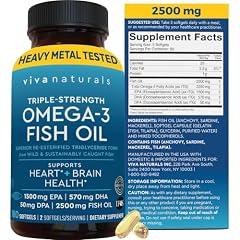
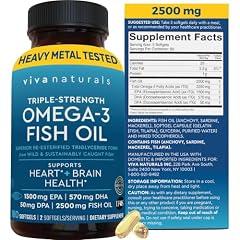
This product is a 180-softgel fish-oil supplement, providing 90 daily servings when taken as directed, two softgels with a meal. The manufacturer lists 2,500 mg fish oil per serving in re-esterified triglyceride form, including 1,500 mg EPA, 570 mg DHA, and 50 mg DPA. The capsule uses fish gelatin and the formula includes glycerin and mixed tocopherols. The finished product is actively listed in Nutrasource's IFOS registry, which independently matches the stated EPA, DHA, DPA, form, and two-softgel daily use. An independently posted test report for the 180-softgel format found EPA and DHA above label specifications, low oxidation measures, and contaminants below IFOS limits. That report applies to one tested batch, not necessarily the bottle supplied through a marketplace order.
What works
- The active IFOS registry independently identifies this finished fish-oil softgel formula and its stated EPA and DHA content.
- A tested 180-softgel batch had low peroxide, anisidine, and TOTOX values, supporting good oxidation control for that batch.
- The same independent batch report found mercury, lead, cadmium, arsenic, PCBs, dioxins, and dioxin-like PCBs within IFOS limits.
- The marine sources and fish allergens are specifically identified as anchovy, sardine, mackerel, and tilapia.
What does not
- The available 180-softgel IFOS report expires in October 2026, and shoppers cannot confirm from the listing that their bottle is from that tested batch.
- The product's broad brain, joint, skin, and eye support language goes beyond the strongest human evidence, which is more specific and mixed across outcomes.
- No verifiable Marine Stewardship Council or MarinTrust chain-of-custody certification was found for this fish oil.
- It contains fish oil and fish gelatin, so it is unsuitable for fish allergy, vegetarian, and vegan use.
Who is it for
This product suits adults who specifically want a concentrated EPA-forward fish oil and prefer taking two softgels rather than several lower-strength capsules. Its 2,070 mg combined EPA and DHA daily amount is relevant for people with low oily-fish intake who are discussing omega-3 supplementation with a clinician. It also fits buyers who value a finished-product IFOS listing and accessible testing for a matching 180-softgel format. The bottle provides 90 daily servings at the labeled two-softgel use.
Who is it not for
It is not appropriate for people with fish allergy, or for vegetarians and vegans, because both the oil and capsule are fish-derived. People using anticoagulants or other medicines, those who are pregnant, nursing, trying to conceive, or managing a medical condition should review use with a clinician. It is also not a substitute for prescription treatment of high triglycerides or cardiovascular disease. People seeking a fully traceable, independently certified sustainable marine source need more sourcing documentation than is publicly available here.
Integrity
The strongest health-quality evidence is independent finished-product testing. Nutrasource lists this exact triple-strength fish oil in its IFOS registry. A published report for the 180-softgel format found EPA and DHA above label specification, peroxide at 1.82 meq/kg, anisidine at 1.86, and TOTOX at 5.5. It also reported contaminants below IFOS limits, including mercury below 0.005 ppm and lead below 0.003 ppm. The tested batch expires in October 2026. The manufacturer identifies wild-caught anchovy, sardine, and mackerel as the oil sources, and tilapia as the capsule gelatin source. This is useful allergen and source information, but the product lacks publicly verifiable MSC, MarinTrust, or comparable fishery and chain-of-custody documentation. Searches of FDA recall, enforcement, and warning-letter resources did not identify a relevant unresolved action for this product or brand.

Nutricost Fish Oil Omega 3 Softgels 1000mg
Overview
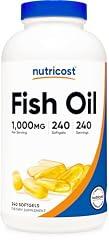
This is a 240-count fish-oil softgel product intended for adults, with a suggested use of one softgel daily. Nutricost states that each softgel provides 1,000 mg fish oil and 560 mg combined EPA plus DHA, making the bottle an approximately eight-month supply at that use level. The softgel shell uses gelatin, glycerin, and water. The central quality issue is inconsistent omega-3 labeling across current sources. The manufacturer page states 560 mg combined EPA and DHA, while Amazon A+ content states 600 mg, including 360 mg EPA and 240 mg DHA. An independently indexed label instead lists 340 mg EPA and 220 mg DHA. That unresolved discrepancy makes the exact active dose difficult to establish. Nutricost states that its products are third-party tested and made in a GMP-compliant, FDA-registered facility, but no lot-specific report or current public finished-product certification was located.
What works
- The 240-softgel format is a practical long-duration supply when used once daily, as manufacturer-stated.
- The formula appears straightforward, with fish oil plus a gelatin, glycerin, and water softgel shell, without added vitamins, herbs, flavors, or stimulants on the indexed label.
- The indexed label identifies anchovy as the fish allergen and lists individual EPA and DHA amounts, which is more informative than listing total fish oil alone.
- The stated 560 mg combined EPA and DHA per softgel is within the range used for general dietary omega-3 intake, not a drug-level triglyceride treatment dose.
What does not
- Current product information conflicts on EPA and DHA content, with 560 mg, 600 mg, and 340 mg EPA plus 220 mg DHA all appearing in available sources.
- No current lot-matched certificate of analysis was publicly available to confirm potency, peroxide value, p-anisidine value, TOTOX, heavy metals, dioxins, or PCBs for the bottle being sold.
- The manufacturer claims third-party testing, but the exact finished softgel could not be matched to a current IFOS, NSF, USP, or similar public certification listing.
- Fish source information is limited. Anchovy appears on an independently indexed label, but the manufacturer product page does not name the species, origin, fishery, or oil processing details.
- No verifiable marine sustainability certification or traceable fishery chain of custody was located.
Who is it for
This product suits an adult who wants a basic, once-daily fish-oil softgel in a large bottle for routine dietary omega-3 supplementation, and who can use gelatin and fish-derived ingredients. Its stated EPA and DHA amount is more relevant to general intake than to treatment of diagnosed high triglycerides. It is also a practical format for someone who specifically wants a manufacturer-stated gluten-free product without added vitamins, botanicals, sweeteners, or flavoring.
Who is it not for
It is not well suited to people with fish allergy, vegetarians, vegans, or households avoiding bovine or porcine gelatin because it is a fish-oil gelatin softgel. People who are pregnant, nursing, taking anticoagulant or antiplatelet medicines, preparing for surgery, or managing a medical condition should discuss fish oil with a clinician. It is also not appropriate as a substitute for prescription omega-3 treatment for severe hypertriglyceridemia, and buyers needing a precisely verified EPA and DHA dose should avoid relying on the conflicting listed amounts.
Integrity
The formula itself is simple, but fish oil needs more than a simple ingredient list to demonstrate quality. Nutricost states that its products are third-party tested and made in a GMP-compliant, FDA-registered facility. Those are manufacturing and testing claims, not a public, product-specific certification. No current public report was found for this finished product showing numerical results for oxidation, heavy metals, dioxins, or PCBs. Freshness matters because omega-3 oils oxidize. Recognized fish-oil quality limits include peroxide value at or below 5 meq/kg, p-anisidine at or below 20, and TOTOX at or below 26, but no lot-specific results were available here. No relevant unresolved FDA recall, warning letter, or safety alert was located in the checked public records. The product does not provide a verifiable fishery, sourcing location, Marine Stewardship Council chain of custody, or comparable environmental certification, so its marine impact and source traceability remain unproven.
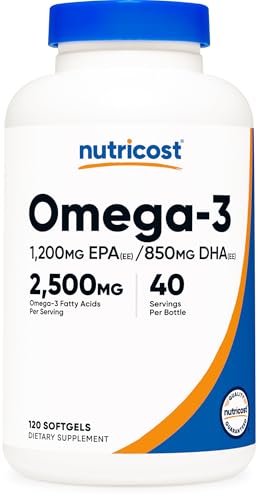
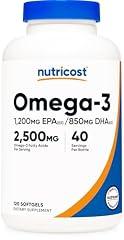
Nutricost Omega 3 Fish Oil 2500MG
Overview
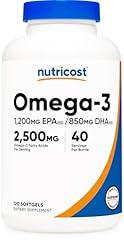
Nutricost Omega-3 is a fish-oil supplement in 120 softgels. The labeled daily serving is three softgels, providing 40 servings. A current retailer label corroborates 2,500 mg total omega-3s per serving, including 1,200 mg EPA and 850 mg DHA. The EPA and DHA are identified as ethyl esters. The same label identifies highly refined anchovy oil and a gelatin, glycerin, and purified-water softgel. Nutricost states that the fish is wild caught, that the product is third-party tested, and that it is made in a GMP-compliant, FDA-registered facility. Those manufacturing and testing statements are manufacturer claims, not publicly accessible product-specific test results. No current lot report was found showing measured potency, oxidation, or contaminant results for a bottle being sold.
What works
- The label separately states EPA and DHA, totaling 2,050 mg per daily serving.
- A current retailer label identifies anchovy as the fish source and clearly declares fish as an allergen.
- The formula is limited to fish oil and standard softgel materials, with no added vitamins, herbs, or stimulants.
- Nutricost states that the product is tested by an independent accredited laboratory, although it does not publish the underlying report.
What does not
- No public lot-specific certificate of analysis was found for EPA and DHA content, oxidation, heavy metals, PCBs, or dioxins.
- No active exact-product listing was found in the checked IFOS, NSF, or USP finished-product registries.
- The product identifies anchovy but does not provide catch area, fishery, processor, or a verifiable marine sourcing chain of custody.
- A proposed settlement over a separate Nutricost magnesium product received preliminary court approval in May 2026. It does not concern this fish-oil product, but it remains relevant background on label-governance risk.
Who is it for
This product suits an adult who wants a plainly labeled, high EPA plus DHA fish-oil serving without added vitamins or botanical ingredients. Three softgels supply 2,050 mg combined EPA and DHA, which is a concrete supplement amount for someone whose clinician has recommended increasing omega-3 intake. It also fits buyers who can take gelatin softgels and who are comfortable with anchovy-derived fish oil. The bottle provides 40 labeled daily servings, so it is better suited to a routine three-softgel schedule than occasional use.
Who is it not for
It is not appropriate for anyone with a fish allergy, or for vegetarians, vegans, and people avoiding bovine or porcine gelatin unless the capsule source is confirmed separately. Pregnant or nursing people, people taking anticoagulants or other medications, and people with a medical condition should follow the label instruction to consult a healthcare professional. People managing high triglycerides, cardiovascular disease, or atrial fibrillation should not treat this supplement as interchangeable with prescribed omega-3 therapy, which is evaluated at different doses and formulations.
Integrity
Health highlights include an uncomplicated formula and a transparent label that names EPA, DHA, ethyl-ester form, anchovy, and the fish allergen. The labeled serving provides 2,050 mg combined EPA and DHA. This is a substantial supplement dose, but it is not a prescription treatment. Evidence and prescription labeling for triglyceride management use 4 g daily prescription products, and higher-dose omega-3 studies have also raised atrial-fibrillation considerations for some higher-risk patients. Nutricost says the product is third-party tested, but no publicly checkable, lot-matched report was located for oxidation, contaminants, or label potency. No fish-oil-specific FDA recall or warning letter was found in the checked current FDA records. The anchovy source is named and the brand states wild caught, but no MSC or MarinTrust chain-of-custody evidence, fishery location, or processor traceability was found for this product. A preliminary settlement involving separate Nutricost magnesium labeling allegations is not evidence about this fish oil, but is relevant company-level context.

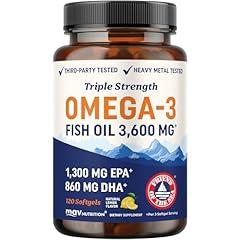
Triple Strength Omega 3 Fish Oil 3600 mg
Overview
This is a lemon-flavored fish-oil softgel supplement for adults. The labeled daily serving is three softgels, and the 120-softgel bottle provides 40 servings. An independently indexed label record lists 3,600 mg fish oil per serving, including 2,160 mg total omega-3s, with 1,300 mg EPA and 860 mg DHA. Those are label-stated amounts, not a current batch assay. The formula is simple, using fish oil with gelatin, glycerin, purified water, and natural lemon oil. The label record identifies anchovy as the fish source and allergen. MAV states that its omega products are third-party tested and Clean Label Project Certified, while the marketplace listing also claims Friends of the Sea certification. Current public registries reviewed did not provide a matchable certification or lot report for this exact 120-softgel product.
What works
- The labeled EPA and DHA amounts are clearly separated from total fish-oil weight, 1,300 mg EPA and 860 mg DHA per daily serving.
- The label identifies anchovy as the fish source, which is more useful for allergy and dietary screening than a vague fish-oil description.
- The formula has no added vitamins, herbs, stimulant ingredients, or high-dose auxiliary actives.
- The labeled 2.16 g daily EPA plus DHA dose is below FDA's 5 g per day safety conclusion for EPA and DHA supplements used as directed.
What does not
- No current public, lot-specific report was found that confirms potency, peroxide value, anisidine value, TOTOX, heavy metals, PCBs, or dioxins for the bottle being sold.
- Third-party testing, Clean Label Project certification, and Friends of the Sea certification are claimed, but an active registry entry matching this exact product and size was not located.
- Natural lemon flavor can improve acceptability, but flavoring complicates interpretation of anisidine testing unless the manufacturer supplies an appropriate flavored-oil oxidation report.
- The broad heart, brain, joint, mood, skin, and immune-support framing is more expansive than the strongest human evidence. It should not be treated as a substitute for prescription omega-3 treatment of high triglycerides.
Who is it for
This product fits an adult who wants a concentrated, conventional fish-oil supplement and is comfortable taking three softgels with meals each day. Its label-stated 2.16 g EPA plus DHA serving is substantial for someone trying to increase long-chain omega-3 intake without added vitamins or herbal ingredients. It also suits buyers who value a disclosed anchovy source and lemon-flavored softgels. It is most appropriate when the buyer does not need a clinician-directed treatment for a diagnosed lipid disorder.
Who is it not for
It is not suitable for people with fish allergy, strict vegan or vegetarian requirements, or anyone unable to take gelatin softgels. People who are pregnant, nursing, managing a medical condition, preparing for surgery, or taking anticoagulants or antiplatelet medicines should review use with a clinician, because omega-3 supplements can require medication monitoring. It is also not the right choice for someone who requires a publicly available, lot-matched independent certificate covering oxidation, contaminants, and measured EPA and DHA before using a fish-oil product.
Integrity
The label record identifies anchovy and contains a direct fish allergen disclosure. It also lists only standard softgel excipients plus natural lemon oil, with no added vitamins, botanicals, or drug-like compounds. The daily label dose supplies 2.16 g EPA plus DHA. NIH notes that fish-oil supplements can cause gastrointestinal effects and may interact with anticoagulants, so medication use and planned procedures deserve attention. MAV states that its omega products are wild caught, sustainably sourced, third-party tested, and Clean Label Project Certified. The marketplace record also claims Friends of the Sea certification. These are useful claims, but the certification searches did not yield an active, exact match for this 120-softgel product, and no public batch report was found. That leaves its current oxidation status, contaminant results, and chain-of-custody details unconfirmed for the specific bottle.

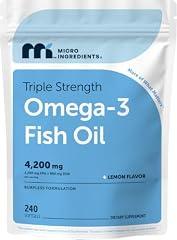
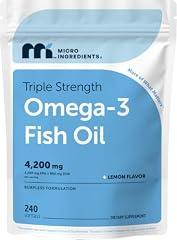
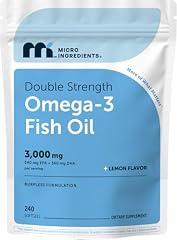
Micro Ingredients Triple Strength Omega 3 Fish Oil
Overview
This is a lemon-flavored fish-oil softgel product for adults. The stated daily use is three softgels with food, and the 240-softgel package therefore supplies 80 daily servings. The label information independently reproduced by a retailer lists 4,200 mg fish oil, including 1,200 mg EPA and 900 mg DHA per serving, or 2,100 mg combined EPA plus DHA. The manufacturer states that the oil comes from wild-caught Norwegian fish and that the softgels are enteric-coated for a less fishy aftertaste. Its ingredient list is short, with fish oil, natural lemon oil, and a gelatin, glycerin, and water softgel. The defining limitation is verification, no current lot-matched public report was located for potency, oxidation, heavy metals, PCBs, or dioxins.
What works
- The disclosed EPA plus DHA amount is 2,100 mg per daily serving, rather than relying only on total fish-oil weight.
- The formula is uncomplicated, with no added vitamins, herbs, stimulant ingredients, or sweeteners listed.
- A 240-softgel package lasts 80 days at the manufacturer-stated three-softgel daily direction.
- The manufacturer identifies Norwegian wild-caught fish as the source and uses lemon flavoring with enteric-coated softgels.
What does not
- No current public, lot-specific certificate of analysis was located to confirm EPA and DHA potency, oxidation results, or contaminant results for the bottle sold.
- No active finished-product certification record was located in the reviewed IFOS, NSF, USP, or similar public registries.
- The fish source is described broadly. The label warns it may contain anchovies and sardines, but does not give a fixed species composition.
- Heart, brain, joint, bone, and immune support are broad wellness claims. Evidence for fish-oil supplements is not equally strong across those outcomes, and this is not a prescription triglyceride treatment.
Who is it for
This product fits an adult who specifically wants a relatively high, clearly declared EPA plus DHA intake from standard fish-oil softgels, and who is comfortable taking three capsules daily with food. It can also suit someone seeking a simple formula without added vitamins or botanical actives, especially if lemon flavor and an enteric-coated softgel are preferable to plain fish oil. The 80-day package is practical for a consistent personal routine, not for rapid treatment of a diagnosed lipid disorder.
Who is it not for
It is not a good fit for anyone with a fish allergy, including sensitivity to anchovy or sardine, or for vegetarians and vegans. People who are pregnant, have cardiovascular disease or atrial fibrillation, use warfarin or other anticoagulant medicines, have an upcoming procedure, or are managing high triglycerides should discuss the dose and form with a clinician. Buyers who require independently certified purity, traceable species-level sourcing, or bottle-specific oxidation and contaminant results need documentation this product does not publicly provide.
Integrity
The daily serving supplies 2,100 mg of EPA plus DHA. That is a substantial supplemental amount, although the clinical evidence is outcome-specific. Omega-3 supplements can lower triglycerides, but the strongest triglyceride evidence involves 4 g daily prescription products, not ordinary retail fish oil. Fish oil can also cause digestive effects, and people taking anticoagulants should review use with a clinician. The manufacturer states that this product uses wild-caught Norwegian fish, direct sourcing, third-party testing, and enteric-coated softgels. Those are manufacturer statements, not public finished-product proof. The reviewed product information does not identify a fixed fish species blend, a Marine Stewardship Council or MarinTrust chain of custody, an active independent finished-product certification, or a current lot-specific report for oxidation, metals, PCBs, and dioxins. Lemon flavor can improve acceptability, but it also makes p-anisidine oxidation testing less interpretable.

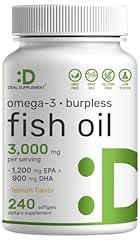
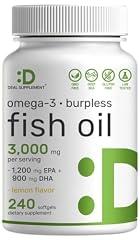
Deal Supplement Omega 3 Fish Oil, 3000mg, Lemon Flavored
Overview
This is a lemon-flavored fish-oil softgel product with 240 softgels. The stated serving is three softgels, giving an 80-day supply. Deal Supplement states that each serving provides 3,000 mg fish oil with 1,200 mg EPA and 900 mg DHA, or 2,100 mg of the two omega-3s most relevant to fish-oil research. That EPA and DHA declaration is concrete, but it is manufacturer-stated rather than independently confirmed for the current batch. The product is positioned for brain, heart, and joint support, plus reduced fishy aftertaste. Its central limitation is transparency, no current public lot report was found showing measured EPA and DHA, oxidation, mercury, PCBs, or dioxins, and no exact-product listing was found in the major independent certification registries checked.
What works
- The manufacturer clearly declares EPA at 1,200 mg and DHA at 900 mg per three-softgel serving.
- The stated 2,100 mg combined EPA and DHA is a substantial supplemental amount, rather than relying only on total fish-oil weight.
- A 240-softgel bottle provides a stated 80 days at the labeled three-softgel serving.
- The manufacturer states that the softgels use lemon flavor and a burpless design to reduce fishy aftertaste.
- The formula is presented as fish oil without added vitamins, herbs, or stimulant ingredients.
What does not
- No public, lot-matched certificate of analysis was found for EPA and DHA potency, oxidation values, heavy metals, PCBs, or dioxins.
- No active exact-product certification was found in the NSF, USP, or Nutrasource fish-oil certification registries checked.
- The product description identifies wild-caught deep-ocean fish, but does not name fish species, oil form, fish allergen details, fishery, or traceable supplier.
- Lemon flavor can interfere with p-anisidine testing, making transparent batch-level oxidation reporting especially important.
- The heart, brain, and joint support language is broad. Evidence for routine fish-oil supplements does not establish prevention or treatment of cardiovascular disease.
Who is it for
This product fits an adult who wants a relatively concentrated, routine EPA and DHA supplement in softgel form and is comfortable taking three softgels daily. The stated 2,100 mg combined EPA and DHA serving is relevant for someone whose diet is low in seafood and who wants a clearly stated omega-3 amount. Lemon flavor and the burpless positioning may suit people who have disliked fishy aftertaste. This is best viewed as a general dietary supplement, not as a substitute for a prescribed omega-3 product or medical care.
Who is it not for
It is not well suited to people with fish allergy, people who need named fish species for dietary or allergy reasons, or people seeking vegan or vegetarian omega-3s. Anyone taking anticoagulants, antiplatelet medicines, or preparing for surgery should discuss omega-3 use with a clinician. People with atrial fibrillation, established cardiovascular disease, high triglycerides, pregnancy, nursing, or those considering use for a child should seek individualized medical guidance. Buyers who require current independent certification and lot-specific purity testing should choose a product that publishes those records.
Integrity
The useful health fact is the stated dose, 1,200 mg EPA plus 900 mg DHA per daily three-softgel serving. That is below the 5 g per day EPA and DHA amount FDA has concluded is safe when used as recommended, but omega-3s can still matter for people using medicines that affect blood clotting. Large studies have not established that ordinary fish-oil supplements prevent most cardiovascular events, so this product should not be treated like prescription triglyceride therapy. Deal Supplement states that its oil is wild-caught and deep-ocean sourced, but it does not name the fish species, fishery, processing facility, or a Marine Stewardship Council or MarinTrust chain-of-custody record. No current exact-product IFOS, NSF, USP, or public lot certificate was found. California's recall page also listed a different Deal Supplement Vitamin A with coconut oil product on July 21, 2026. That listing does not identify this fish-oil product, but it is relevant brand-level safety context.

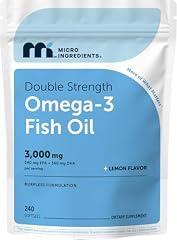
Omega 3 Fish Oil Softgels 3,000mg
Overview
This is a lemon-flavored, enteric-coated fish-oil softgel product. Adults are directed to take three softgels daily with food. The 240-softgel pouch supplies 80 servings, or about 80 days at the labeled use. The manufacturer states the oil comes from wild-caught Norwegian fish and that the coating is intended to reduce fishy aftertaste. The Supplement Facts information independently reproduced by iHerb lists 3,000 mg fish oil per serving, including 1,020 mg total omega-3s. Of that amount, EPA is 540 mg and DHA is 360 mg. This clearly distinguishes the 900 mg combined EPA and DHA from the larger fish-oil weight. The formula also uses gelatin, glycerin, natural lemon oil, and purified water, and it contains fish from anchovies and sardines.
What works
- The labeled daily serving clearly provides 540 mg EPA and 360 mg DHA, not just a total fish-oil number.
- An 80-serving pouch supports a simple once-daily, three-softgel routine.
- The ingredient list is short, with no added vitamins, herbs, stimulants, or sweeteners.
- The label identifies fish as an allergen and names anchovies and sardines through an independent retailer listing.
- The manufacturer states that the lemon flavor and enteric coating are intended to reduce fishy aftertaste.
What does not
- Only 1,020 mg of the labeled 3,000 mg fish-oil serving is total omega-3, so the headline oil weight substantially exceeds the EPA plus DHA dose.
- No current finished-product IFOS, NSF, USP, or ConsumerLab certification record was located for this exact product.
- No public, lot-matched independent report was located showing EPA and DHA potency, peroxide value, p-anisidine value, TOTOX, or marine-contaminant results.
- The manufacturer states that the oil is purified and third-party tested, but it does not publish numerical batch results that a buyer can check.
- Heart, brain, and immune-support positioning is broad. The labeled dose is a meaningful dietary EPA and DHA amount, but ordinary fish oil should not be treated as a prescription treatment for cardiovascular disease or high triglycerides.
Who is it for
This product suits an adult who wants a basic daily fish-oil supplement with a clearly listed 900 mg combined EPA and DHA dose, and who is comfortable taking three softgels with a meal. The 240-count pouch is practical for someone planning a roughly 80-day routine rather than a short trial. It may also suit people who dislike fishy aftertaste, since the manufacturer uses lemon flavor and an enteric coating. It is not vegetarian or vegan, and it contains gelatin and fish.
Who is it not for
It is not appropriate for people with fish allergy, including sensitivity to anchovy or sardine. People who are pregnant, breastfeeding, take anticoagulant or antiplatelet medicines, have a bleeding disorder, or are preparing for surgery should ask a clinician before using it, as the label itself advises consultation for medication use and omega-3s can affect bleeding risk at higher intakes. It is also not the right fit for someone who requires independently certified purity, oxidation, and potency testing for each finished batch.
Integrity
The finished formula has a relatively simple ingredient list. Beyond the fish oil, it contains a gelatin softgel with glycerin, natural lemon oil, and purified water. Fish is clearly disclosed as an allergen, and an independent retailer identifies anchovies and sardines as the fish sources. The manufacturer also describes the oil as wild-caught Norwegian fish and says it is purified to remove mercury and other contaminants. Those quality and contaminant statements remain manufacturer claims because no public, current lot-specific report was found with oxidation values, heavy-metal results, PCB or dioxin results, or independently measured EPA and DHA. No active listing for this exact finished product was located in the major IFOS, NSF, or USP public certification registries searched. The manufacturer promotes recycled pouch packaging, but no verifiable MSC, MarinTrust, or comparable fishery chain-of-custody certification was located for this product.

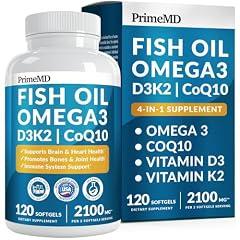
PrimeMD Omega 3 Fish Oil 2100mg Supplement
Overview
This is a lemon-flavored fish-oil softgel product for adults. The labeled daily serving is two softgels, with 60 servings per 120-softgel bottle. The current manufacturer label states 2,000 mg fish-oil concentrate, 1,100 mg total omega-3s, including 600 mg EPA and 400 mg DHA, plus 100 mg CoQ10, 140 mcg vitamin K2, and 140 mcg vitamin D3. Its defining feature is convenience, combining omega-3s, CoQ10, D3, and K2 in one routine. The EPA and DHA amounts are clearly separated on the label, which is more useful than a total-oil claim alone. However, the vitamin D3 serving is 5,600 IU, above the adult tolerable upper intake level of 4,000 IU from all sources set by the National Academies. The product also claims third-party laboratory testing, but no named laboratory, certification registry entry, or lot-specific report was located.
What works
- The current label separately identifies 600 mg EPA and 400 mg DHA per daily serving.
- Two softgels provide a stated 100 mg CoQ10, 140 mcg K2, and 140 mcg D3 alongside fish oil.
- The 120-softgel bottle is labeled as a 60-day supply when used as directed.
- The manufacturer states that the formula is lemon flavored and dairy free. These are manufacturer claims, not independently verified findings.
What does not
- The labeled 5,600 IU daily vitamin D3 dose exceeds the 4,000 IU adult upper intake level from all sources, so it can be unsuitable alongside other vitamin D or for unsupervised long-term use.
- No public lot-matched certificate of analysis was found for EPA and DHA potency, oxidation, heavy metals, PCBs, or dioxins.
- No exact-product listing was located in the reviewed NSF, USP, or Nutrasource certification registries.
- The label identifies only fish-oil concentrate, not fish species or oil source. It also shows fish oil and gelatin while product imagery claims vegan and allergen free, creating a material labeling inconsistency.
Who is it for
This product fits an adult who specifically wants a one-bottle routine with a clearly labeled 1,000 mg combined EPA and DHA dose, plus CoQ10 and vitamins D3 and K2. It is most practical for someone who has reviewed their total vitamin D intake and has a reason to use a high D3 dose with clinician guidance or laboratory monitoring. The two-softgel daily format and 60-serving bottle suit a consistent daily routine, especially for people who prefer lemon flavoring to plain fish-oil softgels.
Who is it not for
It is not a straightforward fit for people already taking vitamin D, those with elevated calcium, kidney stone history, kidney disease, sarcoidosis, or other conditions affecting vitamin D handling unless a clinician directs use. People taking warfarin should not start or change this product casually because vitamin K can materially affect anticoagulation management. It is also unsuitable for vegans and is a poor transparency fit for fish-allergic households because fish species, allergen disclosure detail, and the source of the gelatin are not clearly supplied.
Integrity
The label provides useful potency detail, including 600 mg EPA and 400 mg DHA per serving, but the claimed third-party testing is not backed by a named testing organization, numerical results, or a lot-specific report available to check. No exact finished-product certification was located in the reviewed NSF, USP, or Nutrasource registries. No relevant PrimeMD recall, FDA warning letter, or FDA health-fraud listing was located in the searches performed. The main health consideration is the 140 mcg, or 5,600 IU, vitamin D3 serving. This is above the adult upper intake level of 100 mcg, or 4,000 IU, from all sources. Vitamin K also requires special attention for people using warfarin. Ecological traceability is limited because the label does not name fish species, fishery, country of origin, MSC or MarinTrust documentation, or a verifiable chain of custody. Claims of globally sourced USA ingredients do not establish lower-impact marine sourcing.