
10 Best Eye Vitamins
 Lauren Wilson
Please note that we participate in affiliate marketing programs. When you purchase through links on our site, we may earn a commission. As an Amazon Associate we earn from qualifying purchases. This comes at no additional cost to you and helps support the resources required to provide valuable content.Advertising Disclosure
Top-rated Eye Vitamins Comparison
1

2
3
4
5
6
7
8
9
Eye vitamins: what matters
Eye vitamins are supplements intended to add nutrients, carotenoids, fatty acids, or botanicals to a diet. They do not all target the same outcome. The strongest evidence in this category is for the specific AREDS2 formula in people with intermediate age-related macular degeneration (AMD) or advanced AMD in one eye. That formula supplies, per day, vitamin C 500 mg, vitamin E 400 IU, zinc 80 mg, copper 2 mg, lutein 10 mg, and zeaxanthin 2 mg, with no beta-carotene. It is not established as a general vision booster, dry-eye treatment, or way to prevent AMD in people without the studied condition.
For dry-eye products, the relevant question is whether the finished formula and dose have human evidence for dry-eye outcomes. The supplied reviews describe limited evidence for one formula in a small six-month trial, while broader omega-3 evidence remains uncertain. A product containing a nutrient associated with eye research is not automatically clinically tested, and a trial of a different dose or ingredient combination does not prove that the product in the bottle works.
Start with the Supplement Facts panel. A useful label names every active nutrient, carotenoid, fatty acid, botanical, extract form, and daily amount. Proprietary blends, combined entries without individual amounts, undisclosed EPA/DHA splits, missing botanical standardization, and unclear forms of vitamins A or E make it harder to compare a product with research or assess safety. Headline numbers can also mislead: a large combined lutein-and-zeaxanthin total is not the same as the complete AREDS2 formula; “AREDS2-based” does not mean dose-matched; and a small omega-3 total may not provide a meaningful EPA or DHA dose.
Quality claims should apply to the finished product, not merely an ingredient supplier, facility, or manufacturer statement. The strongest supplied evidence came from current product-level NSF listings, including NSF/ANSI 173 or NSF Certified for Sport. USP Verified, ConsumerLab, and other recognized product records can also be meaningful when they identify the exact product and serving size. “Third-party tested” is weaker when no certifier, test scope, lot, or report is available. The best transparency is a recent, lot-matched report from an ISO/IEC 17025-accredited laboratory covering identity, potency, heavy metals, microbes, and other relevant contaminants. For oil-containing products, buyers should also look for peroxide, anisidine, and total-oxidation results.
Check the responsible company, manufacturing pathway, package lot code, expiration date, and seller. A facility-level GMP listing does not verify the contents of a particular bottle. Also distinguish evidence about avoiding a risk from evidence of benefit: excluding beta-carotene may matter for current and former smokers, but it does not make a product AREDS2.
Safety caveats recur throughout these products. Several formulas contain high zinc, vitamin E, preformed vitamin A, or botanicals and may overlap with other supplements or interact with anticoagulant or antiplatelet medicines; ginkgo, grape-seed extract, fish oils, and vitamin E were specifically flagged. The 80 mg zinc in AREDS2 products exceeds the adult upper limit of 40 mg from all sources, so total intake needs review. Fish, shellfish, krill, coconut, gelatin, soy, and other capsule ingredients also affect suitability. Pregnancy, breastfeeding, surgery, medical conditions, prescription medicines, sudden vision changes, persistent or severe dry eye, glaucoma, retinal disease, and diagnosed AMD warrant clinician guidance rather than self-treatment. Counterfeit products have also been reported for one widely sold brand on Amazon, so seller and package checks matter.
Integrity
These topics distinguish a formula that is merely plausible or well marketed from one that is appropriately matched to an eye use and supported by identifiable quality evidence. Scores reflect the supplied product reviews, not a guarantee of clinical benefit.
HHealth & Safety
Health impact for the stated eye use
This measures whether the exact daily formula is more likely to help than harm for its stated purpose. A high score is supported by an evidence-matched indication, such as the studied AREDS2 use or limited human dry-eye evidence. Lower scores appeared where products made broad claims without a finished-formula trial or used doses unlike the research.
True AREDS2 match and appropriate AMD scope
A high score requires all six studied daily amounts—500 mg vitamin C, 400 IU vitamin E, 80 mg zinc, 2 mg copper, 10 mg lutein, and 2 mg zeaxanthin—without beta-carotene, plus claims limited to the studied AMD groups. Lower scores reflected “AREDS-based” formulas with different doses, missing nutrients, added beta-carotene, or promises about general vision.
Clear doses and identifiable ingredients
This measures whether buyers can identify every active ingredient and its daily amount and form. High-scoring products used readable panels without proprietary blends. Lower scores involved combined botanical entries, undisclosed EPA/DHA amounts, unclear extract forms, missing standardization, or conflicting online and package information, all of which complicate evidence and interaction checks.
High-dose and medication safety
This measures whether doses, warnings, and directions address predictable risks from zinc, vitamin E, preformed vitamin A, oils, and botanicals. Higher-scoring products had clearer precautions and fewer avoidable exposures. Lower scores included high-dose nutrients without focused interaction warnings, especially where products contained ginkgo, grape seed, fish oil, or vitamin E.
Allergen and dietary-label accuracy
A high score means the label makes fish, shellfish, krill, soy, coconut, gelatin, and capsule materials easy to verify. The supplied products scored better when these ingredients were explicitly declared and dietary claims matched the label. Lower scores reflected broad “allergen-free” or vegan claims that conflicted with coconut, krill, gelatin, or incomplete capsule disclosures.
Contaminant, microbe, and rancidity control
This measures evidence for controlling heavy metals, microbes, pesticides, adulterants, and oil oxidation. Higher scores had relevant finished-product oversight or clearer testing claims; lower scores lacked public results. Oil products need special attention to freshness testing, while a Proposition 65 lead warning or unclear oil source makes independent verification particularly important.
EEvidence
Independently verified contents and purity
This measures whether the exact finished product has current independent certification or testing for label contents and contaminants. The strongest supplied evidence came from product-level NSF listings, including NSF Certified for Sport; one product scored highly on this measure. Low scores reflected only facility or ingredient claims, with no exact-product record.
Lot-specific test evidence
A high score requires a recent, attributable, lot-matched laboratory report covering identity, potency, and relevant contaminants, ideally from an ISO/IEC 17025-accredited laboratory. Most supplied products lacked a public report. “Third-party tested” or a generic certificate scored lower because buyers could not connect it to their bottle or assess the test scope.
Manufacturing accountability
This measures traceable responsibility for the brand and manufacturer, credible GMP oversight, and the absence of unresolved serious regulatory or recall signals. Higher scores reflected identifiable companies and cleaner reviewed histories. Lower scores reflected regulatory concerns, disputed certification claims, unclear business pathways, or a lack of product-specific accountability even when no product recall was found.
Honest eye-health claims
High scores go to listings that separate supported structure/function language from treatment, prevention, pressure, nerve, night-driving, dry-eye, or screen-strain promises. Lower scores appeared where marketing extended evidence from another dose, ingredient, or population to broad outcomes. A narrow AMD or dry-eye indication is more credible than a promise covering nearly every visual complaint.
EEcology
Lower-impact sourcing and packaging
This measures documented environmental responsibility for marine oils, botanicals, and packaging—not vague green language. High scores require traceable certified sourcing, such as recognized marine or organic records, and credible recyclable or recycled-content documentation. Among these products, most scores stayed moderate because sustainability claims were manufacturer-stated and package-impact evidence was rarely independently documented.
Full reviews
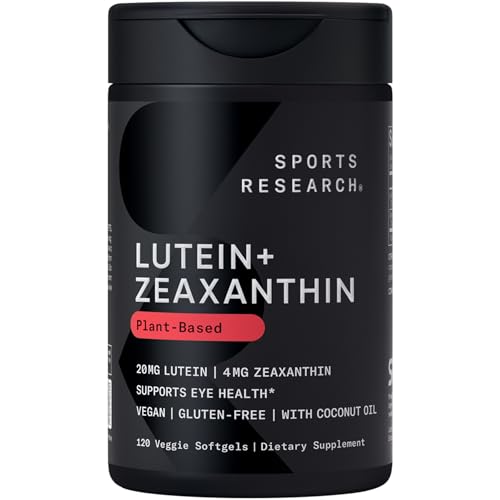
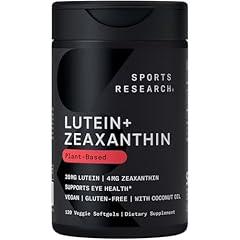
Sports Research Lutein and Zeaxanthin Eye Health Supplement
Overview
Sports Research Lutein + Zeaxanthin is a 120-count, plant-based softgel supplement for adults, directed as one softgel daily with food. The label archived in the NIH Dietary Supplement Label Database lists 20 mg lutein and 4 mg zeaxanthin per softgel, from marigold-derived Lute-Gen. Other listed ingredients include coconut oil, modified tapioca starch, glycerin, and purified water. Used as directed, the bottle supplies 120 days. Its stated purpose is general eye support and blue-light filtering. Lutein and zeaxanthin have a retinal role, but this is not an AREDS2 supplement. It lacks the studied AREDS2 vitamin C, vitamin E, zinc, and copper components, while supplying double the AREDS2 lutein and zeaxanthin amounts. The brand states that it is vegan certified, Non-GMO Project Verified, cGMP compliant, and third-party tested. No public product-level USP or NSF certification, or lot-matched analytical report, was located.
What works
- The independently archived label clearly identifies 20 mg lutein and 4 mg zeaxanthin per daily softgel, with no proprietary active blend.
- The listed Plantgel capsule uses tapioca starch, glycerin, and water rather than gelatin, supporting the stated plant-based format.
- The formula contains no beta-carotene, the carotenoid associated with increased lung-cancer risk in smokers and former smokers in older AREDS formulations.
- A 120-count bottle provides a straightforward four-month supply at the manufacturer’s one-softgel daily direction.
What does not
- This is not the complete AREDS2 formula recommended by the National Eye Institute for specific intermediate or late AMD situations.
- The brand’s third-party-testing statement is not matched by a public, lot-specific certificate covering potency, contaminants, and oil oxidation.
- No exact-product USP, NSF Certified for Sport, Informed Sport, or ConsumerLab verification record was located.
- Coconut oil is a listed ingredient, so the product is unsuitable for people with coconut allergy.
- General eye-health and AMD-support wording reaches beyond the tightly defined population and full formula studied in AREDS2.
Who is it for
This product suits adults who specifically want a simple, plant-based lutein and zeaxanthin supplement with plainly disclosed high carotenoid amounts and a once-daily routine. It is most relevant for someone seeking to add these nutrients to a diet that may be low in leafy greens, while recognizing that the evidence for eye outcomes is not the same as evidence for the full AREDS2 formula. It also suits people avoiding gelatin and beta-carotene.
Who is it not for
It is not appropriate as a substitute for an eye clinician’s recommended AREDS2 regimen in people with intermediate AMD in one or both eyes, or late AMD in one eye. That studied regimen contains vitamin C, vitamin E, zinc, copper, lutein, and zeaxanthin in specific amounts that this product does not provide. People with coconut allergy should avoid it. Pregnant or nursing people, those with medical conditions, and people taking prescription medicines should follow the label’s advice to consult a qualified clinician first.
Integrity
The product uses marigold-derived lutein and zeaxanthin in a Plantgel capsule whose listed ingredients do not include gelatin. The label record supports the stated 20 mg lutein and 4 mg zeaxanthin serving, and it lists coconut oil, tapioca starch, glycerin, and water. The manufacturer also states that the coconut oil is organic and that the product is vegan certified, Non-GMO Project Verified, made in cGMP-compliant facilities, and third-party tested. Those quality statements should not be confused with public finished-product verification. The available NSF register identifies a different Sports Research product, not this lutein product, and no public lot-specific potency, heavy-metal, microbial, pesticide, or oil-oxidation report was located. The botanical formulation avoids fish-derived ingredients and associated marine-sourcing concerns. However, no package-specific recycled-content, recyclability, or broader sourcing documentation was located.

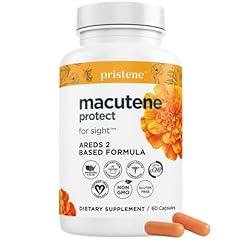
Eyecheck Natural Eye Health Vitamins
Overview
Macutene Protect is a 60-capsule, 30-day eye-nutrition product taken as two vegetable capsules daily. Its stated daily formula is 500 mg vitamin C, 268 mg vitamin E, 25 mg zinc, 1 mg copper, 25 mg lutein, 5 mg zeaxanthin, plus 30 mg each of green tea and bilberry extracts and 14 mg quercetin. The manufacturer lists the nutrient forms and capsule excipients rather than using a proprietary blend. The product is described as AREDS2-based, not an exact AREDS2 match. It supplies the trial amounts of vitamin C and vitamin E and more lutein and zeaxanthin, but 25 mg zinc and 1 mg copper rather than the standard published AREDS2 amounts of 80 mg and 2 mg. Human evidence supports AREDS2 supplementation for people with intermediate AMD or advanced AMD in one eye, not general prevention, screen strain, or routine vision improvement. The manufacturer states that every batch is third-party tested, but no public lot-matched report or current independent finished-product certification record was located.
What works
- The full Supplement Facts panel identifies all listed actives, amounts, nutrient forms, botanical species, and capsule excipients.
- It avoids beta-carotene, which is important because beta-carotene is not recommended for current or former smokers in AREDS-type products.
- The daily 25 mg zinc dose is below the adult tolerable upper intake level of 40 mg, although zinc from other supplements and diet still counts.
- The product uses a vegetable capsule and is manufacturer-stated vegan, gluten-free, and non-GMO.
What does not
- It is not a true dose-for-dose AREDS2 formula. Its zinc and copper amounts are below the standard published AREDS2 formula, despite language suggesting all trial ingredients are met or exceeded.
- Evidence for AREDS2 is limited to people with intermediate AMD or advanced AMD in one eye. The listed claims about sharp vision, night vision, and eye strain go beyond that studied indication.
- The 268 mg vitamin E dose can interact with anticoagulant or antiplatelet medicines. The product page gives only a broad consult-your-clinician statement rather than specific interaction directions.
- The manufacturer states that batches are independently tested, but no public lot-specific certificate of analysis or verifiable current finished-product certification was found.
Who is it for
This product is most suited to an adult who has been advised by an eye-care clinician to consider an AREDS2-style nutrient supplement for macular health, understands that this is not the exact trial formula, and prefers a fully itemized capsule label. It may also suit someone who specifically wants higher listed lutein and zeaxanthin amounts, a non-gelatin capsule, and no beta-carotene. Medication use, total vitamin E intake, total zinc intake, and the person’s AMD stage should be reviewed with a clinician before use.
Who is it not for
It is not suited to people seeking to prevent AMD, treat dry eye, reverse vision loss, improve screen-related eye strain, or strengthen night driving based on proven results. Those uses are not established by the AREDS2 trials. It also warrants caution for people taking warfarin or other anticoagulant or antiplatelet medicines because of the vitamin E dose, and for people using quinolone or tetracycline antibiotics or penicillamine because zinc can impair absorption. Pregnant or nursing people and people with a medical condition should obtain clinician guidance first.
Integrity
The most useful health positive is label transparency. The manufacturer publishes a two-capsule Supplement Facts panel with 500 mg vitamin C, 268 mg vitamin E, 25 mg zinc citrate, 1 mg copper citrate, 25 mg lutein, 5 mg zeaxanthin, and named botanical extracts. It contains no beta-carotene. That avoids the beta-carotene concern for current and former smokers, but it does not make the product an exact AREDS2 formula or establish benefit outside the AMD population studied. The manufacturer states that the product is made in U.S. cGMP facilities, vegan, gluten-free, non-GMO, and third-party tested. Those statements were not matched to a current public finished-product certification record or a buyer-accessible, lot-specific laboratory report. No relevant FDA recall, warning letter, or exposure warning was located in the searches performed. No independently documented botanical sourcing, recycled-content information, package recycling instructions, or other product-specific environmental certification was found.

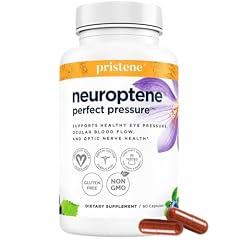
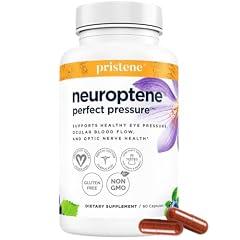
Eyecheck Optic Nerve Supplement
Overview
This is a 60-capsule, 30-day dietary supplement taken as two capsules daily, intended to support eye pressure already in the normal range, ocular blood flow, and optic nerve health. Its disclosed daily formula provides 250 mg niacinamide, 160 mg bilberry fruit extract, 100 mg grape-seed extract, 95 mg proanthocyanidins, 50 mg CoQ10, and 30 mg saffron stigma extract. The fully itemized label is a meaningful strength. The 30 mg saffron dose matches a small, one-month randomized pilot in treated glaucoma, though that study did not test this finished combination. The 250 mg niacinamide dose is far below the 1.5 g to 3 g daily doses used in a glaucoma retinal-function trial. The product is not an AREDS2 formula and does not supply the vitamins, minerals, lutein, or zeaxanthin used in that evidence base.
What works
- Every active is named with a daily amount and form, with no proprietary blend.
- The 30 mg saffron dose matches a small randomized pilot that evaluated saffron alongside glaucoma eye drops.
- Two capsules daily provide a straightforward 30-day regimen.
- The manufacturer identifies the responsible company, states U.S. cGMP production, and lists a vegetable capsule suitable for vegan use.
What does not
- There is no located human trial of this exact finished product, so its combined formula is unproven for eye pressure or optic-nerve outcomes.
- The niacinamide amount is 250 mg daily, while the cited glaucoma trial used 1.5 g then 3 g daily under clinical supervision.
- 250 mg supplemental niacinamide exceeds the adult 35 mg niacin upper limit used by NIH, yet the accessible product page does not provide detailed medication, pregnancy, liver-condition, or adverse-effect warnings.
- The manufacturer states third-party testing, but no current product-level USP, NSF, Informed Choice, or ConsumerLab record was located, and no lot-specific laboratory report is available to buyers.
- The product does not match AREDS2 and should not be treated as a substitute for the formula studied for intermediate AMD.
Who is it for
This product fits an adult who wants a vegan, capsule-based eye supplement with every active amount disclosed and who is specifically seeking adjunctive nutritional support for normal eye pressure or ocular circulation. It is most relevant for someone already under regular eye-care follow-up, because the direct evidence is limited to small studies of individual ingredients and adjunct use. It may also suit a buyer who wants 30 mg saffron daily, the amount used in a small glaucoma pilot, while recognizing that this is not evidence for the whole formula.
Who is it not for
It is not a substitute for prescribed glaucoma drops, pressure monitoring, or prompt evaluation of vision loss, eye pain, halos, or sudden visual changes. People with intermediate AMD who need the evidence-based AREDS2 nutrient combination should not assume this product serves that role. Pregnant or nursing people, people with liver disease, and those using prescription medicines or multiple supplements should consult a clinician first. The 250 mg niacinamide dose is well above the adult supplemental niacin upper limit, and detailed interaction guidance was not found on the accessible product page.
Integrity
The product uses a delayed-release vegetable capsule and lists no gelatin, fish oil, or major food-derived active ingredients. The manufacturer states that it is vegan, gluten-free, non-GMO, made in U.S. cGMP facilities, and third-party tested. Its responsible company is identified as Eyecheck Inc. No relevant FDA recall, warning letter, or exposure warning was located in the searches performed. Those quality claims remain only partly verifiable. No current finished-product certification record was located in the major USP, NSF, Informed Choice, or ConsumerLab resources, and no lot-matched certificate of analysis was made available. That leaves potency, identity, heavy-metal, pesticide, and microbiological testing unconfirmed for a purchased bottle. No independently documented sourcing, organic certification, recycled-content information, or package recyclability evidence was found for the botanicals or bottle.

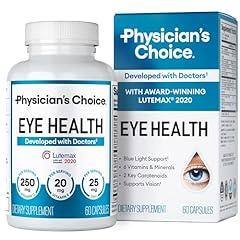
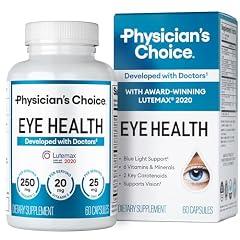
Physician's Choice Areds 2 Eye Vitamins
Overview
This is a 60-capsule, 30-day eye-health supplement taken as two vegetable capsules daily. The label, independently reproduced by a retailer, lists 20 mg lutein and 4 mg zeaxanthin from Lutemax 2020, plus 250 mg vitamin C, 20 mg vitamin E, 25 mg zinc, 2 mg copper, folate, vitamin B12, bilberry, grape-seed extract, and black-pepper extract. Its carotenoid doses are higher than the 10 mg lutein and 2 mg zeaxanthin used in the studied AREDS2 formula, but it is not an AREDS2 match. It supplies substantially less vitamin C, vitamin E, and zinc than AREDS2, and adds botanicals not studied in that trial. Human research supports lutein and zeaxanthin for macular pigment and some visual measures, while evidence for this exact finished formula and for dry-eye relief remains unconfirmed.
What works
- The full daily amounts and ingredient forms are disclosed, without a proprietary blend.
- It provides 20 mg lutein and 4 mg zeaxanthin daily, doses within the range used in some human carotenoid studies.
- It contains no beta-carotene, avoiding the beta-carotene issue that matters for current and former smokers.
- The manufacturer and an independent retailer describe a vegetable capsule and exclusion of soy, milk, egg, fish, shellfish, gluten, peanuts, and tree nuts.
What does not
- It is not a true AREDS2 formula despite eye-vitamin marketing that can invite that interpretation. Its vitamin C, vitamin E, and zinc doses do not match the clinical-trial formula for AMD.
- No current product-level USP, NSF, Informed Choice, or comparable independent certification record was located.
- No buyer-accessible, lot-specific certificate of analysis was located to confirm potency, identity, heavy metals, or microbial testing for a particular bottle.
- The 25 mg zinc dose is below the adult upper limit of 40 mg per day, but it can add meaningfully to zinc from multivitamins or other supplements. The listing does not provide detailed medication-interaction guidance for black pepper, bilberry, grape seed, or vitamin E.
Who is it for
This product fits an adult who wants a clearly labeled, vegetarian capsule providing lutein and zeaxanthin for general nutritional eye support, especially if they avoid the major allergens listed by the manufacturer. It is a 30-day format for someone able to take two capsules daily and who is not trying to replace an eye examination or prescribed treatment. It may be most relevant to people seeking carotenoid intake for screen-heavy routines or aging-related nutritional support, with expectations limited to ingredient-level evidence.
Who is it not for
It is not appropriate as a substitute for a clinician-selected AREDS2 product for someone with intermediate AMD or late AMD in one eye, because this formula does not reproduce the doses tested by the National Eye Institute. People taking anticoagulants, antiplatelet medicines, chemotherapy, lipid-lowering drugs, or multiple supplements should review the vitamin E, zinc, black pepper, bilberry, and grape-seed ingredients with a pharmacist or clinician. It is also not a treatment for sudden vision change, wet AMD, glaucoma, persistent dry eye, or eye pain.
Integrity
The product uses a vegetable capsule and, according to the manufacturer and a retailer label reproduction, does not contain several commonly relevant food allergens, including fish, shellfish, soy, milk, egg, wheat, peanuts, and tree nuts. The formula also avoids beta-carotene. That is relevant because beta-carotene-containing older AREDS formulas can raise lung-cancer risk in people who smoke or formerly smoked. The manufacturer says the product is made in the United States with imported and domestic ingredients. No product-level independent certification, public lot-specific laboratory report, or environmental sourcing documentation was located. The formula contains no marine oil, so oil oxidation and fishery sourcing are not central issues here. No relevant product recall or FDA warning letter was identified in the checks performed, but absence of a located enforcement record is not the same as independent quality verification.

Astaxanthin 12mg Softgels - 4 Month Supply
Overview
This is a 120-softgel astaxanthin supplement intended for adults, with one softgel daily with food. The manufacturer states that each softgel supplies 12 mg of astaxanthin from Haematococcus pluvialis microalgae and uses an oil carrier. An independent retailer label record also lists 12 mg per softgel, 120 servings, MCT oil from coconut, and a gelatin softgel. For eye use, this is a standalone antioxidant carotenoid, not an AREDS2 formula. It lacks the studied AREDS2 combination of vitamin C, vitamin E, zinc, copper, lutein, and zeaxanthin. Small human studies of astaxanthin or mixed formulas provide limited, product-independent signals for visual performance or dry-eye outcomes, but they do not establish this exact product as an AMD treatment or a replacement for clinician-directed eye care. A public 2023 assay of a 90-softgel lot found 15 mg astaxanthin against a 12 mg label claim and passed identity testing, but it was not the current 120-softgel lot.
What works
- The active is plainly quantified, 12 mg of astaxanthin from microalgae per softgel, rather than hidden in a proprietary blend.
- One independent public assay found a Micro Ingredients lot contained 15 mg astaxanthin and passed identity testing, which supports potency for that tested lot.
- The one-softgel daily direction and 120-count format make the stated four-month supply straightforward to use.
- The formula does not contain beta-carotene, so it does not add the smoker-specific beta-carotene concern associated with the older AREDS formula.
What does not
- It is not an AREDS2 product. It does not contain the evidence-matched nutrient combination used to slow progression in people with intermediate AMD or advanced AMD in one eye.
- The 12 mg daily dose is above the 8 mg per day supplemental level that EFSA evaluated as safe for adults alongside dietary exposure, even though human studies have used 12 mg or more without a clear serious-safety signal.
- No current lot-specific certificate of analysis was publicly available for the 120-softgel product, including contaminant, microbial, and oil-oxidation results.
- Ingredient disclosures are not fully consistent across retail records. The independently recorded label lists coconut-derived MCT oil and gelatin, while another retailer record lists sunflower oil and shellfish, so purchasers should verify the physical package before use.
- The softgel contains gelatin and coconut-derived MCT oil, so it is not vegan and may not suit people avoiding those ingredients.
Who is it for
This product suits an adult who specifically wants a simple, higher-dose astaxanthin supplement rather than an AMD formula, prefers one softgel daily, and can use gelatin and coconut-derived MCT oil. It may be reasonable for someone seeking a general antioxidant carotenoid with limited, early human evidence related to visual function or dry-eye symptoms, provided they understand that those findings are not proof for this finished product. It is most appropriate when eye symptoms and eye-disease risk have already been assessed by an eye-care professional.
Who is it not for
It is not for a person who has been advised to use AREDS2 for intermediate AMD or advanced AMD in one eye. That use calls for the studied AREDS2 nutrient combination, which this product does not provide. It is also unsuitable for vegans and may be unsuitable for people with coconut sensitivity or anyone who cannot use gelatin. Children and adolescents should not use this adult 12 mg dose without clinician advice. People who are pregnant, breastfeeding, taking medicines, or managing chronic eye disease should review it with a clinician first.
Integrity
The ingredient is manufacturer-stated as natural astaxanthin from Haematococcus pluvialis microalgae. A public independent assay from 2023 supports the identity and potency of one Micro Ingredients lot, although it tested a 90-softgel package rather than this 120-softgel unit. The manufacturer also states that its products are third-party tested and made in a cGMP facility, but no current product-level USP, NSF, Informed Sport, or equivalent certification record was identified. The oil-containing softgel has no publicly available current lot report for heavy metals, pesticides, microbes, peroxide value, anisidine value, or total oxidation. Coconut-derived MCT oil and gelatin are relevant dietary details. No product-specific FDA recall or warning letter was identified in the searched FDA sources. No independently traceable marine, organic, recycled-content, recyclability, or lower-impact packaging certification was found for this product, so its environmental sourcing and packaging claims remain unverified.

Micro Ingredients Lutein & Zeaxanthin Softgels
Overview
This is a 240-softgel eye-health supplement intended for adults to take as two softgels daily, providing 120 servings. The manufacturer states that each daily serving supplies 40 mg lutein from marigold extract, 1.6 mg zeaxanthin, 20 mcg astaxanthin, 12.5 mg total omega-3 fatty acids, and 10 mg phospholipids in a sunflower oil base. It is not an AREDS2 formula. It lacks the vitamin C, vitamin E, zinc, and copper that are part of the studied AREDS2 regimen, and its 1.6 mg zeaxanthin dose is below AREDS2's 2 mg. The manufacturer claims third-party laboratory testing, but no current product-level USP, NSF, Informed Sport, or comparable finished-product certification record was located. A retail label record identifies Antarctic krill oil and gelatin softgels, despite the catalog's vegan specification.
What works
- The daily serving lists each carotenoid and lipid component separately, rather than using a proprietary blend.
- The product provides 120 daily servings per 240-softgel package when used as directed.
- Its listed lutein and zeaxanthin are sourced from marigold flower extract.
- The formula does not list beta-carotene, which avoids the beta-carotene issue relevant to current and former smokers.
What does not
- This is not a complete AREDS2 formula and should not be represented as the studied supplement regimen for intermediate AMD.
- The zeaxanthin amount is 1.6 mg, below the 2 mg used in AREDS2, while lutein is four times the AREDS2 amount.
- The manufacturer states that ingredients pass third-party tests, but a lot-specific certificate of analysis and recognized finished-product certification were not available for review.
- A California Proposition 65 warning for lead is listed for this product, but no lot-specific lead result or exposure calculation was available.
- The catalog calls the product vegan, while the retail ingredient record lists shellfish-derived krill oil and gelatin.
Who is it for
This product is most suited to an informed adult who wants a long-duration, non-AREDS carotenoid supplement with a plainly listed 40 mg lutein serving and who can safely consume krill and gelatin. It may fit someone seeking a general dietary source of lutein and zeaxanthin rather than treatment for an eye condition. The buyer should understand that the omega-3 amount is very small, that the formula is not clinically equivalent to AREDS2, and that the available testing claim is manufacturer-stated rather than independently certified for the finished product.
Who is it not for
It is not suited to people with shellfish allergy, vegetarians or vegans, because the listed formula contains Antarctic krill oil and gelatin. People with intermediate AMD, or late AMD in one eye, should not substitute it for a clinician-recommended formula that exactly matches AREDS2. Pregnant or breastfeeding people, anyone taking medication, and especially people using anticoagulant or antiplatelet treatment should consult a clinician first, as the label directs. Buyers who need lot-specific contaminant and oxidation results should choose a product that makes those records available.
Integrity
The labeled formula uses marigold-derived lutein and zeaxanthin, with sunflower seed oil as the base. A retail label record also lists Antarctic krill oil, gelatin, glycerin, and purified water. That makes the product unsuitable for shellfish-allergic, vegan, and vegetarian users, despite the conflicting vegan catalog specification. The label advises people who are pregnant, breastfeeding, or taking medication to consult a physician. The manufacturer says its ingredients pass third-party laboratory testing for safety, purity, and potency. That statement is not matched by a public, lot-specific analytical report showing identity, potency, heavy metals, microbes, or oil oxidation. The product carries a California Proposition 65 warning for lead exposure, but the available materials do not provide a batch result or exposure estimate. No independent marine-sourcing certification, such as MSC or Friend of the Sea, and no packaging recycled-content or recyclability documentation was located.

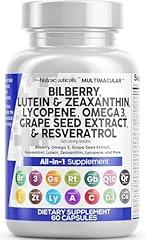
Clean Nutraceuticals Eye Health Vitamins with Bilberry Lutein Zeaxanthin
Overview
This is a 60-capsule eye-health supplement intended for adults, with a two-capsule daily routine and about 30 days of use. A retailer-posted ingredient panel identifies vitamin A as retinyl palmitate, vitamins C, D3, E, B12, zinc and copper, plus bilberry, flaxseed, grape-seed, resveratrol, ginkgo, quercetin, NAC, lycopene, lutein, zeaxanthin, astaxanthin, CoQ10, and black pepper extracts. The formula is not an AREDS2 formula. Its listed 5% lutein and zeaxanthin extracts provide substantially less carotenoid than the 10 mg lutein and 2 mg zeaxanthin studied in AREDS2, and its vitamin C, vitamin E, zinc, and copper amounts also differ. The manufacturer states that every batch is third-party tested, but no product-level certificate or recognized finished-product certification was located. NSF also states that Clean Nutraceuticals does not hold NSF GMP certification and was not authorized to distribute an NSF GMP certificate.
What works
- The ingredient panel names the active vitamins, botanicals, extract ratios, and listed quantities rather than using one proprietary blend.
- It uses retinyl palmitate rather than beta-carotene, avoiding the beta-carotene concern that applies to current and former smokers in AREDS guidance.
- A 60-capsule bottle supports a simple two-capsule daily routine for roughly 30 days.
- The formula contains flaxseed extract rather than fish oil, which may suit people avoiding marine ingredients, although capsule and allergen details should still be checked on the delivered bottle.
What does not
- It is not dose-matched to AREDS2, the clinically studied formulation for people with intermediate AMD or advanced AMD in one eye.
- The listed lutein and zeaxanthin are extracts standardized to 5%, so their active carotenoid amounts are far below the extract weights used in the marketing language.
- The vitamin A dose is 10,000 IU of preformed retinyl palmitate, approximately the adult upper intake level before food or other supplements are counted.
- Ginkgo and black pepper extract raise foreseeable medication-interaction questions, but clear, product-specific interaction and surgery warnings were not established from the reviewed listing evidence.
- The manufacturer’s GMP certification claim conflicts with an NSF public notice stating that the company does not have NSF GMP certification. Public, lot-matched testing evidence for this product was not available.
Who is it for
This product is most suited to an adult who wants a short, two-capsule daily supplement with a broad list of named botanical extracts and understands that it is general eye-health support, not an AREDS2 product. It may fit someone who is not pregnant, is not taking anticoagulant or antiplatelet medication, does not use other vitamin A supplements, and can review the delivered label carefully. The 60-capsule format is a roughly one-month supply at the stated two-capsule routine.
Who is it not for
It is not a suitable substitute for an eye clinician’s AREDS2 recommendation for intermediate AMD or advanced AMD in one eye, because the formula does not match the studied doses. People who are pregnant, could become pregnant, or use retinoid medicines should avoid casually adding its preformed vitamin A dose. People taking warfarin, antiplatelet drugs, or other medicines, and those planning surgery or dental procedures, should seek clinician or pharmacist advice because the formula includes ginkgo and black pepper extract. Children should use an age-appropriate product only with clinical guidance.
Integrity
The central health issue is formula fit. AREDS2 benefit is specific to people with intermediate AMD or advanced AMD in one eye and depends on exact high-dose nutrients. This product has a broad botanical profile, but its listed lutein and zeaxanthin extracts are not dose-matched to AREDS2. It also supplies preformed vitamin A at about the adult upper limit, leaving little room for vitamin A from other supplements or diet. Ginkgo may increase bleeding risk with anticoagulants. The manufacturer says its batches are independently tested and made in a GMP-certified facility, but a current NSF public notice says Clean Nutraceuticals does not have NSF GMP certification and was not authorized to claim or distribute an NSF GMP certificate. No public, lot-specific report for this product was found to confirm potency, heavy metals, microbes, or pesticide controls. No credible product-specific sourcing, organic certification, recycled-content, or recycling documentation was identified, so environmental and packaging impacts remain unclear.

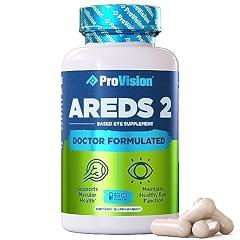
ProVision AREDS 2 Eye Vitamins Lutein Zeaxanthin Complex
Overview
ProVision AREDS 2 is a 60-capsule eye supplement intended to be taken as two capsules daily, giving a 30-day supply. The current manufacturer Supplement Facts image lists vitamin C 500 mg, vitamin E 268 mg as d-alpha-tocopheryl succinate, zinc 40 mg as zinc oxide, copper 1 mg as copper oxide, lutein 10 mg, and zeaxanthin 2 mg. Lutein and zeaxanthin are identified as coming from marigold flower extract. This is an AREDS2-based formula, not a dose-for-dose match to the National Eye Institute formula. It matches the studied vitamin C, vitamin E, lutein, and zeaxanthin amounts, while supplying 40 mg zinc and 1 mg copper instead of 80 mg zinc and 2 mg copper. Human trial evidence supports AREDS-style supplementation for people with intermediate AMD or advanced AMD in one eye, not for broadly improving vision in healthy adults.
What works
- The labeled lutein 10 mg and zeaxanthin 2 mg match the National Eye Institute AREDS2 amounts.
- The labeled vitamin C and vitamin E amounts align with the established AREDS2 daily formula when vitamin E is expressed as 400 IU.
- The listed active nutrients are individually named with doses and chemical forms, without a proprietary active blend.
- The manufacturer identifies a two-capsule daily serving and a practical 30-day bottle size.
What does not
- It does not exactly match the National Eye Institute AREDS2 mineral doses, providing 40 mg zinc and 1 mg copper rather than 80 mg zinc and 2 mg copper.
- The manufacturer makes broad vision-support language, but AREDS evidence is limited to slowing progression in specific higher-risk AMD groups and does not establish general vision enhancement.
- No current product-level USP, NSF product certification, ConsumerLab result, or publicly available lot-specific certificate of analysis was located.
- The manufacturer product page calls the capsules vegetarian, while another manufacturer quality page describes gelatin capsules. This leaves capsule composition and dietary suitability unclear.
Who is it for
This product is most suited to an adult who has been told by an ophthalmologist or retina specialist that an AREDS-style supplement is appropriate for intermediate AMD, or for advanced AMD in one eye. Its 60-capsule bottle is structured for a one-month routine at two capsules daily. It may also fit someone seeking the study-matched lutein and zeaxanthin amounts but using a lower zinc amount than the original 80 mg AREDS2 formula. Medication and total supplement use still need review with a clinician.
Who is it not for
It is not intended for people with no AMD, early AMD, dry eye, digital eye strain, glaucoma, cataracts, or a general desire to sharpen vision, because the pivotal AREDS evidence does not establish benefit for those uses. People taking anticoagulant or antiplatelet medicines, certain antibiotics, penicillamine, or multiple zinc-containing supplements should seek clinical advice first. It is also a poor fit for strict vegetarians, vegans, or people with allergen concerns until the capsule material and full inactive-ingredient statement are confirmed from the bottle.
Integrity
The health case is formula-specific. The manufacturer label provides clear daily amounts and identifies zinc oxide, copper oxide, d-alpha-tocopheryl succinate, and marigold-derived lutein and zeaxanthin. The absence of beta-carotene from the listed active formula is consistent with modern AREDS2 practice, which matters particularly for current and former smokers. However, 40 mg zinc reaches the general adult upper intake level from supplements and foods combined. Vitamin E can also increase bleeding risk with anticoagulant or antiplatelet medicines. The manufacturer states that its supplements are independently tested and made in GMP-certified facilities, but no current finished-product certification or lot-matched report was publicly located. No relevant FDA recall or warning letter for this product or named manufacturer was located in the checked public sources. No substantiated environmental sourcing, recycled-content, recyclability, organic sourcing, or reduced-packaging evidence was found. The bottle is a conventional plastic supplement container, with no verified end-of-life guidance identified.

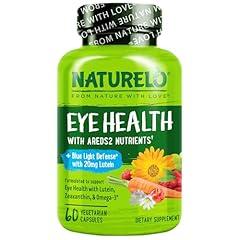
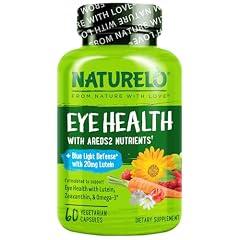
NATURELO Eye Vitamins AREDS 2 Formula
Overview
This is a 60-capsule vegan eye supplement intended for adults, with a labeled daily serving of two capsules taken with food. That provides 30 days of use. Independent retailer copies of the current label list 500 mg vitamin C, 160 mg vitamin E, 30 mg zinc, 2 mg copper, 20 mg lutein, 4 mg zeaxanthin isomers, and 25 mg algae-derived DHA per daily serving. Its defining limitation is that it is marketed as an AREDS 2 formula but does not reproduce the studied daily formula. The National Eye Institute formula uses 80 mg zinc, 10 mg lutein, 2 mg zeaxanthin, and 400 IU vitamin E, with no beta-carotene. This label lists lower zinc and vitamin E, doubled lutein and zeaxanthin, plus carrot powder described in marketing as a beta-carotene source. Evidence for the product's dry-eye and screen-fatigue claims is not established at its 25 mg DHA dose.
What works
- The label gives amounts and sources for the principal vitamins, minerals, carotenoids, and algae-derived DHA, without a proprietary blend.
- The two-capsule daily serving includes the six nutrient categories used in AREDS2 research, although not at the studied formula doses.
- The current label identifies a hypromellose vegetarian capsule and states no fish, shellfish, dairy, egg, soy, gluten, peanuts, tree nuts, or preservatives.
- NATURELO has a current NSF dietary-supplement listing for certain other finished products and identifies a U.S. facility, which supports some company-level traceability, not verification of this product.
What does not
- The AREDS 2 name overstates formula fidelity. Its zinc and vitamin E doses differ from the studied formula, and marketing identifies carrot powder as a beta-carotene source despite AREDS2's beta-carotene-free design.
- NEI evidence applies to people with intermediate AMD or late AMD in one eye, not routine vision maintenance, digital eye strain, or general dry-eye relief.
- The product has only 25 mg DHA per daily serving. Cochrane finds uncertain and inconsistent evidence for omega-3 supplements in dry eye, and this product was not located in finished-product clinical trials.
- No current product-level USP, NSF, Informed Choice, ConsumerLab, or publicly available lot-specific certificate of analysis was found. The manufacturer's third-party-testing statement cannot substitute for a report tied to a bottle lot.
- The warning is generic. It does not specifically flag vitamin E bleeding interactions, zinc interactions with some antibiotics, or the beta-carotene concern for current and former smokers.
Who is it for
This product may suit an adult who specifically wants a vegan, fish-free capsule with fully listed carotenoids, vitamins C and E, zinc, copper, and a small amount of algae-derived DHA. It is a 30-day supply at the labeled two-capsule daily use, so it also fits someone comfortable splitting capsules between meals. Its use is most defensible as a general nutrition supplement after a clinician or pharmacist checks total zinc, vitamin E, medicines, and eye diagnosis. It is not a substitute for an ophthalmology-based AMD plan.
Who is it not for
It is not well suited to current or former smokers seeking a true beta-carotene-free AREDS2 formula, because product marketing describes its carrot powder as a beta-carotene source and does not quantify that exposure. It is also a poor fit for someone self-treating persistent dry eye, eye pain, vision loss, glaucoma, diabetic eye disease, or macular degeneration without an eye clinician. People taking warfarin, antiplatelet drugs, certain antibiotics, penicillamine, cancer medicines, or lipid-lowering medicines should seek individualized advice before using this high-vitamin-E and zinc-containing supplement.
Integrity
The daily label is relatively transparent. It identifies 20 mg lutein and 4 mg zeaxanthin from marigold, 25 mg DHA from algae oil, 30 mg zinc oxide, and 2 mg copper oxide. The vegetable capsule is hypromellose, and the label states it contains no fish, shellfish, milk, eggs, soy, gluten, peanuts, tree nuts, or preservatives. Those are label statements, rather than a vegan or allergen certification located in an independent register. NATURELO is listed by NSF for dietary-supplement certification of several other products at a named Commack, New York facility, but Eye Health itself is not among the current NSF-listed products. No product-specific independent certification, lot-matched laboratory report, marine-sourcing certification, recycled-content documentation, or packaging recyclability evidence was located. A California Proposition 65 sixty-day notice involving the company was found from 2021, but no product-specific FDA recall or warning letter for this eye supplement was located in the searches performed.

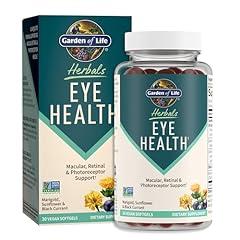
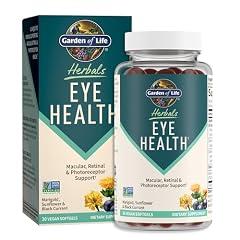
Garden of Life Eye Health Supplement
Overview
This is a 30-count, once-daily vegan softgel supplement for adults. The label lists 20 mg lutein and 4 mg zeaxanthin from marigold extract, 140 mg sea buckthorn fruit oil providing 100 mg omega-7, 200 mg sunflower and safflower lipid blend, 15 mg combined black currant and bilberry extracts, and Bacillus subtilis DE111. Independent retailer copies of the Supplement Facts match the manufacturer’s ingredient amounts. It is not an AREDS2 formula. Although its lutein and zeaxanthin amounts exceed the AREDS2 carotenoid amounts, it lacks the studied vitamin C, vitamin E, zinc, and copper components. The manufacturer markets it for dry eyes, blue-light protection, light sensitivity, and night vision, but no human trial of this finished formula was located. A California Proposition 65 lead warning appears on a US retailer listing.
What works
- The label gives explicit daily amounts for lutein, zeaxanthin, sea buckthorn oil, lipid blend, probiotic, and combined berry extracts.
- A once-daily softgel supplies 20 mg lutein and 4 mg zeaxanthin, quantities also used in some human dry-eye studies of different multi-ingredient formulas.
- The vegan softgel does not use gelatin. The manufacturer states it is made without dairy or soy ingredients.
- The package identifies a shared facility that also processes egg, milk, soy, wheat, tree nuts, fish, shellfish, and sesame, which is useful cross-contact information.
What does not
- It is not AREDS2 and should not be treated as a substitute for the complete formula studied for intermediate age-related macular degeneration.
- The dry-eye evidence does not dose-match this product’s sea buckthorn oil. The cited oral trial used 2 g daily, while this label provides 140 mg.
- Black currant and bilberry share a 15 mg total with no stated ratio or extract standardization, limiting ingredient-specific assessment.
- No public, lot-matched certificate of analysis or current independent finished-product potency and contaminant certification was located.
- A California Proposition 65 warning for lead appears with a US retailer’s product information. The warning does not provide a lot-specific lead result or exposure amount.
Who is it for
This product fits an adult seeking a simple, plant-based lutein and zeaxanthin supplement rather than a high-dose vitamin and mineral eye formula. It may suit someone who wants labeled carotenoid doses in one daily softgel, avoids gelatin, and values the manufacturer’s dairy-free and soy-free ingredient statement. It is better framed as general nutritional support than as treatment for diagnosed dry-eye disease, night-vision impairment, or retinal disease. People using it for symptoms should keep regular eye care and evaluate symptom causes with an eye professional.
Who is it not for
It is not designed for people whose ophthalmologist has recommended the complete AREDS2 formula for intermediate age-related macular degeneration or late disease in one eye. It also is not an appropriate stand-alone response to sudden vision changes, eye pain, marked redness, persistent dry-eye symptoms, or reduced night vision. People with serious food allergies should consider the stated shared-facility exposure. Those who are pregnant, nursing, take medicines, or have a medical condition should follow the label’s direction to consult a clinician before use.
Integrity
The formula avoids fish oil and gelatin, using a vegan tapioca-based softgel and plant oils. The manufacturer represents the product as Non-GMO Project Verified, NSF Certified Gluten-Free, and Certified Vegan. However, a search of NSF’s public dietary-supplement finished-product listing did not identify this particular eye supplement as NSF/ANSI 173 certified for contents and contaminants. No public lot-specific certificate of analysis was located for its potency, heavy metals, microbes, pesticides, or oil oxidation. The most important safety signal is a California Proposition 65 lead warning displayed by a US retailer. That warning establishes a potential lead-exposure concern, but it does not quantify exposure or identify the affected lot. The label identifies botanical sources but does not provide extract standardization, farm or country sourcing, organic status, recycled-content data, or a practical package recycling specification. Public environmental sourcing evidence for these ingredients was not located.