
10 Best Bosu Ball
 Brianna York
Please note that we participate in affiliate marketing programs. When you purchase through links on our site, we may earn a commission. As an Amazon Associate we earn from qualifying purchases. This comes at no additional cost to you and helps support the resources required to provide valuable content.Advertising Disclosure
Top-rated Bosu Ball Comparison
1

2
4
5
6
7
8
9
Overview
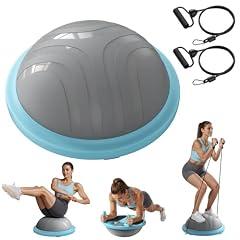
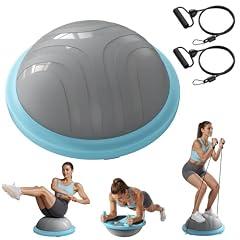
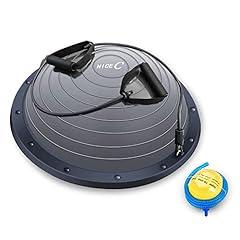
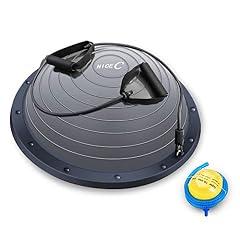
A BOSU-style balance trainer is an inflatable half-dome fixed to a rigid platform. Used dome-side up, it creates an unstable surface for controlled balance drills, squats, lunges, planks, push-ups, mobility work, and other bodyweight exercises. Some models can be turned over for platform-side exercises or include resistance bands. The instability is the point, but it also introduces a fall and equipment-failure risk that a normal mat or stable platform does not.
Whether one works well depends less on a headline capacity number than on controlled setup and predictable behavior. Look for clear inflation guidance expressed as a target height or pressure, a maximum inflation limit, inspection instructions, and warnings about punctures, damaged parts, storage, heat, wet floors, and unsuitable surfaces. A useful manual should explain how to begin with supported or beginner movements, how to progress, when to stop, and which exercises or orientations carry greater fall risk.
Load claims deserve particular caution. Several supplied products publish conflicting limits, including differences between marketplace records, product pages, and manuals. A stated 660, 880, 1,500, or 1,600 pound capacity is not the same as independently demonstrated safe capacity. A substantiated limit should be matched to the exact model, size, and production version in a product-specific structural, endurance, stability, and retention report. The relevant benchmark is ISO 20957-1:2024, with testing traceable to an ISO/IEC 17025-accredited laboratory whose scope and certificate issuer can be checked through directories such as A2LA or ANAB.
The same distinction applies to anti-slip, anti-burst, leak-resistant, non-toxic, chemical-free, commercial-grade, rehabilitation, and medical-sounding claims. Buyers should look for defined test methods, loads, surfaces, failure criteria, and model-specific records rather than seller language alone. For chemical claims, useful evidence would identify the PVC, rubber or TPE, platform plastics, pigments, and accessories and report relevant testing for phthalates, lead, cadmium, PAHs, and VOCs. Claimed OEKO-TEX, GREENGUARD, UL SPOT, or similar certifications should have a checkable certificate number in the relevant directory.
Also check the platform, dome-to-base retention, feet, handles, valve, plug, and any band anchors as a system. Resistance bands add another possible recoil or detachment hazard, so a product should state exercise and anchor limits and provide supporting tests. Traceable model information, a responsible manufacturer, U.S. contact details, warranty terms, lot or date-code instructions, and a recall path make corrective action more practical. Replacement plugs, feet, valves, pumps, bands, or domes can extend service life, while vague support and short warranties leave more of the risk with the buyer.
Across the supplied reviews, these trainers are not appropriate for unsupervised children, explosive jumping, heavy external loading, or advanced band work without verified limits. People with frequent falls, substantial balance impairment, dizziness, acute lower-limb or back injuries, recent surgery, high fall risk, or rehabilitation needs should obtain individualized clinical guidance. Pregnancy-related limitations and medical conditions also warrant clinician approval. Use a clear, dry, level, non-slip surface, begin gradually, inspect before every session, and do not treat a general product claim as medical advice. No single product in the supplied data had complete independent evidence for load, traction, burst resistance, chemical safety, and band-anchor performance.
Integrity
These products can support controlled balance and conditioning practice, but the supplied reviews show a recurring gap between practical instructions and independent proof. The scores below reflect the reviewed evidence, not a guarantee of safety or performance.
EEvidence
Independent safety testing
This measures current, product-specific safety evidence from an independent accredited laboratory, matched to the exact model, size, and production version. A high score requires a traceable report or certificate, not a seller-issued ISO or safety statement. Scores ranged from 68 to 72, but the reviews did not locate a complete accredited-lab report for any product covering the relevant dome, platform, stability, traction, burst, or anchor risks.
Honest performance and health claims
This measures whether capacity, anti-slip, anti-burst, commercial-grade, rehabilitation, core, posture, pain-relief, and fitness claims are specific and supported. Scores ranged from 50 to 69. Higher scores generally meant fewer or narrower unsupported promises; lower scores were associated with broad medical or performance language and contradictory specifications. A research-supported balance benefit does not substantiate every claim made for a particular trainer.
Recall readiness and accountable seller
This measures whether buyers can identify the manufacturer, model, lot or date code, warranty contact, and corrective-action route, without an unresolved recall or incident pattern. Scores ranged from 70 to 78. Products with named support, serial registration, warranty terms, or recall information scored better. A product-specific recall was not located in the supplied reviews, but absence of a located recall is not proof that the product is risk-free.
HHealth & Safety
Real load and breakage safety
This measures whether the dome, platform, handles, and anchors have credible structural, fatigue, retention, and safe-failure testing behind the stated limit. It matters because standing and pulling on an unstable trainer can turn breakage into a fall. Among these products, scores ranged from 48 to 70: higher scores generally reflected clearer or less contradictory documentation, but no product had a located independent structural report.
Slip, tip, and band-anchor safety
This covers resistance to sliding, tipping, rolling, and resistance-band detachment during advertised exercises. Textured domes, rubber feet, and non-skid bases are useful design details, but they do not prove performance across surfaces or exercises. Scores ranged from 68 to 76. Higher-scoring products had more concrete surface or setup guidance; none had fully traceable traction and anchor-load testing.
Inflation and burst protection
This measures the valve, plug, pump, inflation limits, inspection routine, storage guidance, and retirement instructions that reduce sudden deflation or burst-and-fall risk. Scores ranged from 70 to 78. The stronger products supplied measurable height limits and inspection directions, while weaker documentation lacked pressure or target-height guidance. Manufacturer anti-burst language remained unverified where no test record was found.
Material and chemical transparency
This measures disclosure and testing for materials such as PVC, rubber or TPE, platform plastics, pigments, and accessories. It matters because a material name or “non-toxic” statement does not show whether relevant substances or emissions were tested. Scores ranged from 52 to 70. Higher scores reflected clearer material descriptions, but the reviews generally found no product-specific testing for phthalates, lead, cadmium, PAHs, or VOCs.
Safe, evidence-aligned exercise use
This measures whether instructions support gradual balance and conditioning practice while warning about falls, injury, pregnancy, rehabilitation, and unsuitable users. Scores ranged from 58 to 80. Higher-scoring products had clearer beginner progression, surface requirements, inspection steps, or medical cautions. Research supports balance-related outcomes in appropriate programs, but it does not validate broad pain-relief, rehabilitation, or medical claims for a particular trainer.
EEcology
Durability and repairability
This measures whether the trainer can remain serviceable through durable construction, replacement parts, warranty support, care instructions, and clear retirement criteria. It matters because a worn plug, foot, valve, band, or dome should not automatically make the whole product disposable. Scores ranged from 62 to 76. Better-supported products listed replacement plugs or feet and supplied repair or inspection guidance; most lacked documented replacement domes, valves, or anchors.
Materials and end-of-life impact
This measures material sourcing, recycled content, packaging, recyclability, take-back options, disposal guidance, and substantiated environmental claims. Mixed PVC, plastic, rubber or TPE, metal, and band assemblies are difficult to manage at end of life. Scores ranged from 68 to 70, reflecting modest material disclosure rather than strong environmental evidence. The supplied reviews found no verified recycled-content claim, take-back program, or practical disposal plan.
Full reviews

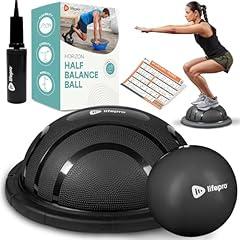
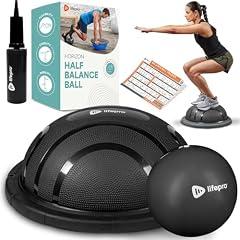
LifePro Horizon Balance Ball Trainer
Overview
This product is a 23.6-inch half balance trainer, with an air-filled PVC dome mounted in a PP and TPE base. It is intended for indoor, in-home exercises such as standing balance work, squats, planks, push-ups, and stretching. The manufacturer lists a 440-pound maximum load, a 14.3-pound unit weight, recessed handles, a pump, spare plugs, a plug-removal tool, tape measure, and a separate 10-inch Pilates ball. Its documentation provides a concrete inflation target, 7.75 to 8 inches of base clearance, with an 8.5-inch maximum, plus inspection, cleaning, and storage directions. Those are useful controls for an inflatable trainer. However, no product-specific independent laboratory report, ISO 20957 certificate, chemical test report, or traction and fatigue test record was located. The current product page says two-year warranty, while the supplied manual describes a lifetime warranty after timely registration.
What works
- The manufacturer discloses the primary materials, PVC for the dome and PP plus TPE for the base.
- The manual gives a measurable inflation method and warns against overinflation, punctures, damaged parts, and unsuitable storage.
- The manual specifies indoor, in-home use, non-slip athletic shoes, pre-use inspection, and clearance around the user.
- Balance and instability training have evidence for improving balance-related outcomes, although this does not validate this exact trainer.
- Spare plugs and inflation tools are included, which can help address ordinary valve-service needs.
What does not
- The 440-pound load rating is manufacturer-stated. No independent structural, endurance, stability, or safe-failure test report was found for this product.
- No independent certification or accredited-laboratory safety evidence was located for the dome, base, valve, or traction performance.
- Material names are disclosed, but there is no product-specific disclosure of phthalates, lead, cadmium, PAHs, VOCs, recycled content, or third-party chemical testing.
- The current two-year warranty statement conflicts with the manual's lifetime-warranty language, making service coverage unclear until confirmed with the seller.
- Some promotional claims, including reduced back pain and rehabilitation-oriented use, exceed the product-specific evidence located. The manual also says it is not a medical device or for therapeutic settings.
Who is it for
This suits an adult home exerciser who wants an unstable surface for controlled bodyweight balance work, planks, modified push-ups, squats, and mobility drills. It is especially relevant for users who can begin with simple, supported movements, have a clear indoor area, and will follow the stated inflation height and pre-use inspection routine. The manufacturer-stated 440-pound limit may suit many adult users, but it should not be treated as independently verified structural capacity. It is best used with athletic shoes on a stable indoor floor.
Who is it not for
It is not appropriate for children, group or commercial settings, outdoor use, or anyone needing medically supervised rehabilitation. People with current dizziness, significant balance impairment, recent surgery, pregnancy-related exercise restrictions, acute lower-limb injury, or a high fall risk should seek individualized clinical guidance rather than rely on general product exercises. It is also unsuitable for users who need independently certified load, anti-slip, burst, or chemical-safety documentation. Avoid high-speed jumping, advanced single-leg drills, or heavy external loading unless a qualified professional has assessed the exercise and setup.
Integrity
The strongest health controls are practical rather than independently verified. Lifepro specifies a PVC dome and PP plus TPE base, provides a target inflation height, says not to exceed 8.5 inches, includes spare plugs, and instructs users to inspect the trainer before use. The manual also limits it to indoor, in-home use and says it is not a medical device. Evidence supports balance-oriented unstable-surface training in appropriate programs, but that evidence does not establish pain relief, medical rehabilitation, or safety for every user. No product-specific chemical test results, Proposition 65 warning information, recycled-content evidence, take-back program, or end-of-life recycling plan was located. The mixed PVC, PP, and TPE construction also makes simple curbside recycling unlikely. The CPSC record located for Lifepro concerns infrared sauna blankets recalled on October 23, 2025, not this balance trainer. No recall for this specific trainer was located in the searched CPSC material.

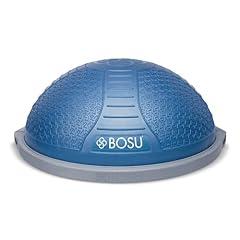
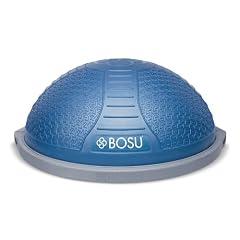
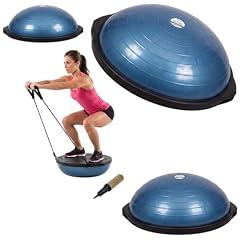
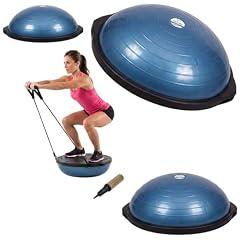
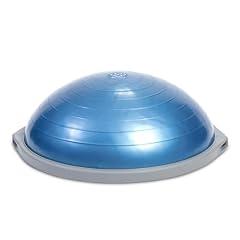
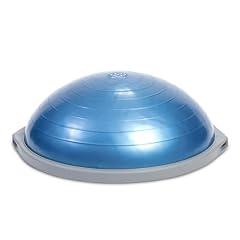
BOSU NexGen Pro Balance Trainer 25IN
Overview
This is a 65 cm inflatable balance trainer with a rigid platform, textured blue dome, recessed carry handles, hand pump, and plug. It can be used dome-side or platform-side up for bodyweight balance, mobility, core, and conditioning drills. The manufacturer lists a 350 lb maximum load, a 1-year limited warranty, and a non-skid, over-molded base for professional and commercial settings. Its official owner’s manual gives unusually specific setup and fall-prevention instructions, including a level non-slip surface, clearance space, gradual progression, wiping sweat from the dome, and inflation to about 8.5 inches, never over 10 inches. The same manual’s equipment label states a 300 lb maximum user weight, which conflicts with the current 350 lb product-page specification. The manual also labels the equipment ISO 20957-1 Class 1, but no model-specific accredited-laboratory report was located.
What works
- The official manual provides concrete inflation, inspection, cleaning, storage, and fall-risk instructions.
- Textured quadrants are manufacturer-described aids for repeatable hand and foot placement and grip.
- The manufacturer sells replacement plugs and plug pullers, addressing common small-part wear.
- A named U.S. manufacturer contact, owner’s manual, warning labels, and 1-year limited warranty provide a defined support path.
What does not
- The documented maximum load is contradictory, 300 lb on the owner’s-manual label and 350 lb on the current product page.
- No traceable, model-specific report from an accredited independent laboratory was located for structural, fatigue, traction, burst, or valve testing.
- Latex-free status is stated, but model-specific chemical testing for PVC or vinyl constituents, pigments, metals, phthalates, PAHs, and VOCs was not located.
- The manufacturer’s broad balance, strength, flexibility, and movement claims exceed what product-specific human research establishes.
Who is it for
This product fits an adult exerciser or supervised fitness professional who wants a full-size unstable surface for controlled bodyweight drills, mobility work, planks, squats, and progressive balance practice. It is most appropriate where there is a clear, level exercise area and the user will follow the manual’s height, inspection, and gradual-progression instructions. The textured quadrants can be useful when a coach or user wants repeatable hand and foot positions during familiar movements.
Who is it not for
It is not suitable for unsupervised children, or for someone who cannot safely step off an unstable surface in any direction. People with a recent fall, acute ankle or knee injury, significant balance impairment, dizziness, neurological conditions, or a rehabilitation plan should use it only with clinician or qualified trainer direction. Avoid advanced platform-side standing, fast jumping, heavy external loads, wet-dome exercise, uneven floors, and use near furniture, walls, or other hard obstacles.
Integrity
Unstable-surface training can improve balance outcomes in some settings, especially when it is progressive and supervised, but it is not a substitute for stable-surface strength work or individualized rehabilitation. The manual appropriately identifies fall risk, recommends starting slowly, warns against platform-side standing as an advanced activity, and calls for a dry dome, adequate clearance, a level non-slip surface, and pre-use inspection. The product is manufacturer-described as latex-free and made in the USA, while the available documentation identifies a vinyl or PVC-type inflatable dome and plastic platform without a full material disclosure. No product-specific chemical certificate was located. A retailer’s page for a BOSU Pro Balance Trainer carries a California Proposition 65 warning, but it does not identify the chemical or establish that the warning applies to this exact NexGen product. BOSU offers replacement plugs, but no take-back, recycling, or material-specific disposal program was located.

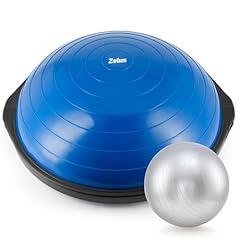
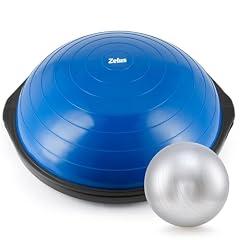
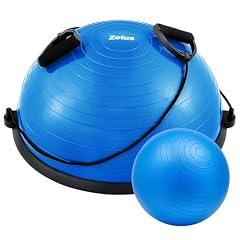
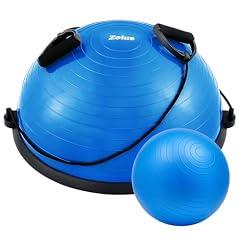
ZELUS Balance Ball Trainer with Bands and Pump
Overview
This is a 25-inch half-dome balance trainer for bodyweight balance, core, yoga, squat, lunge, and upper-body exercises. It combines an inflatable textured PVC dome with a 26-inch ABS platform, TPR anti-skid matting, two resistance bands, a foot pump, air plugs, and a separate 25.6-inch yoga ball. The manufacturer states that it should be used only on a flat, stable surface. The manufacturer states a 660-pound capacity and a 7.9-inch assembled height. Those are not independently verified figures. More importantly, the product record also lists a 1,500-pound maximum-weight recommendation, which conflicts with the 660-pound claim in the product title and manufacturer page. No product-specific accredited laboratory report, ISO safety certificate, or anchor-load test record was located.
What works
- The kit includes resistance bands, a foot pump, air plugs, and a separate yoga ball, according to the manufacturer.
- The manufacturer identifies the dome as PVC and the base as ABS with TPR anti-skid matting, giving buyers more material detail than a generic unspecified construction claim.
- A flat, stable-surface instruction is provided, which is an important basic control for a trainer designed to create instability.
- Unstable-surface training has evidence for improving balance in some healthy adults and athletes when exercises are progressed appropriately.
What does not
- The stated load limit is contradictory. The product is presented as 660-pound capacity, while the product record lists 1,500 pounds.
- No independent, product-specific structural, fatigue, stability, traction, burst, or resistance-band anchor testing was found.
- The manufacturer uses anti-burst, non-toxic, and anti-slip style safety claims, but no model-specific chemical or safety test report was located to substantiate them.
- Instructions found provide a surface warning, but do not provide a clear progressive program, fall-risk screening, inspection schedule, retirement criteria, or replacement-parts pathway for this exact product.
- The brand's direct-sales policy says purchases through third-party platforms, including Amazon, are not eligible for its direct after-sales support.
Who is it for
This format suits a healthy adult who wants a compact home tool for low-to-moderate intensity balance drills, bodyweight squats, lunges, planks, push-ups, and light band work. It is most appropriate for someone with a clear, flat exercise area who can begin with supported positions and progress gradually. The included pump, bands, plugs, and separate yoga ball make it practical for a buyer who values several basic training options in one package, while treating the capacity claim conservatively.
Who is it not for
It is not appropriate for anyone needing a verified high-load or commercial-duty trainer, because the available capacity figures conflict and no independent structural evidence was found. People with recent falls, severe balance impairment, acute joint injury, significant dizziness, or unsupervised rehabilitation needs should not rely on this product as a clinical tool. It is also unsuitable for explosive jumping, heavy external loading, or advanced band exercises where an untested anchor failure could cause a fall or recoil injury.
Integrity
The dome is manufacturer-described as PVC, with an ABS base and TPR anti-skid matting. The company also calls the PVC non-toxic and the dome anti-burst, but verification did not find a product-specific report covering phthalates, lead, cadmium, PAHs, or VOC emissions. Those labels should therefore be read as manufacturer claims, not as independent chemical certification. No product-specific recall or regulatory action was identified in the review, but inflatable exercise balls have previously been recalled in the United States after unexpected bursts and fall injuries linked to overinflation. The product uses mixed PVC, ABS, TPR, metal, and band materials, and no recycled-content, take-back, or end-of-life disposal program was found. Its included plugs may help with minor valve-related service needs, but replacement dome, valve, band, and anchor parts were not documented.

BOSU Balance Ball Trainer 20 Inch
Overview
This is a compact, inflatable half-dome balance trainer with a rigid platform, intended for home balance, strength, flexibility, and cardio exercises. BOSU lists this Sport version at 50 cm in diameter, 7 inches high when properly inflated, about 10 pounds, and limited to a 250 pound maximum load. Those are manufacturer-stated specifications, not independently verified test results. The official product page identifies six rubberized feet, a latex-free, burst-resistant ribbed dome, and a one-year limited home-use warranty. BOSU's published care guidance is more concrete than its safety substantiation, specifying inflation to an 8.5 inch dome height, never above 10 inches, and advising against standing on the platform side. No product-specific accredited-lab certificate, structural test report, or chemical test panel was located in the reviewed public materials.
What works
- The official instructions give a specific inflation target and a maximum height, which can reduce over-inflation risk when followed.
- Six rubberized feet are manufacturer-stated, and the product is designed for dome-side standing rather than the higher-risk platform-side stance.
- Plugs and replacement feet are sold separately, and BOSU publishes instructions for patching punctures and reseating a dome that has pulled from the base.
- The 50 cm format and approximately 10 pound listed weight make it a compact home-use trainer, according to the manufacturer.
What does not
- The 250 pound load limit is manufacturer-stated, with no public product-specific structural, fatigue, retention, or accredited-laboratory report located.
- The burst-resistant claim is not backed by a publicly available burst-test certificate or defined failure margin for this product.
- The dome is identified as vinyl and latex-free, but there is no public model-specific disclosure or independent testing for phthalates, lead, cadmium, PAHs, or VOCs.
- An unstable surface creates a real fall risk. The manufacturer advises against standing on the platform side, but public guidance does not provide a detailed progression protocol for people with poor balance or rehabilitation needs.
Who is it for
This trainer fits an adult home exerciser who wants a compact unstable surface for controlled, low-to-moderate intensity balance work, bodyweight drills, planks, kneeling work, or carefully progressed squats and lunges. It is most appropriate for someone within the manufacturer-stated 250 pound load limit, with enough open floor space and a stable, non-slip surface. It also suits users who value repairable small parts, since replacement plugs and feet are available. Instruction, gradual progression, and dome-side standing matter more here than advanced exercise variety.
Who is it not for
It is not a low-risk choice for anyone with frequent falls, severe balance impairment, acute ankle, knee, hip, or back injury, unexplained dizziness, or a condition requiring supervised rehabilitation. Those users should obtain individualized clearance and use stable equipment or clinician-supervised progressions. It is also not intended for users above the manufacturer-stated 250 pound limit, unsupervised children, or high-impact and advanced platform-side standing drills. Avoid use on slick, uneven, wet, heat-exposed, or sun-exposed surfaces, because inflation and dome-to-base retention are safety-sensitive.
Integrity
Human research supports balance and unstable-surface training as one possible way to improve balance outcomes, although evidence does not establish that this particular trainer is superior to stable-surface exercise or other balance tools. The sensible health case is progressive balance practice, not a promise of rehabilitation, injury prevention, pain relief, or dramatic strength gains. The official guidance usefully sets an 8.5 inch inflation target, a 10 inch maximum, and warns against standing on the platform side. Material transparency is limited. BOSU identifies the dome as vinyl and latex-free, while public product materials do not provide a model-specific chemical test report or recycled-content disclosure. Vinyl and mixed plastic, rubberized-foot components are also difficult to recycle through ordinary curbside systems. On the positive side, replacement plugs and feet, published puncture repair guidance, and instructions for reseating a pulled-out dome can extend service life. No product-specific CPSC recall was located in the reviewed public recall materials.

ZELUS Balance Ball Trainer 23 Inch
Overview
This is a 23-inch half-dome balance trainer for home balance, bodyweight, and resistance-band exercises. It combines an inflatable PVC dome with an ABS base, six slip-resistant feet, two detachable 30-inch bands, a foot pump, and two replacement air plugs. The manufacturer describes a 9.8-inch inflated height and a one-year warranty. The most important product-specific finding is a capacity conflict. The catalog record states a 660-pound maximum recommendation, while ZELUS's own page for this blue 23-inch product says it supports a 331-pound user weight. Neither source provides an independent structural, fatigue, traction, or band-anchor test report. ZELUS also makes anti-burst, non-slip, non-toxic, and chemical-free claims, but provides no linked certification or model-specific test evidence for them.
What works
- The manufacturer provides a concrete 23-inch format, 9.8-inch target height, foot pump, and two spare air plugs.
- Two detachable 30-inch resistance bands add upper-body pulling and pressing options, according to the manufacturer.
- The product page identifies PVC for the inflatable dome and ABS for the base, rather than leaving the primary materials wholly unspecified.
- ZELUS states a one-year warranty, 24/7 customer service, and a 30-day return policy.
What does not
- The stated maximum load is contradictory, 660 pounds in the catalog record versus 331 pounds on ZELUS's product page. This is a real safety and claim-accuracy concern.
- No product-specific independent laboratory report was located for structural load, fatigue, stability, traction, resistance-band anchors, or anti-burst performance.
- The manufacturer calls the PVC non-toxic, chemical-free, and environmentally friendly, but no model-specific chemical screening or recognized certification was found.
- The available inflation instructions are basic. They do not provide pressure guidance, a detailed inspection schedule, storage limits, retirement criteria, or a replacement-parts program beyond included plugs.
Who is it for
It suits an adult home exerciser who wants a compact, low-profile unstable surface for controlled balance drills, bodyweight movements, stretching, and light resistance-band work. It is more appropriate for someone able to begin near a stable support, use a level nonslip floor, and progress from seated, kneeling, or supported exercises. The included pump and plugs are useful for a buyer who expects to inflate and store the trainer at home. Treat 331 pounds as the more conservative published user-weight figure until ZELUS resolves the conflicting capacity claim.
Who is it not for
It is not a good fit for anyone who needs a clearly verified 660-pound capacity, documented commercial-equipment testing, or evidence-based anchor-load ratings for hard band pulls. People with a recent fall, severe balance impairment, acute ankle or knee injury, uncontrolled dizziness, osteoporosis with high fracture risk, or a clinician-directed rehabilitation plan should not rely on generic product claims. It is also unsuitable for unsupervised children and for explosive jumps, high-impact drills, or outdoor use on uneven or slick ground, because product-specific stability and burst testing were not provided.
Integrity
Unstable-surface training can improve balance when used progressively, although research does not show consistent added strength or power benefits over comparable stable-surface training for healthy people. This trainer can support balance practice and varied bodyweight exercise, but it is not a medical or rehabilitation device. The product page promotes rehabilitation and anti-burst use without supplying a clinician-oriented protocol, contraindications, or independent testing. Generic exercise-ball recalls have documented burst-related falls, which makes conservative inflation and frequent inspection important. ZELUS identifies PVC in the inflatable dome and ABS in the base. It also uses environmental and chemical-safety language, including non-toxic and chemical-free, without a product-specific phthalate, metal, PAH, or VOC report, or a recognized chemical certification. No product-specific recall was located in the CPSC recall search, and ZELUS supplies email contacts plus a stated one-year warranty. No recycled-content, take-back, recycling, or end-of-life guidance was located for this mixed-material product.

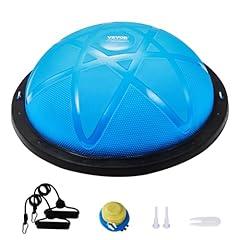
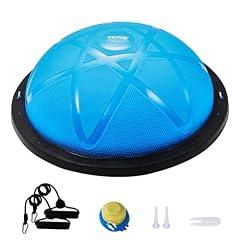
VEVOR Balance Ball Trainer 23" Blue
Overview
This is a compact, half-dome balance trainer for bodyweight balance, core, and conditioning exercises. The manufacturer’s blue 23-inch product page describes a 58 cm base, a PVC, PP, and TPE construction, two detachable resistance bands, a foot pump, and valve plugs. It illustrates stepping, planks, lunges, push-ups, squats, crunches, and knee raises. The manufacturer states a 660-pound maximum bearing capacity and describes six anti-skid feet, a textured dome, a leak-resistant valve, and anti-burst construction. Those are manufacturer claims, not independently traceable test results. The marketplace record instead includes a 1,500-pound claim while also listing 660 pounds elsewhere. That material capacity conflict is important because this is a fall-risk product used while standing, shifting weight, and sometimes pulling against attached bands.
What works
- The manufacturer identifies the main construction materials as PVC, PP, and TPE, rather than leaving the composition entirely unspecified.
- The manufacturer describes a 58 cm base with a textured dome and six anti-skid feet, practical features for controlled floor-based balance work.
- Two detachable bands, a foot pump, and valve plugs are included according to the manufacturer’s product page.
- VEVOR publishes a 12-month warranty policy and support channel for manufacturing defects and mechanical failures.
What does not
- No product-specific report from an independent accredited lab was found for structural loading, stability, dome burst resistance, or band-anchor retention.
- The marketplace record’s 1,500-pound statement conflicts with the manufacturer’s 660-pound capacity for the blue 23-inch version. Treat the higher figure as unreliable.
- The anti-burst, leak-resistant, non-slip, and band-anchor claims have no disclosed test method, test load, surface condition, or pass criteria.
- PVC, PP, and TPE are disclosed, but no model-specific chemical results for phthalates, lead, cadmium, PAHs, or VOCs were found.
- The rehabilitation and discomfort-reduction language is broad and lacks progression guidance or condition-specific precautions.
Who is it for
This product suits a healthy adult who wants a compact home exercise tool for low to moderate intensity, bodyweight-based balance practice, planks, controlled squats, lunges, and simple band work. It is most appropriate for someone who can already step on and off an unstable surface with control, has clear floor space, and will inspect the dome, plug, base, and bands before use. Its included pump and accessory set make it workable for a basic home routine without separate setup equipment.
Who is it not for
It is not appropriate for anyone who needs a verified high-load platform, including users planning heavy external loading, explosive jumps, or hard band pulls. Older adults with an elevated falls risk, people with acute ankle, knee, hip, back, or balance disorders, and people recovering from surgery should not treat the product’s rehabilitation language as individualized medical guidance. Households with children should also avoid unsupervised use, especially upside down or as a bouncing toy. Choose clinician-guided or more stable equipment when safe transfers and fall prevention are priorities.
Integrity
Unstable-surface training can be useful for balance-focused practice, but it is not automatically superior to stable-surface strength training for every goal. The research supports controlled balance and conditioning use, while the manufacturer’s broad statements about posture, discomfort, recovery, and rehabilitation should not substitute for clinical assessment or a progressive exercise plan. The manufacturer identifies PVC, PP, and TPE in the blue version. That is more useful than a generic material label, but it does not establish low chemical exposure because no product-specific chemical test report or third-party certification was found. No recycled-content, take-back, or end-of-life disposal program was found. The product itself was not identified in a CPSC recall search. VEVOR does maintain a recall page and warranty support, although its December 2025 CPSC recall concerned garment steamers, not this balance trainer.

BOSU Pro Balance Trainer 26 Inch Blue
Overview
This is a 65 cm inflatable half-dome balance trainer on a rigid platform, supplied with a hand pump and plug. It is used dome-side up for standing balance work, bodyweight conditioning, mobility drills, and some floor exercises. The manufacturer states a properly inflated height of 8.5 inches, with a 10-inch maximum, and describes the dome as vinyl and latex-free. Its safety documentation is unusually detailed for this format. The manual calls for inspection before use, a level non-slip surface, clearance for a fall, sweat removal from the dome, and gradual progression. It also marks the product ISO 20957-1 Class 1, but no product-specific accredited laboratory report was located. Load information needs caution. The current manufacturer page states 350 pounds, while the available Pro manual label states 300 pounds.
What works
- The manual gives concrete inflation limits and explains that overinflation can separate the dome from the base.
- Fall-risk guidance is specific, including slow progression, clear floor space, mats on hard floors, and avoiding platform-side standing.
- The documented 65 cm platform and recessed carrying handles support a stable, portable format for coached bodyweight drills.
- BOSU provides troubleshooting for punctures, plug removal, dome reseating, cleaning, and heat-safe storage.
What does not
- The manufacturer documentation conflicts on maximum user weight, with 350 pounds on the current product page and 300 pounds on the manual label.
- The ISO marking is not accompanied by a traceable, product-specific test certificate or accredited laboratory report.
- The vinyl dome and latex-free status are disclosed, but no model-specific chemical test results for phthalates, metals, PAHs, or VOCs were found.
- The one-year warranty is limited to authorized-dealer purchases and personal or household use, despite commercial-use marketing.
Who is it for
This product suits an adult who wants a compact, coachable unstable surface for controlled balance drills, low-load conditioning, mobility, and bodyweight work. It is particularly practical for a trainer or experienced home exerciser who will follow the height measurement, inspect it before sessions, keep the dome dry, and leave clear fall space. It can also fit supervised rehabilitation programming when a clinician selects the exercise and progression, rather than treating the product itself as rehabilitation.
Who is it not for
It is not appropriate for unsupervised children, anyone unable to recover safely from a loss of balance, or people with acute injury, major balance impairment, dizziness, or medical restrictions without clinical clearance and close supervision. Avoid it where floor clearance is limited or hard surfaces cannot be padded. Do not select it for standing platform-side drills unless advanced instruction and fall protection are available. Users near or above 300 pounds should resolve the conflicting published load limits before use.
Integrity
Unstable-surface training has evidence for improving balance outcomes, including in people with chronic ankle instability, but it is not automatically superior to stable-surface strength work for strength or power. The manual is appropriately cautious about falls and tells beginners to start with easier movements. It specifically flags pregnancy, orthopedic conditions, balance impairments, disability, and medication-related heart-rate effects as reasons to seek medical guidance. The dome is described by BOSU as high-quality vinyl and latex-free. That is useful material disclosure, but it is not chemical safety verification. No model-specific independent chemical report, environmental certification, recycled-content evidence, take-back program, or practical end-of-life guidance was located. Vinyl and the mixed rigid-platform construction also make ordinary curbside recycling unlikely. The manufacturer provides a U.S. service contact, repair directions, and a one-year limited warranty. No product-specific CPSC recall was identified in the review.

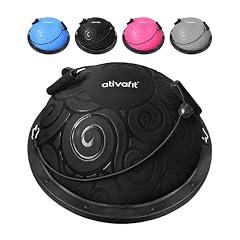
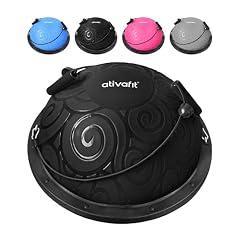
Ativafit Balance Trainer Half Exercise Ball
Overview
This product is a home balance trainer with an inflatable PVC dome fixed to a rigid base. It is intended for low-height balance, core, bodyweight, and resistance-band exercises. The package documentation lists a foot pump, three air plugs, and two resistance bands. Its manual states a 660-pound maximum user capacity, a maximum dome height of 7.9 inches, and instructions to use it only on a firm, level surface. The manufacturer currently describes a related 23-inch PVC version as having textured grip, a reinforced polypropylene base, six rubber feet, and a 660-pound capacity. Those are manufacturer statements, not independently verified test results. No product-specific accredited-laboratory certificate, structural endurance report, or traction and anchor-load report was located. The manufacturer manual found for the product family lists larger overall dimensions than the catalog record, so buyers should verify the physical label and enclosed instructions for their production version.
What works
- The included manual gives practical controls for falls and inflation, including firm-level-surface use, keeping clear of sharp objects, avoiding overinflation, and stopping use when damaged.
- The manual recommends a sturdy support while a new user learns balance, which is appropriate for an unstable exercise surface.
- Manufacturer documentation identifies PVC construction, a 660-pound stated capacity, air plugs, a foot pump, and two resistance bands.
- A named U.S. business contact and one-year limited warranty provide a defined route for defect claims.
What does not
- No traceable, product-specific independent safety certificate or accredited-lab report was found for the dome, base, resistance-band anchors, stability, or stated load capacity.
- The 660-pound capacity is manufacturer-stated rather than independently substantiated, and the available manual and catalog record do not agree on all dimensions.
- The manufacturer calls the PVC non-toxic and eco-friendly, but no model-specific chemical disclosure or independent results for phthalates, metals, PAHs, or VOCs were found.
- The manufacturer makes rehabilitation and recovery-oriented claims, but the product is not accompanied by condition-specific clinical guidance or a substitute for clinician-directed rehabilitation.
- No dedicated replacement listing for the valve, plug, dome, bands, or anchors was found. The general replacement service does not establish availability of these specific wear parts.
Who is it for
This trainer suits an adult home exerciser who wants a compact unstable surface for controlled bodyweight balance drills, modified planks, squats, and light band work. It is most appropriate for someone who can already step on and off safely, has clear floor space, and will follow the manual's firm, dry, level-surface and damage-inspection instructions. Beginners can use it progressively with a sturdy support nearby, as the manual advises. Its stated low profile can make supervised, slow balance practice more approachable than a full-height exercise ball.
Who is it not for
It is not suited to children or to anyone with impaired balance, reduced sensation, a recent fall, uncontrolled dizziness, seizure history, or a condition for which a clinician has not cleared unstable-surface exercise. The manual specifically calls for healthcare consultation before strenuous exercise for people who are pregnant, elderly, or have high blood pressure or heart conditions. Avoid it for jumping, unsupervised rehabilitation, heavy external loading, or high-force band exercises, because no independent evidence was found for anchor strength, traction, or structural fatigue at the stated capacity.
Integrity
Unstable-surface training can be a useful balance challenge when progressed carefully. Systematic-review evidence supports balance-focused benefits in some groups, but it does not validate every rehabilitation, recovery, circulation, or muscle-relief claim attached to this particular product. The manual has meaningful safety instructions, including a target height, no-overinflation warning, damage checks, and advice to use a stable support while learning. It also warns against sharp objects, heat, soft surfaces, and use near hard edges. PVC is the disclosed dome material. The manufacturer uses non-toxic and eco-friendly language, but no independent chemical test report, recognized material certification, recycled-content evidence, or end-of-life disposal program was found for this product. The maker provides a one-year limited warranty and a U.S. contact, but does not clearly document dedicated replacement availability for the dome, valve, plugs, bands, or anchors. No product-specific CPSC recall was located in the sources reviewed.

MERACH Balance Ball Trainer 18'' with Pump & Bands
Overview
This is an 18-inch, inflatable half-ball balance trainer with a rigid base, two removable resistance cords, a foot pump, an air-release valve, and a sealing plug. It is intended for bodyweight balance drills, core work, planks, push-ups, and light band exercises in a home setting. An independently indexed retailer identifies the dome as triple-layer PVC, while the catalog material field lists PVC and ABS for the product assembly. The defining concern is an unresolved capacity conflict. Product information for the same model has been published with 286-pound, 300-pound, and 450-pound limits. That is not a minor specification difference for equipment used while standing or loading bands. The product does include a valve and plug system, and the instructions repeated by retailers say to fully seat the plug after inflation. No product-specific independent laboratory report, safety certificate, traction test, anchor-load test, or chemical test report was located in the verification work.
What works
- The compact 18-inch format can fit smaller home workout spaces and supports basic balance, core, and bodyweight exercise.
- A pump, air-release valve, sealing plug, handles, and two resistance cords are included, reducing the need to source basic setup accessories separately.
- The product uses an inflatable PVC dome with a rigid plastic base, and an external retailer independently repeats the triple-layer PVC description.
- MERACH publishes a U.S. support email, phone number, and warranty-service route.
What does not
- The stated maximum load is contradictory across published information for this model, with 286-pound, 300-pound, and 450-pound figures appearing in listings.
- No traceable, product-specific independent safety report or accredited-laboratory certificate was found for structural loading, stability, band anchors, or burst resistance.
- Anti-slip, military-grade stability, endurance-session, and precise performance claims were located as marketing statements, not as published test evidence.
- PVC and ABS are named, but there is no located model-specific disclosure or independent testing for phthalates, heavy metals, PAHs, or VOC emissions.
- The listed six-month warranty is brief for a product with wear-prone components such as the dome, valve, pump, plug, and resistance cords.
Who is it for
This product is suited to an adult with limited space who wants a compact, low-impact platform for supervised beginner balance practice, core drills, yoga-style bodyweight movements, or light resistance-band work. It is most appropriate when used on a level, dry, hard surface, with footwear or grip appropriate to the exercise, and when the user stays well below any claimed load limit until MERACH provides a single, consistent rated capacity. It also suits users who value included setup accessories and a published U.S. support contact.
Who is it not for
It is not appropriate for people who need a clearly verified load rating, documented clinical rehabilitation protocol, or independently tested fall and band-anchor safety. Avoid it for high-impact jumps, loaded strength exercises, aggressive band pulls, or unsupervised rehabilitation after a fall, stroke, surgery, significant ankle instability, or other balance-limiting condition. Pregnant users, older adults with elevated fall risk, and households where children may climb on it should use only clinician or qualified trainer guidance, or select equipment with clearer instructions and safety evidence.
Integrity
Unstable-surface exercise can be useful for balance training in some populations, and systematic reviews support balance-related benefits in defined programs. That evidence does not validate every advertised use of this product, especially rehabilitation, postpartum exercise, or high-intensity drills. A gradual progression, clear surrounding space, and avoidance of loaded or jumping work are important because loss of footing, rolling, deflation, and band detachment can cause a fall. The known material picture is limited. Published product information identifies PVC for the dome and ABS or plastic for the base, with an external retailer repeating a triple-layer PVC description. No product-specific chemical test report, recycled-content claim, environmental certification, take-back program, or practical mixed-material disposal guidance was located. MERACH does publish U.S. warranty contact details, but no product-specific independent safety certificate or accredited lab report was found. The conflicting published capacity figures should be resolved before the product is used near its advertised maximum load.
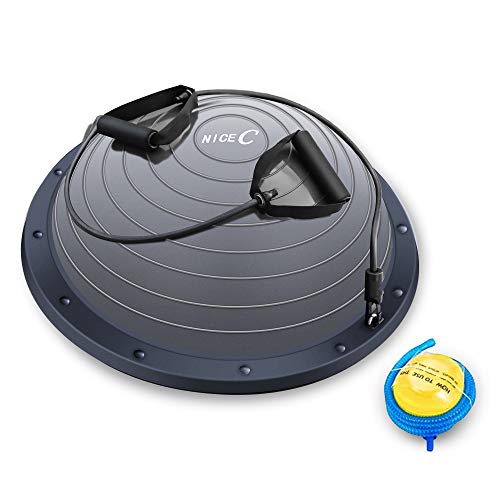
Nice C Balance Ball Trainer
Overview
This is a 23-inch, inflatable half-dome balance trainer on a rigid platform, intended for standing balance drills, bodyweight conditioning, yoga-style movements, and exercises using the included resistance bands. An independent retail record identifies PVC as the listed material, gives a 23 by 23 by 9 inch footprint, and names Nice Choice as manufacturer. The product carries a 350-pound maximum-weight recommendation, but that figure is seller and manufacturer-stated. I did not locate a product-specific structural, fatigue, traction, band-anchor, burst, or independent laboratory report matched to this unit. Public CPSC recall and incident search tools were checked, with no product-specific recall or publicly indexed incident pattern found. That is not the same as independently proving safe performance. Unstable-surface training can improve balance when used progressively, although evidence does not establish this particular trainer as superior to stable-surface training for general strength or power work.
What works
- The compact 23-inch platform can support balance and bodyweight exercise in a small home workout area.
- The balance-training format is consistent with systematic-review evidence that multi-session balance training can improve balance ability.
- Resistance bands and a foot pump are included according to the product listing, allowing setup and basic band work without separate accessories.
- A manufacturer-stated 350-pound maximum recommendation provides a stated operating boundary, even though its supporting test data was not located.
What does not
- No traceable, product-specific independent safety certificate or accredited-laboratory test report was located.
- The stated load limit is unverified by published dome, base, stability, fatigue, or band-anchor testing.
- No product-specific guidance was located for inflation target, valve replacement, inspection intervals, retirement criteria, or replacement parts.
- PVC is disclosed, but no model-specific chemical test report for phthalates, metals, PAHs, or emissions was located.
- No published warranty, lot-code instructions, or clearly documented repair path was found in the materials reviewed.
Who is it for
It suits an adult home exerciser who wants a compact unstable surface for low-to-moderate intensity balance practice, controlled bodyweight movements, and light resistance-band exercises. It is most appropriate for someone who can already step on and off an unstable platform confidently, has clear floor space, and will use it on a stable, non-slip surface. The 23-inch footprint is practical where a full gym setup is not available. The stated 350-pound limit should be treated as a manufacturer claim rather than independently verified capacity.
Who is it not for
It is not the right setting for unsupervised rehabilitation, acute ankle or knee injury, serious balance impairment, frequent dizziness, or a high risk of falls. Older adults or people returning from injury should use a stable support and clinician or qualified trainer guidance before progressing to an unstable dome. It is also unsuitable for users who need documented commercial-gym durability, independently verified load performance, replaceable safety parts, or chemical testing. Avoid explosive jumps, high-load lifting, and hard or slick flooring because product-specific traction and structural testing were not found.
Integrity
Balance training itself has evidence for improving static and dynamic balance when practiced consistently. Research on unstable-surface resistance training is more mixed when compared directly with stable-surface training, especially for strength and power outcomes. This makes the product more defensible as a progressive balance and coordination tool than as a substitute for conventional strength equipment. The available product information does not establish it as a rehabilitation device. PVC is the only clearly disclosed main material in the reviewed retail record. No product-specific chemical report, recognized material certification, recycled-content evidence, take-back program, or disposal guidance was located. PVC and the mixed-material construction also make straightforward household recycling unlikely. CPSC recall and public incident resources were checked without locating a product-specific recall or indexed incident pattern, but no public testing, warranty, lot tracing, or replacement-parts program was found.