
10 Best Espresso Machines
 Lauren Wilson
Please note that we participate in affiliate marketing programs. When you purchase through links on our site, we may earn a commission. As an Amazon Associate we earn from qualifying purchases. This comes at no additional cost to you and helps support the resources required to provide valuable content.Advertising Disclosure
Top-rated Espresso Machines Comparison
1

2
3
4
5
6
7
8
9
Espresso Machines: what to look for
Espresso machines heat water, force it through finely ground coffee, and may add hot water or steam for Americanos, lattes, and cappuccinos. Semi-automatic models require the user to grind or measure coffee, tamp it into a portafilter, start the shot, and texture milk manually. Integrated-grinder machines add dosing and grind adjustment; fully automatic models reduce hands-on work but still require cleaning of coffee and milk pathways.
Whether a machine works well depends less on its headline pump number than on control at the brew head. A useful assessment looks for independently measured pressure, temperature, dose, yield, and repeatability. A stated 15- or 20-bar pump rating describes pump capacity, not necessarily the pressure reaching the coffee bed or the quality of the drink. Similarly, PID or selectable temperature claims do not establish temperature stability unless a technical test explains its instruments and protocol. Grind settings, programmable volume, and a pressure gauge can help users adjust shots, but they are not proof of consistent extraction.
A buyer should also distinguish practical cleaning access from a vague “self-cleaning” label. Milk residue is a particular concern: look for a wand or milk-contact parts that can be purged, wiped, removed, rinsed, or soaked, with clear instructions. A removable tank, drip tray, portafilter, baskets, grinder parts, and cleaning tools support routine maintenance, but cleaning remains user-dependent on manual machines. Descaling instructions, cooldown steps, pressure-release directions, and warnings not to remove a portafilter during brewing are important operating details.
For electrical and heat safety, look for a current, model-specific listing from an OSHA-recognized Nationally Recognized Testing Laboratory. Relevant public directories include UL Product iQ for UL 1082, Intertek’s ETL directory, CSA Group’s product database, and TÜV Rheinland Certipedia. A constructional report, a component badge, a generic certification statement, or a certificate covering a related configuration is weaker than a traceable listing for the exact product sold. Protective features should also be supported by the manual and checked against CPSC recalls and SaferProducts.gov incidents.
Chemical safety requires more than a stainless-steel exterior or filter basket. The manufacturer should identify every material touching hot water, espresso, steam, or milk and provide credible migration, metals-leaching, or lead-testing evidence. Useful verification routes include applicable FDA food-contact inventories, exact-model NSF listings, California Proposition 65 records, or an ISO/IEC 17025-accredited laboratory report using a stated hot-food-contact method. A Proposition 65 warning does not by itself quantify exposure, but it is a reason to treat undocumented materials cautiously.
Service life matters because a heating and pumping appliance can become disposable when critical parts are unavailable. Check for replacement pumps, valves, gaskets, grinders, control boards, diagrams, service information, and authorized support not only accessory parts. For environmental claims, look for measured energy during heating and idle, automatic shutoff, water used for flushing and descaling, certified recycled content, packaging evidence, and realistic take-back or recycling guidance.
Across the supplied reviews, recurring caveats are substantial: no exact-model U.S. electrical certification or complete hot-contact materials testing was found for most products; headline pump figures were repeatedly unsupported by measured brew-head results; and manual milk systems require prompt purging and wiping to control residue. Several products also had Proposition 65 warnings, including warnings involving styrene, bisphenol A, lead, or unspecified chemicals. One compact machine was observed vibrating enough to move a cup, creating a hot-liquid spill concern. Buyers who cannot safely manage steam, pressure release, cooldown, cleaning, and descaling should avoid assuming that presets or automatic rinsing remove those risks.
Integrity
These topics are weighted in the supplied assessment, with hot-water chemical safety and verified electrical and thermal safety carrying twice the weight of the other topics in their groups. Scores describe the strength of the supplied evidence, not a guarantee of safe use or performance.
HHealth & Safety
Hot-water contact chemical safety
This measures whether every surface touching hot water, espresso, steam, or milk is identified and supported by migration or lead-testing evidence. It matters because an espresso machine repeatedly heats water through hidden tubing, seals, boilers, and coatings. Among these products, higher scores reached 70, while lower scores included 45 and 52; the lower results reflected broad material descriptions, missing leaching tests, or Proposition 65 warnings.
Verified electrical, fire, and heat safety
This measures current, traceable certification for the exact product’s U.S. electrical use and protective controls against shock, overheating, and fire. It matters because these machines combine mains electricity, heating, water, steam, and pressure. Scores ranged from 68 to 88. The stronger result was supported by an Intertek authorization covering the machine design, while many lower-scoring products had only an untraceable certification claim or no public listing.
Pressure, steam, and burn protection
This measures safeguards against hot-water or steam release, ejected portafilters, hot surfaces, and unsafe pressure buildup, including warnings and recall history. It matters whenever a user removes a portafilter or steams milk. Higher scores, such as 82 and 79, reflected documented locking, cooldown, pressure-release, overheat, or cleaning instructions. A lower score of 54 also reflected independent observation of vibration that could move a cup.
Milk-system hygiene and cleanability
This measures whether milk-contact and steam-wand parts can be purged, wiped, removed, rinsed, or soaked without leaving trapped residue. It matters because dried milk can remain in a wand after steaming. Scores ranged from 70 to 82. Higher-scoring products documented removable tips or tubes and specific purge-and-wipe routines; lower-scoring designs depended more heavily on prompt user cleaning or lacked clear disassembly access.
EEvidence
Measured brewing control
This measures whether pressure, temperature, dose, volume, yield, and repeatability are independently measured at the brew head. It matters because pump capacity and preset buttons can look precise without producing repeatable espresso. Scores ranged from 64 to 79. The strongest evidence included a refractometer-measured 20.7% extraction yield; many lower results relied on manufacturer temperature, PID, or pump claims without calibrated testing.
Honest performance and health claims
This measures whether marketing separates features and pump capacity from verified coffee results and avoids unsupported health promises. It matters because “professional,” “consistent,” and “café-quality” language can exceed the evidence. Scores ranged from 52 to 78. Higher results used more qualified documentation, while lower results involved conflicting specifications, exaggerated consistency claims, or health and chemical statements without supporting test results.
Independent verification that actually covers this model
This measures whether an accredited third party verifies the exact product and relevant claims, rather than a generic badge, component, related configuration, or factory assertion. It matters because certification scope can be narrower than a product listing suggests. Scores ranged from 68 to 84. The highest result came from an Intertek authorization covering the machine design, although brand and configuration scope still required caution.
Recall and safety-accountability record
This measures unresolved recalls, serious recurring complaints, and the clarity of the responsible U.S. brand, importer, warranty, and contact information. It matters because a manufacturer should be identifiable if a machine creates a safety problem. Scores ranged from 69 to 78. Higher-scoring products had clearer warranty or support information and no matching recall found; unrelated brand-level recalls still mattered as context, not as product-specific findings.
EEcology
Repairability and service life
This measures whether wear and safety-critical parts can be obtained and replaced, supported by diagrams and service information. It matters because a failed pump, valve, grinder, gasket, or control board can otherwise end the machine’s life. Scores ranged from 69 to 78. Higher results reflected replacement accessories, support, or removable grinder and wand parts, but most reviews still found no comprehensive internal parts catalog or service manual.
Energy and water efficiency
This measures heating, idle, automatic shutoff, flushing, cleaning, and descaling demand using specifications or measured tests. It matters because espresso machines repeatedly heat water and may waste water during purging and cleaning. Scores ranged from 68 to 78. Higher-scoring products documented sleep or automatic shutoff modes, but the reviews generally lacked meter-based energy and water measurements, so operating efficiency remains uncertain.
Materials, packaging, and end-of-life transparency
This measures credible recycled-material, packaging, recyclable-content, take-back, and recycling claims. It matters because an appliance combines metals, plastics, electronics, and difficult-to-separate parts. Scores were tightly grouped from 68 to 70. The supplied reviews found little product-specific certification or packaging disclosure, and no verified take-back program was identified, so a stainless-steel exterior alone does not establish a lower disposal burden.
Full reviews
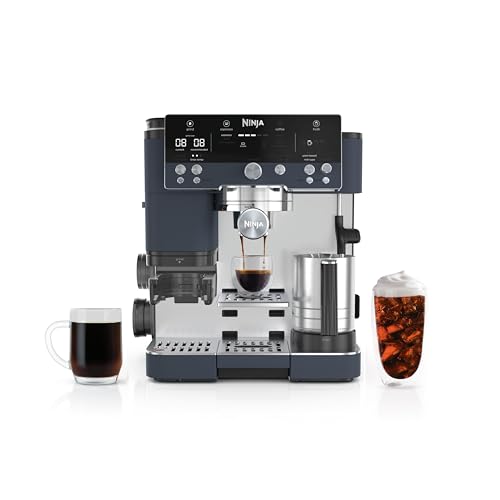
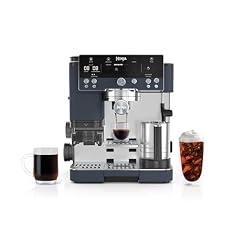
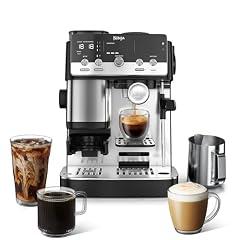
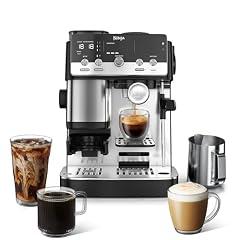
Ninja Luxe Café Premier ES601CY
Overview
This is a 25.7-pound countertop coffee system that grinds whole beans, uses a portafilter for espresso, brews filter-style coffee, and offers rapid cold-brew modes. Its owner guide specifies a 70-ounce water reservoir and 1,650-watt, 120-volt household electrical supply. It uses double and deep Luxe baskets, with manufacturer-stated preset doses of 18 grams for a double and 40 grams for a quad. The strongest evidence is independent hands-on testing of the ES601 family. CoffeeGeek reports bench work covering dose weights, shot temperatures, volumes, brew times, milk temperatures, recovery, and 233 recorded espresso shots. The same review found repeatable pulls after dialing in. The manufacturer also provides detailed cleaning, descaling, portafilter-locking, and steam-wand procedures, but no publicly traceable food-contact migration report or exact-model NRTL certificate was located.
What works
- Independent testing covered espresso dose, volume, temperature, timing, milk temperature, and repeated-use performance.
- The manual specifies practical milk hygiene steps, including wiping the wand, automatic purging, removable-tip cleaning, and a removable whisk.
- The shower screen can be removed with a Phillips screwdriver, and the group-head gasket is described as replaceable.
- SharkNinja sells several ES601-compatible wear and brew parts, including baskets, portafilters, drip-tray components, and cleaning supplies.
- The manufacturer provides concrete brew presets, including 18-gram double and 40-gram quad doses, rather than relying only on a pump-pressure headline.
What does not
- No publicly traceable UL, ETL, CSA, or other NRTL listing for this exact U.S. product was located, so independent electrical-safety certification could not be confirmed.
- The manufacturer identifies stainless steel as the product material, but does not publicly identify every hot-water and milk-contact material or provide a migration or metals-leaching report.
- Independent testing was substantive but not an accredited laboratory report with published instrument calibration, full pressure data, or a formal repeatability protocol.
- Automatic steam purging sends water to the drip tray, which independent testing found fills quickly. It requires regular emptying and cleaning.
- No measured standby-energy, auto-shutoff timing, or water-use data was located. The manual documents 1,650-watt input power, not actual operating consumption.
Who is it for
It suits a household that wants one substantial counter appliance for double or quad espresso, filter-style coffee, cold drinks, and milk beverages, and is willing to follow a regular cleaning routine. It is particularly suited to newer espresso users who value guided grind recommendations, weight-informed dosing, an assisted tamper, and fixed drink programs over extensive manual adjustment. The 70-ounce reservoir and integrated grinder fit frequent home use, provided there is room for a roughly 13 by 13 by 15 inch machine and access to its rear water tank.
Who is it not for
It is not well suited to buyers who require documented independent certification for the exact product, or documented migration testing for all hot-water and milk-contact materials. It also does not suit households that will not wipe and purge the steam wand after every milk drink, empty a frequently filling drip tray, descale as prompted, and clean the removable brew parts. Enthusiasts seeking published brew-head pressure figures, fully manual pressure profiling, or laboratory-calibrated temperature and output specifications should note that those records were not located.
Integrity
The owner guide contains meaningful burn and hygiene controls. It tells users not to remove the portafilter while brewing because the machine is pressurized, warns against contact with steam and hot liquids, requires the portafilter to lock to its marked position, and calls for steam-wand wiping followed by automatic purging. The wand tip, whisk, shower screen, gasket, burr area, and drip-tray parts have specific cleaning or access instructions. Material and certification transparency is less complete. SharkNinja states stainless steel as the product material, but no full wetted-material list, independent lead or migration report, or exact-model public NRTL certificate was found. The exact product was not identified in CPSC recall searches. SharkNinja provides a U.S. contact, a one-year limited warranty, and several replacement accessories. No manufacturer take-back program, recycled-content certification, packaging certification, or measured energy and water-use report was located.
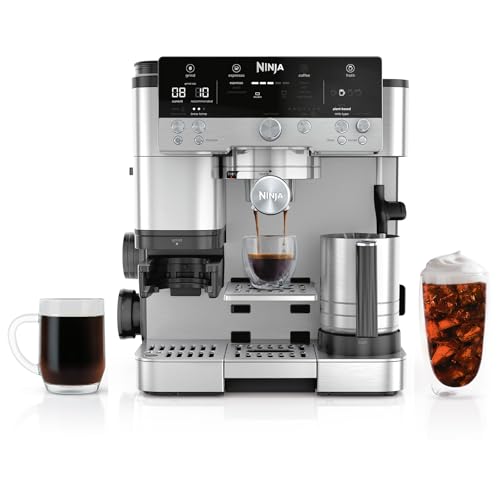
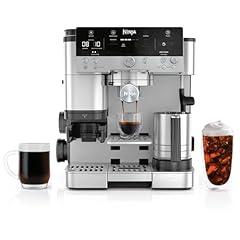
Ninja Luxe Café Premier Espresso Machine, ES601
Overview
This is a large, 25.7-pound countertop bean-to-cup system for single drinks. It combines espresso, drip-style coffee, rapid cold brew, a conical-burr grinder, portafilter, assisted tamper, and milk jug with integrated whisk. Independent hands-on testing confirms the listed 12.99 by 13.39 by 14.57 inch footprint, 70-ounce water reservoir, nine drink sizes, and automatic or manual milk frothing. The maker states that its built-in scale doses grounds by weight and its 25-setting grinder works with a guidance system that recommends grind changes. An independent reviewer used the product for several weeks, including dairy and plant-based milk tests, and reported consistently good espresso and coffee results. The manufacturer also sells model-specific replacement accessories, while the owner guide documents user removal of the shower screen and group-head gasket.
What works
- The steam wand is meant to be wiped after every use and automatically purges internally when returned to its down position, which gives the milk system a practical residue-control routine.
- The owner guide provides unusually concrete home maintenance access, including a removable steam-wand tip, removable upper burr, removable shower screen, and replaceable group-head gasket.
- The maker states that weight-based dosing, 25 grinder settings, and guided grind recommendations reduce manual setup. Independent hands-on testing found the workflow approachable for repeated drinks.
- A 20-minute automatic shutoff is documented in the owner guide. An optional Eco Mode turns the boiler off after brewing.
- Official U.S. product support sells several product-specific replacement items, including the portafilter, milk jug, drip tray, baskets, and gasket.
What does not
- The maker identifies the exterior as stainless steel, but does not publicly identify every hot-water and milk-contact material or publish model-specific migration or metals-leaching results.
- No exact-model UL, ETL, CSA, or other public NRTL certification record was located during this review. The owner guide has household electrical safety instructions, but that is not independent certification.
- Safe milk handling remains user-dependent. The wand needs prompt wiping, the jug and whisk need washing, and automatic purging will not run when the water reservoir is empty.
- There is no published independent power-meter or water-use test. The automatic steam purge and required cleaning and descaling cycles improve hygiene but also use water.
- The one-year limited warranty is short for a complex grinder and espresso system, and it excludes normal wear parts and unauthorized repairs.
Who is it for
This product fits a household that makes one drink at a time and wants espresso, drip coffee, cold coffee, and milk drinks from one sizable counter appliance. It is especially suited to newer espresso users who value a manufacturer-stated guided grinder, weight-based dosing, assisted tamping, and automatic milk frothing over fully manual technique. It also suits owners willing to follow a real cleaning routine, including wiping and purging the steam wand after each milk drink, washing the portafilter and basket, and responding to descale and clean prompts.
Who is it not for
It is not a good fit for a small kitchen, frequent large-batch coffee service, or anyone who expects a low-maintenance appliance. The product is heavy, occupies substantial counter space, and independent testing describes coffee servings as limited to 18 ounces. Households with young children should treat the hot group head, steam wand, pressurized portafilter, and hot milk jug as active burn hazards. It is also unsuitable for buyers who require publicly traceable electrical certification or documented hot-contact chemical testing before purchase.
Integrity
The owner guide gives detailed burn controls, including keeping the portafilter locked while brewing, not touching the steam wand during operation, and using a vessel matched to the selected output. It also directs users to clean the milk pathway promptly, with a wipe, automatic purge, removable wand tip, and deeper cleaning tools. No exact-product recall was located in the CPSC material reviewed, although SharkNinja has had an unrelated pressure-cooker burn recall. The product has a named U.S. responsible company, support line, warranty, and replacement-parts route. Material disclosure is incomplete. Stainless steel is stated for the product, but public documentation does not specify all water-path, steam-path, milk-contact, gasket, or plastic materials, and no exact-product migration or lead-leach report was found. The manual documents a 20-minute auto shutoff and optional boiler-saving Eco Mode, but measured energy and water use are unavailable. SharkNinja provides U.S. electronics and packaging recycling guidance, yet it does not offer product-specific packaging composition or a dedicated take-back route for this machine.

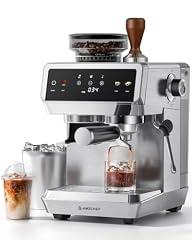
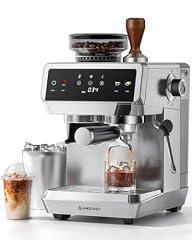
AMZCHEF Espresso Machine with Grinder
Overview
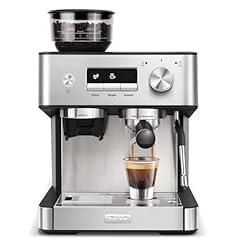
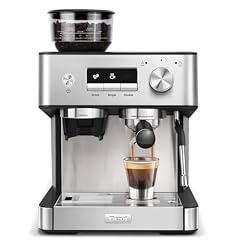
This is a compact, semi-automatic espresso machine for whole beans. It combines a built-in grinder, a 51 mm portafilter, touchscreen controls, a steam wand, removable water tank, drip tray, and manual milk frothing. The accessible model manual identifies 44 grind settings, a stated 190 F to 201 F temperature range, 20-bar pump rating, and a 60 oz tank. Those are manufacturer-stated specifications, not independently calibrated measurements. One independent reviewer used the closely identified unit morning and evening for a little over two weeks. That review found the grinder, temperature choices, and extraction timer useful after dialing in beans, while also noting lighter plastic trim, grinder noise, and a quickly filling drip tray. No public, model-specific electrical listing, hot-liquid migration test, or accredited brew-head performance report was located.
What works
- The manual gives practical milk hygiene directions, including wiping and purging the steam wand immediately after use.
- A removable water tank, drip tray, portafilter, and filter baskets provide routine cleaning access.
- The published operating instructions include portafilter-locking, hot-surface, cooldown, and overheat-protection guidance.
- An independent two-week use report corroborates that the grinder and adjustable settings are usable for ordinary home espresso preparation.
What does not
- Public searches did not identify an exact-model UL, ETL, CSA, or TÜV electrical safety certificate. This is missing verification, not evidence that the product is unsafe.
- The hot-water, steam, and milk-contact materials are not fully identified, and no model-specific migration or metals-leaching report was found.
- The 20-bar, PID temperature, and cold-brew claims lack independent instrumented testing. The available review was hands-on, not a laboratory test.
- No public parts catalog, exploded diagram, repair manual, service network, take-back program, or packaging-material disclosure was located. The manual also advises users not to disassemble the brew head.
Who is it for
This product suits a home user who wants to grind beans and manually steam milk in a relatively narrow countertop footprint, rather than use capsules or a separate grinder. It is most appropriate for someone comfortable adjusting grind, dose, tamping, and extraction over several attempts. The removable tank and accessible daily-cleaning parts fit a household prepared to rinse the portafilter, empty the drip tray, purge the wand, and descale on schedule. It is intended for modest household use, not repeated high-volume service.
Who is it not for
It is not suited to households that require publicly traceable third-party electrical certification or documented food-contact migration testing before bringing a hot-water appliance home. It also does not fit buyers who need a fully automatic milk system, quiet early-morning grinding, or a machine with established repair parts and professional servicing information. Avoid treating the cold-brew label as a substitute for traditional steeped cold brew. Children should not operate it unsupervised because the brew area and steam wand become hot.
Integrity
The clearest health-positive evidence is procedural. The model manual tells users to lock the portafilter before brewing, avoid hot surfaces, allow cooling before cleaning, use the steam wand's insulated handling area, and purge and wipe the wand after milk use. It also specifies descaling and fresh-water rinse cycles. These directions can reduce burn, milk-residue, and scale risks when followed. Important documentation remains absent. Public directories searched did not yield a traceable independent electrical certificate for this exact product, and no model-specific food-contact migration, lead-leaching, or materials disclosure was found. No exact-model recall or California exposure warning was located in the searched public sources. The manual states a 15-minute standby auto shutoff, but there is no measured energy or water-use report. No repair-parts catalog, take-back program, recycled-content claim, or packaging disclosure was found.

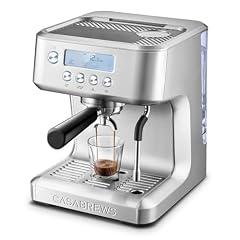
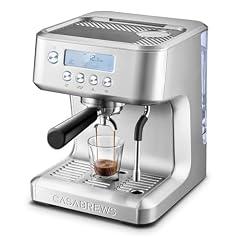
Espresso Machine with LCD Display
Overview
This is a 120 V, 1,350 W semi-automatic espresso machine for ground coffee. It has a 2.2 L, or 73 oz, removable water tank, a 58 mm portafilter with single-wall and dual-wall baskets, hot-water dispensing, and a manual steam wand. Its countertop footprint is manufacturer-stated as 12.2 by 10.31 by 12.99 inches, at 13.64 lb. The manufacturer documents four selectable brew-temperature settings from 194 to 204 F, programmable single and double beverage volumes, and a screen-based extraction timer. Independent hands-on reviews confirm that settings can be adjusted, but report mixed real-world results. One measured saved shot times close to the setting, while another found the default double beverage substantially over-extracted and observed continued dripping after stop. Steam-wand results also conflict between reviewers, so milk performance is not established as consistently repeatable.
What works
- The manual provides practical cleaning access, including a removable drip tray, immediate basket rinsing, steam-wand purging, and a removable steam nozzle that can be soaked and cleared with the included needle.
- Manufacturer-stated temperature choices of 194, 197, 201, and 204 F give the user defined adjustment points rather than an unspecified temperature control.
- Manufacturer-stated programmable beverage volumes allow the user to stop and save a preferred single or double shot volume within stated limits.
- The manual specifies water-shortage indication, automatic 20-minute idle shutoff, automatic hot-water stopping after about 60 seconds, and automatic steam stopping after five minutes.
- The manual includes explicit portafilter-locking, hot-surface, cooldown, descaling, and steam-release warnings.
What does not
- The manual carries a California warning for styrene and bisphenol A. It does not identify all hot-water-contact materials or provide a product-specific migration or metals-leaching report, so chemical-exposure uncertainty remains material.
- No model-specific UL, ETL, CSA, TÜV, NSF, or equivalent independent certification record was located in the reviewed public sources. The household-use instructions are not a substitute for independent electrical-safety certification.
- No independent laboratory report was found that measures brew-head pressure, temperature stability, dose, yield, and repeatability using a stated protocol.
- Independent reviews disagree substantially on milk texturing. One tester reported weak steam and poor microfoam, while another reported glossy milk, so milk results appear user- and test-dependent.
- The manufacturer provides a minimum 12-month warranty and support contact, but no public parts catalog, exploded diagram, repair manual, or authorized repair network was located.
Who is it for
This product suits a hands-on home user who already has, or plans to use, an espresso-capable grinder and wants manual control over ground coffee, beverage volume, and four stated temperature settings. It is most practical for one or a few drinks at a time because it has a single thermoblock workflow, a manual steam wand, and a drip tray that needs routine emptying. It also suits users willing to follow the manual's flushing, purging, hand-washing, descaling, and cooldown steps rather than expecting automatic milk-system cleaning.
Who is it not for
It is not well suited to households that require independently traceable electrical certification or comprehensive documentation of food-contact materials and chemical migration. People with a strong concern about bisphenol A or styrene exposure should account for the manual's California warning and the absence of a product-specific leaching report. It is also a poor fit for users who need consistently proven microfoam performance, hands-free milk cleaning, dishwasher-safe accessories, or readily documented replacement parts and repair instructions. Children should not operate it because of hot surfaces, steam, and pressurized brewing parts.
Integrity
The key health finding is the manufacturer manual's California warning for styrene and bisphenol A. The reviewed materials identify a stainless-steel exterior and plastic components, but do not identify every material in the hot-water, espresso, steam, or milk pathway. No product-specific hot-contact migration test, lead-leaching report, or NSF listing was located. The manual does give useful burn and pressure precautions, including locking the portafilter before brewing, never removing it during extraction, cooling for at least one hour before descaling, and cleaning the steam wand after milk frothing. For hygiene, the steam nozzle can be unscrewed, soaked, and cleared, while the brew head, baskets, portafilter, and removable drip tray have defined cleaning steps. The product automatically turns off after 20 minutes of inactivity, which can reduce idle energy use. However, no measured energy or water-use test, recycled-content certification, packaging disclosure, take-back program, public parts catalog, or repair network was located. The manufacturer states a minimum 12-month warranty.

Gevi Espresso Machine with Grinder and Frother
Overview
This is a household, single-boiler semi-automatic espresso machine with an integrated burr grinder, manual steam wand, 2.3-liter removable water tank, 58 mm portafilter, and four single-wall and dual-wall filter baskets. The manufacturer lists 120 V, 1450 W operation and a footprint of 11.5 by 12.01 by 16.53 inches. Its manual documents 30 grind settings, programmable single and double shot volumes, removable burrs, and a removable frothing nozzle. One independent hands-on review found that manual weighing and stopping shots produced serviceable espresso, while the built-in grinder's automatic double setting delivered only 14 g in that test. The same review found the steam wand slow and unable to produce well-textured milk. Public, model-specific U.S. electrical certification and hot-liquid contact migration testing were not located.
What works
- The manual provides practical cleaning steps for the steam wand, filter baskets, drip tray, grinder chamber, and descaling cycle.
- The frothing nozzle is removable and the manual directs purging, wiping after each use, needle cleaning, and overnight soaking.
- A 58 mm portafilter, both single-wall and dual-wall baskets, and a stainless steel milk pitcher are included, according to the manufacturer.
- The grinder burrs and bean hopper are removable for cleaning, and the manufacturer lists compatible replacement baskets and portafilter accessories.
- The manual identifies a U.S. support phone number and provides a one-year parts warranty for material or workmanship defects.
What does not
- No public UL, ETL, CSA, TÜV, or NSF listing for this exact household model was located, so independent electrical and food-contact certification remains unproven.
- The materials description is broad stainless steel wording. It does not identify every internal hot-water, steam, coffee, and milk-contact component or provide migration or metals-leaching results.
- The manufacturer's page makes inconsistent grinder-setting claims, stating both 30 and 51 settings. It also promotes easy microfoam, while an independent review found weak, spluttery steaming and slow milk heating.
- Independent testing was limited to a hands-on review rather than a calibrated laboratory protocol. Brew-head pressure, temperature stability, water use, and standby power were not independently measured.
- No service manual, exploded parts diagram, pump or valve parts catalog, take-back program, recycled-content evidence, or packaging certification was found.
Who is it for
This product suits a household user who wants a compact all-in-one setup for occasional espresso, Americanos, iced drinks, or milk drinks where fine latte-art texture is not essential. It is most appropriate for someone willing to learn basic dose, tamp, grind, cleaning, and descaling routines, and who can use a scale to override the preset dose and shot volume when needed. The 2.3-liter tank and 58 mm accessories make it practical for several drinks in a session, provided there is enough counter height for its 16.53-inch body.
Who is it not for
It is not suited to buyers who require traceable independent U.S. electrical certification, NSF food-equipment certification, or documented testing of hot-water-contact materials. It is also a poor fit for households with people unable to safely manage a hot portafilter and steam wand, or for users seeking rapid, repeatable microfoam for latte art. Avoid treating it as a commercial machine. The manual identifies it for household use only, and no commercial sanitation certification or service network was located. Users who will not routinely purge, wipe, soak, and descale should choose a simpler format.
Integrity
The product has useful user-level safeguards. Its manual warns not to remove the portafilter or water tank during extraction or while pressurized, directs users to use the wand's heat-resistant handle, and says to cool and unplug the machine before cleaning. It also gives unusually specific milk-wand hygiene instructions, including purging after texturing, wiping after every use, cleaning the hole with the supplied needle, removing the nozzle, and soaking it overnight. Important documentation gaps remain. The manufacturer calls the exterior and several accessories stainless steel, but it does not identify all internal food-contact materials or publish migration or lead-leaching results. No public exact-model listing was found in major U.S. electrical or food-equipment certification directories. The manual supports cleaning and minor maintenance through removable burrs, baskets, nozzle, and drip tray, plus a descaling reminder, but no repair manual, parts diagram, recycling program, or packaging sustainability evidence was located. A prior Gevi-related U.S. recall involved unrelated ice makers, not this espresso product.

Gevi Espresso Machine with Grinder and Frother
Overview
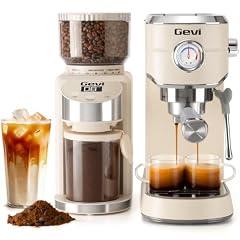
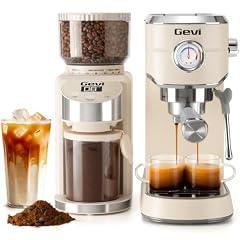
This product is a countertop home espresso set consisting of a semi-automatic 120V, 1350W espresso machine and a separate 120V, 200W conical-burr grinder. The machine uses a 51 mm portafilter, removable water tank, single and double filter baskets, hot-water outlet, and manual steam wand. The grinder provides manufacturer-stated 35 grind positions, cup or timed grinding, and a 240 g bean hopper. Its strongest evidence is safety related. An exact-model constructional report identifies the espresso machine as covered to UL 1082 requirements and documents a thermostat plus pressure-relief valve. A current UL certificate separately names the included grinder model under UL 982. Public evidence did not include brew-head pressure, temperature, shot-repeatability, or hot-contact migration test results for this set.
What works
- The included grinder model is explicitly named on a UL Certificate of Compliance for U.S. household food-preparation equipment.
- The espresso-machine technical report identifies an exact-model pressure-relief valve and thermostat, rather than relying only on listing language.
- The grinder has a removable upper conical burr and cleaning instructions that address retained grounds and clogging.
- The milk system is a simple steam wand with a removable froth nozzle. Gevi instructs users to wipe it and flush it with steam after use.
What does not
- No public hot-food-contact migration, metals-leaching, or lead-testing report was located for the water path, portafilter, seals, or steam components.
- The espresso machine's public technical document is strong supporting evidence, but it is not the same as a publicly retrievable authorization confirming that every sold unit bears a current UL mark.
- The 20-bar pump figure is not a measured espresso result. No independent brew-head pressure, temperature, dose, yield, or repeatability testing was located.
- Gevi's currently listed replacement-parts catalog does not show parts specifically identified for this older espresso-machine and grinder set.
- No measured standby energy, auto-shutoff, warm-up energy, water-use, recycled-content, packaging, or take-back information was located.
Who is it for
This set suits a household user who wants a compact manual espresso workflow with a separate grinder, rather than an appliance that doses and brews automatically. It is especially relevant for someone prepared to adjust grind time, dose, tamping, and steaming technique, and to clean the burr chamber and steam wand routinely. The documented electrical and pressure-control evidence is useful for buyers who want more than a generic safety assertion, while accepting that shot quality still depends substantially on user setup.
Who is it not for
It is not suited to people who need independently measured, highly repeatable espresso parameters or a machine that automatically controls dose, yield, and milk preparation. Households with little time for cleaning should be cautious, because milk residue requires wiping and steam purging after each drink, while grinder retention needs periodic cleaning. It is also a weaker fit for buyers who require published food-contact migration tests, a clearly traceable current espresso-machine certification mark, readily purchasable model-specific repair parts, or formal recycling and take-back support.
Integrity
The most meaningful health evidence is electrical and thermal safety documentation. The grinder is named in a UL certificate issued in 2024 for U.S. household food-preparation equipment. For the espresso machine, an exact-model constructional report references UL 1082 and identifies a thermostat, a pressure-relief valve, and high-temperature-rated hot-water and steam tubing. The public documents also instruct users to lock the portafilter before brewing and to wipe and purge the steam wand after milk use. Material certainty is incomplete. The technical report identifies Teflon tubing in part of the hot-water and steam path, along with stainless-steel and silicone components, but no public migration or metals-leaching report was found. No matching U.S. recall, California Proposition 65 enforcement record, or product-specific public safety warning was located in the searches performed. Gevi provides U.S. phone and email support plus a one-year warranty, but public evidence of model-specific replacement parts, recycled packaging content, take-back, or end-of-life recycling guidance was not found.

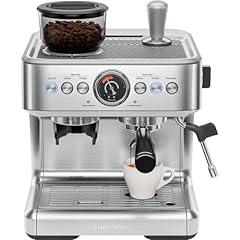
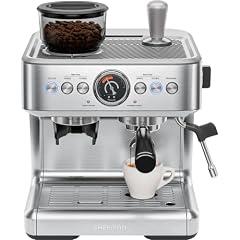
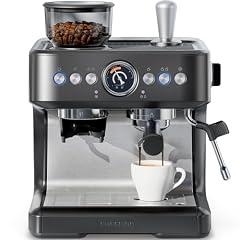
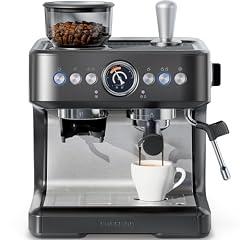
Chefman Crema Supreme Espresso Machine with Grinder
Overview
This is a countertop semi-automatic espresso machine with an integrated conical-burr grinder, a steam and hot-water wand, a removable 3-liter water tank, single and double shot baskets, and a 58 mm portafilter. The user grinds into the portafilter, tamps, locks it into the brew head, and uses the steam wand separately for milk drinks. Chefman states that it offers 30 grinder settings plus adjustable shot temperature and volume. Its guide gives target brew settings and shows programmable temperature and volume controls, but no independent brew-head pressure, temperature-stability, dose-repeatability, or water-use test was located. Chefman also states that it is cETL approved, yet a traceable public certificate for this exact product was not located in the issuer directories searched.
What works
- The official guide gives practical steam-wand hygiene steps, including an immediate internal purge and exterior wipe after steaming milk.
- Shot volume, brew temperature, and grinder run time are adjustable in the manufacturer guide, which supports hands-on dialing in.
- The product has a removable tank and drip tray, and its documented parts diagram identifies replaceable items including the tank, portafilter, baskets, hopper, tamper, and cleaning tools.
- Chefman publishes a cleaning and descaling procedure, with a descale reminder and a recommended 4 to 6 month interval.
What does not
- Chefman posts a California Proposition 65 cancer and reproductive-harm warning. It does not identify the chemical, component, or exposure route, and no hot-liquid migration or metals-leaching report was located.
- The cETL statement is manufacturer-stated. A public, exact-product listing from Intertek or another certification issuer was not located during verification.
- The product page conflicts on rated power, stating both 1350 watts and 1450 watts. This is a documentation-quality problem, even though both figures are plausible for this category.
- No independent technical test was located for brew-head pressure, temperature stability, extraction consistency, idle power, or water consumption.
Who is it for
It suits a home user who wants an all-in-one setup for freshly ground espresso and manually steamed milk, has enough counter height for a roughly 19-inch-tall machine, and is willing to clean the brew group, drip tray, and wand after use. It is also suited to someone comfortable weighing coffee and adjusting grind, dose timing, shot volume, and temperature rather than expecting preset drinks to guarantee a consistent result. The 3-liter removable tank can reduce refill frequency in a multi-drink household.
Who is it not for
It is not well suited to buyers who require independently documented food-contact migration testing, an easily traceable public electrical certificate, or a product without a Proposition 65 warning. It is also a poor fit for people who want automatic milk handling or minimal daily cleanup, since milk-wand hygiene depends on promptly purging and wiping the wand. Households with very limited counter clearance should measure carefully, because the manufacturer lists the machine at about 19.2 inches tall.
Integrity
The key health issue is the California Proposition 65 warning on Chefman's product page. The warning does not identify a chemical or affected component. Chefman calls the construction BPA-free, but that is not a substitute for model-specific migration or metals-leaching results covering the water, espresso, steam, and milk contact path. Chefman states that the product is cETL approved, and its guide contains pressure-release, portafilter-locking, cord, steam, cleaning, and descaling instructions. Those are useful safeguards, although the public certification record for this exact product was not located. For service life, Chefman provides a parts illustration covering several external wear items, but no teardown, service manual, take-back program, recycled-content certification, packaging analysis, or measured energy and water-use study was located. The listed 1-year assurance is limited support for long-term repairability.

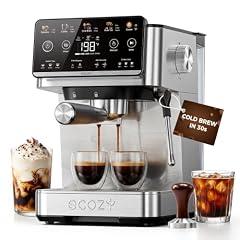
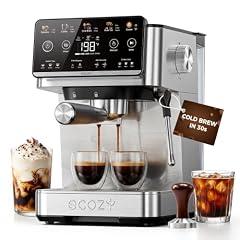
Ecozy Brezzano Elite Espresso Machine
Overview
This is a compact, ground-coffee espresso and coffee machine with a portafilter, single, double, and coffee baskets, a steam wand, removable steam nozzle, drip tray, and rear water tank. Ecozy lists it at 10.78 by 7.95 by 11.77 inches, 9.9 pounds, 120 volts, and 1,350 watts. It is intended for espresso, larger coffee drinks, cold brew, over-ice drinks, hot water, and manually steamed milk. The manufacturer provides a model-specific manual with dose and output-volume guidance, including 7 g for a single espresso and 14 g for a double. It also claims active temperature control, preset pressure curves, a 36-second heat-up, and 30-second cold brewing. Those performance claims were not matched by an independent brew-head test. The public materials identify stainless steel generally, but do not identify every hot-water-contact polymer, seal, or internal metal, or provide migration testing.
What works
- The model-specific manual gives concrete basket, grind, dose, and output-volume guidance rather than relying only on a pump-pressure headline.
- Milk-contact maintenance is practical on paper. The manual directs users to purge the wand, wipe it, remove and rinse the nozzle, and clear it with the included cleaning pin.
- The brew head, portafilter, baskets, drip tray, water tank, and steam components are separately identified in the manual, which makes routine cleaning steps easier to follow.
- Ecozy provides product-specific support materials, troubleshooting guidance, a customer-support phone number, and limited-warranty coverage for defects in materials and workmanship.
What does not
- No accessible public listing was found that verifies this exact product through UL, ETL, CSA, or TÜV for U.S. household electrical safety. A manufacturer declaration page is present, but its linked document was unavailable during review.
- The stainless-steel description does not establish the composition of all food-contact parts, nor is there a public hot-liquid migration or metals-leaching report for this product.
- The 36-second heat-up, 30-second cold-brew, temperature-control, and pressure-curve claims are manufacturer statements, not independently measured performance results.
- No public parts catalog, exploded diagram, repair manual, or replacement-parts store was found. The manual also instructs users not to disassemble the brew head.
- No measured standby energy, automatic shutoff setting, cleaning-cycle water use, recycled-content, packaging, or end-of-life recycling information was located.
Who is it for
This product fits a household that wants several ground-coffee drink formats from one small countertop machine and is willing to follow hands-on cleaning steps. It is especially suited to users who value guided selections over fully manual espresso experimentation, since the manual supplies stated dose, basket, grind, and volume targets. It also suits people who regularly make milk drinks and will promptly purge, wipe, and rinse the removable steam nozzle after each use. The compact listed footprint can suit limited counter space.
Who is it not for
It is not for households that require independently traceable U.S. electrical certification before using a high-wattage heated appliance. It is also not for buyers who need documented food-contact materials or third-party hot-liquid migration testing, such as people seeking unusually detailed chemical-exposure documentation. Avoid it if you want a repairable appliance with orderable pumps, valves, gaskets, or an official service diagram. It also demands active milk-wand cleaning and cooldown attention, so it is unsuitable where those routines are unlikely to be followed consistently.
Integrity
The manual includes useful burn-reduction directions. It says to secure the portafilter before extraction, never remove it during extraction, avoid hot surfaces, let parts cool before cleaning, and expect residual steam briefly after opening the hot-water control. For milk hygiene, it calls for releasing residual milk from the wand immediately after frothing, wiping the wand, removing and rinsing the nozzle, and using the supplied pin if the opening clogs. Important documentation remains limited. The manufacturer describes the product as stainless steel, but does not publicly identify all materials in the hot beverage path or publish migration and lead-testing results. No exact-model public NRTL certificate was located, and no CPSC recall or product warning for this model was identified in the searches performed. Ecozy offers support and a limited defect warranty, but no public parts catalog, recycling program, recycled-content claim, packaging specification, or measured energy and water-use data was found.

Ninja Luxe Café Mini Espresso & Coffee Machine
Overview
This product is a 120 V, 1,650 W semi-automatic countertop coffee machine that combines a conical burr grinder, grounds scale, portafilter brewing, manual steam wand, and single-cup drip coffee functions. SharkNinja lists a 47 oz water reservoir, 250 g hopper, 12.17-inch width, and a one-year limited warranty. It is intended for whole beans and makes double or triple espresso plus Classic, Rich, and Over Ice coffee. The most defining feature is the guided workflow. The manufacturer states that its scale-based dosing and adaptive system adjust temperature and pressure, but it has not published independent brew-head measurements or an exact-model laboratory report. An independent hands-on review found consistently good drip output, while espresso yield sometimes varied despite using the same beans and setting.
What works
- Independent hands-on testing confirmed all five beverage modes and consistently successful drip brewing.
- The removable upper burr and included brush create a documented route for routine grinder cleaning, if the manual is followed.
- The steam wand automatically purges internally after frothing, and the instructions also specify wiping and manual purging.
- A compact body combines grinding, espresso preparation, manual milk texturing, and individual drip coffee without separate countertop appliances.
What does not
- No public exact-model UL, ETL, CSA, TÜV, or NSF directory record was located, so independent electrical and food-equipment certification could not be confirmed.
- The manufacturer does not identify every hot-water-contact material or publish migration, metals-leaching, or lead-testing evidence for this product.
- Independent testing found variable espresso volume at identical settings, which limits confidence in the manufacturer's consistency claims.
- Milk hygiene depends on prompt user action. The wand needs wiping after each use, periodic tip cleaning, and a manual purge if the automatic purge does not run.
- Replacement-part coverage and service documentation for this product remain limited in public sources, despite access for cleaning the upper burr and steam tip.
Who is it for
This product suits one or two coffee drinkers with limited counter space who want both espresso-style drinks and fresh single-cup drip coffee from whole beans. It is particularly relevant to a user who wants help with grind recommendations and grounds dosing but still accepts hands-on steps, including locking the portafilter, tamping, emptying the drip tray, wiping the steam wand, and manually texturing milk. It also suits users who can follow descaling and grinder-cleaning intervals closely.
Who is it not for
It is not well suited to households that need large carafes, single espresso shots, automatic milk drinks, or repeatable espresso output without active checking. People with limited grip strength or dexterity should take care, because independent testing found the portafilter can require firm force to lock while the machine needs bracing. It is also a weaker fit for anyone who cannot consistently clean milk residue immediately or who requires publicly traceable independent electrical and food-contact certification before use.
Integrity
The safety evidence is mixed rather than clearly adverse. The public CPSC recall database did not show an exact-product recall in the searches reviewed. The manufacturer provides a U.S. warranty and detailed instructions for portafilter locking, hot steam, cleaning, descaling, and avoiding overflow. Those are meaningful procedural controls, but they are manufacturer instructions, not third-party safety certification. The milk system has practical cleaning provisions. The manual directs users to wipe the wand immediately, purge it after frothing, remove the tip for deeper cleaning, and run cleaning and descaling cycles. The grinder's upper burr is also designed to be removed for dry brush cleaning. However, no public migration or lead-testing report was located for hot-water-contact materials, no exact-model electrical listing was verified in public certifier directories, and no recycled-content, packaging, take-back, or end-of-life program specific to this product was substantiated.
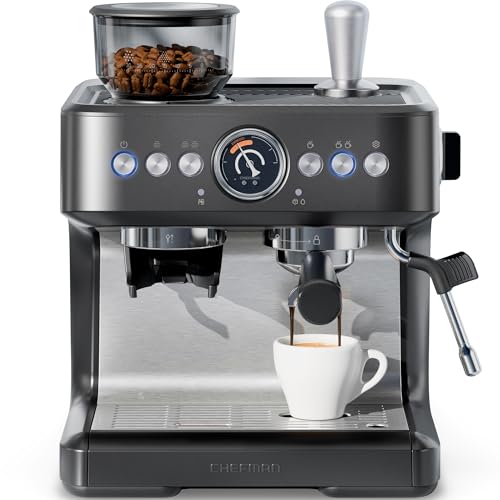
Chefman Crema Deluxe Espresso Machine
Overview
This is a countertop, semi-automatic espresso machine with an integrated conical-burr grinder, steam wand, pressure gauge, single and double shot baskets, and a removable 3-liter water tank. Chefman specifies 120 V, 1500 W power and a compact 13.66 by 12.68 by 13.07 inch footprint. It requires hands-on dosing, tamping, portafilter locking, milk steaming, purging, and periodic descaling. The most defining feature is the manufacturer-stated double-boiler arrangement, intended to let espresso brewing and milk steaming occur together. Its official manual documents adjustable 194 to 205 F brewing settings, programmable shot volumes, and 30 grinder settings, but no independent brew-head pressure, temperature stability, energy, or material-migration testing was located. Chefman also states that the product is cETL approved, though an exact-model public listing was not located in the searched certification sources.
What works
- The manual provides concrete user controls, including four documented brew-temperature settings, programmable shot volumes, and adjustable grind time.
- Milk-contact cleanup is practical when instructions are followed. The steam wand is purged immediately after use, wiped, and has a removable tip that can be soaked if blocked.
- The manual directs users to wait 60 seconds before carefully removing the portafilter, reducing exposure to retained pressure and hot coffee.
- A seven-minute transition from standby to sleep mode limits unattended heated standby time.
- Chefman publishes a user guide, troubleshooting guidance, a one-year limited warranty, and a diagram for several replaceable external parts.
What does not
- Chefman posts a California Proposition 65 cancer and reproductive-harm warning, but does not identify the chemical or publish hot-liquid migration or metals-leaching results for this product.
- The cETL claim is manufacturer-stated. An exact-model entry in a public Intertek certification register was not located during verification.
- No independent technical test was located that measures brew-head pressure, thermal stability, shot repeatability, grinder retention, water use, or standby power.
- The temperature, volume, and grinder controls improve adjustment, not guaranteed repeatability. The manual itself says output varies with tamping, grind, dose, water volume, and temperature.
- The available parts diagram covers mainly removable accessories and consumables, not pumps, boilers, valves, electronics, or grinder burr replacements.
Who is it for
It suits an engaged home espresso user who wants a single countertop appliance for whole beans, espresso, Americanos, and milk drinks, and who will weigh or tune doses, tamp consistently, purge the steam wand after every milk drink, and descale at least every four to six months. The 3-liter removable tank and manufacturer-stated simultaneous brewing and steaming are most relevant for households preparing several milk drinks in one session. It is also appropriate where a grounded 120 V kitchen outlet and clear counter space are available.
Who is it not for
It is not suited to someone seeking independently measured extraction consistency, verified food-contact chemistry, or a publicly traceable exact-model electrical certificate. It is also a poor fit for users unwilling to handle hot equipment carefully, wait before removing the portafilter, clean milk residue immediately, clean the burrs, and maintain a water filter. Households with young children should treat the hot brew head, cup warmer, steam wand, and pressure-retaining portafilter as active burn hazards and keep the machine supervised.
Integrity
The manual has useful burn and hygiene controls. It requires the portafilter to be fully locked, tells users to wait 60 seconds before removal after brewing, identifies an overheat-protection mode, and directs immediate hot-water purging and wiping of the steam wand after milk use. The wand tip can be removed for clearing or soaking, while portafilter baskets, drip tray, water tank, and milk pitcher are removable for hand washing. Chefman states that the product is cETL approved, but public exact-model certification evidence was not located. Its own product page and manual also carry a California Proposition 65 cancer and reproductive-harm warning, without naming the relevant substance or providing migration or leaching results. The manual documents seven-minute sleep mode, a charcoal water filter changed every two months or 60 brews, and descaling every four to six months. No verified recycled-content, packaging-reduction, take-back, or end-of-life recycling program specific to this product was located.